Central Asia's largest museum complex and keeper of the Golden Man -
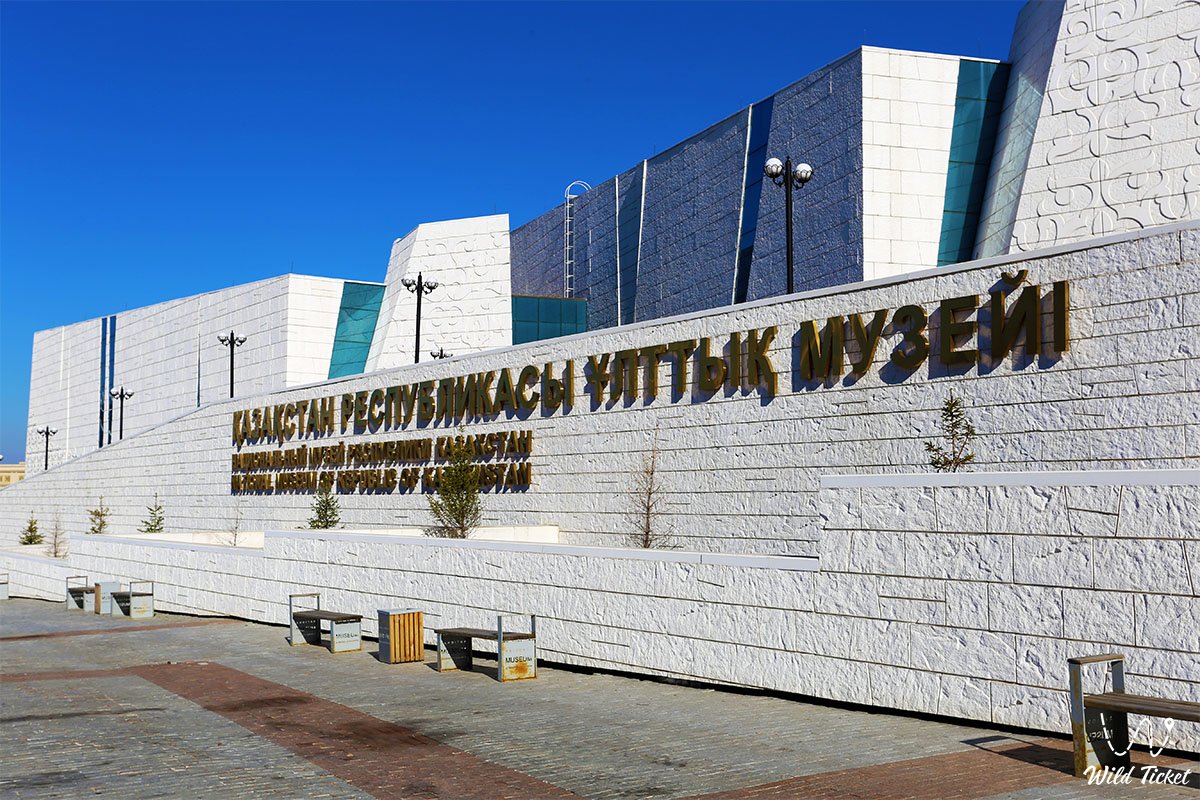
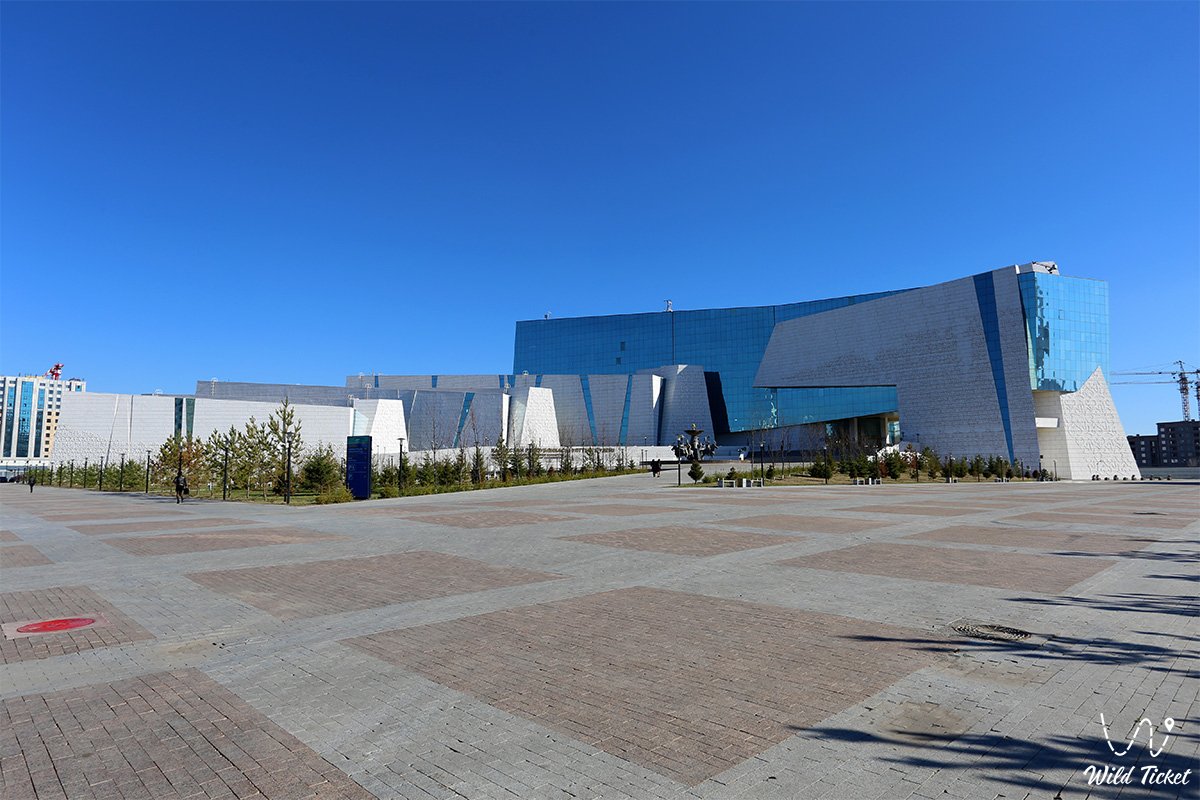
The National Museum of the Republic of Kazakhstan, located in the heart of Astana on Independence Square, is the main repository of the country's historical and cultural heritage. Opened in July 2014, it immediately became a landmark of the capital, striking visitors not only with the scale of its collections but also with its futuristic design.
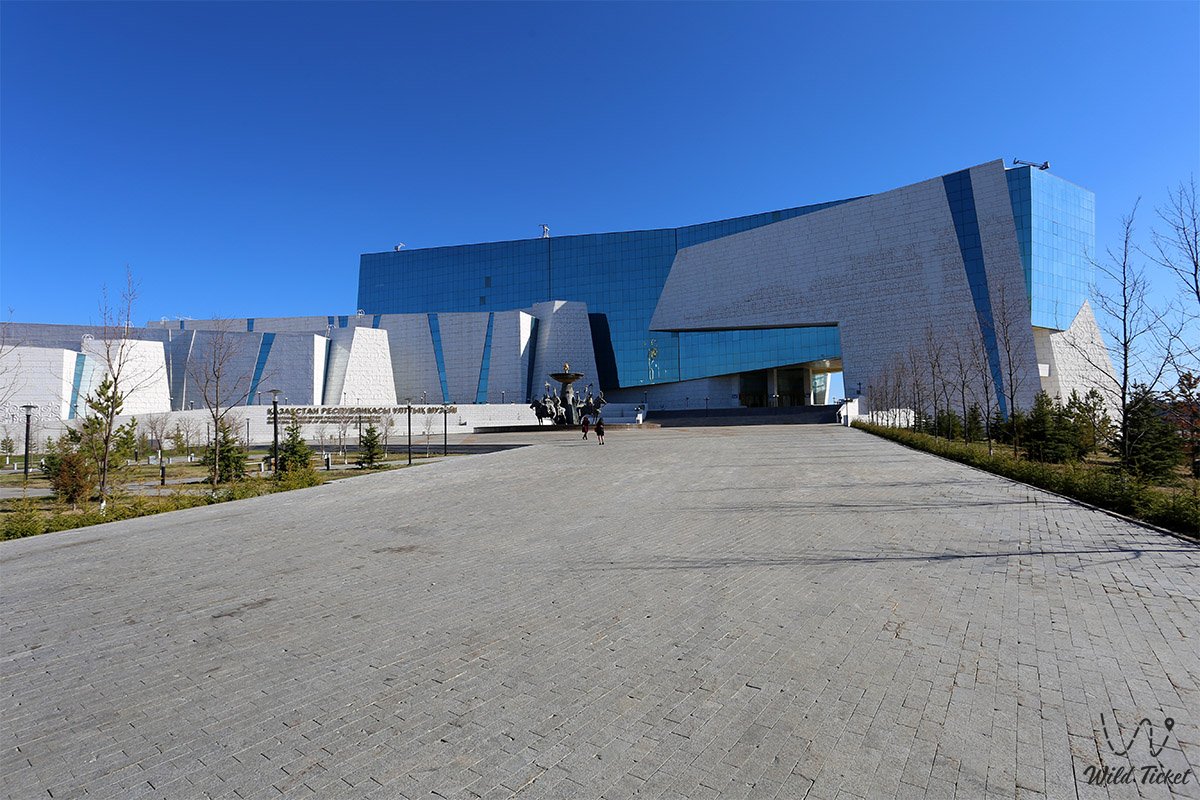
The museum building is a complex composition of seven blocks with varying floor counts, symbolizing the movement and development of the young state in the context of world history. The museum building is surrounded by landmarks such as the Kazakh Eli monument and the President's Park.
The museum's area exceeds 74,000 square meters, making it one of the largest cultural sites in the world. Inside, there are 18 halls that lead the guest through the centuries: from the Paleolithic era to modern Kazakhstan.
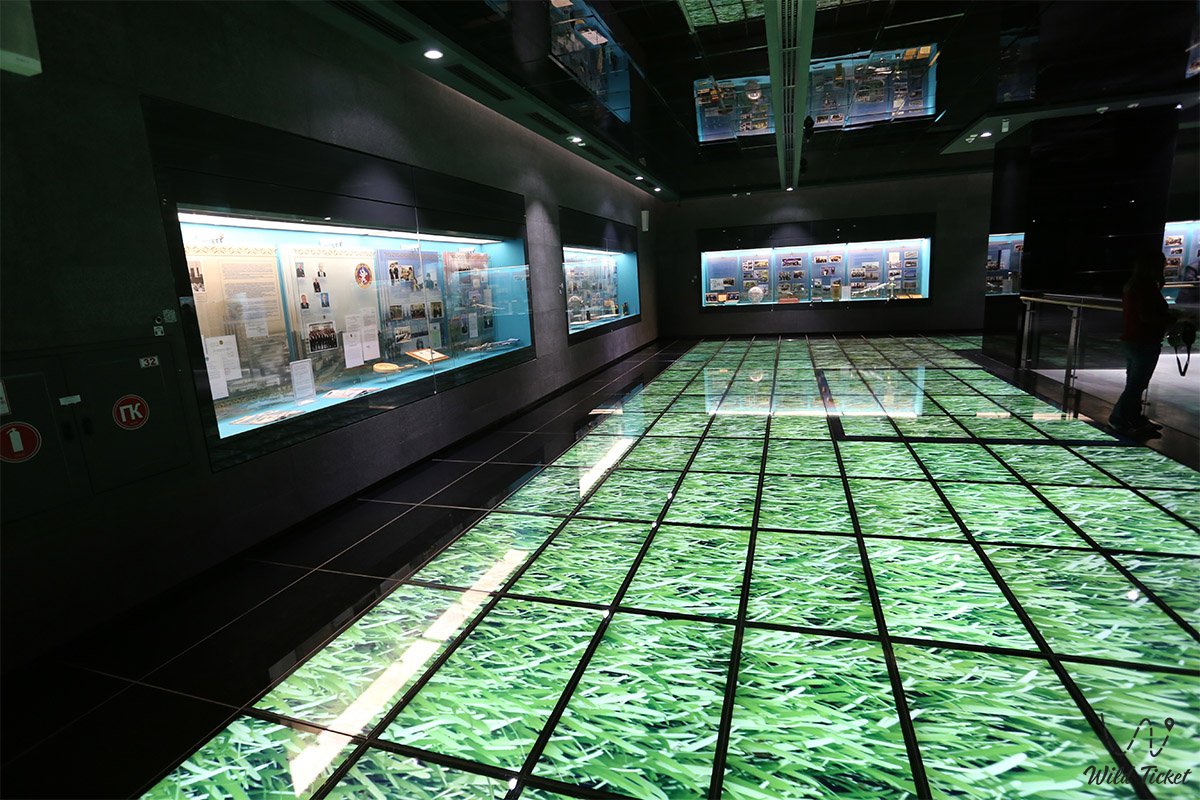
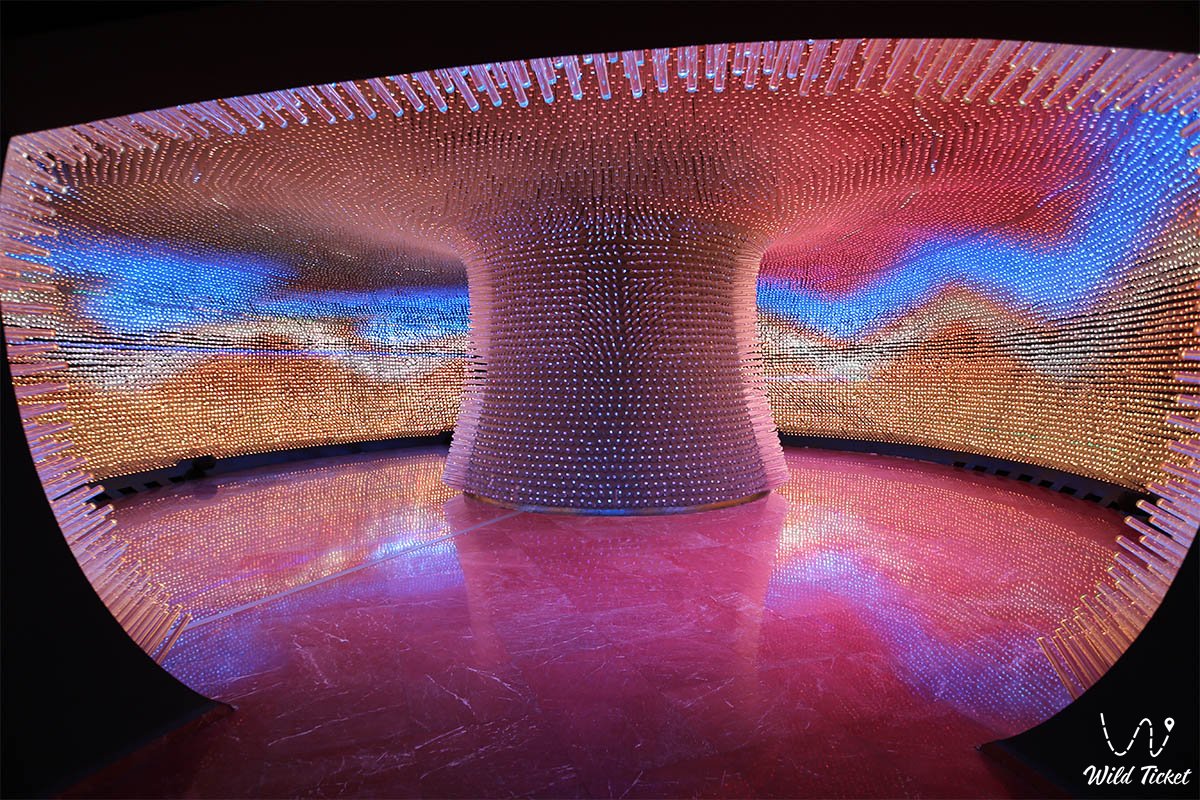
The main pride of the exposition is the "Golden Man" – a Saka warrior in golden attire, who has become a true symbol of the republic's sovereignty. Thanks to the use of modern multimedia technologies, holograms, curved screens, and an interactive media floor, history literally comes to life here, turning the tour into a breathtaking immersion into the past.
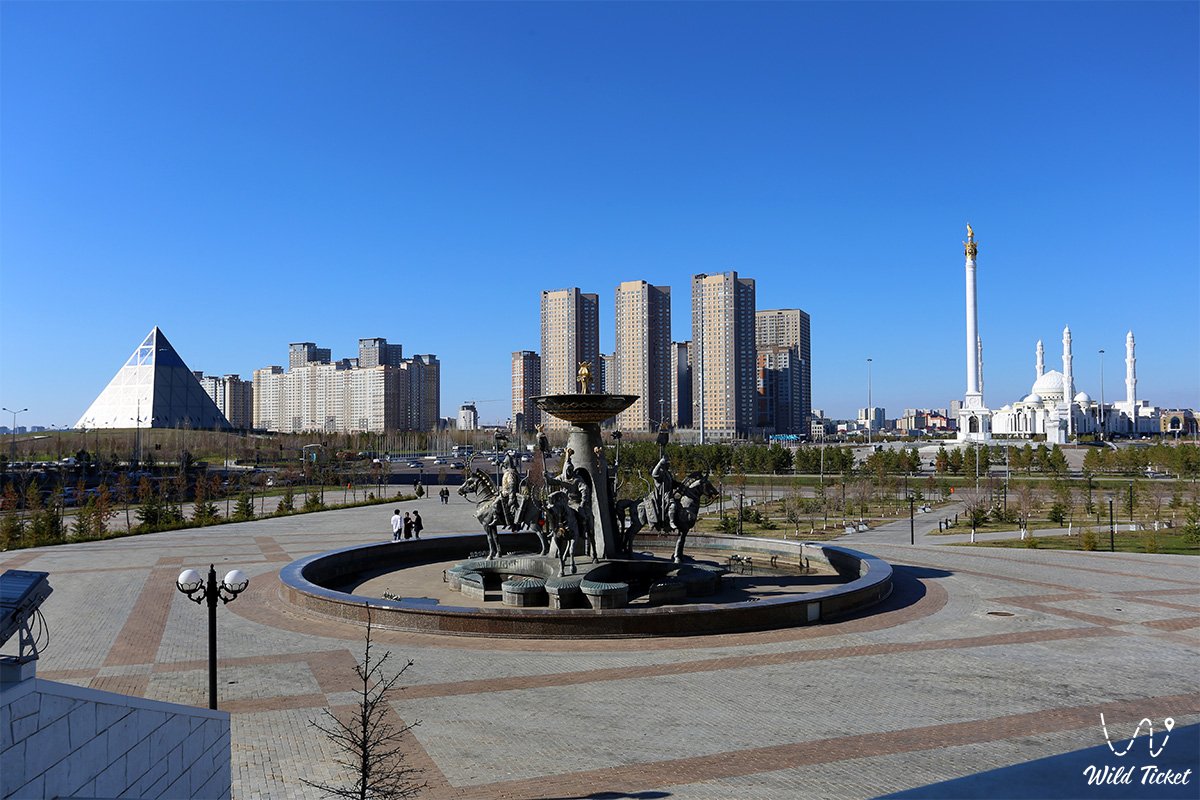
The museum performs an important scientific and research role, uniting the work of historians, archaeologists, and restorers. Its location in a single architectural ensemble with the Hazret Sultan Mosque, the Independence Palace, and the Palace of Peace and Reconciliation makes it a key link in the tourist route.
This is a place where every artifact – from a stone hand axe to a model of the modern capital – tells the legend of the great civilization of nomads and the ambitions of modern Kazakhstan. Directly in front of the museum entrance is the beautiful Saka Warriors Fountain.
---------------------------------------------
How to get there and visit -
The National Museum of the Republic of Kazakhstan is located at: 54 Tauelsizdik Avenue, Almaty district, Astana city, Republic of Kazakhstan.
The complex is situated on the country's main square – Independence Square, opposite the Kazakh Eli monument.
GPS coordinates: 51°07'05"N 71°28'10"E
The National Museum can be reached by buses: No. 802, 50, 43, 32, 21, 14, 4A, 4. Also within walking distance are the stops "Shabyt University of Arts" and "Independence Palace", through which routes No. 31, 30, 29, 29A pass.
Opening hours: Tuesday – Sunday from 10:00 to 18:00 (Monday – closed).
The ticket office stops selling tickets one hour before closing (at 17:00).
Every last Sunday of the month, entrance to the museum is free for all visitors.
Contacts: +7 7172 91 90 35; +7 7172 91 90 36; +7 7172 28 00 18
Official museum website
Museum Instagram page
---------------------------------------------
History
The initiative to create a world-class museum was put forward as early as 1998. The project's implementation took place within the framework of the state program "Cultural Heritage". Leading Kazakh and foreign companies, such as "Bazis Proekt LTD", "Turkuaz Construction", and Korean designers from "Design be Art", worked on creating the unique appearance of the building. The official founding date is considered to be July 2, 2013, and a year later, in July 2014, the museum solemnly welcomed its first visitors.
Today, the museum's funds include more than 175,000 exhibits, many of which were found during special archaeological expeditions. The museum has become not just a repository but an intellectual platform for analyzing and discussing the country's cultural path. Within its walls are restoration workshops, laboratories, and a research institute, turning the complex into a "living" cradle of modern Kazakhstan science.
Information
The structure of the museum is striking in its diversity: halls of gold, an ethnography hall, halls of history, Independent Kazakhstan, Astana, and Modern Art are open here. Technical equipment meets the highest world standards: a unique curved screen serving two halls, touch kiosks, LED technology, and a multimedia guide in three languages. In the museum's atrium, guests are greeted by a soaring golden eagle – a symbol of the freedom and courage of the Kazakh people.
Various tariffs are provided for visitors, including access to halls of foreign exhibitions and special "Gold" expositions. The infrastructure of the complex is supplemented by a scientific library with a reading room, a conference hall, a children's creativity center, and souvenir kiosks. The museum is fully adapted for persons with disabilities (Groups I–II and companions visit the museum for free).
Detailed description of the object
The museum's exposition is divided into thematic halls, each of which immerses you in a specific era and cultural layer of the development of the great steppe:
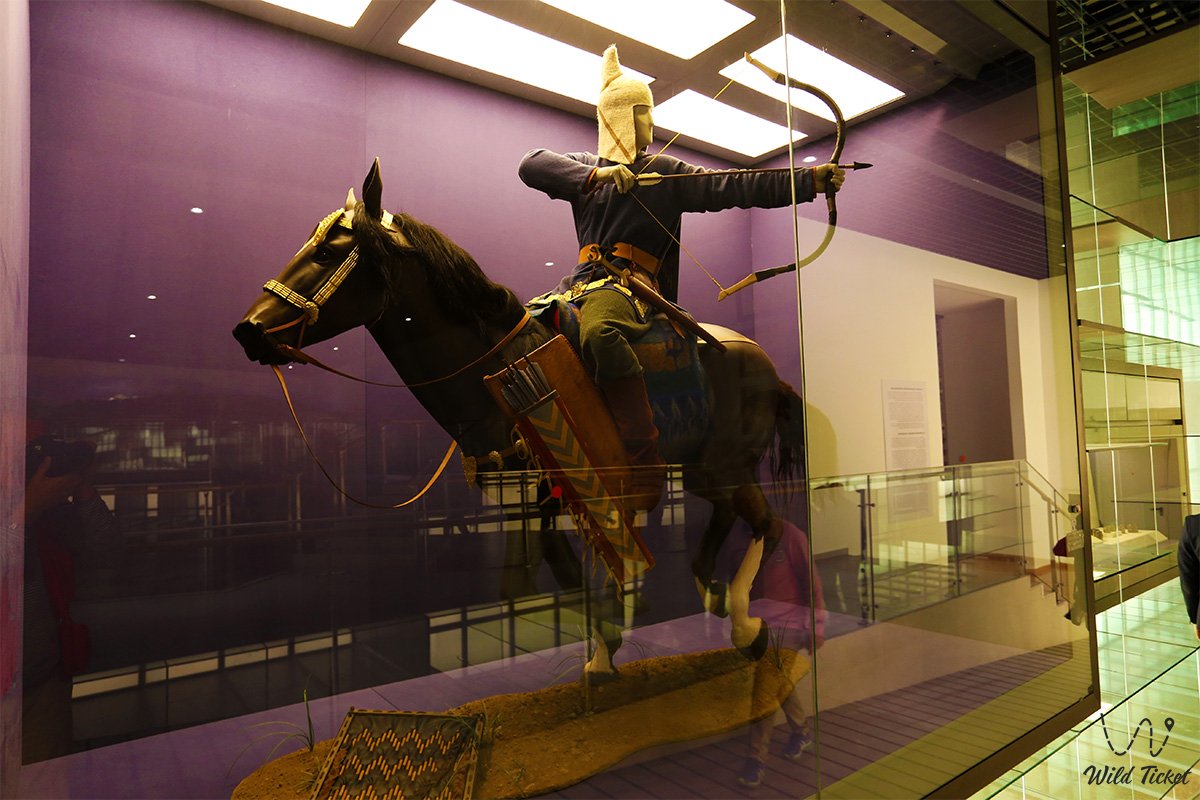
• Ancient and Medieval History Hall – covers the period from the Paleolithic to the late Middle Ages. About 5,000 artifacts are exhibited here, divided chronologically: Stone, Bronze, and Iron Ages. Visitors can see the oldest tools, ceramics, and numismatic collections. Anthropological reconstructions of the appearance of ancient steppe inhabitants hold a special place.
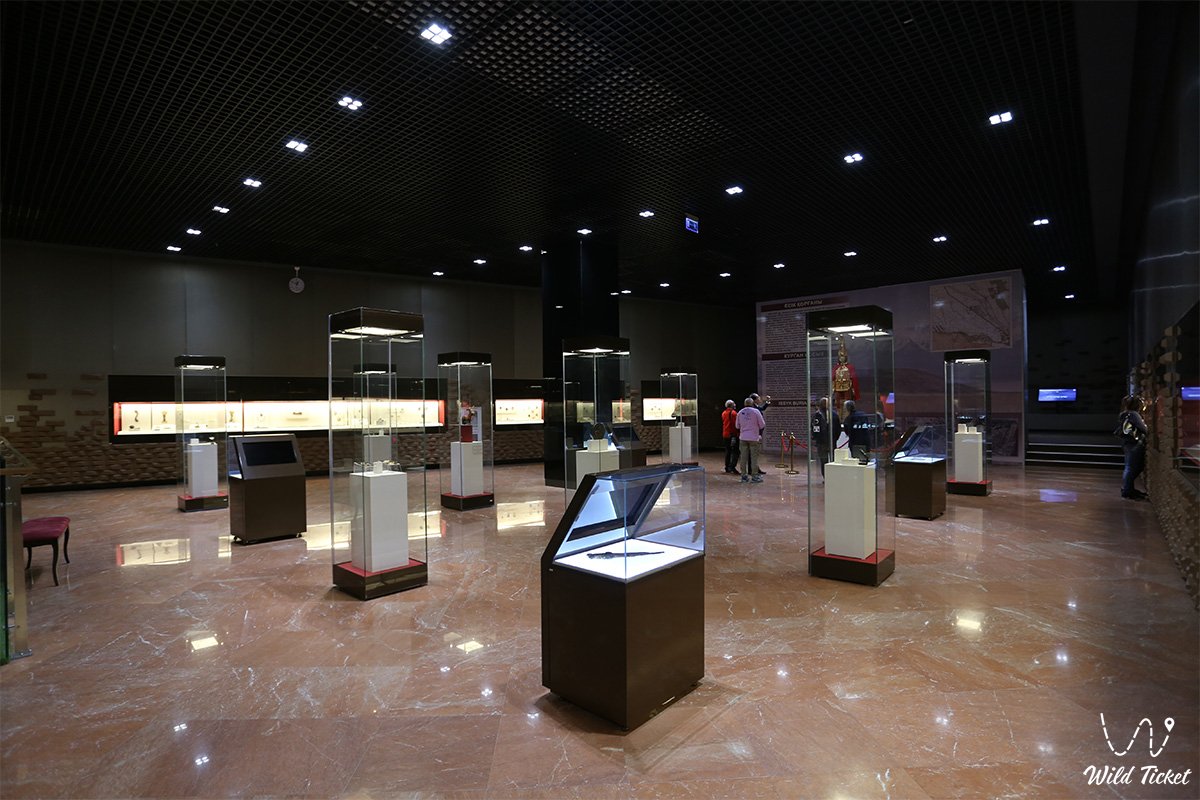
• Halls of Gold – the country's main treasury. Legendry finds from Scythian and Saka kurgans are presented here, including the "Golden Man" from the Issyk kurgan. The exposition demonstrates masterpieces of the "animal style": more than 4,000 gold items made using chasing, engraving, and granulation techniques. Unique finds from the Berel, Chilikty, and Taldy burial grounds are also displayed.
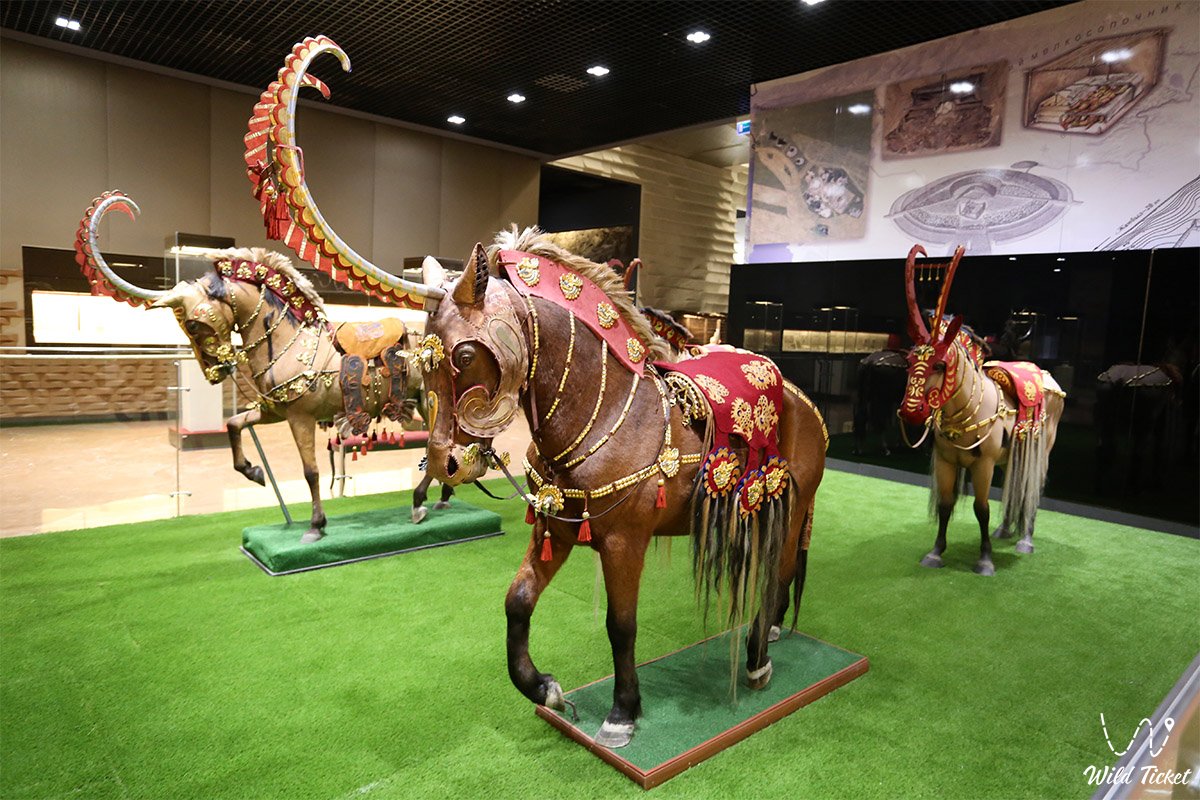
• Ethnography Hall – dedicated to the material and spiritual culture of the Kazakhs. The center of the exposition is a life-size traditional yurt (kiiz uy) with full interior decoration. Here you can study the mastery of folk crafts in detail: silver jewelry, handmade carpets, national clothing, horse equipment, and musical instruments of the nomads.
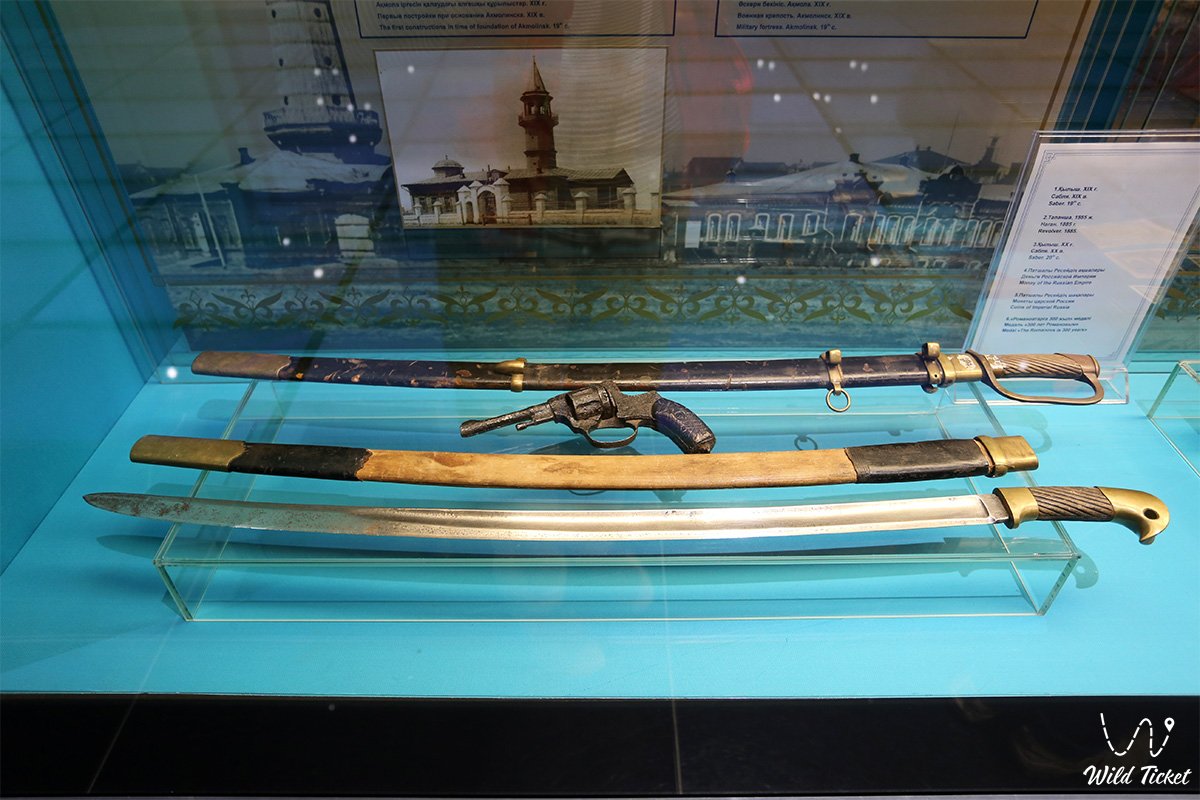
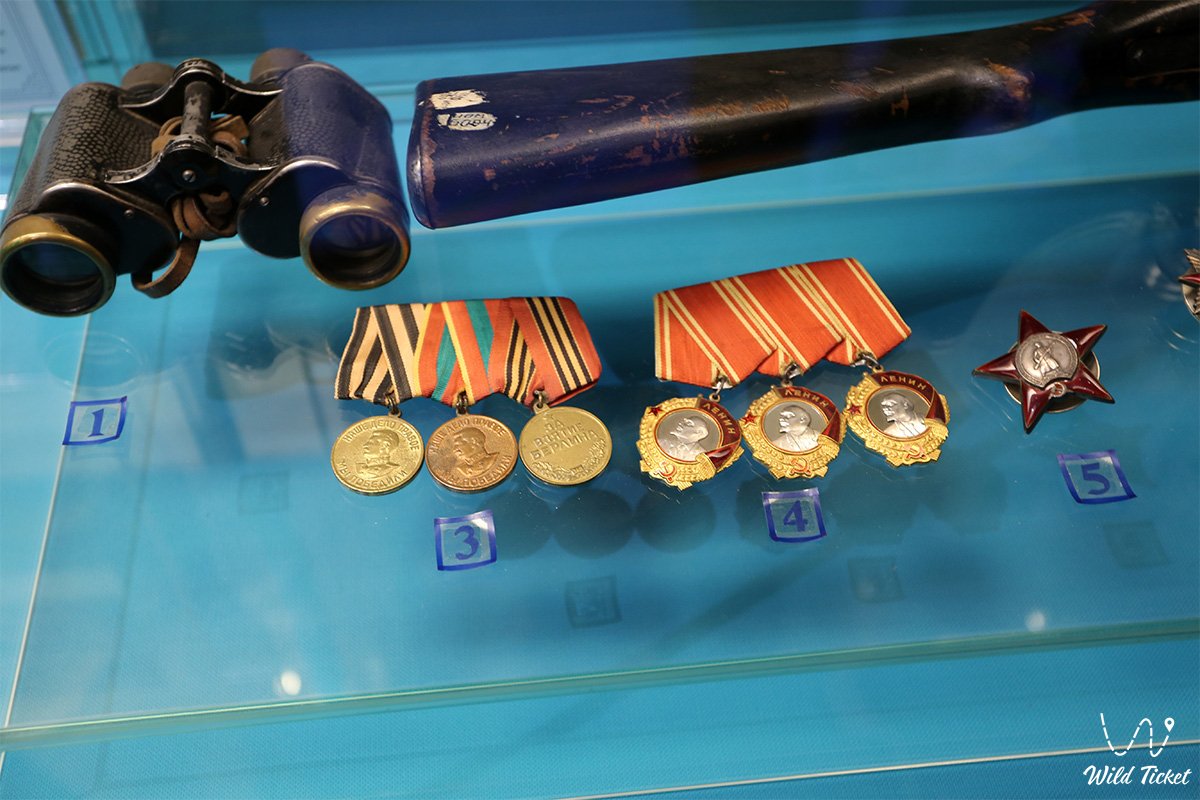
• History of Kazakhstan Hall – covers the period from the XII to the XX century in detail. The exposition tells about the formation of the Kazakh Khanate, the struggle for independence, the entry into the Russian Empire, and the tragic events of the XX century (famine, repressions, WWII). Books, personal belongings, and weapons of famous Kazakh batyrs are presented in the hall.
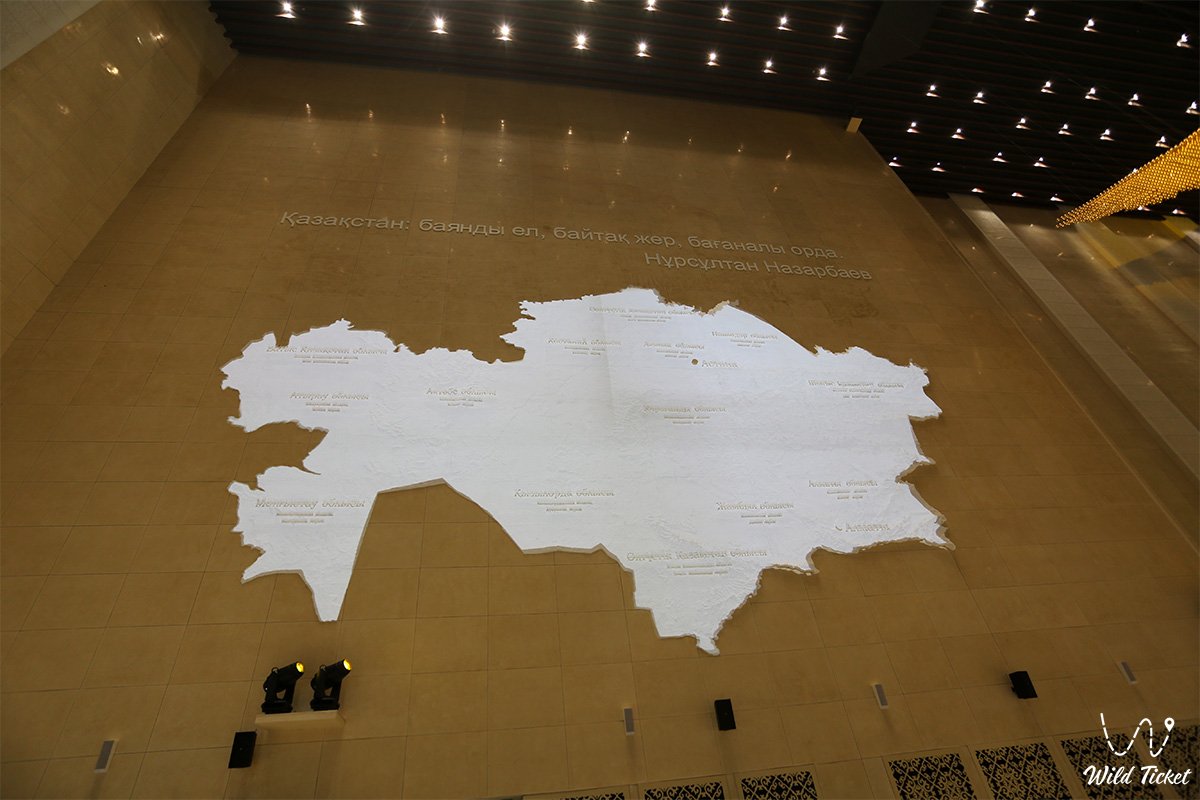
• Independent Kazakhstan Hall – demonstrates the achievements of the republic from 1991 to the present day. Through interactive panels and LED screens, the stages of statehood formation, economic reforms, development of science, and Kazakhstan's international recognition are shown.
• Astana Hall – a multimedia space telling the history of the capital. The main hit is a huge dynamic model of the central part of the city with a light show effect. Visitors can see all stages of the city's construction according to Kisho Kurokawa's plan and learn about how many times the city changed its name.
• Modern Art Hall – presents the works of Kazakh masters from the late XX to early XXI centuries. This is a platform for bold installations, graphics, lithography, and contemporary painting. The hall serves as a place for an open dialogue between classical traditions and current trends in world art.
Architecture
The futuristic museum building, lined with white marble, glass, and metal, consists of seven inclined blocks, symbolizing the continuity of time and the dynamics of development. The stepped structure rises to the ninth floor, creating a recognizable silhouette against the backdrop of Independence Square. The interior of the atrium, over 50 meters high, is filled with light and air. The museum's architectural solution is recognized as one of the boldest in the CIS, turning the building itself into a separate exhibit of modern art.
Legend
Among the museum staff, there is a legend of the "warrior spirit". It is said that the artifacts of the "Golden Man" possess a special protective aura: in the halls of gold, visitors often feel an inexplicable surge of strength and calm.
Another folk legend says that the golden eagle soaring in the atrium comes to life at night, flying around the museum halls to check the safety of the ancient treasures. These legends only emphasize the sacred significance of the museum as a place where the memory of ancestors lives.
Conclusion
The National Museum of the Republic of Kazakhstan is the heart of the nation's historical memory. It offers guests not just a viewing of display cases but an open dialogue with history through interactive technologies and live communication. A visit to this complex allows everyone to feel the scale of the great steppe civilization and see how carefully Kazakhstan preserves its traditions in the era of globalization. It is a place of power that inspires and makes one proud of the rich heritage of ancestors.
Interesting sights nearby:
• “Shabyt” Palace of Creativity;
• K. Kuanyshbayev Kazakh Musical Drama Theatre;
• Observation deck in the Presidential Park;
• Park of Peace and Reconciliation;
• Triathlon Park;
• Bauyrzhan Momyshuly Park;
• Akorda Presidential Residence.
Additional information:
• Useful information about Astana;
• Where to go and what to see in Astana;
• Akmola region attractions.
Photogallery: