Historical center of the Silk Road and mystical ruins -
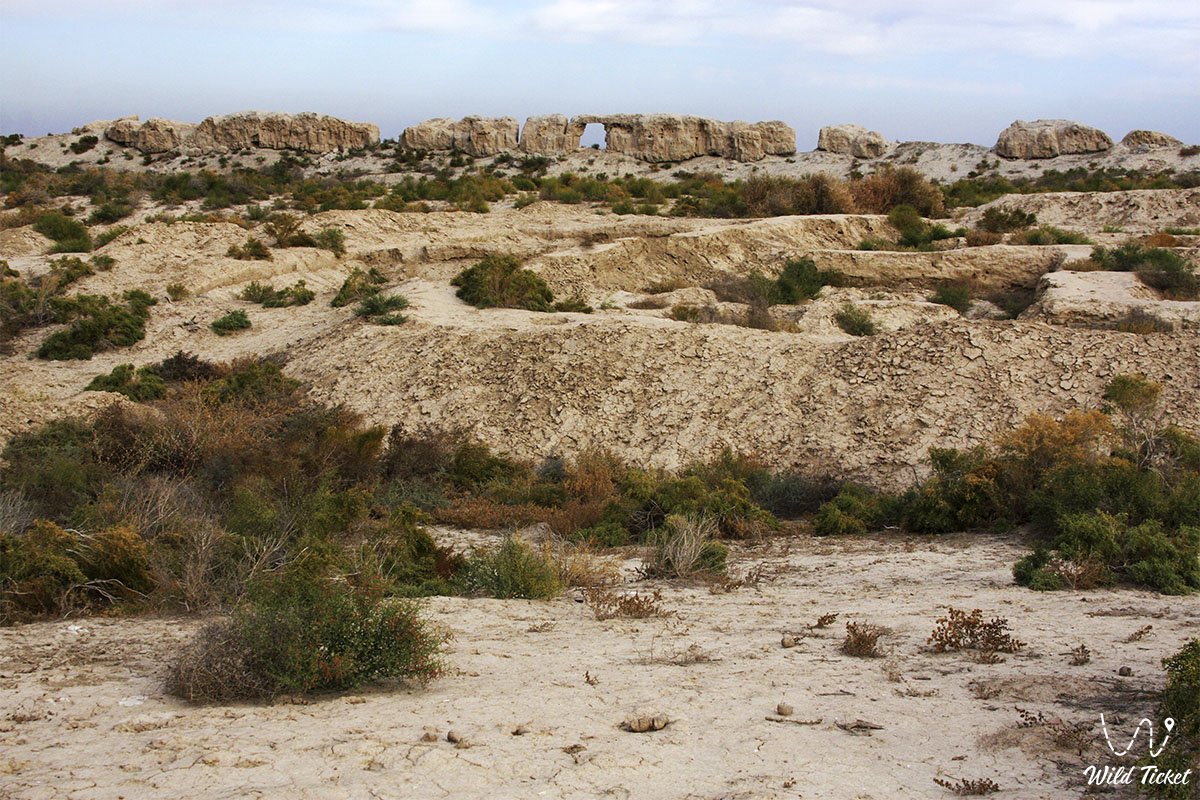
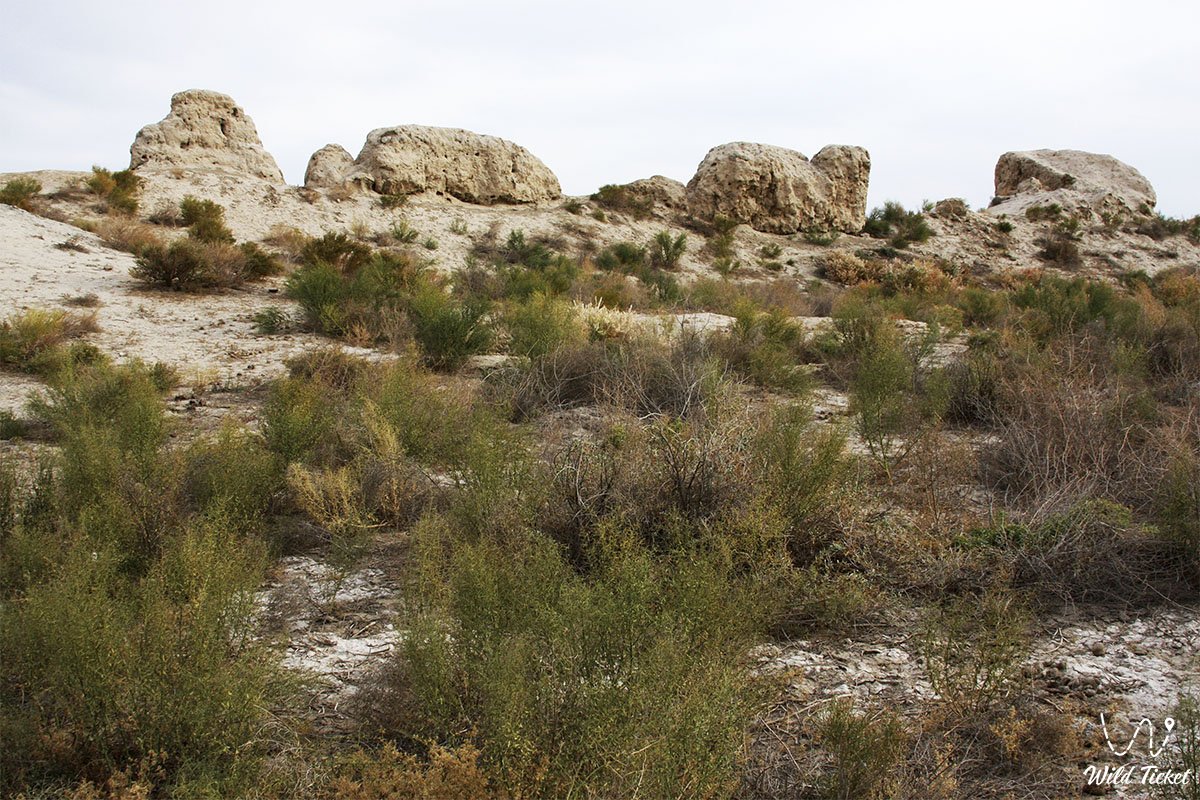
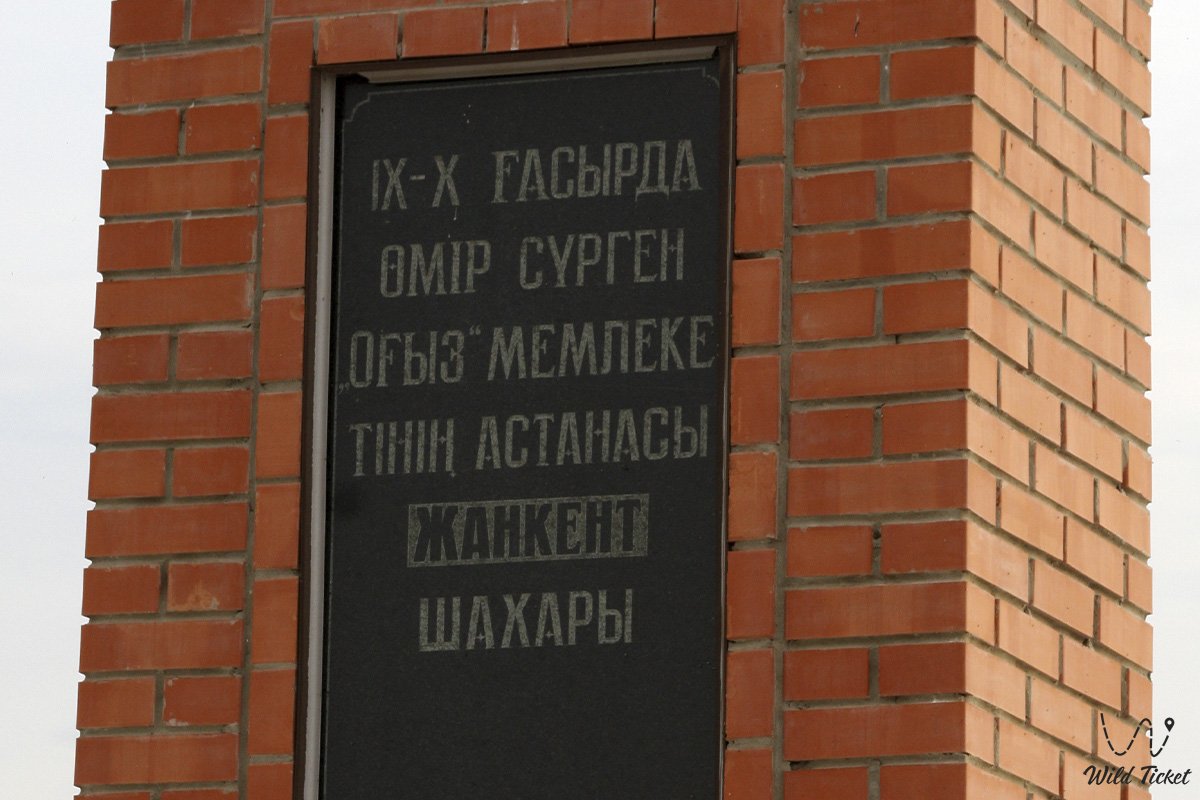
Zhankent ancient settlement, known in historical sources as Yangikent, which translates to "New City," represents one of the most significant and large-scale archaeological monuments on the territory of modern Kazakhstan. This unique site, located in the Kazaly district of the Kyzylorda region, served as the prosperous political, economic, and cultural capital of the powerful Oghuz State during the Middle Ages.
The ancient city occupied a strategically important position in the lower reaches of the Syr Darya River, becoming a reliable outpost and a key hub at the intersection of the caravan routes of the Great Silk Road. Near the ancient settlement is the Ayteke Bi village, from which it is convenient to visit the ancient city. You can also come here from the city of Kazalinsk.
Today, Zhankent is the subject of close attention from archaeologists, historians, and travelers who seek to see the ruins of the majestic fortifications with their own eyes and touch the secrets of the lifestyle of medieval nomads. In the immediate vicinity of this place, you can visit such significant sites as the Small Aral Sea, the unique Aralkum Desert, the majestic Begim-Ana Tower, and the architectural monument Saraman-Kosa Tower.
For centuries, Zhankent served as the winter residence of the Oghuz Yabgus, playing a critically important role in ensuring the stability of trade relations between the rich cities of Central Asia and the nomadic steppes of the Volga region. Its massive defensive walls, complex fortification system, and well-thought-out internal planning still amaze the imagination, serving as visual confirmation of the high level of engineering thought and craftsmanship of the architects of that distant era. It is best to start your journey through this region from the city of Aralsk, from which it is also convenient to travel along the bottom of the former Aral Sea.
Here you will find a list of tours to the Small Aral Sea.
---------------------------------------------
How to get there and visit -
Zhankent ancient settlement (Yangikent) is located 15 kilometers southwest of the city of Kazalinsk and 21 kilometers from the Ayteke Bi village, Kazaly district, Kyzylorda region, Republic of Kazakhstan.
GPS geographical coordinates: 45°36'43"N 61°55'17"E
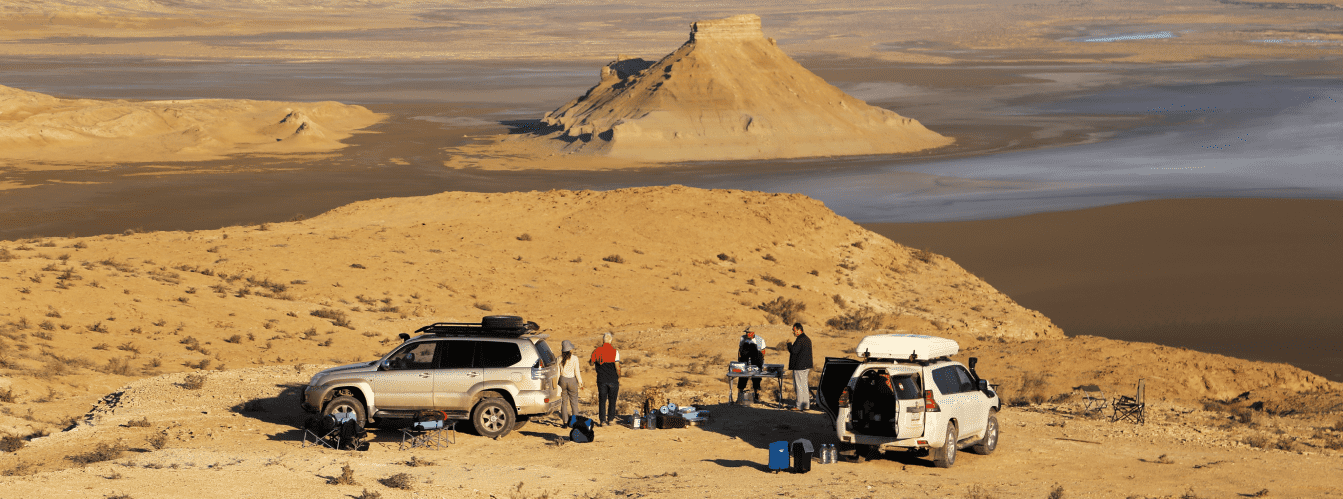
The transport logistics for visiting the monument involve using a personal or rented car. Dirt roads crossing the steppe zone lead to the ancient settlement from the main international highway M-32 (Samara – Tashkent). For comfortable and safe travel in off-road conditions, using a four-wheel-drive SUV is recommended.
It is most comfortable to make a trip to the ruins of the ancient Oghuz capital in the spring and autumn periods, when the temperature regime allows for long stays in the open air. In the summer months, the steppe is subject to severe heat, which makes exploring open archaeological zones tiring. When planning the route, tourists are recommended to have a standard navigator, a supply of drinking water, headwear, and comfortable shoes.
The infrastructure for receiving guests is fully developed in the nearby Ayteke Bi village. Here, travelers can use hotel services for overnight stays, visit restaurants with national cuisine, and purchase goods at local markets. For a deeper acquaintance with the historical site, it is advisable to arrange for accompaniment with local local historians or guides in advance, who will help professionally orient you on the territory of the archaeological complex.
---------------------------------------------
History
The origins of Zhankent go back to the first centuries of our era, but it reached its peak between the 10th and 11th centuries, becoming the heart of the Oghuz State. The city did not arise by accident: its location was ideal for controlling trade routes leading from Khwarazm to the northern steppes. During this period, Zhankent turned into one of the largest economic centers where markets, workshops, and administrative bodies actively functioned. Historical chronicles testify that the city remained a political center even after the decline of Oghuz statehood, retaining its significance during the periods of the Kipchak Khanate and the Golden Horde.
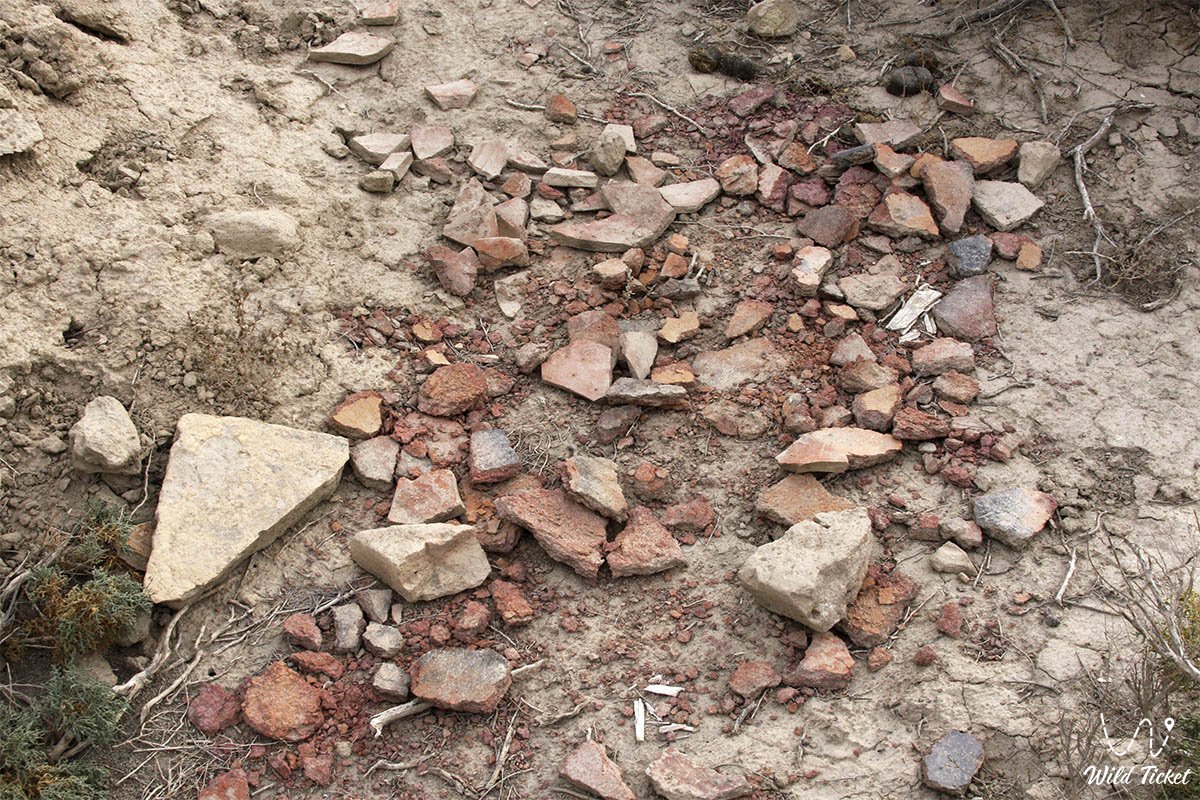
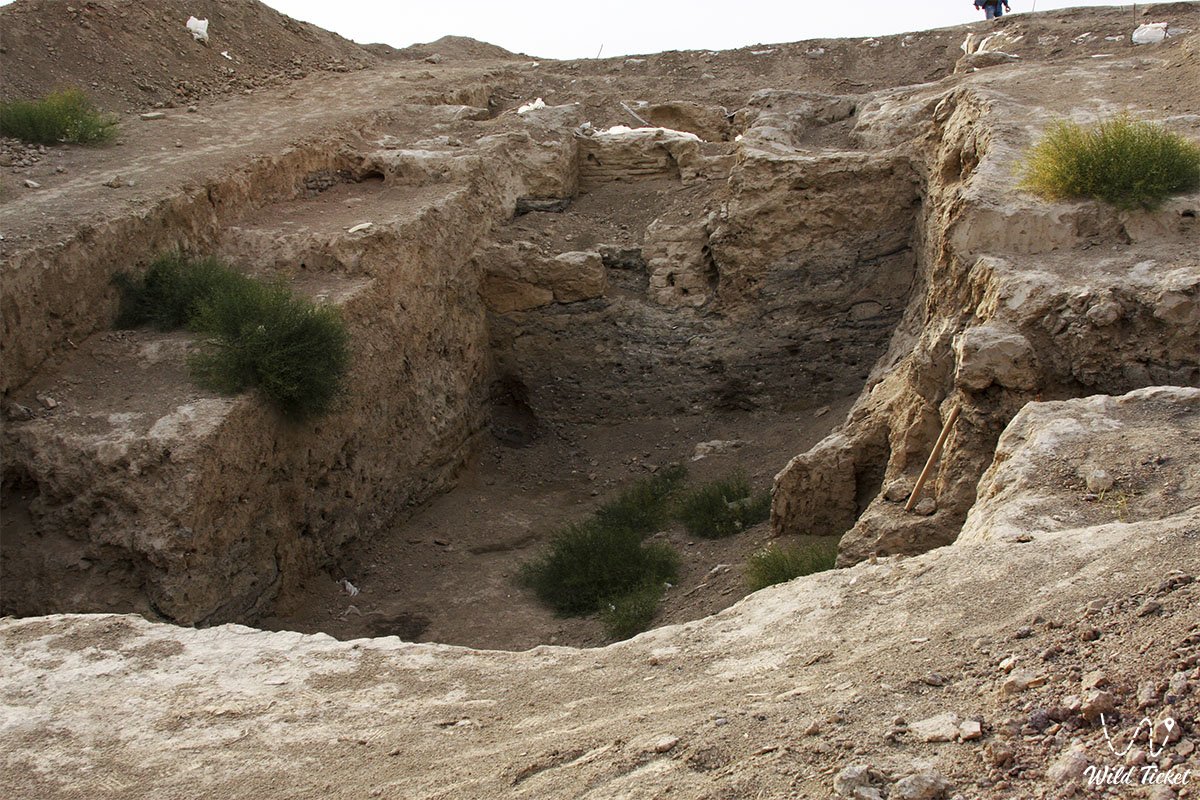
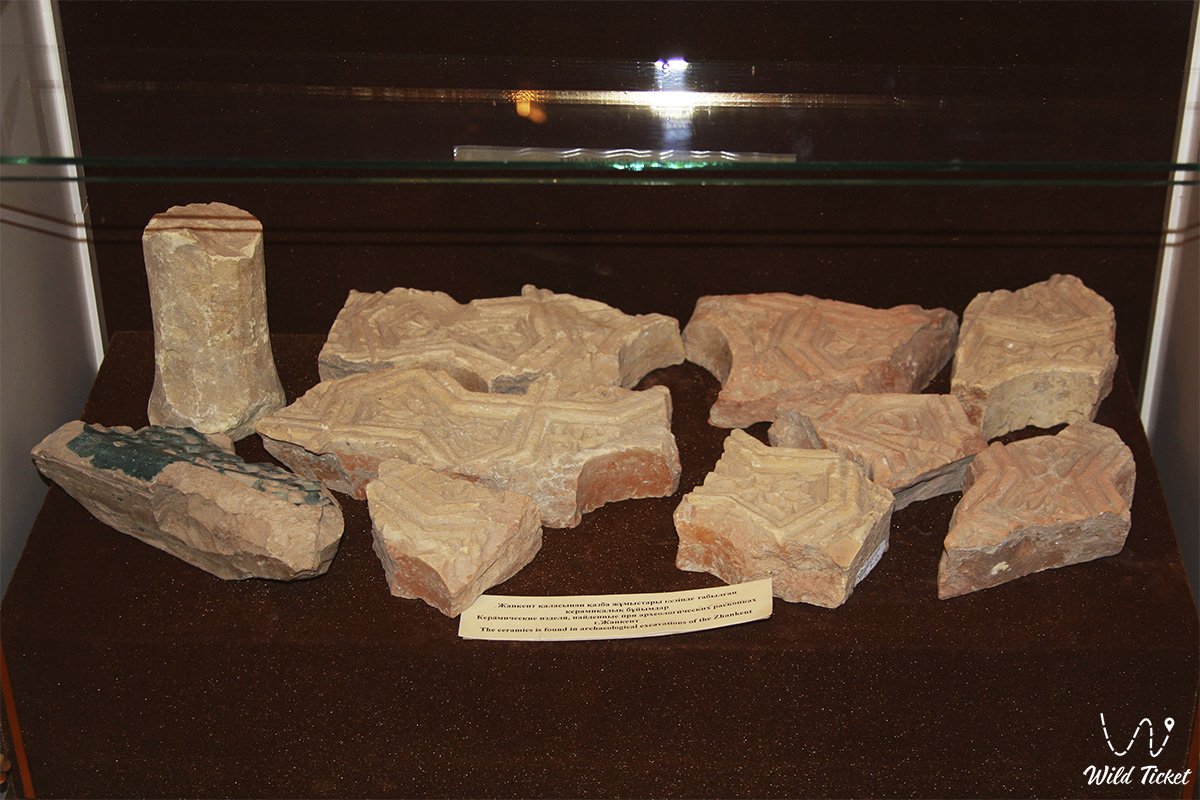
Archaeological research conducted on the territory of the ancient settlement over the past decades has opened many unique artifacts to scientists. Excavations confirm that complex crafts such as the production of high-quality ceramics, blacksmithing, metal casting, and jewelry production flourished in Zhankent. The city was a center for the integration of nomadic and settled cultures, which was reflected in the unique character of the household items and decorative elements found. Despite all the historical upheavals, invasions, and natural changes in the bed of the Syr Darya, Zhankent remained a symbol of resilience and prosperity for centuries.
Information
At present, Zhankent officially has the status of an archaeological monument of republican significance and is under the reliable protection of the state. The territory of the ancient settlement occupies an area of about 15 hectares, which was enclosed by massive fortifications. In recent years, within the framework of state programs for the development of cultural tourism, systematic work has been carried out at the site on the conservation, research, and museification of the most vulnerable sections of walls and structures. These measures are necessary to preserve the authentic appearance of the ancient capital for future generations.
It is important to note that the infrastructure in immediate proximity to the ruins of the ancient settlement itself remains minimal, which emphasizes the pristine character of this archaeological monument. However, in the nearest Ayteke Bi village, all conditions for a comfortable stay for tourists have been created: modern hotels, commercial houses, and catering facilities operate.
Detailed description of the venue
The well-thought-out structure of the historical and cultural complex of the Zhankent ancient settlement includes the following original locations and geographical features:
• Citadel – the historical core of the ancient settlement measuring 100 by 100 meters, where the residences of rulers, palace premises, and administrative buildings ensuring the governance of the state were located.
• Shahristan – the extensive residential zone of the ancient settlement, where wealthy citizens, civil servants, merchants, and skilled craftsmen lived.
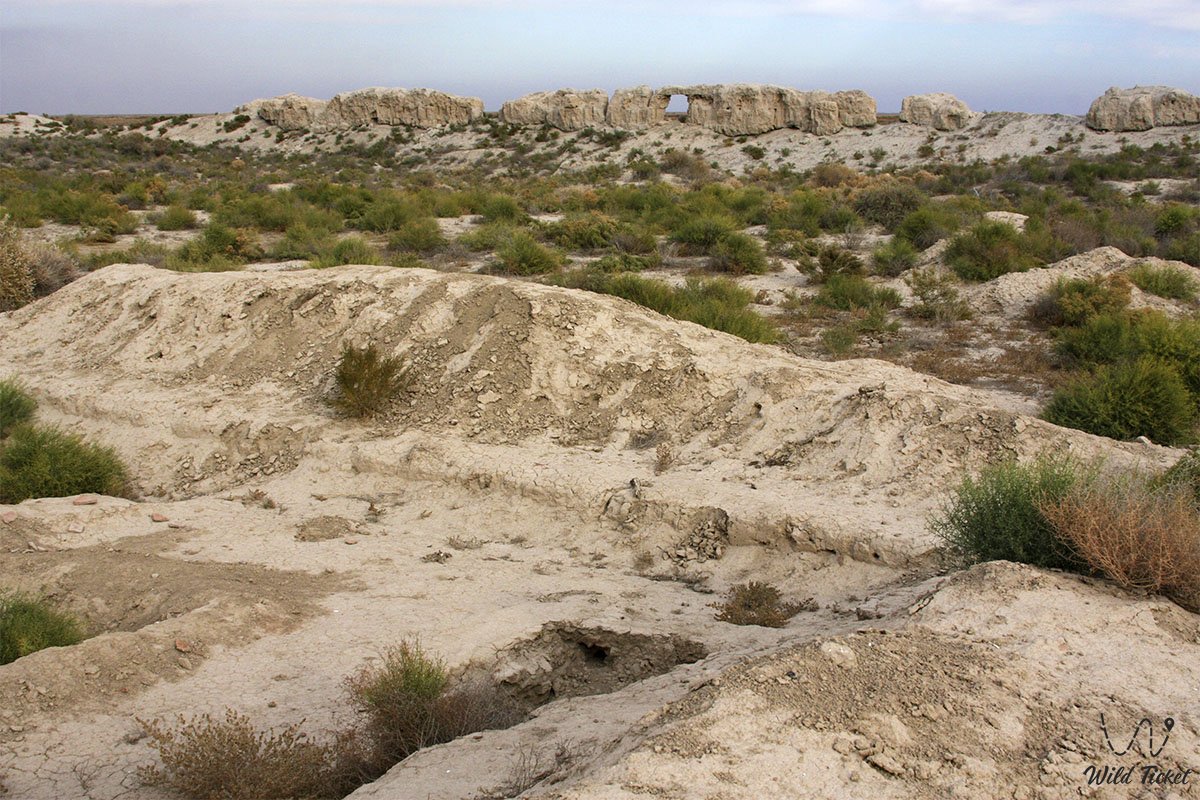
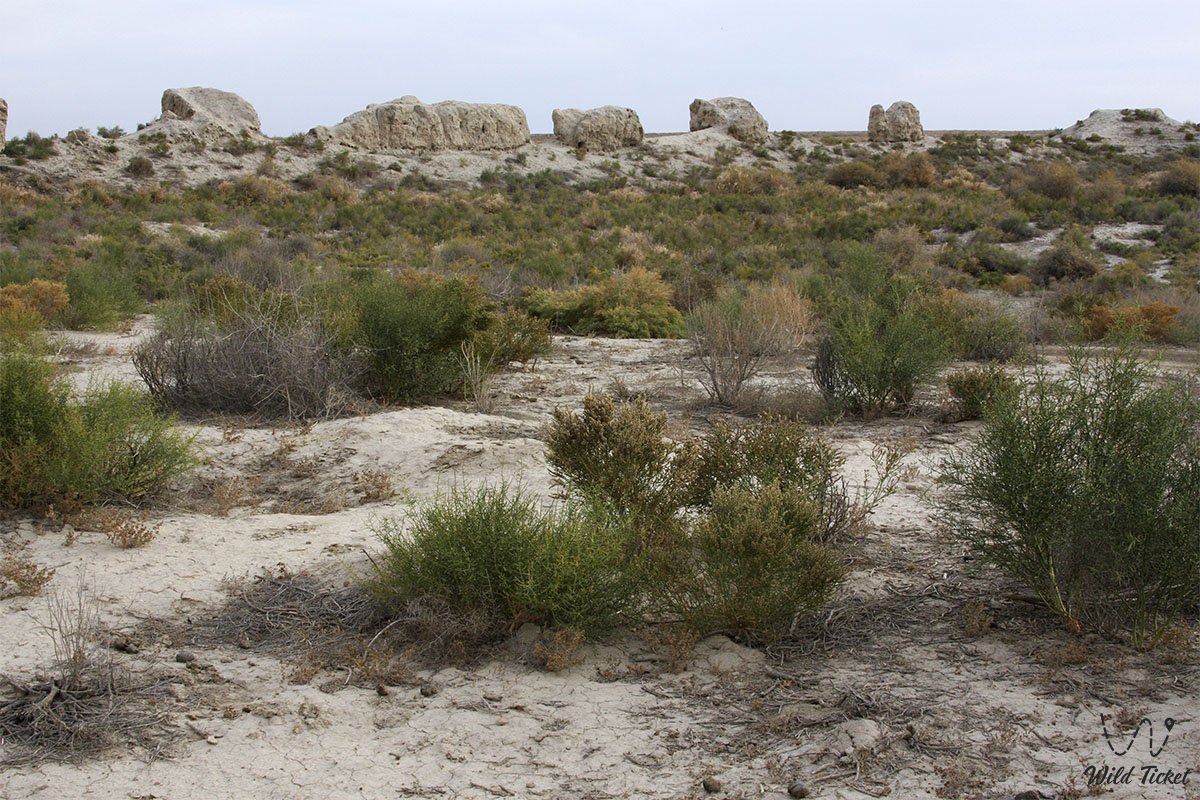
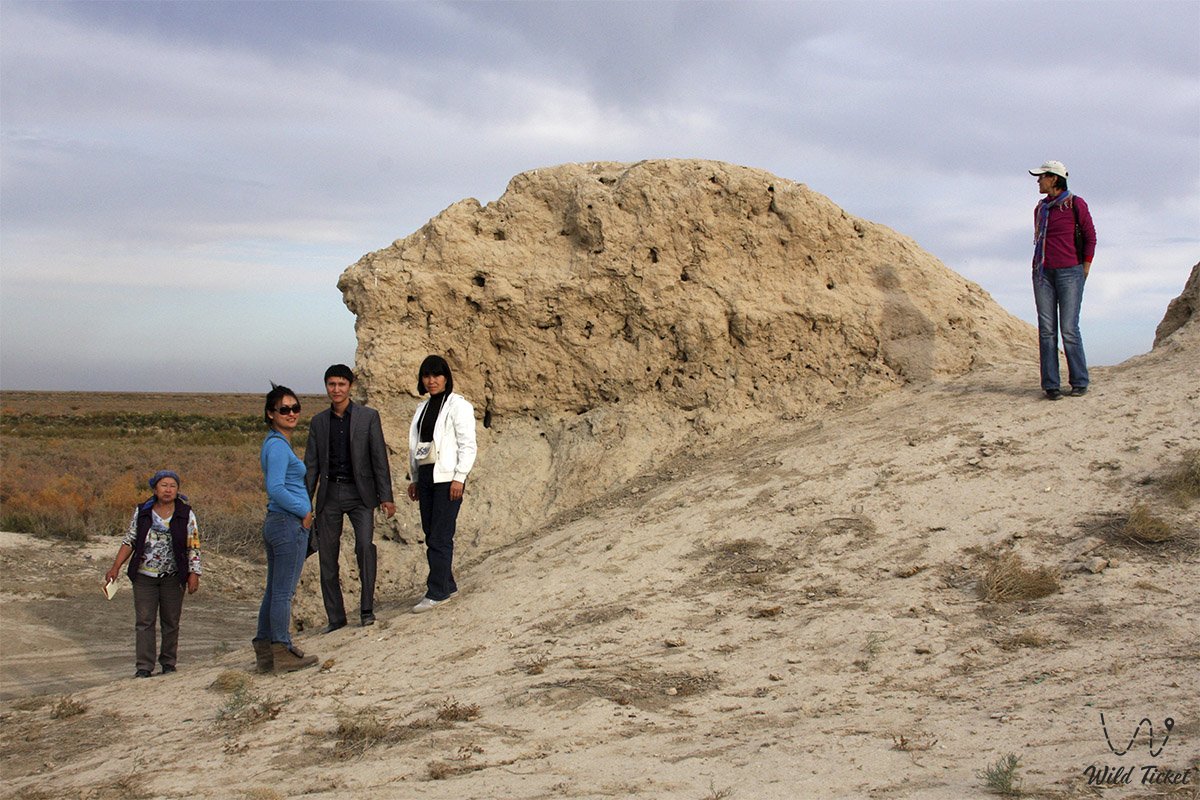
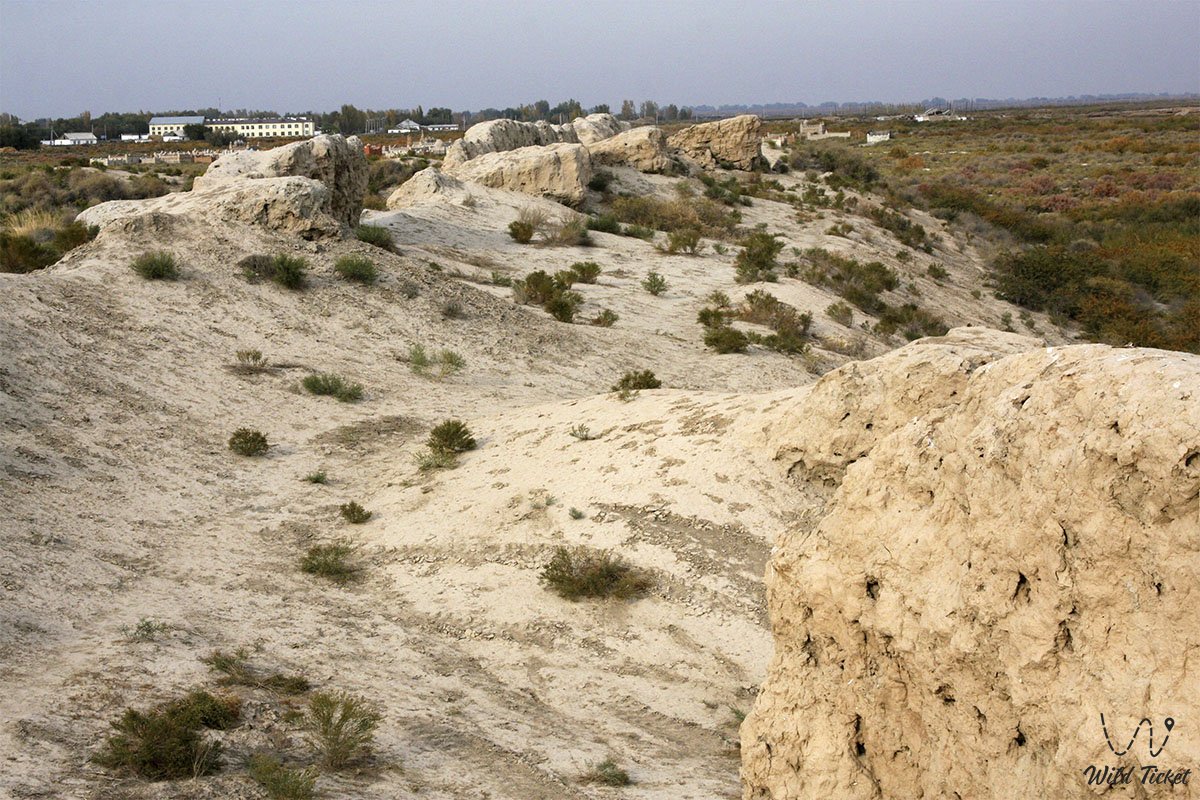
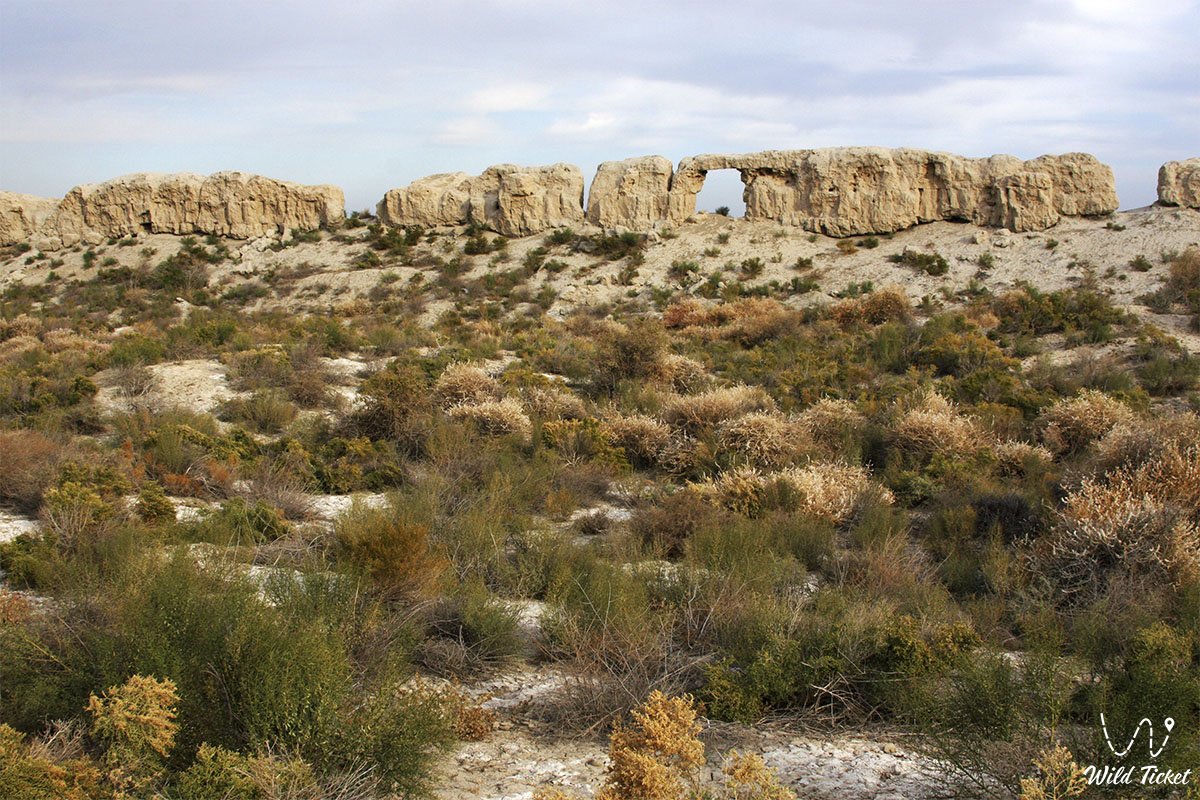
• Defensive system – a monumental complex of massive mudbrick walls up to 8 meters high with deep ditches and watchtowers, which made the city an practically impregnable fortress.
• Production sector – a complex of archaeological zones with the remains of pottery kilns, grain stores, and blacksmith workshops, confirming the industrial scale of production.
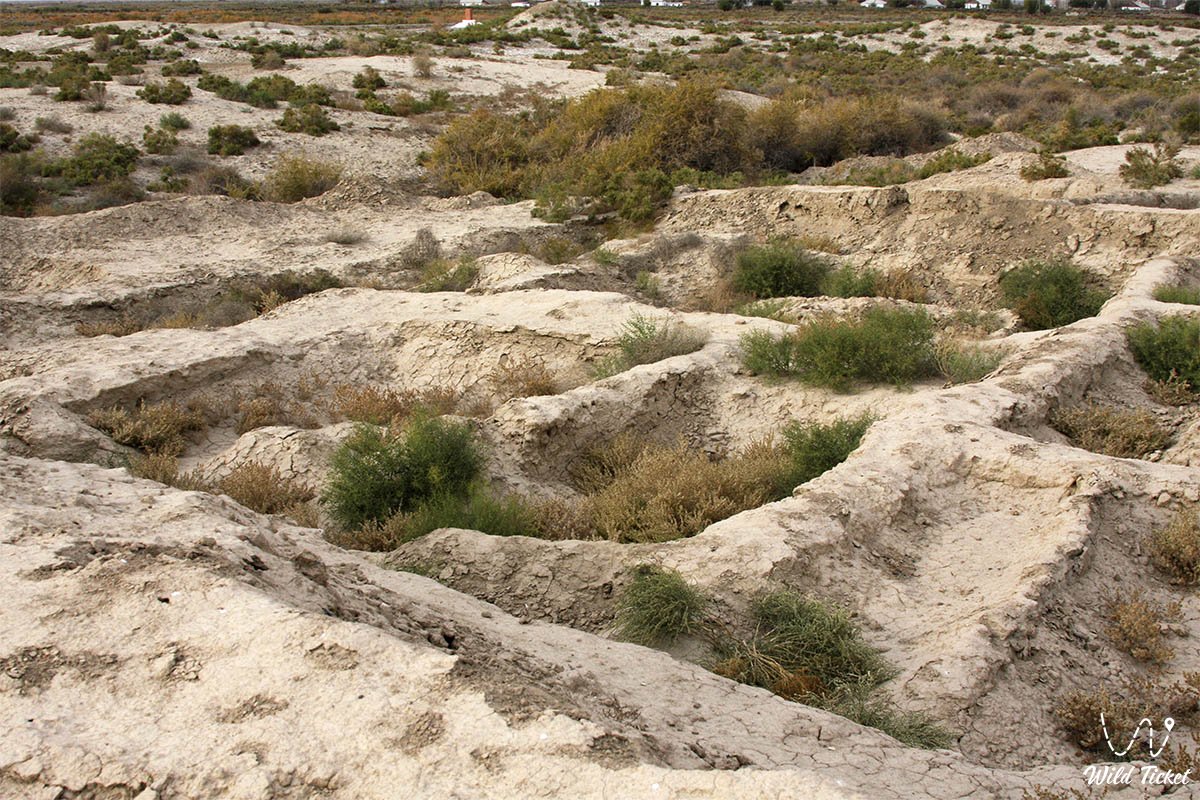
• Irrigation network – unique traces of ancient canals and water supply systems that diverted water from the Syr Darya into the center of the city and ensured the vital activity of the oasis.
• Archaeological museum fund – specially designated excavation areas where unique household items were found, including copper coins, bronze products, jewelry, and terracotta figurines.
Architecture
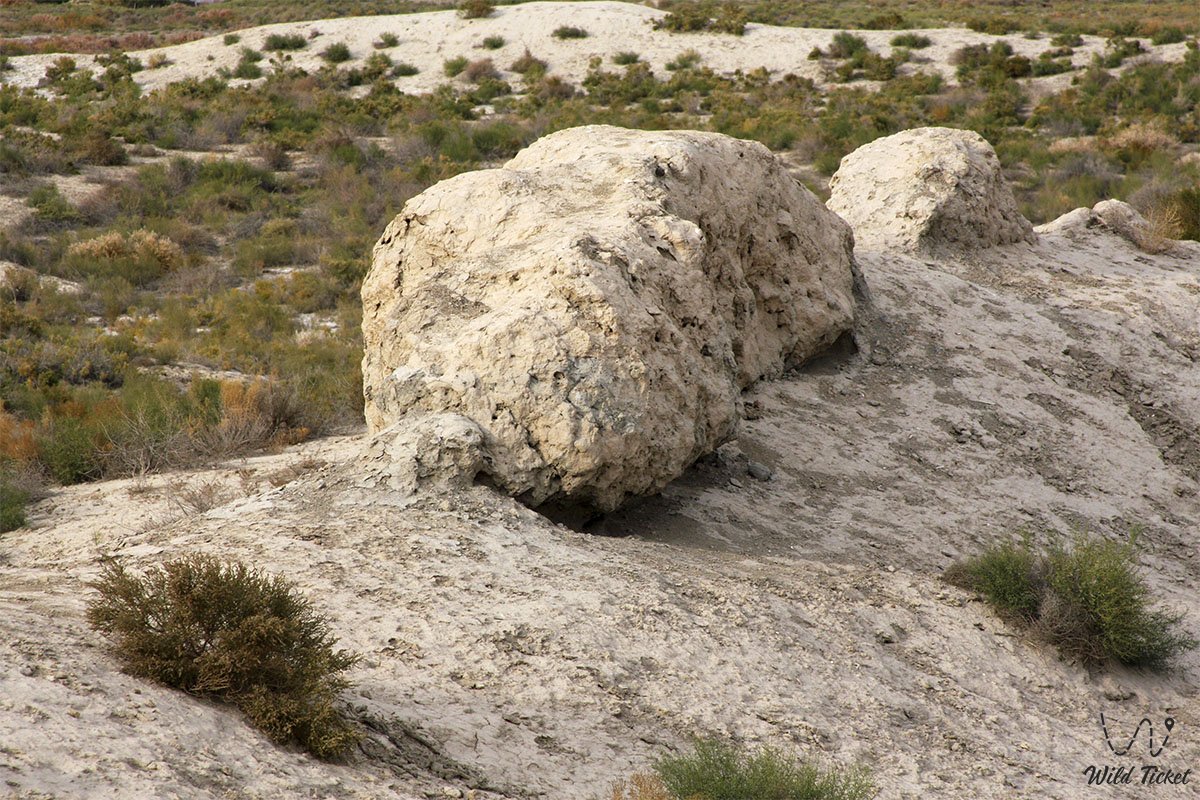
The architectural appearance of Zhankent is a bright reflection of the medieval school of architecture of the Aral region, which is characterized by the use of accessible but exceptionally durable materials. The basis of all structures was pakhsa — raw brick prepared from a mixture of clay, straw, and sand, dried in the scorching sun. This material provided excellent thermal insulation, keeping the houses cool in summer and retaining heat in winter. Particular attention is drawn to the mastery of erecting fortification walls: their thickness and height made it possible to effectively restrain the onslaught of heavy siege equipment of that time.
The internal planning of the ancient settlement was strictly hierarchical. The division into sacred, administrative, and residential quarters testifies to a high degree of social organization and discipline of the residents. Even today, after centuries of destruction, the ruins of Zhankent impress with their geometric precision and monumentality, making one admire how medieval architects subordinated the desert landscape to themselves.
Legend
Among local residents living in the Kazaly district, exciting legends about Zhankent are passed down from generation to generation. One of the most popular tells of the incalculable treasures of Oghuz rulers hidden in the depths of the city. The elders say that in the era of its peak, the city was so rich that its residents used exclusively gold and silver utensils. Another legend tells of the mysterious Oghuz princess Begim, who, being unjustly accused of treason by Khan Sanjar, aroused the wrath of her father. According to tradition, after her tragic fate, the city became empty, and all attempts to resettle it ended in failures.
There are also traditions about the valor of the city's defenders. Local residents believe that the spirits of their ancestors still invisibly guard the peace of the ancient capital, turning away troubles from every traveler who approaches these walls with respect. They say that if you listen to the rumble of the wind in the ruins on a moonlit night, you can hear the ghostly chime of trade caravans and the distant roar of festivities that once filled this city with life.
Conclusion
Zhankent represents not just a unique archaeological monument, but a crucial link in the history of Kazakhstan, serving as a bridge between the region's present and its great heroic past. As an ancient capital keeping the memory of Oghuz statehood, the ancient settlement occupies a central place on the tourist map of the Aral region.
A journey to this historical site gives each researcher an opportunity to deeply feel the processes of the formation of steppe culture and appreciate the contribution of our ancestors to the development of world civilization. The preservation, study, and popularization of Zhankent is our shared responsibility and an essential task for the development of tourism.
Interesting sights nearby:
• Lake Kambash (Kamystybas);
• Raim Fort;
• Tolybay Batyr Mausoleum;
• Kuttybay Mausoleum;
• Beketay Mausoleum;
• Basibek Mausoleum.
Photogallery: