Sacred peak of unity, the signal beacon of Aday-Ata –
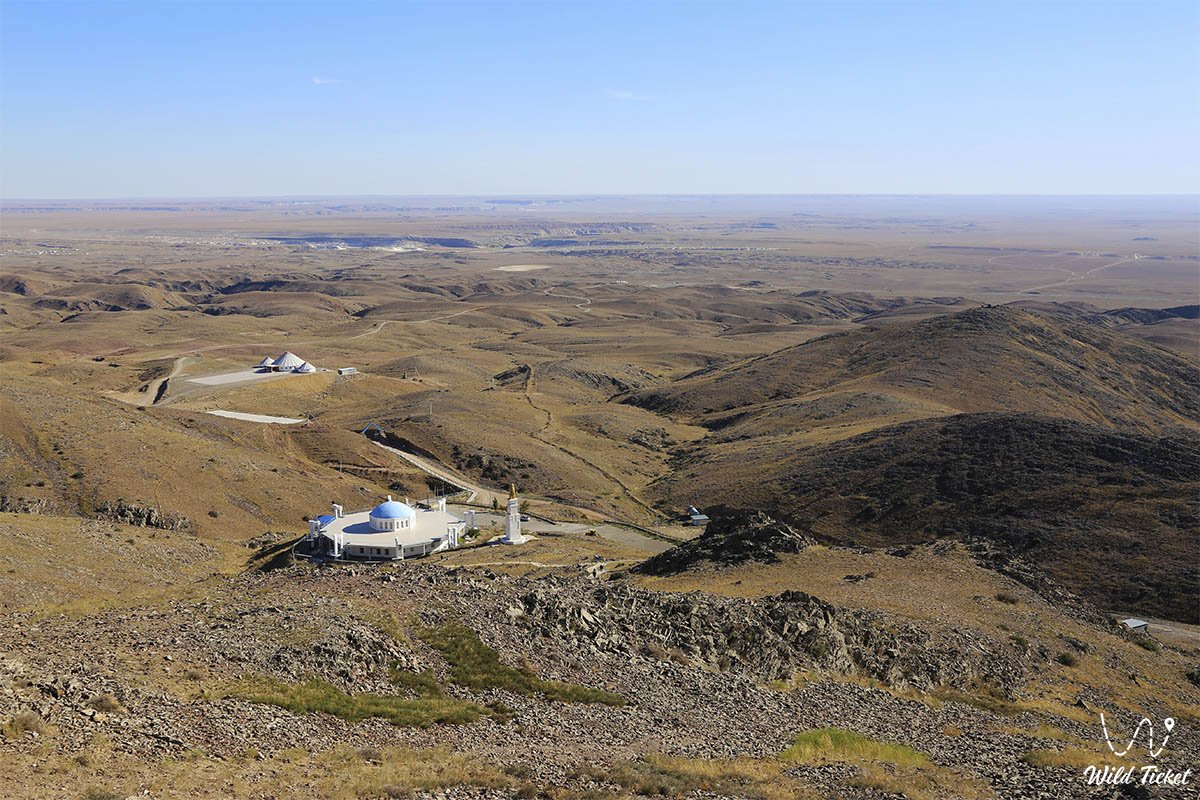
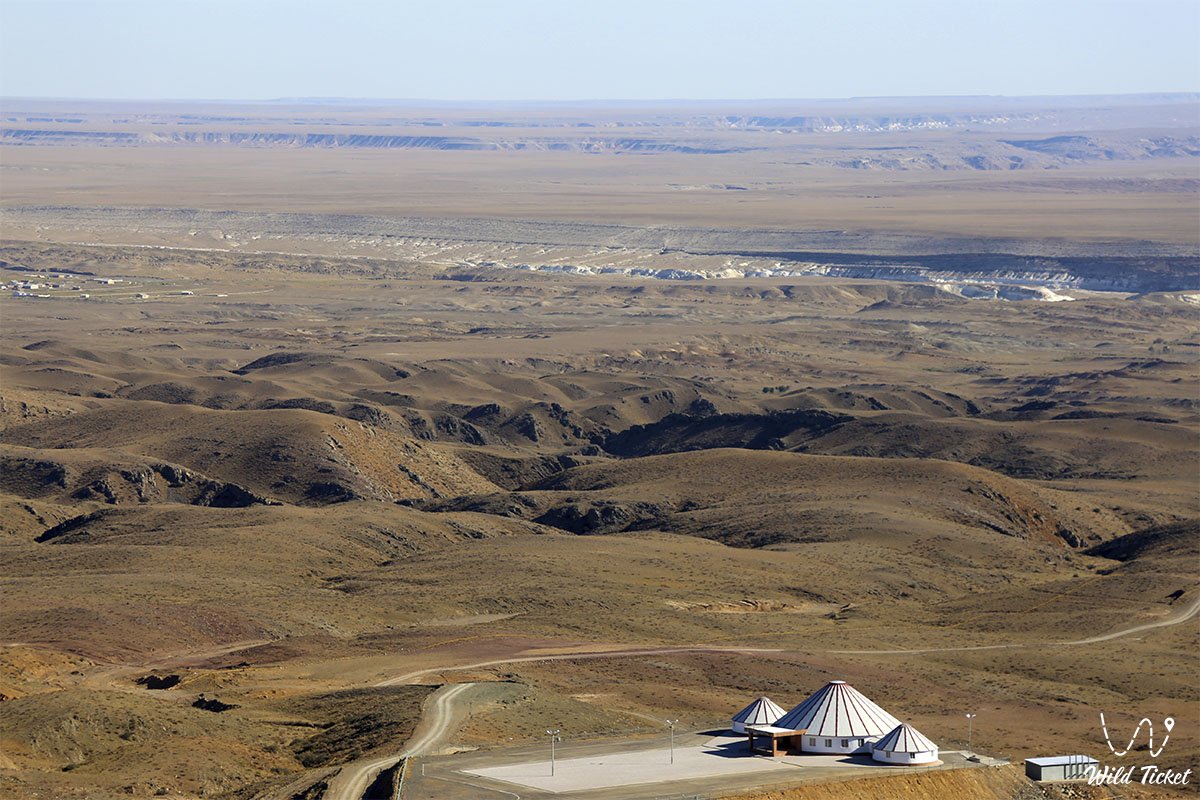
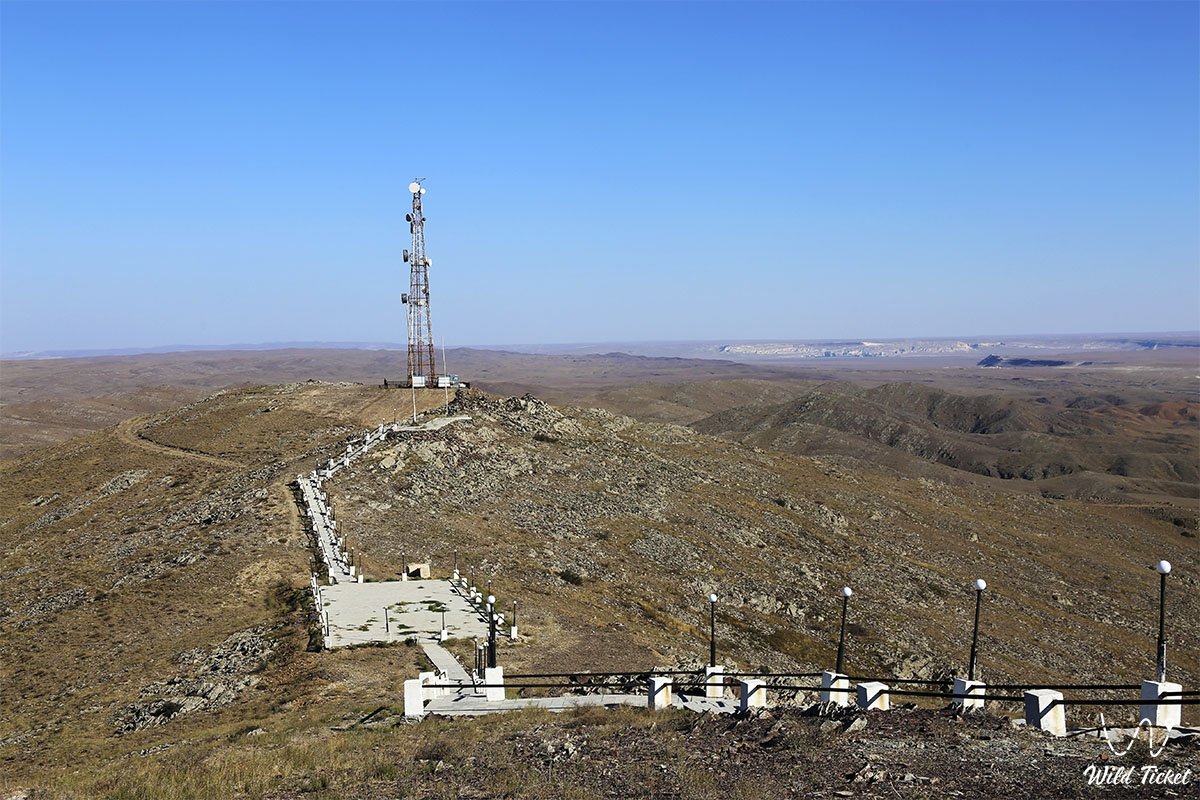
The Otpan Tau Historical and Cultural Complex (Kaz. «Otpan tau» tarihy-madeni kesheni) represents a grandiose open-air memorial ensemble, a sacred pantheon, and the premier spiritual and historical center of the Mangystau region. The complex crowns the summit of Mount Otpan-Tau – the highest point of the Western Karatau mountain range (532 meters above sea level), which dominates the surrounding semi-desert plains and is visible for dozens of kilometers, serving as an age-old natural landmark of the Mangyshlak Peninsula.
This entire rugged mountain chain is a direct geological legacy of the prehistoric Tethys Ocean and ancient Permo-Triassic folded uplifts: when the peninsula's territory was a seabed during the Paleogene epoch, the summit of Otpan-Tau rose above the waves as a solitary rocky island.
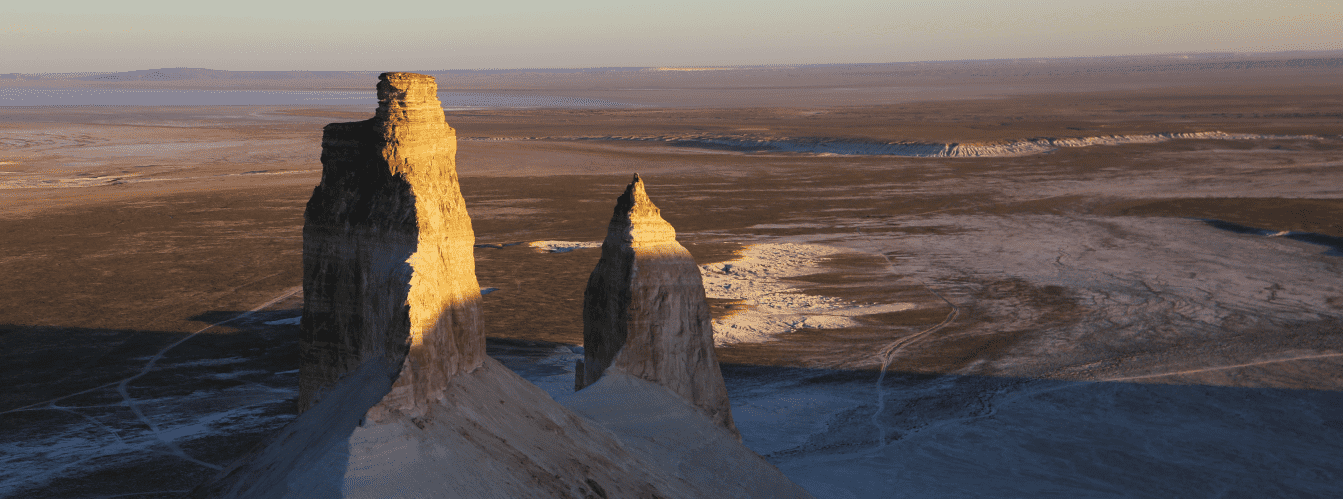
Within the network of tourist and pilgrimage itineraries across Mangystau, the Otpan Tau complex serves as a central connecting link: en route to the sacred peak, travelers discover legendary solitary Mount Sherkala ("Lion's Fortress"), the shaded spring groves of Samal Gorge, the stratified colored clays of the Kokkala canyon, and the fantastical chalk towers of the Valley of Castles Airakty – Shomanay.
Since ancient times, the mountain peak carried a vital sentinel and defensive mission. In times of military threat and hostile incursions, watchmen lit a signal beacon ("uran oty") atop the Otpan peak. The blazing flame and thick smoke were visible across the entire steppe and along the chinks of the Ustyurt Plateau, summoning steppe warriors (sarbazes) to defend their native land beneath a unified banner. In peaceful times, biys and aksakals gathered at the summit to resolve crucial matters and hold nationwide kurultais.
The originator of the idea and scientific concept behind the spiritual complex "Otpan" was the renowned poet and public figure Sabyr Aday, who developed the project in 2004 with the support of the charitable foundation "Aday." Designer and architect Kopbol Demesinov constructed the complex. The grand opening took place on October 25, 2007.
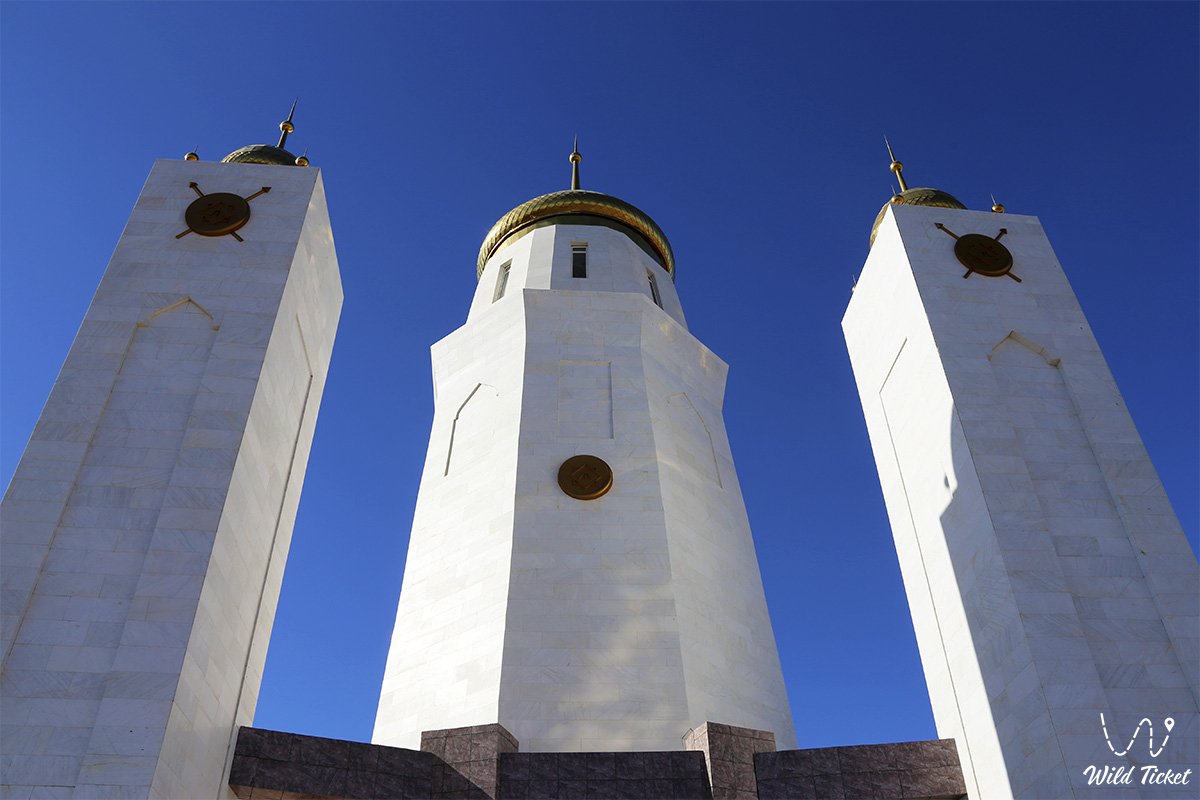
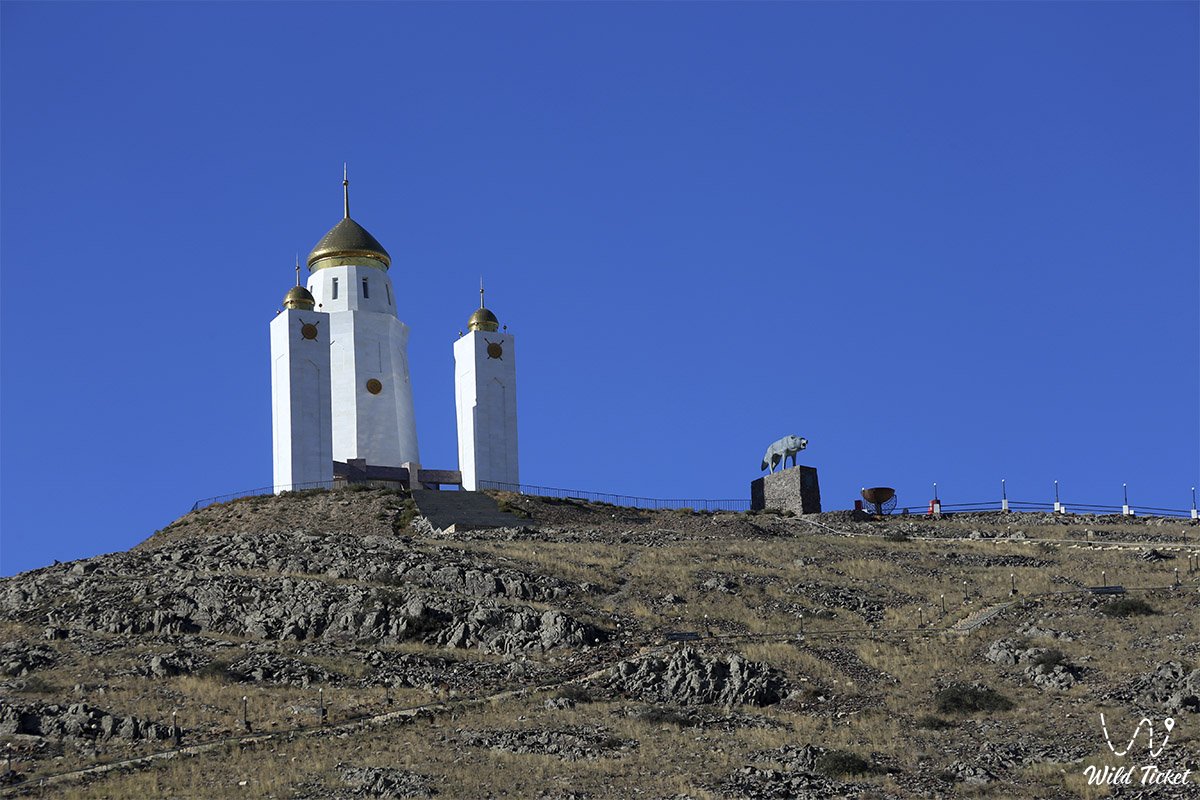
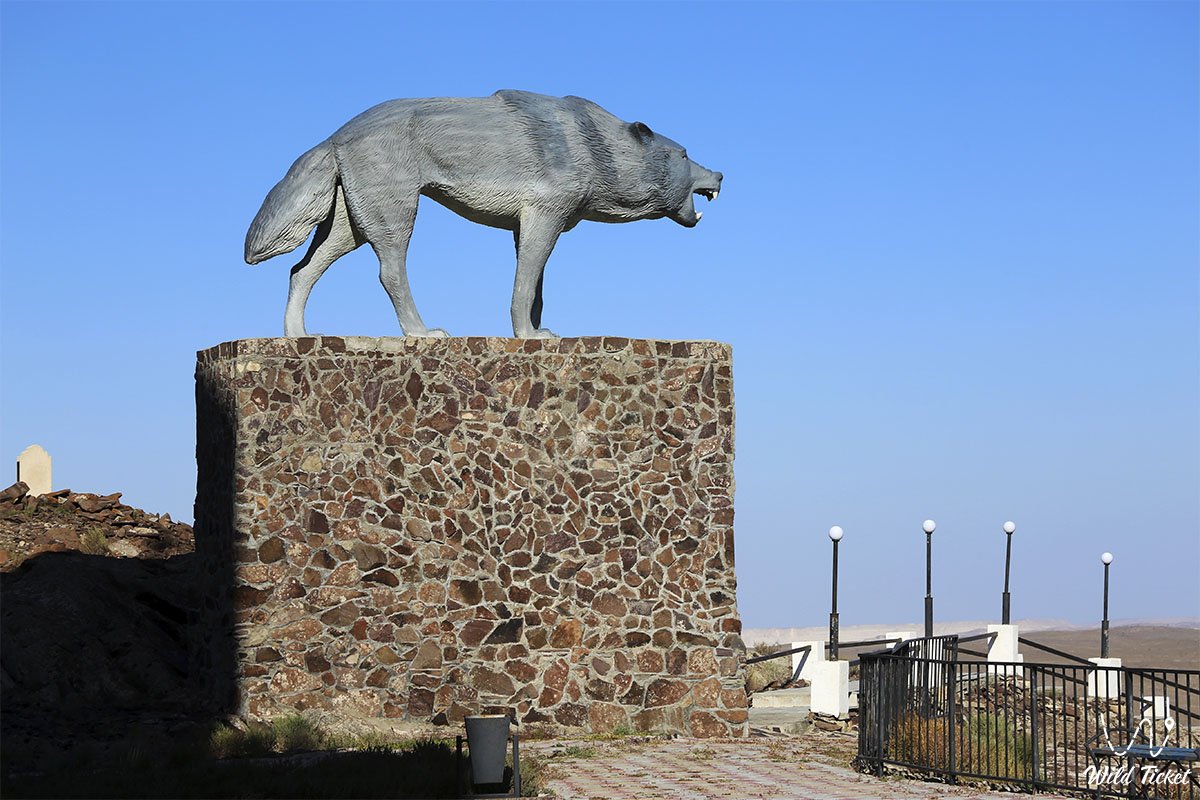
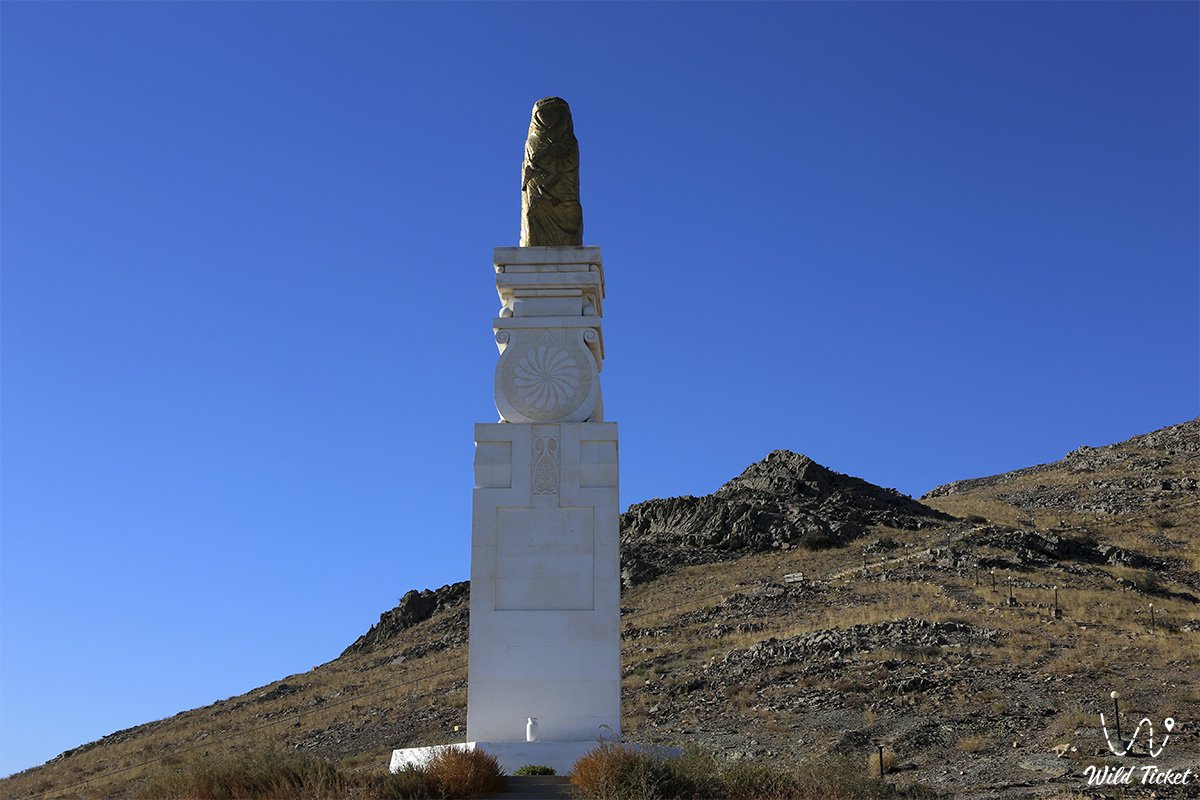
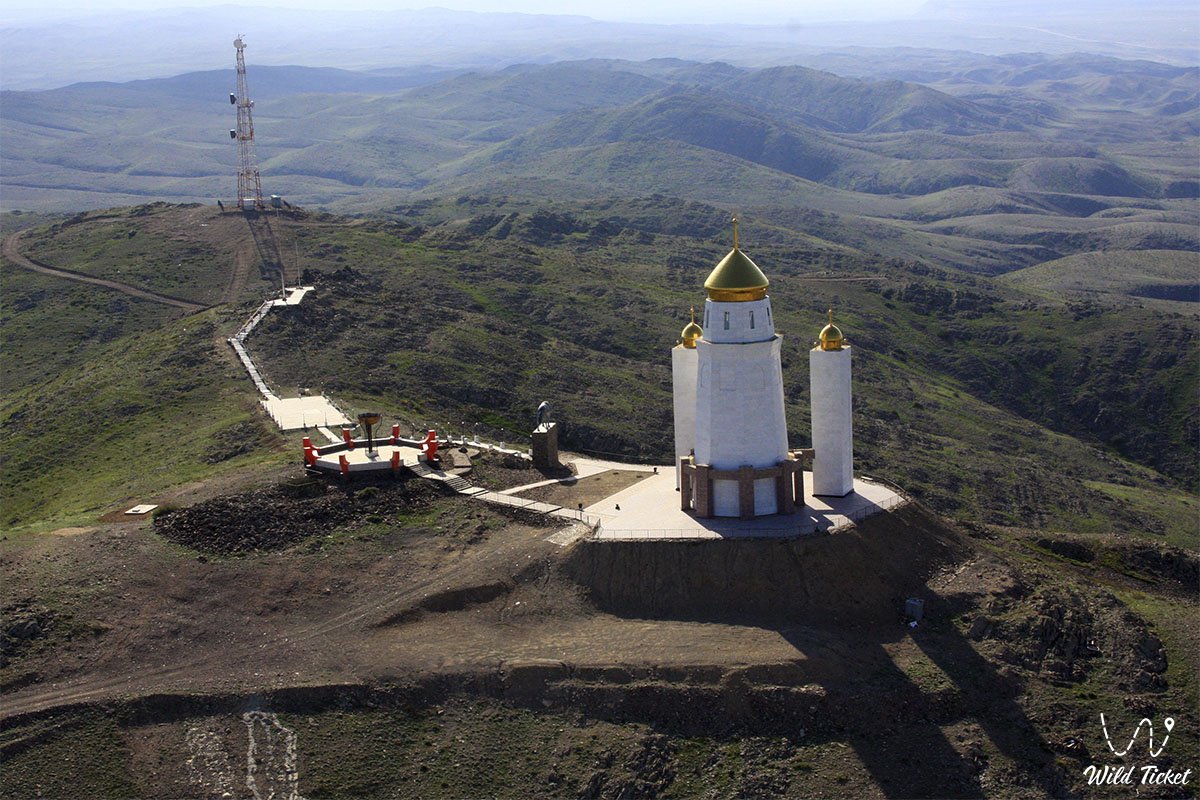
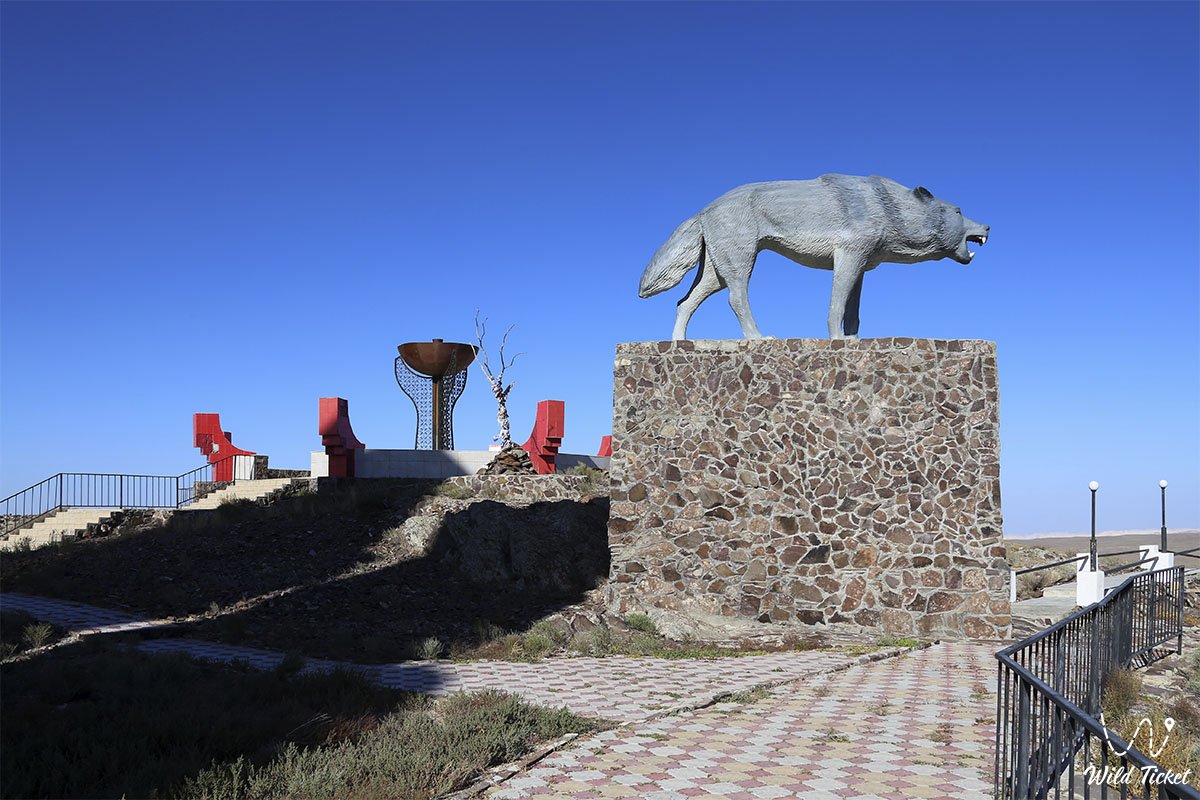
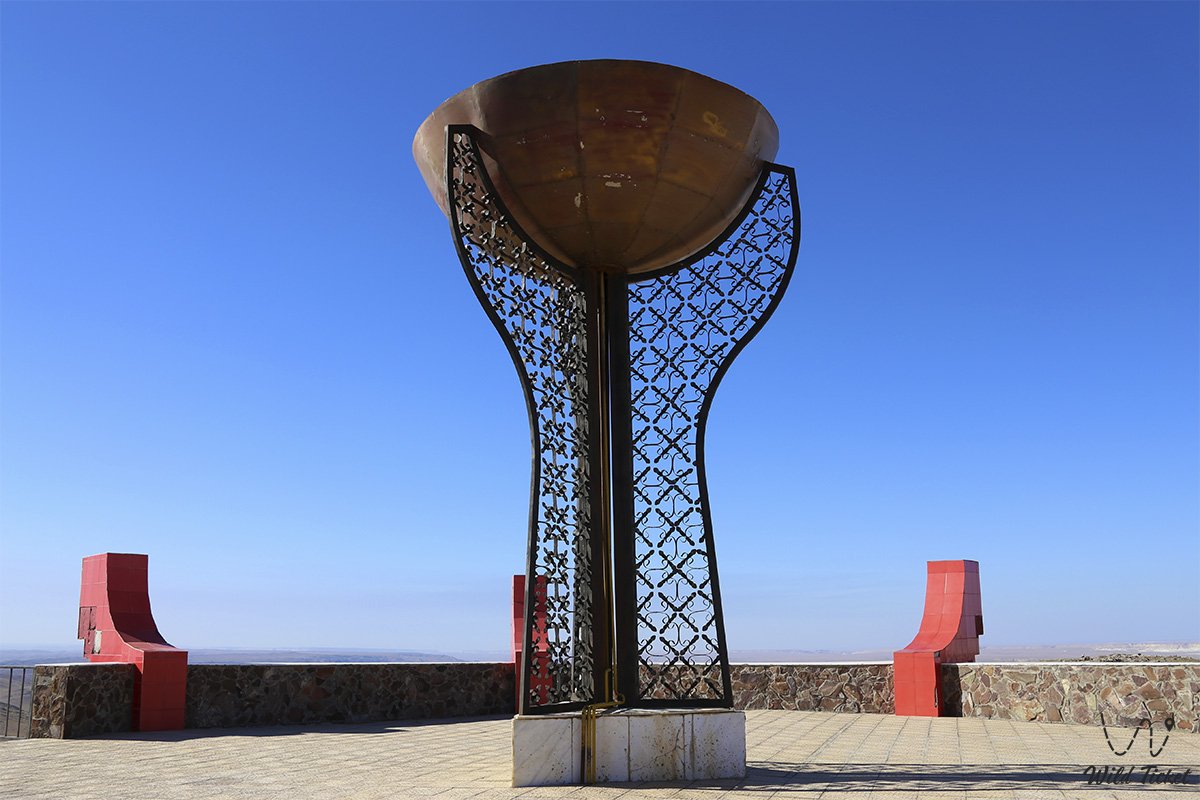
The architectural ensemble encompasses the 37-meter white-stone Aday-Ata mausoleum, two minaret towers honoring the sons Kudayke and Kelimberdi, the 15-meter "Mother's Image" monument (Ana kelbeti), a sculpture of the Celestial Wolf (Kokbori), the "zhebe" (arrow) tamga emblem, a monument to the three Kazakh biys, a granite staircase of 362 steps, and the beacon bowl of the Fire of Unity (Taghzym alauy).
Annually on the night of March 13–14, the ancient nomadic holiday Amal (Korisu) is celebrated on Otpan Tau, gathering tens of thousands of pilgrims from across Kazakhstan, near, and far abroad for the sacred ceremony of lighting the Fire of Unity.
--------------------------------------------
How to get there and visit –
The Otpan Tau Historical and Cultural Complex is located in the Mangystau district of the Mangystau region, 15 km east of the village of Zhyngyldy, 5–6 km off the regional road Tauchik – Shetpe (turnoff near the village and freshwater spring of Tushchybek), close to the Karasay and Besbulak tracts, 30–35 km northwest of the district center – the settlement of Shetpe, and 140–143 km northeast of the regional center, the city of Aktau. The drive takes just over 2 hours.
GPS geographical coordinates of the Otpan Tau complex:
44°11'28"N 51°53'17"E
44.190958, 51.888217
Reaching the complex from the city of Aktau is possible via two equivalent paved routes:
1. Southern route via the settlement of Shetpe: departure from Aktau along the high-speed highway A-33 Aktau – Shetpe (about 110 km), followed by a turn north onto a paved regional road toward the village of Zhyngyldy (about 30 km).
2. Northern route via the settlement of Tauchik: departure from Aktau onto the highway toward Fort-Shevchenko, turning east toward the settlement of Tauchik, and continuing on asphalt through the village of Zhyngyldy (about 140 km).
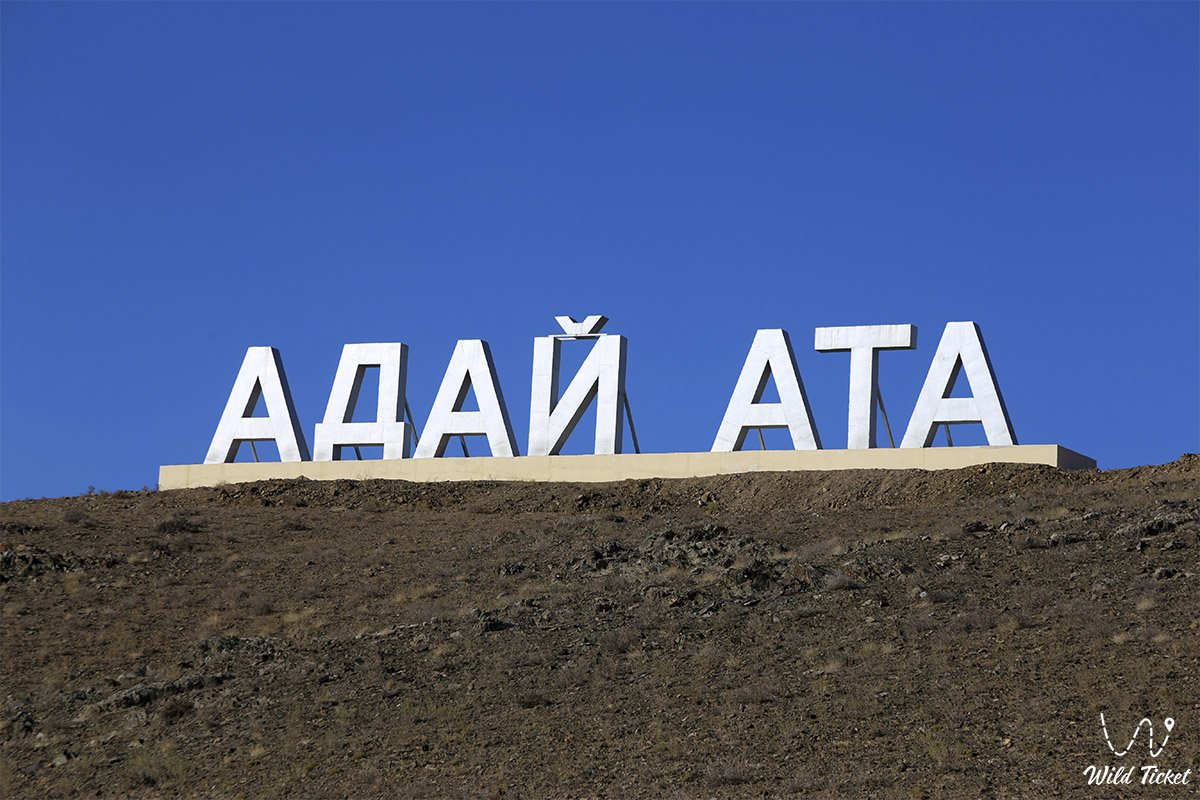
At the turnoff to the complex from the regional motorway, the mountainside is adorned with a monumental inscription of the name laid out in large letters. A paved mountain road leads directly to the foot of the monuments, ending in a spacious, equipped parking area. Access is open year-round for all passenger sedans, crossovers, tour buses, and minibuses.
Infrastructure of the complex is fully supplied with all necessary municipal utilities: electricity, gas, and running water are connected. Operational on site are the two-story cultural center-museum Aksaray, exhibition halls, viewing terraces, a library, a chamber for rituals and ceremonies, sanitary facilities, and guest yurts. The nearest gas stations, supermarkets, and tire repair services are located in the village of Zhyngyldy and the settlement of Shetpe.
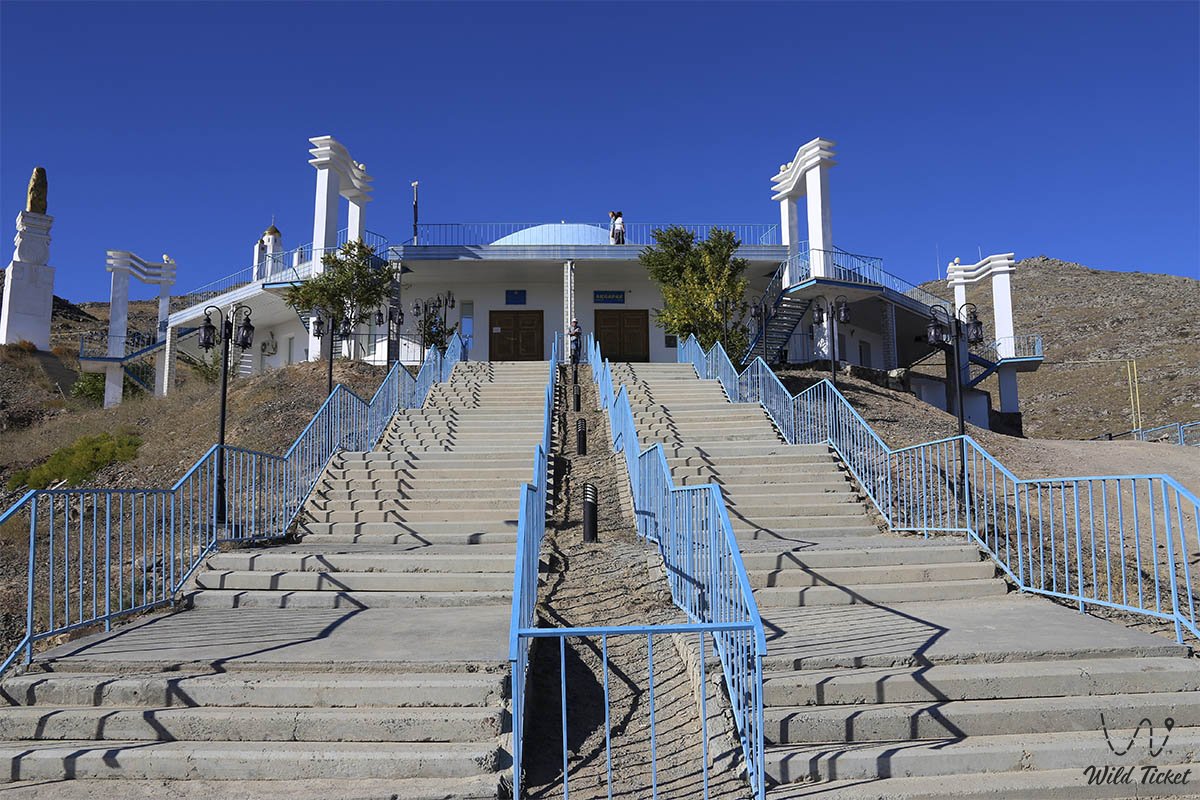
The walking ascent from the lower parking lot to the Aday-Ata mausoleum and the Fire of Unity bowl follows a monumental granite staircase of 362 steps. Comfortable footwear with non-slip soles is recommended for the climb. Strong, gusty winds blow year-round atop the mountain; visitors are advised to carry windproof clothing.
Visiting this sacred site requires strict adherence to ethical standards: clothing must be modest and covering (shoulders and knees covered), and women must cover their heads with a scarf. Smoking, consuming alcoholic beverages, and littering are strictly prohibited on the memorial grounds.
The best time to visit is spring (March 13–14 during the Amal celebrations, as well as April and May), when the surrounding hills are blanketed in emerald grass and tulips, and the air is clear and pure. During summer months, ascending the summit is best planned for the early morning or pre-sunset hours, when midday heat recedes and stunning views of the setting sun unfold.
--------------------------------------------
History
The history of Mount Otpan-Tau spans many centuries, serving as the backbone of the chronicle of nomadic tribes of Western Kazakhstan. Occupying a commanding height along the Karatau ridge, the mountain summit was a primary outpost for observing the movements of caravans and troops since deep antiquity. Archaeological excavations on the ridge recorded the remnants of an ancient stone structure of three chambers, horse bits, bridle fragments, and strata of centuries-old fused ash, confirming the existence of a watch post and pagan sanctuary long before the erection of modern monuments.
The summit gained special sacred meaning during the formation of the Aday tribal confederation. The patriarch of the tribe, Aday-Ata, lived around the 15th century. According to historical studies by Abish Kekilbayev, I. Trofimov, and Anes Saray, Aday-Ata ruled for 14 years (from 1435 to 1449) and lived a long life. His wife Zhanar bore two sons – Kudayke and Kelimberdi, who fathered eight grandsons (Munal, Kosay, Tobysh, and others), from whom the main branches of the Aday clan took shape. The peak of Otpan-Tau became a place for kurultais where elders blessed batyrs to protect their ancestral pastures.
The signal beacon lit atop the peak of Otpan-Tau saved nomadic encampments from destruction for centuries: seeing the fire's reflections on the horizon, sarbaz warriors saddled their horses and assembled at the mountain beneath a single banner.
In 2004, the prominent poet and public figure Sabyr Aday developed the concept of erecting a spiritual memorial of Kazakh unity upon the sacred summit. The charitable foundation "Aday" was established to implement the project. Designer and architect Kopbol Demesinov oversaw construction. The grand opening of the historical and cultural complex took place on October 25, 2007. In 2010, the complex expanded with the memorial museum building Aksaray.
By resolution of the Akimat of the Mangystau region on January 5, 2018, the historical and cultural complex was inscribed on the State List of Historical and Cultural Monuments of Local Significance and included in the national list of sacred sites of Kazakhstan under the "Rukhani Zhangyru" program. Since 2008, the tradition of lighting the Flame of Veneration on the night of March 14 during the celebration of Amal has been revived here.
Architectural and spatial structure of the complex
The "Aday Ata – Otpan Tau" Historical and Cultural Complex includes the following key structures and memorial zones:
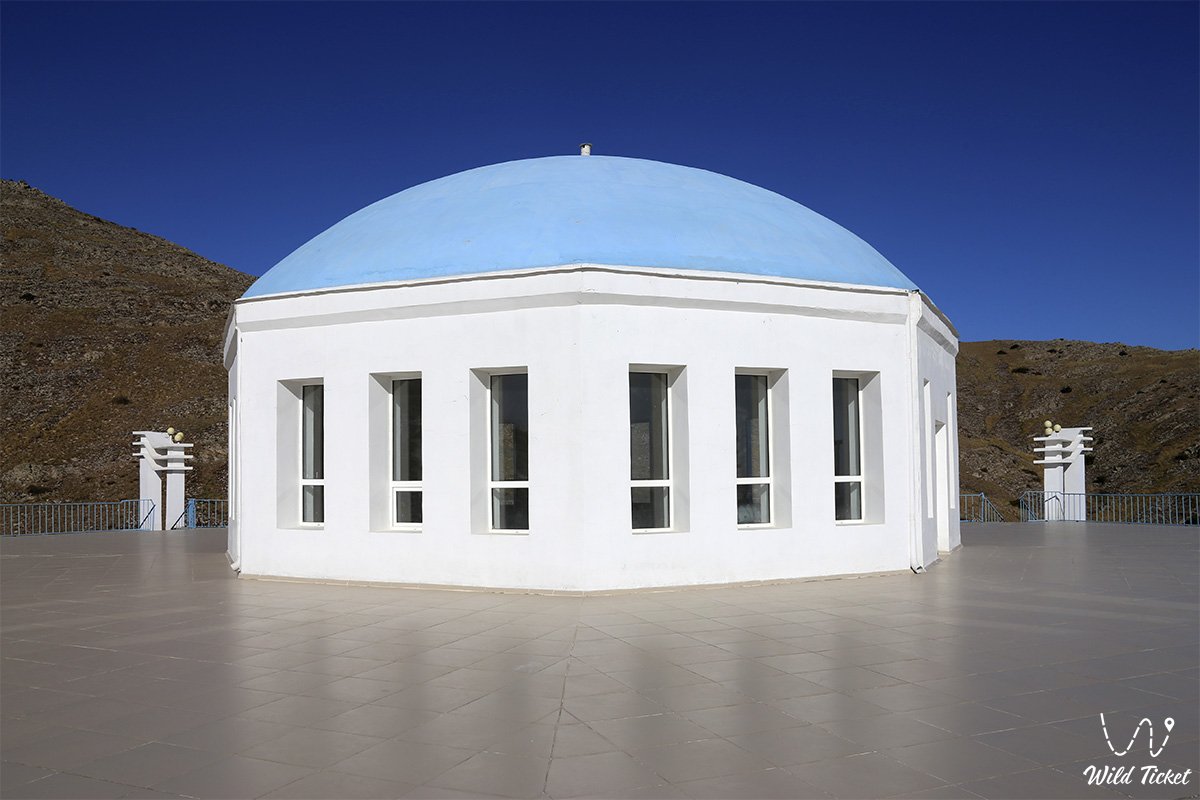
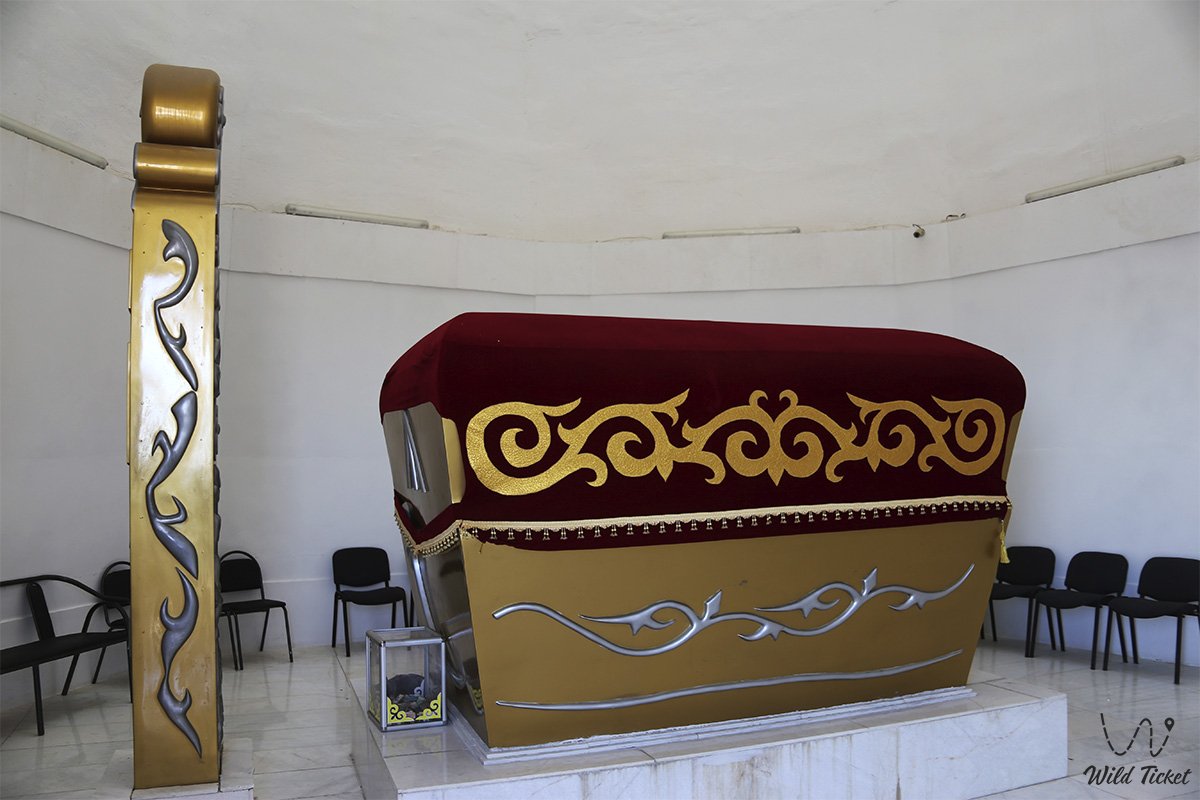
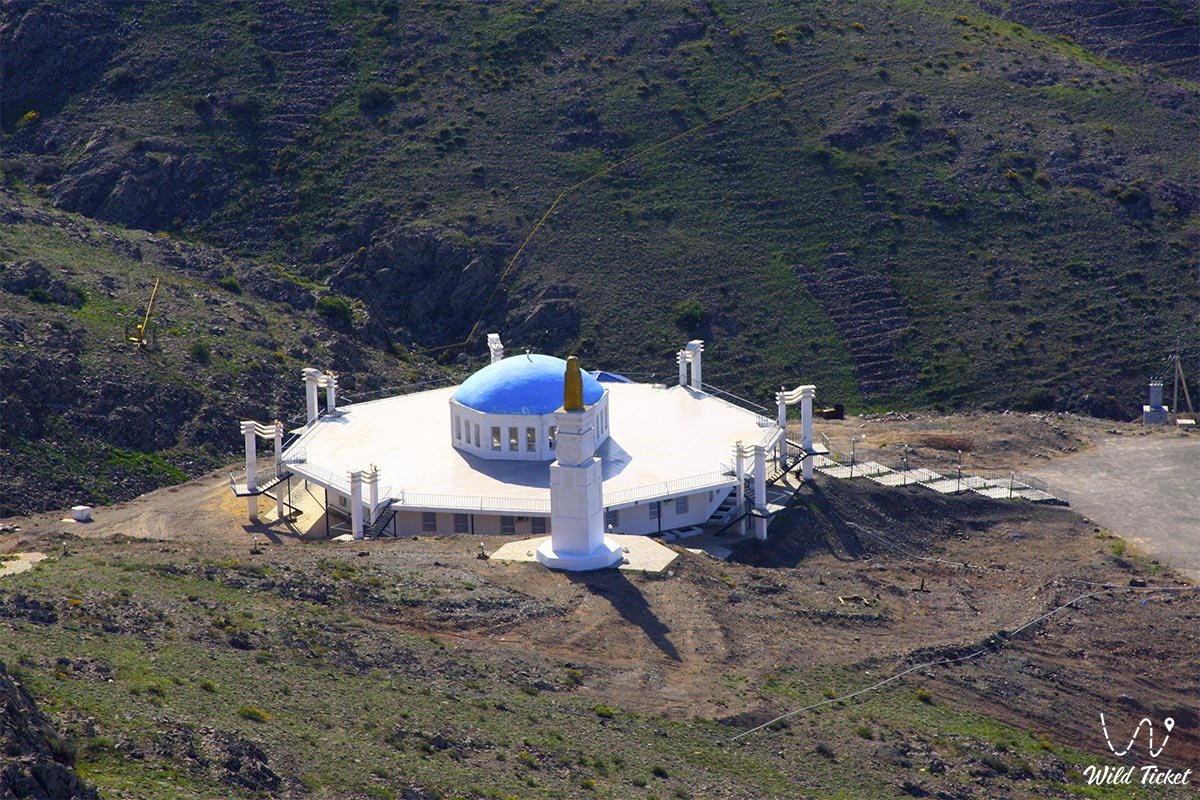
• Aday-Ata Mausoleum (Aksaray) – a centric white-stone two-story circular structure 7 meters in diameter and 13 meters high (the total height of the monumental landmark with superstructures reaches 37 meters), evoking the shape of a batyr's battle helmet and a traditional yurt. Inside, a sarcophagus containing symbolic soil from the forefather's tomb and assembly halls are arranged.
• Minaret towers of the sons Kudayke and Kelimberdi – two graceful domed towers flanking the mausoleum, representing the two wings of the clan tree, resting upon slabs inscribed with genealogical lineages (shezhire).
• "Mother's Image" Monument (Ana kelbeti) – a 15-meter statue of the patriarch's wife Zhanar, coated in gold leaf, where the face is sculpted as a moon, the heart as a sun, and two eagles take wing from the chest, symbolizing the birth of her sons.
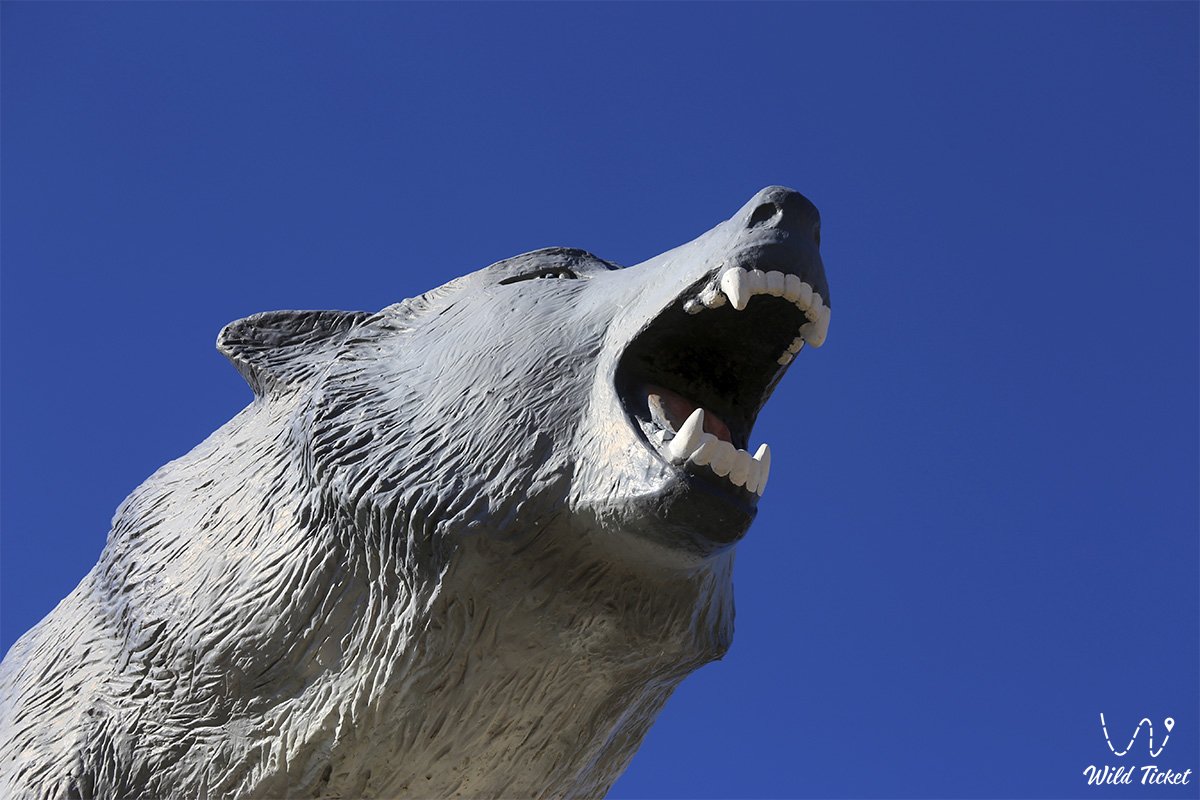
• Sculpture of the Celestial Wolf (Kokbori) – an expressive monument of a snarling wolf, an ancient Turkic totem embodying unyielding fortitude, fidelity to native soil, and readiness to defend one's tribe to the end.
• Bowl of the Fire of Unity (Taghzym alauy) – a monumental metal pedestal atop the highest rocky point where the sacred flame of the Amal holiday is lit annually on the night of March 14.
• Pedestrian staircase of 362 steps – a granite pedestrian staircase leading from the parking lot to the summit, where the number of steps strictly matches the count of Mangystau's sacred Sufi saints (auliye).
• Monument to the three biys of Kazakhstan – a sculptural group at the base of the staircase dedicated to Tole Bi, Kazybek Bi, and Ayteke Bi – authors of the "Zheti Zhargy" legal code and unifiers of the three zhuzes.
• Coat of arms and tamga of the Aday clan – a monumental shield with crossed sabre and spear, crowned by the clan tamga "zhebe" (arrow) pointing upward as an emblem of bravery, defense of the homeland, and unity.
• Aksaray Historical Museum – a six-hall exposition within the complex ("Mangystau and Ancient Ancestors," "History of the Formation of the Kazakh State," "Islam in Mangystau," "Art"), featuring archaeological artifacts, rare maps, and genealogies.
• Panoramic terrace and "Tu tobe" flagpole – an upper terrace bearing the national flag, opening onto a 360-degree panorama across the Karatau and Aktau ridges.
Legend
A sacred legend regarding the covenant of the wise elder Aday-Ata and the fire that unites the steppe is associated with Mount Otpan-Tau.
Tradition tells that near the sunset of his life, the pious batyr Aday-Ata gathered his sons, grandsons, and clan elders atop the highest mountain of the land. Surveying the boundless expanses of the steppe, the aksakal struck a warrior's flint against the dark Karatau rock, and a bright flame burst forth from the spark.
«So long as this fire burns in your hearts and your hands are clenched into a single fist, no enemy shall ever break you, – the elder declared. – If misfortune befalls our native land, let the Fire of Summons be lit on this peak. Seeing it from distant winter camps and chinks, every dzhigit is duty-bound to set aside personal feuds and hasten to the call of his brothers!».
Ever since, the mountain was named Otpan – Fiery Mountain. For centuries, this signal beacon saved nomadic encampments from doom. Today, lighting the Fire of Unity on the vernal equinox during Amal symbolizes not war, but peace, spring renewal, reverence for ancestral spirits, and the eternal solidarity of the people.
Conclusion
The Otpan Tau Historical and Cultural Complex is the spiritual beacon and geographical heart of Mangystau, where the majestic panorama of ancient mountains intertwines with the memory of steppe batyrs and the tradition of the Amal festival. Ascending the 362 steps to the white-stone Aksaray, contemplating boundless horizons, and touching the sacred flame of Aday-Ata grant every traveler a vivid sense of living history and the mighty spirit of the Mangyshlak land.
Sacred sights nearby:
• Khanga-Baba Necropolis;
• Kenty-Baba Necropolis;
• Kolbas Ishan Mosque;
• Koben Mosque;
• Zholaskan Mosque;
• Zhaman Sauran Mosque;
• Ishan Khozha Mosque;
• Itolla Mosque;
• Sonabay Underground Mosque;
• Uytoly-Ata Underground Mosque;
• Sanctuary of Bayte.
Natural sights nearby:
• Openwork Limestone Ybykty Say Canyon;
• Karynzharyk Depression;
• Chalk Outliers "Three Brothers";
• Torysh Valley of Spherical Concretions;
• Endorheic Karagiye Depression (-132 meters);
• Lake Karakol, Home of Greater Flamingos;
• Kokkala Variegated Jurassic Clays Tract;
• Medieval Town of Kyzylkala;
• Akmysh Say Relict Spring Garden;
• Cape Tyub-Karagan;
• Khanga Baba Tract;
• Ustyurt State Nature Biosphere Reserve;
• Karagiye-Karakol Nature Sanctuary;
• Caspian Sea;
• Kogez Yurt Ethno-Village.
Photogallery: