- Travel arrangements anywhere in the country -
- Tours - excursions - guides - vehicles -
Kazakhstan is a country where space is felt physically, and every kilometer of the road opens up a new world. The country ranks 9th in the world in terms of territory size, so be prepared for long distances and long journeys.
Here, mountains, steppes, seas and deserts do not smoothly replace each other – they collide, intertwine and create one of the most diverse landscapes of Eurasia.
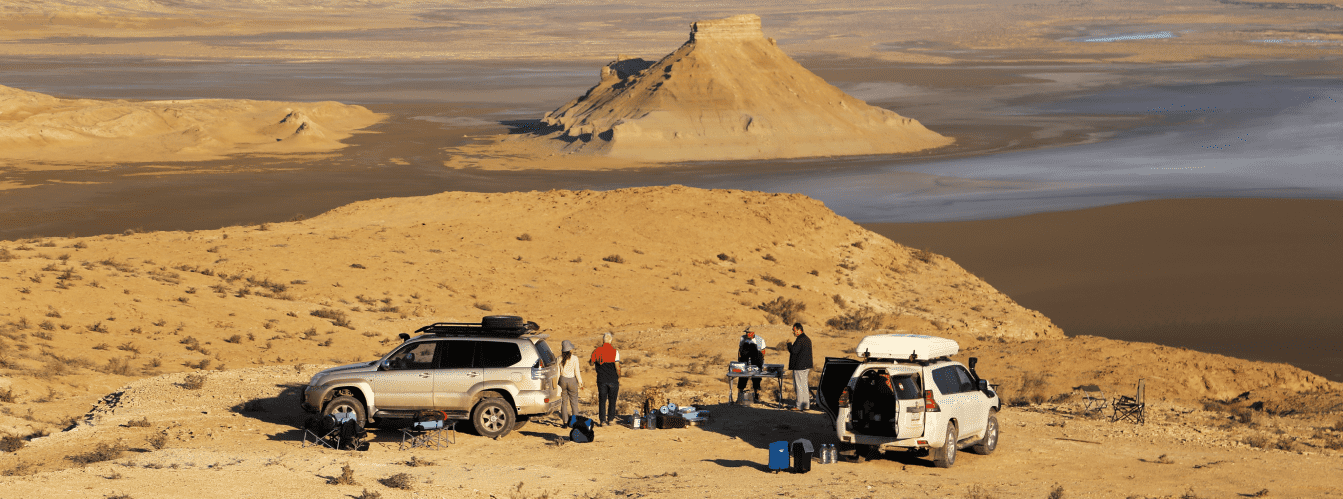
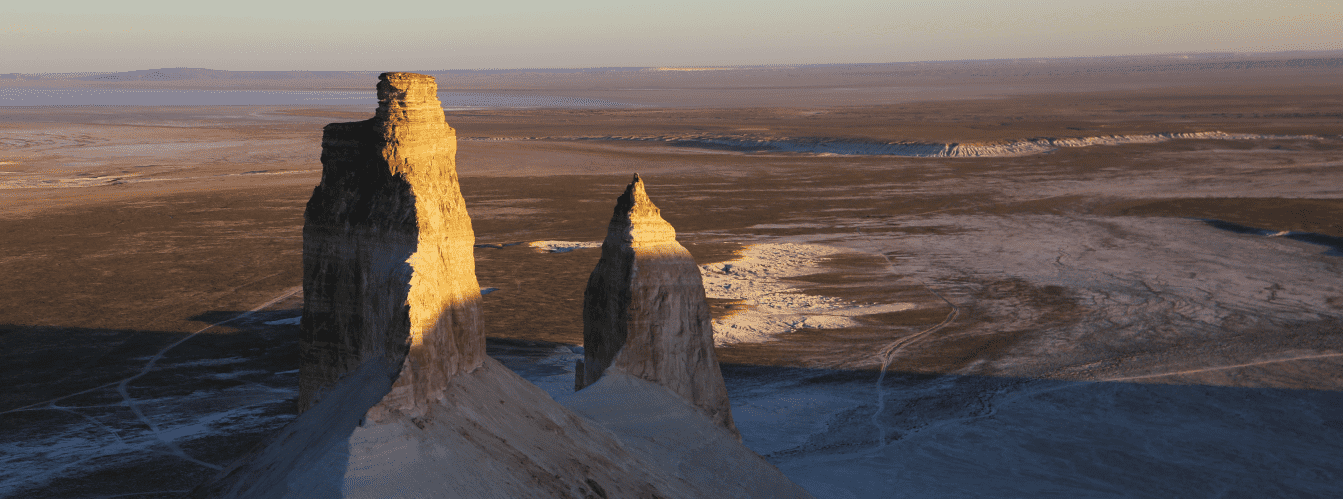
Kazakhstan occupies a central position on the map of the continent and connects Eastern Europe and Asia in a single space. Its western regions are Atyrau, West Kazakhstan, part Aktobe and Mangystau regions – lie in Eastern Europe and face The Caspian Sea. A special geography of the Caspian lowlands, salt plains and coasts is being formed here, where the sea comes into contact with deserts and plateaus. Mangystau region with Ustyurt plateau and the Karagie depression creates one of the most unusual landscapes in the country, where the land sinks below ocean level and turns into a stone desert.
There are endless steppes and semi-deserts in the center of the country, creating a sense of endless space. It was through these lands that the caravan routes passed for centuries, the Great Silk Road passed through here, connecting different parts of Eurasia. Today, the capital is located in the north of the country – the city of Astana, a modern metropolis that grew up among the steppes and became the political and transport center of Kazakhstan. The space harbor of Kazakhstan is located in central Kazakhstan – the city of Baikonur and the famous Baikonur Cosmodrome.
---------------------------------------------
The landscape that is formed by mountains, forests and lakes
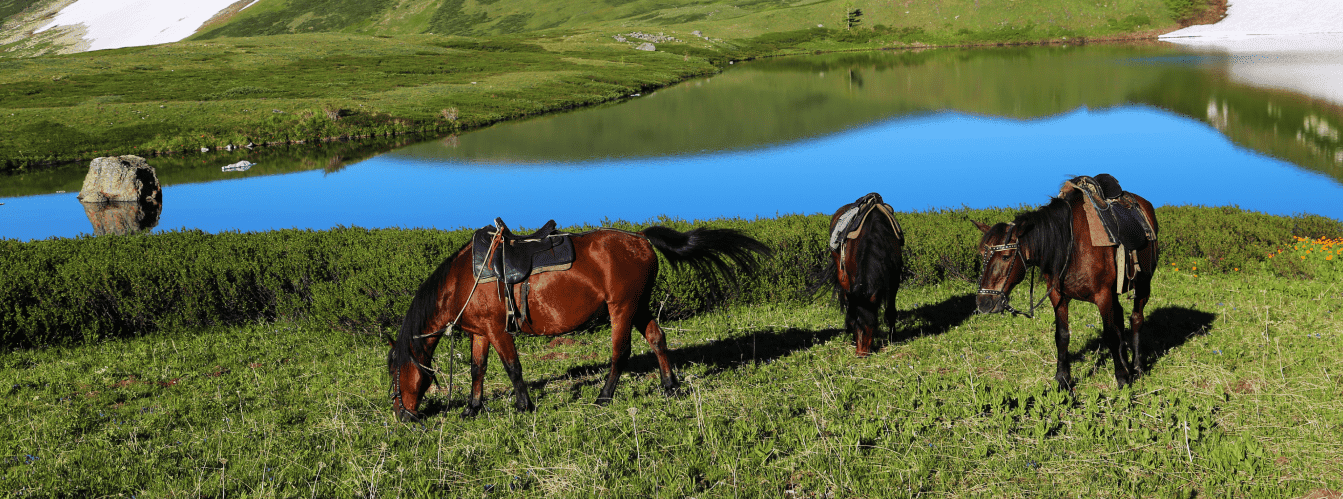
The south and south-east of the country form the most contrasting and tourist-rich region. The city of Almaty, located at the foot of of the Trans-Ili Alatau in Almaty region, is considered the main entrance to mountainous Kazakhstan. Mountain routes start from this city along mountains of Almaty. Routes to To the Dzungarian Alatau, to the lakes Kolsai and Kaindy, to the passes and alpine meadows. These mountains combine glaciers, coniferous forests and high-altitude valleys, creating some of the most picturesque landscapes in Central Asia.
Further south lie Karatau Mountains, Turkestan and Zhambyl region, where dry ridges are combined with fertile valleys and ancient Silk Road routes. Here, geography is closely intertwined with history, and routes lead not only through natural sites, but also through cultural landscapes.
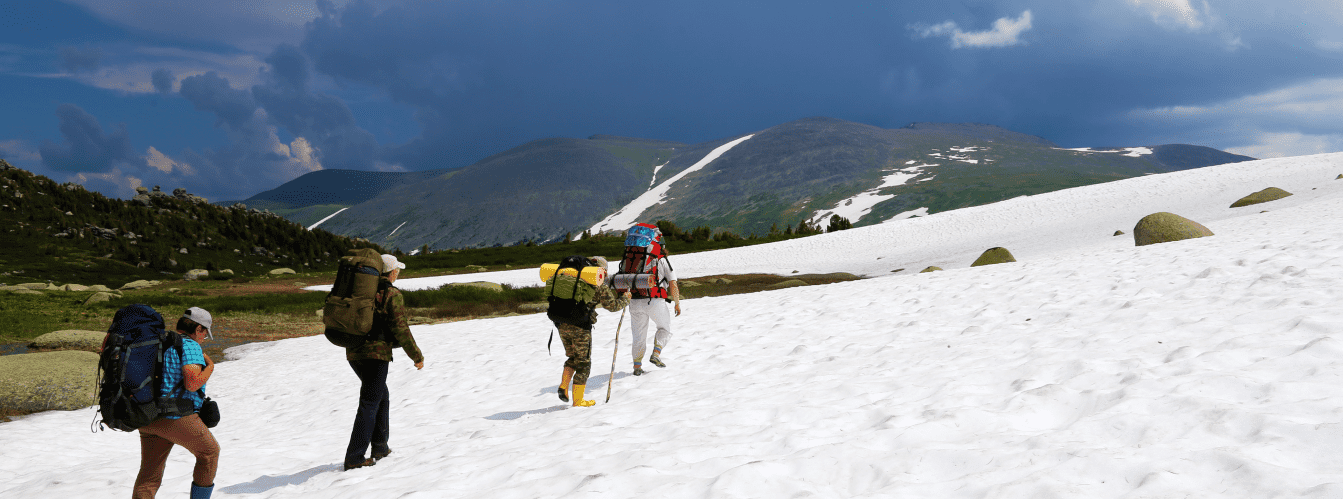
The East of Kazakhstan opens up a completely different world – Kazakh Altai and Altai Mountains. This is a region of taiga, mountain rivers and glaciers, where nature looks harsh and pristine. Lake Zaisan is located here, one of the oldest lakes in the country, surrounded by mountains and steppes, creating a feeling of the edge of the world.
The highest point of the country is Khan Tengri Peak, towering almost seven thousand meters. Its snowy peak is considered a symbol of mountainous Kazakhstan and attracts travelers and climbers from all over the world. The opposite of it is the Karagie depression in Mangystau, one of the lowest points in Eurasia, where the earth goes deep below sea level.
---------------------------------------------
Water resources
The water geography of Kazakhstan forms another dimension of Kazakhstan. The Caspian Sea in the west creates a coastal world of deserted beaches and rocky shores. To the southwest lies The Aral Sea is a disappearing body of water that has become a symbol of the fragility of natural ecosystems. There are large lakes inside the country Balkhash and Alakol, where water and climate form unique recreation and migration areas for birds. Balkhash surprises with the combination of fresh and salt water in one lake, and Alakol is known for its healing properties.
The rivers of Kazakhstan connect all this mosaic of landscapes into a single system. The Irtysh River, which begins in the mountains of China, runs through the entire East Kazakhstan and goes to Siberia, becoming part of one of the largest river systems in Eurasia. River Or and the Syr Darya River feeds the south of the country, forming green valleys and oases among the arid lands. Rivers Ural and Ishim connect the steppe regions with the Caspian and northern basins, creating the basis for life and agriculture.
---------------------------------------------
Flora and fauna
The flora of Kazakhstan reflects its geographical diversity. Desert saxaul trees, coniferous Tien Shan fir trees, alpine grasses and the wild Sievers apple tree is the ancestor of all apple trees in the world. In spring, the steppes are covered with tulips, from which many European varieties originated, and we are holding spring botanical tulip tours. We can also continue for you. я a block tour of Kazakhstan that will not leave you indifferent.
The fauna of Kazakhstan is no less unique. The snow leopard lives in the mountains, saiga and bustard live in the steppes, caracals and sandcats live in the deserts, and honey badgers, manulas and rare mountain ungulates can be found in the Altai and Tien Shan mountains. Such a wealth of living forms makes Kazakhstan one of the most interesting countries in Eurasia for natural and ecological tourism. Not far from Almaty, you can watch Przewalski's horse (Kerulan) and for Kulanami (wild ass).
---------------------------------------------
Where you should definitely go in Kazakhstan – natural attractions:
• Lake Alakol
Alakol is located in the nature reserve of the same name and is known not only as a resort, but also as an important bird migration center. Rare species live here, and the water and air have healing properties.
• Lake Balkhash
Balkhash is one of the largest lakes in Central Asia and a unique body of water that combines fresh and salt water. A narrow strait divides it into two parts with different chemical compositions, creating a rare ecosystem. Kitesurfing is possible on this lake, there is an incredibly strong wind blowing here, which will attract extreme athletes. Kitesurfing on Balkhash is only possible in a wetsuit.
• Borovoe (Burabay)
Borovoe is one of the most famous natural resorts in Kazakhstan, located about 260 kilometers from Astana. Here, pine forests, granite cliffs and dozens of clear lakes form a northern mountain lake oasis, ideal for recreation, hiking and wellness trips.
• Charyn Canyon
Charyn Canyon is located 195 kilometers from Almaty and is part of the national park. Its stone towers and gorges, carved by wind and water, create a real natural maze, which is often compared to the Grand Canyon in the USA. Valley of Castles and Charyn River are waiting for you.
• The Aral Sea
The Aral Sea is a former huge inland sea that was once the fourth largest lake in the world. Today, its dried-up bottom, salt deserts and abandoned ships have become a symbol of environmental tragedy and at the same time a powerful tourist and historical site.
---------------------------------------------
National Natural Parks of Kazakhstan:
• Altyn-Emel State National Nature Park;
• Buiratau State National Nature Park;
• Kolsai Lakes State National Nature Park;
• Zhongar-Alatau State National Nature Park;
• Burabai State National Nature Park;
• Ile-Alatau State National Nature Park;
• Charyn State National Nature Park;
• Katon-Karagai State National Nature Park;
• Karkaralinsky State National Nature Park;
• Bayanauli State National Nature Park;
• Kokshetau State National Nature Park;
• Merke State National Nature Park;
• Ulytau State National Nature Park;
• Tarbagatai State National Nature Park;
• Sairam-Ugam State National Nature Park.
---------------------------------------------
Nature reserves of Kazakhstan:
• Aksu-Zhabagli State Nature Reserve (Aksu-Zhabagli);
• West Altai State Nature Reserve;
• Alakol State Nature Reserve;
• Ustyurt State Nature Reserve;
• Markakolsky State Nature Reserve;
• Korgalzhyn State Nature Reserve;
• Barsakelmes State Nature Reserve;
• Naurzum State Nature Reserve;
• Karatau State Nature Reserve.
---------------------------------------------
Kazakhstan is a country where geography becomes a journey. It is impossible to see everything here in one trip, because each region is like a separate world with its own climate, nature, rhythm and history. From the northern glaciers of the Tien Shan to the westerly winds of the Caspian Sea, from the endless steppes of Saryarka to the misty forests of Altai, this land is constantly changing, creating a sense of movement and discovery.
It is this diversity that makes Kazakhstan an ideal destination for conscious, deep and real travel. Here you can not just look at nature, but feel its scale, loneliness, silence and power. The journey through Kazakhstan is not a route based on points on a map, but a road through space, culture and time, where each trip becomes a personal story that you want to return to again and again.