Space "castle" guarding rocket flight trajectories -
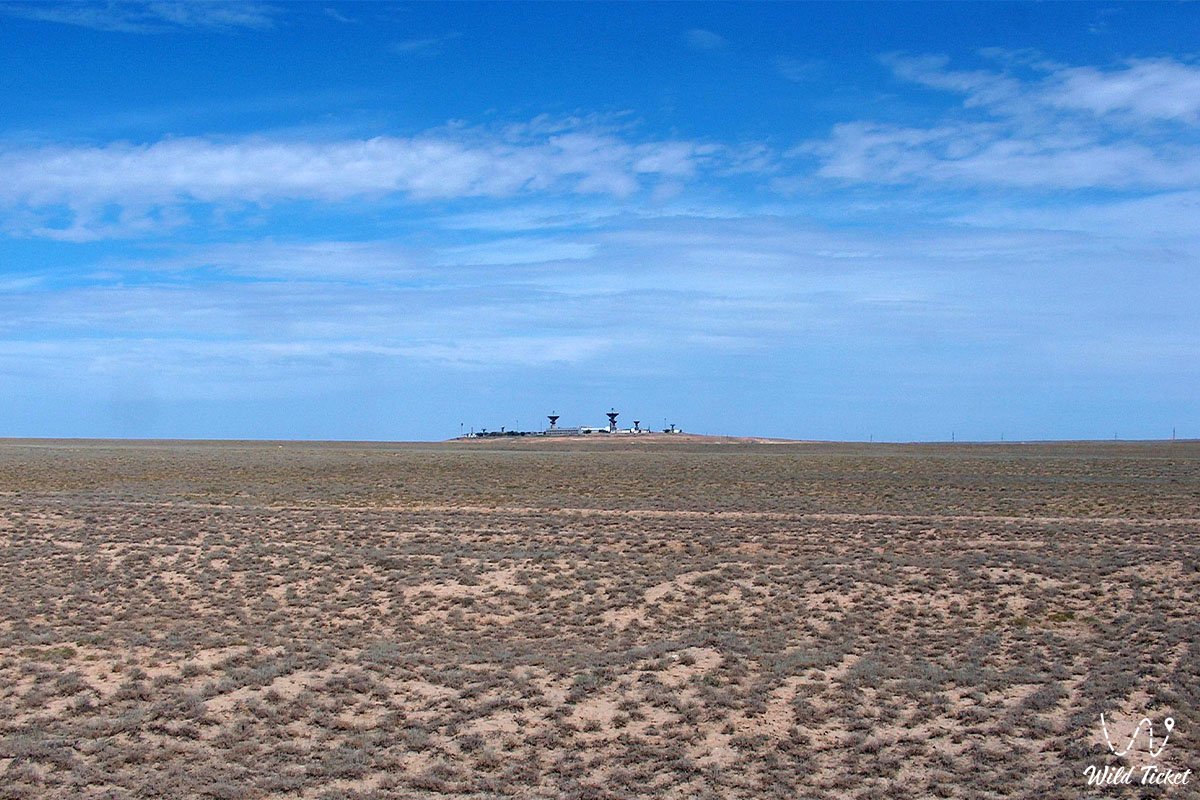
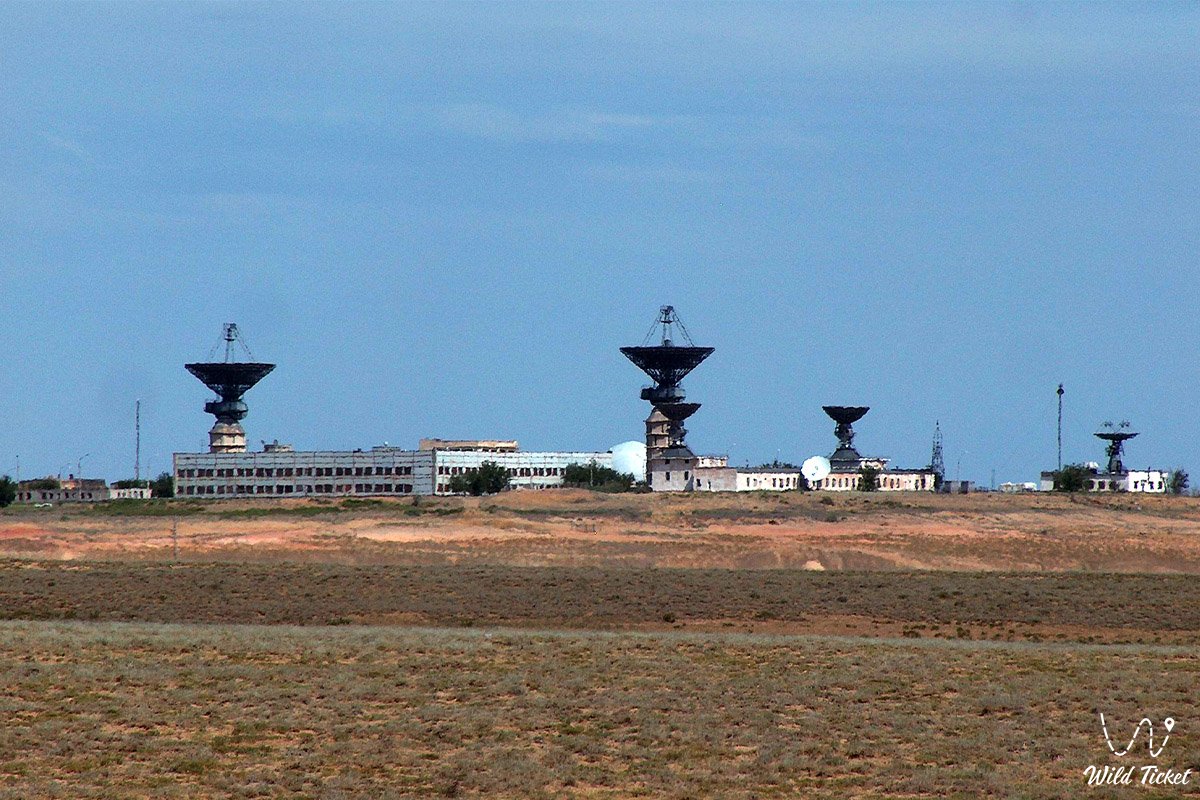
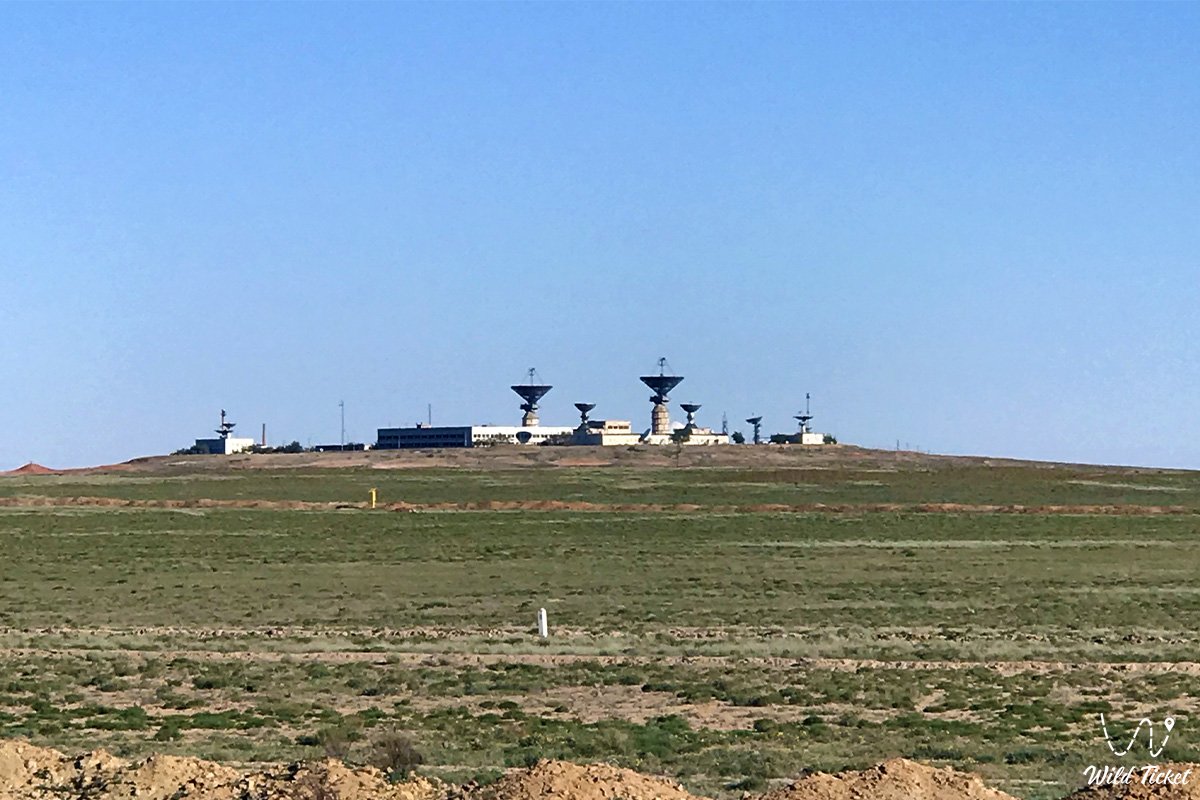
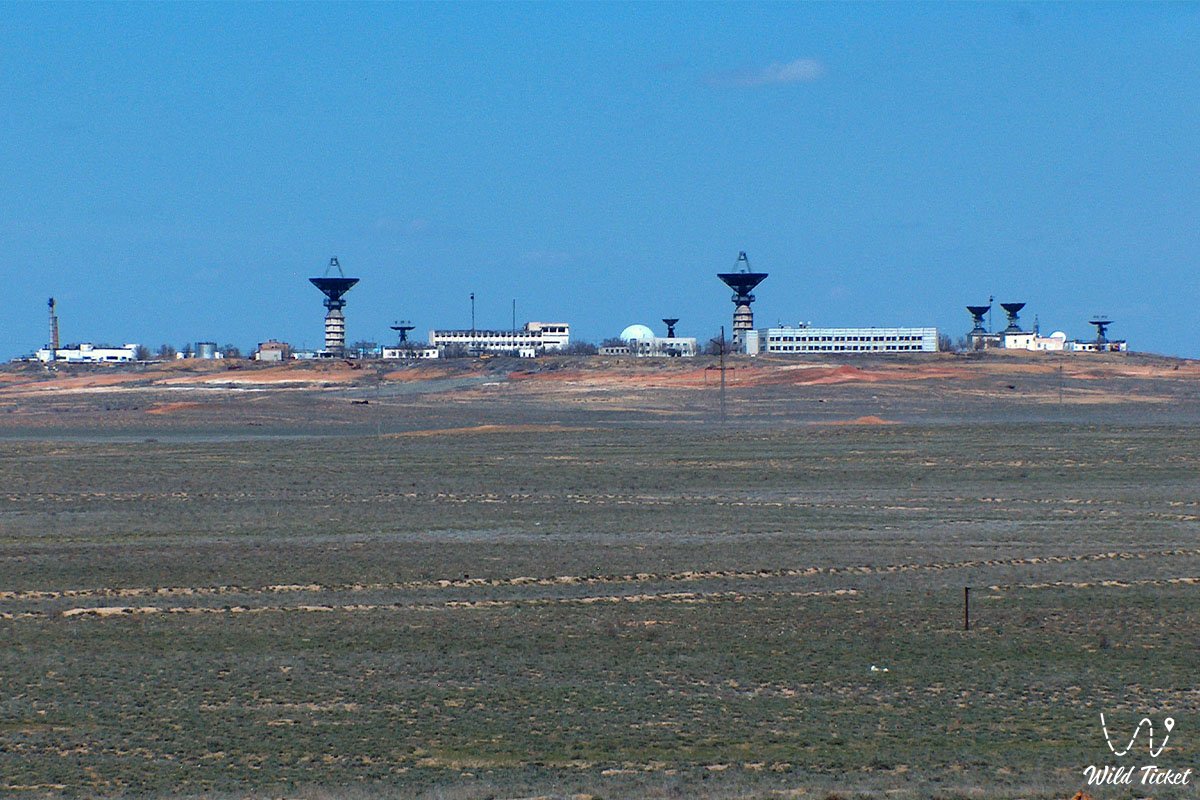
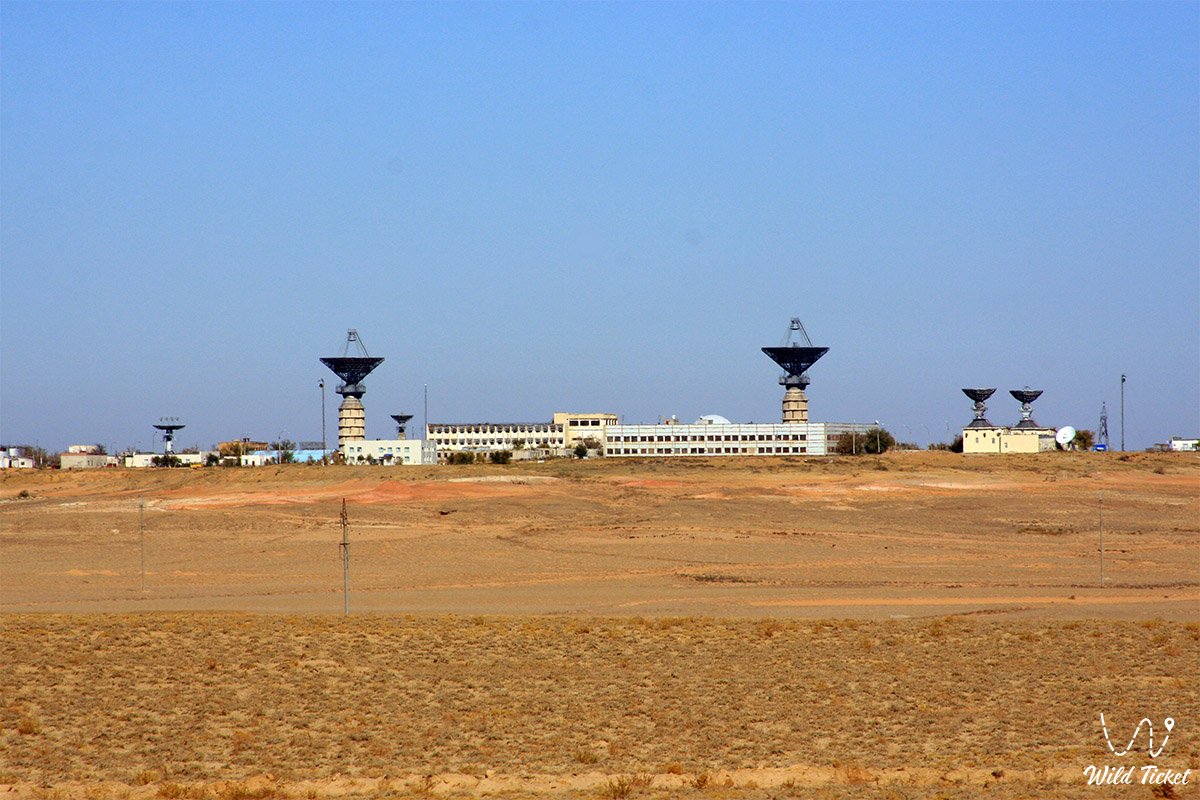
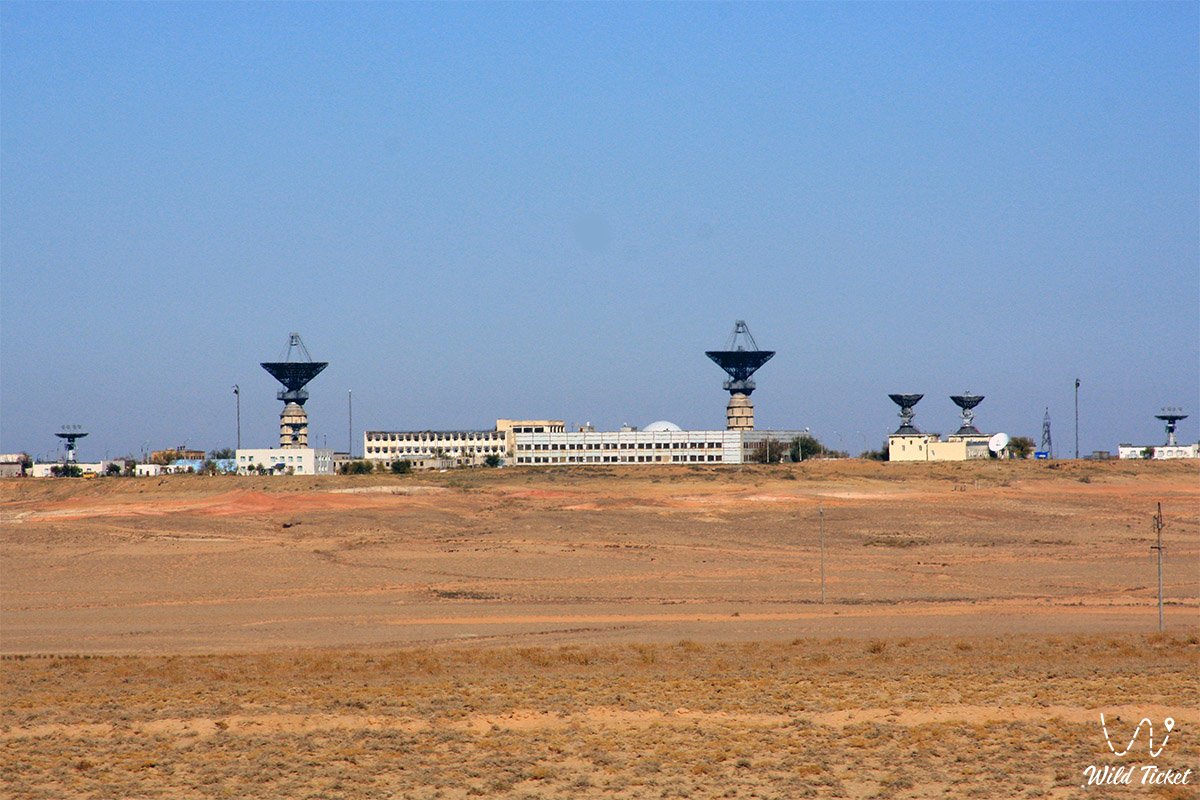
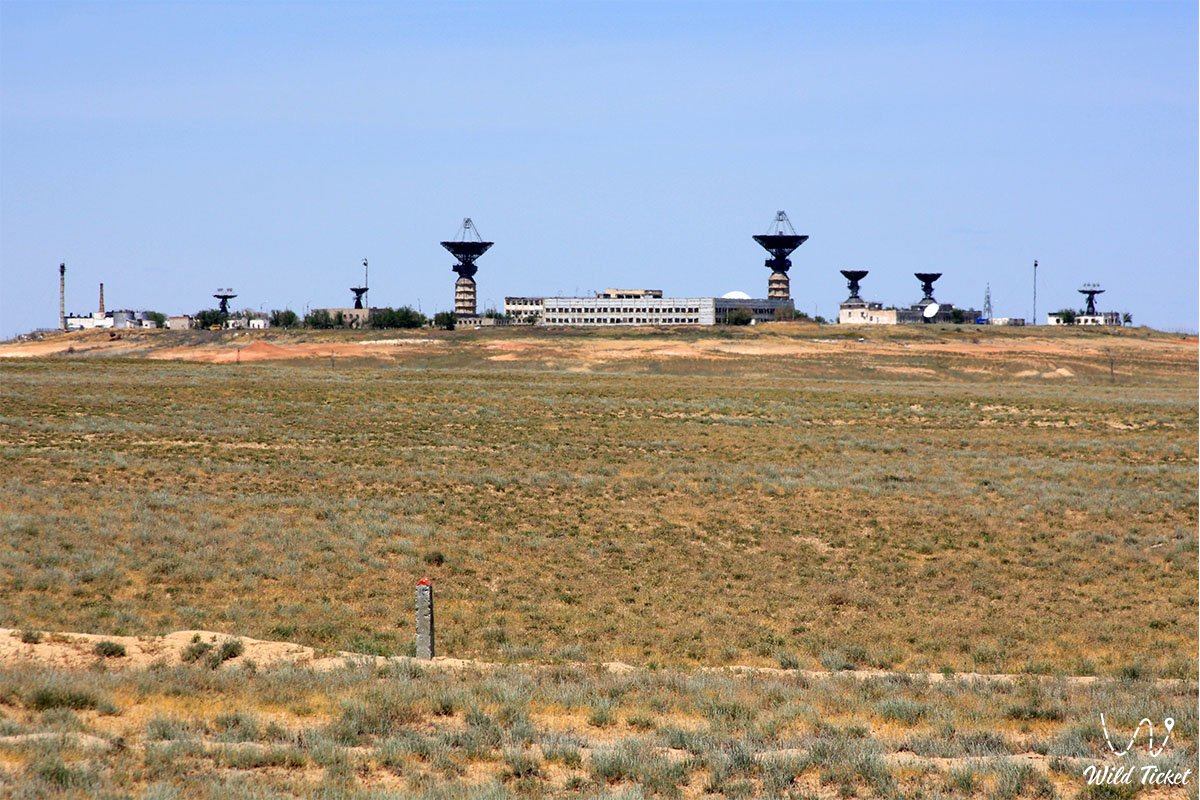
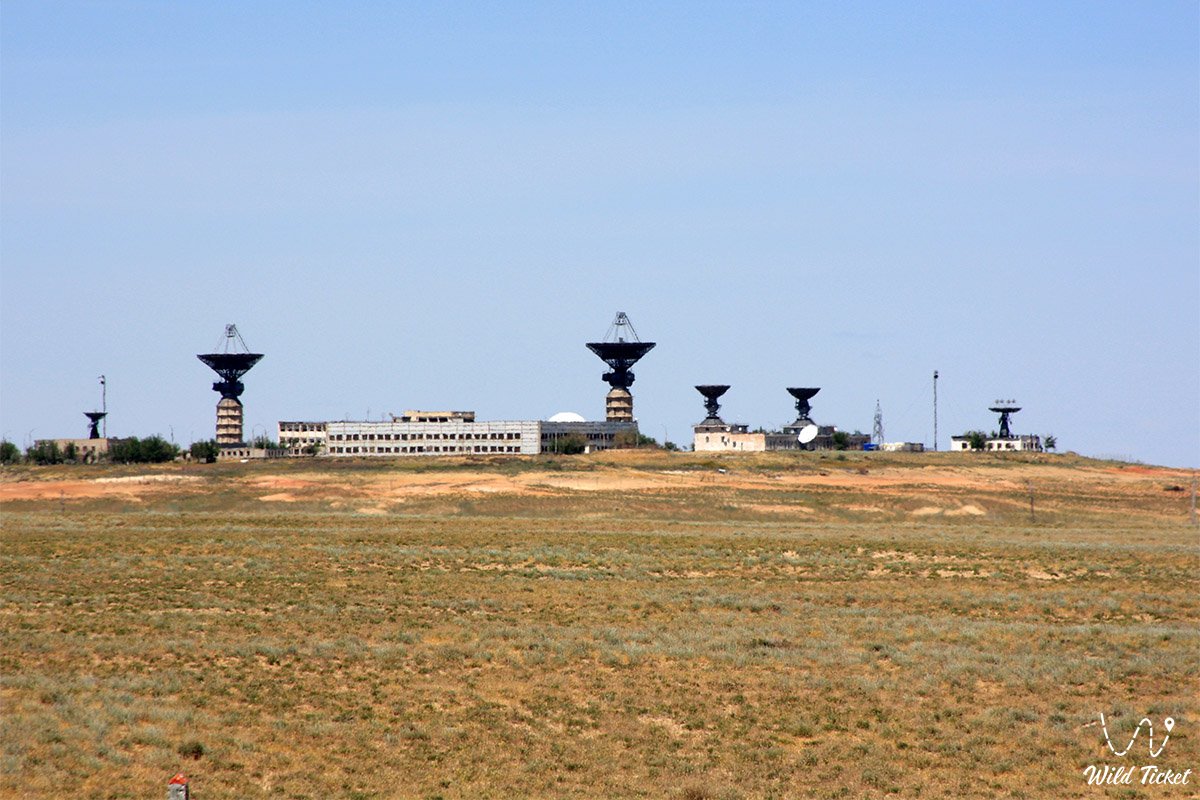
Saturn Tracking Complex (IP-5) – is one of the most recognizable and strategically important sites of the Baikonur Cosmodrome, representing a ground tracking station for the trajectory of launching rockets. Located on the top of the natural Murguduk hill, which translates as "Snake Mountain," near Baikonur City, this facility visually resembles a medieval castle towering over the endless steppes of Kazakhstan.
The complex remained a classified military facility for a long time, providing communication with the most important missions of Soviet cosmonautics, including the Apollo–Soyuz Test Project and the Buran system. Its location on an elevation in the Kyzylorda region was dictated by the need to ensure direct radio visibility of a rocket on the active section of its trajectory.
The "Saturn" measurement complex provides multi-purpose communication with Soyuz manned vehicles on remote sections of the trajectory. In addition, specialists use the local command radio link to monitor the insertion of spacecraft and manage the emergency escape system.
The technical equipment of the complex played a critical role in ensuring the accuracy of flights at the dawn of the space era, allowing specialists to track each stage of a rocket's departure into the sky. The operation of the complex is inextricably linked with the space launch schedule from the cosmodrome.
---------------------------------------------
How to get there and visit -
The Saturn Tracking Complex is located between Baikonur City and the Baikonur Cosmodrome, Karmakshy district, Kyzylorda region, Republic of Kazakhstan.
GPS geographical coordinates: 45°42'15"N 63°20'24"E
Visiting the complex is possible only within organized excursion programs approved by the cosmodrome administration. Access to the facility is carried out by specialized transport accompanied by a guide. Independent visiting of the site is prohibited due to the secure status of the cosmodrome territory. To organize a visit, it is necessary to arrange passes through accredited tour operators serving groups in Baikonur in advance.
Opening hours: The facility is available for inspection within sightseeing excursions around the cosmodrome. The schedule depends on the current plan of launch campaigns, as conducting launches may limit access to a number of pads.
Contacts Daily: Applications for visits are accepted by official travel operators accredited by Roscosmos.
---------------------------------------------
History
The construction of the complex began on January 25, 1967, with the laying of the foundation for the first antenna. Full-fledged operation started on November 3, 1971. Initially, the site had the status of a closed military unit carrying out combat duty on space communications. From 1970 to 2001, the Saturn-MS system managed the flights of satellites, orbital stations, and apparatus exploring the Moon, Mars, Venus, and Halley's Comet. In 1975, the complex was involved in the Apollo–Soyuz Test Project, and in 1987 it was expanded with a communication node to work with the Buran system. In 2006, the military unit was disbanded, and the facility transferred to a civilian status, undergoing a phased modernization.
In an era when navigation systems were far from modern standards, "Saturn" served as a crucial link ensuring the acquisition of telemetry data and determining the movement parameters of a rocket. It was here that specialists worked to ensure that each launch – whether the flight of the first satellite or the Vostok spacecraft – took place under the strict control of ground services. In subsequent decades, the complex was repeatedly modernized, adapting to the requirements of new rocket and space systems, while maintaining its significance for ensuring the safety of launches.
Information
"Saturn-MS" is designed to receive telemetry information in real time immediately after rocket launch and throughout the entire orbital insertion phase. The P-200 antenna systems provided communication with orbital stations and automatic interplanetary stations for decades. The complex is equipped with rapid-registration telemetry stations (BRS) to record flight parameters and pre-launch preparation systems. After launch, the spacecraft enters the visibility zone of the complex's equipment, which continues to track the vehicle until it leaves the radio visibility zone.
Detailed description of the venue
• P-200 antennas: The main calling card of IP-5. The weight of each structure exceeds 200 tons, and the mirror diameter is 25 meters.
• Murguduk hill: A strategic height providing the best conditions for radio communication and signal reception from low orbits.
• Rapid-registration station (BRS): A complex for recording critical operating parameters of the rocket's onboard systems.
• Control and communication systems: Equipment to ensure two-way data exchange between ground services and the spacecraft.
• Hardware complex: Rooms equipped with computing capacities for processing streams of telemetry information in real time.
• Communication node: Infrastructure adapted in different years for working with Buran, Soyuz, and interplanetary stations.
Architecture
The architectural solution of the Saturn-MS complex represents a unique combination of industrial constructivism and defense fortification. The location of two 200-ton antennas on the top of Murguduk hill was dictated by the need to eliminate radio interference and ensure a perfect view of the sky.
The mirrors of the antennas, made of specialized alloys, represent an engineering masterpiece requiring a complex system of drives for precise guidance to fast-moving objects. The supporting structures of the pillars are made of powerful rolled steel designed for hurricane-force steppe winds, and the concrete foundations go deep into the rocky ground base, ensuring the stability of the entire system when receiving signals from deep space.
The buildings of the technical block are distinguished by thick walls providing natural thermal insulation, which is critically important for the operation of sensitive electronics under extreme temperature changes from scorching heat to piercing cold.
Legend
Among the cosmodrome personnel, the complex is known as a reliable "guardian" of trajectories, surrounded by many traditions. One of the most famous legends states that during critical launches, the complex's antennas began to "sing" – to emit a barely perceptible hum, which, according to veterans, was a harmonic resonance with the operation of the rocket engines.
The site is called "Snake Mountain" (Murguduk) not only because of the hill's name, but also due to the winding underground cable routes laid to the antennas in the first years of construction – engineers laid them avoiding rocky protrusions, creating a whole labyrinth underground. Old-timers of the cosmodrome assure that the accuracy of signal reception by "Saturn" was always "magical": if the needle of the complex's recorder deflected in the right direction at the moment of stage separation, the flight was considered successful even before the report from the MCC.
Conclusion
The Saturn-MS Tracking Complex is not just a monument of technology, it is the genuine "eyes and ears" of Baikonur, without which the history of space victories would be impossible. Its monumental antennas, dominating the landscape of the Kyzylorda region, remain a symbol of how human thought was able to overcome a distance of thousands of kilometers, establishing an inseparable connection with vehicles conquering the Solar System.
Today, the site is reinterpreted as an important part of the industrial and historical heritage of Kazakhstan, demonstrating to future generations that space exploration is not only a rocket's leap into the sky, but also continuous work of ground services, invisible to the eye. "Saturn-MS" will forever remain in history as the technological foundation upon which modern world cosmonautics grew, reminding us that the path to the stars always begins on Earth.
Interesting sights nearby:
• Gagarin's Start Pad No. 1 and Pad No. 31;
• Baikonur Cosmodrome Museum (Pad No. 2);
• Houses of Gagarin and Korolev;
• Buran Spacecraft;
• Yubileyniy Airfield;
• Syr Darya River;
• Cosmonaut Hotel;
• Tyuratam Railway Station.
Photogallery: