The largest park of the left bank near the Mangilik El Triumphal Arch -
The Astana Botanical Garden is assigned the role of the main green shield and the leading scientific base of the capital. This is the largest park in the city, officially opened in July 2018 for the twentieth anniversary of Astana.
Located in the very heart of the left bank, in immediate proximity to the Astana Arena Stadium and the Alau Ice Complex, the garden represents a harmonious combination of wild nature and high technologies. For residents and guests of the city, this place has become a favorite space for walks, picnics on the lawns, and getting acquainted with exotic flora.
The place impresses with its scale and well-thought-out layout. On a territory of about 90 hectares, bordering the Linear Park and the Triumphal Arch, tens of thousands of trees and shrubs brought from nurseries in Europe, Asia, and North America are planted.
The garden is designed according to the principles of symmetry: in the center is a large oval with flower beds in the shape of oriental patterns, from which avenues diverge radially. Here, unique conditions have been created for the acclimation of plants in the harsh steppe climate, making the park a living open-air laboratory.
The Botanical Garden is an important cultural and educational hub, located within walking distance of the Abu Dhabi Plaza SEC. People not only relax here, but also conduct scientific research, and special educational programs have been developed for schoolchildren and students.
A walk through the garden allows you to enjoy the silence by artificial ponds, see rare tropical flowers in greenhouses, and feel the rhythm of the modern capital while remaining surrounded by vibrant greenery in the very center of the Esil district. Located near the park is the Qazaqstan Athletics Complex.
---------------------------------------------
How to get there and visit -
The Astana Botanical Garden is located within the perimeter of Turkestan, Orynbor, Kabanbay Batyr, and Bukhar Zhyrau streets. The main entrance with a majestic arch is from Turkestan Street, Yesil district, left bank of the Esil River, Republic of Kazakhstan.
GPS coordinates: 51°06'21"N 71°24'56"E
You can reach the garden by buses following to the stops Astana Arena Stadium or Arman Kala Residential Complex.
Routes numbered 10, 12, 18, 37, 47, 51, 53, 60, 301, 302, 303, 308, 309, 801, 802, 804 lead here.
Entrance to the park zone is free, while visiting the greenhouse complex is paid.
The greenhouses are open from Tuesday to Sunday from 11:00 to 19:00, with the ticket office closing at 18:30. The greenhouse is closed on Monday.
Official Instagram page of the park
---------------------------------------------
History
The history of the botanical garden in Astana began with the idea of creating a large-scale scientific facility, based on the protocol of a meeting with the participation of the president on April 11, 2012. The first saplings on the empty territory were planted by citizens during community clean-up days as early as 2012. The project, costing 23 billion tenge, became one of the most expensive in the history of the capital's landscaping, with about half of the amount allocated by private investors.
The official opening took place on July 2, 2018, and was timed to the 20th anniversary of Astana. The garden is a branch of the Main Botanical Garden of Almaty. Since April 2019, the complex has begun full-scale admission of visitors.
In 2019, the greenhouse building was nominated for an architectural award for its original stained-glass glazing. Based on the garden, educational memorandums are constantly developed with the city's universities for internships for biology and ecology students.
Information
The Astana Botanical Garden occupies a total area of 89.177 hectares. The territory is strictly divided into functional zones: the park zone occupies 42.9 hectares, and the scientific zone occupies 46.3 hectares. Of these, 16 hectares are reserved for closed research and preservation of the gene pool, 9.6 hectares for exhibitions for visitors, and 7.8 hectares constitute the public service area.
The garden's green massif includes more than 90 thousand trees and shrubs (including 34 thousand trees and 86 thousand shrubs) belonging to 606 taxa. Lindens, oaks, apple trees, rowans, and coniferous species grow here: Siberian spruce, Colorado spruce, and Scots pine.
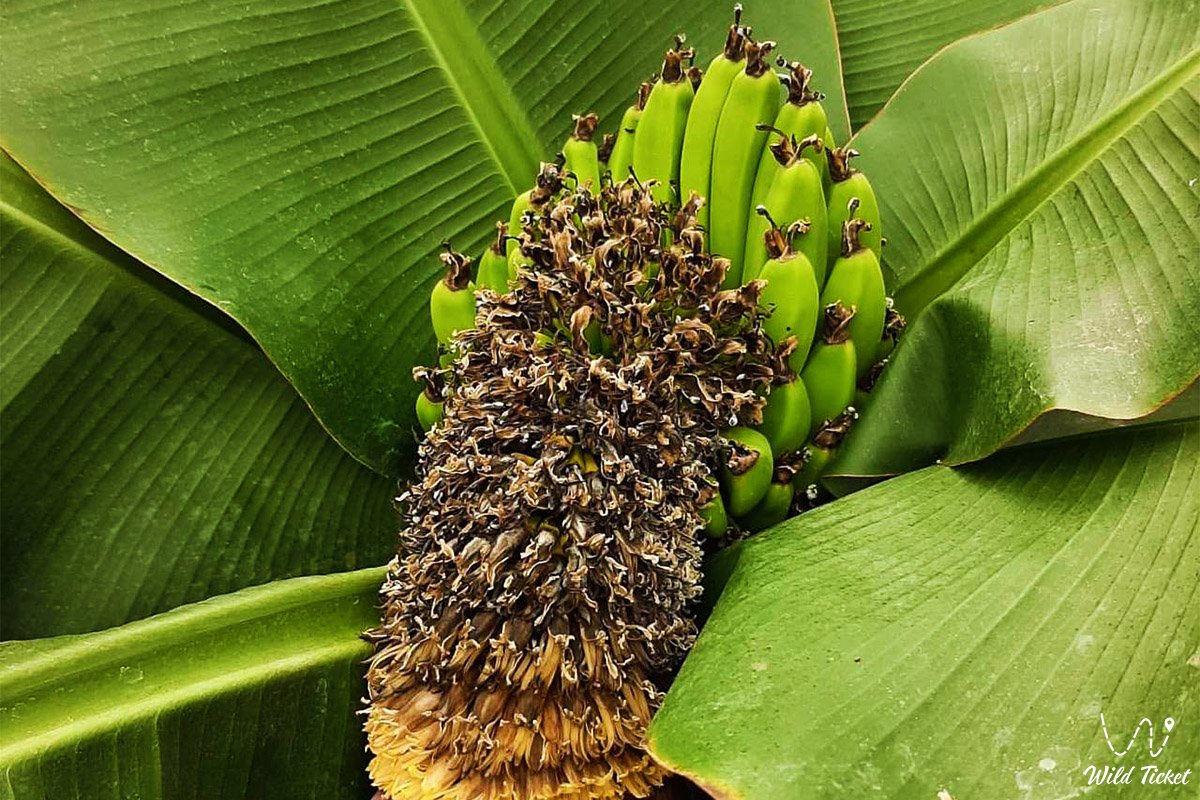
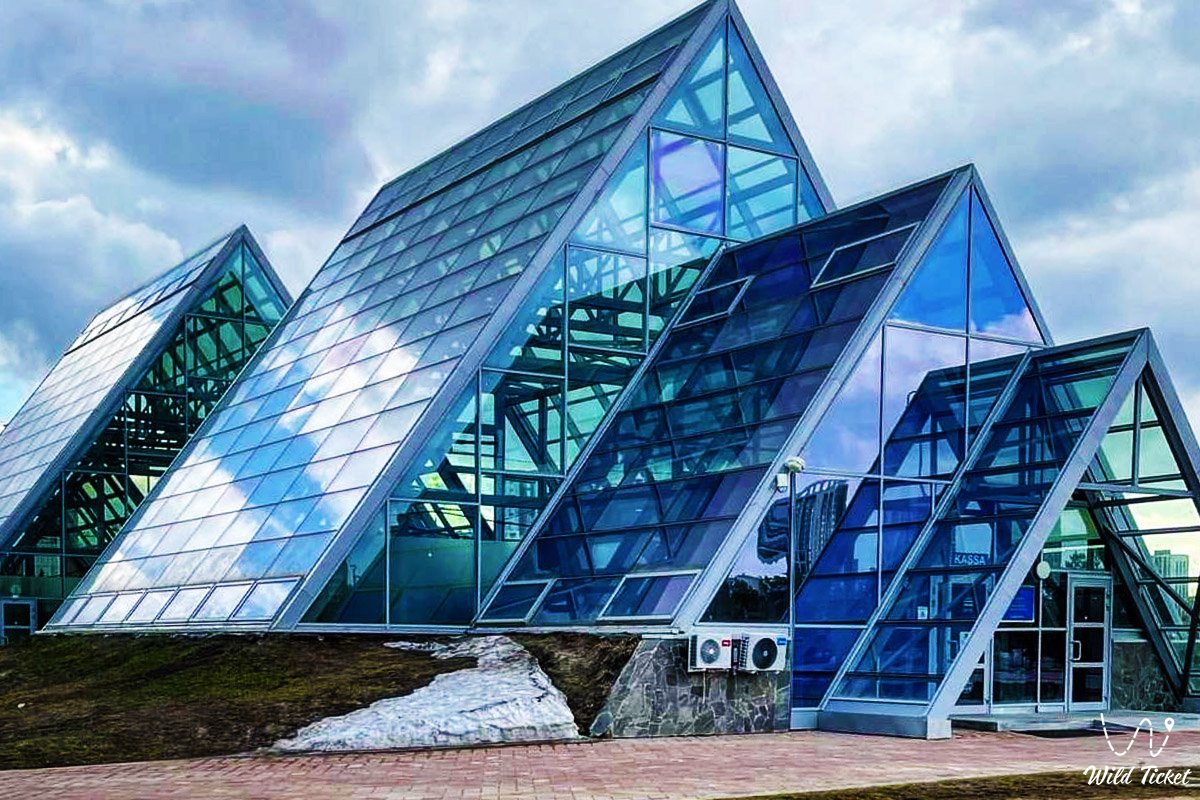
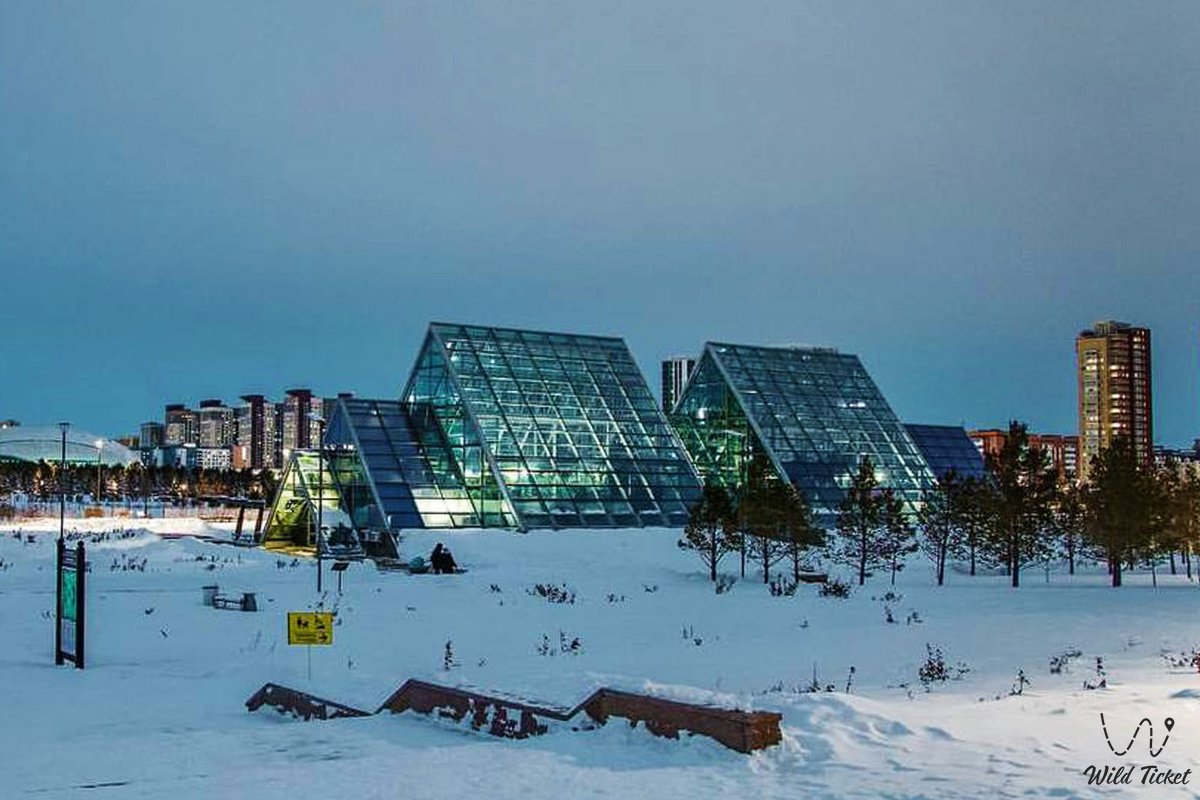
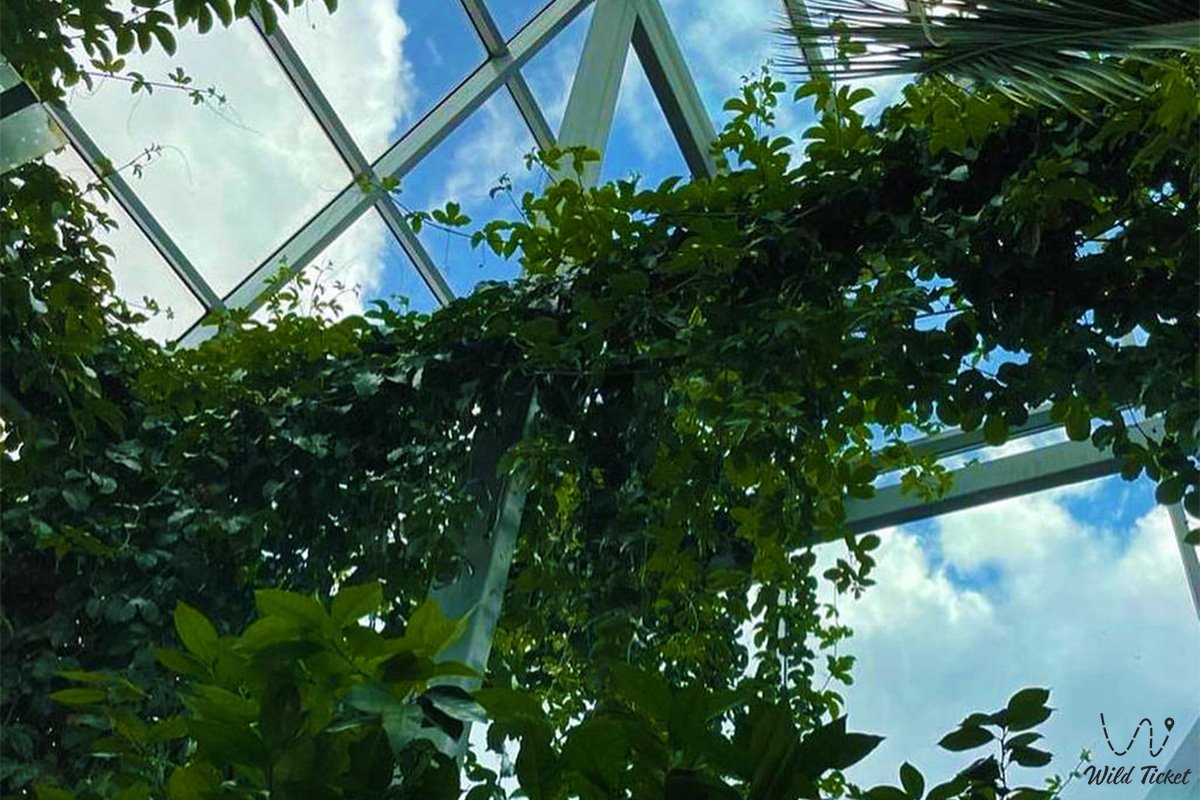
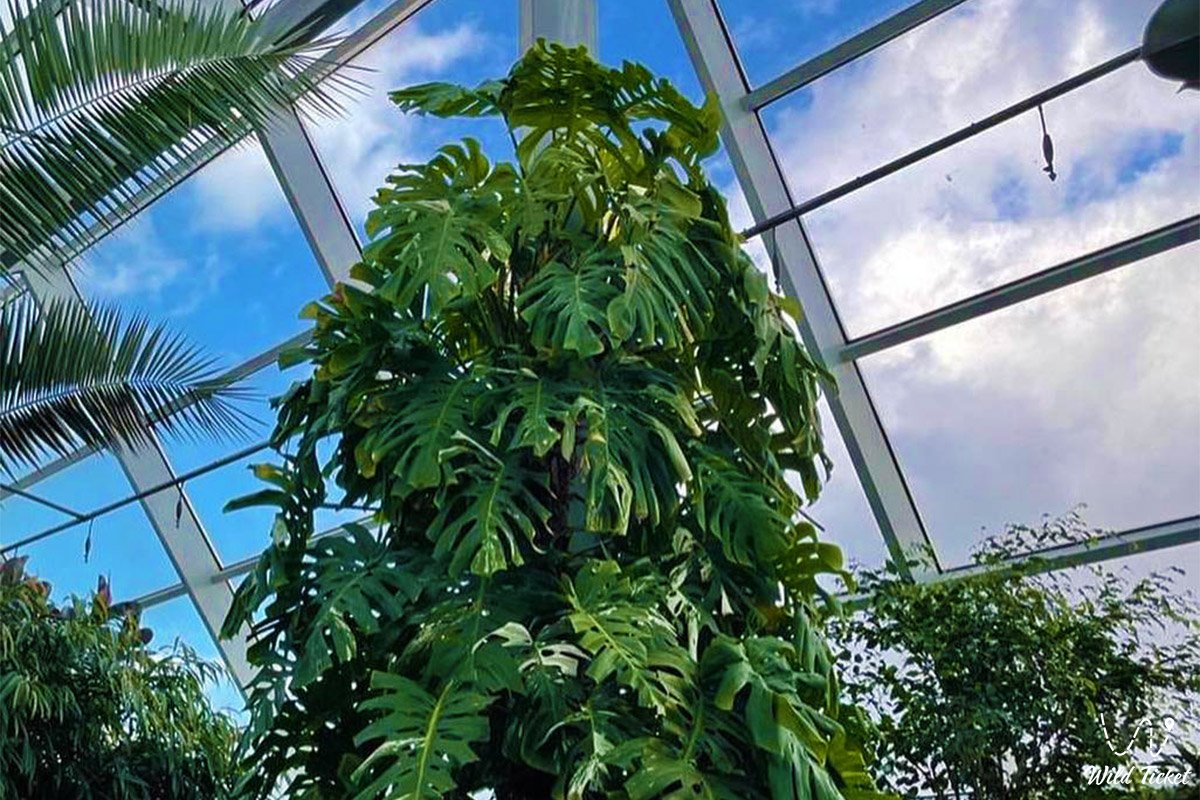
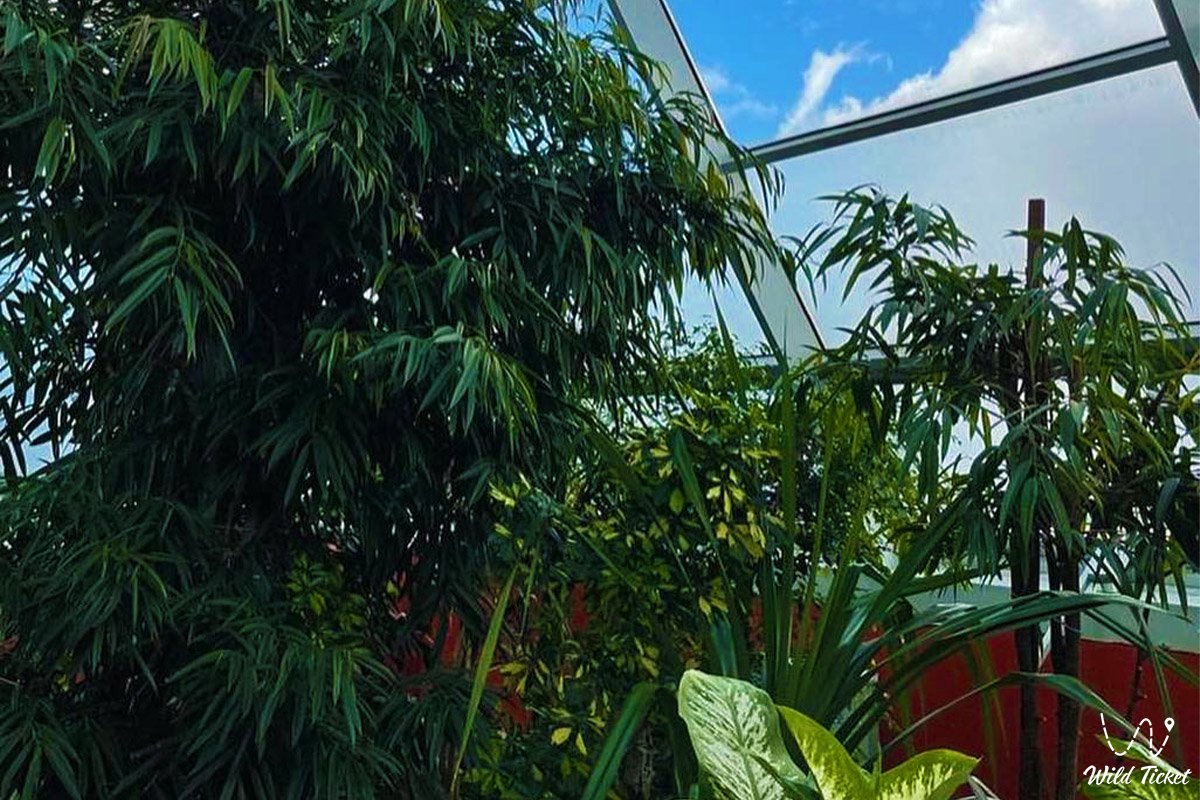
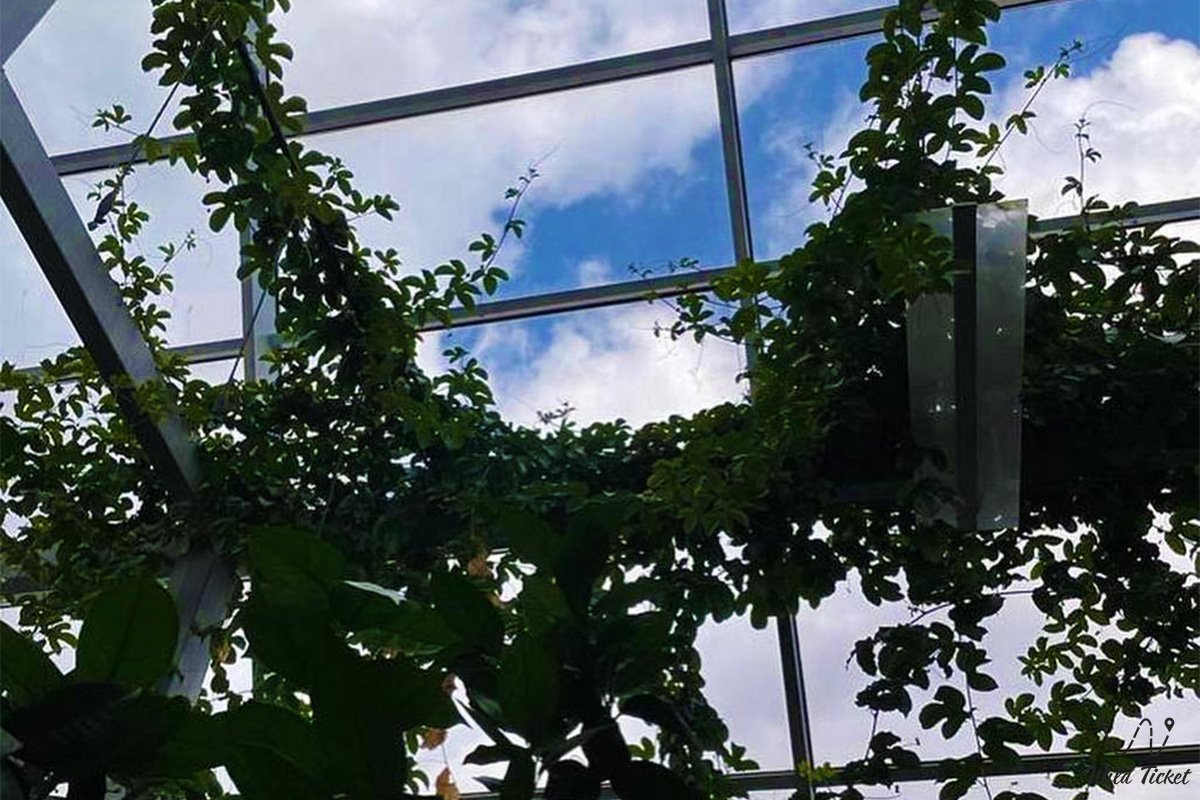
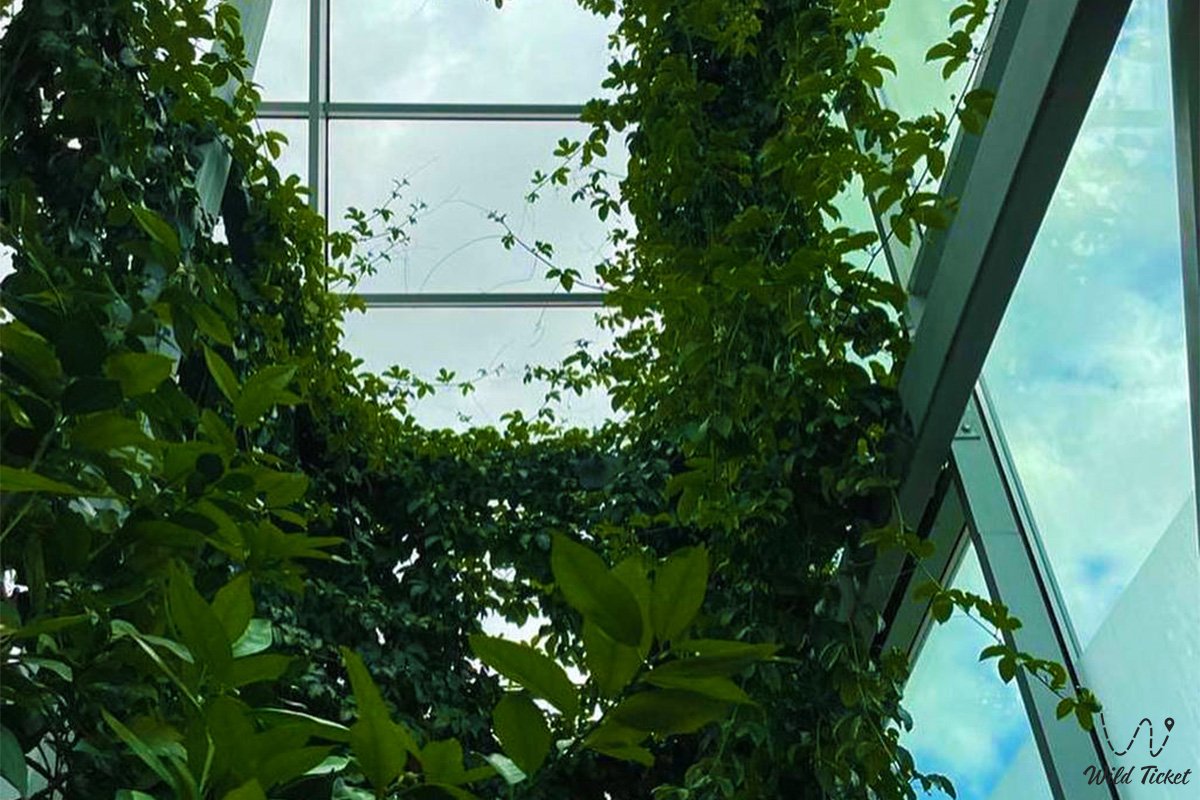
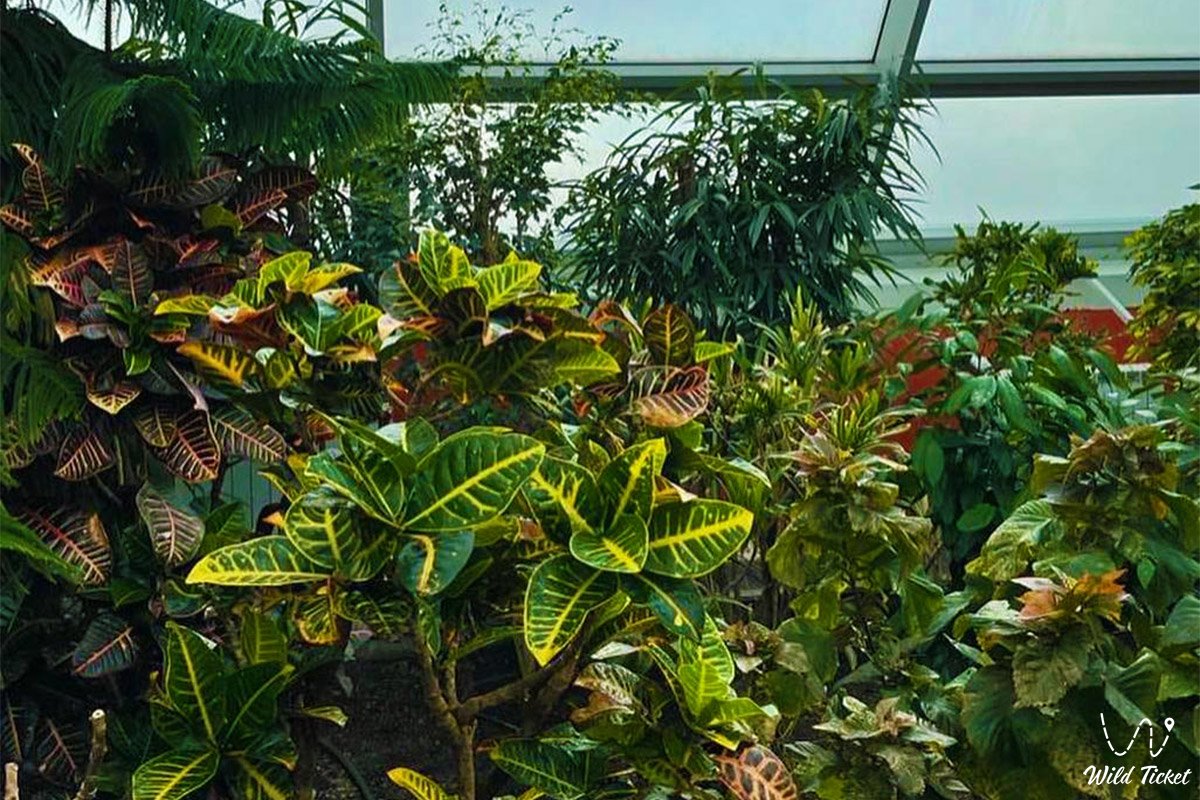
The garden's greenhouse complex is built like a climatron and consists of two buildings with full automation of drip irrigation and misting systems. In the tropical section, more than 1100 plants of 70 species grow, including palms, lemons, oranges, ficuses, dracaenas, and ferns.
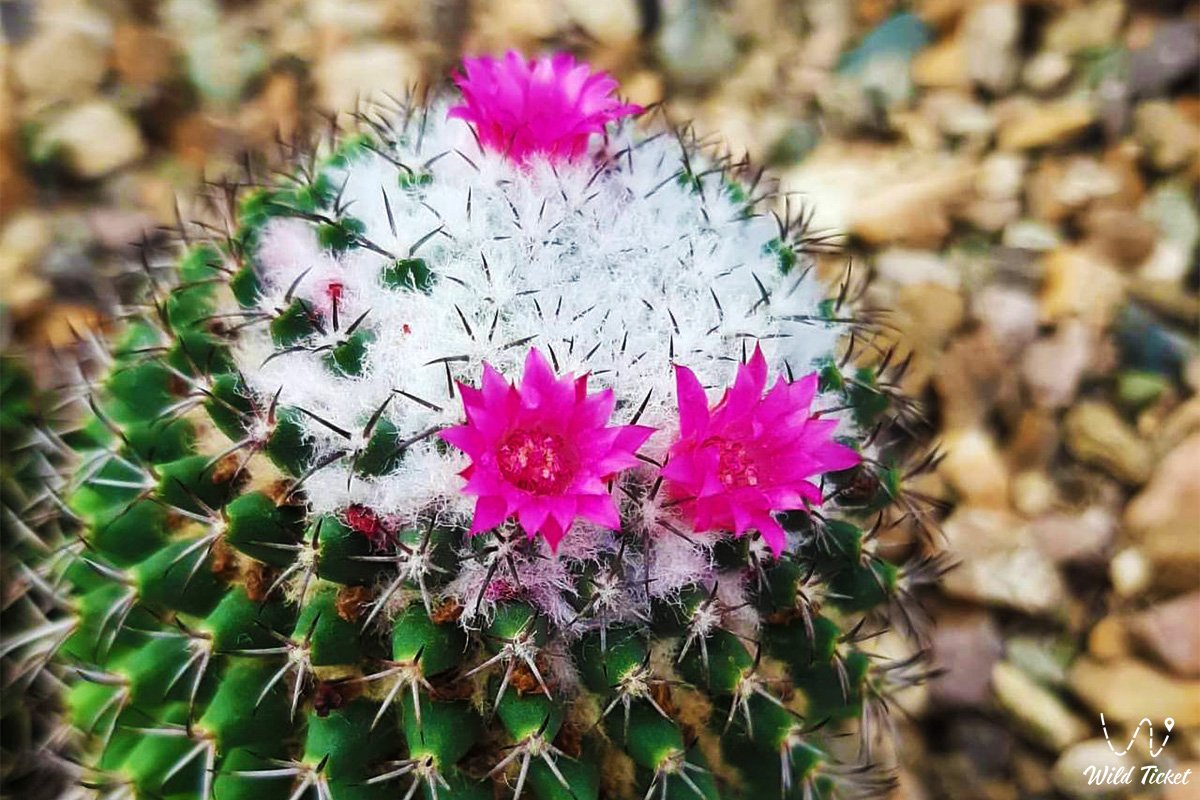
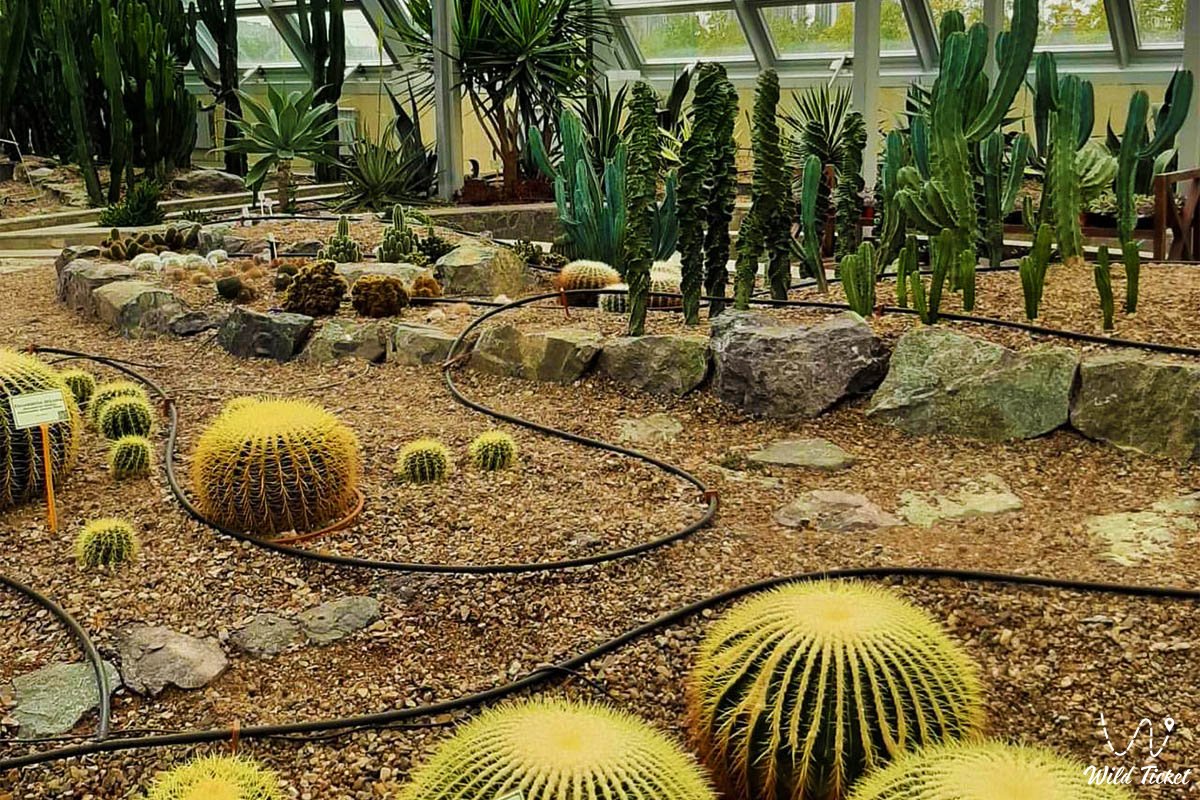
A separate hall of succulents presents more than 60 species (according to other data up to 200-300 species and varieties) of cacti and aloe. The temperature in the greenhouses is maintained at 24-26°C all year round. The park infrastructure includes 11 km of bicycle paths and 10.5 km of running tracks, as well as a system of artificial reservoirs with an area of 45 thousand sq. m with fountains.
Detailed description of the object
A walk through the garden begins with the central entrance decorated with an arch, behind which is a commemorative stone with a saying in Latin. Right behind the arch is a pedestrian bridge over an artificial reservoir, which has become a popular place for photo sessions and picnics on the surrounding lawns.
The garden is designed in a formal style, where four main alleys radiate from the central part to the corners of the square territory. At the intersections of the alleys with the circular bicycle path, small recreation squares are equipped.
The main architectural decoration of the garden is the Taikazan fountain – the largest in Astana. Its diameter is 73 meters, and the central element is made in the shape of a huge copper bowl, imitating the famous cauldron from the Mausoleum of Khoja Ahmed Yasawi. The fountain is equipped with a misting system that creates a "boiling" water effect and evening light and music illumination.
For active recreation, bicycle rental stations, fields for football, basketball, tennis, and volleyball, as well as workout zones with exercise equipment, are provided. In winter, the garden transforms: a skating rink is set up and ice slides are built.
Architecture
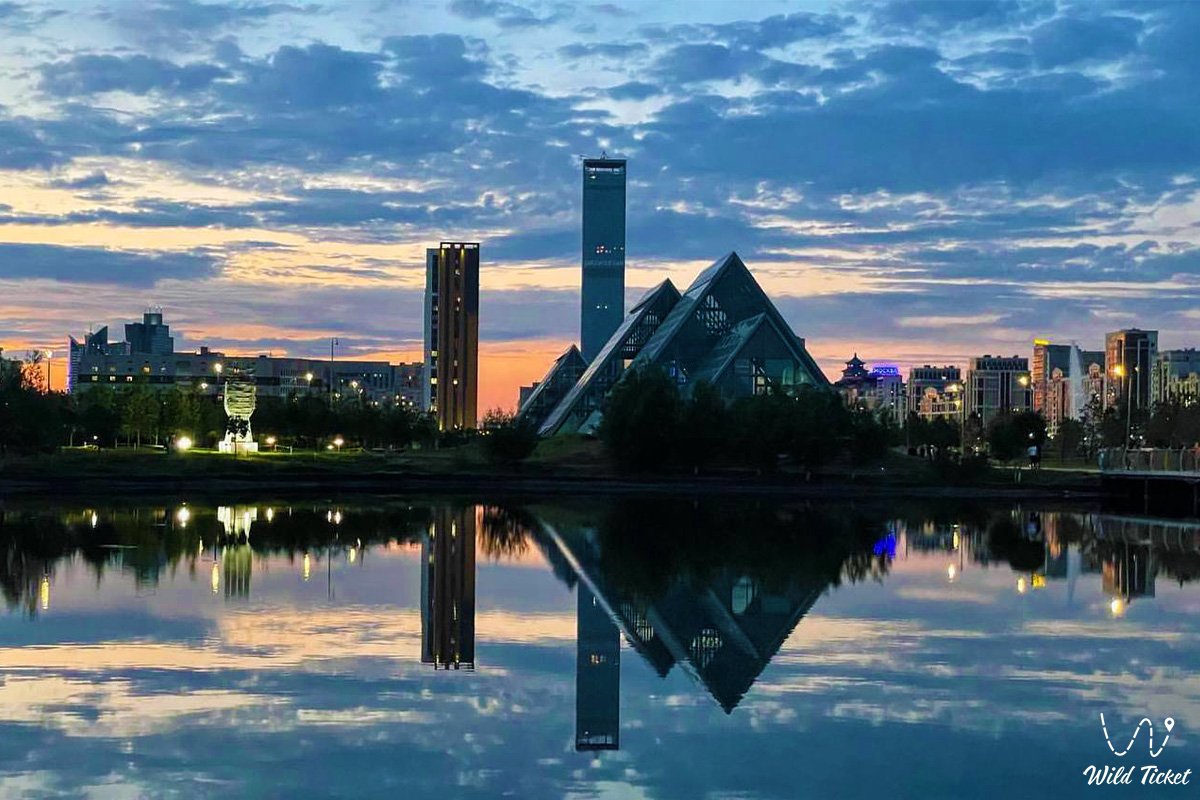
The architecture of the Botanical Garden stands out with its futuristic greenhouse complex built in the shape of a pyramid with huge stained-glass windows. This design ensures unhindered access of sunlight to the exotic plants inside.
In 2018, an administrative and laboratory building with an area of 3.4 thousand sq. m was completed. The central planning of the "Earth and Mother" park in the shape of a circle with radial rays creates a clear geometry of space. On the territory, large gazebos beautifully overgrown with ivy and modern playgrounds for different age groups are also installed.
Legend and conclusion
The name of the largest fountain, Taikazan, connects the modern capital with ancient Turkestan, symbolizing the continuity of traditions and the hospitality of the Kazakh people. There is a belief that walking along the four main alleys of the garden brings harmony and balance to life.
The Astana Botanical Garden is not just a park, but a unique scientific facility and a green monument to the hard work of people who turned the steppe into a blooming oasis. This is a must-visit place where everyone will find something to their liking, from studying rare cacti to an active bicycle ride.
Interesting sights nearby:
• Ulytau Alley;
• “Gratitude to the Kazakh People” Monument;
• Grand Republican Mosque;
• National Space Center;
• Open-Air Space Museum;
• “Kazanat” Hippodrome;
• MEGA Silk Way Shopping and Entertainment Center;
• Nazarbayev University.
Additional information:
• Useful information about Astana;
• Where to go and what to see in Astana;
• Akmola region - attractions, tourism and travel.
Photogallery: