Main architectural monument of merchant Akmolinsk -
A majestic Art Nouveau building that has preserved the spirit of the old city -
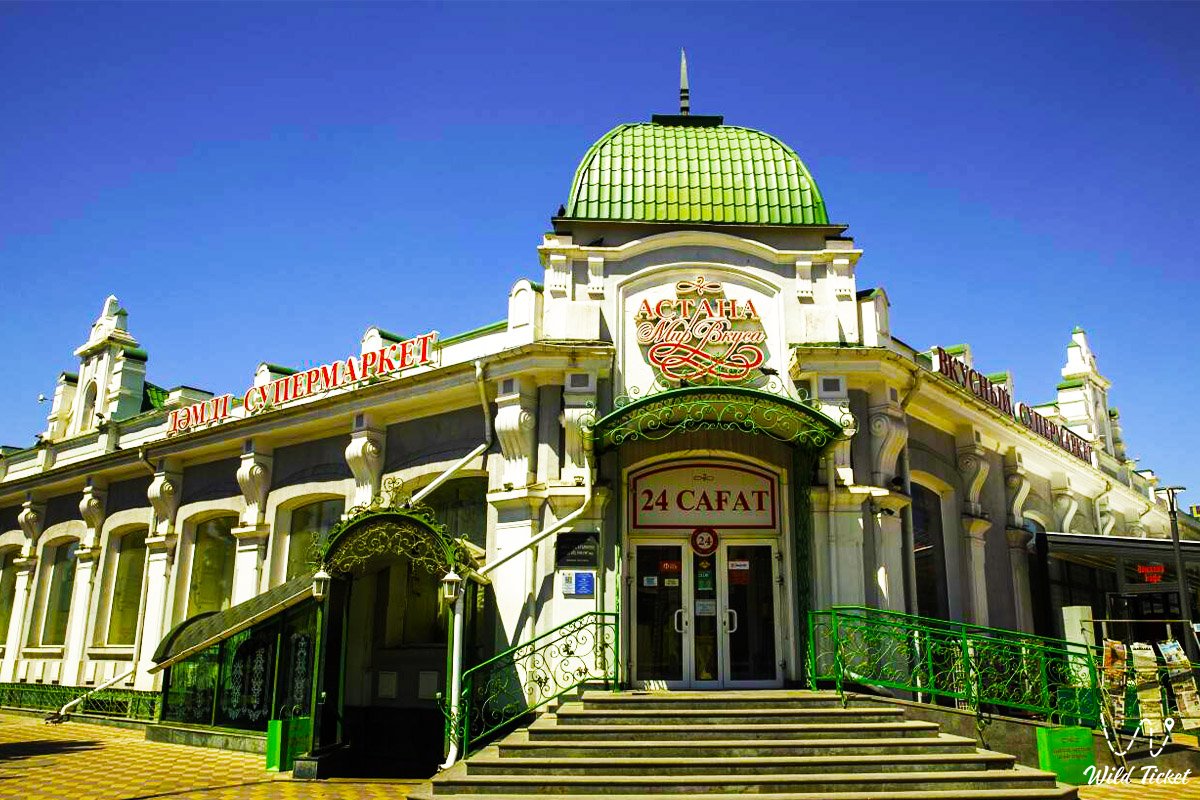
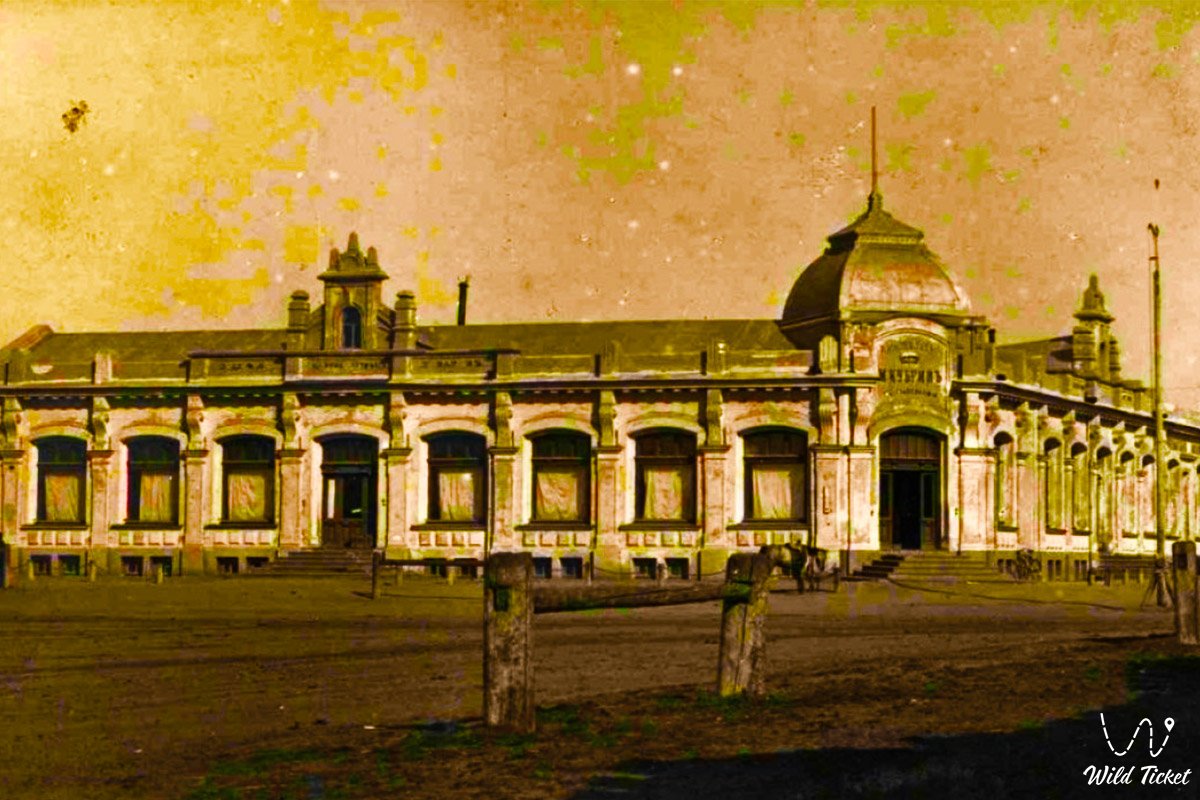
The Trading House of merchant Matvey Kubrin is not just an old building, but a real portal to an era when Astana was still called Akmolinsk and was a bustling trade hub. Erected between 1905 and 1907, this house became the pinnacle of the commercial success of the Kubrin dynasty.
Matvey Konstantinovich, a merchant of the first guild, approached the business with scale: he founded the "Matvey Kubrin with Sons and Co." partnership, which turned a provincial store into a true luxury hub of that time. The Kubrin family was wealthy and famous; the city also features the house of his son Vasily Kubrin, and information exists suggesting that both of these houses were connected by an underground passage.
One could buy everything here: from exquisite fabrics, tea, and sugar to exclusive jewelry, watches, and fashionable shoes. The building was built "for the ages" by migrant craftsmen, and even 120 years later, its walls look powerful and noble.
The history of the Kubrin family is an example of how simple Cossacks became pillars of society. The founder, Konstantin Kubrin, rose through the livestock industry, and his sons – Andrian and Matvey – built hospitals, schools, and factories in the city.
The Matvey Kubrin Trading House survived everything: the triumph of the empire, the harsh years of nationalization when the repressed languished in its basements, and the terrible fire of 1944, after which the building stood as a black skeleton for ten years and received the nickname "Gorely" (Burnt).
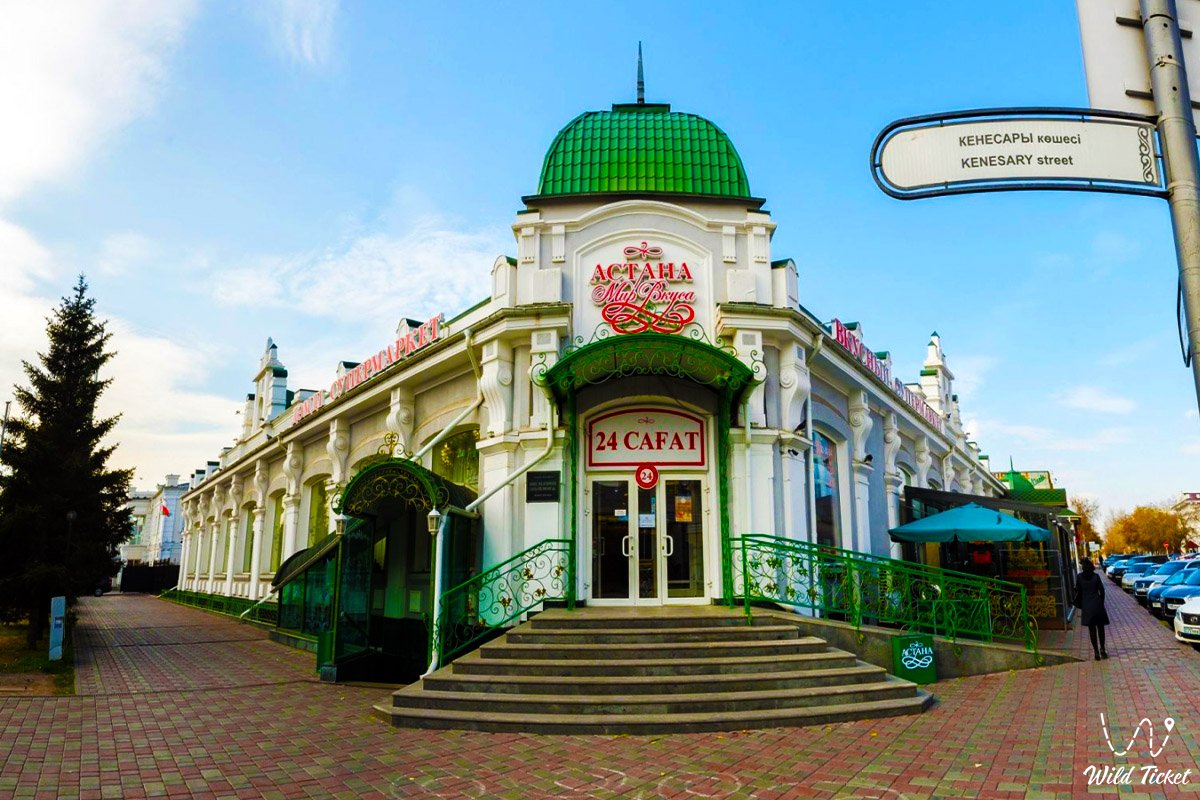
Today, having undergone a large-scale restoration, the house has returned to its true face – it is once again a place of trade, and it remains one of the most beautiful and visited spots in the old center.
---------------------------------------------
How to get there and visit -
The Merchant Matvey Kubrin House is located at: 37 Kenesary Street, corner of Mambetov Street, right bank of the Ishim River, Saryarka district, Astana city, Republic of Kazakhstan.
GPS coordinates: 51°09'54"N 71°25'22"E
Buses No. 1, 9, 17, 25, 31, 32 will take you directly to the Kubrin Trading House.
Dozens of other routes pass within a few minutes' walk (via the Arbat or the embankment): No. 70, 64, 56, 52, 40, 37, 33, 21, 12, 10.
If you are coming from the left bank or the station, these lines will take you practically to the doorstep.
Also, for convenience, you can use a private car or order a taxi through a mobile application.
Opening hours: The "Astana" supermarket, located inside, is open daily from 09:00 to 21:00.
You can admire the facade and take photos around the clock; in the evening, the house is beautifully illuminated.
---------------------------------------------
History
Matvey Kubrin was not only a businessman but also a prominent politician – he was elected to the city duma and sponsored a three-grade school. In 1915, he moved to Moscow, leaving all business in Akmolinsk to his eldest son, Vasily.
After the October Revolution of 1917, the family nest and business were nationalized. The building managed to serve as a workers' club, a library, the Tsentropechat (Central Press), and even a police station. In the 1930s, NKVD cells were located in the basements, where sentences were carried out.
After the war, the building stood abandoned due to the fire until 1950, when it was decided to restore it as a department store.
During the Soviet period, it was known to everyone as the "Raduga" (Rainbow) store. The house received the status of a historical monument in 1984, and with the gaining of independence in the 90s, the "Astana" supermarket was opened here.
Information
The building is a benchmark of the "St. Petersburg school" of architecture. It is one-story but has a huge basement that was used as a warehouse. The Kubrins owned a whole network of stores in Kokshetau and Atbasar, and this house was their flagship.
The best fired brick was used in construction, and the huge display windows were a real technological breakthrough for that time. Inside, one can still see the original layout of the spacious halls. Interestingly, throughout its history, the building has never fundamentally changed its appearance despite the changes in ideologies.
Detailed description of the objects
• Corner entrance with a dome: The main feature of the building. The entrance is located on the corner of the intersection, and above it rises a four-sided dome-shaped vault – this is the highest point of the house.
• Wings of the building: Two parts of the facade running along Kenesary and Mambetov (Bukeykhan) streets. They are decorated with additional decorative entrances and parapet pillars.
• Basements: Deep brick rooms that have seen both colonial goods and prison cells in their history.
• Vasily Kubrin Mansion: Located nearby (41 Kenesary St). This was the son's residential house, which was previously connected to the trading house by a secret underground passage.
Architecture
The architectural style is eclectic Art Nouveau. The design is close to the works of the famous St. Petersburg architect A. I. Gauguin. The building has a clear symmetry in the composition of the central entrance. The traditional pilasters between the windows are decorated with volute-like consoles with vertical slits. In the lower part of the walls under the windows, square protrusions are used – an ancient decorative technique of Russian trading rows, known since the 16th century. The oval outlines of the window lintels emphasize the belonging to the Art Nouveau style.
Legend
The most beautiful legend of Astana is connected with Vasily Kubrin. It is said that he fell in love with a young actress from St. Petersburg during a trip to the Mariinsky Theatre. To lure her to the steppe Akmolinsk, he promised to build her a house that would not be inferior to the capital's mansions on the Moyka Embankment.
Thus, a luxurious residential mansion appeared next to the store. And the underground passage between the houses supposedly served so that the merchant could visit his beloved at any time without going out into the harsh Akmolinsk cold.
It is also believed that during the revolution, the Kubrins managed to wall up part of their gold reserve somewhere in the brickwork of the walls or deep in the passage, which was later filled in.
Interesting landmarks nearby:
• Monument to Khan Kenesary;
• Ishim River embankment;
• Library of the First President;
• Astana Arbat;
• Monument to Khans Kerey and Zhanibek;
• Atyrau pedestrian bridge;
• Central Park;
• City beach on the Ishim River.
Photogallery: