A unique memorial complex in the old city center -
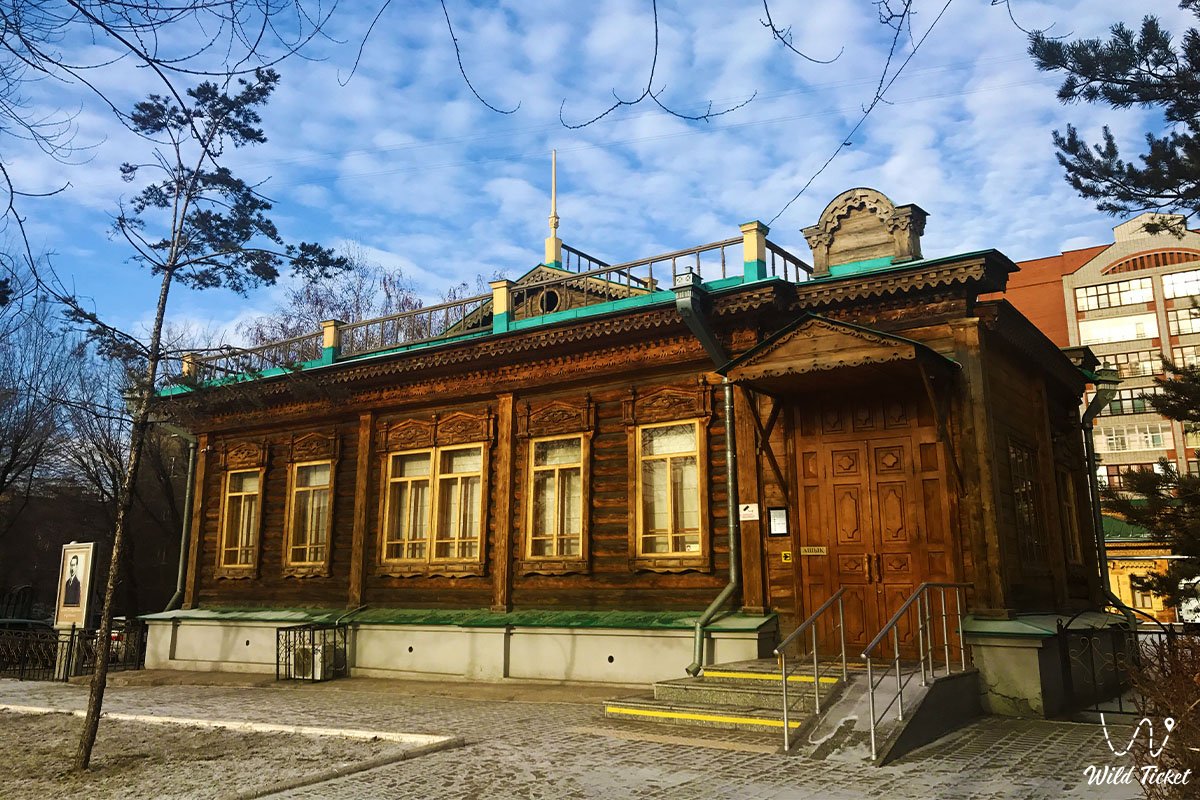
The Saken Seifullin Museum is a unique architectural site in the city of Astana. The building has a rich history. It impresses with its beautiful log masonry and wooden architecture. The ancient one-story log house with a high hip roof attracts the attention of every passerby. It is located in the Saryarka district at the crossroads of the old center. Nearby are the majestic Monument to Khan Kenesary and the famous Astana Arbat pedestrian corridor.
The construction of this unique center began with the support of the state. The official opening took place on February 20, 1988, by decree of the Council of Ministers of the Kazakh SSR. This became a clear confirmation of care for preserving historical heritage in the republic. The hub is specially equipped in a nineteenth-century building. Previously, it belonged to one of the merchants of Akmolinsk and was used as an office for keeping inventory of goods.
The house of the merchant's mansion miraculously survived surrounded by modern high-rises and business centers of the right bank. It is located near the Makhambet Utemisov Schoolchildren's Palace. From its windows, one can easily map out a route to the City Square located in this area.
The light carved facades of the wooden house perfectly complement the historical appearance of the district. This old quarter is oriented toward a direct transport link with all key points of the right bank. Next to the museum on the territory, a bronze monument to Seifullin is installed. Its shady square offers a view of quiet walking zones. Along them, one can reach the Ishim River Embankment. Also located nearby are the State Academic Maxim Gorky Russian Drama Theatre and the Trading House of Merchant Matvey Kubrin.
At this point of the right bank, two different eras harmoniously intertwine. The historical heritage is carefully preserved here. The complex naturally neighbors the nearby recreational spaces of the ancient House of Merchant Vasily Kubrin. In this quiet memorial place, every visitor can find their guiding star.
---------------------------------------------
How to get there and visit -
The Saken Seifullin Museum is located at the address: 20 Mukhtar Auezov Street, the ancient wooden house is located at the intersection with Saken Seifullin Street in the Saryarka district, right bank of the Ishim River, Astana city, Republic of Kazakhstan.
GPS coordinates: 51°10'17"N 71°25'24"E
You can reach this historical location by well-developed public transport. City buses run to the Saken Seifullin Museum stops in a random order: No. 2, 3, 5, 5A, 8, 10, 17, 20, 23, 31, 32, 33, 34, 37, 40, 45, 52, 53, 64, 71, 73.
Parking zones are provided for owners of private cars. You can also order a taxi via mobile applications.
Museum opening hours: from Tuesday to Sunday from 09:00 to 18:00, without breaks. Monday is a day off. Ticket offices close at 17:00.
Contacts: +7 7172 98 61 03; +7 7172 99 80 42
www.instagram.com/seifullin_museum
Entrance to the courtyard area to the monument is completely free, while viewing the exhibition halls is paid.
---------------------------------------------
History
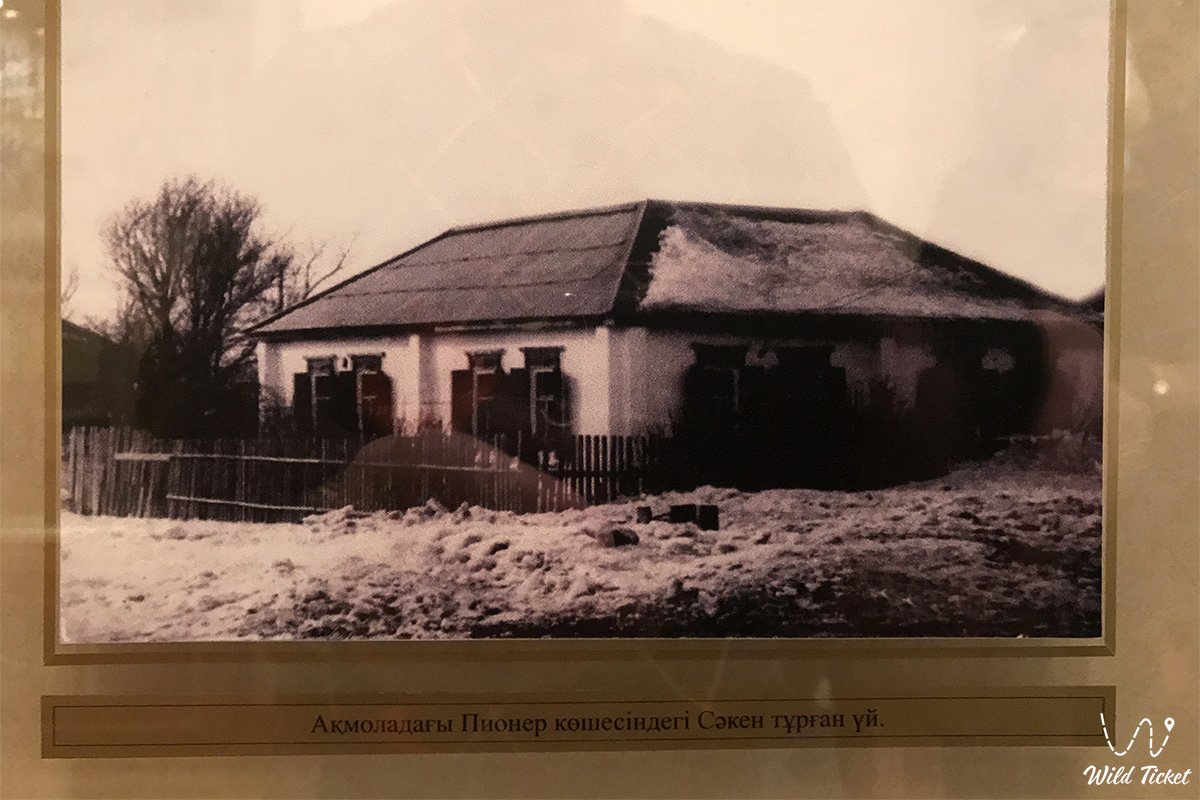
The history of this wooden mansion began in 1846. One of the merchants of Akmolinsk built it as an office for keeping inventory of goods. In the 1920s–1930s, Saken Seifullin himself worked within these walls. He was the founder of modern Kazakh literature and the chairman of the Council of People's Commissars of the Kirghiz ASSR. Later, the Zorka kindergarten was located here. On February 20, 1988, the state museum was officially opened in the building. This event became an act of recognition of his merits to the people. For many years after his arrest in 1937 and execution in 1938, attempts were made to erase Seifullin's name from history. The posthumous rehabilitation of the writer took place in 1957–1958.
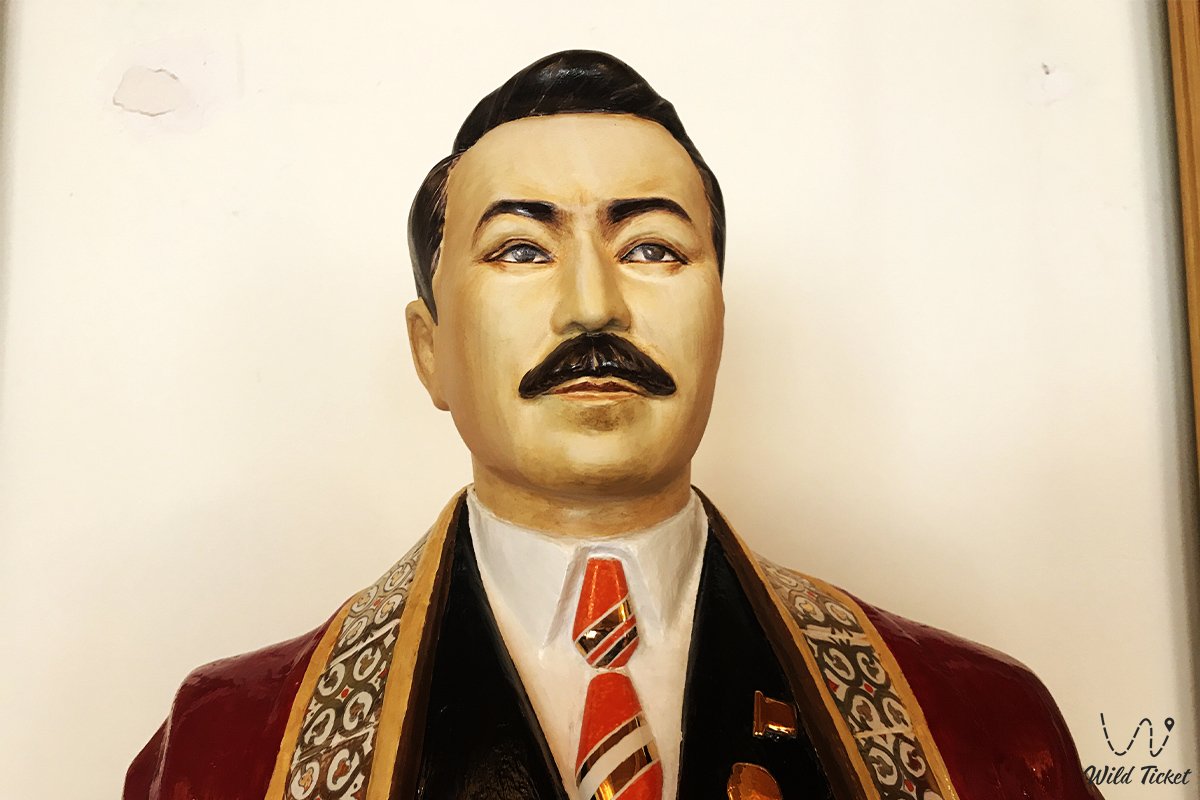
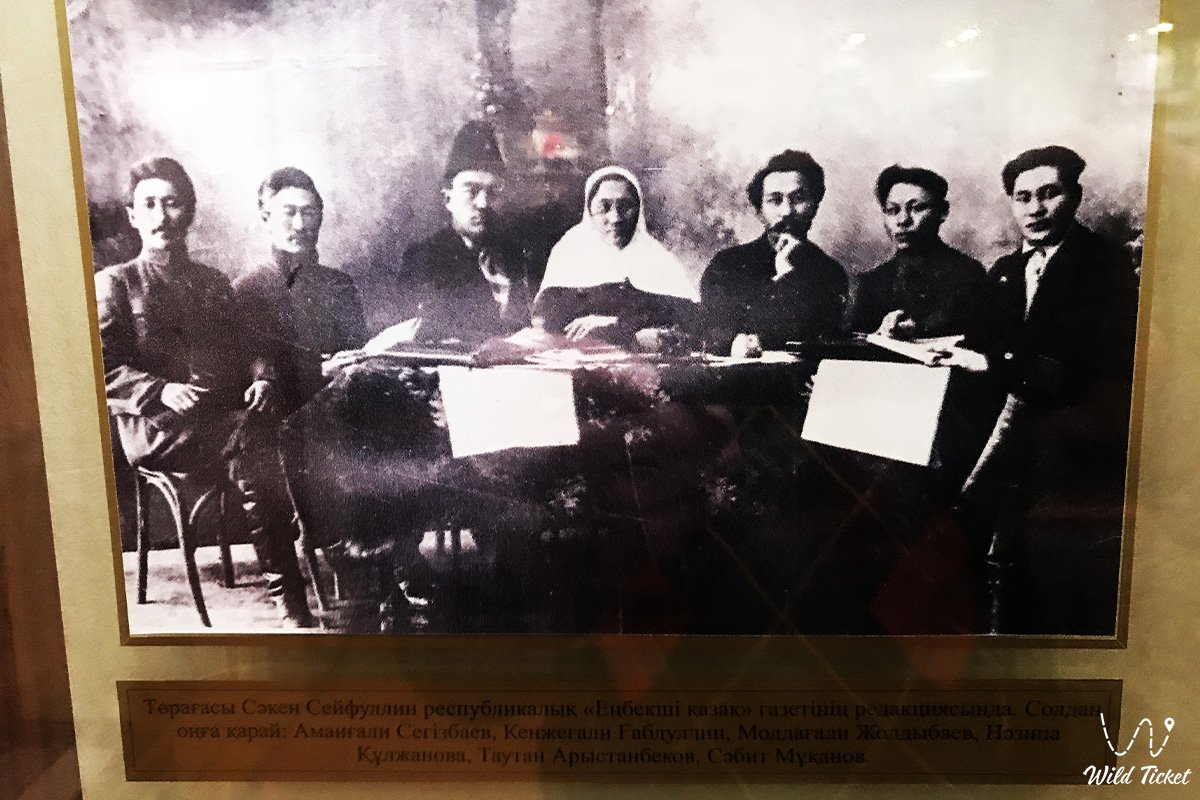
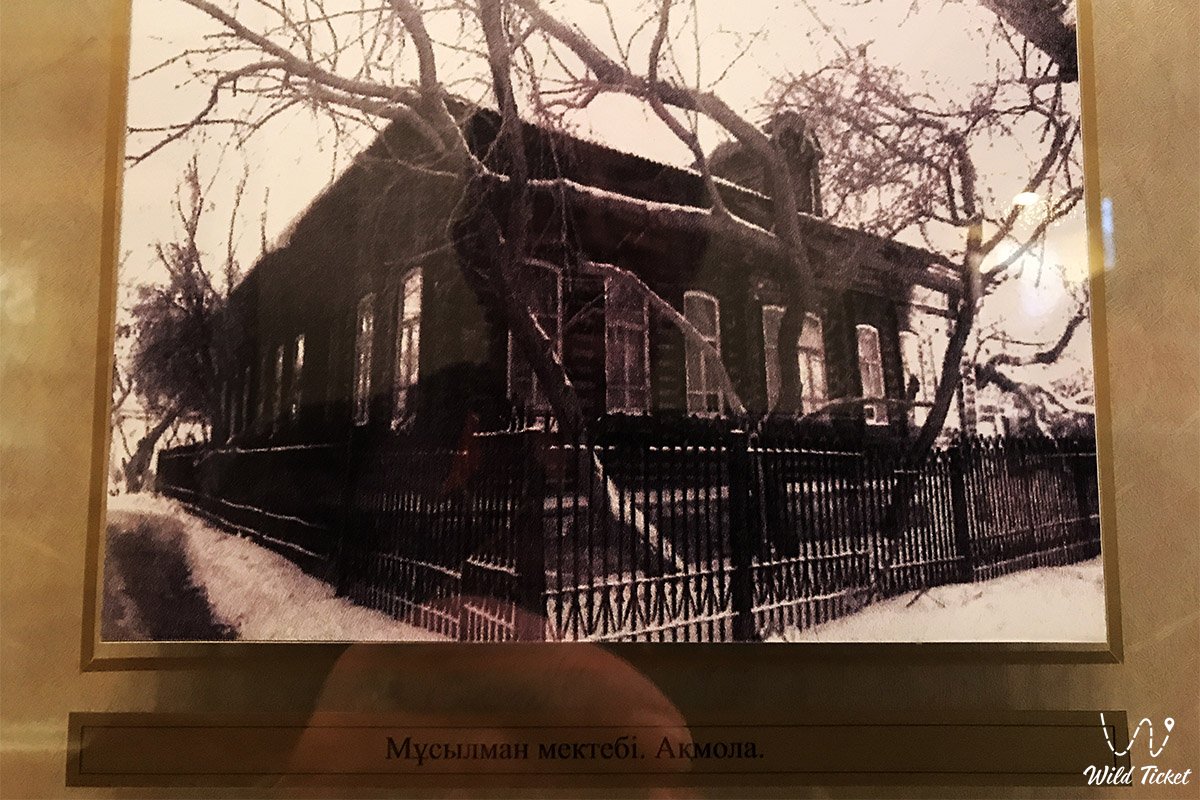
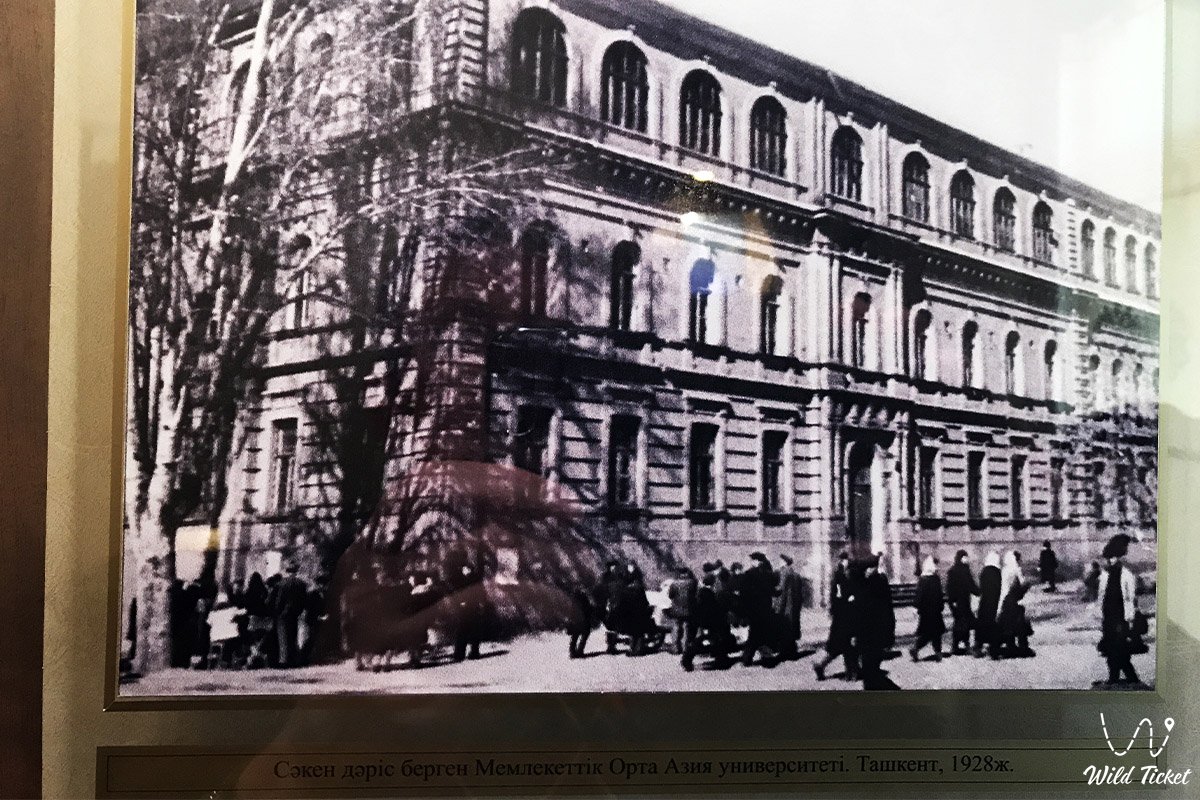
The main idea of creating the museum was to preserve the memory of Saken's tragic fate and great creative heritage. More than 5 thousand exhibits are collected in the funds. The exhibition is divided into 6 halls. Previously, they served as working offices for government employees of the Sovnarkom. On the walls of the introductory hall hangs a woven tapestry carpet with a plaster relief of Saken. It is dedicated to the victims of Soviet repressions. The photo exhibition "Saken and Akmola" shows old Akmolinsk. The poet was born in the locality of Karashilik, studied in Nildy and Omsk, and then began his career here. The museum presents the works of scholars who researched his life, and the first lifetime editions of the author's books.
Information
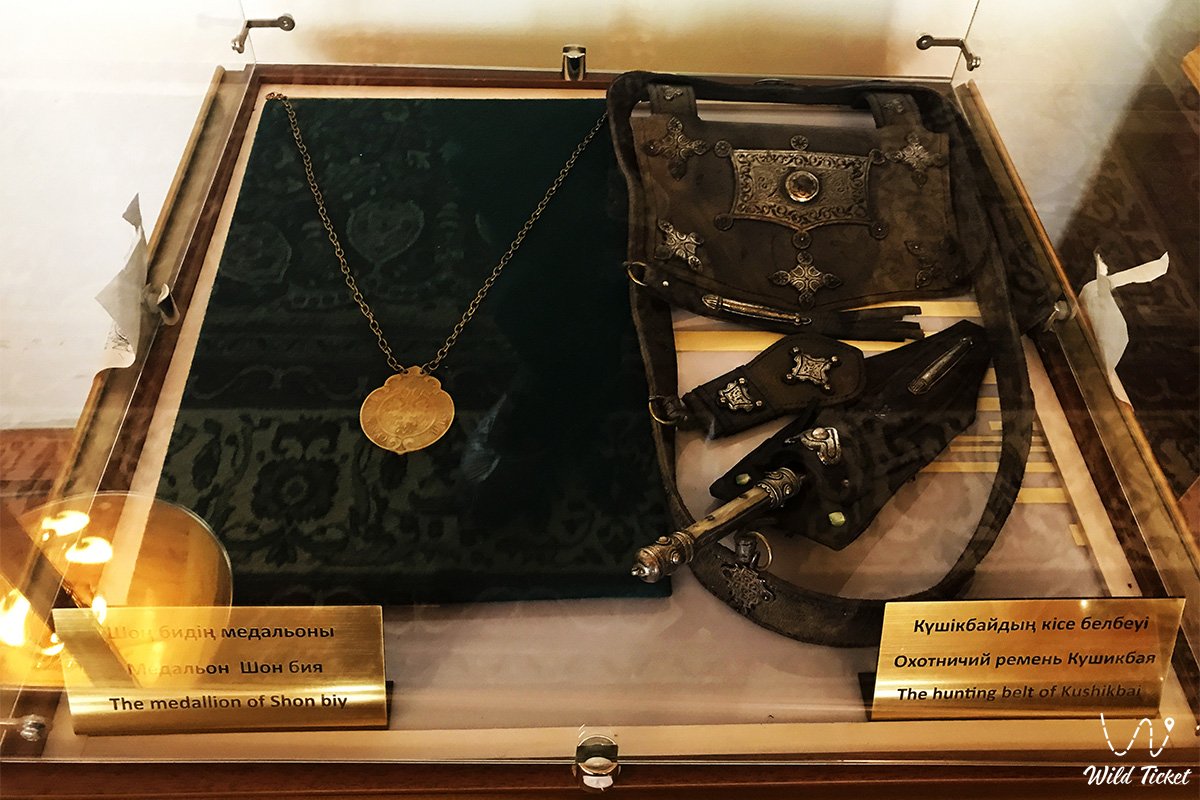
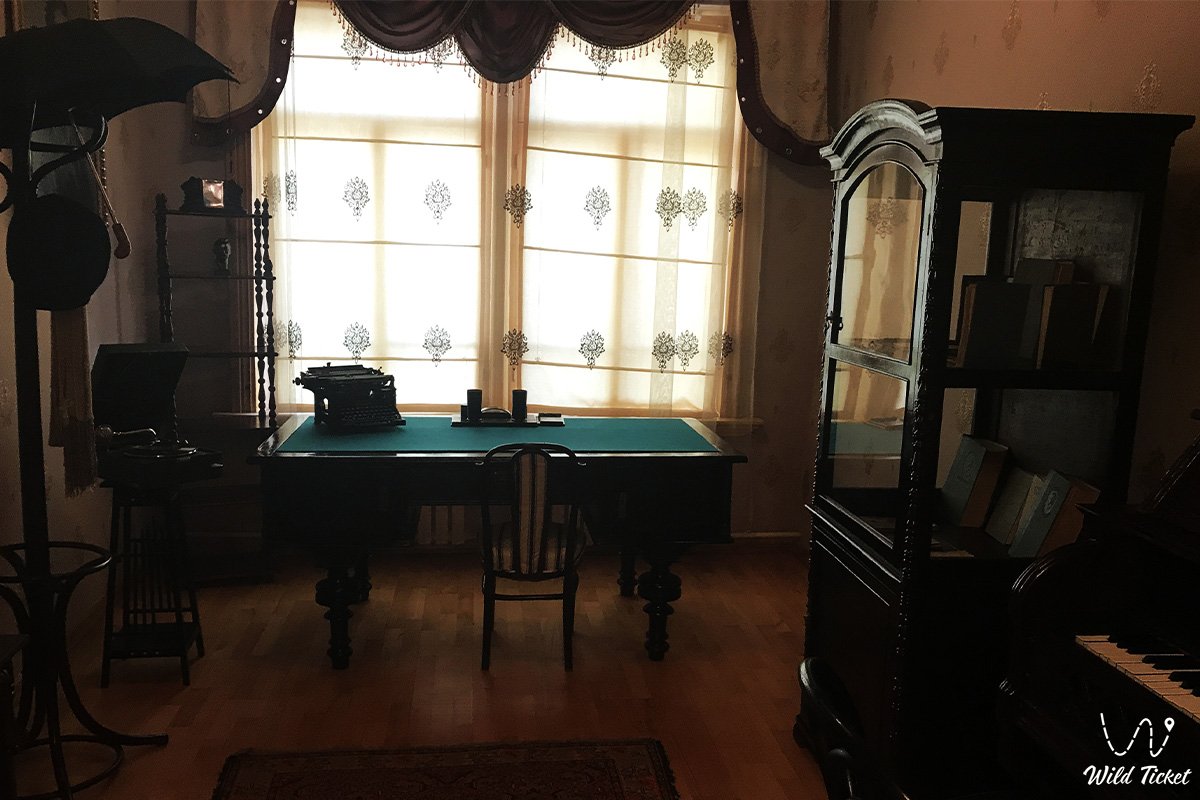
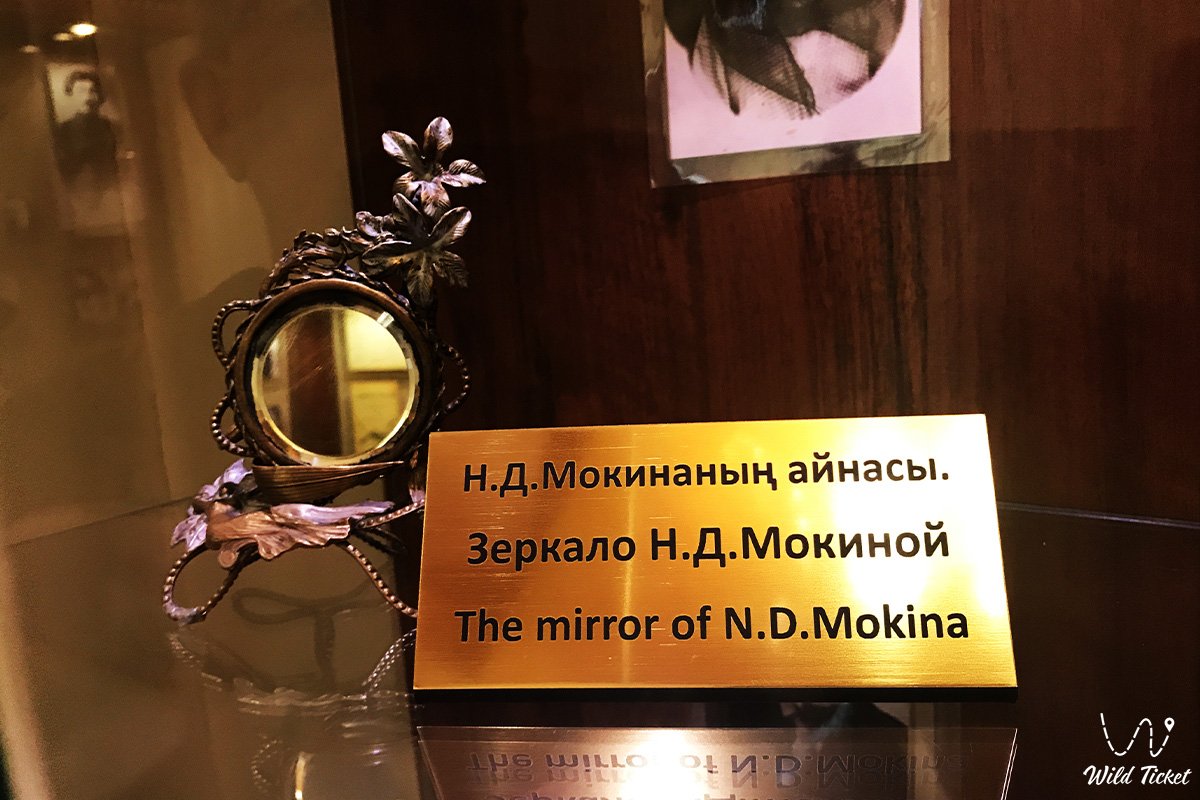
The exhibition introduces visitors in detail to the personal belongings of Seifullin and his ancestors. Here you can see the hunting belt of his great-grandfather Kushikbai Batyr and the medallion of Shon Aby. The spindle and a tea box of his mother, brought by Saken from Moscow, are on display. A special place is occupied by the Underwood typewriter. It was manufactured in New York and gifted to Seifullin by the head of the republic, Levon Mirzoyan. In the halls are exhibited his strict brown pinstripe suit, leather shoes from Crimea, an Uzbek chapan, a wallet, cologne, and a gramophone in working condition. Also presented is the harmonium of his musical mentor Nina Mokina.
A model of a bedroom has been reconstructed in the museum. Exhibited there are the baby blanket of his son Ayan, who died on the way to the ALZHIR camp, the sewing machine of his spouse Gulbakhram, and the dombra of his brother Mazhit. The fifth hall keeps heavy archival documents. Among them are the search protocols of 1937 and the execution certificate. The sixth hall, "In the Memory of the People," demonstrates books published after the rehabilitation. Open lessons are held for schoolchildren, and modern stands are used for tourist navigation. The building is fully adapted for the safe movement of low-mobility groups of citizens.
Detailed description of the object
The unique memorial structure of the museum includes the following specialized zones:
• Hall of the Political Homeland – the first introductory hall with archival photographs of old Akmolinsk, personal letters, and documents of the beginning of Saken's public activity.
• Hall of Childhood and Youth – the second room, where a model of an aul school, photographs of his parents, as well as materials about the poet's studies at the seminary are presented.
• Hall of State Activity – the third office with documents from the period of his work as the head of the Sovnarkom and materials of the Zhas Kazakh organization.
• Literary Office – the fourth hall with the original Underwood typewriter, a personal satchel, the watch of his brother Mazhit, a pier glass, and lifetime editions of books.
• Memorial of Memory – the fifth room with NKVD interrogation protocols, investigative files of the repressed B. Mailin, I. Zhansugurov, A. Baitursynov, and gold name-engraved watches of a Swiss company gifted to Saken in 1936.
Architecture
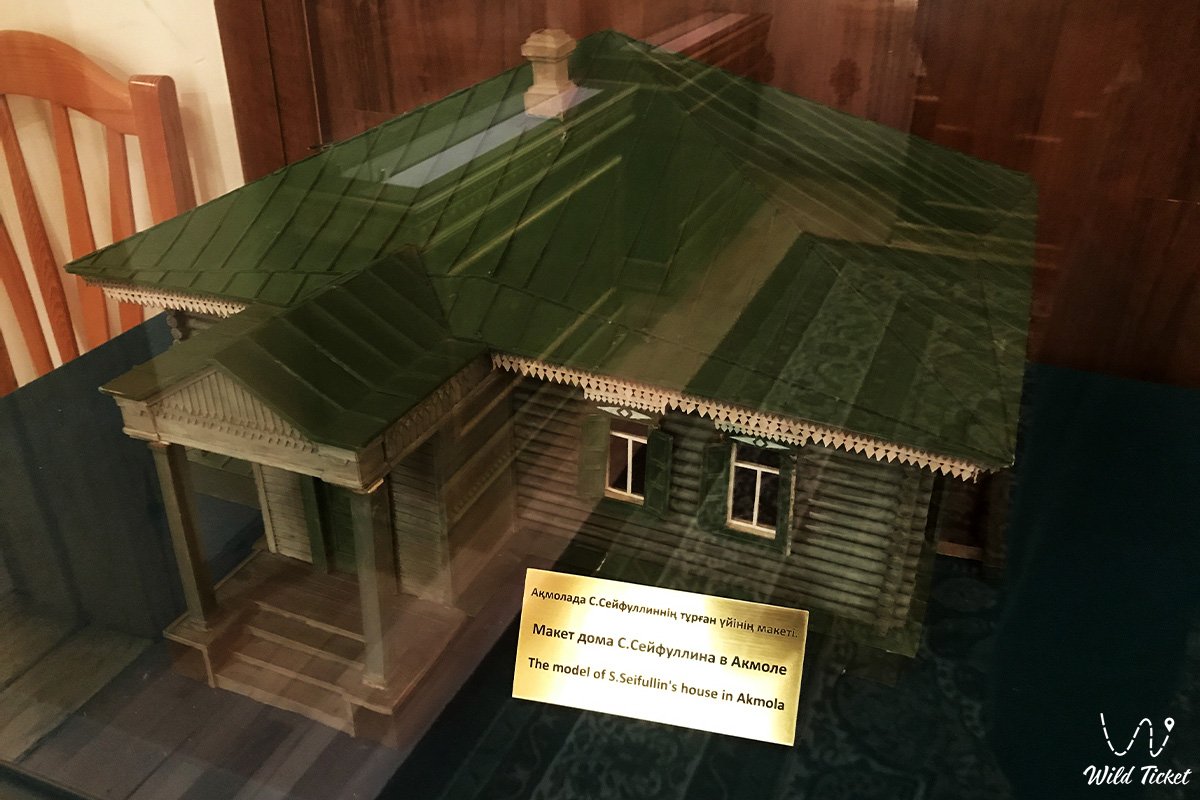
The architectural solution of the one-story wooden house reflects the traditions of Siberian merchant architecture of the nineteenth century. The log frame with a high hip roof and an attic has been completely restored. The masters carefully preserved the original ceiling beams and tiled stoves.
Despite the fact that the site is a historical monument, its well-kept facade with stylish platbands harmoniously fits into the modern ensemble of the capital's new buildings. The internal layout retained the enfilade structure of the Sovnarkom offices. Research is still being conducted to determine exactly where Seifullin's working office was located.
A small cozy square is arranged in front of the wooden building. A bronze monument to the poet is installed there. The territory around is equipped with convenient paths, benches, and lighting. This turns the museum courtyard into a quiet memorial corner in the middle of a noisy megacity. The complex has autonomous climate control systems to protect ancient manuscripts and books from humidity changes.
Legend
Among tour guides and old-timers of the city lives a legend about Saken's Guiding Star. They say that the gold name-engraved Swiss watches, gifted to the poet in Moscow on the anniversary of Pushkin, possess a special power. Saken never wore them before his arrest, and they remained untouched among the belongings of his family.
It is believed that if a creative person looks at this watch for a long time and makes a wish, the mainlines of fate will help the new generation of writers find a strong and honest voice. The second legend is connected with the ancient desk.
They believe that the spirit of the great writer is invisibly present in the halls, granting clarity of thought to everyone who comes to study the history of the repressed authors G. Serebryakova, Sh. Imanbaeva, and G. Sharipova.
Conclusion
The Saken Seifullin Museum is an essential cultural bridge between the tragic past of the steppe intelligentsia and the future of modern Kazakhstan. A visit to this merchant mansion allows the younger generation to touch authentic history and the atmosphere of creation.
Thanks to its location in the Saryarka district at the intersection of busy streets, the museum remains the main landmark for historical excursions. Tourist routes definitely include this wooden house in the list of visits, allowing guests of the capital to end their walk near the Ishim River Embankment.
Interesting sights nearby:
• Ataturk Park;
• “Zher-Ana” (Mother Earth) Monument;
• Amphitheater on the Esil River;
• Atyrau Pedestrian Bridge;
• Military History Museum of the Republic of Kazakhstan.
Additional information:
• Useful information about Astana;
• Where to go and what to see in Astana;
• Akmola region - description of attractions.
Photogallery: