Spiritual heritage and architectural pearl of the Aral region -
Kalzhan Akhun mosque-madrasah, located in the Syrdariya district of the Kyzylorda region, is a unique monument of history, culture, and architecture at the turn of the 19th–20th centuries. This majestic complex, built by the prominent educator, scientist, and religious figure Kalzhan Akhun Bulekbayuly, represents not just a place of worship, but evidence of the high level of development of education and spirituality in the steppe region of that time.
Kalzhan Akhun, who dedicated his life to teaching youth and spreading knowledge, created an educational center here that became a beacon of science for the children of ordinary nomads and farmers. The place attracts those who seek to touch the history of education in Kazakhstan. The mosque-madrasah is surrounded by an ancient sacred necropolis, Kalzhan Akhun village is located 1 kilometer from the mosque, and the Syr Darya River flows to the south.
The mosque-madrasah serves as an important historical site, attracting researchers, pilgrims, and everyone interested in the architecture of Central Asia. The steppe expanses and nature around preserve the memory of the times when these lands were the center of intellectual life. The monument is under state protection, reminding descendants of the great teacher who dedicated his life to protecting the poor and spreading knowledge.
---------------------------------------------
How to get there and visit -
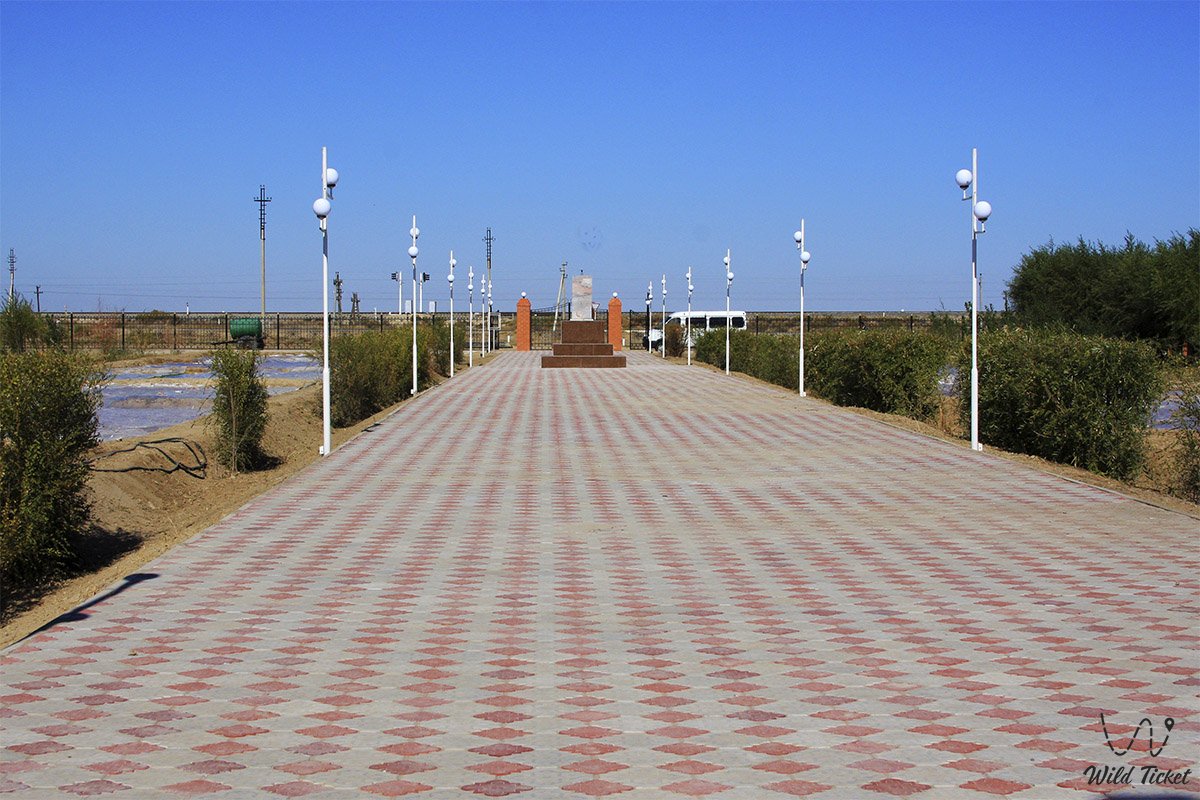
The historical complex of Kalzhan Akhun is located at a distance of about 64 kilometers from the city of Kyzylorda, 11 kilometers from the Terenozek village, 13 kilometers from the Zhalagash village, and 1 kilometer from the village of the same name, Syrdariya district, Kyzylorda region, Republic of Kazakhstan.
GPS geographical coordinates: 45°04'28"N 64°50'27"E
The transport logistics for visiting the site are convenient: the path passes along the R-69 highway "Kyzylorda – Zhalagash". A trip by personal or rented car from the regional center takes approximately 50–60 minutes. From the city of Baikonur, it can be reached in over two hours, following the E38 or R-69 roads. The complex is located in immediate proximity to transport routes, making it easily accessible for travelers and pilgrims.
Opening hours: the complex can be visited at any time of the year. It is recommended to do this in the spring and autumn periods, when the steppe climate is most comfortable for walks. When planning a visit, it is recommended to check the possibility of visiting the internal premises in advance, as the site is a monument of republican significance and may be closed at certain times. Inspection of the building from the outside is free.
---------------------------------------------
Who was Kalzhan Akhun?
Kalzhan Akhun (1862–1916) is a key figure for the history of the region. He was born in the Khiva Khanate, where he received a brilliant education in the spiritual schools of Khiva and Bukhara, mastering Arabic and Persian languages. His father, Bolekbay, came from the Tabyn clan of the Aktobe region, but for a long time served at the court of the Khiva khan, holding a high position. Left an orphan at the age of 13, Kalzhan showed an incredible strength of spirit, continuing his studies despite poverty. In 1889, he graduated from the Faculty of Law of the Kokildash madrasah, receiving the honorary title of "Akhun," which was awarded only to those who possessed deep knowledge of law and the gift of an orator.
In 1890, at the invitation of the imam of Kete Shomekey Oraza, the scientist arrived in the lower reaches of the Syr Darya. Here he not only served as an imam, but also engaged in active educational work, teaching literacy to the children of ordinary sharua. At his own expense, Akhun built a mosque, and in 1916 completed the construction of a madrasah. Unlike many other mullahs of that time, he was a deeply progressive figure: he taught children not only religion, but also secular sciences, including arithmetic and geography, and also translated surahs of the Quran into his native language. His contribution to the formation of the spiritual integrity of the people was so significant that local residents donated entire herds of horses for the development of his educational initiatives.
History
The construction of the Kalzhan Akhun madrasah began at the end of the 19th century and continued until the beginning of the 20th century. Kalzhan Akhun, who received a brilliant education in the spiritual schools of Khiva and Bukhara, at the invitation of like-minded people arrived in the lower reaches of the Syr Darya, where he engaged in educational activities. He directed his personal funds to the construction of a mosque and an educational institution, where children of the poor studied for free.
The history of this place survived periods of prosperity and harsh trials. In Soviet times, the building was used as the "Ak Zhol" boarding school, and later as a grain store and utility buildings. Despite attempts at political persecution of the educator's descendants and decline in the 1990s, the building preserved its unique structure. Thanks to the efforts of local residents and the state program "Cultural Heritage," the monument was restored and today is once again a spiritual landmark of the region, a place of pilgrimage and deep reverence. Today it is an important point on the map of historical tourism of the region.
Information
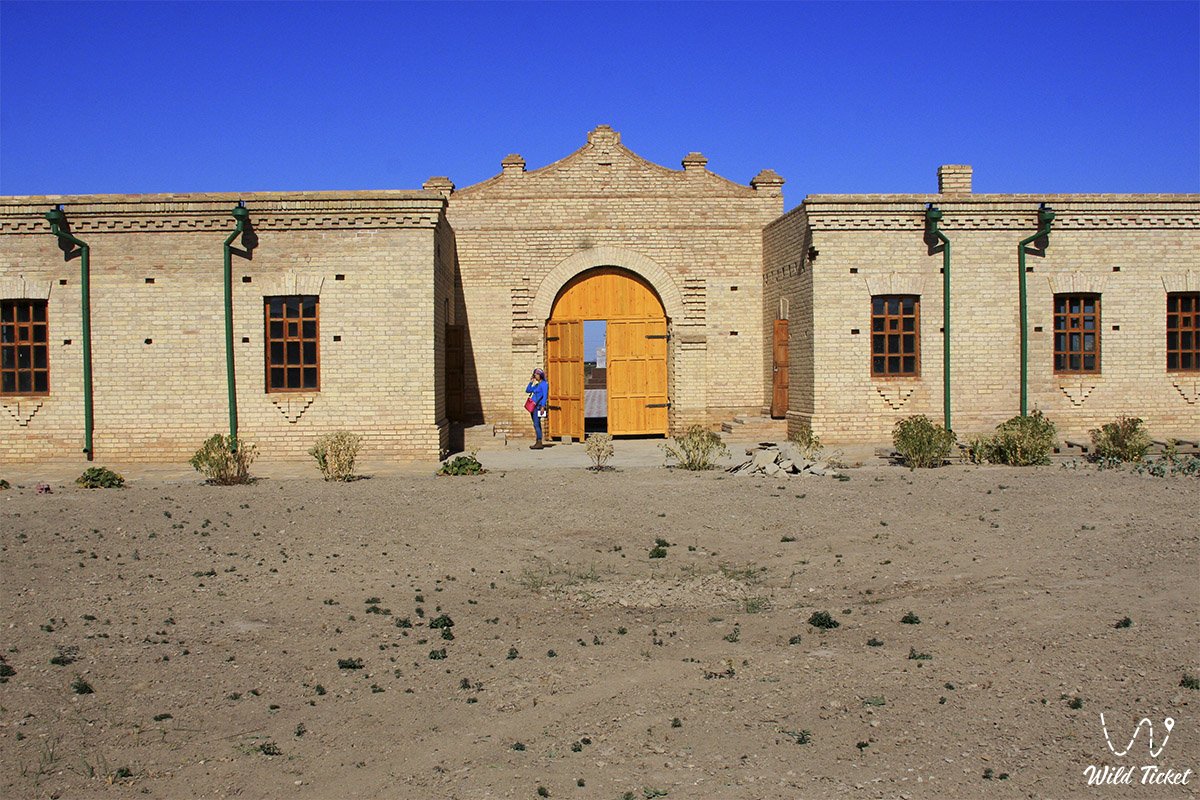
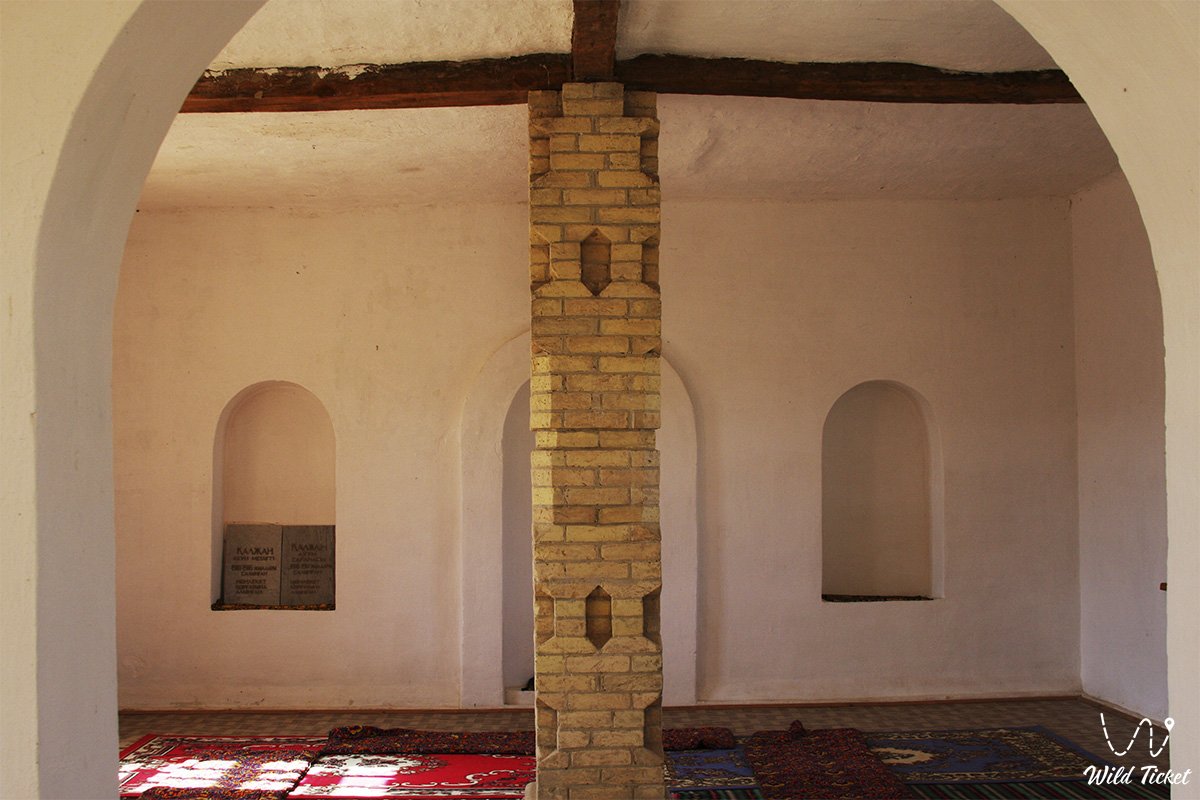
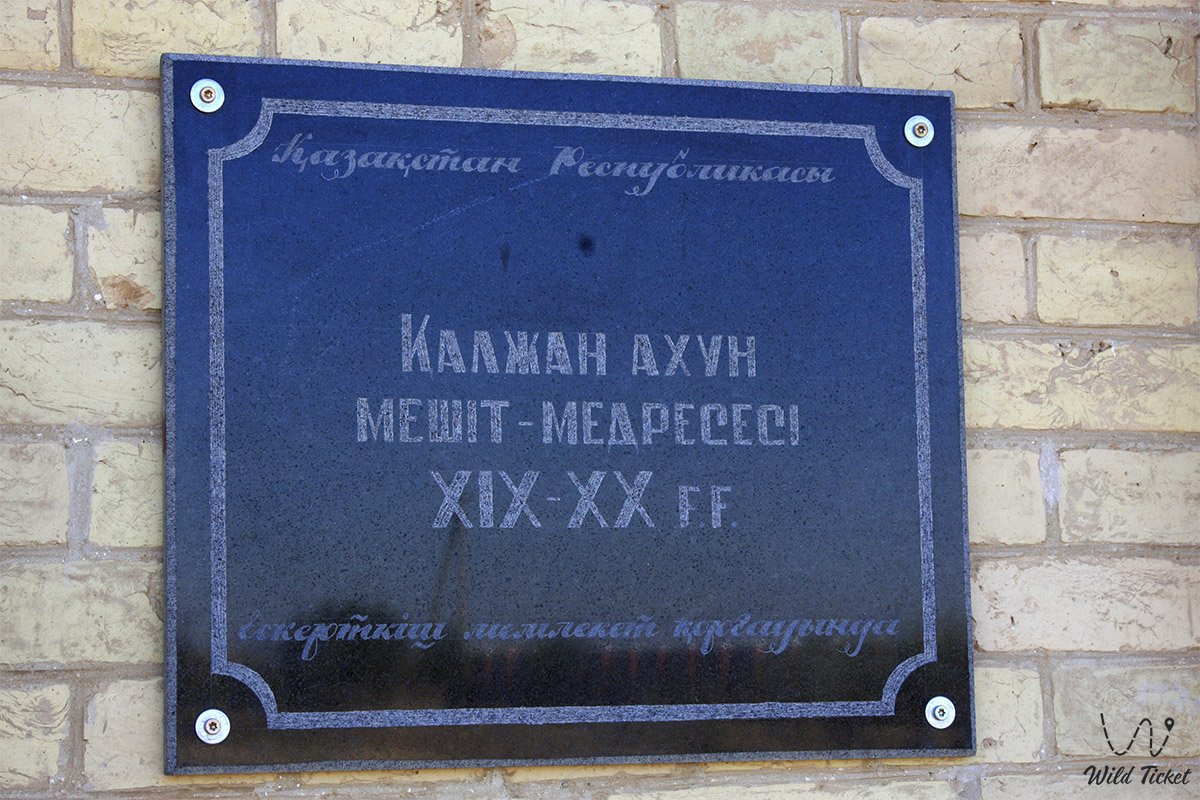
To date, the Kalzhan Akhun mosque-madrasah is officially recognized as a monument of history and culture of republican significance. The complex is a one-story square-shaped building (measuring 44 by 44 meters) with a wide internal courtyard, in the center of which a well was once located. The building includes more than 20 cells-khujras for students' accommodation, classrooms, a mosque, and a dining room. Part of the courtyard is occupied by an eyvan – an open terrace with a mihrab indicating the direction to Mecca.
It is important to note that next to the mosque is a necropolis where Kalzhan Akhun himself and members of his family rest. The place has become a point of attraction for hundreds of pilgrims who believe in the educational power of this region. A visit to this complex allows a deeper understanding of the history of the formation of education in Kazakhstan and the role of personality in preserving the cultural code of the people in an era of change.
Detailed description of the venue
The well-thought-out structure of the complex includes several functional zones and architectural features:
• Main facade – a monumental entrance with wooden arched gates, oriented to the northwest, meeting travelers.
• Khujras – 20 residential and educational cells located along the perimeter of the building, where shakirds from low-income families studied.
• Eyvan – an open terrace with a mihrab, executed in a traditional style, where the family burial vault of Kalzhan Akhun is located.
• Library fund – the historical location of the collection of books of the educator, which became the basis for the educational process.
• Central courtyard – the internal space of the complex, which was the heart of the madrasah, where a well for the needs of students and mentors was located.
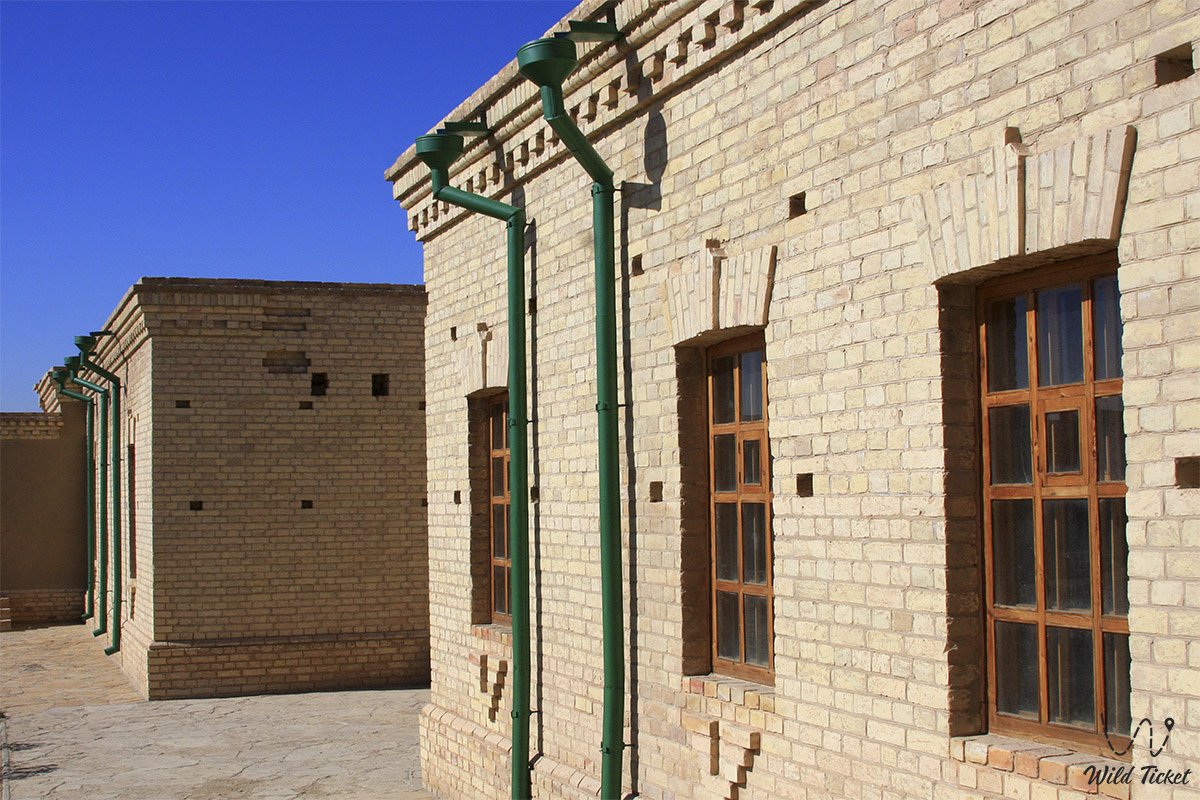
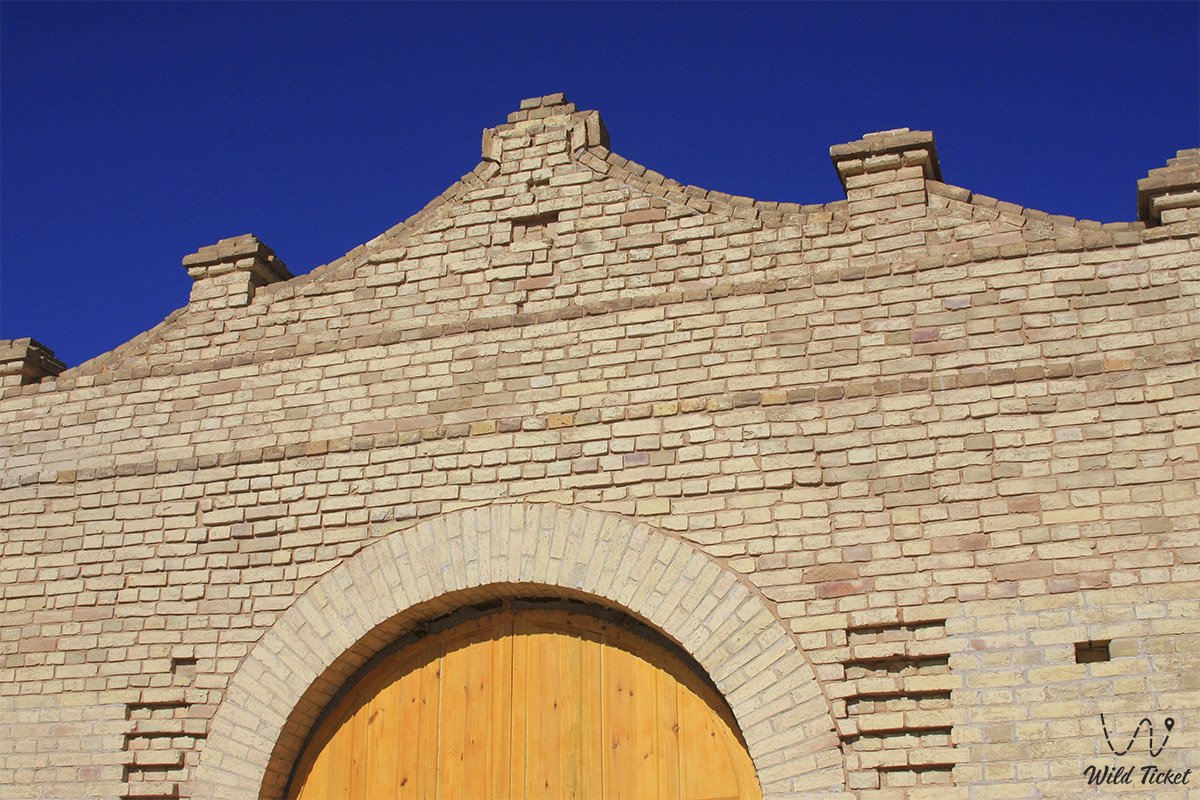
• Facade decor – a unique brickwork and ceramic elements that create an effect of depth and give the building the status of a historical monument.
Architecture
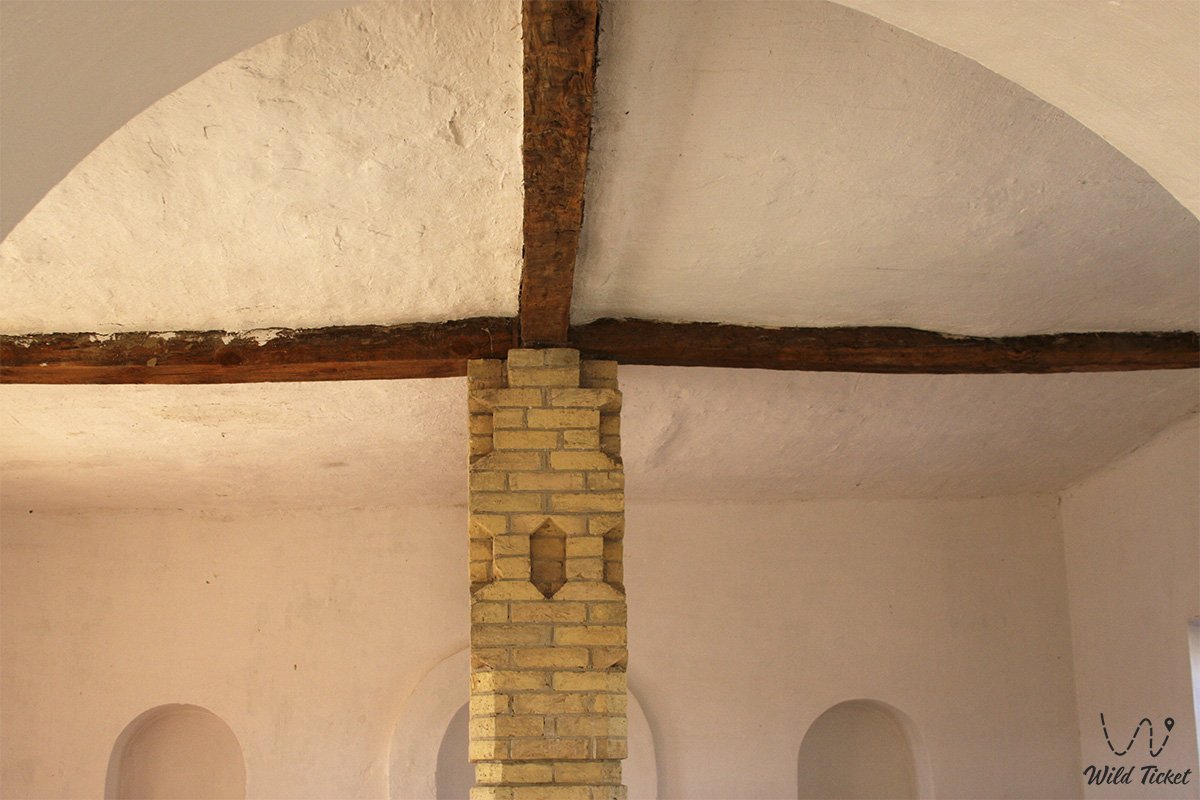
The architectural solution of the Kalzhan Akhun madrasah is a bright example of the folk architecture of the Aral region of the early 20th century. The building is constructed in a traditional style from fired and raw brick. The external part is made of ceramic material, which ensured high strength of the walls. The cornices are finished with decorative tiles. The brickwork has a complex geometry, creating an expressive relief effect resembling 3D-brickwork.
The design of the walls possesses high thermal insulation, which allowed keeping the cells cool in the summer heat. An optimal microclimate was maintained inside the building, allowing students to focus on sciences at any time of the year. Particular attention is drawn to the arched openings and verified proportions of all twenty rooms. The condition of the structures remains satisfactory thanks to timely care and repair.
Legend
The name of Kalzhan Akhun is surrounded by popular reverence and many legends. The elders say that the educator not only possessed deep knowledge in jurisprudence and theology, but also had the gift of eloquence, for which he received his honorary title. Local residents believe that the very land around the complex possesses healing properties, and a visit to the burial vault helps in fulfilling cherished desires and contributes to spiritual healing.
There is a tradition that Akhun's students, leaving the walls of this madrasah, carried the light of knowledge to all corners of the region, helping people in the most difficult situations. Even today, many passing travelers stop here to express respect to the great teacher. People believe that a prayer uttered in this holy place brings peace and prosperity to the home, and the life story of Kalzhan Akhun continues to inspire youth to strive for knowledge and perform good deeds.
Conclusion
The Kalzhan Akhun mosque-madrasah is not just a historical site, but a symbol of the intellectual and spiritual awakening of the people. The preservation of this monument of republican significance is an essential task for all of us, as it reminds how the labors of one person can change the fate of an entire region. A journey to this place gives an opportunity not only to enjoy the beauty of the architecture of the past, but also to feel a living connection with history, which continues to nourish our modern society with the values of humanism, education, and deep respect for one's roots.
Interesting sights nearby:
• Small Aral Sea (Northern);
• Aral Sea;
• Korkyt-Ata Memorial Complex;
• Maral Ishan Mausoleum;
• Syr-Ana Monument;
• Aitbay Mosque;
• Baikonur City;
• Baikonur Cosmodrome;
• Ayteke Bi village;
• Kazalinsk City.
Photogallery: