Unique monument of memorial architecture of the nineteenth century -
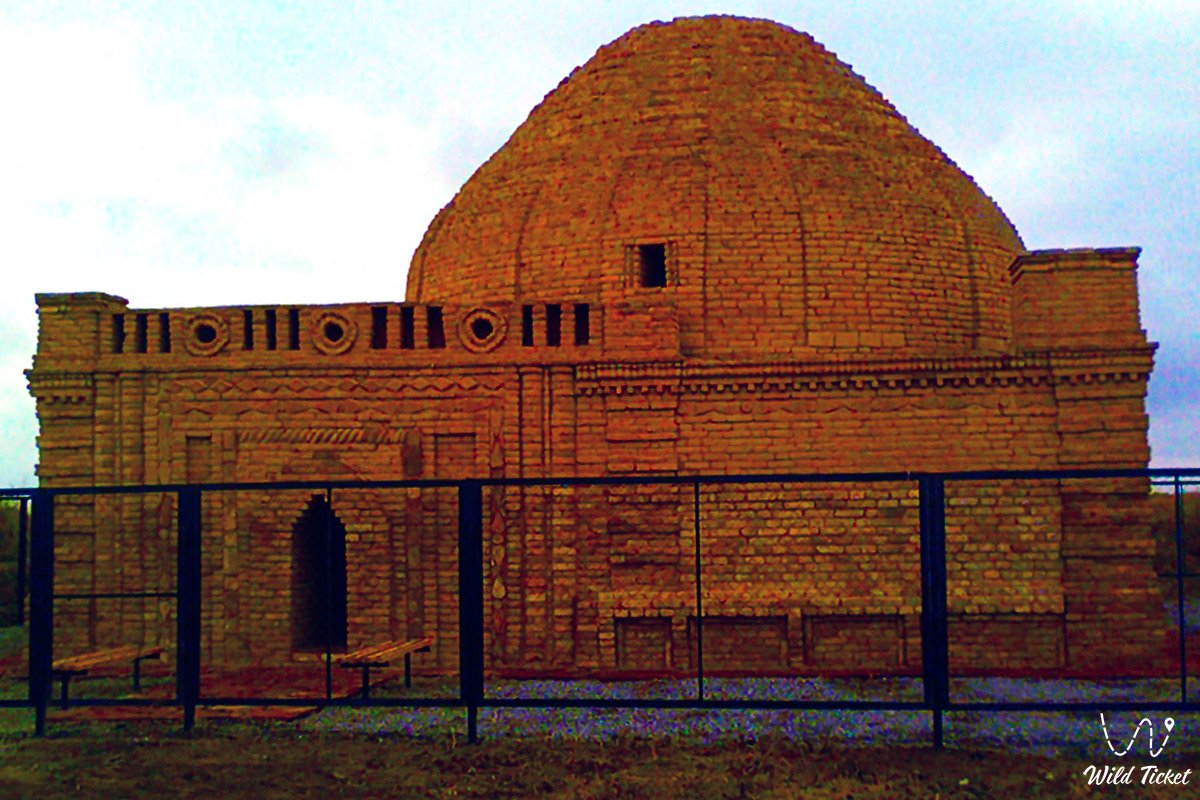
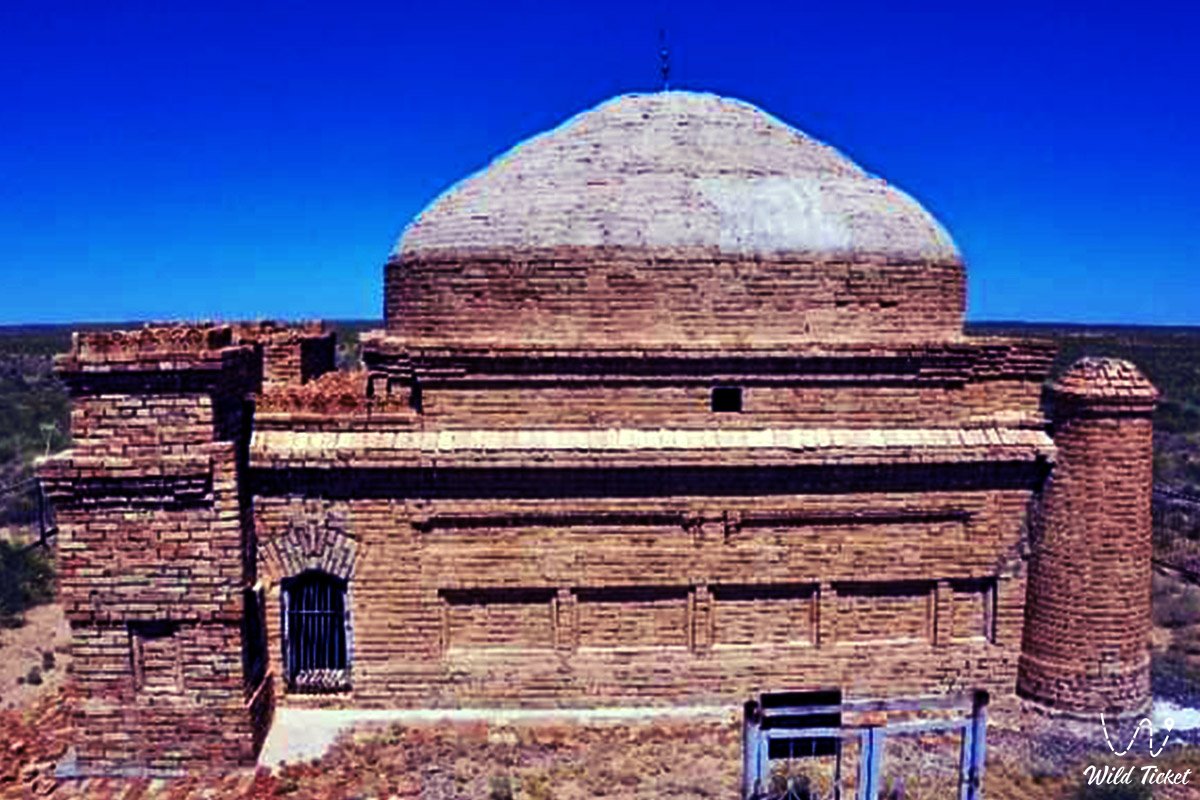
Kuttybay Mausoleum is an outstanding monument of cult architecture and one of the bright examples of monumental memorial architecture on the territory of Kazakhstan. This beautiful rectangular domed structure in the Kyzylorda region dates back to the 18th–19th centuries and is an object of national significance, symbolizing the rich culture and unique building traditions of the lower reaches of the Syr Darya River.
The monument has the shape of a low but very elegant building, the overall dimensions of which are: length – 11 meters, width – 9 meters, and the total height – 9 meters.
The monument is located in the middle of the open steppe expanses of the Kazaly district, standing out sharply with its massive forms against the flat landscape and sandy horizons. The exact purpose and dating of the mazar still arouse lively interest: the building resembles a model of peshtak construction widely distributed in Central Asia, but at the same time, it cardinally differs with its unique compositional solution and three rows of luxurious architectural belts. Not so far from the mausoleum is the Zhankent ancient settlement (Yangikent).
According to researchers, the monument is unique in that the decoration of its facades uses highly complex figured brickwork made of more than 20 types of diverse profile bricks, which distinguishes it from other buildings in the region. The customer of the mausoleum was a prominent cattle-owning bay Kuttybay, who built the burial vault under his personal control. It is best to travel to the mausoleum from the village of Ayteke Bi or from the city of Kazalinsk.
Today, the Kuttybay Mausoleum is considered an essential sacred holy place and a popular point of spiritual pilgrimage in the Aral region. The surrounding territory attracts historians, architects, and travelers from all over the world, since such types of sepulchral structures with winding internal corridors and unique carvings on fired brick present a colossal value for studying the pre-revolutionary architecture of the Kazakh people. One can travel to the mausoleum from the city of Aralsk and on the way visit Lake Kambash (Kamystybas).
---------------------------------------------
How to get there and visit -
Kuttybay Mausoleum is located 3.8–4 kilometers southwest of Urkendeu village (Orkendeu), 9.7 kilometers southeast of Kozhabakhy village, and 2.7 kilometers west of the ancient Zhankent settlement, Kazaly district, Kyzylorda region, Republic of Kazakhstan.
GPS coordinates: 45°36'49"N 61°53'11"E
The transport logistics of this secluded steppe area completely exclude urban public transport. No regular passenger buses or city taxi services operate to the monument. The distance from Kyzylorda to the Urkendeu village is 360 km, and you can reach it by car in about 5 hours. You can reach the medieval mausoleum from the nearest settlements exclusively along well-trodden steppe roads and tracks.
Only a prepared four-wheel-drive SUV is suitable for a trip to the site, since dirt and sand paths in this part of the Aral steppe can be difficult to traverse after rare precipitation or heavily covered with sand during dust storms. Drivers must carry satellite navigators, a supply of drinking water, and reliable communication devices.
Opening hours: The territory around the monument is open for visits by travelers around the clock and all year round. Access to the adjacent zone is completely free; no ticket offices, paid checkpoints, tickets, or excursion fees are provided here.
Trips to this region are highly recommended to be planned for the spring period (April – May) or early autumn to avoid the extreme summer temperatures of the Aral region. All tent camps and overnight stay sites are organized by expedition groups independently in wild conditions, with mandatory adherence to the rules of respectful behavior on the territory of cult monuments.
---------------------------------------------
History
The history of studying and state recording of this monument began in the Soviet period. In 1982, by decree of the Council of Ministers of the Kazakh SSR number 38, the Kuttybay Mausoleum was officially included in the list of historical and cultural heritage of national republican significance and taken under state protection.
In 1991, the site was investigated in detail by a specialized scientific expedition of the Almaty Architectural and Building Academy, which recorded its precise design parameters and layout.
Currently, iconographic materials are stored in the archival sources of the "Kazrestavratsiya" RSE of the Ministry of Culture of the Republic of Kazakhstan, allowing the technical condition of the mazar to be monitored. The internal walls of the building were plastered with cement mortar and whitewashed with lime to protect against weathering in the arid climate conditions of the Aral region.
Information
The mausoleum was built according to the project of an unknown architect commissioned by Kuttybay Akboluly, born in 1807 in the lower reaches of the Syr Darya. He became famous among the people as an eloquent, strong, and just bi (judge), whose help and mediation abilities were often resorted to when resolving complex inter-clan disputes between Kazakhs, Karakalpaks, and Uzbeks. Kuttybay was one of the faithful companions of the military leader Zhankozha Batyr and took an active part in the uprising against the expansion of the Khiva and Kokand khanates.
Initially, in 1897, the 90-year-old Kuttybay began to erect this majestic mazar as a burial vault for his deceased father Akbol. However, three years later, in 1900, at the age of 93, the steppe judge himself left this world and was buried in the same gurkhana, after which the site was fixed with his name. Tour organizers recommend that tourists move around the mausoleum exclusively on foot and strictly forbid climbing the fragile walls.
Detailed description of the venue
The well-thought-out infrastructure of the historical complex includes the following original locations and geographical features:
• Rectangular plinth – a dense base of the building with dimensions of 11 by 9 meters, going deep into the ground and holding the entire dome load.
• Main portal – the decorated entry zone on the main facade, oriented to the southeast and emphasizing the traditional Central Asian style.
• Side entrance – a small arched opening located on the left side of the building and serving as the only entrance to the mausoleum.
• Narrow winding corridor – an internal technological passage that protects the main burial vault from steppe winds and leads inside.
• Square gurkhana – the main burial vault (room) measuring 6x6 meters, where the altar is located and the remains of Kuttybay and his father Akbol rest.
• Brick dome – the majestic semi-circular roof covering of the mausoleum, based on a circular drum.
Architecture
The architectural solution of the building was based on authentic principles of civil and memorial architecture. The transition from a rectangular plan to a circular drum is carried out with the help of internal corner pendentives and row-by-row brick corbeling. On both sides of the entrance and along the facade, three rows of luxurious architectural belts are engraved. The upper part is decorated with a pattern, three rows of vertical recesses, circular carvings, and patterned brick.
The mazar is completely laid from fired brick on clay mortar. According to legend, the clay for it was mixed with rich mare's milk, and the firing was carried out on saxaul coals. In total, more than 20 types of unique ceramic bricks were used in the decoration of the facades. Monuments of this type, known as a "tower mausoleum", are widely distributed in Iran and Turkey, but are unique for Central Asia.
Legend
In popular memory, Kuttybay Baba is revered as a noble saint. There is a tradition that for his exceptional wisdom and justice, he personally saw Saint Kydyr Ata – the patron of abundance and happiness among Kazakhs – three times in his life.
Another famous legend is connected with the golden crescent that once crowned the brick dome of the mazar. Shortly after the completion of construction, the treasure was stolen by a visiting thief. However, the sacrilege did not bring wealth to the criminal: the thief suddenly fell gravely ill and died in terrible agony, and the crescent itself disappeared without a trace.
Local residents and pilgrims sincerely believe that a severe curse will surely overtake anyone who tries to desecrate, rob, or damage the grave of the noble bi and his father.
Conclusion
The Kuttybay Mausoleum is a magnificent historical bridge connecting the events of the pre-revolutionary period with the modern cultural, spiritual, and tourist life of the Kyzylorda region. A visit to this landscape monument allows guests of the Aral region to touch the origins of the birth of memorial culture on the Syr Darya and appreciate the high oratorical heritage of the Kazakh bis.
The mausoleum remains an essential reference point for historical, local history, and pilgrimage tourism in the Kazaly district. Expedition routes invariably include this point in their guidebooks, giving everyone the opportunity to personally see the silent witness of great steppe history.
Interesting sights nearby:
• Begim-Ana Tower;
• Saraman-Kosa Tower;
• Kesken-kuyuk-kala ancient settlement;
• Tolybay Batyr Mausoleum;
• Beketay Mausoleum;
• The city of Baikonur.
Photogallery: