Sacred guardian of the Manata pass and the ancient "Gates of Mangystau" –
The Man-Ata Mausoleum (Kaz. Man ata kesenesi) represents a unique sacred memorial complex, an ancient pilgrimage site, and a historic landmark situated in the Mangystau district of the Mangystau region of Kazakhstan. The monument is located 40 kilometers southeast of the village of Otes (Say-Utes), right along the Karatuye-Manata descent road, where the boundless Ustyurt upland drops down into the Mangystau lowland in steep white precipices.
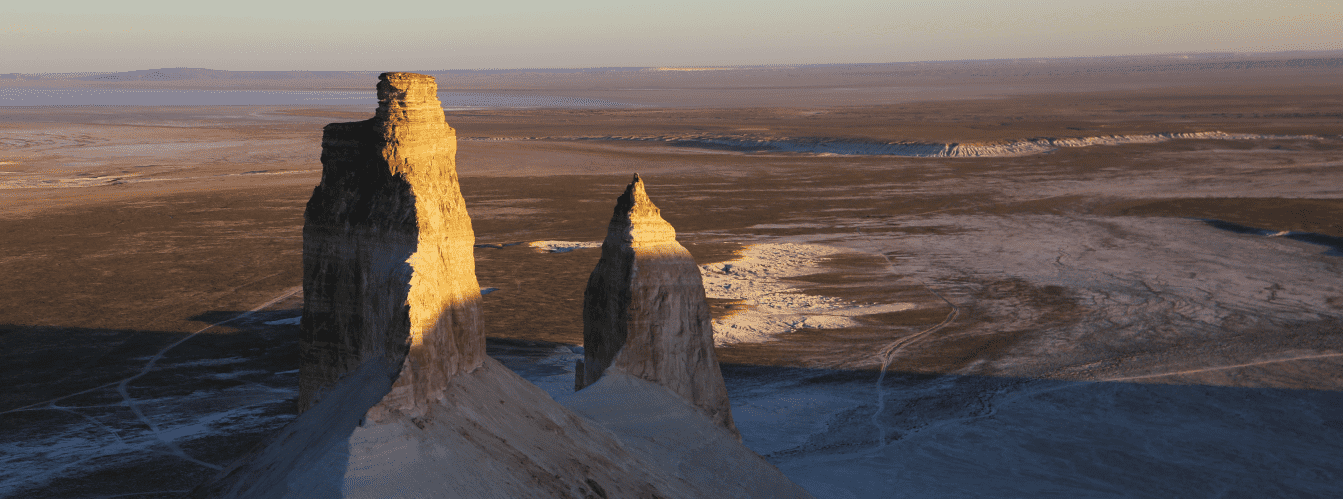
This entire grandiose geological panorama is a direct legacy of the prehistoric Tethys Ocean, whose chalk strata formed the dazzling white scarps of the Ustyurt chink. En route from Aktau to the sacred Manata pass and the adjacent snow-white Tuzbair salt flat, travelers cross the entire geographic axis of the region, passing legendary residual Mount Sherkala, the Airakty-Shomanay valley of castles, the cool spring oasis of Samal Gorge, and the iridescent Jurassic clays of the Kokkala tract.
The section of the chink where Man-Ata rests was historically known as the "Gates of Mangystau." It is one of the fourteen main ancient pathways linking the plateau with the lowland. In deep antiquity, only wild argali and foot hunters could negotiate this precipice in a single direction, and only centuries later was the trail widened to permit heavily laden camel caravans to pass. In autumn, returning from Ustyurt summer pastures to the wintering grounds of the peninsula, nomads on the summit of Manata would catch their first glimpse through the hazy blue distance of the sacred summit of Mount Otpan—shaped like an inverted cauldron—rejoicing at their return home.
Today, the Man-Ata complex is a mandatory stopping point along the Shetpe – Beyneu highway, where every traveler considers it a sacred duty to honor the spirit of the saint and receive a blessing before tackling the hazardous Ustyurt descents.
--------------------------------------------
How to get there and visit –
The Man-Ata Mausoleum is situated in the eastern part of the Mangystau region, 40 km southeast of the railway station and settlement of Otes (Say-Utes), along the Karatuye-Manata descent road from the Ustyurt Plateau into the lower reaches of the peninsula, roughly 55–60 km east of the settlement of Shetpe, and 244–250 km northeast of the regional center, the city of Aktau, Republic of Kazakhstan.
GPS geographical coordinates of the Man-Ata Mausoleum:
44°05'53"N 53°10'46"E
44.098325, 53.179269
The driving route from Aktau runs northeast along the paved highway of republican significance A-33 Aktau – Shetpe – Beyneu (the distance to the turnoff toward the pass is about 240–244 km; driving time is roughly 3.5–4 hours). Approaching the Manata pass from the direction of Shetpe, the road runs along the southern side of the "Central Asia – Center" mainline gas pipeline. In the vicinity of the steep descent, an unpaved steppe road branches south off the highway, leading directly to the memorial complex.
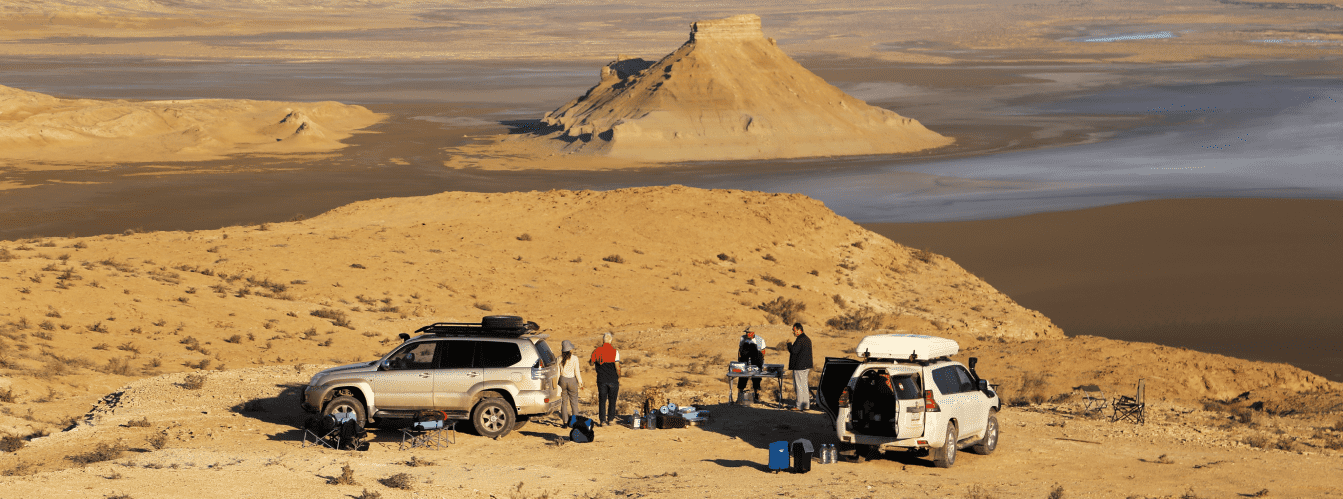
In dry weather, driving up to the mausoleum is possible in an ordinary passenger car or crossover. However, descending via the old steep Karatuye-Manata track, driving along ravine beds, or taking radial excursions toward the Tuzbair salt flat or the Sisem-Ata Necropolis strictly requires a dependable body-on-frame 4x4 vehicle with high ground clearance.
The historic Manata descent is considered one of the steepest and most treacherous sections in the region: in rainy weather or during winter ice, the clay slopes become slick, requiring extreme caution from drivers.
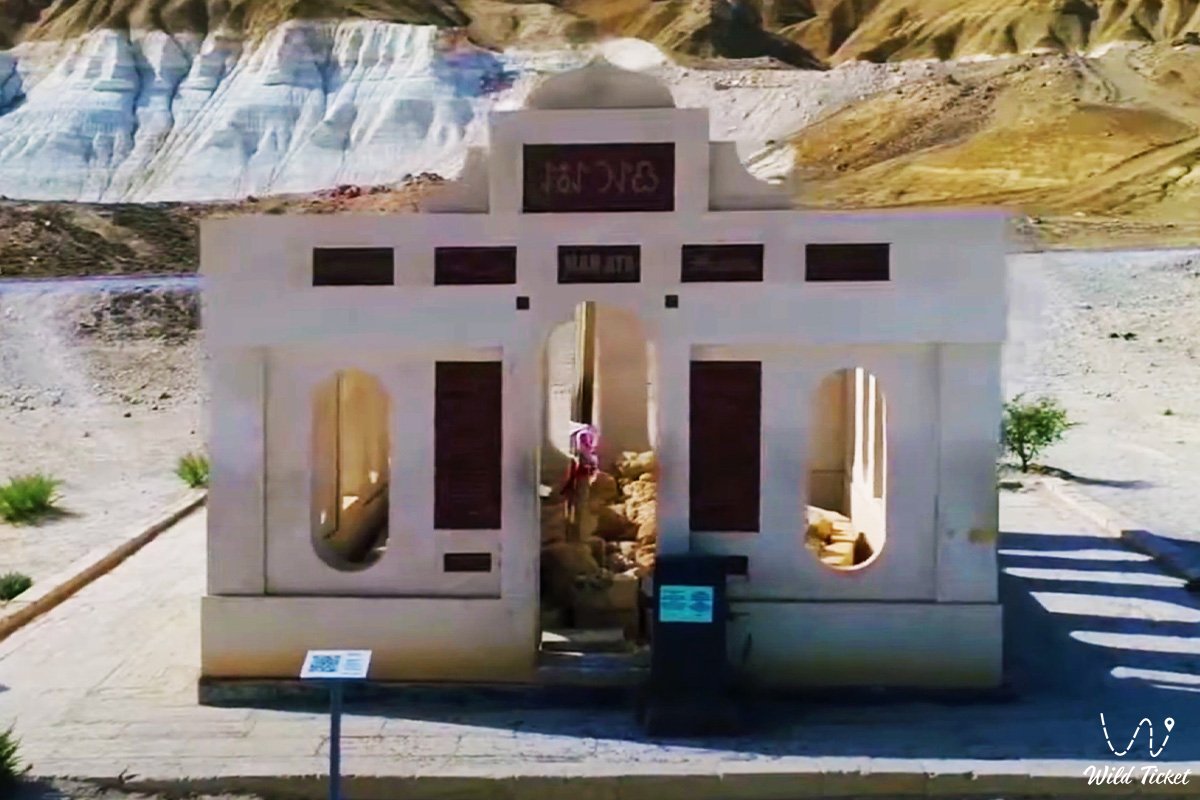
Infrastructure at the sanctuary grounds is minimal: resting spots for pilgrims have been arranged, and a memorial plaque has been installed. The nearest gas stations, tire repair services, canteens, and grocery stores are located in the settlement of Otes (Say-Utes) and the district center of Shetpe. There are no freshwater sources directly at the pass, so bottled drinking water reserves should be at least 3–4 liters per person per day.
Visiting the sacred site requires observing steppe etiquette and decorum: clothing must cover shoulders and knees, and women are advised to wear a headscarf. Consuming alcohol, making noise, or damaging ancient stonework is prohibited. By age-old custom, every traveler pauses here to recite a memorial prayer (bata) and ask for good fortune along the road.
The best time to visit is spring (late April through May), when the steppe around the white scarps of Manata blooms with wild tulips, as well as the warm autumn (September – October). In summer, temperatures along the chink rise above +40...+45 °C under scorching sunlight, while freezing steppe gales carrying snow and limestone dust rage in winter.
--------------------------------------------
History
The history of the Man-Ata veneration extends back thousands of years, linking pre-Islamic mythological strata of Eurasia with the Sufi traditions of Mangyshlak. Precise historical chronicles detailing the earthly life of Man-Ata have not survived, and his figure evolved into an archetype across the East. According to ancient traditions, Man-Ata hailed from Hindustan. He was credited with establishing the primal laws of justice and teaching humankind handicrafts, agriculture, and righteous living in society. In the lore of many Indo-European and Turkic peoples, the root "Man" symbolizes Man himself (the Primordial Human and Forefather of mankind).
The figure of Man-Ata found distinctive resonance in the sacred Zoroastrian text, the Avesta. Its verses recount that the incorporeal, blessed spirit of Man-Ata entered the mind of the prophet Zarathustra at the moment of his birth. Within the Avestan tradition, he was revered as a herald of the supreme deity Ahura Mazda, endowed with supernatural abilities and cosmic wisdom. Legends say that at the conclusion of his earthly wanderings, the righteous sage arrived in sacred Mangyshlak and found eternal rest upon the sheer chinks of Ustyurt.
During the Middle Ages, as Sufism took root across the peninsula, Man-Ata was canonized by steppe tribes as one of the great unnamed ancient saints (auliye). It is difficult to ascertain with certainty which ethnic group constructed the original grave monuments—Oghuz-Turkmen or early Turkic—yet for the later-arriving Kazakhs of the Aday clan, this ground became an inviolable shrine.
The Karatuye-Manata descent remained a vital artery of the Silk Road for centuries: heavily laden camel caravans ("kara tuye" – black camel) descended here from Ustyurt toward the maritime harbors of the Caspian.
In the 20th century, especially during the 1950s–1970s when the old Manata descent was transformed into an unpaved road for trucks, this section earned a reputation as the most dangerous mountain switchback in Mangystau. Vehicles lacking brakes or carrying excessive cargo frequently plunged into the ravine. Local elders attributed these tragedies to the wrath of the saint's spirit: drivers rushing their routes sped past the tomb without pausing to pray. Since then, the tradition of stopping by the mazar of Man-Ata to seek a blessing became an unwritten law for all professional drivers and travelers across the region.
Information
Geomorphologically, the monument is set along the lip of the western chink of the Ustyurt Plateau at a deep tectonic and erosional breach known as the Karatuye-Manata descent. The drop in elevation between the upper plateau and the Mangystau lowland reaches over 100–150 meters, forming an immense natural amphitheater.
The geological profile of the pass is composed of Upper Cretaceous and Paleogene sedimentary strata of the prehistoric Tethys Ocean. The precipices feature dazzling white writing chalk, durable coquina limestones, marls, and gypsum veins. Under the action of wind and rainstorms, the limestone beds took on stepped, terraced forms, which aided ancient builders in cutting the caravan switchback trail.
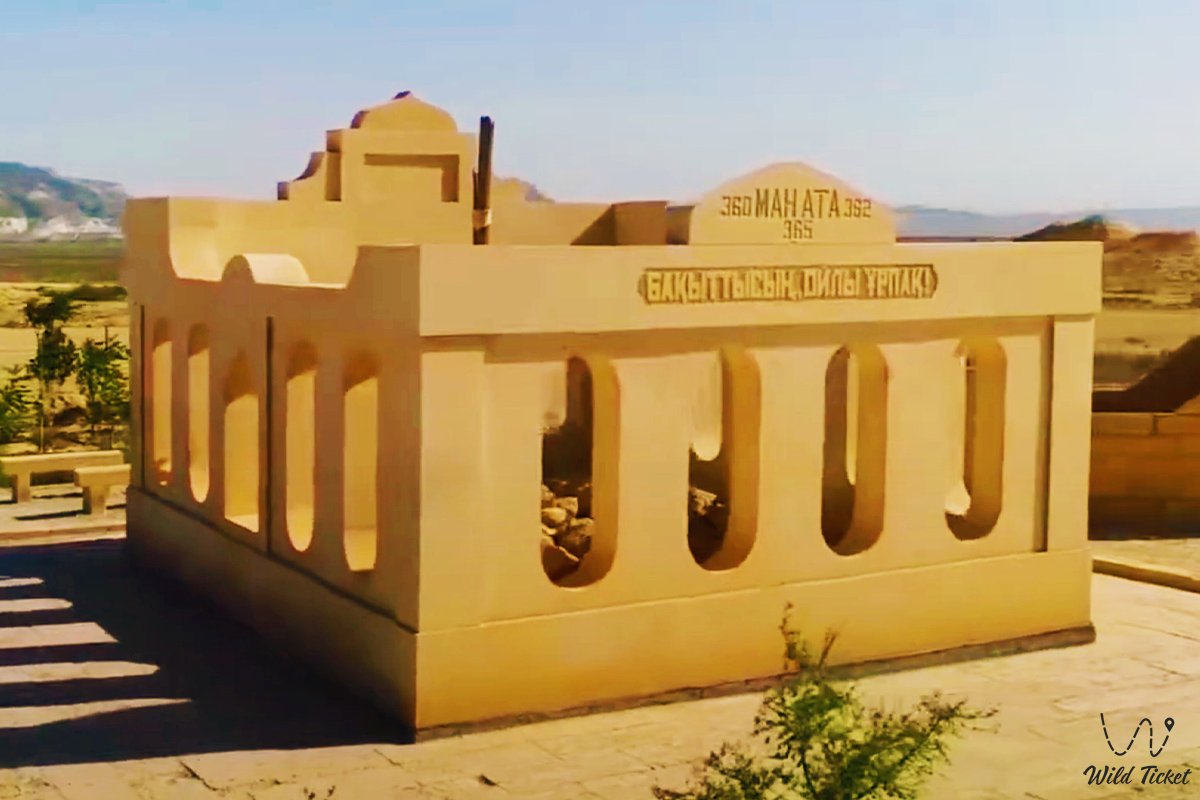
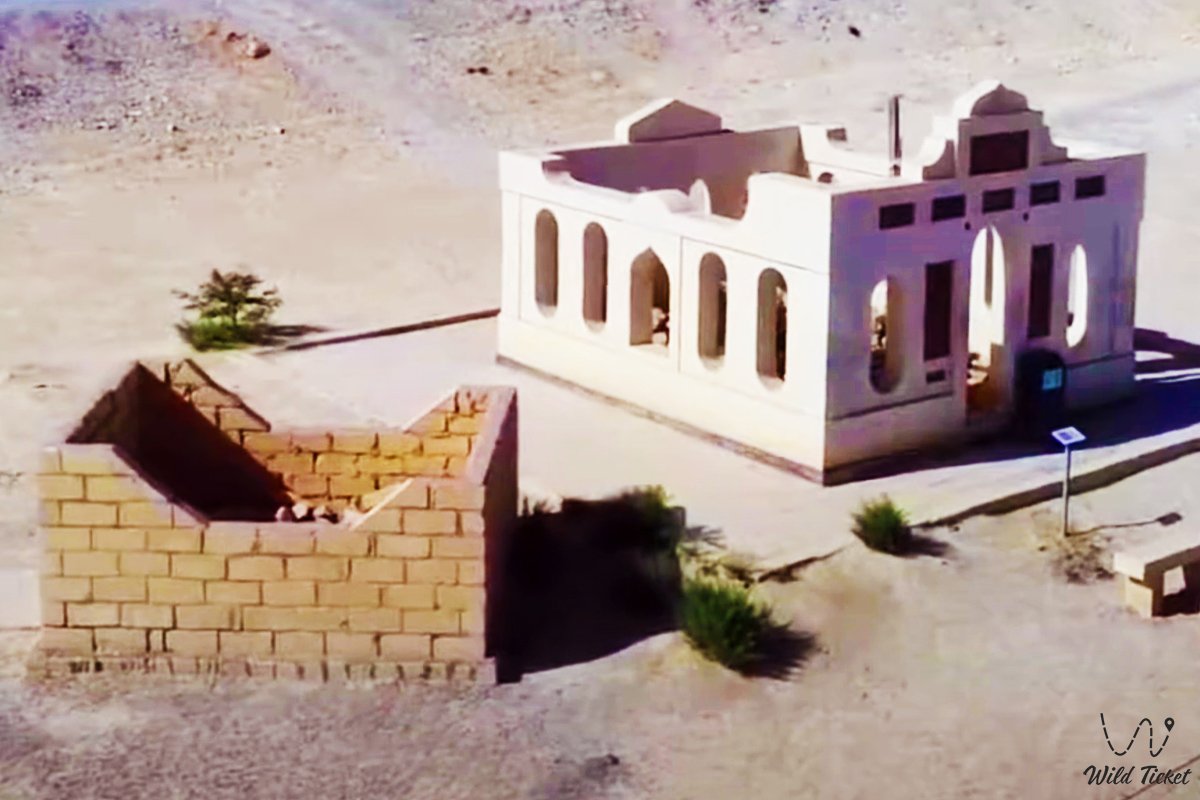
The historic Man-Ata Mausoleum has survived to our day as the sacred ruins of an ancient core, enclosed by modern low protective walls of dressed coquina limestone built in an open-air configuration (without a domed roof). Built into the enclosure walls are 18 oval window apertures, through which pilgrims can view the sacred burial inside. An official memorial plaque describing the monument is mounted on the site.
An ancient necropolis surrounds the mazar, featuring graves of nomadic nobility, batyrs, and pilgrims from various eras: stone sandyktas chests, wall-slabs, and carved kulpytases.
The climate of the pass is harsh, sharply continental, and desert-like. The elevation differential along the chink generates continuous strong updrafts. Searing heat up to +45 °C settles in during the summer, while freezing blizzards blanket the pass roads in snow and gravel throughout the winter months.
Detailed description of the venue
The memorial and landscape complex of the Man-Ata pass encompasses the following key features:
• Ruins of the ancient Man-Ata Mausoleum – the sacred burial of the saint, surrounded by a rectangular stone wall of white coquina without a domed roof, complete with a memorial plaque and a prayer area.
• Eighteen oval windows of the mausoleum – an architectural hallmark of the mazar's perimeter walls: evenly spaced oval apertures that allow sunlight to illuminate the grave of the forefather and through which pilgrims offer their prayers.
• Ancient Karatuye-Manata caravan route – the historical descent from the Ustyurt scarp that served as the caravan "Gates of Mangystau," worn into the rock by camel hooves and cart wheels over centuries.
• Panoramic viewing platform of the Ustyurt chink – a rocky ledge above the pass offering an expansive view on clear days across the Mangystau lowlands toward the distant silhouette of sacred Mount Otpan.
• Historical necropolis of the Manata pass – a roadside burial ground containing Kazakh and Turkmen stone gravestones, sandyktases, and kulpytas steles belonging to nomadic clans.
• Place of worship and prayer halt – an arranged turnout alongside the route with memorial markers where drivers and pilgrims make their ritual stop to recite commemorative prayers.
Legend
A noble legend recounting the establishment of laws of justice and eternal protection for travelers is associated with the sacred site of Man-Ata.
Tradition tells that at the dawn of time, when peoples knew no written laws and lived in perpetual strife, the Great Creator sent a sage named Man-Ata to earth. He arrived from distant southern lands, imparting teachings of labor, compassion, and the sanctity of one's word. The sage walked the earth, reconciling warring tribes, teaching respect for elders, and defending the vulnerable.
When Man-Ata felt the end of his earthly journey drawing near, he walked to the edge of the boundless Ustyurt Plateau, where the earth fell away into an abyss, marking the boundary between the mortal realm and eternity. Sitting upon a white rock above the descent, the elder blessed the nomadic land of Mangyshlak, leaving this testament: "Thousands of roads and destinies will pass through here. I shall remain upon this precipice as an unseen guardian. Whoever journeys with a pure heart and peaceful intent will find shelter beneath me; but those filled with pride who disrespect the memory of their ancestors shall not cross these heights."
Having spoken these words, the sage closed his eyes and departed into eternity. Nomads carefully encircled his grave with white Ustyurt stones. Ever since, a belief has endured among the people: the spirit of Man-Ata keeps watch over the hazardous descent. A sincere prayer at his mazar prevents accidents, calms storms, and provides guiding light to every caravan and traveler entering the sacred realm of Mangystau.
Conclusion
The Man-Ata Mausoleum is the revered spiritual guardian of the Manata pass, where ancient Eurasian mythology is woven together with nomadic traditions and the dramatic chronicle of the Silk Road. A stop by the white ruins of the mazar atop the dizzying heights of the Ustyurt chink allows every traveler to sense the majesty of time, pay homage to the Forefather, and receive a blessing before venturing forth across the vast terrain of Mangyshlak.
Interesting sights nearby:
• Chalk Outliers "Fangs of Bozzhira";
• Kyzylkup Tract;
• Valley of Castles Airakty-Shomanay;
• Porous Canyon Kabyrga (Ybykty-Say);
• Mount Sherkala ("Lion's Fortress");
• Mount Bokty Table Mountain;
• Torysh Tract ("Valley of Spherical Concretions");
• Tuzbair Salt Flat;
• Kokkala Tract;
• Karynzharyk Desert Depression;
• Chalk Outliers "Three Brothers";
• Deepest Karagiye Depression;
• Canyons of Kapamsay, Tamshaly, and Saura;
• Lake Karakol;
• Kyzyl-Kala Settlement and Akmysh Oasis-Tract;
• Tupkaragan Peninsula;
• Ustyurt State Nature Biosphere Reserve;
• Karagiye-Karakol Nature Sanctuary.
Shrines of Mangystau – underground mosques and pilgrimage destinations:
• Sherkala Necropolis near Mount Sherkala;
• Otpantau Complex on Mount Otpantau;
• Kolbas Ishan Mosque;
• Koben Mosque;
• Zholaskan Mosque;
• Nurbergen Kalyshev Mausoleum;
• Zhaman Sauran Mosque;
• Ishan Khozha Mosque;
• Itolla Mosque;
• Akshora Mausoleum;
• Sonabay Underground Mosque;
• Masat-Ata Mosque;
• Uytoly-Ata Underground Mosque;
• Sanctuary of Bayte;
• Khanga Baba Necropolis.
Photogallery: