Administrative, cultural, and industrial center of the lower Syr Darya –
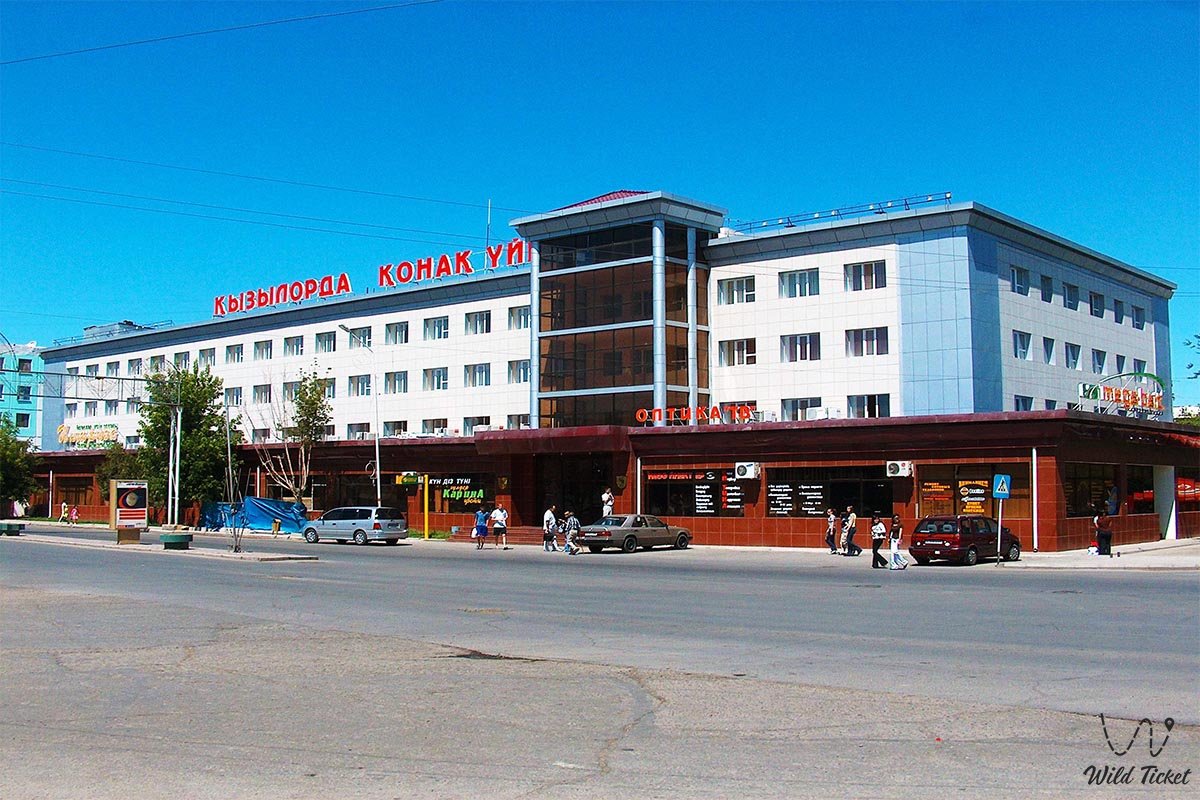
The city of Kyzylorda (until 1853 – Akmeshit, until 1925 – Fort-Perovsk and Perovsk, in 1925–1997 – Kzyl-Orda) represents a major historical, industrial, and cultural center in the south of Kazakhstan, the administrative center of the Kyzylorda region. The name of the city translates from the Kazakh language as "red capital," which is directly related to its historical status: it was here from 1925 to 1927 (effectively until the government moved to Alma-Ata in 1929) that the first capital of the Kazakh ASSR within the Soviet Union was located.
The history of the settlement's founding dates back to 1817–1820, when the ruler of the Kokand Khanate, Omar Khan, laid the military fortress of Ak-Mechet ("White Mosque") on the left bank of the Syr Darya River on the site of the Kamyskala tract, making it the northwestern outpost of the khanate to control caravan routes and river crossings. Prior to the arrival of the Kokandians, the river basin was inhabited for millennia by tribes of the Saka, Kangly, Oguz, and Kipchaks, whose flourishing in the 8th–11th centuries left the ruins of the cities of Chirik-Rabat, Zhankent (Yangikent), Sygnak, and Altyn-Asar.
Near the city towards the North Small Aral Sea is the famous Korkyt Ata Memorial Complex, which enjoys great popularity. Near this complex on the bank of the Syr Darya River lies the ancient ruined Korkyt Ata Mausoleum, which serves as a pilgrimage site.
Geography
Geographically, Kyzylorda stretches along both banks of the Syr Darya River – the main arterial waterway of the region – on a subhorizontal plain of the Turan Lowland with absolute elevations of 125–135 meters above sea level. The city occupies a strategic position among boundless semi-deserts and sand massifs: hummocky-ridged sands of the Kyzylkum Desert approach it from the southeast, the Aryskum ridges and the Ashchykol depression from the north, the Zhuankum sands from the west, and spurs of the Karatau Ridge originate to the northeast.
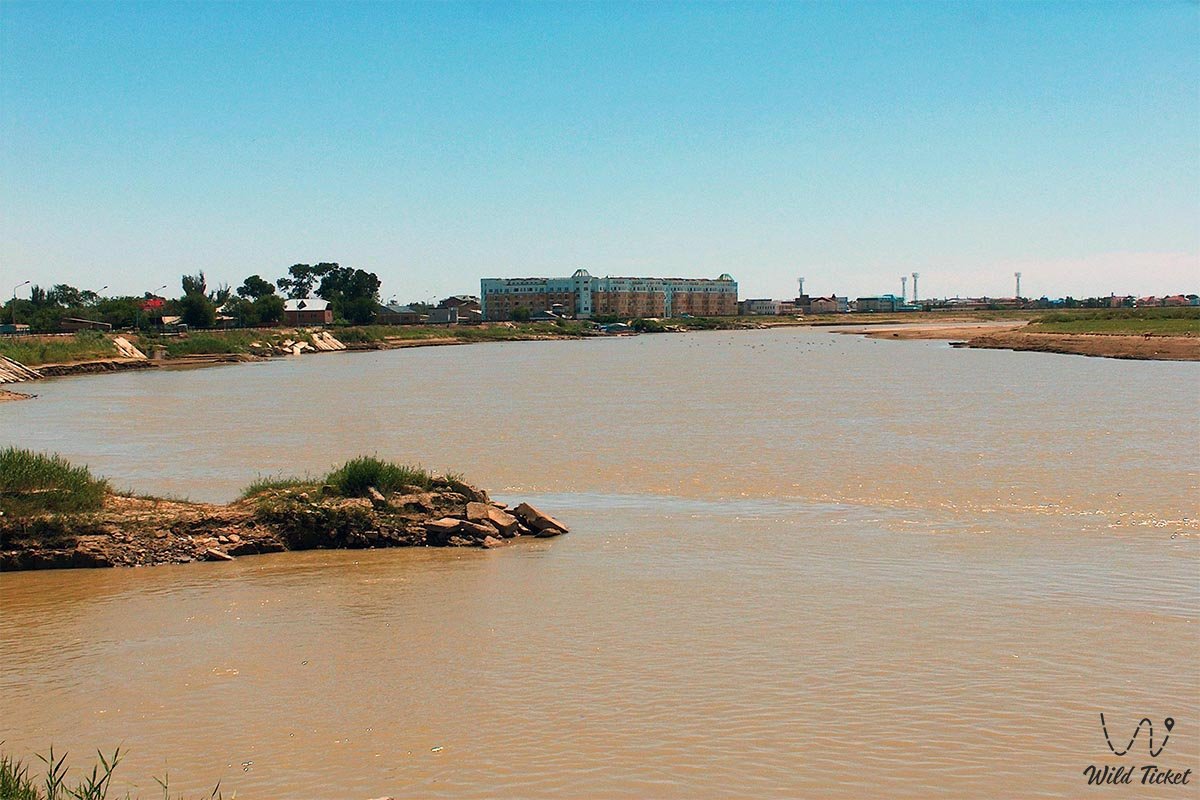
The Syr Darya River flows through the city for more than 10 kilometers, forming an oasis belt with floodplain tugai and irrigated lands where the famous Kyzylorda rice is grown.
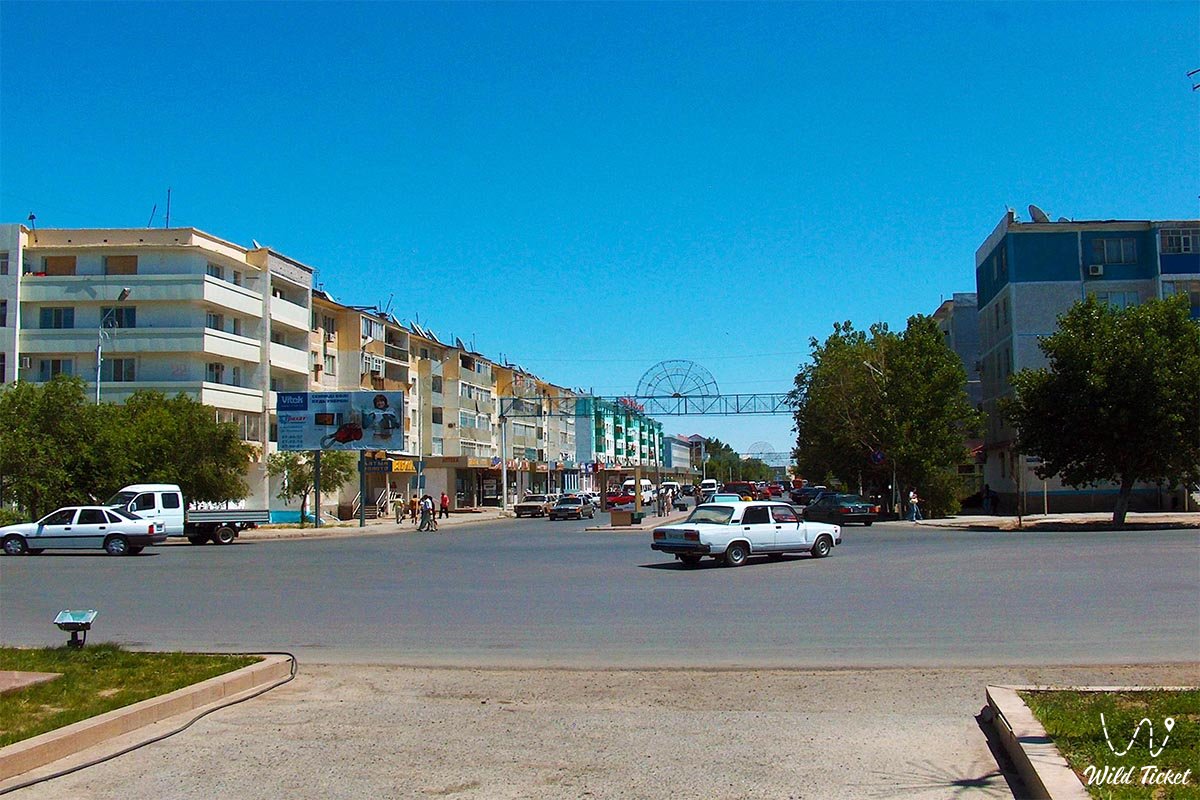
Today, Kyzylorda is a dynamically growing city with a population of over 315 thousand people (and over 354 thousand residents including the subordinate settlements of Tasboget, Belkol, and Kyzylzharma). The city combines the powerful oil and gas potential of the Kumkol field, developed non-ferrous metallurgy, and the uranium industry with large-scale development of the new left-bank district. Being a key logistical hub on the "Western Europe – Western China" highway, Kyzylorda serves as the main gateway for journeys to the Baikonur Cosmodrome, ancient settlements of the Silk Road, and the reviving Aral Sea.
--------------------------------------------
How to get there and visit –
Kyzylorda occupies a key geographical position in southern Kazakhstan, located 830 km southwest of Astana, 280 km northwest of Turkestan, 450 km from Shymkent, and 448 km southeast of Aralsk. The city's transport framework is formed by the "Western Europe – Western China" international highway corridor (M-32 / E38 highway) and the Orenburg – Tashkent mainline railway.
GPS geographical coordinates: 44°51'13"N 65°30'04"E
The city's air gateway is the Korkyt Ata International Airport, located 17 km southeast of the center. The airport possesses a modern runway 2,700 meters long capable of receiving aircraft weighing up to 120 tons and provides regular air service with Astana, Almaty, and other cities. The Kyzylorda railway station receives passenger trains from all directions.
Getting around the city itself is convenient by public transport, route buses, and taxi services. Modern road bridges across the Syr Darya costing billions of tenge reliably connect the historic right bank with the new administrative district on the left bank. Any passenger car is sufficient for trips within the city and excursions to suburban sights.
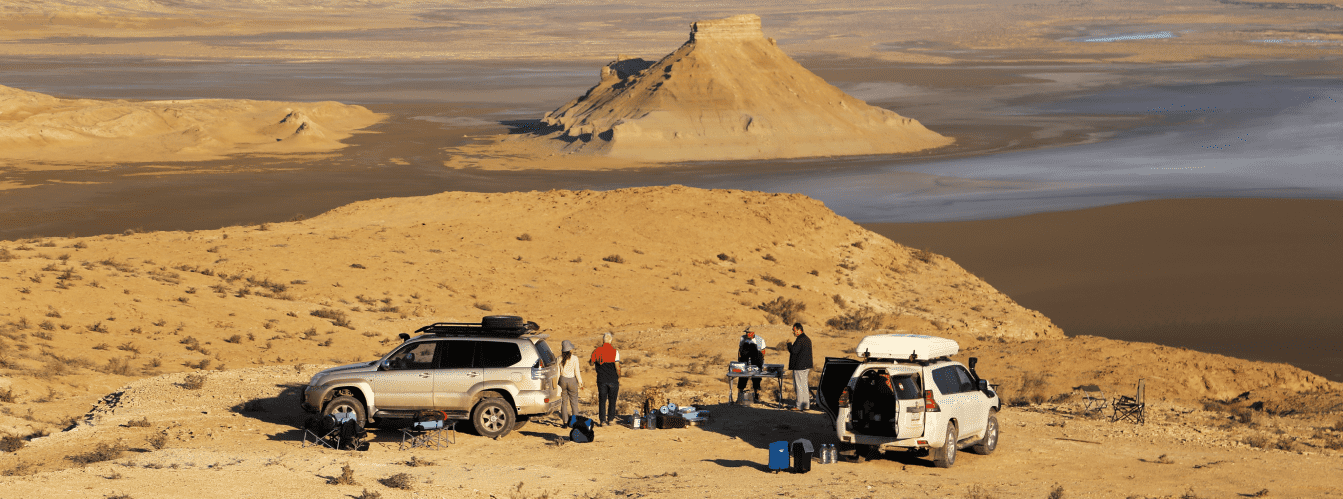
However, if a travel itinerary from Kyzylorda involves autonomous expeditions deep into the sands of the Kyzylkum, to the ruins of the ancient cities of Chirik-Rabat, Jend, or Zhankent, to Lake Kambash, and to the Barsakelmes Nature Reserve, a specially prepared frame-based 4x4 off-road vehicle with high ground clearance, reinforced suspension, fuel reserves, and satellite navigation is required.
A developed network of modern hotels, restaurants serving Kazakh, Oriental, and European cuisine, shopping and entertainment centers, parks, and financial institutions operates in the city. Since December 21, 2018, Kyzylorda and the region have been in the UTC+5:00 time zone.
--------------------------------------------
History
The land of Syr preserves traces of the most ancient civilizations of Eurasia. In the Middle Ages, northern routes of the Great Silk Road ran through here, where tribes of the Saka, Kangly, Oguz, and Kipchaks flourished, erecting the cities of Sygnak (Sygnak), Zhankent (Yangikent), Chirik-Rabat, and Altyn-Asar. (See links to these cities in the first part of the article).
The direct history of the modern city originates in 1817–1820, when the ruler of the Kokand Khanate, Omar Khan, founded the adobe fortress of Ak-Mechet on the left bank of the Syr Darya in the Kamyskala tract. The fortress served as the northwestern outpost of the khanate, collected duties from merchant caravans, and guarded the crossing. In 1852, due to flood erosion of the river channel, the citadel was rebuilt on the higher right bank of the river.
On July 28, 1853, Russian troops under the command of Orenburg Governor-General V. A. Perovsky took the fortress by storm after a siege of many days, breaking the resistance of the garrison led by Yakub Beg. The outpost was renamed Fort Perovsk (from 1862 – Fort Perovsky), and in December 1853 the garrison under the leadership of commandant M. V. Ogaryov successfully repelled a counter-offensive by Kokand forces.
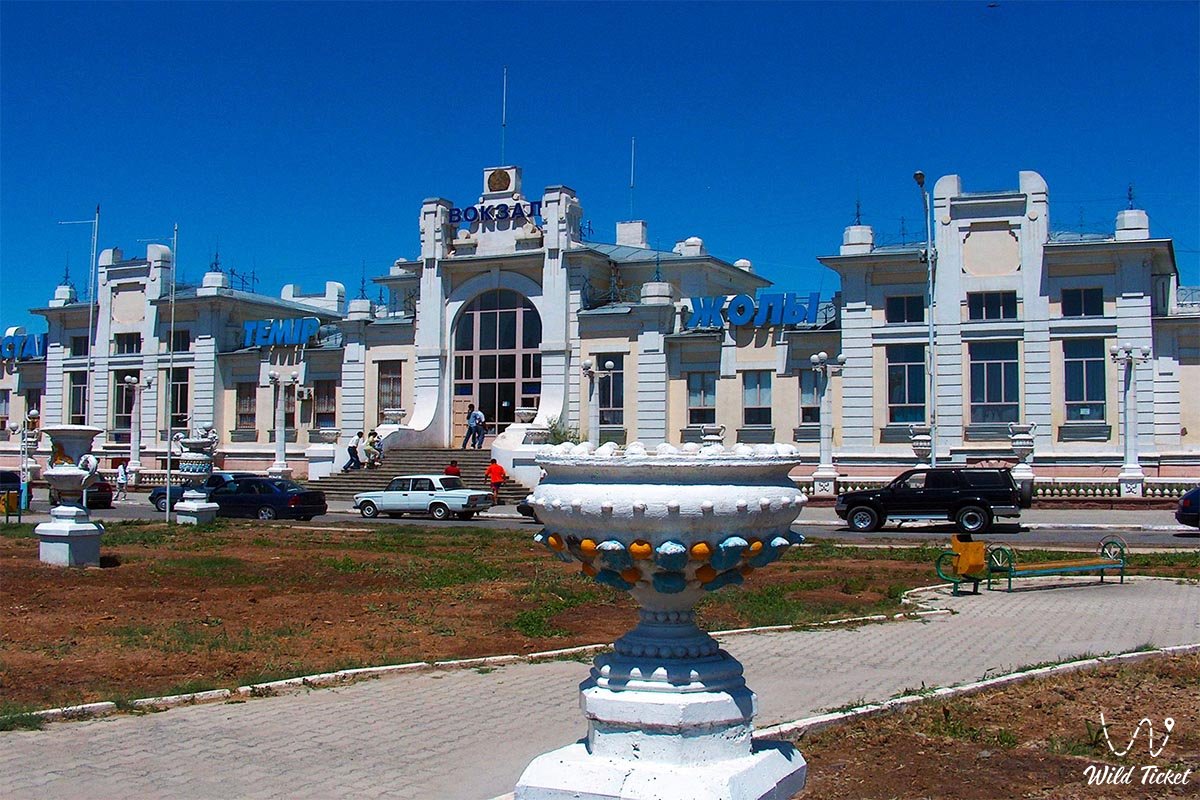
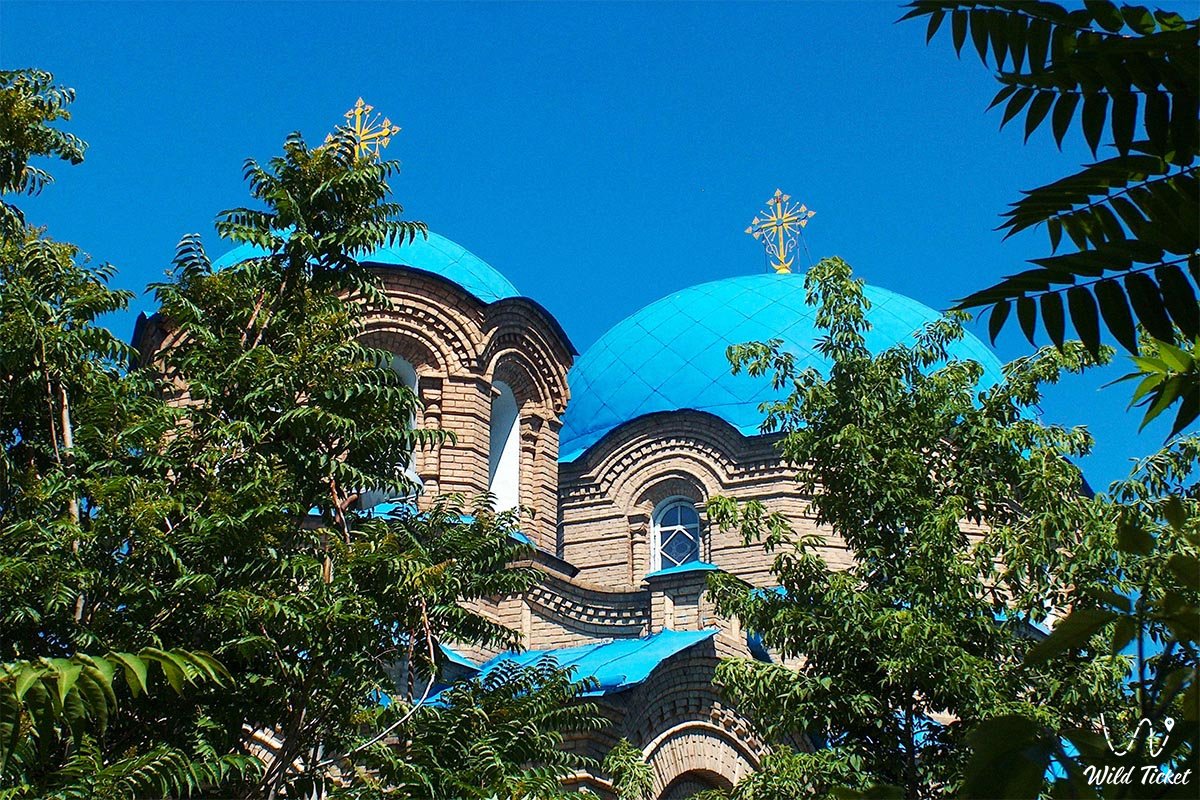
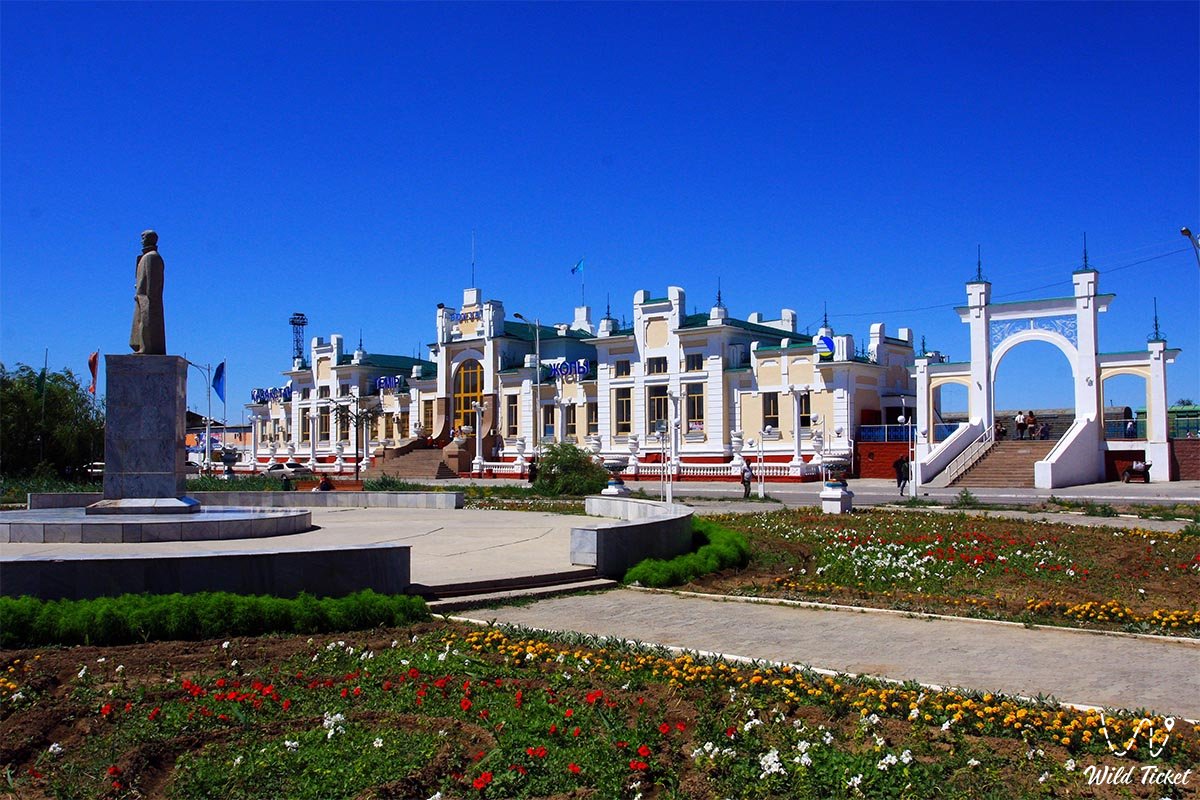
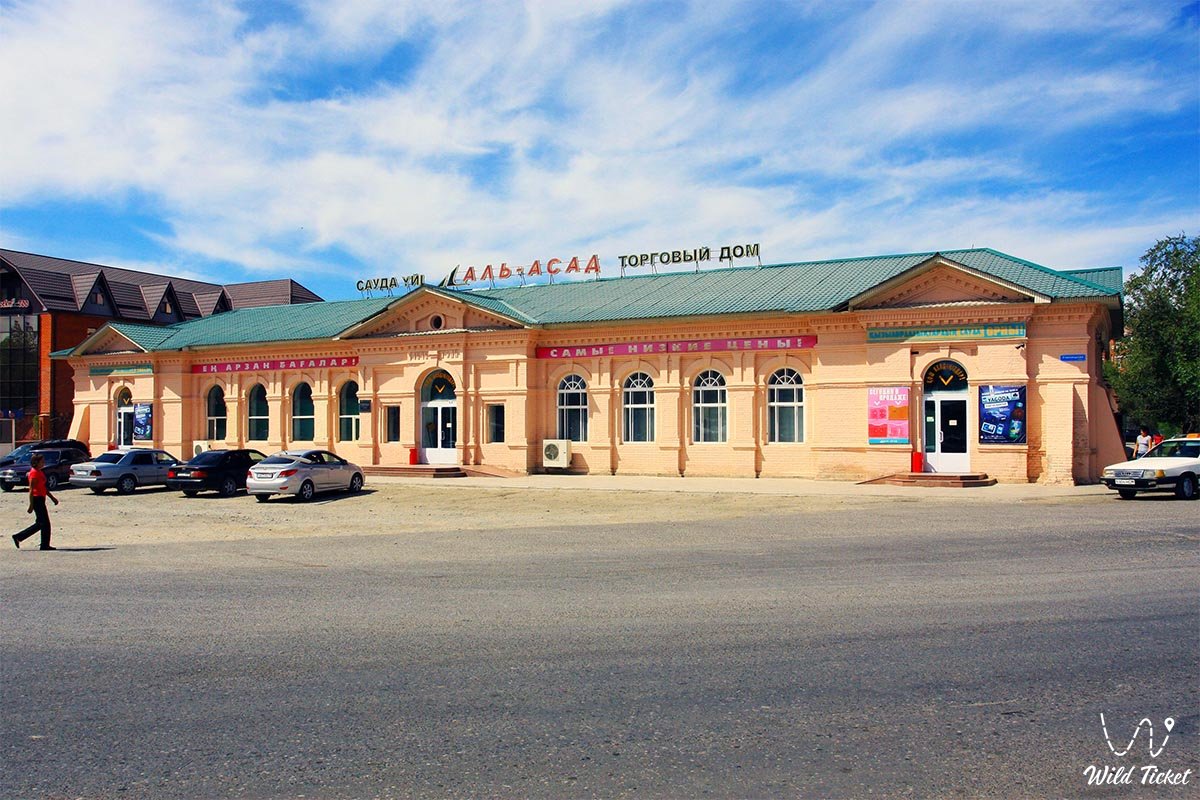
In 1867, Perovsk received the status of a county town in the Syr-Darya region. Primary schools began opening here, and a brick factory, windmills, craft workshops, and trading shops commenced operations. In 1878, Bukhara master craftsmen built the mosque of merchant Aitbay, and in 1896 the construction of the Holy Kazan Orthodox Church was completed. In 1905, the Orenburg – Tashkent railway line passed through Perovsk, providing a powerful impetus to the economy: a railway station building in Art Nouveau style and a locomotive depot were constructed.
Soviet power in Perovsk was established on October 30, 1917. In 1922, the historical name Ak-Mechet was returned to the city, and in 1925 its finest hour arrived: by decision of the 5th All-Kazakh Congress of Soviets, the capital of the Kazakh ASSR within the RSFSR was moved here from Orenburg.
By decree of the Central Executive Committee of the USSR dated July 24, 1925, the city of Ak-Mechet was renamed Kzyl-Orda ("Red Capital"), and Perovsk station became Kzyl-Orda station. At this historic congress, the self-designation of the people, "Kazakhs," was officially restored. During the capital period (until the government relocated to Alma-Ata in 1927–1929), large-scale construction unfolded in the city: buildings of people's commissariats, printing houses, editorial offices of newspapers ("Enbekshi Kazakh"), a theater, and educational institutions appeared.
In the 1930s–1940s, the population of the city and region increased many times over due to waves of political exiles and deported peoples: Poles from Western Ukraine and Belarus, Volga Germans, Koreans from the Far East, Crimean Tatars, and peoples of the North Caucasus, as well as evacuated enterprises during the Great Patriotic War. The national hero of Korea Hong Beom-do lived and was buried in Kzyl-Orda.
On January 15, 1938, Kzyl-Orda Region was formed, headed in various years by Kh. Amirov, R. Tyulebayev, M. Iksanov, Kh. Bekturganov, I. Abdukarimov, T. Esetov, E. Auelbekov, and S. Shaukhamanov. In 1956, the commissioning of the Kzyl-Orda hydraulic complex dam and the construction of the settlement of Tasboget provided a powerful impetus for establishing the country's rice belt: the "Glavrissovhozstroy" trust and twice Hero of Socialist Labor Ibray Zhakhayev laid the foundation for the region's renown as the primary rice granary.
In the 1960s–1970s, a pulp and board mill (with a capacity of 120 thousand tons of semi-chemical pulp and 70 thousand tons of cardboard), a footwear factory (producing up to 2 million pairs of shoes), a garment factory based on the "25 Years of the Komsomol" artel, CHP-6 (1964), and rice processing plants came into operation, and the residential microdistricts of Titov, Gagarin, Akmechet, and Merey emerged.
From the mid-1980s, commercial development of the rich Kumkol oil field began. On June 17, 1997, by decree of the President of the Republic of Kazakhstan, the Kazakh transcription of the city's name – Kyzylorda – was approved. In the 2000s, the economy grew stronger: the Kumkol – Josaly oil pipeline, the Beineu – Shymkent gas pipeline, and the Kokaral Dam on the Small Aral were built, and grandiose development of the left bank of the Syr Darya unfolded featuring a replica of the historic 1925 KazCEC building.
Information
Today, Kyzylorda is an advanced multi-sectoral agrarian and industrial center of Kazakhstan. The industrial sector rests on the rich mineral resource base of the region: extraction of oil and associated gas at the Kumkol field (180 km to the north) conducted by JSC "PetroKazakhstan Kumkol Resources" and "Turgai Petroleum", raw material processing by LLP "JV 'Kazgermunai'", as well as uranium mining ("Irkol", "SKZ-U"), lead-zinc ores of the Shalkiya deposit, vanadium, copper, iron, and gold. The construction sector is represented by "Gezhouba Shieli Cement", the "Dorstroy" asphalt concrete plant, and the woodworking combine of JSC "Kvant".
The agrarian sector of the city and region maintains the lead in nationwide rice production. The irrigated tracts of the Syr Darya basin and advanced rice-growing technologies established by Ibray Zhakhayev supply raw materials to rice mills delivering products to domestic and international markets. Meat processing, flour milling, and poultry farming, as well as the processing of fish from Aral lakes, are developed in the food industry.
The city possesses robust social and cultural-educational infrastructure. The largest hospital complex in the republic operates here (regional medical center, oncological dispensary, perinatal center with 200 beds, blood center, and diagnostic polyclinic).
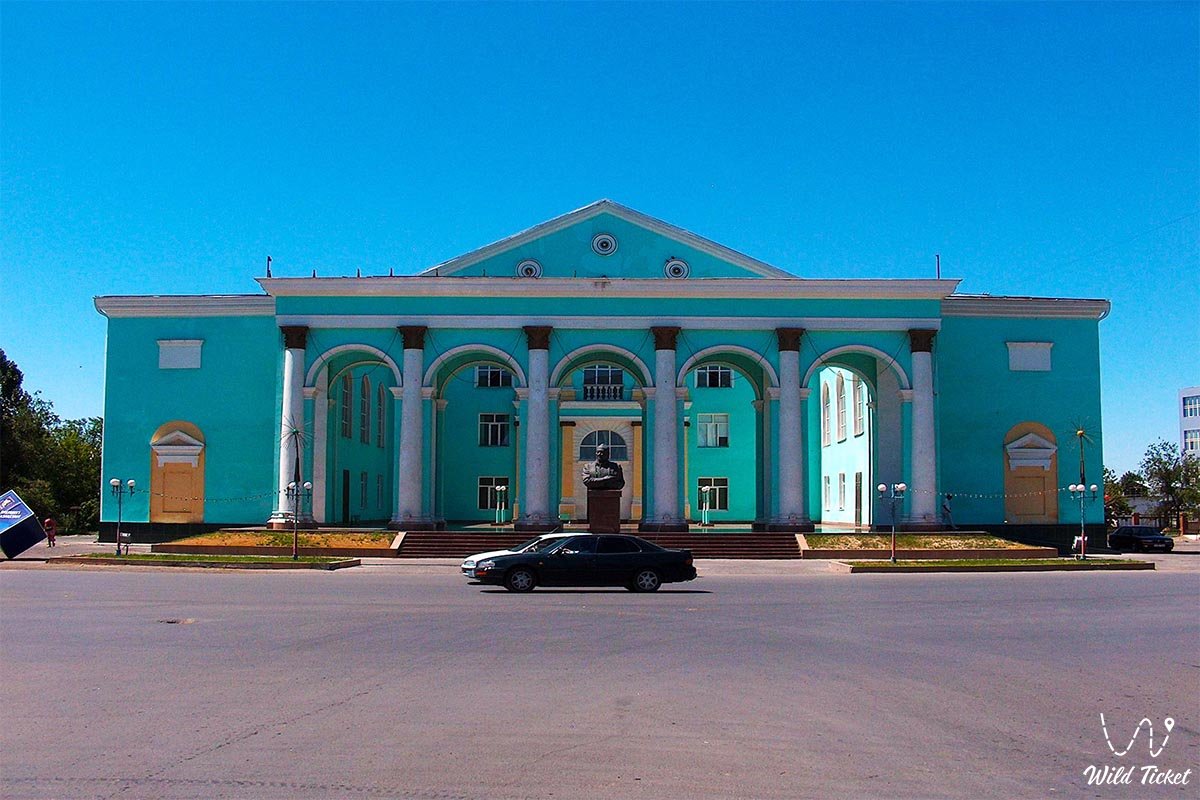
Training of highly qualified specialists is conducted by the Korkyt Ata Kyzylorda University, pedagogical colleges, and the Kazakh Scientific Research Institute of Rice Growing. Cultural life is concentrated in the N. Bekezhanov Kazakh Music and Drama Theater, the Regional Philharmonic, the Friendship House of the Assembly of the People of Kazakhstan, the A. Tazhibayev Regional Library, and the T. Zhurgenev Children's Art School.
The sporting pride of the city comprises the Gani Muratbayev Central Stadium – home arena of the "Kaisar" football club founded in 1968, the "Eurasia" sports complex with an indoor arena and swimming pool, and an ice arena.
The city has nurtured a constellation of outstanding personalities: four-time world weightlifting champion Ilya Ilyin, musician Batyrkhan Shukenov, classic writer Abdizhamil Nurpeisov, playwrights Abdilda Tazhibayev and Askar Tokmagambetov, architect Rustem Seydalin, singers Madina Sadvakasova and Zhanar Dugalova, as well as prominent statesman Uzakbay Karamanov.
Detailed description of the venue
The architectural ensemble of Kyzylorda harmoniously unites historic brickwork of pre-revolutionary Perovsk, Soviet monumental ensembles, and modern quarters:
• Batyrkhan Shukenov Monument – the sculpture of the singer depicts Batyrkhan kneeling on his right knee, holding a saxophone in his hands. In the evenings, his fans, music lovers, and aspiring young musicians gather near the monument and sing songs.
• Kyzylorda Regional Philharmonic – a concert institution organized on November 16, 1973, by order of the Ministry of Culture of the Kazakh SSR. The city philharmonic develops the musical culture of the republic, hosting various concerts and cultural events.
• Aitbay Mosque (1878) – the city's oldest Muslim place of worship built of fired brick with carved wooden decor, erected by craftsmen from Bukhara at the expense of merchant Aitbay Baltabayev.
• Church of the Kazan Icon of the Mother of God (1896) – a monument of religious architecture in the Russian-Byzantine style made of yellow Perovsk brick with tented domes, an active center of the Orthodox parish.
• Syr-Ana Monument – a majestic structure about 40 meters high embodying the image of the "Mother of the Land of Syr," symbolizing wisdom, care, and the enduring bond between generations.
• Syr-Ana Memorial Complex and Tagzym Square – a sacred architectural dominant on the riverbank dedicated to maternal heroism and the memory of fallen heroes.
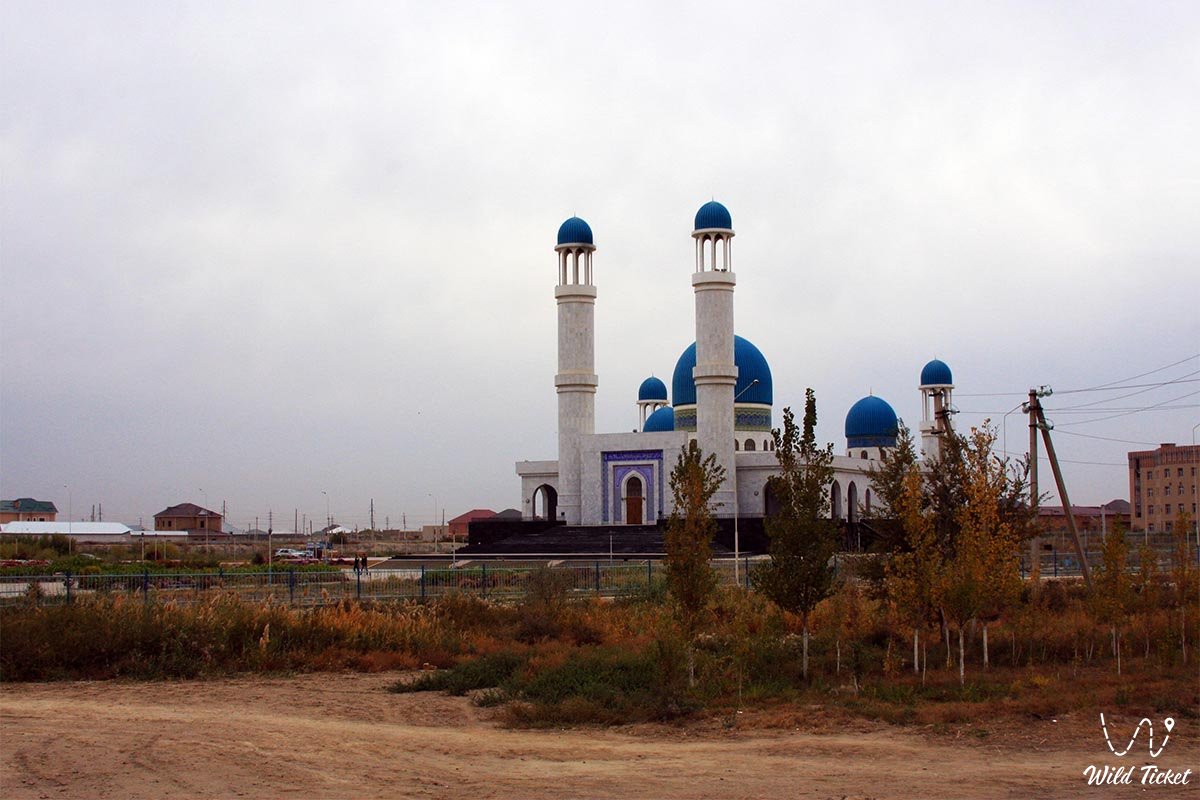
• Akmeshit Mosque – the main cathedral mosque on Zhibek Zholy Street, accommodating up to 1,300 worshippers and designed in the canons of Oriental architecture.
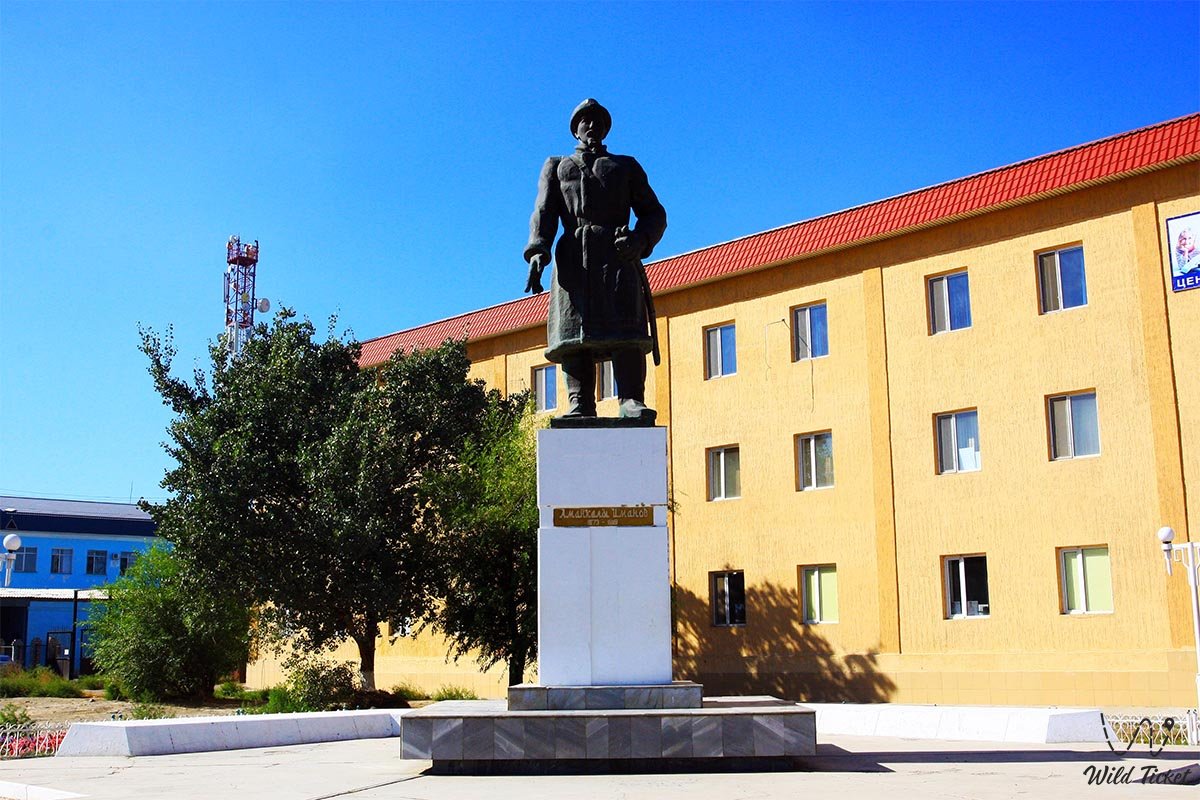
• Railway Station Building (1905) – a historical monument in Art Nouveau style with paintings in the traditional national style inside the waiting hall, situated on the renovated station square with a monument to youth leader Gani Muratbayev.
• Syr Darya River Embankment – a landscaped riverside promenade with walking avenues, a pier, viewing rotunda gazebos, fountains, and evening illumination of bridge crossings.
• Kyzylorda Hydraulic Complex (1956) – a dam on the Syr Darya in the settlement of Tasboget, serving as a key regulator of the riverbed and water diversion for main rice canals.
• Architectural complex of the KazCEC on the left bank of the Syr Darya – an exact historical replica of the 1925 government building that inaugurated the large-scale development of the city's new administrative center.
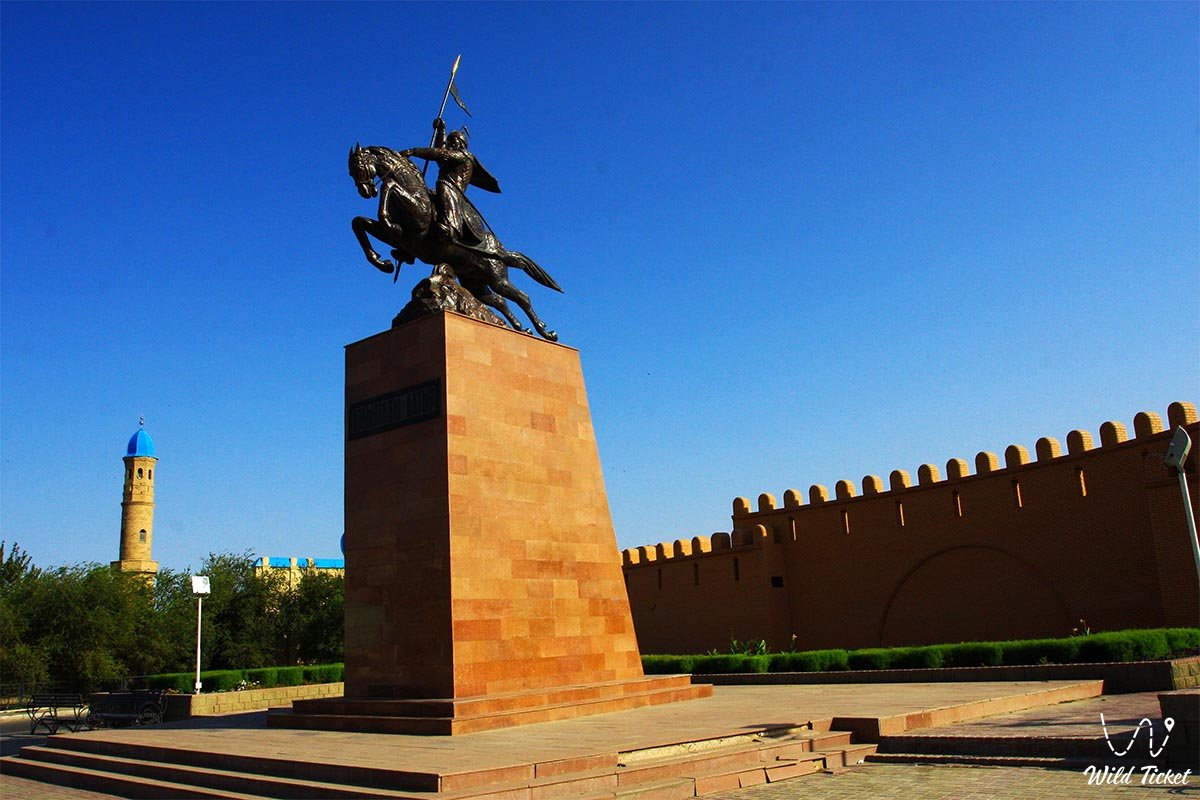
• Zhalantos Bahadur Monument – a majestic equestrian monument to the commander and 17th-century ruler of Samarkand at the central intersection of avenues.
• Batyr Monuments – sculptural monuments to defenders of the steppe: Koblandy Batyr, Bukharbay Batyr, Zhankozha Nurmukhameduly, and Toganas.
• Sarkyrama Canal – a reconstructed urban water-park artery with pedestrian bridges, green spaces, and fountains.
Flora and fauna
The vegetation cover of Kyzylorda and its suburbs forms in the zone of wormwood-boyalych northern desert of the Turan province. In the Syr Darya floodplain (channel width 150–200 m, depth 2–5 m, coastal cliffs 5–7 m), dense ribbon tugai forests 3–7 meters high have formed: Asiatic poplar (turanga), narrow-leaved oleaster (jida), Dzungarian willow, and tamarisk. Continuous thickets of bulrush and common reed up to 5 meters high rise along irrigation canals, aryks, and drainage ponds from rice checks.
Desert xerophytes and halophytes dominate on adjacent clay takyrs and sandy plains: black and white saxaul, dzhuzgun up to 2 m high, dwarf semi-shrubs boyalych, salt-marsh biyurgun, gray-soil wormwood, and camelthorn (dzhantak). In spring, the plain is briefly carpeted with green ephemerals that burn out by early June. Karagach (small-leaved elm), ash, white poplar, maple, black locust, as well as orchards with fruit trees of apricot, peach, and pear, irrigated via a network of aryks and pipes, have taken root within the city limits.
The animal kingdom of the river floodplain and surrounding sands of the Kyzylkum is rich and varied. The Syr Darya pheasant, wild boars, tolai hares, badgers, jackals, and muskrats inhabit coastal tugai and reed wetlands. The corsac fox, steppe wolf, long-eared hedgehog, jerboas, and gerbils are common in the open semi-desert.
The banks of the Syr Darya serve as a refuge for wetland birds: grey and little egrets, cormorants, gulls, wild ducks, and sandpipers, while steppe eagles, long-legged buzzards, and kestrels hunt over open plains. The fish fauna of the river and floodplain lakes includes valuable commercial species: common carp, pike perch, wels catfish, asp, bream, northern pike, crucian carp, northern snakehead, and grass carp.
Climate
The city's climate is sharply continental and arid: summers are long, dry, and extremely scorching with an average July temperature of +26...+29 °C (maximum temperatures reach +44...+48 °C) and regular dust storms. Winter is short but severe with little snow, having an average January temperature of -7...-10 °C and absolute minimums down to -33...-41 °C.
Snow cover is shallow and blown away by strong winter winds, the depth of soil freezing is up to 45 cm, and annual precipitation does not exceed 100–190 mm (60% falls during the winter-spring season). The frost-free period lasts from 240 to 280 days. The best time for tourist trips is blooming spring (April – May) and warm autumn (September – October).
Legend
The land of Syr is sanctified by the sacred name of the great philosopher and kuyshi Korkyt Ata. An ancient legend says that Korkyt, fleeing his mortal hour to the four corners of the earth, saw dug graves everywhere. Only upon returning to the sacred waters of the Syr Darya did he spread a prayer rug upon the river waves and begin playing a kobyz carved from karagach wood. As long as the magical music flowed, death retreated, and the waters of the river stood still in reverent awe. Thanks to this, the prerogative of a spiritual center was established for Kyzylorda as the recognized steppe "Cradle of Song."
Another legend is linked to the origin of the name Ak-Mechet. Caravaneers traveling through the scorching sands of the Kyzylkum along the Silk Road could see the snow-white dome of the mosque on the steep right bluff of the Syr Darya from afar in the shimmering heat haze of desert mirages. The white river clay from which its walls were built reflected sunbeams like a radiant beacon, guiding caravans toward long-awaited coolness, fresh water, and rest. It was believed that every merchant or warrior who stepped beneath the vaults of the White Mosque received the blessing of spirits for a successful journey through the arid steppes of Turan.
Conclusion
Kyzylorda is a city with a vivid and distinct destiny, which became a bridge between ancient nomadic civilization, the dramatic era of the formation of Kazakh statehood as the second capital, and a dynamic industrial present. The city reverently preserves the memory of sages, batyrs, and educators of the land of Syr, combining the charm of historic brick quarters with the scope of modern avenues on the left bank.
Interesting sights nearby:
• Embankment of the Syr Darya River and pedestrian bridge;
• Kyzylorda hydraulic complex and dam (Tasboget settlement);
• Church of the Kazan Icon of the Mother of God (1896);
• Ancient Mosque of Merchant Aitbay (1878);
• Historic railway station (1905);
• Architectural complex of the KazCEC on the left bank of the Syr Darya;
• Regional Museum of History and Local Lore;
• Korkyt Ata Memorial Complex in Karmakshy District;
• Baikonur Cosmodrome and the city of Baikonur (240 km along the M-32 highway);
• Medieval Settlement of Sygnak near Zhanakorgan;
• Beltam burial mound and tower of the 10th–11th centuries in Shieli district;
• Ruins of the ancient cities of Jend, Zhankent, and Chirik-Rabat;
• Zhanakorgan balneological mud-cure resort;
• Salt Lake Kamystybas (Kambash).
Photogallery: