Spiritual symbol and architectural masterpiece of Kazakhstan -
Korkyt Ata Memorial Complex – is an outstanding architectural, historical, and spiritual monument erected in the Karmakshy district of the Kyzylorda region, located 18 km northeast of the Josaly village. This majestic ensemble is situated among the endless steppe expanses, on the right elevated bank of the sacred Syr Darya River, which for centuries was the cradle for many civilizations of the region.
The complex is dedicated to the great Turkic thinker, poet, musician, and storyteller Korkyt Ata, whose creativity and philosophical heritage unite many peoples of Eurasia. Today, this sacred place represents not just a memorial, but a major cultural and historical center attracting pilgrims, historians, folklorists, and travelers from all over the world. People come here to touch the origins of ancient Turkic culture, hear the unique "music of the wind" born in the steppe expanses, and feel a deep connection of times.
---------------------------------------------
How to get there and visit -
The Korkyt Ata complex is located along the Shymkent – Samara highway and the "Western China – Western Europe" transit road, 18 km from Josaly village, 185 kilometers from the city of Kyzylorda, 66 kilometers from the city of Baikonur, Karmakshy district, Kyzylorda region, Republic of Kazakhstan.
GPS geographical coordinates: 45°36'13"N 63°56'08"E
It is possible to get to the memorial from Kyzylorda by taxi, bus, or by booking a tour through a travel agency (the distance is 170–185 km, travel time is about 2 hours by car along the R-69 or E38 highways). From the city of Baikonur, it is 66 km, about 1 hour of driving along the E38 road. One can also travel by train to the Korkyt station.
---------------------------------------------
Who is Korkyt Ata?
Korkyt Ata – is a legendary historical figure, philosopher, poet, composer, and a great zhyrau, whose image and creative heritage unite many Turkic peoples of Eurasia. Most historical and scientific studies agree that Korkyt was born at the beginning of the X century (according to other sources – in the IX–XI centuries) in the Oguz-Kipchak tribal alliance, whose nomadic camps were located in the picturesque lower reaches and along the banks of the sacred Syr Darya River. In the history of Kazakh philosophy and the spiritual culture of the Turkic world, he appears as a genius humanist who laid the foundation for the worldview of nomads.
In written monuments, such as the famous epic "Korkyt Ata Kitaby" ("The Book of My Grandfather Korkyt"), his image is surrounded by deep respect. According to legends, the name Korkyt (meaning "fear" or "frightening") was fixed to him because of unusual natural phenomena that accompanied his birth, when the sun briefly darkened during a storm. From a young age, the thinker deeply reflected on the transience of human life and the meaning of existence, which led him to his main existential search – the desire to find immortality and defeat death itself.
The heritage of Korkyt Ata is inextricably linked with the creation of the first classical kuys, which transmitted the sounds, thoughts, and breath of the endless steppe. His kuys, such as "Elmen Koshtasu", "Tengri Kuy", and others, have become immortal classics of Turkic art. Today, the name of Korkyt is immortalized not only in memorial complexes and monuments, but is also officially recognized by the world community: his musical and literary heritage is included in the representative list of the Intangible Cultural Heritage of UNESCO, continuing to live in the hearts of new generations.
History
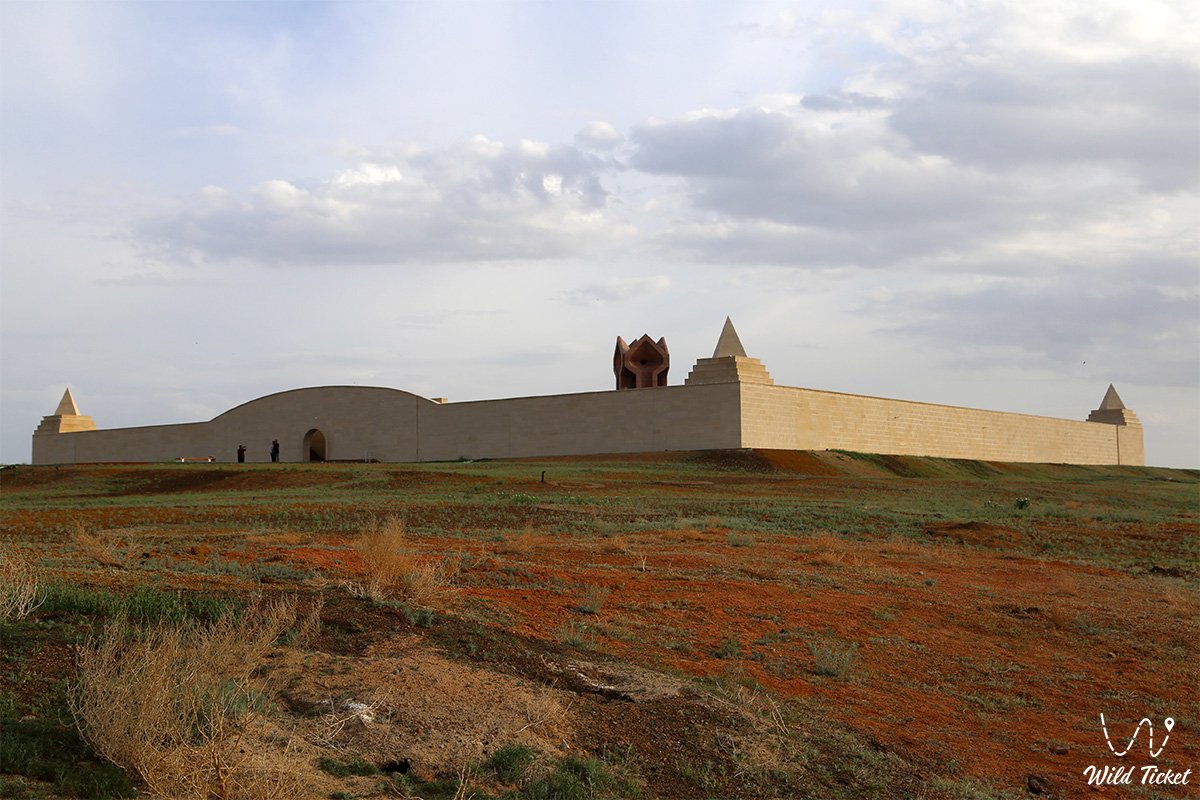
The origins of the Korkyt Ata complex date back to the era of the Oguz-Kipchak tribes (IX–X centuries) and the banks of the sacred Syr Darya River. Initially, a Korkyt Ata mausoleum (also known as the Korkyt-Tube hill), built of raw brick, existed on the right elevated bank of the river, 1.6 km from the modern memorial and next to the ancient cemetery "Altyn Aidar". At different times, this ancient monument was described by researchers A. I. Maksheev, P. I. Lerch, A. A. Divaev, and I. A. Castagné. However, over time, turbulent spring floods and rising water destroyed the historical burial vault, and its remains were washed away by the Syr Darya.
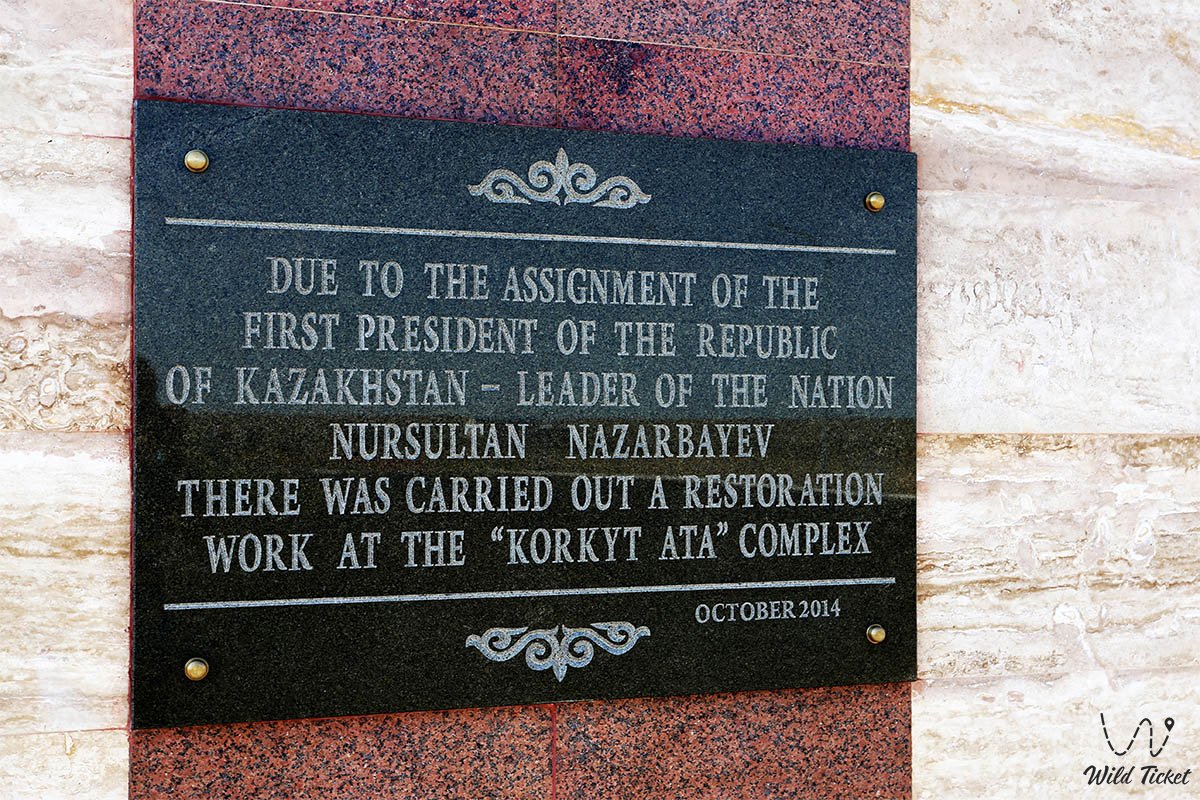
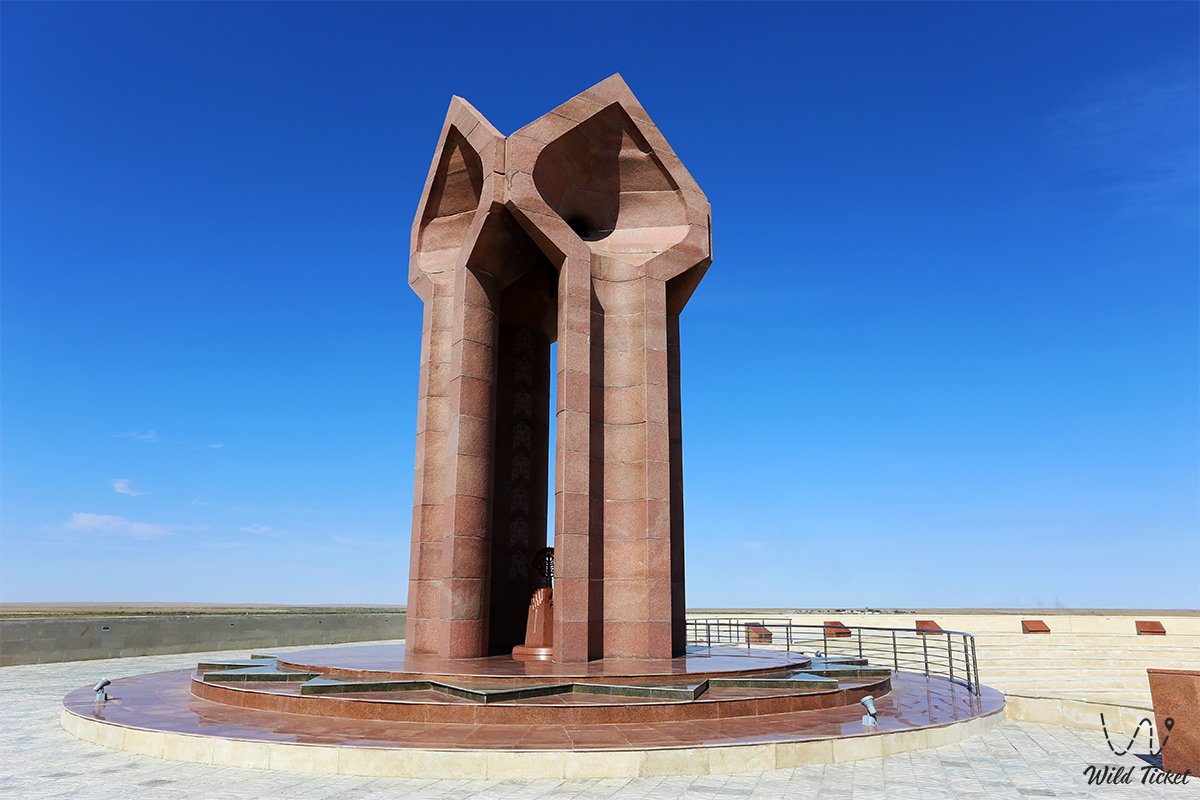
In Soviet times, in 1980, according to the project of architect and culturologist B. A. Ibraev in co-authorship with acoustic physicist S. I. Isataev, a modern majestic memorial complex was erected. Later, in 1997 and 2014, large-scale reconstructions were carried out: old materials were replaced with granite and marble (the complex is faced with 92 blocks of Korbin granite), and the height of the central steles was increased from 8 to 12 meters.
In 2000, a museum was opened at the complex. In May 2015, the site was included in the State List of Historical and Cultural Monuments of Local Importance, and on November 28, 2018, the heritage of Korkyt officially entered the list of Intangible Cultural Heritage of UNESCO (jointly with Kazakhstan, Azerbaijan, and Turkey).
Information
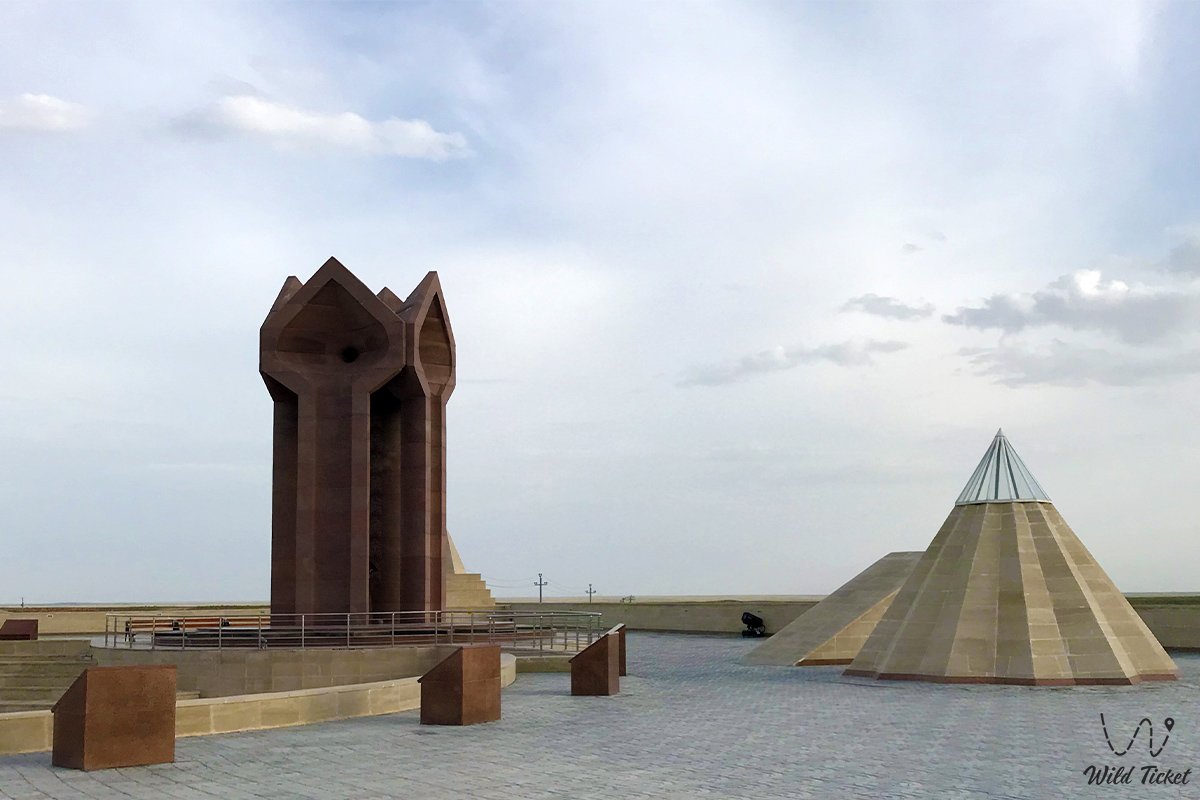
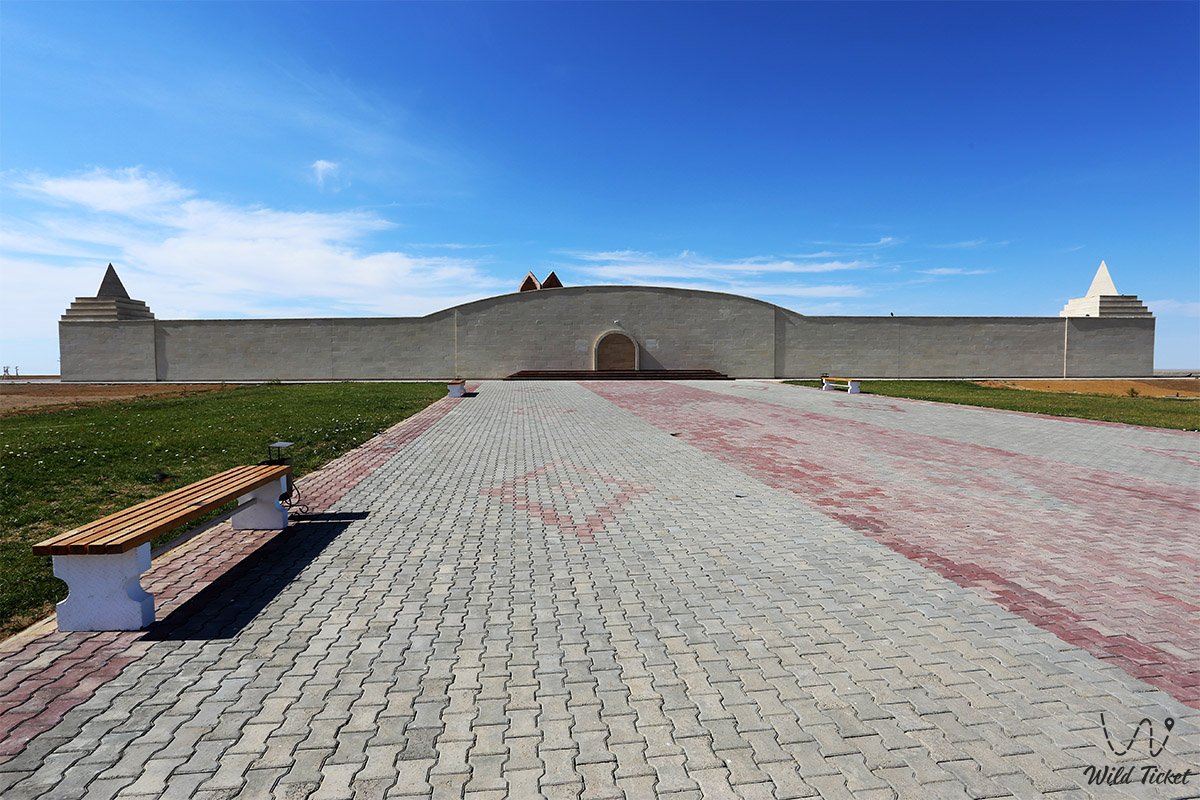
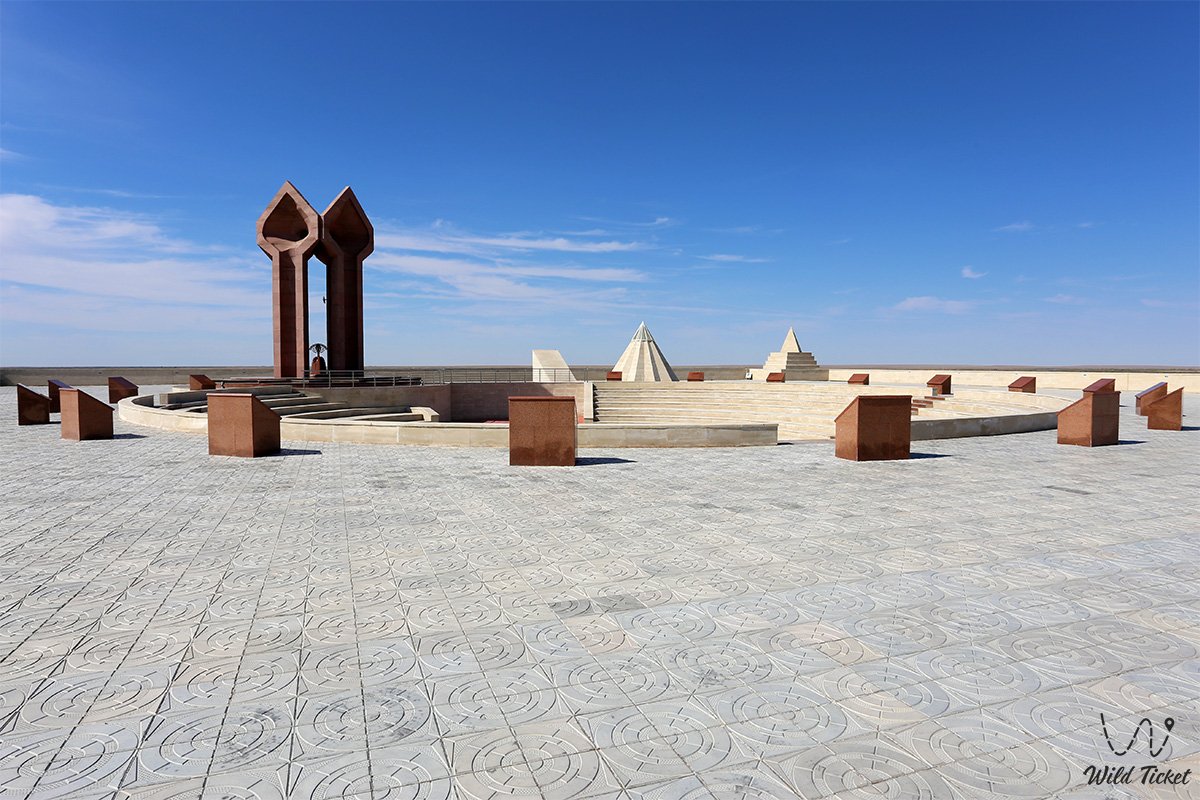
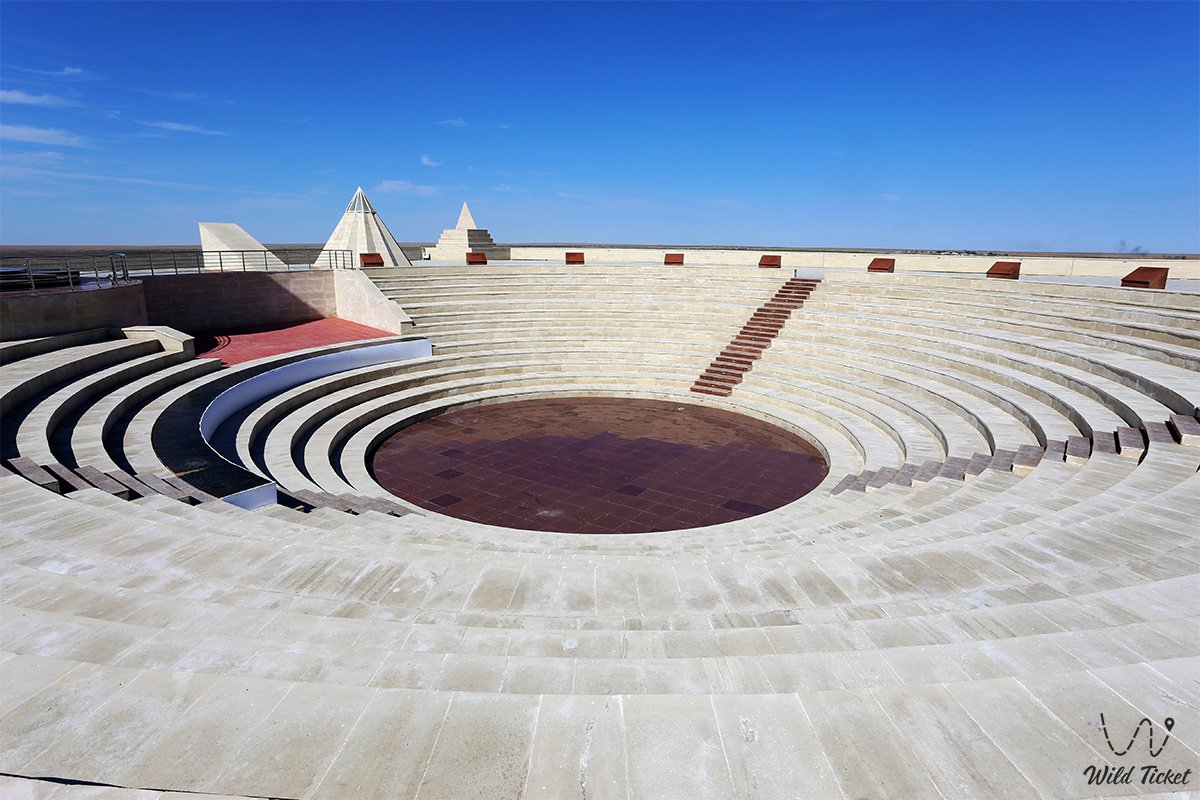
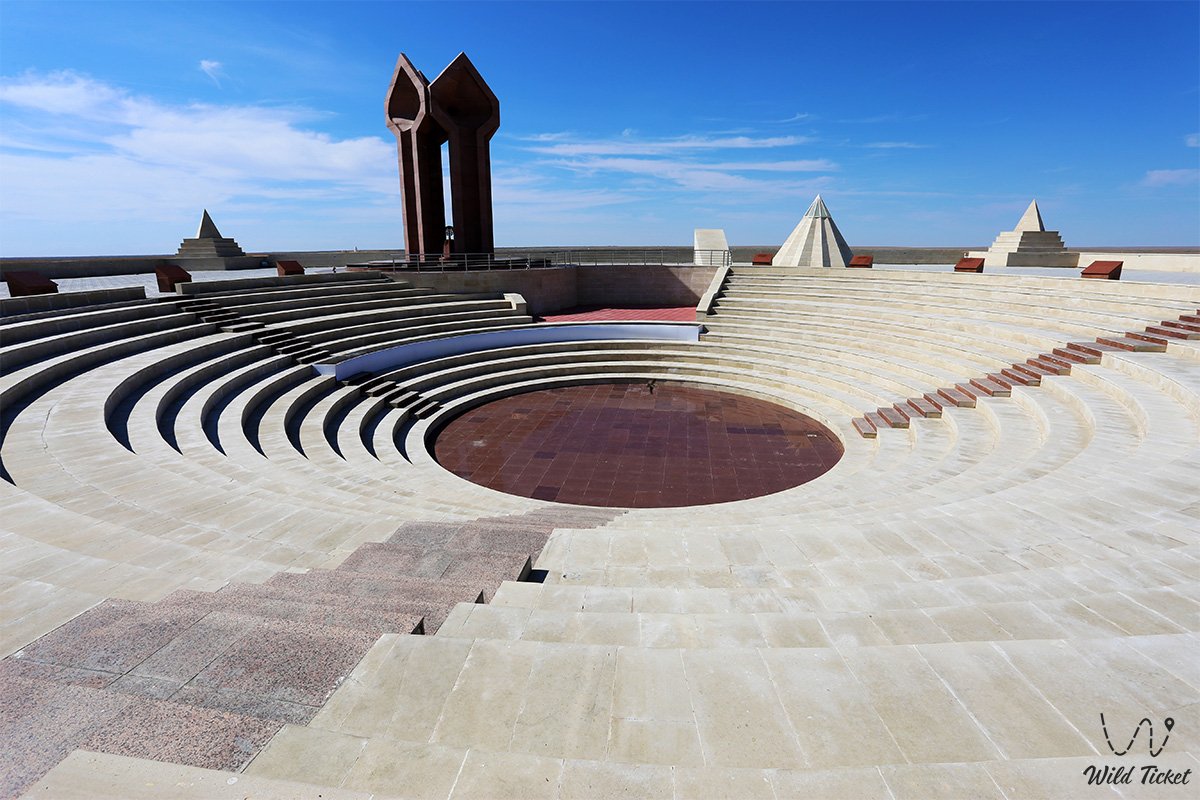
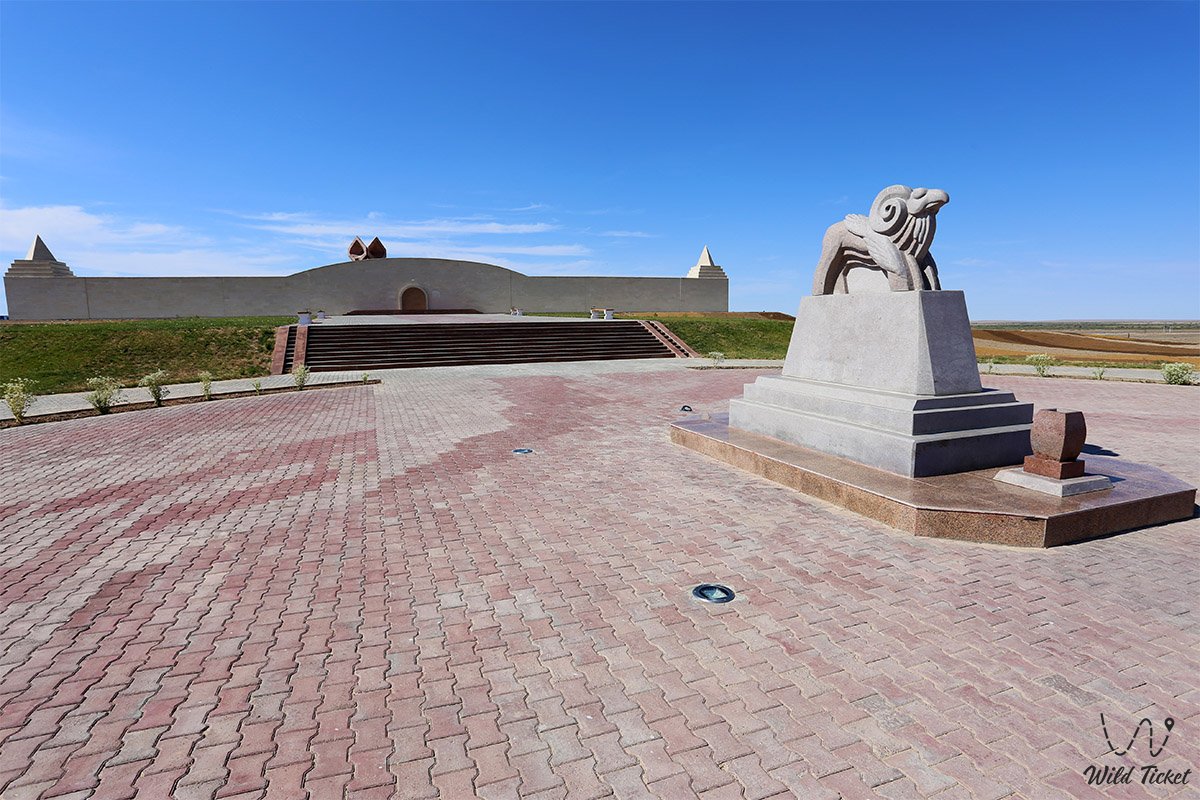
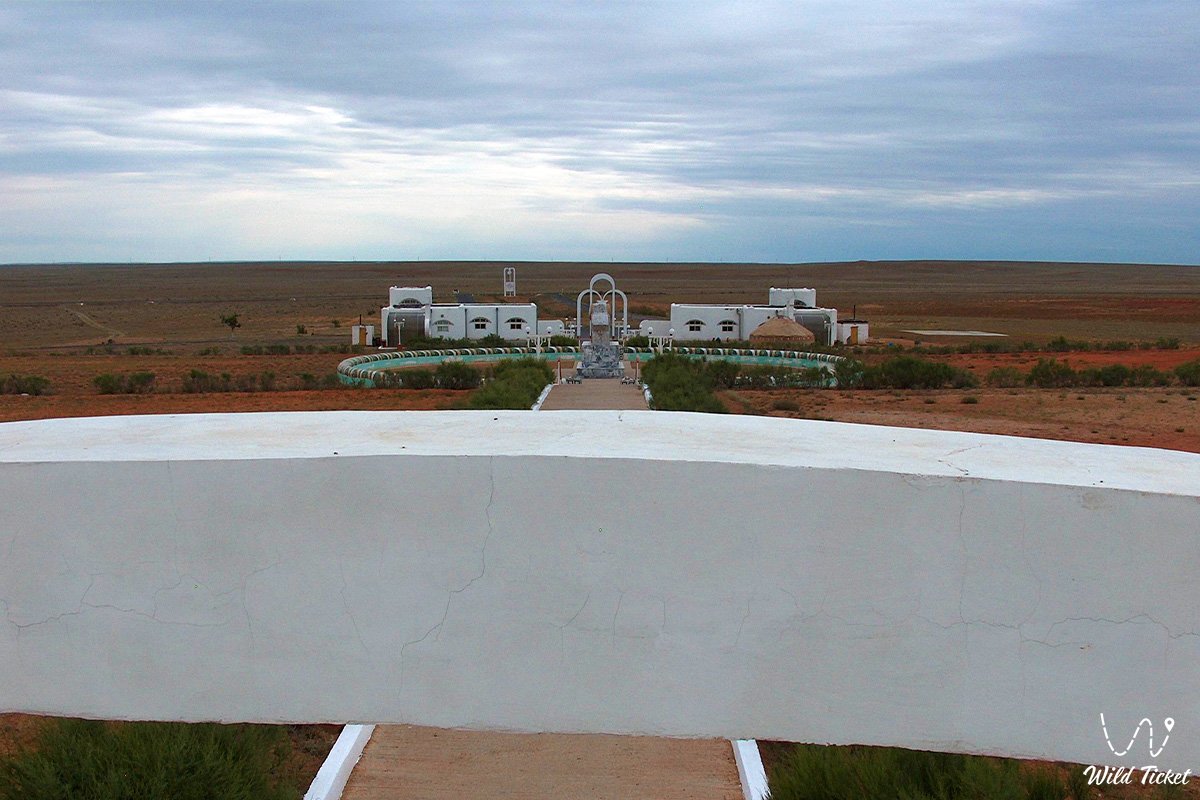
The modern Korkyt Ata memorial complex is a large-scale cultural, historical, and spiritual center covering a territory of 8 hectares. It includes monumental steles, an underground "Pyramid of Wishes", an amphitheater for 2,000 people, a statue of a mythical koshkar, and a museum. The museum's exposition numbers about 700 valuable exhibits telling about the history, ethnography, and culture of the era in which the great thinker lived. The complex serves as a venue for large-scale events, including the international festival "Korkyt and the Music of the Great Steppe".
Detailed description of the venue
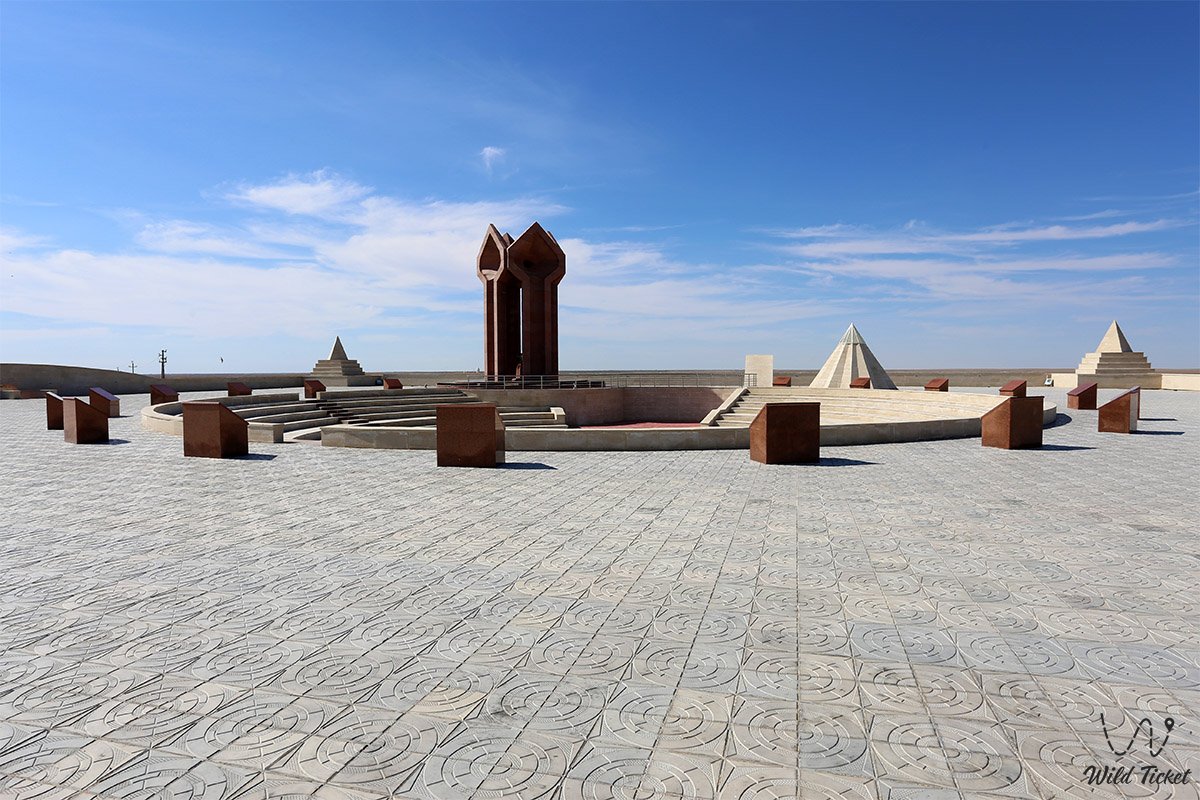
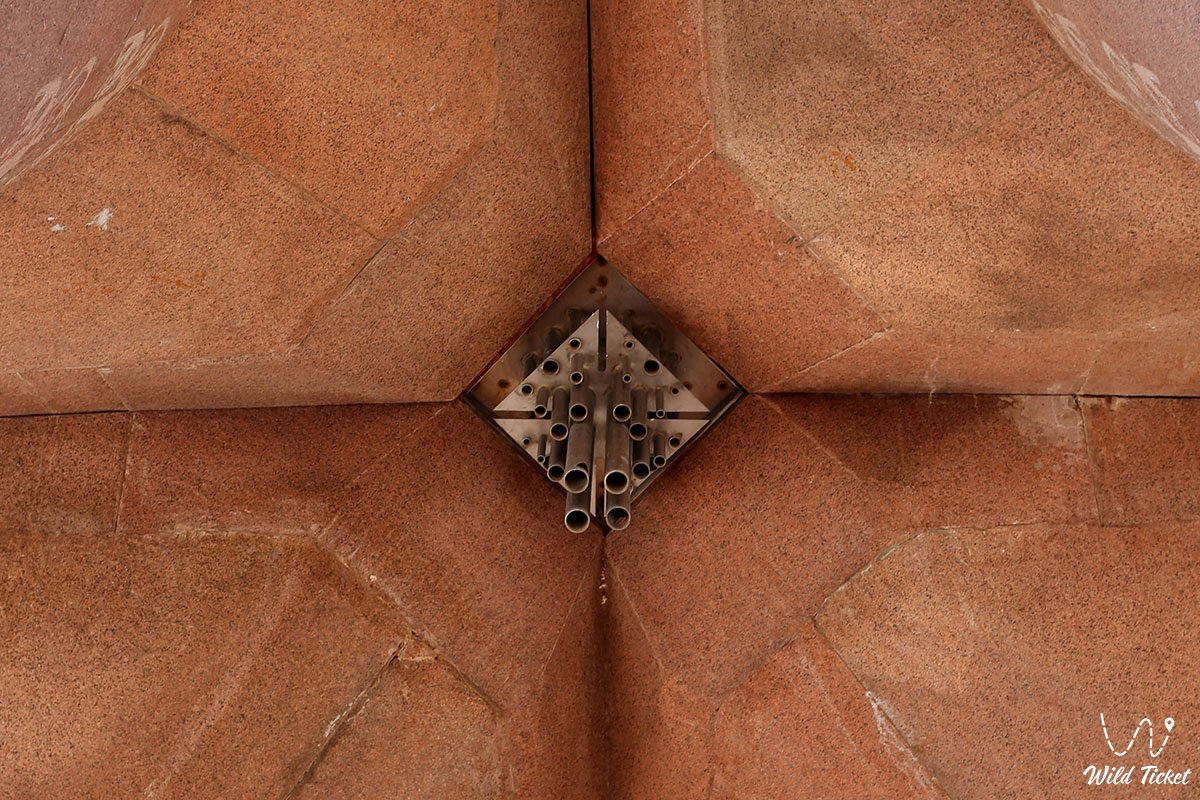
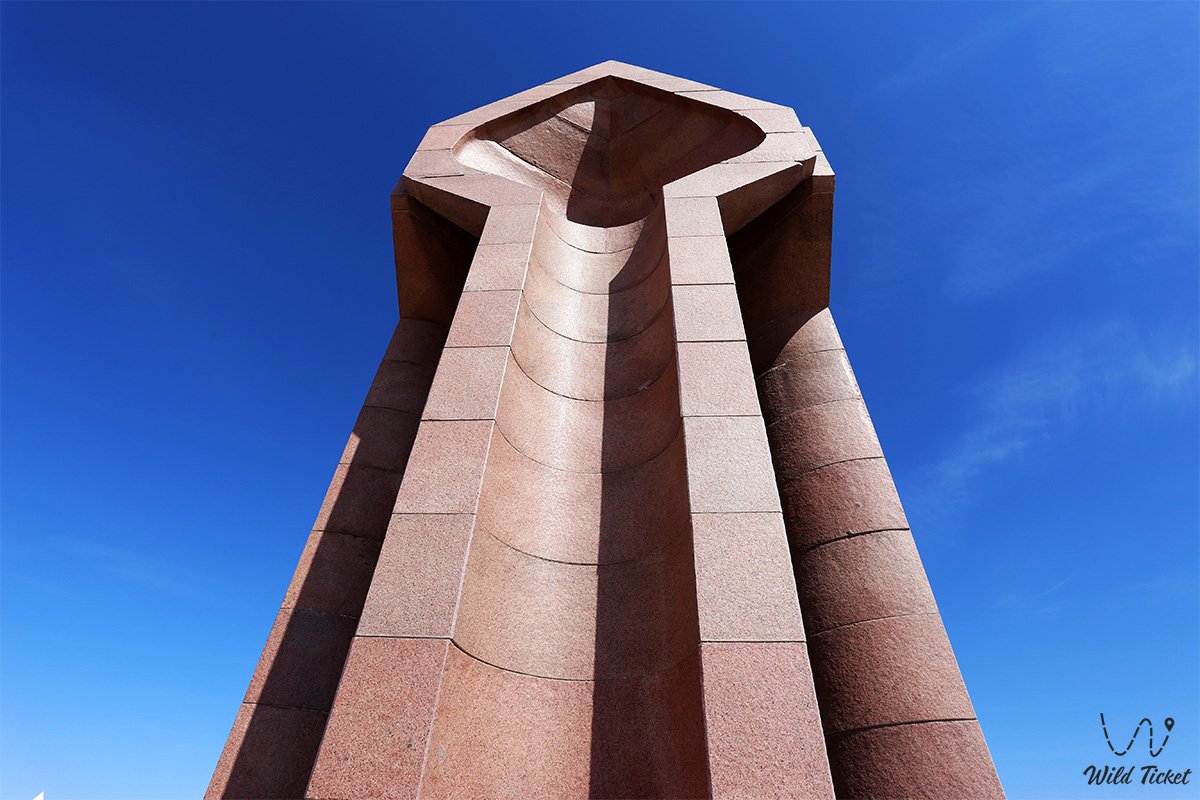
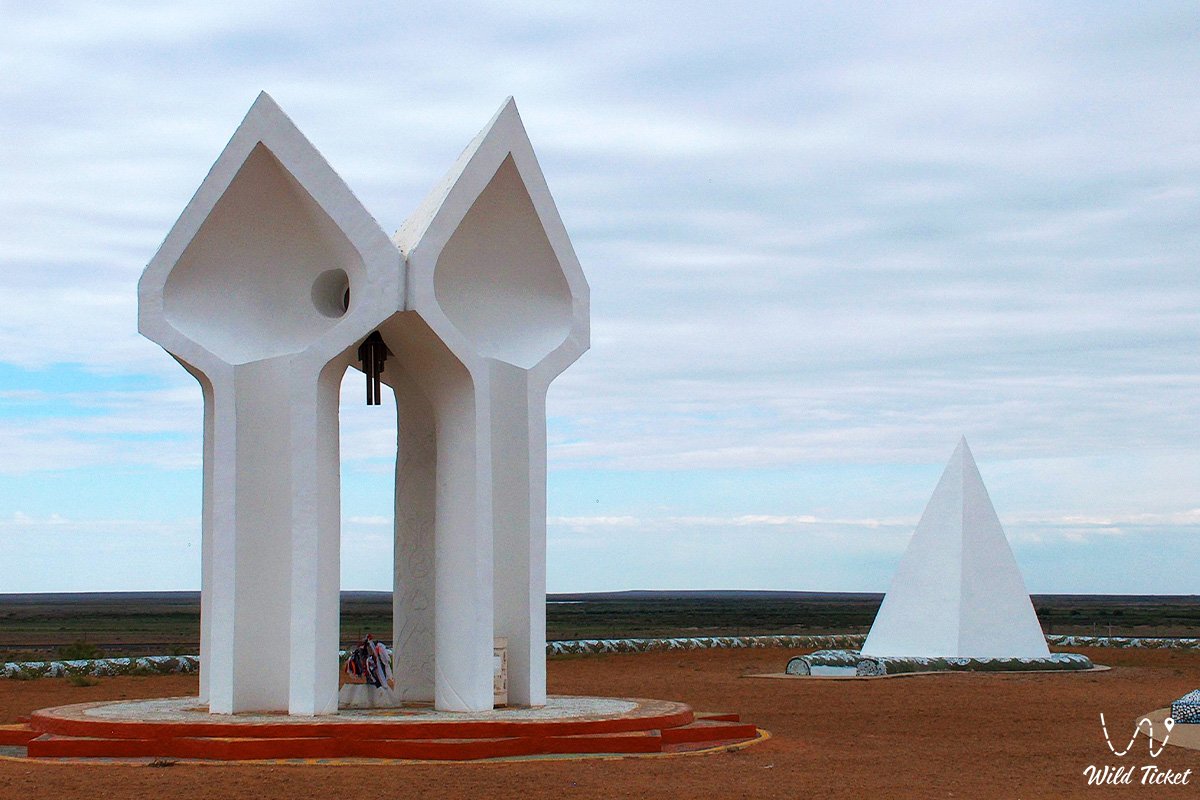
• Stele-kobyz: The central 12-meter-high monument, made of 92 blocks of Korbin granite and oriented to the four cardinal directions. In the upper part, 40 metal pipes (an organ) are installed, which catch air flows during gusts of steppe wind and emit sounds resembling playing the kobyz ("singing pipes").
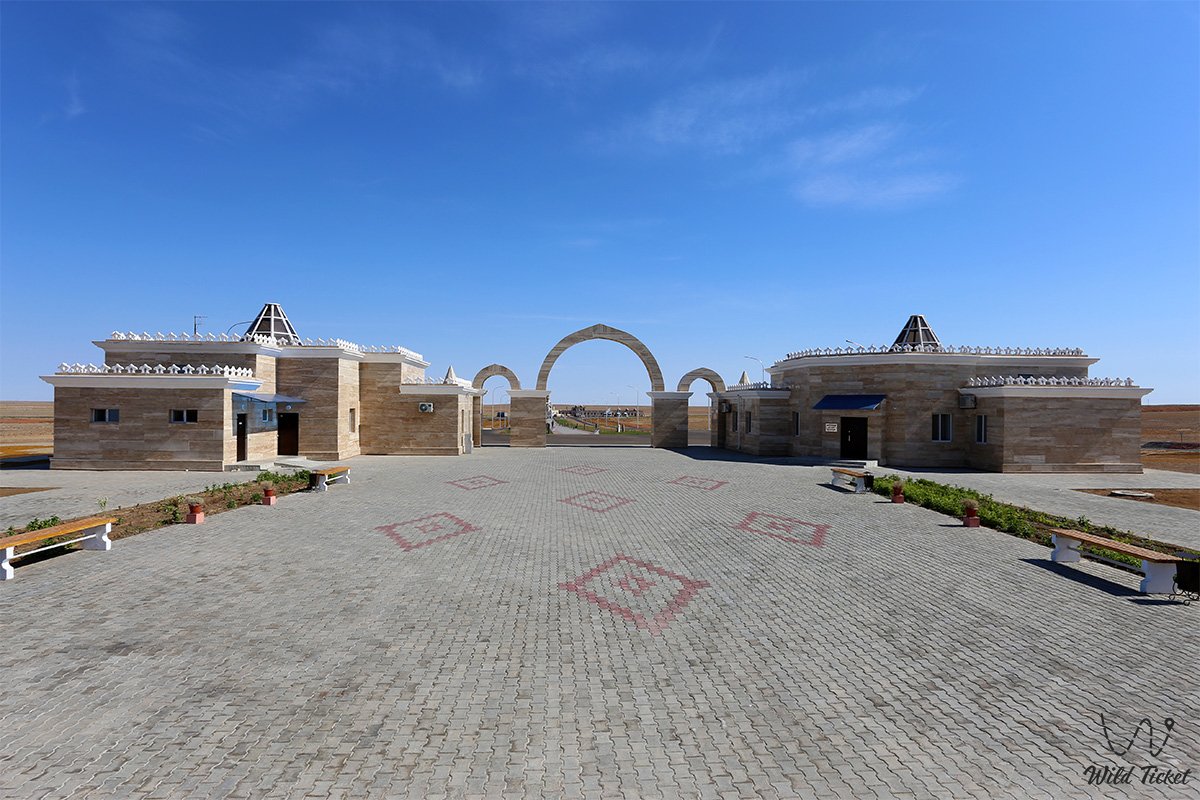
• Korkyt Ata Museum: A one-story L-shaped building consisting of three halls where unique artifacts, manuscripts, national instruments, and materials on the history of the Syr Darya region are kept.
• Pyramid of Wishes (khiluet): An underground prayer house where visitors descend by stairs after circling the pyramid three times to make a cherished wish.
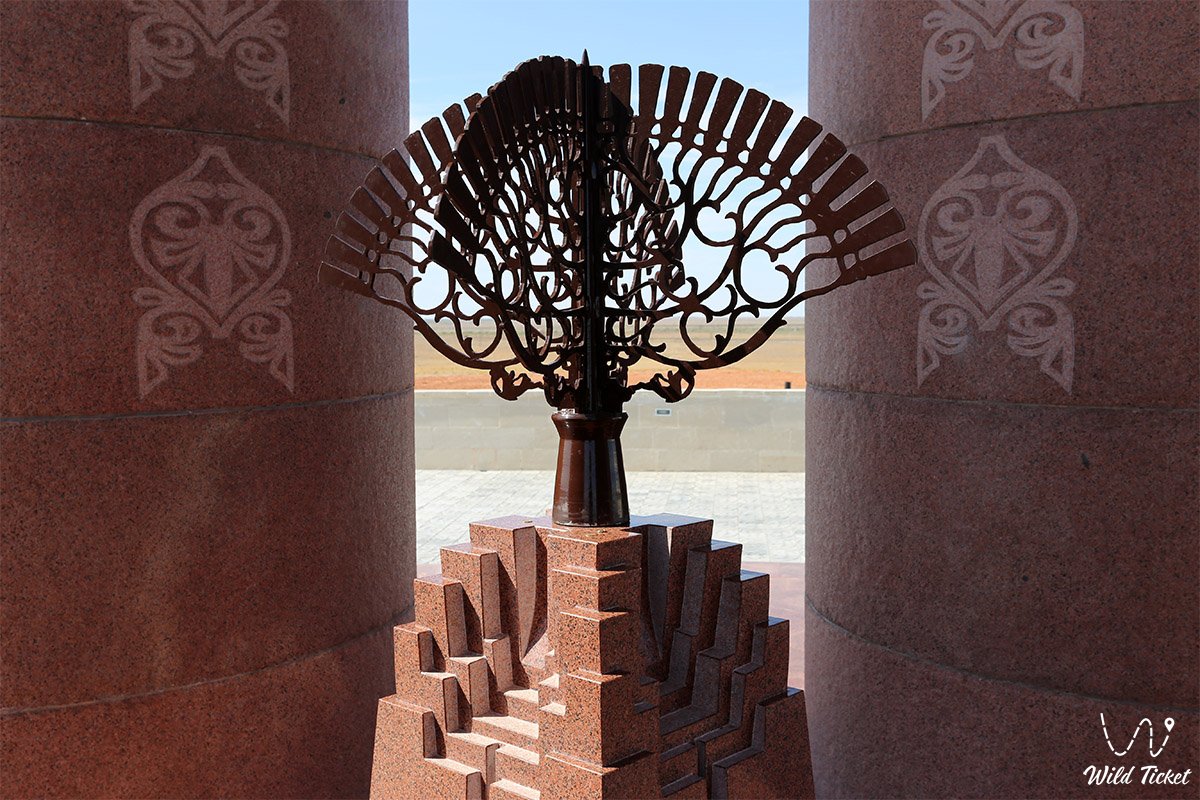
• Amphitheater and koshkar statue: An open arena for conducting Turkic festivals and holidays, as well as a sculpture of a mythical koshkar (a gryphon with the body of a ram and the head of an eagle), symbolizing the connection of sky with earth, luck, and protection from evil forces.
Architecture
The architectural solution of the complex is deeply symbolic and subordinated to the image of a traditional Kazakh stringed instrument – the kobyz, lying on a carpet made of 7 types of stones spread in the steppe. Four curved steles symbolize the cardinal directions, and their shapes expanding upwards form the resonator of the instrument. The inner part of the steles is decorated with a traditional "camel foot" pattern, tracing the path of the sacral wind. The use of durable types of stone ensures the longevity of the structure, which is harmoniously integrated into the harsh landscape of the Aral Sea region.
Legend
According to ancient legends, Korkyt Ata reflected from childhood on the transience of existence and decided to go in search of immortality, traveling to the four corners of the world on his magic female camel Jelmaya. Wherever he came, he saw graves being dug everywhere. Realizing that it is impossible to escape death, he saw a kobyz in a dream. Having cut down a jida tree, stretching the skin of a slaughtered female camel and horsehair for strings, he created a musical instrument. When Korkyt played the kobyz, time froze, and even the Syr Darya River slowed down its current. According to legend, the sounds of music attracted forty girls, but due to the difficult road, not all reached, and the last lame girl with a goat fell dead upon seeing the playing old man. It is believed that the music of the wind at the memorial is the eternal voice of the great thinker, addressing descendants.
Conclusion
The Korkyt Ata Memorial Complex is a sacred place where history, mythology, and the great musical heritage of the Great Steppe intertwine. Visiting this complex allows one not only to touch the origins of Turkic philosophy, but also to feel the special atmosphere of harmony between architecture, nature, and sound, leaving an indelible impression on every traveler.
Interesting sights nearby:
• Aral Sea;
• North Small Aral Sea;
• Baikonur Cosmodrome;
• Maral Ishan Mausoleum;
• Kalzhan-Akhun Madrasah Mosque;
• Chirik-Rabat Medieval City;
• Syr-Ana Monument;
• Barsakelmes Nature Reserve;
• Aral Geopark;
• Kazalinsk City.
Photogallery: