Heart of the space era and a legendary science city in the steppes of Kazakhstan -
Baikonur City represents a unique administrative-territorial formation that has no analogues in the world. It is the heart of the eponymous Baikonur Cosmodrome, from which the first ever manned spacecraft "Vostok-1" with Yuri Gagarin on board was launched on April 12, 1961.
Today, Baikonur is a closed city with a special status in the Kyzylorda region; to get here, it is necessary to issue passes and special permits to visit the cosmodrome and the city itself. The city is an important center of international cooperation in the field of space exploration. Specialists from all over the world, researchers of the history of cosmonautics, as well as tourists wishing to see with their own eyes the place where the path to the stars began flock here.
The life of the city is inextricably linked with the space launch schedule from the cosmodrome, which gives this place a unique rhythm and dynamics. On a special viewing platform, you can watch the launches of the Soyuz manned spacecraft, which delivers cosmonauts to the ISS (International Space Station), or the Progress unmanned cargo ship, which delivers special equipment and cargo to the ISS.
You can also visit the city and the cosmodrome itself without watching the rocket launch, which will cost you much cheaper.
Tours to Baikonur and additional information.
---------------------------------------------
How to get there and visit -
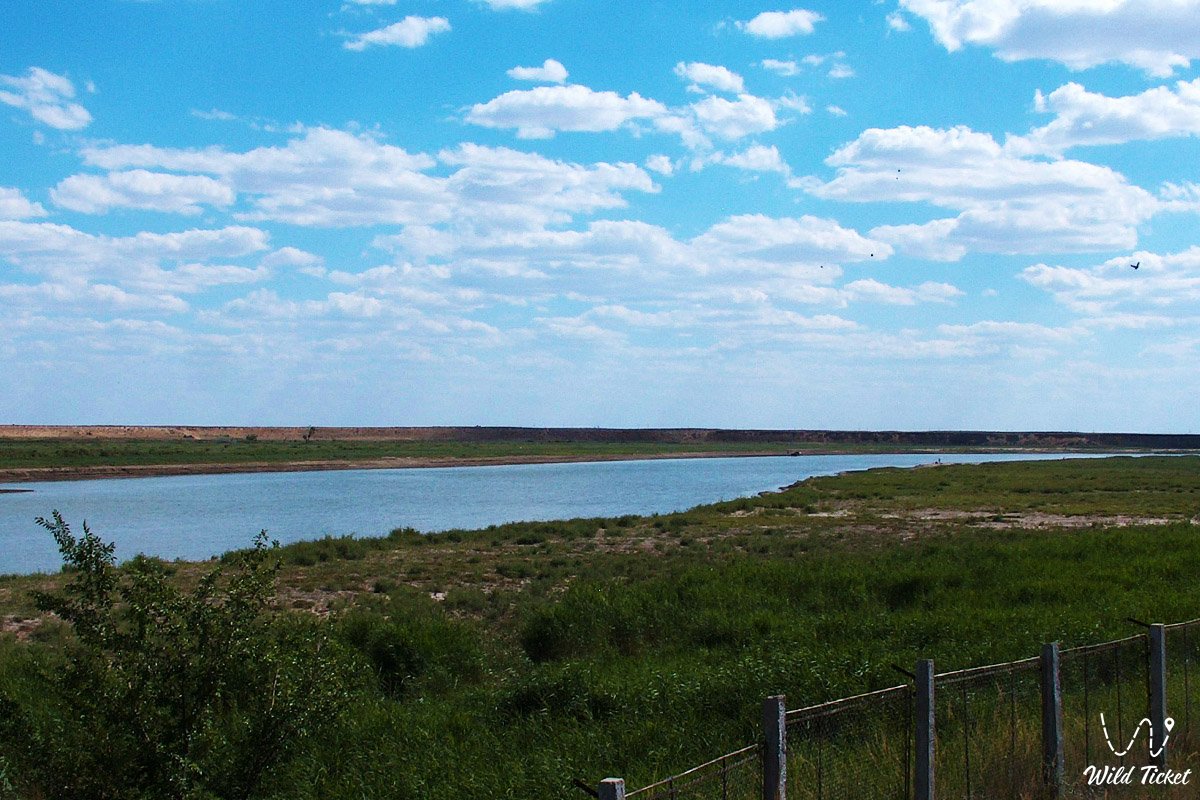
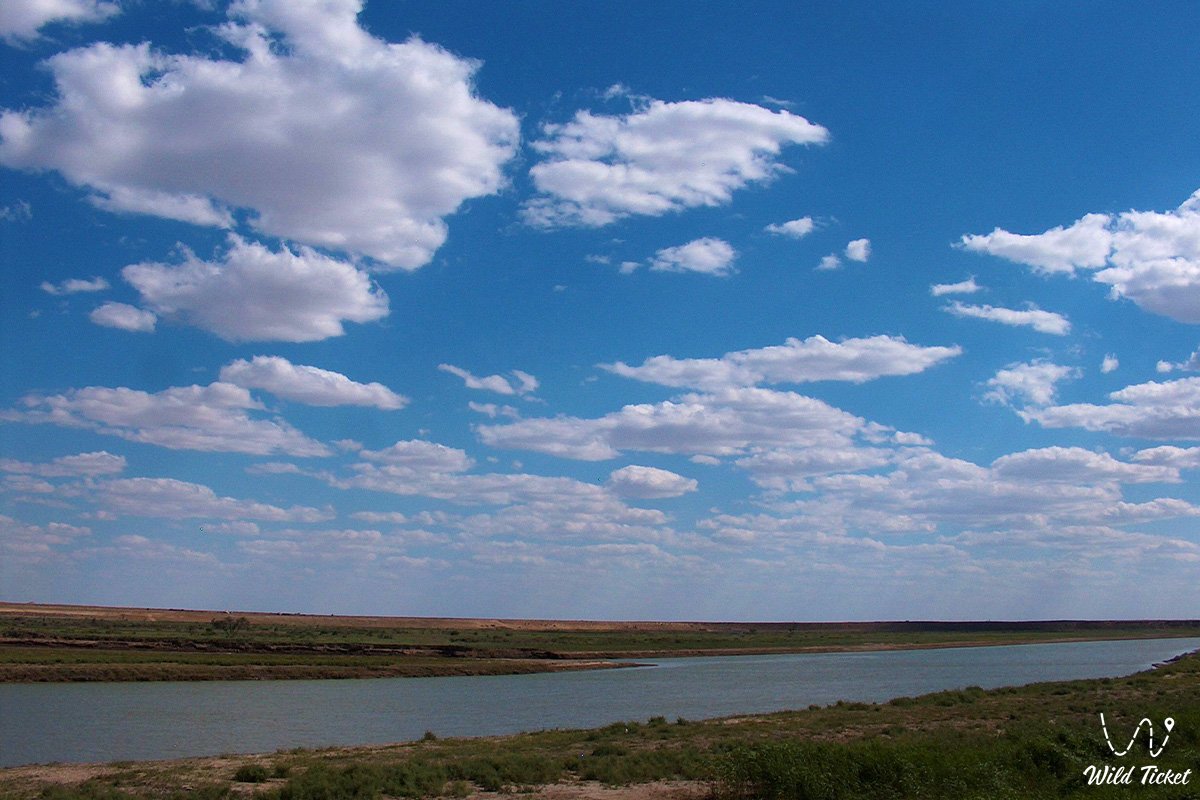
Baikonur City is located in the steppe zone on the right bank of the Syr Darya River, 240 kilometers from the city of Kyzylorda, Kyzylorda region, Republic of Kazakhstan.
GPS geographical coordinates: 45°37'18"N 63°18'34"E
Access to Baikonur City is strictly limited and regulated by a special pass regime. It is possible to get to the territory only by pre-arranged passes. The main transport hub is the Krayniy Airport, which accepts both charter and regular flights.
It is also possible to arrive at the "Tyuratam" railway station, located in immediate proximity to the city. When planning a visit, tourists need to contact official travel agencies accredited for conducting excursions to the territory of the cosmodrome and the city.
During a visit, it is important to remember to comply with safety rules and the pass regime. To inspect the sites of the cosmodrome, it is recommended to use the services of qualified guides who can tell the history of space exploration and ensure a visit to the most significant launch complexes.
---------------------------------------------
History
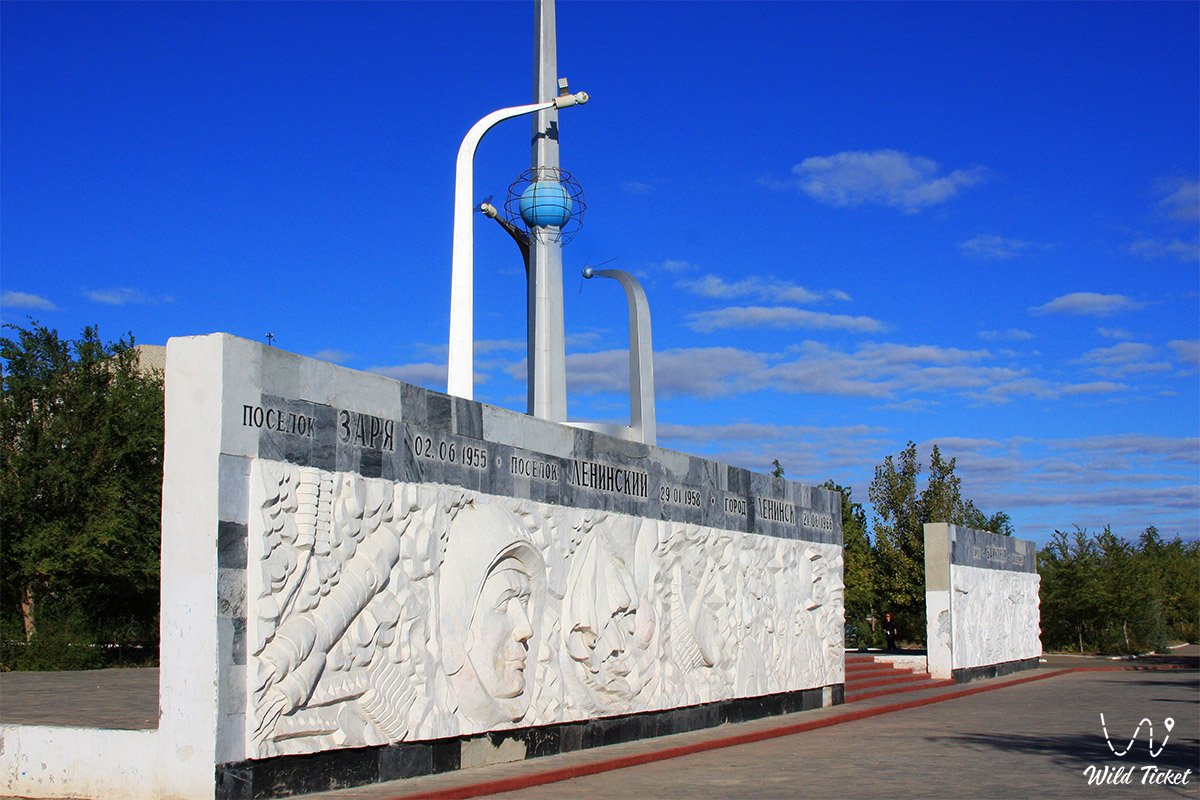
The history of Baikonur City began on February 12, 1955, when a decree was issued on the creation of a testing ground for rocket technology. The official date of birth is considered to be June 2, 1955. Initially, the site was called "Taiga," then "Zarya," and later it received the name Leninsk. Construction was led by military builders, who initially lived in tents and dugouts.
In the shortest possible time, buildings of design bureaus, residential houses, and launch pads grew in the middle of the steppe. Each stage of the city's development was associated with the names of Sergei Korolev, Valentin Glushko, and other great scientists whose ideas became the foundation of world cosmonautics.
The rapid growth of the city occurred in the 1980s in connection with the development of the "Energia-Buran" program. In that period, the population reached 140 thousand people, a large-scale infrastructure was created. After the collapse of the USSR, the city went through difficult times, but the signing of an agreement between Russia and Kazakhstan in 1994 allowed preserving the complex.
In 1995, the city was officially renamed Baikonur. Today, it is an active center of world cosmonautics, where new projects, such as "Baiterek," are being implemented.
Information
The territory of the city and the "Baikonur" complex is under a long-term lease to the Russian Federation until 2050. This creates a unique legal situation: the city is an administrative unit of Kazakhstan, but for citizens of Russia, Russian legislation applies on its territory, and the status of the city is equated to the status of a city of federal significance of the Russian Federation.
The population of Baikonur is about 76 thousand people. The city, located in the bend of the Syr Darya River, once arose on the site of a lifeless desert, and today is the administrative and economic center of the cosmodrome, combining Soviet architectural classics and modern infrastructure facilities.
Modern Baikonur represents a developed city with a population consisting mainly of space industry specialists. The city's life is closely connected with the space industry, where specialists from TsENKI, RKK "Energia," and the Khrunichev State Research and Production Space Center work.
The city's infrastructure includes residential microdistricts, educational institutions, modern medical centers, sports complexes, and park zones. Despite its closed status, the city actively develops public spaces, maintaining a high level of improvement and comfort for its residents.
An important part of the city's life is the Museum of the History of the Baikonur Cosmodrome, where rare exhibits, personal belongings of cosmonauts, and models of space technology are presented. Scientific conferences and educational events dedicated to space are regularly held here.
Detailed description of the venue
The urban structure of Baikonur has developed as a combination of administrative zones and residential microdistricts:
• Central Square – the heart of the city, where the administrative buildings of the cosmodrome, computing centers, and the "Tsentralnaya" hotel are located.
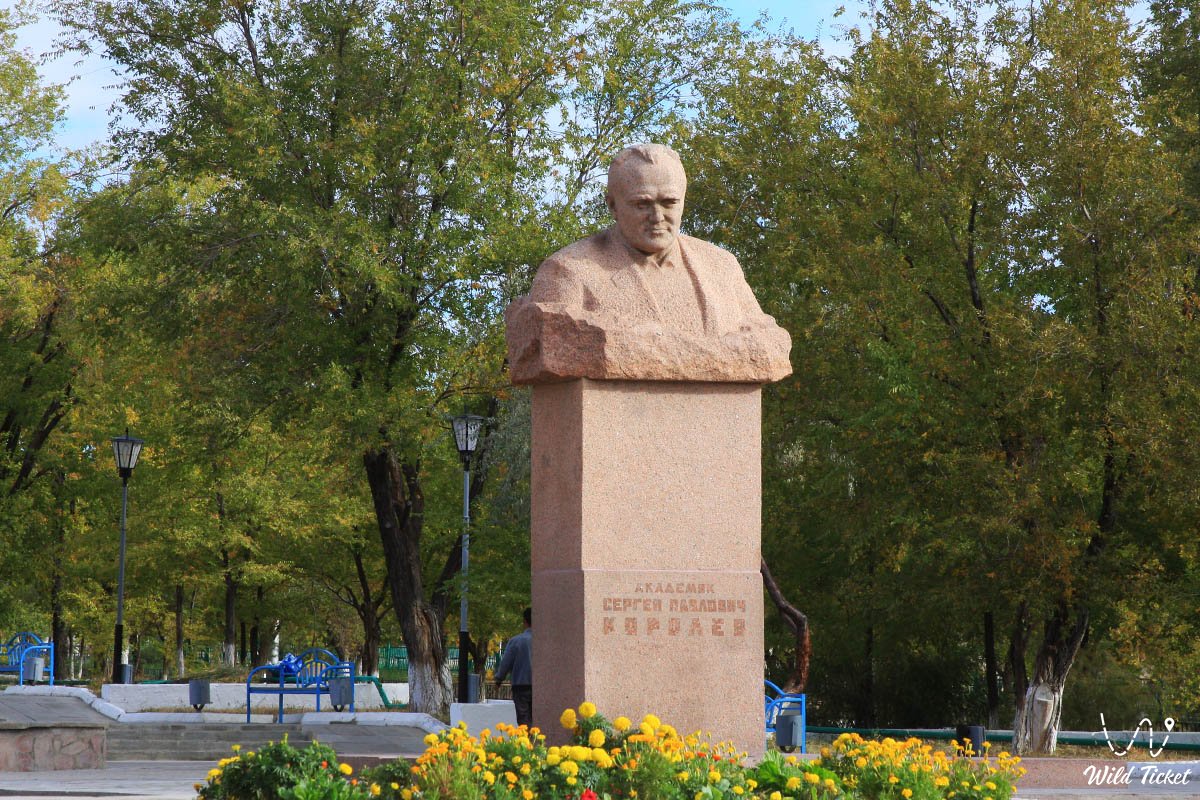
• S.P. Korolev Square – a recognizable place thanks to the monument made of pink marble.
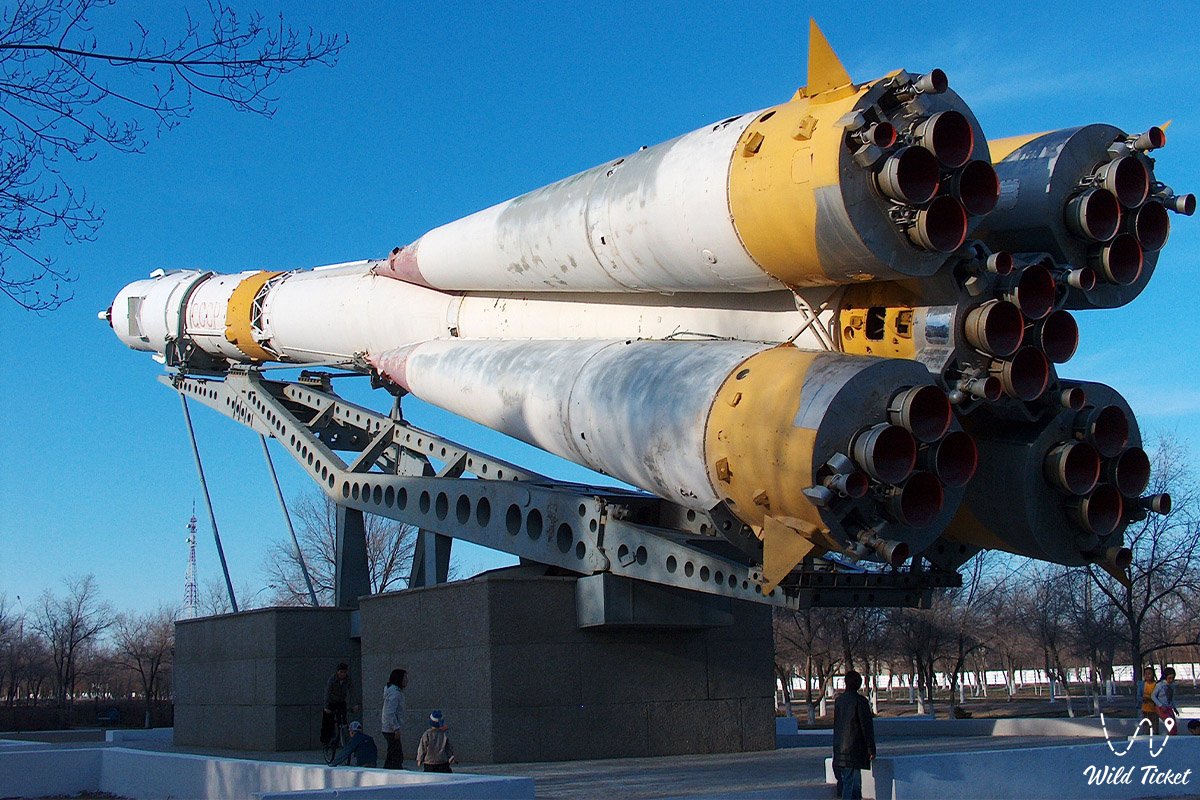
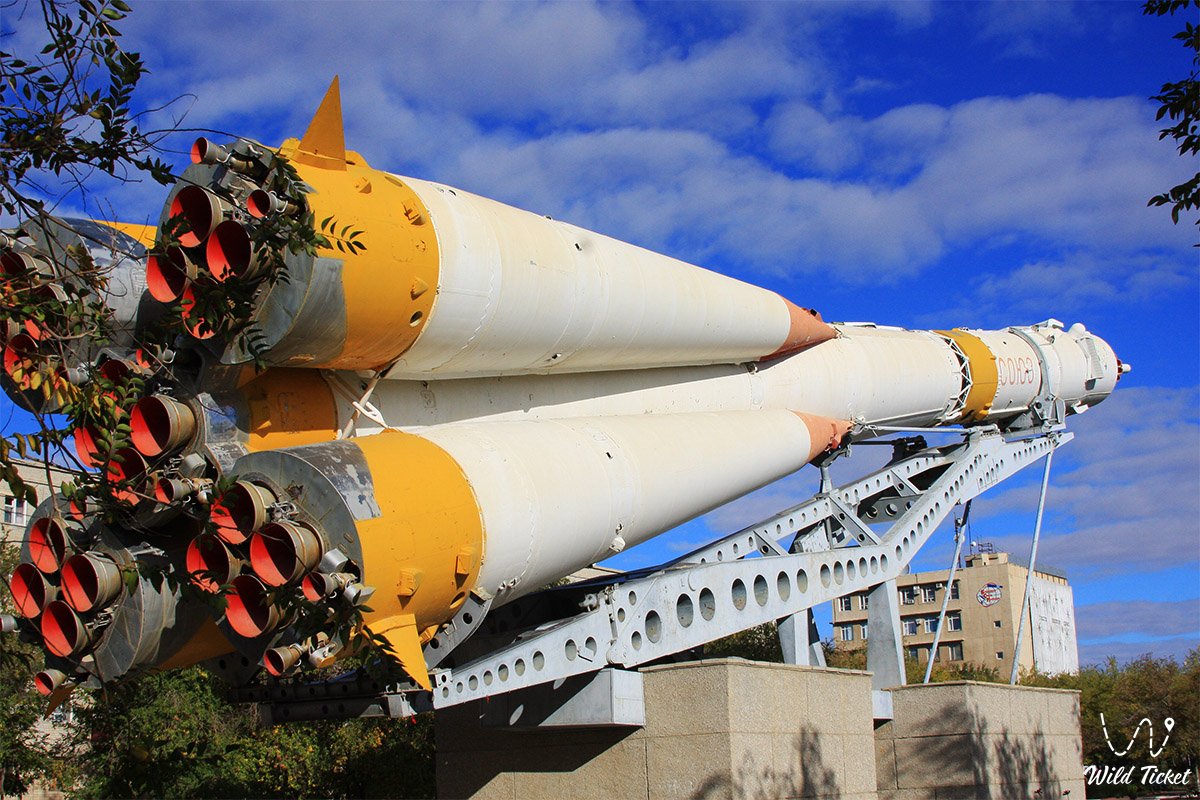
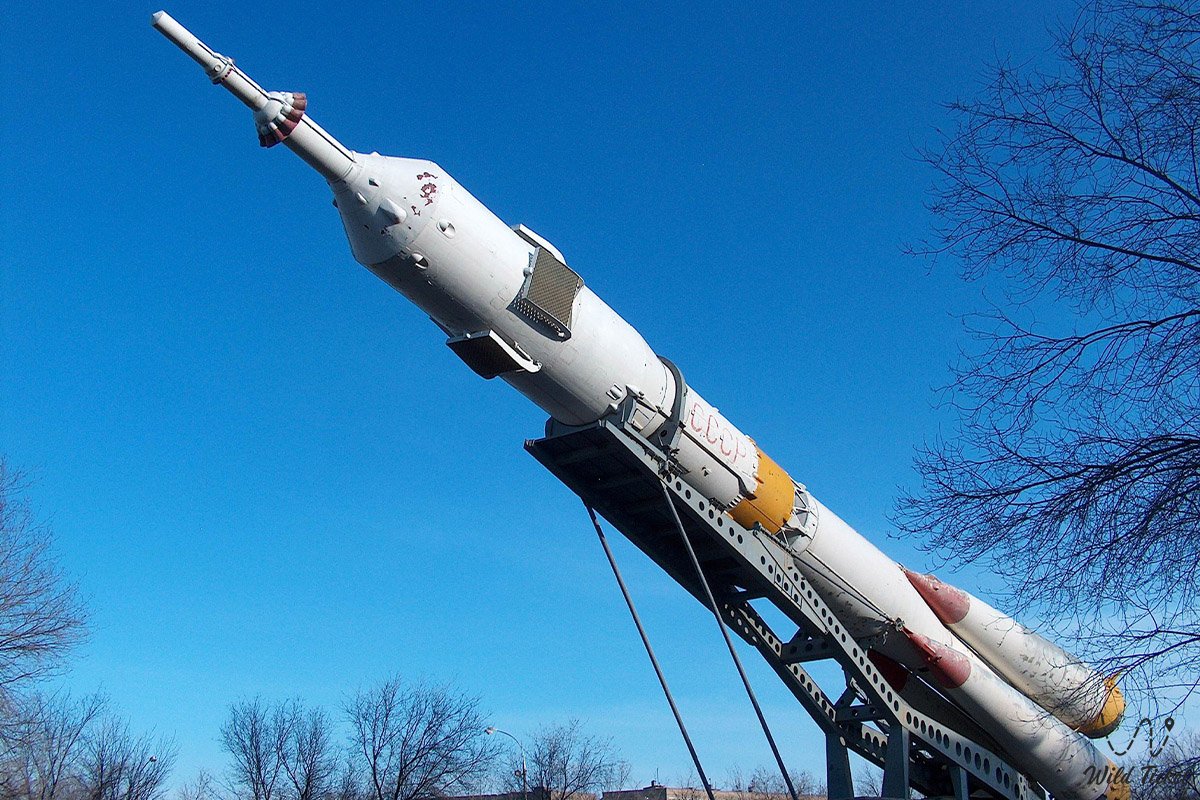
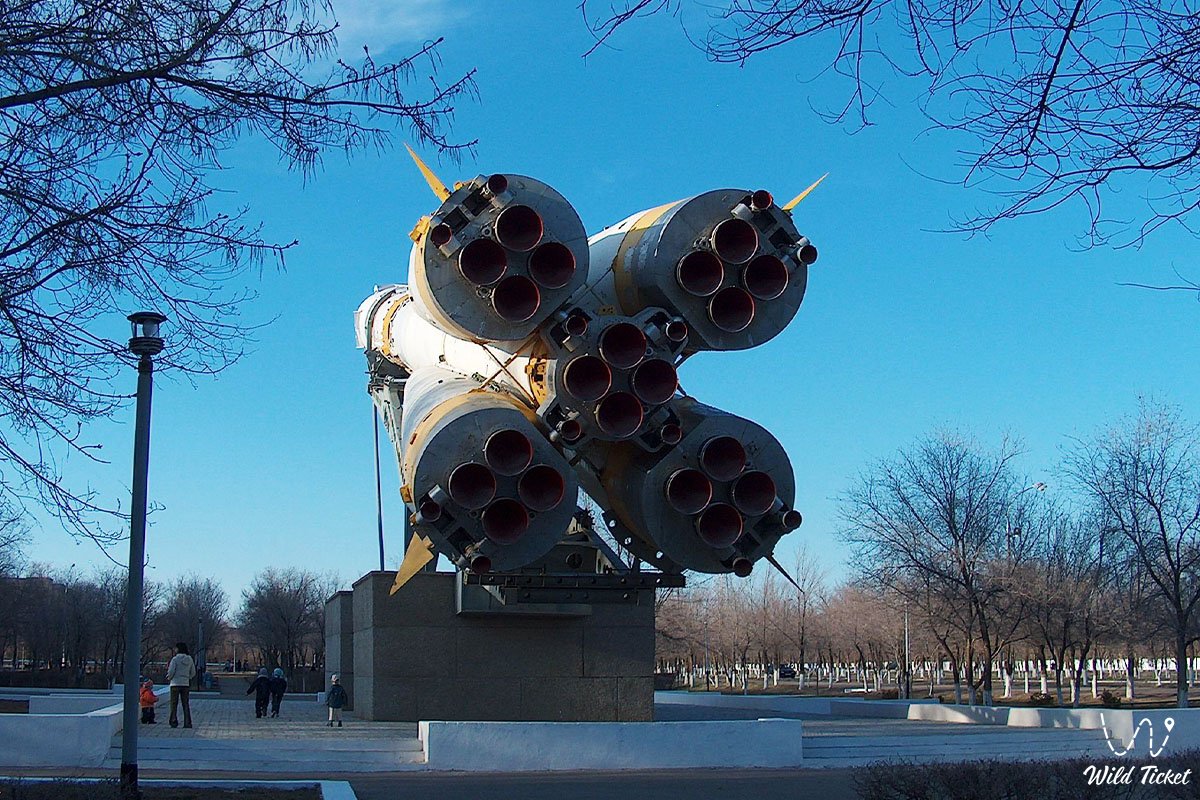
• Square of the 25th Anniversary of the Cosmodrome Exploration – a platform with a full-size model of the "Soyuz" rocket.
• Pedestrian "Arbat" – a favorite walking zone of Baikonur residents on Korolev Avenue, decorated in 1989 with fountains and stylized lanterns.
• Soldatskiy Park – a place of memory with the "Science and Space" monument and mass graves of those who gave their lives during dangerous rocket tests.
Sights
Baikonur is a monument city, where every sight is connected with space. You can go around the main locations in a couple of hours of a walking tour.
• Model of the "Soyuz" rocket: A grandiose monument that previously served for the training of specialists. Installed in 1981 as a symbol of the 20th anniversary of Gagarin's flight.
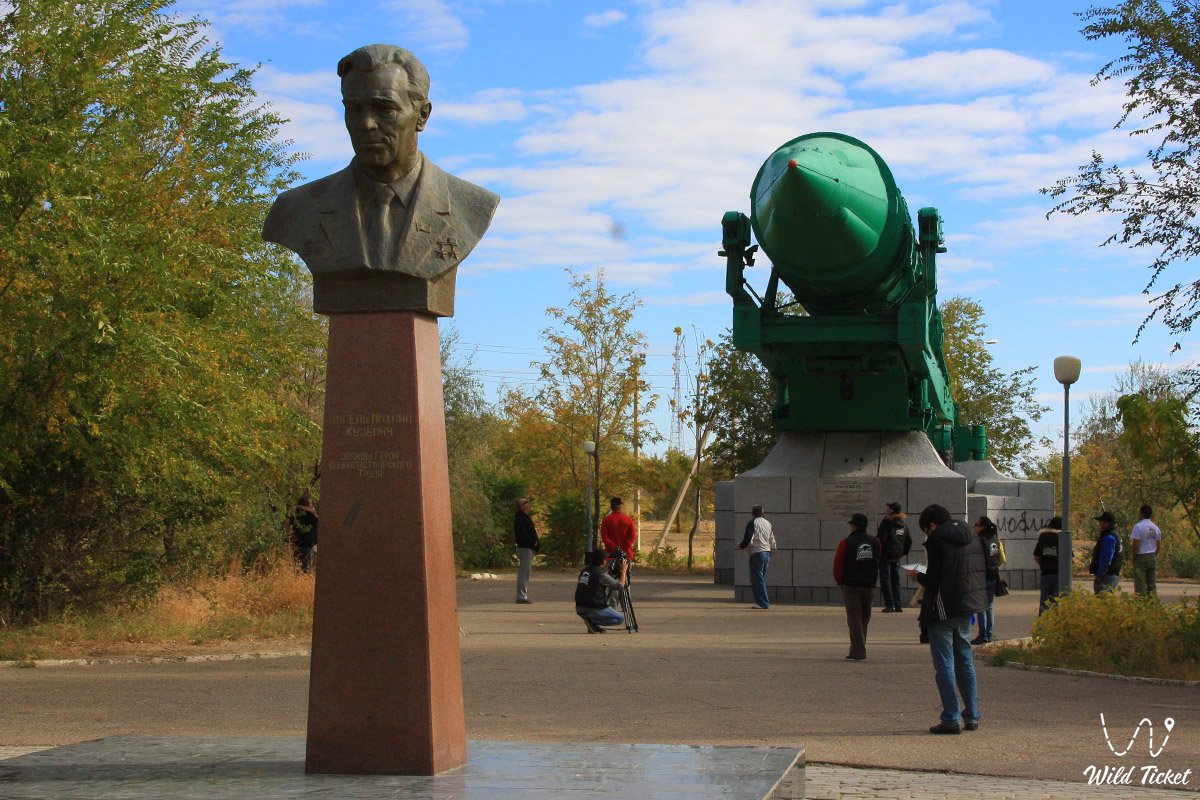
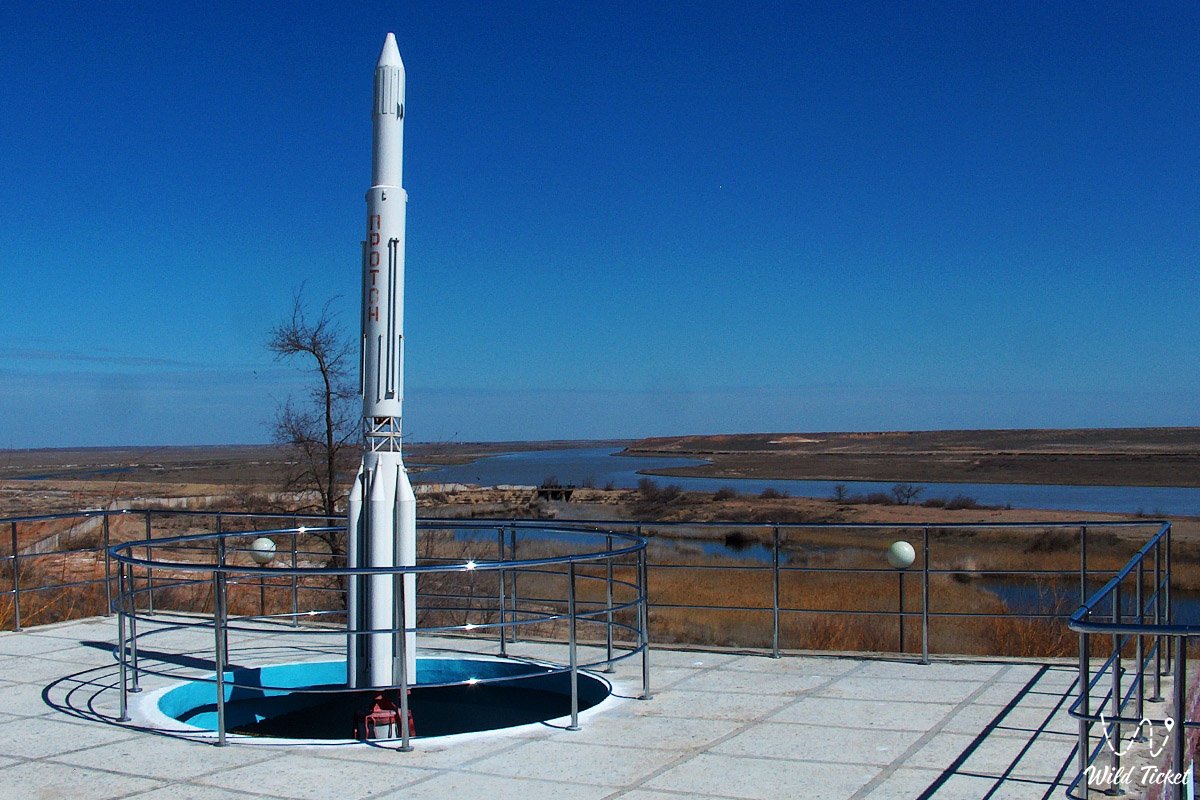
• Monument to M.K. Yangel and model of the 15A15 rocket (SS-17): A memorial in honor of the outstanding designer near the city CHPP.
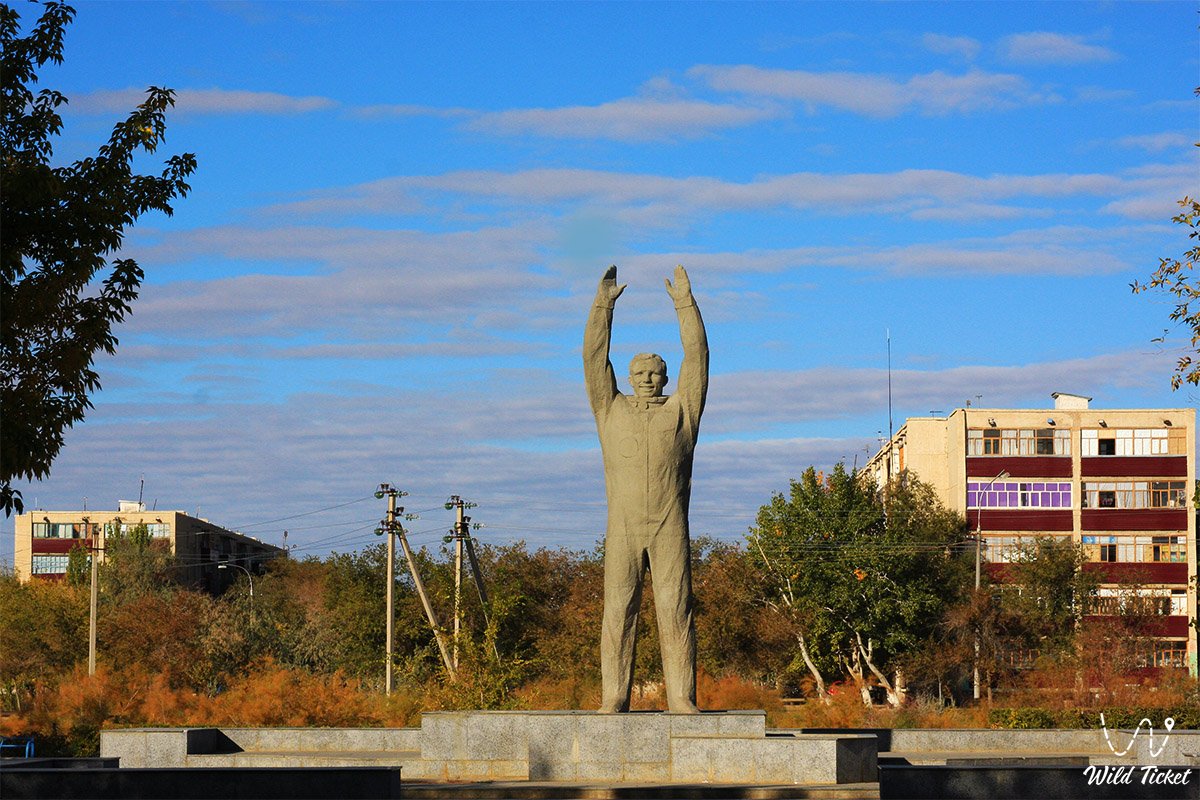
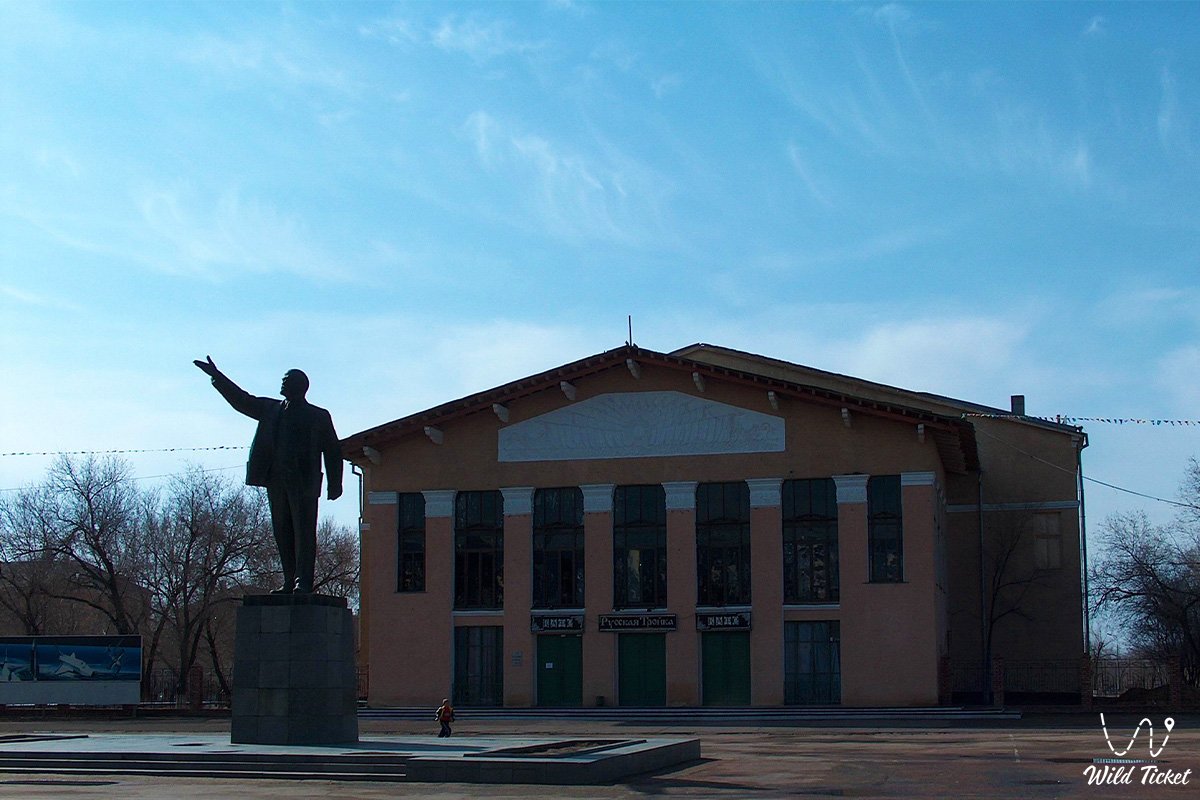
• Monument to Yuri Gagarin: A symbolic figure of the first cosmonaut greeting the sky – a mandatory point for a photo of any guest of the city.
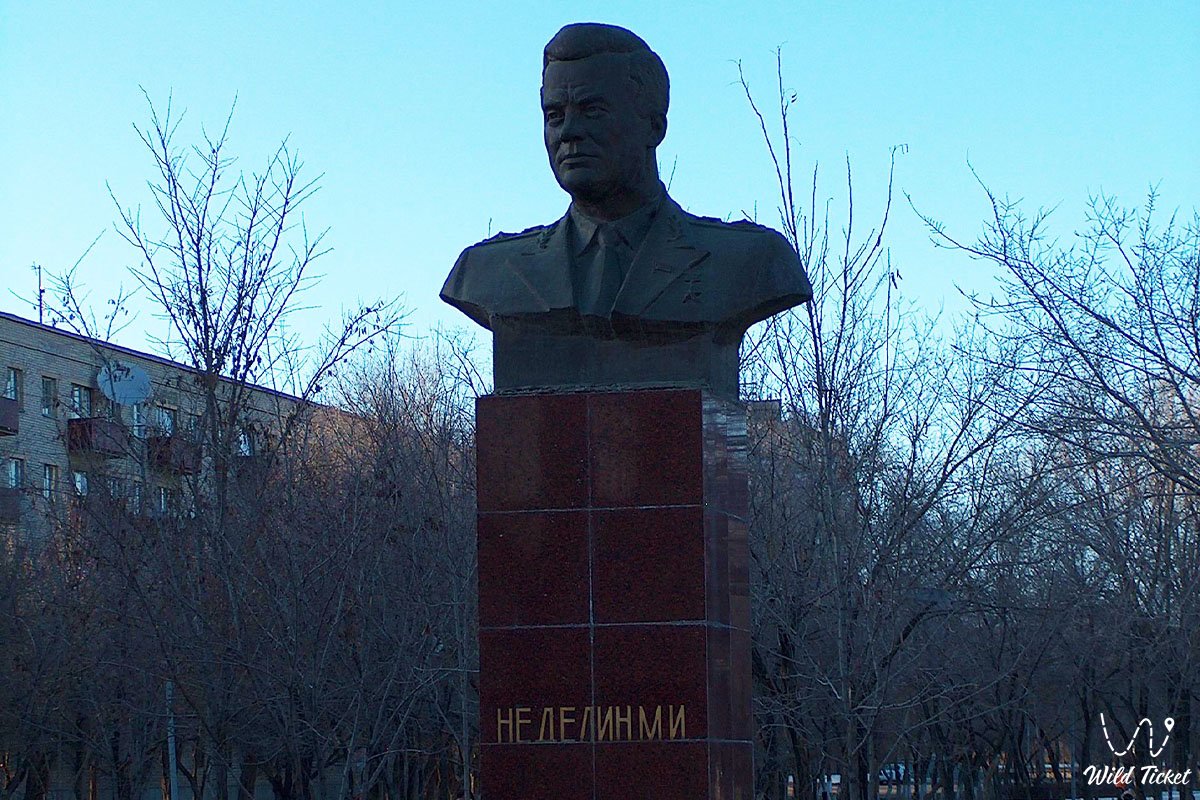
• Monument to the fallen testers – a mournful monument in memory of the victims of the "Nedelin catastrophe" of 1960 and the accident of 1963.
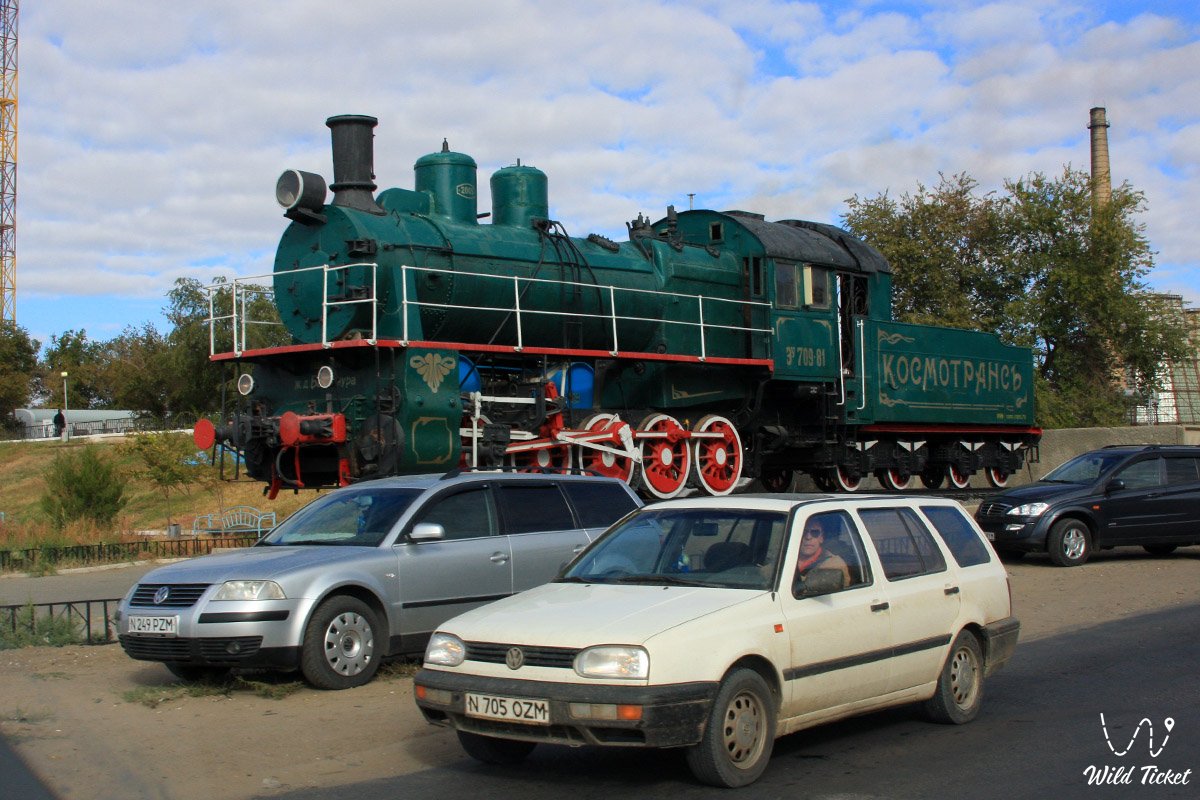
• Historical equipment: next to the Tyuratam station, an old locomotive of the "E" series is installed – the first train that connected the city with the cosmodrome. Also in the city, you can find An-12 and Li-2 aircraft, as well as the 15A15 strategic rocket.
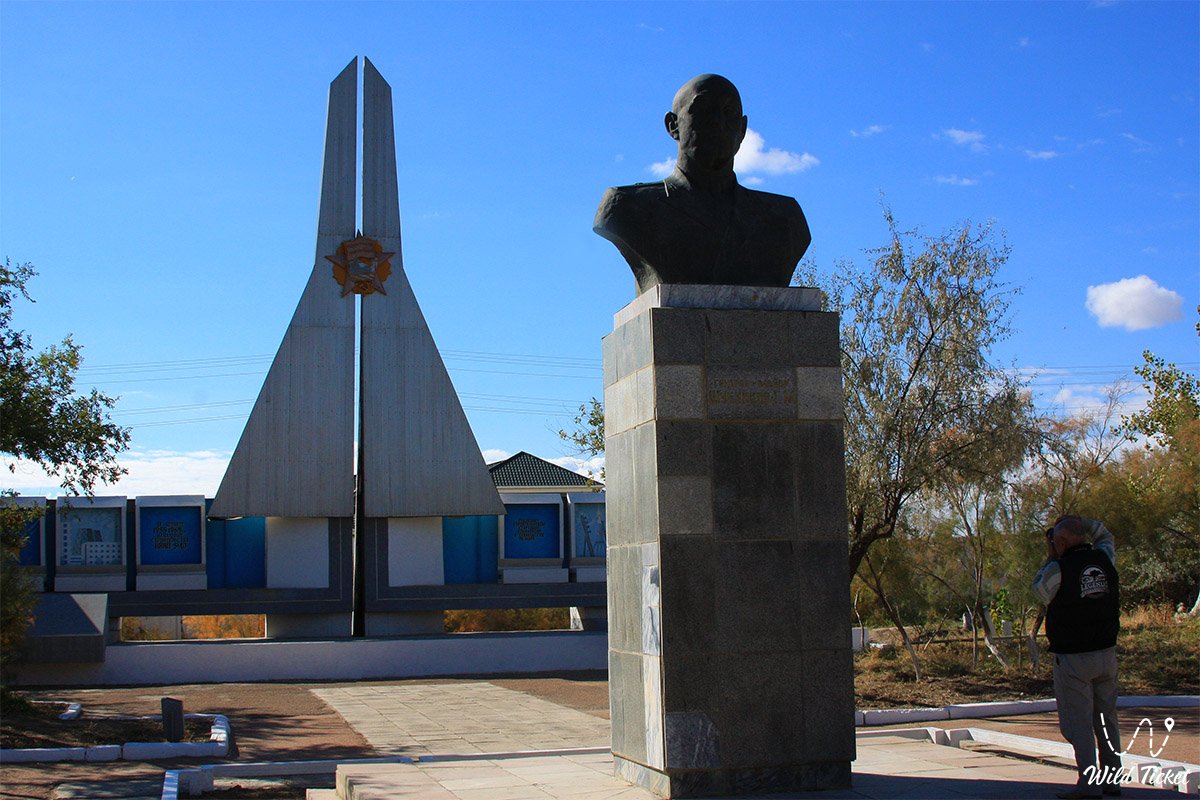
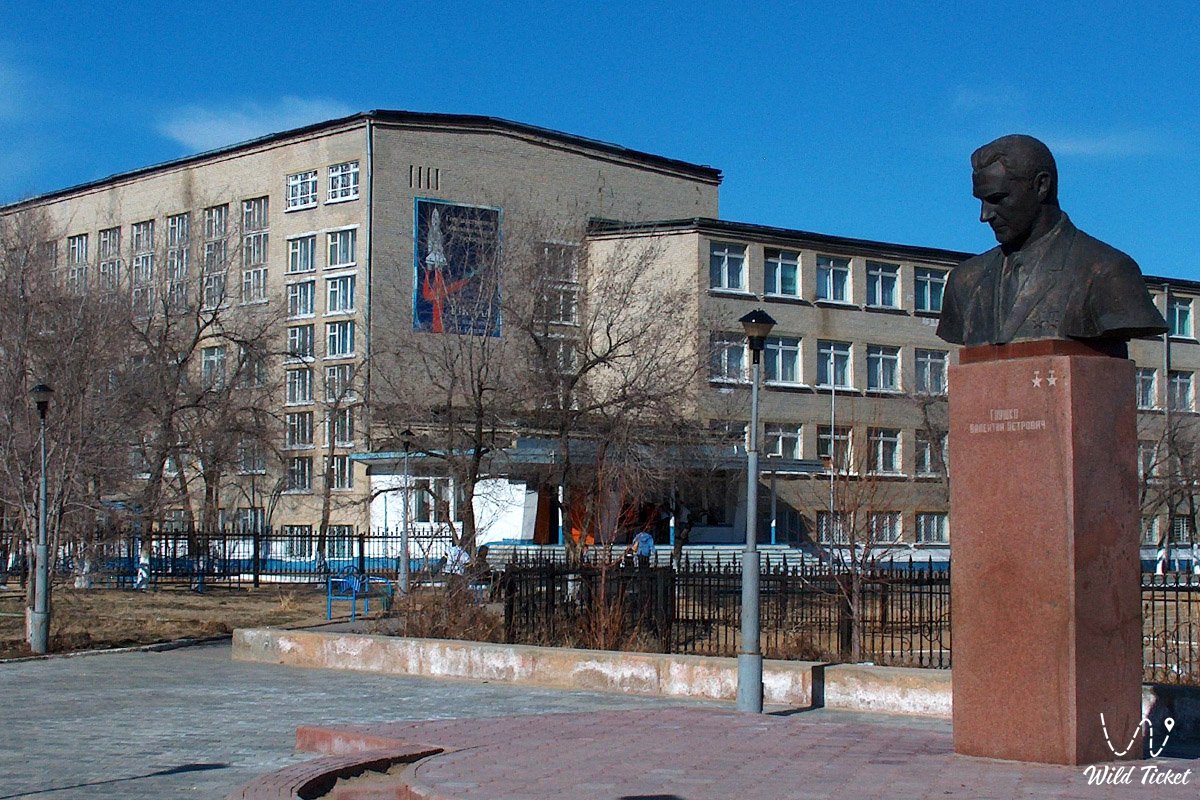
• Busts of pioneers: The city is literally strewn with monuments to those who built the cosmodrome – Korolev, Glushko, Barmin, Nedelin, and other titans of science.
Architecture
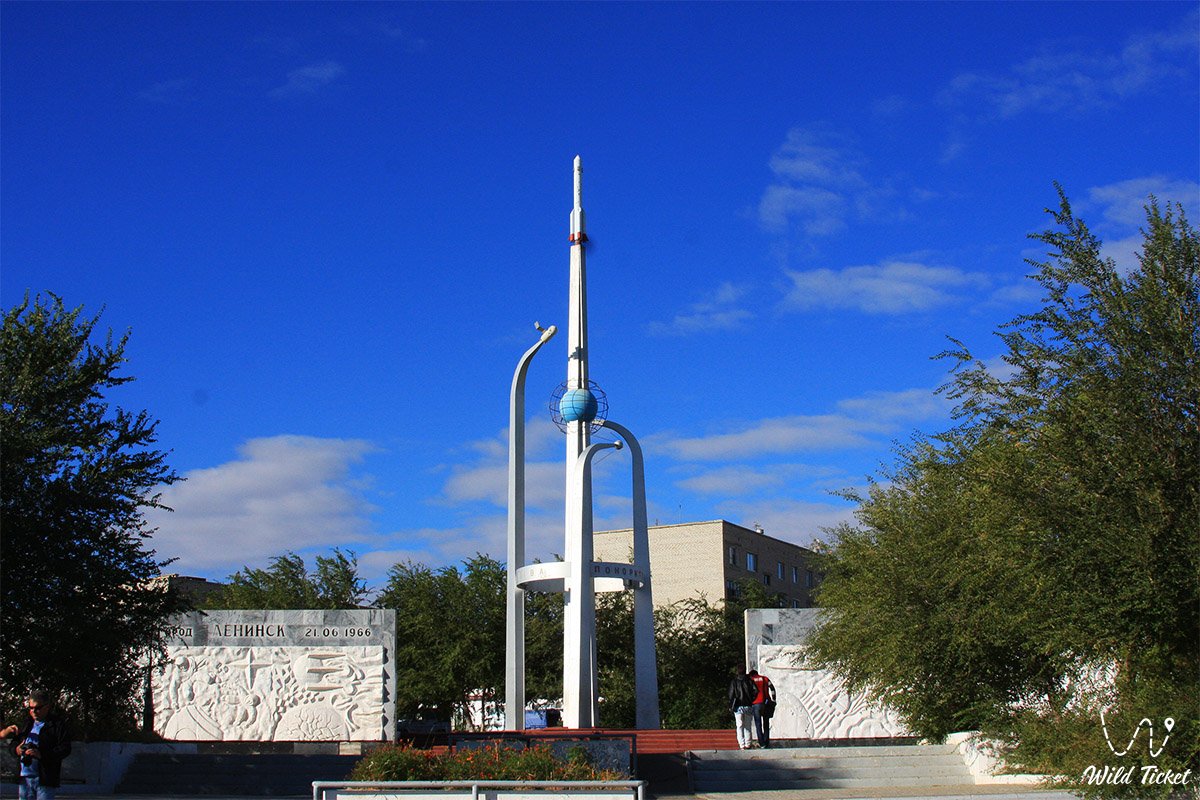
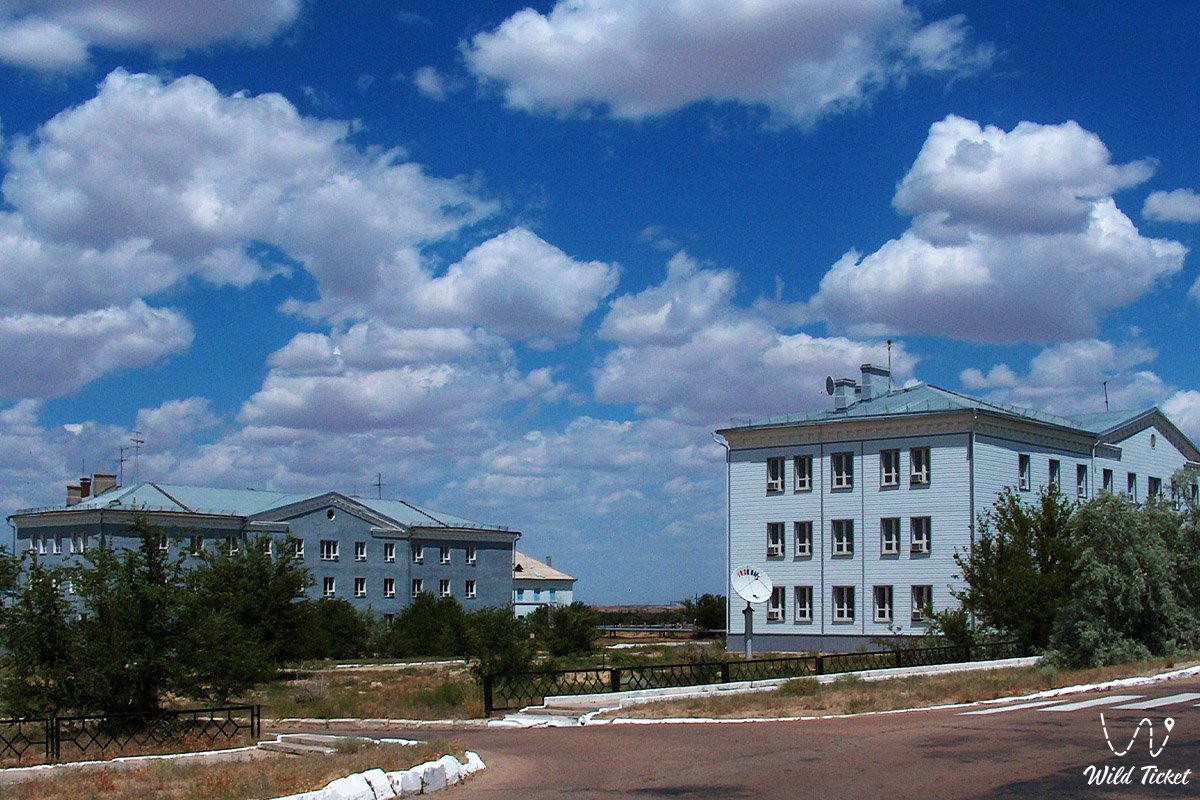
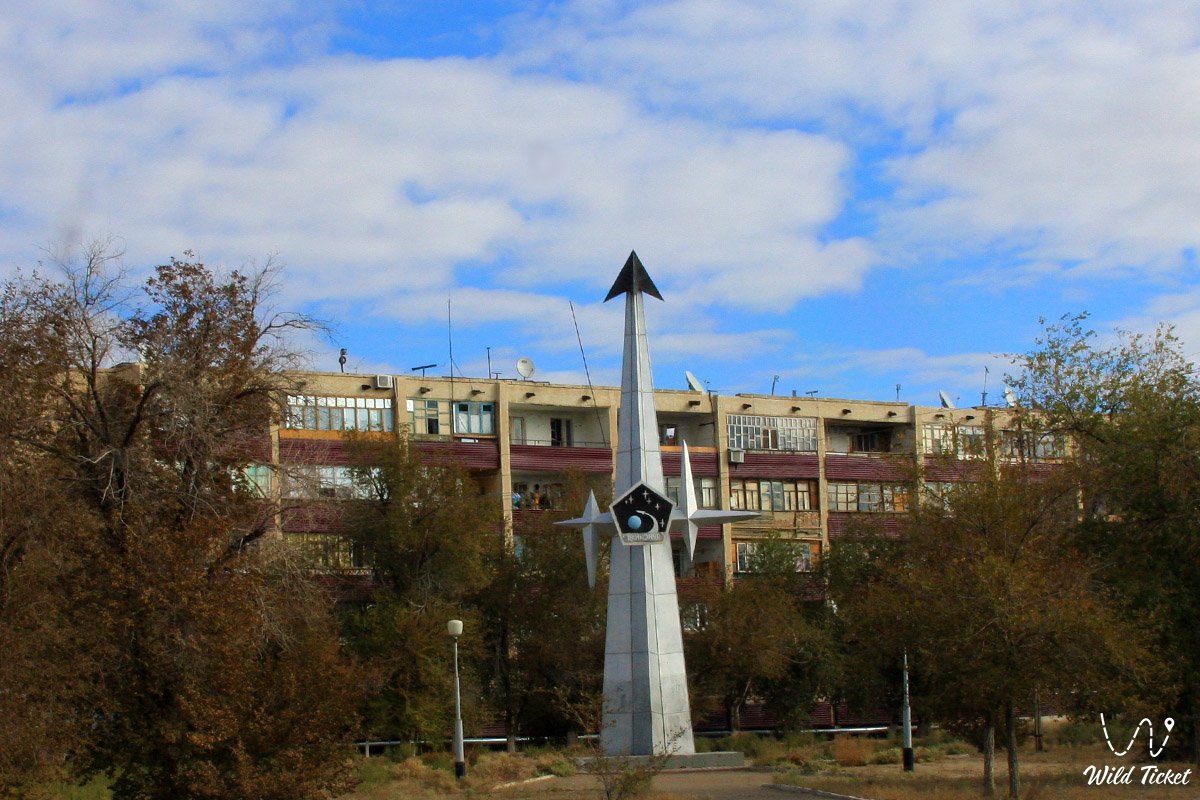
The architectural style of the city is a chronology of eras. The southern part of the city, the "wooden town," preserves the memory of the first builders of the 1950s. In the central quarters, buildings with high ceilings, characteristic of Stalinist architecture, have been preserved. The "Damanskiy" quarters and later microdistricts of the 1980s represent a typical panel development adapted to the needs of the growing population of the "Energia-Buran". Baikonur stands out for its abundance of monumental art – more than 35 monuments are harmoniously integrated into the urban environment.
Legend
Legends are told about Baikonur as a place where man challenged the elements. Local residents often tell about how before each responsible launch, the sky over the steppe seems to push the clouds apart.
The monuments installed at the entrance are called guardians here: it is believed that they see off the testers into the unknown and meet them after triumphant victories. This is a city where space is felt literally in the air, and any failure is perceived as a lesson, and each success – as a victory for all mankind.
Conclusion
Baikonur City is not just a point on the map, but a major symbol of progress and mankind's desire to know the unknown. A visit to Baikonur allows not only touching the legendary pages of the history of cosmonautics, but also realizing the significance of creative labor aimed at the benefit of future generations.
The city went from a tent city to the largest cosmodrome on the planet. This legend city remains an essential center of science and international cooperation, reminding us that dreams of conquering the Universe are achievable thanks to perseverance, knowledge, and faith in success.
Interesting sights nearby:
• Aral Sea;
• Small Aral Sea (Northern);
• Kazalinsk City (Kazaly);
• Ayteke Bi village;
• Lake Kamystybas (Kambash);
• Krayniy Airport.
Photogallery: