Karabatan Industrial and Logistics Hub
Strategic deep hydrocarbon processing center and polymer giants –
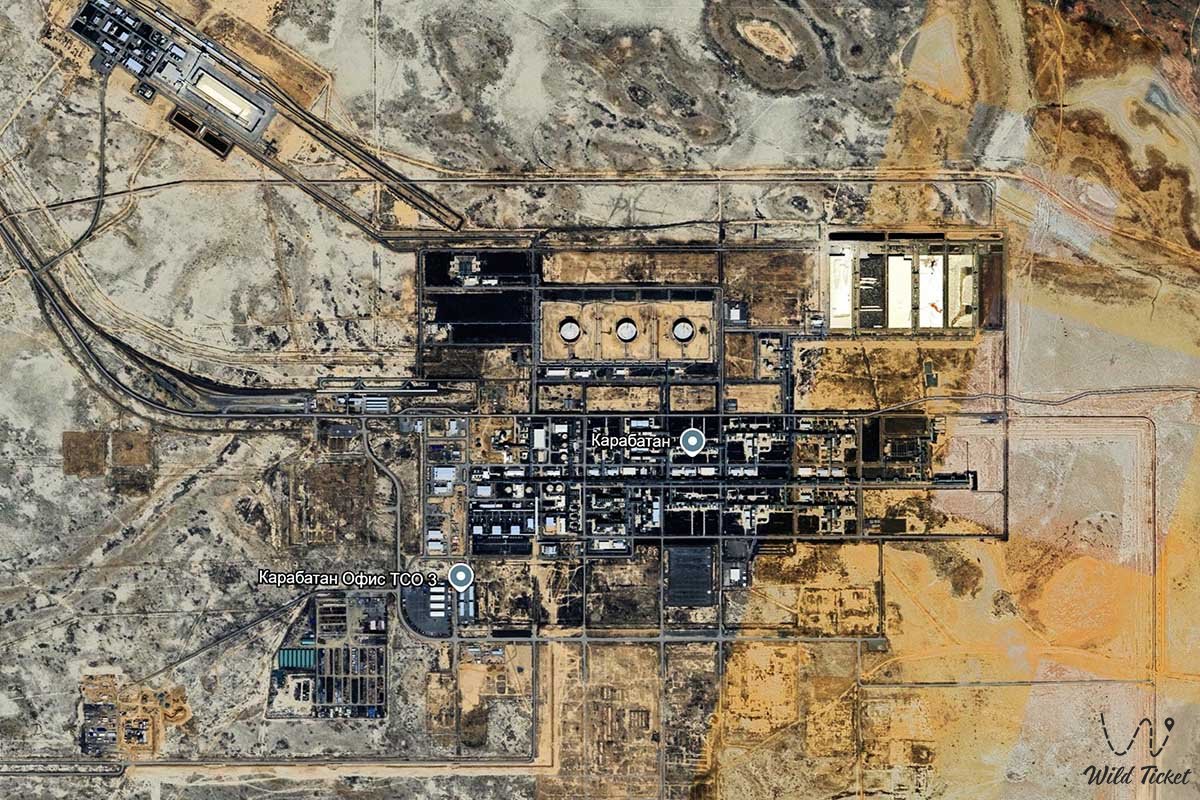
The Karabatan Industrial and Logistics Hub (including the historical West Eskene site), situated approximately 30–45 kilometers northeast of the city of Atyrau, represents one of the pivotal and technologically intricate industrial centers of the Republic of Kazakhstan.
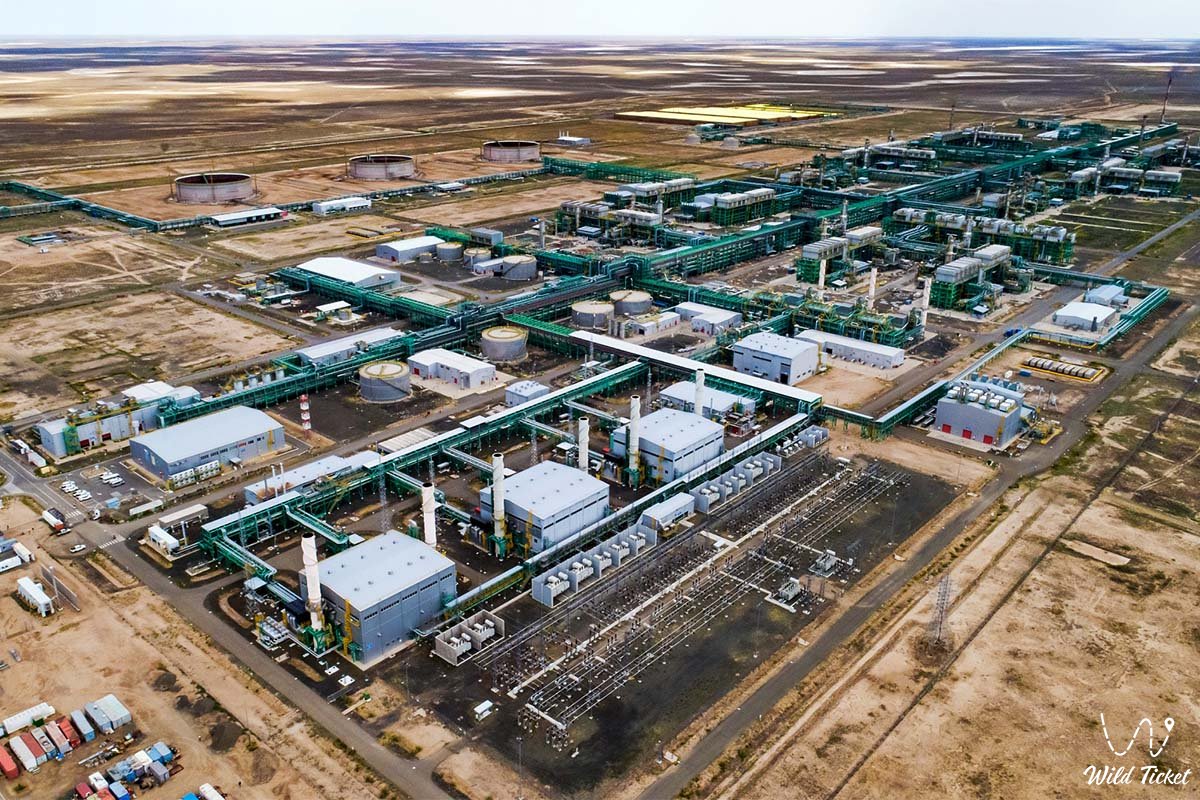
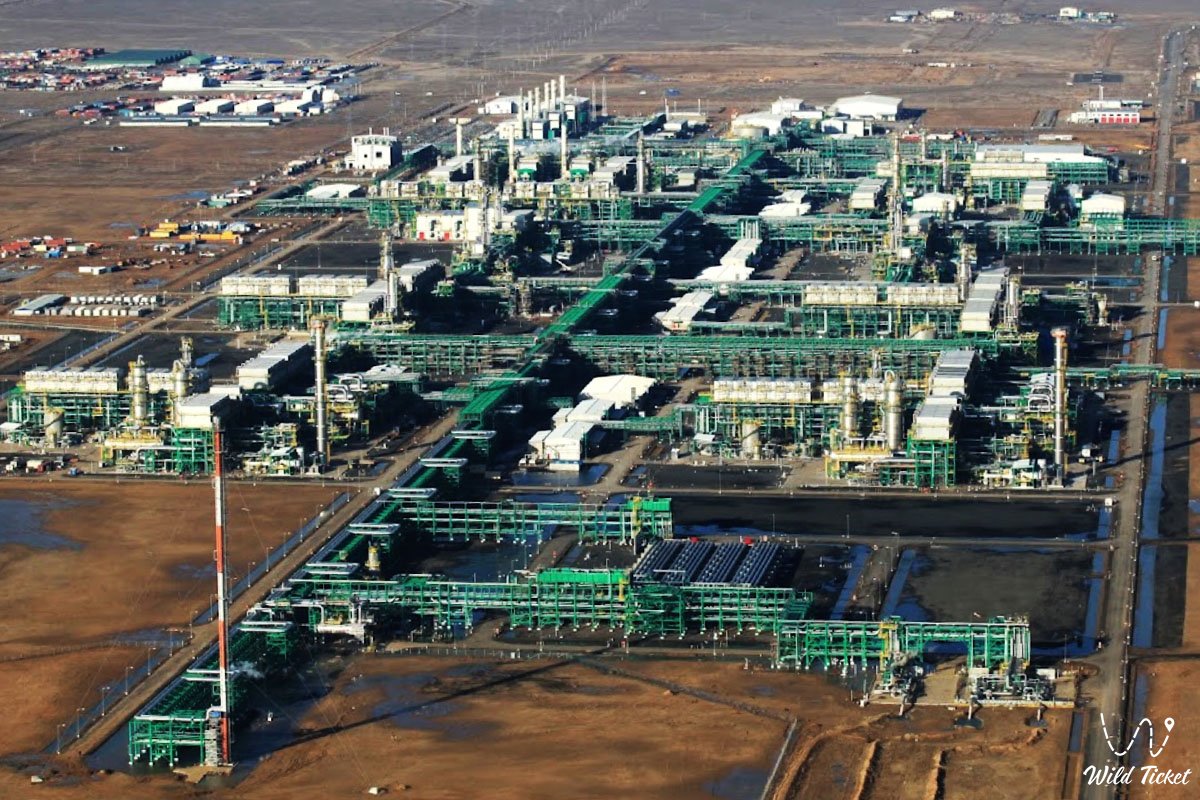
This large-scale manufacturing domain has become the operational base for the development of hydrocarbon reserves across Western Kazakhstan, combining facilities of major energy developments, modern gas processing units, the Bolashak Integrated Oil and Gas Treatment Facility (OPF), and the First Integrated Gas Chemical Complex. For dozens of kilometers around stretch open steppe expanses where high-tech value-added refining infrastructure continues to evolve.
In the transit and logistical layout of the Atyrau region, Karabatan acts as a distribution and freight crossroads. Key highways, dedicated rail spurs, and pipeline utility corridors radiate from the complex, directly connecting operational plants with the provincial capital, Caspian Sea ports, and international trade routes. These primary logistic channels ensure uninterrupted transport of heavy machinery, structural modules, and feedstock sustaining the daily work of thousands of specialists.
The geological and industrial framework of the hub is linked to the development of western Kazakhstan's deep petroleum reserves. Raw crude and associated gas extracted from the offshore supergiant Kashagan field in the Northern Caspian are transported via subsea and underground trunklines directly to the onshore Bolashak facility for separation, hydrogen sulfide removal, and crude stabilization. Concurrently, the onshore supergiant Tengiz field supplies purified propane feedstock for petrochemical polymer manufacturing.
Back in 2002, the Agip-led consortium announced the start of industrial facilities in the Karabatan (West Eskene) area, laying the groundwork for this petrochemical cluster. The defining technological asset of the park is the advanced Kazakhstan Petrochemical Industries (KPI) integrated gas-chemical complex producing polypropylene, supplied with purified propane feedstock through a dedicated 200-kilometer pipeline originating at Tengiz.
Today, Karabatan is recognized as an industrial pillar of Kazakhstan. Alongside offshore Kashagan in the Northern Caspian, onshore Tengiz, and the neighboring Buzachi fields of Karazhanbas and Kalamkas, Karabatan forms the manufacturing and refining core of western Kazakhstan.
--------------------------------------------
Geography, logistics, and transit corridors –
The Karabatan industrial hub is situated within the Makat district of the Atyrau region, 30–45 kilometers northeast of the city of Atyrau, set within the semi-desert and arid steppe terrain of the Caspian Depression.
GPS geographical coordinates of the Karabatan industrial center:
47°15'02"N 52°28'24"E
Regulated zone and access protocols: Karabatan is a strategic industrial complex subject to rigorous occupational safety, environmental protection, and facility security regulations. Entry into processing plants, ongoing construction zones, and shift accommodation villages is strictly controlled and permitted only for accredited personnel, contracted specialists, and official delegations carrying authorized entry permits. Public tourism and unauthorized vehicle access are restricted.
Logistical links with Atyrau and the Caspian: the hub is integrated into regional transit networks:
– Highways and industrial rail spurs – a network of access roads and freight sidings linking the plants to trunk transportation corridors across Western Kazakhstan.
– Electrical power infrastructure – the high-capacity 500 kV Karabatan substation and the Ulke–Karabatan power transmission line, engineered to secure long-term electrical reliability for the industrial district.
Shift camp facilities: modern accommodation settlements operate across the complex, featuring residential dormitories, medical centers, canteens, utility networks, and maintenance yards hosting contracting firms such as Kazakh Construction Group LLP.
Climatic conditions: the region experiences an extreme continental, arid climate characterized by hot, dry summers (with temperatures regularly climbing past +40 °C) and windy winters with frequent blizzards and sub-zero cold.
--------------------------------------------
History
The establishment of the Karabatan industrial hub marks Kazakhstan's strategic transition from basic raw resource export toward deep downstream petrochemical synthesis.
Initial development of the site began in the early 2000s to build onshore reception and processing infrastructure for the Kashagan offshore development. In 2002, the consortium headed by Agip announced the launch of facilities in the Karabatan area (West Eskene), located 30–40 kilometers from Atyrau. The Bolashak onshore plant was subsequently constructed to process Caspian crude.
A major milestone arrived with the financing and construction of the First Integrated Gas Chemical Complex (KPI). The total investment in this capital project reached $2,029,800,000. Financing was assembled through targeted capital allocations: a $1.38 billion loan facility extended by the Export-Import Bank of China to the Development Bank of Kazakhstan, $506.5 million contributed by KPI consortium participants, a $93.3 million loan from the Government of Kazakhstan, and $50 million provided by the Samruk-Kazyna Sovereign Wealth Fund. Under the financing arrangement, Sinopec Engineering served as the engineering, procurement, and construction (EPC) contractor.
Industrial capacity and petrochemical complex
Karabatan stands apart from upstream oil extraction fields as a purpose-built hub for chemical conversion and industrial synthesis.
Integrated Gas Chemical Complex (KPI): designed with an annual manufacturing capacity of up to 500,000 metric tons of polypropylene. The facility supplies high-grade polymer grades to satisfy domestic industrial requirements and export markets across Eurasia.
Feedstock supply: the complex utilizes high-purity propane derived from the Tengiz oil and gas field. A dedicated 200-kilometer product trunkline moves this feedstock steadily to the plant gates.
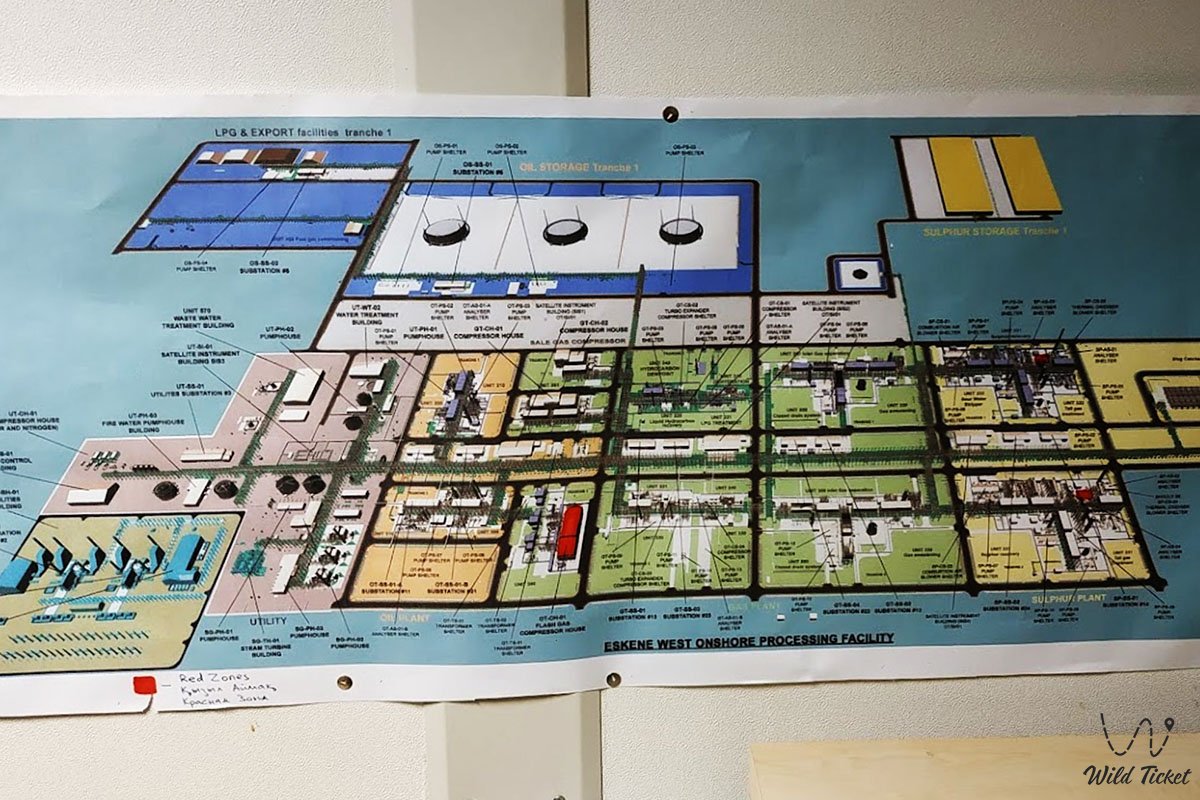
Bolashak Onshore Processing Facility (NCOC): the primary mainland processing center for offshore Kashagan crude, handling oil-gas separation, deep sweetening to remove hydrogen sulfide, crude stabilization, and sulfur production.
Industrial applications: polypropylene grades manufactured at Karabatan serve as raw material for automotive manufacturing, medical consumables, electrical equipment, pressure piping, packaging films, and consumer goods.
Detailed description of the venue
The industrial and infrastructure complex at Karabatan includes the following key technological facilities:
• Polypropylene Production Plant (KPI) – a modern gas chemical manufacturing complex with an annual nameplate capacity of 500,000 tons of polypropylene.
• Bolashak Integrated Oil and Gas Treatment Facility – the primary onshore processing asset operated by NCOC, receiving and sweetening sour hydrocarbon streams from the offshore Kashagan field.
• Construction site for the new Gas Processing Plant (GPP) – construction sectors and logistics yards supporting technical contractors, including Kazakh Construction Group LLP.
• Karabatan 500 kV Electrical Substation – a high-voltage power transmission hub delivering electricity across continuous production lines.
• Worker accommodation villages and freight yards – residential, catering, and supply centers supporting thousands of operating engineers and construction workers.
• Pipeline utility corridors – an interconnected grid of utility conduits, rail links, and the 200-kilometer propane pipeline connecting Tengiz to the chemical reactors.
Ecology, nature, and industrial camp life
The natural environment of the Caspian Depression surrounding Karabatan is defined by arid steppe plains dominated by wormwood and saltwort associations. Operating within an industrial zone requires environmental monitoring, preservation of groundwater layers, and reduction of atmospheric emissions. Industrial processes are designed around closed-loop resource management.
Alongside the plants stand dedicated shift accommodation villages providing living quarters, dining halls, medical clinics, and recreational areas. Operating continuous process units in this remote climate calls for strict workplace safety standards and coordinated technical oversight.
Legend
A regional steppe legend concerning the Flaming Spring and the Silver Thread is recounted in connection with the open plains of Karabatan and the emergence of domestic petrochemistry.
Lore relates that in ancient times, nomads halting by the salt pans of the Caspian basin believed the ground concealed subterranean fires capable of providing warmth and stone-like resilience. Centuries passed, sands shifted over the salt beds, yet the memory of hidden subterranean forces lived on in local oral tradition.
In the 21st century, engineering design and the collective labor of thousands turned the open plain into a center of gas chemistry, where associated petroleum gas from giant deposits is converted into polymer materials utilized worldwide. Across the region, Karabatan is regarded as a symbol of technological development and creative industry in Kazakhstan.
Conclusion
The Karabatan industrial hub demonstrates modern engineering execution and downstream hydrocarbon processing in Kazakhstan. Linking the production volumes of Kashagan and Tengiz with contemporary polymer manufacturing, Karabatan marks a notable step in the industrial history of the Caspian basin, uniting chemical technology, capital investment, and production standards.
Interesting sights nearby:
• City of Atyrau;
• Ural River;
• Kashagan Field;
• Tengiz Field;
• Assumption Cathedral in Atyrau;
• Paleontological Museum in Atyrau;
• Atyrau Regional Museum of Local Lore;
• Inderbor Village;
• Atyrau Drama Theater;
• Zhylyoi District;
• Dossor Settlement;
• Kurgancha Fortress.
Sacred sights and pilgrimage destinations:
• Akmechet Necropolis;
• Zhuban Mausoleum;
• Ortatau Necropolis.
Photogallery: