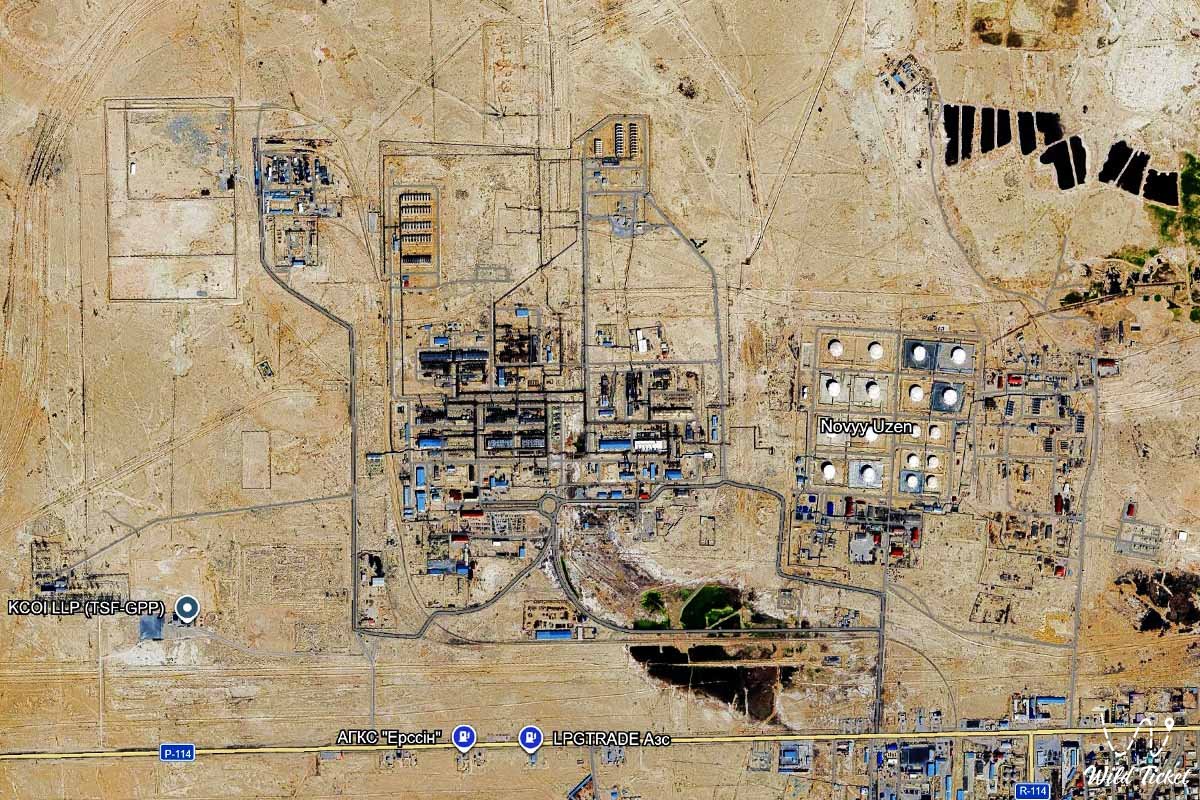
Unique oil and gas reserves, heroic history of desert development in Western Kazakhstan –
The Uzen Oil Field (Kaz. Ozen munai ken orny) represents one of the largest, historically significant, and reserve-rich hydrocarbon complexes of the Republic of Kazakhstan. This vast production asset is located in the south of the Mangystau region, in immediate proximity to the city of Zhanaozen, on the southern reaches of the Mangyshlak Peninsula and in the foothills of the Ustyurt Plateau.
The extensive desert and semi-desert territory of the field serves as the true cradle of the regional petroleum industry, where advanced deep drilling technologies and the exploitation of complex multi-reservoir strata were refined over decades. For hundreds of kilometers around stretch harsh steppe expanses where the character of generations of Mangystau oil workers was forged.
In the transport and logistical architecture of the Karakiya district, the development of the Uzen field established a robust network of paved roads, railway lines, and pipeline corridors, securely connecting the southern production assets with the regional administrative center of Aktau and primary export routes.
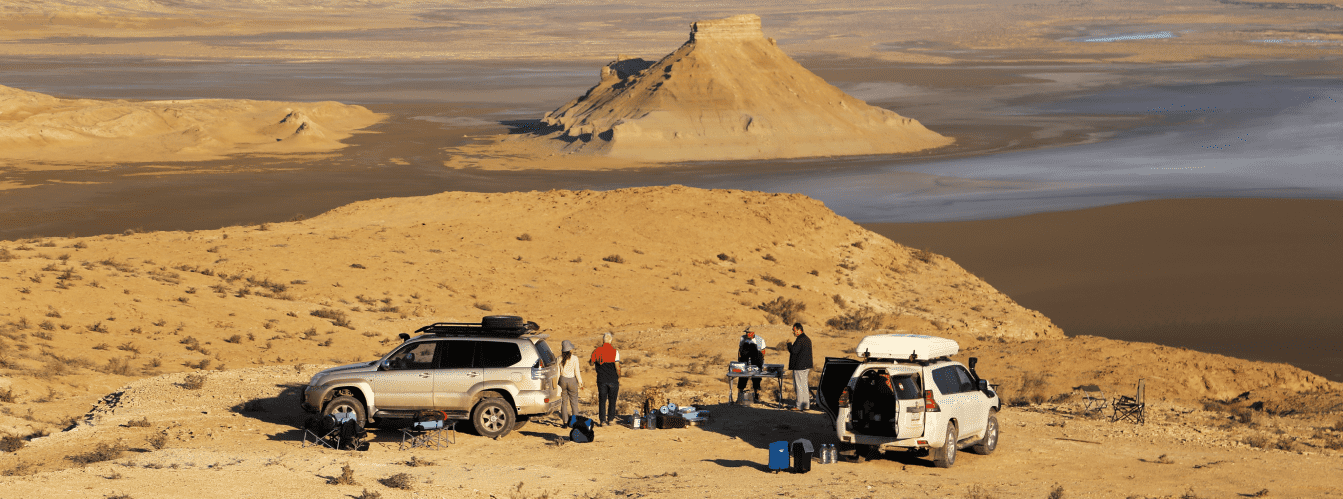
The principal overland route from Zhanaozen extends north toward the coast of the Caspian Sea and joins highways leading to the northern fields of the Buzachi Peninsula, such as Karazhanbas and Kalamkas. From regional transit nodes, motor routes lead toward ancient shrines, dramatic canyons, and the distinct desert topography of Mangystau.
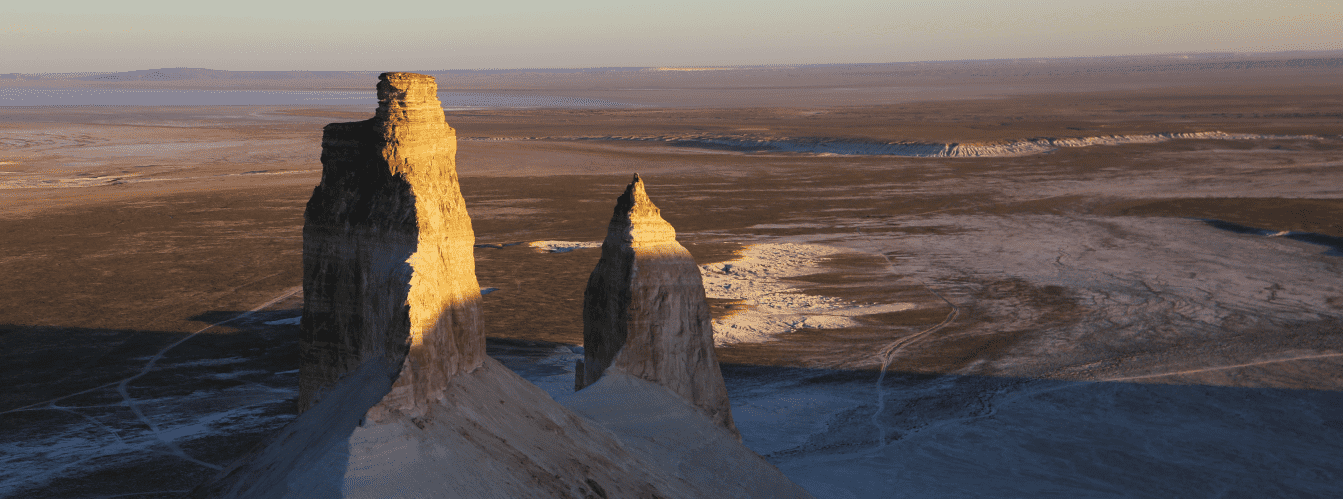
The geological foundation of the field lies at considerable depths within thick terrigenous and carbonate beds of Mesozoic age, deposited hundreds of millions of years ago on the floor of the ancient Tethys Ocean. From Uzen, steppe and desert tracks take researchers and travelers to the natural landmarks of Mangystau and the Ustyurt Plateau: to the chalk cliffs of the Bozzhira tract, the Tuzbair salt flat, Mount Bokty, the Karynzharyk depression, and the sweeping lands of the Ustyurt Reserve.
The primary technological hallmark of the project is decades of accumulated engineering experience in managing stacked multi-layer formations through extensive waterflooding, designed to maintain reservoir pressure and prevent production decline. After finishing work shifts on the high-tech production sites of Uzen, staff and visitors often embark on journeys to sacred destinations across Mangystau – to the subterranean Beket-Ata Mosque in Oglandy, the Sisem-Ata Necropolis, the underground Shopan-Ata Mosque, and ancient burial monuments across the plateau.
Today, the Uzen field is recognized as an indispensable strategic asset of the Republic of Kazakhstan. Alongside offshore Kashagan on the Northern Caspian shelf, onshore supergiant Tengiz in the Atyrau region, the northern operations of Karazhanbas and Kalamkas, and the gas chemical hub of Karabatan, Uzen anchors the energy framework of western Kazakhstan.
The complex draws the interest of global energy specialists, engineers, and industrial historians due to its operational scale, modern safety standards, and foundational contribution to the national economy.
--------------------------------------------
Geography, logistics, and transit corridors –
The Uzen (Ozen) Oil and Gas Field is situated in southern Mangystau region, across the Mangyshlak Plateau within the administrative boundaries of the city of Zhanaozen and the Karakiya district, roughly 150 kilometers southeast of the regional center of Aktau. The landscape is an elevated clay-and-gravel desert, transitioning east toward the sheer escarpments of the Ustyurt Plateau.
GPS geographical coordinates of Uzen:
43°21'44"N 52°48'44"E
Controlled access zone and site regulations: the Uzen field is a strategic industrial facility subject to strict industrial safety and occupational health regulations. Access to production fields, processing facilities, and operational yards is restricted to accredited personnel, contractors, and authorized delegations holding official permits.
Logistical connections with Mangystau and neighboring regions: Uzen is linked into Kazakhstan's national transport grid:
– Uzen – Aktau – Mangyshlak Railway Trunkline – a freight corridor for moving crude, petroleum products, and heavy industrial machinery.
– Republican motor highways – paved routes connecting Zhanaozen with Aktau and the northern hydrocarbon fields of the region.
Urban and industrial infrastructure of Zhanaozen: Uzen operations rely on the developed civic and technical infrastructure of Zhanaozen, which includes equipment maintenance bases, electrical substations, water supply networks, hospitals, and residential neighborhoods.
Climatic conditions: southern Mangystau experiences a sharply continental, arid, and severe desert climate. Summers are dry and hot, with daytime temperatures regularly climbing past +40 °C under intense solar exposure. Winters are cold and windy, marked by sub-zero temperatures, ground frosts, and steppe blizzards.
--------------------------------------------
History
The history of discovery and industrial development at the Uzen field holds a prominent place in the chronicle of domestic petroleum geology, marking a turning point in the economic modernization of the Mangystau region.
The structure was identified through exploratory surveys in the late 1950s amid the harsh conditions of the Mangystau desert. In 1961, an exploration well yielded a strong commercial flow of oil, confirming the discovery of the giant Uzen deposit. Around the production operations, a settlement grew rapidly, evolving into the city of Zhanaozen.
Developing Uzen required resolving major engineering and environmental challenges: an absolute absence of local fresh water, remote geography, and intricate multi-layered geological strata demanded innovative solutions, including the construction of the celebrated Astrakhan–Mangyshlak water pipeline. Over subsequent decades, Uzen served as an essential training ground for generations of Kazakhstani oil specialists.
In the independence era, field operations entered a modernized technological phase. Field development is managed by JSC Ozenmunaigas (part of national company KazMunayGas), which conducts continuous well workovers, introduces advanced reservoir stimulation techniques, and prioritizes environmental safeguards.
Geological phenomenon and reservoir management
Uzen is distinguished by its intricate subsurface architecture, representing a multi-layered hydrocarbon giant.
Multi-layer reservoir system: oil and gas are distributed across dozens of productive horizons within Jurassic and Cretaceous sandstone-clay strata at various depths. This configuration demands high precision in individual reservoir management and production allocation.
Reservoir Pressure Maintenance (RPM) systems: to offset natural formation pressure declines, extensive waterflooding has been applied since the early phases of development, utilizing treated water injected via cluster pumping stations.
Production enhancement and digital technologies: operations deploy hydraulic fracturing, advanced electrical submersible pumps (ESP), and computerized geological-hydrodynamic reservoir models to maximize recovery factors from mature horizons.
Detailed description of the venue
The industrial and production network of the Uzen field comprises the following key technological components:
• Central Processing Facilities (CPF) – surface treatment complexes handling crude separation, sweetening, dehydration, and fiscal metering.
• Production and injection well inventory – an extensive network of thousands of wells outfitted with downhole pumping systems and telemetry sensors.
• Cluster Pumping Stations (CPS) – specialized pump stations delivering pressurized water into injection wells for reservoir support.
• Industrial maintenance bases and machine shops – service facilities in Zhanaozen providing fabrication, maintenance, and testing of drilling and oilfield equipment.
• Electrical power infrastructure – high-voltage transmission lines, step-down substations, and gas turbine units powering field operations.
• Transport and shipping terminals – a network of field access roads, gathering lines, and oil dispatch terminals.
Ecology, nature, and industrial community life
The natural environment of southern Mangystau around Zhanaozen is an arid desert landscape. Flora is dominated by wormwood, saltworts, and seasonal ephemerals, while local fauna includes desert-adapted species: goitered gazelles, steppe rodents, reptiles, and birds of prey.
Environmental policy across the Uzen field centers on adherence to environmental codes, associated petroleum gas utilization, historical soil remediation, and groundwater protection. Efficient water stewardship remains an operational priority within this dry desert climate.
Daily life on the field is linked with the city of Zhanaozen, home to multi-generational petroleum families, modern municipal facilities, sports complexes, and technical training colleges. This continuity of expertise makes the Ozenmunaigas workforce an enduring pillar of Kazakhstan's resource sector.
Legend
A regional legend concerning the Singing Dune and the Unquenchable Flare is told across southern Mangyshlak in connection with the discovery of Uzen.
Tradition relates that ancient nomads traversing the waterless expanses of Ustyurt and southern sand dunes believed underground vaults held living heat and fire guarded by desert spirits. Caravans skirted these tracts, listening to low subterranean hums that echoed across the plains at night.
In the 20th century, exploration geologists unraveled the secret of the desert, discovering the deep oil deposits of Uzen that brought energy, infrastructure, and towns to these remote lands. Zhanaozen and Uzen came to symbolize the constructive labor of people transforming a rugged desert landscape.
Conclusion
The Uzen (Ozen) field is the historic foundation of Mangystau's petroleum sector, embodying the skill of geologists, engineering perseverance, and the collective work of generations. Linking its historical legacy with modern field technologies, Uzen continues to shape the industrial landscape of Kazakhstan alongside the region's other resource centers.
Interesting sights nearby:
• City of Zhanaozen;
• Ustyurt Plateau;
• Bozzhira Tract;
• Chalk Fangs of Bozzhira;
• Tuzbair Salt Flat;
• Mount Bokty;
• Karynzharyk Depression;
• Ustyurt Nature Reserve;
• City of Aktau;
• Caspian Sea;
• Karazhanbas Oil Field;
• Kalamkas Oil Field;
• Buzachi Peninsula;
• Underground Mosques of Mangystau Region.
Sacred sights and pilgrimage destinations:
• Beket-Ata Underground Mosque;
• Shopan-Ata Underground Mosque;
• Sisem-Ata Necropolis;
• Sultan-Epe Necropolis and Mosque;
• Shakpak-Ata Underground Mosque;
• Otpan-Tau Historical and Cultural Complex;
• Yerzhan Khazret Mausoleum;
• Sacred wells and springs of the Ustyurt Plateau.
Photogallery: