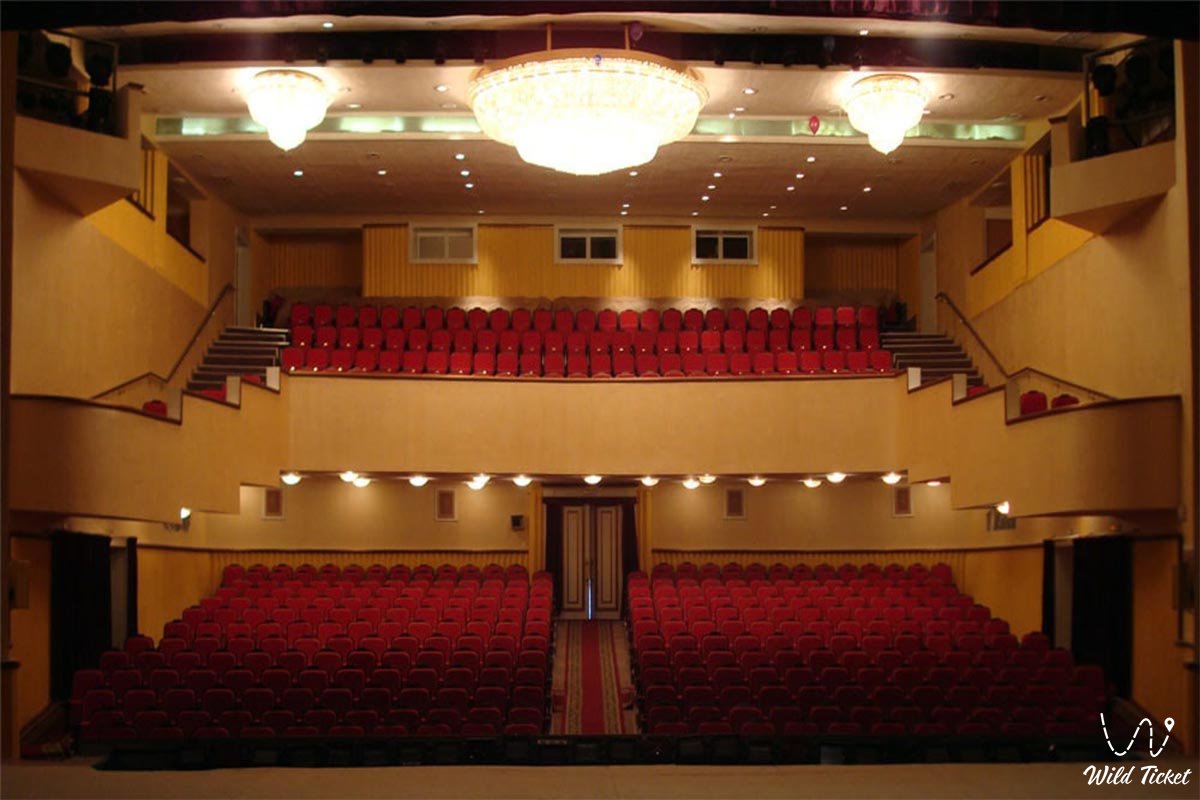
Tour and visit to the Stanislavsky Theater in Karaganda -
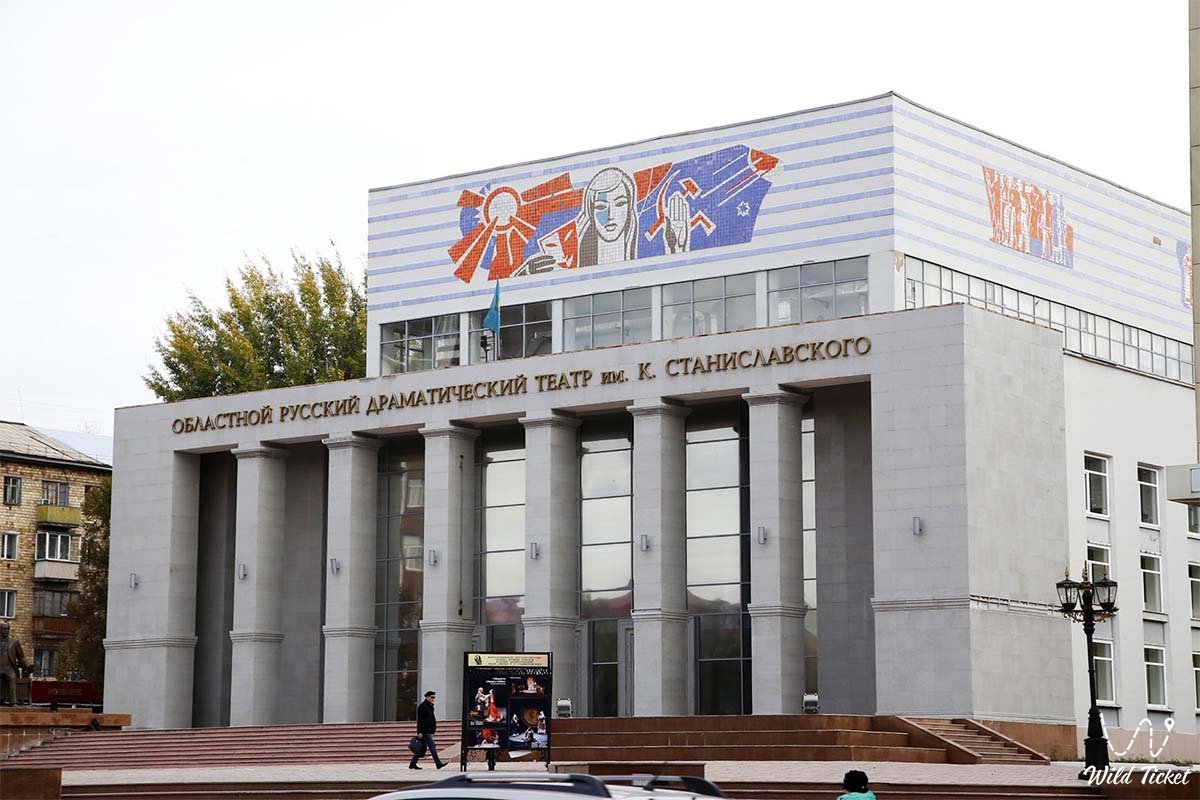
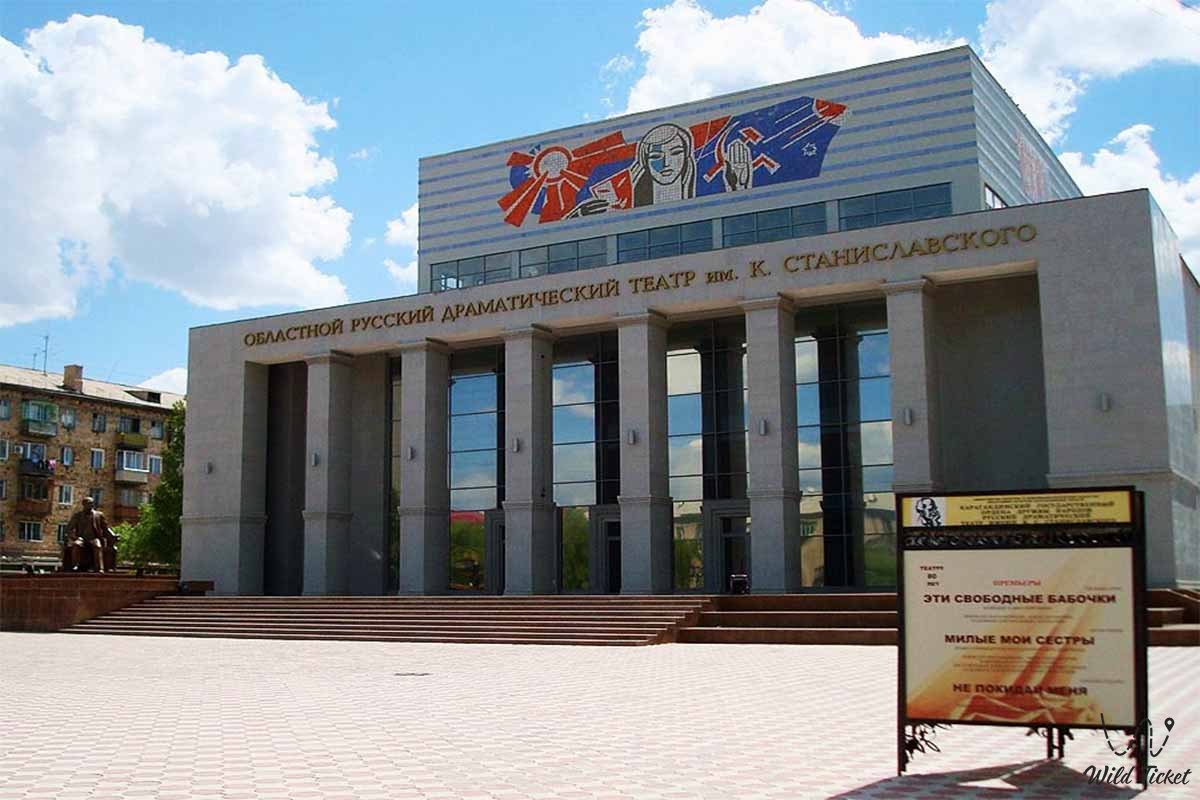
The Stanislavsky Karaganda State Russian Drama Theater was the only traveling theater in its history, operating during the war and during the Virgin Lands campaign, and always encouraging and supporting the country's citizens.
Information
The theater's history dates back to the 1930s. At that time, the Semipalatinsk propaganda team created a mobile theater. In 1932, the traveling theater was incorporated into the Turksib political train. Thus, three carriages, carrying the artistic team, traveled across the country and presented the works of Soviet playwrights, both Russian and Western classics.
History
In 1935, the mobile theater team moved to a hospital building in Kostanay. At this time, the theater staged works by W. Shakespeare, A. Ostrovsky, and A. Afinogenova. It had already made Afinogenova's works the core of its repertoire.
In 1936, the company was renamed the Karaganda Regional Russian Drama Theater and sent to Balkhash for construction. In 1937, the theater's first director, V. Portnov, entrusted management to artistic director Konstantin Raush, who had arrived from Leningrad. With her arrival, the theater's repertoire expanded and her professional level grew. The theater began performing works by Western classics such as B. Shaw and P. Moliere.
In 1940, the company was transferred to Karaganda. On its first anniversary, the theater performed "Hamlet." During World War II, the Karaganda and Moscow theaters were evacuated to Karaganda, and the theater team was sent to build the Balkhash Miners' Palace of Culture. They remained there until 1951.
In the 1950s, under the name "Mobile Theater," the group traveled to the virgin lands and delighted the peasants with their art. In 1962, the theater moved to a new building on Mir Boulevard in Karaganda. In 1963, by decree of the Council of Ministers of the Kazakh SSR, the theater was named after K. Stanislavsky.
Theatre Achievements
In the 1960s and 1970s, the theater repeatedly won prizes at national competitions. At that time, the creative team was led by director and Honored Artist of the Kazakh SSR A. Podobed, G. Zhezmer, and People's Artists Ruben Andriasyan and Mark Zilberma.
The theater successfully toured Almaty, Omsk, Poltava, Frunze, Novosibirsk, Pavlodar, and Irkutsk. Its 1979 trip to Moscow is particularly noteworthy. The play received high praise from director and Honored Artist of the Kazakh SSR N. Volozhanin, and from the play's authors V. Rozov, A. Arbuzov, and V. Tendryakov.
In 1980, the theater was awarded the Order of Friendship of Peoples. From 1986 to 2006, Honored Artist of the Republic of Kazakhstan G. Oganesyan served as the theater's director. Today, the theater is headed by D. Espayev.
Theatrical Repertoire
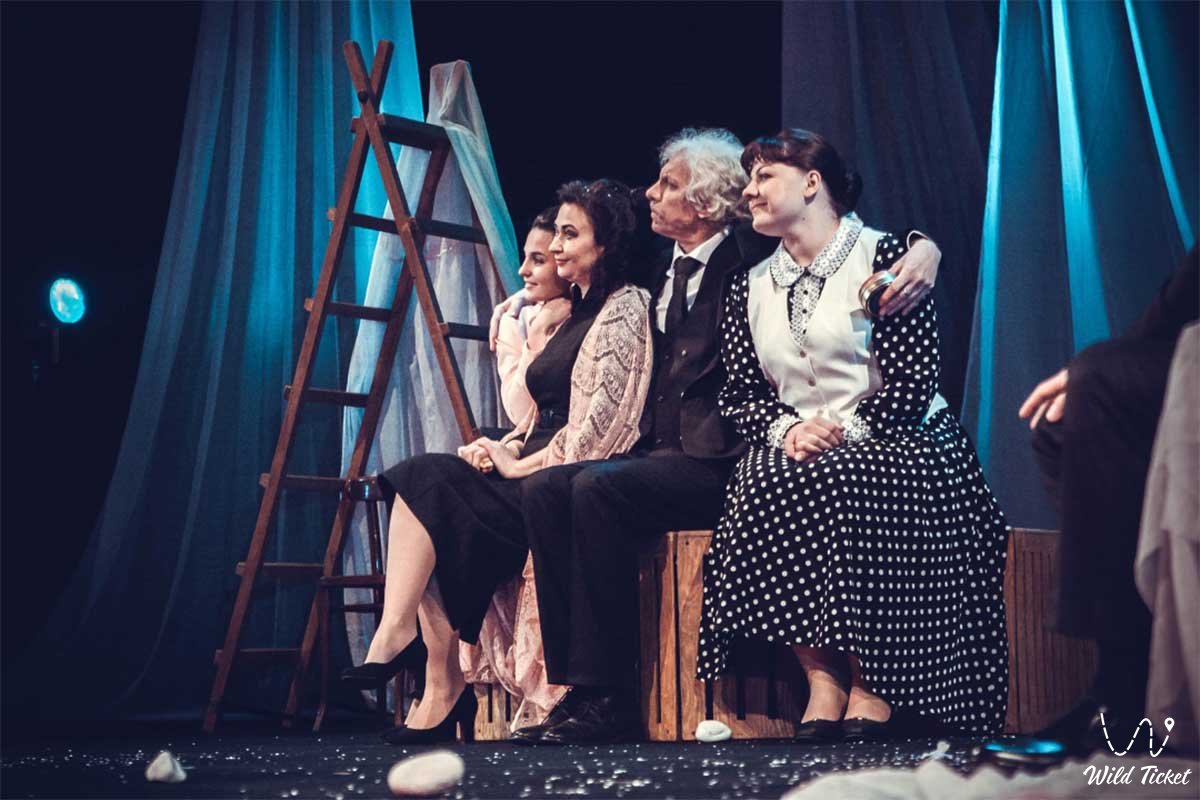
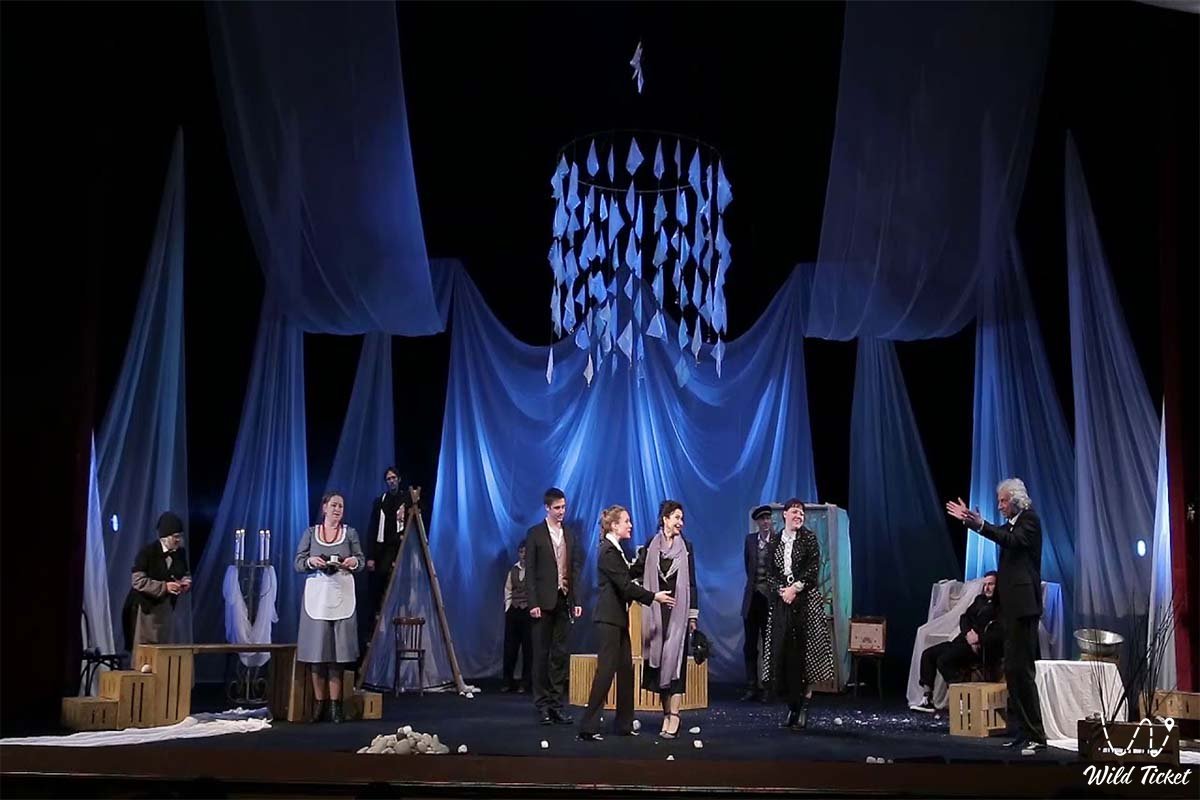
Currently, the theater's repertoire includes approximately 40 plays. There are also plays for children. Among them are works by N. Gogol "The Government Inspector," A. Ostrovsky "Innocent Guilt," D. Gogol, and others. Isabekov's "The Heirs," R. Beletsky's "Incredible Conversations," D. Christner's "Hot Women," and Seneca's tragedy "Games" are among others. Ryzhkov's plays "Where? In Karaganda!", N. Nosov's "The Adventures of Dumbas and His Friends", E. Schwartz's "Red Telpek" and Kosharev's House.
Photogallery: