Historical heart and merchant oasis of the Aral region -
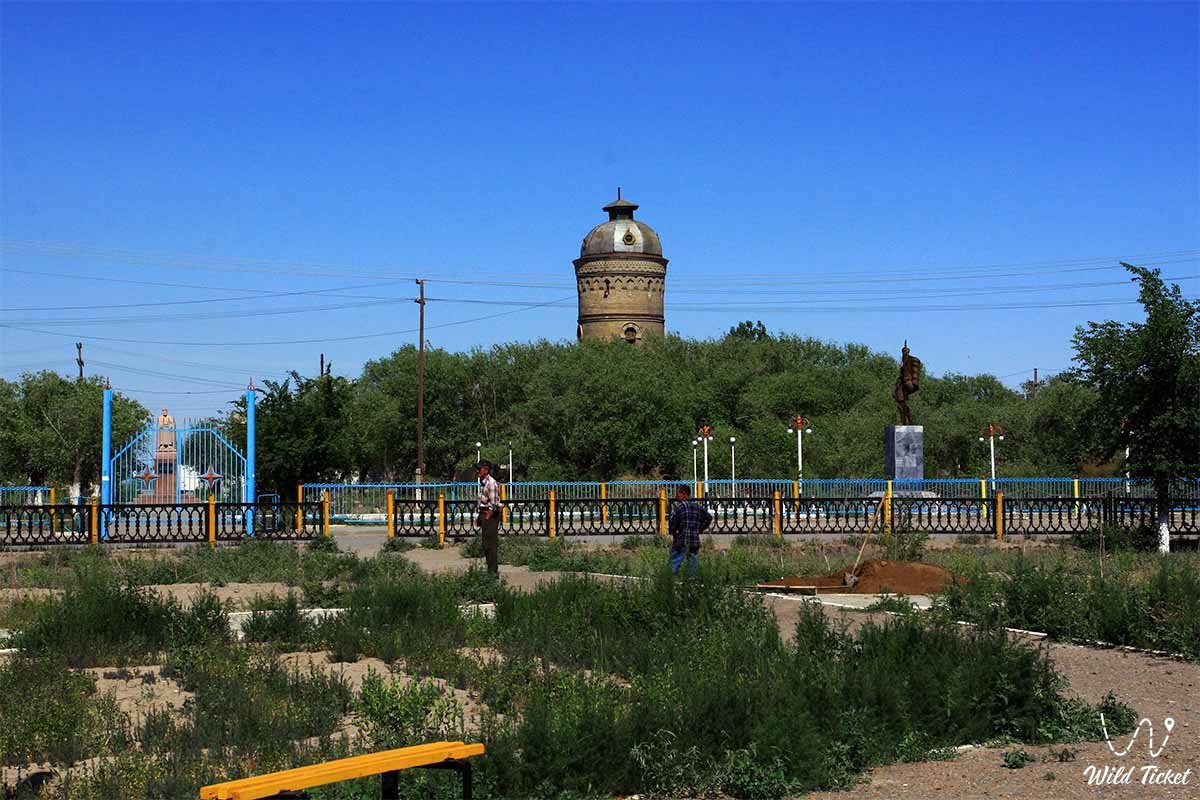
Kazalinsk is a historical city in the Kazaly district of the Kyzylorda region of Kazakhstan, located on the right bank of the Syr Darya River. The old part of the city is a preserved block complex of the late 19th – early 20th centuries, holding the status of an architectural monument of national significance.
This city-museum has preserved its unique merchant and military architecture of the 19th century. The settlement is located in the middle of steppe expanses, 12 kilometers south of the modern district center – the village of Ayteke Bi, near which the ancient settlement of Zhankent (Yangikent) is situated.
From the southern side, Kazalinsk is protected from the spring floods of the Syr Darya by a long earthen dam. The flood plain of the river in this area is wide and winding, covered with tugai thickets and reeds up to 4 meters high. Not so far from the city, at a distance of 56 kilometers, lies Lake Kambash (Kamystybas) with its healing water.
Currently, Kazalinsk is officially part of the Aral environmental disaster zone. Due to the drying up of the Aral Sea and the shallowing of the Syr Darya in the second half of the 20th century, the fish and brick factories here closed down completely, and the population decreased (as of early 2019, 5,777 people lived in the city). Some residents leave in search of work for Baikonur and Kyzylorda. Various works to restore the Northern Small Aral Sea are being conducted in the area.
---------------------------------------------
How to get there and visit -
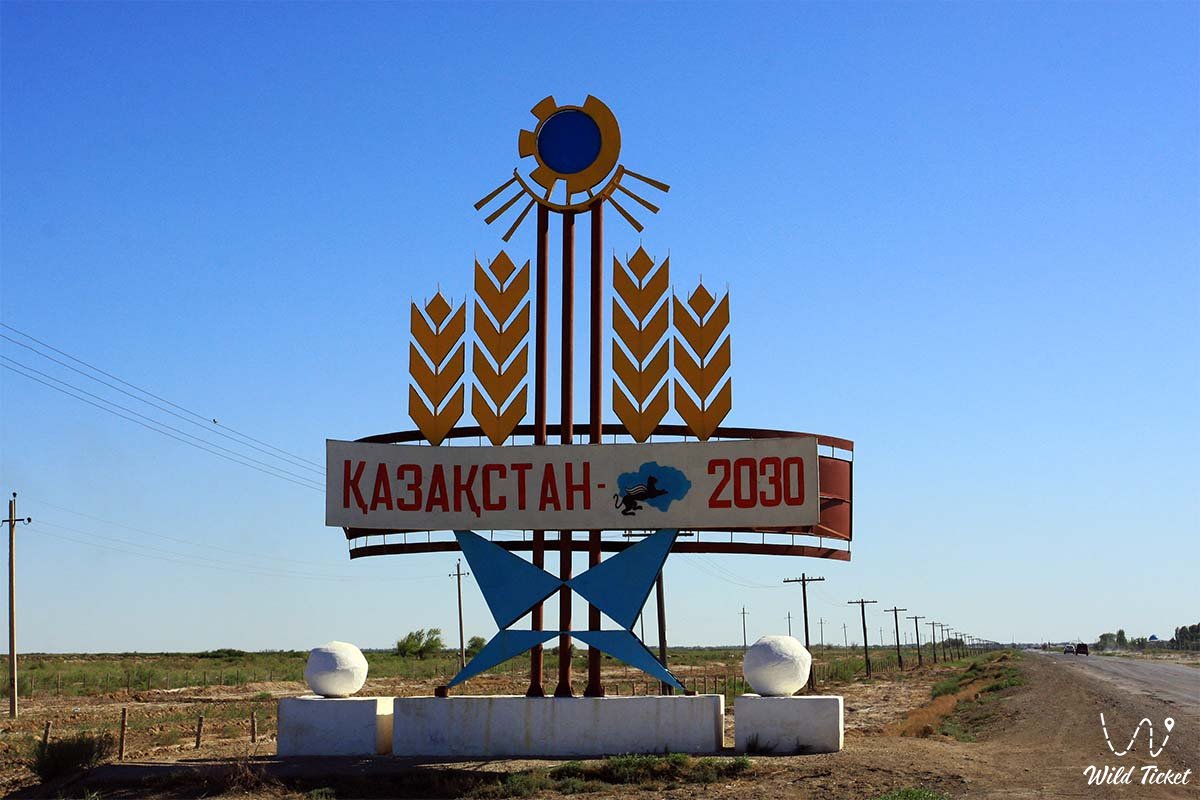
The city of Kazalinsk (Kazaly) is located in the Kazaly district, 134 kilometers from the city of Aralsk, 11 kilometers from the village of Ayteke Bi, Kazalinsk City Administration, Kyzylorda region, Republic of Kazakhstan.
GPS coordinates: 45°45'48"N 62°06'10"E
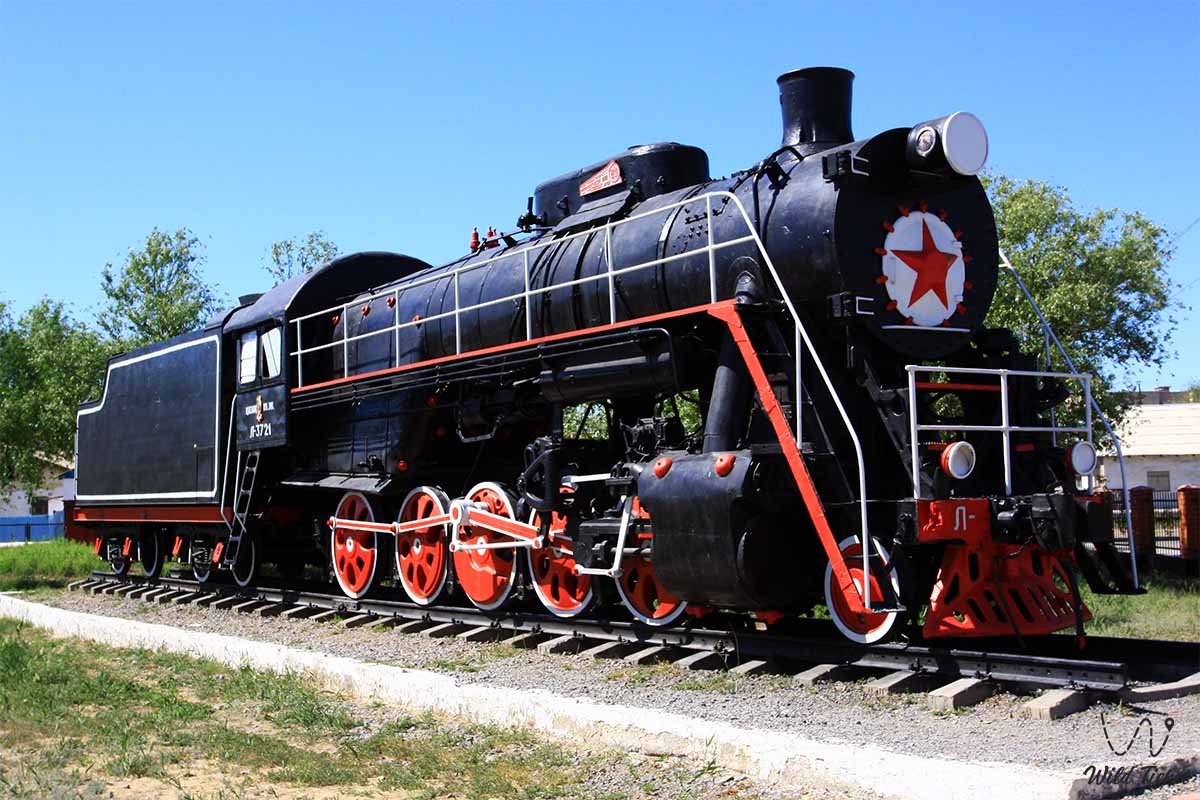
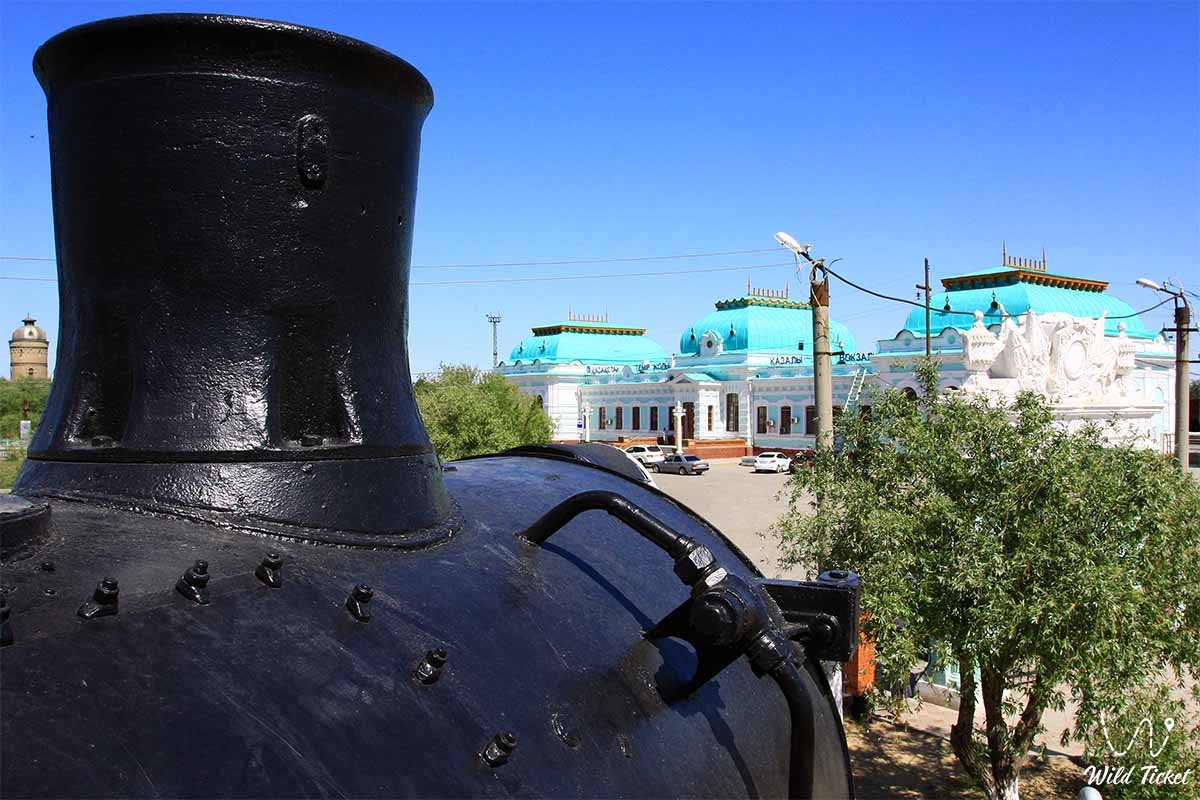
The transport logistics of this historical center has its own important features that travelers need to know about. There is no direct railway connection to Kazalinsk itself: the large station of the same name, Kazalinsk (founded in 1903 on the Tashkent line), is located 12 kilometers north of the historical city on the territory of the district center – the urban-type settlement of Ayteke Bi (former Novokazalinsk).
The station can be easily reached by passenger train from Astana, Almaty, Kyzylorda, Shymkent, Court, Pavlov, Atyrau, or Aktobe, and from there suburban buses run regularly to Kazalinsk along the Ayteke Bi – Birlik highway. The international highway M-32 Samara – Shymkent passes 15 kilometers north of the city.
For traveling between the old quarters of the city, any passenger car is suitable, since the main streets, 20–30 meters wide, have asphalt or gravel pavement. However, it is better to use a four-wheel-drive SUV to go out to the wild shores of the Syr Darya or neighboring necropolises. Drivers are advised to carry navigators and sun protection products.
Opening hours: The territory of the city and its historical streets with block buildings are open for observation around the clock and all year round. Entry to the old merchant zone is completely free. Local institutions, including the Kazalinsk Historical and Local History Museum (a neat old log building), operate on a standard daytime schedule (usually from 09:00 to 18:00, closed on Sunday).
It is recommended to plan a trip to this region for the spring (mid-March – April) or early autumn period to avoid extreme summer heat, when the thermometer rises to a record 45°C and the grass completely burns out by June.
All hotel accommodation and catering options are available in the neighboring village of Ayteke Bi, while lovers of wild tourism can set up field camps in the wide flood plain of the Syr Darya among thickets of jida, willow, and poplar trees, adhering to the rules of respect for nature.
---------------------------------------------
History
The history of this legendary city began in 1853, when the Syr-Darya Fort No. 1 was founded in the Kazaly tract (from the Kazakh name of a fishing gear – a "weir basket" or "fish trap") by order of General V. A. Perovsky. The outpost was built to replace the abolished Aral Fortification, and soon all the first settlers were transferred here.
In July 1867, the settlement was officially granted the status of a city and the name Kazalinsk, becoming the center of the huge Kazalinsk Uyezd of the newly formed Syrdarya Region of the Russian Empire. The city rapidly turned into a powerful river port and a key trade and logistics hub on the caravan route between Russia, Khiva, and Bukhara, and the merchant turnover of these parts reached a colossal 2 million rubles a year.
In 1848, one of the oldest meteorological stations in Central Asia began operating here.
The composition of the population was exceptionally diverse: besides Kazakhs, there lived Tatars, Sarts, Khivans, Jews, as well as "Aral Uralians" – descendants of the Ural Cossack Old Believers exiled in 1875–1879 for non-compliance with military service. By 1910, the population exceeded 12 thousand people (as of early 2019, 5,777 residents lived in the city).
In 1909, the official coat of arms of the city was approved, depicting a laden camel and a golden trident. During the Great Patriotic War, the easternmost German landing party was recorded precisely in the Kazaly district – an enemy sabotage group, which later formed the basis of the plot of the movie "The Triple Jump of the Panther".
The city reached its maximum prosperity in the 1970s, when fish and brick factories were operating. However, the subsequent degradation of the Aral Sea, to which it used to be about 100 kilometers, and the irrational withdrawal of water from the Syr Darya led to a large-scale environmental crisis and the closure of enterprises. Today, the old Kazaly carefully preserves its authentic pre-revolutionary appearance, being a rare example of a preserved 19th-century merchant settlement.
Information
The city of Kazalinsk (Kazaly) is organized as a complex multifunctional cultural space, conventionally divided into three distinct thematic zones: the old merchant center with brick quarter architecture, memorial-museum zones of outstanding figures of the region, and a coastal recreation zone by the Syr Darya River. Excellent conditions have been created here for historical excursions, architectural lectures, and photo tours.
The famous historical and local history museum operates in the city with a mass of unique exhibits, including ancient handwritten books in Arabic script and the symbolic key to the local prison-castle where the exiled Uralians were kept.
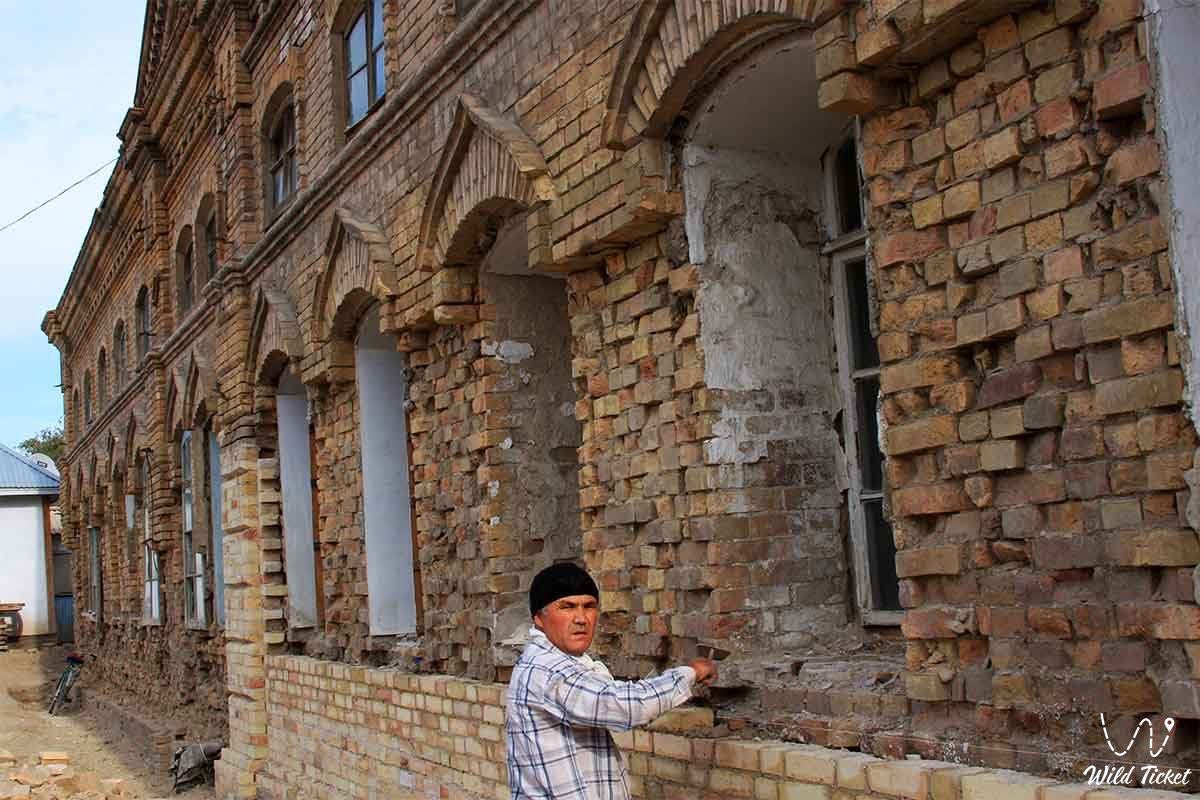
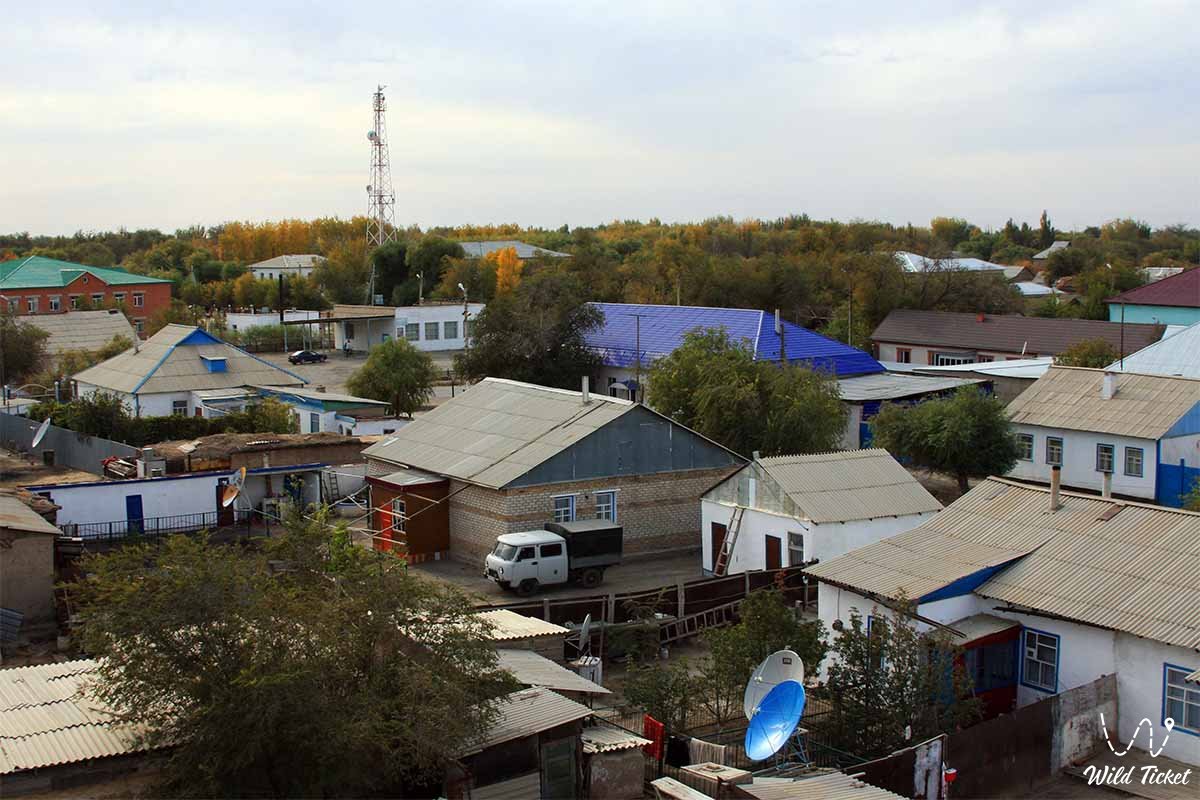
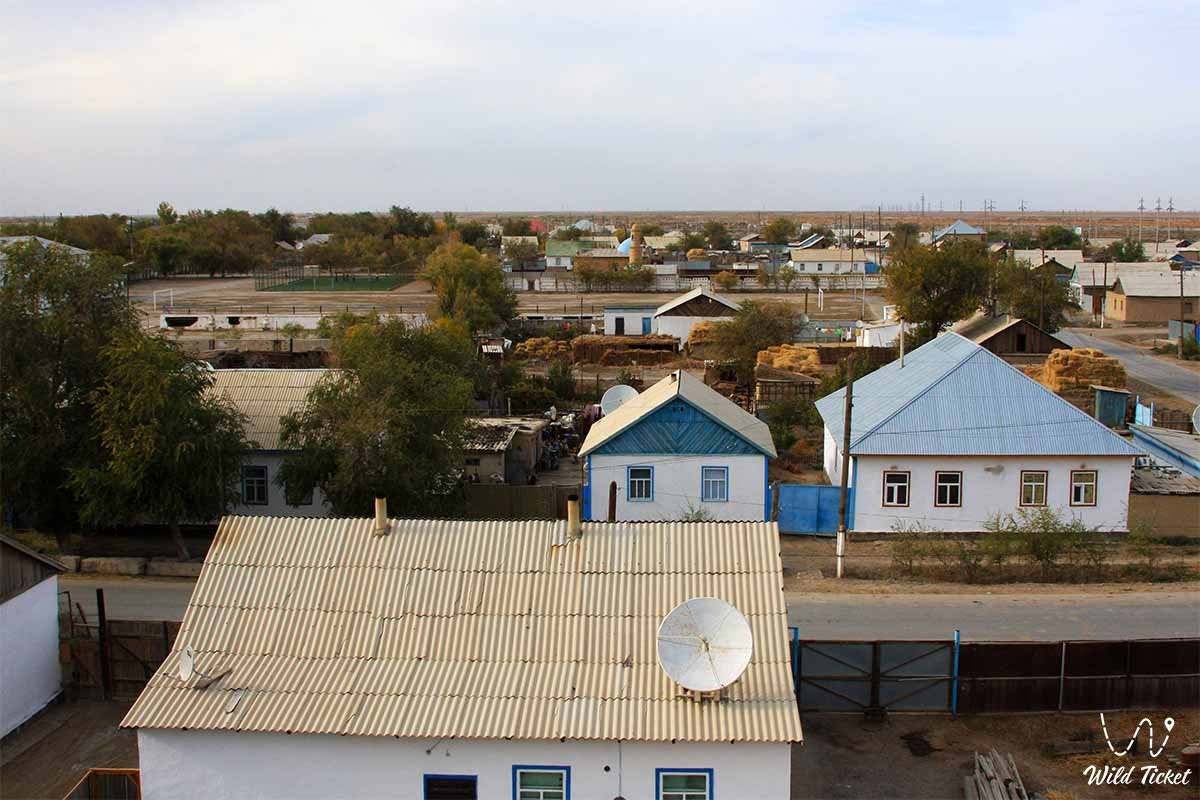
Special attention is paid by city authorities and volunteers to preserving the pristine facades of the single-story mudbrick and adobe houses of the private sector with fruit orchards, as well as two-story administrative buildings made of fired brick in the center.
The natural surroundings of the city are quite colorful – the winding Syr Darya has a width of 50 to 150 meters with a sticky sandy bottom and steep banks up to 6 meters high. In the flood plain of the river stretch impenetrable thickets of tugai and reeds up to 4 meters high. Tour organizers recommend moving around the historical center on foot, strictly maintaining public order, and treating ancient buildings of a century ago with care.
Detailed description of the venue
The well-thought-out infrastructure of the historical complex includes the following original locations and geographical features:
• Old Merchant Quarter – the central historical sector of the city, where elegant residential mansions, a massive caravan-sarai, and shops of the late 19th century are concentrated.
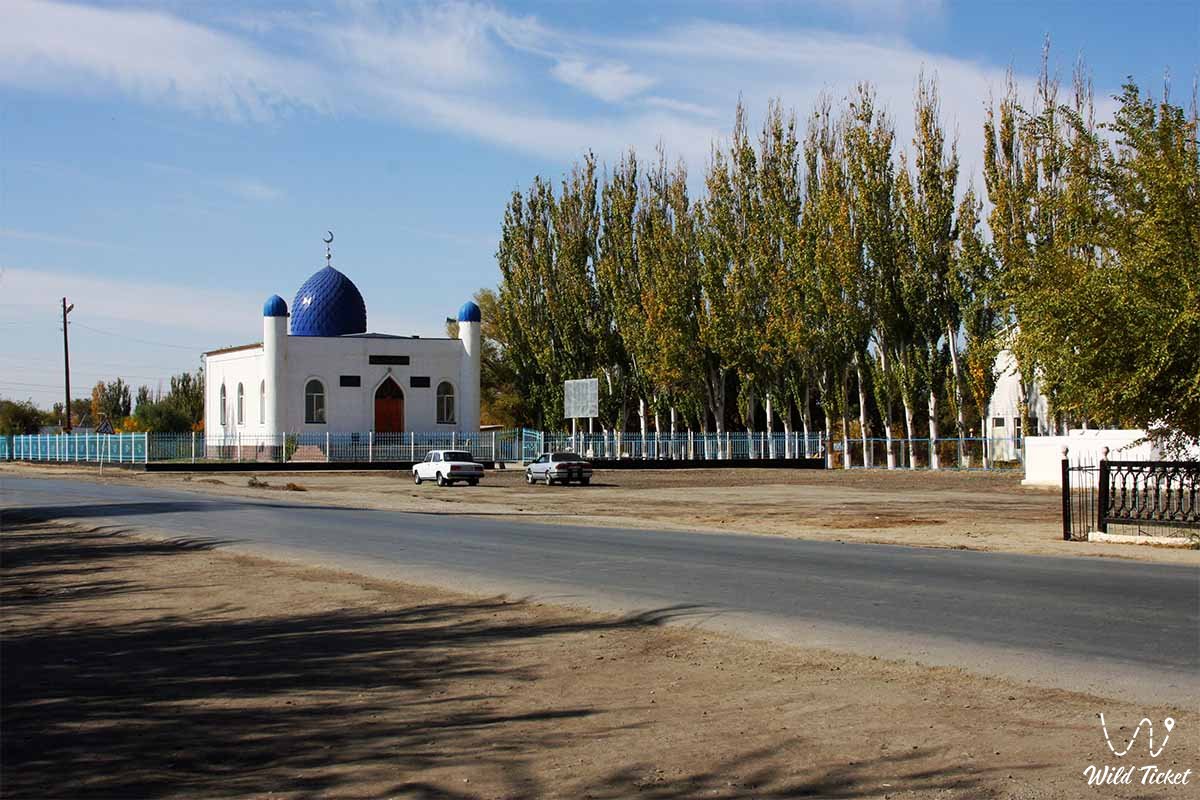
• Building of the Ganibay Mosque – a magnificent architectural monument of the 19th century, erected at the expense of the richest merchant of the first guild, Ganibay Khusainov; today, the city library is located within these walls.
• Nogai Mosque (Nuraly Mosque) – an ancient Muslim place of worship of the 19th century, built by Tatar merchants and preserving wooden painted columns.
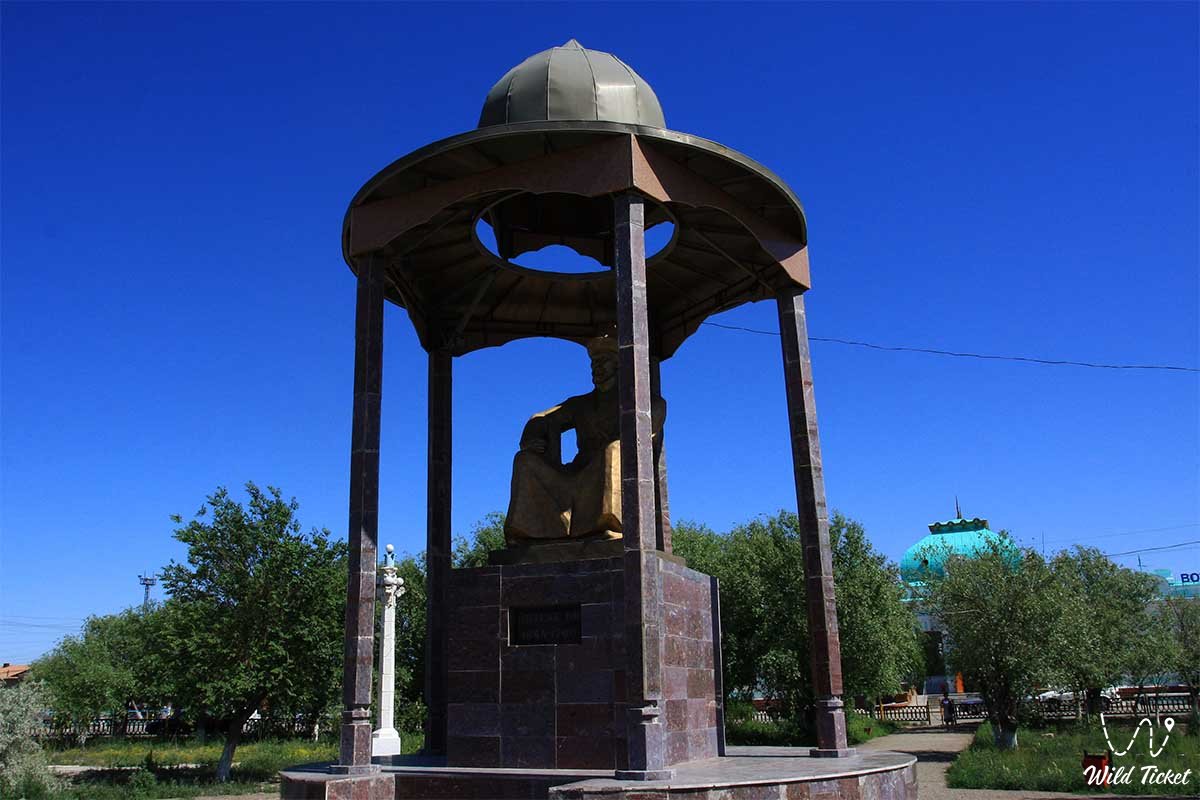
• House-Museum of Gani Muratbayev – a memorial building of the late 19th – early 20th centuries dedicated to the life of the outstanding state and public figure, founder of the youth movement of Kazakhstan.
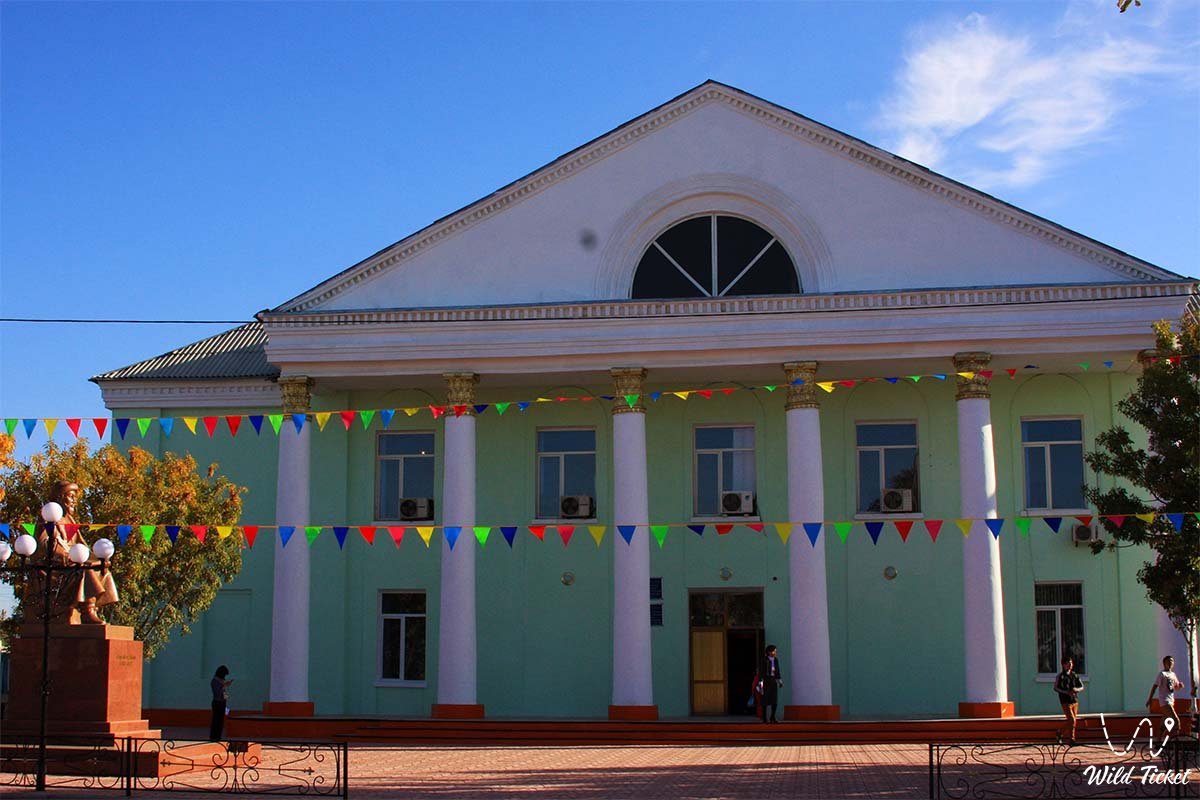
• Roza Baglanova District House of Culture – a unique brick building built in 1904 (a former Orthodox church), named after the People's Artist of the USSR Roza Baglanova, who was born in Kazalinsk.
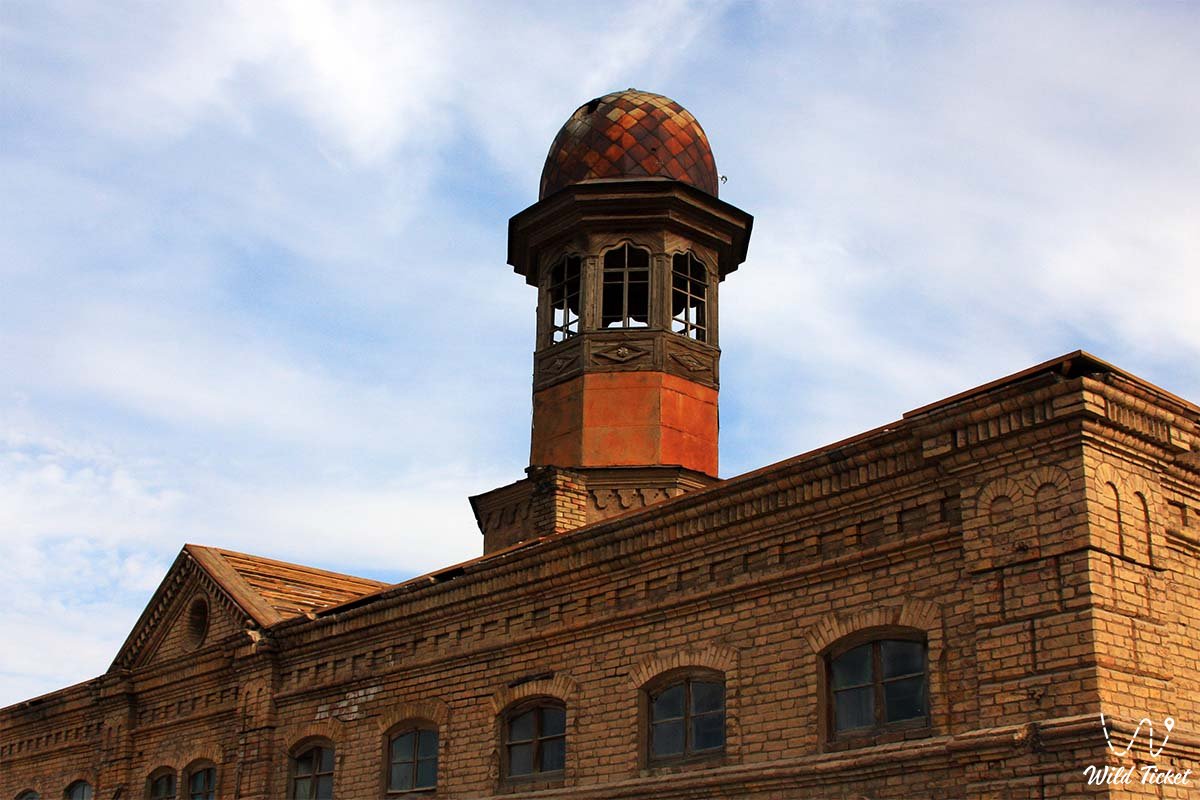
• Ancient Madrasah Building – a historical educational complex with a magnificent tall minaret, in the premises of which a local sports school operates today.
• Uyezd Garden on the Syr Darya – a coastal park area laid out in 1892–1898 under city governor Stepan Putintsev, which for a long time served as a favorite walking spot for townspeople.
Architecture
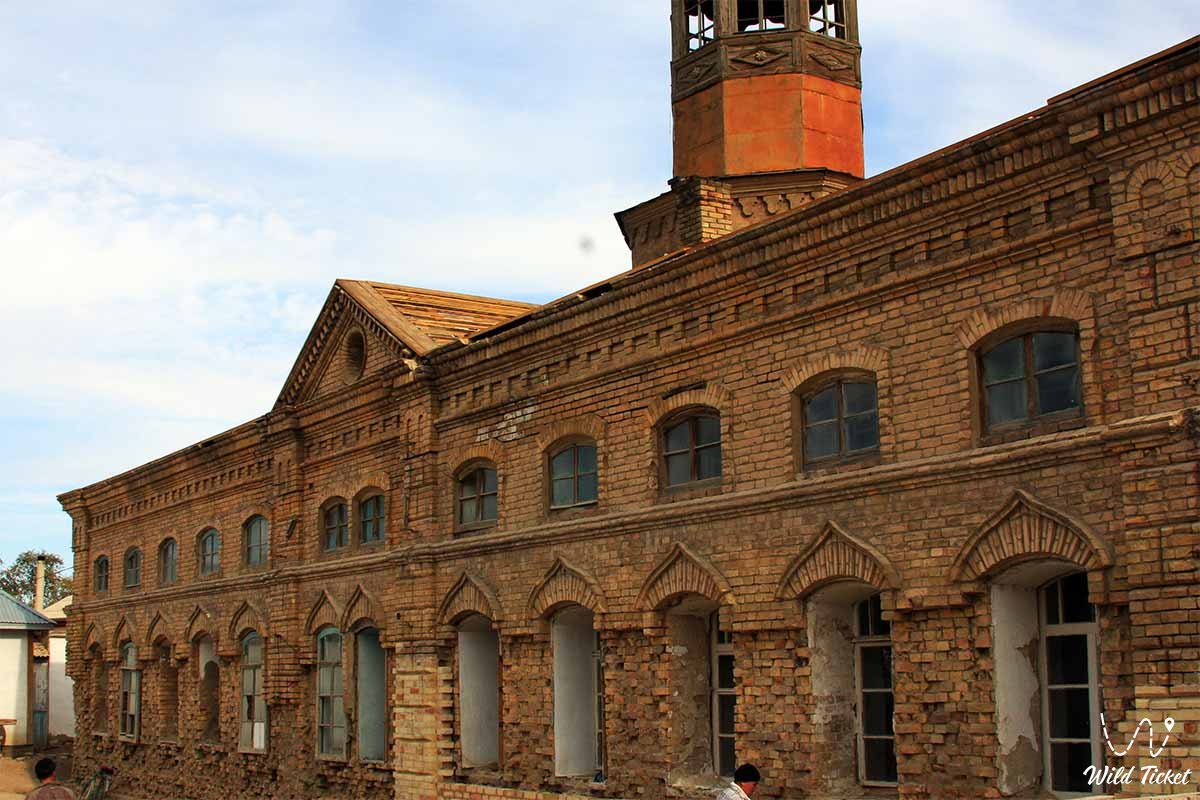
The architectural solution of old Kazalinsk was based on a unique style that received the name "Syr Darya brick art nouveau" of the late 19th – early 20th centuries. The strict rectangular layout of wide streets is combined with the elegant facades of buildings erected from local figured fired brick of a deep ochre shade.
The highlight of this urban engineering was the mastery of figured brickwork: cornices, pilasters, architraves, and false windows were laid by workers manually without the use of plaster, which made the buildings resistant to the harsh winds of the desert. During modern restoration works, durable conservation compounds are used to protect the ancient walls from destruction and preserve the original merchant spirit of a bygone era.
Legend
An amazing legend about the underground passages of merchant Ganibay lives among local residents and old-timers of Kazaly. It is said that under his main trading house, the merchant of the first guild ordered the digging of an extensive network of brick underground tunnels that led straight to the shipyards on the bank of the Syr Darya and secret powder magazines.
It is believed that during the revolutionary chaos, Ganibay hid his countless wealth, golden coins, and priceless caravan books in one of these secret underground chambers. According to legend, the ancient merchant brick still retains the warmth of the masters' hands, and if at noon you touch the wall of his shop and wish for a successful commercial business, the spirit of merchant Kazalinsk will surely bring good luck and prosperity in affairs.
Conclusion
The city of Kazalinsk (Kazaly) is a magnificent historical bridge connecting the dramatic events of military expeditions, Cossack exile, and caravan trade of past centuries with the modern cultural life of independent Kazakhstan. A visit to this architectural oasis allows guests of the Kyzylorda region to make a real journey through time and see firsthand a genuine merchant city of the 19th century.
Kazalinsk remains the main reference point for historical, architectural, and pilgrimage tourism in the region. Excursion routes definitely include this city in their programs, allowing everyone to touch the living pages of the great history of the Aral region.
Interesting sights nearby:
• City of Aralsk;
• Fort Raim;
• Tolybay Batyr Mausoleum;
• Kuttybay Mausoleum;
• Beketay Mausoleum;
• Basibek Mausoleum.
Photogallery: