Majestic natural shield and grandiose desert plain at the junction of three states –
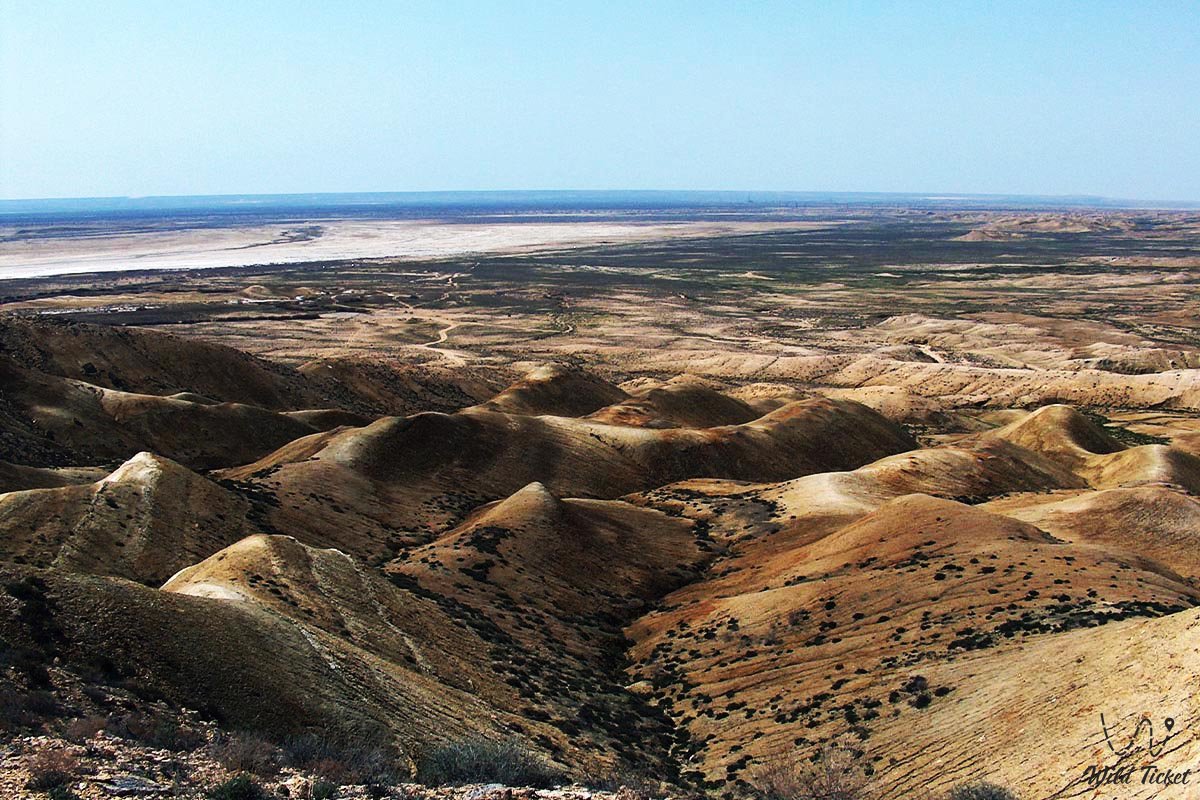
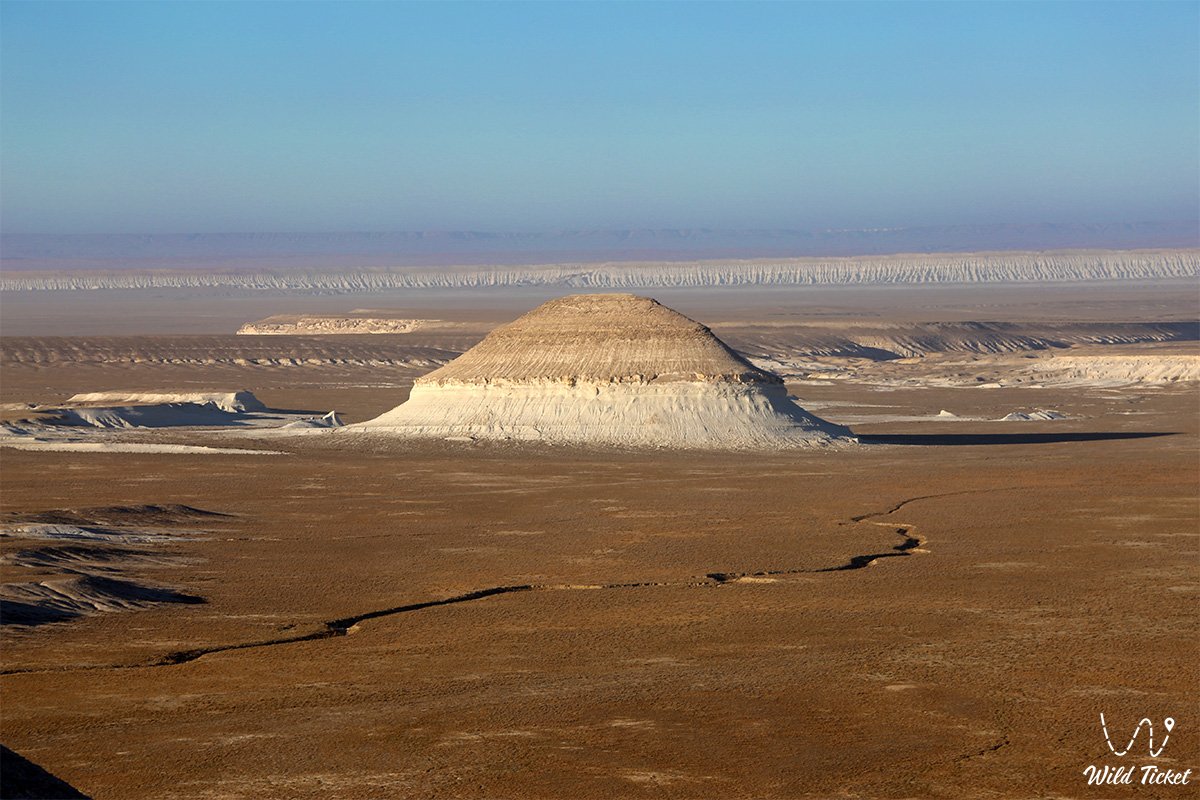
The Ustyurt Plateau represents one of the most enigmatic, austere, and majestic landscapes of Eurasia, occupying a grandiose area of about 200,000 square kilometers between the Caspian Sea and the Aral Sea, the Garabogazköl Bay, and the Amu Darya delta. This extensive stony-clay desert is situated across the territories of Kazakhstan (including Mangystau, as well as the south of Atyrau and Aktobe regions), Uzbekistan, and Turkmenistan. The famous Silicon Valley of Mangystau is located on the territory of the plateau.
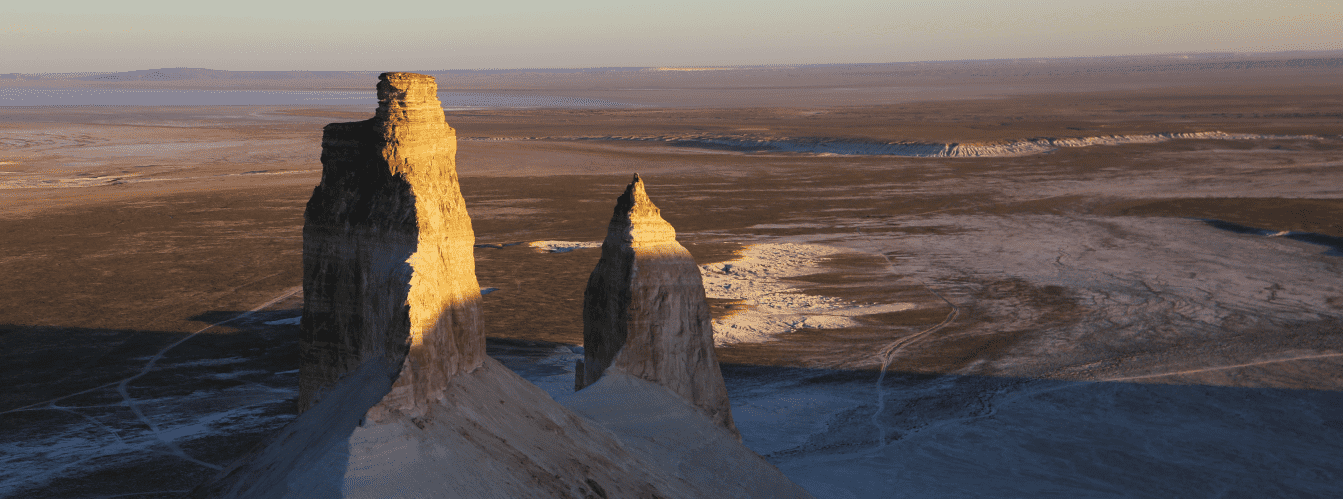
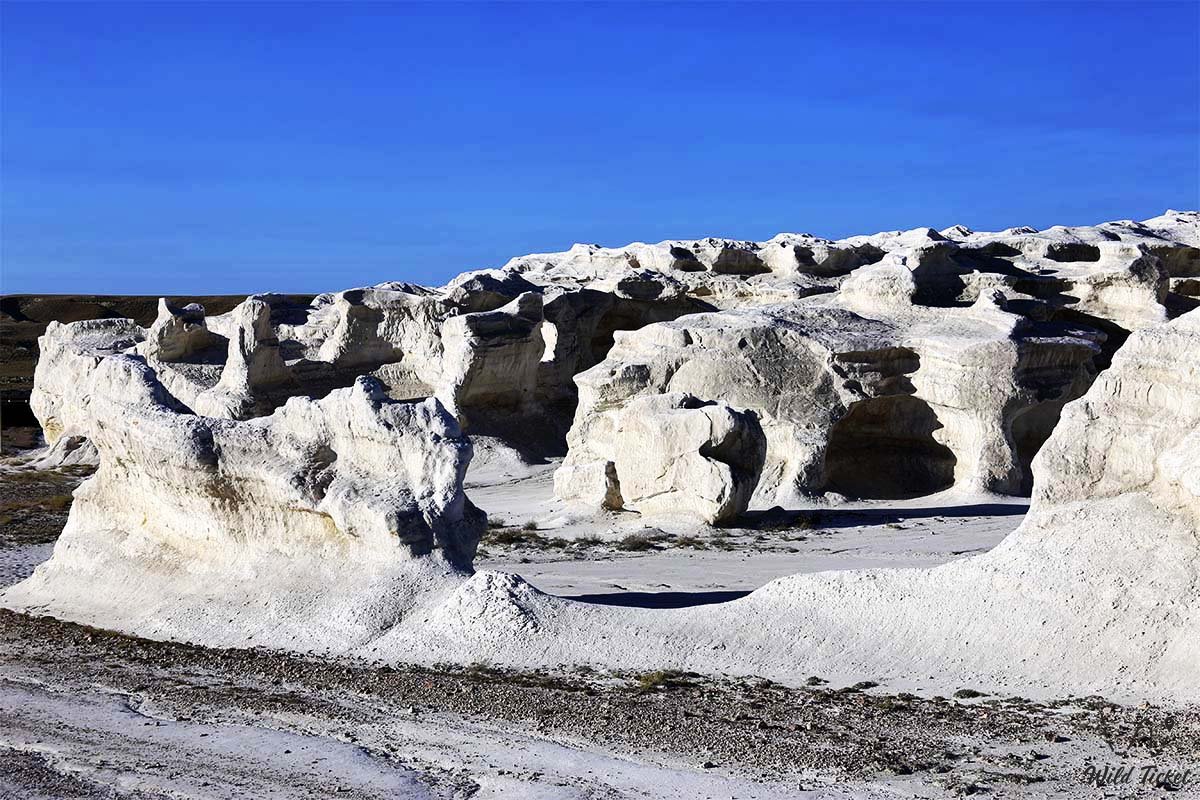
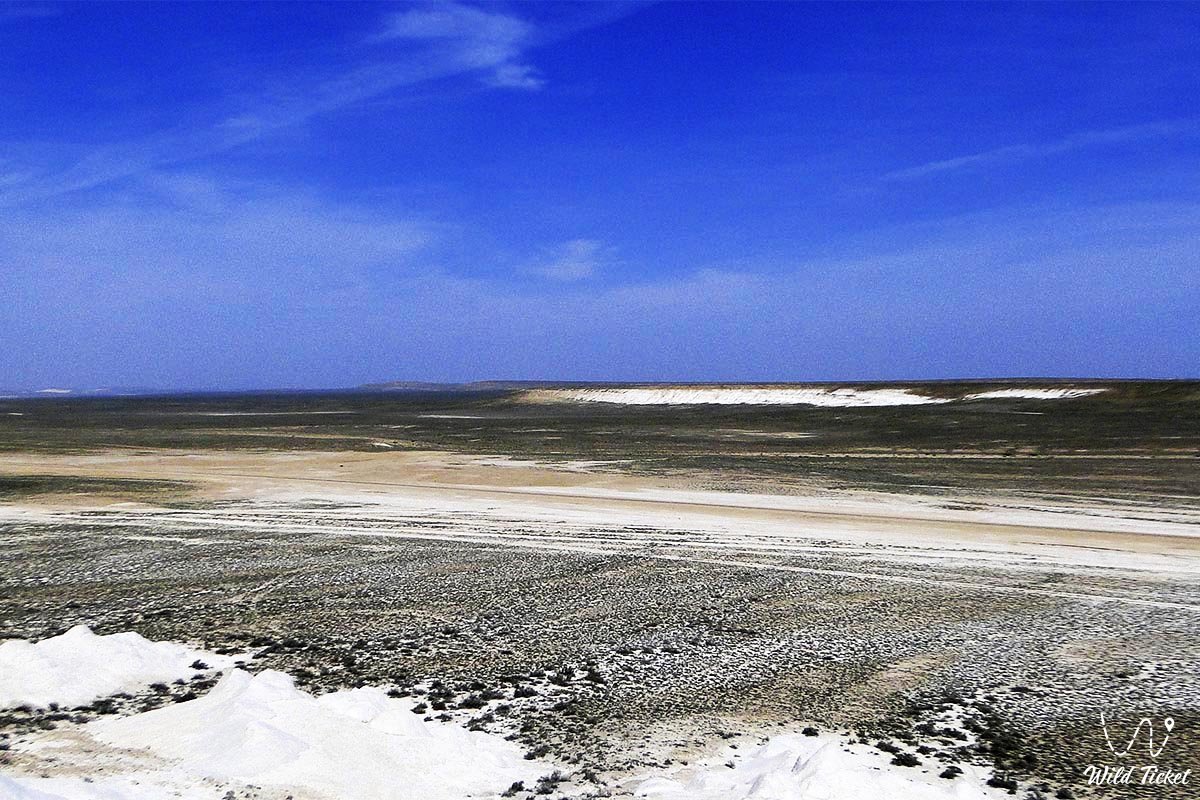
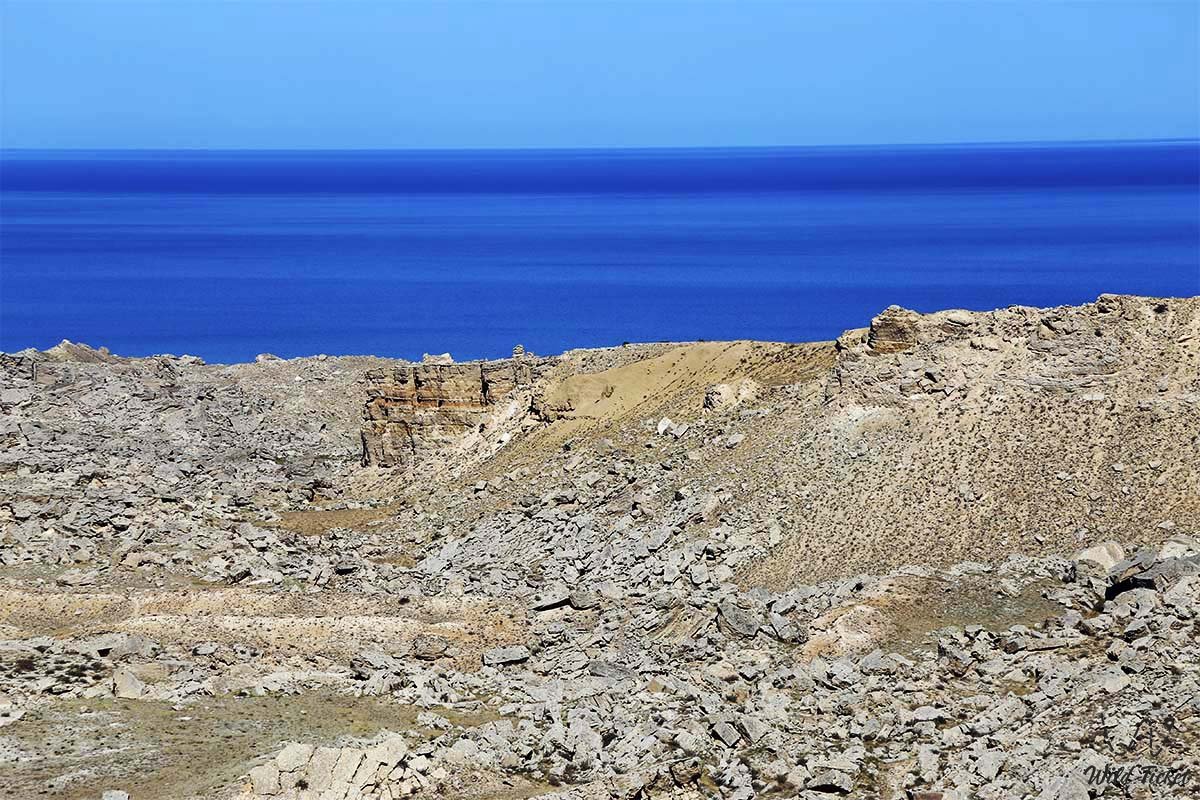
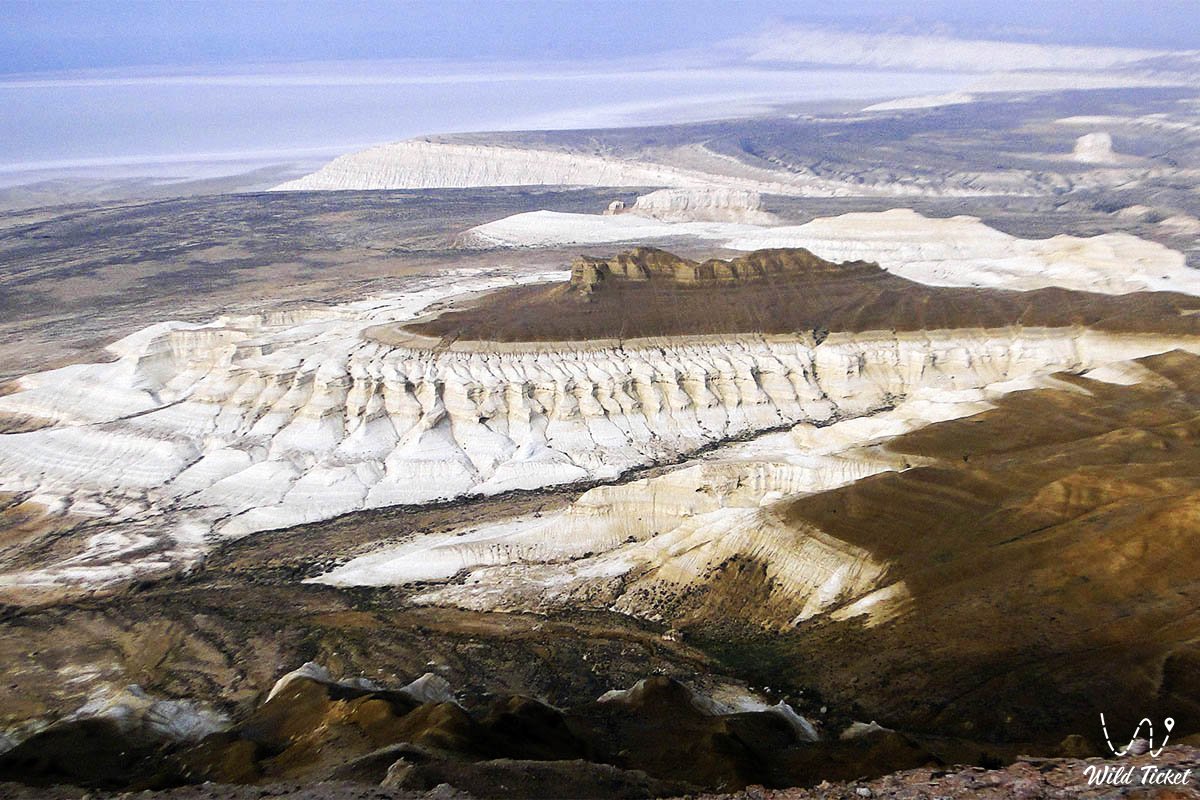
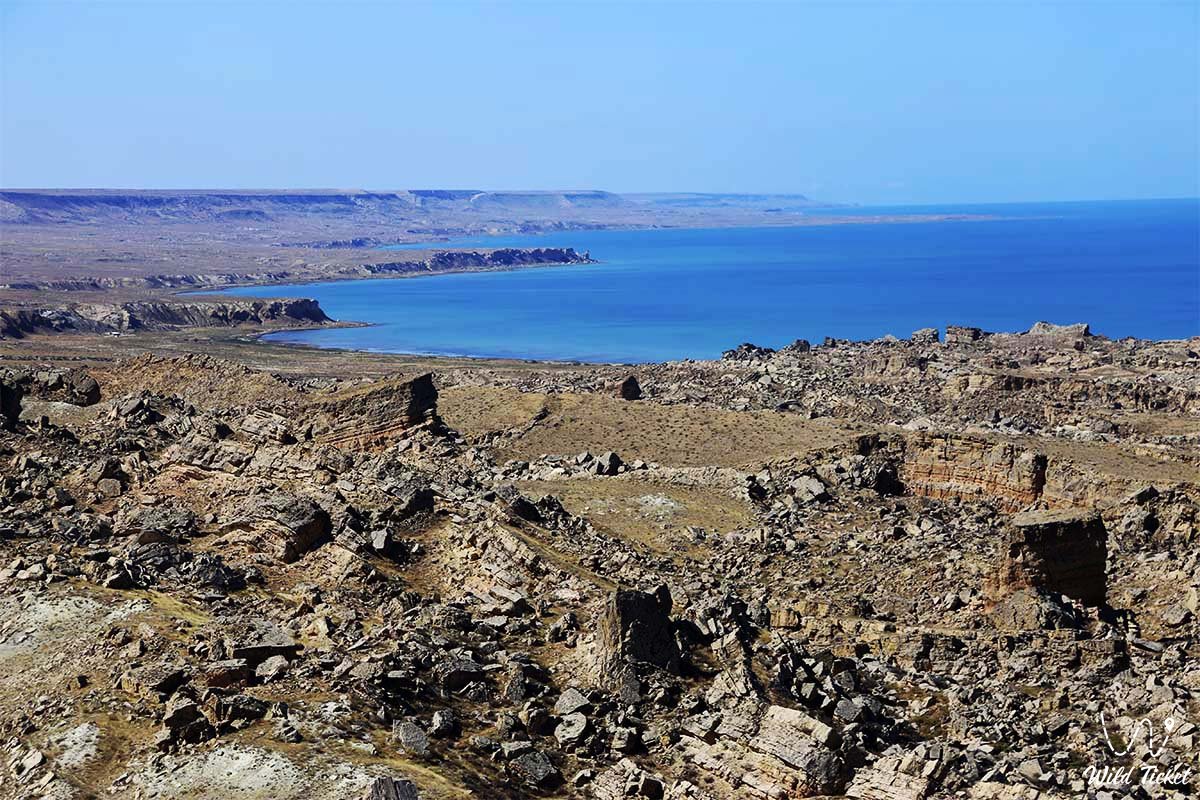
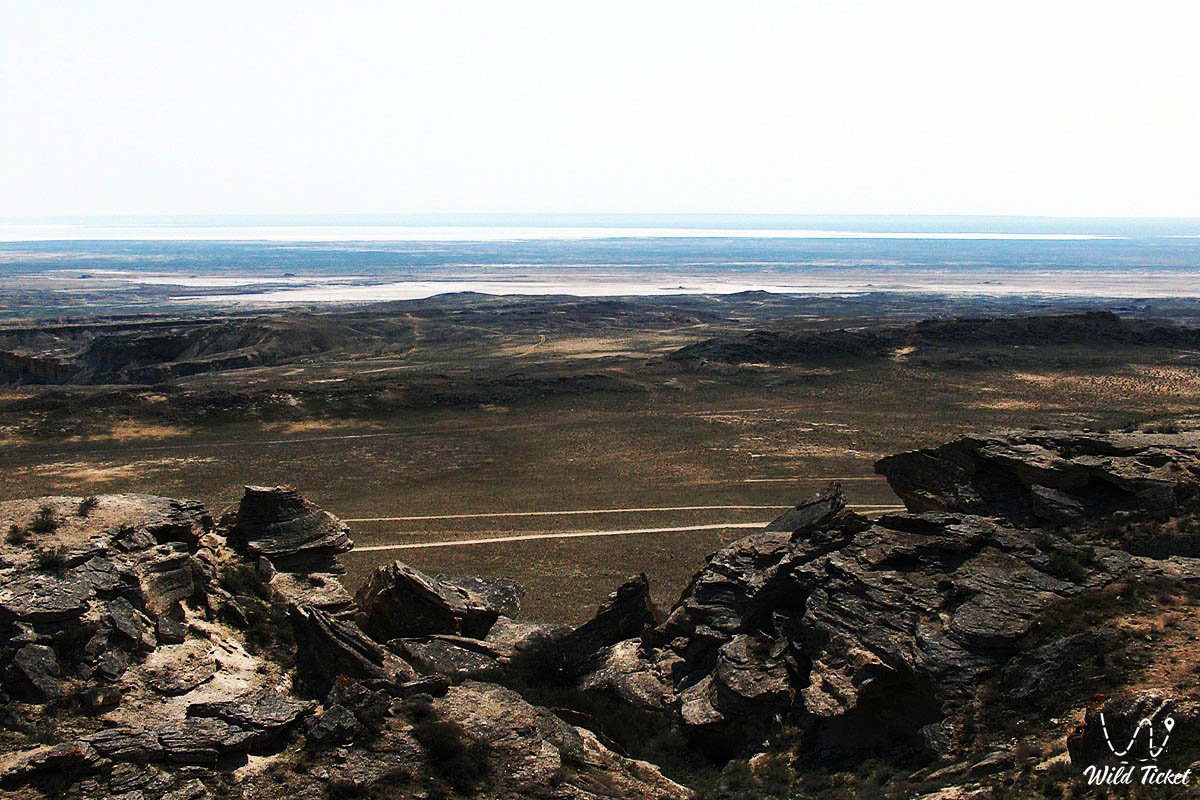
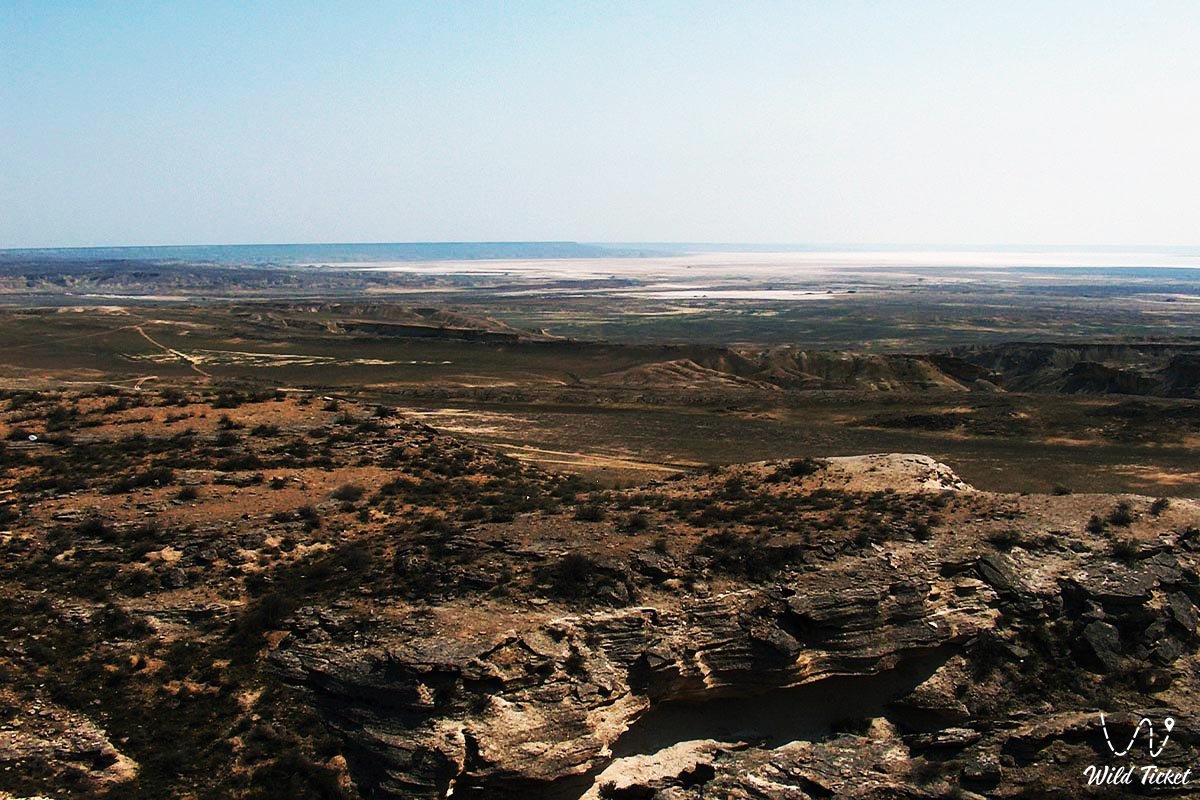
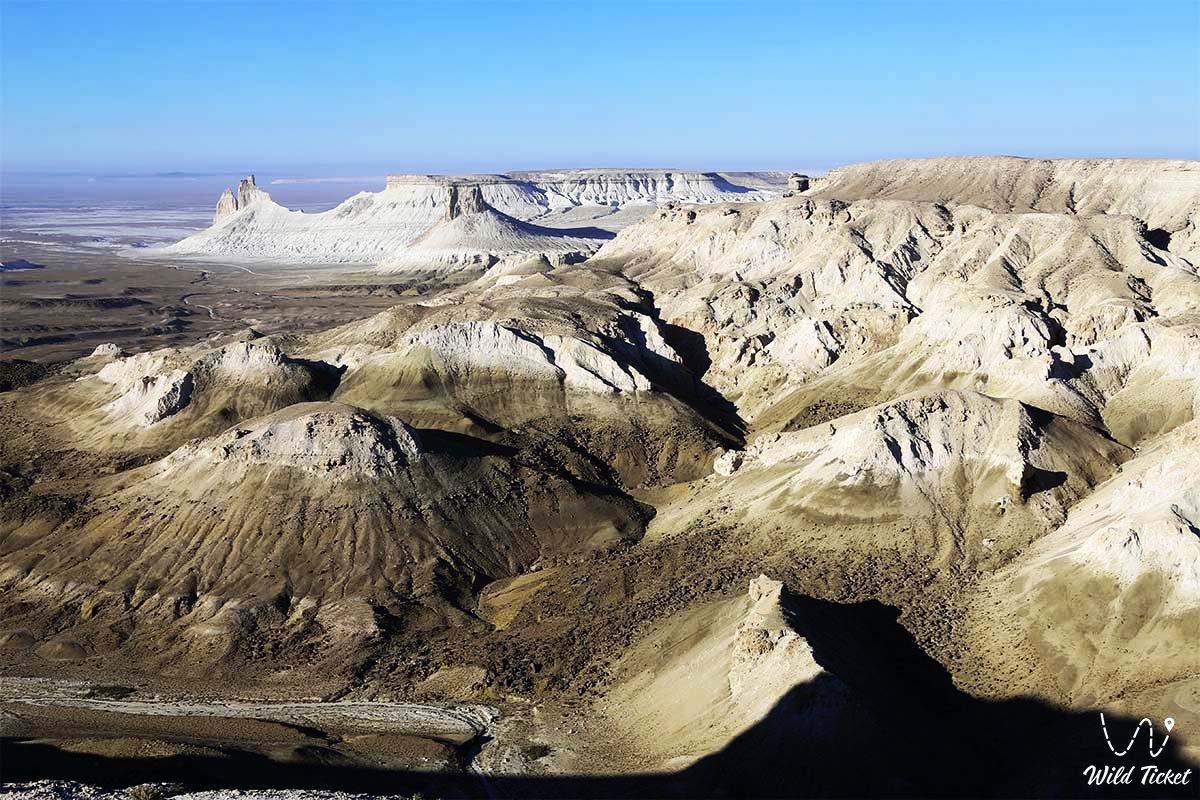
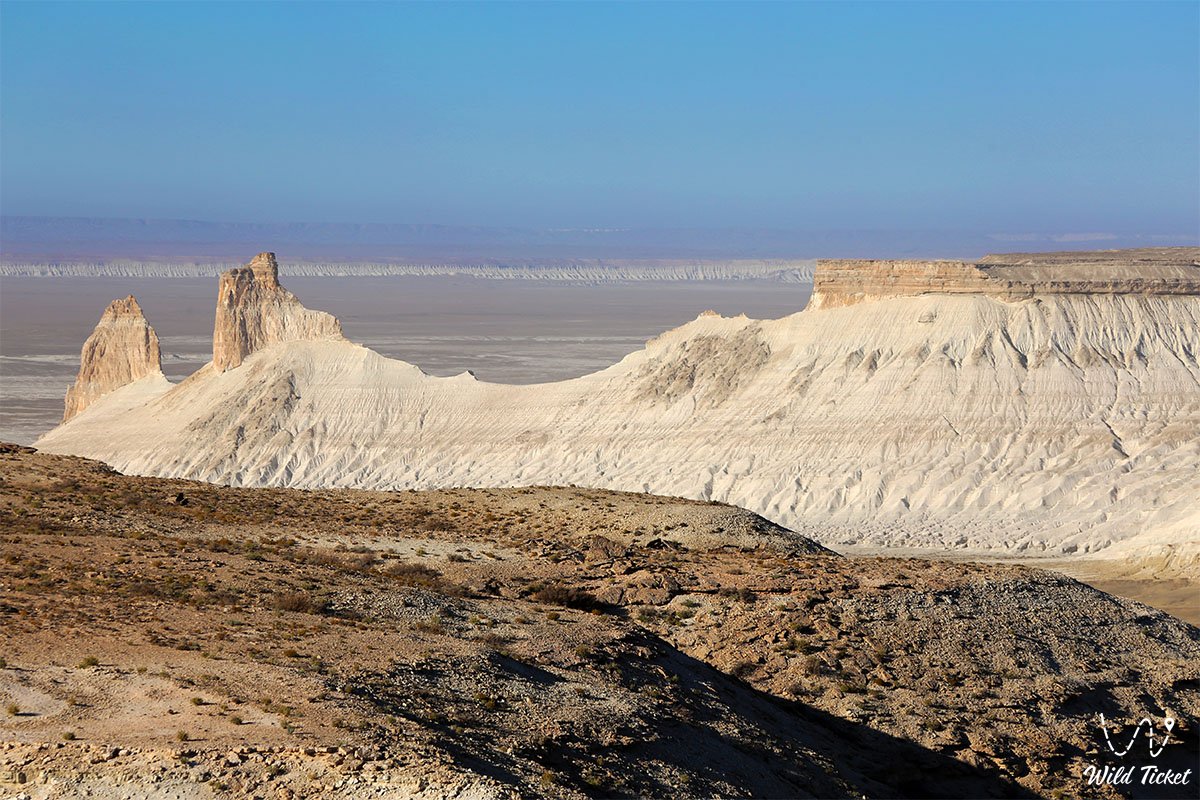
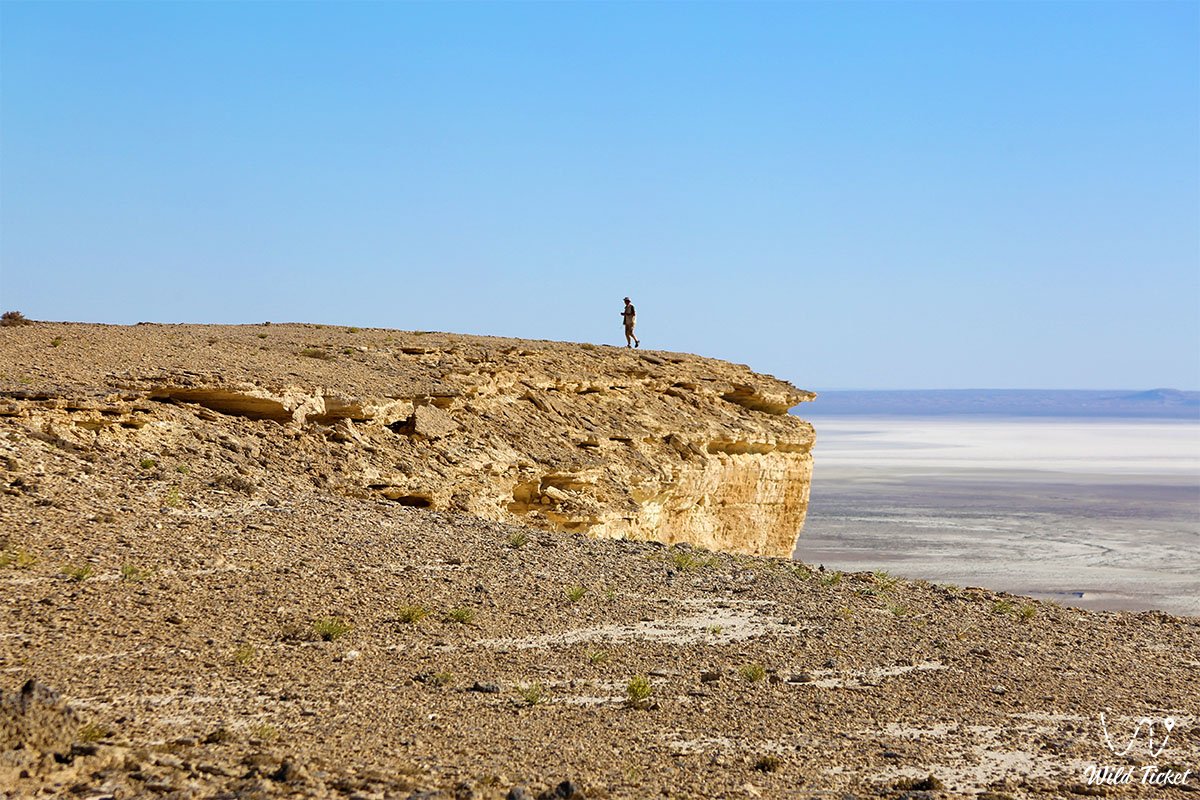
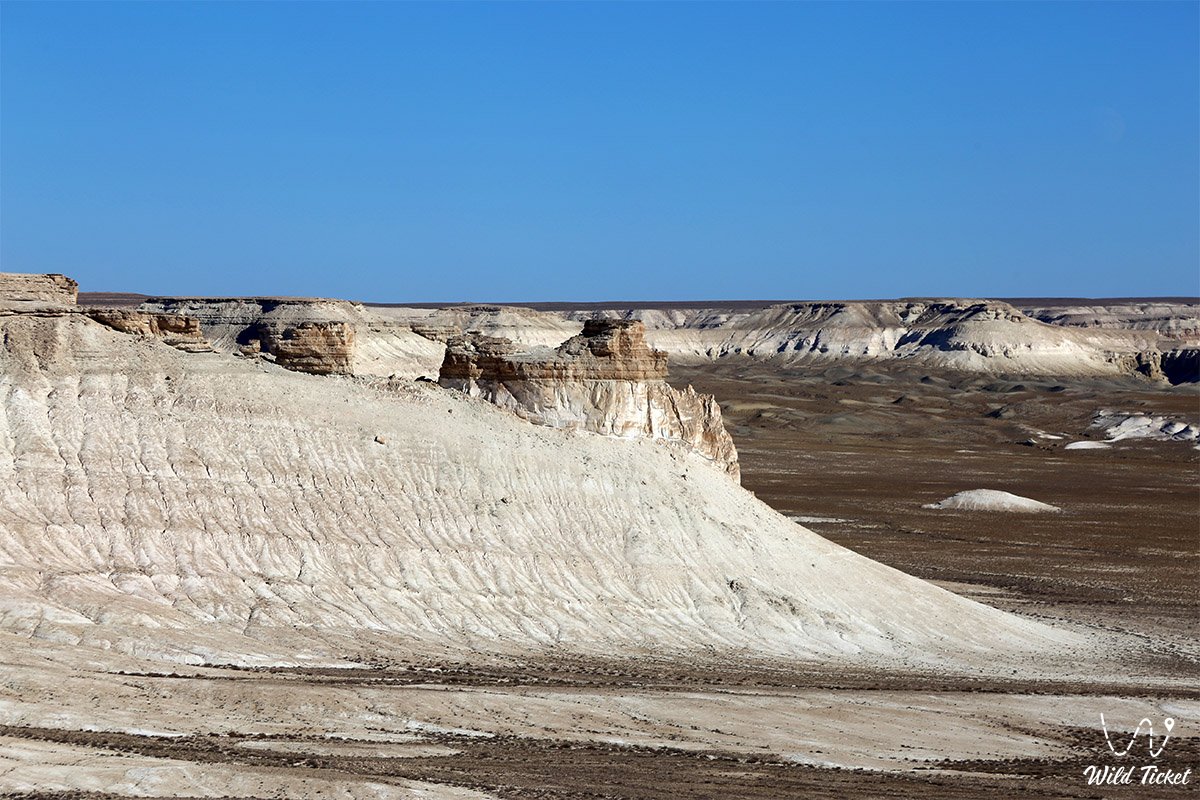
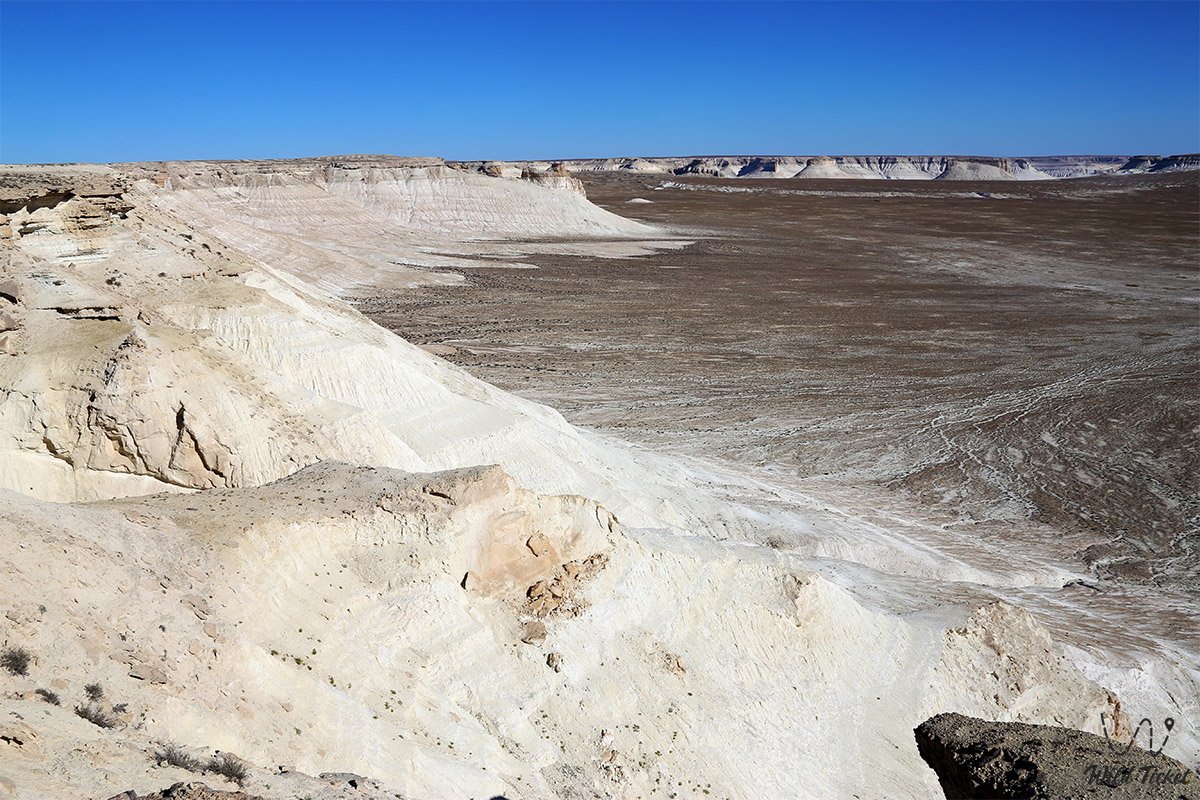
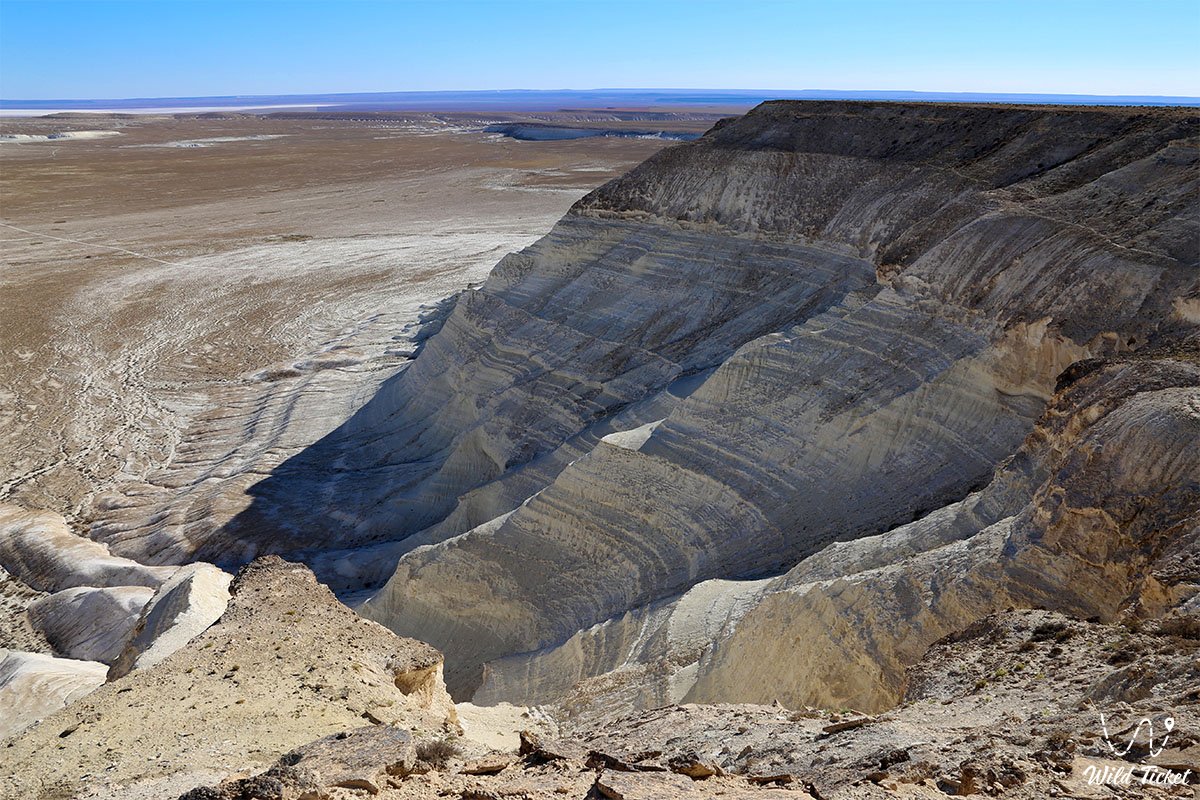
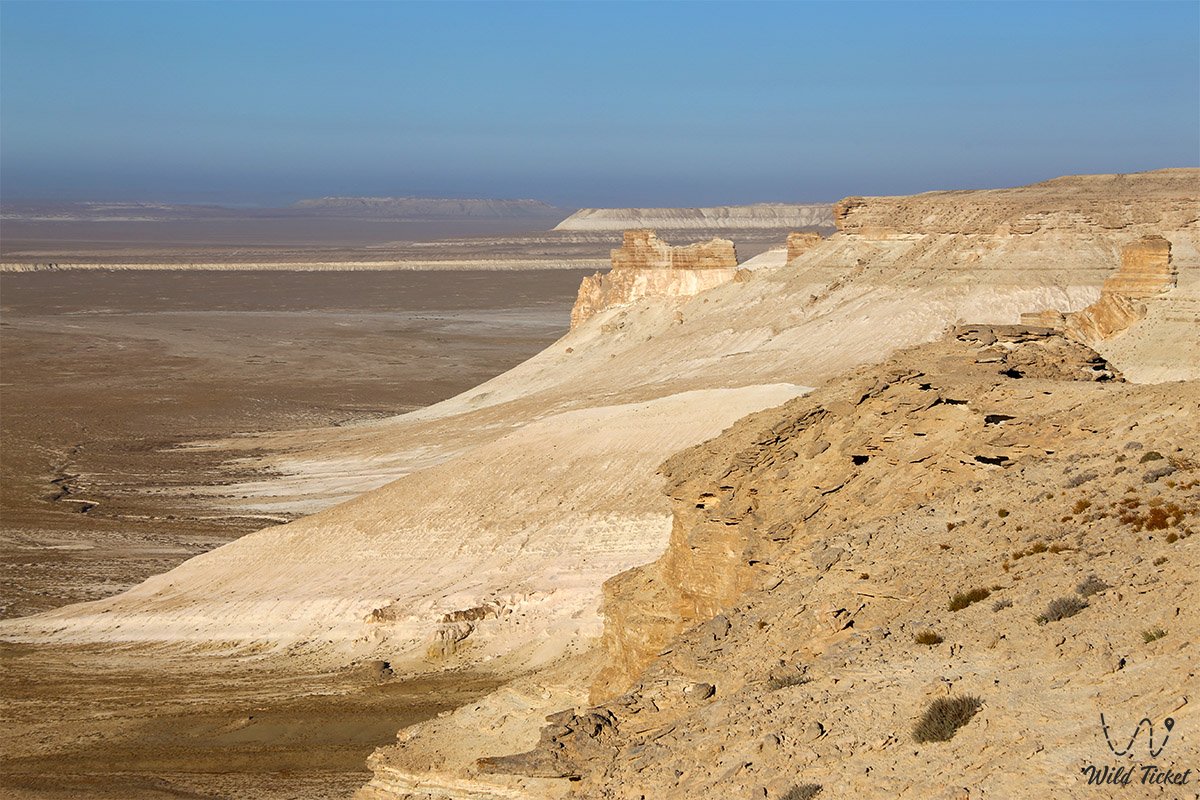
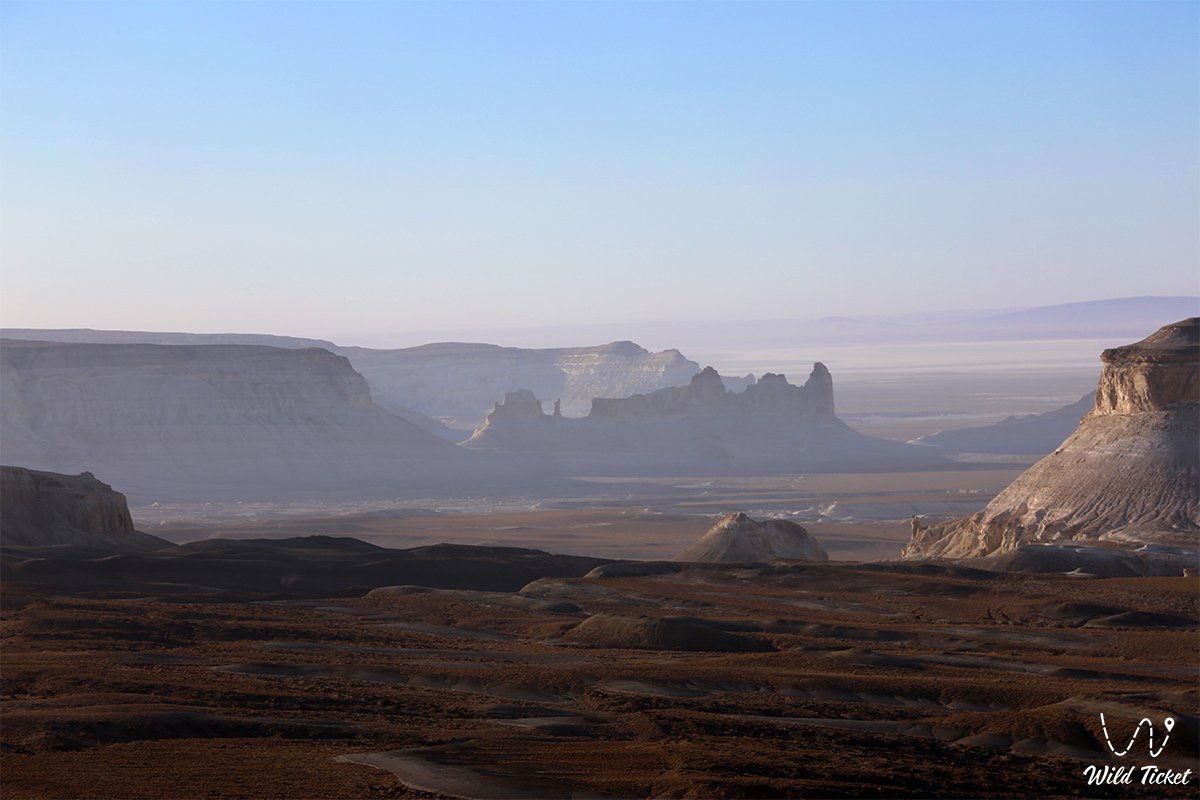
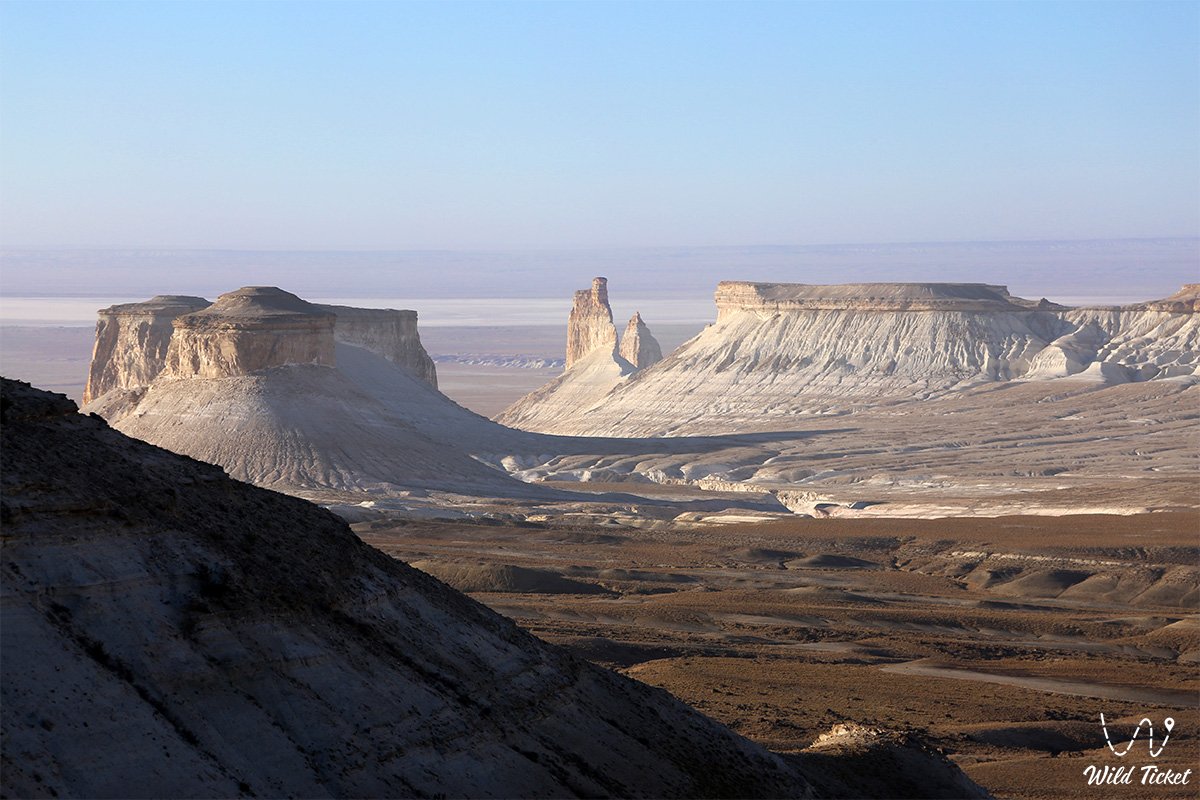
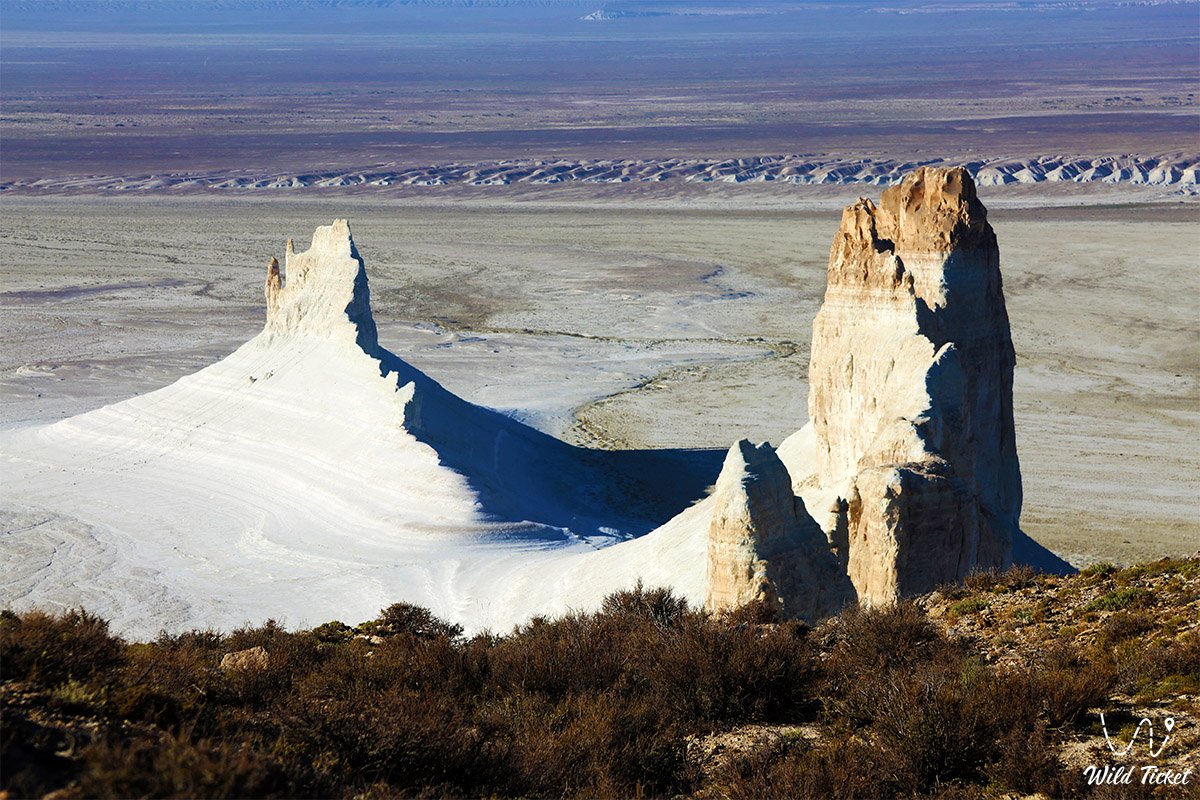
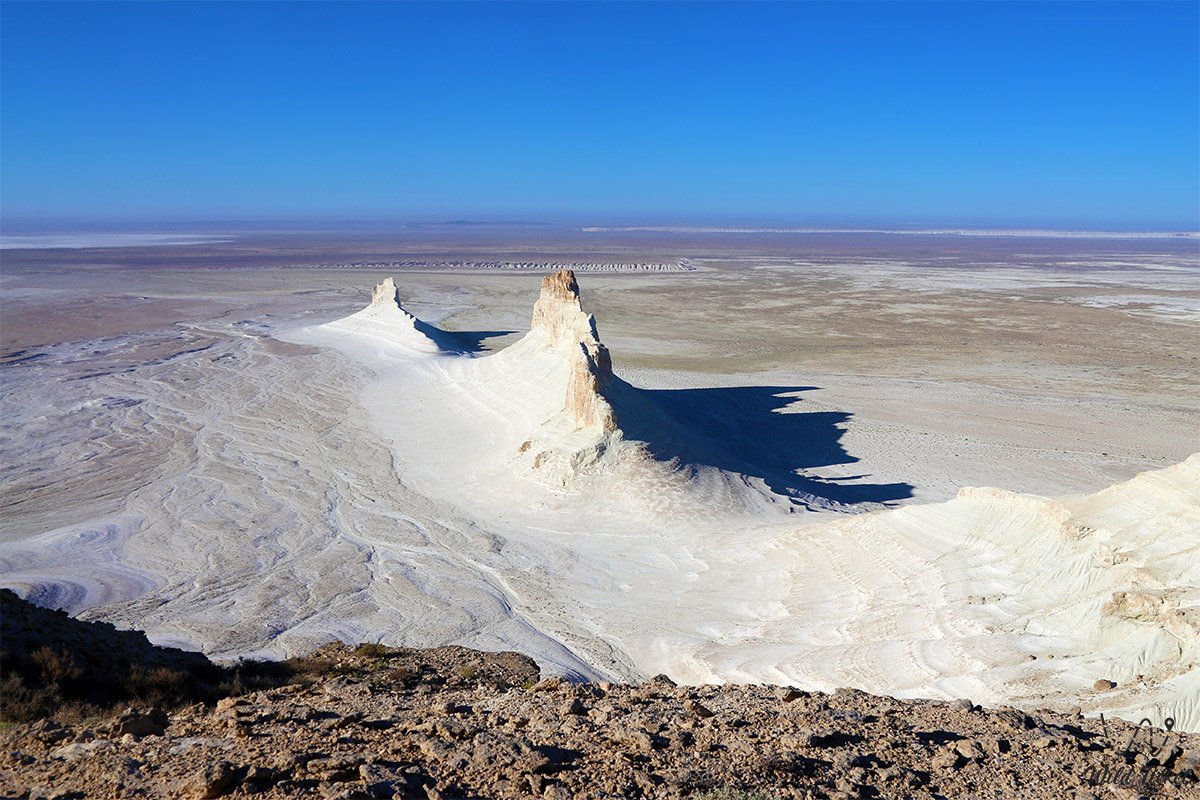
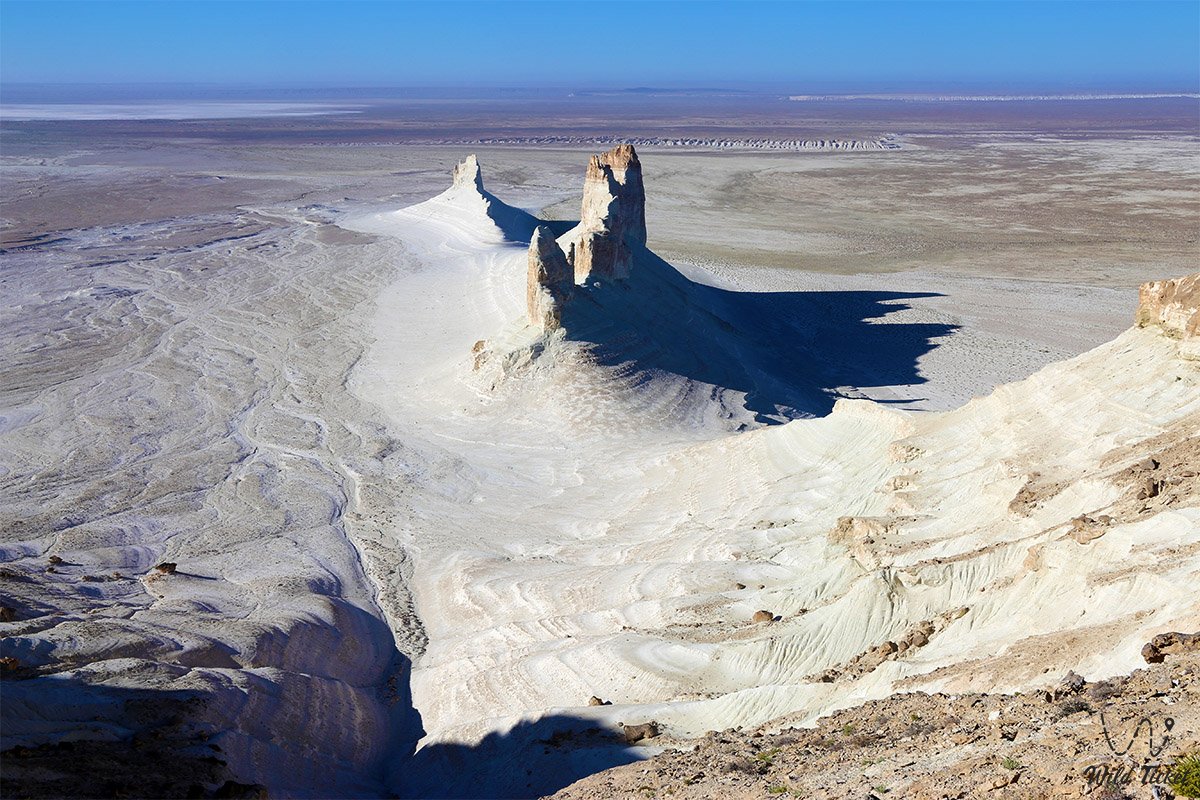
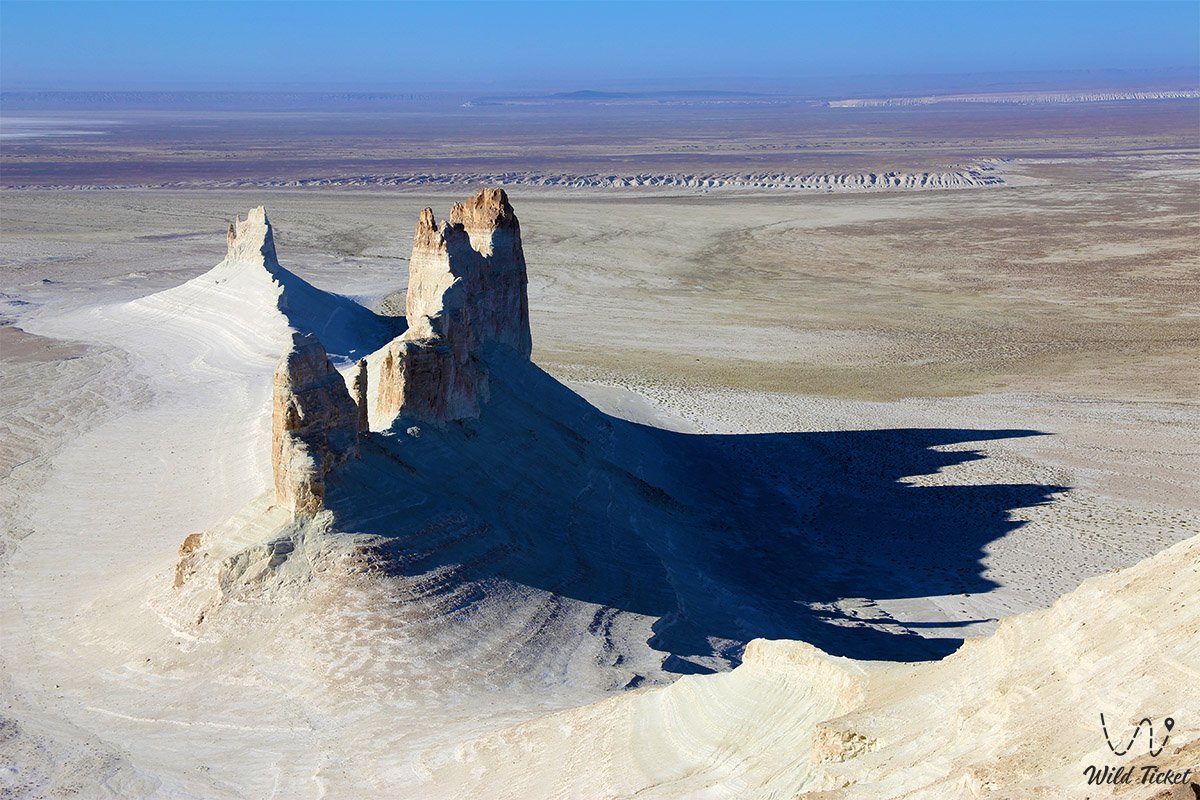
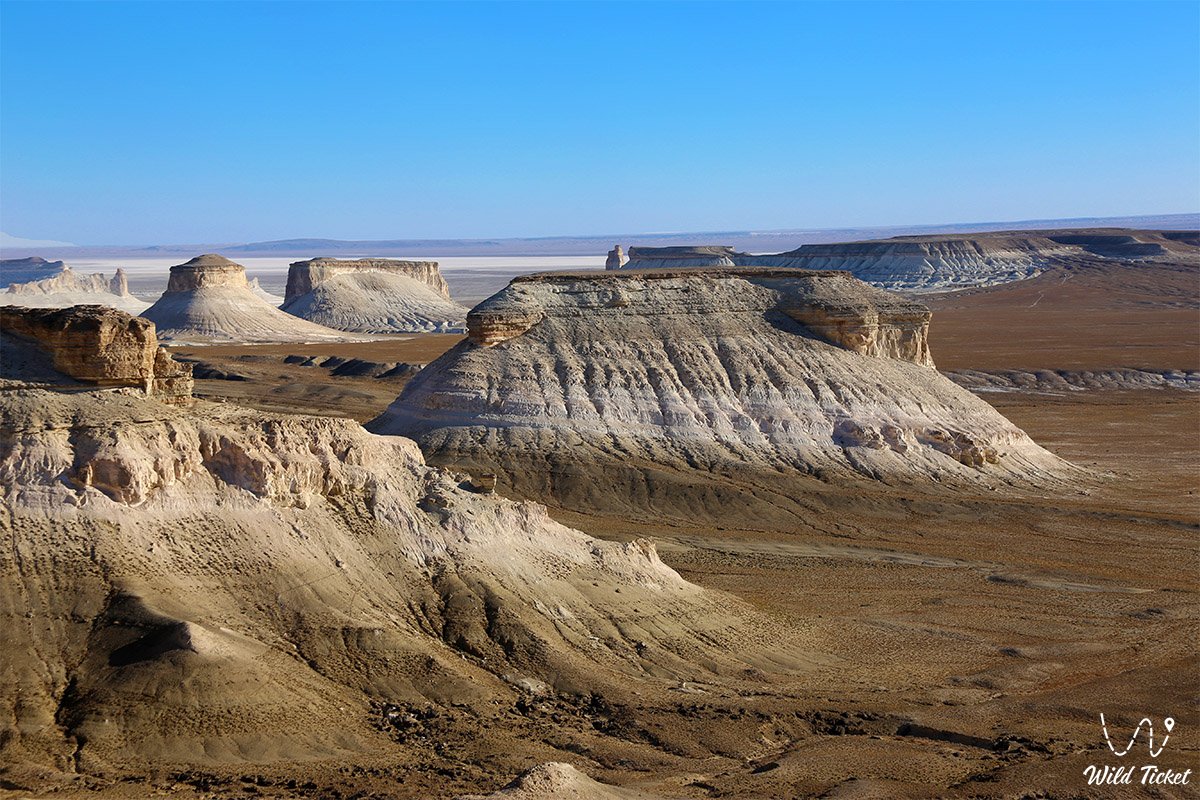
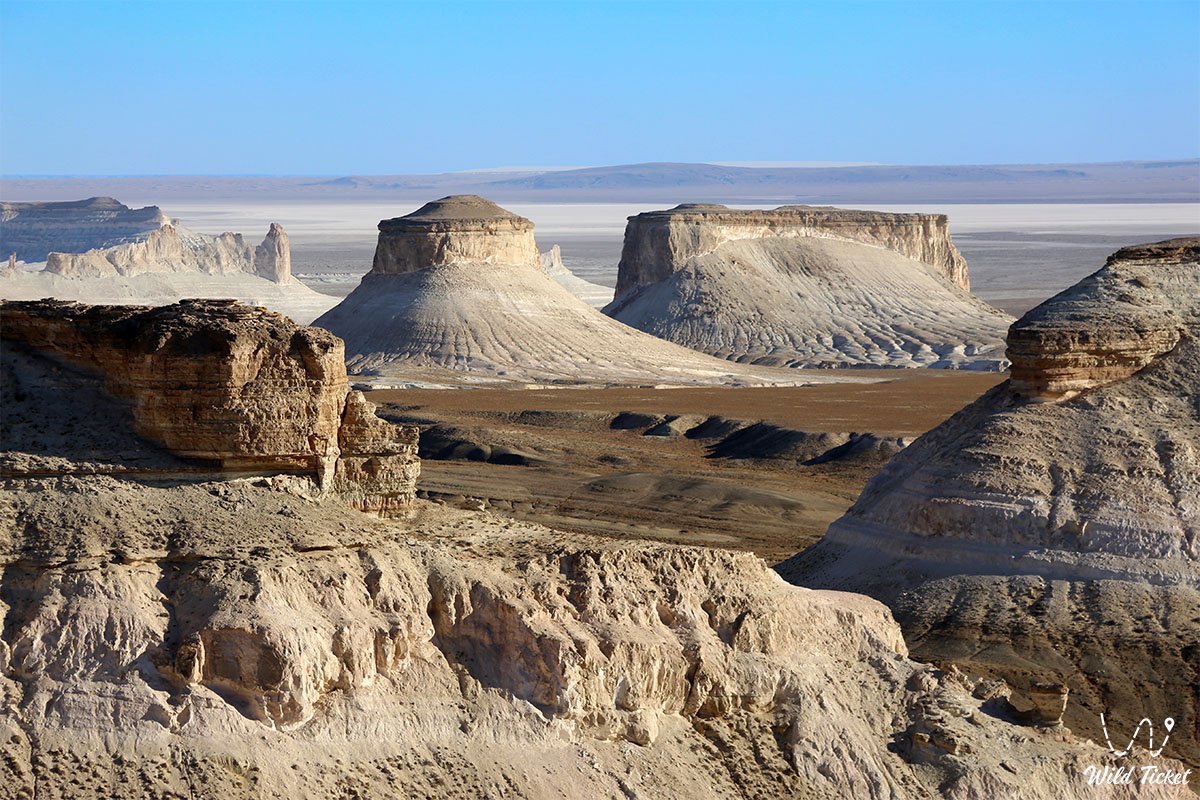
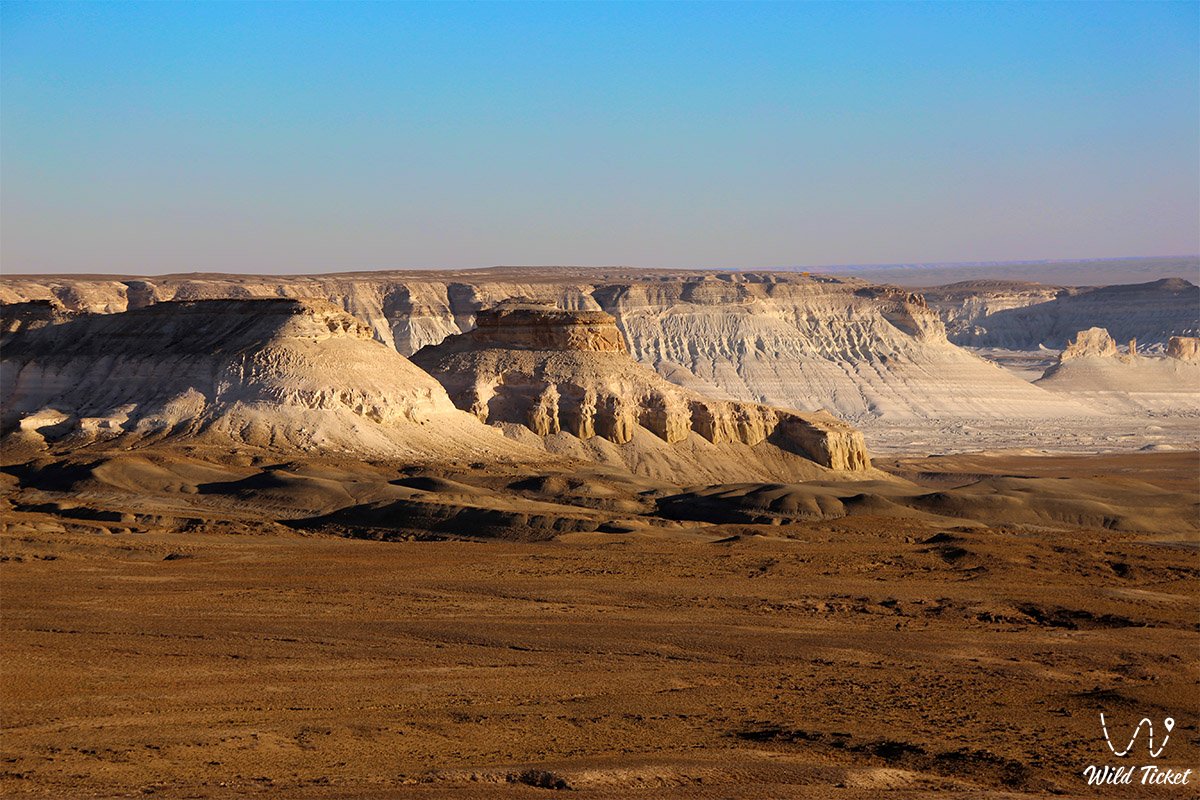
The main geographical feature of Ustyurt is its sheer precipitous scarps of Bozzhira, which represent chinks from 50 to 300–350 meters high that millions of years ago were the shores of ancient seas and create the impression of impregnable stone walls of a gigantic citadel. List of panoramic viewpoints on the Ustyurt Plateau (panorama No. 1, panorama No. 2, panorama No. 3, panorama No. 4, panorama No. 5, panorama No. 6).
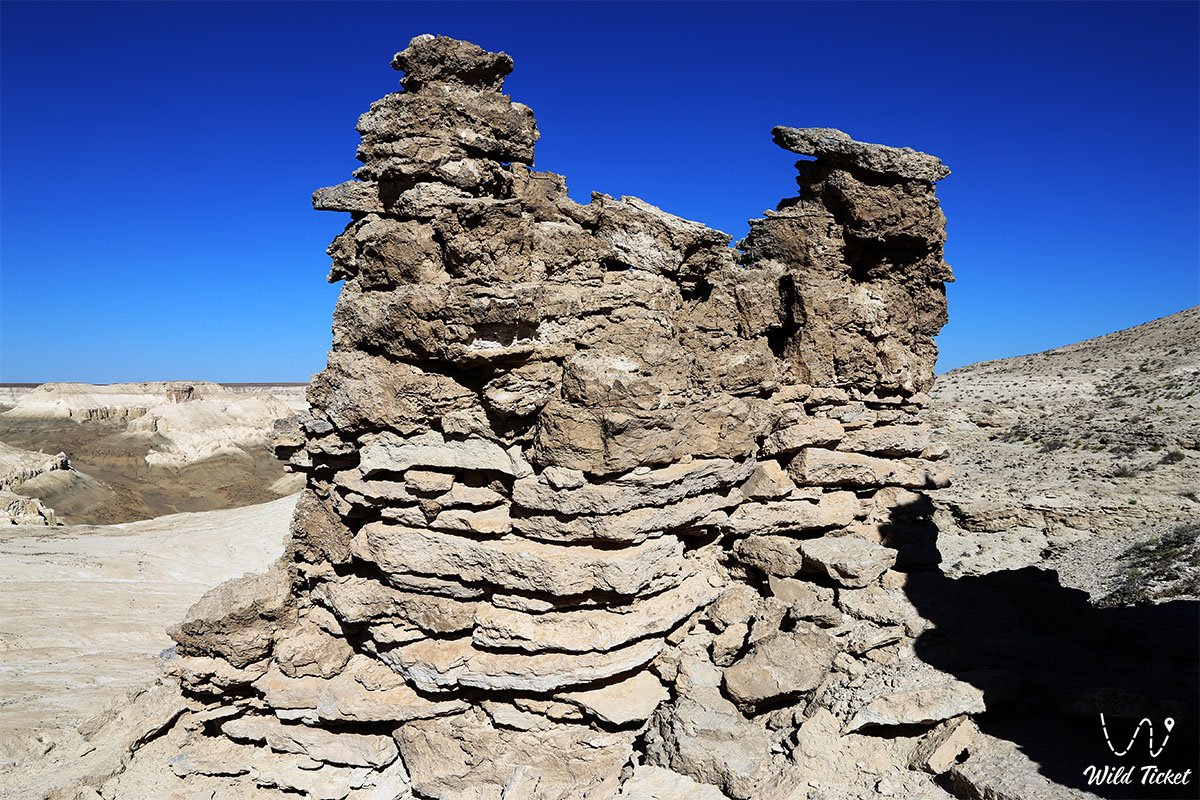
The geological framework of Ustyurt is formed by Neogene sedimentary rocks: the surface of the plateau is covered with Sarmatian limestones, underlain by marls, clays, limestones, sandstones, gypsums, and siliceous concretions. Because this territory in the Mesozoic and Cenozoic eras was the floor of the ancient Tethys Ocean, which separated the supercontinents of Laurasia and Gondwana, fossils are found everywhere in the rocks: ammonites, belemnites, fossil shark teeth, mollusk shells, and coral remains. On the plateau, there are low-altitude Aktau Mountains and Karatau Mountains.
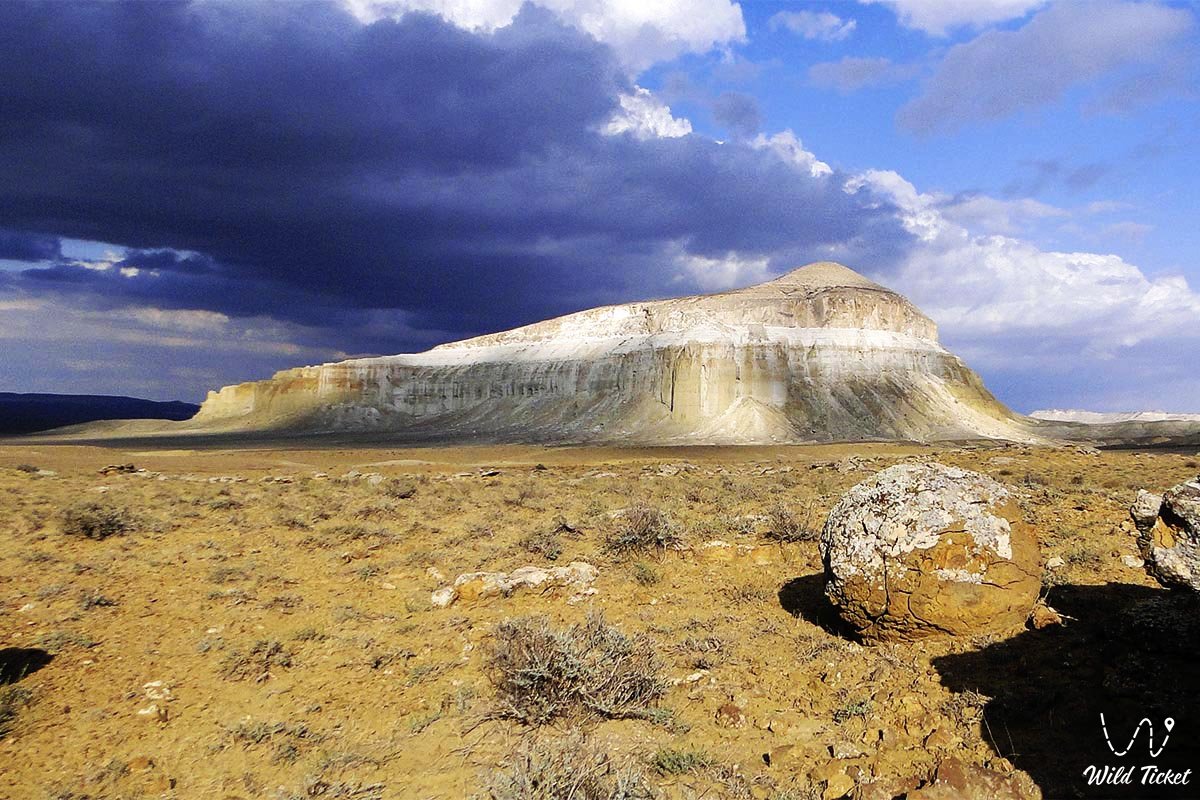
Here one can also encounter unique "stone balls" (iron-manganese concretions) and traces of karst processes – deep sinkholes, the Zhygylgan sinkhole with traces of ancient animals, and very deep karst caves such as Utebay and Balayuk with a lake at the very bottom.
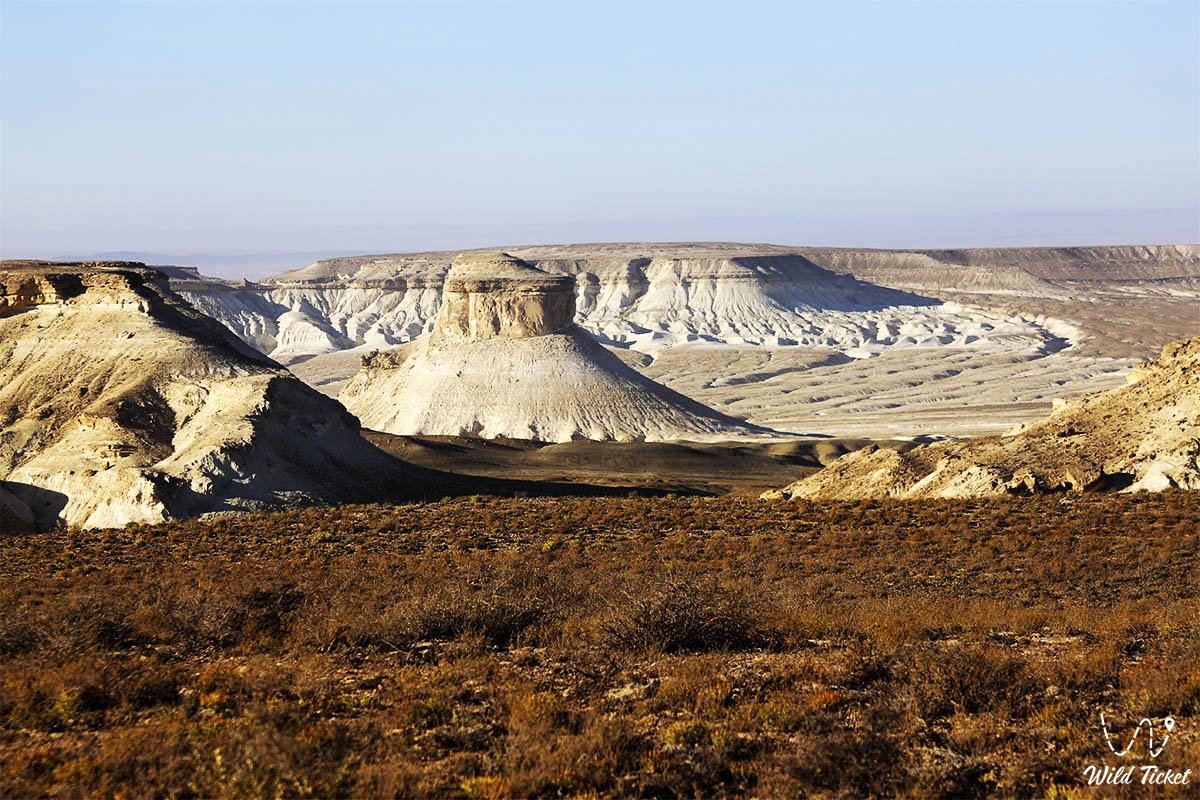
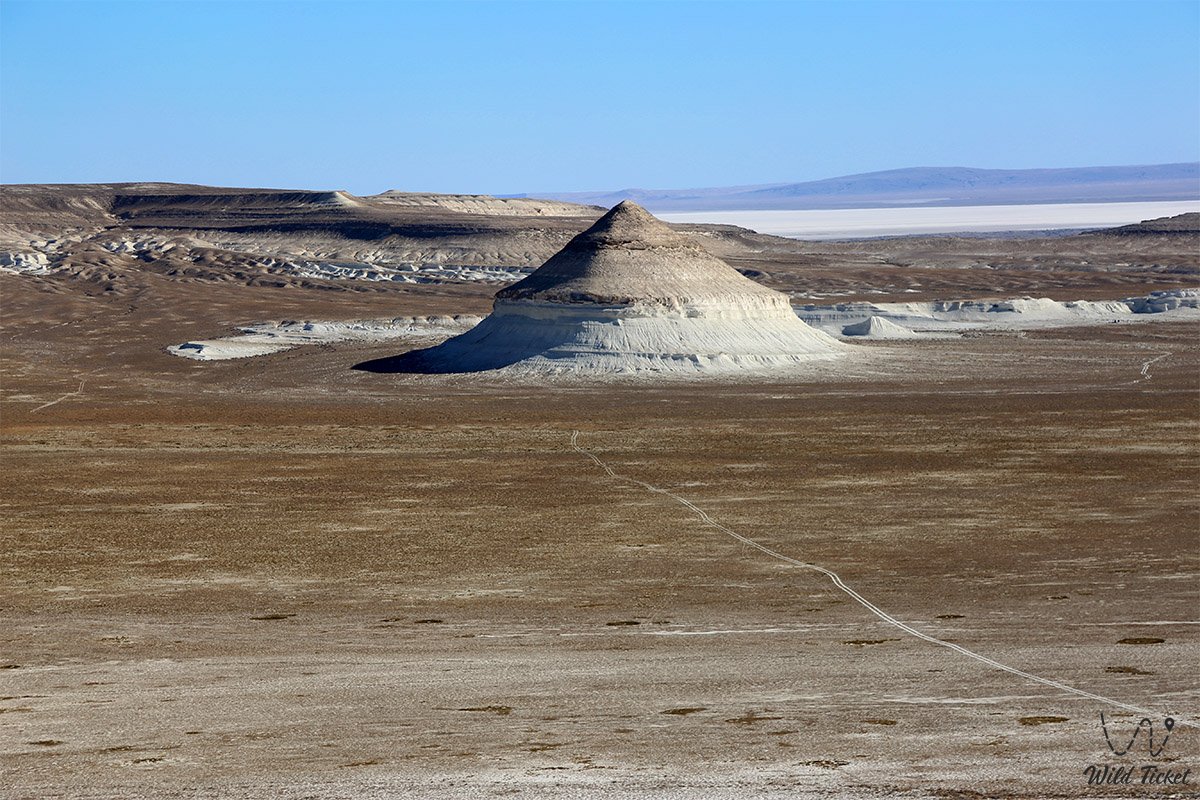
For travelers, researchers, and photographers, Ustyurt unveils primeval antiquity untouched by civilization. Local iconic sights are concentrated on the plateau and its chinks: the Martian canyons of Kapamsay or Meretsay, the remnant outliers of the Fangs of Bozzhira (Azu-Tisteri), the Karynzharyk depression with the giant mountains "Three Brothers", the Meretsay tract, as well as the enigmatic "arrows of Ustyurt" – gigantic ancient arrow-shaped geoglyphs that are distinctly visible only from a bird's-eye view. The famous Ustyurt Reserve is also situated on the plateau.
Today, the Ustyurt Plateau attracts fans of extreme off-road travel and scientific expeditions with its cosmic scale, absolute silence, and unique ecosystem, where harsh geology, ancient history of caravan routes, monuments of Sufism (underground mosques of Shopan-Ata and Beket-Ata), and rare desert inhabitants harmoniously merge. You will also find it interesting to look at the multicolored Mount Bokty and the mysterious, enigmatic Mount Sherkala (Lion's Head or Lion's City).
--------------------------------------------
How to get there and visit –
The Ustyurt Plateau spans an immense region, including the Tupkaragan district, but the main and most scenic access points for travelers in Kazakhstan are concentrated along its western chink in the Mangystau region. Convenient starting points for expeditions are the major cities of the region (above all Aktau, Zhanaozen, and the village of Senek), from where the road to key sights takes about 1–4 hours by car.
Routes lead to the Oynak-Bozzhira tract, the Karagiye depression, and underground mosques.
GPS geographical coordinates of the central zone of Ustyurt chinks: 43°19'14"N 55°11'30"E
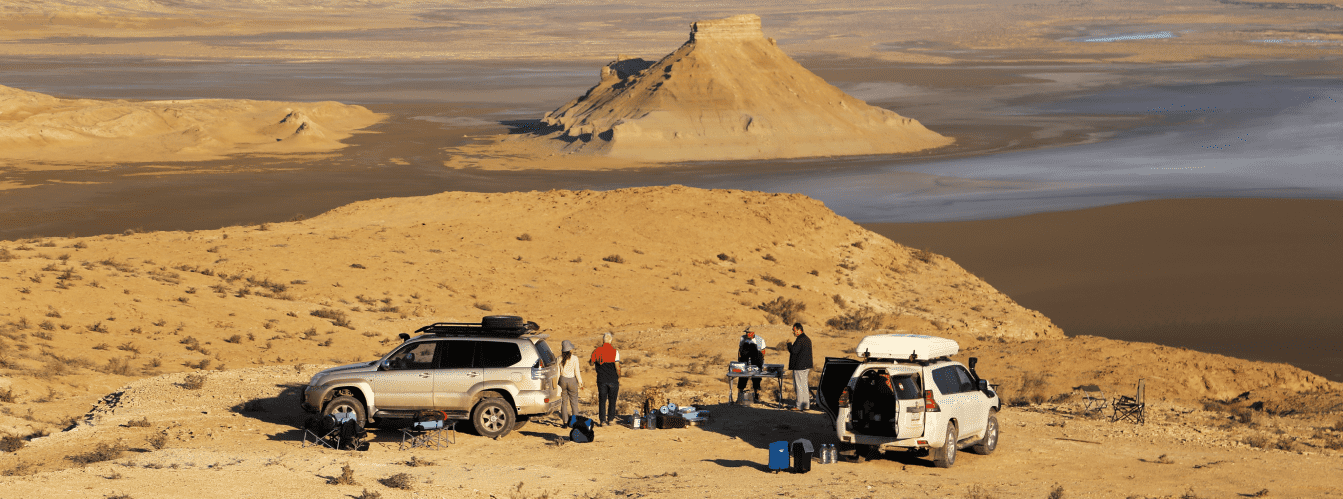
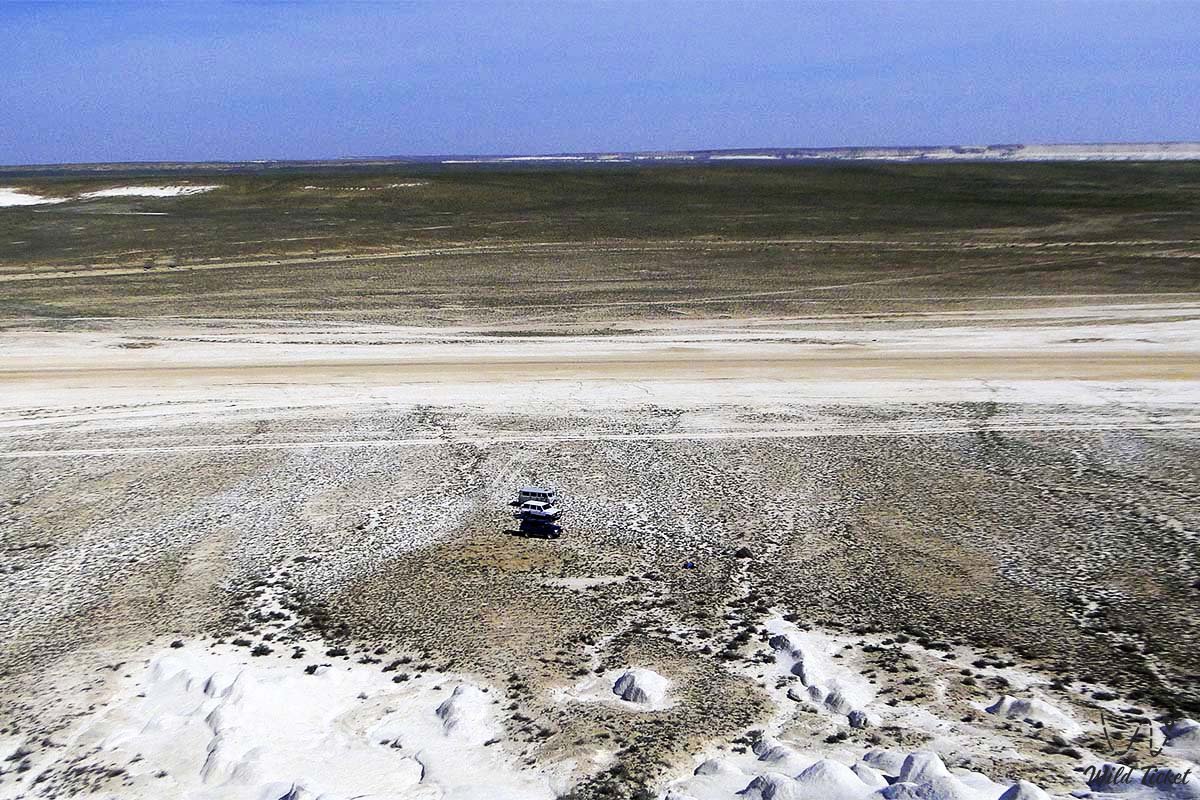
Traveling across the Ustyurt Plateau requires an exclusively prepared four-wheel-drive vehicle (4x4 off-roader) with high ground clearance and reliable underbody protection. The stony graded tracks and the plateau are strewn with sharp crushed rock; therefore, spare wheels, a compressor, a jack, and a repair kit are mandatory.
Traveling across the desert alone is strictly forbidden: due to the absence of mobile network coverage and harsh conditions, offline navigation, a satellite phone, a fuel reserve, and drinking water of at least 5 liters per person per day are necessary. Approaching the edge of the chink precipices is lethally dangerous due to loose limestone rock and overhanging cornices.
The optimal time for trips is spring (April – early May) and autumn (September – October). In summer, temperatures on Ustyurt reach extreme levels (up to +50... +60 °C), while in winter blizzards rage with frosts down to -40 °C. Infrastructure on the plateau is nonexistent; overnight stays are possible only in tent camps or within organized tours.
--------------------------------------------
History
The historical chronicle of the Ustyurt Plateau extends deep into centuries and millennia. In the early and middle Cenozoic Era, this land was the floor of the ancient Tethys Ocean. In the Pliocene epoch, tectonic uplift of the plateau occurred, and the former ocean floor found itself hundreds of meters above sea level.
In antiquity and the Middle Ages, caravan routes traversed the harsh expanses of Ustyurt, including the Great Silk Road and the road of the Khwarazmshahs connecting Khiva with the lower reaches of the Emba and the Volga. Along the trade paths, caravanserais were built (the arch of the Beliuli caravanserai), along with fortifications (ruins of the Alan-Kala fortress, ancient Saka fortifications of Kaishaki), burial grounds, mausoleums, and underground temples. On the plateau, archaeologists have uncovered about 60 Neolithic sites, as well as traces of Scythians and Mongols.
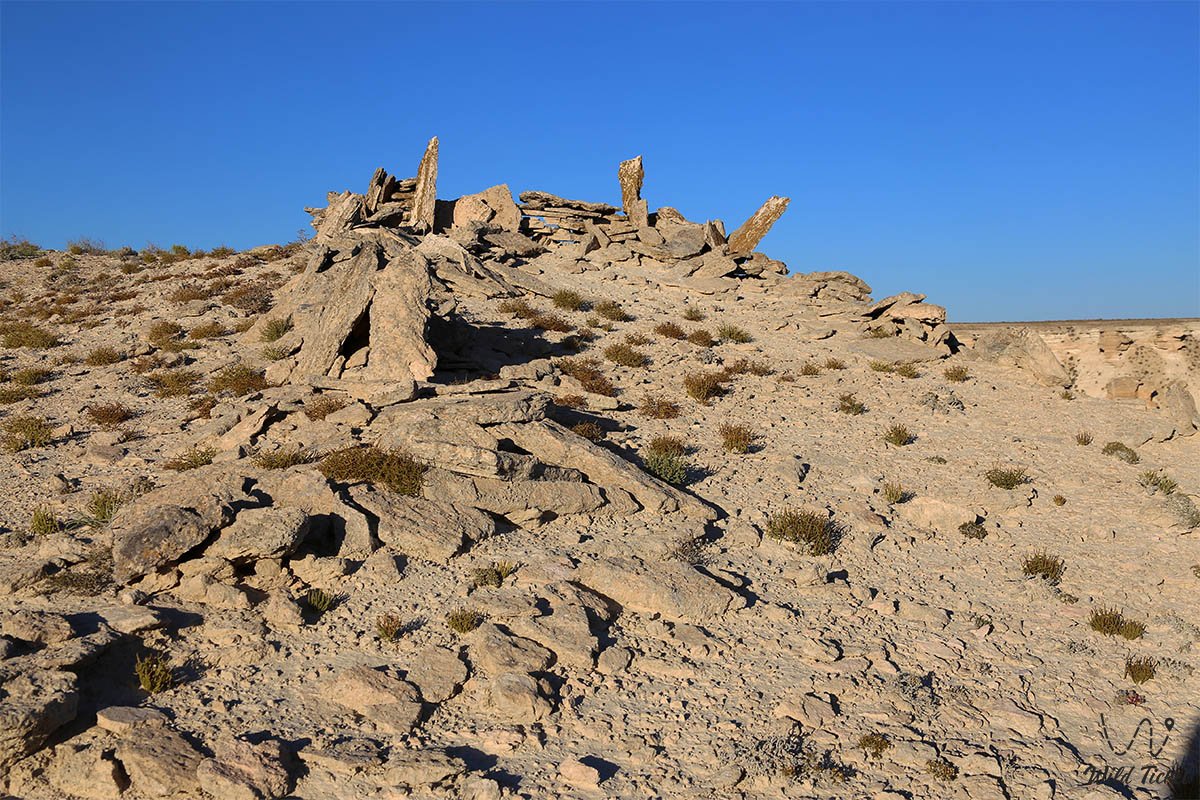
A special enigma is posed by the arrows of Ustyurt – gigantic arrow-shaped geoglyphs up to 80 cm high and up to 900 meters long, first noticed from the air in 1986. Due to their giant dimensions and flattened relief, they are impossible to discern from the ground; scientists believe these stone alignments served ancient tribes for water collection or corral hunting, or pointed in the direction of receding waters.
During the period of the spread of Sufism in Mangystau, missionaries carved cells and madrasahs into caves (the rock-hewn mosques of Shopan-Ata and Beket-Ata). To preserve this unique nature, the Ustyurt State Nature Reserve was established in 1984.
Information
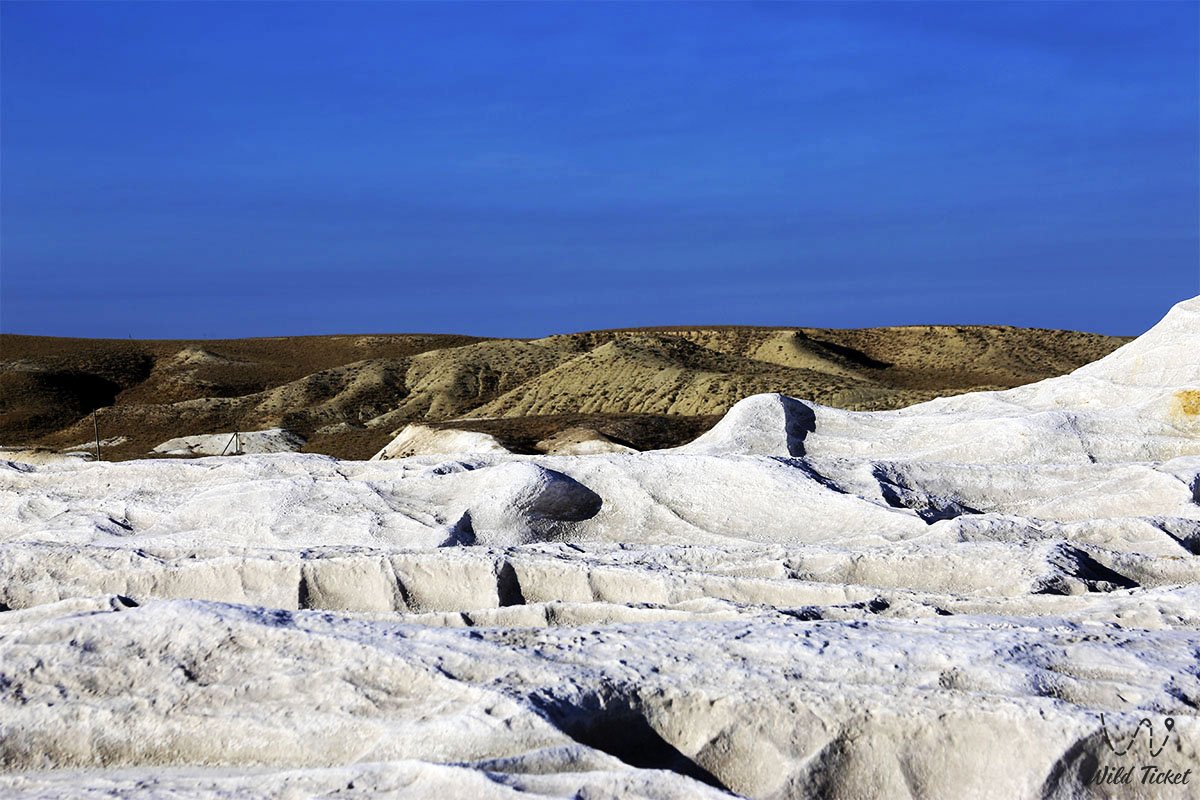
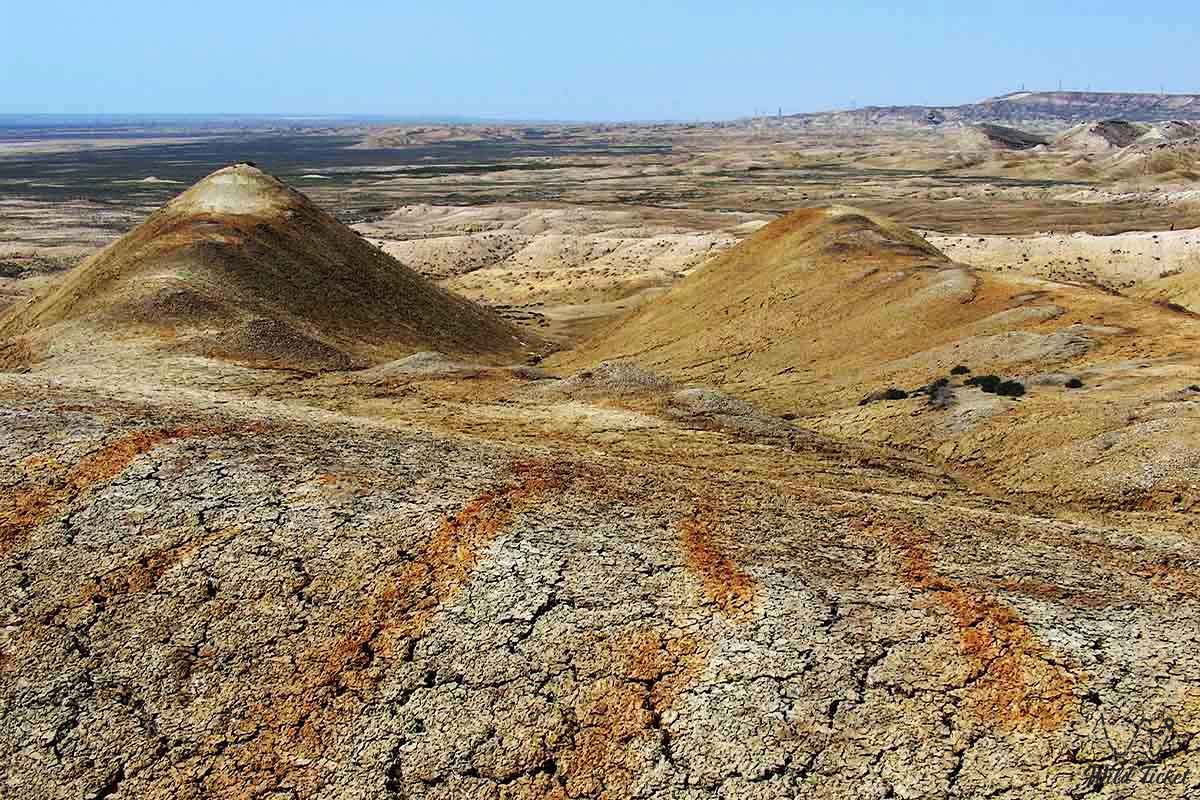
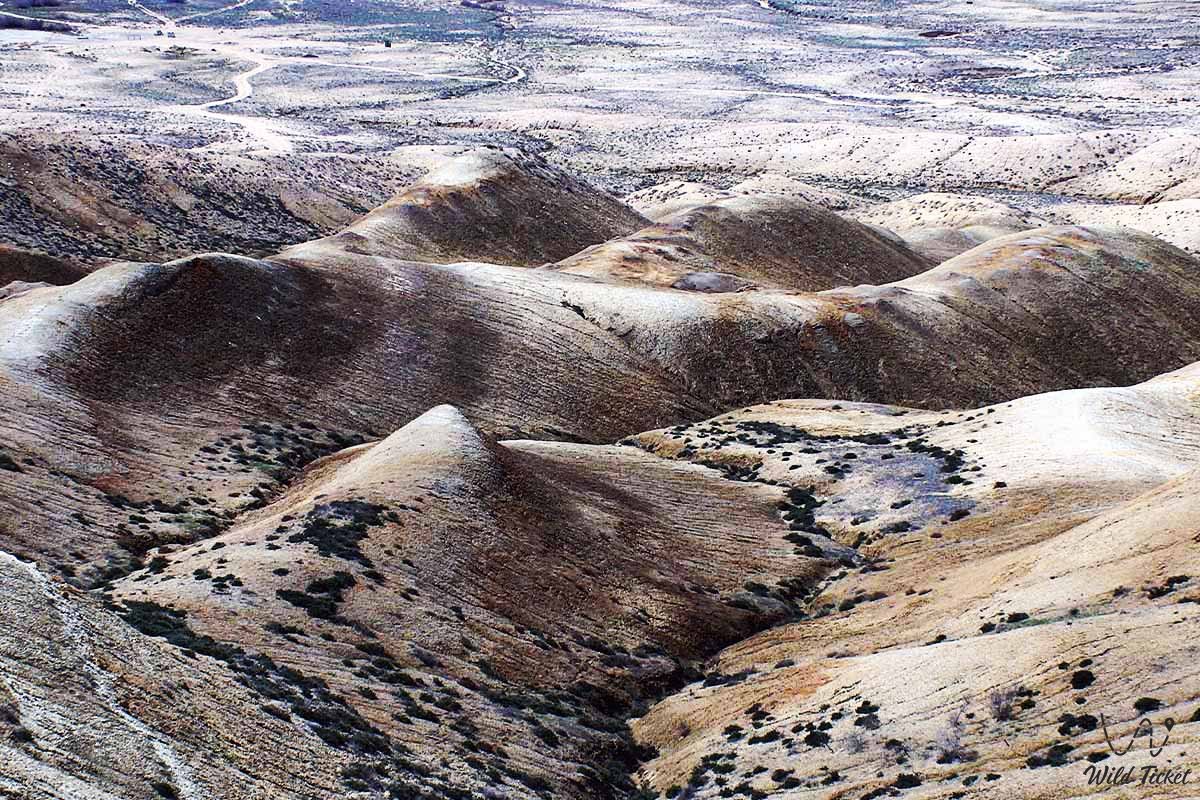
Geomorphologically, Ustyurt represents a tableland plateau with a number of ridges (Muzbel, Karabaur swells) and depressions. The relief of the plateau is a clay, clay-stony, and sandy desert with salt flats (the salt marsh in the Barsakelmes tract, the Assake-Audan depression) and karst formations (sinkholes up to 30 meters in diameter, caves, and shallow hollows formed by leaching of gypsum and limestones).
The hydrography of the plateau is extremely poor: there are no permanent rivers or surface freshwater streams here. However, Ustyurt possesses groundwater reserves (the Ustyurt artesian basin) lying at depths from 20 to 70 meters.
The climate of Ustyurt is sharply continental, harsh, and arid. Annual precipitation is only 80–160 mm. Summers are long and very hot; winters feature little snow and are severe, with high winds and blizzards.
The ecology of the plateau is fragile: soil cover and vegetation regenerate slowly, so tourists are strictly forbidden from leaving trash, driving off existing tracks, and disturbing rare animals.
Detailed description of the venue
The natural landscape complex of the Ustyurt Plateau includes the following expressive elements and zones:
• Chinks of Ustyurt – stepped rock precipices up to 300–350 meters high, forming gigantic amphitheaters and serving as a stratigraphic chronicle of the Earth spanning tens of millions of years.
• Bozzhira Tract – fantastic gorges and white chalk remnant outliers-fangs ("The Fangs") on the western scarp of the plateau, which are the calling card of Mangystau.
• Karynzharyk Depression – a wild and remote basin (75 meters below sea level) with a sor and three picturesque giant mountains "Three Brothers" (Ush Agayyn dy tau).
• Karst Utebay Cave and Balayuk Cave – deep subterranean cavities with limestone arches and an underground lake at the bottom.
• Archaeological geoglyphs ("Arrows of Ustyurt") – enigmatic stone structures from the Early Iron Age on the surface of the plain.
• Historical monuments – the arch of the Beliuli caravanserai, ruins of the Alan-Kala fortress, and ancient necropolises.
Flora and fauna
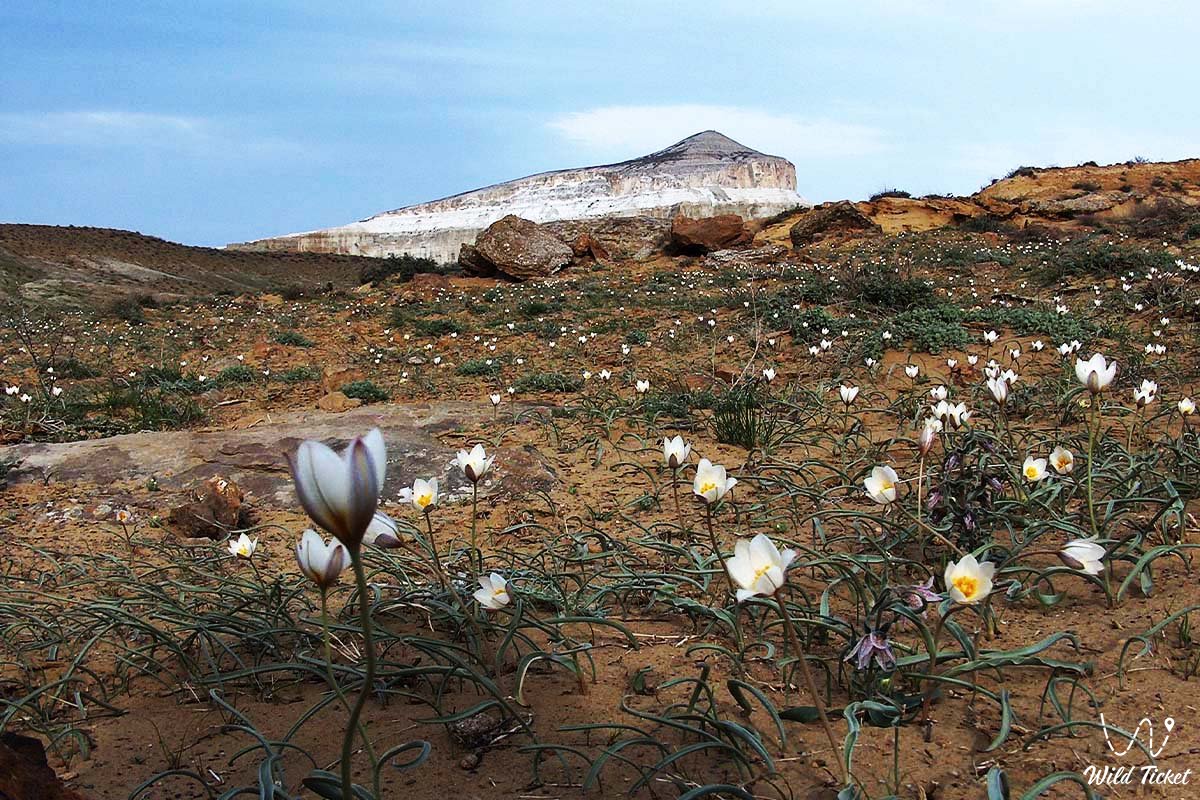
The plant world of the plateau is represented by desert xerophytes adapted to saline soils, winds, and drought. Wormwood dominates on clay plains in combination with sparse cushions of biyurgun, saltworts, blue-grey and black saxaul, dzhuzgun (kandym), and itsegek (Anabasis aphylla).
The fauna of Ustyurt is unique and comprises rare inhabitants of arid zones. The symbol of the plateau is the Ustyurt mouflon (Turkmenian wild sheep), whose last major population in Kazakhstan is protected in the Ustyurt Reserve. The expanses of the plateau are inhabited by goitered gazelles, saiga antelopes (entering mainly in winter), and rare predators: the caracal, Pallas's cat (manul), as well as the steppe eagle, peregrine falcon, and bearded vulture.
Legend
Many poetic nomadic legends are associated with the Ustyurt Plateau. The most famous legend recounts the creation of the world from an egg dropped in flight by the bird of life: fire dried up the place of impact, and from the lower part of the egg the gigantic Ustyurt Plateau was formed.
Other legends speak of a stone sea and an expanse frozen in time, of goitered gazelles born from sunbeams fallen to the earth, and of caravans laden with gold lost in sandstorms, whose phantom lanterns still flicker on moonless nights.
Conclusion
The Ustyurt Plateau is a grandiose open-air geological museum uniting the memory of the Tethys Ocean, the monumentality of sheer chinks, and the absolute cosmic silence of the desert. A journey here bestows a rare sense of touching the primeval antiquity of the planet.
Visiting the Kazakh portion of Ustyurt reveals boundless horizons where time stands still, and stone, light, and wind shape eternal landscapes.
Interesting sights on the plateau:
• North Small Aral Sea;
• Large Aral Sea (South Aral);
• Kenty-Baba Necropolis;
• Sultan-Epe Canyon;
• Heart-Shaped Lake Kuzdykary;
• Mount Borly-Tau;
• Mount Otpan-Tau and Aday-Ata Monument;
• Shomanay Mountains;
• Akespe Tract on Mangyshlak;
• Mount Sherkala in the Shape of a Flying Saucer;
• Shatkal Canyon;
• Mount Shokytau;
• Mount Ushkirtaw;
• Utebay Tract;
• Kokala Tract;
• Kenderli Steppe Salt Marsh.
Sacred sites on the Ustyurt Plateau:
• Koben Mosque;
• Kolbas Ishan Mosque;
• Saganatams on Mangyshlak;
• Otpantau Complex on Mount Otpantau;
• Beket-Ata Mosque in the Tobykty Area;
• Zhaman Sauran Mosque;
• Ishan Khozha Mosque;
• Itolla Mosque;
• Uytoly-Ata Underground Mosque;
• Sonabay Underground Mosque;
• Masat-Ata Mosque;
• Ushtam Necropolis;
• Khanga Baba Necropolis;
• Shakpak-Ata Necropolis;
• Yesen-Ata Necropolis.
Photogallery: