Green Canyon with a Healing Spring and an Ancient Necropolis on Tupkaragan –
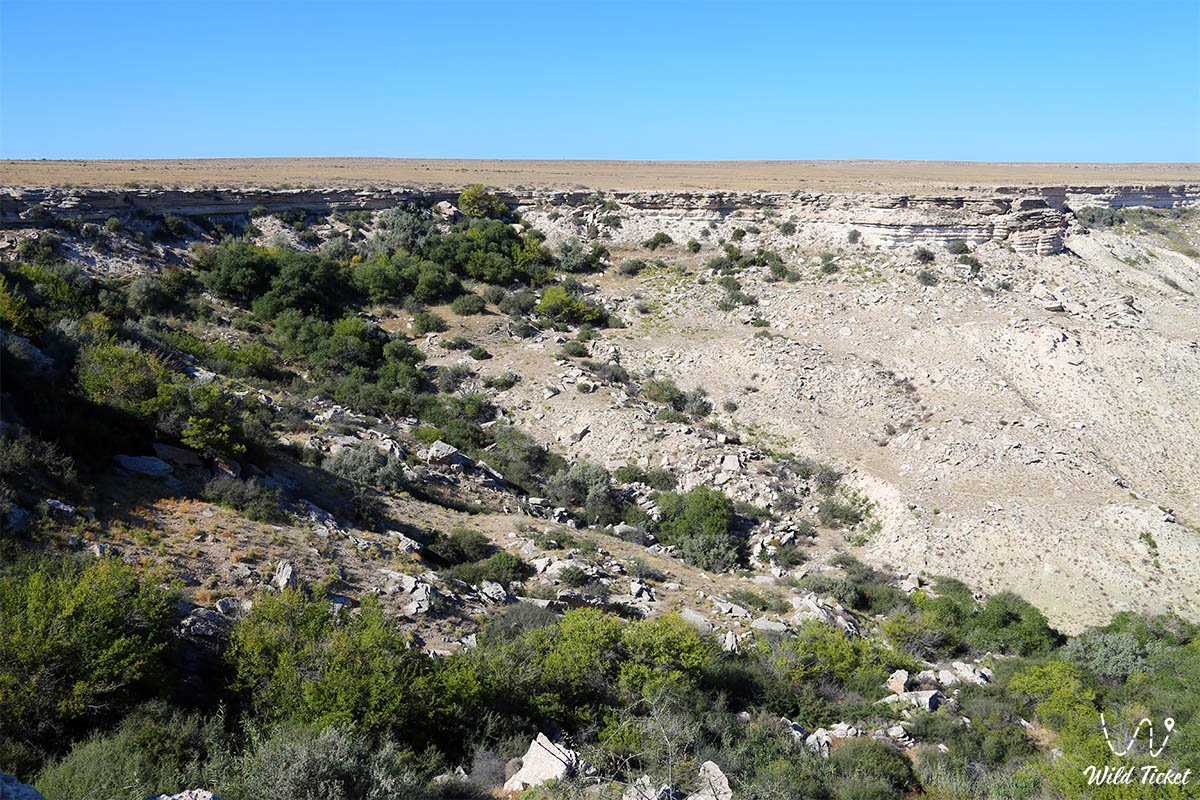
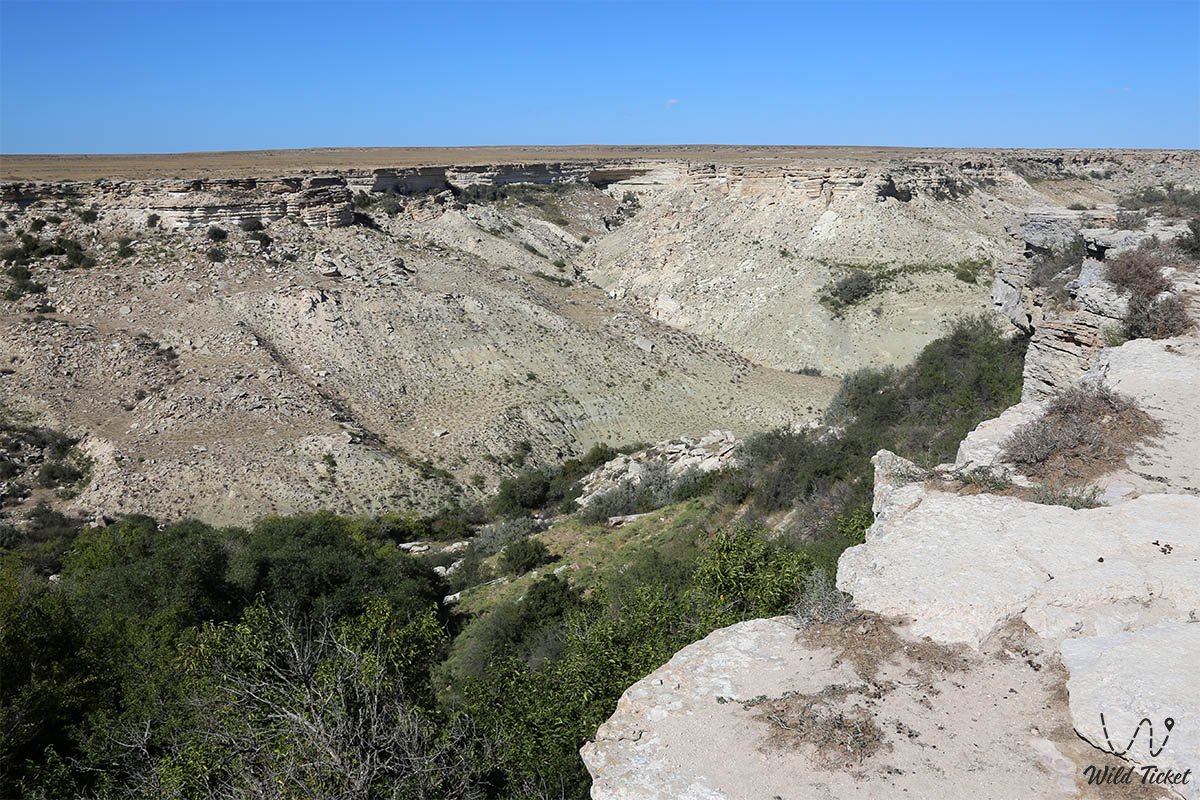
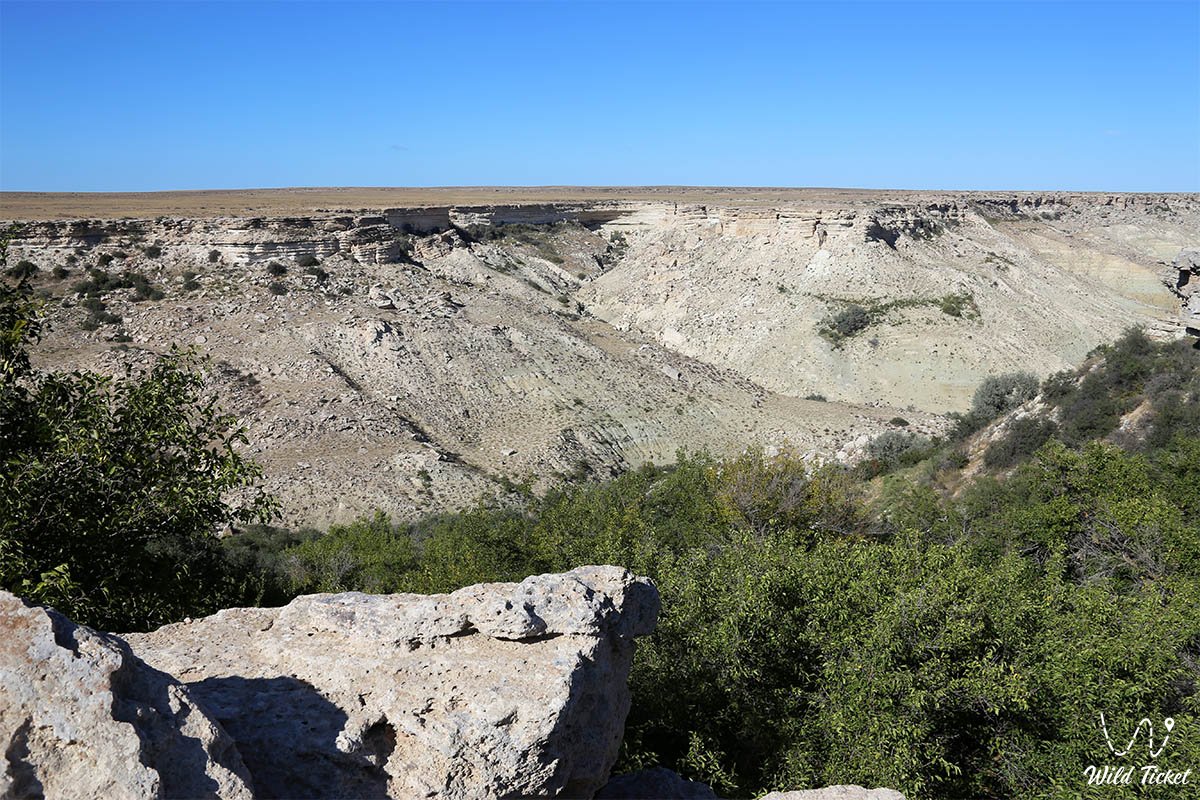
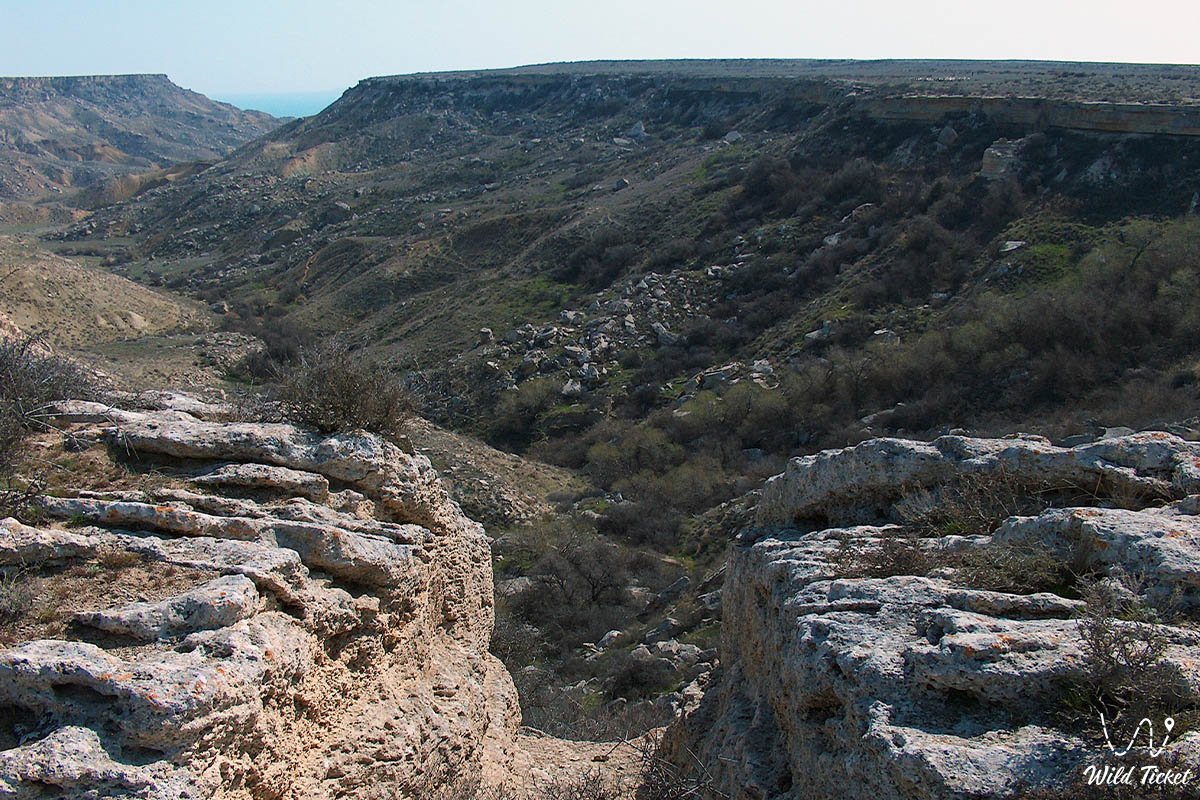
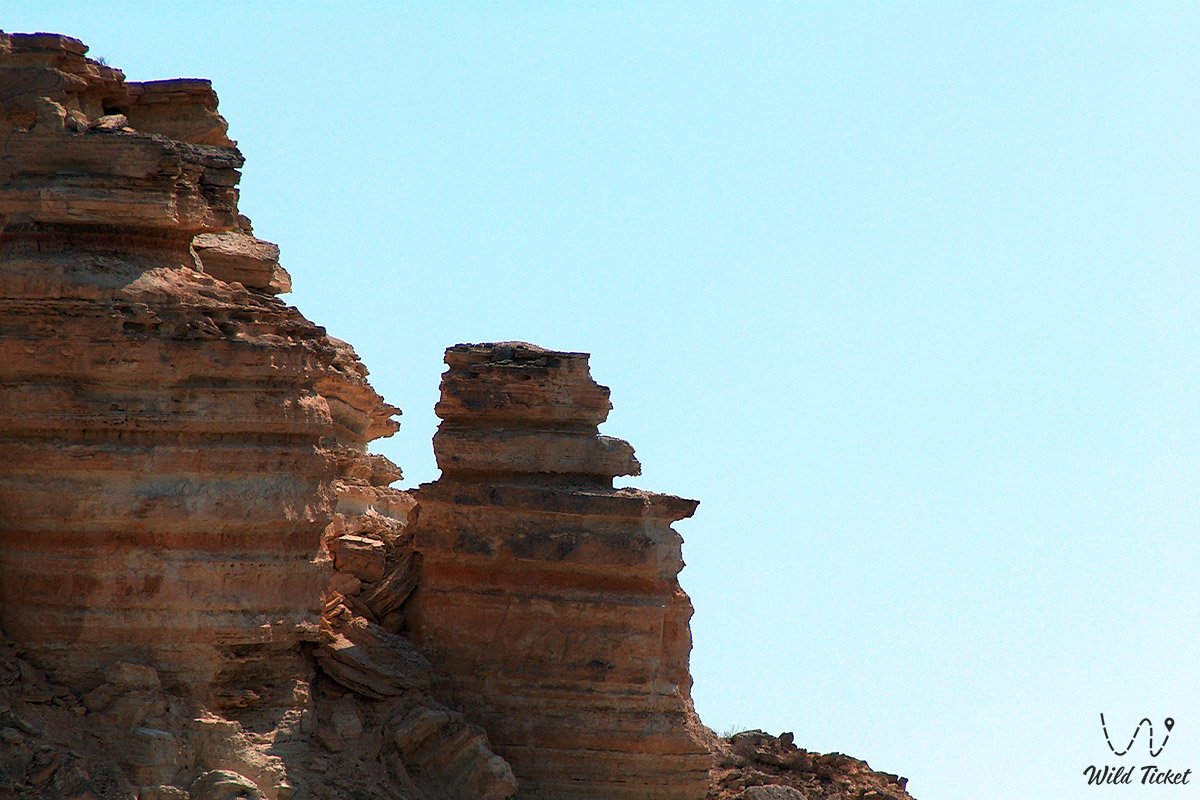
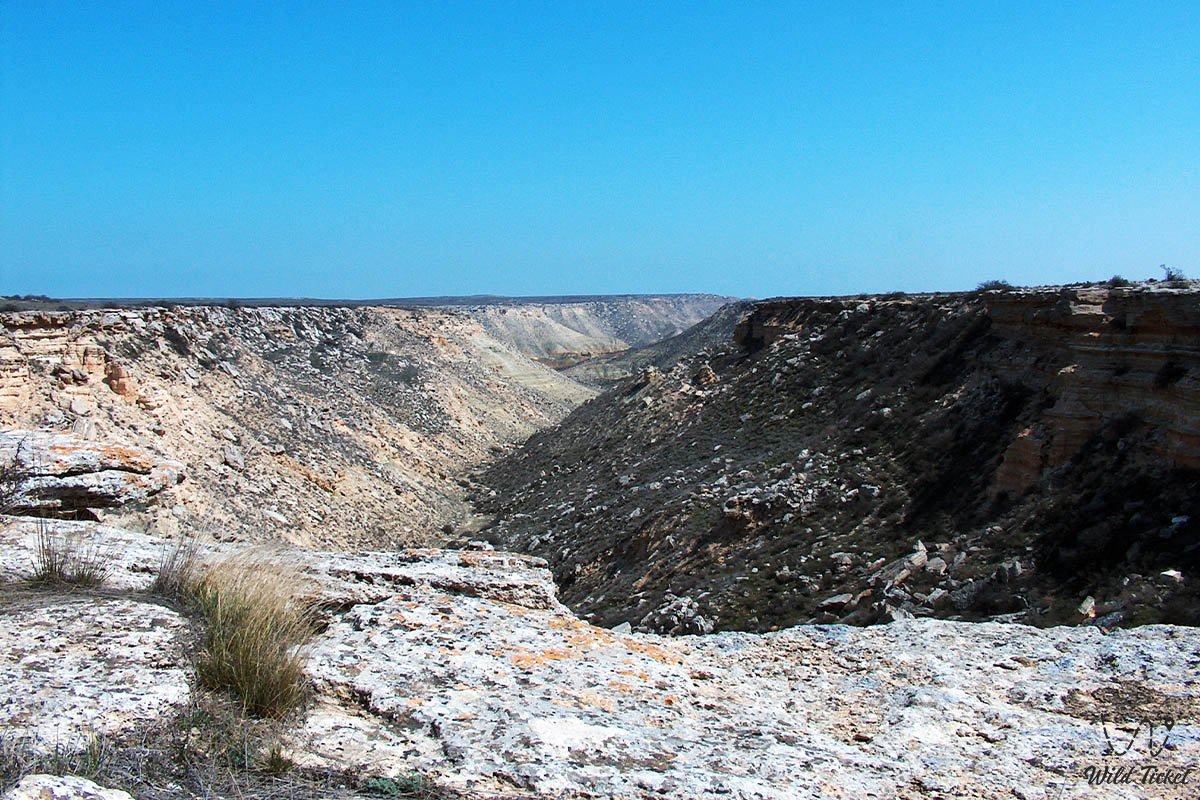
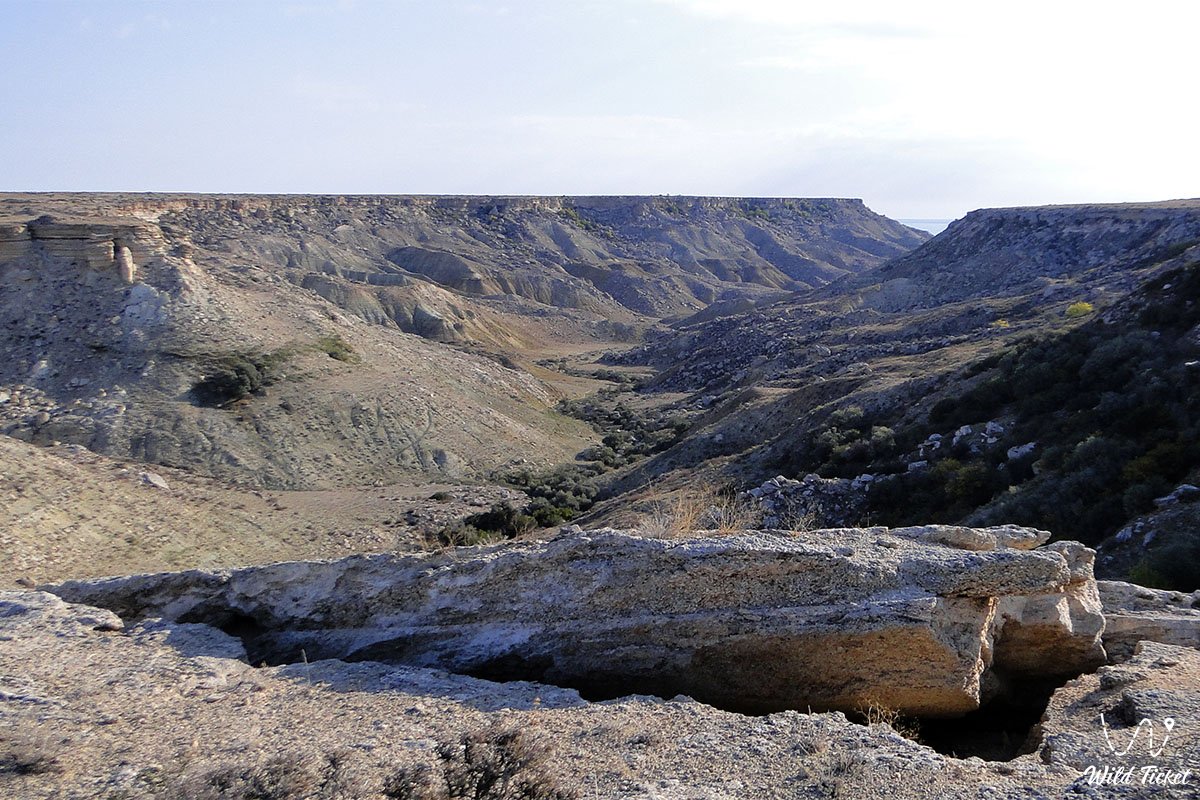
Sultan-Epe Canyon (also referred to as Sultan-Upi) is a remarkably beautiful natural oasis, a deep erosional gorge, and an outstanding sacred and historical landmark in the Mangistau Region. Hundreds of millions of years ago, this entire rugged territory was the bottom of the surging prehistoric Tethys Ocean.
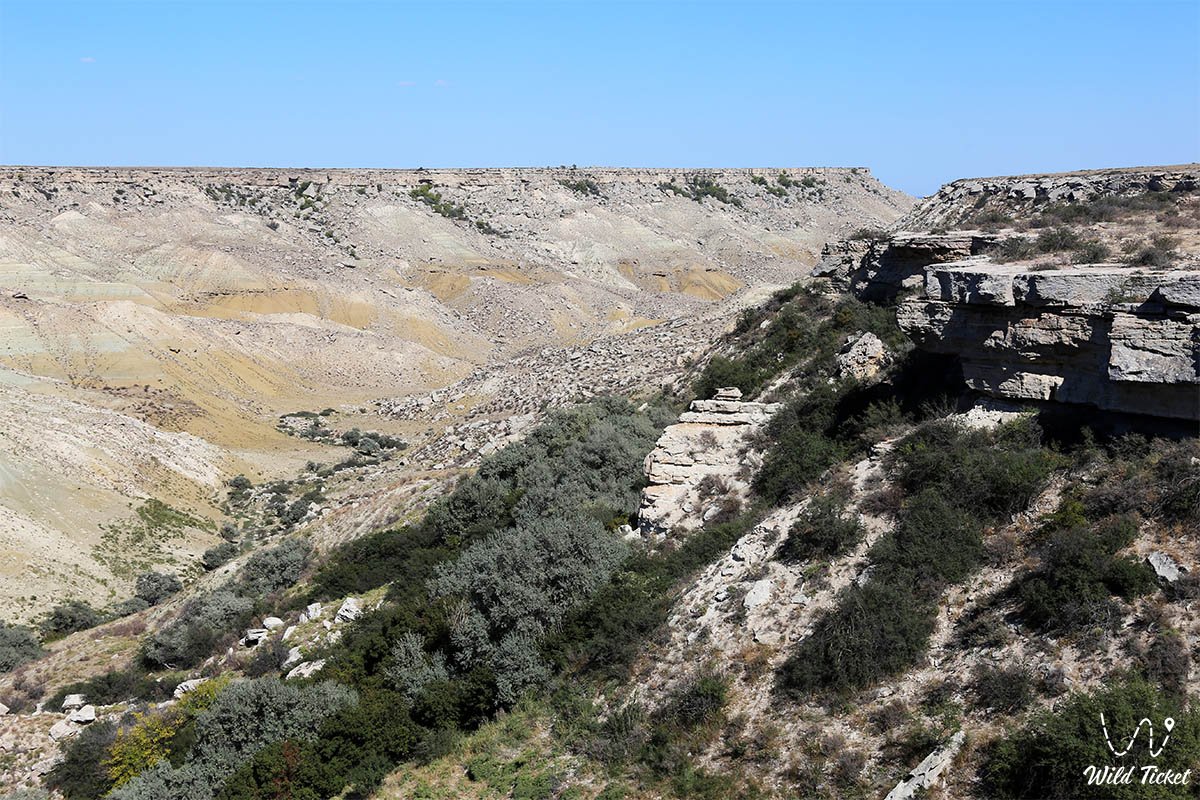
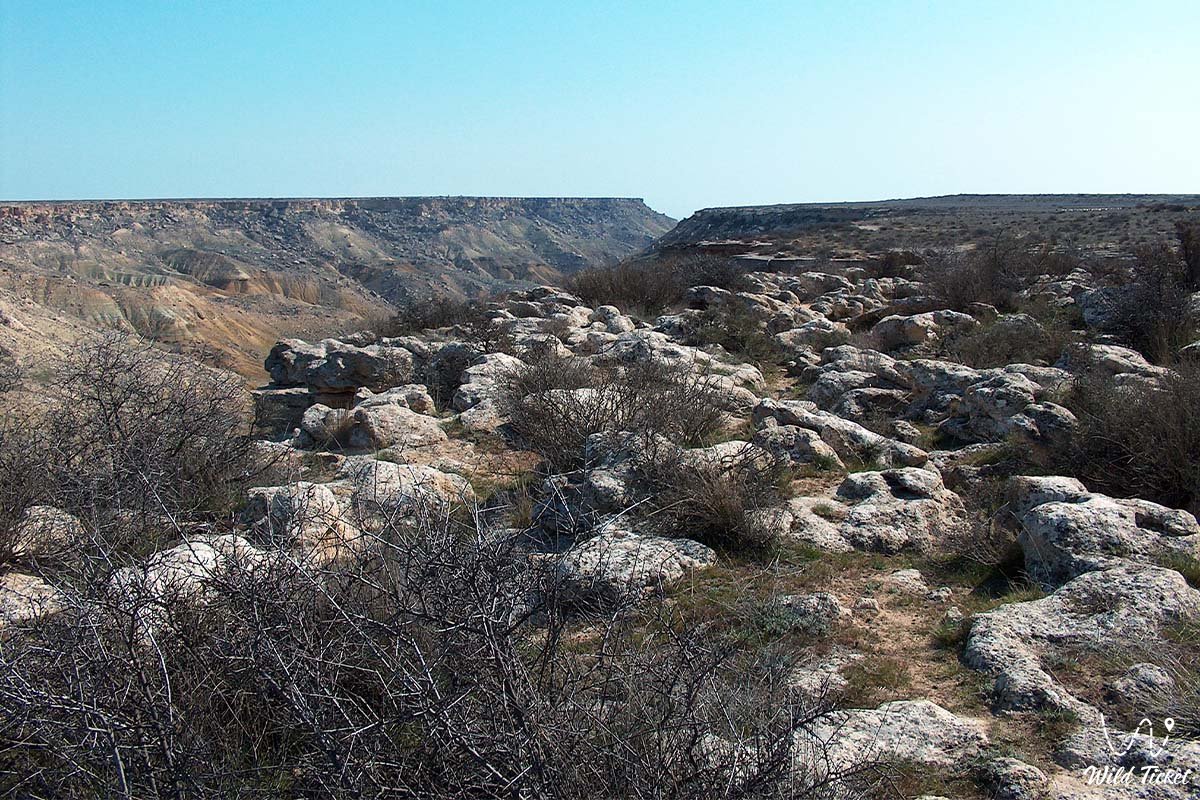
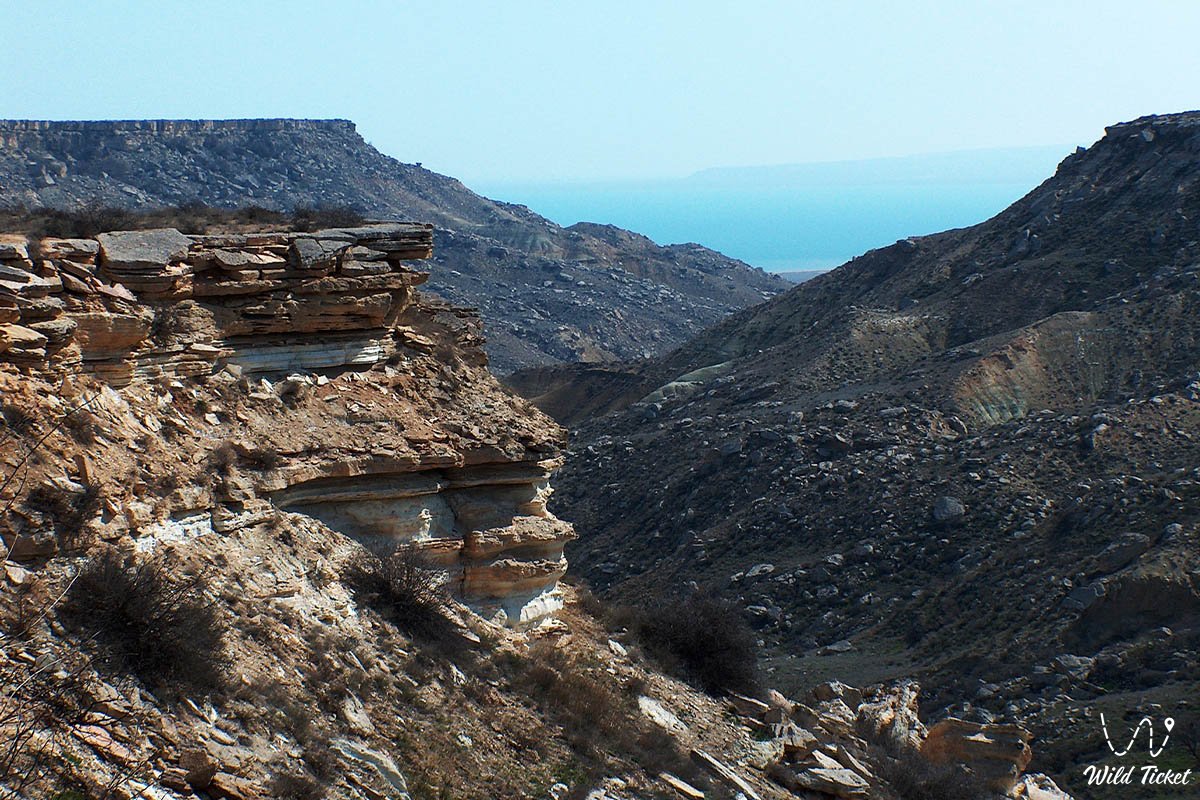
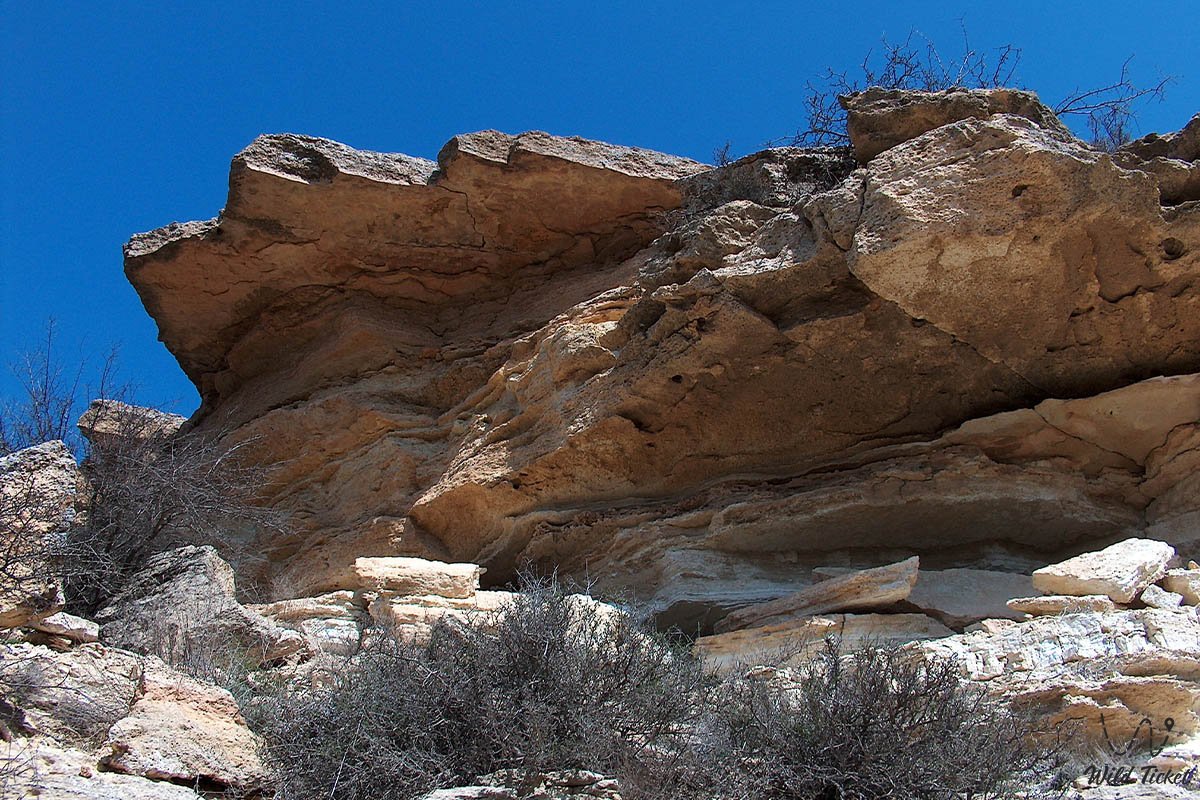
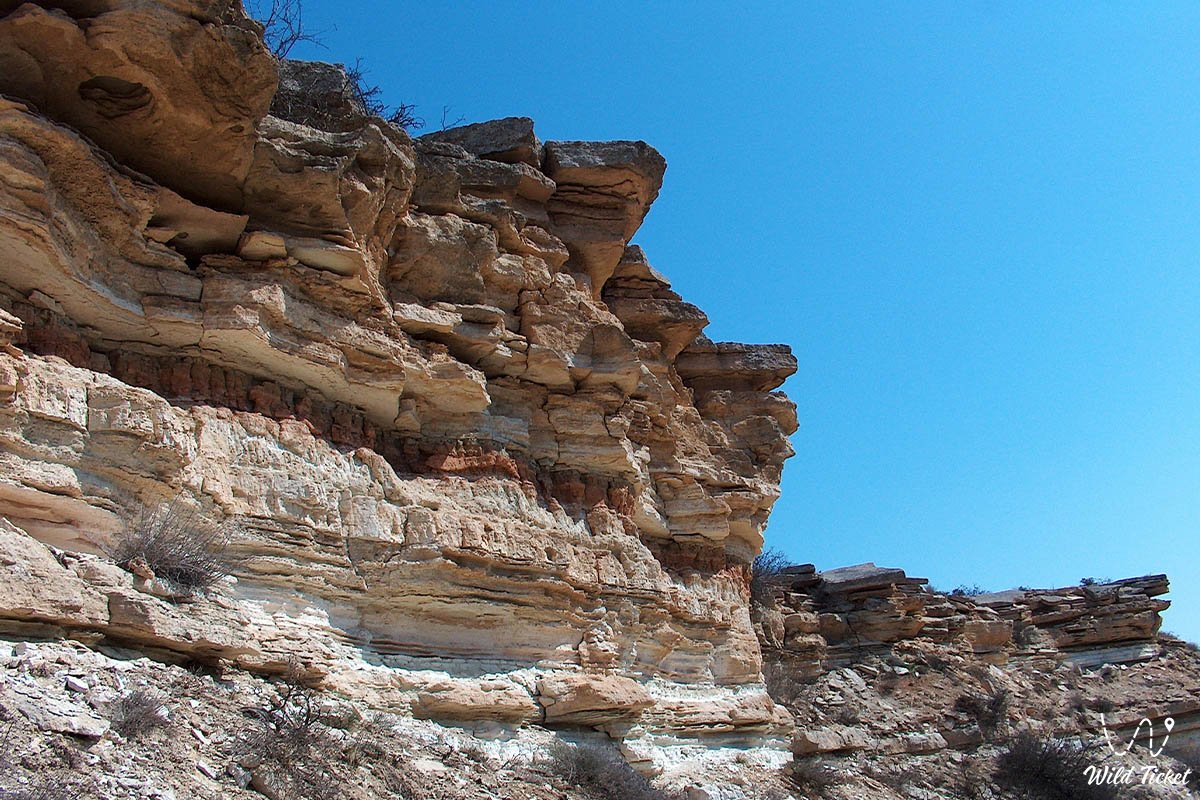
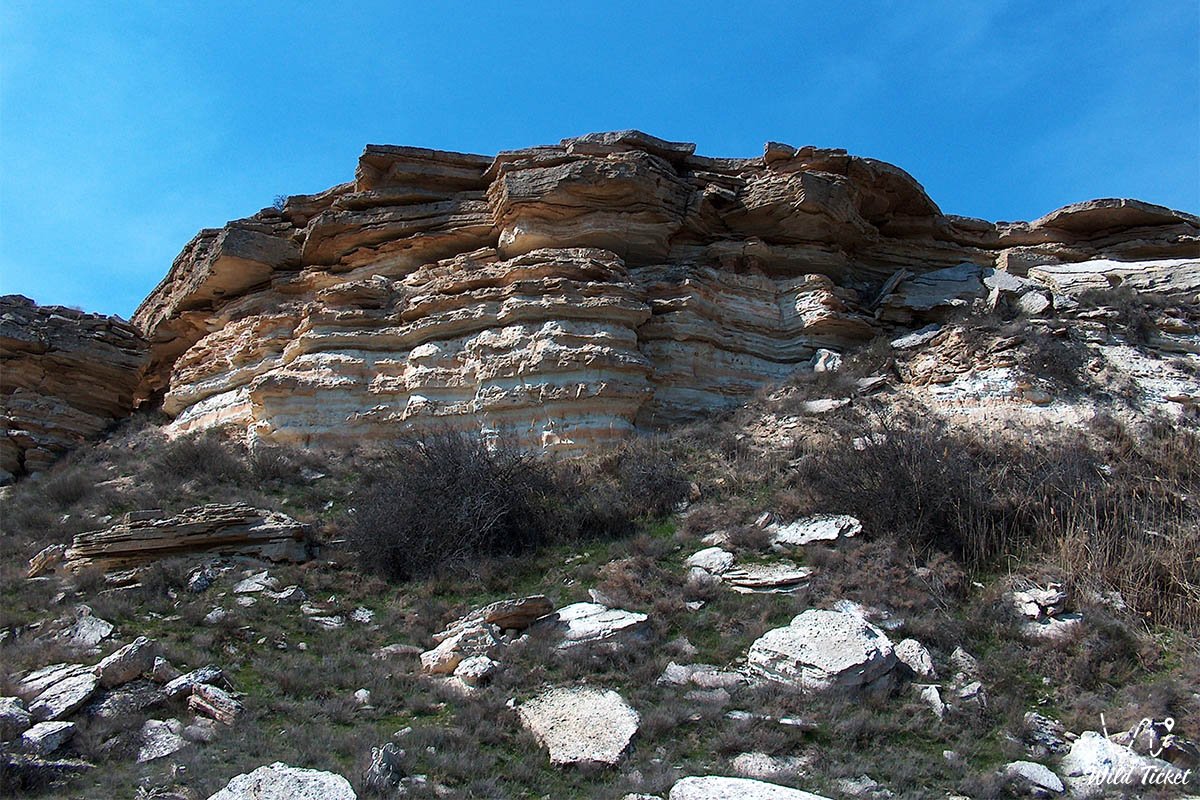
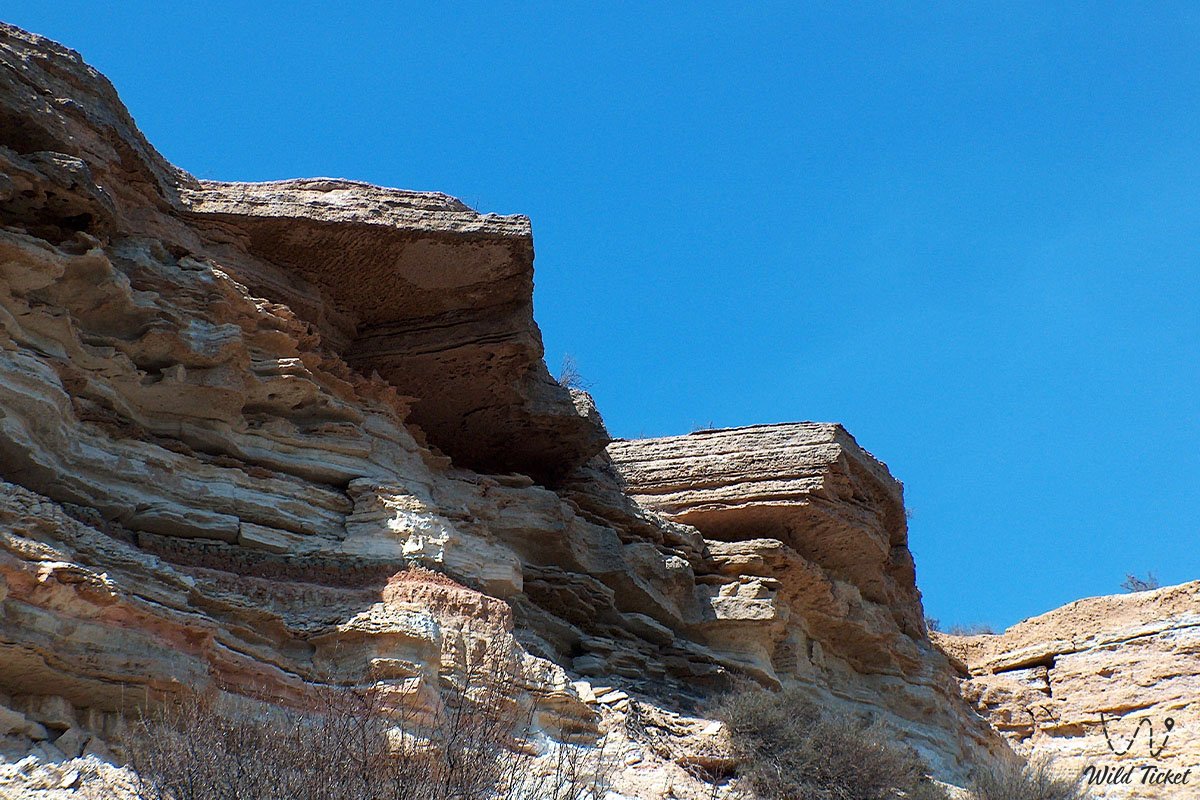
Over centuries, thick biogenic sedimentary layers accumulated on the bed of the relict basin: mollusk shells, carbonate muds, and skeletal remains of oceanic biota that gradually compacted into dense, yet workable beds of pale shell limestone. Following the retreat of the ancient ocean waters and the opening of the Caspian basin, groundwater streams carved a picturesque canyon through the carbonate strata.
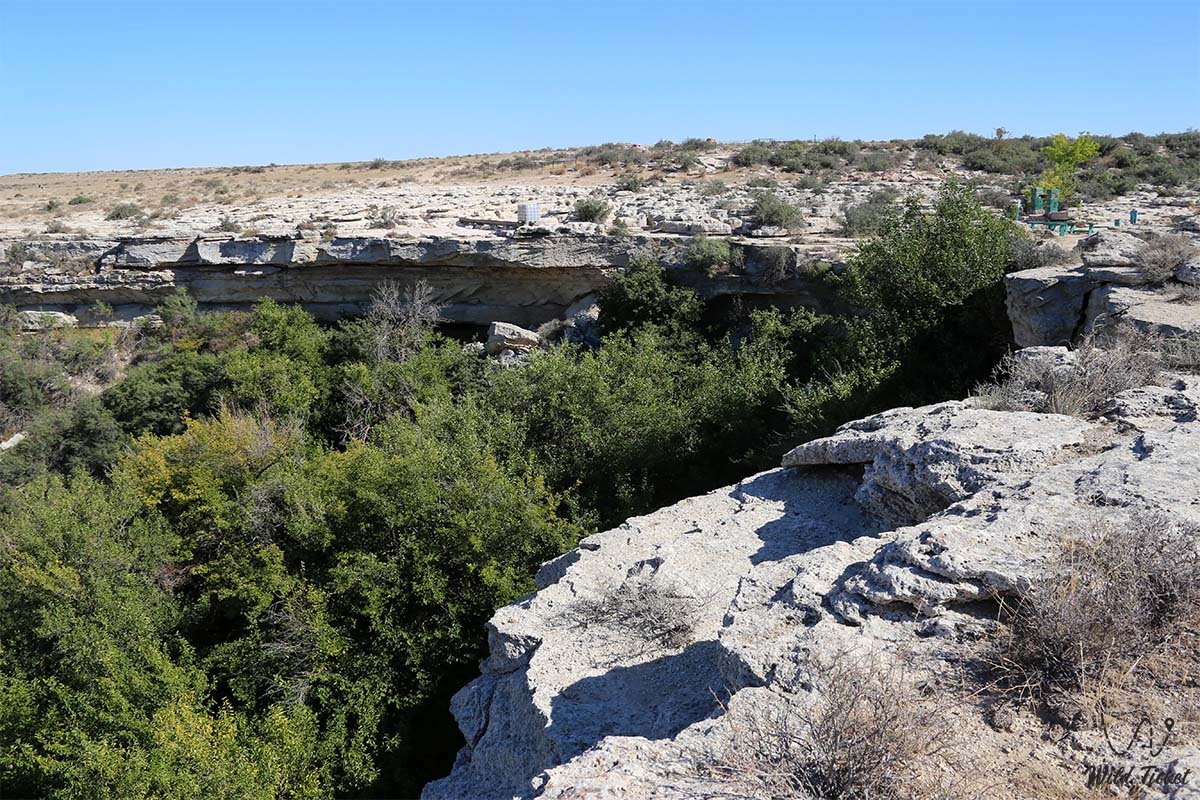
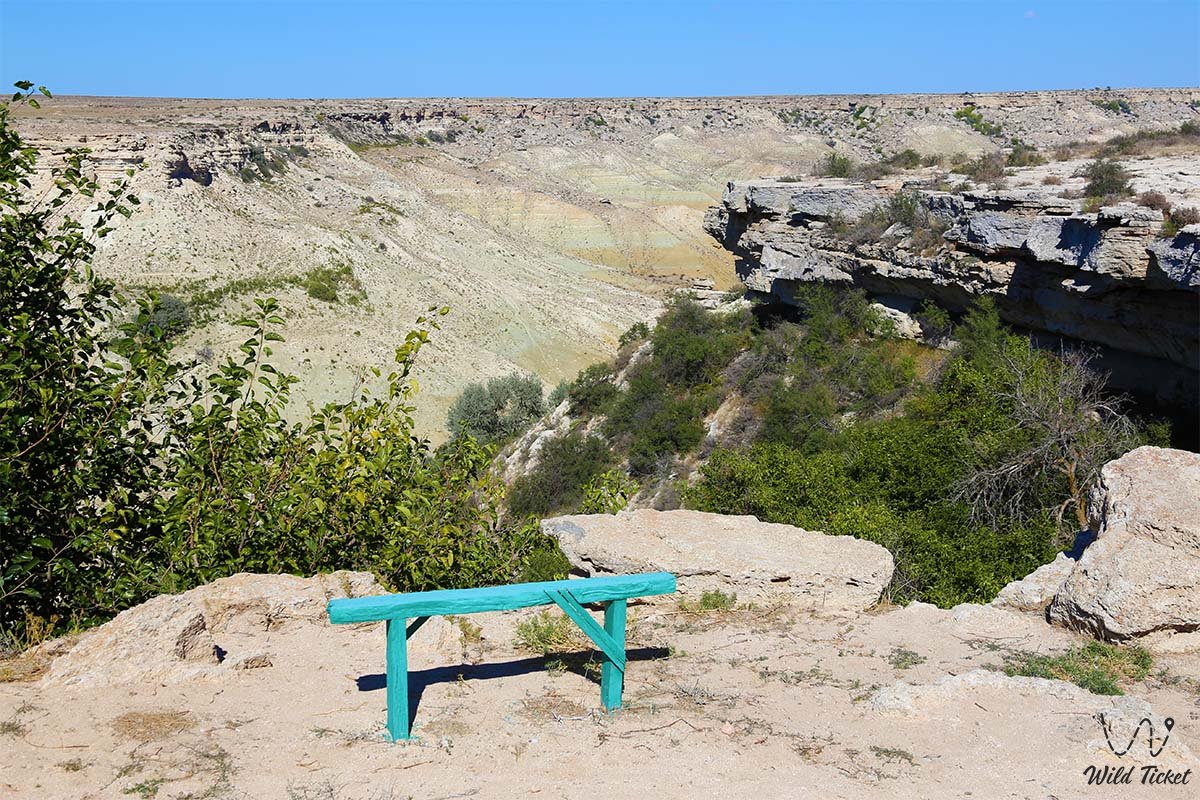
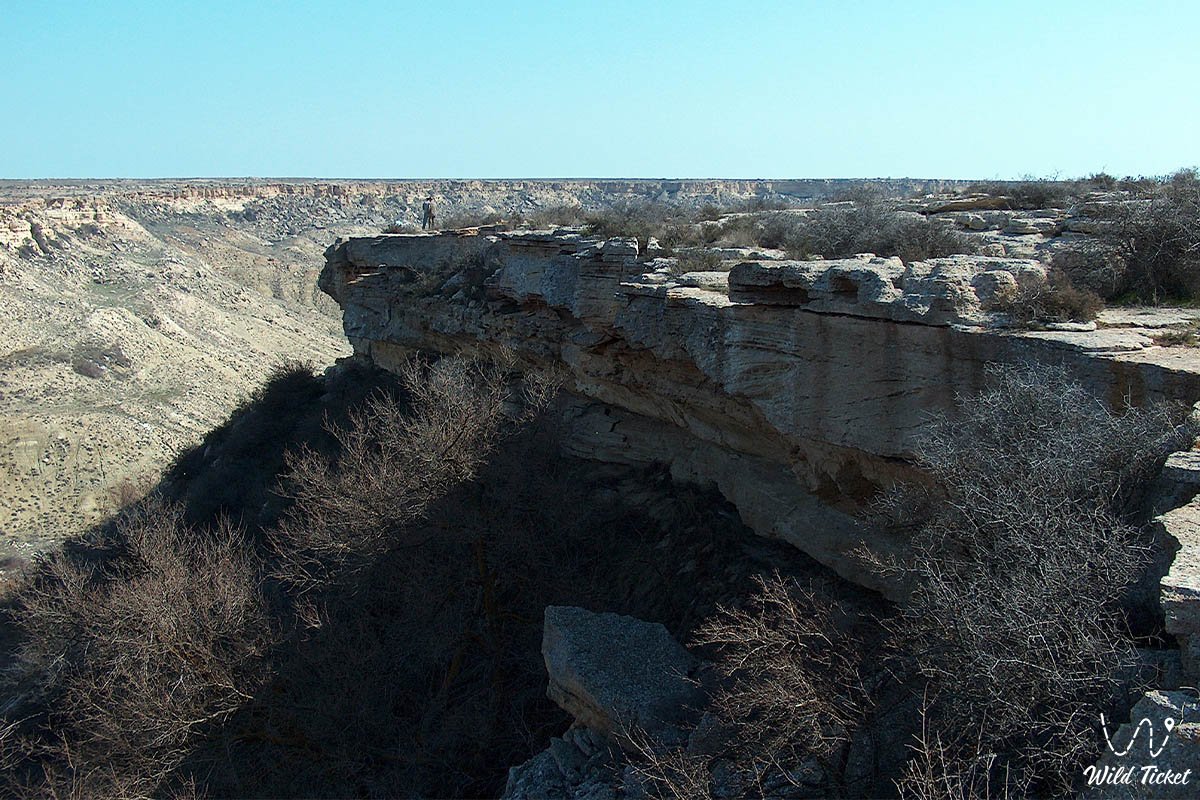
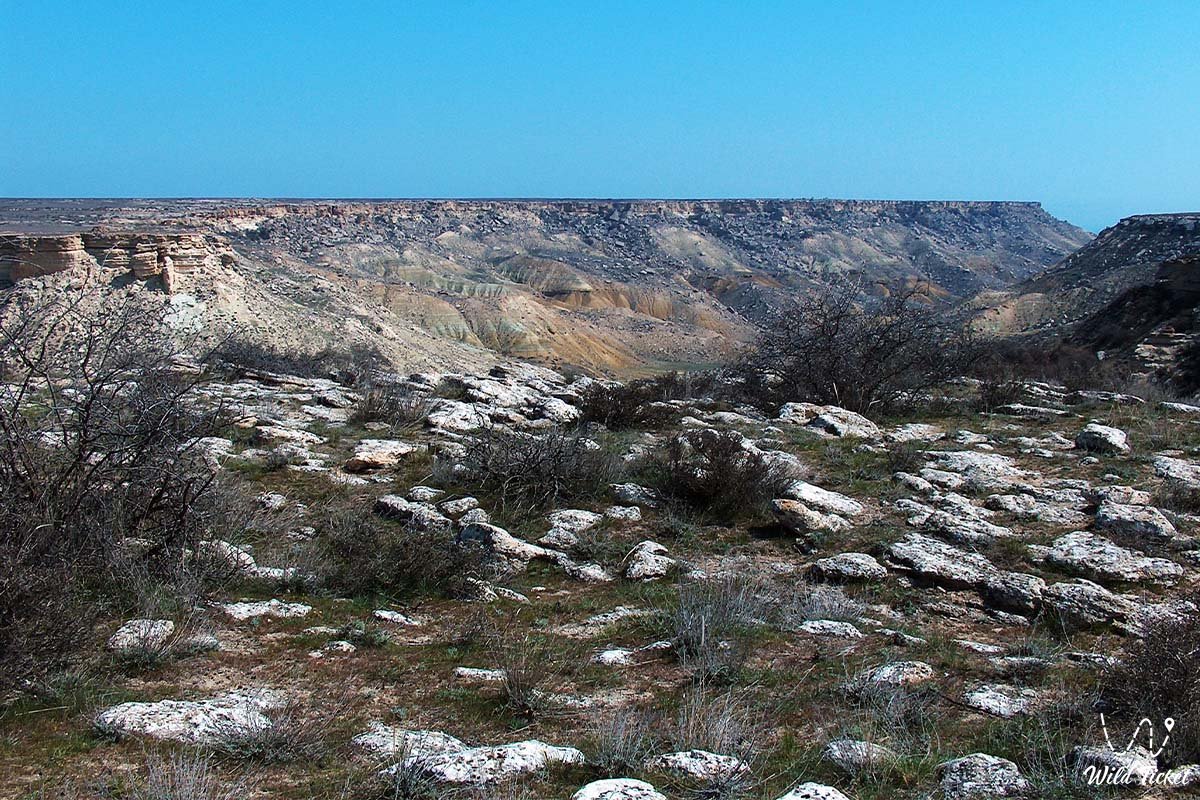
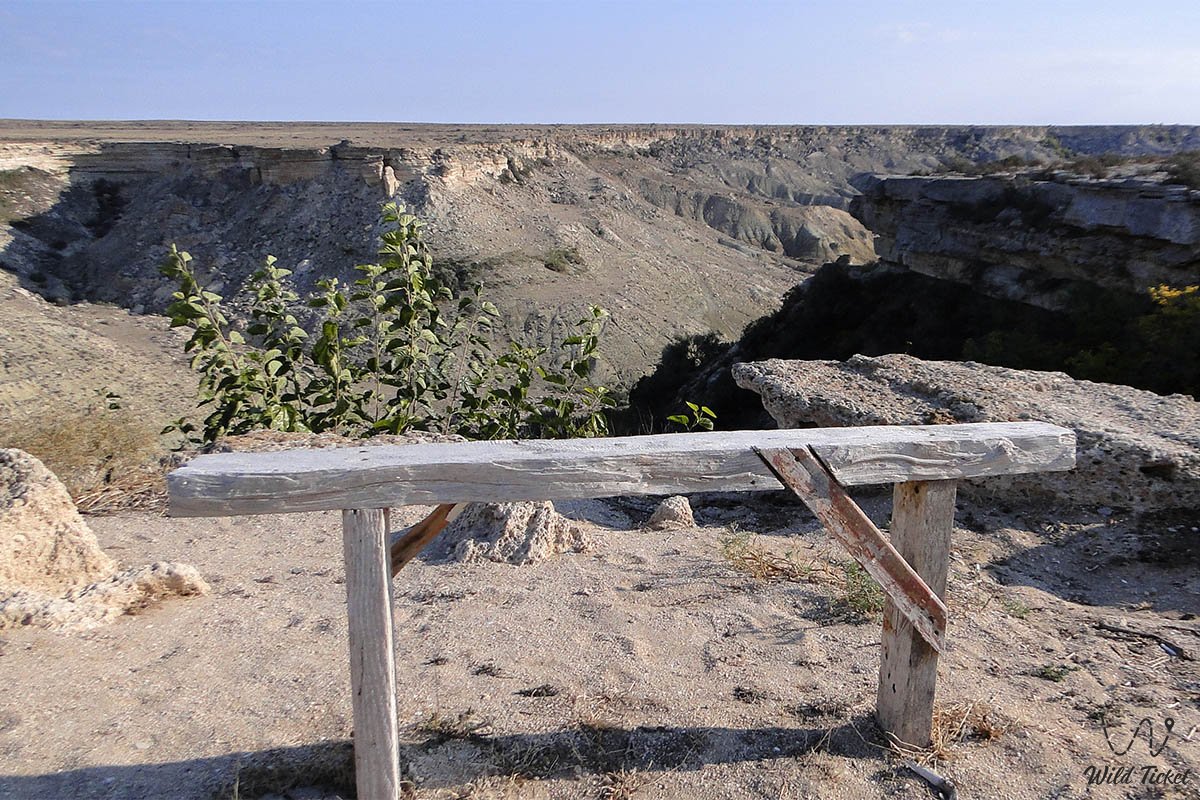
Against the backdrop of the Caspian Sea and the sun-scorched, rocky semi-desert plateau, the gorge astonishes visitors with a sudden burst of greenery: a crystal-clear freshwater stream, fed by inexhaustible subterranean sources, meanders along its bed, creating a genuine natural Eden amidst fractured cliffs.
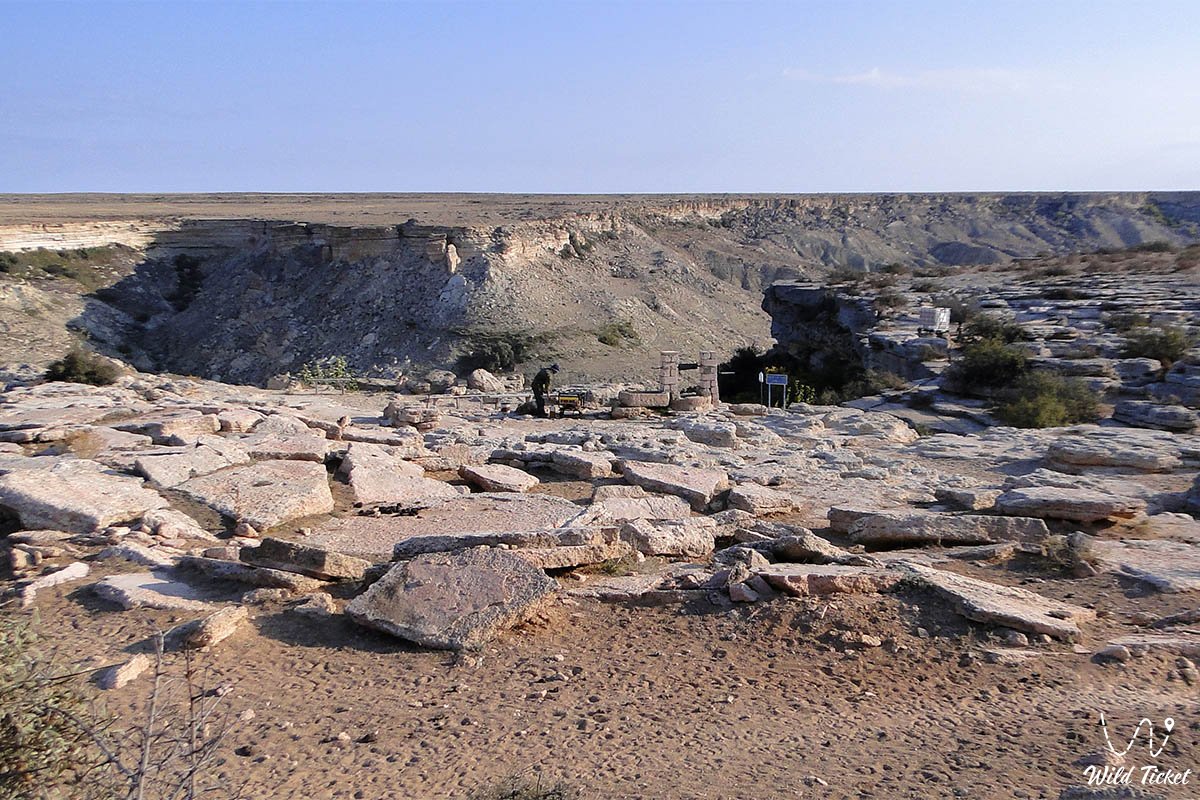
Global acclaim was brought to this wild retreat by its 10th–19th-century cult and memorial complex, which encompasses the Sultan-Epe Underground Mosque hewn into the rock monolith, an expansive necropolis, and a well with sacred healing water.
Sultan-Epe (Sultan Khubbi) is revered in folk beliefs as a holy miracle-worker, a disciple of the great Khoja Ahmed Yasawi, and the protector of all drowning people and those in distress at sea. In 2026, at the 48th session of the UNESCO World Heritage Committee, the underground mosque was officially inscribed on the World Heritage List as part of the serial property "Rock-hewn Mosques and Associated Sacred Sites of Mangystau," cementing the canyon's status as a treasure of planetary importance.
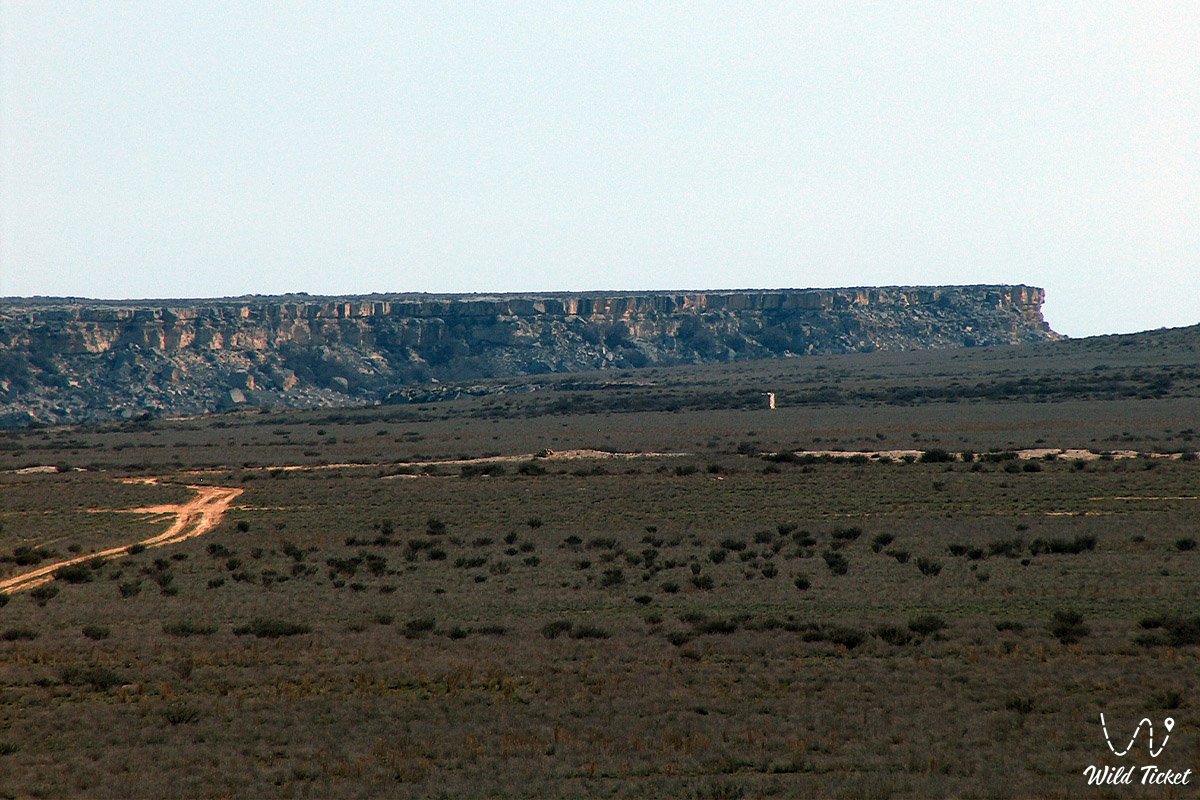
In the network of travel routes and expedition logistics in Mangystau, Sultan-Epe Canyon stands as one of the key spiritual and geographic hubs of the Tupkaragan Peninsula. The gorge carves into the plateau near the coast of Mangyshlak Bay, located roughly 120 km northwest of the regional center of Aktau and 57 km northeast of the museum town of Fort-Shevchenko.
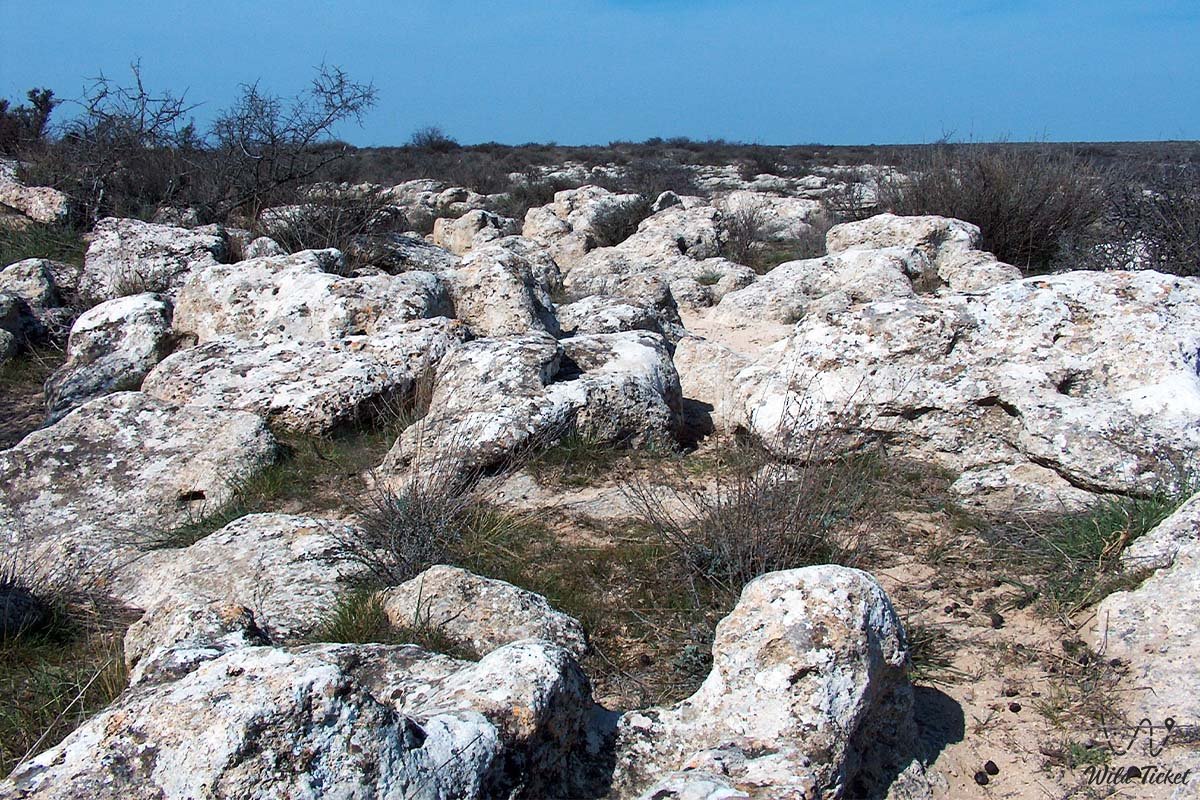
The site seamlessly completes the northern excursion circuit of the region. Just 25–30 km west of the gorge lies the immense geological Zhygylgan Sinkhole with its chaotic jumble of stone slabs and fossilized footprints of saber-toothed cats. Nearby, visitors will find the chalk cliffs of Kapamsay Canyon featuring a relict grove, the monumental nine-kilometer-long Shakpaktysay Gorge with the ancient rock-hewn Shakpak-Ata Mosque, the picturesque Kokbulaksay Canyon, Tamshaly Canyon with its waterfall ledge, the freshwater oasis of Saura Gorge, and the gently sloping shores of Sarytash Bay and Koshak Bay.
Tour to Sultan-Epe Canyon and Underground Mosque from Aktau
--------------------------------------------
How to Get There and Visit –
Sultan-Epe Canyon and Underground Mosque are situated in the northwestern part of the Tupkaragan Peninsula within the Tupkaragan District of Mangistau Region, just a few kilometers from the coast of Mangyshlak Bay. The distance from the city of Aktau is around 115–125 km, about 30–35 km from the key village of Tauchik, approximately 57 km from the town of Fort-Shevchenko, and roughly 25–30 km via steppe tracks from the Zhygylgan sinkhole.
GPS geographic coordinates of Sultan-Epe Canyon:
44°28'27"N 51°00'52"E
The route from the city of Aktau heads north along the regional paved highway through the suburban village of Akshukur toward the village of Tauchik (roughly 95–100 km of asphalt roadway). Before reaching Tauchik, or immediately past it, the route turns northwest onto a well-traveled gravel road and a rocky plateau track toward the Caspian coast and the Sultan-Epe tract (an additional 25–30 km across the steppe).
A second expedition route runs along the sea from Fort-Shevchenko or from the Zhygylgan Tract, from where a rocky dirt trail of about 25–30 km leads to the canyon. The total travel time from Aktau in an SUV is approximately 2–2.5 hours, while the drive from Zhygylgan takes between 40 and 60 minutes.
Access roads and passability: reaching the start of the steppe turnoffs from the main highway is straightforward in any standard passenger car. However, negotiating the rocky sections of the Tupkaragan Plateau, crossing rocky ridges, and driving directly to the canyon rim strictly requires a dependable four-wheel-drive 4x4 SUV with ground clearance of at least 200 mm.
Sharp slabs of shell limestone that can puncture tires are widespread across the plateau, making durable all-terrain (All-Terrain) tires with reinforced sidewalls, a good spare wheel, and a tire compressor strongly recommended. During rare rainy periods, clay sections of the steppe turn slick.
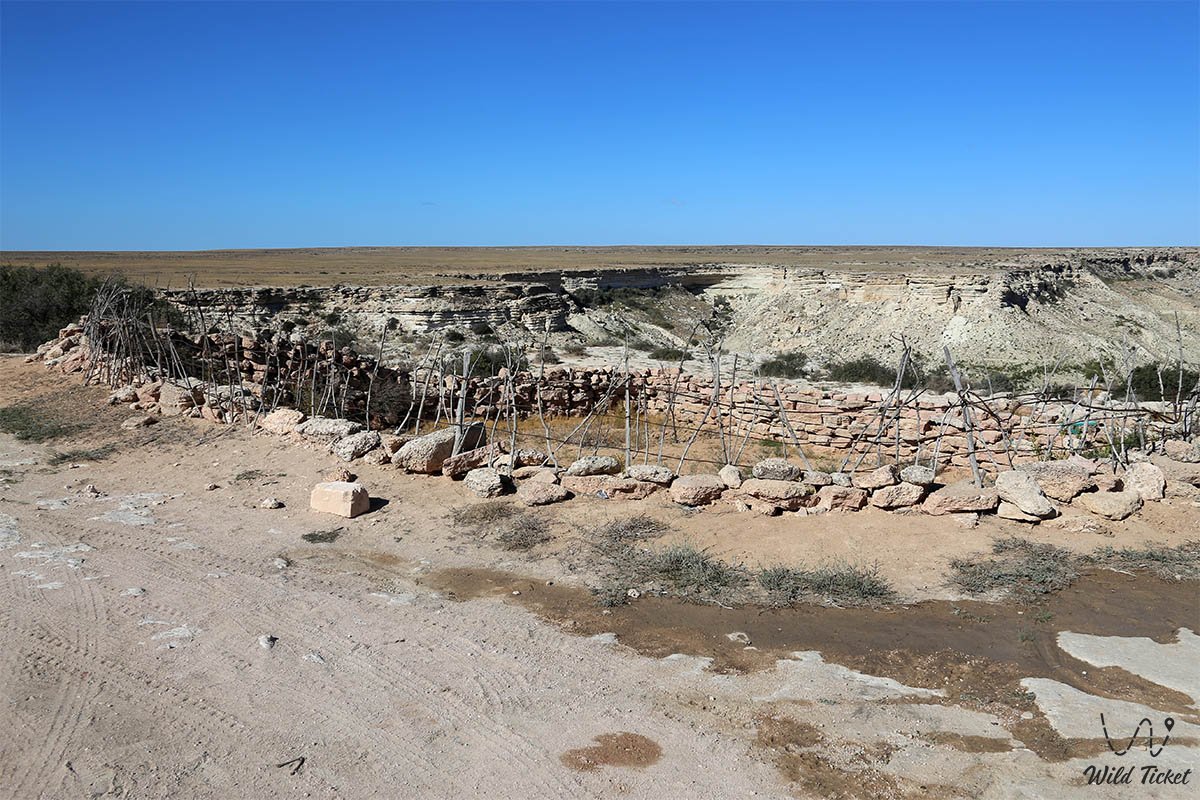
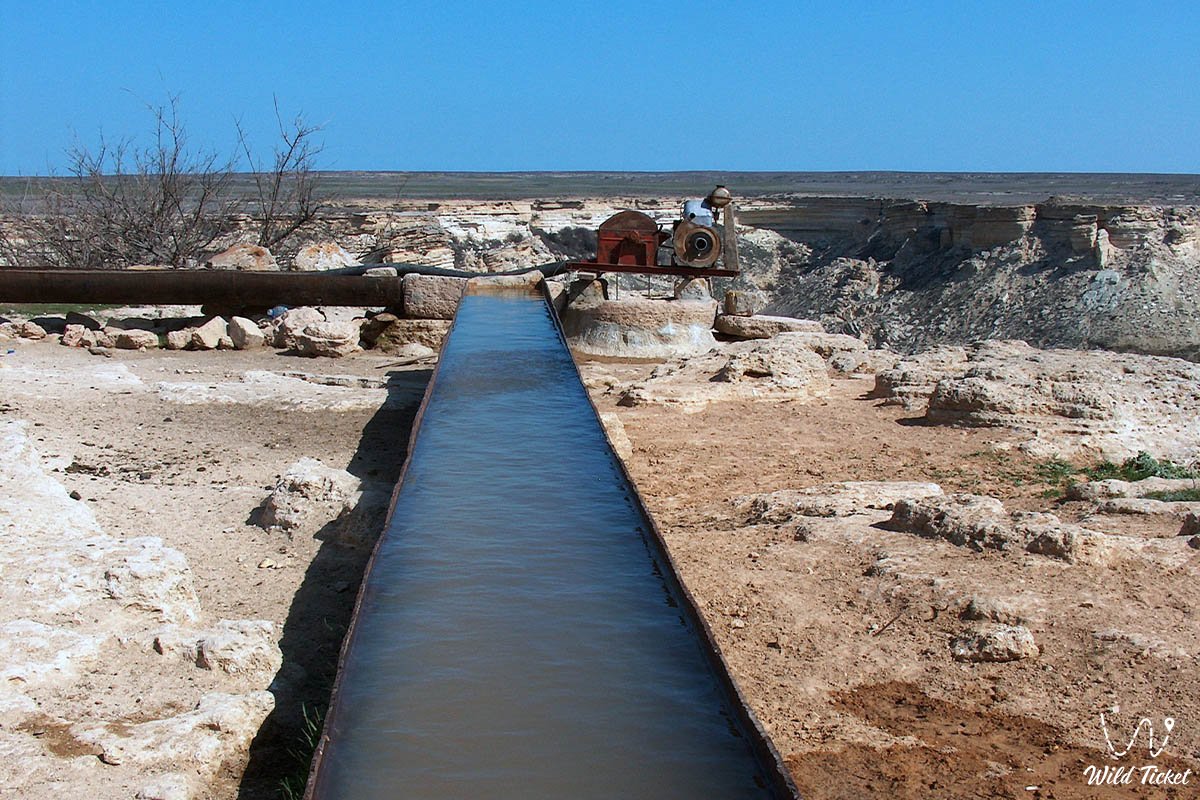
Walking tours and visiting the sanctuary: descending to the canyon bed, the stream, and the relict thickets is done on foot along well-trodden rocky paths. Right near the cliff edge, 6 meters from the rim of the gorge, there is a borehole with a traditional well where pilgrims and visitors draw holy water.
The entrance to the underground mosque is carved into the bedrock and fitted with stone steps. As this site is an active Islamic sanctuary and a UNESCO World Heritage property, a strict dress code applies when visiting the mosque and necropolis: shoulders and knees must be fully covered (women are required to wear a headscarf), and shoes must be removed before stepping into the prayer halls. For walking through the canyon and over limestone scree, comfortable trekking shoes with grippy soles are indispensable.
Ethical, environmental, and sacred site conduct: the Sultan-Epe complex is a sacred pilgrimage destination and a delicate natural oasis.
Within the canyon and the memorial complex, it is STRICTLY FORBIDDEN to:
– disturb pilgrims, shout loudly, play music, or use foul language;
– consume alcoholic beverages or be in a state of intoxication;
– paint graffiti, scratch walls in the underground mosque, or damage the ancient kulpytas stones of the necropolis;
– break branches of relict trees or collect medicinal plants in the oasis;
– drive motor vehicles onto the gorge bed or park outside designated areas;
– leave behind plastic waste, wet wipes, and food packaging;
– wash dishes, do laundry, or pollute the clean waters of the sacred stream and well.
Infrastructure: near the entrance to the necropolis, a traditional pilgrim guest house (shirakshy) provides a place to rest and draw holy water from the well. However, permanent hotels, cafes, and grocery stores are absent. The nearest fuel stations, pharmacies, and tire workshops are located in the village of Tauchik (about 30 km away) and in Fort-Shevchenko (around 57 km away). For an autonomous field camp on the seashore or the plateau, visitors must bring adequate provisions, a gas stove, drinking water (at least 4–5 liters per person per day), and a wind-resistant tent.
Mobile reception on the canyon rim is satisfactory, but signal drops out on the gorge bed and inside the carved mosque. From the highlands overlooking the gorge, sweeping views open across the Caspian Sea, whose wild beaches make good spots for overnight tent camping.
The best time to visit is spring and autumn. The most scenic months are May and June, when the stream flows steadily, and the canyon is lush with blossoming greenery, mulberry, and hawthorn trees amidst comfortable air temperatures of +20...+25 °C.
In autumn (September–October), the summer heat subsides, blackthorn and blackberries ripen, and the sea air turns exceptionally clear.
In July and August, temperatures on the open plateau can rise above +38...+40 °C, yet natural, refreshing coolness is consistently maintained down on the shaded canyon bed and inside the halls of the underground mosque.
--------------------------------------------
History
The history of Sultan-Epe Canyon reaches deep into millennia, linking together the geological birth of dry land from the bed of the Tethys Ocean, the origins of ancient water cults, and the flowering of Sufi philosophy across the Great Steppe.
During the Early Middle Ages, the presence of pure freshwater just a few kilometers from the saline sea turned the canyon into a strategic caravan rest stop on the northern trails of Mangyshlak. Fishermen, merchants, and pastoralists found shelter here, resting in the shaded gorge from the merciless steppe sun.
The sacred development of the canyon is tied to the spread of Islam and the activities of the Yasawiyya Sufi order during the 10th–12th centuries. Historical and ethnographic research, including studies by noted scholar Gleb Snesarev, indicates that the name of the saint Sultan-Epe (Sultan Khubbi) has deep pre-Islamic roots tracing back to ancient Khwarezmian and Iranian terms for water ("khubbi", the water spirit Ubbyu). Following the adoption of Islam, this archaic cult of the water guardian evolved into reverence for Sultan-Epe as a protector of sailors, fishermen, and wanderers facing disaster on the stormy waves of the Caspian.
Historical chronicles identify Sultan-Epe as the youngest son of the Sufi teacher Hakim-Ata (Suleiman Bakirgani)—a direct murid of the great sheikh Khoja Ahmed Yasawi—and his wife Anbar-Ana. Blessed with divine grace (barakah) from birth, the youth performed miracles from an early age, outshining his elder brothers Muhammad-Khoja and Asker-Khoja.
The Sultan-Epe Underground Mosque, excavated directly within the limestone bedrock, evolved over several centuries. Its oldest section dates back to the 10th–12th centuries, while throughout the 18th–19th centuries, the complex was expanded and reconstructed by nomadic pastoralists of the Aday clan. Around the mosque grew an extensive necropolis featuring stone sarcophagi (sandyk-tases), three-stepped gravestones (ush-tases), and elaborately carved stelae (kulpytases), which became a revered pilgrimage destination. Notes compiled by General N. P. Lomakin in 1870 document the veneration of this sanctuary by both Kazakhs and Turkmens, and by the late 19th century, a deep borehole with a traditional well was built near the cliff edge.
Since 1982, the complex has enjoyed state protection as a historical and cultural monument of national importance. A historic milestone for the region arrived in 2026, when the 48th session of the UNESCO World Heritage Committee officially inscribed the Sultan-Epe Underground Mosque on the prestigious World Heritage List.
Information
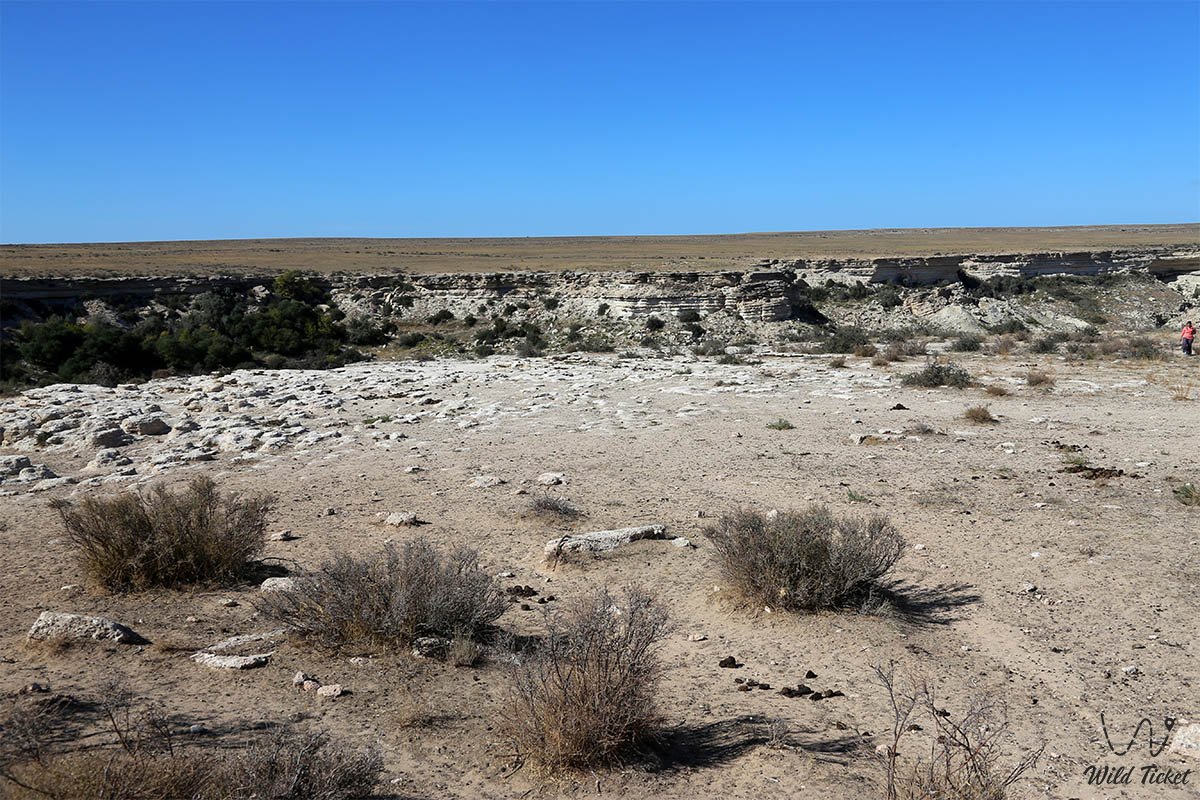
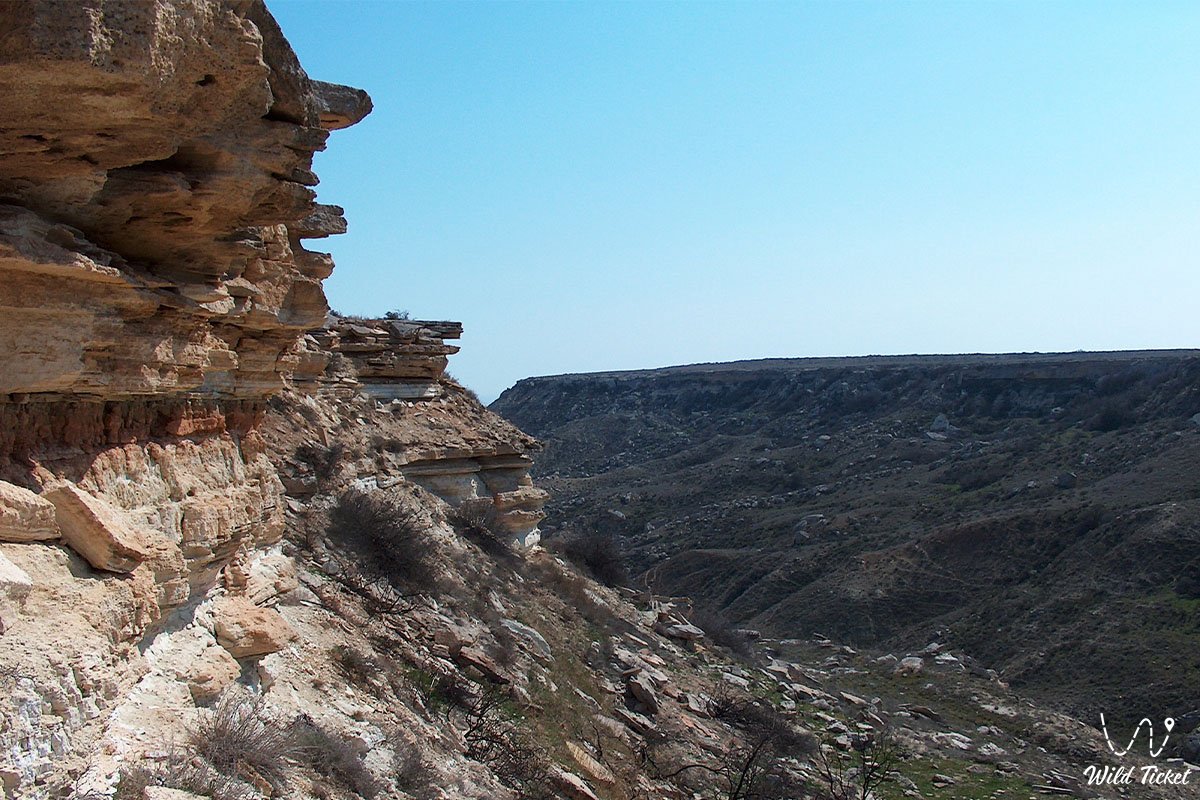
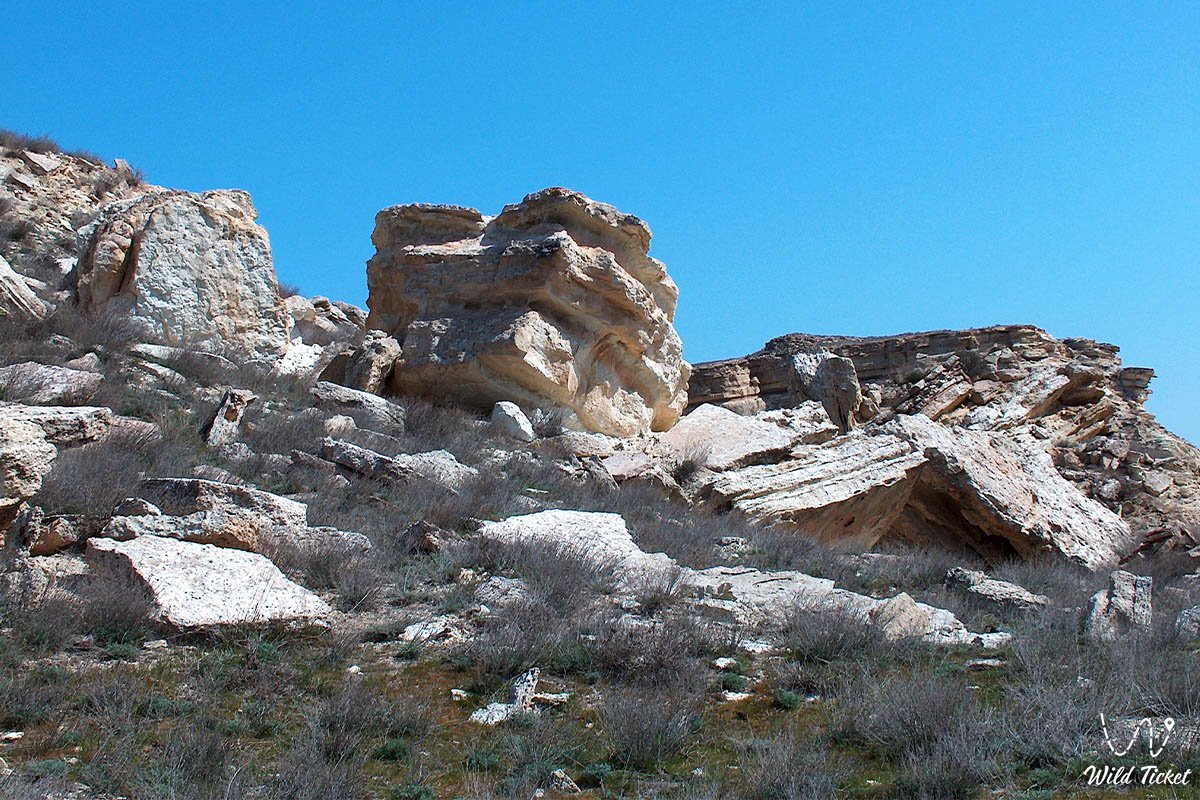
In its landscape and geomorphology, Sultan-Epe Canyon represents an erosional-karst gorge dissecting the shell limestone layers of the structural Tupkaragan Plateau. The surrounding rock formations formed during the Neogene period in the shallows of the retreating Tethys Ocean and early transgressions of the Caspian basin.
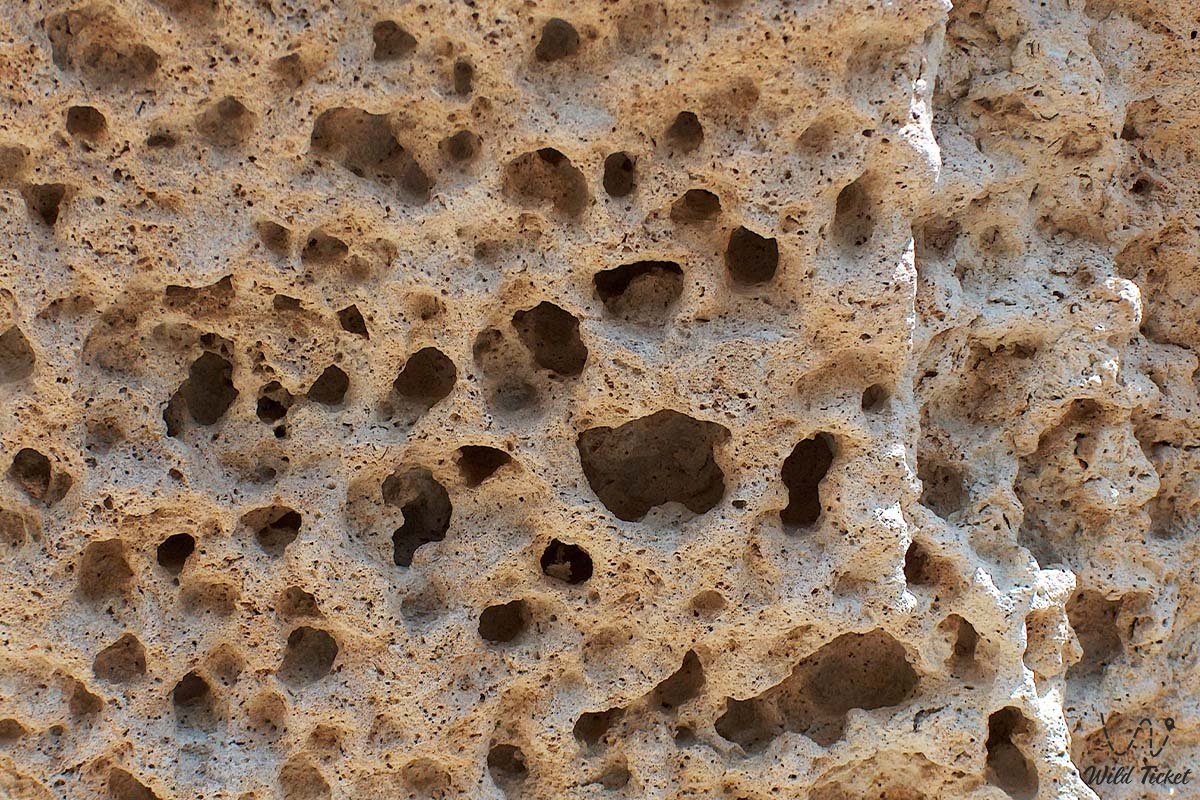
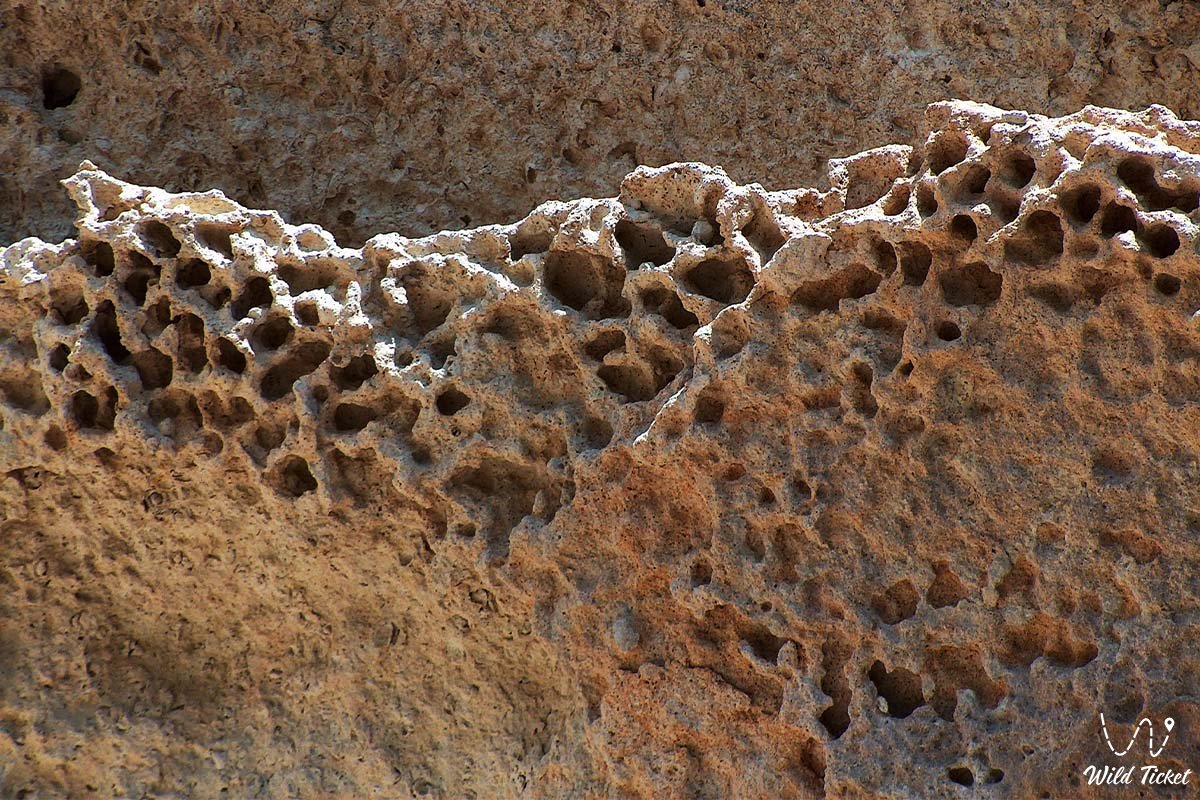
The walls of the gorge consist of Sarmatian and Pontian shell limestones, marls, and carbonate sandstones. This porous rock is exceptionally workable, highly hygroscopic, and capable of collecting condensation. Under the influence of precipitation and wind deflation, whimsical grottos, natural arches, and honeycomb weathering hollows (tafoni) have developed along the rocky cliffs of the canyon.
The primary hydrological feature of the gorge is an enduring karst-fracture aquifer. Seeping through multiple outlets along the bottom of the canyon, subterranean waters merge into a permanent freshwater stream discharging roughly 2–3 liters per second. The water is characterized by pleasant taste qualities, softness, low mineralization (of the hydrocarbonate-calcium type), and natural clarity. Situated 6 meters from the edge of the canyon cliff is a historic well about 5–6 meters deep, sunk directly into the rock down to the water-bearing horizon.
The architecture of the Sultan-Epe Underground Mosque stands as a rare example of rock-cut architecture in an arid zone. The sanctuary contains nine interconnected chambers of various layouts, excavated directly out of the bedrock. The central prayer hall is roofed with flat limestone slabs resting on massive stone pillars and mulberry timber supports, while a round skylight is cut through the ceiling dome to supply natural ventilation and daylight. The interior maintains a stable year-round microclimate with temperatures lingering around +12...+14 °C.
Soil cover along the gorge floor consists of humus-rich alluvial-meadow soils, creating a sharp contrast with the surrounding gravelly, gray-brown desert soils of the plateau.
The climate of the area is dry and temperate-desert, tempered by the buffering influence of the Caspian Sea. Winters are comparatively mild, with average January temperatures between -2 and -4 °C. Summers are long, dry, and hot, averaging +26...+28 °C in July; nevertheless, the humid microclimate within the gorge creates a sheltered, shaded micro-zone that lowers daytime temperatures by 5–7 °C compared to the open plateau.
Detailed Description of the Site
The natural and sacred complex of Sultan-Epe incorporates the following prominent features:
• Rock bed of Sultan-Epe Canyon – a winding gorge with sheer bluffs of golden Tethys shell limestone stretching toward the seacoast;
• Sultan-Epe Underground Mosque (UNESCO World Heritage Site) – a nine-room rock-cut temple complex dating from the 10th–19th centuries, carved into limestone featuring a central hall, skylights, and wooden columns;
• Sacred well and borehole – a historic spring delivering therapeutic drinking water, fitted with a stone curb just 6 meters from the canyon rim;
• Ancient Sultan-Epe Necropolis – a vast memorial ground containing stone sarcophagi (sandyk-tases), carved kulpytases, and mausoleums of prominent nomadic figures of the Aday clan;
• Freshwater stream and relict oasis – a permanent living watercourse on the canyon floor that nurtures shaded groves of mulberry, hawthorn, and diverse meadow flora;
• Ruins of historic fishing settlements – stone-built huts and encampments made of rough shell rock once utilized by fishermen operating along the bay.
Flora and Fauna
Vegetation in Sultan-Epe Canyon forms a contrasting arid oasis markedly distinct from the uniform sagebrush-saltwort wastes of Tupkaragan. Dense stands of trees and shrubs thrive along the canyon floor and beside the stream: white mulberry, Babylonian weeping willow, hawthorn, blackthorn (wild plum), purging buckthorn, and Russian olive. Rocky slopes are tangled with thorny brambles of wild blackberry and sea kale (Crambe). Among lush grasses, peppermint, yarrow, licorice, plantain, and stinging nettle grow abundantly. Along the canyon's upper edges, gray-soil wormwood, biurgun, boyalych, and camelthorn predominate.
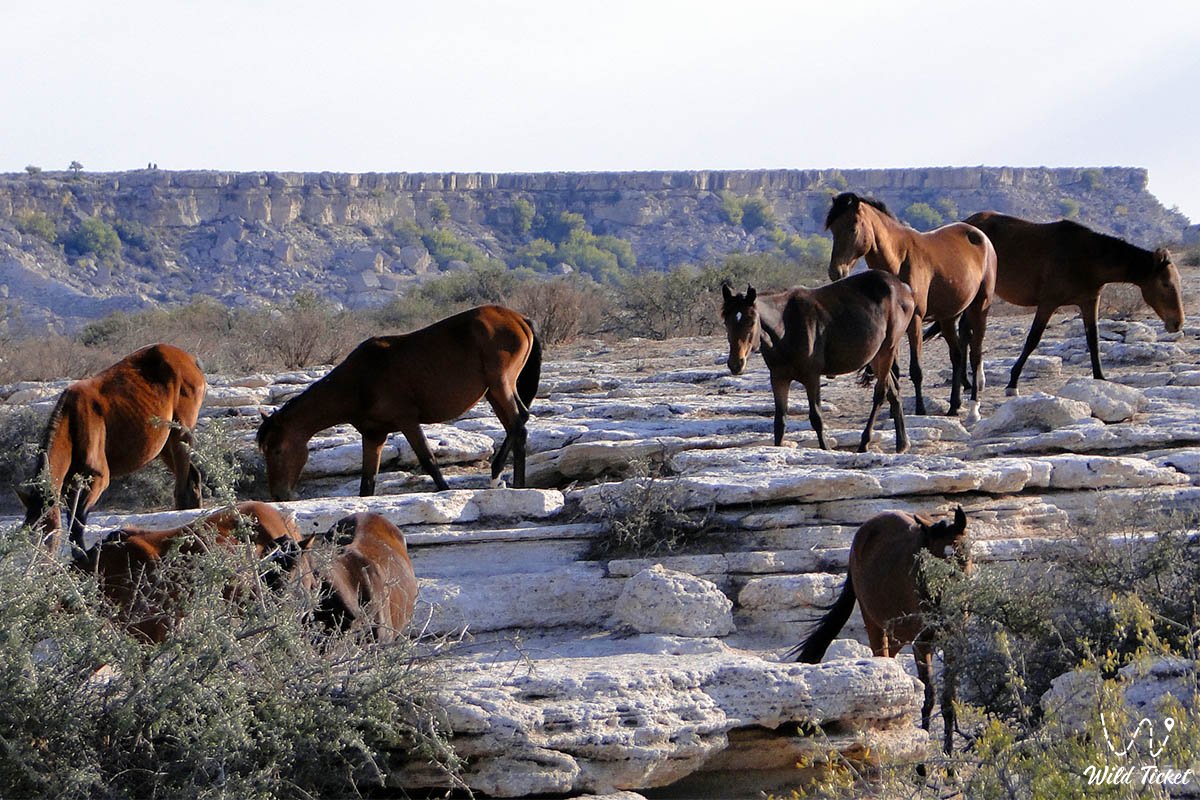
Fauna in the gorge is remarkably diverse due to permanent freshwater access and abundant plant forage. Mammals regularly found here include the corsac fox, badger, marbled polecat, steppe polecat, tolai hare, and long-eared hedgehog. Deep rock clefts in the shell limestone harbor daytime roosts of bats (serotine and long-eared bats). At dawn, cautious Ustyurt mouflons frequently descend from the rocky plateau ridges to drink at the stream.
Birdlife in the canyon is rich with song. Shaded canopies of mulberry and hawthorn shelter nightingales, European turtle doves, warblers, saxaul sparrows, and European bee-eaters. Chukar partridges and European rollers frequent the rocky bluffs. The inaccessible ledges of the gorge provide nesting territory for raptors: golden eagles, saker falcons, steppe eagles, long-legged buzzards, and common kestrels.
Reptiles and amphibians are represented by the Central Asian tortoise, rapid fringe-toed lizard, Caspian bent-toed gecko, toad-headed agama, Dione and Caspian whipsnakes, as well as the tartar sand boa. Marsh frogs inhabit the calm pools along the stream.
Legend
A rich body of lore, faithfully passed down through generations of Mangyshlak nomads, is intertwined with the figure of Saint Sultan-Epe and his sacred retreat.
The primary legend recounts how young Sultan-Epe became the guardian of all mariners. One day, his father, the great Sufi teacher Hakim-Ata, summoned his sons into his presence, but the youngest arrived very late. Demanding an explanation, the angry father watched as the youth revealed his soaked garments and bleeding marks left by coarse hemp ropes across his shoulders. He spoke: "My father, I heard the desperate cries of fishermen whose boats were being wrecked by a fierce tempest in the depths of the Caspian. I rushed to their aid, pulling the vessels ashore onto safety upon my own shoulders." The rescued seamen pledged to honor the saint, and exactly five months later, delivered the promised gift of ten thousand coins. Ever since, nomads across the steppe believe that whenever a boat is sinking at sea, calling upon the name of Sultan-Epe will bring forth the saving hand of the saint from the surging waters.
Another legend illustrates the youth's remarkable spiritual power. When Hakim-Ata shared that he performed his morning prayers by miraculously transporting himself to the Holy Kaaba in Mecca, Sultan-Epe offered to bring the sanctuary directly to his father's doorstep instead. The following morning, the sheikh entered the mosque and beheld the Kaaba standing before him, surrounded by crowds of praying pilgrims.
A third tale recounts the feast of Qurban. While the youth was away, his father's disciples slaughtered nine oxen and consumed all the meat. Upon returning, Sultan-Epe asked them to pile the hides and clean bones together; he raised his hands to heaven, invoked the sacred name of the Creator, and struck the ground with his staff. The oxen instantly returned to life, stood up, and wandered back out into the steppe, while the saint vanished into thin air into the unseen realm. According to tradition, the great Khoja Ahmed Yasawi rebuked Hakim-Ata for his harshness toward his son, uttering a prophecy: the waters of the Amu Darya would cover the father's grave for forty years until his debt to the blessed youth was redeemed.
A century later, the saint revealed a miracle to an orphaned boy named Kheirullah who suffered beatings from cruel kinsmen. Appearing in a dream, Sultan-Epe pointed him toward a spot at the edge of the green canyon where a white eagle perched upon a crag, teaching him a secret word. Invoking the saint's name, the frail boy gained the strength of a giant, single-handedly hoisted massive slabs of shell limestone, and carved out the sacred underground mosque, ultimately becoming the revered holy ascetic Kheirullah-Sufi.
Conclusion
Sultan-Epe Canyon is an invaluable gem of Mangistau, where the natural enchantment of rustling oases and Tethys shell limestone merges with the profound spiritual heritage of Sufism. The UNESCO World Heritage-listed underground sanctuary, the healing freshwater spring, and the panoramic vistas over the Caspian Sea instill every pilgrim and traveler with an enduring sense of harmony, peace, and timelessness.
Interesting Nearby Attractions:
• Zhygylgan Geological Sinkhole;
• Kapamsay Canyon;
• Shakpaktysay Canyon;
• Shakpak-Ata Mosque;
• Tamshaly Canyon;
• Samal Canyon;
• Saura Canyon and Lake Karakup;
• Sarytash Bay;
• Cape Tyub-Karagan;
• Fort-Shevchenko Museum Town;
• Torysh Valley of Spherical Concretions;
• Mount Sherkala;
• Kokala Tract;
• Mount Akmaya;
• Kokbulaksay Canyon.
Pilgrimage Sites in Mangystau:
• Beket-Ata Underground Mosque;
• Karaman-Ata Underground Mosque;
• Shopan-Ata Underground Mosque;
• Masat-Ata Underground Mosque;
• Koben Mosque;
• Zholaskan Mosque;
• Kolbas Ishan Mosque;
• Sonabay Underground Mosque;
• Uytoly-Ata Mosque;
• Ishan Khoja Mosque;
• Zhaman Sauran Mosque;
• Sanctuary of Bayte.
Photogallery: