Protected realm of the Northern Caspian and coastal salt flats of Buzachi –
The Buzachi State Nature Sanctuary (Kaz. Bozashy memlekettik tabigi qaumaly) represents a complex specially protected natural territory of republican significance, established to preserve, restore, and replenish valuable desert flora and fauna, as well as unique coastal wetland ecosystems. The sanctuary is situated in the northern part of the Mangystau region on the Buzachi Peninsula (Bozashy), covering an area of 212,900 hectares. Geographically, its borders adjoin the northeastern coast of the Caspian Sea, the expansive bays of Dead Kultuk and Kaydak, along with the boundaries of the Mangystau and Tupkaragan districts.
For tourists, ornithologists, and researchers exploring the Mangyshlak Peninsula, the Buzachi sanctuary serves as a vital highlight of the region's Northern Cluster. Located north of the regional center Aktau, the sanctuary opens the way to untouched maritime plains where desert terrain transitions smoothly into the shallow gulfs of the Caspian Sea. Just a few hours' drive to the west and southwest lie the celebrated landmarks of the Tupkaragan Peninsula: the geological Zhygylgan sinkhole with fossil tracks of ancient machairodontine cats, historic Cape Tyub-Karagan, Tyub-Karagan Bay, the historic port village of Bautino, and the relict oasis of the Khanga Baba tract. Southeast of the sanctuary rise the chalk ridges of Northern Aktau, the Torysh Valley of Spherical Concretions, sacred Mount Otpan-Tau with the Aday-Ata memorial complex, residual Mount Sherkala, and the medieval Kyzylkala settlement.
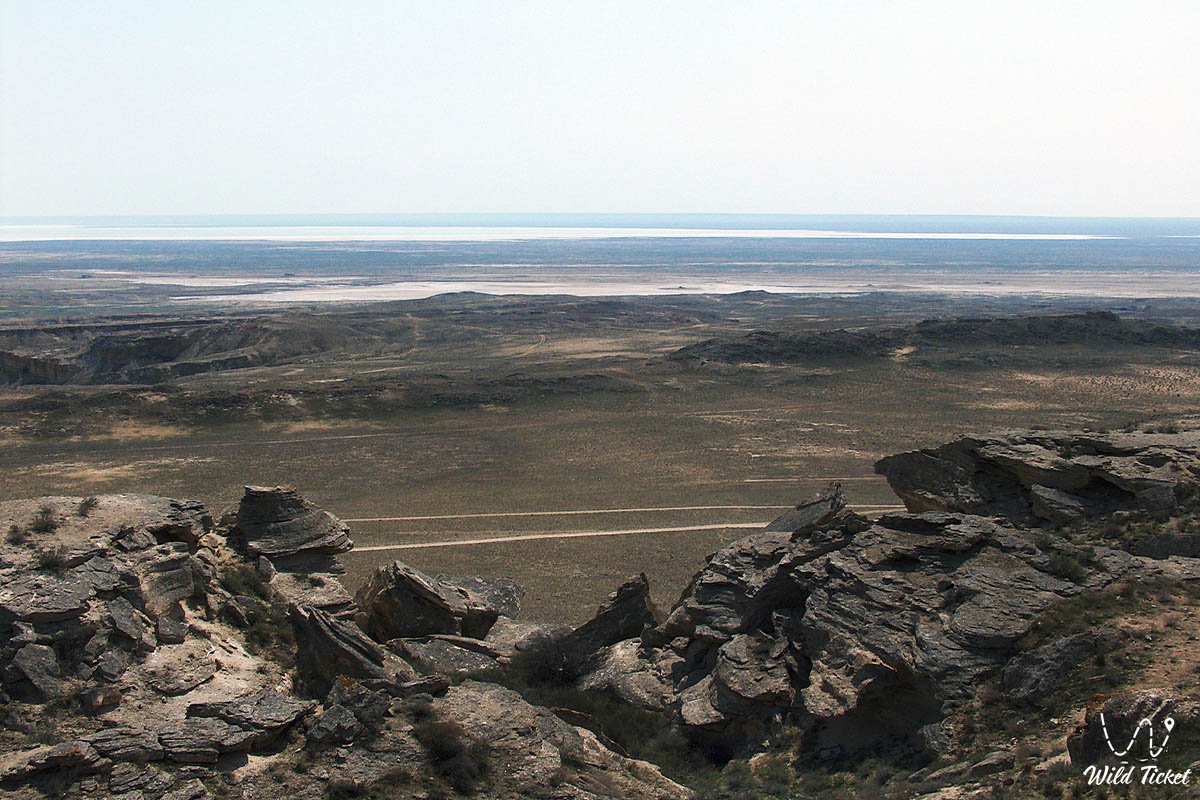
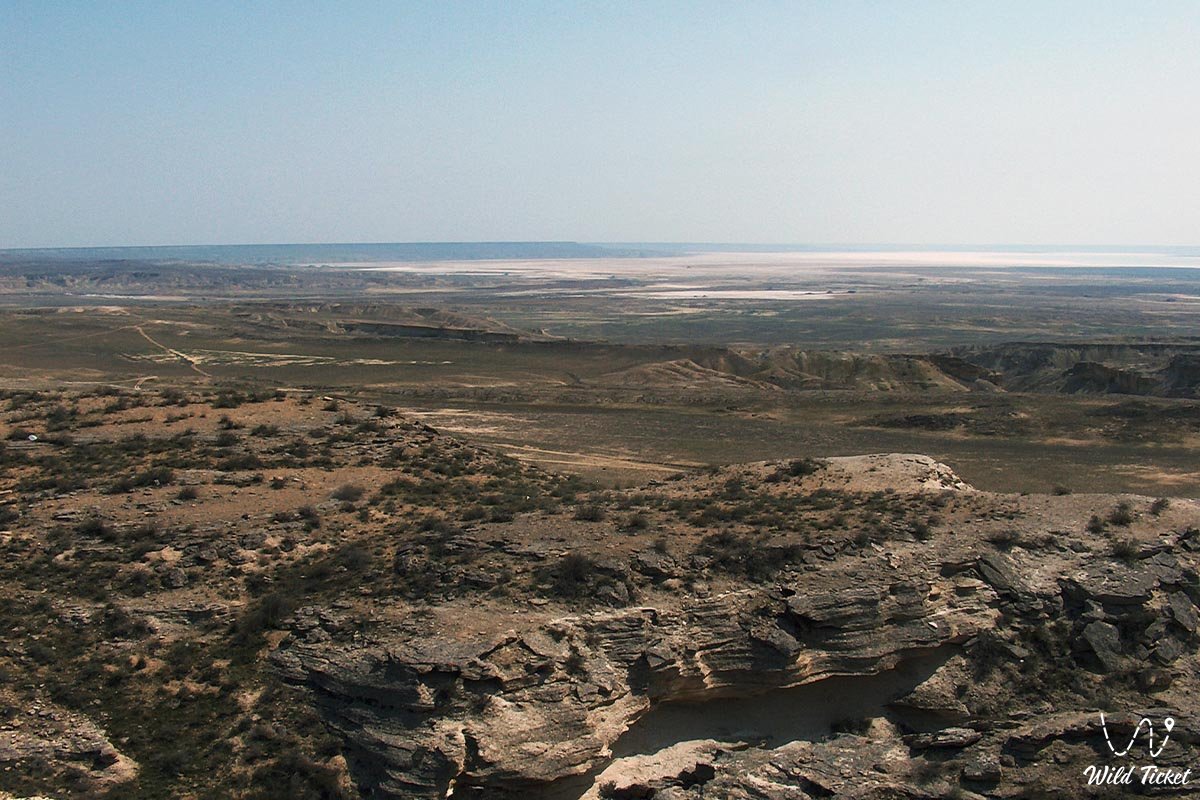
This entire lowland plain is a direct geological legacy of the receding prehistoric Tethys Ocean and Late Quaternary transgressions of the Caspian basin. Retreating relict waters created flat relief—in places depressed below world sea level—featuring immense tracts of marine salt flats (sors), takyrs, and coastal silt mudflats. The sanctuary was established in 1977 as a zoological reserve before being reorganized into a comprehensive multi-purpose sanctuary.
The primary natural value of Buzachi stems from its location along the global North Caspian flyway for migratory birds. In spring and autumn, millions of avian travelers halt on the shoals of Dead Kultuk Bay and Kaydak Bay, including breeding and staging colonies of greater flamingos, whooper swans, Dalmatian pelicans, Eurasian spoonbills, and saker falcons. The desert plains of the sanctuary preserve a key resident population of graceful goitered gazelles along with migratory saiga herds, while the waters of adjacent bays shelter the endemic Caspian seal and valuable sturgeon species.
Today, the Buzachi Nature Sanctuary is recognized as an Important Bird and Biodiversity Area (IBA) in Mangystau, attracting ecological researchers, ornithologists, and wilderness enthusiasts with its boundless salt-sea horizons and thriving coastal bird rookeries.
--------------------------------------------
How to get there and visit –
The Buzachi Nature Sanctuary is situated across the northern section of the Buzachi Peninsula within the Mangystau district of the Mangystau region. Distance from the regional center, the city of Aktau, to the southern perimeter of the sanctuary is about 220–250 km; to the village of Bautino and the town of Fort-Shevchenko to the west it is about 180–200 km; and to the settlement of Shetpe to the southeast it is roughly 160–180 km. An off-road drive from Aktau takes about 3.5–4.5 hours depending on the chosen coastal sector.
GPS geographical coordinates of the central part of the Buzachi Sanctuary:
44°57'49"N 51°12'22"E
The main vehicular route from Aktau leads north along the paved highway of republican significance through Akshukur and Tauchik toward the Kalamkas junction and the Buzachi Peninsula (around 180 km of good asphalt). The journey then continues toward the coastline of Kaydak and Dead Kultuk bays, where asphalt gives way to a complex maze of salt-flat graders, sandy-clay tracks, and oilfield service roads.
Another popular loop expedition route allows combining Buzachi with the attractions of the Tupkaragan Peninsula: departing Aktau via the Zhygylgan sinkhole, Cape Tyub-Karagan, the village of Bautino, and the Khanga Baba tract (Khanga Baba necropolis), travelers skirt Tyub-Karagan Bay from the north and enter the southern boundaries of the Buzachi Sanctuary.
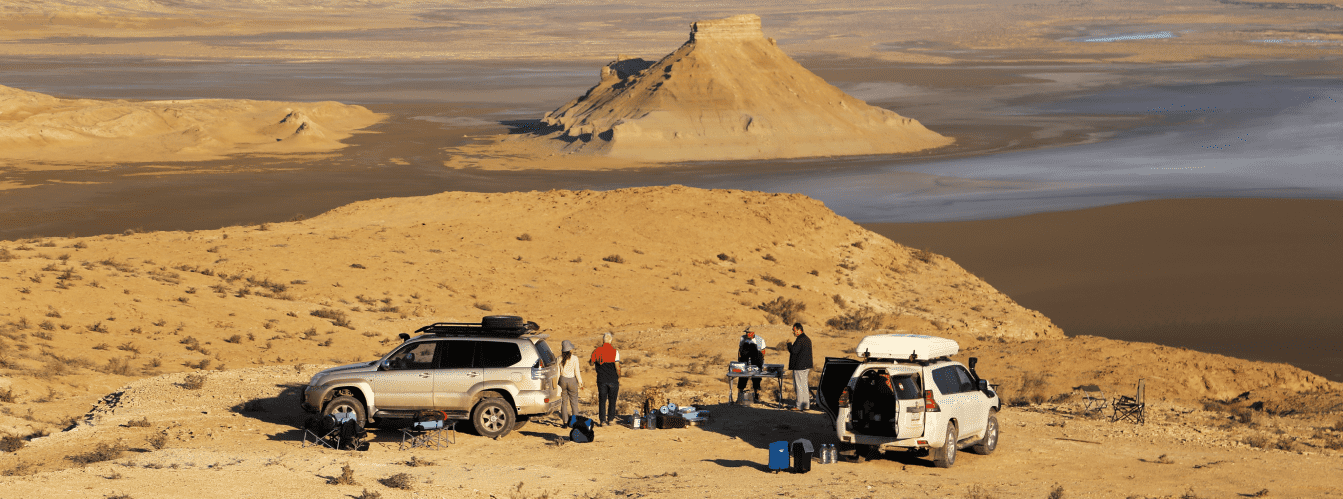
An expedition into the Buzachi Sanctuary requires dependable four-wheel-drive transport: travel is feasible exclusively in prepared body-on-frame 4x4 vehicles with high ground clearance, reinforced suspension, and durable off-road tires (AT/MT). Driving off established tracks onto the surface of salt marshes and littoral sors is strictly prohibited; beneath the thin, sun-baked salt crust lies treacherous, viscous mud capable of hopelessly miring a heavy vehicle.
During periods of storm-driven sea surges and rainfall, clay flats turn impassable. Carrying two spare wheels, an air compressor, kinetic recovery ropes, a shovel, and a high-lift jack is essential. Traveling in a convoy of at least two vehicles is strongly advised.
Visiting regime: the territory holds the status of a state nature sanctuary of republican significance. Hunting, disturbing nests, illegal fishing, driving off public tracks onto virgin soil, lighting open fires outside designated stops, and littering are strictly prohibited. Due to proximity to the shoreline and the Caspian border zone, each visitor must carry an original identity card or passport.
Tourism infrastructure within the sanctuary boundaries is absent: there are no hotels, dining establishments, or organized campsites. Cellular reception is sporadic near field operational posts and vanishes entirely along the coastal salt marshes. The nearest brand-name gas stations, service bays, tire shops, supermarkets, and clinics are located in Aktau, Fort-Shevchenko, and the settlement of Tauchik.
Travelers must maintain full field autonomy: carrying potable water (no less than 5 liters per person per day), extra fuel in jerrycans, complete camp equipment, sun protection, insect repellent, and a satellite phone for emergency calls.
The best time to visit is spring (from late April to late May), when the bays witness peak migratory bird transit, desert ephemerals blossom, and ambient temperatures stay comfortable (+18...+25 °C), as well as early autumn (September – October), marked by mild weather and the autumn avian passage. In July and August, Buzachi experiences intense heat above +40...+43 °C paired with elevated humidity near shallow bays and swarms of biting midges.
--------------------------------------------
History
The history of the Buzachi Peninsula and its nature sanctuary encompasses millennia of human coexistence with the shifting shoreline of the ancient Caspian. During periods of marine regression, vast littoral plains served as rich grazing grounds for wild ungulates and hunting ranges for ancient human communities. Archaeological research across the peninsula has uncovered Stone Age (Neolithic) campsites, flint arrowheads, scrapers, and ceramic shards left by prehistoric hunters and fishers along ancient beach ridges.
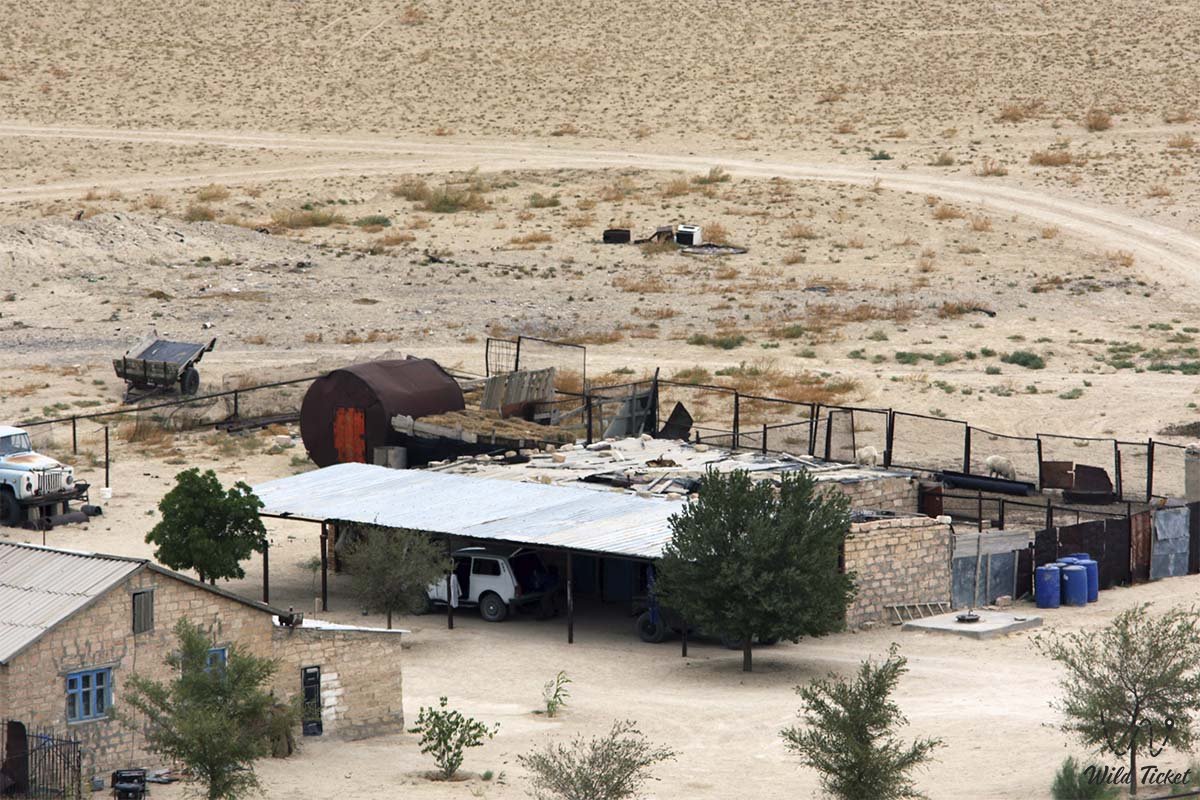
In the Middle Ages, northern branches of caravan routes passed through the Buzachi Peninsula, linking the roadsteads of Tupkaragan with the lower reaches of the Volga and Ural rivers and the cities of ancient Khwarazm. Merchants and nomads relied on shallow freshwater wells and navigated by prominent coastal headlands and bays. Watchtowers of stone, caravanserais, and ancestral clan necropolises were erected across elevated ground. From the 18th century onward, the Buzachi Peninsula became an ancestral wintering ground and year-round pasture for the Kazakh Aday clan: maritime plains protected from deep snowdrifts allowed winter grazing for tens of thousands of horses and sheep.
In the mid-20th century, extensive geological exploration and commercial development of hydrocarbon deposits (Kalamkas, Karazhanbas) commenced across the region. Rapid industrial growth and infrastructure expansion endangered fragile coastal ecosystems and desert ungulate populations.
To protect regional biodiversity, the Council of Ministers of the Kazakh SSR established the Buzachi State Sanctuary in 1977. Originally founded as a zoological reserve to safeguard the goitered gazelle and saiga antelope, it was later granted comprehensive sanctuary status, placing globally significant wetland bird nesting grounds under strict state protection.
In the 21st century, the sanctuary is recognized as an Important Bird Area of international significance and is integrated into long-term monitoring initiatives for the Caspian seal and North Caspian waterbirds.
Information
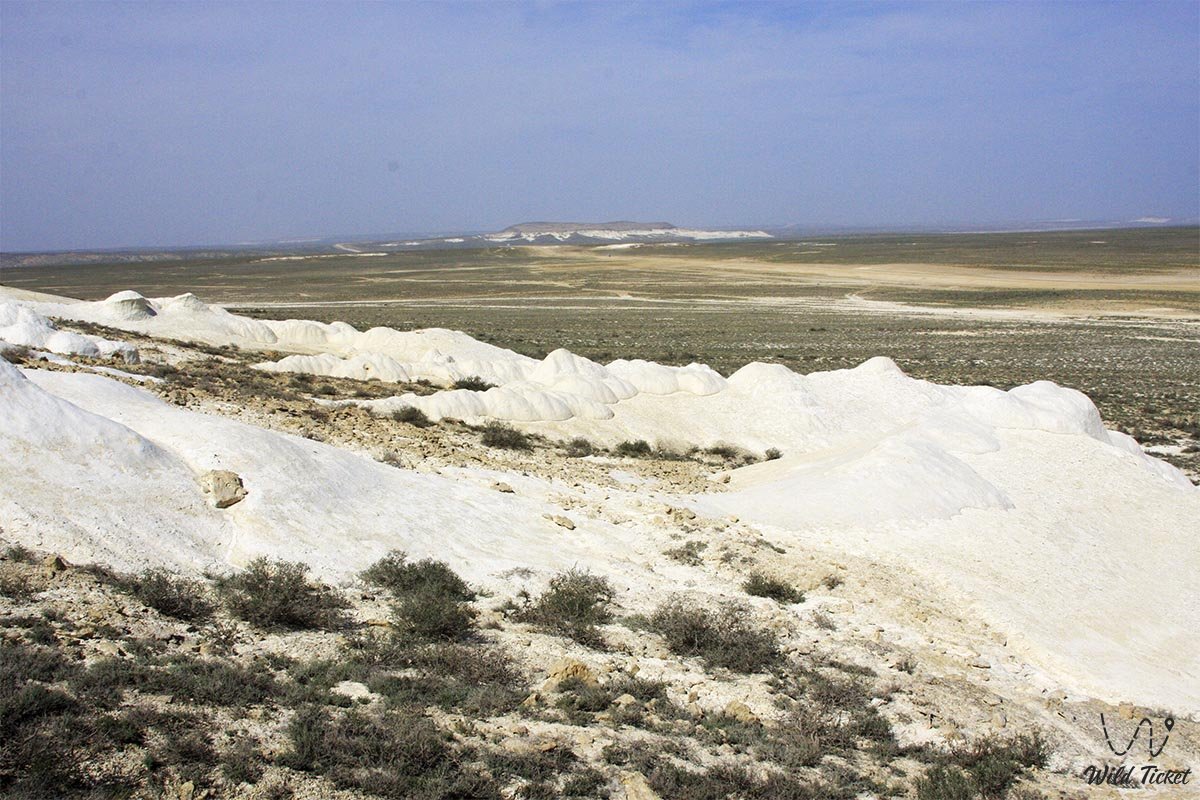
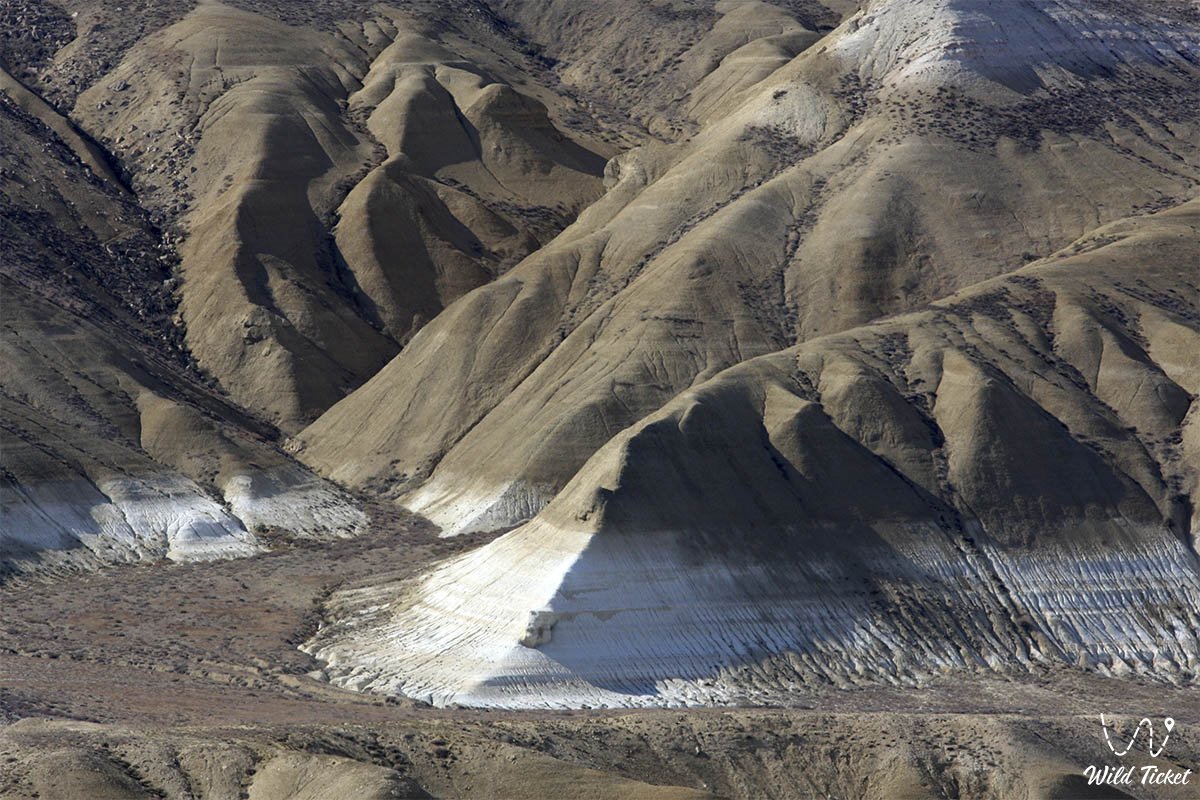
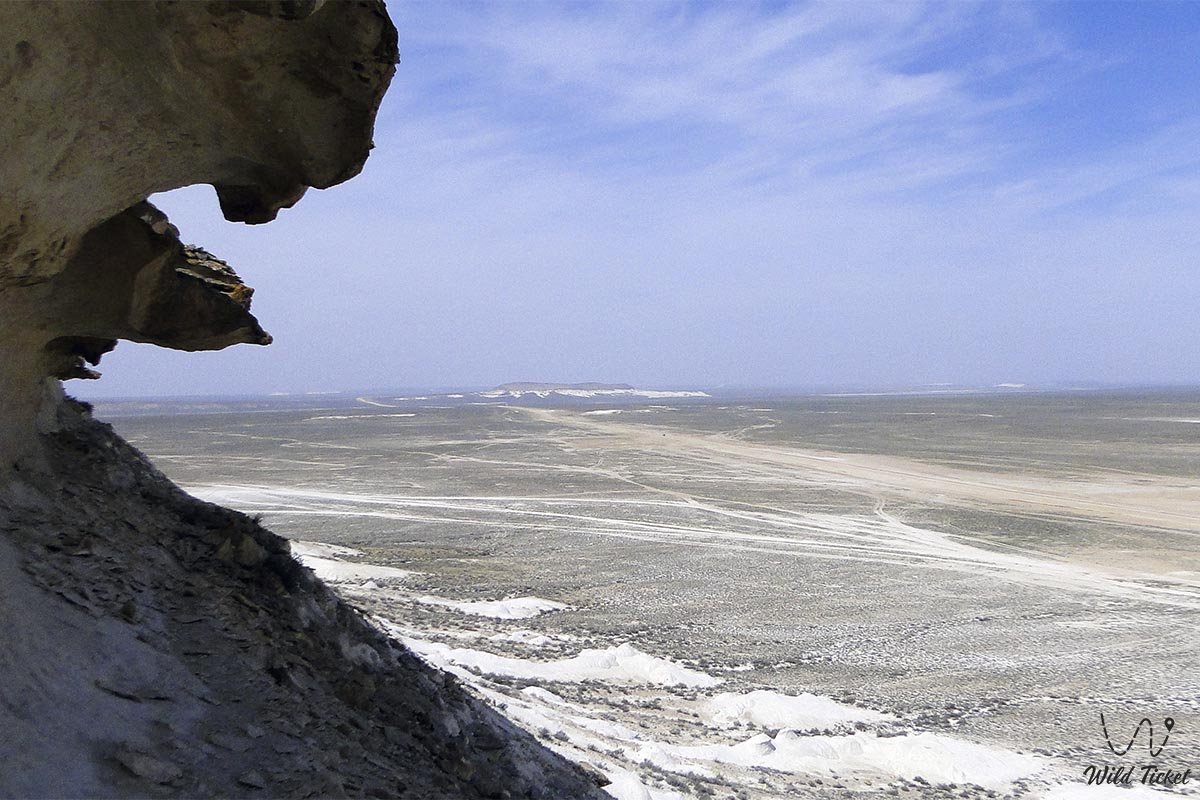
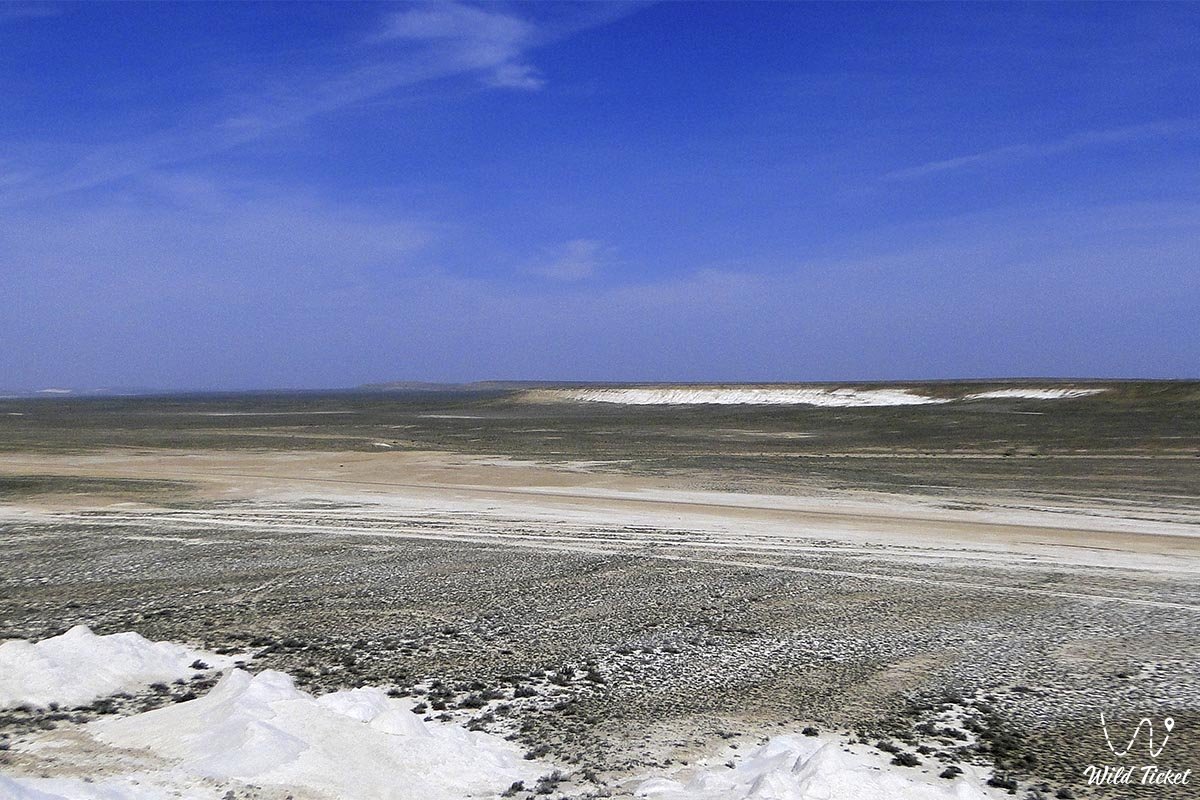
Geomorphologically, the territory of the sanctuary represents a vast, flat aggradational marine plain sloping gently toward Kaydak and Dead Kultuk bays. Elevation values vary within a narrow band from -28 meters below sea level (along the modern Caspian waterline) to 0...+15 meters across inland sandy-clay ridges. The relief is textured by relict beach berms, coastal spits, deflation basins, and endorheic salt-pan depressions.
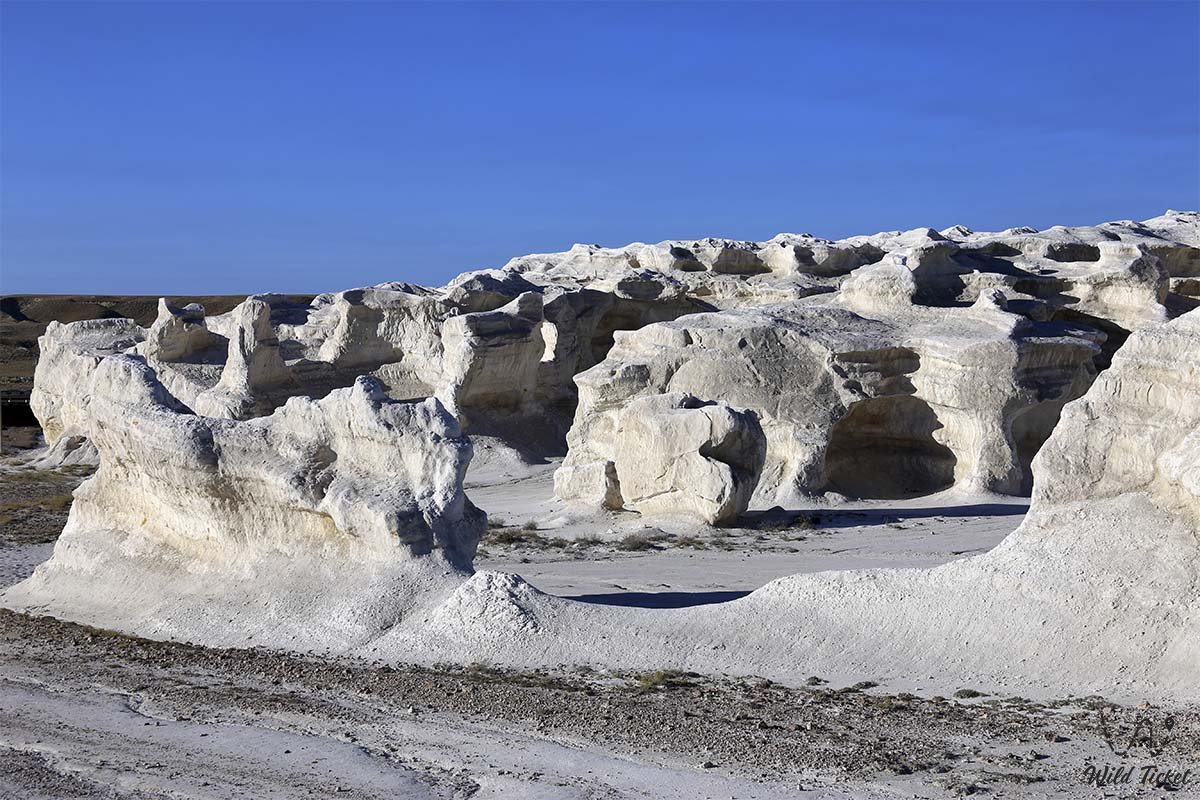
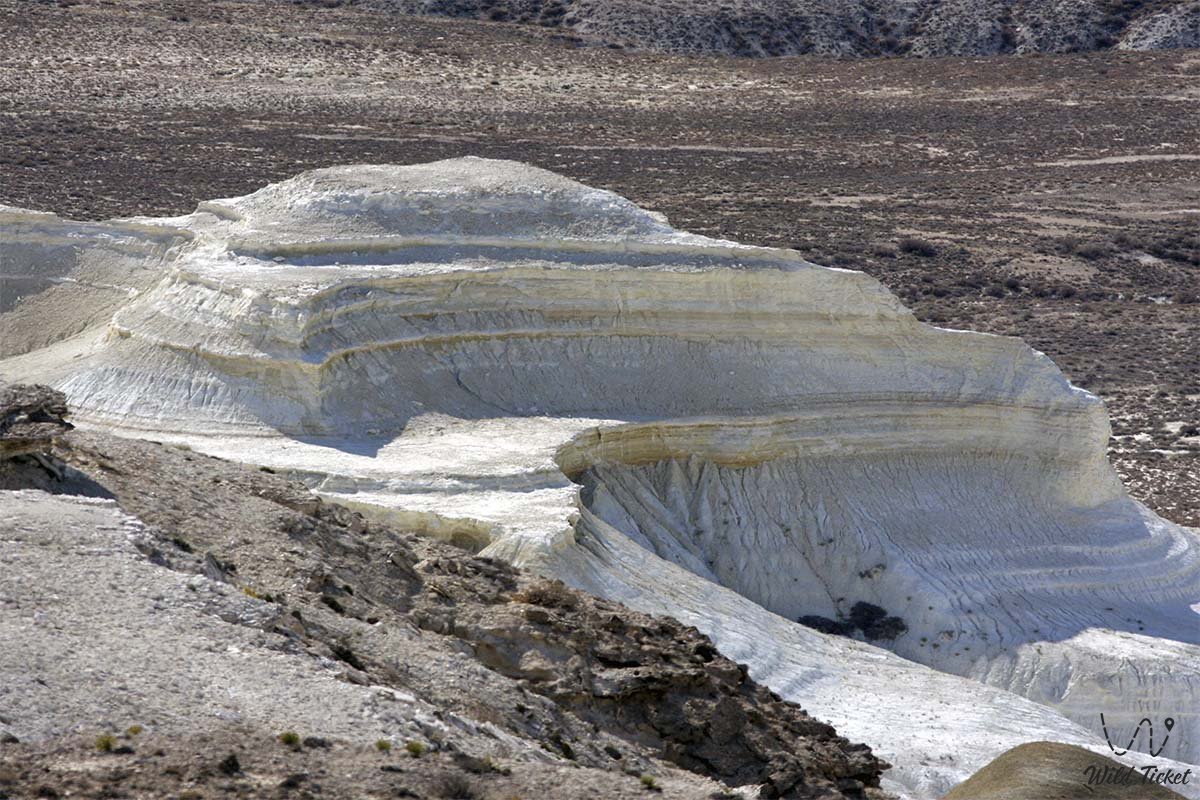
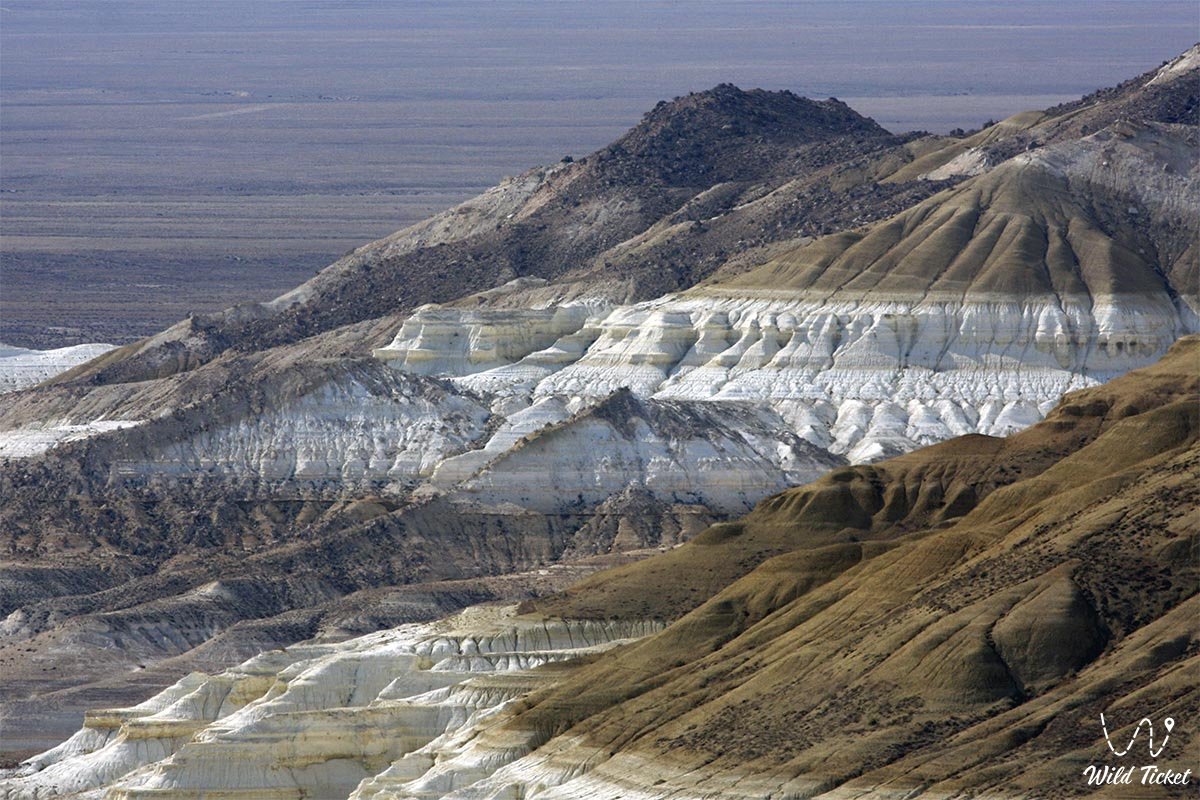
The geological cross-section is formed by a thick mantle of Quaternary marine and lacustrine-alluvial deposits: fine-grained sands, coquinas, layered loams, and silts deposited during the Neo-Caspian, Khvalynian, and Khazarian transgressions of the Caspian basin. Beneath this Quaternary mantle lie Paleogene and Neogene clays and marls from relict beds of the Tethys Ocean. Active modern salt-accumulation processes occur continuously across the coastal strip, creating crustal and puffy sors featuring extensive sodium chloride and sodium sulfate deposits.
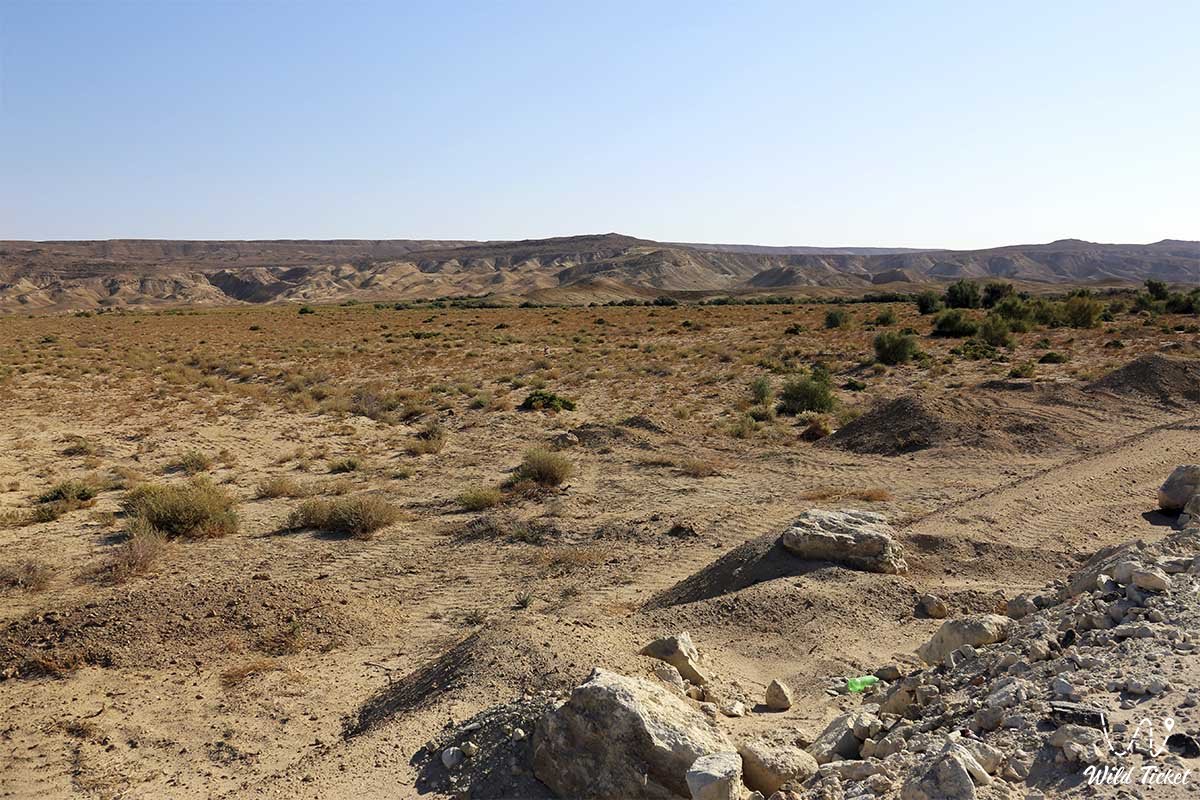
Soil cover is characterized by intense salinity. Coastal salt flats, takyrs, hydromorphic saline gray-brown desert soils, and hummocky sands predominate. The surface of takyrs is patterned with polygonal desiccation cracks penetrating 15–20 cm deep.
The hydrological regime of the sanctuary is tied to the dynamics of the Caspian Sea and its shallow bays. Permanent freshwater streams are absent. Water balance is maintained by seawater exchange, wind-driven marine surges, seasonal snowmelt, and scarce brackish groundwater lenses. Highly mineralized groundwater sits at depths of 0.5 to 3 meters, driving constant capillary salt pull to the surface. The waters of Dead Kultuk and Kaydak bays exhibit hypersaline conditions and unstable coastlines.
The climate is sharply continental and arid, tempered moderately by the marine body of the Caspian. Winters are comparatively mild yet wind-swept, with average January temperatures of -4...-7 °C (and short-lived cold snaps down to -20 °C). Summers are long, hot, and dry, with July averaging +27...+31 °C and daytime peaks reaching +42 °C. Annual precipitation is sparse at 120–140 mm, with evaporation outstripping precipitation by 8 to 10 times. Steady coastal winds and seasonal dust-salt storms are common.
Detailed description of the venue
The natural complex of the Buzachi Sanctuary includes the following distinct landscape sectors, ornithological zones, and landmarks:
• Coastal shoals of Dead Kultuk and Kaydak bays – vast shallow marine flats and seasonally flooded mudflats (watten) providing rich feeding habitats for hundreds of thousands of staging waders, ducks, and herons.
• Greater flamingo gathering banks – isolated shoals and sandy-silt spits where flocks of greater flamingos congregate for seasonal staging and feeding during spring and summer.
• Marine sor and salt-flat plains – glittering, snow-white salt flats with polygonal crusts of halite and gypsum that produce mirror-like expanses along the transition between land and sea.
• Ridge-hummock sands of Buzachi – semi-stabilized sand dunes rising 5–8 meters high, colonized by black saxaul, Calligonum, and sand acacia, which serve as shelter for native mammals.
• Clay takyr plains – level clay flats displaying geometric fissure patterns that transform into shallow, reflective sheet lakes after spring rainstorms.
• Coastal haul-outs of the Caspian seal – remote sandy spits and shallow islets along the sanctuary margin where the Caspian's endemic marine mammal establishes seasonal haul-outs in spring and autumn.
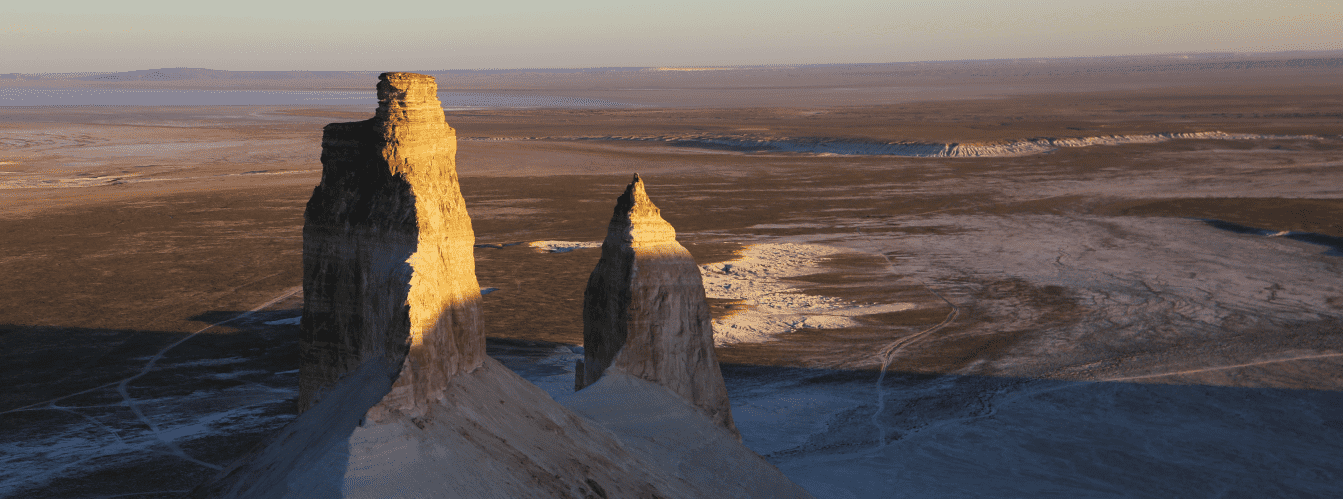
• Elevated coastal headlands – raised sand-and-coquina shelves of the ancient coastline opening onto 360-degree vistas across open gulf waters and desert horizons.
Flora and fauna
The plant life of the Buzachi Sanctuary is composed of halophytic and psammophytic desert communities. Saline coastal plains are dominated by saltworts: Halocnemum strobilaceum, European glasswort, Caspian Kalidium, Schober's nitre bush, and Reaumuria. Clay-gravel plains host drought-resistant dwarf shrubs: gray-soil wormwood, Lerche's wormwood, Anabasis salsa (biyurgun), boyalych, and Krascheninnikovia (teresken). Sandy tracts support black and white saxaul, Calligonum (dzhuzgun), sand acacia, Aristida (selin), and camelthorn (dzhantak). In spring, the plains are briefly blanketed with blooming wild Sogdian tulips, two-flowered tulips, steppe irises, and ephemeral grasses.
The wildlife possesses high conservation value. The sanctuary supports a stable population of graceful goitered gazelles, which utilize these expansive rangelands year-round. In winter and during seasonal migrations, herds of saiga antelopes cross onto Buzachi.
Carnivores include the wolf, golden jackal, corsac fox, European badger, marbled polecat, steppe polecat, and sand cat. Coastal fringes and sand mounds harbor numerous rodents: great gerbil, tamarisk gerbil, tolai hare, thick-tailed pygmy jerboa, and small five-toed jerboa. Seasonal haul-outs of the endemic Caspian seal occur on secluded offshore spits.
The avifauna exceeds 200 species. The sanctuary ranks among the critical wetland staging grounds of Eurasia. Species listed in the Red Book of Kazakhstan include: greater flamingo, Dalmatian and great white pelicans, Eurasian spoonbill, glossy ibis, little egret, whooper swan, Pallas's gull, saker falcon, peregrine falcon, steppe eagle, golden eagle, and Eurasian eagle-owl. The open plains host nesting MacQueen's bustard (houbara bustard), black-bellied sandgrouse, Pallas's sandgrouse, stone-curlew, and desert lark.
The herpetofauna includes the agile steppe agama, secret toad-headed and toad-headed agamas, plate-tailed gecko, sand boa, arrow snake, dione snake, four-lined snake, and the venomous Halys pit viper. European pond turtles frequent warm shallow pools in season.
Among the birds in the Aktau-Buzachi Nature Sanctuary, the following are listed in the Red Book of Kazakhstan:
1. Whooper swan, 2. White-headed duck (extremely rare), 3. Red-breasted goose, 4. Marbled teal, 5. Velvet scoter, 6. Dalmatian pelican, 7. Great white pelican, 8. Greater flamingo, 9. Little egret, 10. Squacco heron, 11. Eurasian spoonbill, 12. Glossy ibis, 13. Slender-billed curlew, 14. Black-bellied sandgrouse, 15. MacQueen's bustard (houbara bustard), 16. Sociable lapwing, 17. Little bustard, 18. Golden eagle, 19. Pallas's fish eagle, 20. White-tailed eagle, 21. Egyptian vulture, 22. Peregrine falcon.
Mammals listed in the Red Book of Kazakhstan are also represented:
1. Piebald shrew, 2. Brandt's hedgehog (long-spined hedgehog), 3. Marbled polecat, 4. Sand cat, 5. Pallas's cat (manul), 6. Caracal, 7. Goitered gazelle, 8. Ustyurt mountain sheep (urial).
Among reptiles, the four-lined snake is listed in the Red Book of Kazakhstan.
Legend
An ancient Kazakh legend concerning the Winged Tulpar and the Daughter of the Caspian is tied to the boundless salt flats of Buzachi.
Tradition tells that at the dawn of time, when the waters of the Caspian washed over emerald meadows, the Daughter of the Caspian—a radiant mistress of the marine deep—dwelt in Dead Kultuk Bay. The waves answered her call, and her constant companions were flocks of snow-white swans and the pink birds of morning dawn.
Across the steppes of Buzachi lived a fearless young batyr who possessed a winged tulpar capable of outracing the desert winds. Catching sight of the maiden rising from the sea foam at sunset, the warrior gave her his heart. Yet the dark lord of the subterranean salt depths grew envious of their bond and summoned a devastating storm: the sea retreated dozens of leagues, leaving behind searing salt crusts and waterless mudflats. Cut off from the life-giving deep, the maiden began to wither on the burning sands.
The batyr mounted his winged charger and soared into the heavens, piercing thunderheads with arrows to bring rain to the parched earth. As the tulpar flew above the scorching plains, silver plumes fell from its wings, transforming into flocks of pink flamingos. The birds spread their broad wings to shield the Daughter of the Caspian from the blazing sun, carrying her safely back to the open sea.
Ever since, local people have believed that each spring the pink flamingos return to the salt flats of Buzachi in remembrance of the batyr's devotion and the maiden of the sea, while the sanctuary remains under the unseen protection of the Caspian's benevolent spirits.
Conclusion
The Buzachi Nature Sanctuary is a remarkable jewel of Northern Mangystau, where austere primeval desert meets the infinite waters of the Caspian Sea and the salt flats of Dead Kultuk and Kaydak bays. An expedition across the wild terrain of Buzachi offers an unforgettable encounter with pristine nature, from the sight of pink flamingo flocks taking wing over white salt crusts to the graceful gallop of goitered gazelles against the quiet horizons of Kazakhstan's great steppe.
Interesting sights nearby:
• Shallow Dead Kultuk Bay;
• Winding coastal Kaydak Bay;
• Buzachi Peninsula (Bozashy);
• Geological Zhygylgan sinkhole with fossil tracks of ancient animals;
• Scenic Cape Tyub-Karagan;
• Tyub-Karagan Bay on the Caspian Sea;
• Historic Coastal Village of Bautino;
• Relict Oasis and Khanga Baba Tract;
• Torysh Valley of Spherical Concretions;
• Otpan-Tau Historical and Cultural Complex;
• Solitary Residual Mount Sherkala;
• Paleontological Guide at Mount Sherkala;
• Medieval Kyzylkala Settlement.
Photogallery: