Sacred peak of unity and the signal beacon of Aday-Ata –
Mount Otpan-Tau (Kaz. Otpan tau) represents a sacred peak, the highest elevation of the Western Karatau ridge (532 meters above sea level, the second highest peak of the peninsula after Mount Besshoky), and a large-scale historical and cultural memorial complex situated in the Mangystau region. Crowning the mountain chain, the summit is visible from dozens of kilometers away, serving as an age-old natural landmark, a sentinel bastion, and a sacred symbol of solidarity among the clans of Mangyshlak.
This entire mountain system is a direct geological legacy of the prehistoric Tethys Ocean and folded uplifts of the Permo-Triassic period: when the peninsula's territory was a seabed during the Paleogene, the peaks of Otpan-Tau and Besshoky rose above the waves as isolated islands.
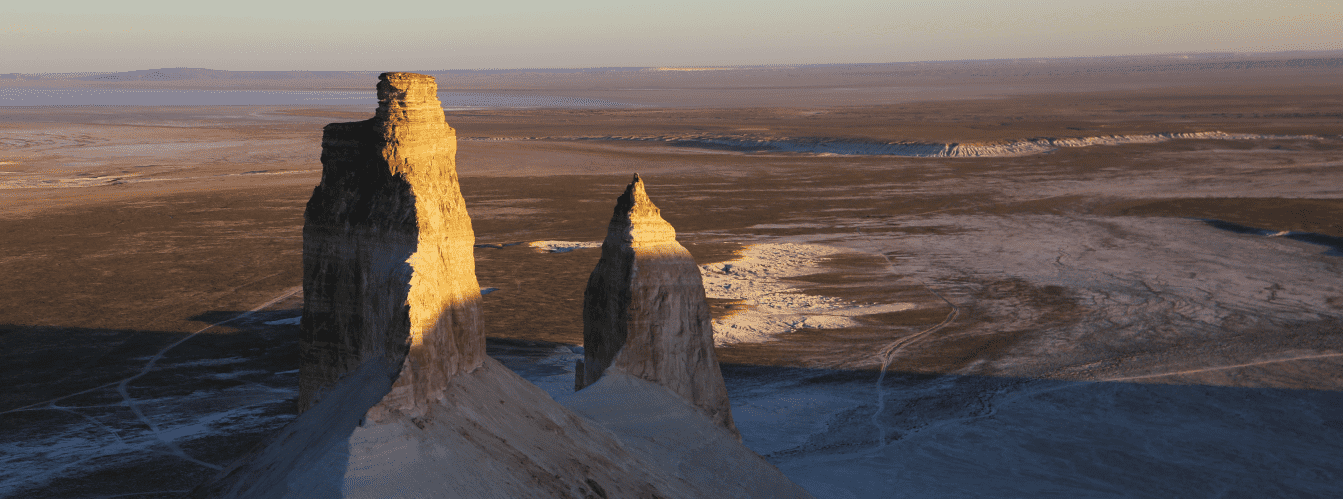
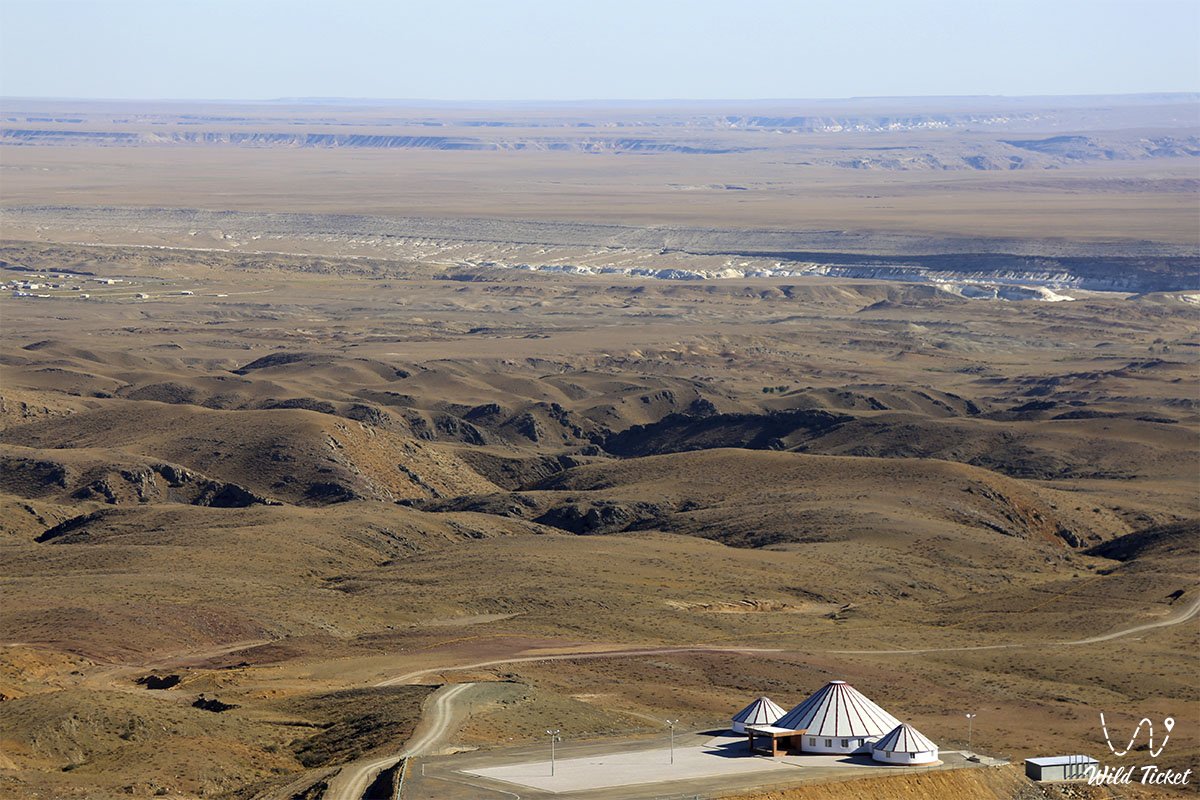
En route to Otpan-Tau, travelers encounter a classic panorama of Central Mangystau: crossroads intersect here leading to the legendary residual Mount Sherkala, the shaded oasis of Samal Gorge, the stratified Jurassic clays of the Kokkala tract, and the fantastical chalk towers of the Valley of Castles Airakty – Shomanay.
Translated from the Kazakh language, the root "ot" means fire ("Otpan" – fiery peak or hearth). In antiquity, a watchtower stood atop the summit, where sentinels lit a signal beacon ("uran oty") upon the approach of an enemy. The blazing fire and thick smoke were visible across the entire Ustyurt Plateau and the plains of the peninsula, summoning warriors to battle. Prior to the construction of the memorial, archaeologists discovered the remains of a three-room stone structure, horse bits, bridles, and the fused ash of Mangystau's ancient hearth fires here.
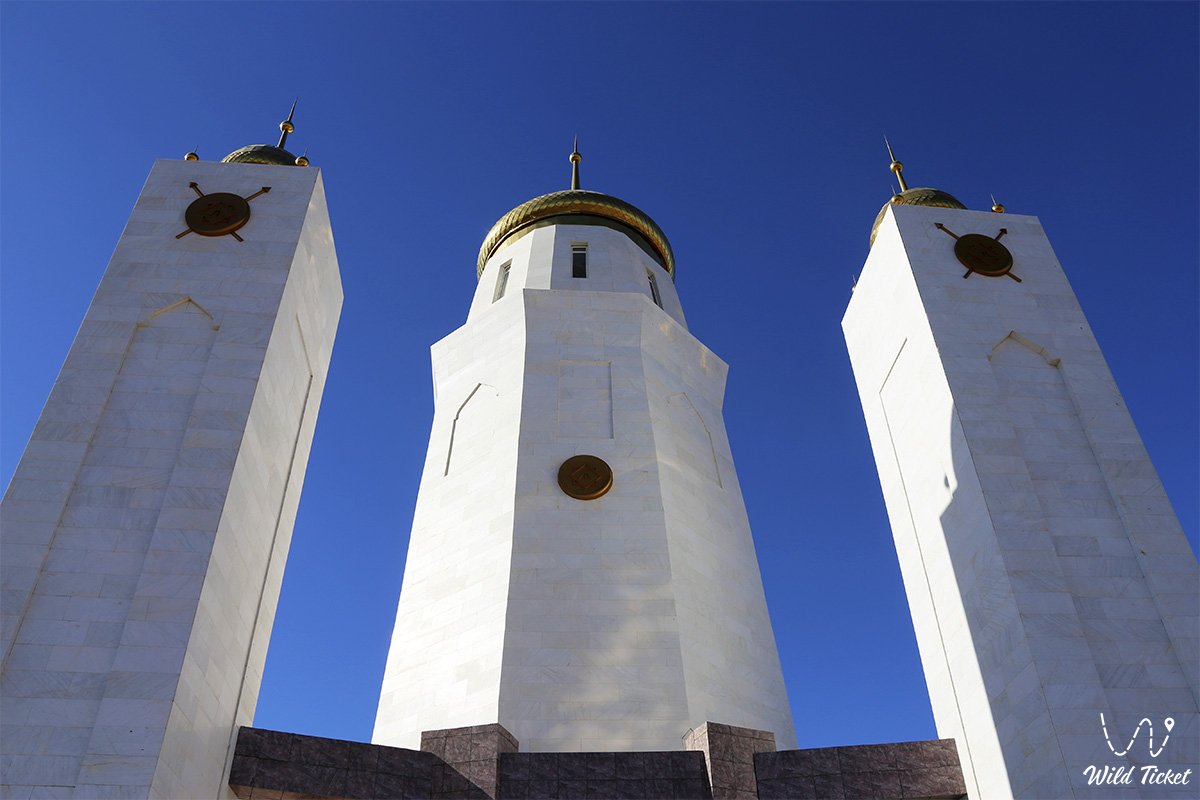
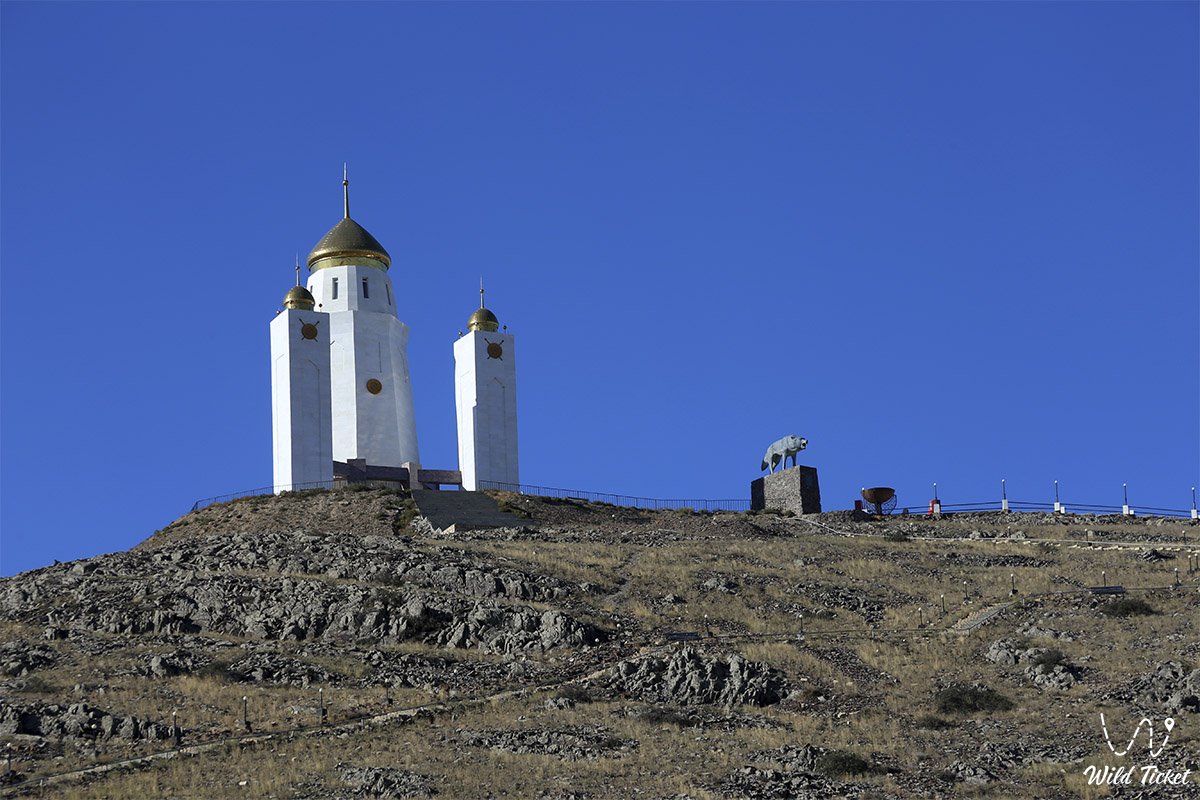
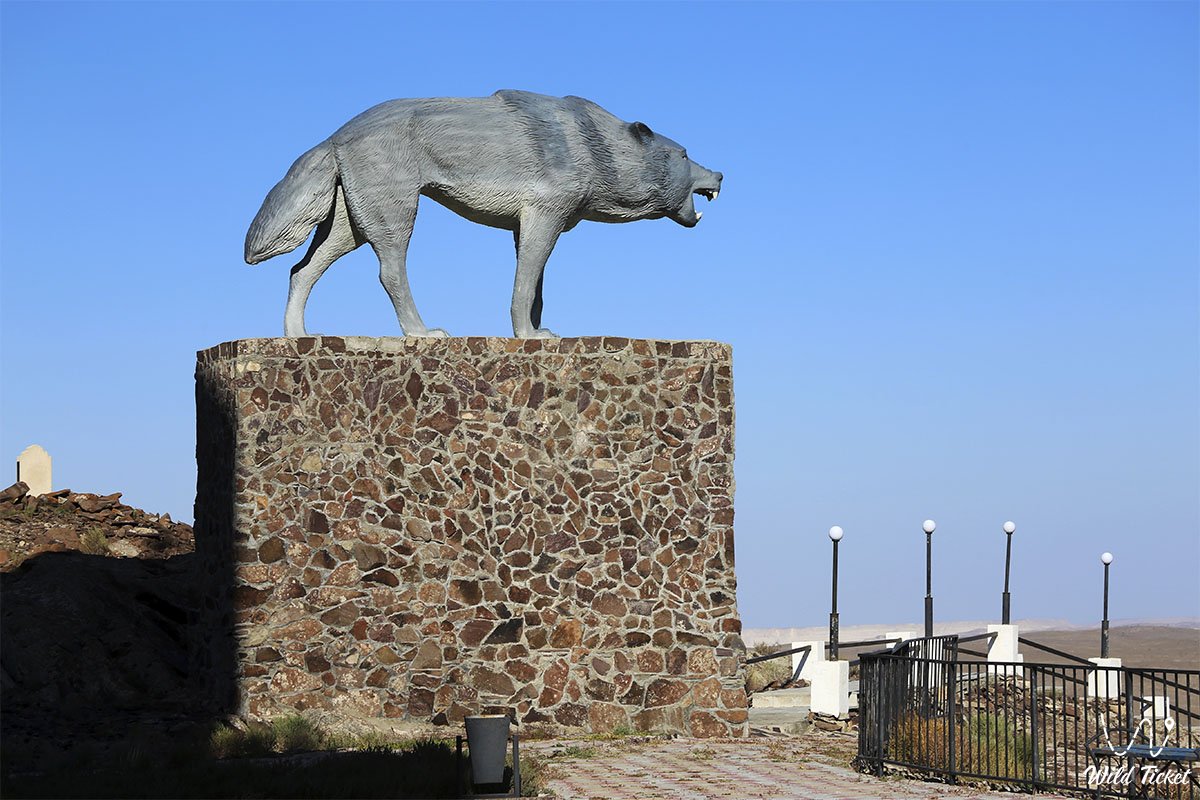
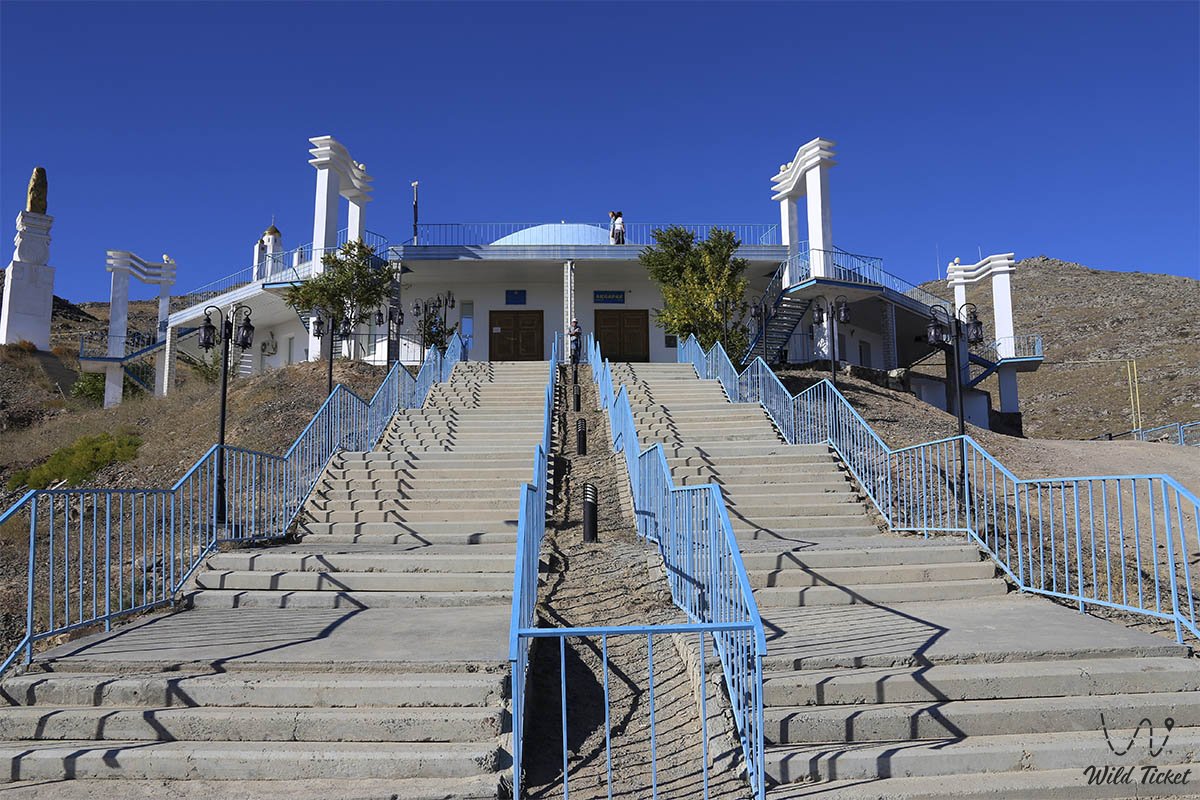
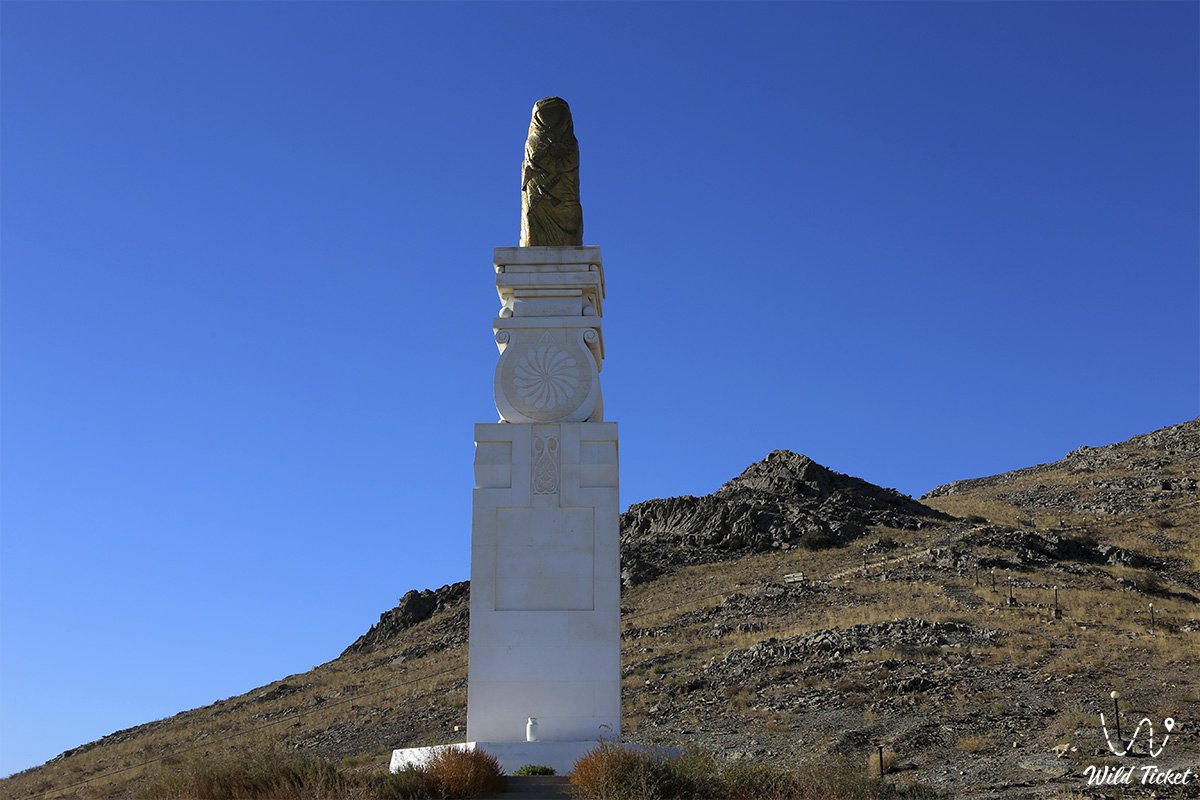
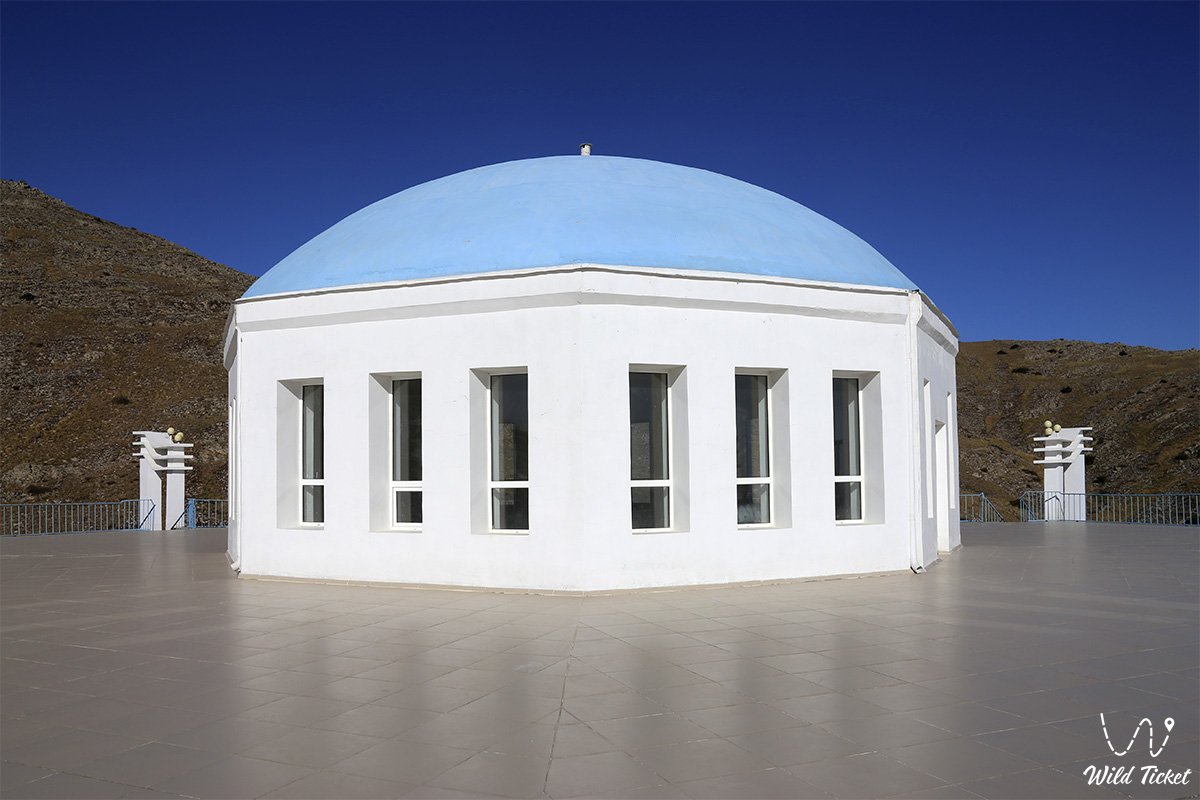
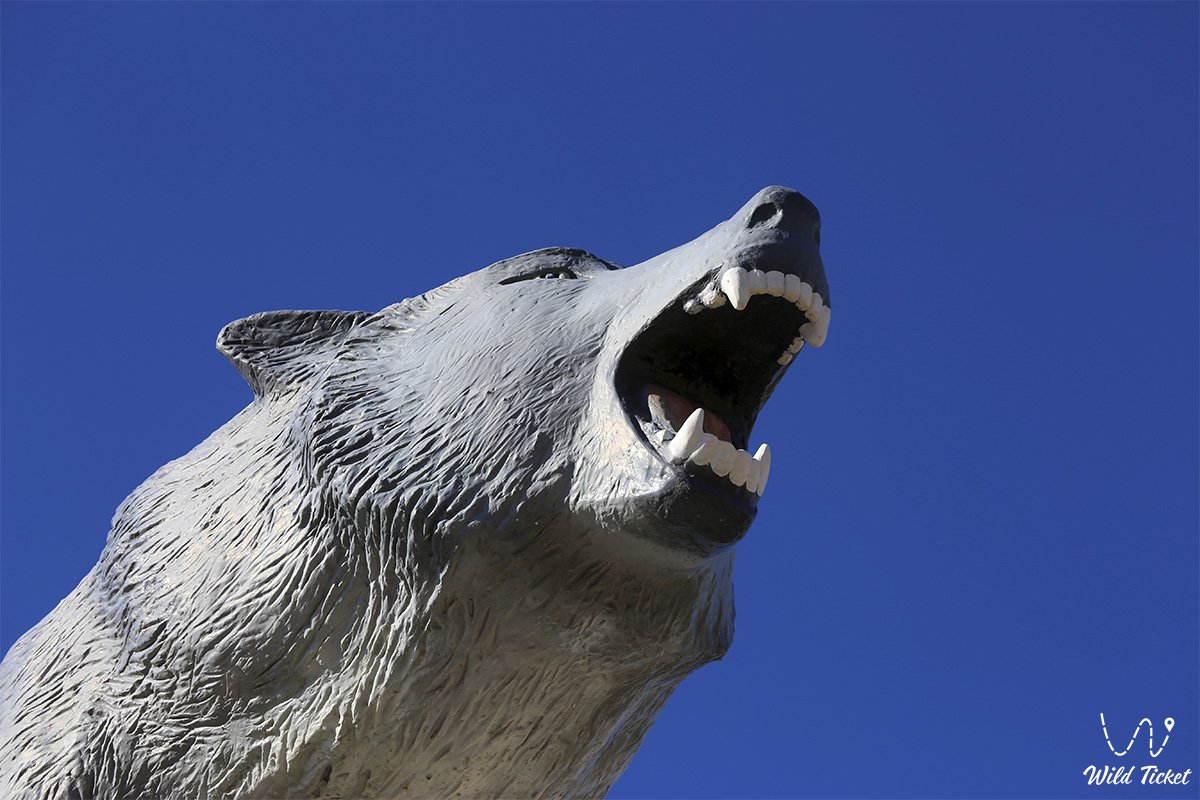
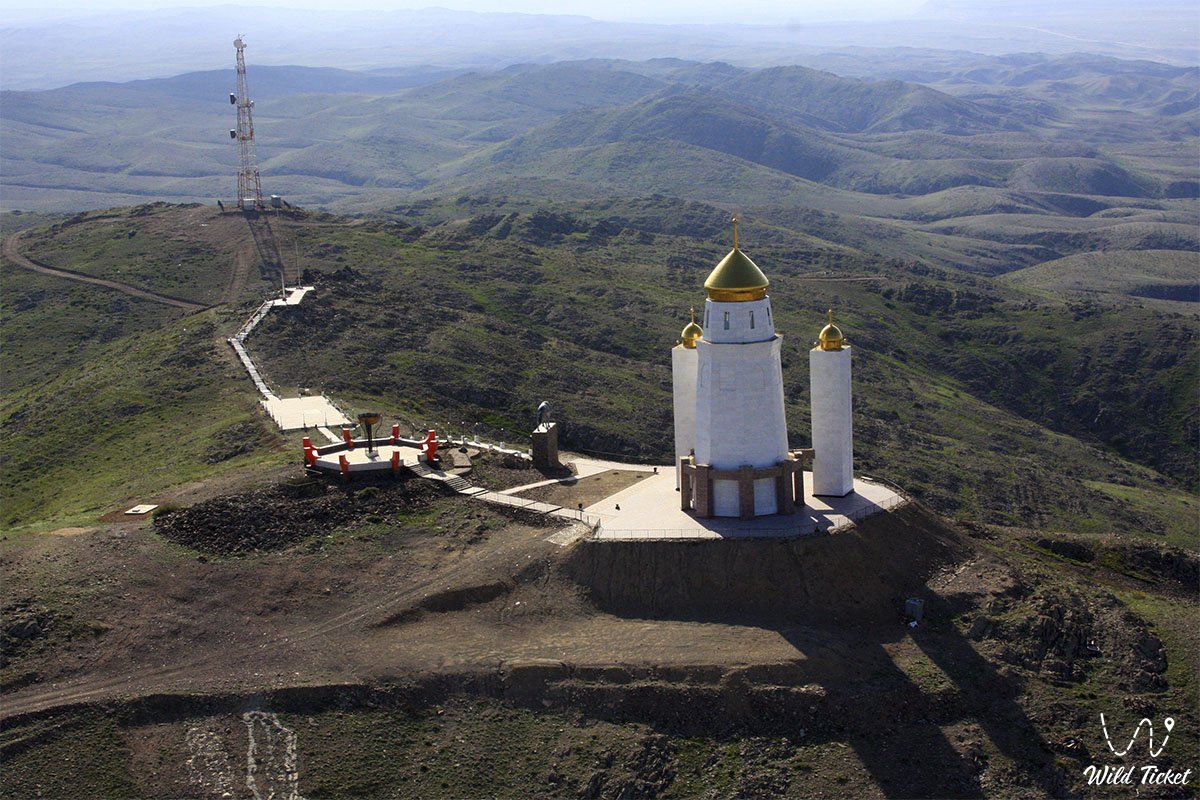
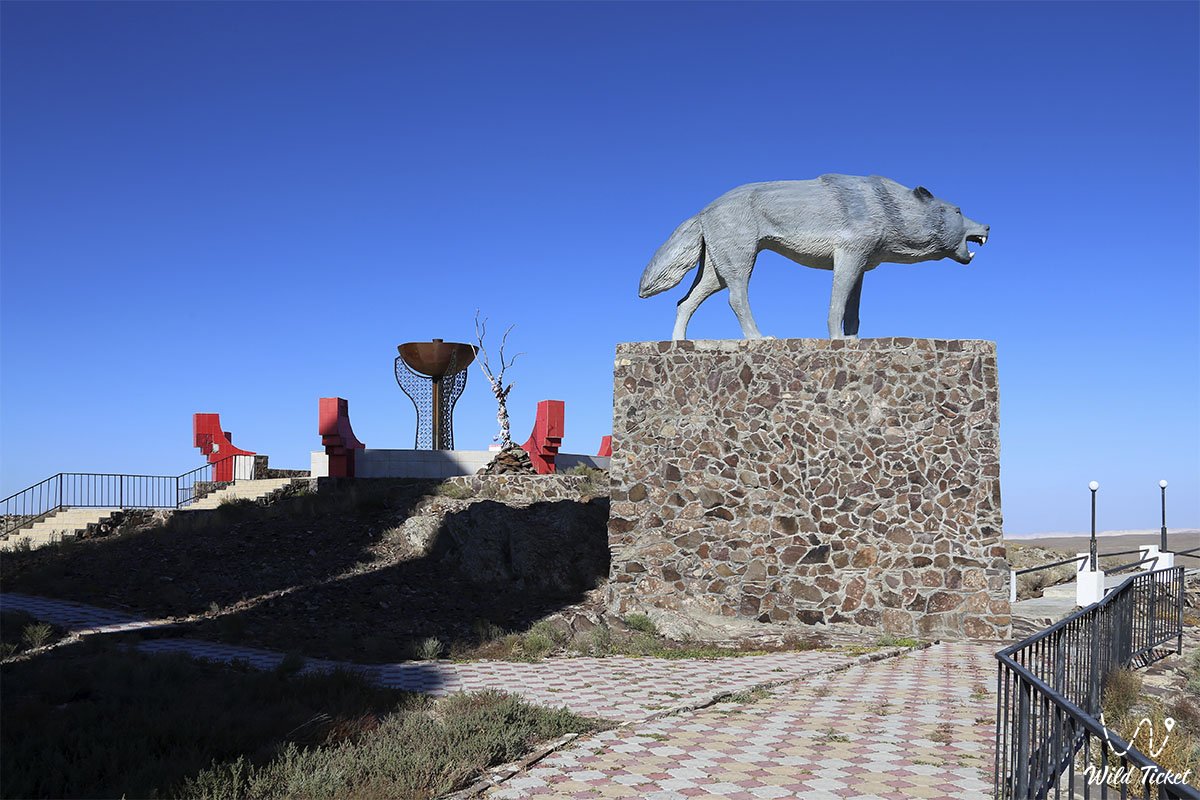
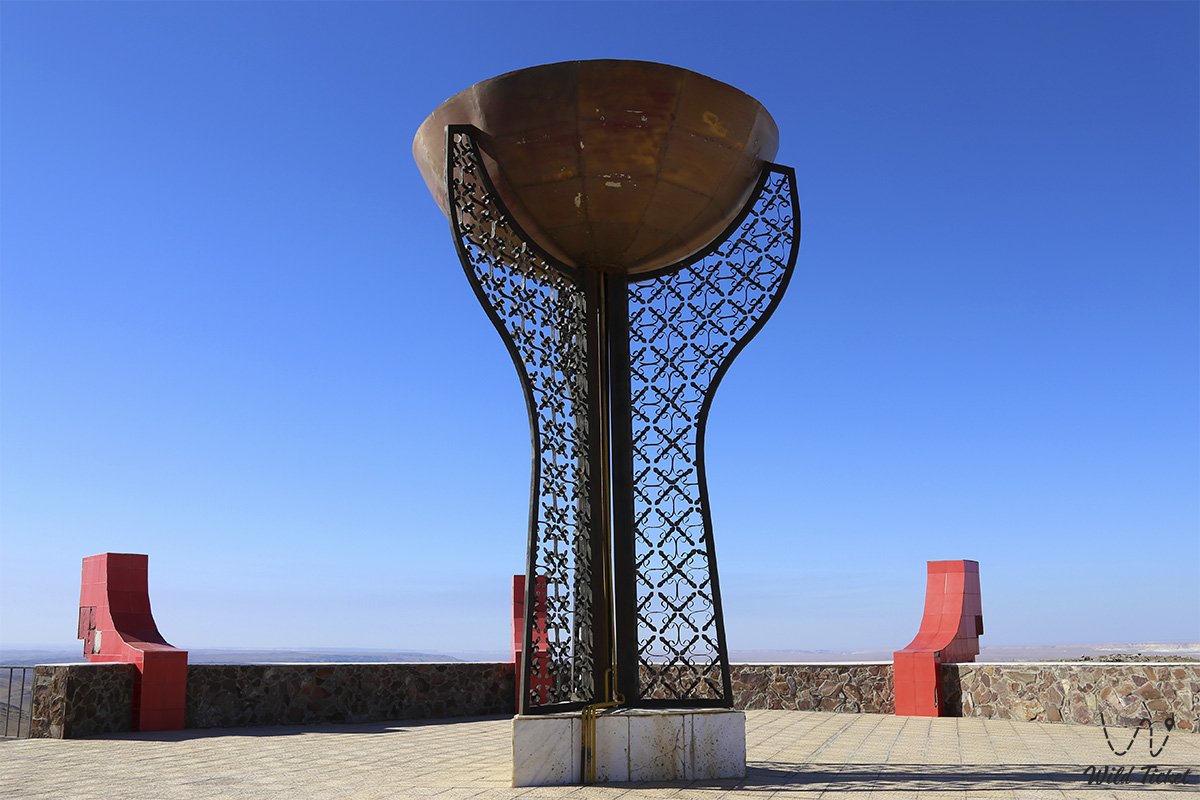
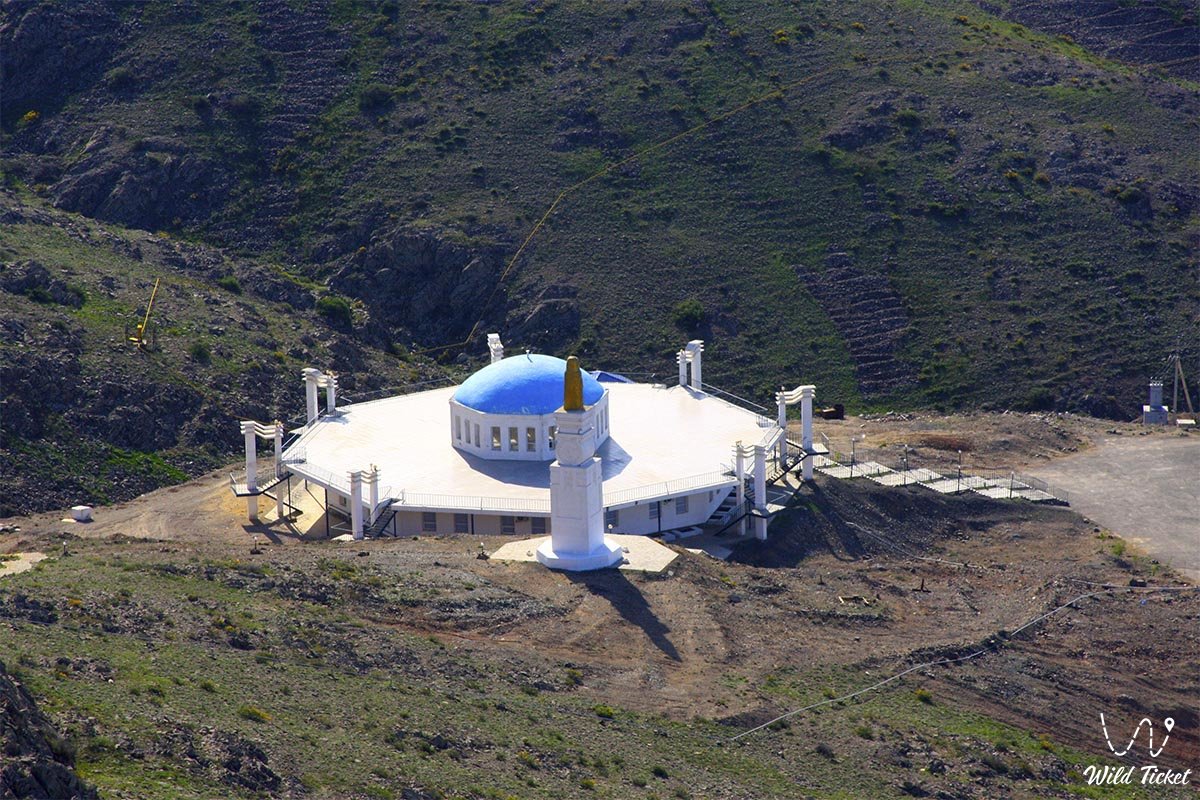
In 2007, on the initiative of prominent poet and public figure Sabyr Aday, the "Aday Ata – Otpan Tau" Historical and Cultural Complex was solemnly inaugurated atop the mountain. The complex includes the 37-meter white-stone Aksaray mausoleum with two domed towers honoring the sons of Aday-Ata (Kudayke and Kelimberdi), the 15-meter "Mother's Image" monument (Ana kelbeti), a sculpture of the Celestial Wolf (Kokbori), the coat of arms and tamga of the Aday clan with an arrow, a monument to the three Kazakh biys, a granite staircase of 362 steps, and a colossal bowl for the sacred Fire of Unity.
Annually on the night of March 13–14, the "Flame of Veneration" (Taghzym alauy) is kindled on Otpan-Tau in honor of the Amal (Korisu) celebration, gathering thousands of pilgrims from across Kazakhstan and Central Asia.
--------------------------------------------
How to get there and visit –
Mount Otpan-Tau and the historical-cultural complex are located in the Mangystau district, 15 km east of the village of Zhyngyldy, 5–6 km off the Tauchik – Shetpe highway (turnoff near the village and spring of Tushchybek), close to the Besbulak and Karasay tracts, roughly 30–35 km northwest of the settlement of Shetpe, and 140–143 km northeast of the regional center, the city of Aktau. The drive takes just over 2 hours.
GPS geographical coordinates of the Otpan-Tau complex:
44°11'28"N 51°53'17"E
44.190958, 51.888217
Accessing Mount Otpan-Tau from Aktau is possible via two equivalent paved routes:
1. Via the settlement of Shetpe (southern branch): along the A-33 highway Aktau – Shetpe (110 km), followed by a turn onto the regional road toward the village of Zhyngyldy (about 30 km).
2. Via the village of Tauchik (northern branch): departing Aktau toward Fort-Shevchenko, turning east via Tauchik toward the village of Zhyngyldy (about 140 km).
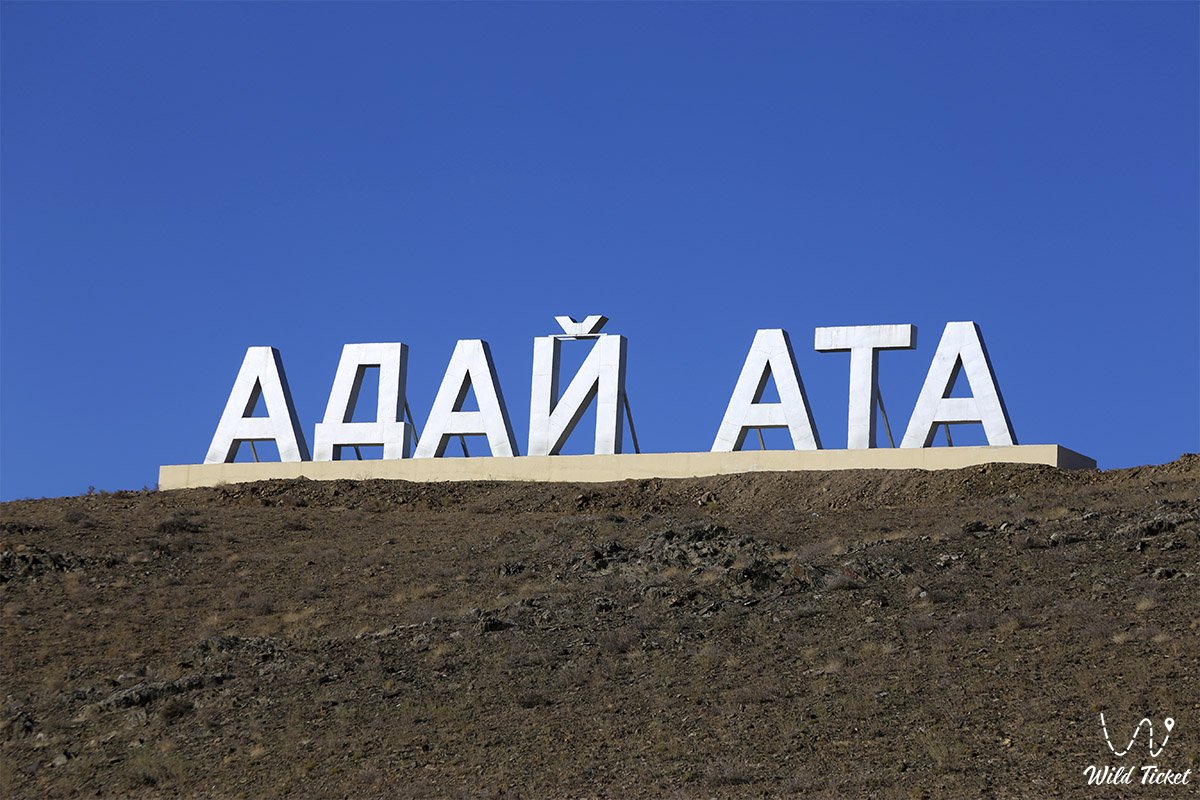
At the highway turnoff toward the complex, a monumental sign is laid out in large letters along the mountainside. An asphalt road leads directly up to the complex, terminating in a spacious parking area. Access is open year-round for passenger cars, tour coaches, and minibuses.
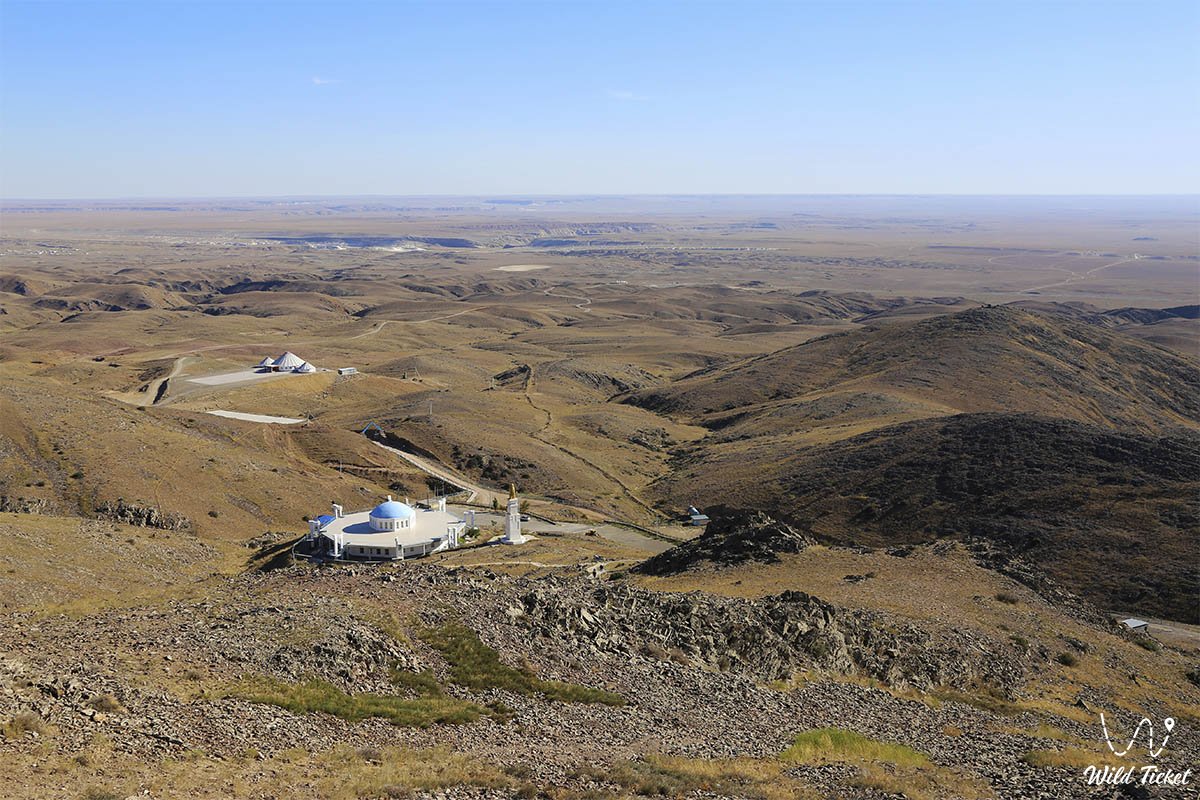
Infrastructure of the complex is fully developed: gas, electricity, and water supply are connected. Operating on site are a historical museum in the Aksaray building, a library, an Elder Council hall, ceremonial grounds, stone-paved walkways, observation terraces, and sanitary facilities. The nearest gas stations, shops, and tire repair services are located in the village of Zhyngyldy and the settlement of Shetpe.
The walking ascent to the mausoleum and the Fire of Unity bowl follows a granite staircase of 362 steps. Comfortable footwear with non-slip soles is recommended for the climb. Strong, gusty winds blow constantly on the summit; therefore, carrying windproof clothing is advisable even during warm months.
When visiting the complex, decorum appropriate for sacred sites must be observed: clothing must be modest (shoulders and knees covered), and smoking, consuming alcohol, or making noise on the grounds is prohibited.
The best time to visit is spring (March 13–14 during the Amal festivities, as well as April and May), when the surrounding mountains are covered in greenery and blooming herbs. During summer months, ascending is more comfortable in the early morning or before sunset, when midday heat subsides and panoramic views of the setting sun open up.
--------------------------------------------
History
The history of Mount Otpan-Tau reaches back through the centuries, uniting ancient fire cults, nomadic military history, and the genealogy of the Kazakh people. Its commanding elevation amid a semi-desert peninsula made the mountain the primary strategic lookout of Mangyshlak. Archaeological finds—elements of horse harness, arrowheads, and patches of fire-baked earth—attest to an ancient observation post and pagan sanctuary long predating modern structures.
The summit acquired special significance during the formative era of the Aday tribal confederation. The patriarch of the clan, Aday-Ata, lived around the 15th century. According to historical research by writers Abish Kekilbayev and Anes Saray, alongside archival records, Aday-Ata ruled for 14 years (from 1435 to 1449) and lived a long life. His wife Zhanar bore two sons—Kudayke and Kelimberdi—who fathered eight grandsons (Munal, Kosay, Tobysh, and others), from whom the branches of the Aday clan emerged. The peak of Otpan-Tau served as an assembly point for elders and batyrs to resolve vital matters and bestow blessings upon warriors prior to battles.
The signal beacon ignited atop the peak of Otpan-Tau functioned as a dependable steppe alert system: spotting the fire's glow on the horizon, sarbaz warriors saddled their mounts and assembled beneath a unified banner at the mountain, repelling foreign invaders.
In 2004, renowned poet and public figure Sabyr Aday developed the concept of establishing a spiritual memorial on the sacred summit. The charitable fund "Aday" was established to bring the project to fruition. Kopbol Demesinov served as architect and designer. The grand opening of the historical and cultural complex took place on October 25, 2007.
In 2010, the complex expanded with the construction of the Aksaray Museum building. By resolution of the Akimat of the Mangystau region on January 5, 2018, the site was added to the State List of Historical and Cultural Monuments of Local Significance and entered into the national registry of sacred sites of Kazakhstan.
Information
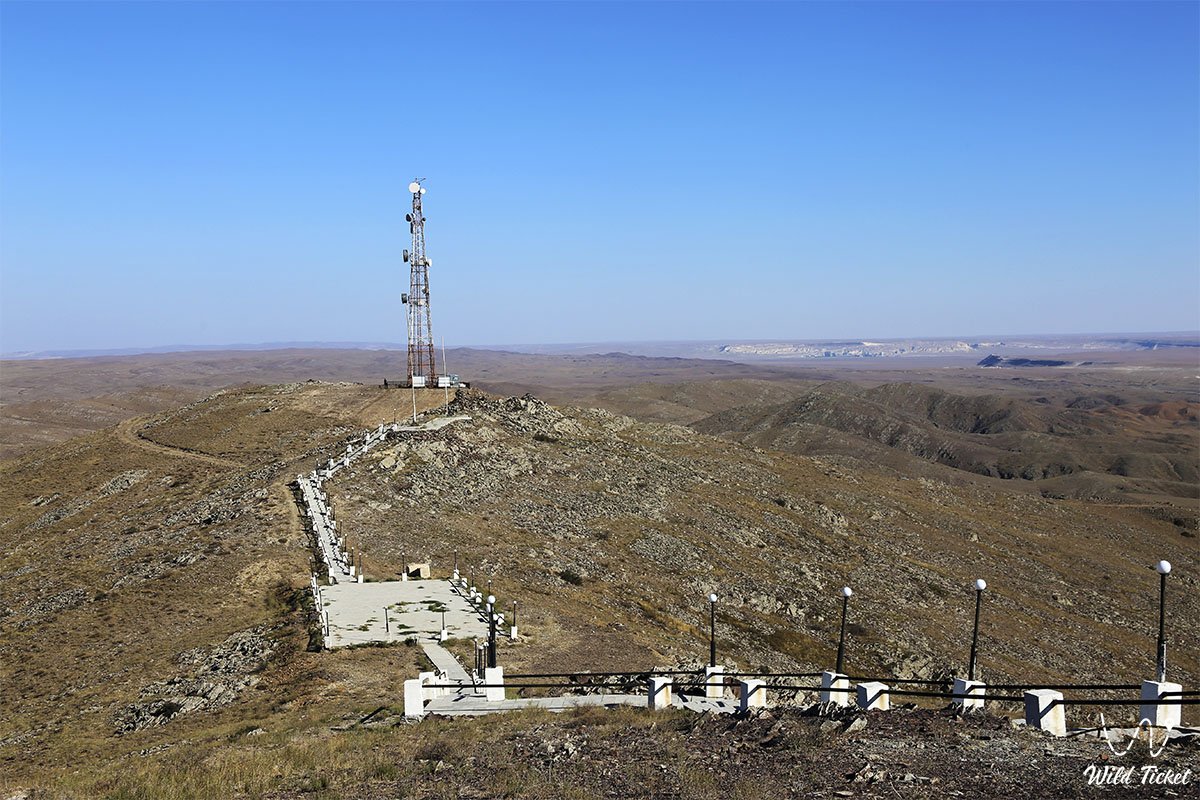
Geomorphologically, Mount Otpan-Tau is an erosional-denudational dome-shaped massif within the axial zone of the Western Karatau ridge. The summit reaches 532 meters above sea level, with a relative prominence over the surrounding plains of about 200–250 meters.
The observation terrace on the summit affords a 360-degree panorama: on clear days, five surrounding hills, the boundless steppe, the mountain ridges of Karatau and Aktau, spring-fed tracts, the marine horizon of the Caspian, and the distant lights of the city of Aktau are discernible.
The geological foundation is composed of archaic sedimentary-metamorphic rocks of Permo-Triassic age—quartzitic sandstones, clay shales, and dense dark-gray limestones. Local white coquina, granite, and marble were used in constructing the complex.
The climate on the peak is sharply continental, semi-arid mountain desert. Marked diurnal temperature swings and year-round wind exposure characterize the site.
Detailed description of the venue
The "Aday Ata – Otpan Tau" Historical and Cultural Complex encompasses the following key structures and memorial zones:
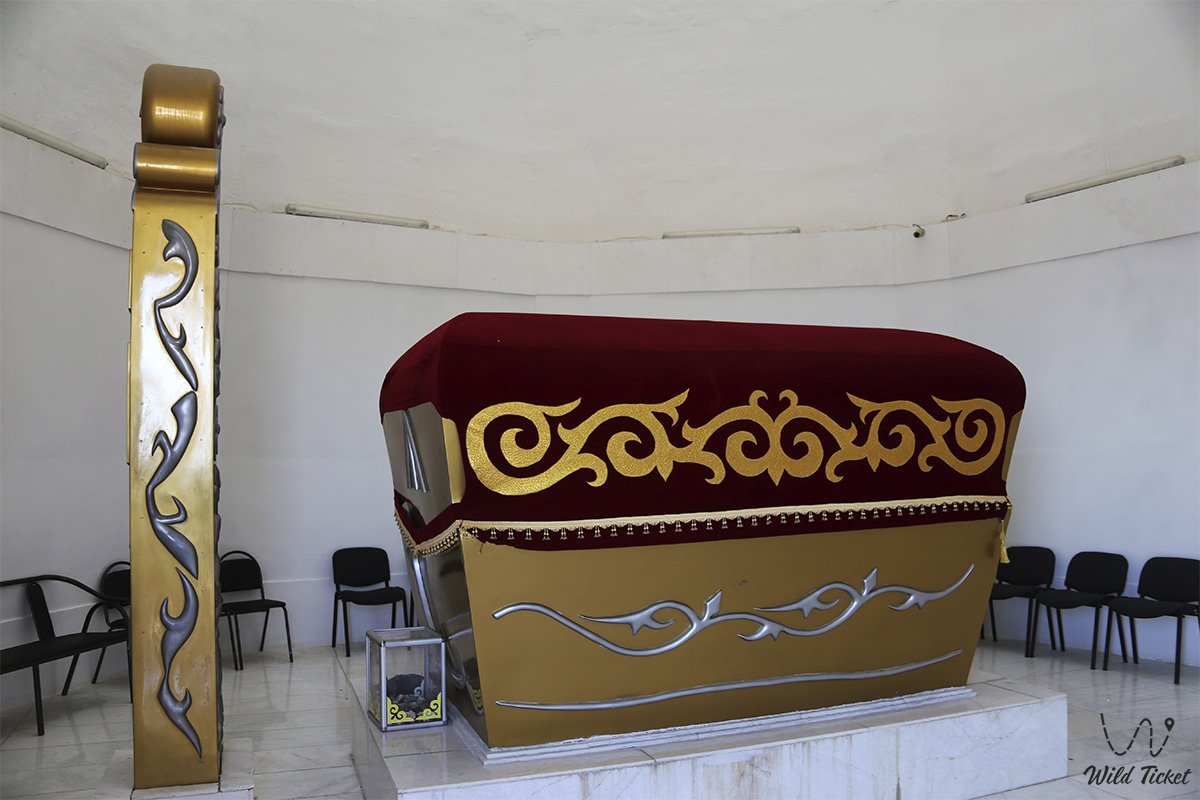
• White-stone Aksaray Mausoleum – a 37-meter monumental structure featuring twin gilded domes and the inscription "Aday Ata" over sacred double gates, housing a sarcophagus and museum exposition within.
• Minarets of the sons Kudayke and Kelimberdi – two domed towers flanking the mausoleum, symbolizing the two wings of the clan confederation, resting upon slabs inscribed with genealogical trees (shezhire).
• "Mother's Image" Monument (Ana kelbeti) – a 15-meter statue of the patriarch's wife Zhanar, coated in gold leaf, where the face is sculpted as a moon, the heart as a sun, and two eagles take wing from the chest, symbolizing the birth of her sons.
• Sculpture of the Celestial Wolf (Kokbori) – a metal statue of a snarling wolf, an ancient Turkic totem embodying unbending will, loyalty to ancestral soil, and the fortitude of the forebears.
• Bowl of the Fire of Unity (Taghzym alauy) – a monumental metal hearth on the highest rocky point where the sacred flame of the Amal festival is kindled annually on the night of March 14.
• Pedestrian staircase of 362 steps – a granite stairway leading from the lower parking area to the summit, its step count honoring the 362 sacred Sufi saints (diwana) of Mangystau.
• Monument to the three biys of Kazakhstan – a sculptural group at the base of the staircase dedicated to Tole Bi, Kazybek Bi, and Ayteke Bi—creators of the "Zheti Zhargy" legal code and unifiers of the three Kazakh zhuzes.
• Coat of arms and tamga of the Aday clan – a monumental shield with crossed sabre and spear, crowned by the "zhebe" (arrow) tamga pointed upward as an emblem of valor and unity.
• Aksaray Historical Museum – a six-hall exposition within the complex ("Mangystau and Ancient Ancestors," "Islam in Mangystau," "Art," "Mangystau and Its Inhabitants"), displaying archaeological artifacts, maps of underground mosques, and rare archival documents.
• Panoramic terrace and "Tu tobe" flagpole – an upper terrace bearing the state flag, opening onto a circular panorama across the Karatau and Aktau ridges.
Flora and fauna
The plant life of Mount Otpan-Tau is adapted to the conditions of a stony mountain semi-desert. Slopes and gravel terraces are dominated by drought-tolerant dwarf subshrubs: gray-soil wormwood, Lerche's wormwood, biyurgun, eastern saltwort, boyalych, and thyme. Rock ferns, crustose lichens, and spiny dzhantak (camelthorn) grow within fissures of the Permo-Triassic shales.
In spring (April – May), the foothills transform: wild Sogdian tulips, two-flowered tulips, steppe irises, giant ferula, and Lessing's feather grass burst into bloom. Deep ravines around the base shelter bushes of wild rose, hawthorn, and tamarisk.
The fauna of the surrounding area is represented by mountain-steppe species. The steep crags of Karatau harbor the rare, Red Book-listed Ustyurt mountain sheep (mouflon/argali). Bands of Aday horses and herds of camels graze across piedmont valleys, accompanied by saiga antelopes, tolai hares, corsac foxes, steppe polecats, long-eared hedgehogs, and badgers. Wolves hunt through the nearby ravines at night.
Raptors circling above the peak include the golden eagle, steppe eagle, long-legged buzzard, saker falcon, and kestrel. Chukar partridges, desert wheatears, and European rollers frequent the stony screes.
The herpetofauna includes the agile steppe agama, toad-headed agama, dione snake, arrow snake, Central Asian tortoise, and Halys pit viper. Solifuges and scorpions dwell in rock crevices.
Legend
A sacred legend regarding the covenant of the wise elder Aday-Ata and the fire that unites the steppe is tied to Mount Otpan-Tau.
Tradition tells that near the twilight of his days, the pious batyr Aday-Ata gathered his sons, grandsons, and clan elders atop the highest peak of the land. Surveying the boundless steppe, the aksakal struck a warrior's flint against the dark Karatau rock, and a bright flame burst forth from the spark.
"So long as this fire burns in your hearts and your hands are clasped in a single fist, no enemy shall ever break you," the elder declared. "If misfortune comes upon our native land, let the Beacon of Summons be lit on this peak. Seeing it from distant wintering camps and chinks, every dzhigit is bound to set aside personal feuds and hasten to the call of his brothers!"
Ever since, the mountain has been called Otpan – Fiery Mountain. For centuries, this beacon saved encampments from destruction. Today, kindling the Fire of Unity on the spring equinox during Amal symbolizes not war, but peace, spring renewal, reverence for ancestral spirits, and the eternal solidarity of the people.
Conclusion
Mount Otpan-Tau is the spiritual beacon and geographic heart of Mangystau, where the majestic panorama of ancient mountains intertwines with the memory of steppe batyrs and the living tradition of the Amal festival. Ascending the 362 steps to the white-stone Aksaray, contemplating boundless horizons, and connecting with the fiery heritage of the ancestors grants every traveler a vivid encounter with living history and the enduring spirit of Mangyshlak.
Interesting sights nearby:
• Zhygylgan Sinkhole;
• Traces of Ancient Animals in the Zhygylgan Tract;
• Heart-Shaped Lake Kuzdykary;
• Karynzharyk Desert Depression;
• Chalk Outliers "Three Brothers";
• Torysh Valley of Spherical Concretions;
• Endorheic Karagiye Depression (-132 meters);
• Lake Karakol, Home of Greater Flamingos;
• Temir-Abdal Underground Mosque;
• Kogez Yurt Ethno-Village;
• Kokkala Variegated Jurassic Clays Tract;
• Medieval Town of Kyzylkala;
• Akmysh Say Relict Spring Garden;
• Caspian Sea;
• Cape Tyub-Karagan;
• Khanga Baba Tract;
• Khanga Baba Necropolis;
• Kenty-Baba Necropolis;
• Ustyurt State Nature Biosphere Reserve;
• Karagiye-Karakol Nature Sanctuary.
Photogallery: