Thirteen-Kilometer White Limestone Canyon and Ancient Shark Teeth Fields –
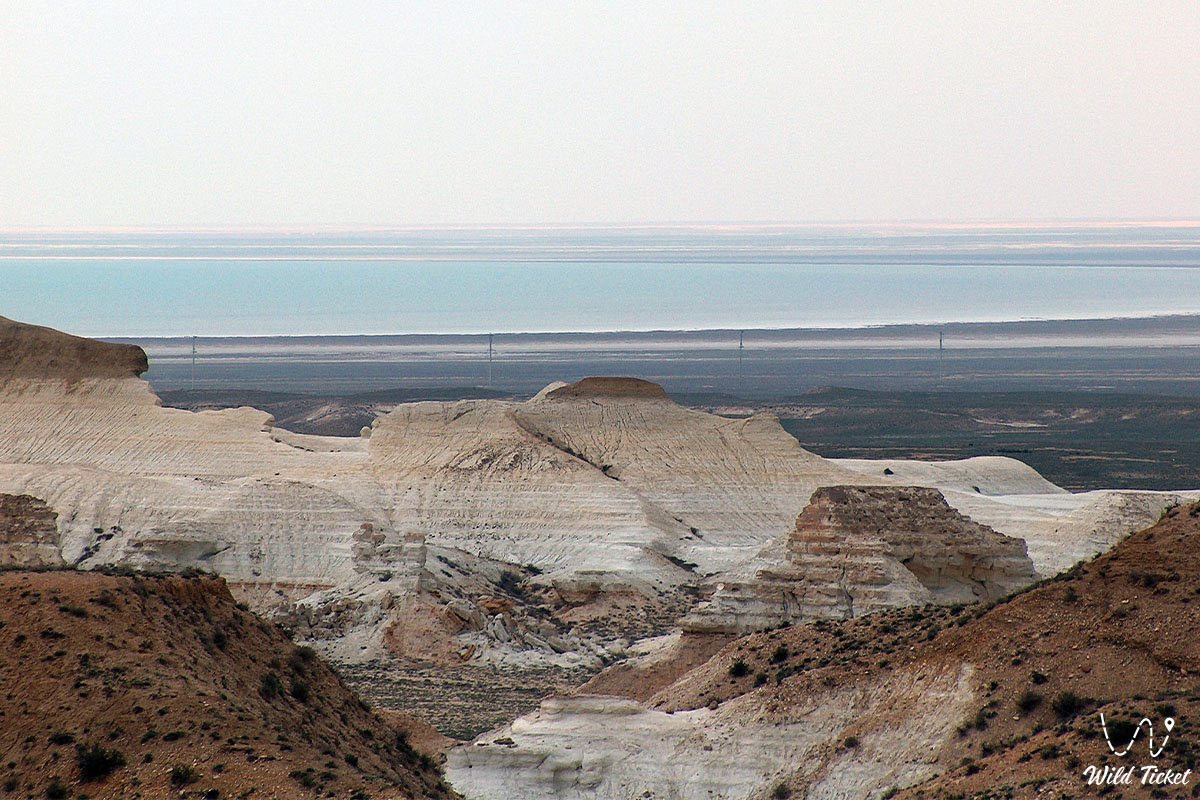
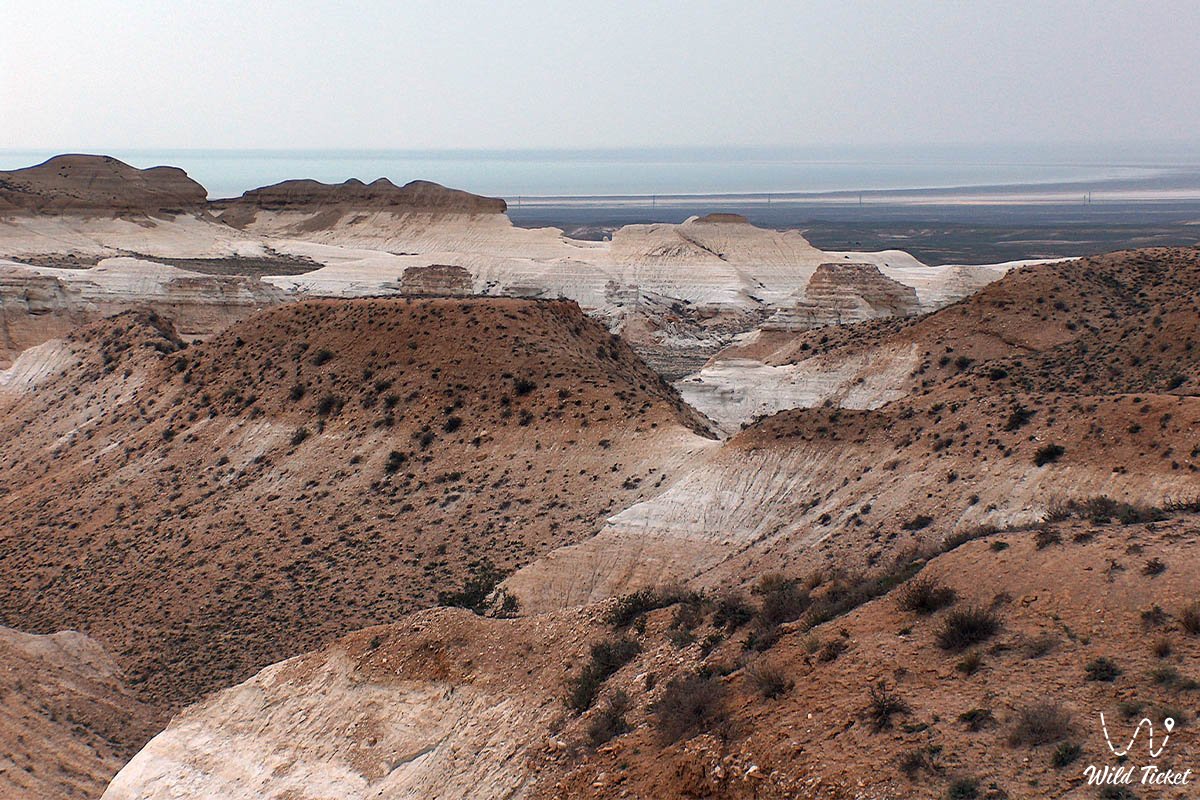
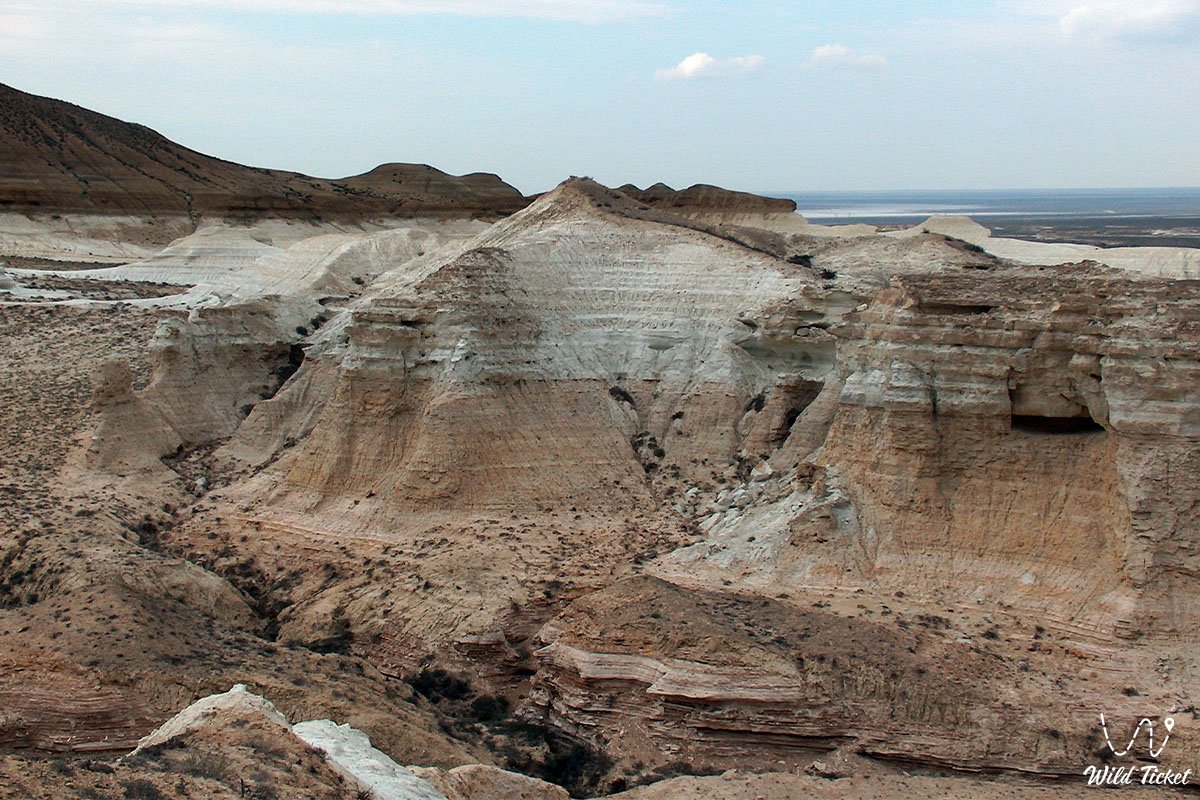
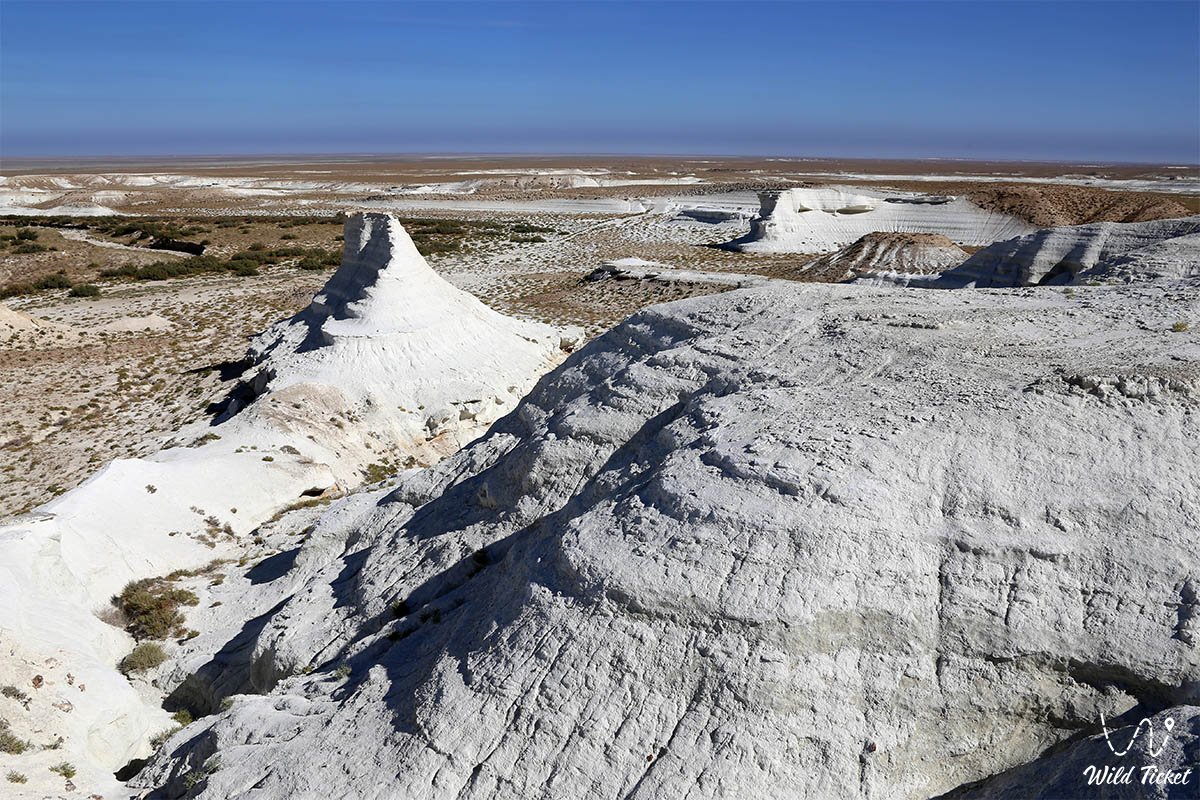
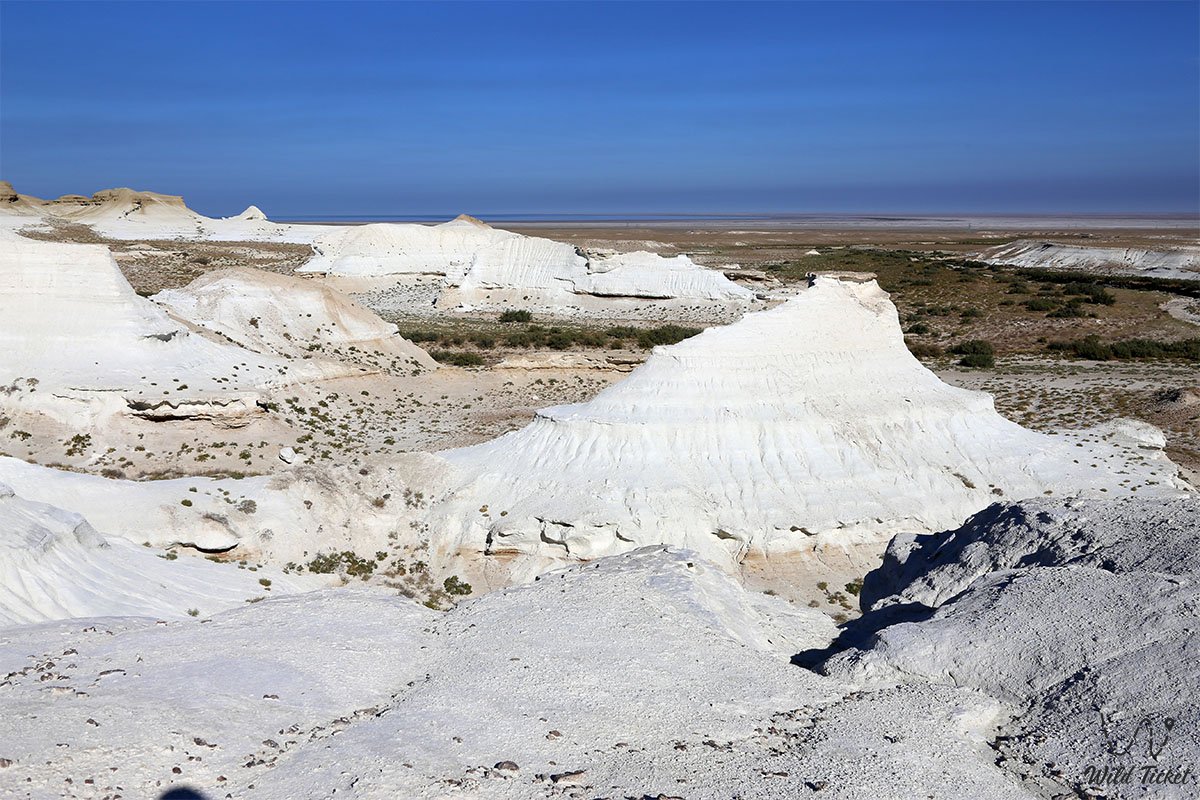
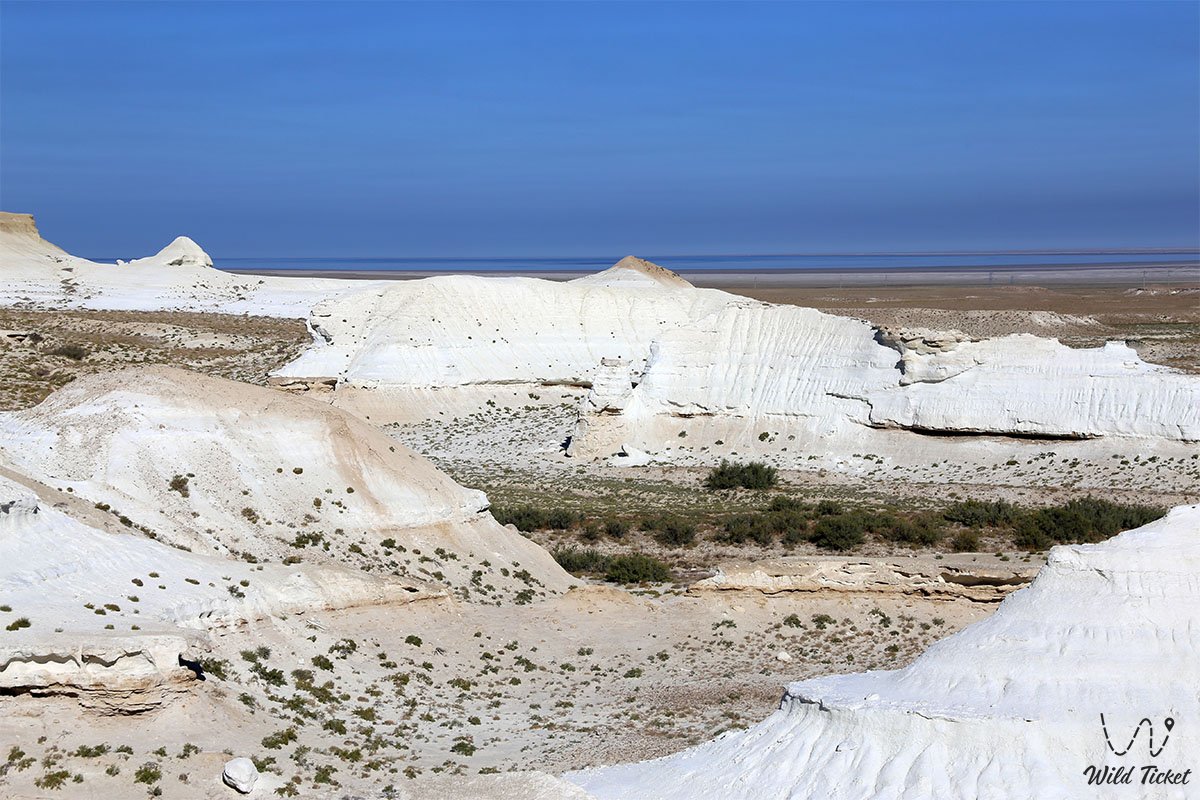
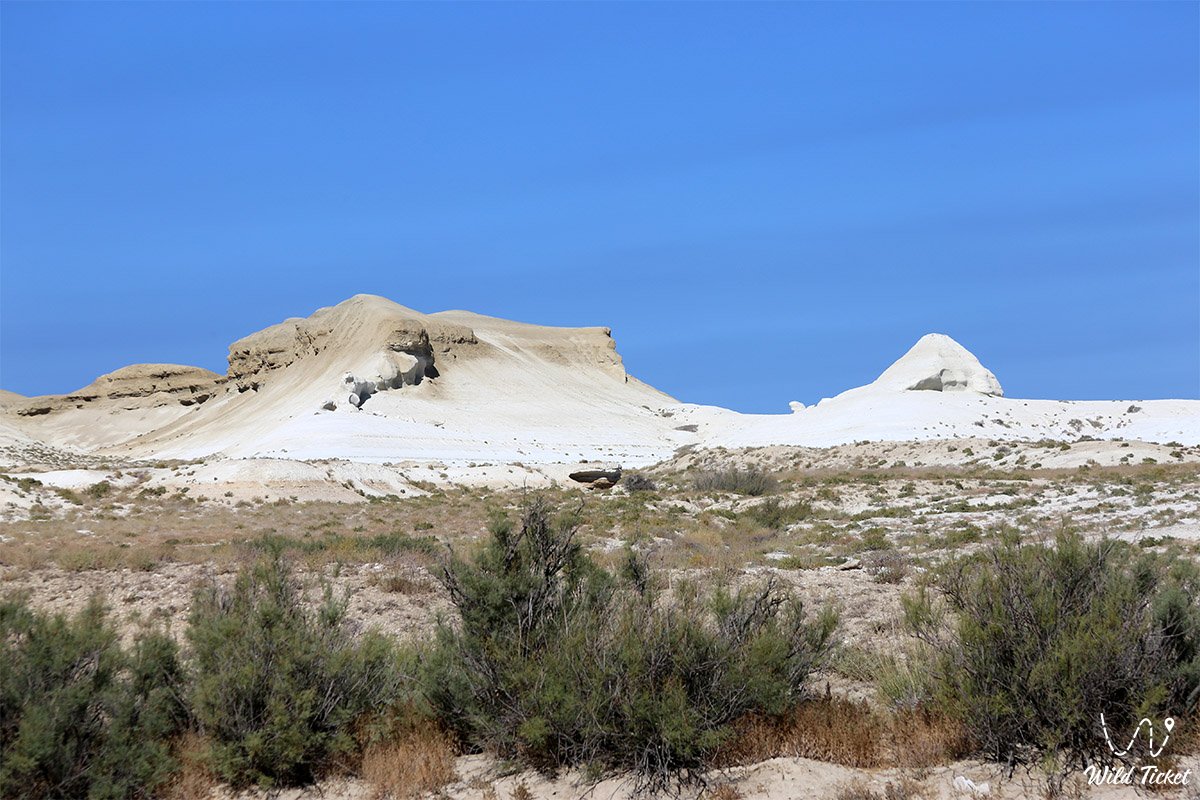
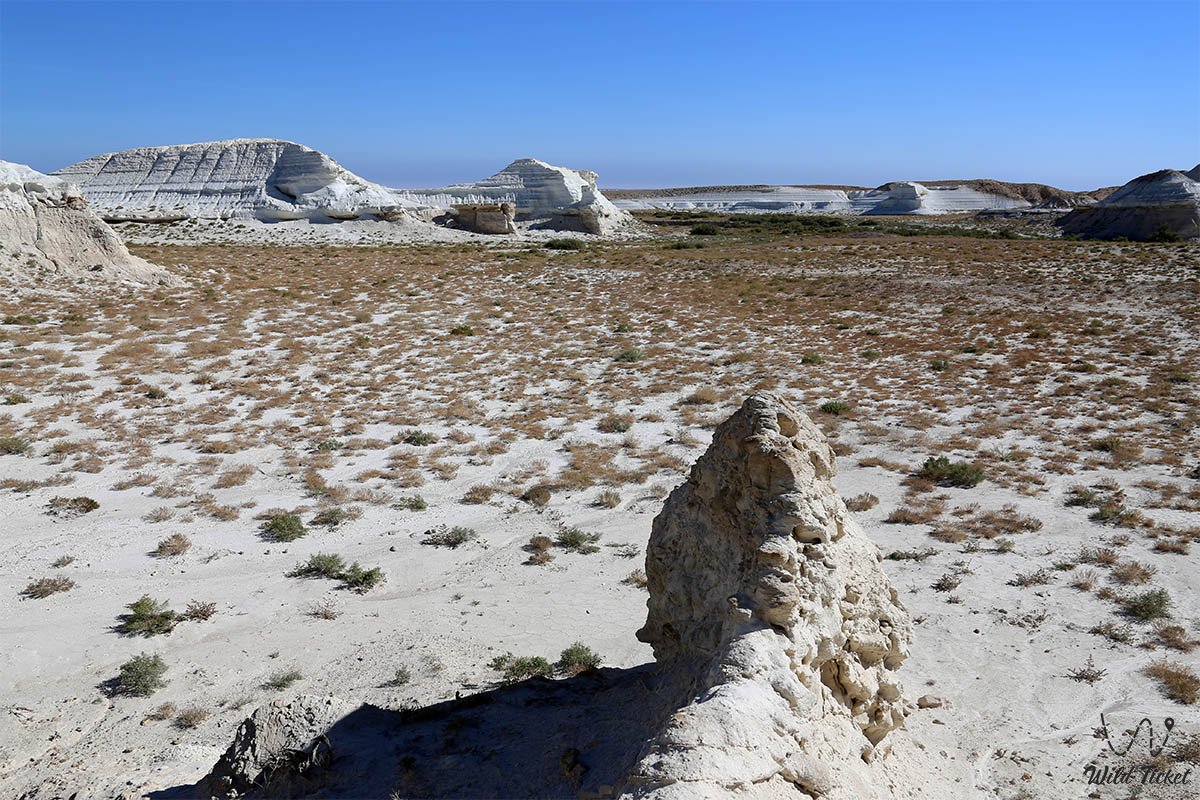
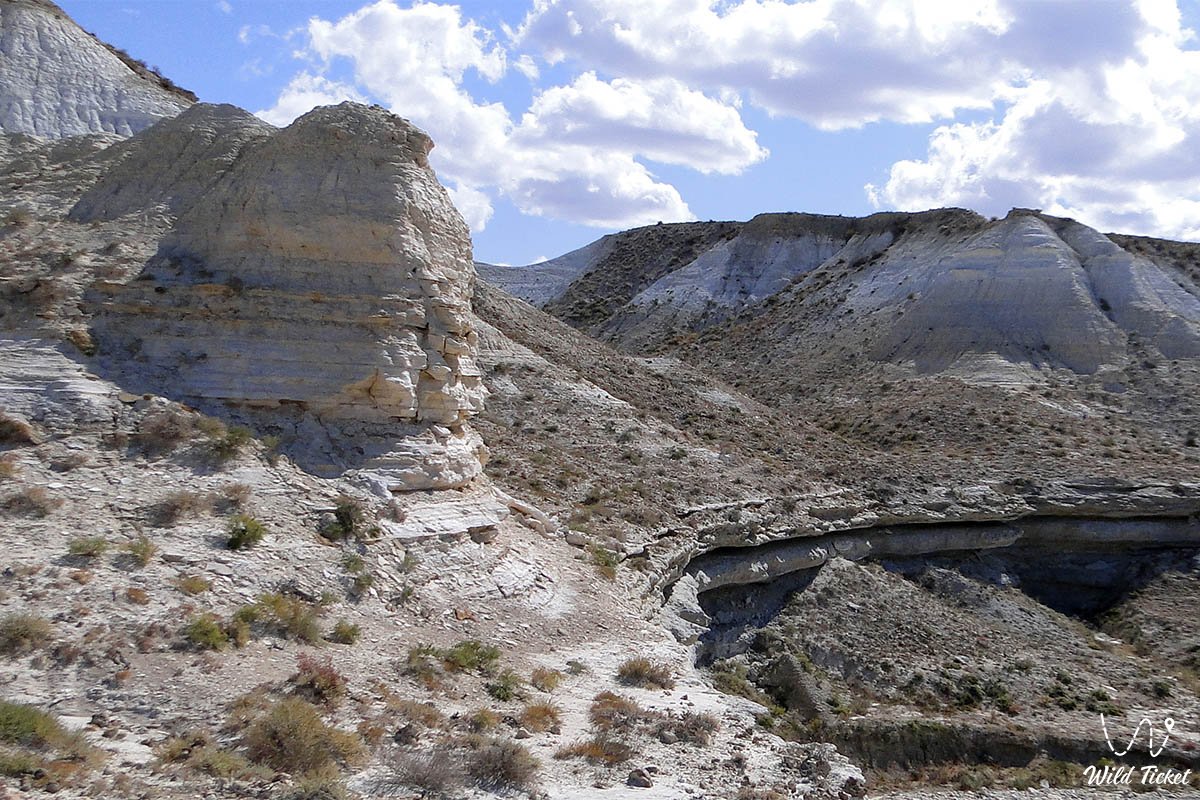
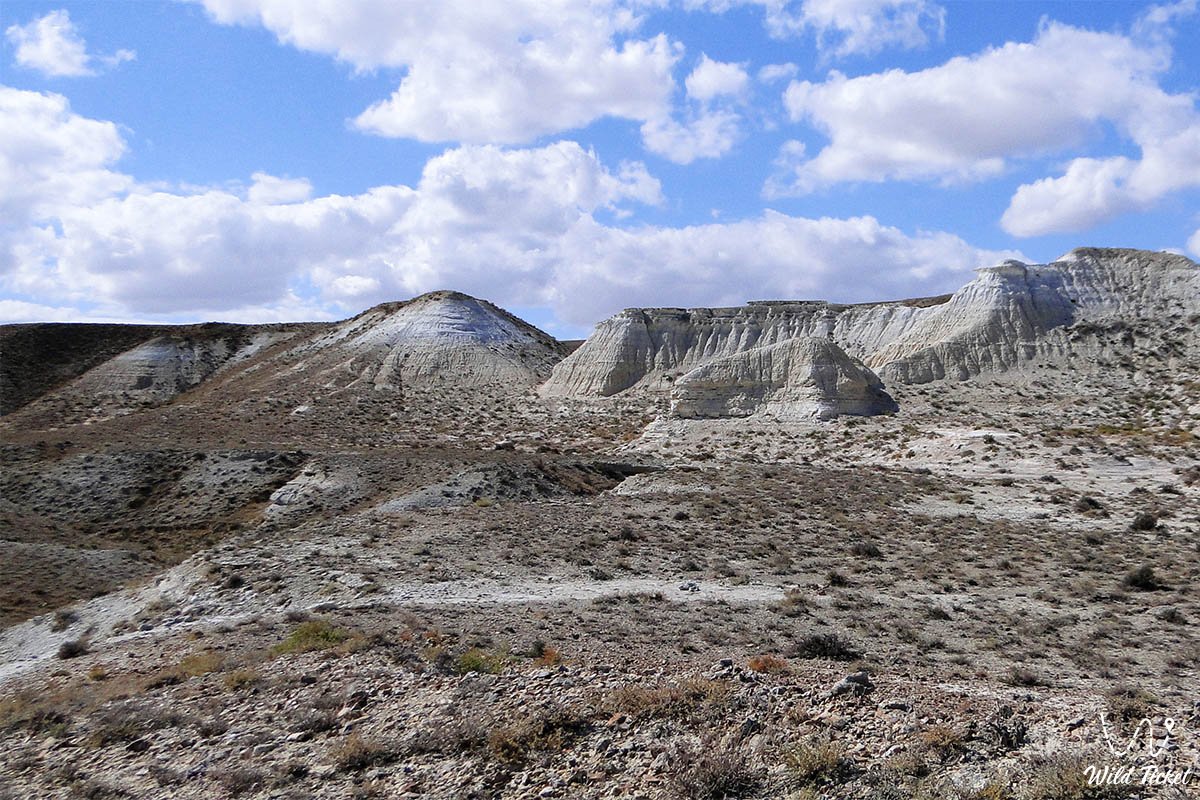
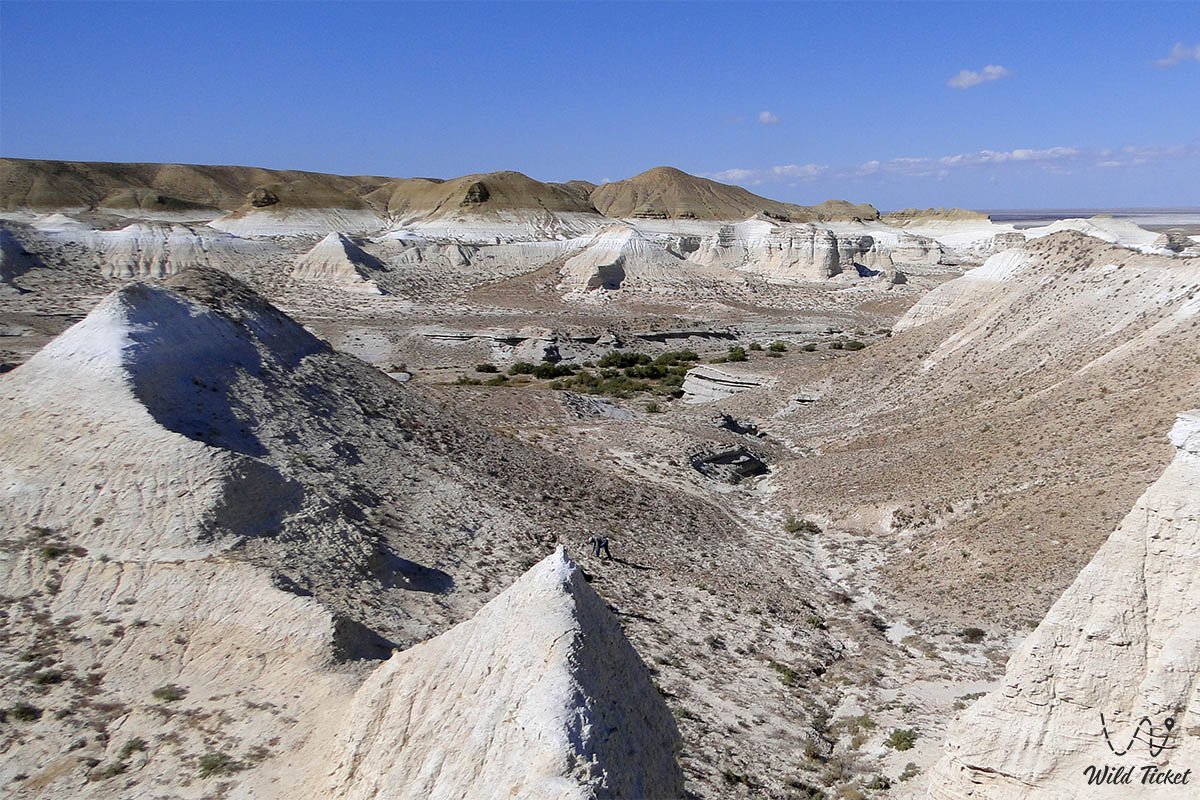
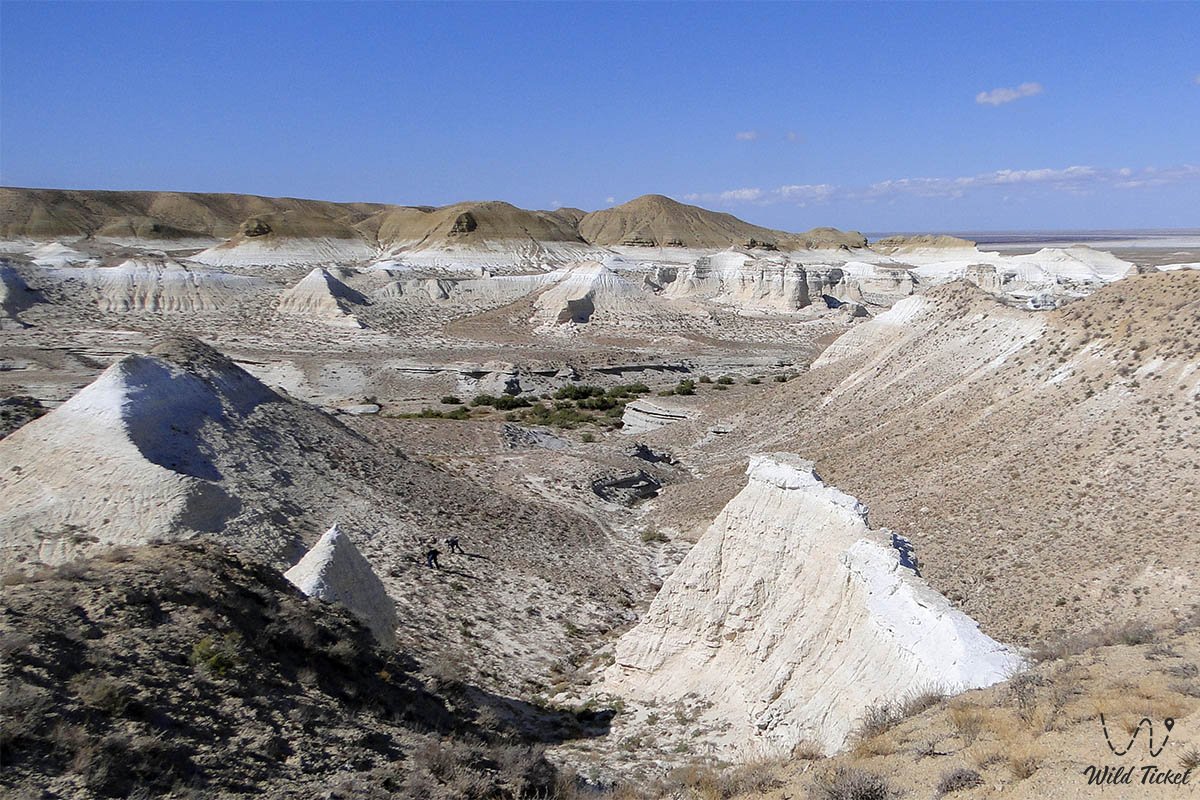
The Usak Tract is a magnificent natural and geological monument and an expansive thirteen-kilometer canyon in the central part of the Mangyshlak Peninsula within the Mangistau Region. Hundreds of millions of years ago, this entire snow-white plain was the bottom of the raging prehistoric Tethys Ocean.
The Turkic name "Usak" itself traces back to the ancient root "uak" ("shallow" or "fine"), directly reflecting the character of the relict water basin: the warm shallows of a colossal ancient sea once lapped here.
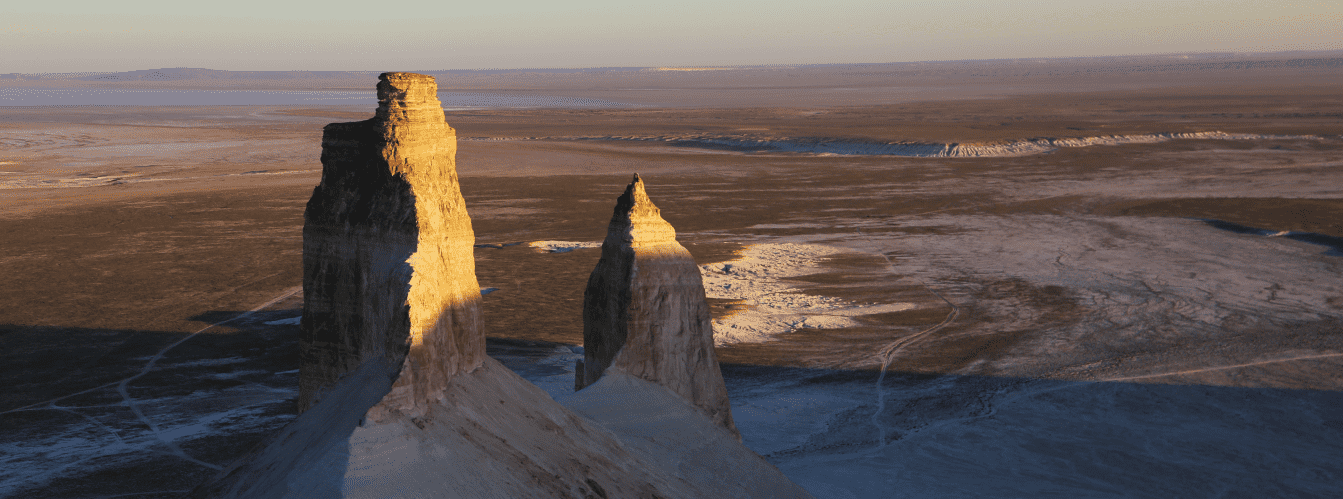
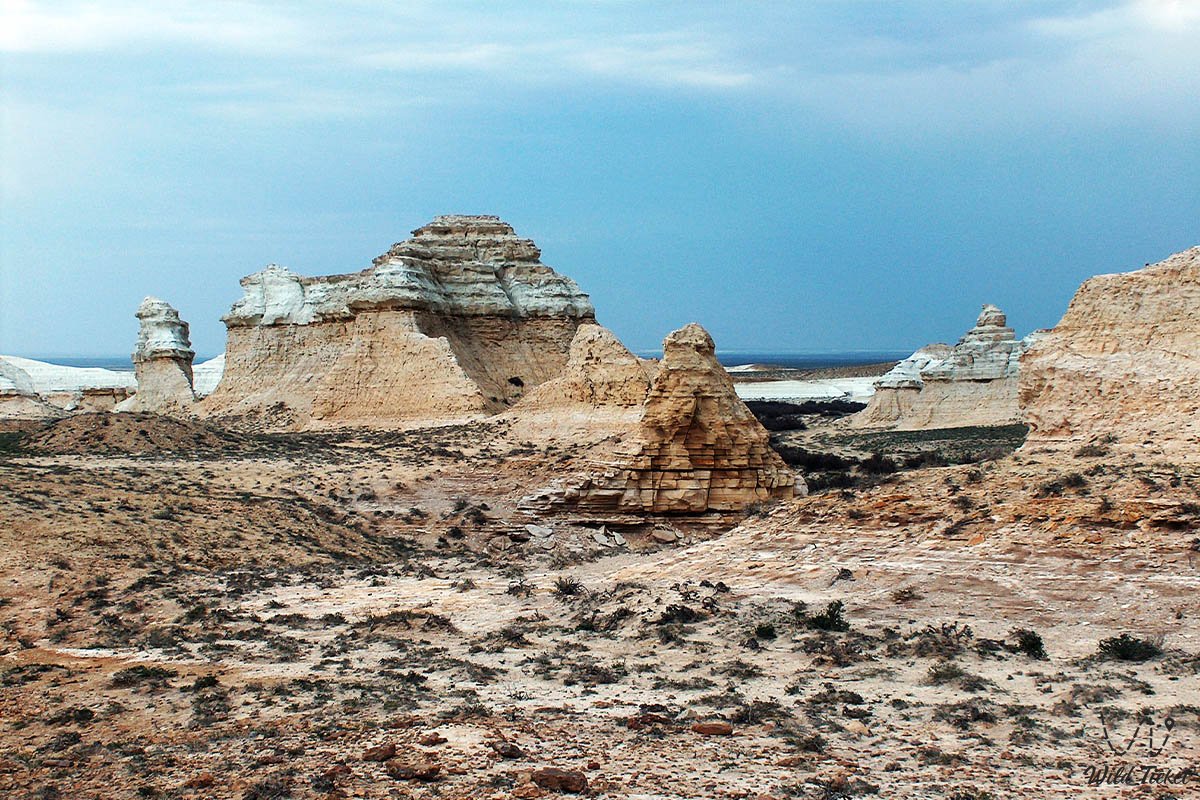
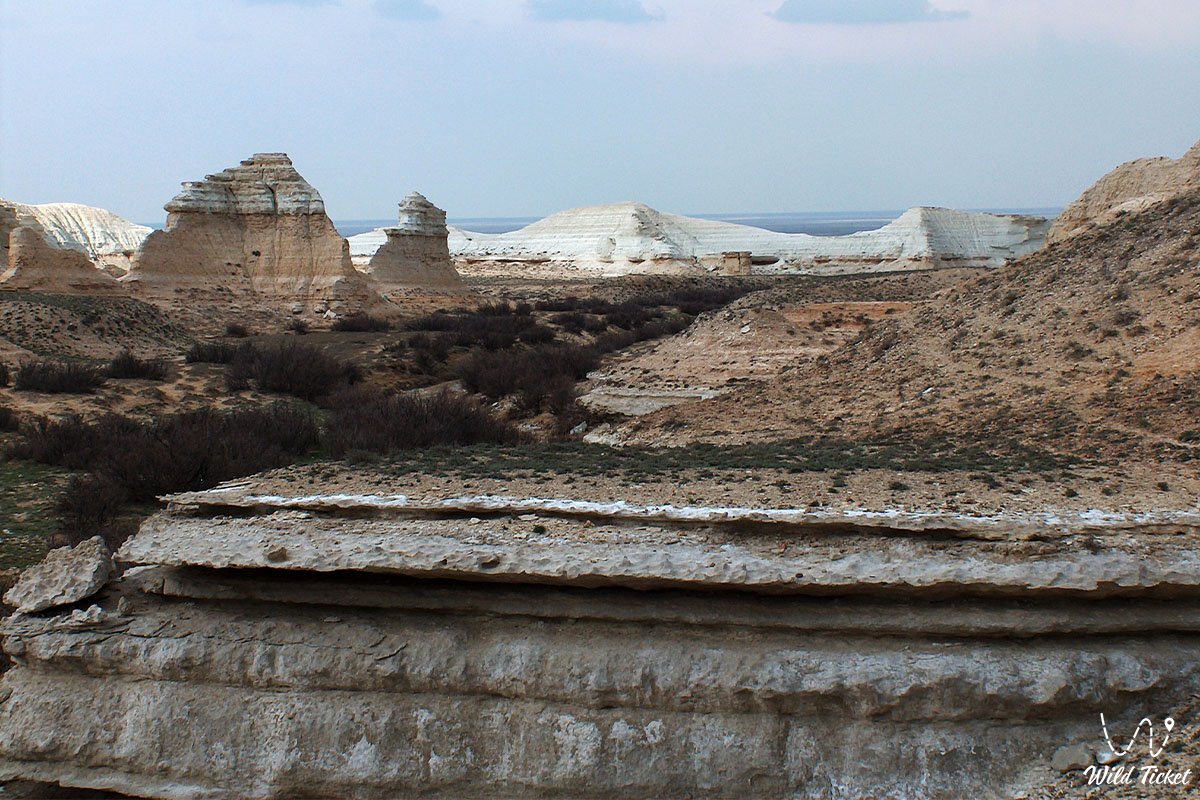
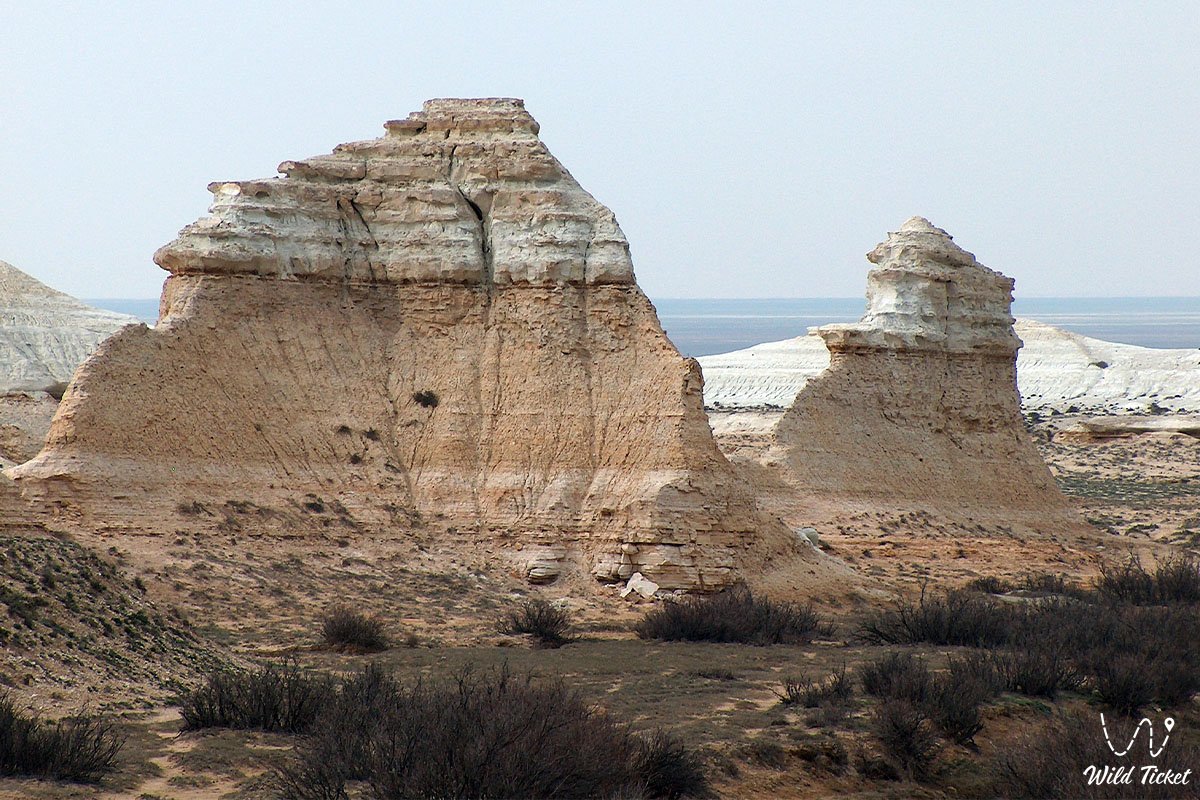
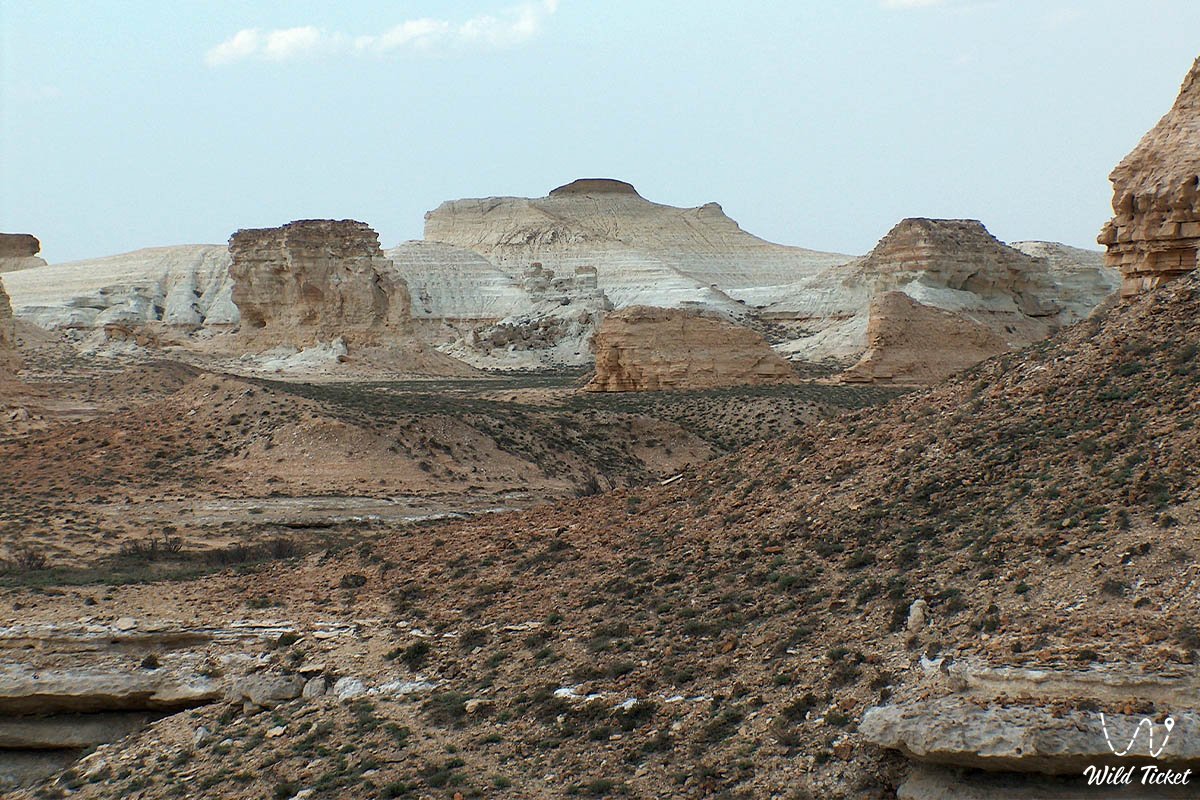
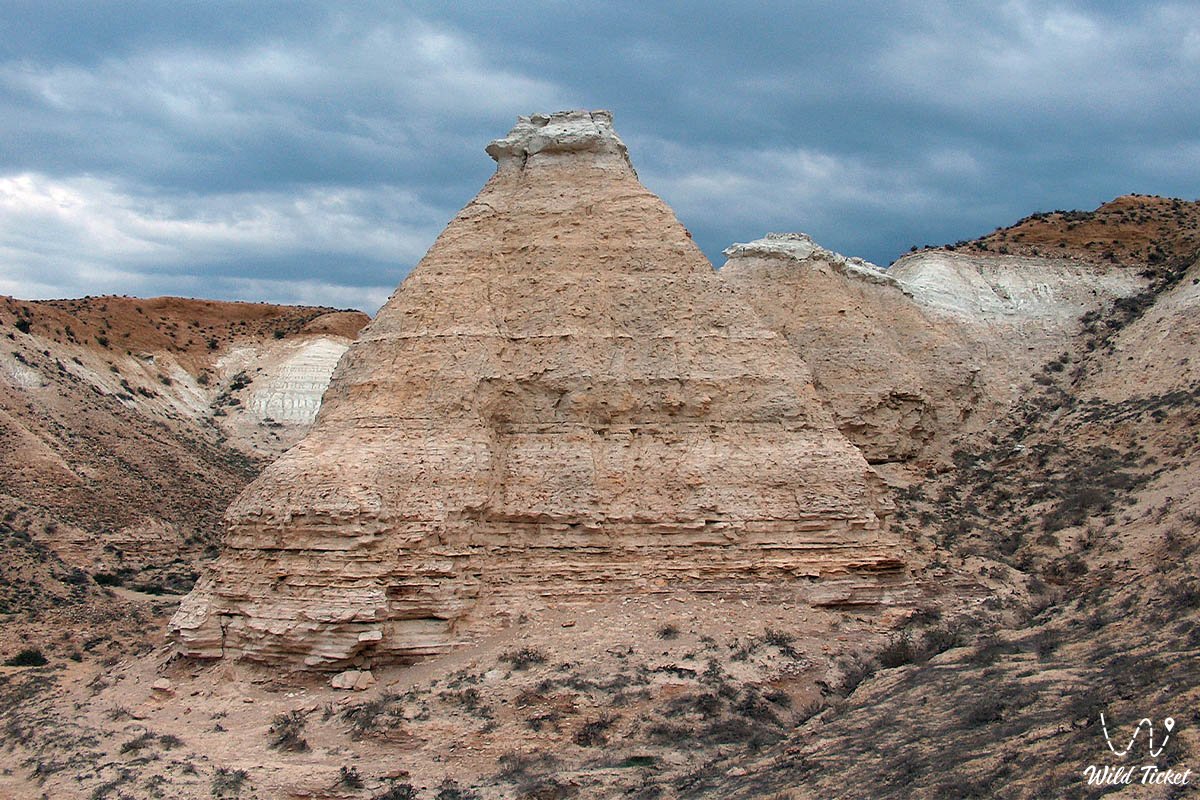
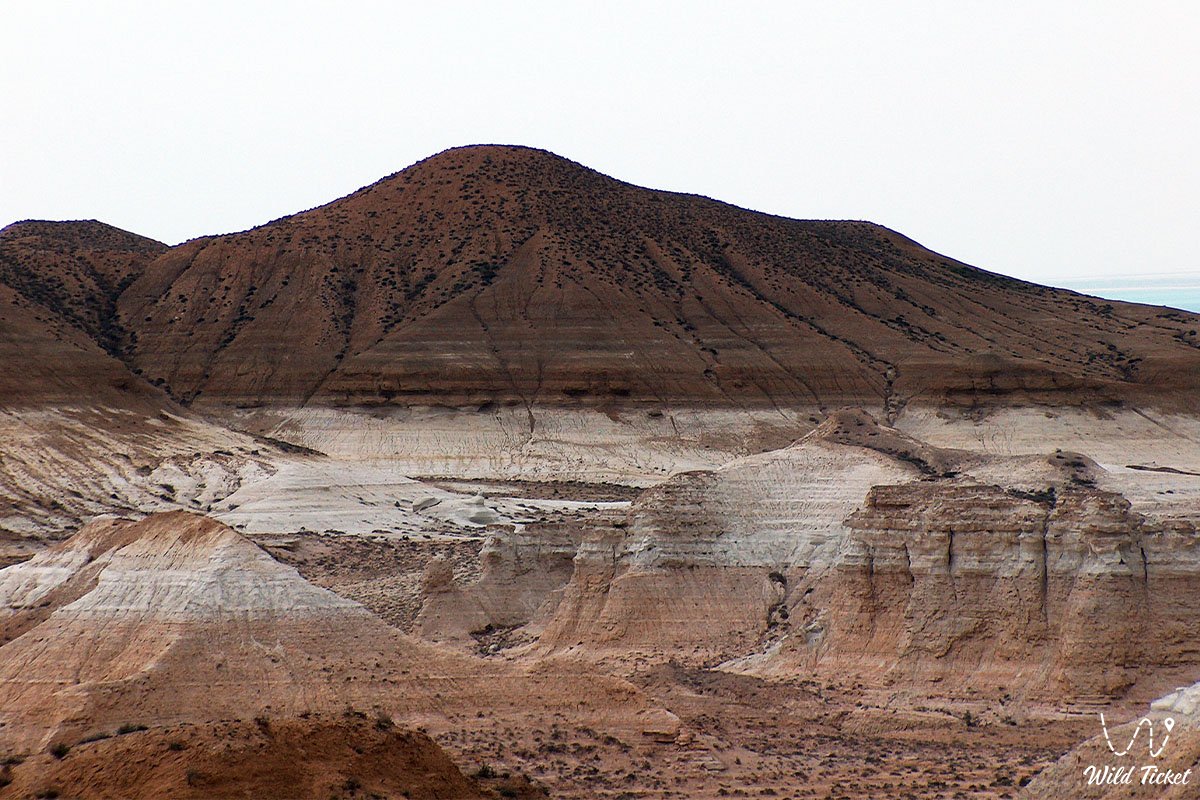
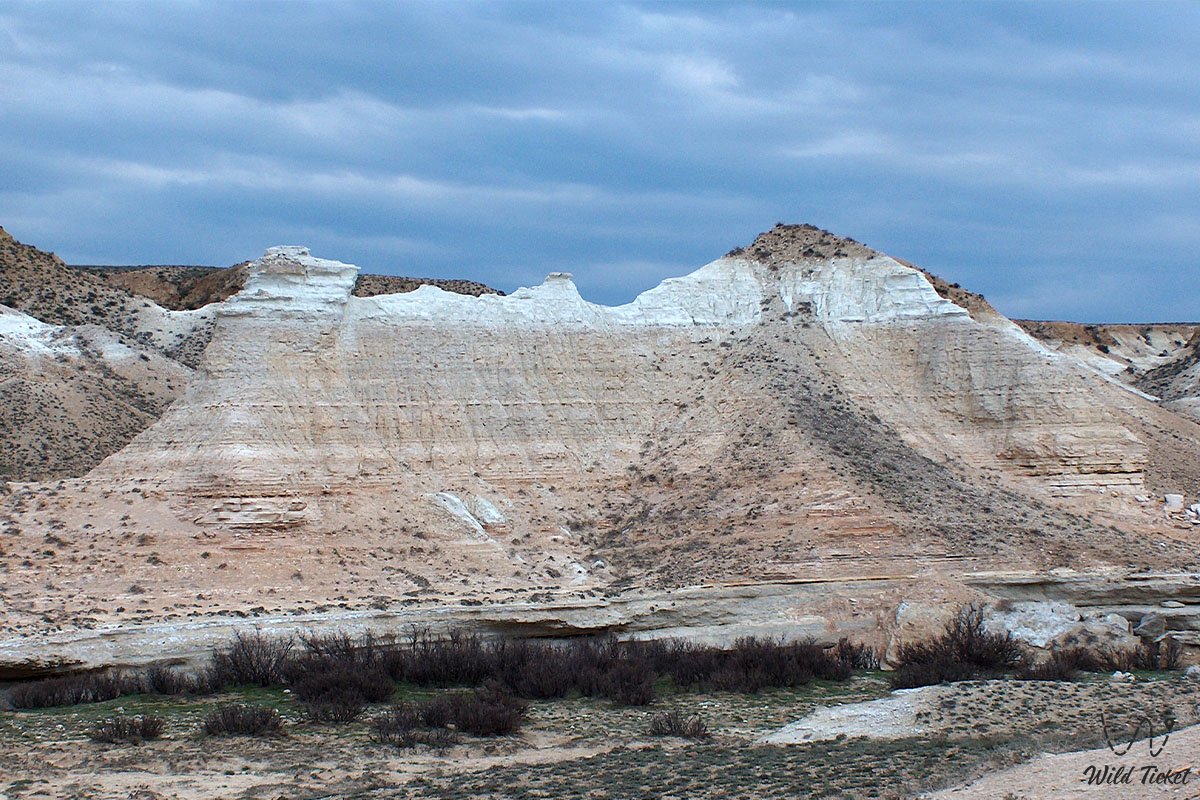
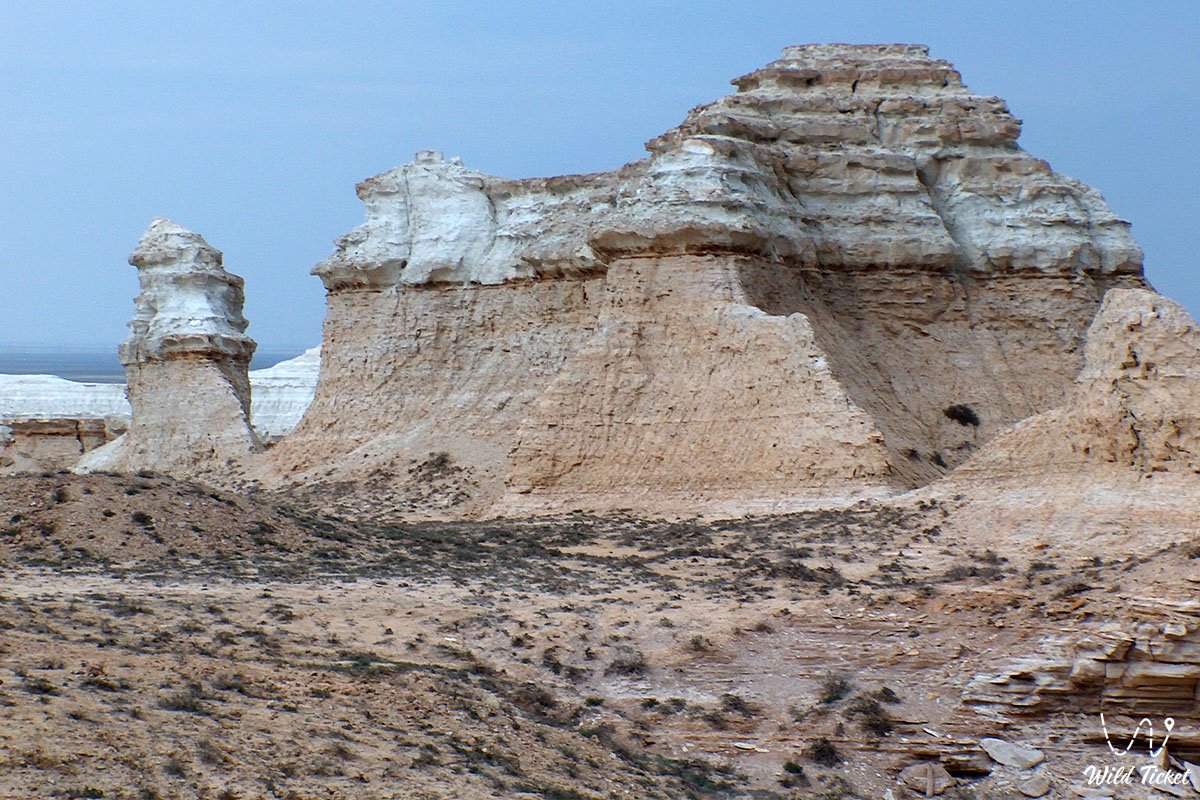
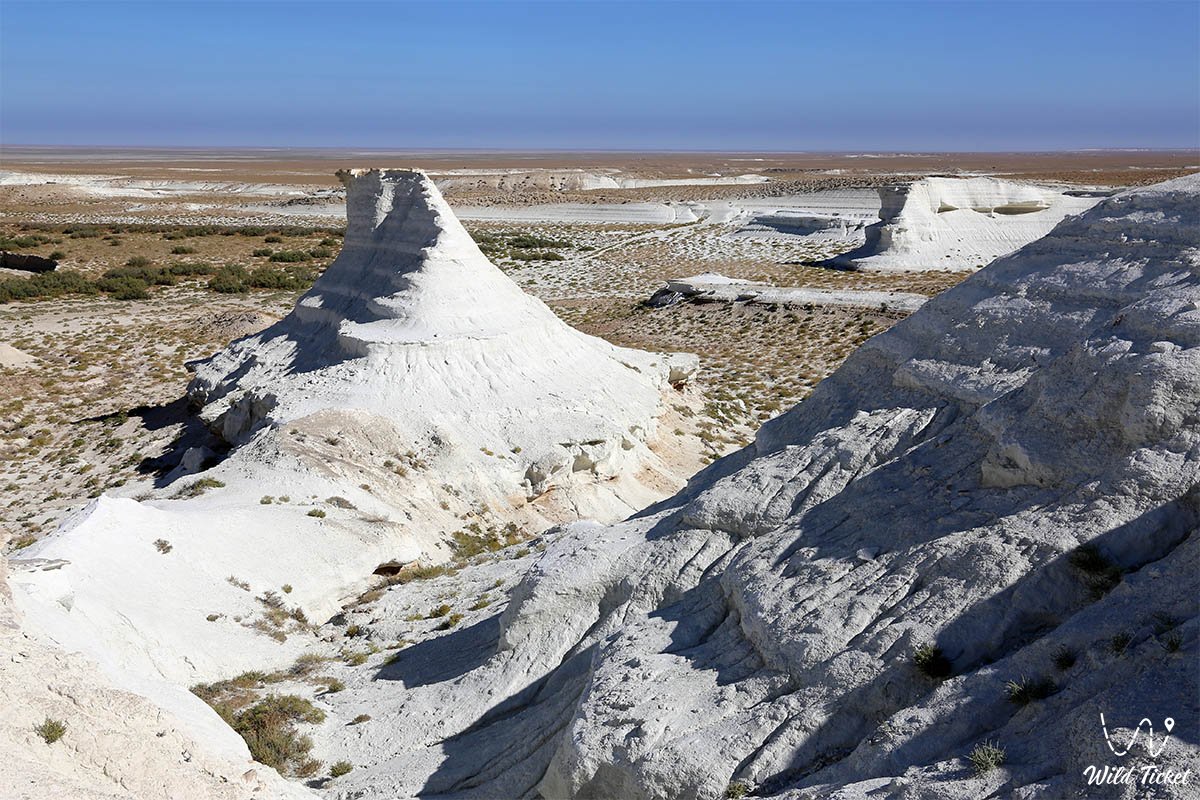
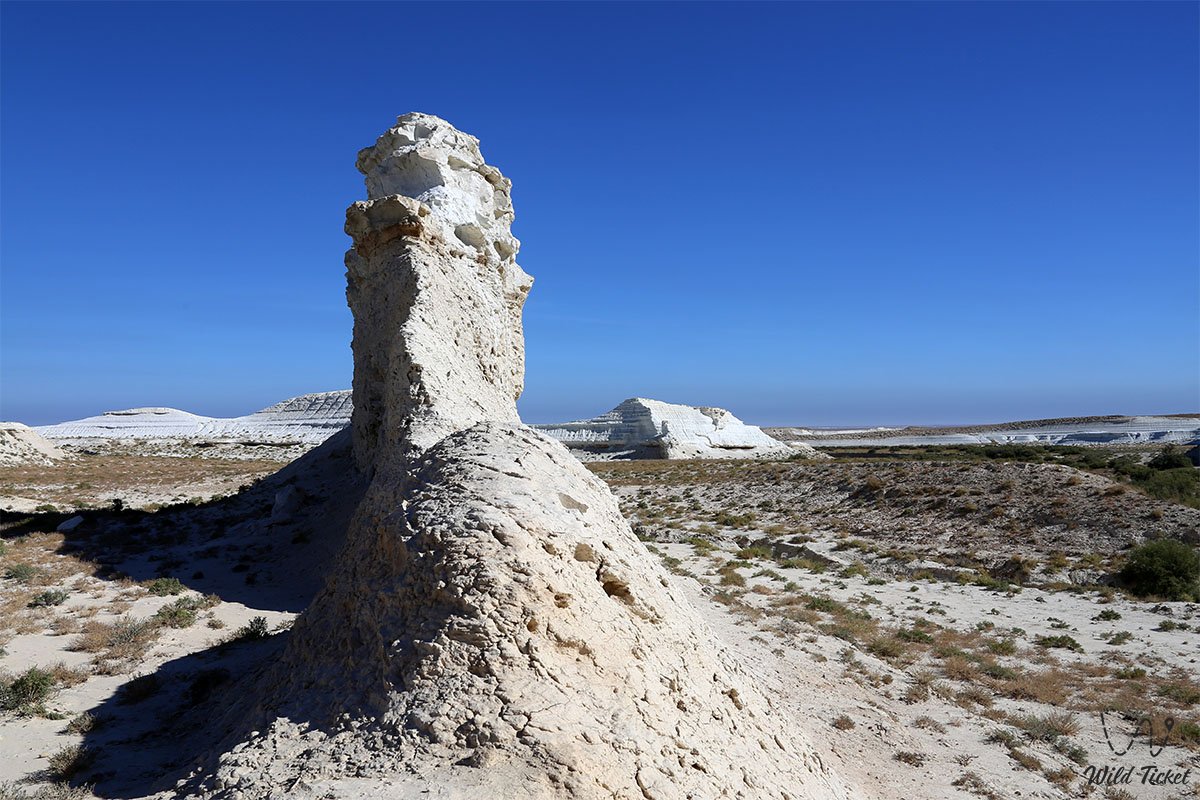
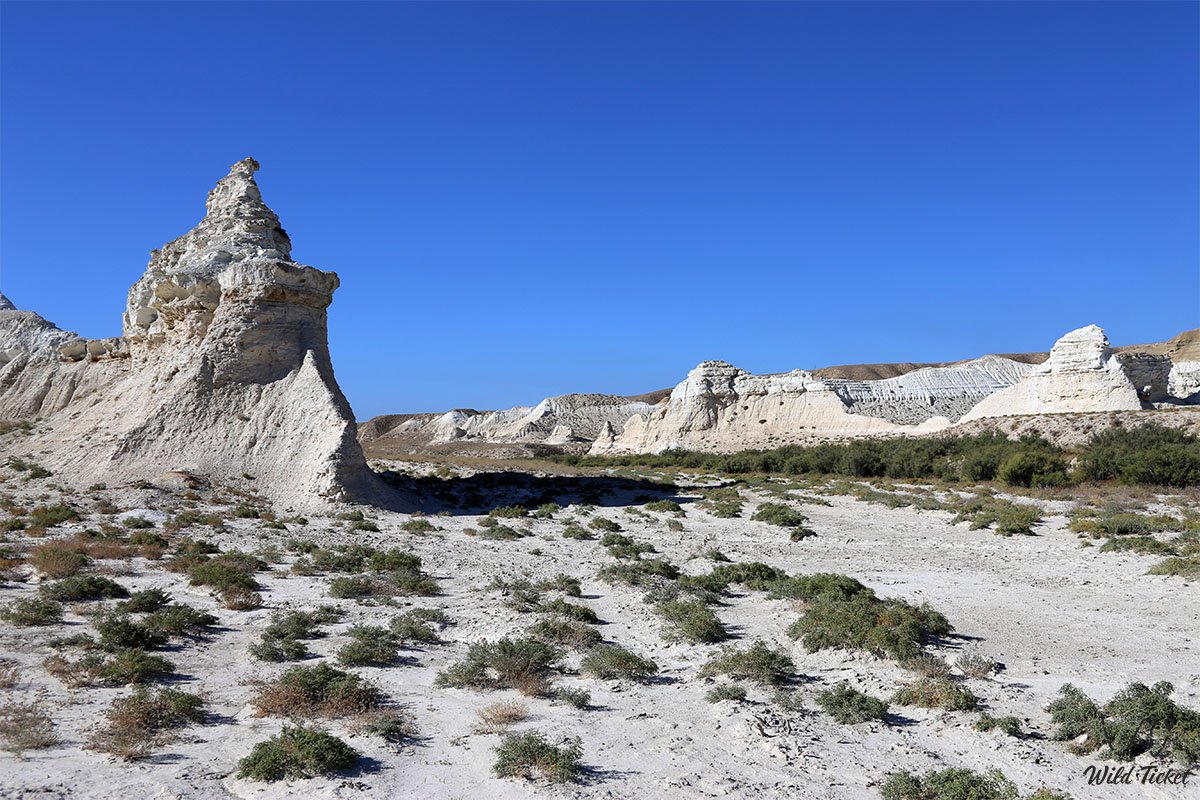
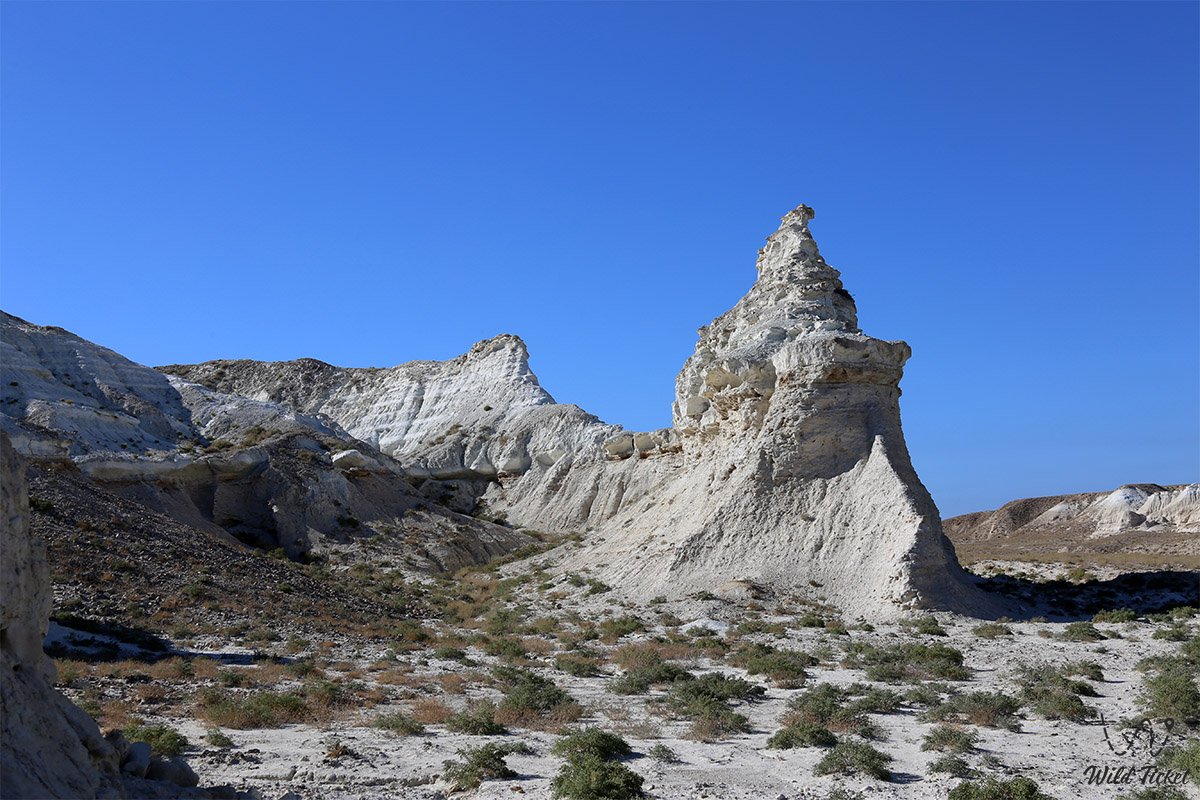
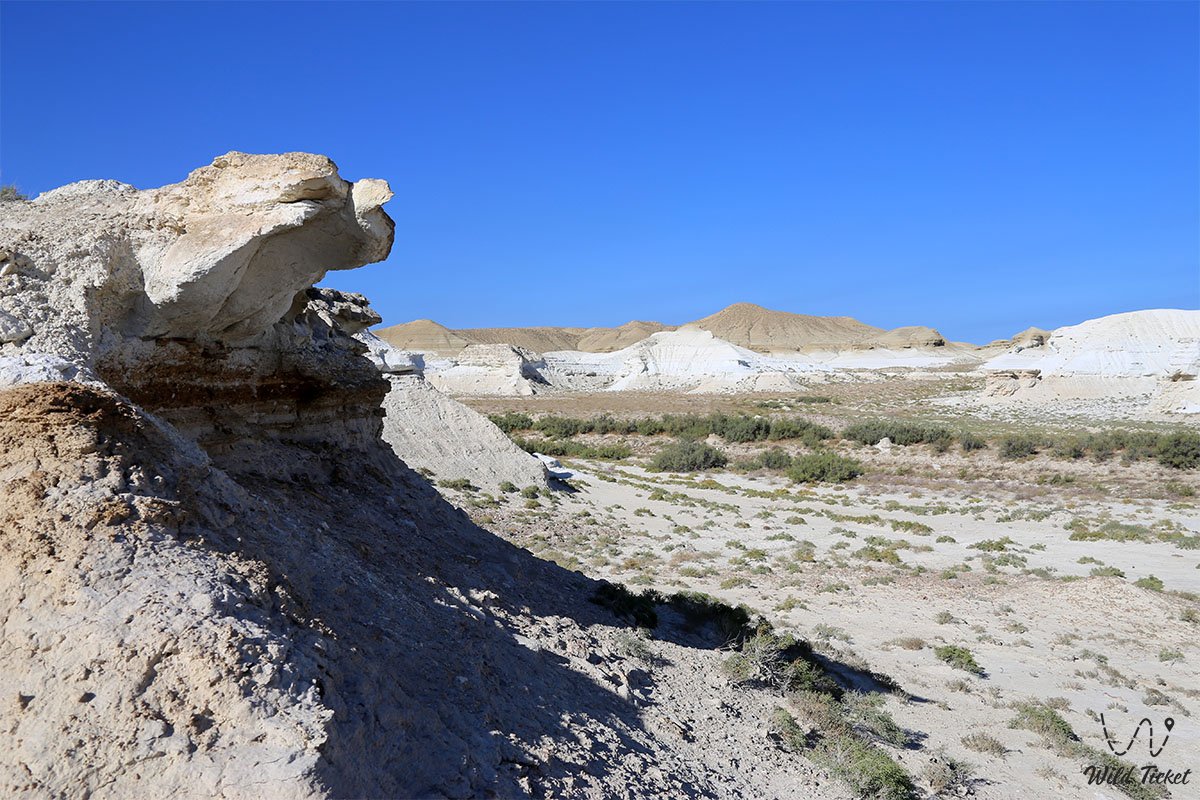
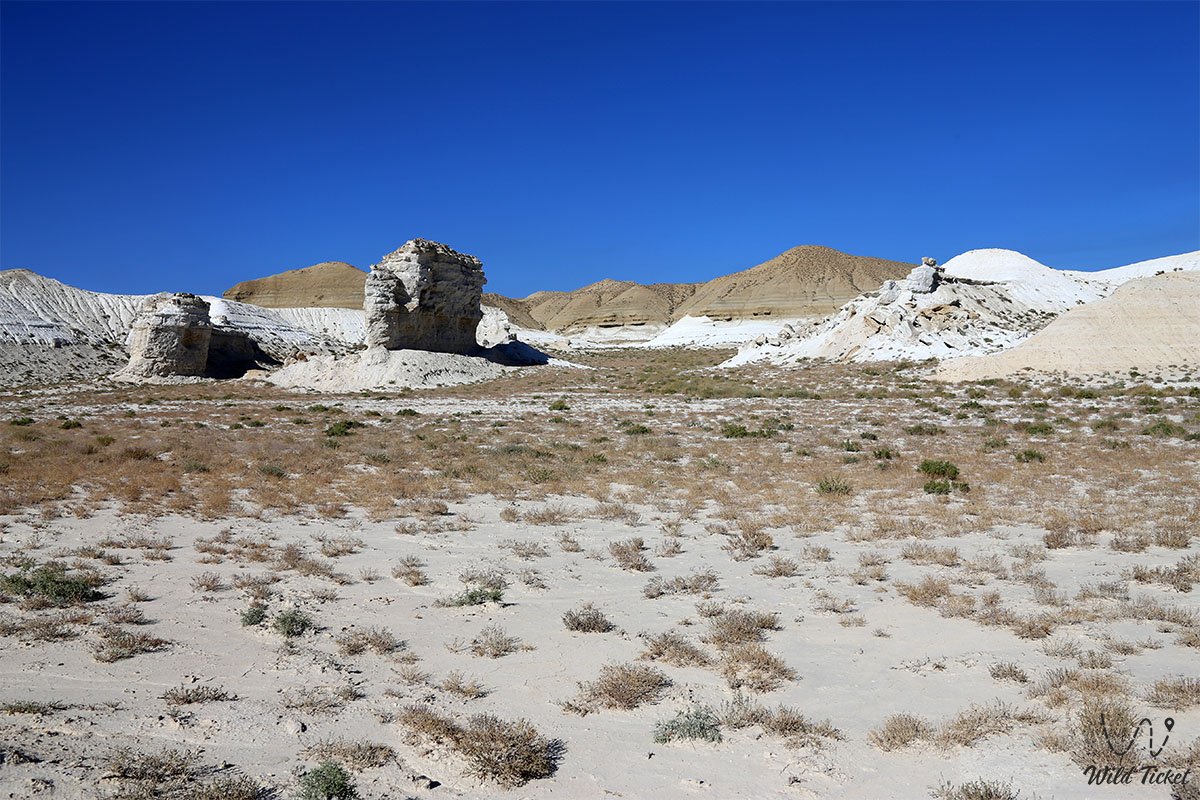
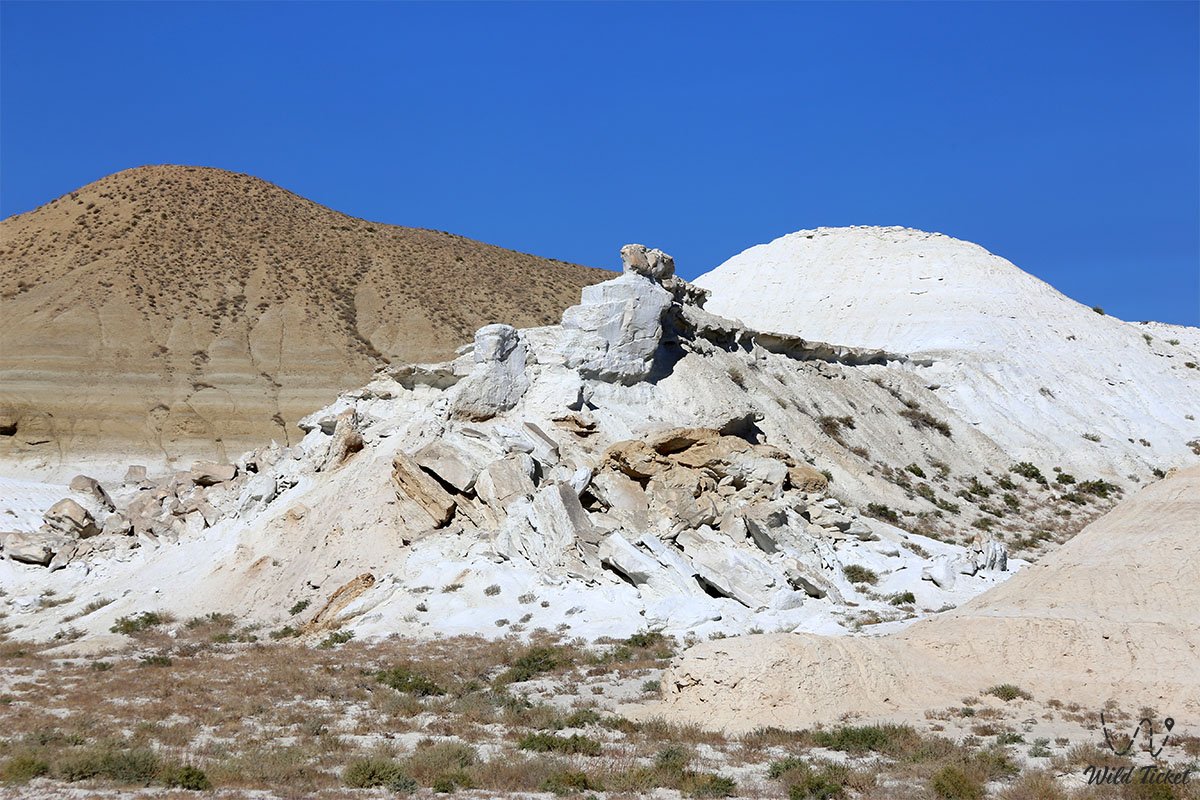
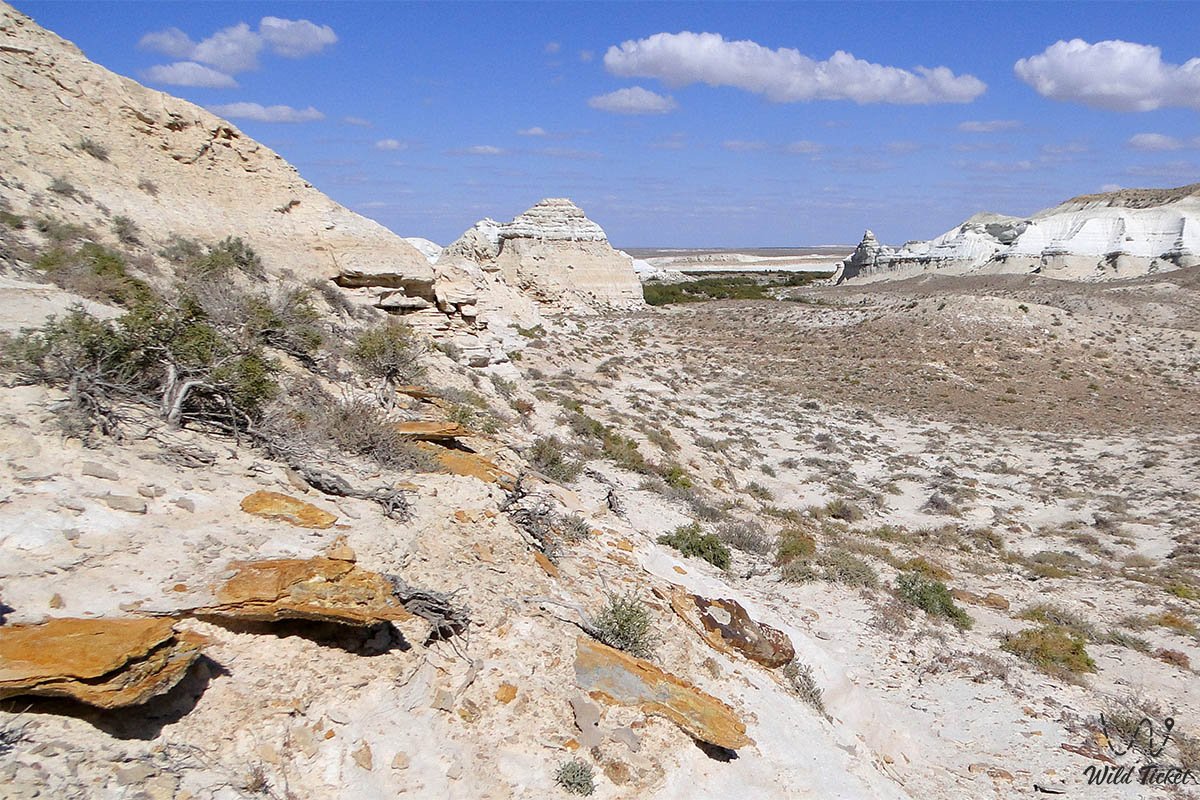
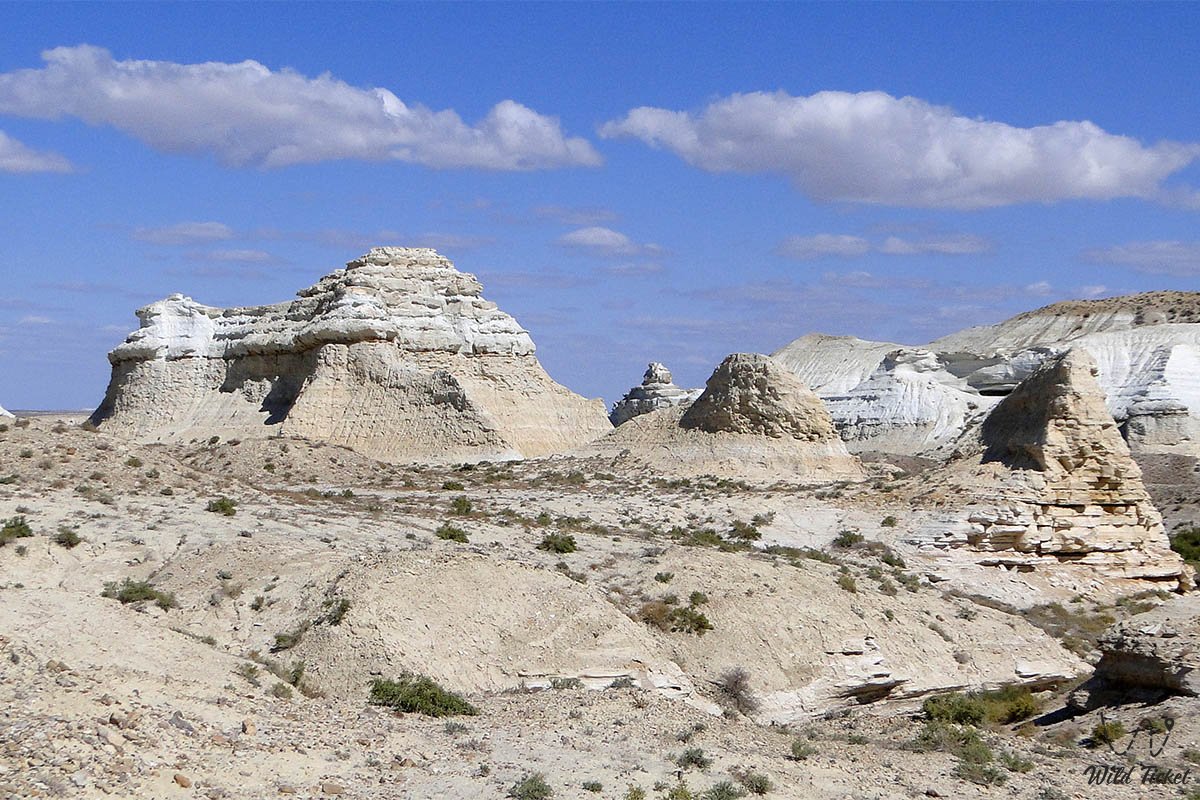
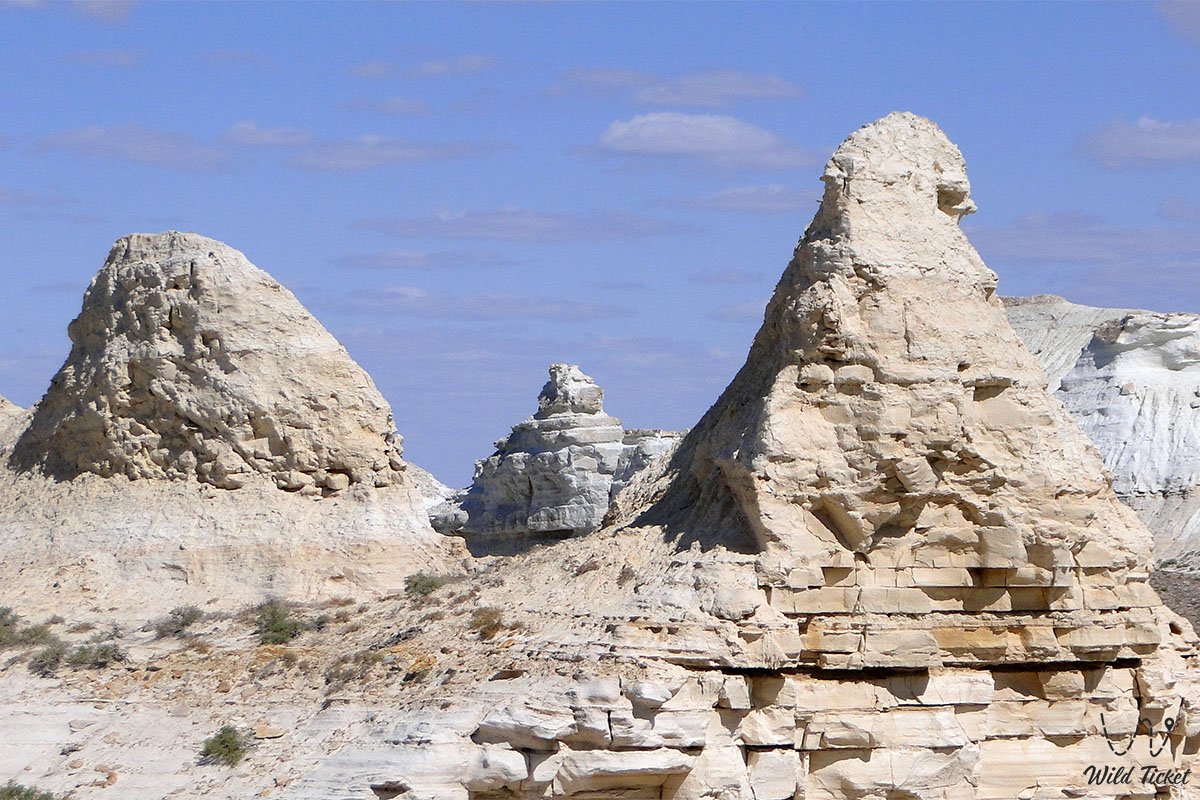
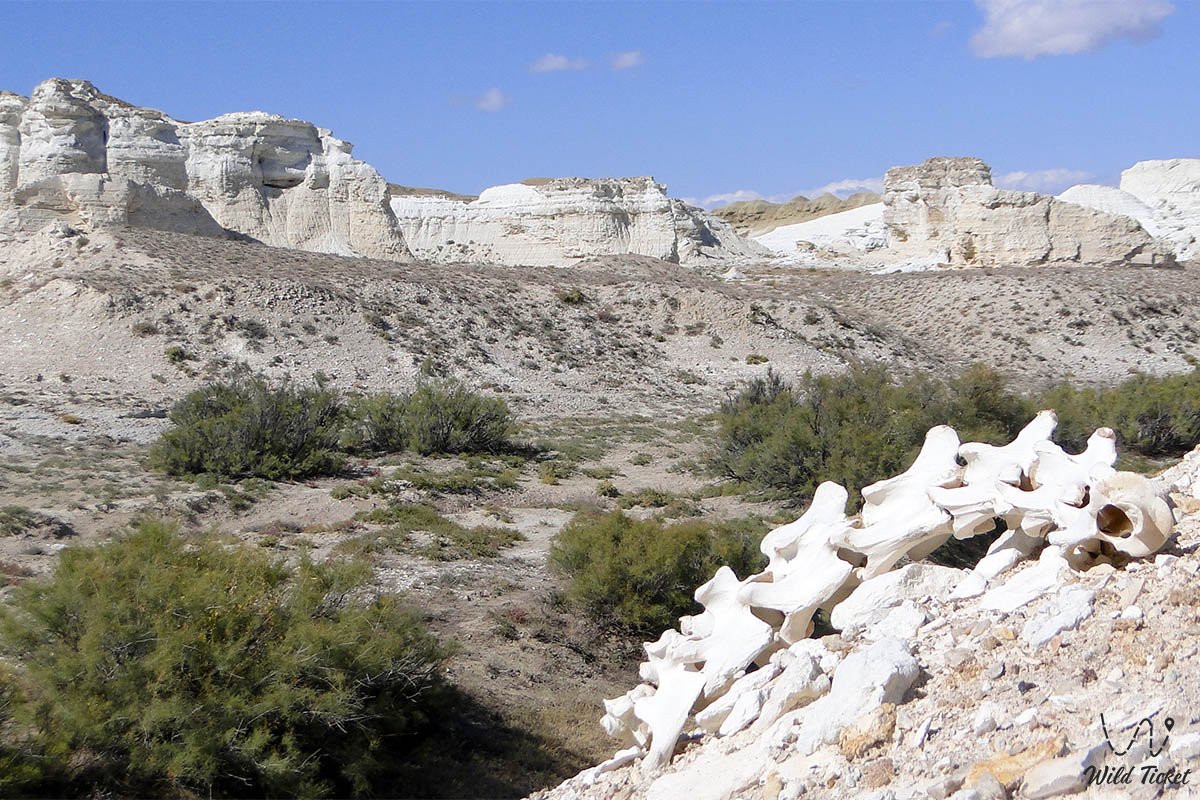
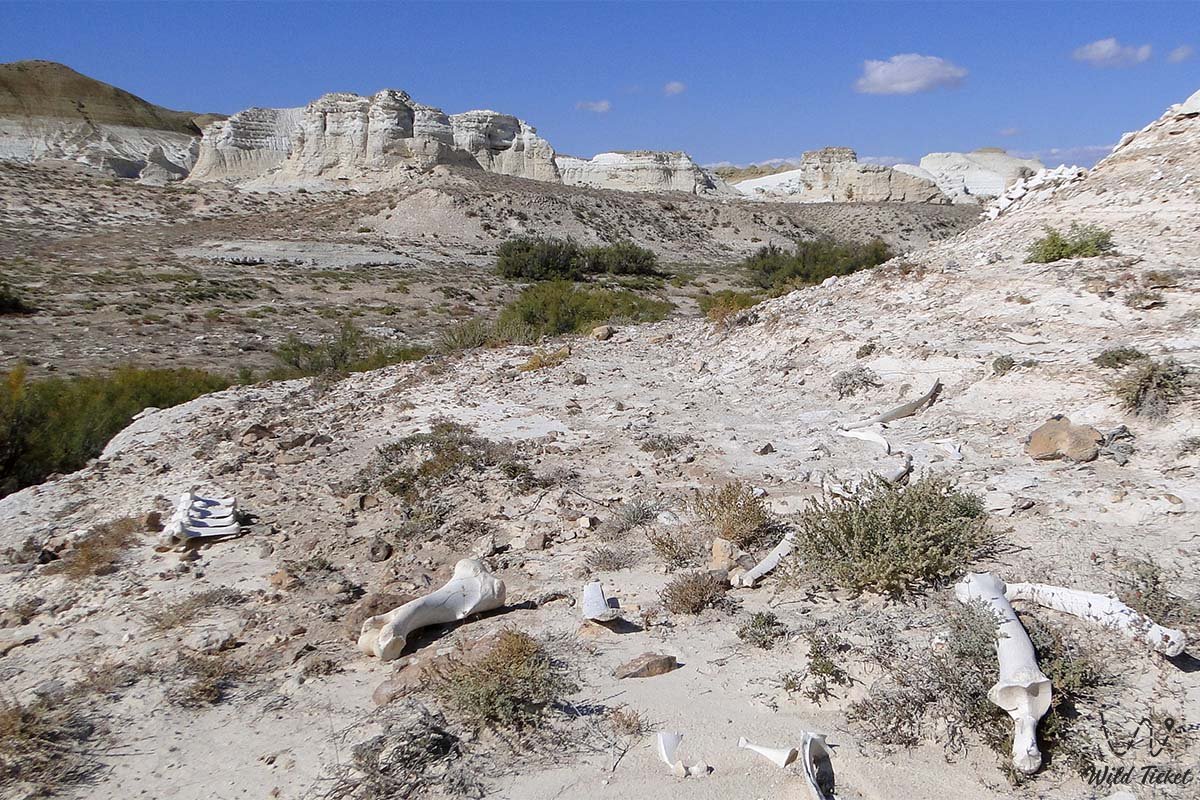
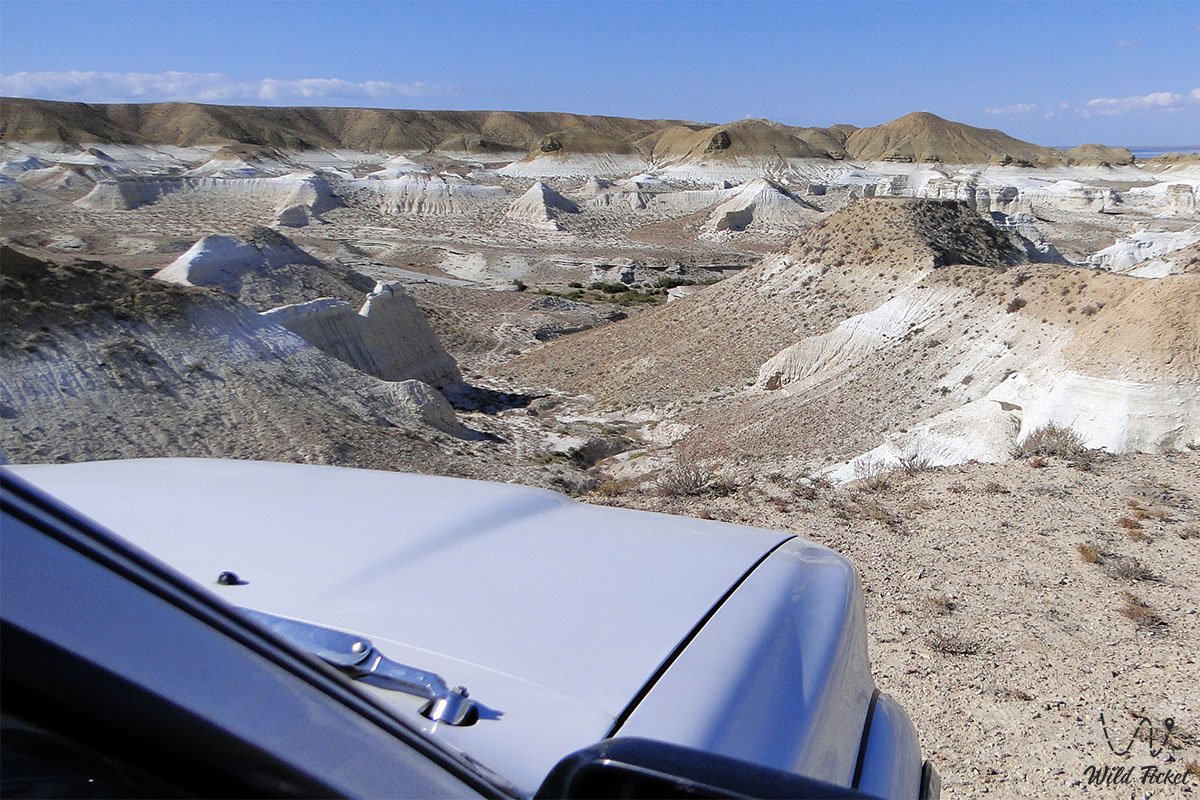
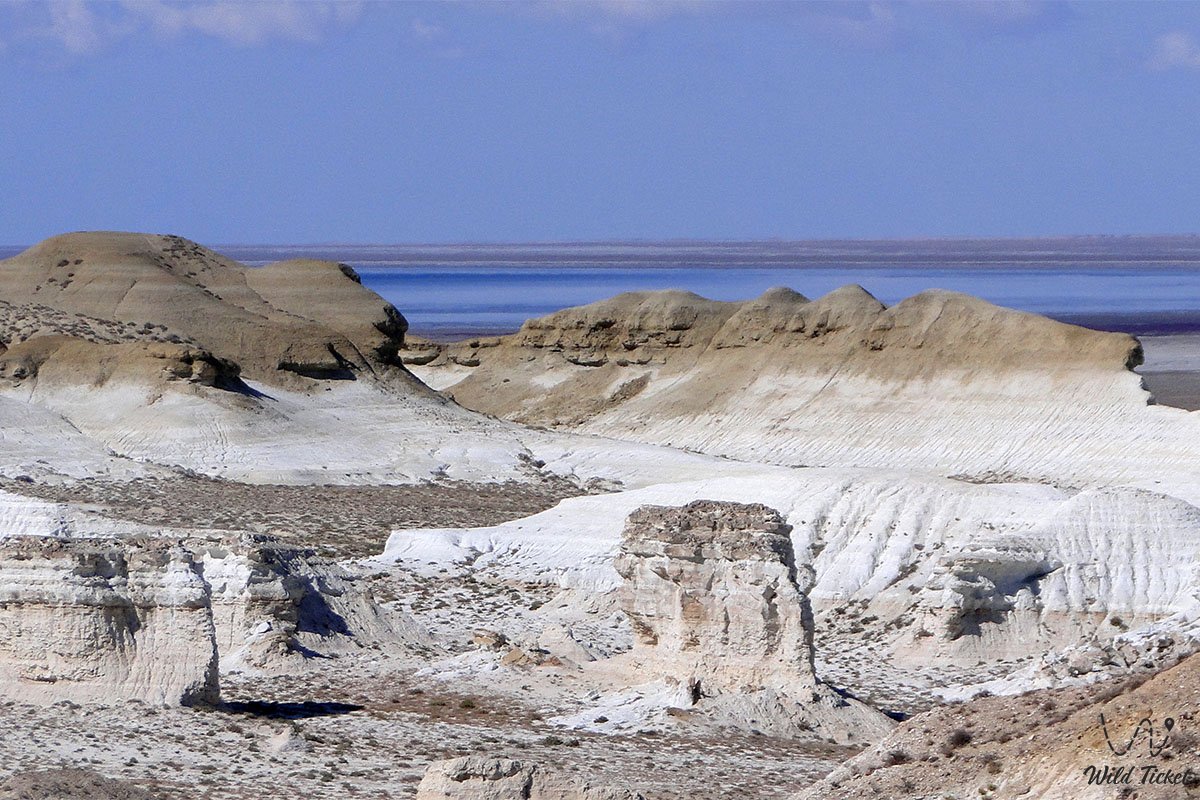
Continuous biogenic deposition of lime muds, mollusk shells, and plankton formed immense beds of white chalk limestones and marls. As the ancient ocean retreated and water levels fluctuated, wind denudation and water streams sculpted a fantastical Valley of Castles with a chain of ochre-red scarps ("giant towers") out of the pliable sedimentary strata. Weathering subsequently exposed millions of Mesozoic fossils on the surface – fossilized shells of ancient mollusks and teeth of prehistoric giant sharks.
In the travel geography and expedition logistics of Mangyshlak, the Usak Tract serves as a pivotal scenic hub along the route from the regional center of Aktau to the northern oil fields. Situated just 9 km from the eastern shores of Koshak Bay and roughly 115–130 km north of the city of Aktau, the tract integrates seamlessly into loop itineraries across the peninsula.
In close proximity to Usak Canyon lie the distinctive chalk butte of Mount Akmaya with its through-grotto, the picturesque clay Akespe Tract, the Yemdy Mountain Range, and the Torysh valley of spherical concretions.
Proceeding further along established steppe tracks, travelers visit the relict oasis of the Akmyshsay Tract with its grove of ancient trees, the legendary yurt-shaped mountain Sherkala, the Kokala Tract, the limestone Kapamsay Canyon, Shakpaktysay Gorge, and the gentle shores of Sarytash Bay.
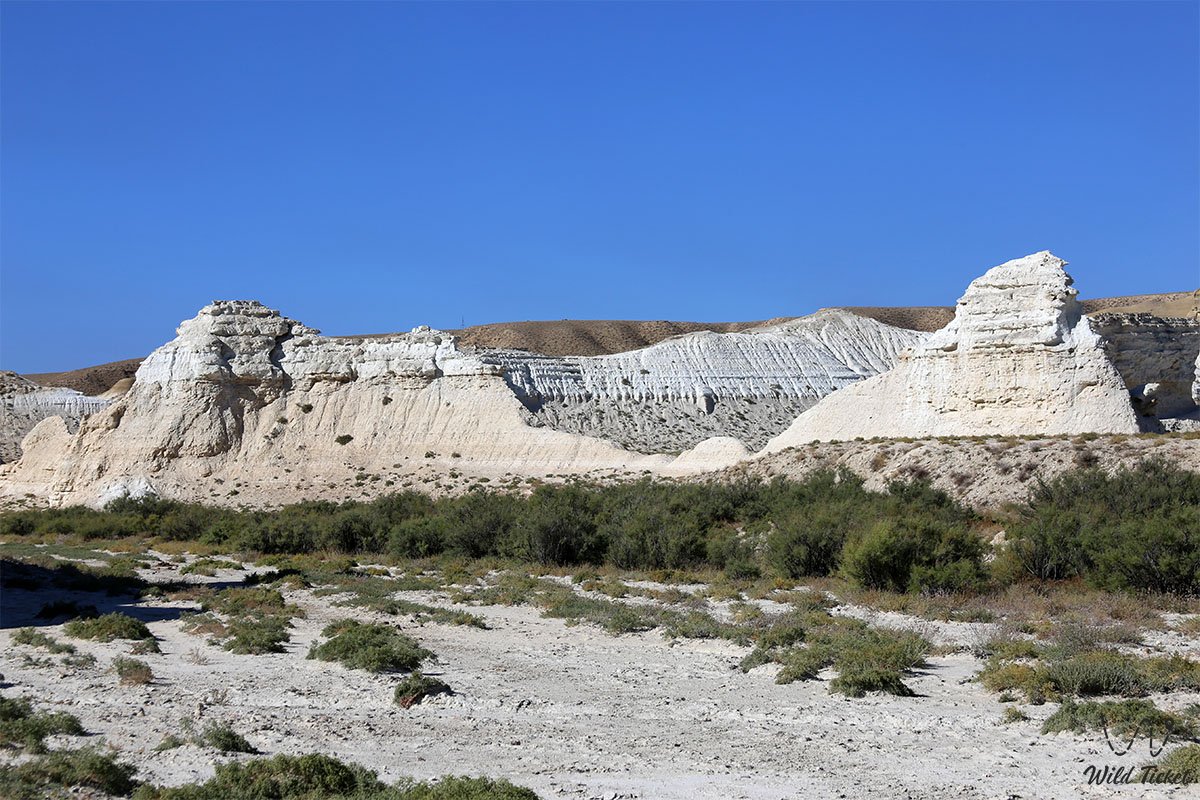
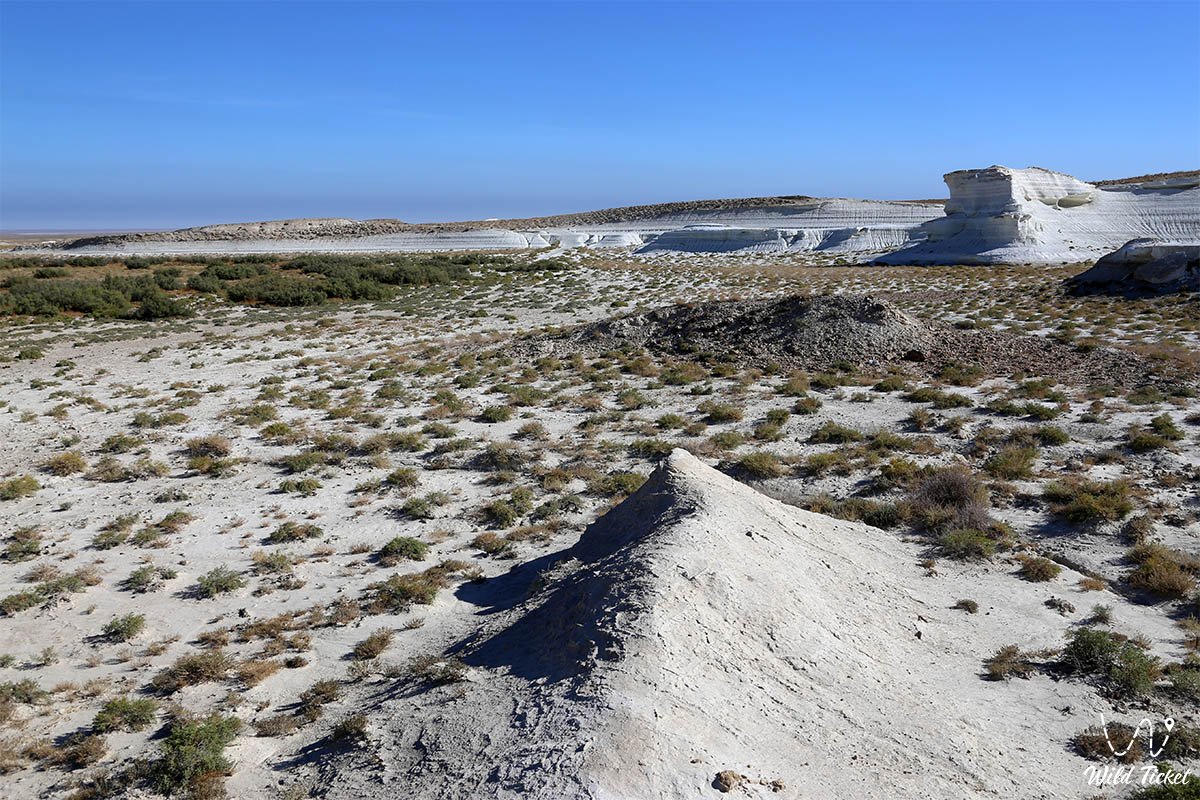
The defining feature of the Usak Tract in Mangystau is the harmonious contrast of dazzling white limestone walls, terracotta-red rock bastions, and rare green oases featuring dense groves of wild trees nourished by hidden subterranean lenses of fresh water. At sunset, the chalk-white monoliths of the canyon take on golden, purple, and ochre hues, turning the valley into an otherworldly setting for panoramic photography and fossil hunting.
• Paleontological Tour to Usak Tract
• Flint Valley in Bozjyra Tract
• Paleontological Guide to Mount Sherkala
--------------------------------------------
How to Get There and Visit –
The Usak Tract is located in the Mangystau District of the Mangistau Region, in the central part of the Mangyshlak Peninsula, Republic of Kazakhstan. The canyon extends from southeast to northwest for 13 km, running just 9 km east of Koshak Bay on the Caspian Sea. The distance from the city of Aktau is around 115–130 km, from the base village of Tauchik about 20–25 km, and from nearby Mount Akmaya approximately 8–10 km.
GPS geographic coordinates of the Usak Tract:
44°27'33"N 51°36'50"E
The route from the city of Aktau leads north along the regional paved highway Aktau – Karazhanbas (oilfield) – Kalamkas (oilfield) – Northern Buzachi via the village of Akshukur and the Tauchik area (about 110–120 km of quality asphalt). The highway connecting Aktau with the northern sector of the peninsula runs in close proximity to the canyon. Between Mount Akmaya and the turnoff to Torysh, leave the asphalt for well-beaten dirt tracks leading straight toward the entrance of Usak Canyon (another 4–8 km over firm ground). Total driving time from Aktau in an SUV is about 1.5 to 2 hours.
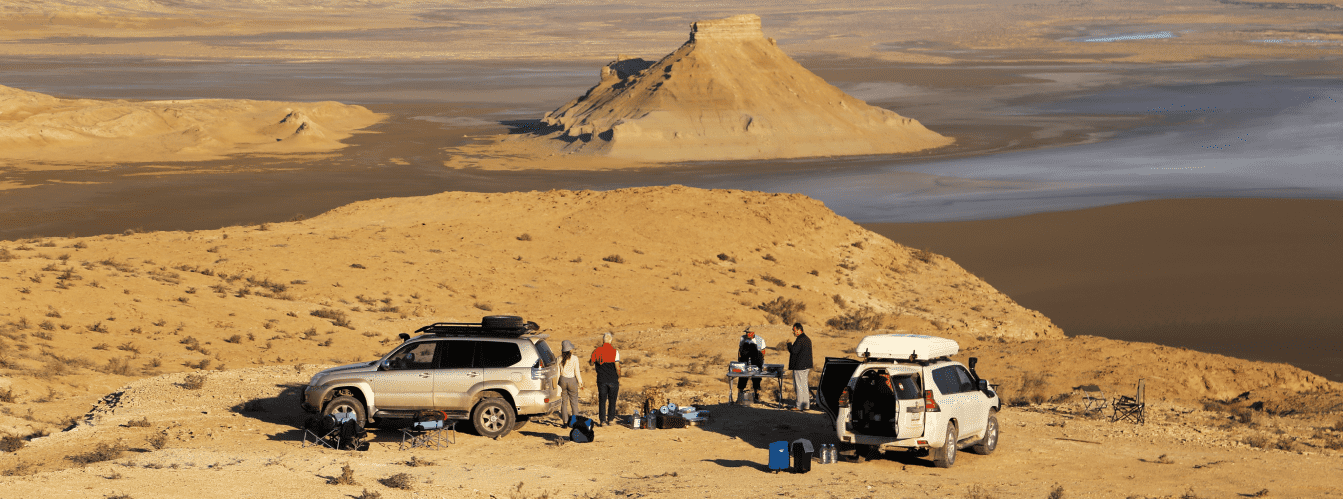
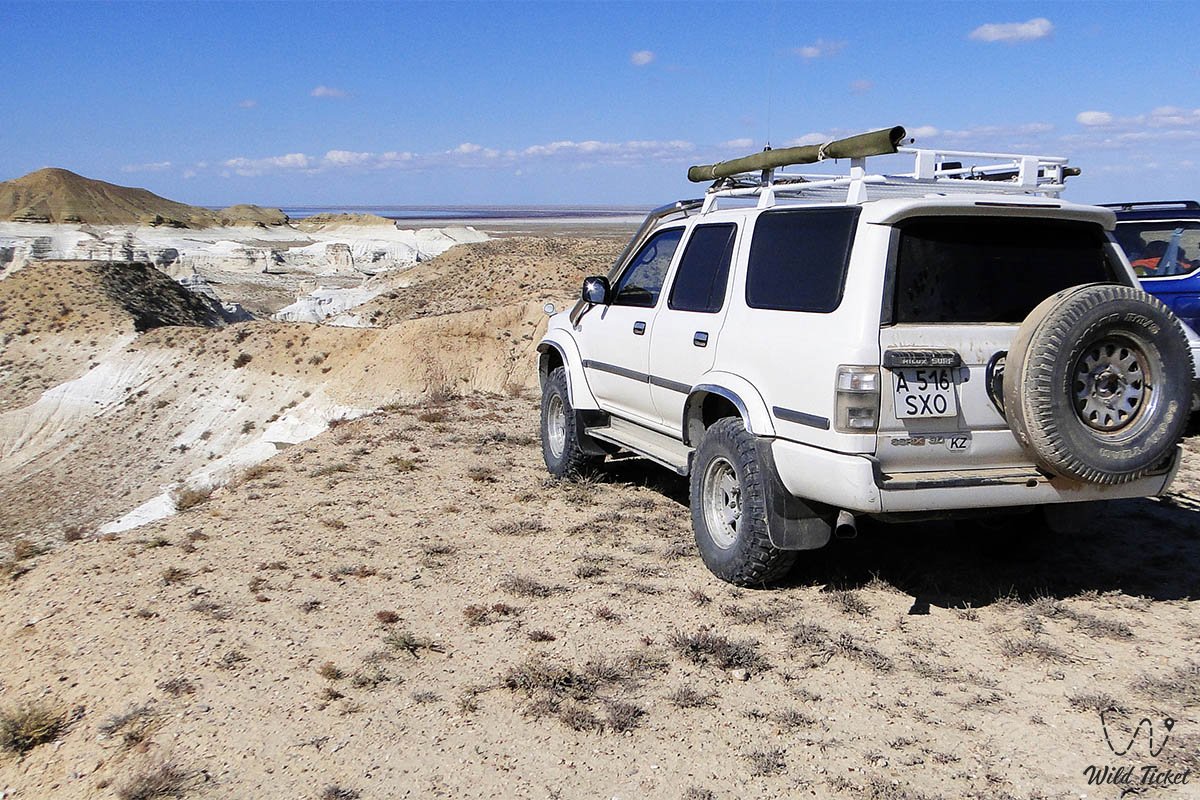
Access roads and passability: reaching the turnoff from the highway toward the northern fields is feasible in any passenger vehicle. However, descending to the floor of the thirteen-kilometer canyon, driving along dry riverbeds (sayas), and traversing deep ruts and rocky ridges strictly requires a body-on-frame 4x4 SUV with a ground clearance of 200–220 mm.
The primary technical hazards are razor-sharp limestone shards and flint debris concealed in grass that can puncture tires, along with patches of deep, loose sand in lower depressions.
The expedition vehicle must be fitted with durable All-Terrain or Mud-Terrain tires, a functional spare wheel, an air compressor, a snatch strap, and a high-lift jack. During sporadic spring or autumn downpours, the clay on the canyon bed turns to mud instantly, bringing vehicular travel to a halt.
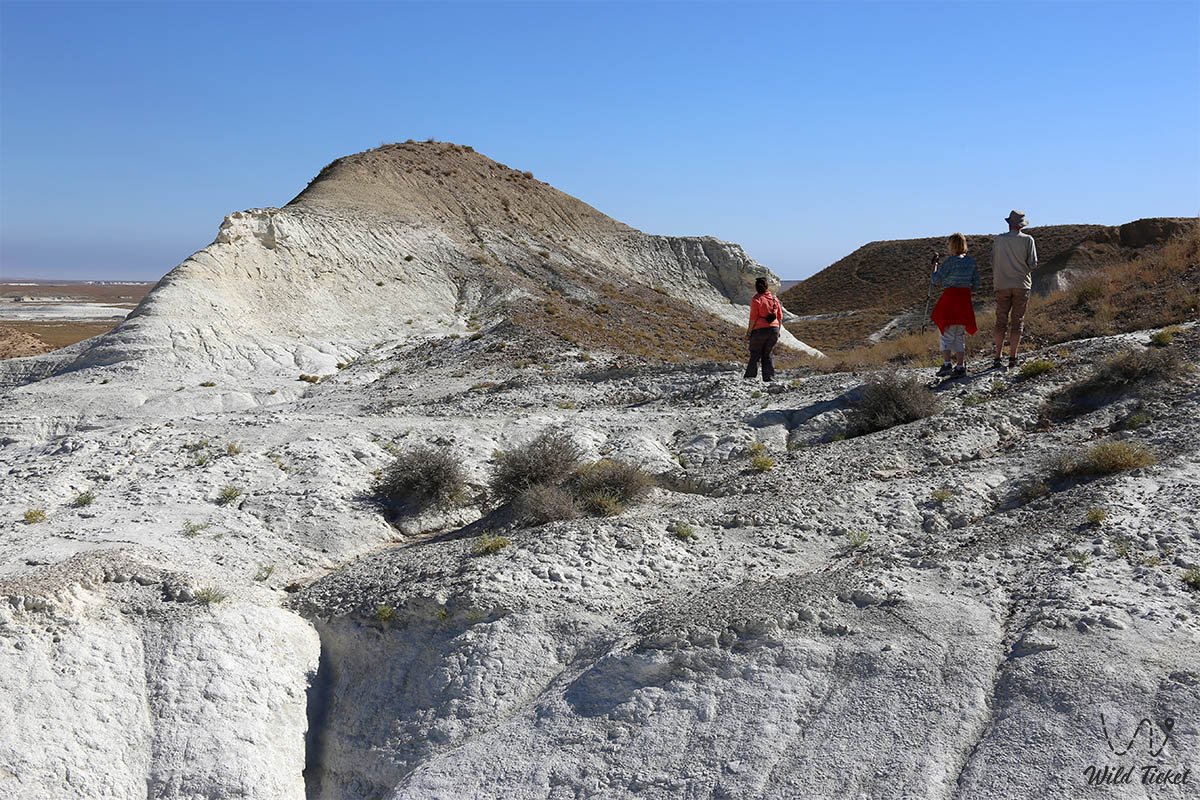
Hiking and paleontological exploration: exploring the canyon, touring the "giant towers", and searching for shark teeth or ancient shells is conducted on foot via day treks from basecamp. The terrain features numerous loose scree slopes and rock crevices. Walking the canyon in flip-flops, sandals, or soft sneakers is strictly prohibited to prevent sprained ankles and severe cuts from sharp limestone fragments. Sturdy trekking boots with rigid soles and dependable ankle support are essential.
Environmental safety rules: the Usak Tract is a pristine wild sanctuary of Mangyshlak.
Within the tract, it is STRICTLY FORBIDDEN to:
– damage natural weathering landforms, leave graffiti, or deface the limestone "towers";
– cut down relict trees and shrubs in the oases of the tract (for campfires or camp needs);
– drive off existing tracks onto areas of steppe flora;
– leave behind plastic waste, tin cans, or broken glass;
– light open, unattended fires outside designated grills in high winds (use portable gas stoves for cooking);
– contaminate the sparse freshwater springs and natural streambeds at the base of the canyon.
Infrastructure: the Usak Tract lacks tourism infrastructure entirely (there are no hotels, piped water, cafes, or mobile signals on the canyon floor). Travel here requires absolute self-sufficiency: a potable water supply of at least 5 liters per person per day, technical water, food supplies, spare fuel in jerrycans (20–30 liters), storm-resistant tents, and a comprehensive first aid kit.
The nearest gas stations, tire repair services, and grocery stores are located in Tauchik village (20–25 km away). Cellular connectivity is stable along the upper rims of the canyon and beside the Buzachi highway, but signal drops on the canyon floor. For overnight stays, travelers can pitch tents under trees in the verdant oasis or drive 9 km west to camp along the wild shore of Koshak Bay.
Best time to visit is spring and the first half of summer (from late April to mid-June), when Usak Canyon is lush with greenery, desert herbs are in bloom, and air temperatures stay within a pleasant +20...+26 °C range.
A second wonderful season is early autumn (September to October), offering mild temperatures and no nuisance insects. In July and August, the white limestone basin traps oppressive heat topping +38...+42 °C, and the blinding white cliffs produce an intense glare, making quality sunglasses with UV protection essential.
--------------------------------------------
History
The history of the Usak Tract preserves the record of geological events from the prehistoric Tethys Ocean and centuries of nomadic passage through the Northern Caspian region.
Millions of years ago, when the entire expanse of Mangyshlak lay submerged beneath a warm, shallow sea, sandy-lime shallows teemed with marine life. Giant predatory sharks, myriads of mollusks, and sea urchins inhabited the waters. As they died, oceanic organisms settled on the seafloor, preserved in pure carbonate muds. Later, as the seabed lifted into dry land, receding waters carved the thirteen-kilometer trough of the canyon, draining toward what is now the Caspian basin.
During the Stone Age (Paleolithic and Neolithic), Usak Canyon drew prehistoric hunters with its dependable fresh water along the gorge floor and dense tugay thickets that sheltered steppe game. Nearby flint deposits on the plateau provided raw stone for implements, while natural rock overhangs sheltered nomadic camps from sandstorms and winds.
In the Bronze and Early Iron Ages, the valley served as a caravan corridor. During the Middle Ages, branches of the Great Silk Road crossed the Usak Tract: caravans journeying from Caspian berths at Koshak Bay and Sarytash across the Turan Lowland toward the oases of Khwarazm rested at Usak's shaded oases to water their herds before traversing waterless deserts.
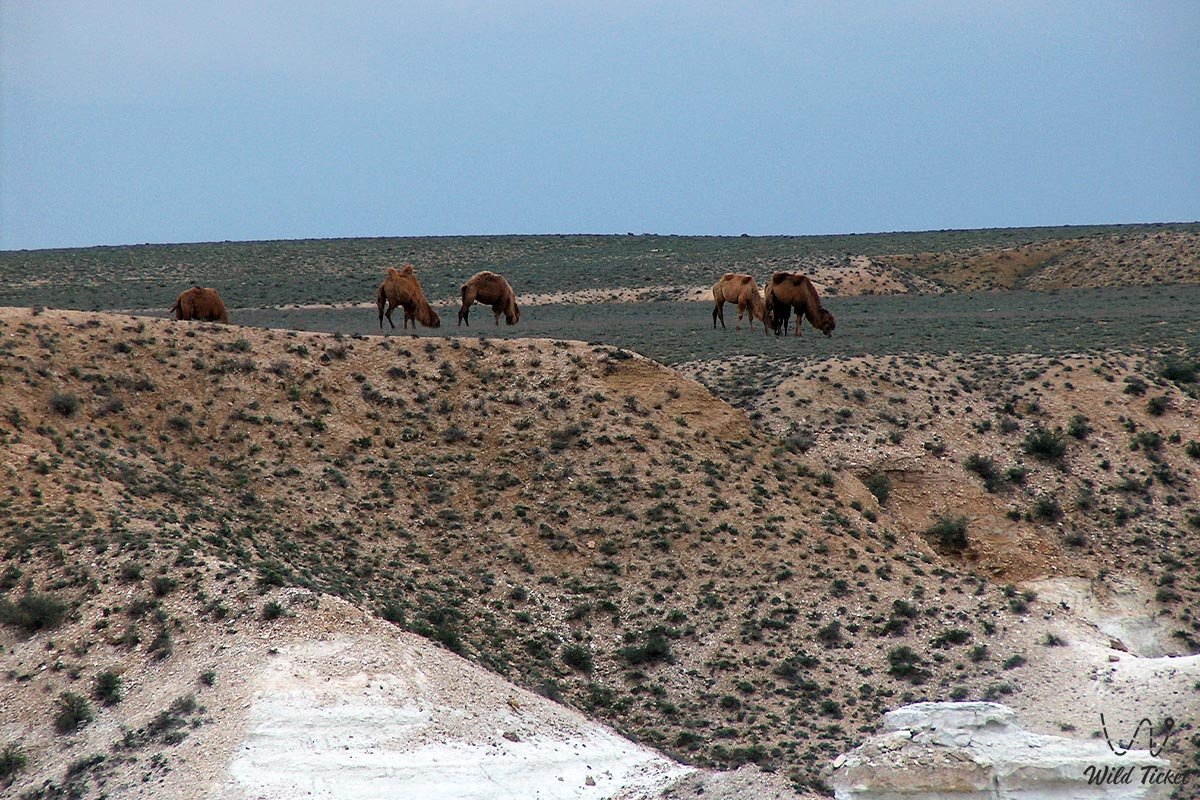
Later, in the 17th to 19th centuries, the gorge became a favored wintering ground and haven for Kazakh clans of the Junior Zhuz (the Aday clan). Within the sheltered canyon and its natural springs, herdsmen protected camels and horse herds from severe steppe winter blizzards (dzhut). In the 20th century, a strategic highway was constructed nearby to connect the oilfields of Mangystau – Karazhanbas and Kalamkas – opening this pristine natural site to geological research and eco-tourism.
Information
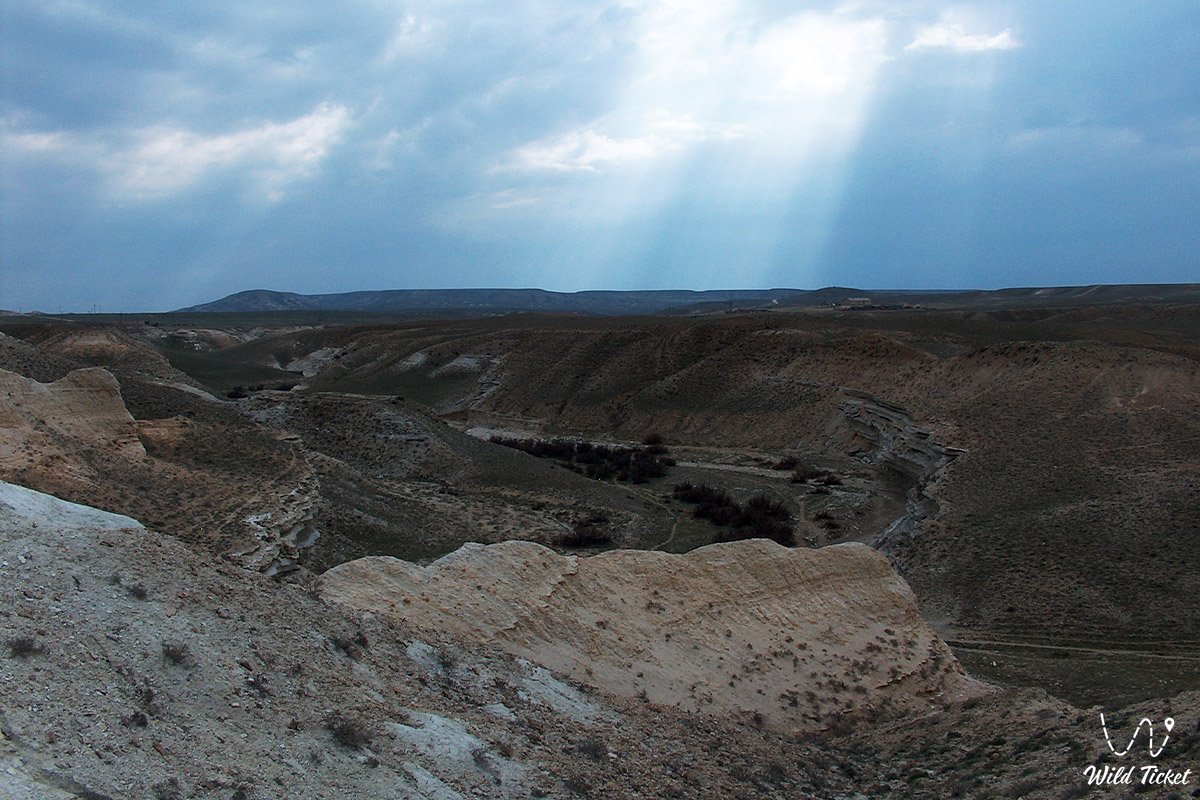
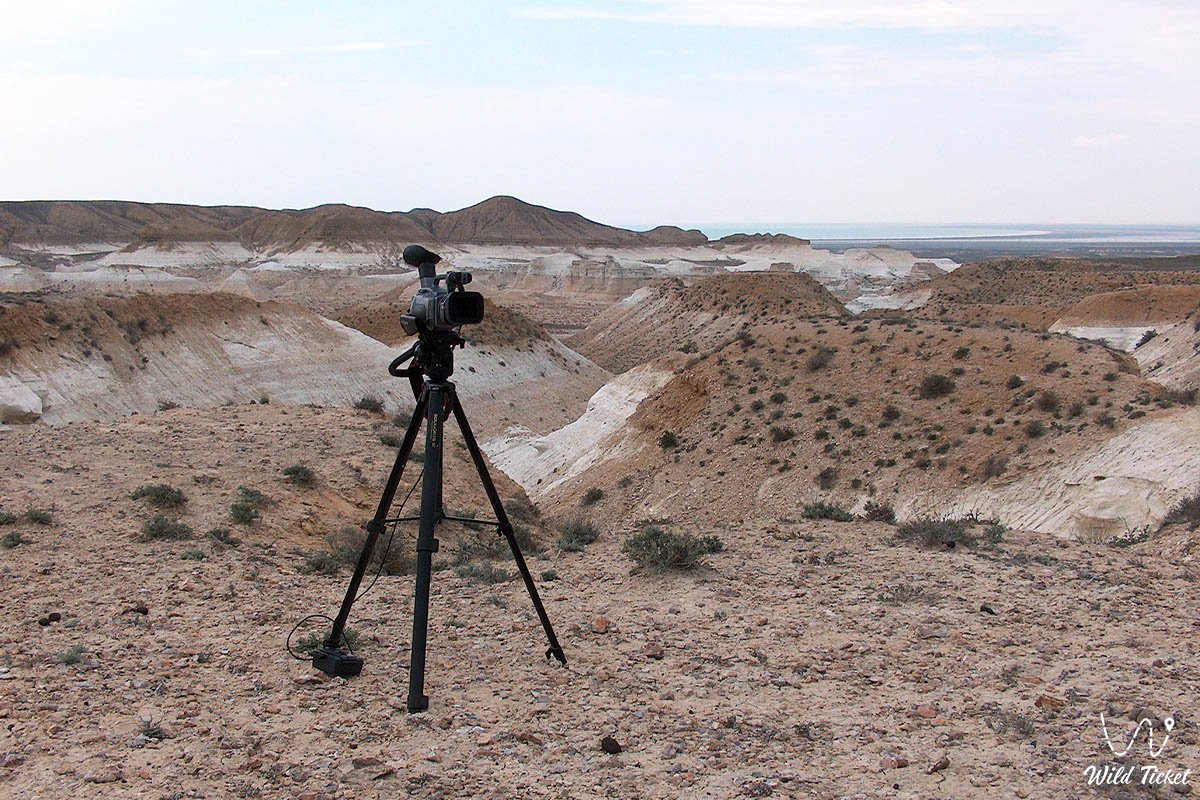
Geomorphologically, the Usak Tract is a complex erosional-denudational system developed within Upper Cretaceous and Paleogene carbonate deposits. The canyon trends southeast to northwest for 13 km, cutting into the limestone plateau to depths between 40 and 80 meters.
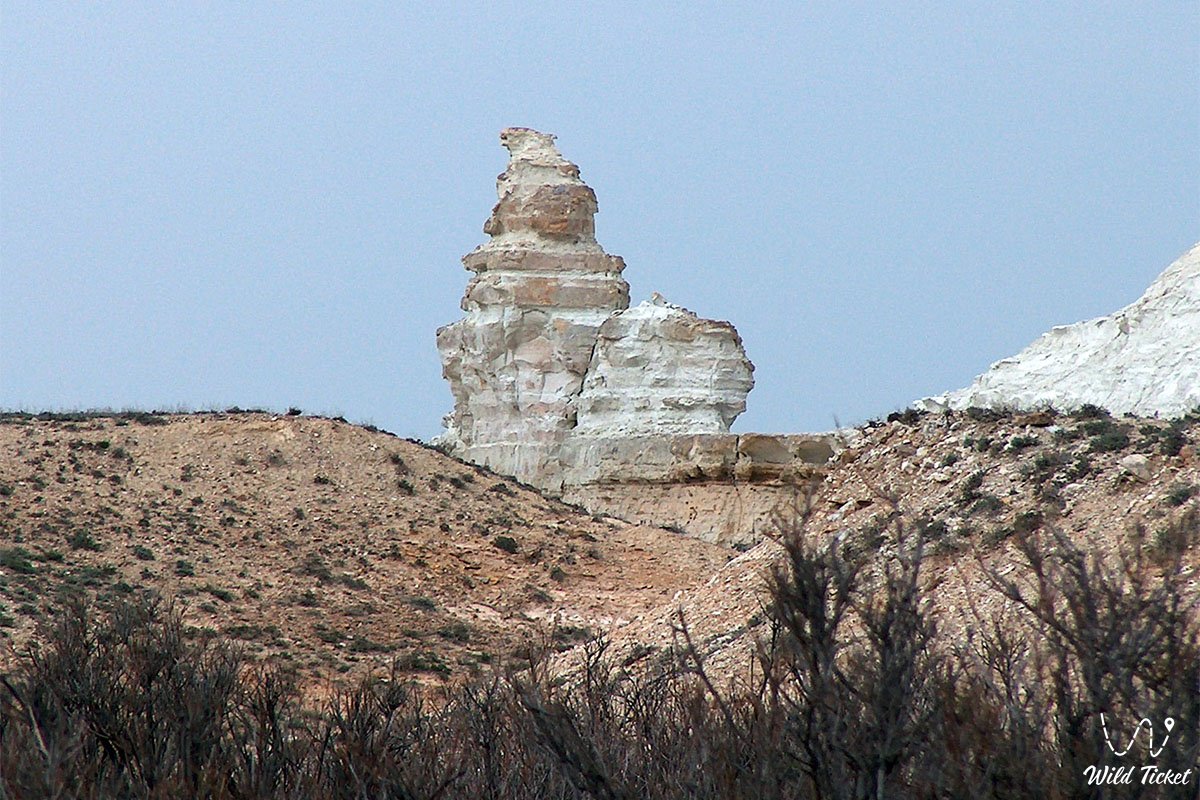
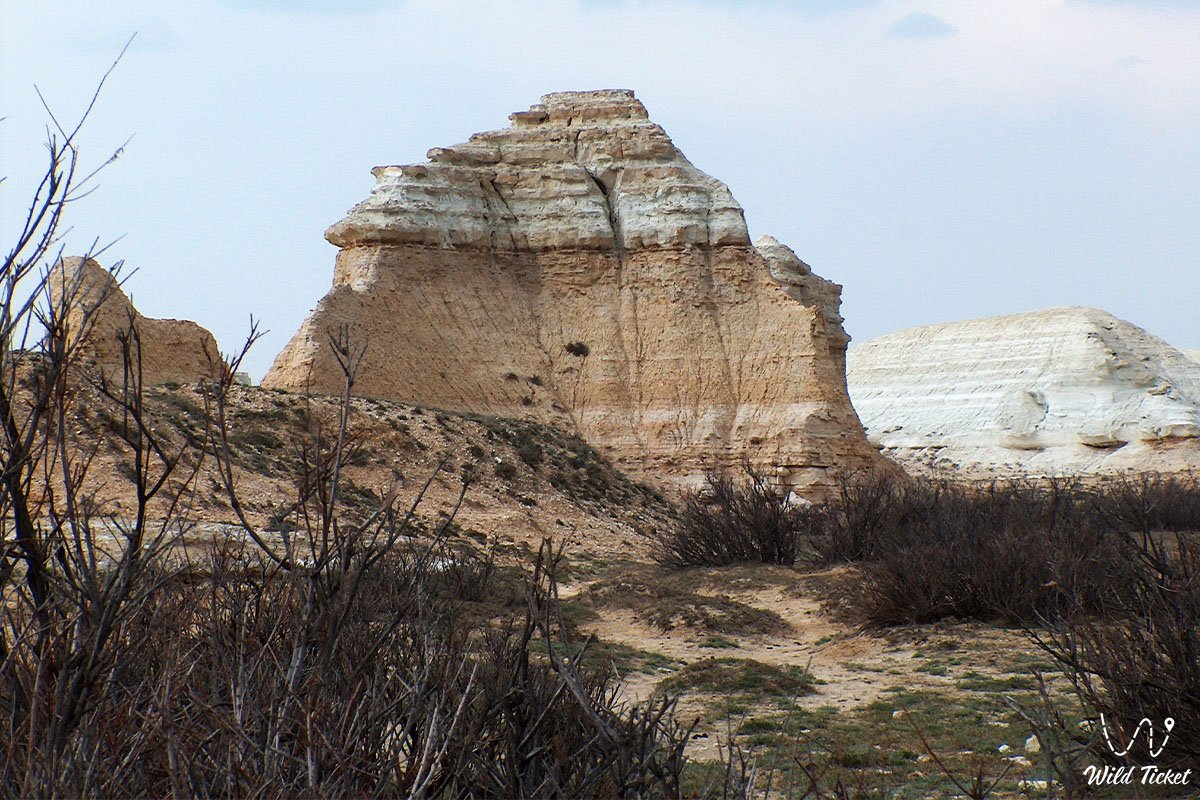
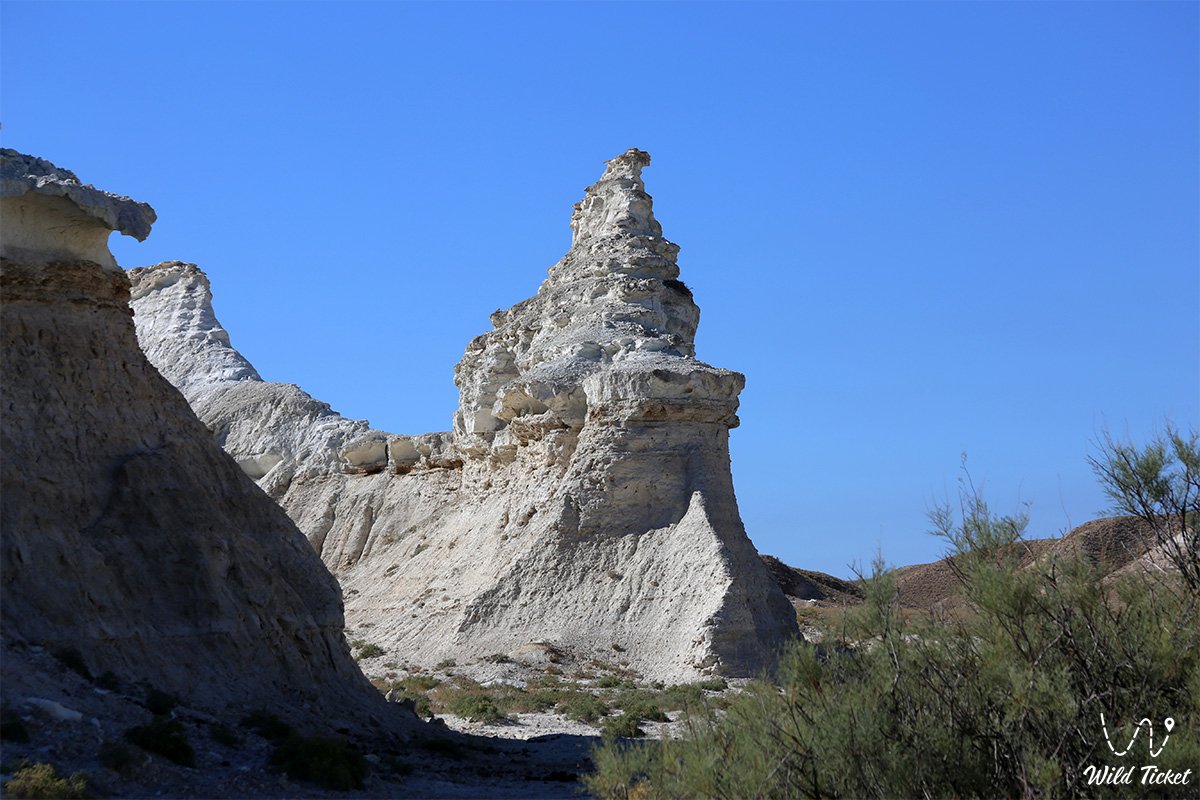
The core geological formations consist of bioherm white limestones, writing chalk, marls, and ferruginous sandstones. The stepped relief of the tract arose from variations in rock layer hardness and repeated fluctuations of the base level of erosion as the Tethys Ocean retreated. Upper strata composed of ochre and brown ferruginous sandstones resisted weathering more effectively than the softer underlying chalks: centuries of wind deflation carved the celebrated "Valley of Castles" – an alignment of monumental buttes, pillars, and cornices reminiscent of fortress towers and giant silhouettes.
A shallow aquifer of fresh and slightly brackish fracture-karst water underlies the canyon thalweg. This supports an arid biocenosis featuring isolated oases and groves of relict trees (turanga, willow, Russian olive) that have survived from wetter Holocene climatic phases (similar relict groves occur in the Akmysh Tract).
Soil cover along the canyon floor consists of meadow-sierozem and alluvial soils of temporary watercourses, transitioning on slopes into gravelly carbonate desert sierozems.
The climate of the tract is arid and sharply continental, influenced by the adjacent Caspian Sea. Winters are comparatively mild, with average January temperatures of -3...-5 °C and strong winds. Summers are dry, hot, and sunny: average July temperatures reach +27...+29 °C (with surface temperatures on the white limestone exceeding +50 °C). Mean annual precipitation is low, not exceeding 140–160 mm per year, falling predominantly during brief spring showers.
Detailed Description of the Site
The natural landscape complex of the Usak Tract encompasses the following key elements:
• Thirteen-kilometer floor of Usak Canyon – a deep erosional valley flanked by white limestone bluffs, winding from southeast to northwest;
• The famous "Valley of Castles" – a chain of residual buttes and scarps displaying fantastical architectural shapes carved from layered Tethys carbonate beds;
• Ochre-red "giant tower" scarps – monumental pillar-like buttes topped with durable terracotta-brown ledges of ferruginous sandstone;
• Relict tree oases – pockets of lush green vegetation and trees on the gorge floor fed by pure subterranean water;
• Paleontological deposits of the Tethys Ocean – exposed ancient seabed zones where fossilized shark teeth, bivalve shells, and gastropods lie on the surface;
• Panoramic sunset terraces – elevated canyon rims that provide sweeping views of the changing light playing over white cliffs at sunset.
Flora and Fauna
The flora of the Usak Tract presents a vivid contrast between the arid sagebrush steppe of the plateau and the verdant oasis along the gorge floor. Sheltered by cliffs, tree and shrub communities thrive in the canyon thalweg: desert poplar (turanga), Russian olive (dzhida), tamarisk, Nitraria schoberi, and buckthorn. Slopes and upper rims support typical Turanian dwarf subshrubs: gray-soil wormwood, boyalych (tree-like saltwort), biurgun, prickly Atraphaxis, and camelthorn (alhagi). In May, the tract’s slopes become carpeted with wild tulips, wild onions, and spring ephemerals.
Fauna in the tract shows considerable diversity thanks to available shade, water, and food resources. Mammals permanently residing here include the corsac fox, steppe polecat, marbled polecat, badger, tolai hare, and long-eared hedgehog. Rock fissures shelter bat colonies. In the early morning hours, cautious Ustyurt mouflons (mountain sheep) occasionally descend from the Yemdy range and nearby chinks to water at the springs.
Birdlife is remarkably diverse: the dense canopy of the oasis provides nesting territory for the nightingale, turtle dove, saxaul sparrow, and European roller. Raptors nest along the sheer ledges of the "giant towers": golden eagles, saker falcons, long-legged buzzards, common kestrels, and steppe eagles. Chukar partridges are frequently heard calling along the rocky terraces.
Herpetofauna includes the Central Asian tortoise, toad-headed and steppe agamas, rapid fringe-toed lizard, Caspian bent-toed gecko, tartar sand boa, and whipsnakes (Caspian and Dione racers).
Legend
An ancient nomadic legend connects the Usak Tract with Stone Giants and the Heart of the Ocean.
Tradition tells that when the mighty Tethys Ocean receded before the emerging land, the sea sovereign left a host of his stalwart warriors – invincible red-bearded giants – on the shallow shore. They were charged with protecting the deep sea's hidden treasures embedded in the white cliffs: pure white pearls, petrified teeth of sea dragons, and a sacred spring of living water.
For centuries, the giants stood sentinel, facing westward toward the setting sun and the Caspian Sea. Over time, the arid steppe dried their bodies, and fierce sand-bearing winds weathered their armor. When the ocean waters vanished forever, the sentinels were transformed into tall ochre stone towers, while their white shields broke apart into dozens of castle-like formations across the valley.
Only the spring of living water continued to emerge from the feet of the petrified guardians, sustaining green trees amidst the sun-scorched chalk desert. Nomads believed that a traveler who finds a white sea-dragon tooth in Usak Canyon and drinks from the shaded oasis receives the enduring strength of the stone giants and protection on long journeys through the wilderness.
Conclusion
The Usak Tract is an extraordinary natural sanctuary in Mangistau, where the white limestones of the Tethys Ocean combine with the dramatic geology of the "Valley of Castles" and the coolness of relict tree oases. Prehistoric fossils, Martian sunsets, and the untouched stillness of the canyon make a journey through the Usak Tract an unforgettable experience on the wild trails of the Mangyshlak Peninsula.
Interesting Nearby Attractions:
• Mount Akmaya;
• Torysh Valley;
• Akespe Tract;
• Koshak Bay;
• Sarytash Bay;
• Mangyshlak Bay;
• Tupkaragan Peninsula;
• Cape Tyub-Karagan;
• Yemdy Mountain Range;
• Akmysh Tract;
• Mount Sherkala;
• Kokala Tract;
• Kapamsay Canyon;
• Shakpaktysay Canyon;
• Samal Canyon;
• Mount Otpan-Tau;
• Zhygylgan Tectonic Collapse;
• Fossilized Traces in Zhygylgan Tract.
Pilgrimage Sites in Mangystau:
• Beket-Ata Underground Mosque;
• Karaman-Ata Underground Mosque;
• Shakpak-Ata Underground Mosque;
• Sultan-Epe Underground Mosque;
• Shopan-Ata Underground Mosque;
• Masat-Ata Underground Mosque;
• Koben Mosque;
• Zholaskan Mosque;
• Kolbas Ishan Mosque;
• Sonabay Underground Mosque;
• Uytoly-Ata Mosque;
• Ishan Khoja Mosque;
• Zhaman Sauran Mosque;
• Sanctuary of Bayte.
Photogallery: