Mysterious ex-island of Priaralye, natural stronghold of kulans -
Barsakelmes Island (translated from Kazakh as "if you go, you will not return", historical pre-revolutionary name – Suzhok, meaning "waterless") represents a world-famous geographical phenomenon, formerly the second largest island of the Aral Sea, and now a vast tract in the Aral district. The territory is located in the very heart of the Aral depression, 180 kilometers southwest of the city of Aralsk.
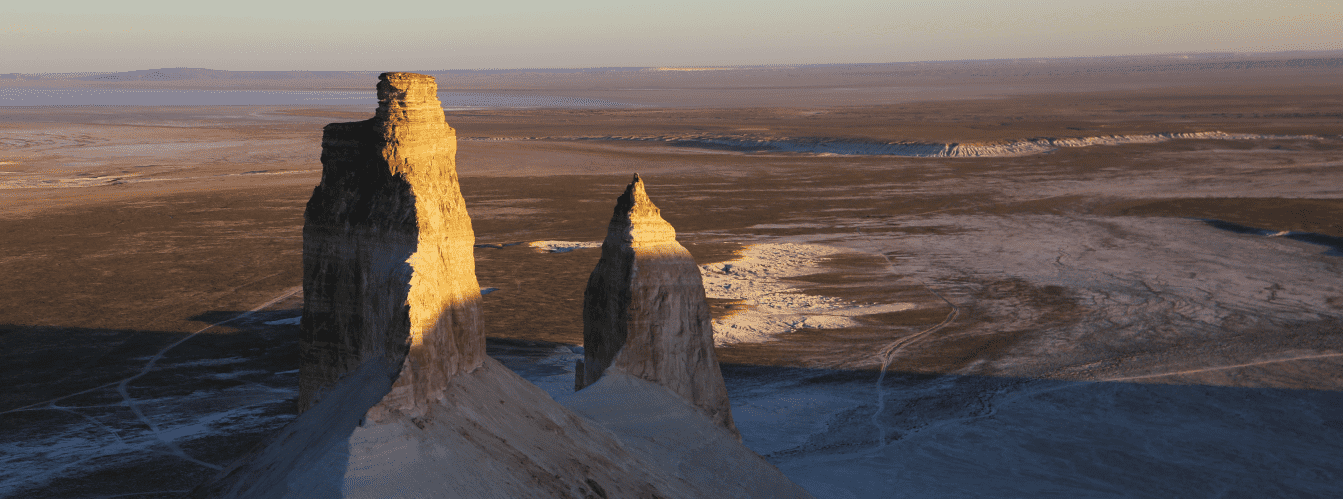
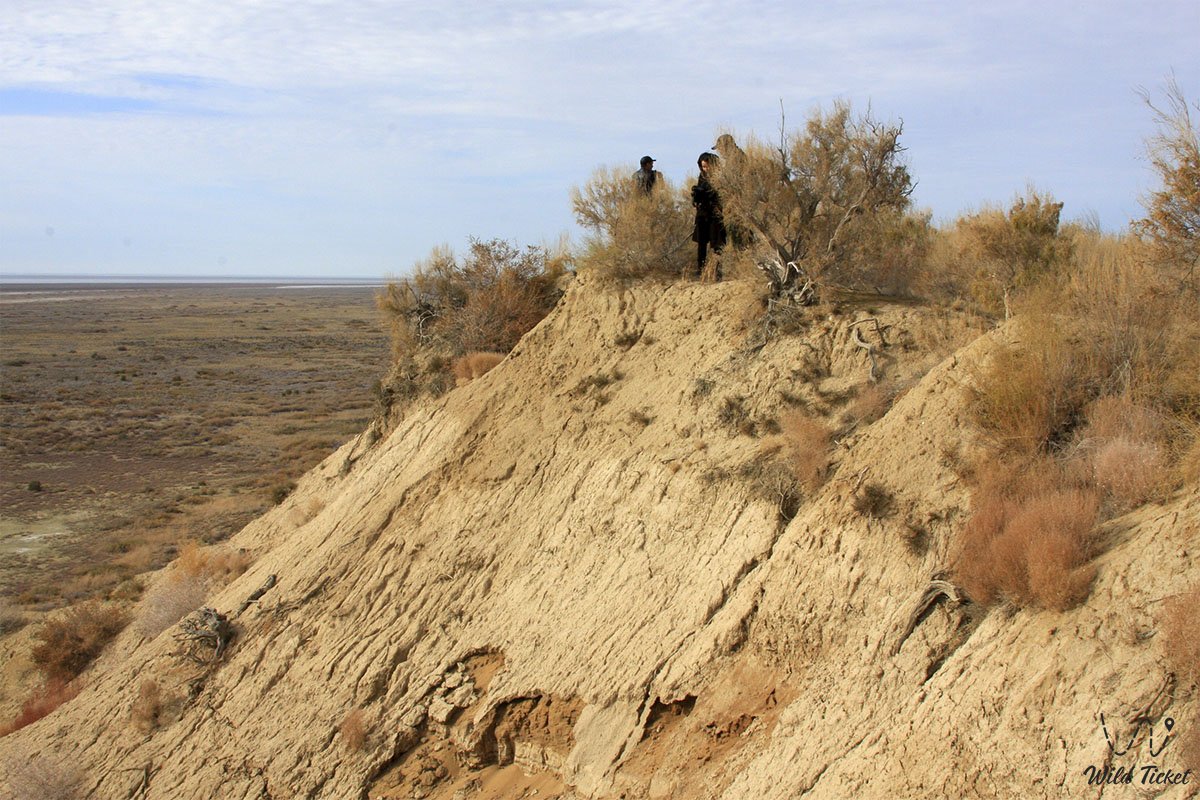
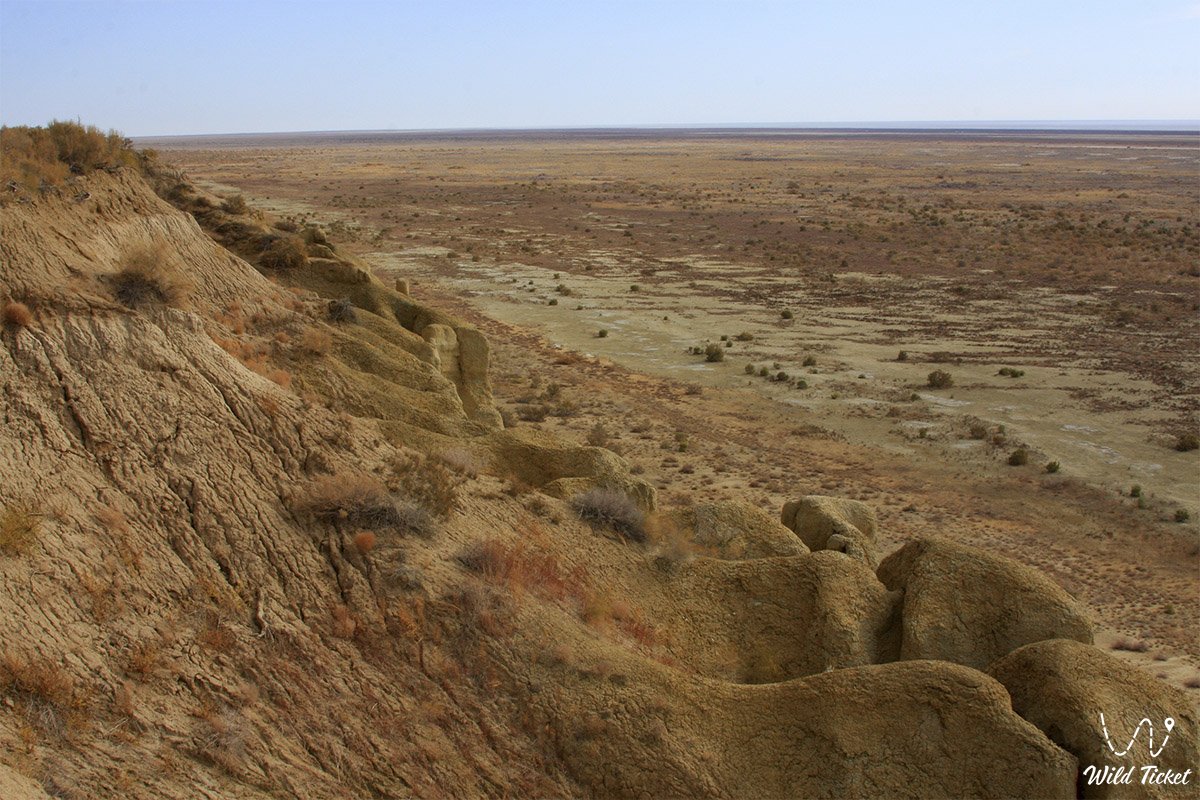
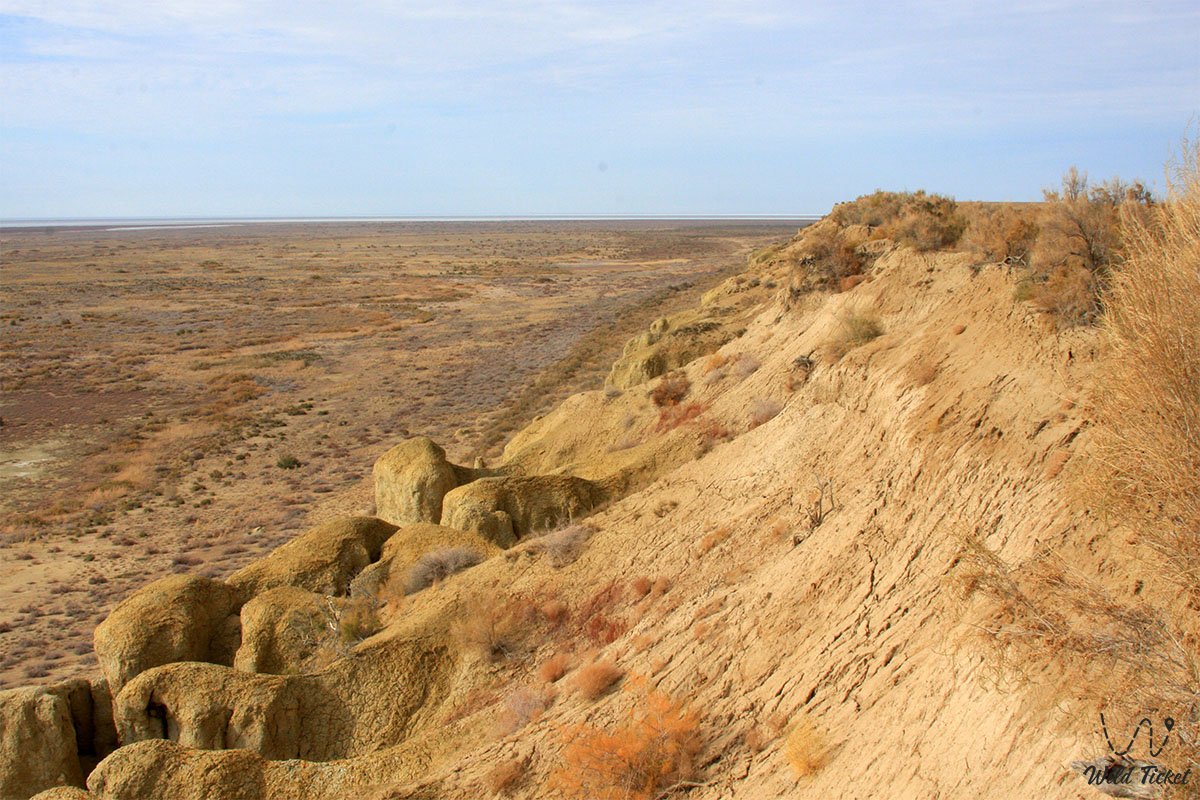
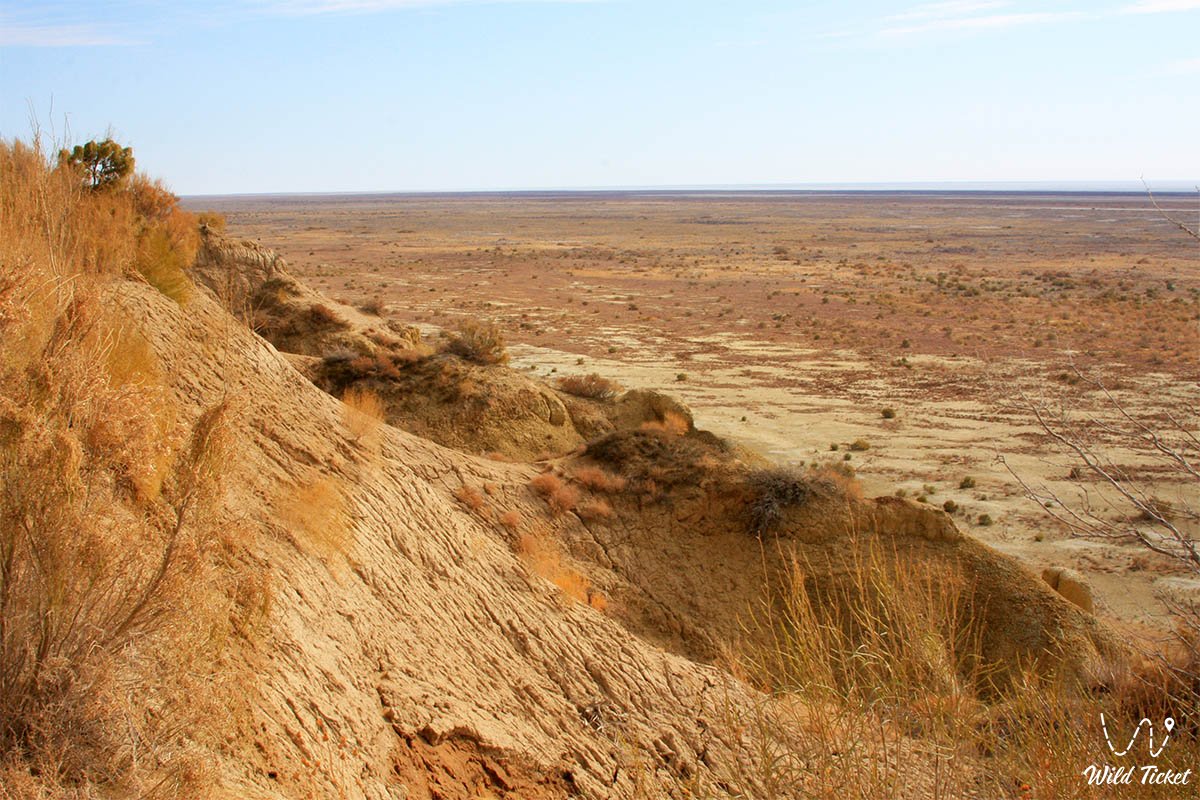
Historically, the island lay in the northwestern part of the Aral water area, representing an isolated natural world amid azure sea waters. Today, the island is part of the Barsakelmes Nature Reserve and is a geomorphological tract divided into two contrasting zones: the southern elevated part, which is a table-like bedded-denudation plateau with maximum elevations of up to 108–113 meters above sea level and steep cliff-chinks up to 60 meters high, and the northern part – a gently undulating accumulative plain dissected by dry valleys of temporary watercourses.
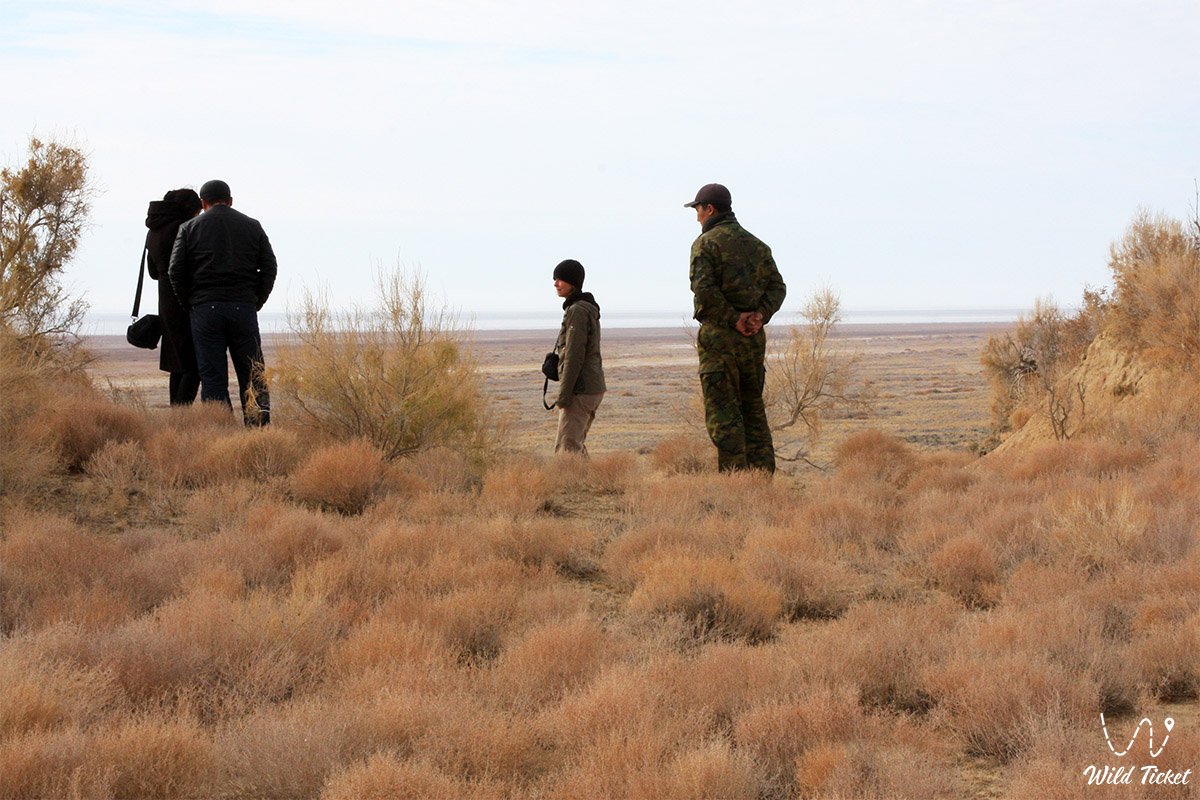
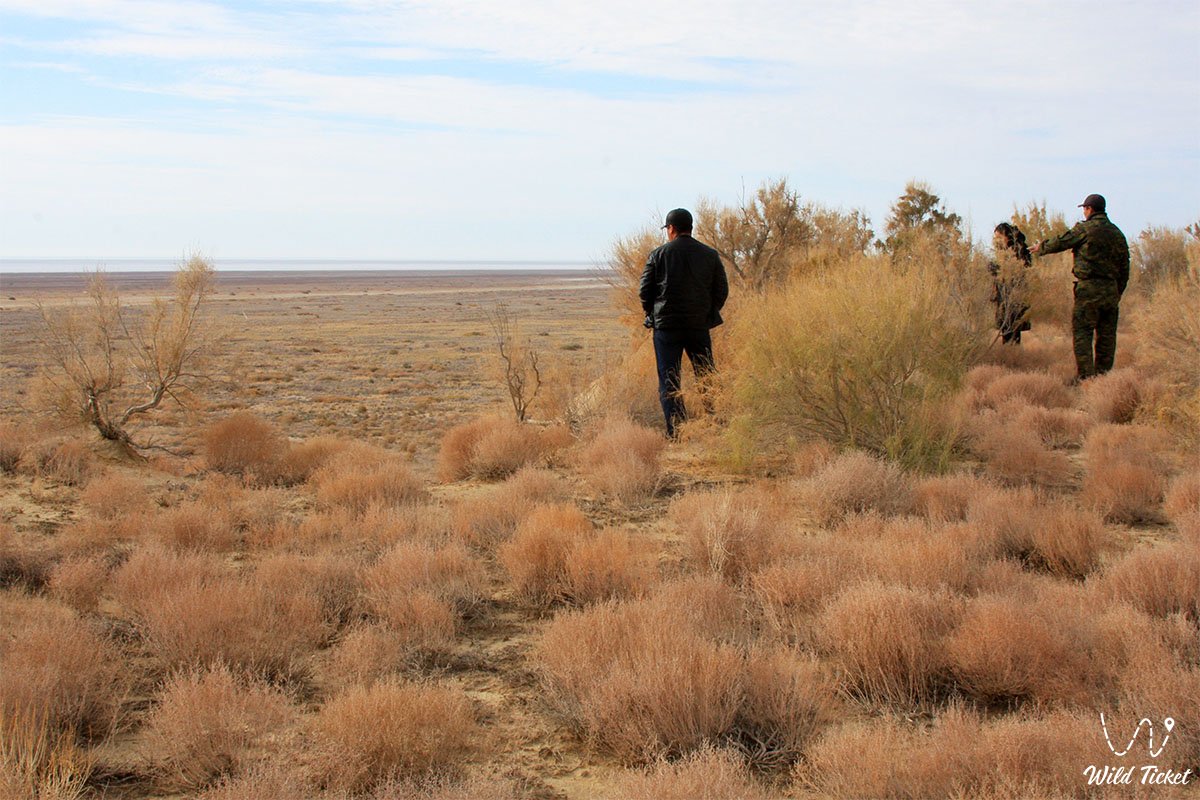
The fate of Barsakelmes changed dramatically in the second half of the 20th century. Due to the shallowing of the Aral Sea (description of causes), the water area began retreating rapidly, exposing bottom sediments. By the late 1980s and early 1990s, an expanding strip of land connected the island with the mainland, turning it first into a peninsula, and by 2009 – into an isolated elevated tract (former island) surrounded on all sides by whitish salt marshes and barchans of the young Aralkum Desert.
Despite the loss of island status and the deficit of fresh water, Barsakelmes preserved the status of a sacred natural core. Large-scale scientific observations of the processes of primary landscape formation continue on its territory, while the plateau itself attracts scientists, researchers of anomalous phenomena, and enthusiasts of extreme off-road tourism. When the seabed was exposed near the island, archaeological attractions were discovered, such as the Kerderi Mausoleum and the ancient Aral-Asar settlement, which are being actively studied.
--------------------------------------------
How to get there and visit -
The tract and former island of Barsakelmes is located in the remote southwestern part of the Aral district in the Kyzylorda region, approximately 180–220 kilometers southwest of the city of Aralsk in the Republic of Kazakhstan.
Routes to the elevation run through the coastal auls of Karateren and Akbasty, after which they enter a zone of total off-road terrain across the drained seabed.
There is also a second route through Akespe village, which runs from the northern part of the North Small Aral Sea. Near the settlement is the famous therapeutic Istyk-Su hot radon spring, which enjoys great popularity.
GPS geographical coordinates: 45°38'52"N 59°53'20"E
The territory of the former island is part of the protected core of the Barsakelmes State Nature Biosphere Reserve and is protected by the state. Free passage and unorganized tourism are strictly prohibited here.
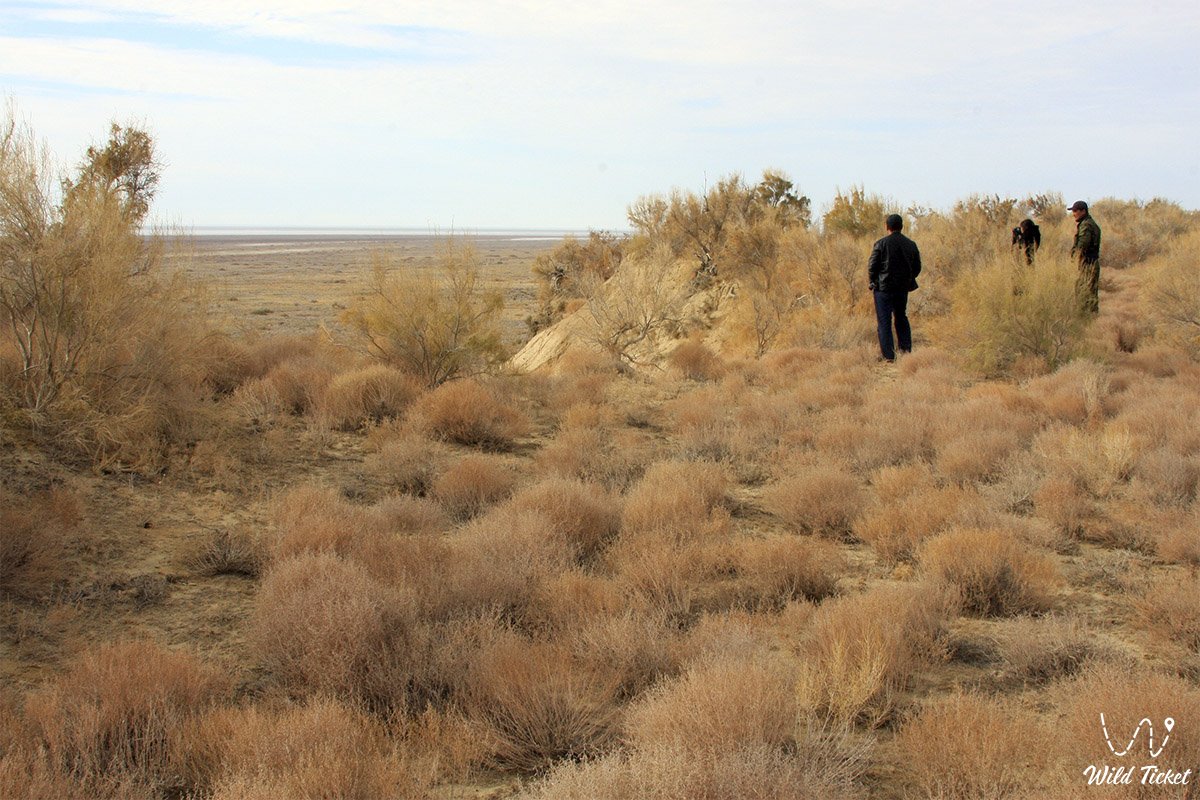
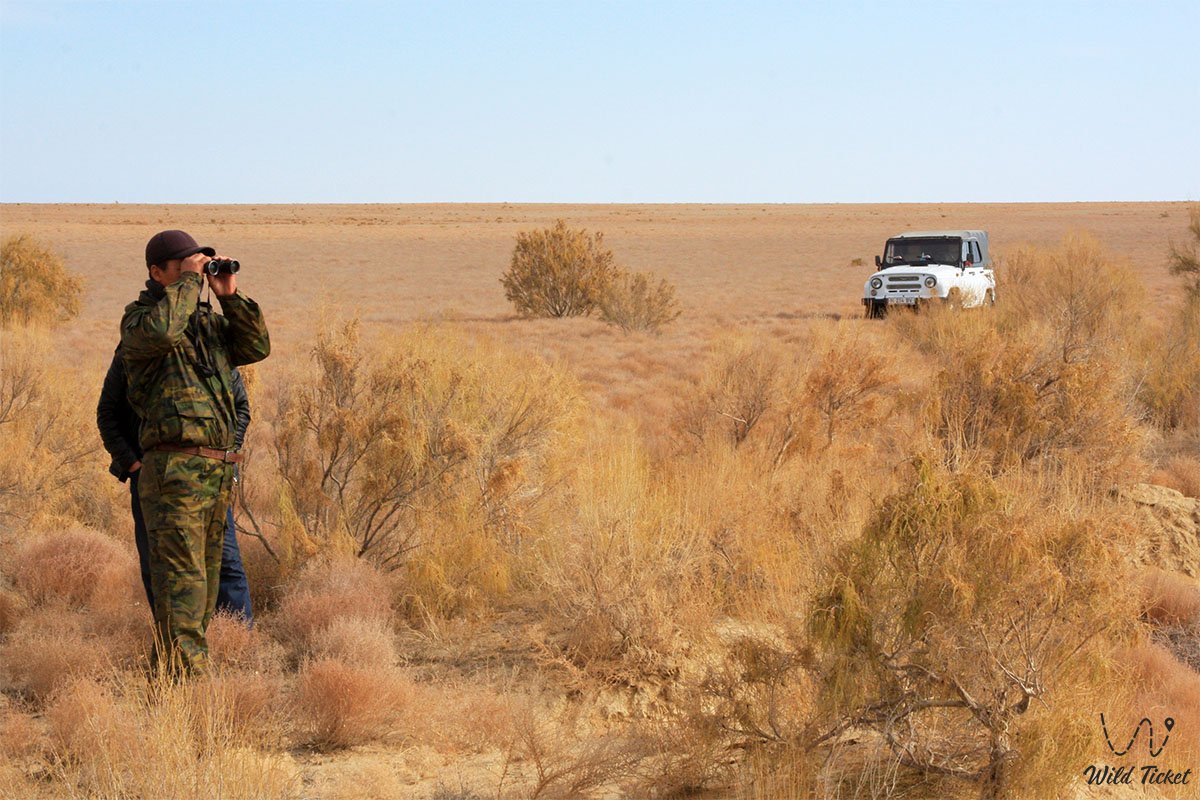
Visiting the tract is possible exclusively with pre-arranged official passes and permits through the reserve directorate in Aralsk, strictly accompanied by protection inspectors and along regulated scientific or ecological routes.
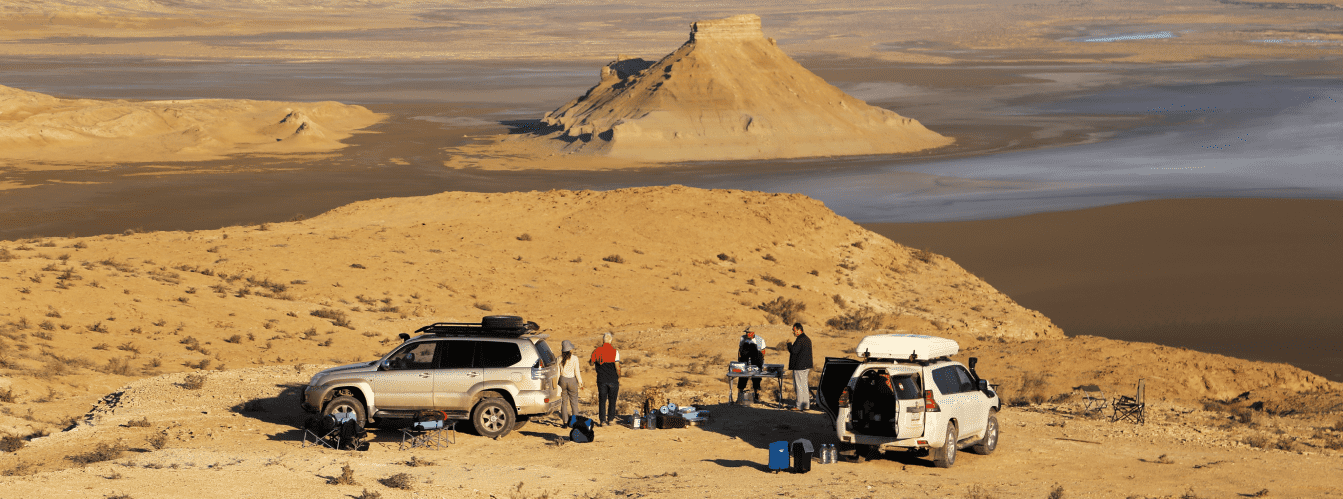
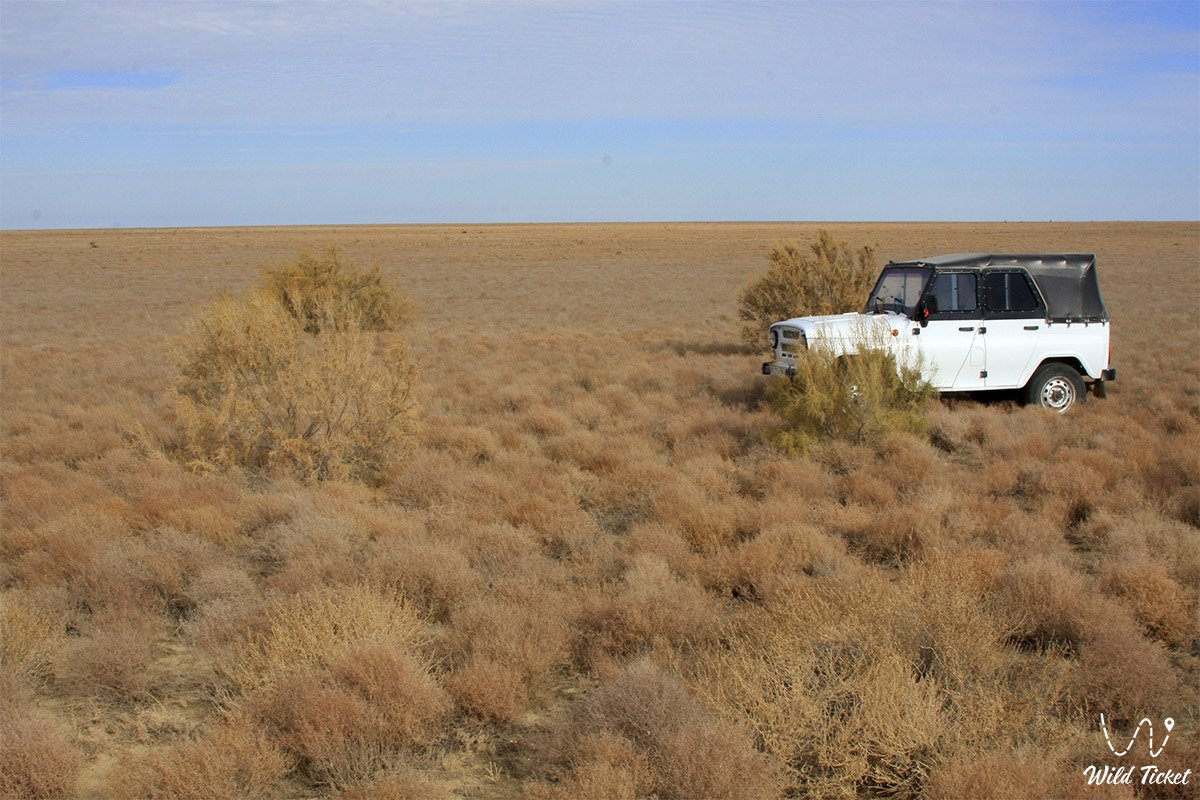
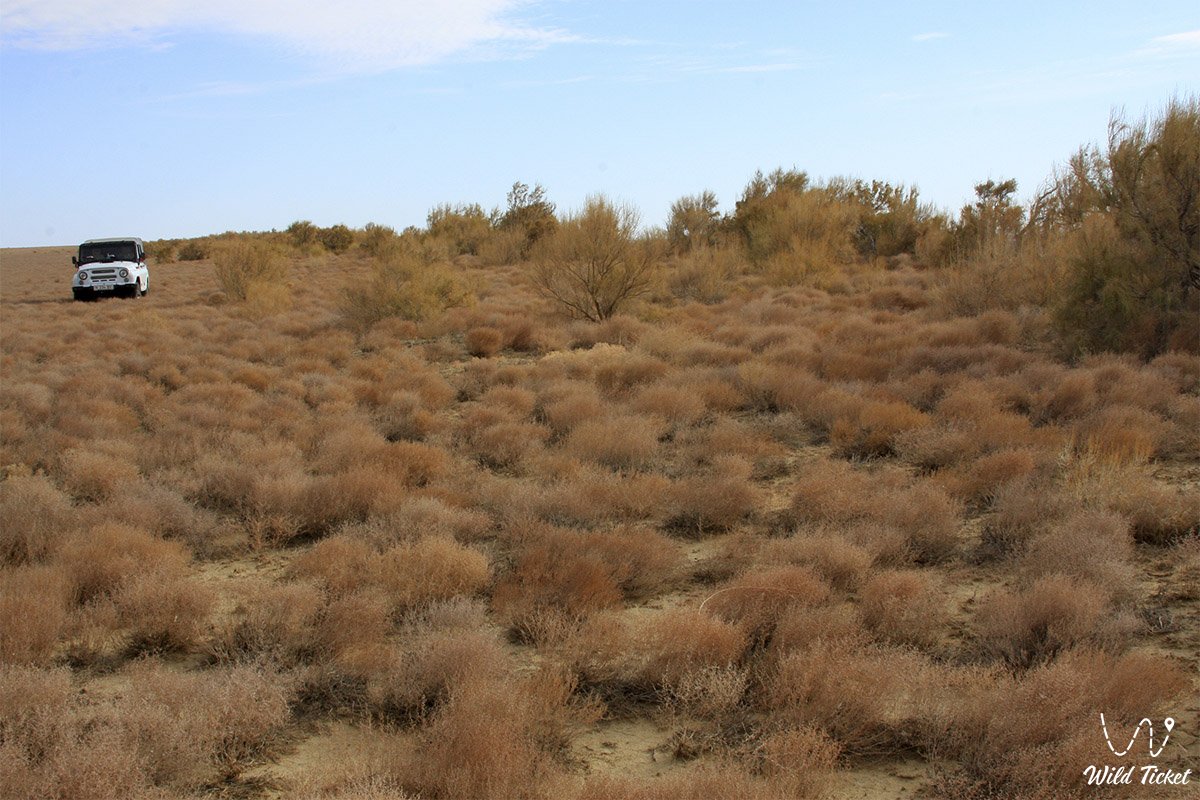
A journey to Barsakelmes is feasible only in prepared heavy expeditionary off-road vehicles (4x4 jeeps) equipped with mud tires, winches, high ground clearance, and snorkels.
The main danger when driving on the former seabed is posed by hidden salt-marsh quagmires – batpaks, where beneath a deceptive hard crust of salt lies a viscous silty mire capable of instantly swallowing wheeled vehicles, as well as loose sand drifts.
Trips are permitted only as part of a convoy of at least two crews. Vehicles must be equipped with satellite communications, GPS trackers, compressors, hi-lift jacks, sand tracks, a fuel reserve for no less than 600–700 kilometers of autonomous range, and drinking water calculated at no less than 5 liters per person per day.
The best period for a visit is spring (from mid-April to late May), when the steppe is briefly covered with flowers, and early autumn (September – October). During summer months, unbearable heat reigns on the plateau with temperatures above +40...+45 °C, humidity drops to extreme minimums, and winds raise toxic salt dust. In winter, temperatures drop below -25...-30 °C accompanied by storm blizzards.
There are no tourist service facilities or hotels on the former island. Accommodation for expedition members is permitted exclusively at ranger stations of the reserve or in field tent camps at specially designated points.
--------------------------------------------
History
The historical name of Barsakelmes – Suzhok ("waterless") – warned steppe nomads for centuries about the lack of stable sources of fresh water. The first topographic mapping of the island was carried out in 1831 by the Russian scientist A. I. Levshin. A full-scale scientific exploration of the shores was conducted in August 1848 by an expedition commanded by Alexei Ivanovich Butakov on the schooner "Konstantin". Topographers A. I. Maksheev and A. A. Akishev plotted the contours of the plateau and provided a detailed landscape description, while the exiled soldier Taras Shevchenko completed the first pencil sketches and watercolors of the chinks, including the famous study with a mysterious snake egg. The expedition also gathered a unique herbarium of plants, preserved in Saint Petersburg.
In 1874, zoological collections on the island were conducted by V. D. Alenitsyn, and in July 1900 geographic research was continued by L. S. Berg. Before the revolution, there were no permanent inhabitants: fishermen and merchants (including a fish industrialist from Avan, whose name was preserved in the name of the Petkin-Kul basin) built dugouts, sowed barley, and constructed buguty dams to retain spring meltwaters.
In 1929, the "Soyuzpushnina" trust established a hunting preserve, introducing saiga antelopes, goitered gazelles, European hares, grey partridges, yellow ground squirrels, and pheasants. On December 10, 1939, by Decree No. 973 of the Council of People's Commissars of the Kazakh SSR, the Barsakelmes State Nature Reserve was established (at that time the saiga population numbered 50–60 head). In 1940–1941, scientists of the S. M. Kirov Kazakh State University worked here.
A turning point was 1953, when 9 individuals of the Turkmenian kulan (2 males and 7 females) were introduced to the island from the Badkhyz Nature Reserve in Turkmenistan to revive a species completely exterminated in Kazakhstan by 1936. By 1983, as many as 242 kulans, 230 saigas, and 160 goitered gazelles harmoniously coexisted on the island. However, the drying up of the Aral Sea led to the mineralization of groundwater horizons and the loss of watering holes: between 1982 and 1991, scientists evacuated over 250–260 kulans to the "Altyn-Emel" National Park, the Ustyurt Plateau, and Betpak-Dala. The remaining 50 individuals survived thanks to the expansion of their migration area onto the drained seabed.
In 1997, the island transformed into a peninsula, and in 2005, by Government Decree No. 1162, the reserve's boundaries were expanded to 160,826 ha, annexing the Kaskakulan tract, where three artesian boreholes saved the population of wild ungulates from dying of thirst.
Barsakelmes left a notable mark in culture: the dramatic events of Boris Lavrenyov's classic novella "The Forty-First" (1924) unfold on it, Uzbek writer Jonrid Abdullakhanov created a trilogy novel of the same name, the island is mentioned in the film "Dreams of an Idiot", and in 2022 Kazakh author Gabit Bekakhmetov published the sci-fi novel "Barsa Kelmes" about the molecular cloning of Khan Kenesary. In 1948–1992, on Vozrozhdeniya Island, located 60 km from Barsakelmes, the closed biochemical testing ground "Barkhan" of the "Biopreparat" program operated, testing anthrax and plague, which fueled rumors of secret experiments on Barsakelmes itself as well.
Information
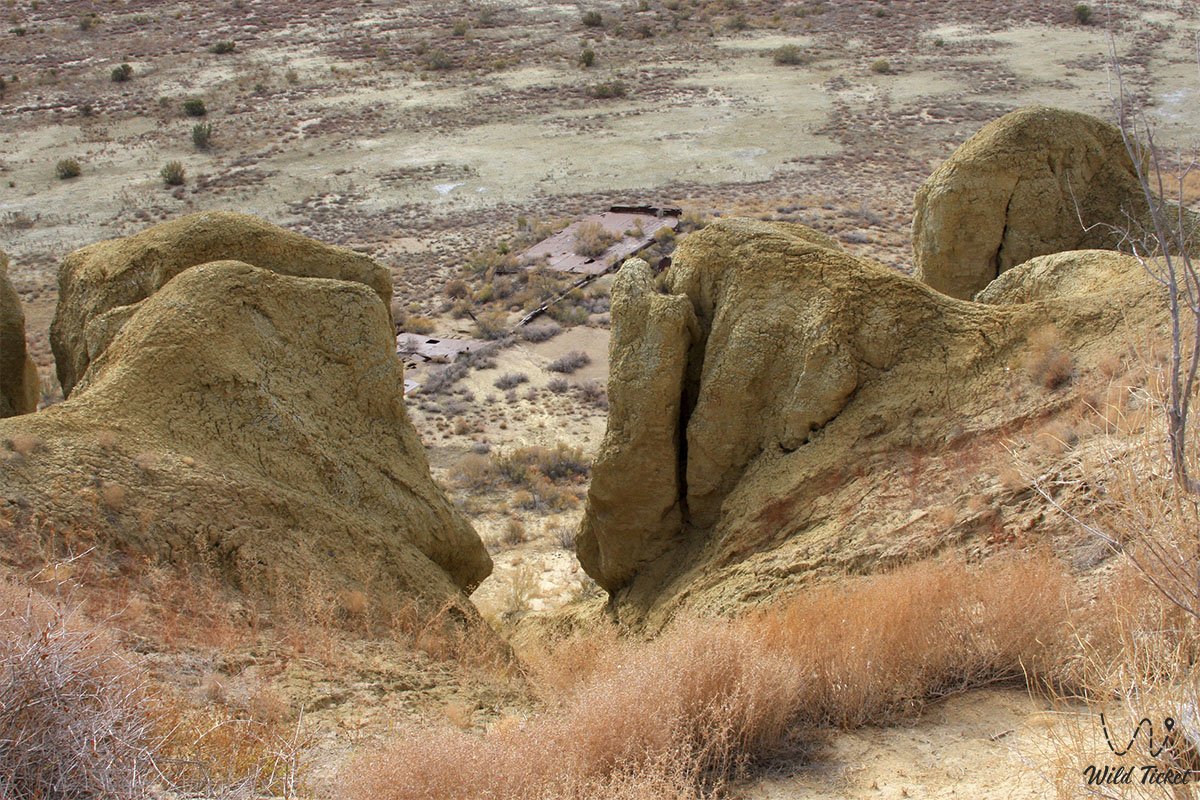
In the geological foundation of Barsakelmes, Paleogene clays of the Chegan formation with inclusions of fossil prehistoric shells, sandstones of the Kutanbulak formation, and gypsiferous clays of the Aral formation predominate. Sodium-chloride and sulfate salt marshes cover the coastal terraces. In the southern part, there are labyrinths of the ravines of Eastern and Western Kebirsay ("badlands") with hills 10–12 m high, composed of greenish Oligocene clay with sparkling druses of gypsum.
Groundwater horizons of the Turan Lowland in the area of the tract contain mineralized brackish water completely unsuitable for drinking. There are no major ore or hydrocarbon deposits here, and salt extraction is precluded by the reserve regime.
The main function of Barsakelmes is to serve as a global reference laboratory for aridization. Scientists from republican institutes and specialists from the Korkyt Ata Kyzylorda University study the survival mechanisms of living organisms in an epicenter of ecological disaster. In the Kaskakulan section, the number of kulans reached 276 head (out of a total population in Kazakhstan of over 3,000 individuals), and herds of saigas and goitered gazelles have recovered.
Detailed description of the venue
The geographical structure of the ex-island and adjacent sectors encompasses a complex of iconic landmarks:
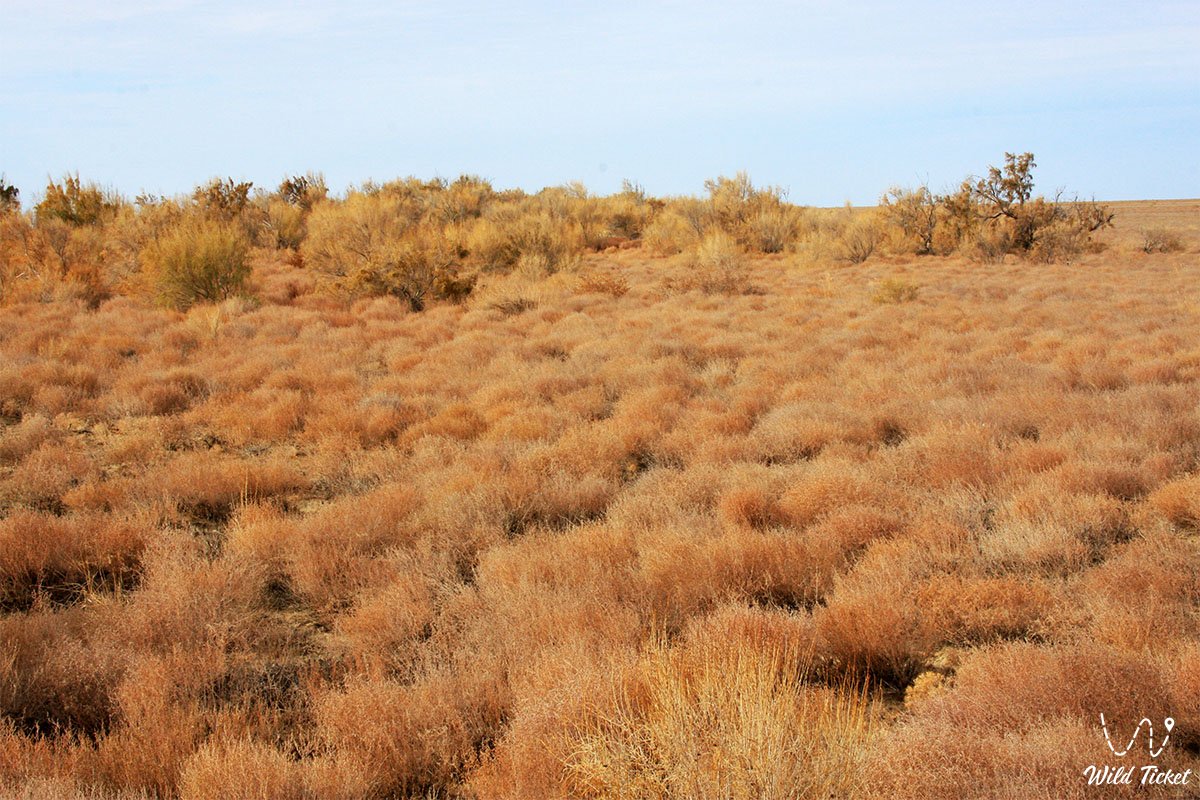
• Plateau of the Barsakelmes tract – an elevated table-like upland with elevations up to 108–113 m, covered with wormwood-biyurgun formations.
• Cliffs-chinks of the southern shore – vertical ledges up to 60 meters high above the drained seabed with outcrops of light marls and clays.
• Kebirsay Badlands (Eastern and Western) – erosional ravines with crystalline gypsum and greenish puffy clays.
• Petkin-Kul – the dried-up basin of the historical reservoir of a fish-merchant industrialist with remains of a 19th-century dam.
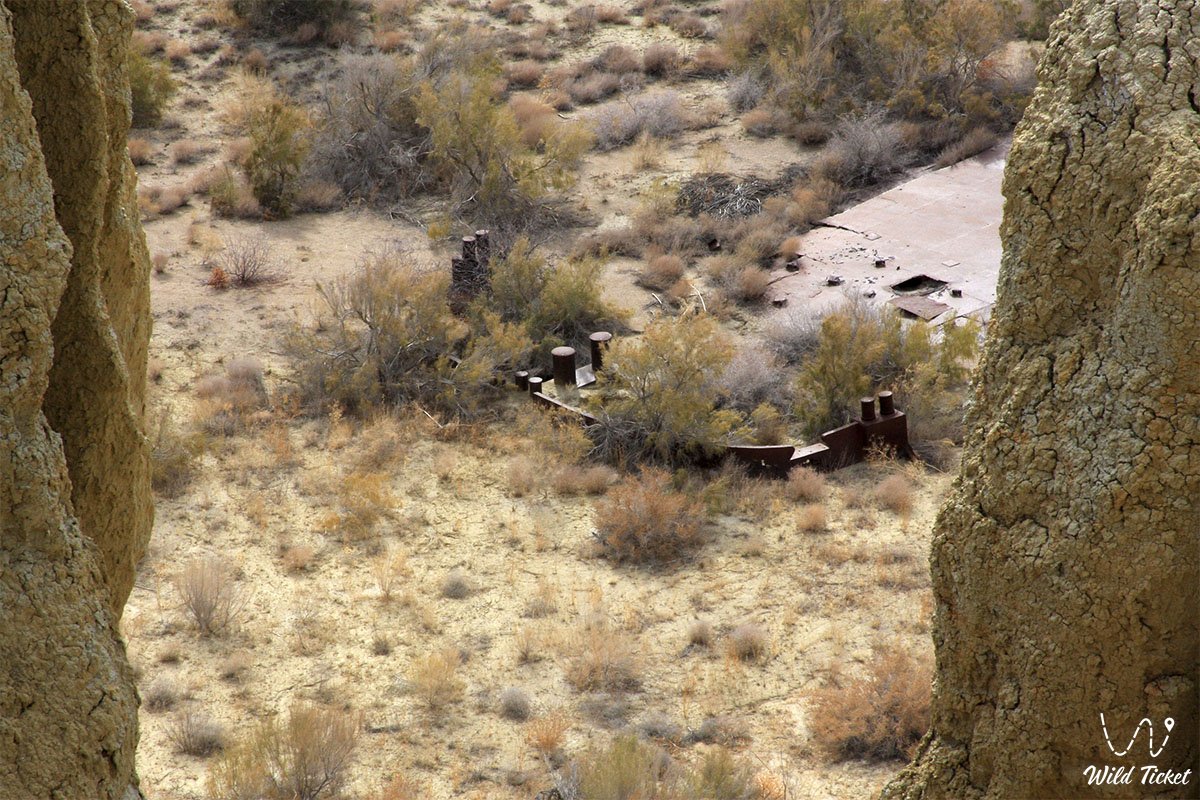
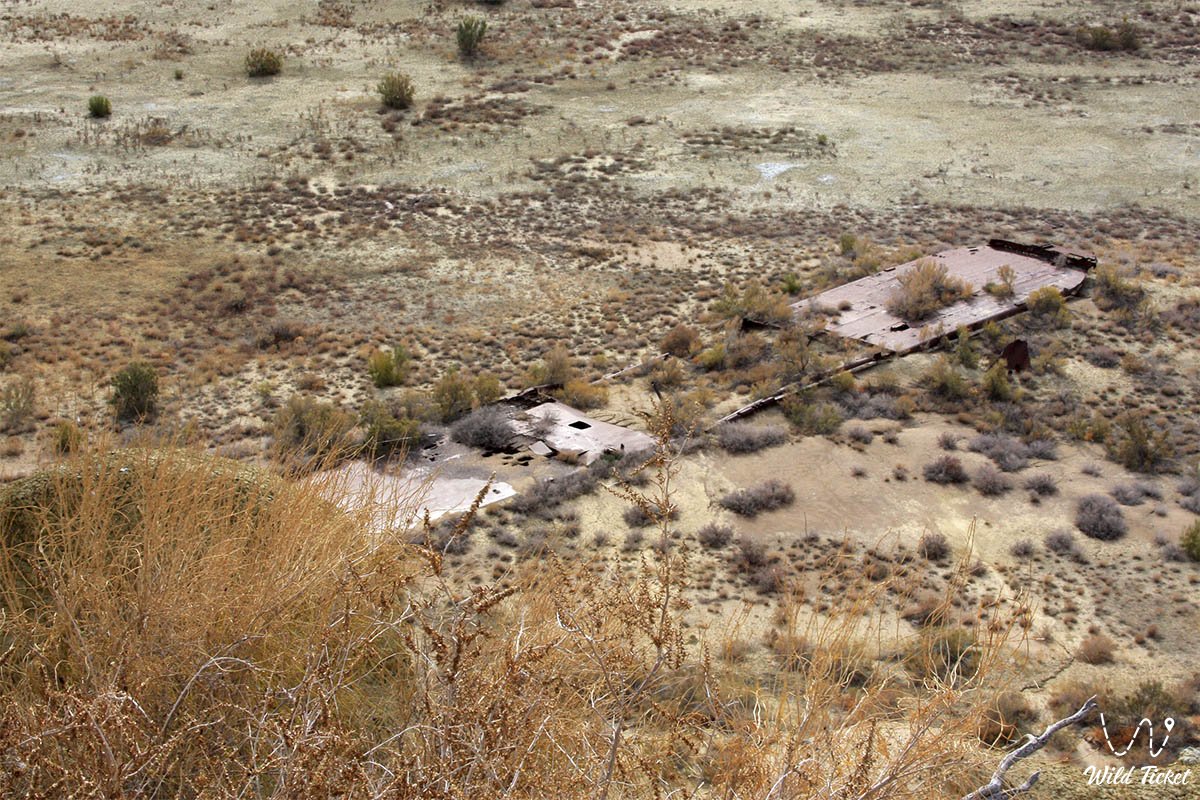
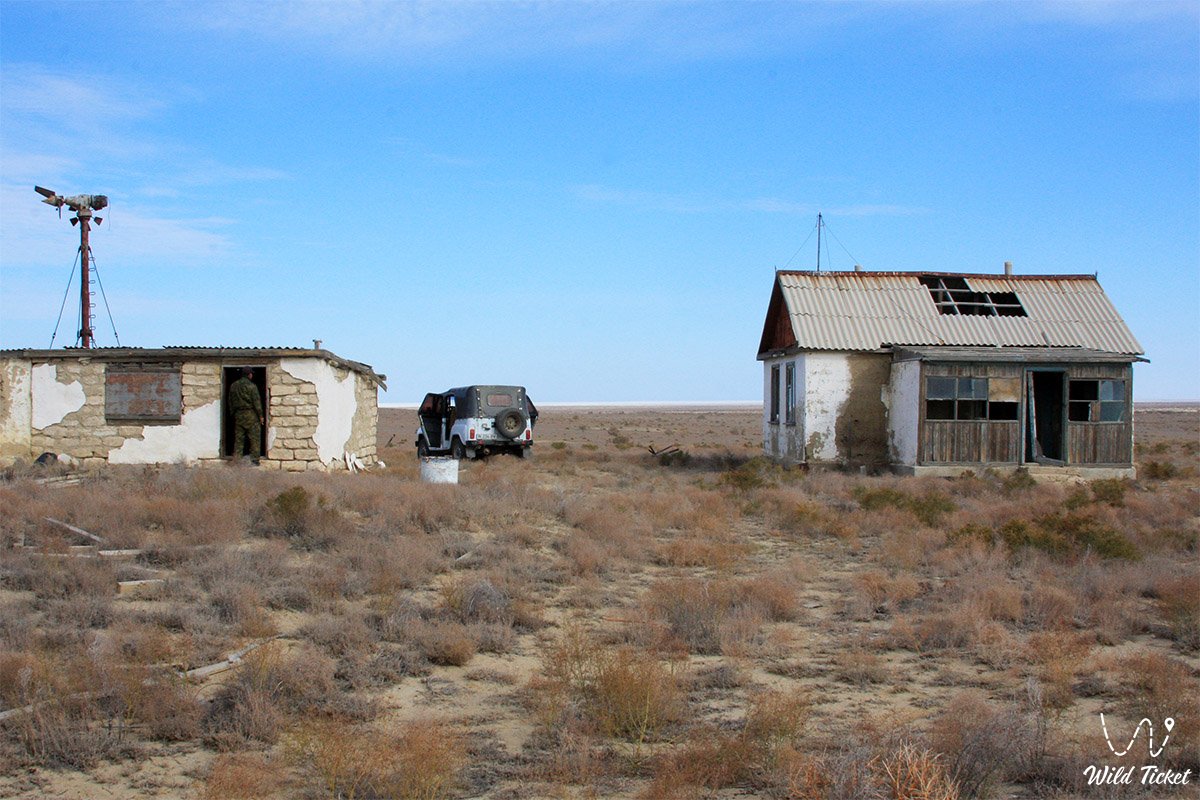
• Abandoned scientific town – structures of the biostation and meteorological post of the Soviet period on the northern slope.
• Four reserve cordons – field bases of state inspectors ensuring the protection of the perimeter of the tract.
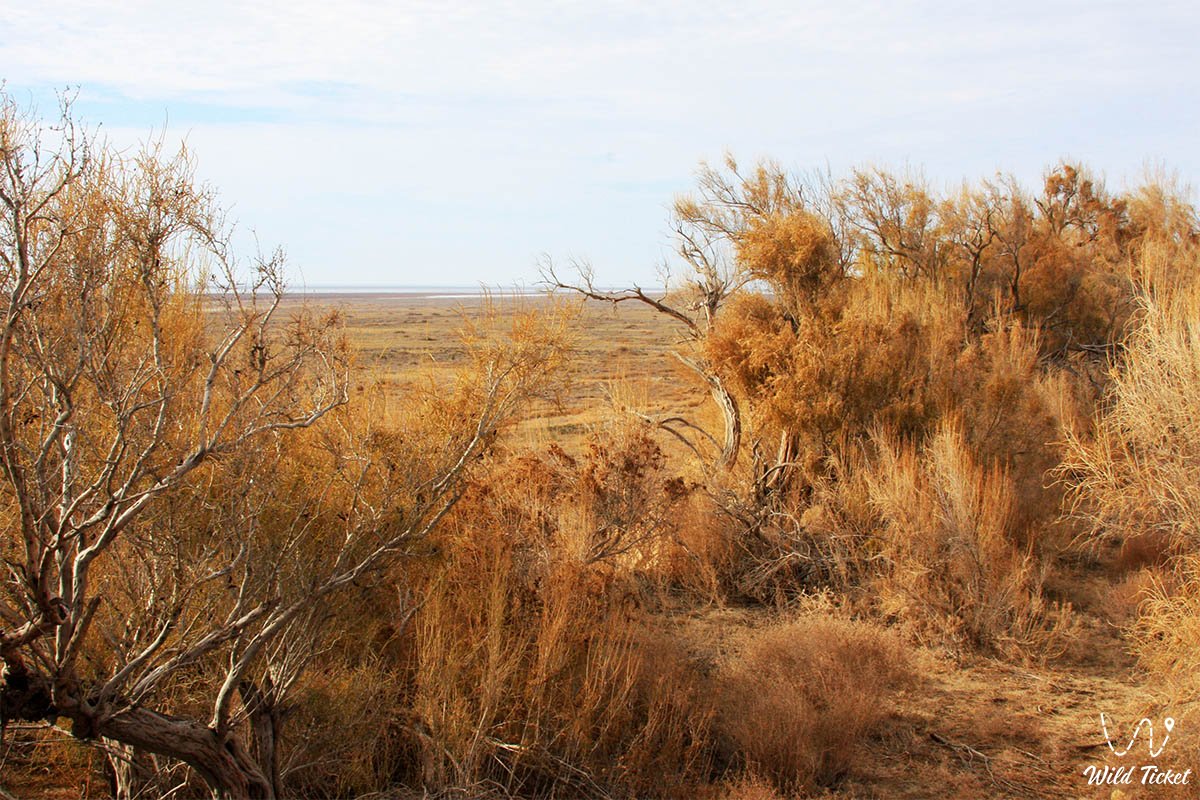
• "Kaskakulan" cluster – a plain section with an area of 109,942 ha featuring three artesian fountains, reed thickets, and black saxaul massifs.
• Aralkum Desert – the adjacent sandy-saline bed of the former sea with salt takyrs.
Flora and fauna
The vegetation cover of Barsakelmes numbers from 256 to 278 species of higher vascular plants (including 14 endemics of Kazakhstan). About half of the species composition is accounted for by ephemerals and ephemeroids: in spring, Borshchov's tulip, two-flowered tulip, fumitory, corydalis, Adonis ("ember in fire"), Leontice incerta, geranium, and Tatar rhubarb bloom.
On sands and plakors, phytocenoses of black and white saxaul, dzhuzgun (including rare species such as Calligonum crispum, Calligonum humile, and Calligonum talibinii), Atraphaxis, tamarisk, Pratov's saltbush, glasswort, sarsazan, gray-soil wormwood, broom wormwood, and biyurgun are developed. The forested area of saxaul stands is about 164 hectares.
The mammal fauna is represented by 12–13 species on the plateau (up to 30 species in the entire reserve). The basis of ungulates is formed by the Turkmenian kulan, goitered gazelle, and saiga antelope. The European hare, tolai hare, yellow ground squirrel, small jerboa, small five-toed jerboa, rare pygmy jerboa, long-eared hedgehog, marbled polecat, badger, corsac fox, and steppe wolf are found here.
The avifauna includes 108 species of birds on the former island (up to 178–202 species in the entire region): houbara bustard (chlamydotis), steppe eagle, golden eagle, eastern imperial eagle, peregrine falcon, saker falcon, short-toed snake eagle, Pallas's sandgrouse, black-bellied and white-bellied sandgrouse, pale-backed pigeon, eagle owl, Dalmatian pelican, marbled duck, ferruginous duck, white-headed duck, little egret, whooper swan, and sociable lapwing. Reptiles number 8–12 species (toad-headed agama, plate-tailed gecko, arrow snake, steppe tortoise). The ichthyofauna of delta channels numbers up to 18 species (carp, pike perch, Aral barbel, shemaya, asp).
Legend
The very ominous name "Barsakelmes" ("if you go, you will not return") was established in folk memory after the tragedy of a Kazakh clan that fled during inter-tribal strife across the winter ice to the distant island. The nomads wintered in dugouts, but a spring storm broke the ice bridge, and the summer heat dried up the melt snow pits. All the people and livestock perished of thirst on the waterless Suzhok. In winter, relatives found only decayed remains in the snow-covered yurts.
Another legend tells of a tribe that disobeyed the ban of elders and began ruthlessly chopping trees and exterminating animals: in retribution, hordes of giant seven-meter snakes crawled out of the fissures of the plateau and consumed the sacrilegious people.
Among the people, there were whispers of a thick white fog erasing human tracks and causing memory loss. This gave rise to the fame of the "Kazakh Bermuda Triangle" with chronal anomalies: stories were told of topographers in 1930–1935 who were absent for three months but convinced that only three days had passed, and of fugitives who allegedly lived on the plateau for two years while decades passed in the world.
In the 1950s–1960s, the Kazakhstani newspaper "Leninskaya Smena" published a sensational fabrication about a prehistoric pteranodon soaring over the island, which was followed by rumors of lens-shaped UFOs. Associated with this cycle is the legend of the hermit Abdirazak, who allegedly lived in a yurt in the center of the island, was in contact with a celestial object, and in 1960 predicted Yuri Gagarin's flight, while the engines of military helicopters sent after him stalled in the fog.
In 2002, renowned science fiction writer Sergei Lukyanenko openly admitted that the myths about flying saucer landings, time machines, and monsters of Barsakelmes in the magazine "Tekhnika – Molodezhi" were a grandiose literary hoax organized by Soviet science fiction enthusiasts.
Conclusion
The former island of Barsakelmes is an outstanding natural monument and an epicenter of the ecological history of Priaralye, vividly demonstrating the fragility of Earth's biosphere and the majesty of wild nature. Uniting within itself the harsh beauty of gypsum badlands, saxaul tracts, and the salt expanses of the Aralkum, this plateau remains an invaluable reserve of science and culture.
Even after losing its marine surroundings, Barsakelmes has preserved its unfathomable magnetism, reminding humanity of the need to live in unbroken harmony with the steppe, rivers, and the primordial laws of the Earth.
Interesting sights nearby:
• Large Aral Sea;
• Kokaral Dam in the Berg Strait;
• Butakov Bay;
• Shevchenko Bay;
• Aralkum Desert (dried seabed);
• Lake Kamystybas (Kambash);
• Ayteke Bi Village;
• Basibek Mausoleum;
• Raim Fort;
• Tolybay Batyr Mausoleum;
• Saraman-Kosa Tower;
• Begim-Ana Tower;
• Akbasty Village;
• Bogen Village;
• Baikonur Cosmodrome.
Additional Information:
History of Barsa-Kelmes Island;
Wildlife of Barsakelmes Island;
Barsakelmes Nature Reserve.
Photogallery: