Ybykty Canyon
Openwork labyrinth of white limestone, porous stone chocolate, and a masterpiece of water erosion –
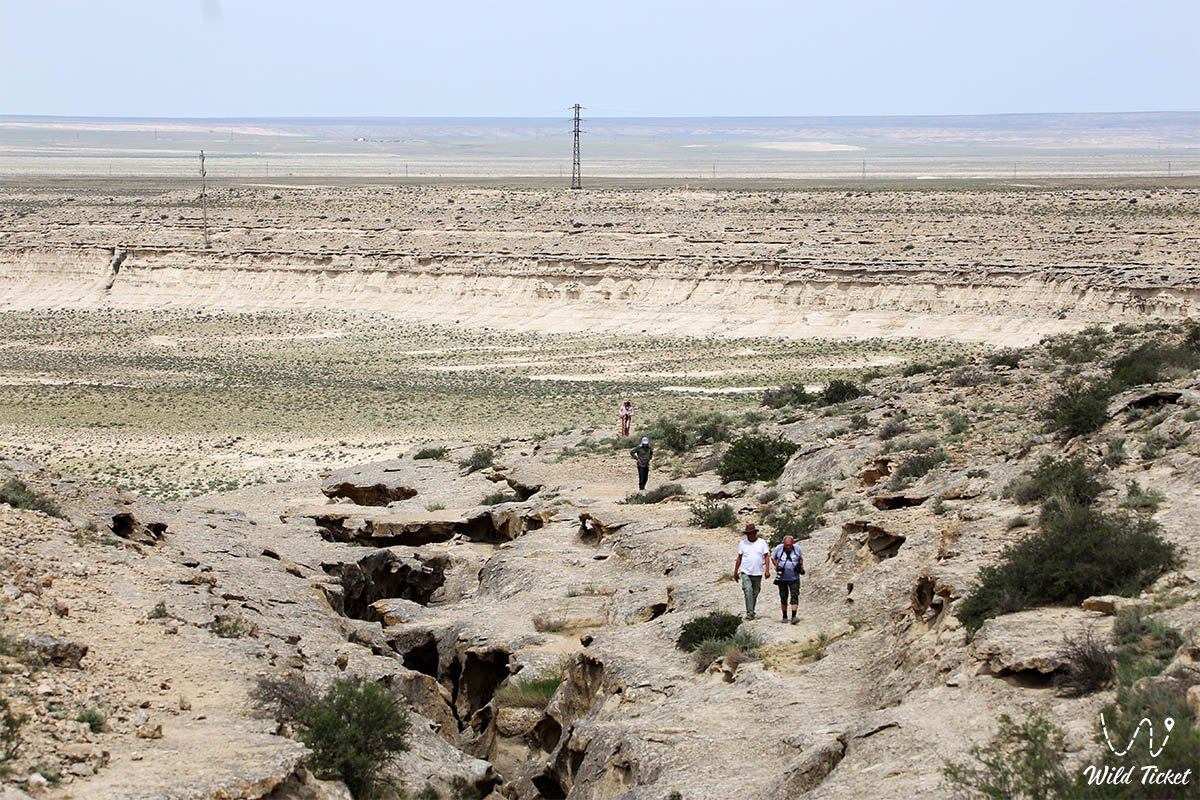
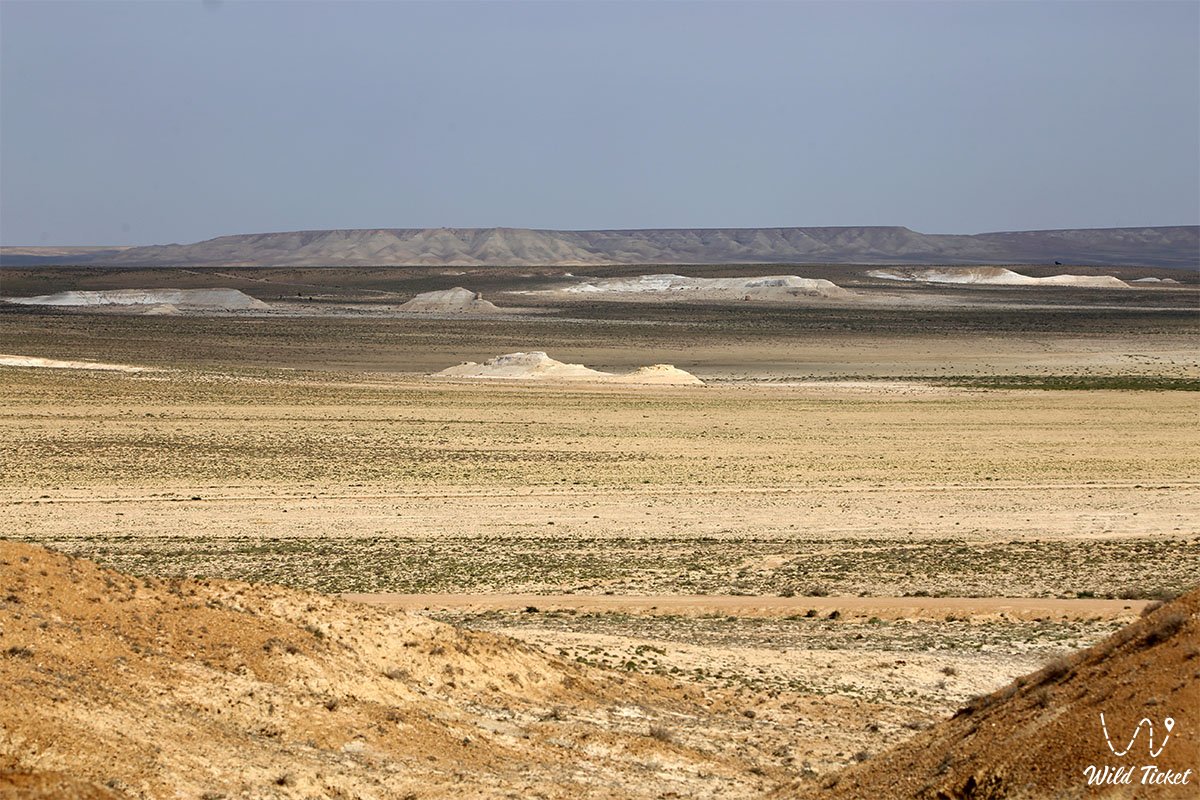
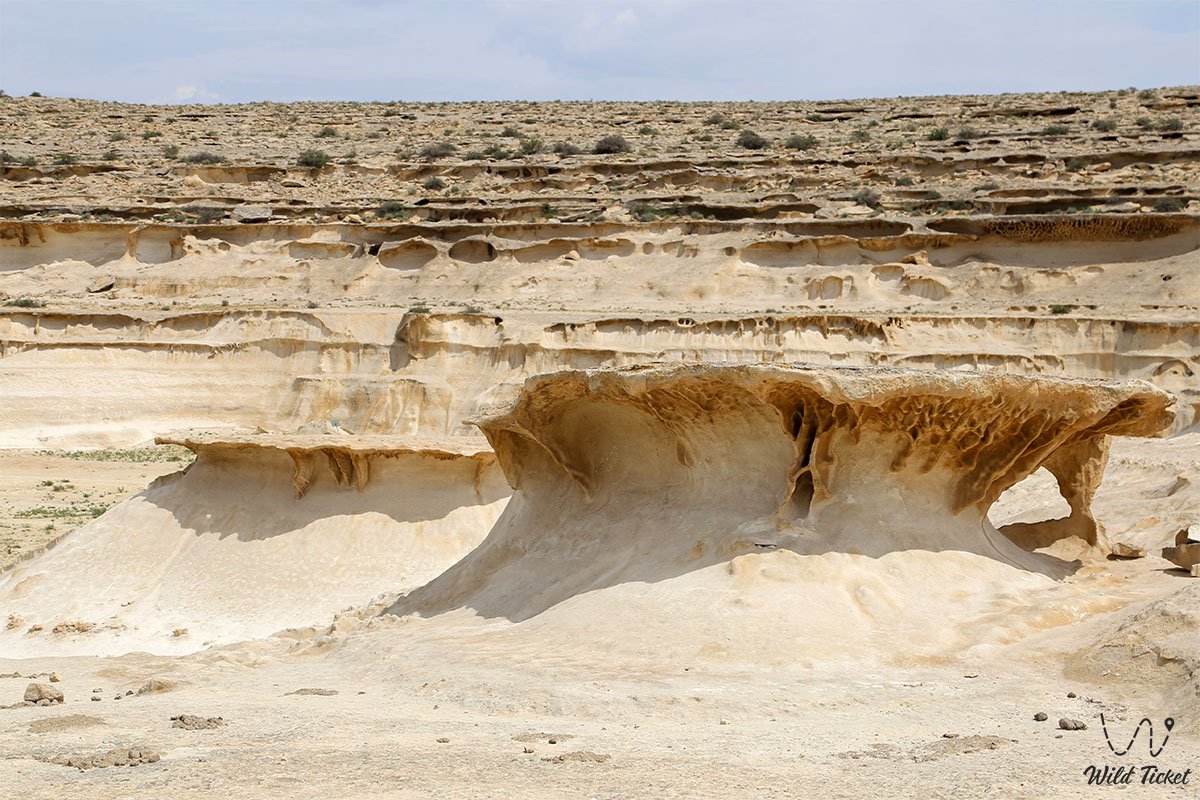
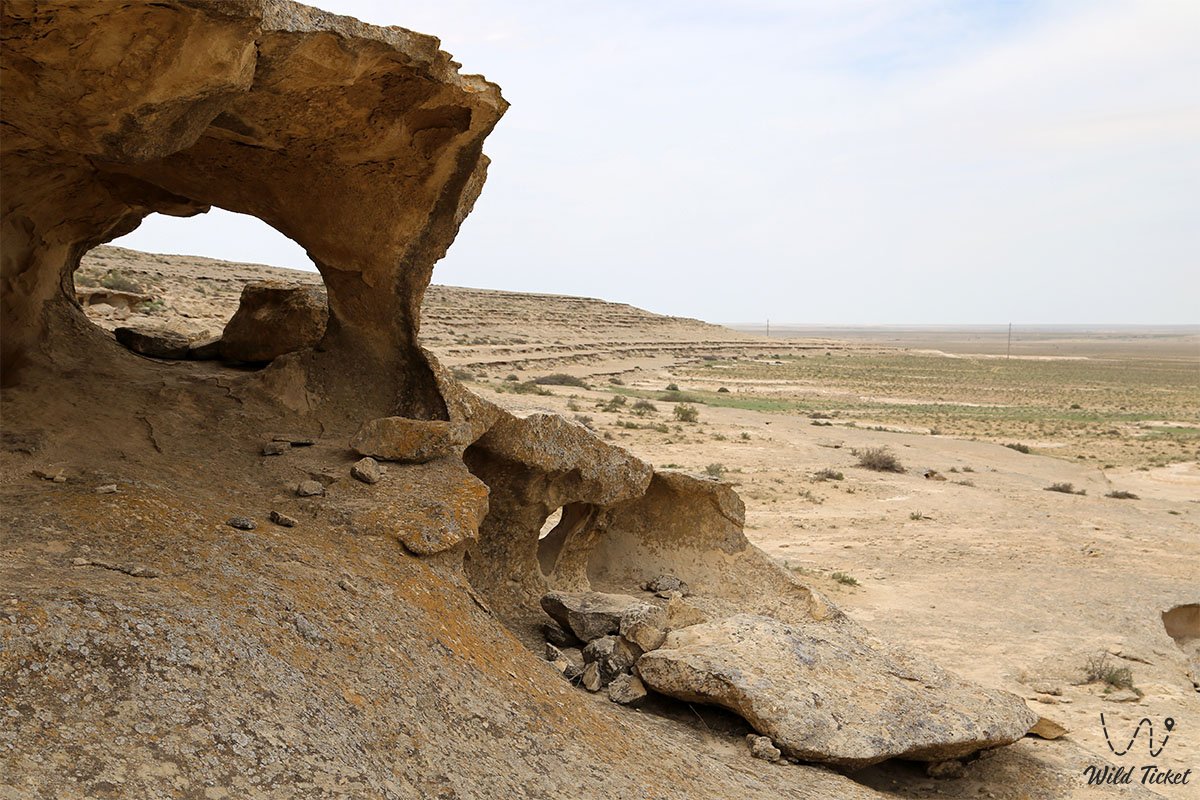
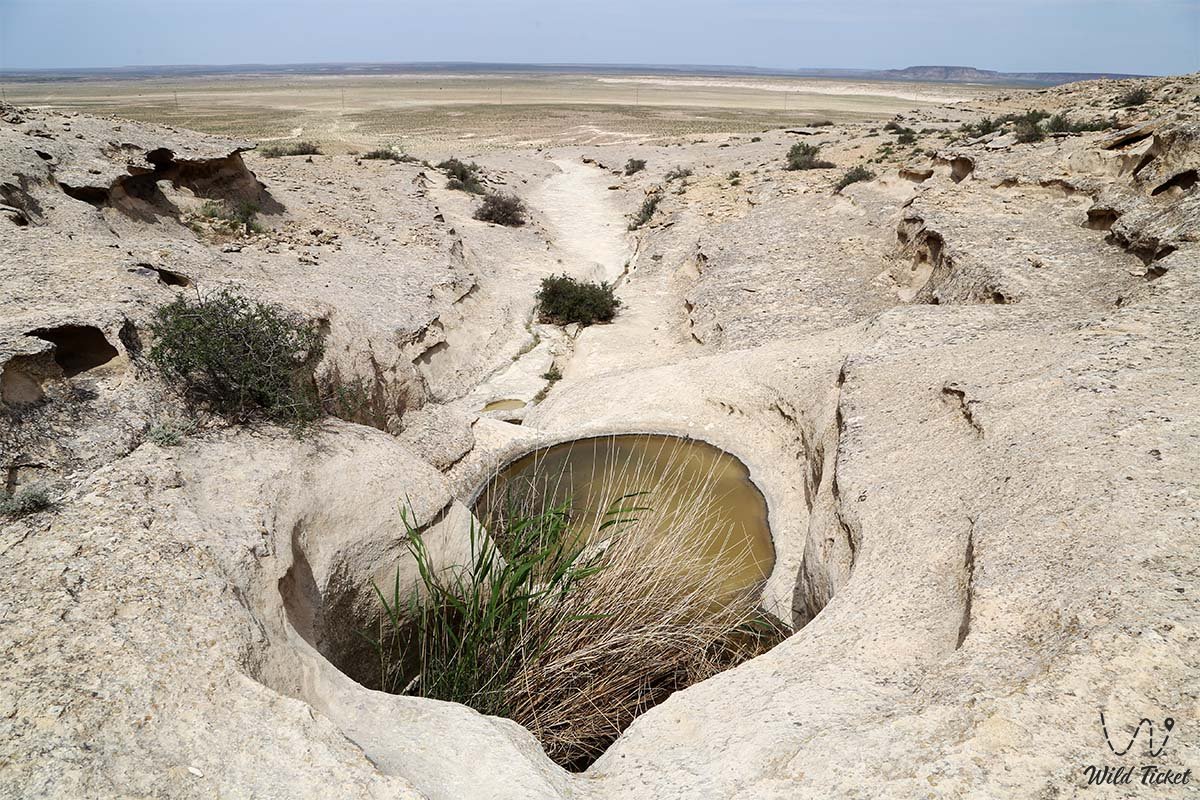
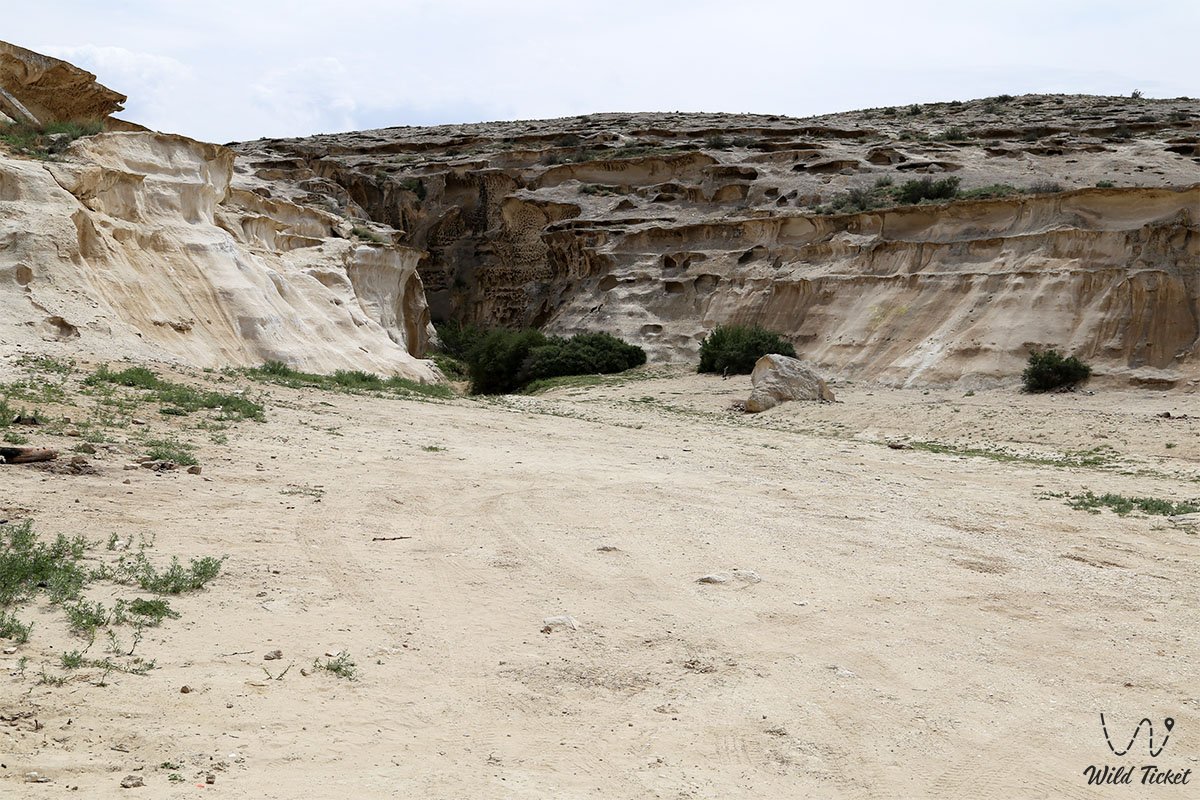
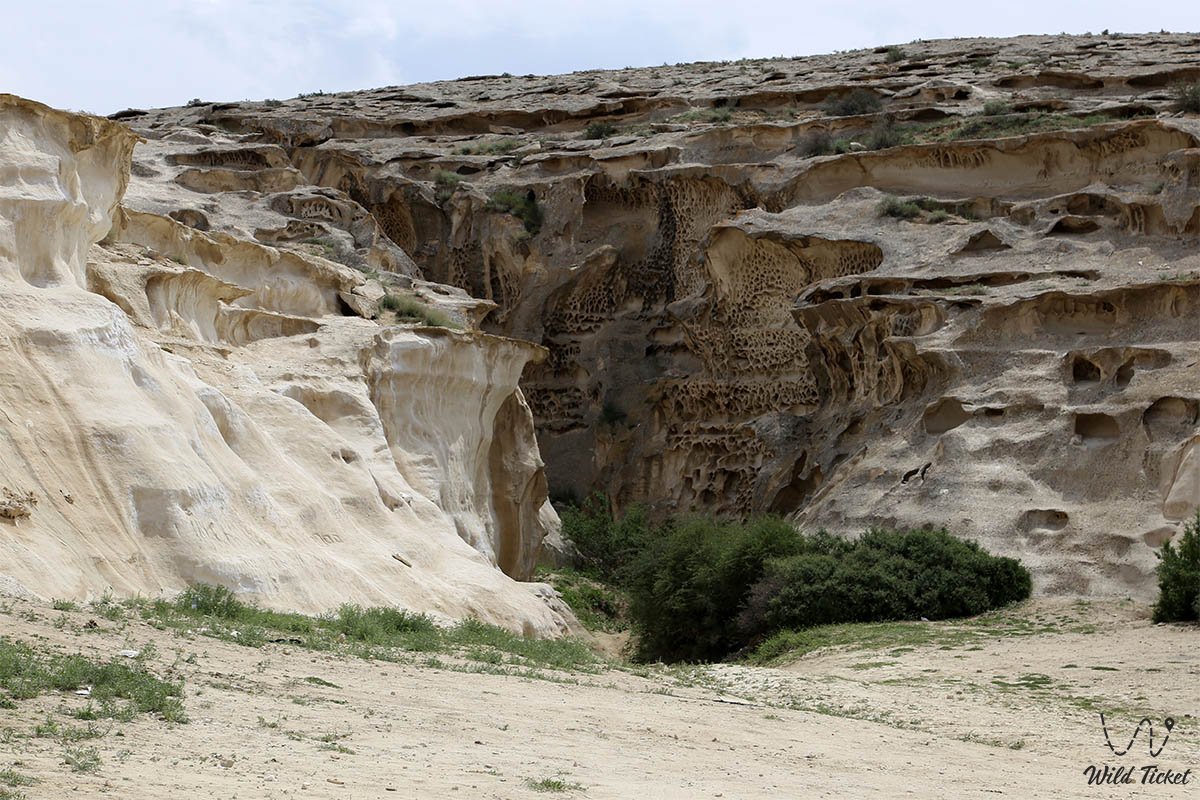
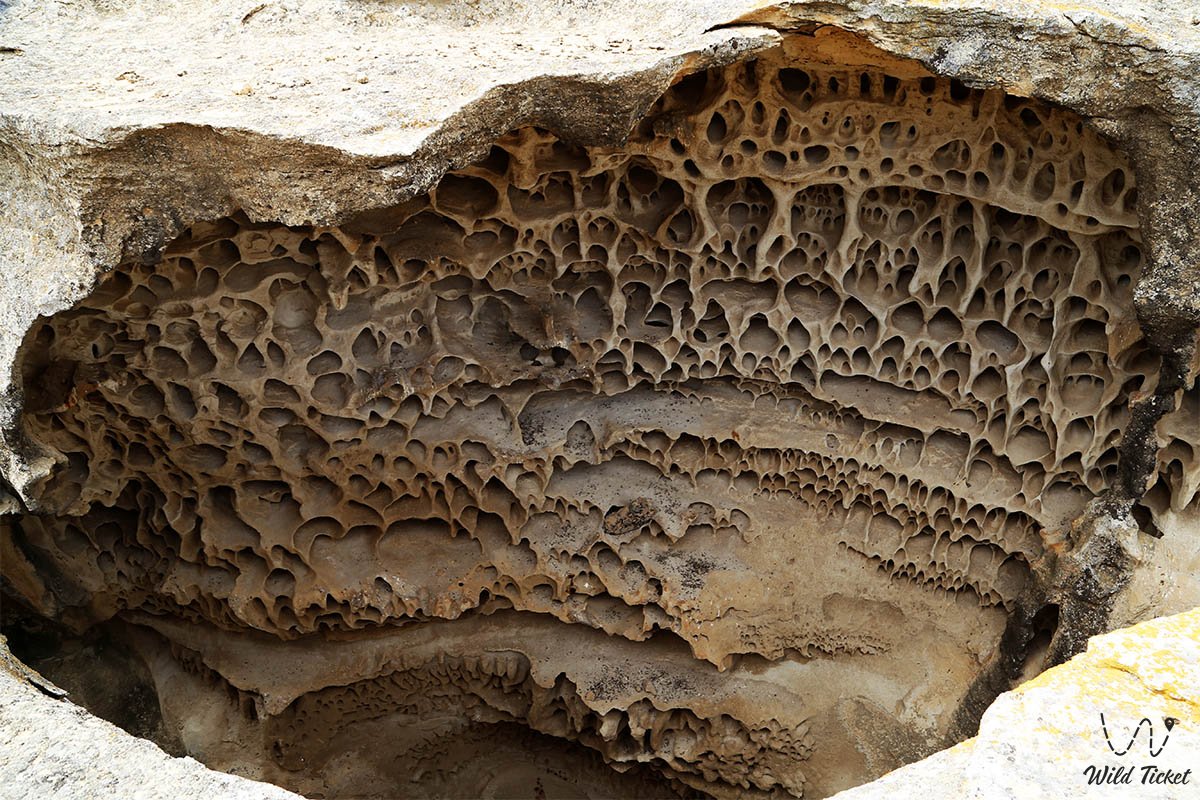
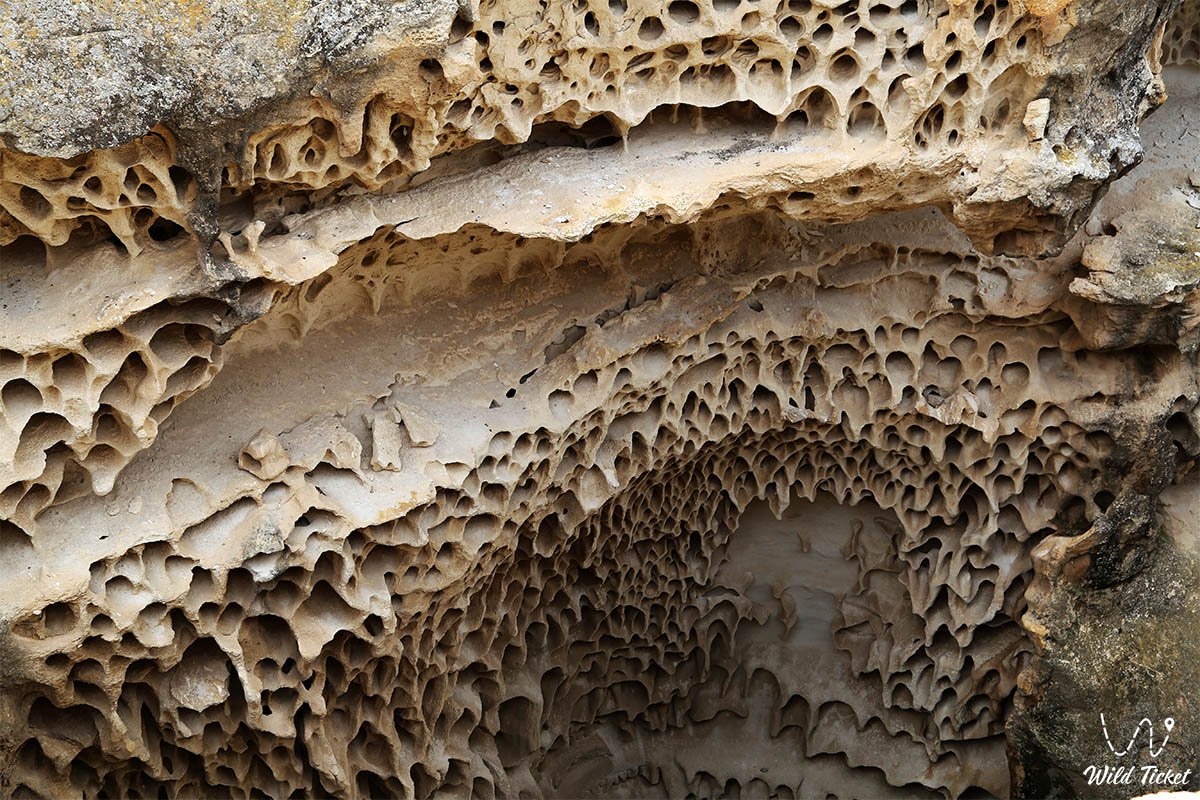
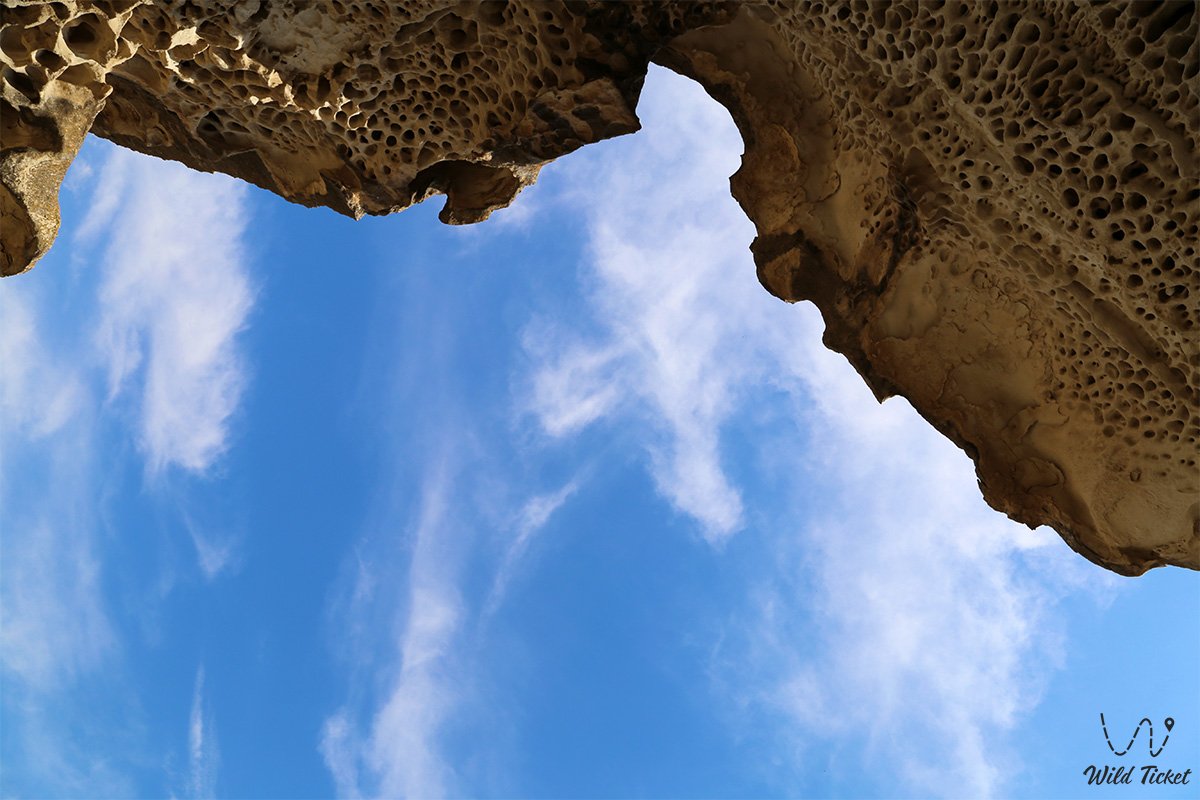
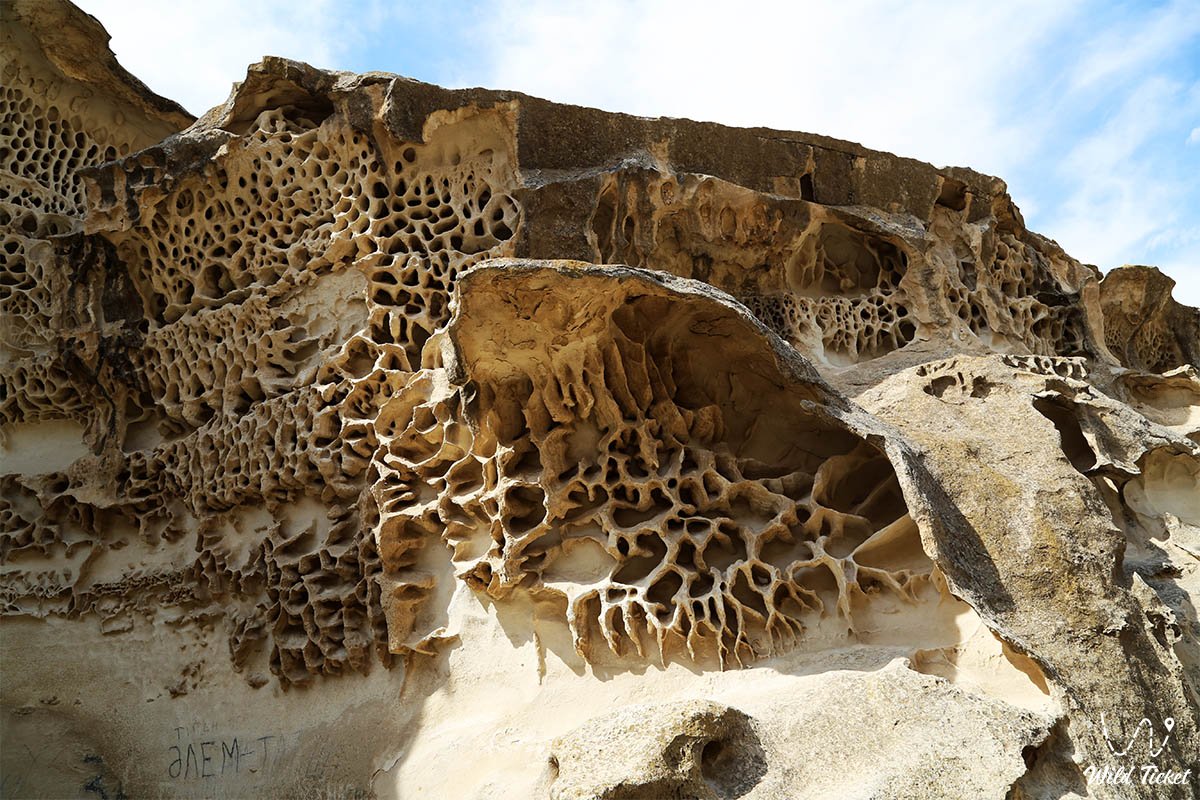
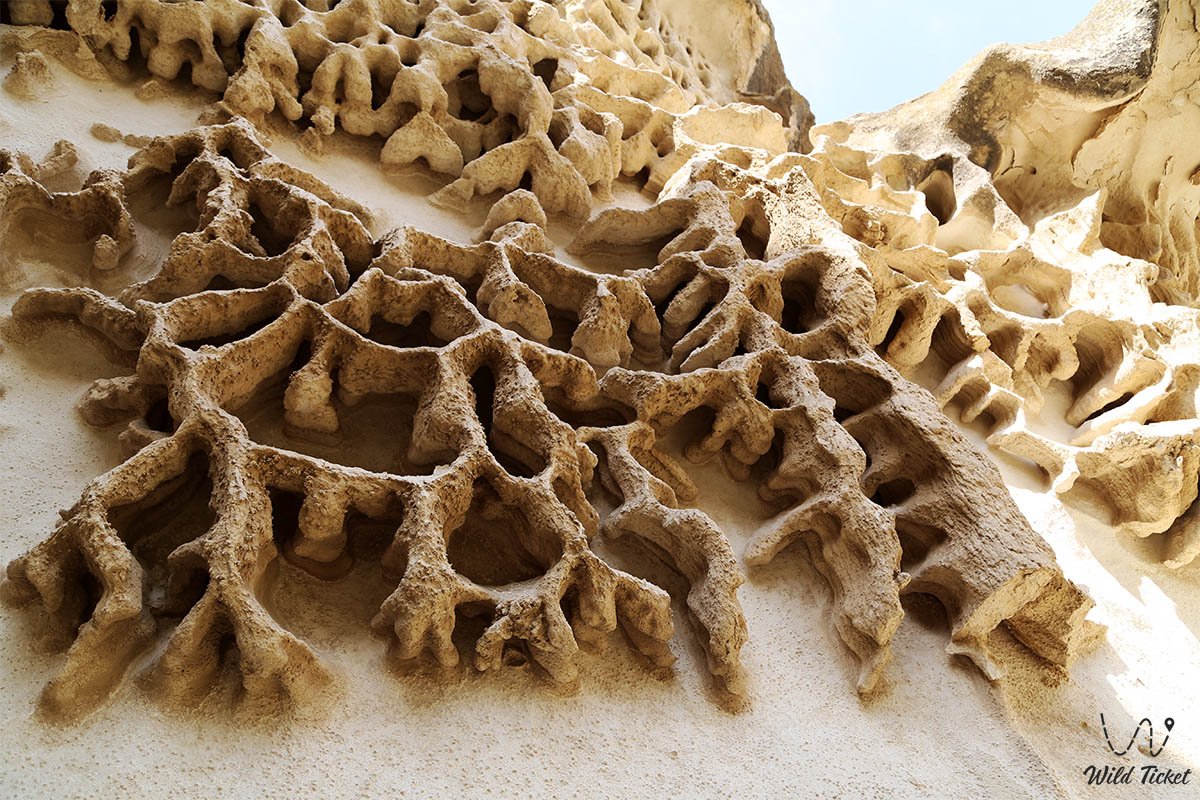
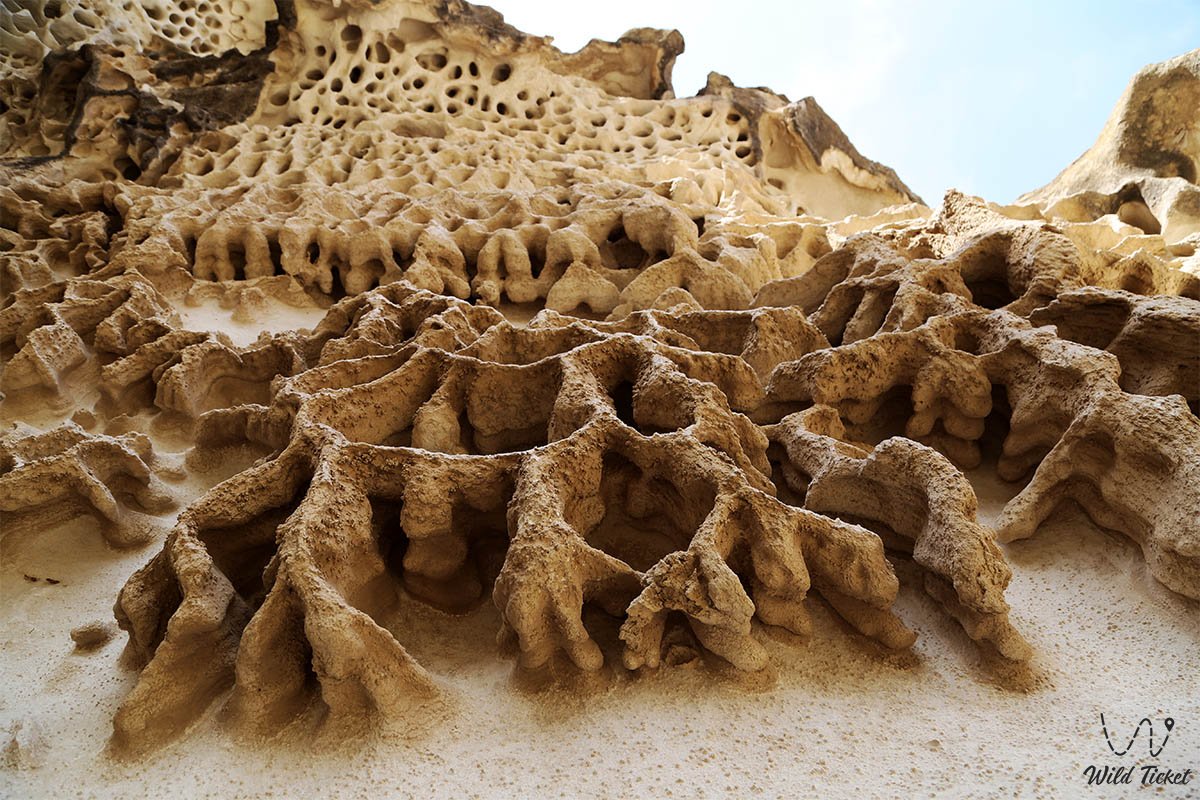
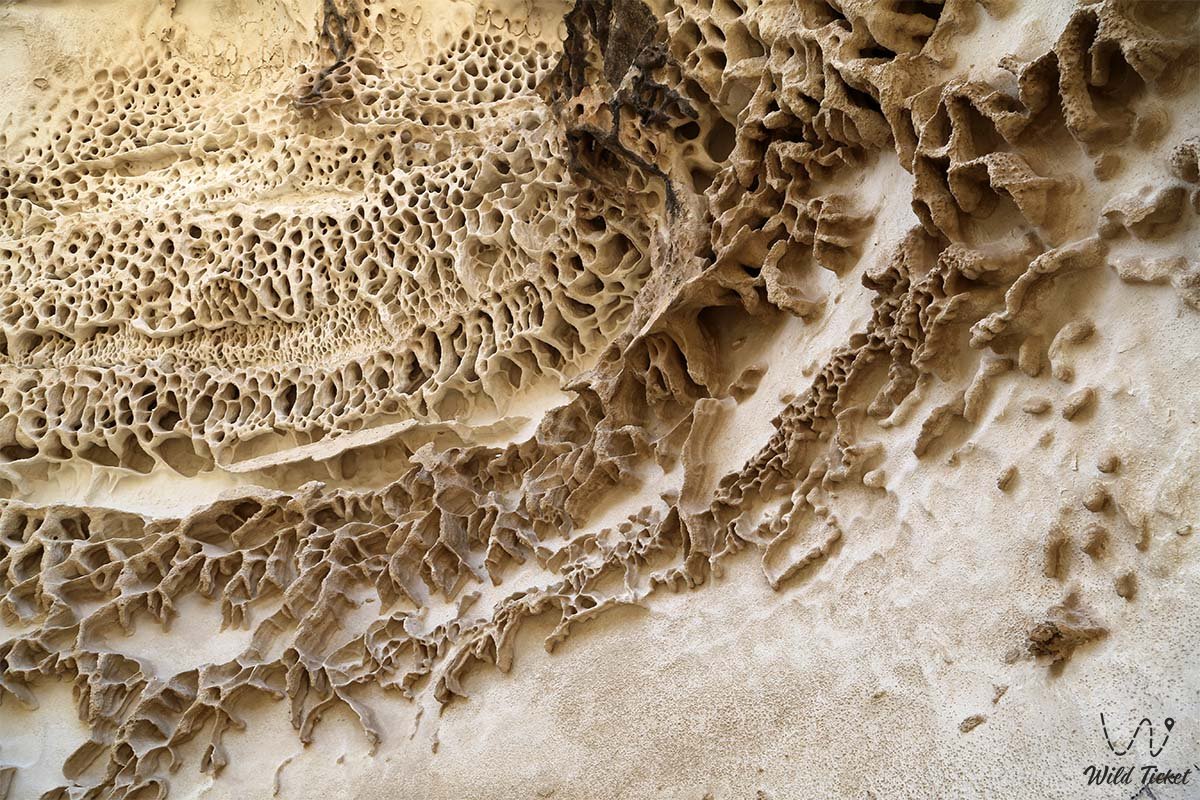
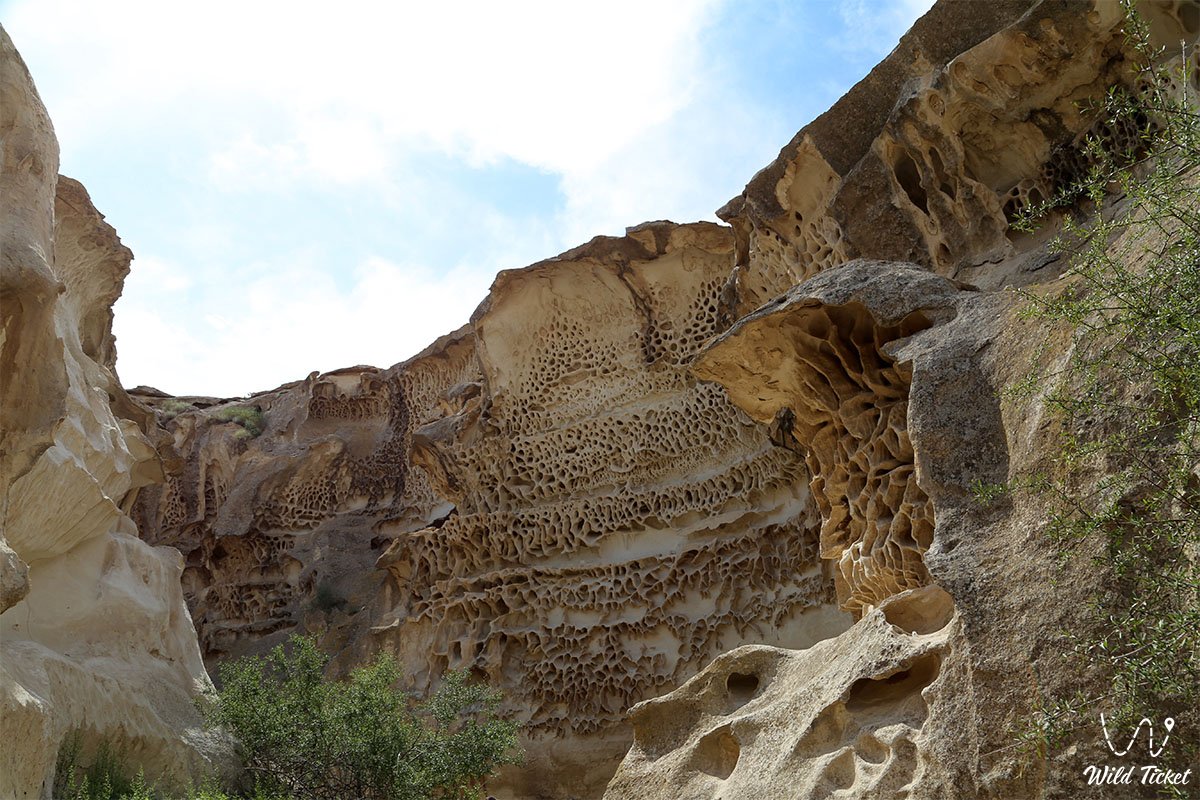
The Ybykty Canyon (Kaz. Ybyqty sai, also known as the Filigree Canyon, Kabyrga Canyon, Porous Ybykty Gorge, or "porous chocolate canyon") represents a unique natural phenomenon, a narrow rock cleft, and one of the most spectacular erosional landmarks of the Mangystau region in the Mangystau district. This natural gallery is concealed amid a flat semi-desert steppe, astounding the imagination with the incredible sculptural plasticity of its limestone walls, which recall delicate lace, honeycombs, bone structure under a microscope, or a bar of aerated milk chocolate.
This entire natural sculptural composition is a direct geological legacy of the prehistoric Tethys Ocean and Neotethys, which surged here during the Paleogene epoch roughly 40–60 million years ago: receding ancient waters laid bare thick strata of soft limestone, marl, and sandstone through which torrential rain runoffs rushed for millennia.
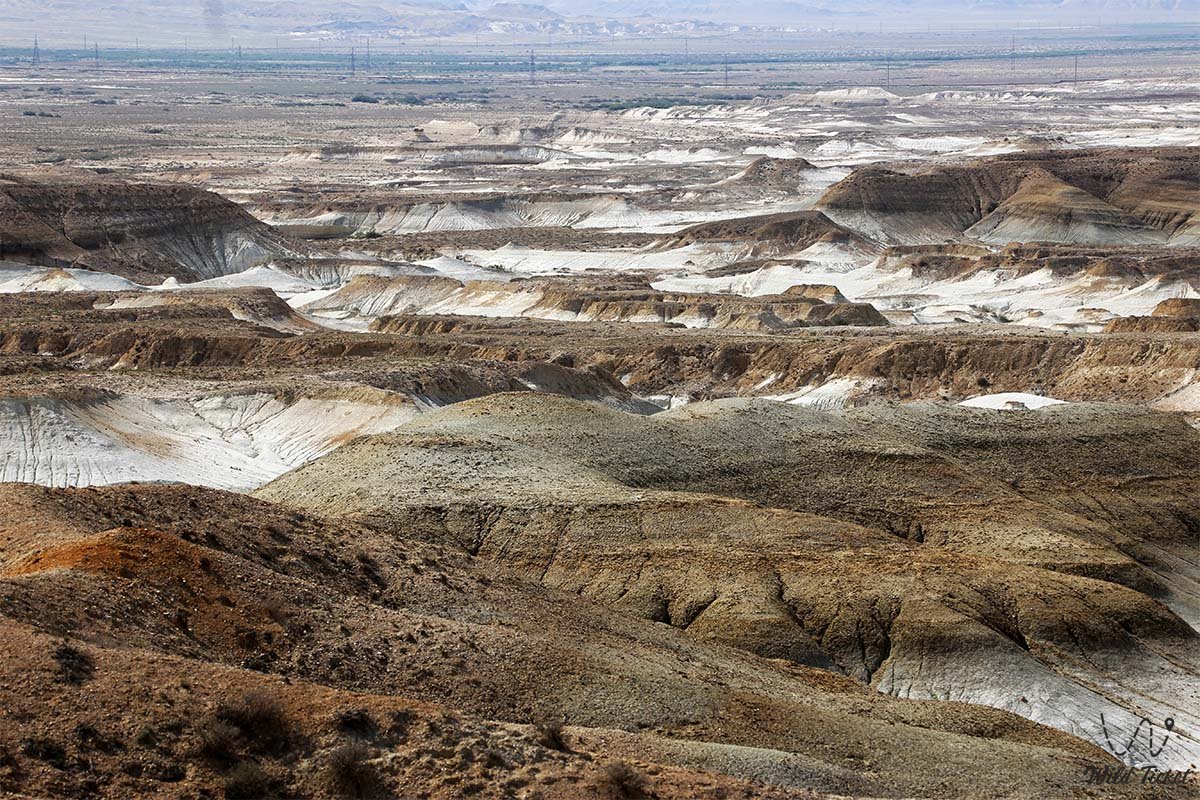
Within the network of travel routes across Mangystau, Ybykty Say Canyon logically complements a journey to the sacred underground mosque of Karaman-Ata, the legendary residual mountain Sherkala, the shaded groves of Samal Gorge, the stratified colored clays of the Kokkala canyon, and the fantastical white towers of the Valley of Castles Airakty – Shomanay.
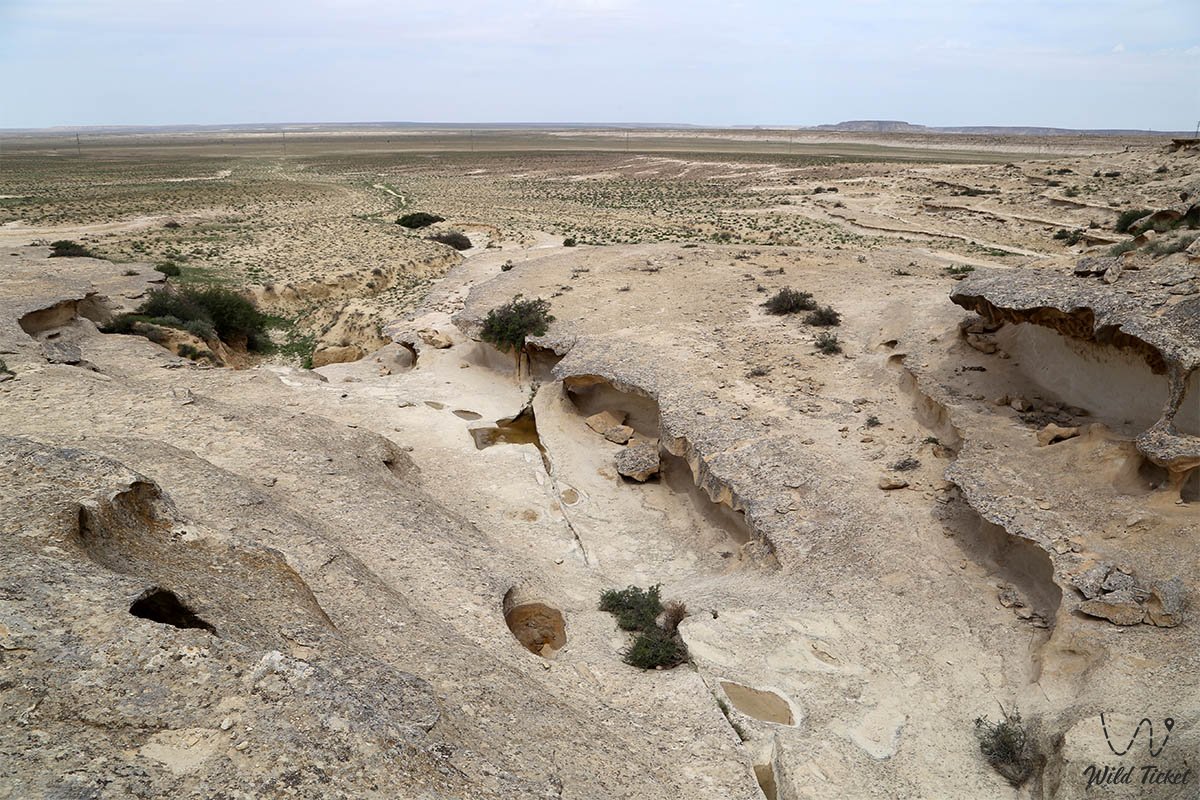
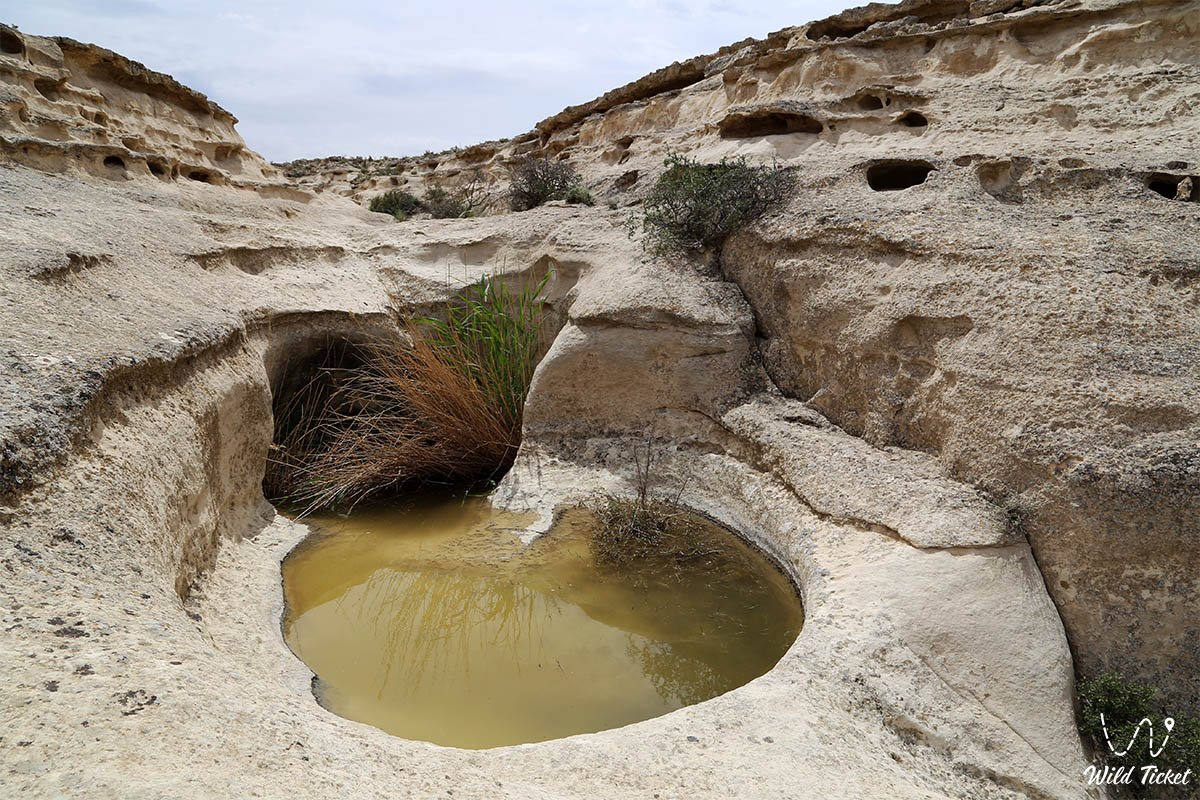
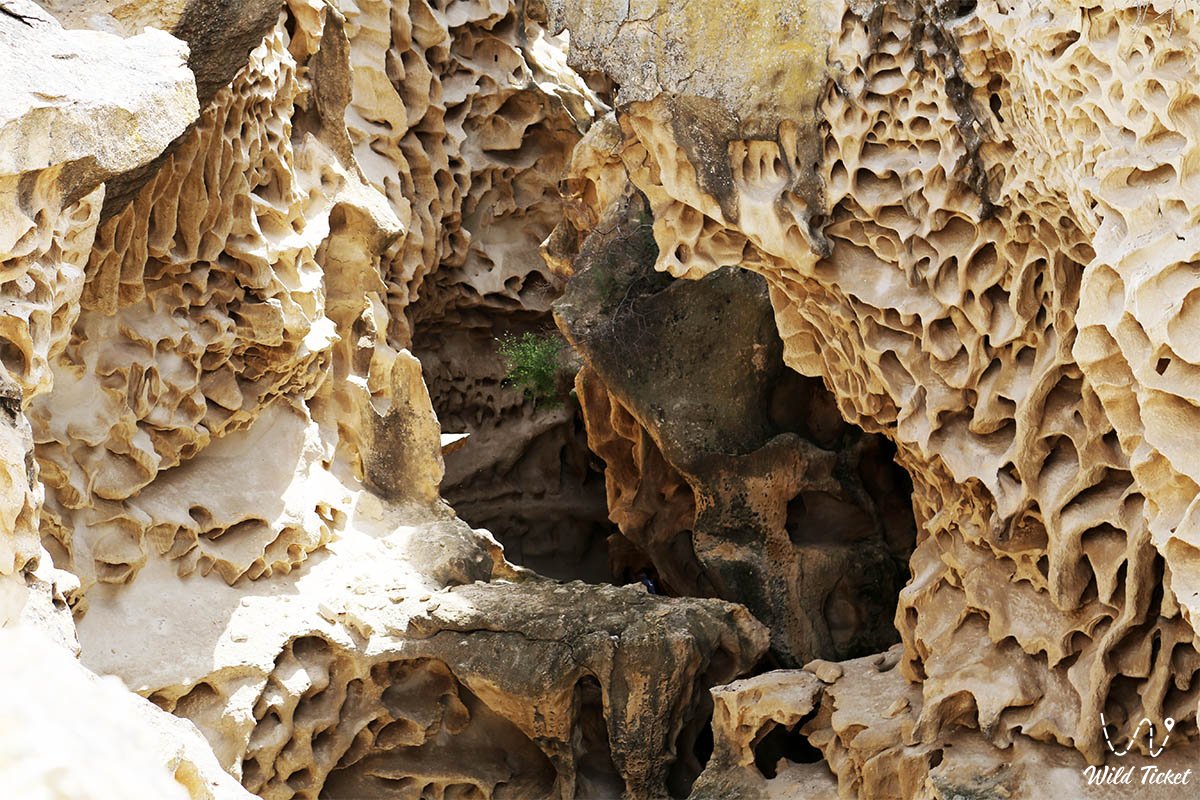
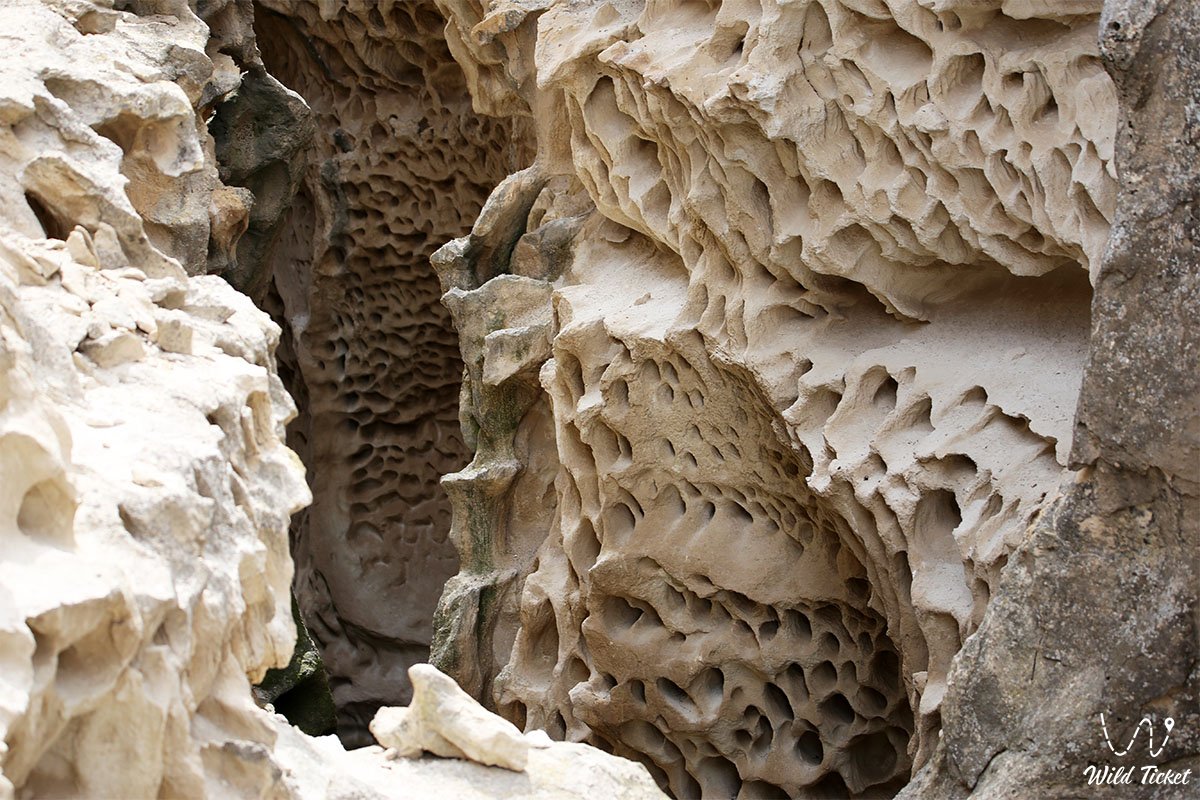
The primary distinction of Ybykty Say lies in its microrelief. While most regional canyons impress with expansive panoramas of open spaces, Ybykty enchants with the filigree microstructure of an enclosed realm. A winding stone corridor 3 to 6 meters deep and from half a meter to 1–2 meters wide is covered with an unbroken network of rounded caverns, alveoli, through-arches, and niches.
Depending on the angle of incoming sunlight, the porous limestone shifts in hue from milky-white and cream to warm chocolate. Travelers frequently draw comparisons between Ybykty Say and the famous Antelope Canyon in Arizona (USA), while noting its pristine wilderness and the singular honeycomb topography of Mangystau's nature.
The tract received its Kazakh name from the word "ybyq" (or "kiik / ylaq" – the young of a wild steppe antelope or saiga, as well as the Ustyurt mountain sheep), whose herds sought sanctuary along the ledges of the cleft for centuries. Nearby rises Mount Eliktau ("mountain of the mountain sheep").
Today, Ybykty Say Canyon on the Mangyshlak Peninsula is recognized as an iconic attraction for landscape photographers, aesthetes, and road-trippers, offering visitors a rare opportunity to enter a living sculptural fairytale sculpted by water, wind, and time.
--------------------------------------------
How to get there and visit –
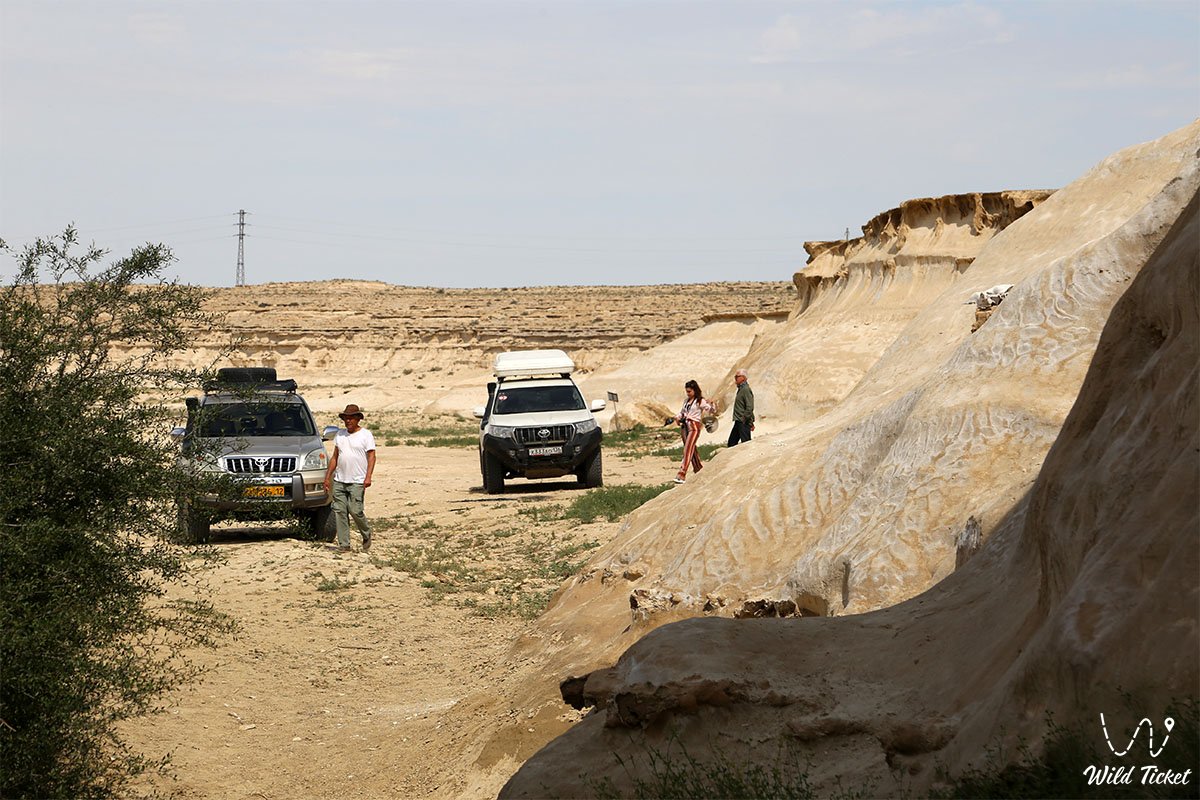
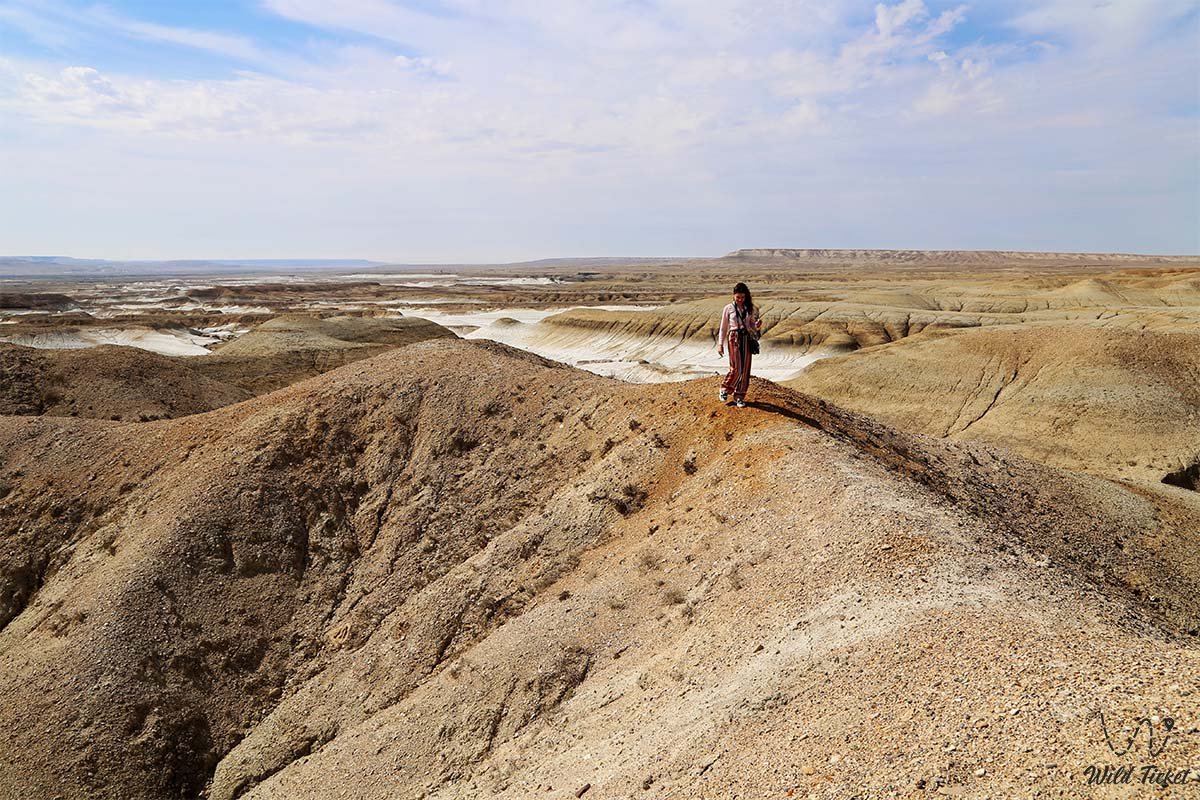
The Ybykty-Say Canyon is located in the semi-desert part of the Mangystau region, roughly 50–70 km east and northeast of the city of Aktau in a straight line (by road, the distance spans between 70 and 150 km depending on the chosen route). Nearest orientation points are the settlement of Beki, the village of Maly Emir, the 15th beket, Mount Eliktau, the Karagiye depression, and the Karaman-Ata underground mosque. The Mangystau – Beyneu railway line runs 4 km from the canyon.
GPS geographical coordinates of Ybykty Say Canyon:
43°45'12"N 51°56'28"E
Access routes to the tract:
Southern short route (about 70–80 km from Aktau): departure from the city toward the Karagiye depression and the settlements of 15th beket and Maly Emir, where well-worn steppe dirt tracks lead to the upper reaches of the say (travel time is around 1–1.5 hours).
Northern paved route via Beki (about 150 km): departure from Aktau along the A-33 highway toward the settlement of Shetpe to the village of Beki (about 130 km of asphalt), followed by a turn west onto a hard dirt road spanning roughly 20–30 km past the Karaman-Ata Necropolis.
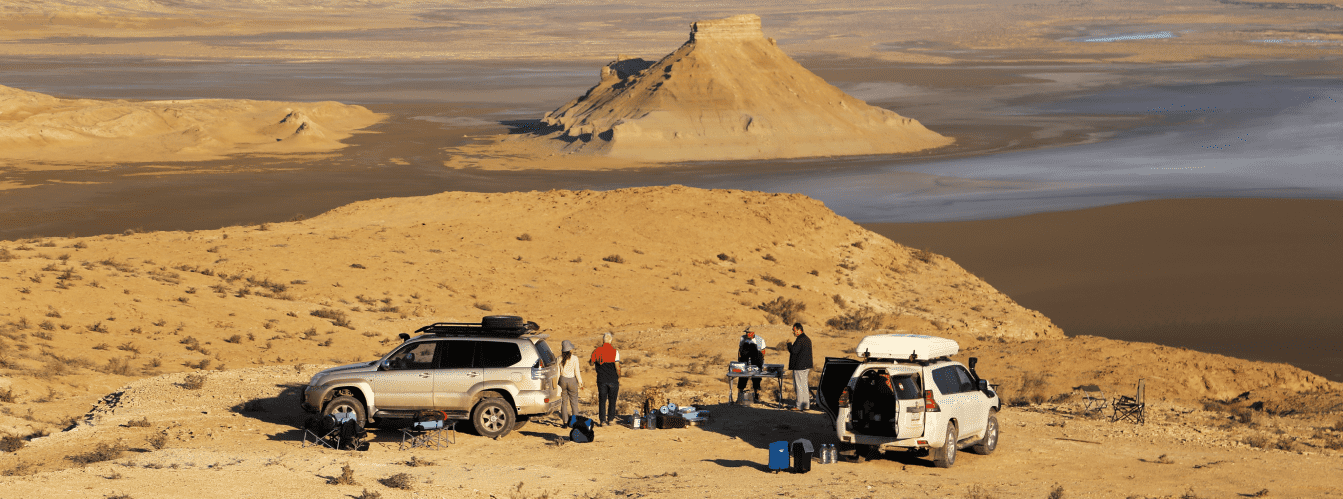
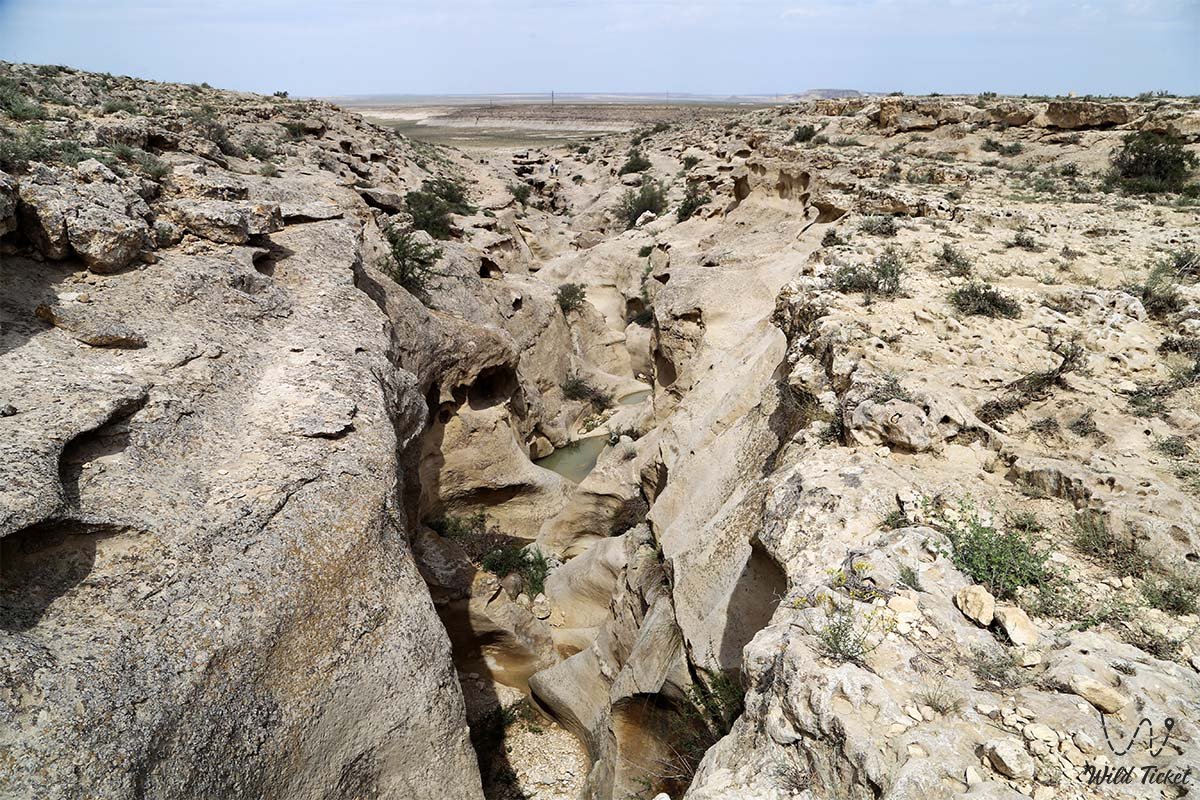
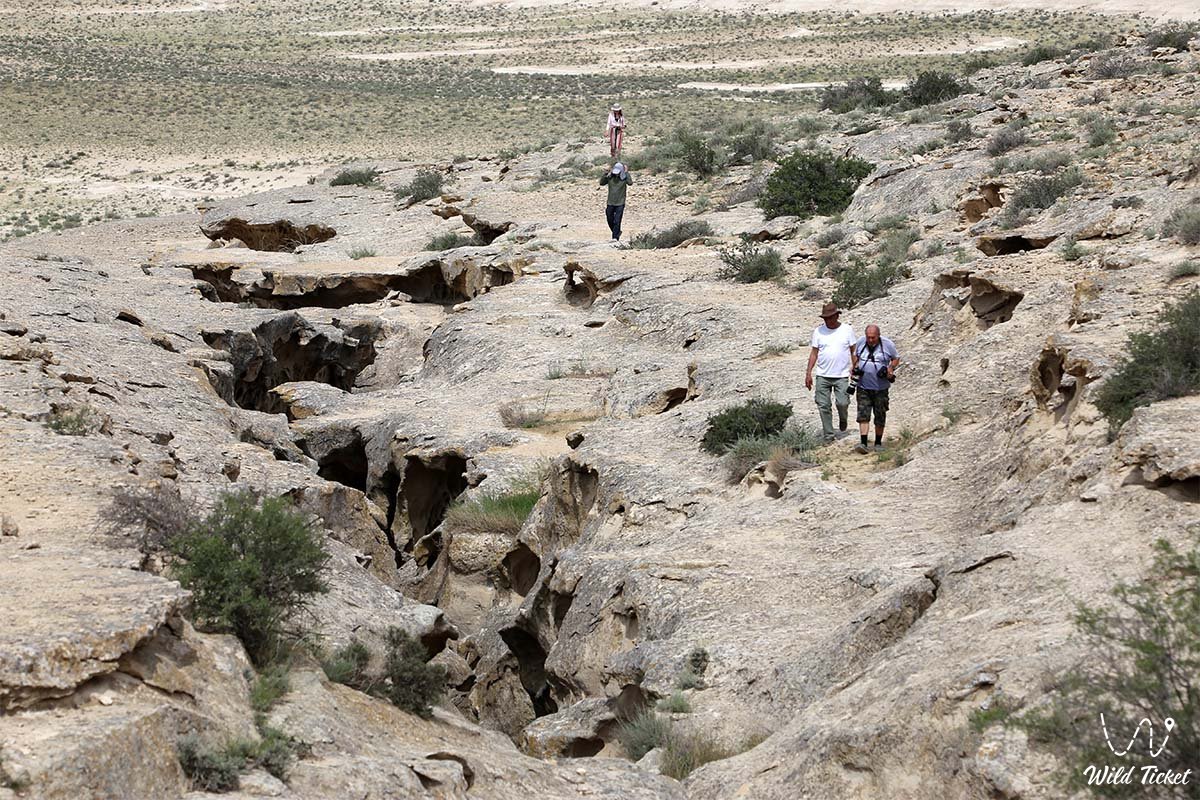
From above, the canyon is entirely invisible: flat, uniform steppe stretches all around, and a narrow fissure barely half a meter wide appears abruptly right underfoot. Traveling in dry weather is feasible in crossovers or passenger cars with an experienced driver; however, clay sections of the steppe turn to slick mud following precipitation, making a four-wheel-drive vehicle (4x4) with high ground clearance strongly recommended.
Descent to the floor of the canyon is carried out on foot. The length of the section accessible for comfortable walking is about 100–200 meters. Large rock steps begin after 50 meters of walking, and after another 10 meters, the drop-offs become steep enough that proceeding further requires dedicated scrambling skills.
Comfortable footwear with deep-lugged, non-slip soles is strictly mandatory for walking the canyon: limestone steps are water-polished and can be slippery. Visitors with trypophobia (fear of clustered small holes) may experience psychological discomfort during the visit.
Infrastructure at the site is entirely absent: this is an untouched natural landmark. Mobile phone reception at the bottom of the gorge and along access tracks is unstable or completely absent. Personal drinking water supplies must be at least 3–4 liters per person.
Black widow spiders (karakurt), solifuges, scorpions, and venomous pit vipers dwell in rock fissures and scree slopes; therefore, watch your footing carefully and avoid placing hands blindly into crevices.
It is strictly forbidden to carve inscriptions into the soft limestone, snap off lace-like cornices, or leave litter behind. Do not walk right along the edge of upper drop-offs: thin overhanging shelves consist of brittle rock and may collapse under a person's weight.
The best time of day for visiting and photography is around midday (from 11:30 to 14:00), when the sun reaches its zenith and its rays penetrate vertically down through the narrow fissure, illuminating the canyon floor and causing the porous walls to glow from within with a warm caramel radiance. The best seasons are spring (late April to early June) and early autumn (September – October).
--------------------------------------------
History
The history of Ybykty Say Canyon spans tens of millions of years, connecting prehistoric epochs of the ancient ocean with the nomadic heritage of Mangyshlak. During the Paleogene (66–41 million years ago), this area lay submerged beneath the waters of the Tethys Ocean and its Neotethys basin. Continuous sedimentation of carbonate muds, microscopic skeletal remains, and reef structures occurred on the seafloor.
Following tectonic uplift and marine regression, surface rain runoffs began incising into the soft limestone strata. Over millennia, seasonal torrential waters laden with weak natural acids gradually dissolved the rock and flushed out an internal channel network. As violent torrents subsided, a deep, narrow fissure was laid bare within the plateau.
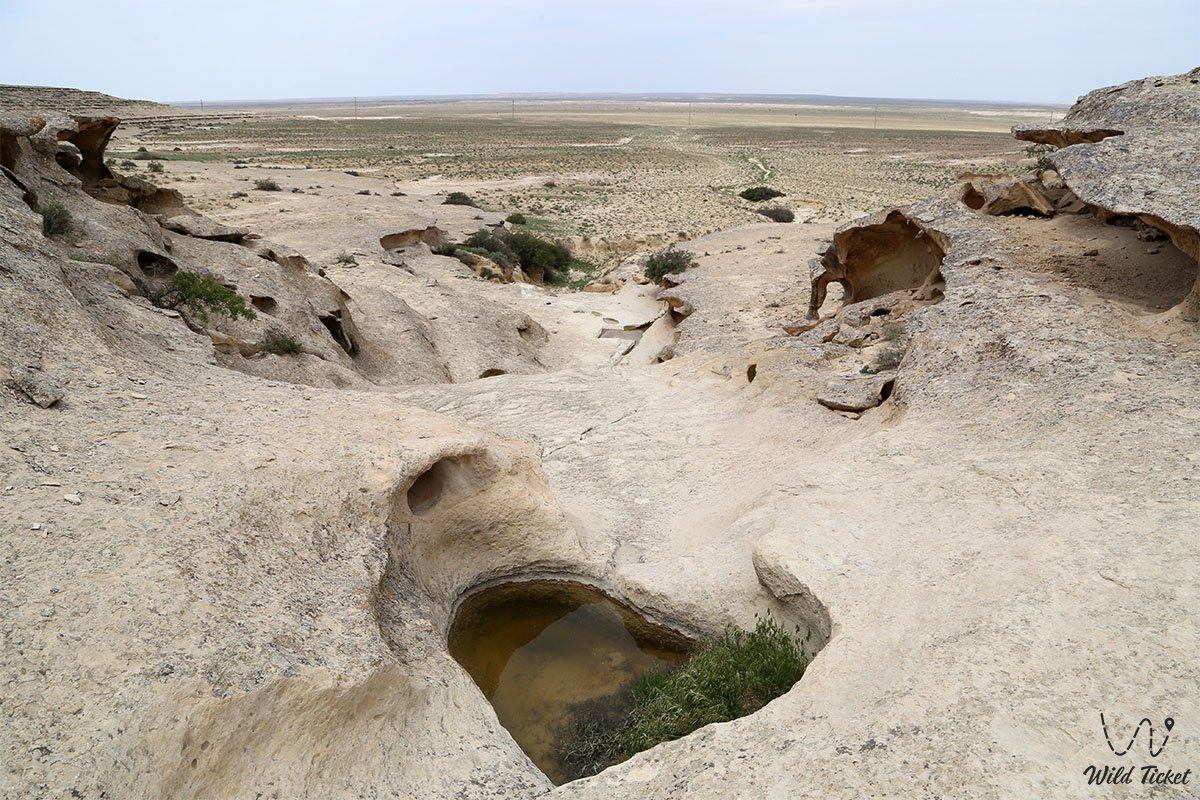
For centuries, this hidden natural maze served as a dependable refuge for steppe ungulates – saiga antelopes, goitered gazelles, and argali, sheltering them from wolves, searing heat, and sandstorms. Constant shade and natural rock basins on the floor retained water after spring rains, providing a concealed watering hole. Local shepherds and hunters knew of the cleft, bestowing upon it the name Ybykty Say ("ravine of wild kid goats / young saigas"). Nearby caravan paths once linked the Karaman-Ata sanctuary with Caspian encampments.
For a long time, the canyon remained an unnamed mark on topographic maps, largely unknown to the broader public. The true tourism discovery of Ybykty Say occurred during the latter half of the 2010s through expeditions led by Mangystau guides, photographers, and local historians. Photographs of the honeycomb stone filigree shared on social networks sparked immense interest, transforming this unassuming fissure into one of the most recognizable natural landscapes in Kazakhstan.
Information
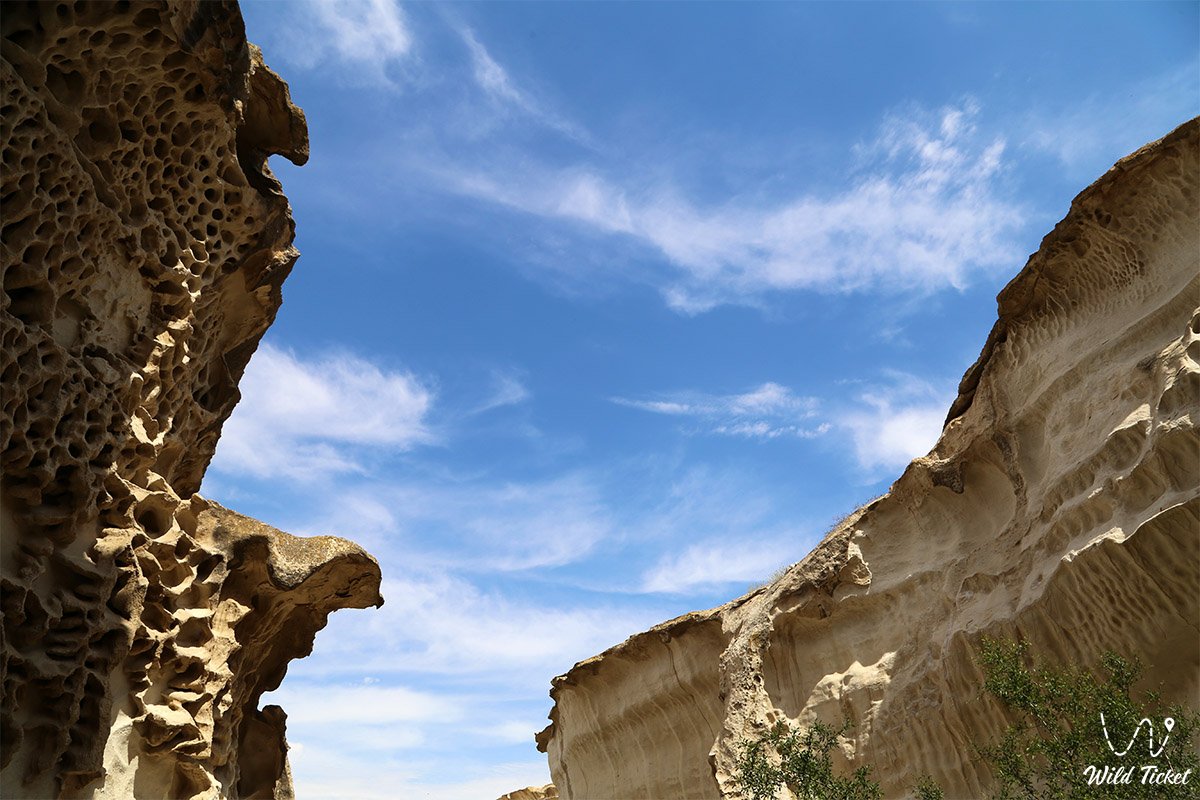
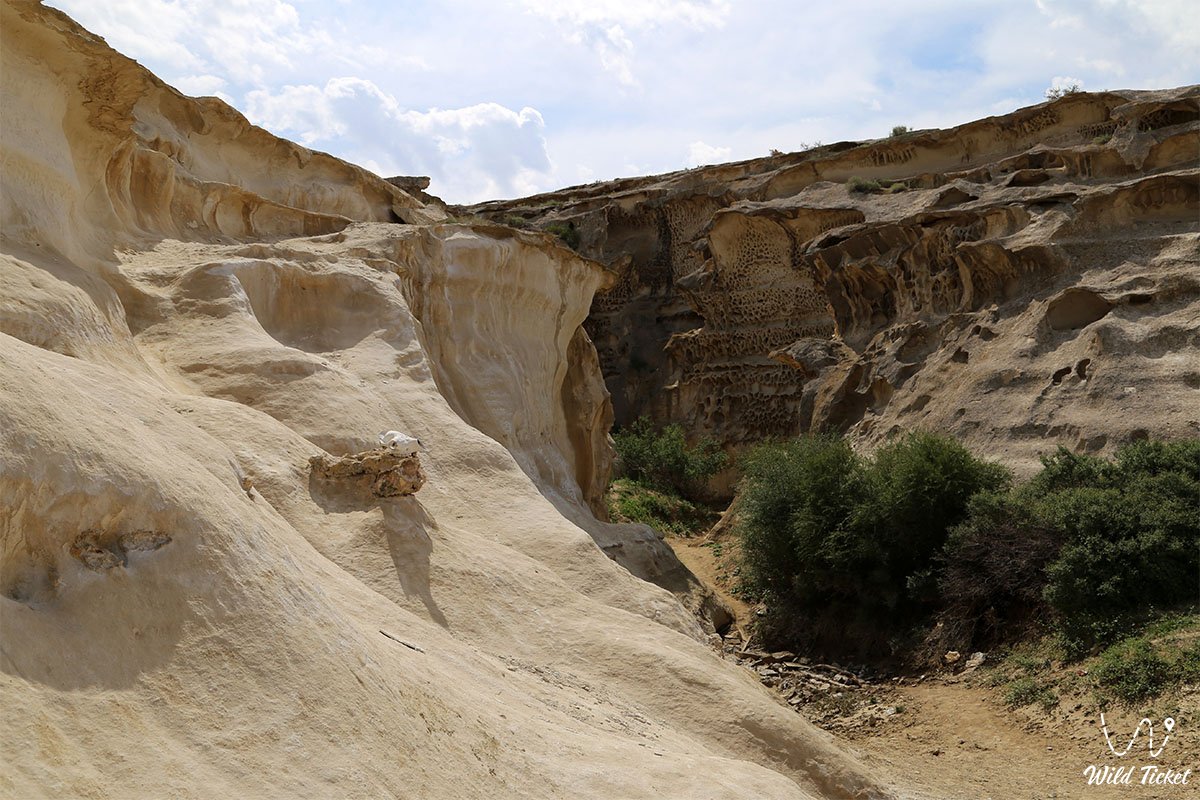
Geomorphologically, Ybykty Say Canyon represents an epigenetic karst-suffosion fissure and erosional ravine incised into the surface of a limestone plateau. The total length of the valley extends for several hundred meters, while the most striking, winding filigree section spans roughly 150–200 meters. The depth of the cleft varies from 3 to 6 meters, with the bottom width measuring between 0.5 and 2 meters, in spots narrowing to the shoulder width of an adult.
The geological cross-section is composed of Paleogene and Miocene coquina limestones, oolitic carbonates, and marls dating back 40–60 million years. The primary enigma of the canyon is the genesis of its porous-honeycomb structure. Geologists attribute the thousands of rounded pockets and apertures to the combined action of several forces:
1. Biogenic legacy – skeletal framework remnants of archaic colonial benthic organisms and fossilized reef complexes from the Tethys Ocean.
2. Submarine hydrochemical karst – dissolution of readily soluble minerals under the immense pressure of ancient seawater.
3. Subaerial weathering and erosion – subsequent abrasive polishing of walls by rainwater carrying suspended sand, combined with wind-scouring of softer fractions (honeycomb weathering or tafoni).
The rock is yielding and soft to the touch, resembling quartz sand densely compacted and cemented with carbonates. The canyon walls abound with flowstone shapes, bridges, natural apertures, and cornices. In the deepest, most shaded recesses where direct sunlight virtually never reaches, patches of green moss and microalgae grow on the porous walls, marking the water-rise levels during rare intense downpours. A permanent stream in the canyon is absent.
The gorge walls act as natural reflectors: sunlight bounces repeatedly between white and buff-colored rock shelves, bathing the space in a soft, diffused glow without harsh shadows.
Detailed description of the venue
The natural sculptural complex of Ybykty Say Canyon encompasses the following characteristic sections and microforms:
• Plateau entrance fissure – the point of sudden drop-off within the level wormwood steppe, where an unassuming half-meter slit turns into a deep descent formed by natural slab limestone steps.
• Gallery of "porous chocolate" – the central corridor of the canyon, whose walls are blanketed by thousands of caverns 1 to 10 cm in diameter, evoking the texture of an aerated chocolate bar or a honeycomb.
• Openwork through-cornices and arches – slender limestone spans and overhangs suspended overhead at human height through which sunlight filters.
• Stepped rock cascades – vertical drop-offs along the canyon bed 1 to 2.5 meters high, starting 50–60 meters past the entrance, sculpted by rushing stormwater.
• Diffused light grottoes – deep half-caves and blind pockets along canyon bends illuminated solely by soft golden reflected light, where walls appear semi-translucent.
• Walls with relict moss – lower shaded tiers of the canyon where microclimatic humidity supports bands of green moss, creating a vivid contrast against the pale limestone.
• Upper observation cornices – limestone benches above the cleft allowing visitors to peer into the narrow gap and appreciate the scale of the natural rupture.
Flora and fauna
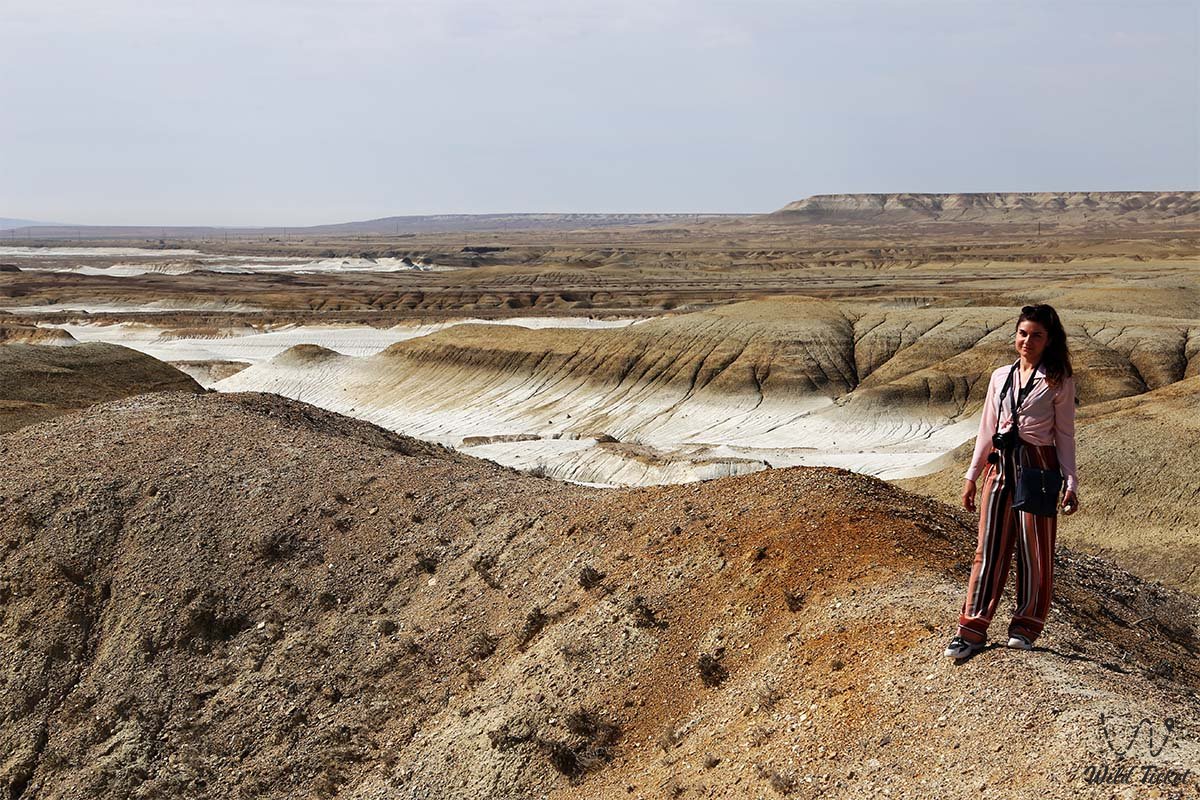
The plant life around Ybykty Say Canyon is characteristic of Mangystau's dry gravelly and clay semi-deserts. The enclosing plateau is dominated by drought-resistant xerophytic communities: gray-soil wormwood, Lerche's wormwood, biyurgun, boyalych, eastern saltwort, and spiny dzhantak (camelthorn). In spring (April – May), the steppe is briefly covered in a green carpet of blooming wild Sogdian tulips, two-flowered tulips, steppe irises, and ephemerals, which quickly wither as summer heat arrives. Inside the canyon itself, higher moisture and shade allow green mosses, lichens, and solitary nitre bushes to take root in micro-fissures.
The fauna of the cleft and surrounding areas is diverse. Birds nest within the cavities and cells of the porous limestone: European rollers, hoopoes, desert wheatears, Asian desert finches, and sparrows. Raptors circle regularly above the tract – steppe eagle, long-legged buzzard, common kestrel, and saker falcon.
Mammals in the environs include the tolai hare, corsac fox, steppe polecat, long-eared hedgehog, and gerbils. Historically, saigas, goitered gazelles, and wild mountain sheep (argali) roamed here, giving their name to the tract and neighboring Mount Eliktau.
The herpetofauna demands mindfulness from visitors: agile steppe agamas, toad-headed agamas, dione snakes, arrow snakes, and venomous Halys pit vipers live among the stones and honeycomb niches. Venomous karakurt spiders, solifuges, and scorpions find shelter in shaded recesses.
Legend
A poetic legend concerning the love between a steppe peri and a secret gift of the Tethys Ocean is tied to the origin of the filigree Ybykty Say Canyon.
Tradition tells that at the end of epochs, when the great ancient ocean retreated before the onslaught of sun and dry land, the lord of the deep fell in love with a beautiful steppe peri – the spirit of Mangyshlak's free wind. The peri was gentle and graceful, her garments resembling delicate lace of white foam, and her voice chiming like spring meltwater. Yet the spirits of the earth forbade the sea king from leaving his watery realm.
Departing forever into the depths of time, the ruler of waters resolved to leave his beloved a farewell keepsake. With his powerful hands, he gathered the finest white corals from the ocean floor, wove them into precious stone lace, and concealed them within a deep fissure in the dry steppe so the sun could never wither the memory of their love.
When the peri descended into the defile, she was captivated by the beauty of the gift: the walls of the cleft chimed with the touch of the wind, mirroring the patterns of her gown. In token of eternal devotion, she breathed the fragrance of steppe herbs into the stone and bade spring rains polish these walls for all time. Ever since, Ybykty Say Canyon has retained the coolness of the ancient sea and the tenderness of the steppe wind, unveiling its lacework secrets only to those who arrive with a kind and receptive heart.
Conclusion
Ybykty Say Canyon is an authentic jewel of Mangystau stone architecture, where nature created an astonishing contrast between an austere plain semi-desert and an exquisite filigree microworld. A walk through this narrow labyrinth of white and chocolate limestone, the dance of midday sun across openwork arches, and the touch of the fossilized chronicle of the ancient Tethys Ocean reward every traveler with striking aesthetic discoveries and unforgettable impressions.
Interesting sights nearby:
• Torysh Valley of Spherical Concretions;
• Endorheic Karagiye Depression (-132 meters);
• Lake Karakol, Home of Greater Flamingos;
• Temir-Abdal Underground Mosque;
• Kogez Yurt Ethno-Village;
• Otpan-Tau Historical and Cultural Complex;
• Mount Otpantau;
• Kokkala Variegated Jurassic Clays Tract;
• Medieval Town of Kyzylkala;
• Akmysh Say Relict Spring Garden;
• Caspian Sea;
• Cape Tyub-Karagan;
• Khanga Baba Tract;
• Khanga Baba Necropolis;
• Kenty-Baba Necropolis.
Photogallery: