Four columns of cosmic primal elements, intricate tafoni rocks, and the unfading fire of Sufism –
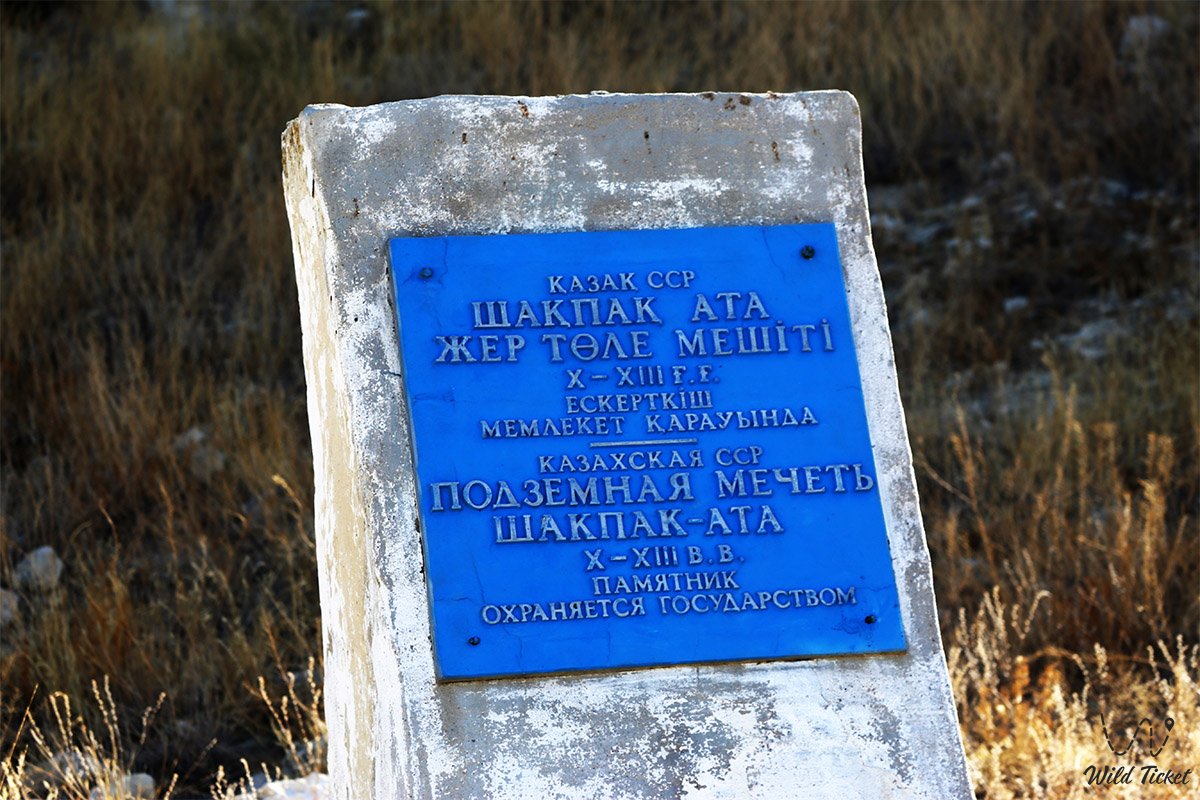
The Shakpak-Ata Underground Mosque (Kaz. Shaqpaq ata zherasty meshiti) represents a unique rock-cut cave worship complex of the Early Middle Ages in the west of Kazakhstan. This peerless sanctuary is carved into the thickness of a compliant white limestone-chalk massif in the northeastern part of the Tupkaragan district, crowning the upper reaches of a picturesque spur of the Shakpaktysay Canyon.
This entire sacred retreat stands as an outstanding architectural, historical, and spiritual monument of the Mangystau region, and in July 2026 the complex was officially inscribed onto the UNESCO World Heritage List for its exceptional universal value. Just 4–5 kilometers to the north stretch shallow bays where the waves of the Caspian Sea break against the shell-strewn shore, bringing a refreshing sea breeze to the ancient stone vaults.
In the sacred and travel geography of the Tupkaragan cluster, the Shakpak-Ata underground mosque is the foremost focal point for pilgrims and researchers from across the globe. Approximately 135–140 kilometers to the southeast via vehicular highways lies the regional administrative center of Aktau, from where the route to the sanctuary passes through the coastal village of Akshukur and the hub settlement of Tauchik. Surrounding the mosque is an expansive ancient necropolis, while literally 4.4 kilometers to the west opens the snow-white Kapamsay Canyon with its mulberry grove nestled in a cavernous grotto.
Within a short driving range lie the Kokbulaksay chalk canyon, the massif of the Ungoza table mountains, sandy Sarytas Bay, the rocky gorge of Tamshaly with weeping cliffs, the Turtle Lake of Saura Canyon, and the grandiose geological Zhygylgan sinkhole.
The geological framework of the site is composed of thick horizontal strata of white writing chalk and Sarmatian coquina limestones, deposited millions of years ago at the bottom of the vanished ancient Tethys Ocean. From Shakpak-Ata, steppe tracks lead east and southeast into the interior of the Mangyshlak Peninsula: toward the sacred summit of Mount Otpan-Tau with the Aday-Ata complex, the mystical spherical concretions of the Torysh Valley, the solitary residual Mount Sherkala, the variegated Jurassic clays of the Kokala tract, and the narrow slate gorge of Karadayirmen.
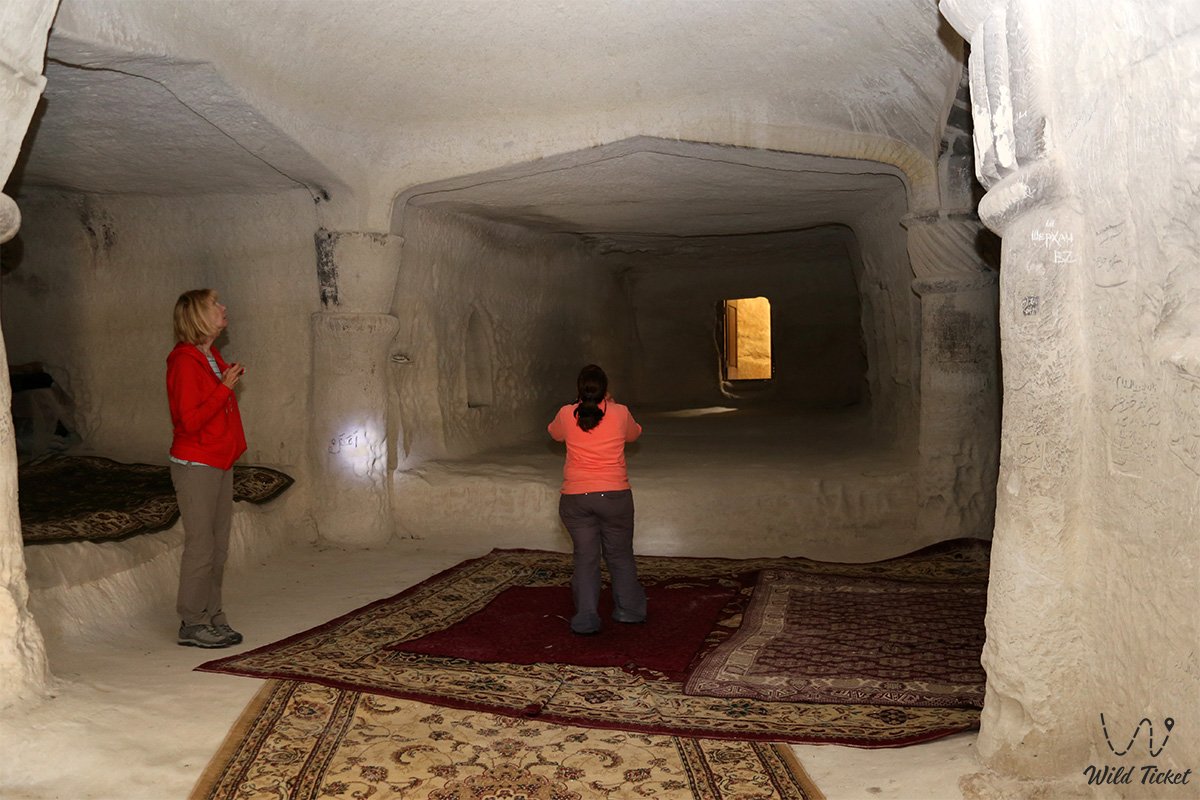
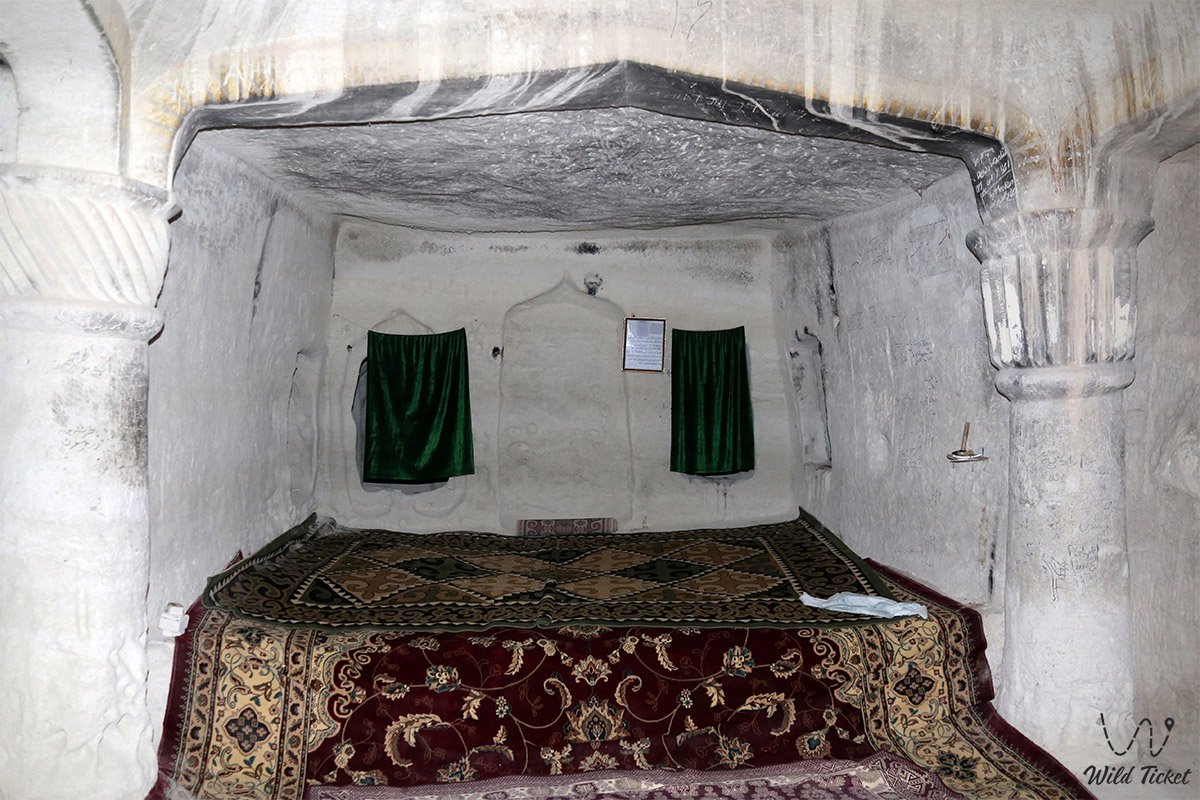
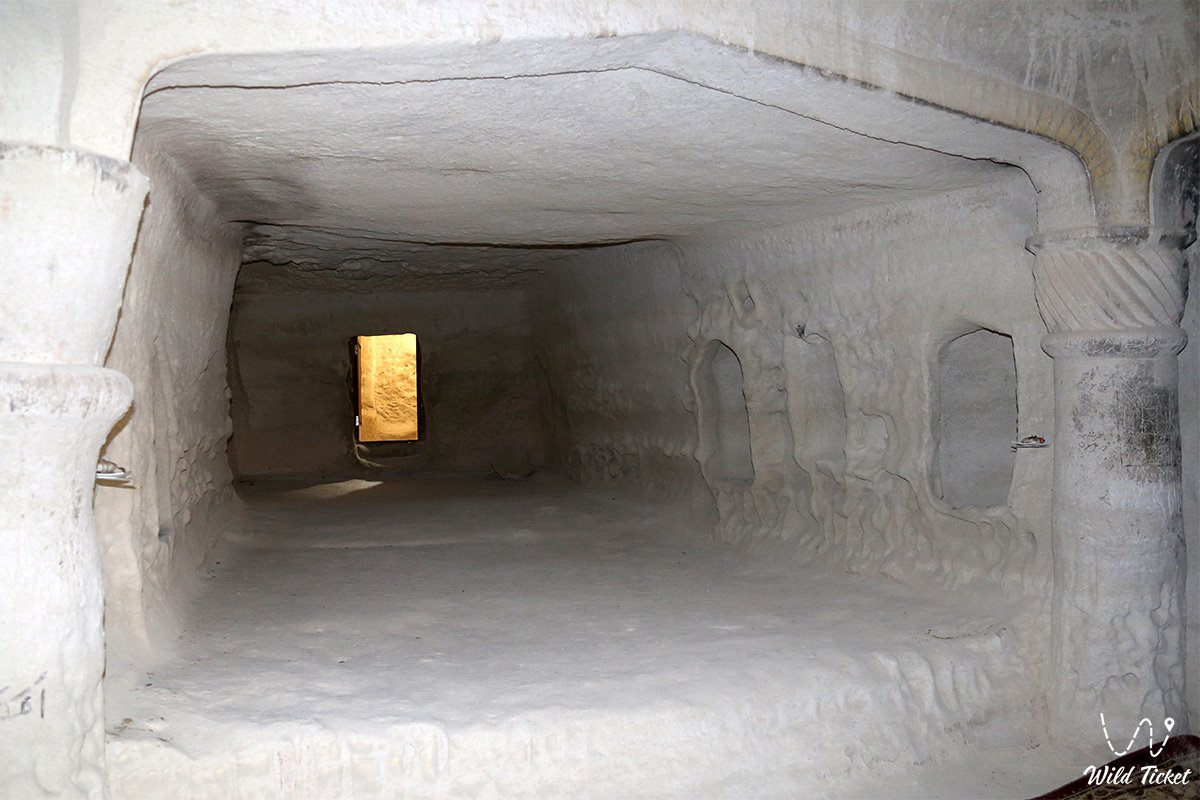
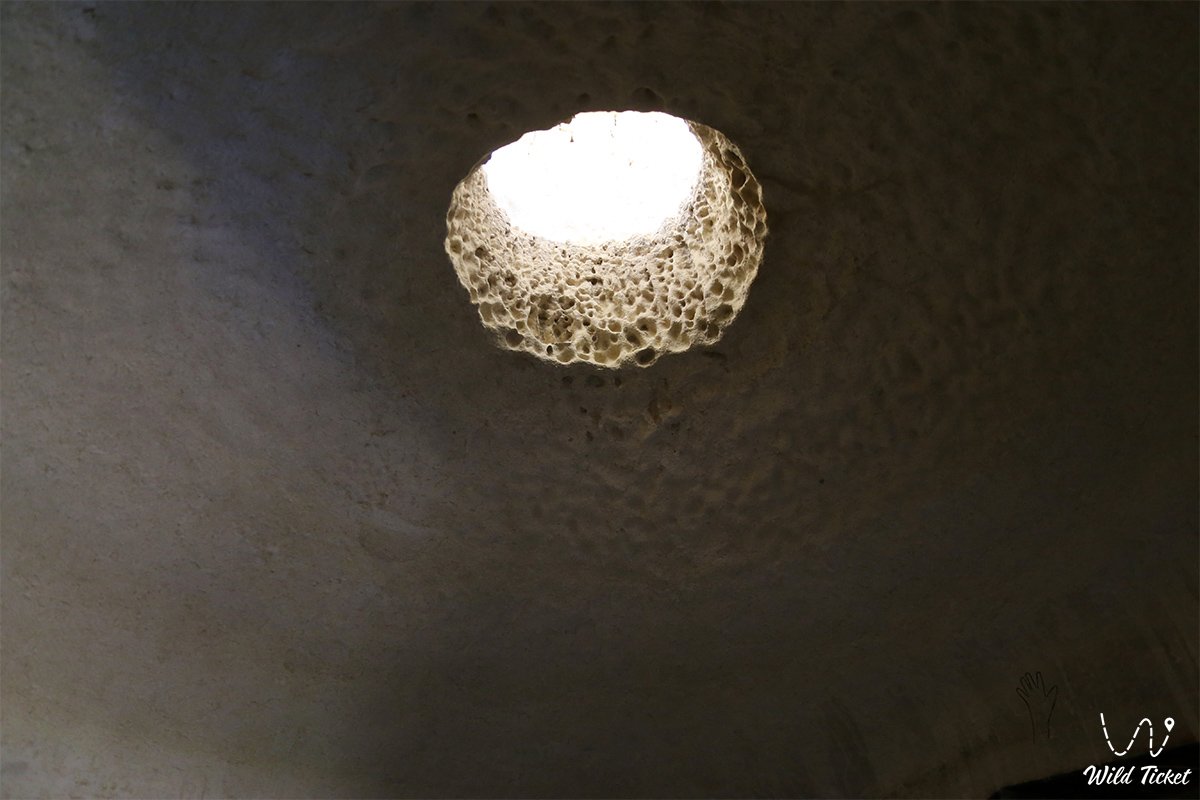
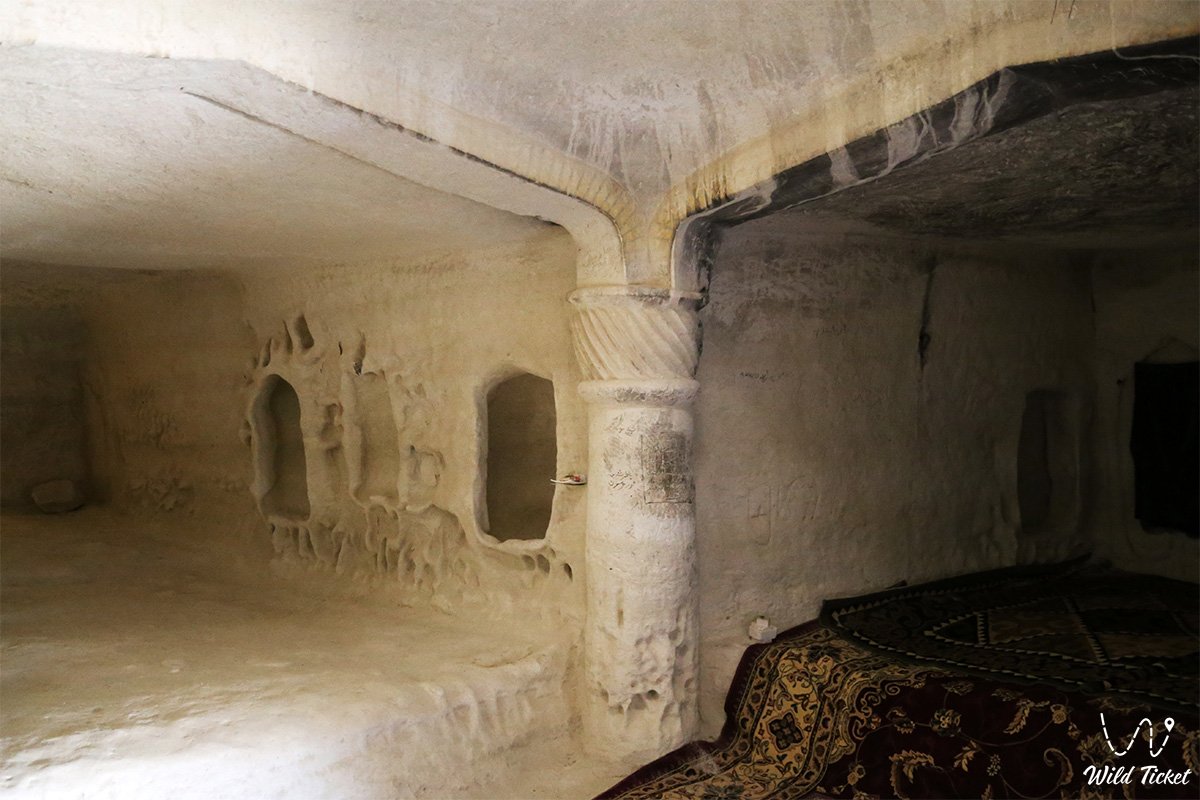
The principal architectural marvel of the mosque is its cruciform layout with four massive corner columns symbolizing the primal elements—fire, water, air, and earth—as well as a circular central skylight well in the vault and hundreds of ancient wall petroglyphs depicting steeds and open protective palms.
After offering prayers in the quiet of the cave chambers and drawing healing water from the sacred spring, pilgrim groups head southeast toward the snow-white chinks of the Bozzhira tract, the glittering Tuzbair salt flat, Mount Bokty, the Karynzharyk depression, and the strictly protected lands of the Ustyurt Reserve.
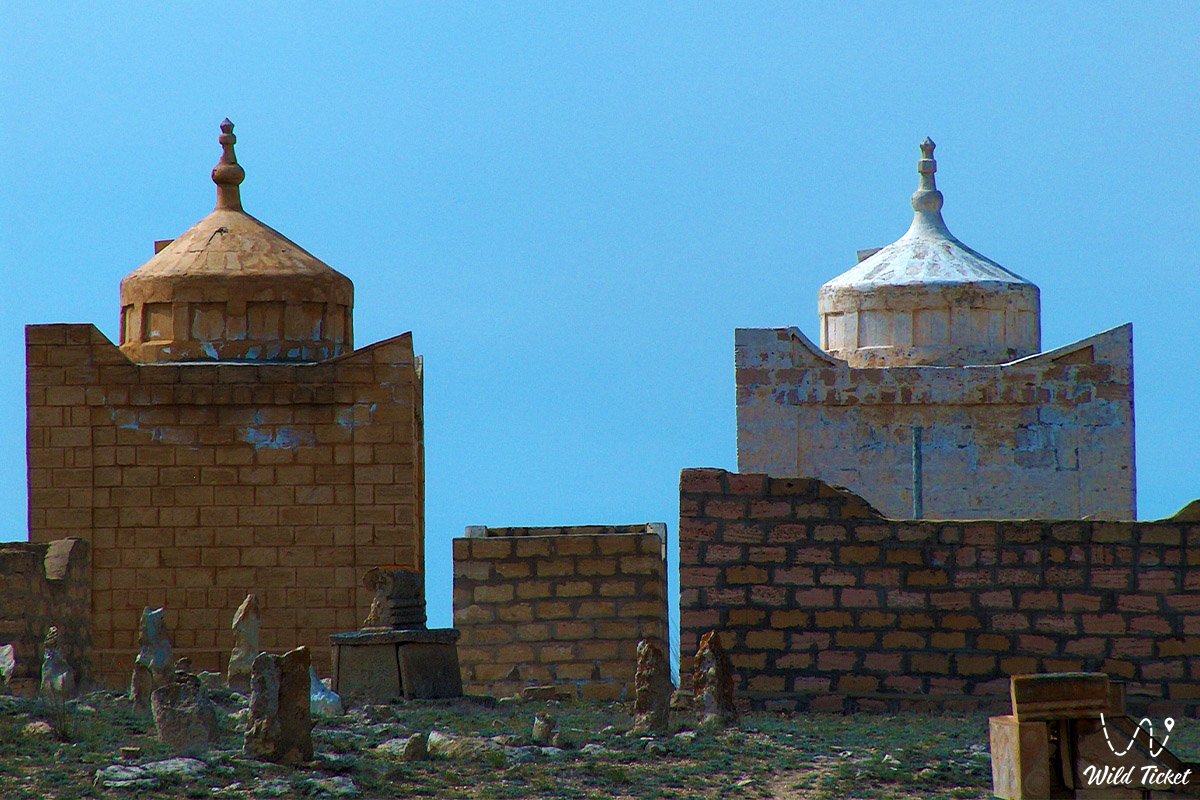
Today, the Shakpak-Ata underground mosque is recognized as a masterpiece of Eurasian cave masonry, attracting believers, cultural scholars, historians, and road travelers with the unearthly silence of its subterranean halls, the mastery of its ancient stone carving, its restorative spiritual aura, and the living memory of the great Sufi masters of Mangystau. Near the mosque also stands the sacred Mausoleum of Khazret Sultan, which serves as a pilgrimage destination and an architectural landmark of the region.
--------------------------------------------
How to get there and visit –
The Shakpak-Ata underground mosque is located in the northeastern sector of the Tupkaragan Peninsula, in the upper reaches of Shakpaktysay Canyon, on the slope of Mount Ungoza, within the boundaries of the Tupkaragan district. The distance from the city of Aktau is about 135–140 km, from the district center town of Fort-Shevchenko – approximately 90–95 km, from the hub village of Tauchik – roughly 30–35 km, and to the coastline of Sarytash Bay – about 5 km.
GPS geographical coordinates of the Shakpak-Ata underground mosque:
44°26'00"N 51°08'20"E
The road route from Aktau runs north along a paved highway of republican significance through the suburban village of Akshukur to the settlement of Tauchik (around 95–100 km of solid asphalt). Directly beyond Tauchik begins a hard-packed gravel and steppe dirt road leading northwest toward Sarytas Bay (about 35 km across the plateau). The road leads straight to the pilgrim complex and the entrance to the necropolis grounds. Travel time from Aktau by car takes approximately 2–2.5 hours.
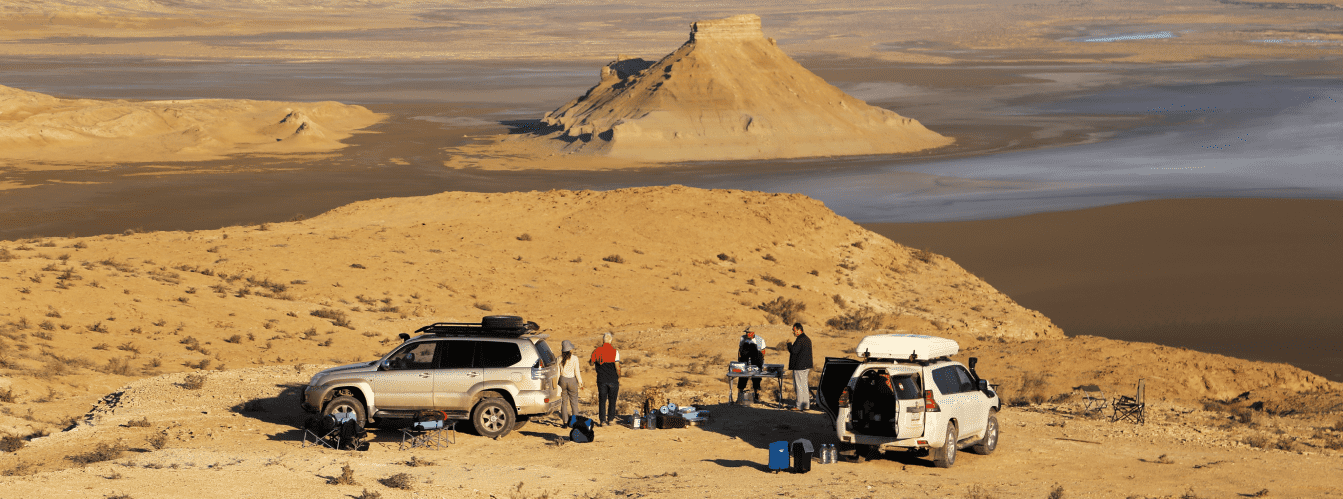
Access roads and terrain capability: in dry weather, an urban crossover or carefully driven passenger car can easily reach the pilgrim house and the upper parking lot near the necropolis. However, if you plan to continue along the floor of Shakpaktysay Canyon, proceed to neighboring Kapamsay Canyon, or descend to the wild beaches of Sarytas Bay, a high-clearance four-wheel-drive vehicle (4x4) is strictly required. During prolonged rain, the clay steppe around Tauchik softens quickly, rendering two-wheel-drive travel impossible.
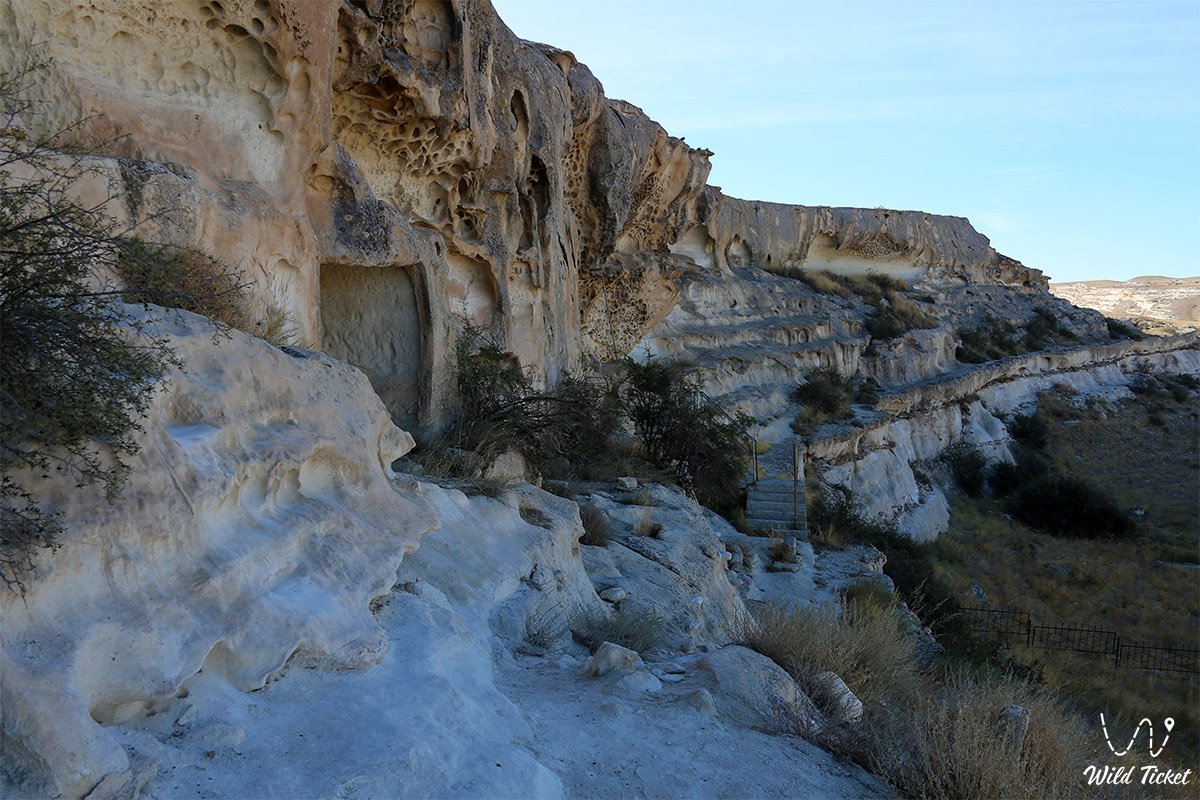
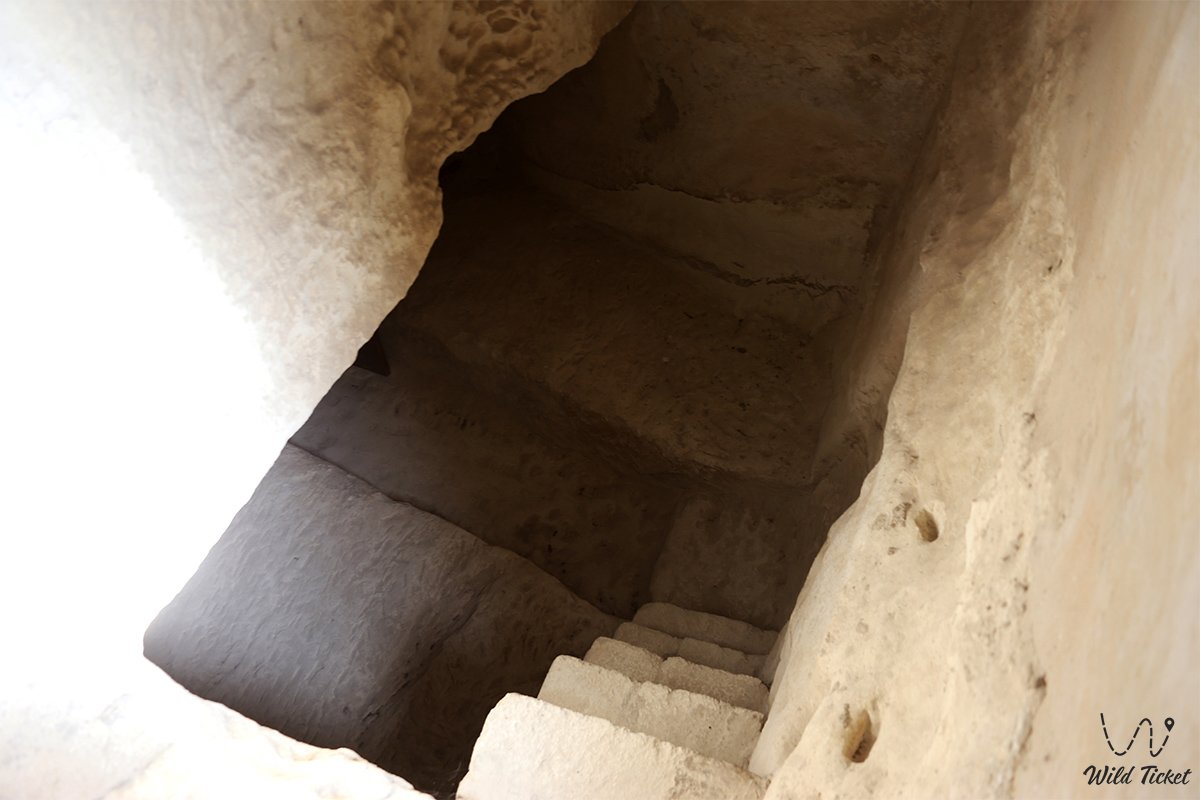
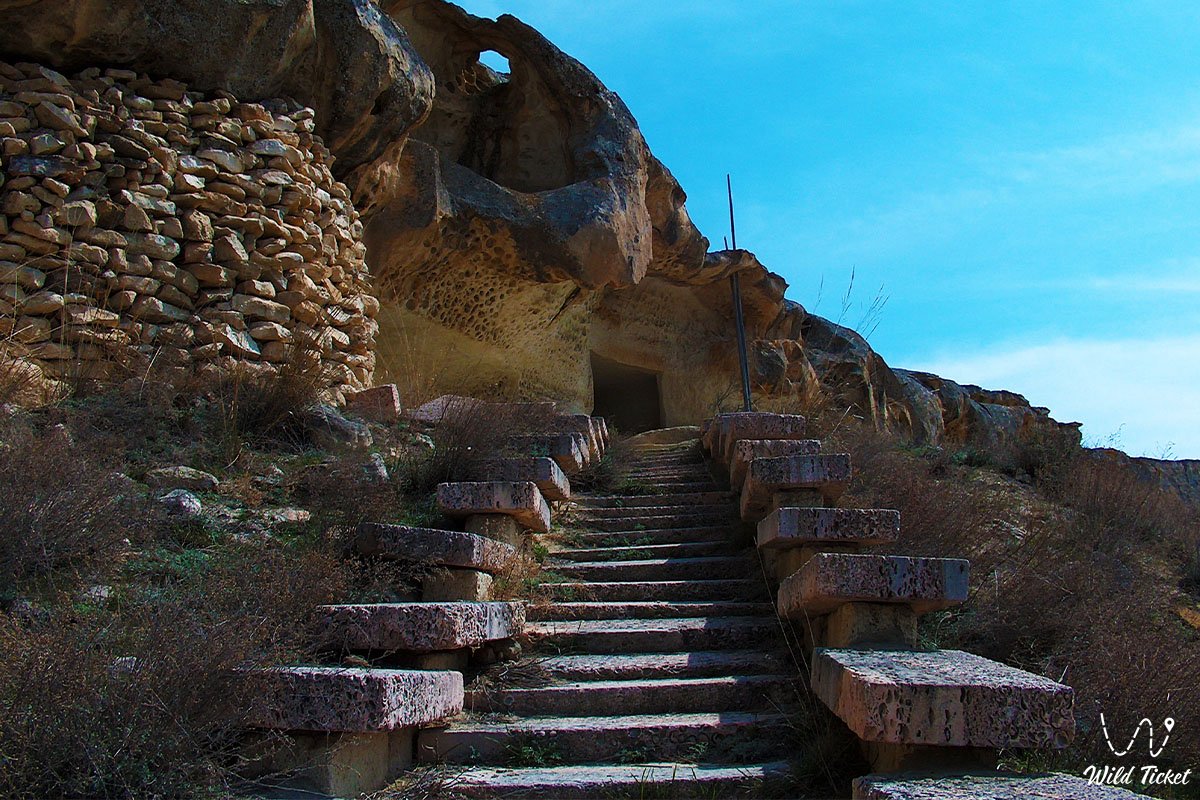
Walking ascent and visiting specifics: from the pilgrim house, a stone path and steps carved directly into the rock lead to the entrance of the cave mosque. The ascent takes about 5–7 minutes of unhurried walking. Inside the mosque, the floor is carpeted, and visitors must remove their footwear before entering. For walking over the open rock terraces and around the necropolis, comfortable closed shoes with non-slip soles are essential.
Visiting regulations and sacred etiquette: the Shakpak-Ata mosque is an active Islamic sanctuary and a UNESCO World Heritage site.
During a visit, the following are STRICTLY MANDATORY:
– Dressing modestly: men are prohibited from entering in shorts or sleeveless shirts; women must cover their shoulders, knees, and hair with a headscarf (wrap-around robes and scarves are typically available at the entrance);
– Maintaining reverent silence, refraining from loud telephone conversations, and avoiding disturbances to praying pilgrims;
– Touching ancient wall inscriptions, writing with paint, or scratching names into the soft limestone walls is strictly forbidden;
– Stepping on old grave slabs or damaging tombstones in the necropolis is prohibited;
– Lighting open campfires and leaving plastic litter is strictly forbidden.
Infrastructure: at the base of the hill stands a traditional pilgrim guest house (tunehana), where the custodian (shirakshi) resides permanently. The house features resting rooms, a communal dining hall (teahouse), ablution facilities, and a freshwater well. Pilgrims may lodge overnight here for a voluntary donation (sadaqah). Close to Sarytash Bay, not far from the mosque, operates the Sartas visitor center, offering guest infrastructure, yurts, and a cafe (44°28'21"N 51°06'51"E).
Network fuel stations, grocery markets, pharmacies, and tire workshops are located in Tauchik (30–35 km). 4G mobile coverage connects periodically on high ground near the complex entrance, but is completely blocked by rock massifs inside the underground halls.
The best time to visit is spring (mid-April to early June) and early autumn (September – October), when the steppe enjoys pleasant, mild weather (+20...+25 °C) without exhausting heat, and the air is clear. Inside the underground mosque, the thick rock creates a natural year-round microclimate, maintaining a constant temperature of around +15...+17 °C. In July and August, open-air temperatures often soar above +38...+40 °C, making morning visits the most comfortable option.
--------------------------------------------
History
The history of the Shakpak-Ata underground mosque spans more than a millennium of continuous spiritual practice, combining ancient pre-Islamic nomadic beliefs with Sufi mysticism.
According to folk tradition, the holy elder Shakhmardan, known popularly as Shakpak-Ata (Father of Flint), lived here in the 9th–10th centuries (with some architectural historians dating the primary carved structures to the 13th–14th centuries). He was an outstanding Sufi philosopher, dervish, and healer, endowed with deep scriptural knowledge and the gift of curing severe illnesses. The name Shakpak-Ata is linked to the holy man's ability to ignite the fire of faith in human hearts and strike living sparks from rock with a touch of his staff.
The mosque was carved entirely by hand out of a solid outcrop of white limestone. Its architectural design continues to intrigue scholars: in plan, the sanctuary forms an equilateral cross aligned to the cardinal points. Such an arrangement is unique in the Islamic world and reflects deep continuity with earlier religious traditions: before Islam's arrival, solar cults, Nestorian Christianity, and Zoroastrianism existed across these reaches, blending harmoniously into the philosophy of steppe Sufism.
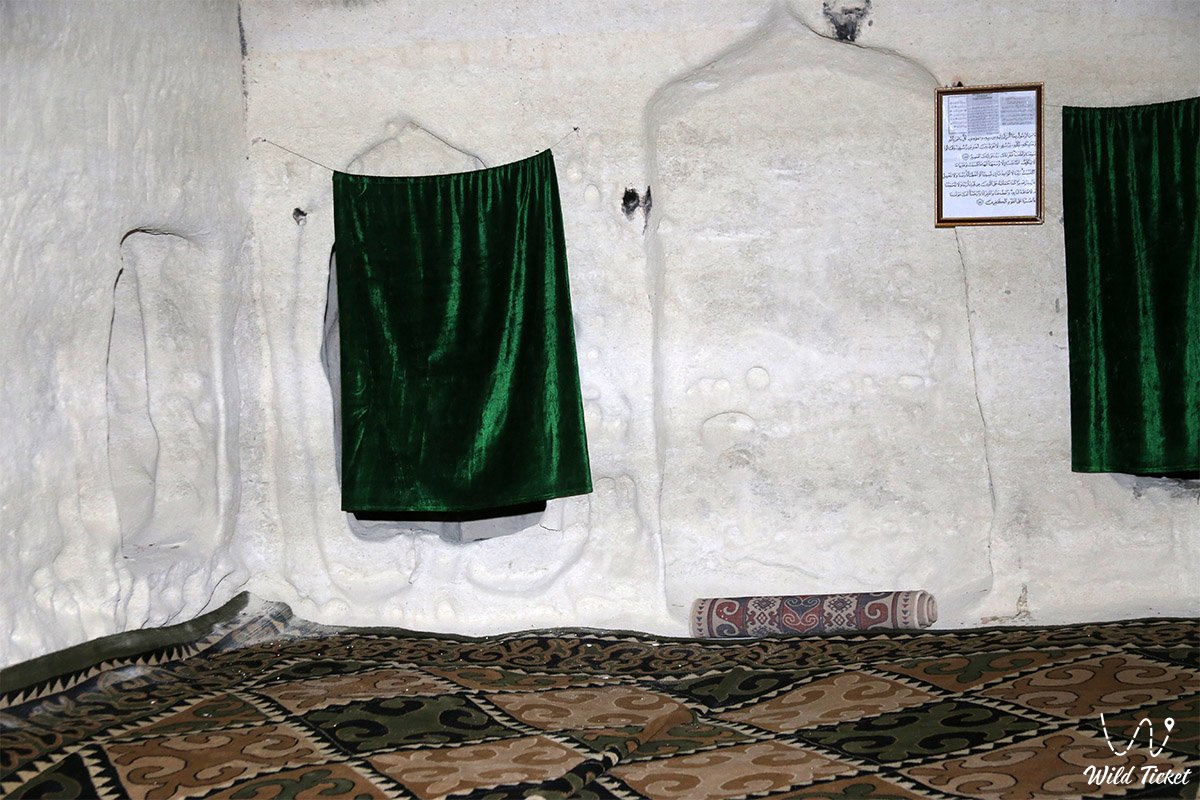
The central hall features a round skylight dome reminiscent of a yurt's shanyrak, which admits sunlight and provides natural ventilation. Four sturdy three-quarter columns support the vault, symbolizing the four primal elements of creation. The walls and pilasters are adorned with unique epigraphy: hundreds of inscriptions survive in Arabic, Persian (Farsi), and Chagatai, alongside Sufi rubaiyat, drawings of war horses, and protective open palms (hamsa).
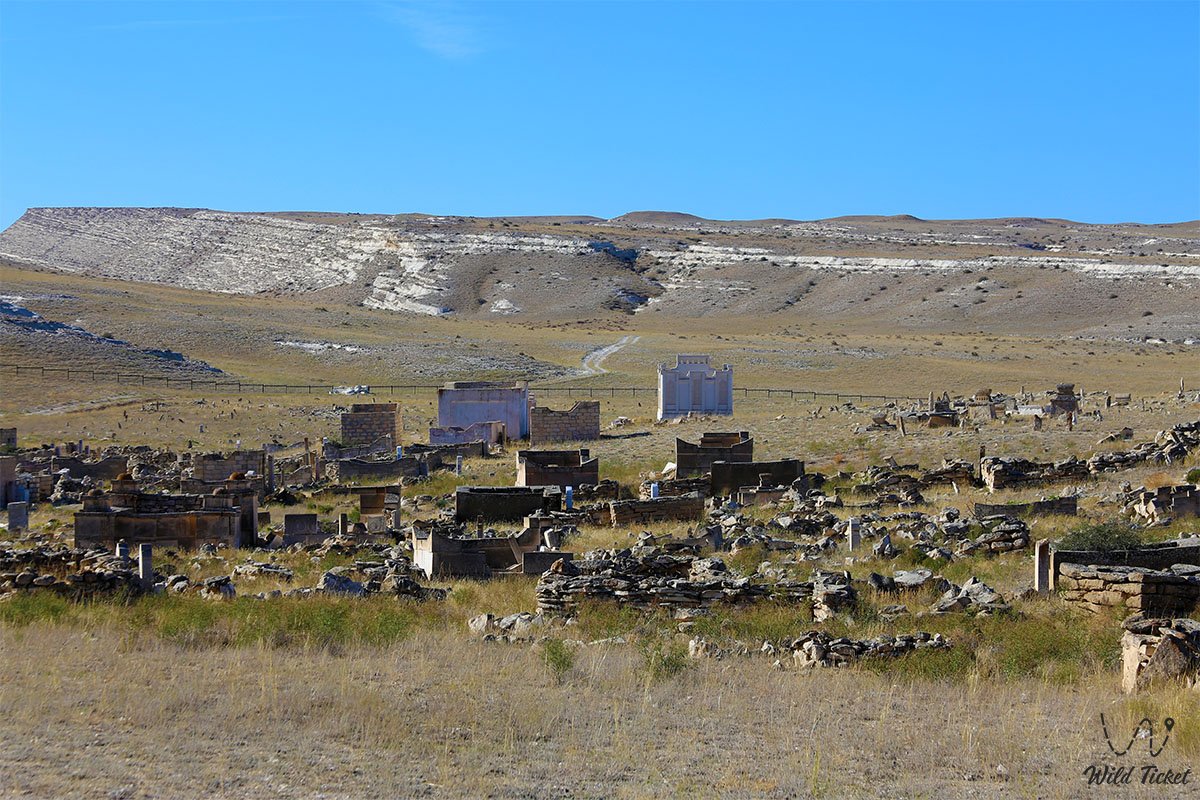
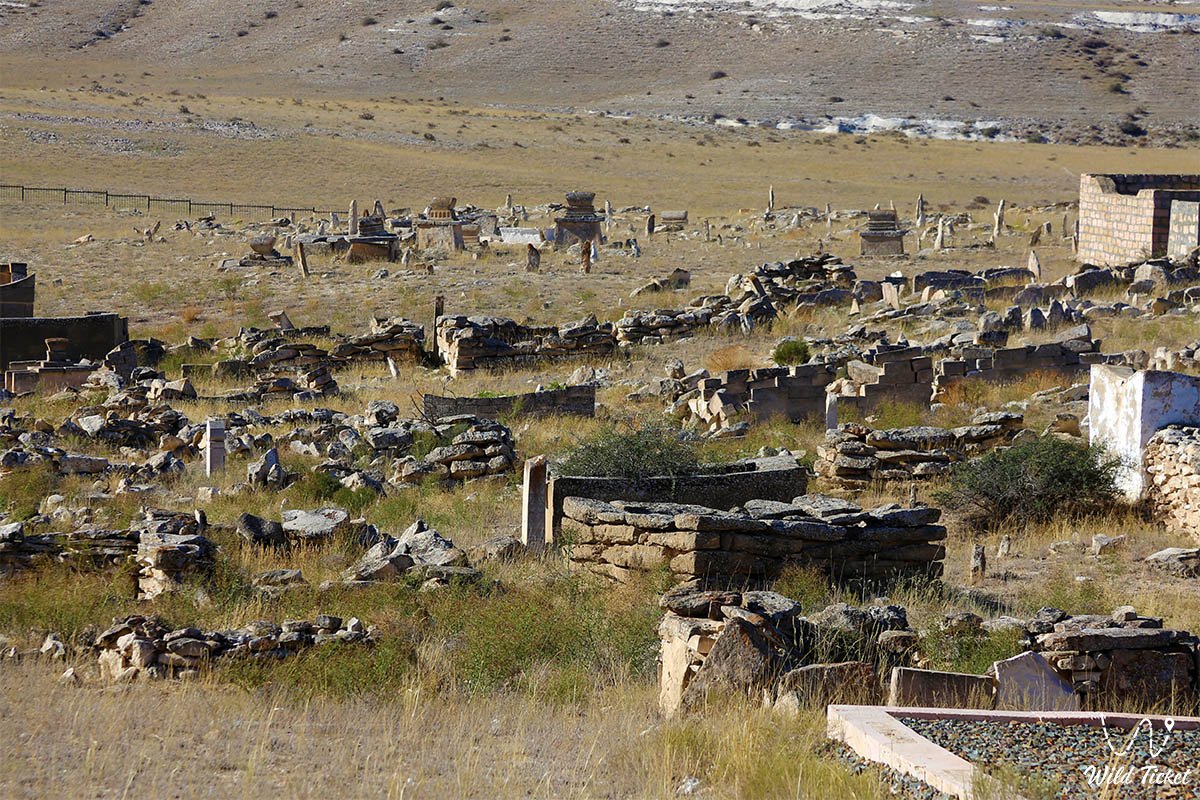
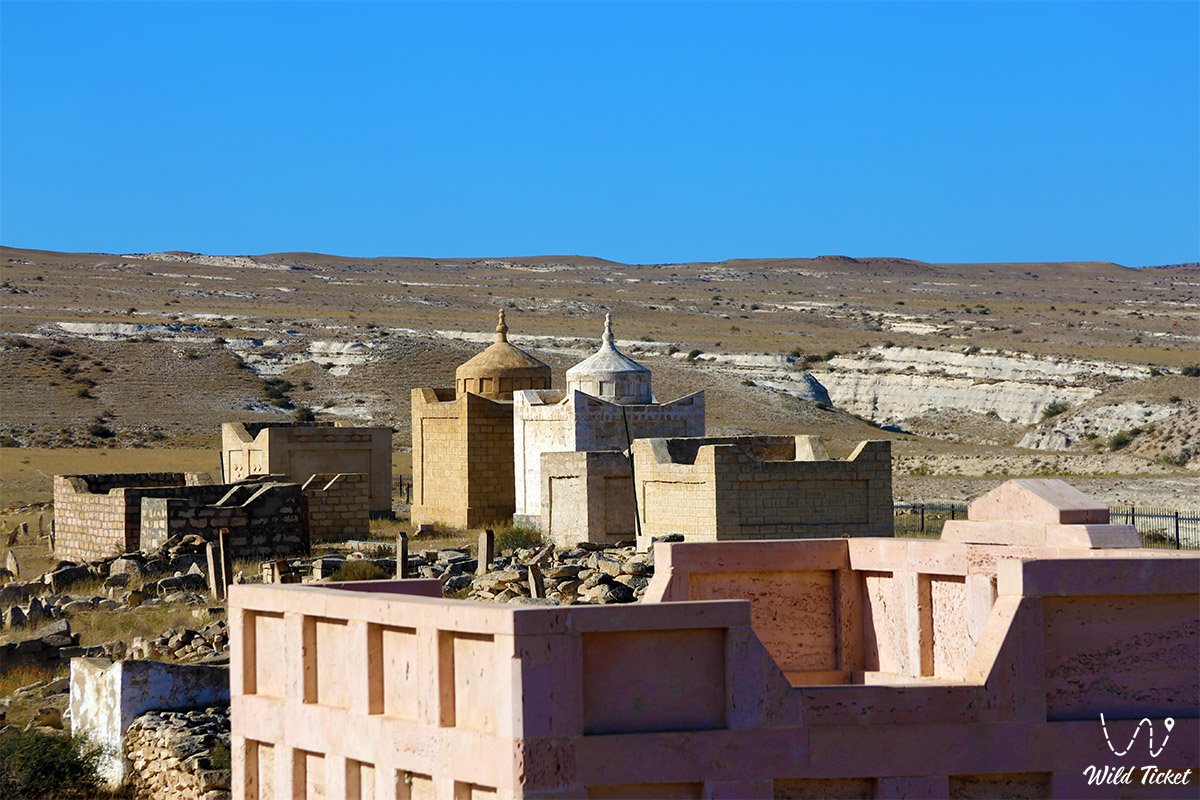
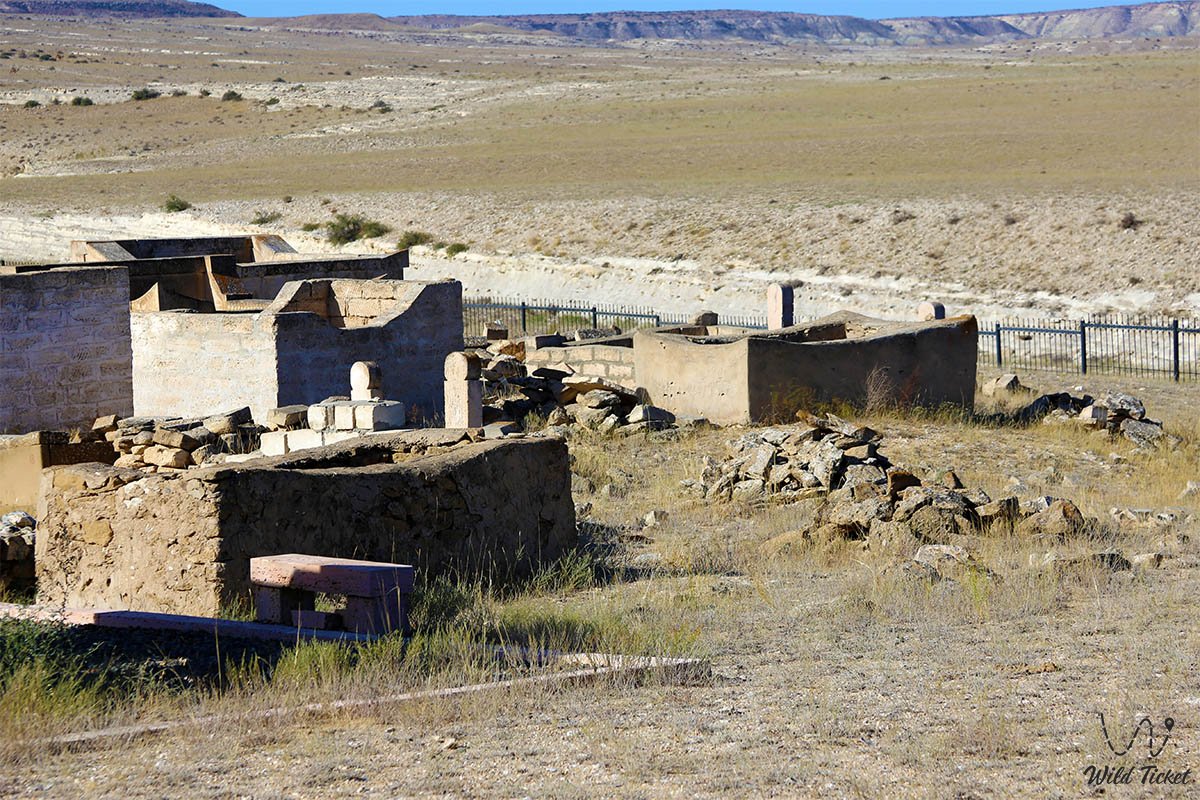
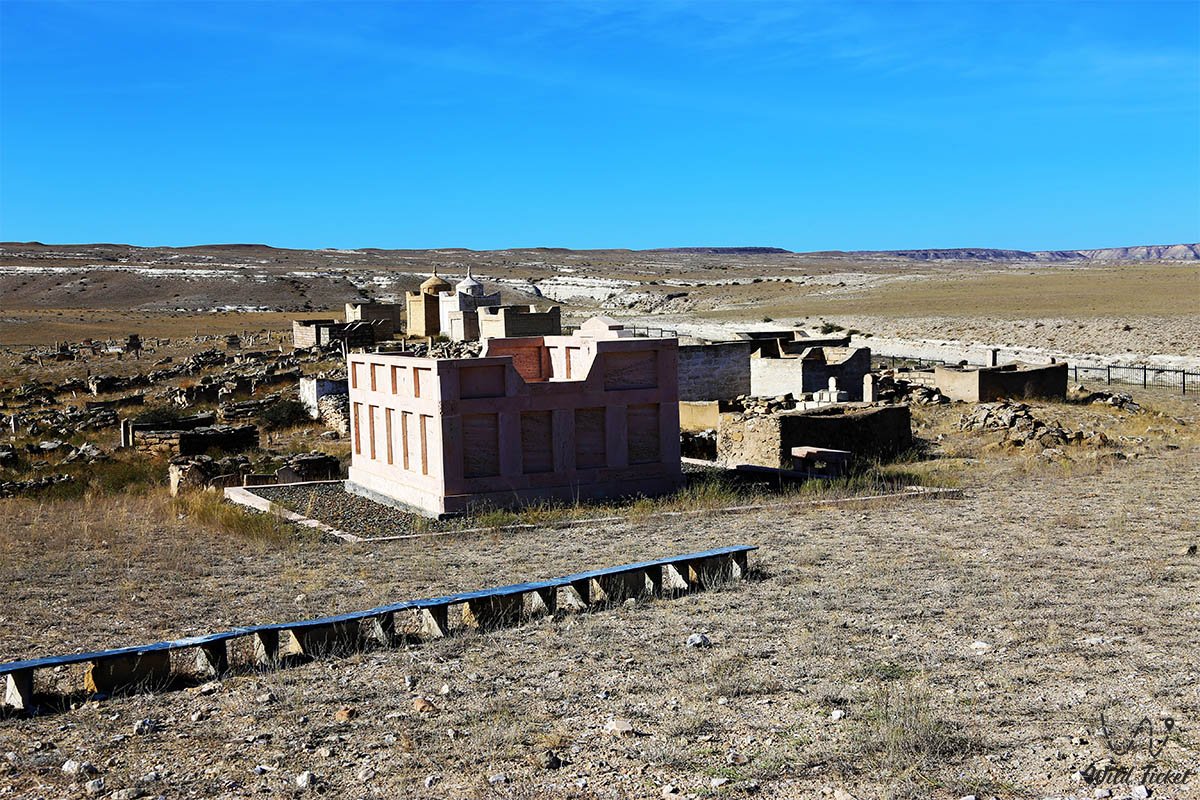
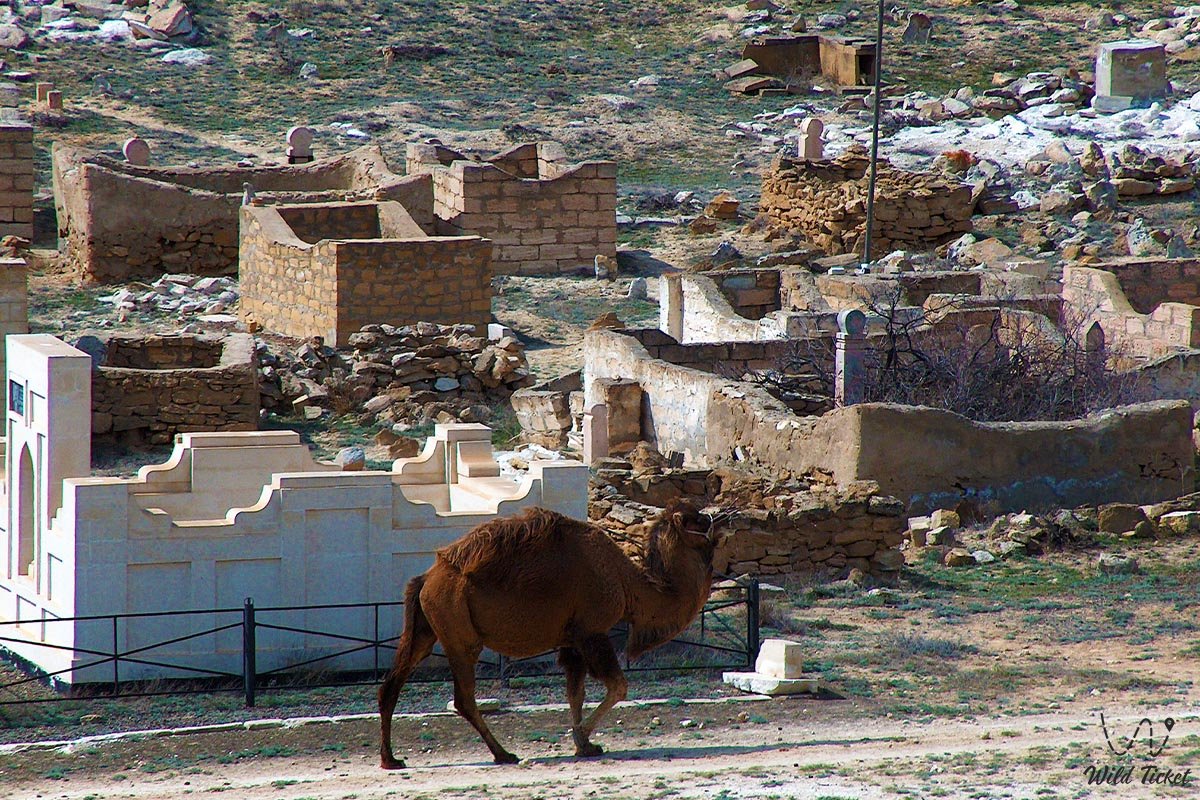
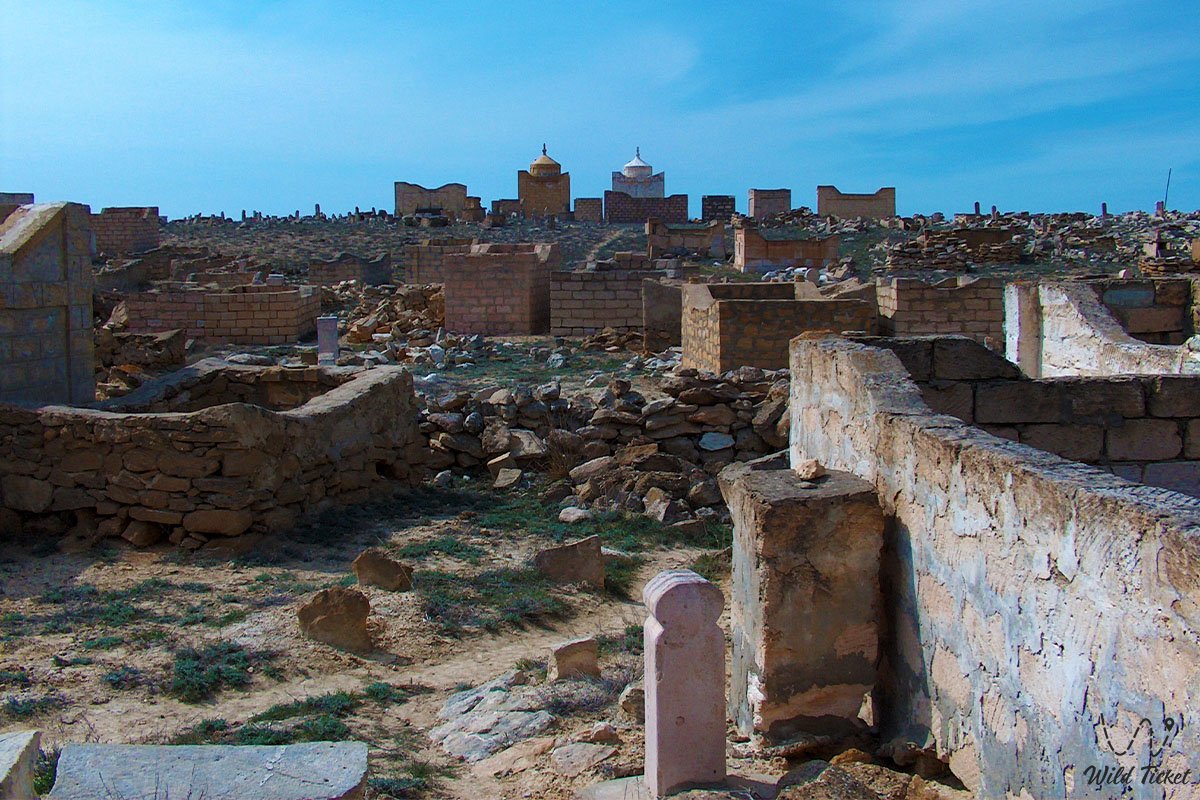
Over centuries, the expansive Shakpak-Ata necropolis developed around the mosque, becoming the burial ground for revered holy figures, batyrs, and clan leaders. Medieval Oghuz-Turkmen stone monuments stand alongside monumental carved Kazakh saganatams of the Aday clan. In July 2026, the Shakpak-Ata underground mosque and necropolis were inscribed onto the UNESCO World Heritage List by the World Heritage Committee.
Holy righteous elder and healer Shakpak-Ata
Shakpak-Ata (birth name Shakhmardan) is among the most revered and enigmatic figures in Mangystau's spiritual pantheon, a Sufi thinker, dervish, and healer of the Early Middle Ages. In the folk memory of Kazakhs and Turkmens, he remains not merely a preacher of faith, but a protector of common folk endowed with the power to heal deep physical and spiritual afflictions.
The name "Shaqpaq" translates as "flint" or "firesteel." Lore relates that the elder received this title not only for his steadfast character and unbreakable resolve, but for his miraculous ability to draw sparks and flame by touching rock with his fingers, symbolizing the rekindling of true faith within human hearts. Another explanation points to the vast deposits of black flint in the canyon, which the saint and his followers used in daily life and to assist travelers.
Shakpak-Ata was one of the wandering Sufi mystics who sought seclusion in unpopulated cliffs and caves for deep prayer, self-knowledge, and meditation. He was an intimate observer of nature, versed in the medicinal properties of steppe herbs and minerals. He is credited with initiating the regional tradition of carving multi-chambered rock sanctuaries on Mangyshlak, where every hall and column carried symbolic meaning on the unity of humanity and cosmic elements.
A central element of Shakpak-Ata's veneration is his renown as a healer. People suffering from joint diseases, paralysis, mental distress, and infertility were brought to him from across the steppe. Even after his passing, his resting place retained its reputation as a haven of healing. Pilgrims believe that sincere prayer beside the shrine and an overnight stay in the pilgrim house bring inner tranquility, recovery from longstanding ailments, and protection from misfortune.
Architecture and information
Architecturally and geomorphologically, the Shakpak-Ata underground mosque is a four-chamber rock-cut cave temple forming a cruciform layout. The main entrance is designed as a monumental arched portal cut into a sheer limestone scarp. The central hall measures roughly 4.5 by 4.5 meters, with total chamber extensions reaching up to 15 meters. Ceiling heights vary from 2.5 to 3.5 meters.
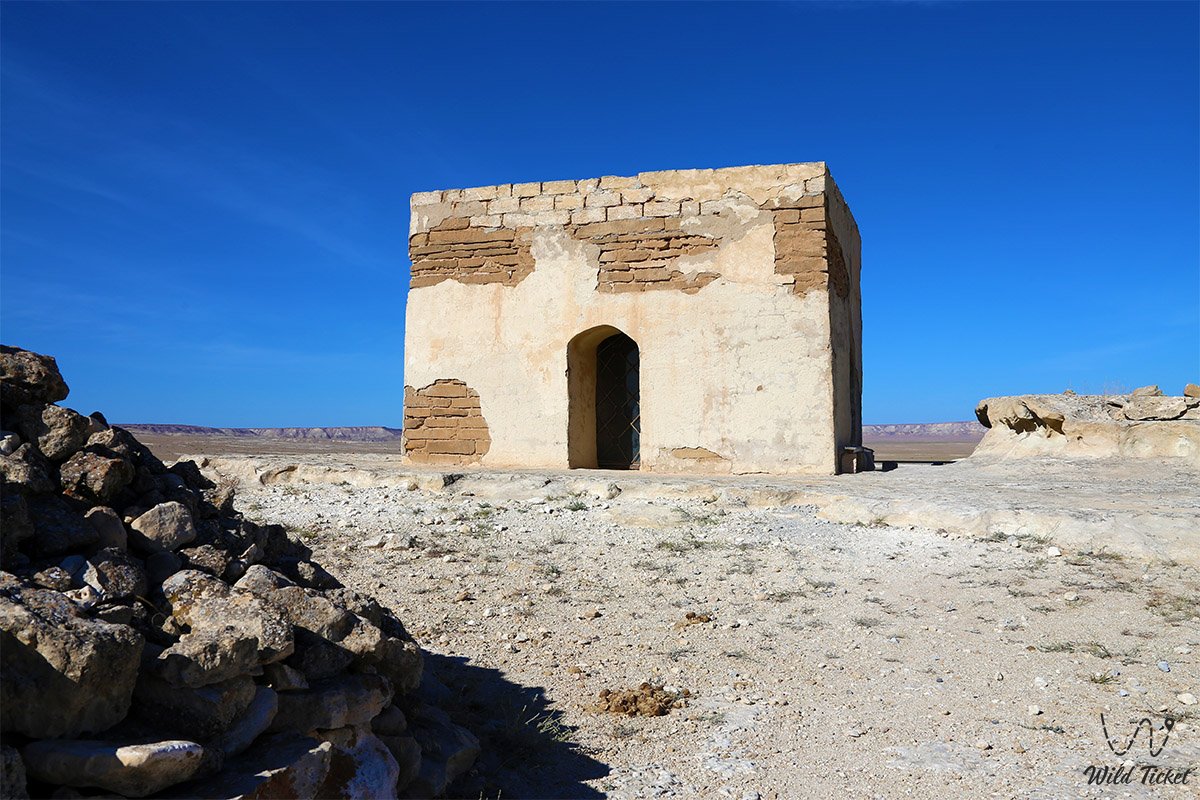
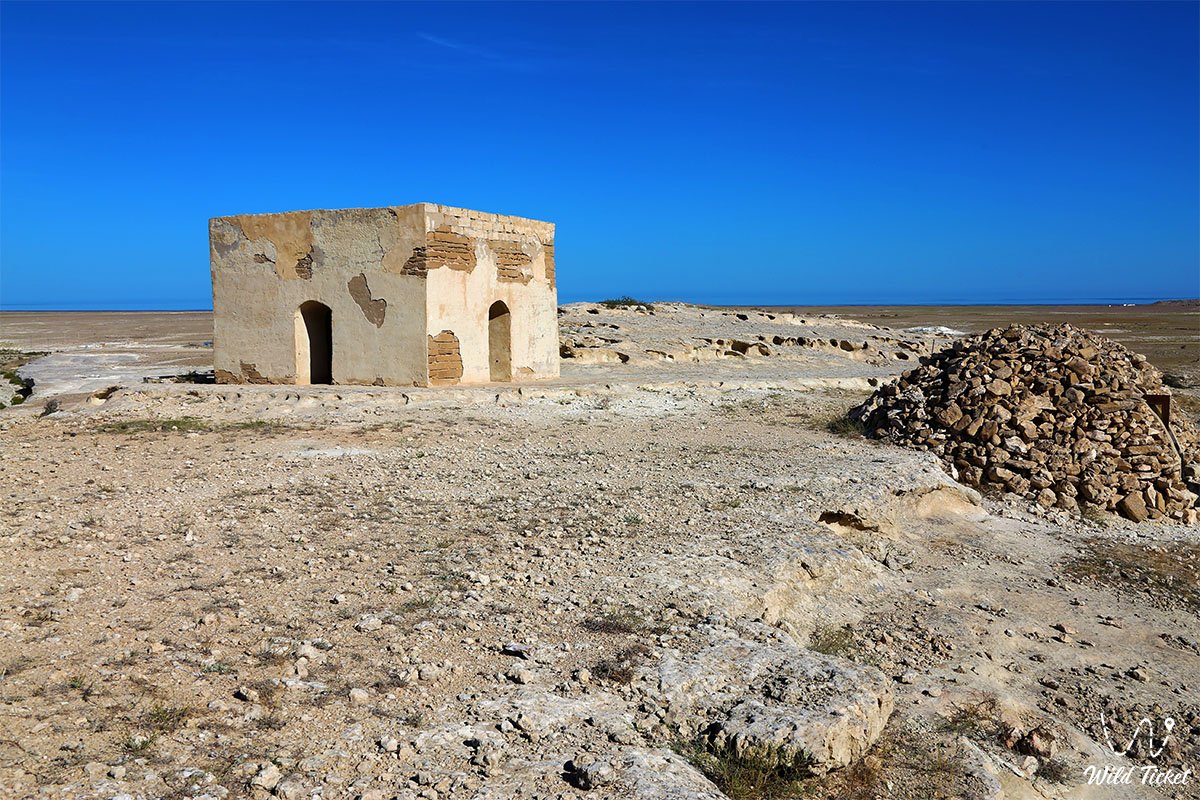
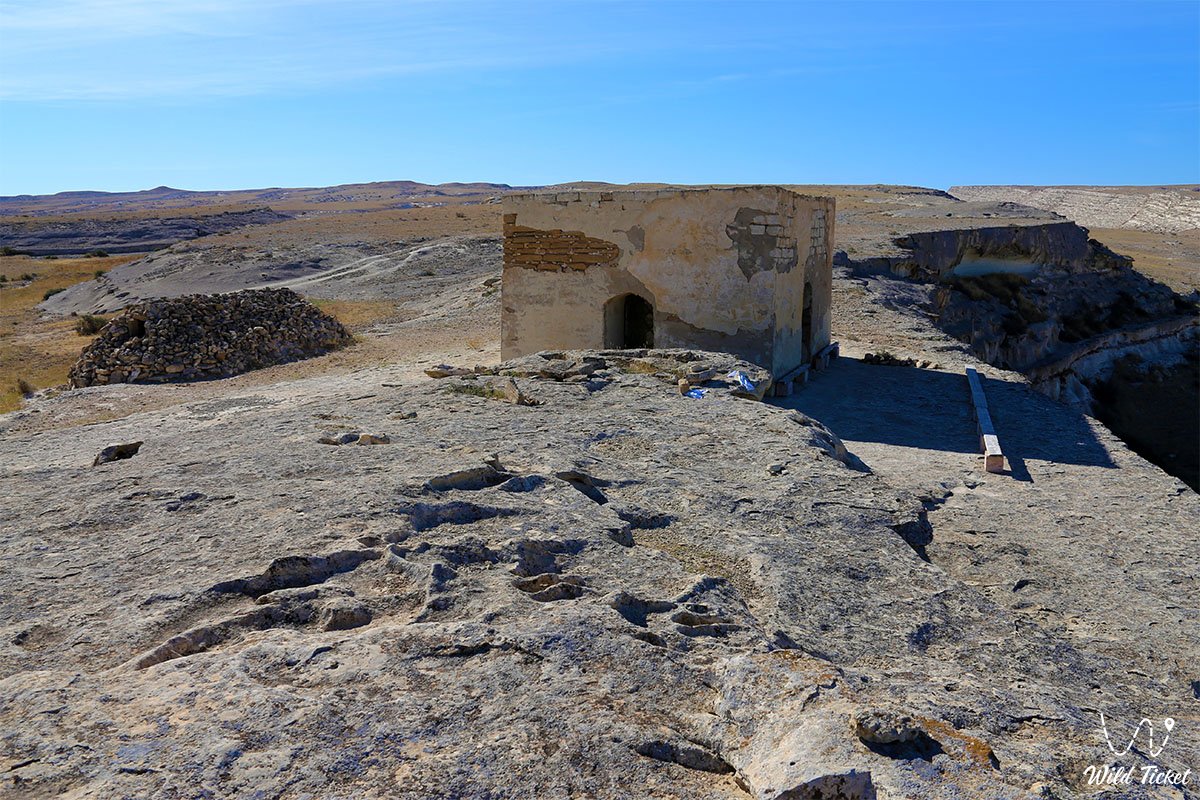
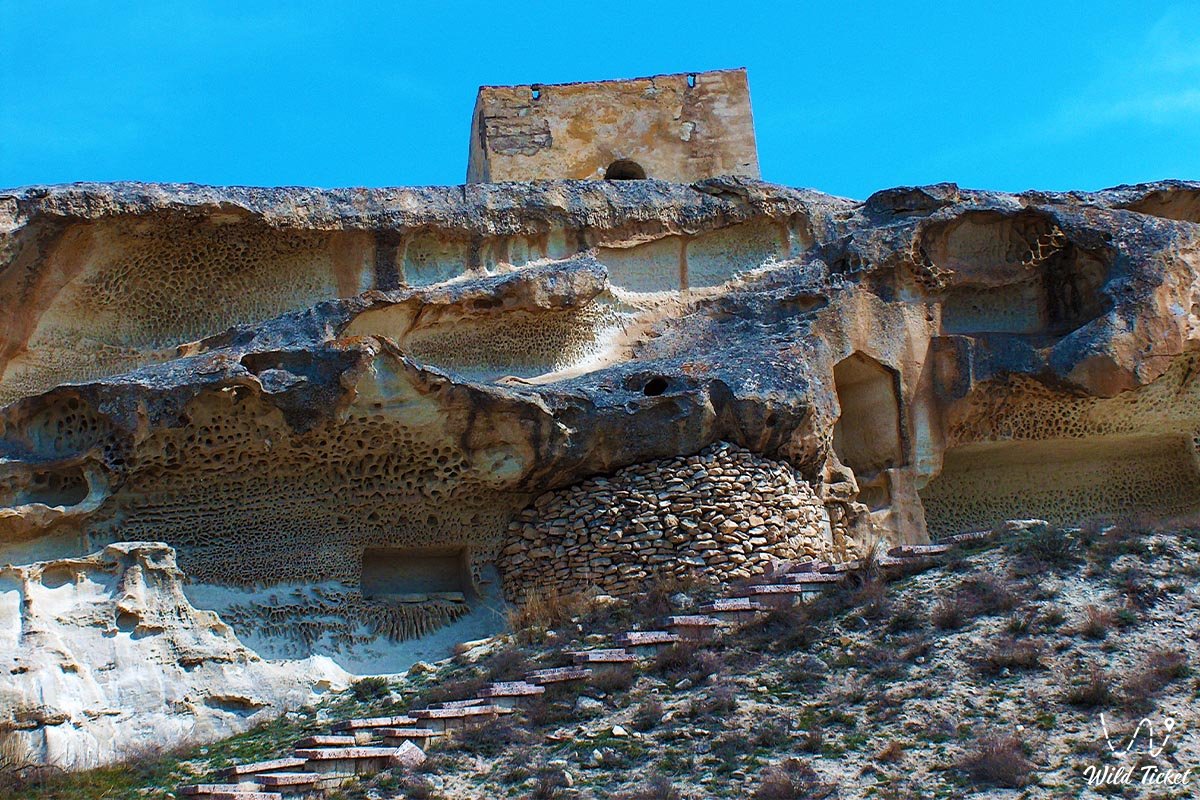
The architectural framework displays rigorous geometric precision. The central space is capped by a domical vault, at the apex of which opens a round light well roughly 1.2 meters in diameter, extending to the flat upper plateau surface. The light well is crowned by an above-ground stone rotunda pavilion that served simultaneously as a minaret and a navigation landmark in the steppe.
The central vault rests upon four massive columns carved directly from the living rock at the chamber corners. The column capitals and bases feature geometric cornices and stalactite friezes. In the western arm of the cross lies the sacred mihrab oriented toward Mecca, while lateral niches house cells for secluded prayer (chillahana) and shelves for sacred books.
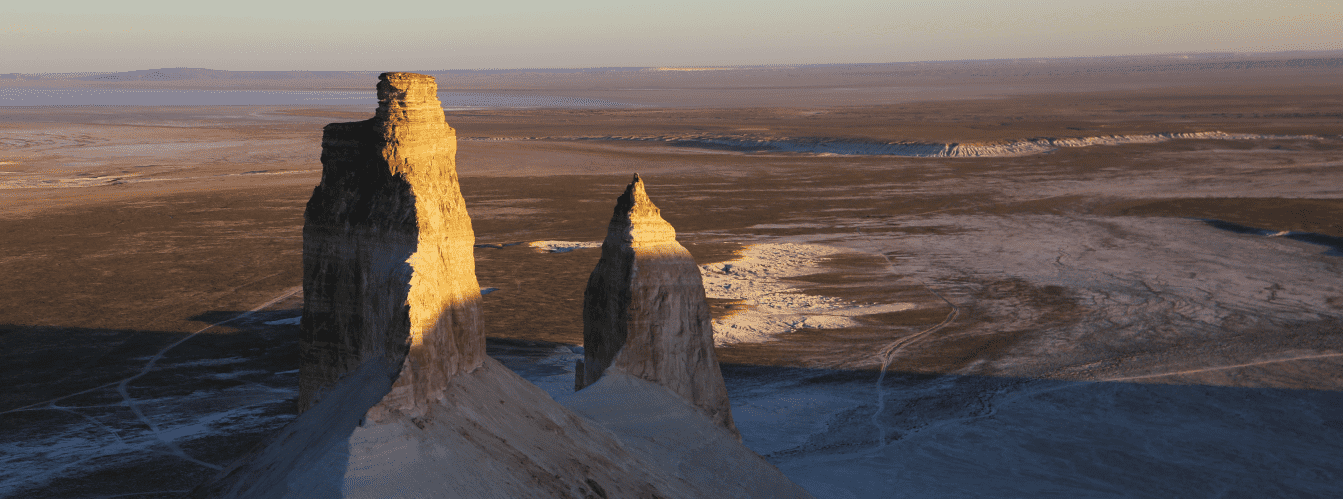
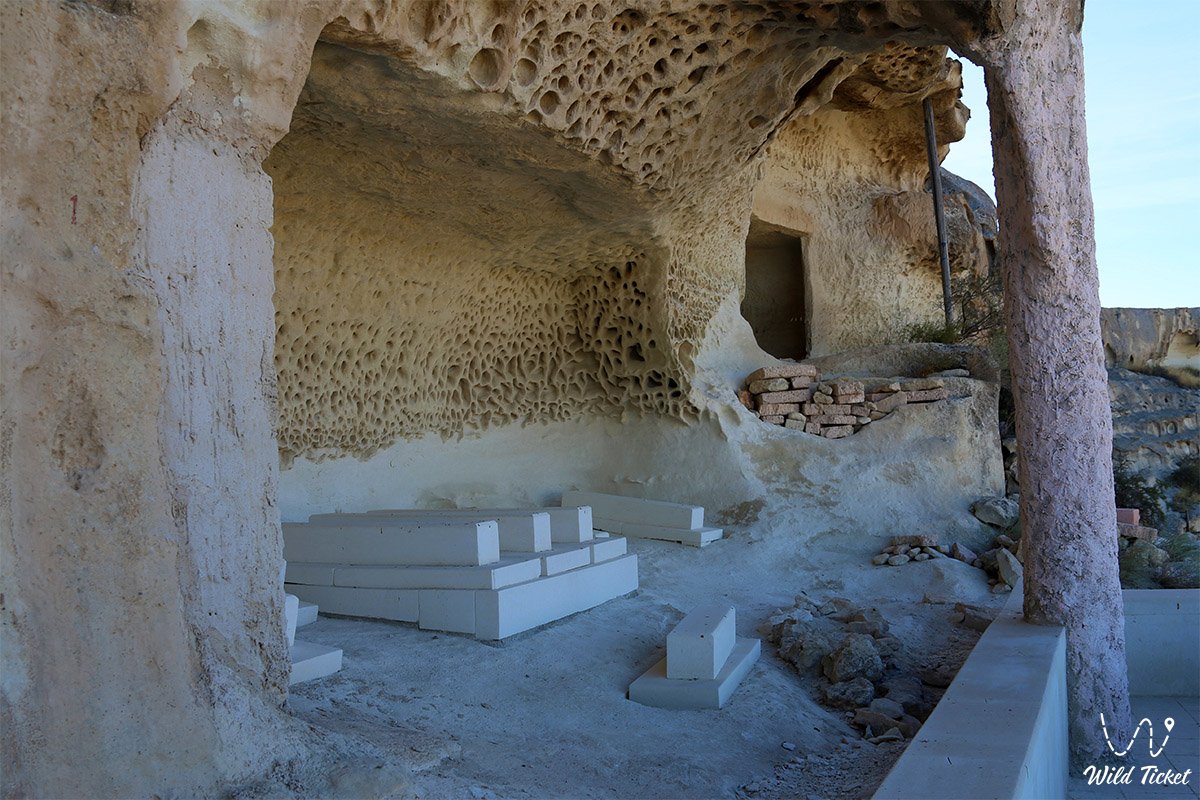
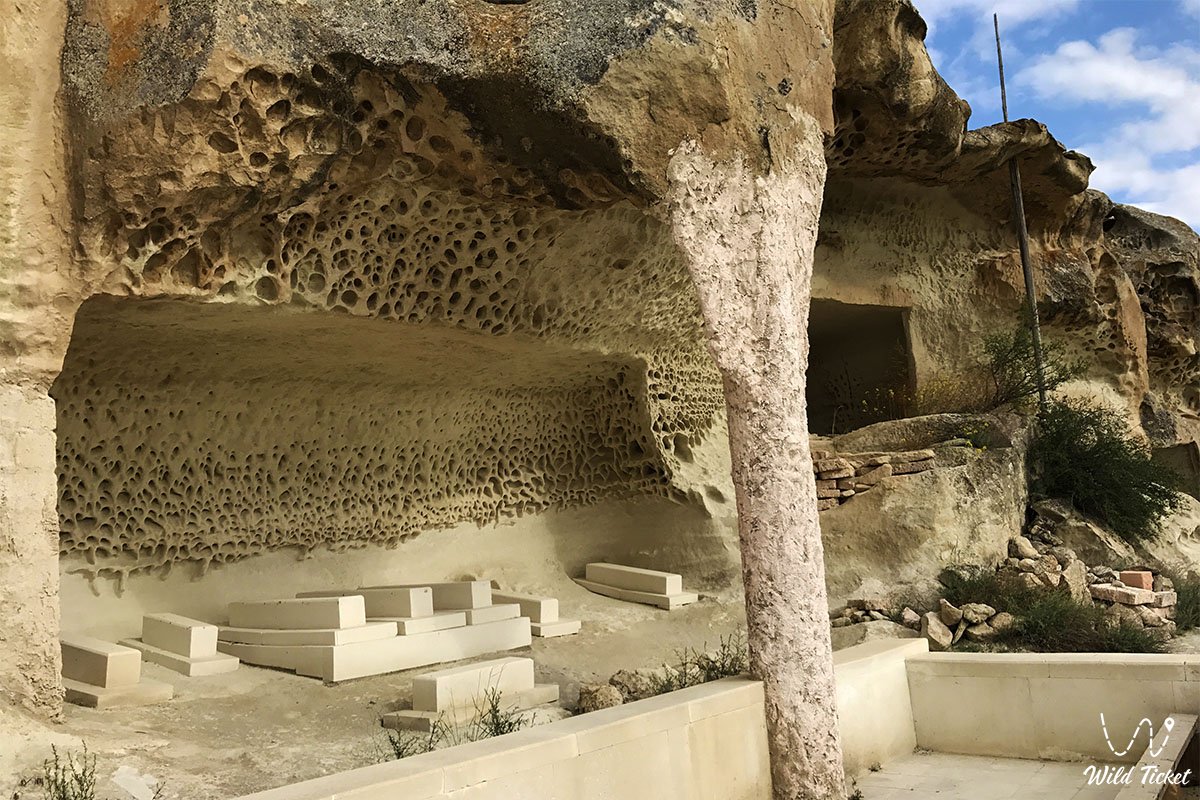
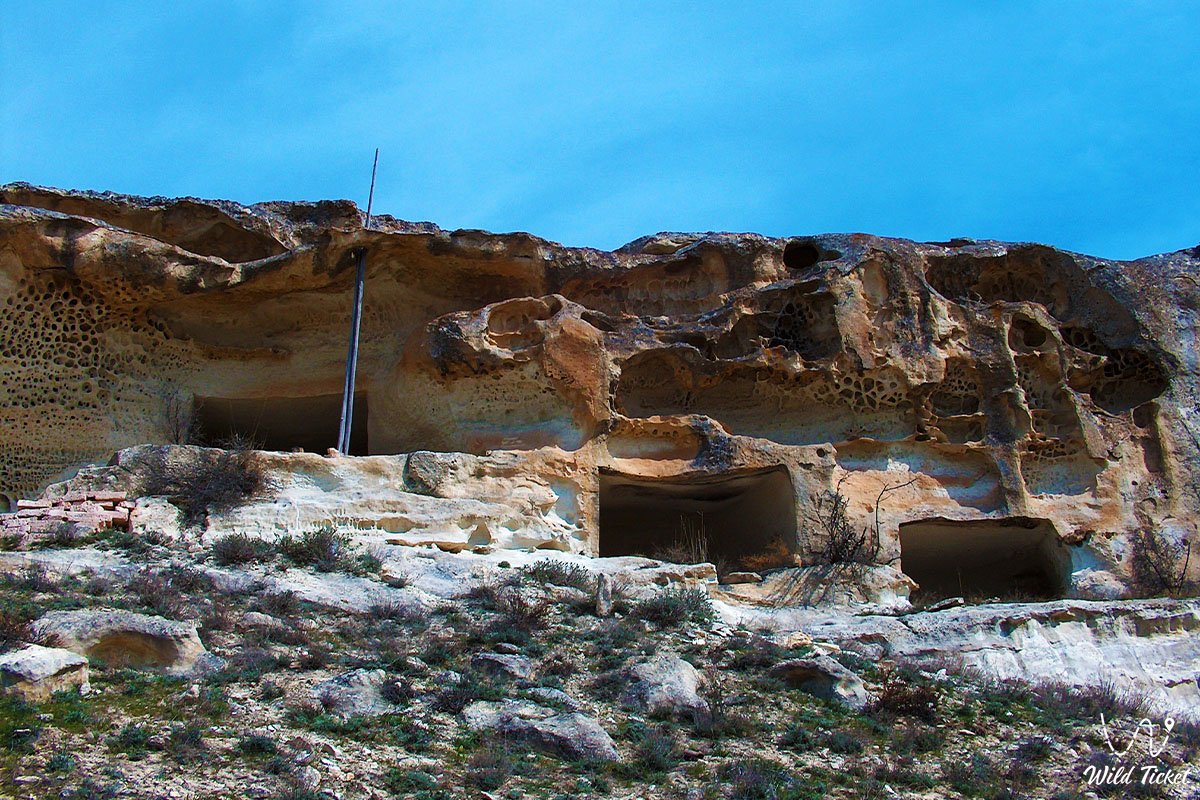
The geological sequence consists of dense white and cream Sarmatian coquina limestones of the Paleogene and Neogene periods from the Tethys Ocean. The rock is easily carved when fresh, yet hardens on exposure to air, developing a protective crust. The outer canyon walls are covered with honeycomb weathering patterns (tafoni), evoking petrified sea foam and stone honeycombs.
The hydrological supply of the shrine is maintained by fissure karst aquifers. At the foot of the hill flows a holy spring of fresh, pure water that stays at a steady temperature of +12...+14 °C.
The interior microclimate is stable: insulated by the rock massif, temperatures remain between +15 and +17 °C throughout the year, while the light well provides fresh air circulation without drafts.
Detailed description of the venue
The sacred architectural ensemble of the Shakpak-Ata mosque encompasses the following key features, interiors, and memorial areas:
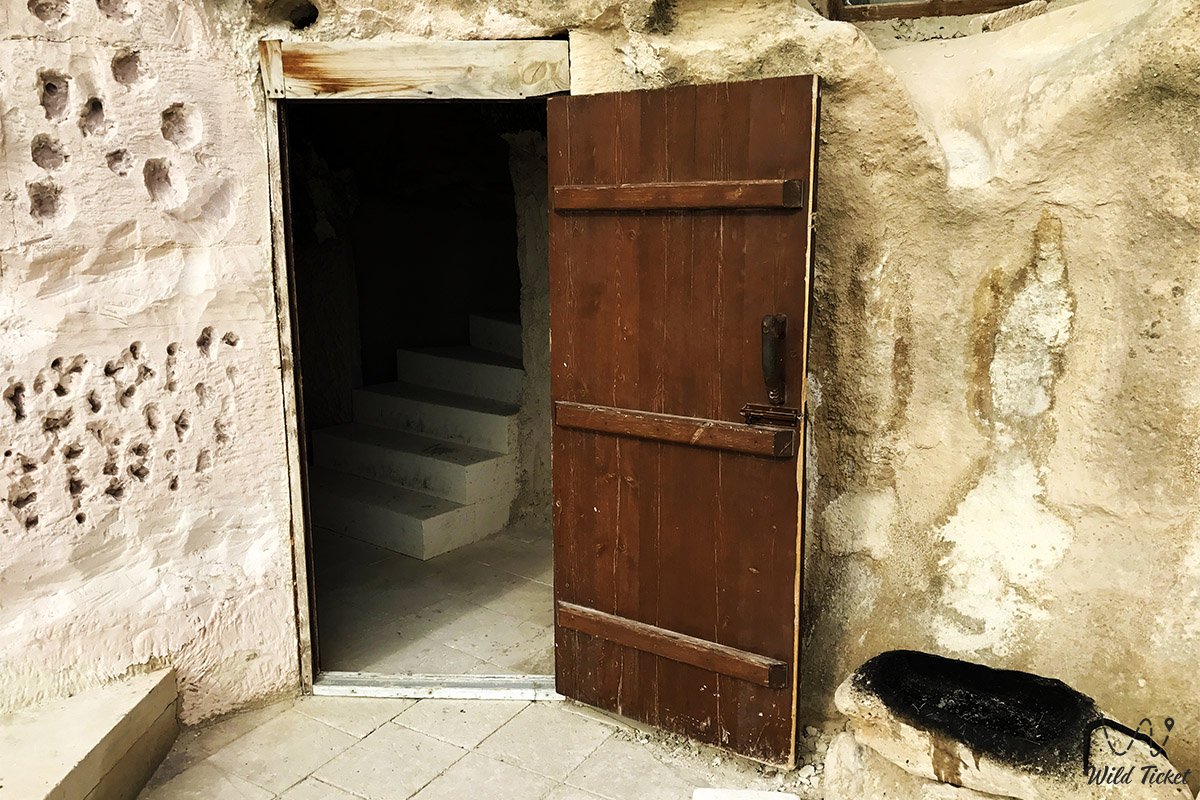
• Rock-cut entrance portal – a monumental pointed arch carved into the limestone scarp, granting access to the cool subterranean halls.
• Central cruciform hall – the primary prayer chamber, oriented to the four cardinal directions, housing the altar mihrab.
• Four corner columns of primal elements – monolithic stone pillars carved in place with relief capitals, symbolizing fire, water, air, and earth.
• Skylight dome shanyrak – a spherical ceiling with a central circular light aperture illuminating the prayer hall with soft natural light.
• Above-ground stone rotunda – an arched stone pavilion atop the cliff above the skylight, historically used as a watch post and minaret.
• Prayer cells (chillahana) – narrow, secluded alcoves in the lateral arms of the mosque, meant for the forty-day meditative retreats of dervishes.
• Gallery of petroglyphs and epigraphy – a rare collection of rock drawings (horses, hamsa palms) and carved texts in Farsi, Arabic, and Turkic.
• Ancient Shakpak-Ata necropolis – a large memorial pantheon at the foot of the cliff containing hundreds of Oghuz, Turkmen, and Kazakh gravestones.
• Traditional pilgrim house (tunehana) – a guest complex providing holy spring water, a dining hall, and sleeping quarters for travelers.
Legend
A revered legend concerning the Fire of Healing and the Holy Master of Flint surrounds the Shakpak-Ata underground mosque.
Tradition tells that in ancient times, when the communities of Mangyshlak suffered from pestilence and raiders, the righteous sage Shakhmardan arrived among these silent white rocks. He possessed a pure soul and divine grace, understanding the tongue of herbs, birds, and stones. The people named him Shakpak-Ata – Father of Flint, for the elder could strike showers of blessed fire from the cold rock with a touch of his fingers, warming the cold and banishing darkness.
Shakpak-Ata resolved to construct a house of prayer that neither blizzards nor enemy blades could destroy. Armed with only an iron chisel and the strength of prayer, the holy man carved a temple into the solid bedrock. The stone yielded to the elder like warm dough: columns rose in their places, and the ceiling parted to welcome celestial light.
The righteous master dedicated each column to one of the Creator's great elements: Earth, which yields nourishment; Water, which gives life; Air, which carries breath; and Fire, which kindles faith. When the temple was finished, the elder placed his palm against the white wall, leaving a sacred imprint as a token of divine shelter for all who enter.
Thousands of ailing, blind, and despairing travelers from across the East journeyed to the underground mosque. Prayer alongside the holy elder, touch upon the sacred walls, and water from the subterranean spring brought healing to the gravely ill and peace to troubled souls.
Before passing into eternal rest, Shakpak-Ata declared that this sanctuary would remain under the Creator's protection until the end of time. To this day, the conviction endures: whoever steps beneath the white stone vaults of Shakpak-Ata with a pure heart and humble prayer shall find health, inner quiet, and a blessing for their journey.
Conclusion
The Shakpak-Ata underground mosque is an acknowledged masterpiece of world cave architecture and the spiritual heart of Tupkaragan, where the ancient chalk bastions of the Tethys Ocean unite with the highest triumph of human faith and craft. A visit to this UNESCO sanctuary offers profound tranquility, an encounter with ancient carved petroglyphs, and an enduring sense of timelessness beneath the stone shanyrak of Mangystau.
Interesting sights nearby:
• Shakpaktysay (Shakpak-Ata) Canyon;
• Ancient Shakpak-Ata Necropolis;
• Snow-White Kapamsay Canyon;
• Ungoza Table Mountains Massif;
• Sarytas Bay;
• Zhygylgan Sinkhole;
• Fossilized Tracks in Zhygylgan;
• Tamshaly Canyon;
• Saura Canyon;
• Cape Tyub-Karagan;
• Tauchik Village;
• Torysh Valley of Stone Balls;
• Kokbulaksay Chalk Canyon;
• Zholbart Artesian Well;
• Kumakapa River Valley.
Sacred sights and pilgrimage destinations:
• Khanga-Baba Necropolis;
• Karaman-Ata Mosque;
• Sisem-Ata Necropolis;
• Beket-Ata Mosque in Oglandy;
• Otpan-Tau Complex on Mount Otpantau;
• Kolbas Ishan Mosque;
• Koben Mosque;
• Zholaskan Mosque;
• Nurbergen Kalyshev Mausoleum;
• Zhaman Sauran Mosque;
• Ishan Khozha Mosque;
• Itolla Mosque;
• Sonabay Underground Mosque;
• Masat Ata Mosque;
• Uytoly-Ata Underground Mosque;
• Bayte Sanctuary;
• Sherkala Necropolis.
Photogallery: