Mountain oasis of cascading waterfalls, relict hawthorn, and Karatau mountains –
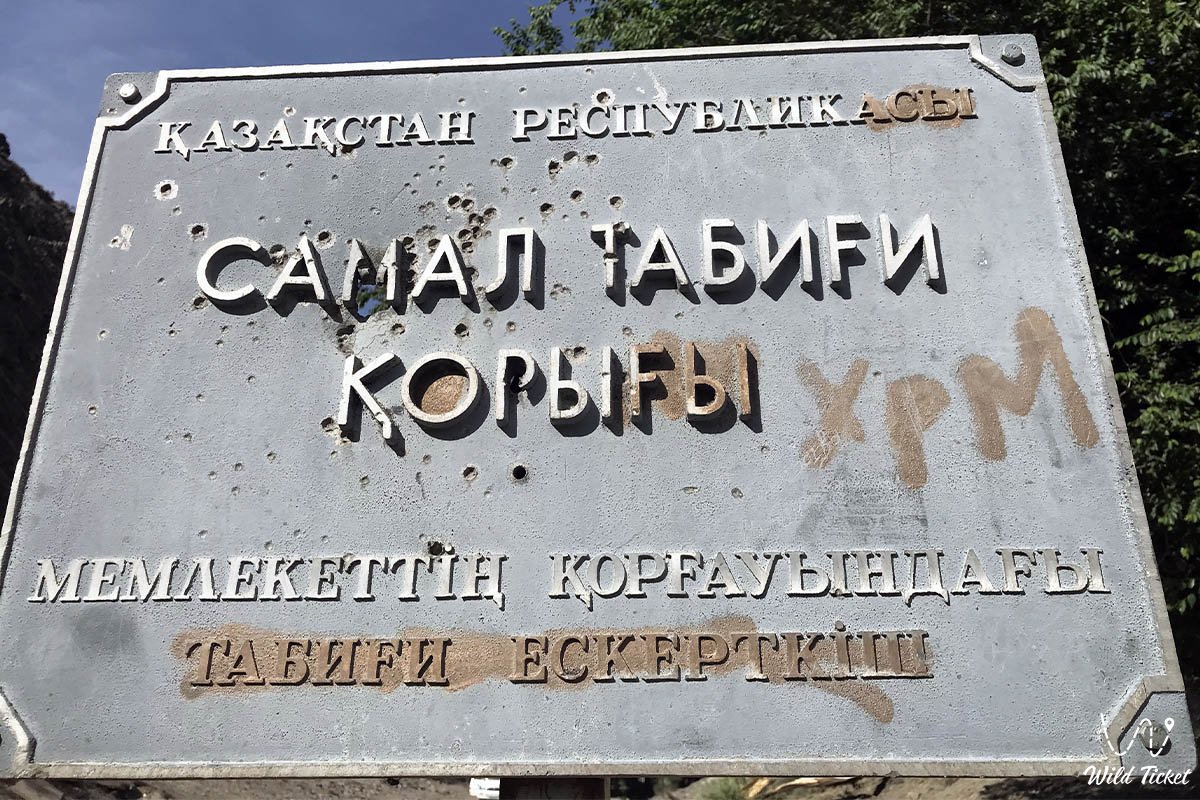
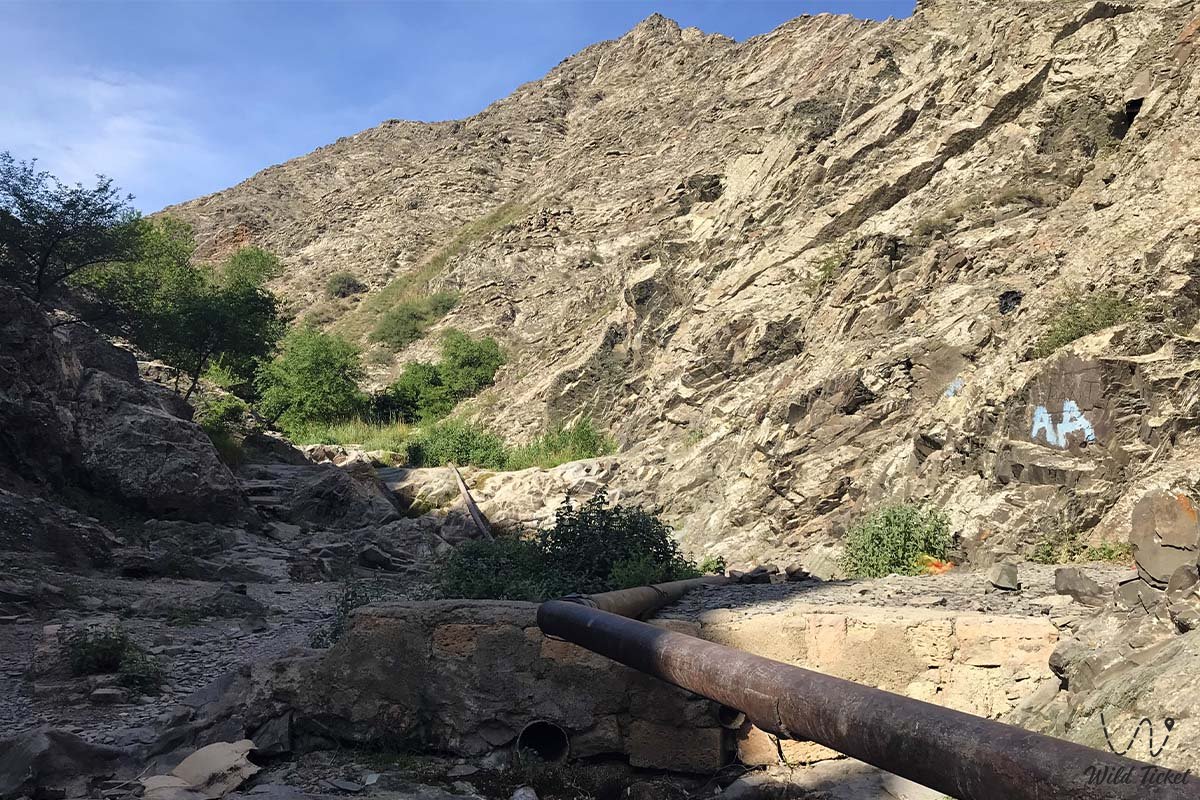
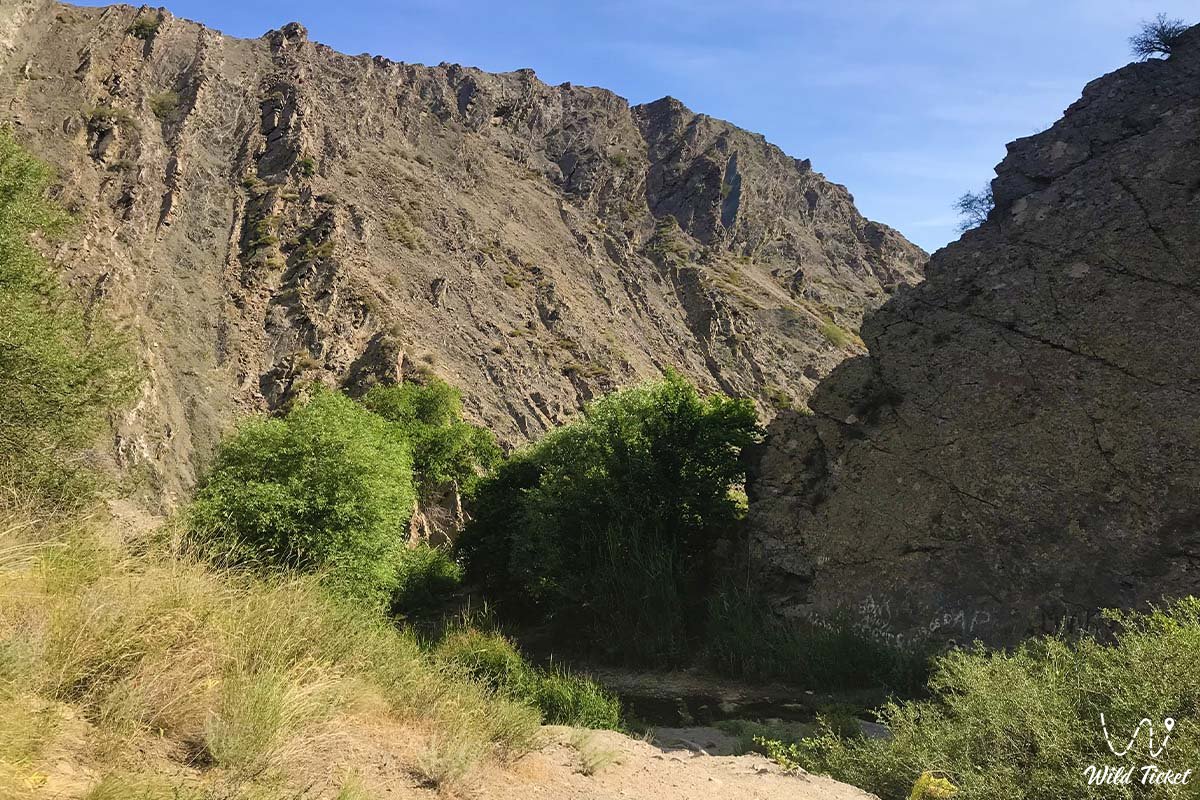
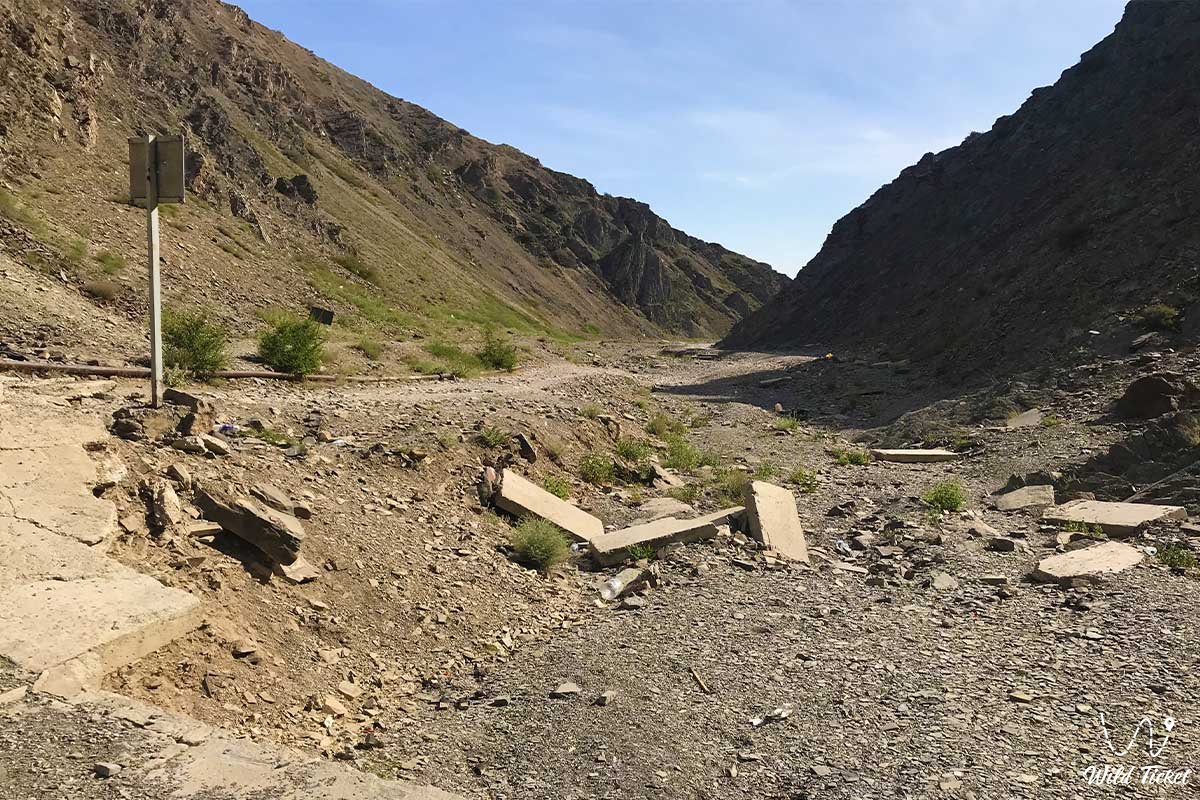
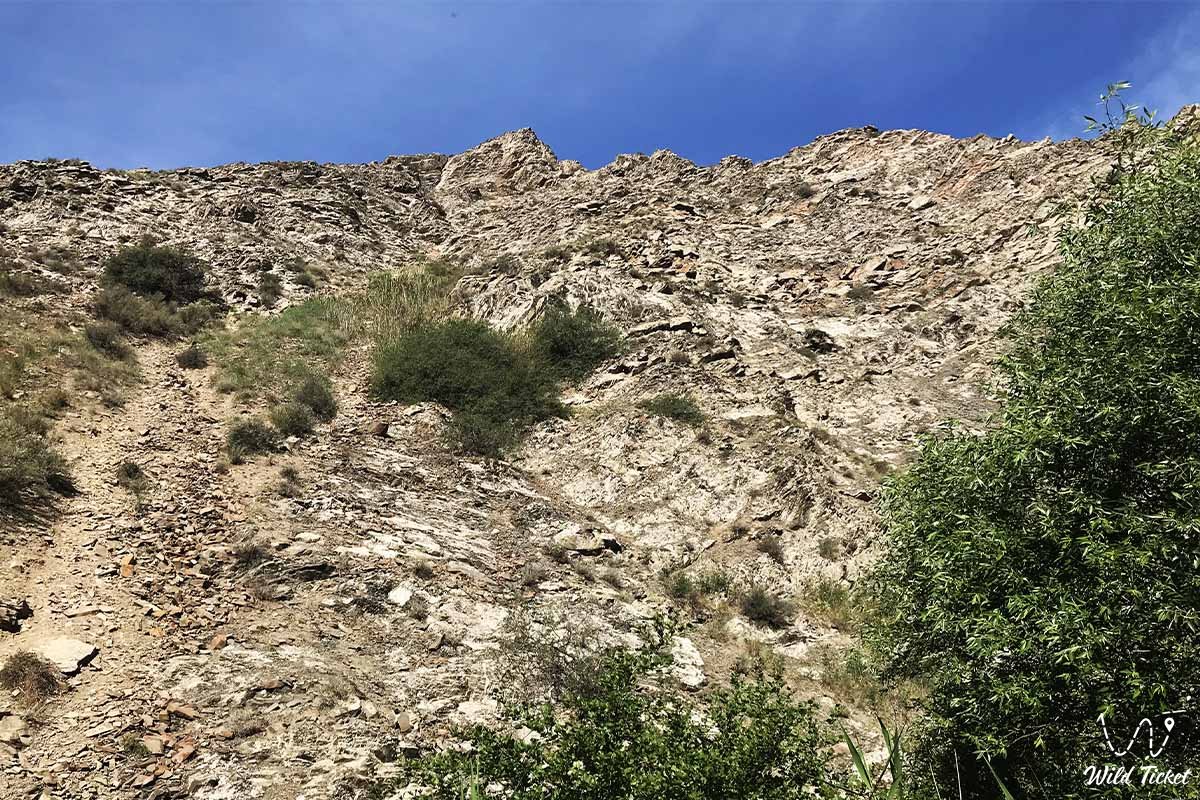
Samal Gorge (Kaz. Samal shatqaly) represents a picturesque winding rock canyon, a deep mountain defile, and a unique relict spring oasis situated on the northeastern slope in the northwestern section of the Western Aktau ridge and within the spurs of the Mangyshlak Upland of Karatau in the Mangystau district of the Mangystau region. The area of this natural sanctuary covers approximately 6 hectares, with the canyon extending for 1.5 kilometers.
Translated from the Kazakh language, the melodious name "Samal" signifies "cool breeze," "gentle gust," or "revitalizing freshness," characterizing the local microclimate with absolute precision. Entering here from the scorching, lifeless stony wasteland, the traveler instantly experiences a surreal transformation: searing heat and dry winds yield to a riot of lush emerald greenery, the shade of impregnable half-kilometer stone walls, and the mesmerizing murmur of crystal-clear water.
The Karatau Mountains do not astonish with dizzying alpine elevations or eternal glaciers, yet their true value lies in their profound geological antiquity. This massif is composed of Permo-Triassic sedimentary strata and is naturally divided into Eastern Karatau with its highest elevation at Mount Besshoky (556 m above sea level), Western Karatau with the summit of Otpan (533 m), and the western uplift of Karatauchik.
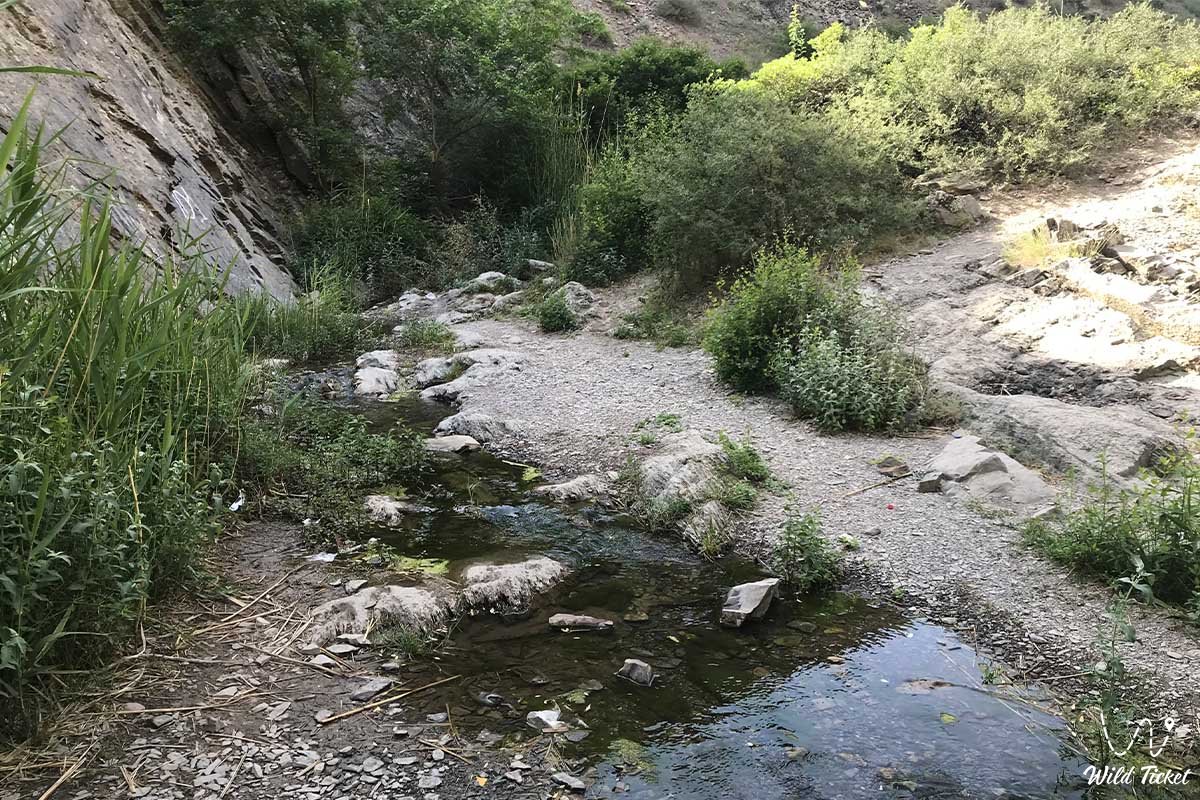
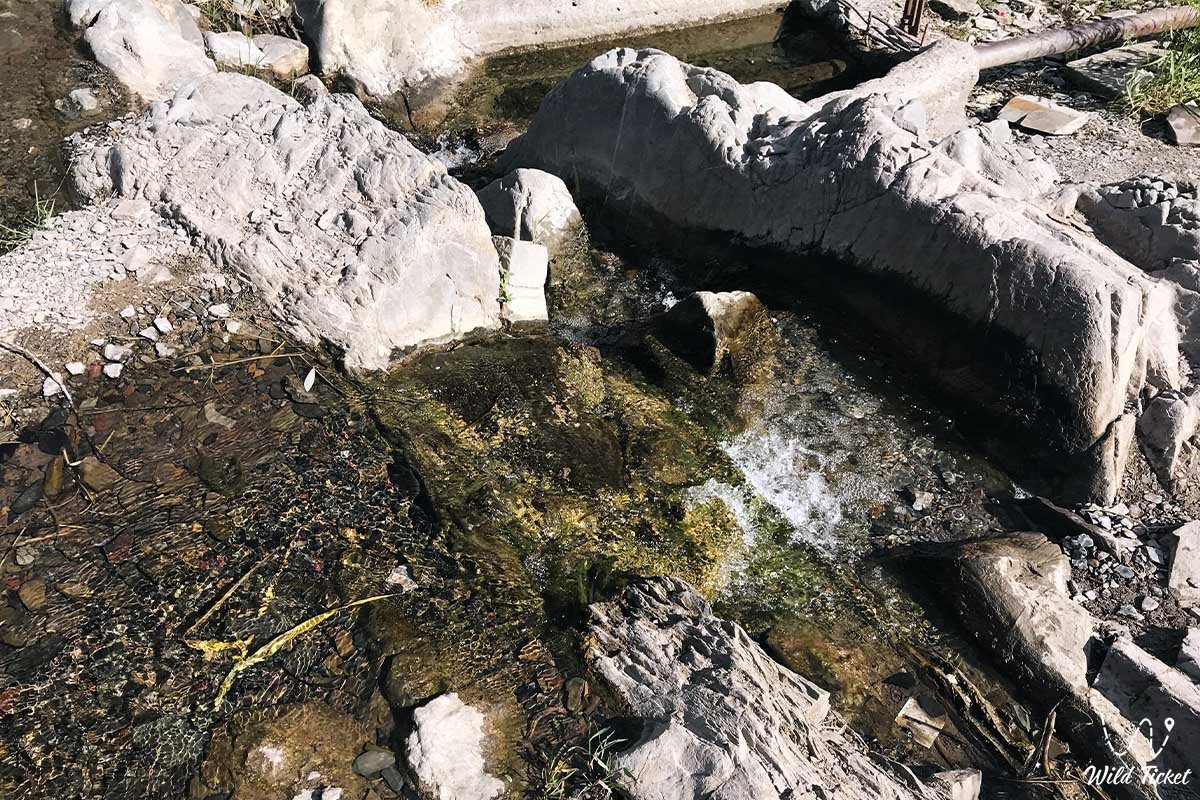
The mountains are scored by dozens of ravines, but whereas snowmelt creates roaring torrents across many watercourses in spring, virtually all of them run dry by mid-summer. Samal Gorge serves as a rare exception in Mangystau: throughout all twelve months of the year, a flowing mountain brook courses continuously here, traversing rocky benches in a series of picturesque multi-tiered waterfalls, cascades, and running stone pools.
The Samal valley is encircled by outstanding landscape and archaeological monuments: archaeologists have unearthed ancient Eneolithic campsites around the gorge, while just a few kilometers to the south and east rise sacred Mount Sherkala ("Lion's Fortress"), the castle chinks of the Airakty-Shomanay plateau, the shaded grove of the Akmysh tract, and the ruins of the medieval Kyzylkala caravanserai.
Today, Samal Gorge is recognized as one of the most vivid natural phenomena of Central Mangyshlak, a beloved recreational destination for regional residents, and an indispensable waypoint for ecological and regional expeditions.
--------------------------------------------
How to get there and visit –
Samal Gorge is situated in the Mangystau district, 14–18 km northwest of the district center – the settlement of Shetpe, 4.7 km north and slightly west of Mount Sherkala, 8.9 km southwest of the precipitous chink of Airakty, 3.4 km west of the paved Shetpe – Shayyr highway, and approximately 150–170 km northeast of the city of Aktau. Driving from the regional center takes an average of 2 to 2.5 hours.
GPS geographical coordinates of Samal Gorge:
44°12'56"N 51°59'32"E
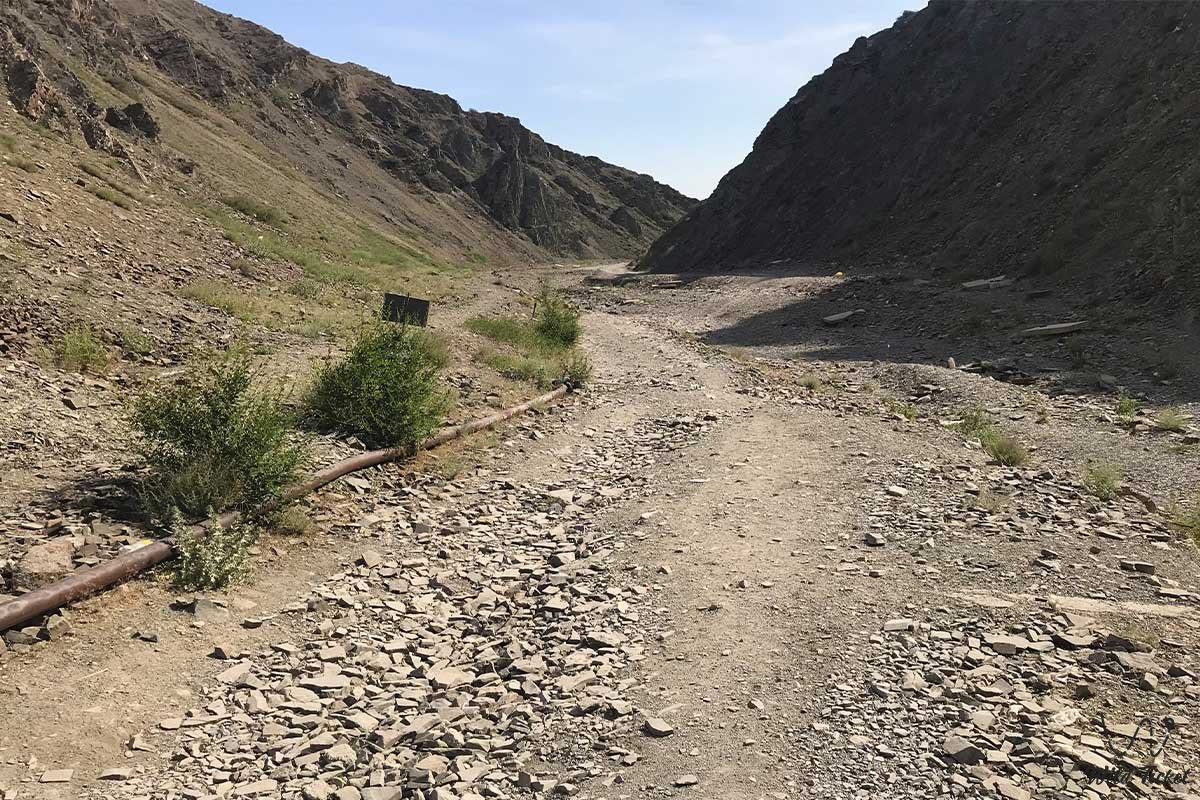
The primary driving route from Aktau leads northeast along the paved highway of republican significance Aktau – Shetpe – Beyneu. Upon reaching the junction near Shetpe, turn north onto the Shetpe – Shayyr road. Before reaching Mount Sherkala and the Akmysh Say tract, turn west toward the mountain slopes: a compacted 3.4-km steppe track leads directly to the wide mouth of Samal Canyon.
Thanks to the short length of the steppe access track, driving to the parking area before the canyon entrance in dry weather is easily feasible in a standard passenger car, crossover, or tour minibus. However, continuing on circular routes through the Karatau foothills, driving toward Sazanbay Gorge, the Airakty chinks, or the Torysh Valley of Balls strongly warrants a four-wheel-drive vehicle (4x4) with high ground clearance. Vehicular access inside the rocky gorge itself is physically impossible: the route is navigated exclusively on foot along the stream bed and stone terraces.
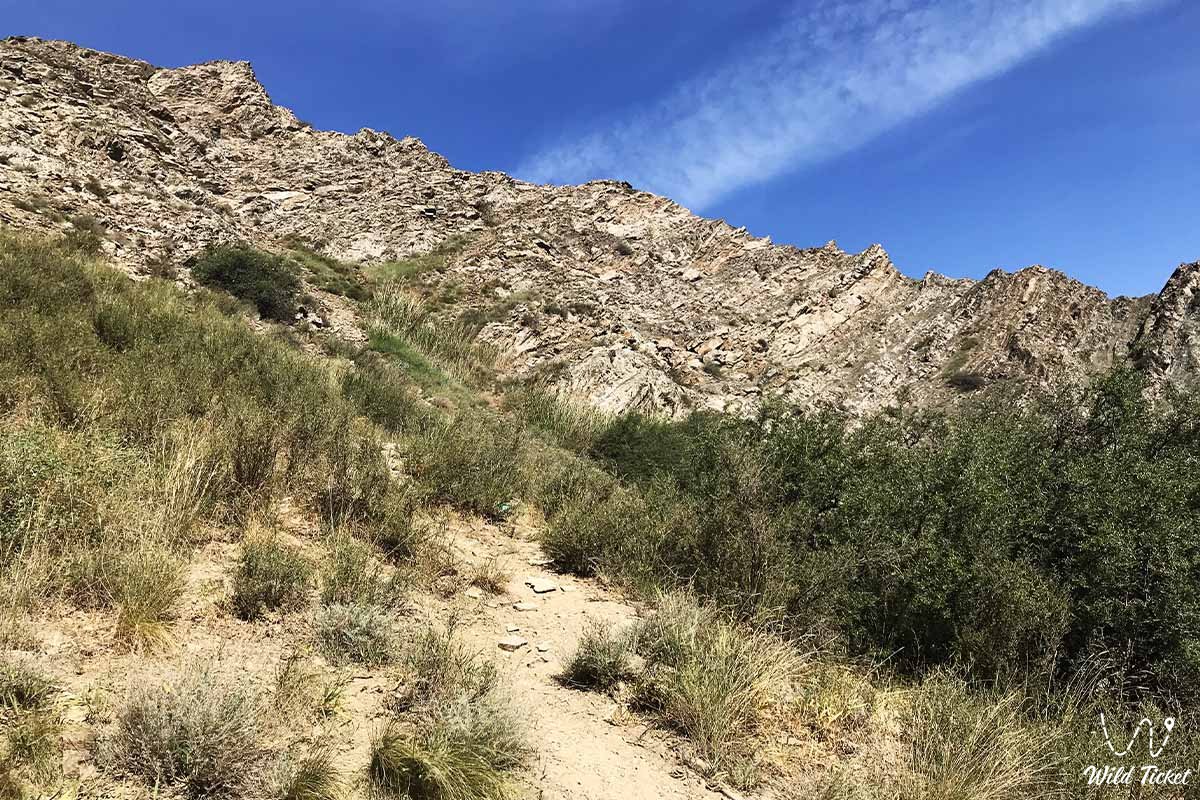
For the 1.5-km hiking trek upstream, comfortable footwear with reliable non-slip soles (hiking shoes or boots) is essential, as the trail winds across damp moss-covered boulders, gravel bars, and rapids, occasionally requiring visitors to wade across the stream.
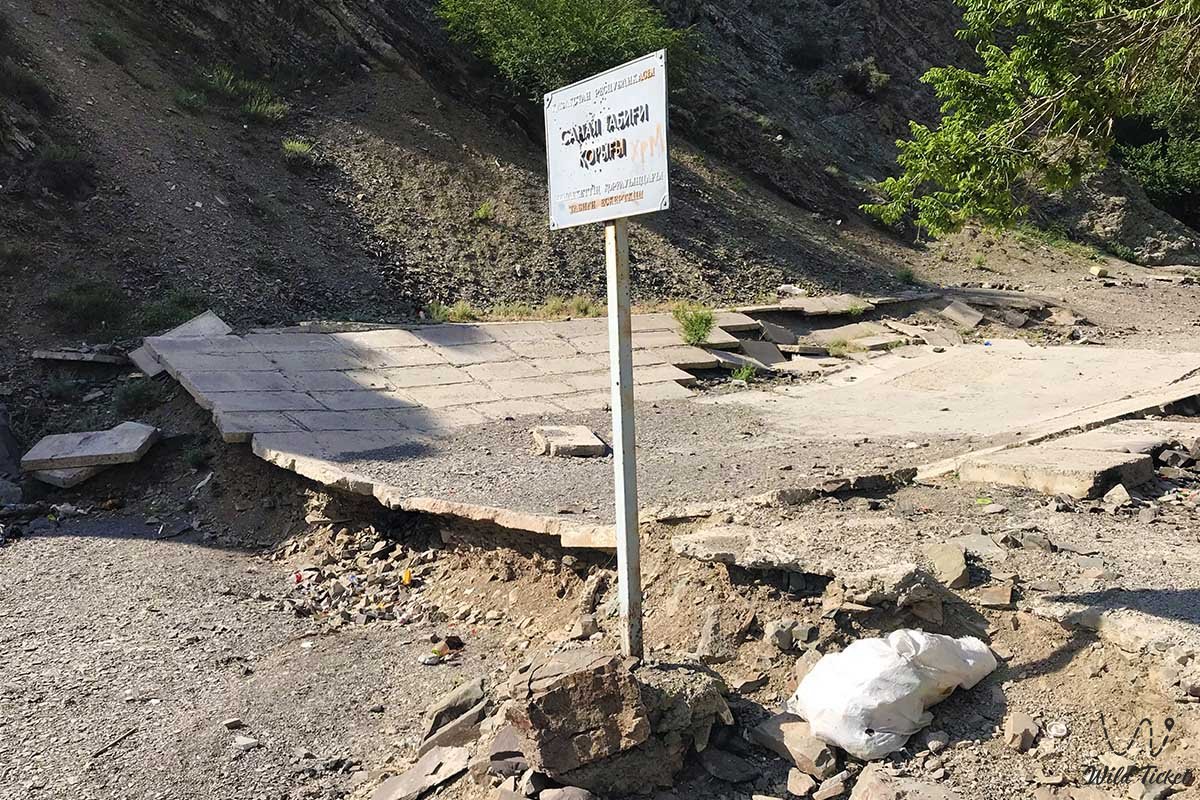
Infrastructure at the entrance of the canyon includes municipal containers for household waste collection. Permanent hotels, campsites, and dining options are available at the Kogez ethno-village (6–8 km away) and in the settlement of Shetpe, which also features gas stations, supermarkets, tire repair workshops, and pharmacies. Spring water is potable; however, visitors are advised to let raw water settle or boil it prior to drinking.
The environmental code for visiting Samal demands the utmost responsibility: the gorge endures considerable recreational impact from picnics. Every visitor is required to pack out all waste (including plastic bottles, glass, and packaging) and deposit it into the entrance container or transport it back to town. Breaking branches of relict hawthorn and Red Book-listed trees, leaving campfire scars, and contaminating the watercourse with detergents is strictly forbidden.
The best time to visit is spring (from late April to early June), when cascading waterfalls flow at maximum volume and flora is in full bloom, alongside autumn (September – October). During peak summer heat (July – August), Samal offers welcome relief: sheer rock walls up to 500 meters high block out direct sunlight, creating a natural air-conditioned corridor.
--------------------------------------------
History
The history of Samal Gorge reaches into the depths of millennia, spanning eras of emerging steppe pastoralism and the flourishing of transcontinental caravan arteries. A year-round source of fresh water in the middle of arid mountains rendered the canyon an ideal natural haven for early humans. Archaeological excavations in the vicinity have documented hunter and herder campsites from the Eneolithic (Chalcolithic) period, where people utilized rock cornices for shelter from storms and springs to water their livestock.
During the Middle Ages (10th–13th centuries), Samal Gorge, alongside the neighboring oases of Akmysh and Sazanbay, formed part of the strategic life-support network along the northern branch of the Great Silk Road. Water flowing from the Karatau Mountains sustained artisan and farming settlements around the prominent trade and craft center of Kyzylkala. Caravans journeying from the Khiva Khanate and Khwarazm toward the ports of Tyub-Karagan Bay on the Caspian made prolonged halts at the base of Sherkala, replenishing water reserves from Samal before crossing waterless clay plains.
In modern times, the gorge became an object of scientific exploration. In May 1851, the surrounding foothills were mapped in detail by the Karatau military-scientific expedition led by mining engineer A. I. Antipov. Expedition members, including the exiled Polish surveyor Bronisław Zaleski and Ukrainian poet Taras Shevchenko, studied the geological strata of the Aktau ridges and marveled at the rare phenomenon of permanent spring-fed groves within a parched upland.
In recent history, Samal Gorge became a focal point for the environmental volunteer movement of the Mangystau region. Due to its popularity among day-trippers, the canyon was frequently impacted by litter. Beginning in May 2012, the public organization "Eco Mangystau," together with regional school students and educators, launched regular volunteer cleanup drives to remove plastic and glass from the watercourse, successfully petitioning for the installation of waste bins at the entrance and fostering an ethic of responsible ecotourism.
Information
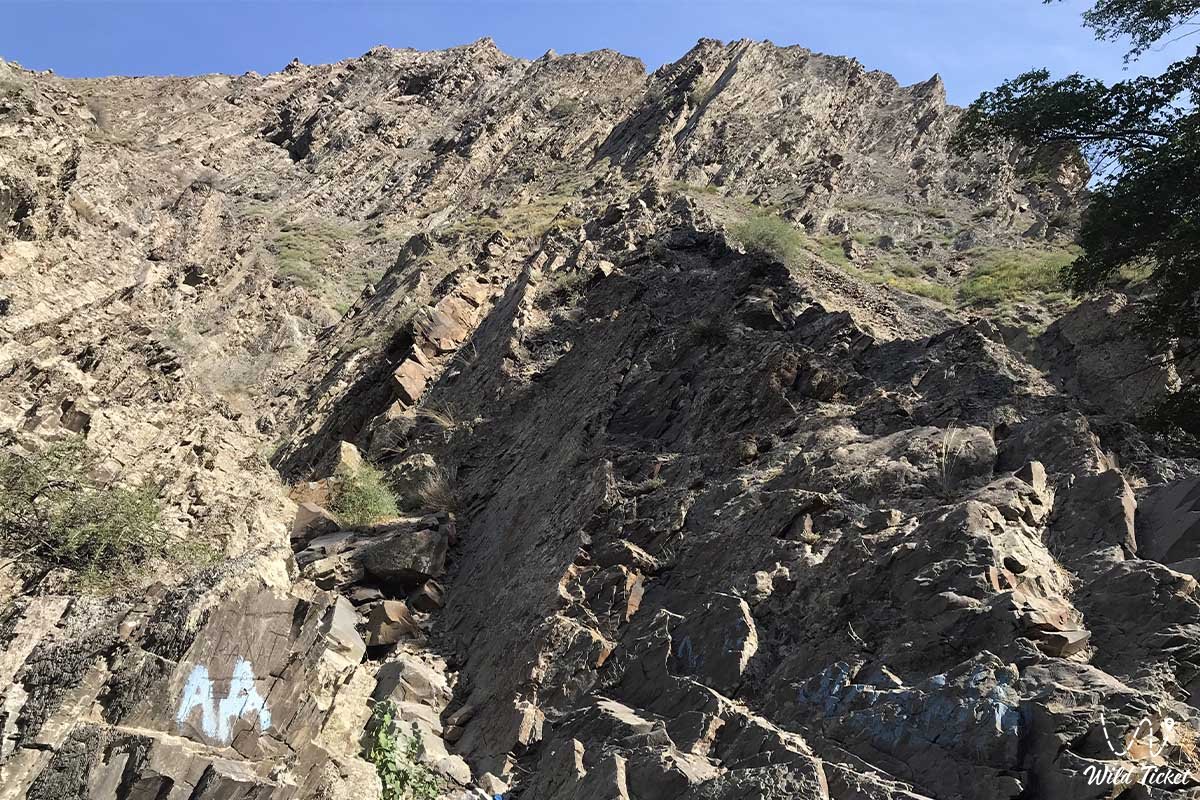
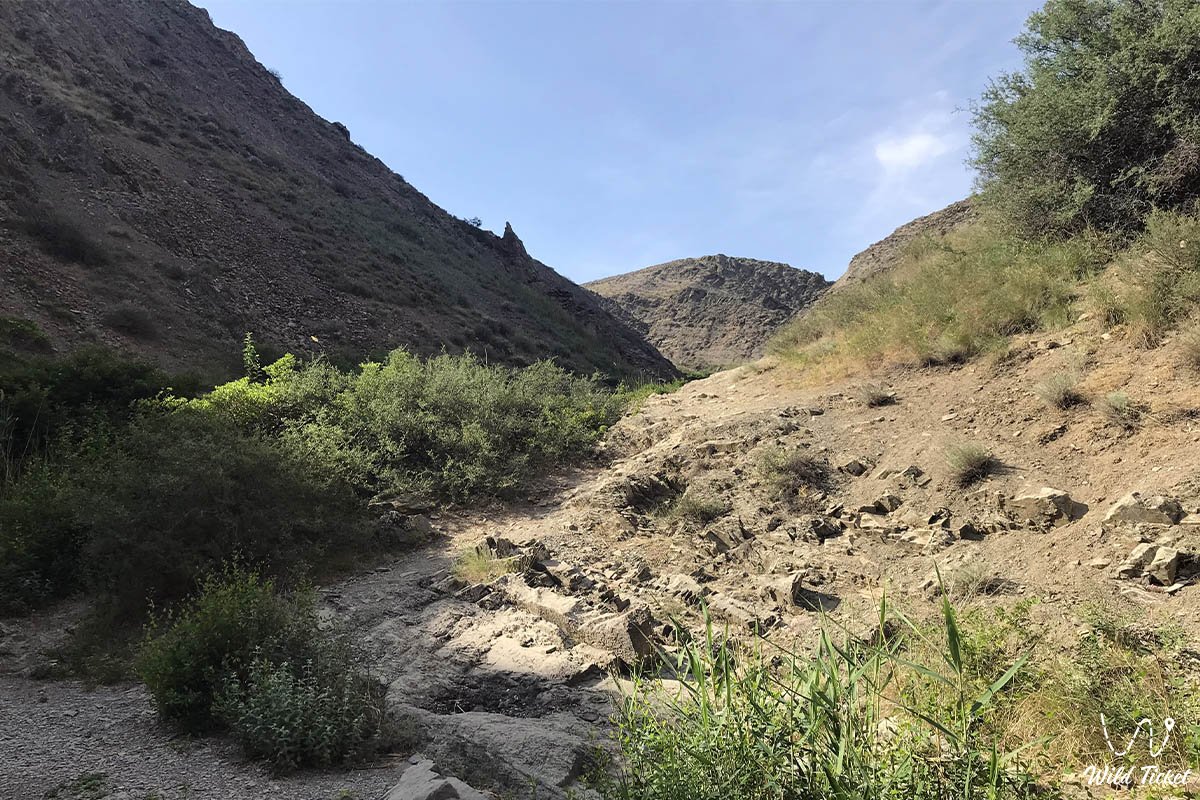
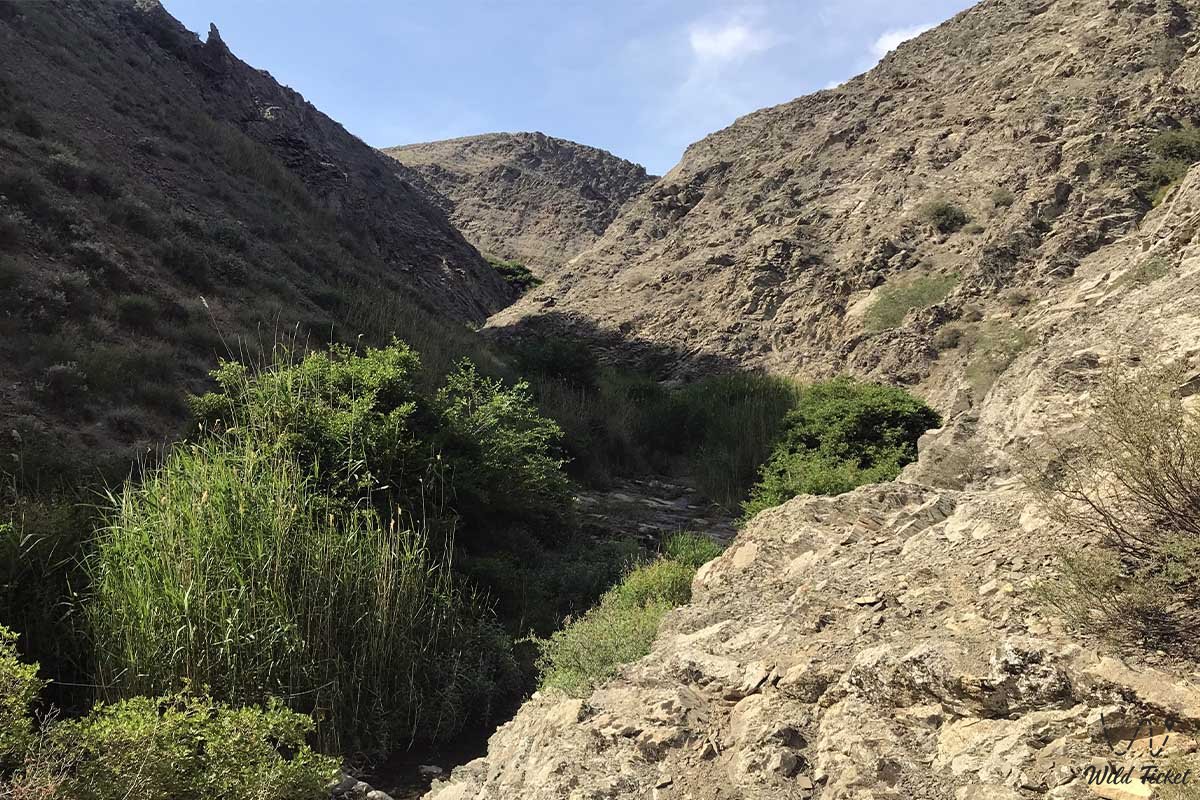
Geomorphologically, Samal Gorge represents a tectonic rift and canyon-like erosional cleft incised into the northeastern slope of the Western Aktau ridge and the strata of the Mangyshlak Upland. Absolute elevations of the surrounding drainage divides reach 500 meters above sea level.
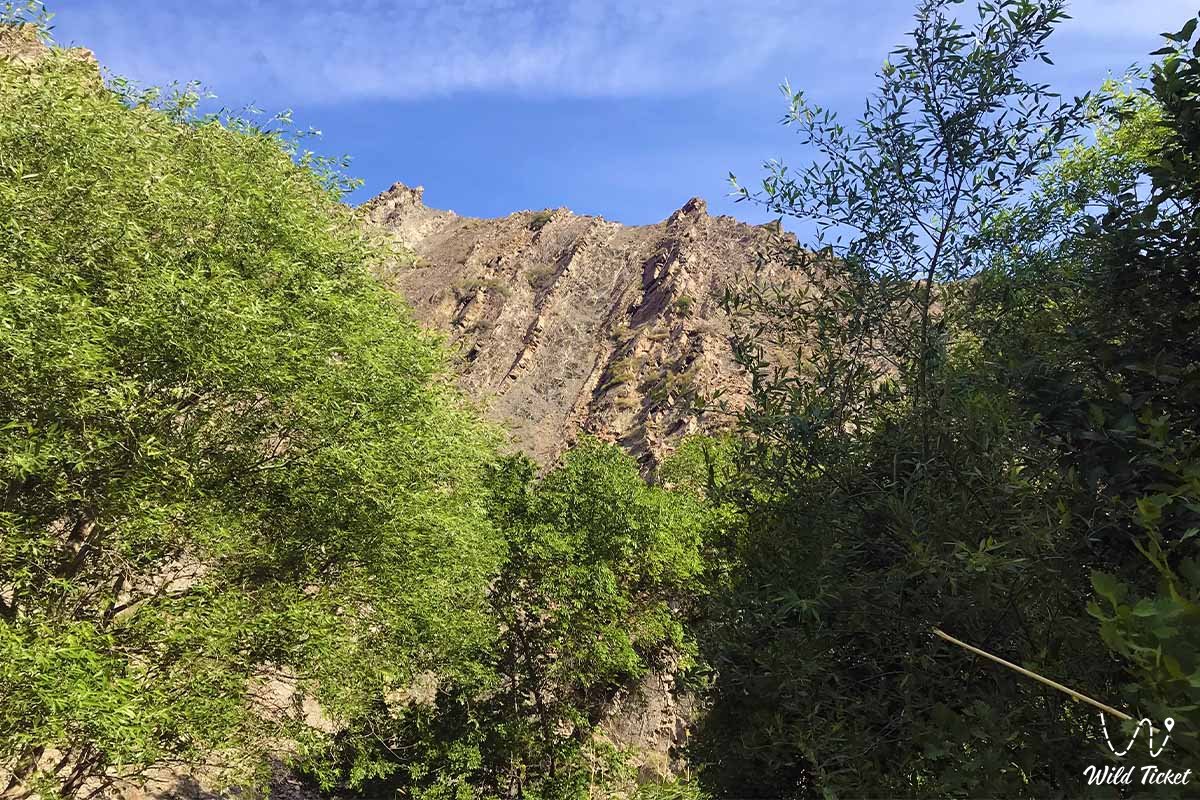
The geological cross-section of the gorge is unique: the mountain massif is composed of archaic Permo-Triassic sedimentary strata folded into steep flexures. The canyon walls display an alternating sequence of sandstones, dense quartzites, shales, marls, and limestones, attesting to tumultuous tectonic processes long predating the deposition of chalk beds of the Tethys Ocean.
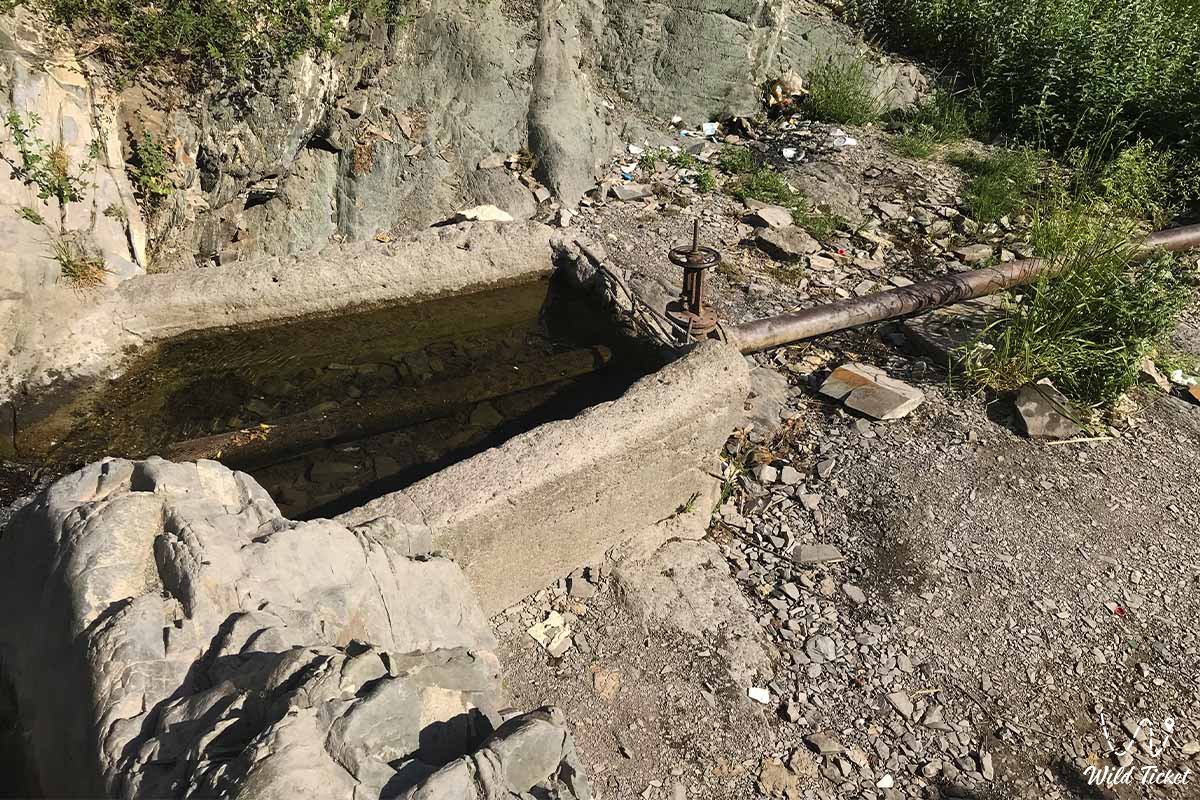
The hydrological lifeline of the oasis is a permanent artesian groundwater source fed by deep fractured zones of Karatau. The spring brook flows over a stony bed for more than one kilometer. Overcoming elevation breaks, the current forms a sequence of multi-tiered waterfalls, cascades, and deep scour pools filled with crystalline fresh water. During spring floods, discharge increases significantly, yet even during sweltering summer months, unlike other seasonal torrents in the region, the Samal brook never dries up.
Inside the enclosed corridor of the canyon, an autonomous humid microclimate is maintained. High canyon walls screen out direct solar radiation, while continuous evaporation from flowing water sustains a cool atmosphere: daytime air temperatures within the gorge are 7–10 °C lower than on the surrounding stony plateaus.
Detailed description of the venue
The natural and recreational complex of Samal Gorge comprises the following characteristic zones and landmarks:
• Entrance rock portal – a narrowing of the canyon where it meets the piedmont plain, hosting a sanitary zone with waste containers and a parking area for tour vehicles.
• Multi-tiered cascades and waterfalls – rocky ledges along the middle course of the brook where spring water plunges with a roar, glistening in the sun and generating foaming riffles.
• Running stone pools – deep plunge basins and erosional scour hollows carved into monolithic rock, filled with cool fresh water, suitable for splashing one's face and resting after a hike.
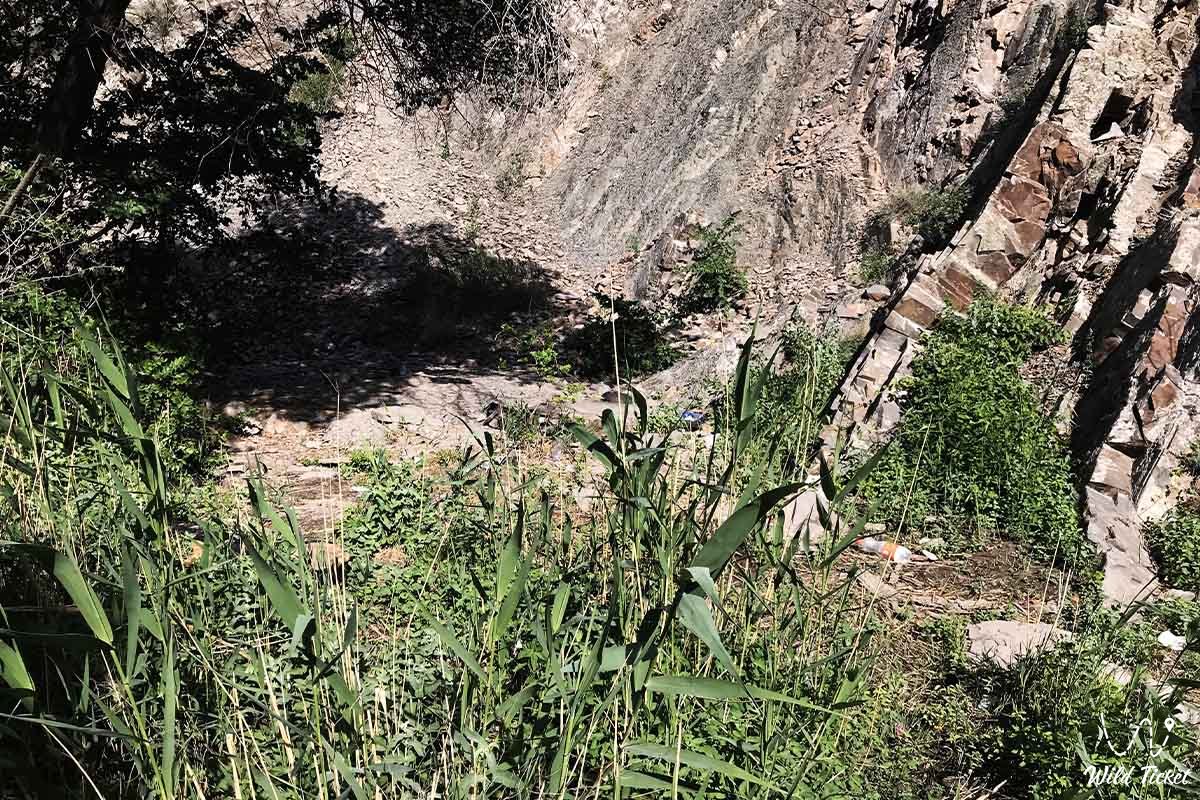
• Relict thickets of hawthorn and blackthorn – mature, dense stands of spiny shrubs and trees that interlace above the stream bed, casting unbroken shade.
• Reed corridors and grassy carpets – riparian sections along the brook densely blanketed with tall river reeds, wild peppermint, thyme, and rare medicinal herbs listed in the Red Book of Kazakhstan.
• Eneolithic archaeological sites – sections of the plateau adjoining the canyon rim where researchers have discovered flint flakes, arrowheads, and remnants of ancient pastoralist encampments.
• Western Aktau scenic outlooks – upper cliff ledges of the ridge rising up to 500 meters, opening onto a 360-degree panorama of Mount Sherkala's conical silhouette and the Airakty plateau.
Flora and fauna
The plant world of Samal Gorge is striking in density and species richness, standing in sharp contrast to the sparse flora of Mangystau's stony semi-deserts. The tree and shrub layer is dominated by robust thickets of relict hawthorn, spiny blackthorn, Russian olive (Elaeagnus angustifolia), wild rose, and tamarisk. Rare tree and shrub species listed in the Red Book of Kazakhstan grow within the defile. Dense fringes of reeds, bulrushes, horsetails, and licorice line the water's edge. The air is saturated with essential oils of wild mint, oregano, sage, and curative herbs.
The wildlife of the canyon congregates around the permanent watering hole. Dozens of bird species nest within the hawthorn and reed thickets: nightingales, golden orioles, European rollers, hoopoes, turtle doves, Eurasian tree sparrows, shrikes, and chukar partridges. Birds of prey nest on sheer cliffs: golden eagle, long-legged buzzard, steppe eagle, saker falcon, and kestrel.
Mammals inhabiting the vicinity include the tolai hare, corsac fox, steppe polecat, long-eared hedgehog, and badger. Wolves and jackals arrive at the watercourse to drink at night. Steep slopes of the Karatau ridge shelter occasional specimens of the Red Book-listed Ustyurt mountain sheep (argali/mouflon).
The herpetofauna includes the agile steppe agama, toad-headed agama, Central Asian tortoise, dione snake, arrow snake, and the venomous Halys pit viper, requiring mindfulness when walking among rocks. European green toads and relict aquatic invertebrates inhabit the quiet pools of the stream.
Legend
An ancient Kazakh tradition regarding great love, a father's oath, and the saving breath of the steppe mountains is linked to the emergence of the cool Samal oasis.
In days of old, when caravan bells chimed near the walls of impregnable Sherkala, a fair maiden named Samal lived in an aul at the foot of Karatau. Her figure was slender like a young willow by a brook, her eyes shone brighter than stars over the Ustyurt Plateau, and her gentle voice could dispel any sorrow. A courageous dzhigit, a skilled hunter and defender of his native pastures, loved her with all his heart.
However, the maiden's stern father, enticed by vast riches, resolved to marry his daughter to a cruel old bai from distant camps near the Aral Sea. Unwilling to yield to such a fate or betray their love, Samal fled with her beloved into the heart of Karatau's rugged cliffs. Upon learning of the escape, her enraged father dispatched a hundred mounted warriors in pursuit.
The chase closed in upon the fugitives among scorching limestone crags. The sun blazed mercilessly across the mountains, parching the horses' throats; strength abandoned the lovers, and a solid wall of rock loomed ahead. The maiden sank onto the hot stone and pleaded with the spirits of the mountains: "O sacred peaks of our ancestors, part and shelter us from dishonor and bondage! Let our tears nourish these dead stones rather than let us fall into enemy hands!"
As if answering her prayer, the monolithic cliff split open with a thunderous roar, forming a deep, winding cleft, and a cool breeze ("samal") blew toward the fugitives. As soon as the lovers vanished into the gorge, the rock gates sealed shut behind them, leaving the pursuers with nothing. From the tears of the beautiful maiden, a crystal spring welled up at the bottom of the canyon, giving birth to the perennial brook and cascading waterfalls. Ever since, the gorge has borne the name Samal: it bestows lifesaving coolness, soothes wounded spirits, and preserves an eternal memory of devotion and freedom.
Conclusion
Samal Gorge is a living emerald set amidst the primeval stony expanses of Mangystau, where the sound of cascading waterfalls mingles with the fragrance of blooming hawthorn and the majesty of ancient Karatau cliffs. A visit to this haven offers travelers a chance to escape the searing heat, gather restorative spring water, and recognize how fragile and precious life is in the very heart of this rugged desert land.
Interesting sights nearby:
• Mount Sherkala Remnant Outlier ("Lion's Fortress");
• Akmysh Tract and Relict Garden;
• Medieval City of Kyzylkala;
• Valley of Castles Airakty-Shomanay;
• Valley of Spherical Concretions Torysh;
• Kokkala Tract;
• Kogez Yurt Camp-Aul;
• Mountain ridges of Northern Aktau and Western Karatau;
• Bozzhira Tract;
• Mount Bokty;
• Kyzylkup Tract (Tiramisu);
• Ustyurt Plateau;
• Karynzharyk Depression;
• Ustyurt Reserve.
Sacred sights and pilgrimage destinations:
• Otpan-Tau Memorial Complex;
• Karaman-Ata Underground Mosque;
• Shakpak-Ata Rock Mosque;
• Sultan-Epe Underground Mosque;
• Kenty-Baba Necropolis and Underground Mosque;
• Khanga-Baba Necropolis;
• Shopan-Ata Underground Mosque;
• Beket-Ata Underground Mosque;
• Koshkar-Ata Necropolis;
• Pantheon of Kazakh Batyrs Sisem-Ata Necropolis;
• Masat-Ata Underground Mosque;
• Masat-Ata Necropolis;
• Uytoly-Ata Underground Mosque.
Photogallery: