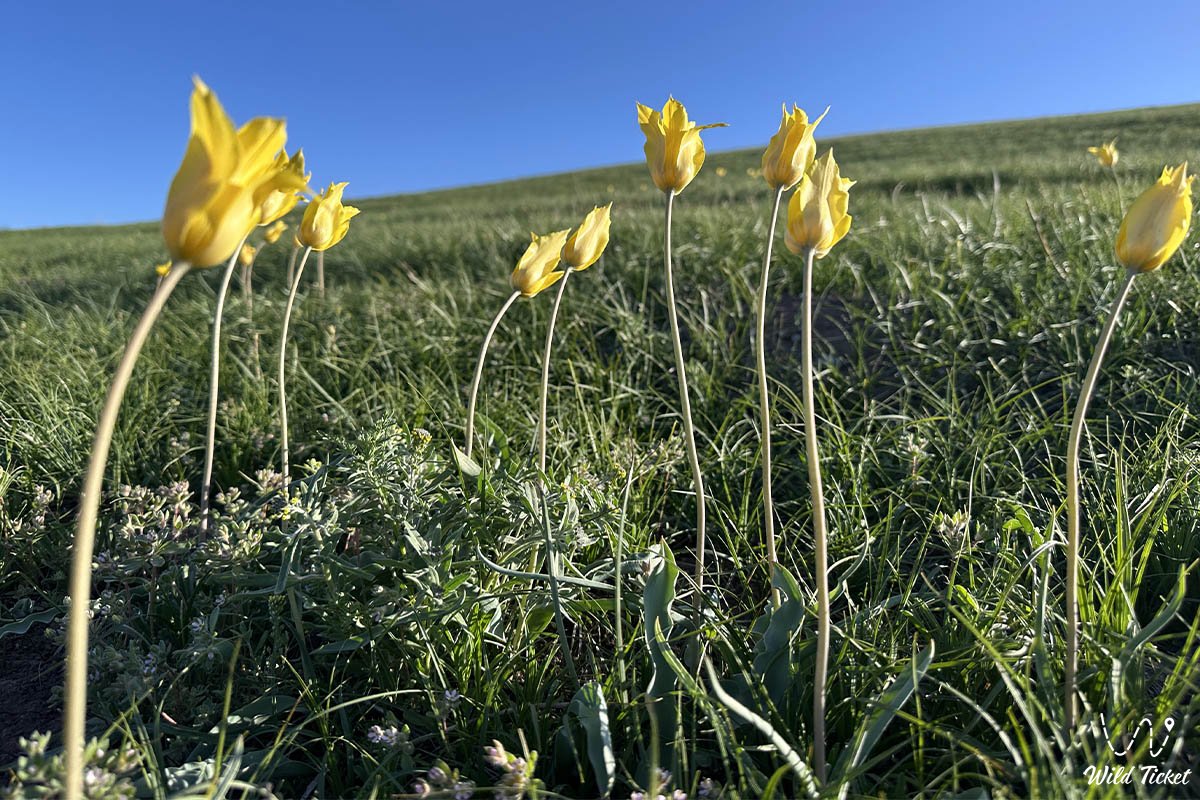
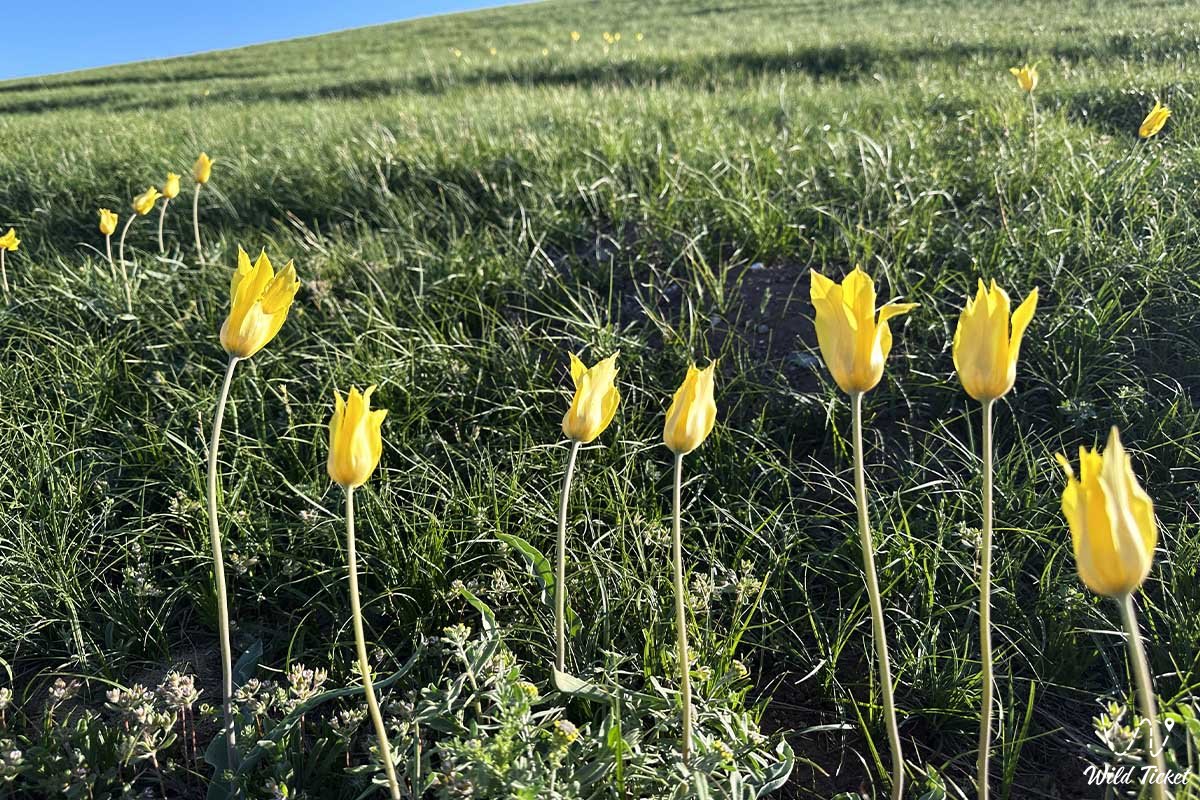
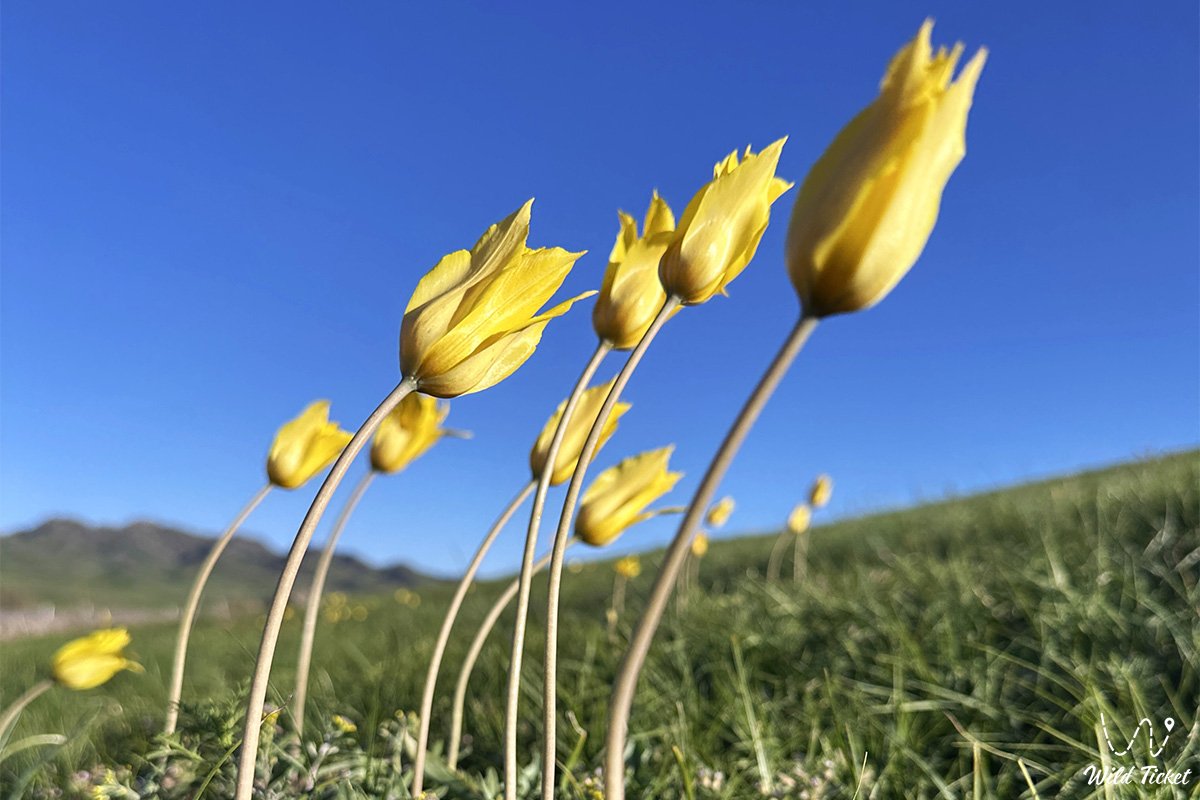
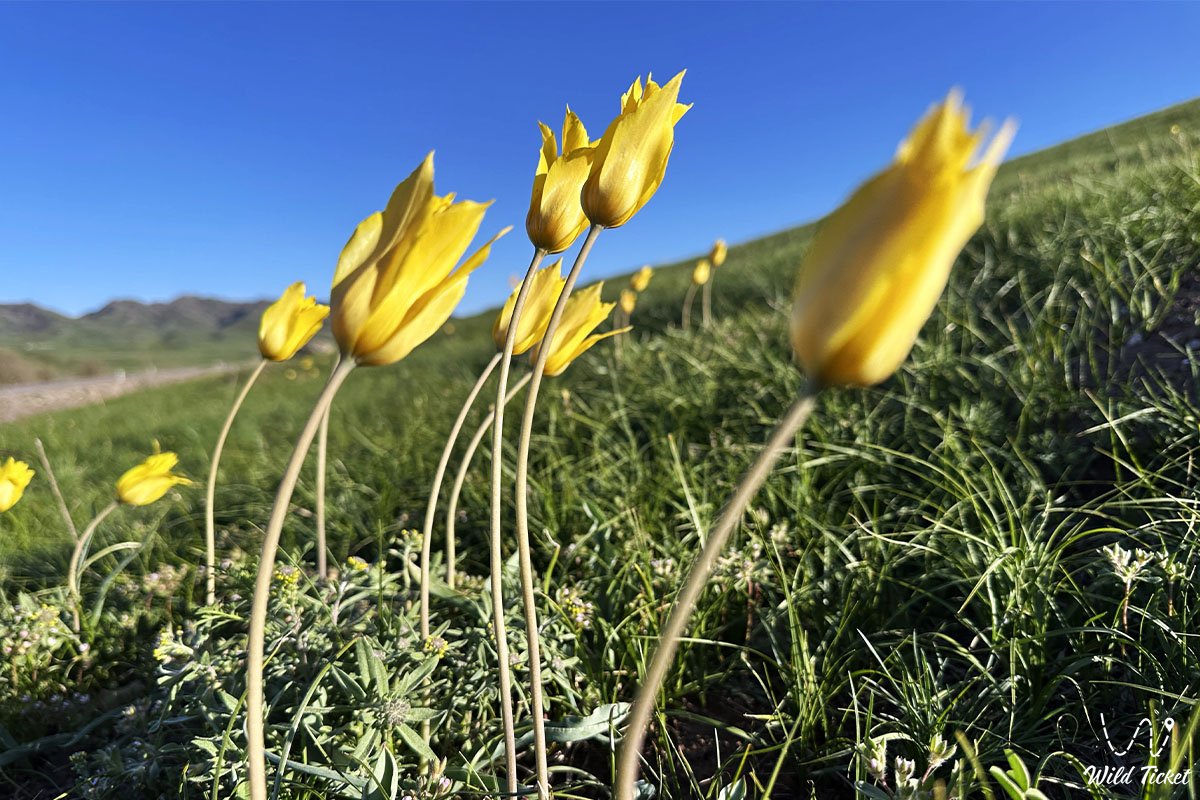
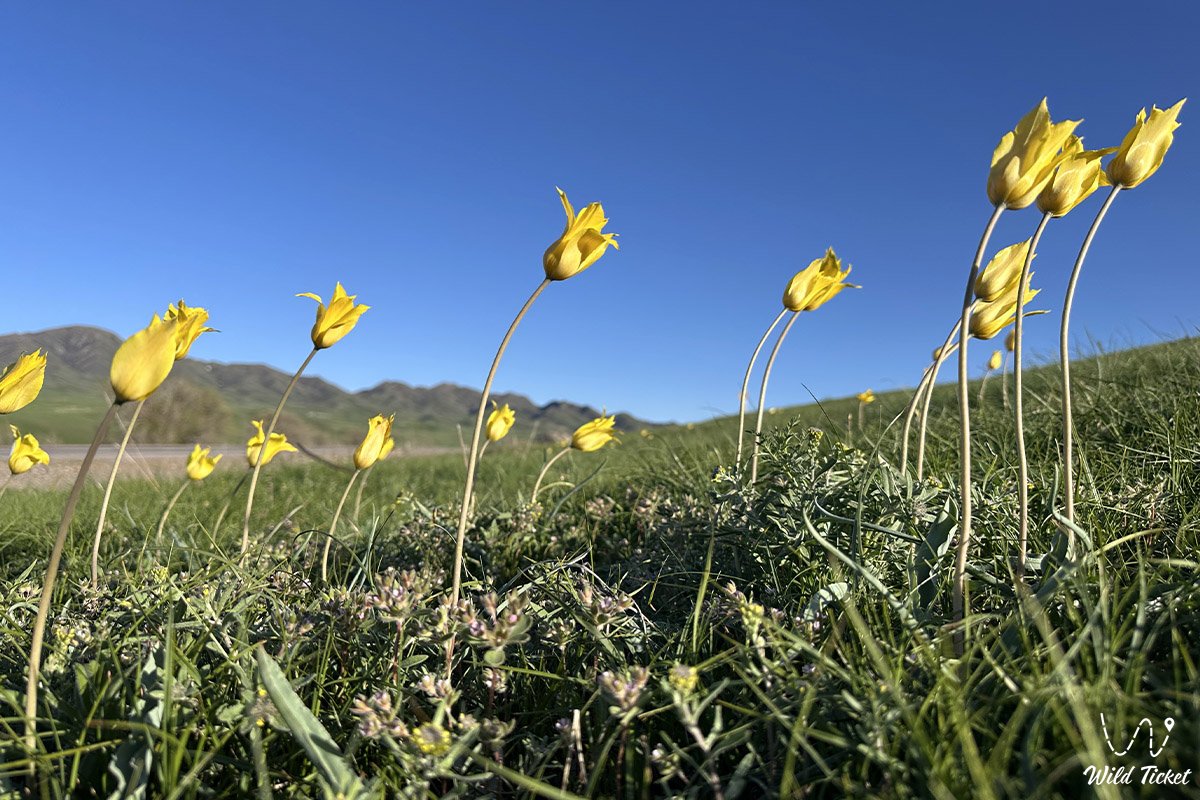
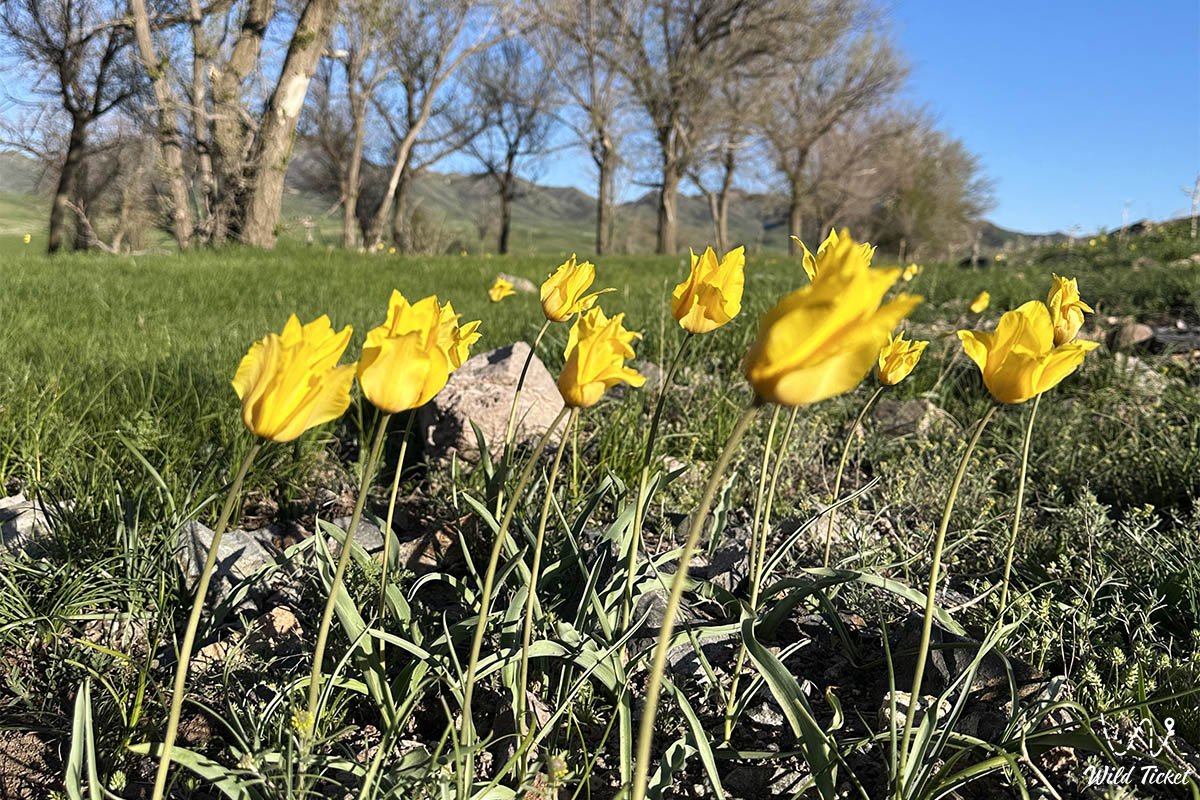
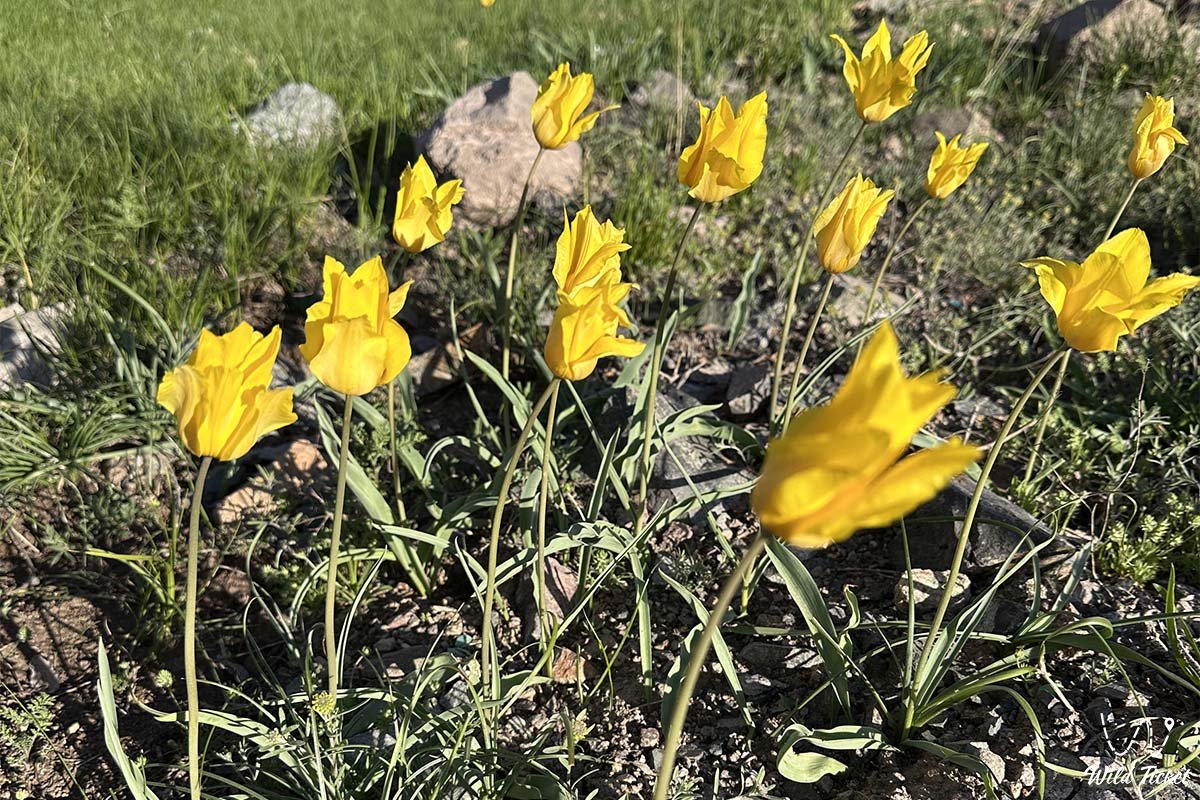
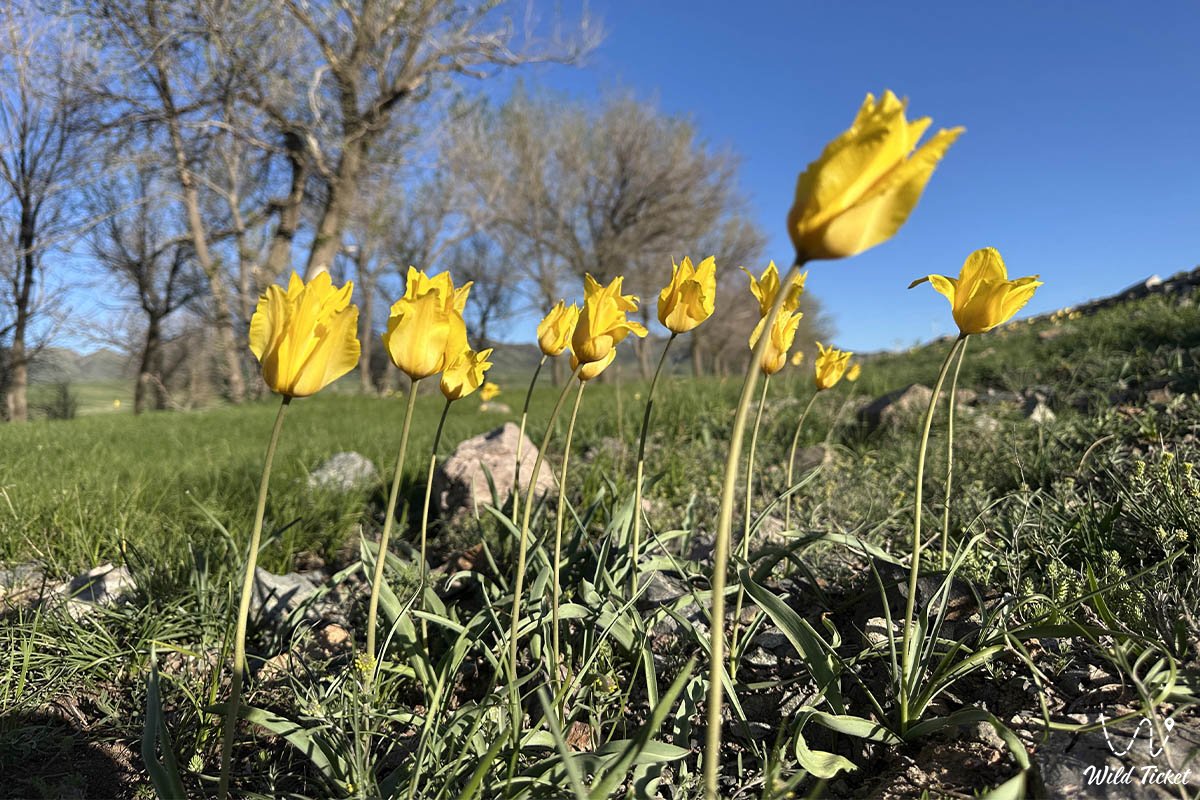
Jans's tulip (Tulipa jansii J.J. de Groot, Zonn.) – a wild tulip species new to science (spec. nova) belonging to the section and subgenus Kolpakowskianae. The primary morphological feature distinguishing it from all related members of this section is its ability to produce underground stolons.
The species is named in honor of the well-known Dutch flora researcher and traveler Harry Jans.
Morphological description
– Bulb: pear-shaped, enveloped in a firm reddish–brown tunic. In the upper part of the tunic, closer to the neck, the inner surface is covered with short tomentose woolly hairs. In contrast to the closely related Tulipa kolpakowskiana, the bulb of T. jansii is noticeably smaller and lacks a long elongated fibrous apex.
– Stem: erect, reaching a height of 123 mm, glabrous, greenish in color with a subtle brown tint.
– Leaves: three narrow lanceolate leaves of a glaucous-green tone, erect and channeled. The translucent margin along the edges of the leaf blades is covered with fine minute cilia-hairs. The lowest (basal) leaf emerges at ground level and measures 108 × 9 mm. The dimensions of the second leaf are 84 × 4 mm, and the third (uppermost) leaf measures 76 × 3.5 mm.
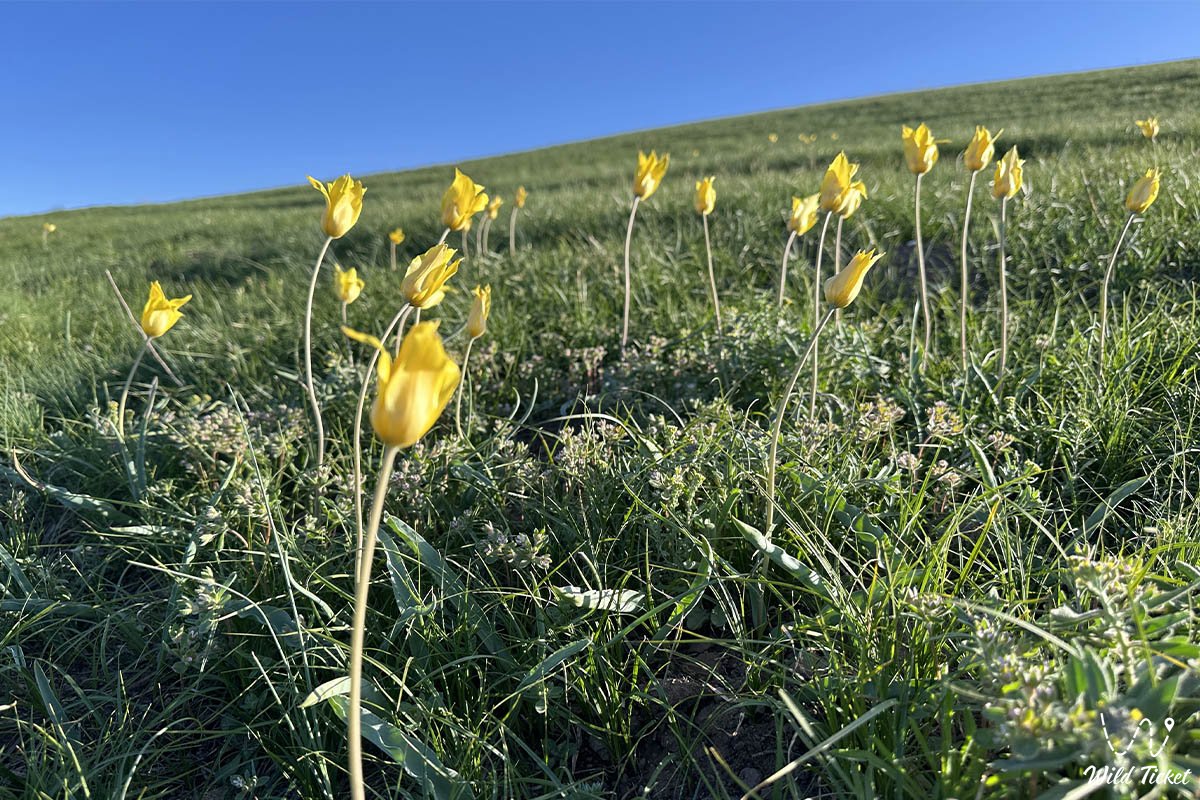
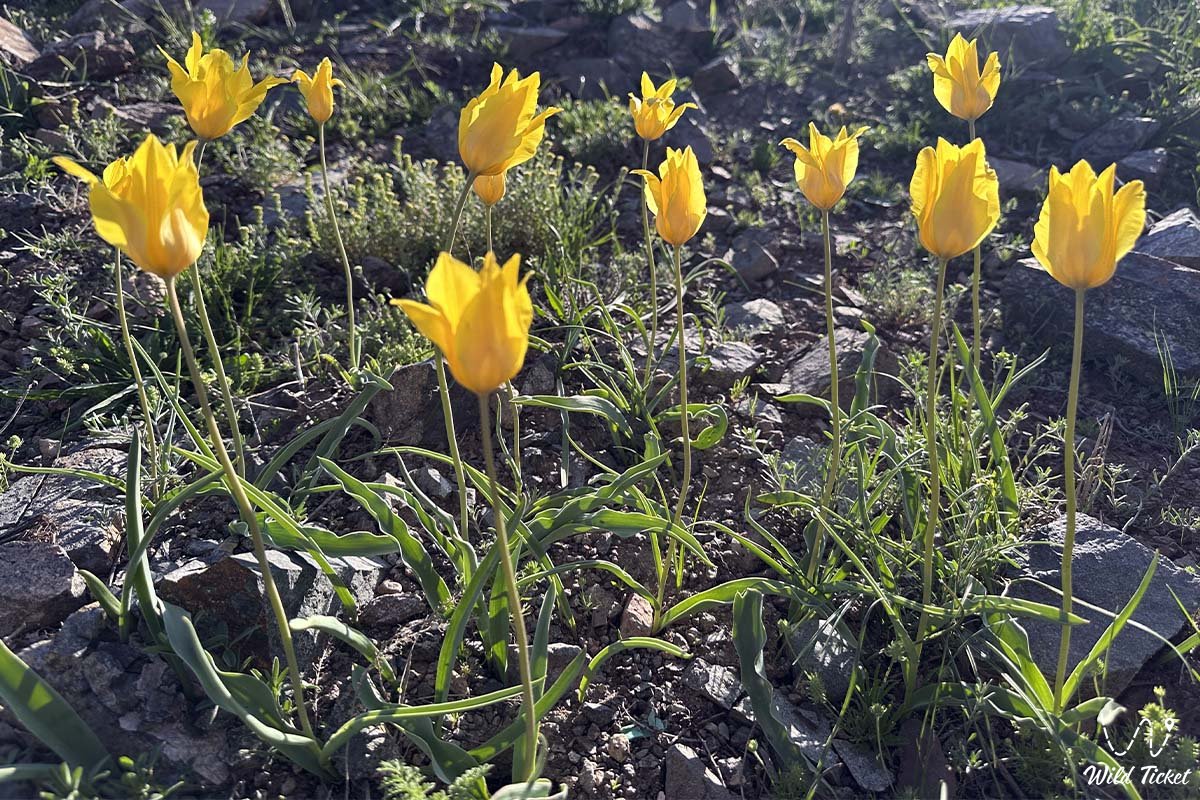
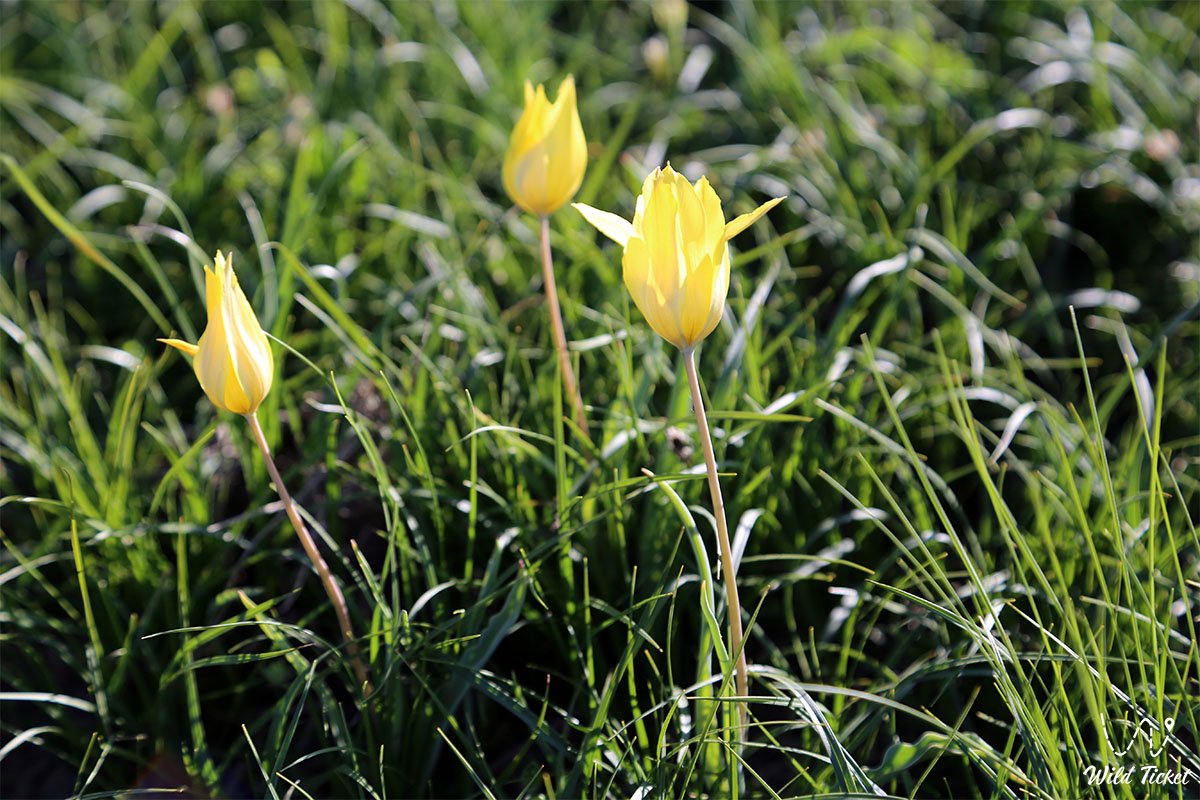
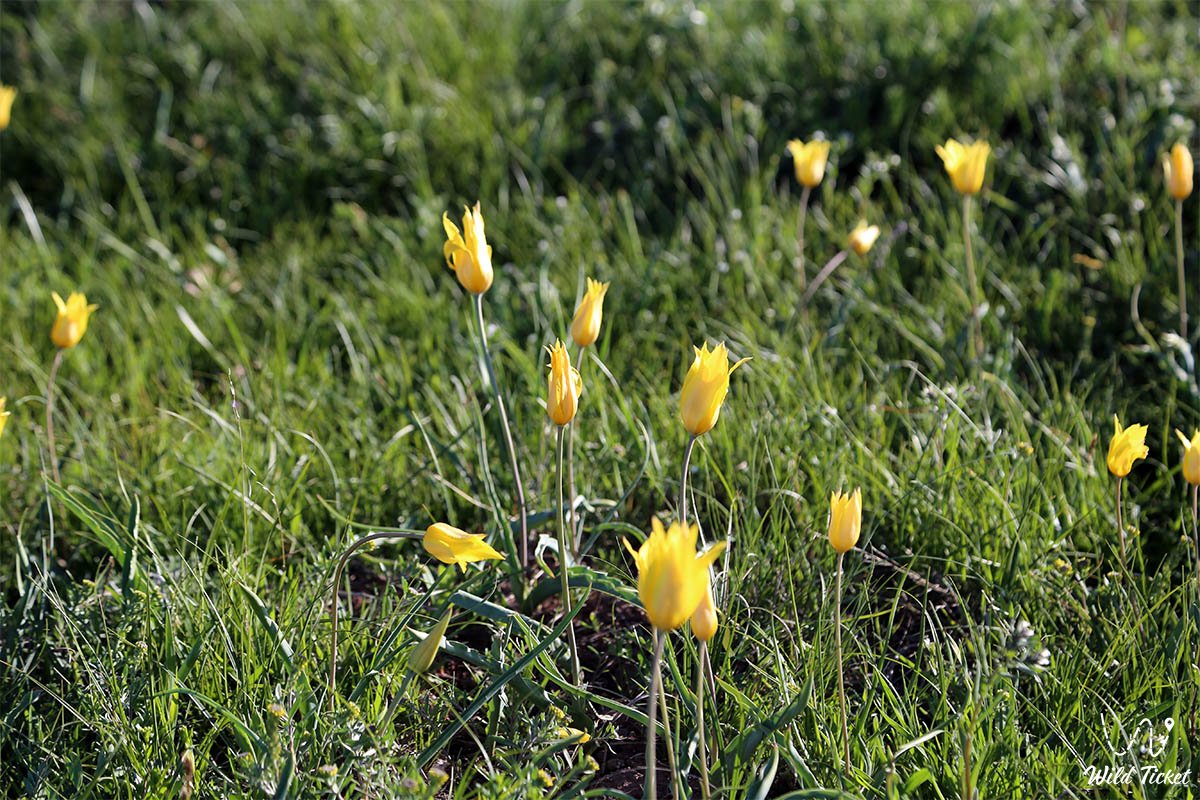
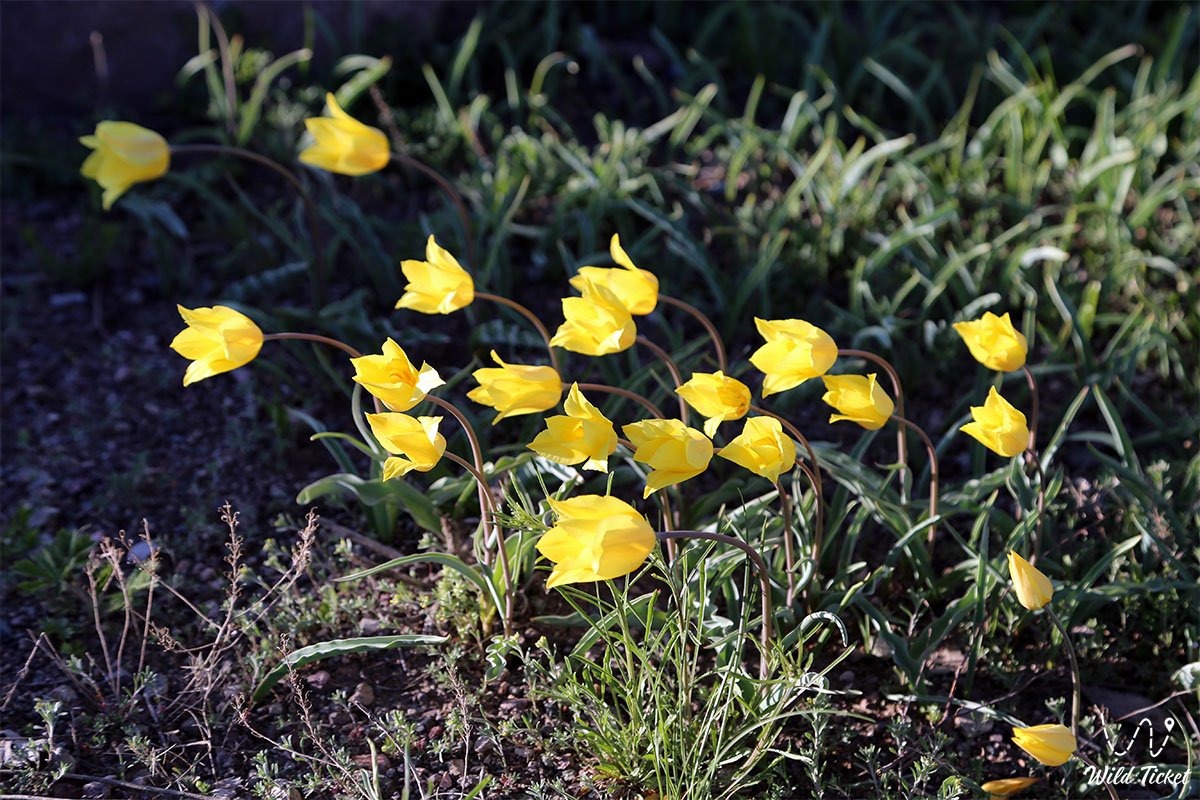
– Flower: solitary, pointed in shape. In the type form, the perianth color is bright yellow. The outer tepals are lanceolate (30 × 10 mm), slightly pubescent along the tips and adjacent margins. The inner tepals are obovate, measuring 28 × 11 mm. In natural populations, forms with rich orange and red flowers also occur.
– Generative organs: stamens yellow, of equal length (11 mm), with narrow straight filaments measuring 5 mm. Ovary erect, light green, 8 mm long. Stigma yellow, with distinct prominent lobes.
History of discovery and natural distribution
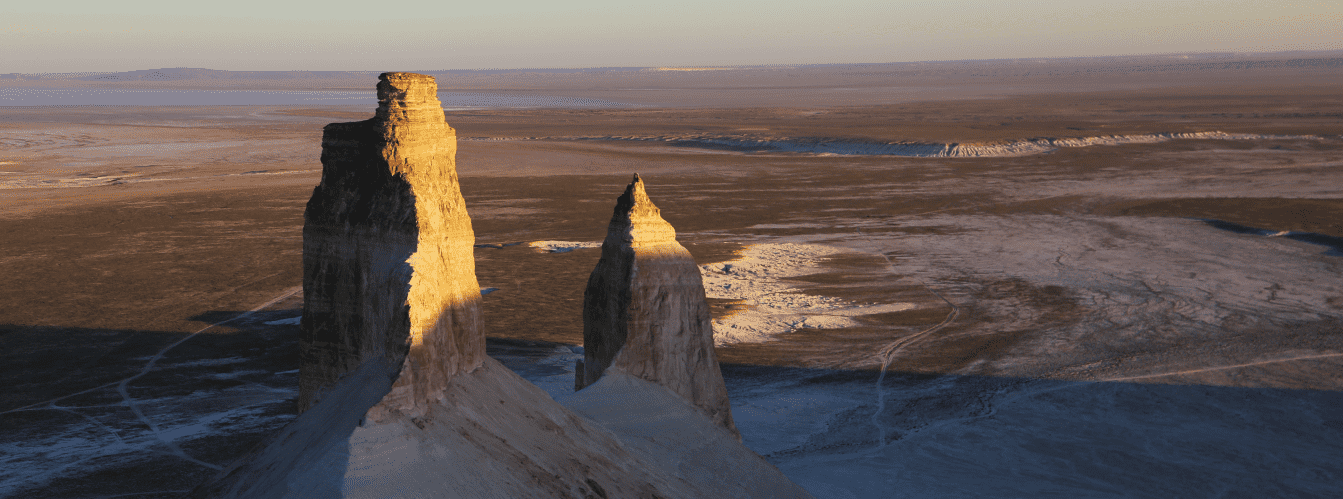
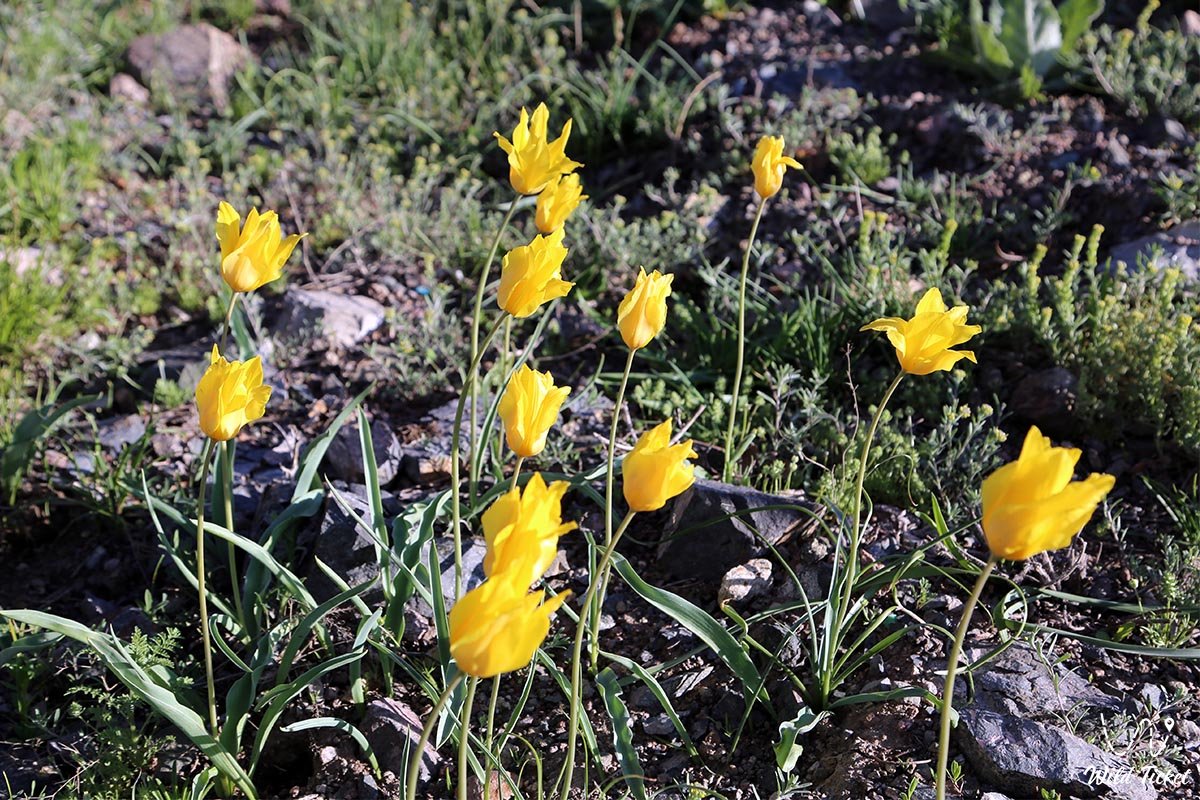
The type specimen (holotype L4513065) was discovered and collected in the wild in the Ili River valley, north of the city of Konaev. A local population of this tulip was first recorded in 2005 during field searches for Behm's tulip (Tulipa behmiana): at the foot of a rock massif across a tiny area of several square meters, more than a hundred bright yellow plants were in dense bloom. Initially mistaken for a long-stemmed form of Kolpakowsky's tulip, subsequent expeditions revealed isolated monochrome clusters of orange and red hues at the foot of the cliffs and in adjacent scrub thickets.
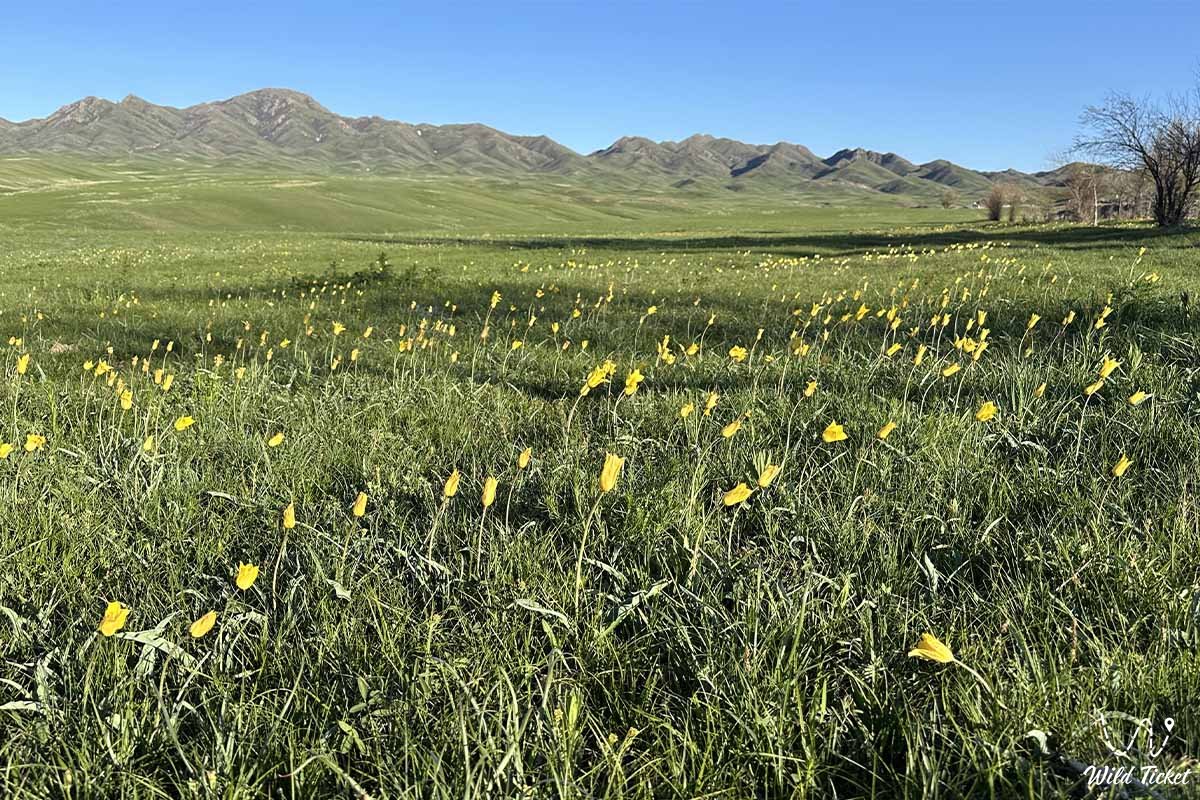
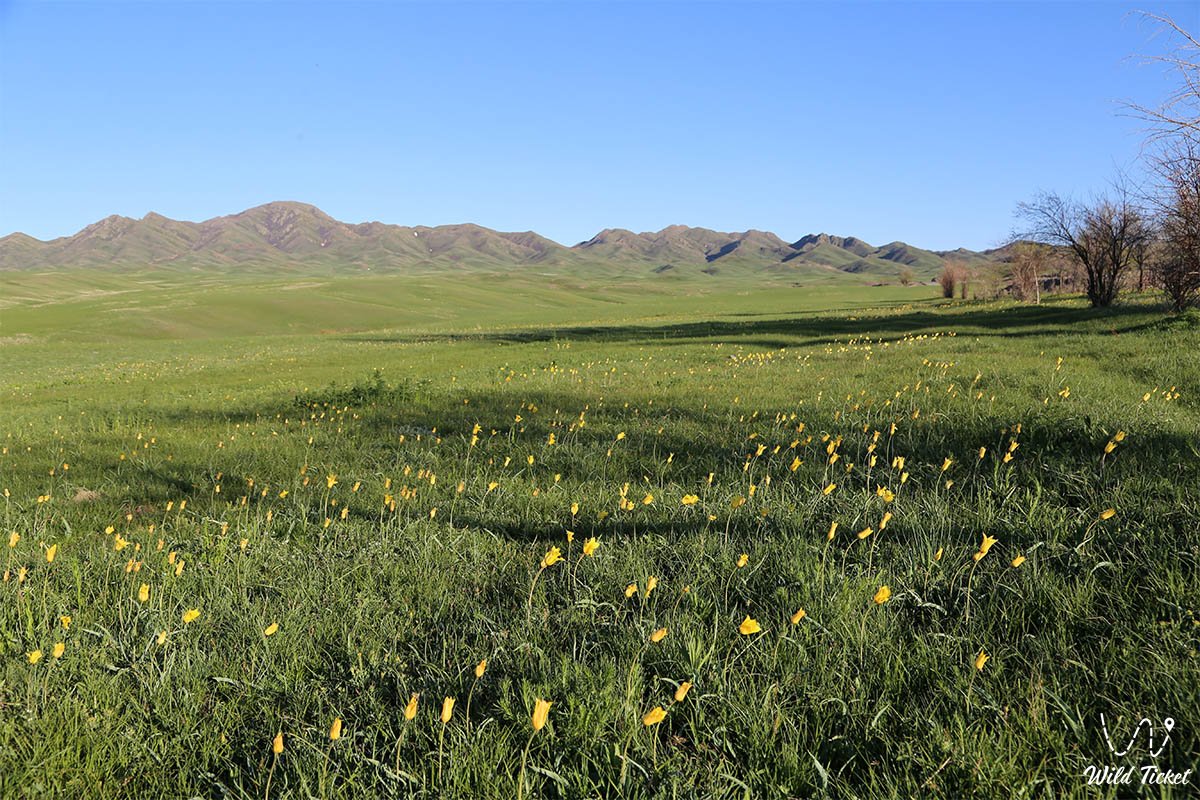
In its natural environment, Tulipa jansii selects sheltered microhabitats within steppe and semi-desert landscapes across the Almaty and Zhetysu regions – in the territory between the western spurs of the Dzungarian Alatau to the east and the Chu-Ili Mountains to the west. In the north, its range partially overlaps the boundaries of T. kolpakowskiana, while in the east it borders the distribution of T. corynestemon. Significant populations of Jans's tulip have also been observed further east, along the highway toward Taldykorgan, where plants have successfully established themselves within roadside shelterbelts planted to protect transportation routes from winter steppe blizzards.
How to see and find –
– Flowering season: the optimal period for observation is spring, from mid-April to early May. Flowering dates depend directly on spring weather conditions and soil warming temperatures in the foothill semi-deserts.
– Search locations: the primary growth areas are situated in the Ili River valley north of the city of Konaev, as well as along the strip of protective tree plantings bordering the highway toward Taldykorgan. In natural habitats, plants are most often found in sheltered niches at the bases of rocky outcrops, among low steppe shrubs, and across firm sandy-gravel terraces.
– Search recommendations: the tulip grows in compact clumps, forming color groups (yellow, orange, or red corollas). Due to the modest stem height (around 12 cm) and small buds, searching for populations is best conducted on an unhurried walking route, carefully inspecting micro-depressions at the bases of cliffs and shelterbelts.
– Ecological code: wild tulips of Semirechye are a fragile component of the ecosystem. Digging up bulbs or picking flowers is strictly prohibited, especially since this species does not take root in cultivation and perishes quickly. The finest format for experiencing it is macro photography and field botanical observation in its natural environment.
Ecological characteristics and status
Field observations have demonstrated the vulnerability of local populations: the number of flowering specimens at the original collection locality has noticeably decreased, and vegetative shoots have become dwarfed. The species is exceptionally demanding of natural habitat conditions, has narrow ecological plasticity, and practically fails to establish in cultivation, dying quickly during attempts at artificial propagation.
Photogallery: