Relict healing water body on the Caspian coast with the density of the Dead Sea –
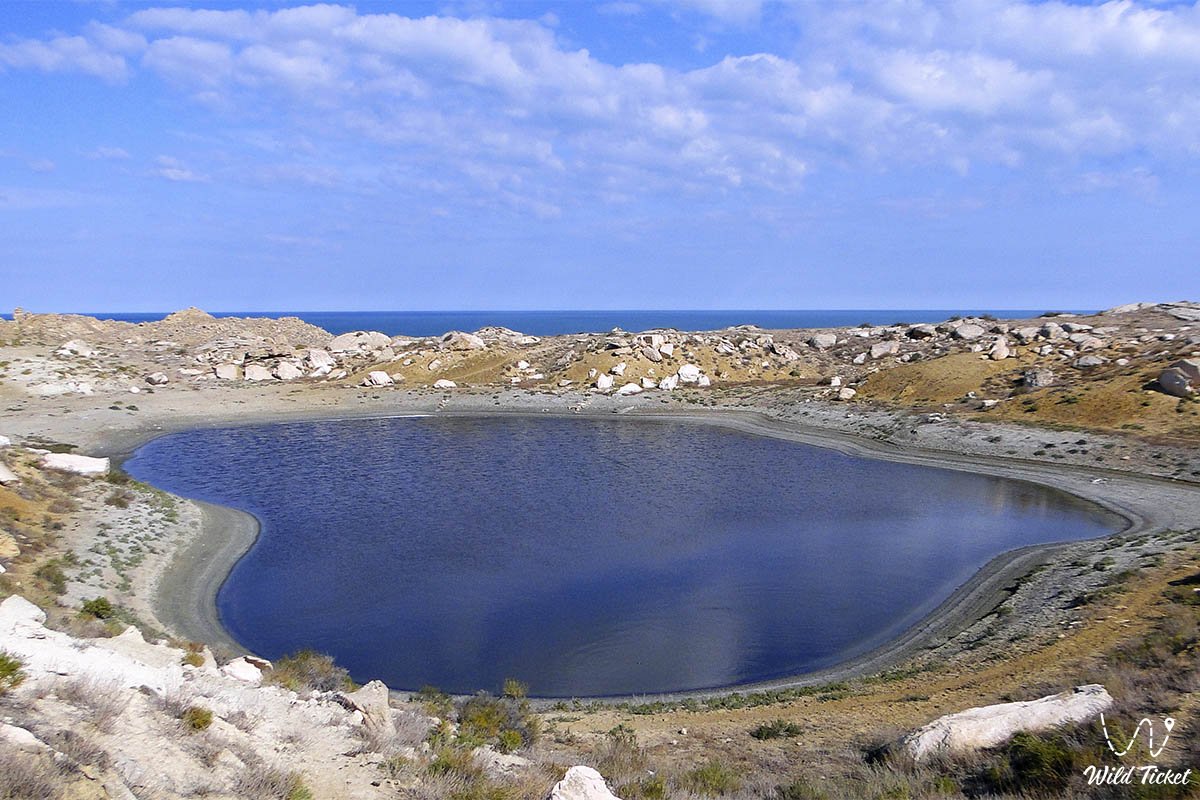
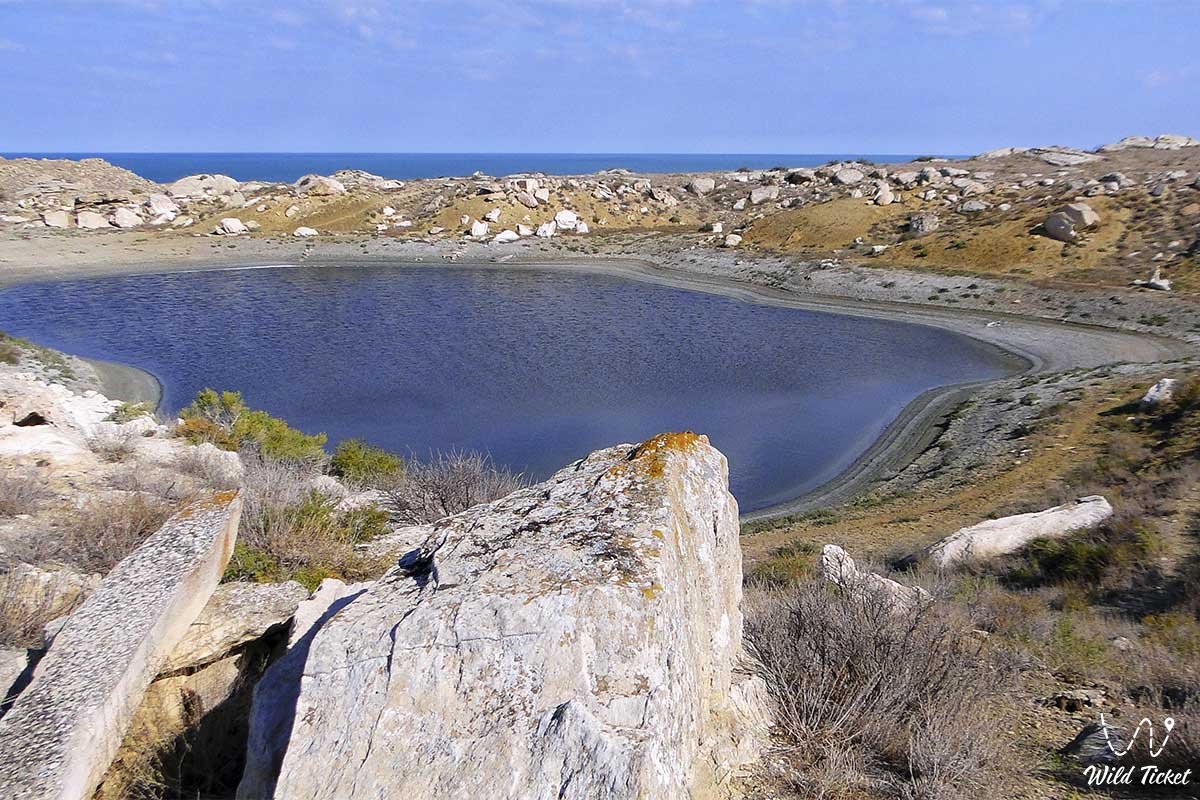
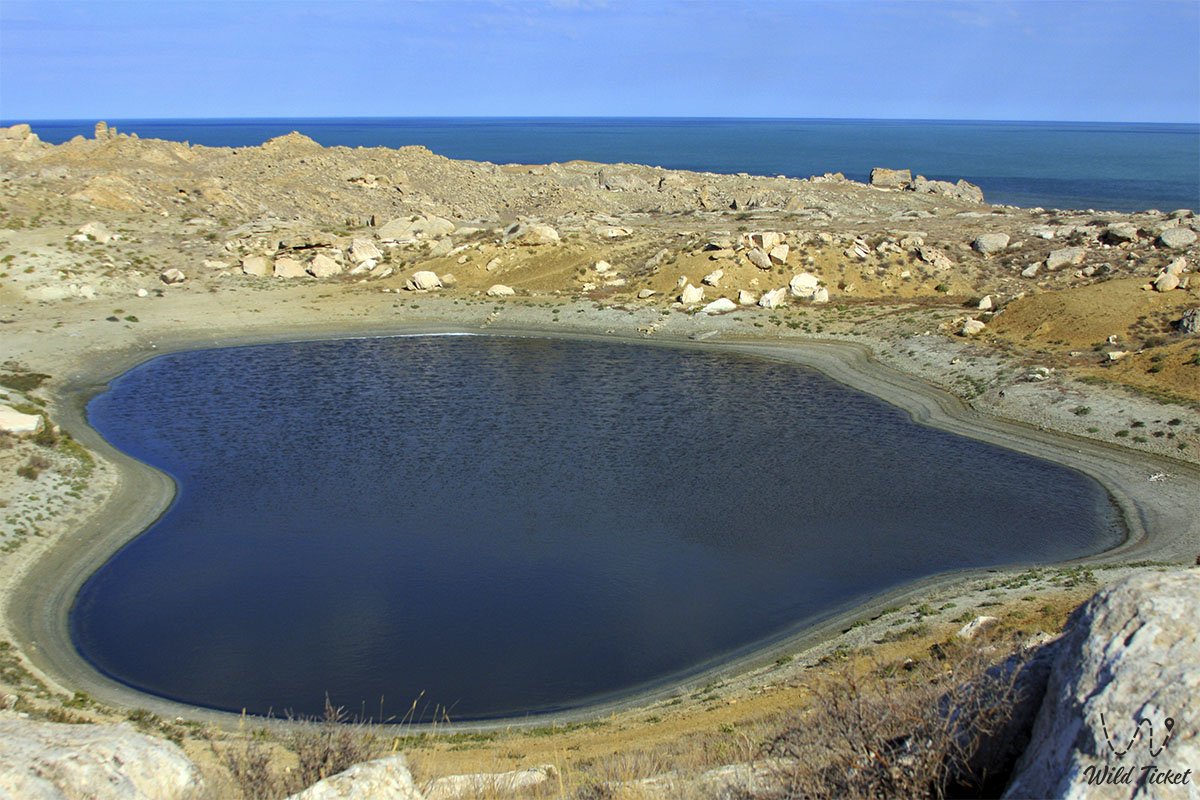
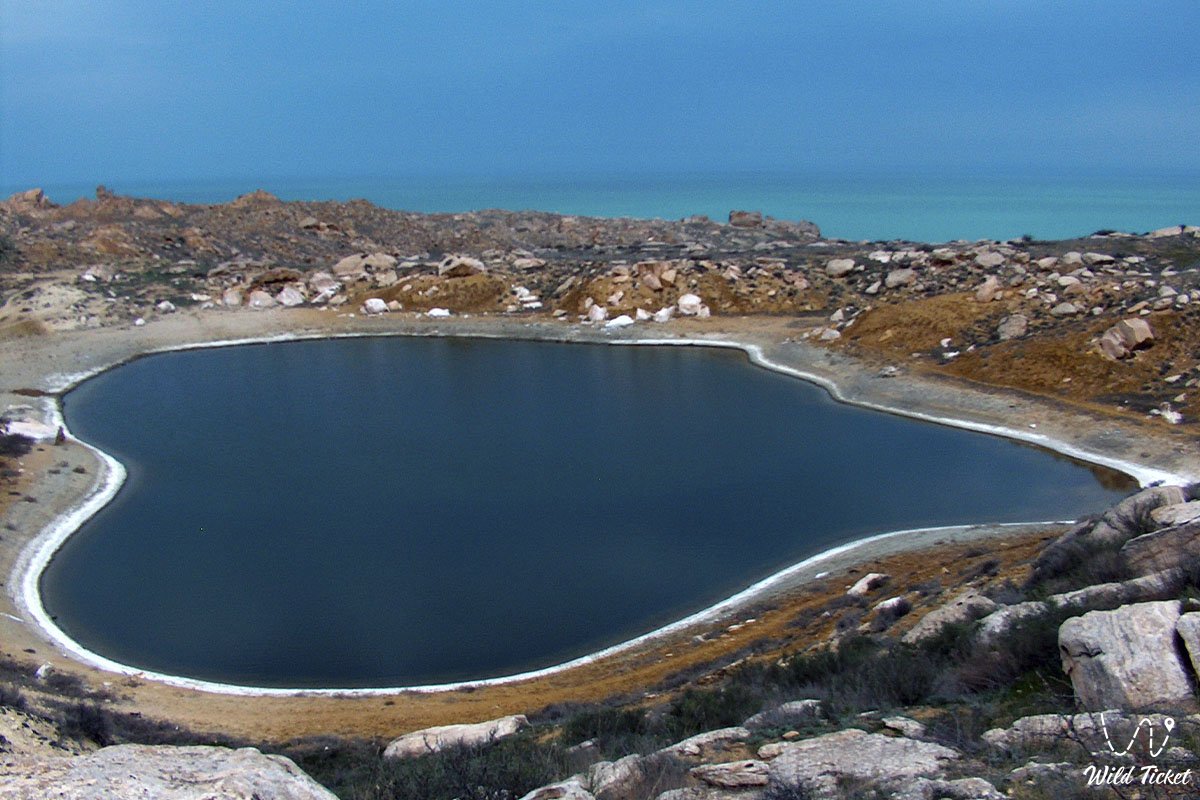
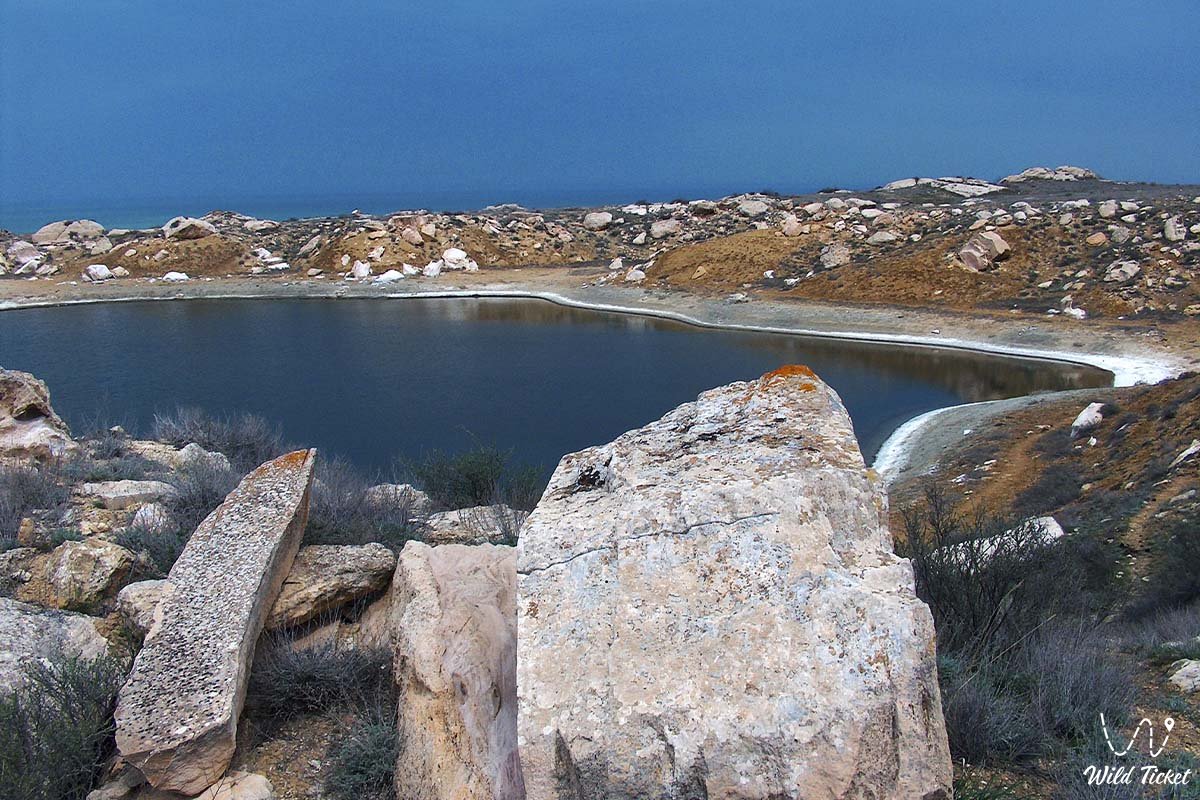
Lake Kuzdykary (in geographical sources also Kuzdakary, Kozdykary) represents a rare relict saline water body of regular heart-like shape, sheltered within a deep basin in the northwest of the Tupkaragan Peninsula in the Tupkaragan district. Situated just 700 meters from the coast of the Caspian Sea and 2.2 kilometers southeast of Cape Zhygylgan, the lake lies at an elevation of 5.3 meters above sea level and connects with the open marine waters through subterranean karst conduits.
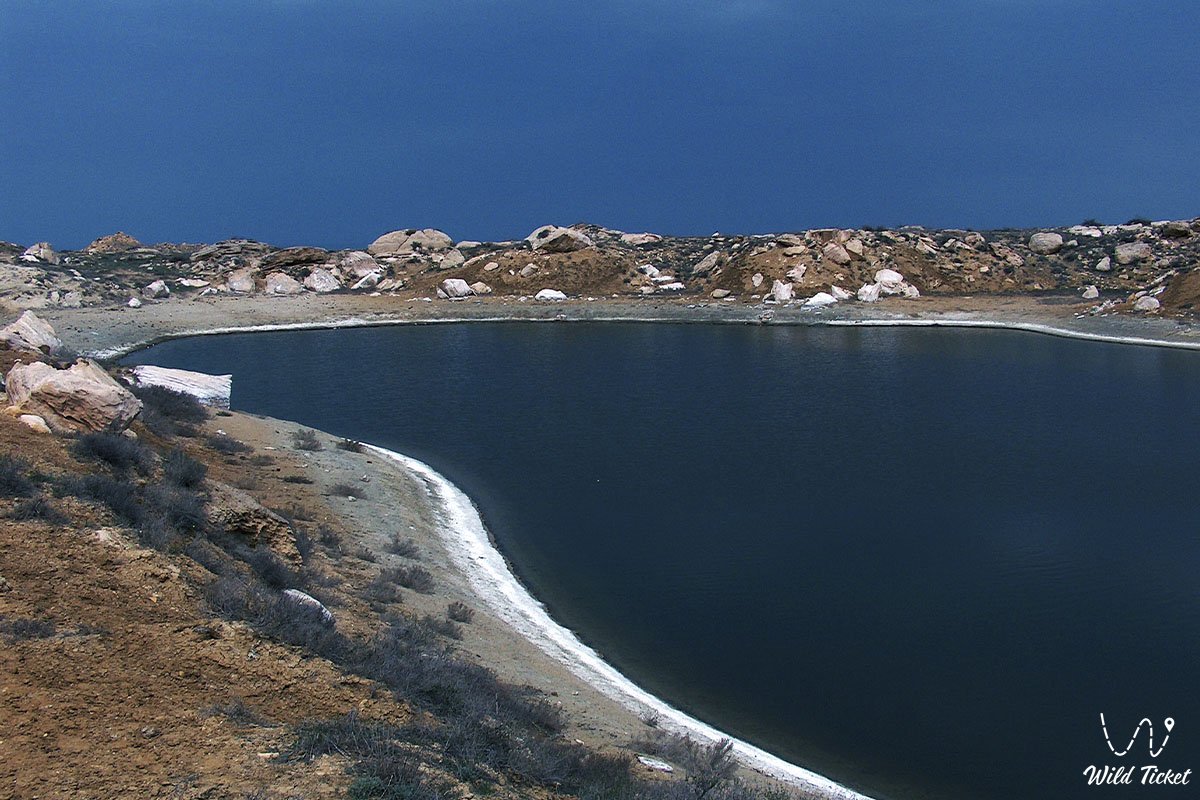
The water in the lake possesses a magical blue tint and an extreme concentration of mineral salts: in its density it resembles the Dead Sea, allowing a swimmer to float effortlessly on the surface. Despite the compact dimensions of its basin (90 meters in length, 50 meters in width), Lake Kuzdykary in Kazakhstan serves as an authentic oasis: its shore is fed by a small wetland freshwater spring of potable water, beside which a dilapidated well and outfitted caves where people lived about a century ago have survived.
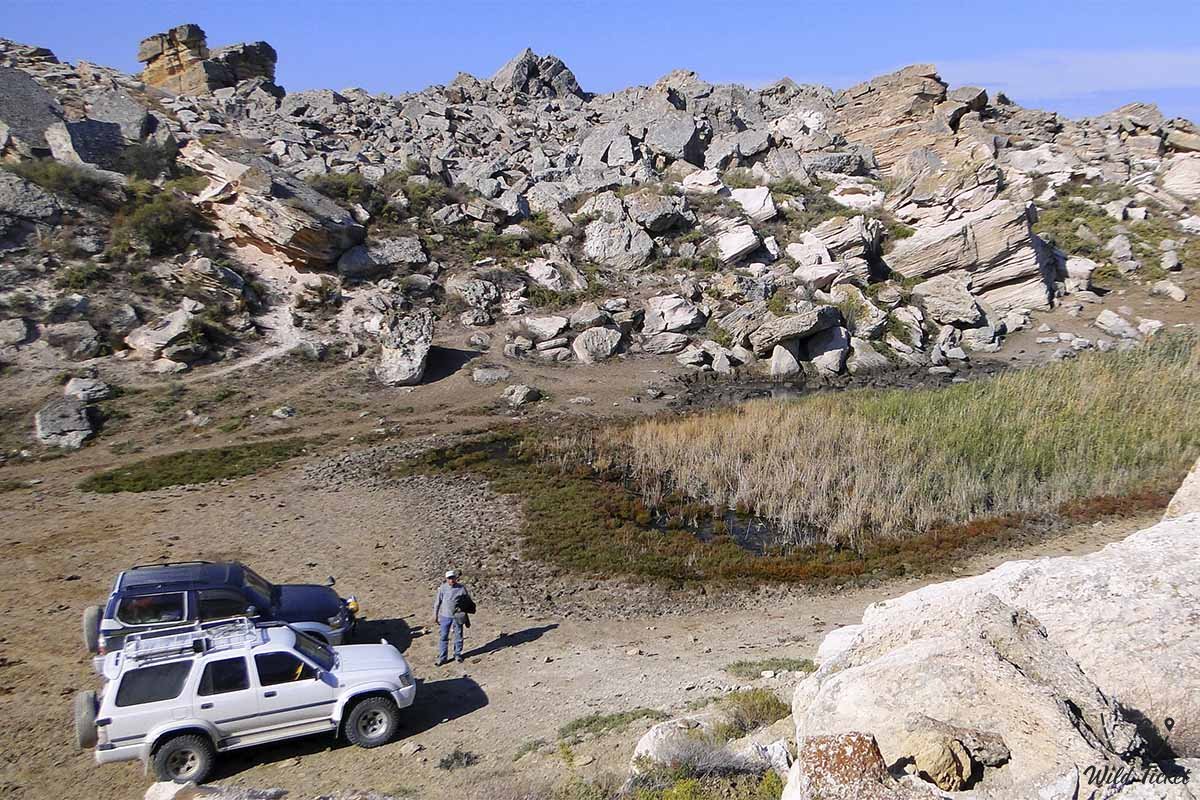
Within walking distance from the lake stretches the cyclopean Zhygylgan sinkhole ("Fallen Land") with stone blocks the size of a three-story building, petrified traces of Neogene saber-toothed cats, and ruins of ancient 14th–15th-century fortresses bearing petroglyphs of horses.
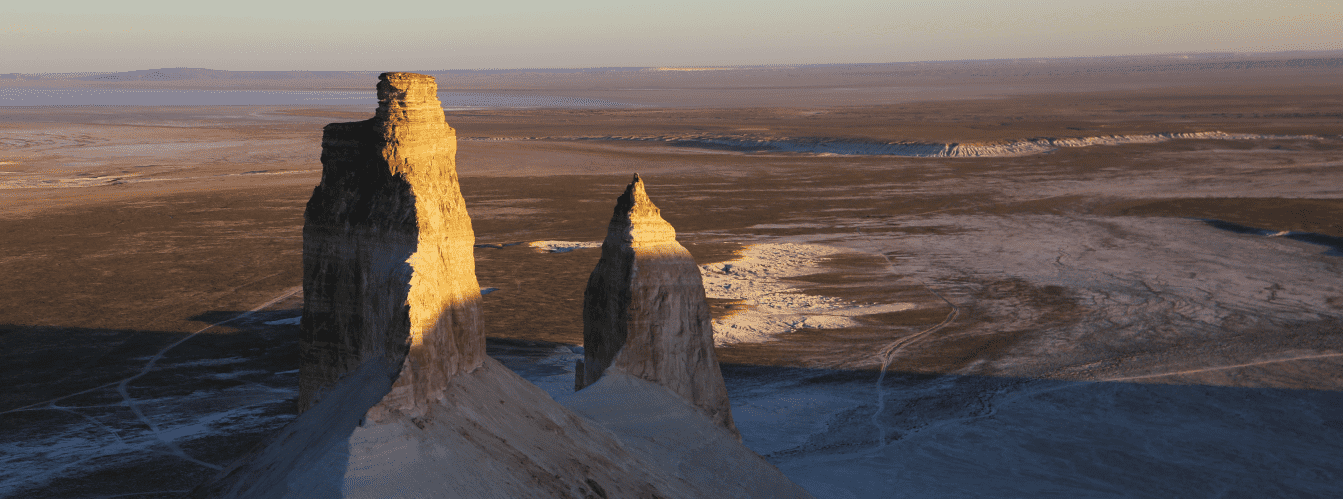
Further on, the roads of the peninsula lead to deep Sultan-Epe canyon with its curative freshwater well and thickets of mulberry, blackthorn, and wild mint, as well as to grandiose Kapamsay canyon, where 70-meter snow-white cliffs conceal Stone Age flint workshops and an immense grotto with a shady grove of hawthorn.
To the east, this route connects with the Torysh tract ("Valley of Balls"), which has preserved million-year-old spherical concretions of the Tethys Ocean, the Jurassic variegated clays of the Kokkala tract, legendary yurt-shaped Mount Sherkala ("Lion's Fortress"), and the natural castles of Airakty-Shomanay.
--------------------------------------------
How to get there and visit –
Lake Kuzdykary is located in the Kyzylozen rural district of the Tupkaragan district, 2.2 km southeast of Cape Zhygylgan, 46.6 km east of the village of Bautino and the town of Fort-Shevchenko, and approximately 140–150 km northwest of the administrative center of the region – the city of Aktau, Mangystau region, Republic of Kazakhstan.
GPS geographical coordinates: 44°37'21"N 50°49'34"E
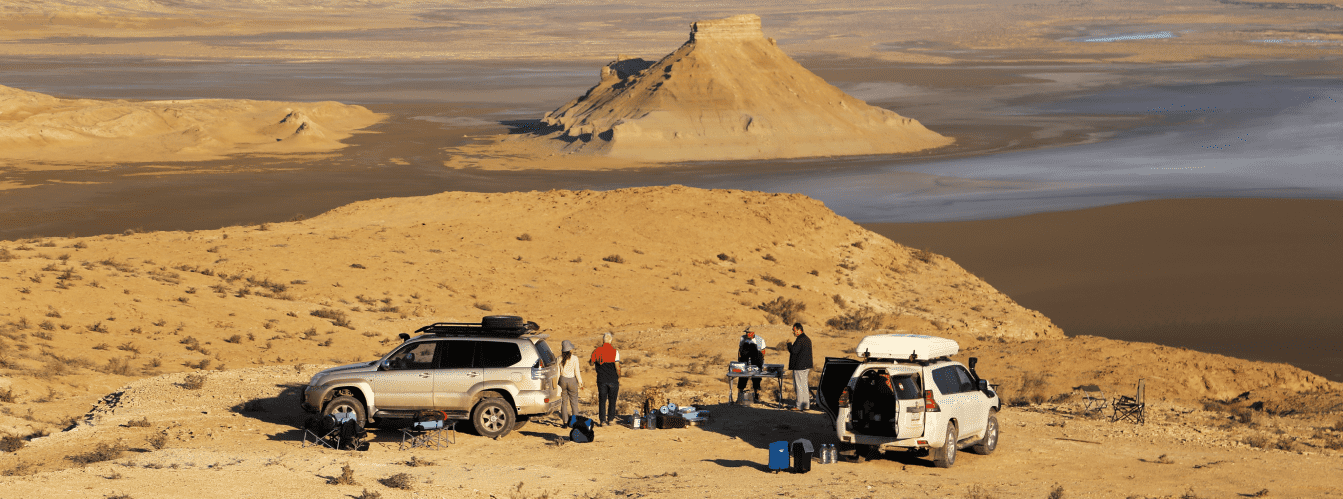
The route from Aktau runs along high-quality asphalt through the coastal villages of Akshukur and Tauchik, after which it transitions to northern steppe graded gravel tracks toward the coast of the Caspian Sea. A journey to the heart-shaped lake is traditionally included in the classic circular off-road route across Mangystau.
Driving across the plateau to the cliffs of Zhygylgan and onward route points requires an exclusively prepared four-wheel-drive off-roader (4x4) with high ground clearance and durable tires (AT/MT) resistant to sharp flint and limestone shards.
Descending by vehicle to the bottom of the sinkhole is impossible: cars are left at the upper observation area of the chink, from where a well-trodden walking trail about two kilometers long (around 35–45 minutes of walking one way among cyclopean stone slabs) leads down to the lake.
Infrastructure at the lake is entirely wild. The nearest hotels, cafes, grocery stores, tire repair shops, and gas stations are located in the town of Fort-Shevchenko and the port village of Bautino. Mobile network reception is absent at the bottom of the collapse and near the lake; therefore, travelers must carry an autonomous GPS navigator, a fuel reserve, a first aid kit, no less than 4–5 liters of drinking water per person per day, and fresh water for rinsing off.
Due to the high mineral concentration, bathing in the lake is recommended for no more than 10–15 minutes. The best time for an expedition is from late April to early June and during the velvet season in September – October.
--------------------------------------------
History
The history of Lake Kuzdykary's basin is rooted in the era of ancient geological cataclysms that sculpted the Zhygylgan sinkhole ("Fallen Land"). In the distant past, this locality was the level surface of a coastal plateau; however, due to the erosion of soft strata by ancient marine waters or as a result of tectonic displacements, millions of tons of limestone rocks collapsed downward toward the sea, exposing ancient layers of the Tethys Ocean.
Just one kilometer south of the lake basin on fallen stone blocks, unique paleontological records of the Neogene epoch are preserved – petrified hoofprints of ancient three-toed horse ancestors (Hipparion) and paw prints of saber-toothed cats (Machairodus), left in damp soil millions of years ago.
In the Middle Ages, this storm-sheltered coastal nook attracted seafarers and caravaneers who linked local campsites with the medieval port of Ketikkala on the shore of Tyub-Karagan Bay. On the rocky promontories of Zhygylgan near the lake, ruins of 14th–15th-century stone fortresses have survived, on whose walls ancient warriors carved petroglyphs depicting war steeds.
About a century ago, life bustled directly beside Lake Kuzdykary: a permanent human campsite stood near the freshwater spring. Surviving here to this day are a partially ruined stone well and several outfitted small caves carved into the limestone cliffs, where fishermen and Caspian seal hunters lived and sheltered from foul weather in the early 20th century.
Information
Geomorphologically, Lake Kuzdykary represents an enclosed karst-suffosion lagoon at the bottom of the Zhygylgan tectonic sinkhole at an elevation of 5.3 meters above sea level. The lake is separated from the open Caspian Sea by a rocky-sandy isthmus 700–720 meters wide and communicates with the marine waters through a system of subterranean channels and karst cavities in Sarmatian limestones.
Dimensions of the water body: length from north to south is 87–90 meters, width from east to west reaches 50–54 meters, with a maximum depth from 0.5 to 1.5 meters. The shoreline has a regular heart shape.
The hydrological regime is characterized by an extreme concentration of salts and pronounced seasonality. In spring, the basin fills with meltwater and inflow from the freshwater spring, taking on a magical blue shade. Under the rays of the sun, the water evaporates, turning into an ultra-dense, bitter-salty brine that exceeds the density of the human body and keeps a swimmer afloat on the surface. By mid-summer, the lake partially dries up, exposing a glittering salt crust and curative bottom mud.
The climate of the area is coastal desert, arid. Summer is scorching, with average air temperatures exceeding +35 °C (at the bottom of the rock sinkhole, temperatures in the sun can exceed +45 °C). Winter is moderately mild owing to the influence of the Caspian, yet windy. The ecological system is extremely fragile: the freshwater spring and saline shores require strict protection from littering.
Detailed description of the venue
The natural, landscape, and memorial complex of Lake Kuzdykary includes several key zones and features:
• Heart-shaped basin of Lake Kuzdykary – a compact water body measuring 90 by 50 meters with a sky-blue surface, possessing the flawless romantic geometry of a heart;
• Highly mineralized water expanse with the Dead Sea effect – a dense curative brine that allows a person to float effortlessly on the water's surface;
• Freshwater wetland spring – a clean source of good-quality potable water bubbling up among the stones just a few dozen meters from the saline basin;
• Ancient stone well and cave dwellings – a historical campsite of early 20th-century fishermen with residential grottos hewn into the cliffs;
• Slabs with petrified traces of Neogene fauna – a paleontological site 1 kilometer south of the lake with hoofprints of prehistoric ungulates and feline paw prints of saber-toothed cats (Machairodus);
• Cyclopean rock chaos of Zhygylgan – collapsed limestone monoliths the size of a residential house, creating fantastic landscapes around the lake;
• Coastline of the Caspian Sea – a wild rocky-sandy seashore 700 meters west of the lake with crystal-clear water for swimming;
Flora and fauna
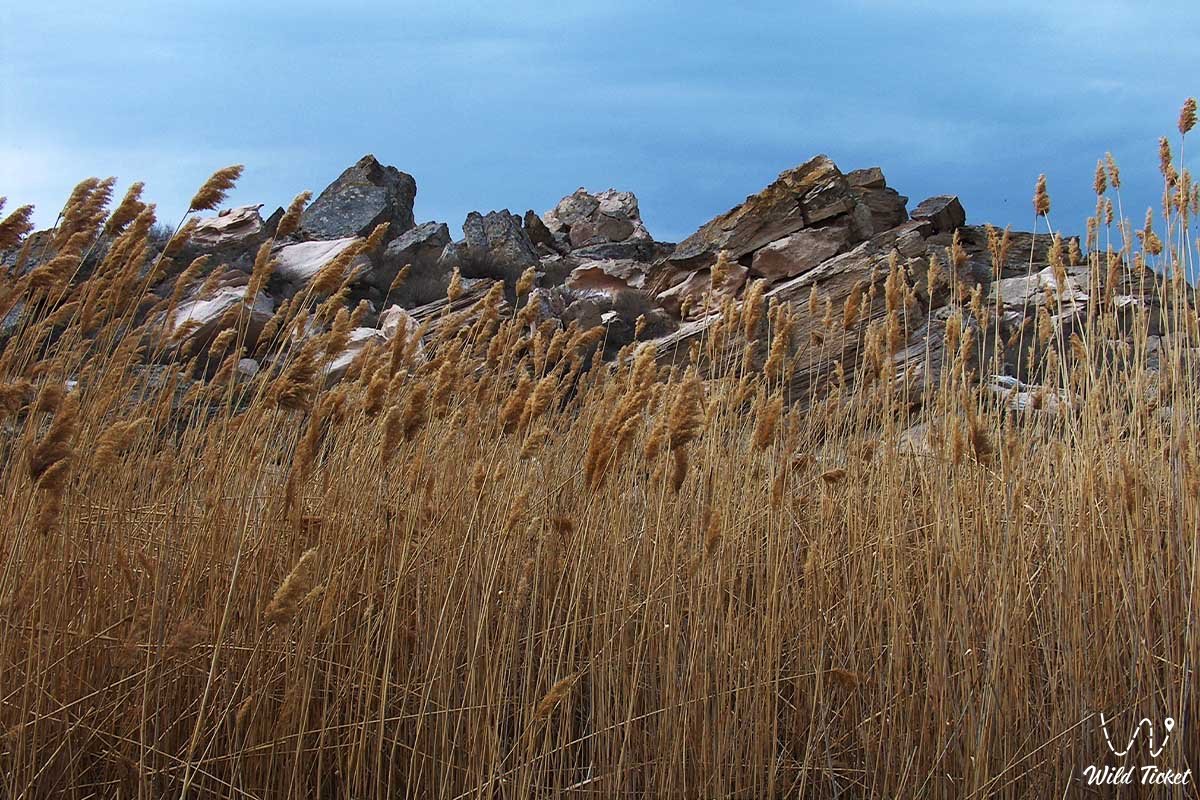
The plant world around Lake Kuzdykary combines extremes: glassworts, Halocnemum strobilaceum, and Caspian saltwort grow along the salty shores, forming a vivid crimson fringe against the white salt. Beside the freshwater spring rustles an emerald micro-oasis with thickets of common reed, bulrush, tamarisk (saltcedar), and fragrant wild mint. Gray-soil wormwood, boyalych, and prickly camelthorn grow on the cliffs of the chink.
The animal kingdom is rich and adapted to stone labyrinths. Birds of prey nest in the surrounding rocks: golden eagle, saker falcon, steppe eagle, and long-legged buzzard. Flocks of chukar partridges, rock doves, and desert wheatears are encountered on the rocky ledges.
Among mammals, corsac foxes, badgers, tolai hares, and hedgehogs hide in the rubble of Zhygylgan. Ustyurt mouflons (argali) descend from the steep chinks to the freshwater spring to drink. Caspian seals dwell in the waters of the nearby Caspian Sea, while the ichthyofauna is represented by mullet, pike perch, and sturgeon species.
Legend
A touching ancient legend about the pure love of a noble bai's daughter and a brave young shepherd is associated with Lake Kuzdykary. Refusing to marry the beauty to a poor man, the cruel bai ordered his warriors to track down the youth and cast him from the rocky chink directly into the sea abyss.
Learning of the slaughter, the girl ran to the precipice and cried out in unbearable grief. Her cry was so laden with pain that the earth around shuddered: the plateau split apart, and a colossal stratum of rock plunged downward with a roar, burying the bai's cruel servants under it forever. The maiden's bitter and hot tears flowed day and night until, at the bottom of the formed stone sinkhole, a crystal-clear lake in the shape of a faithful heart appeared. Ever since, people believe that Lake Kuzdykary guards the memory of eternal love, and its healing waters soothe the spiritual and bodily wounds of anyone who comes here with pure thoughts.
Conclusion
Lake Kuzdykary is one of the most impressive natural phenomena of the Mangystau land, uniting a romantic heart shape, the healing power of salt water akin to the Dead Sea, traces of prehistoric predators, and the cyclopean power of the Zhygylgan sinkhole.
A journey to the lake bestows unforgettable impressions, allowing visitors to bathe in the azure brine, draw water from a freshwater spring in century-old caves, and touch the ancient secrets of the great Caspian landscapes.
Interesting sights nearby:
• Utebay Cave;
• Balayuk Cave;
• Ketikkala Settlement (14th century);
• Kenty-Baba Necropolis and Underground Mosque;
• Ancient Koshkar-Ata Necropolis;
• Saura Gorge;
• Tamshaly Oasis and Canyon with Weeping Cliffs and Waterfall;
• Sultan-Epe Underground Mosque and Necropolis;
• Shakpak-Ata Underground Mosque (10th–13th centuries);
• Cape Bagarzhik;
• Cape Tyubkaragan and Upper Tyubkaragan Lighthouse;
• Ustyurt Plateau;
• Karagiye-Karakol State Nature Sanctuary;
• Karagiye Depression.
Photogallery: