Tambala Petroglyphs Tour in Anrakhai Mountains - sun-naked Deities
The sun-headed deities are located in the Tamgaly Tas tract and are rock carvings or petroglyphs, which are a local and cultural landmark of the region. Petroglyphs are located in the beautiful mountain tract Tamgaly-Tas in the Almaty region and are of scientific interest to researchers of antiquities and just ordinary people who like to travel to unusual and beautiful places in Kazakhstan.
- Distance of the route:
160 km
- Season time:
May - September
- Best time:
June - August
- Group size:
not more 12 person
- Days & nights:
1 day
Tour itinerary:
Almaty city – Kopa railway station – Karabastau village – Tamgaly tract (160 km, 3 hours).
We enter the Almaty–Bishkek highway, which goes west and leads us to the petroglyphs of Tambala. After driving a hundred kilometers and several villages along the way, we turn towards the Kopa railway station. Turning, we drive another sixty kilometers to the village of Karabastau, after which we turn off the road to the left to the nearby hills.
After a mile and a half across the steppe, we arrive at our destination. Leaving the car in the parking lot, we will make a short seven-hundred-meter walk to the Tamgaly petroglyphs. There's an excursion waiting for us, then we look around and take pictures. We have lunch and return back to the city of Almaty.
The Tamgaly tract is located 160 kilometers northwest of Almaty in the Anrakhai Mountains. These are low mountains on the border of the steppe zone. There is a sandy and pebble plain at the foot of the mountains. Numerous monuments have been discovered within the tract and on the foothill plain: sites and burial grounds from the Bronze Age to the ethnographic period.
This indicates that the area of the tract has been actively developed by people for many centuries. Since the discovery of petroglyphs in the Tamgaly tract in 1957 by an expedition of the Academy of Sciences of the Kazakh SSR led by A.G. Maksimova, this monument has been repeatedly examined by other archaeologists. Most of the petroglyphs are located in the lower part of the main gorge and in the side gorge adjacent to it from the west, as well as in 7 sayas located northwest of the main gorge.
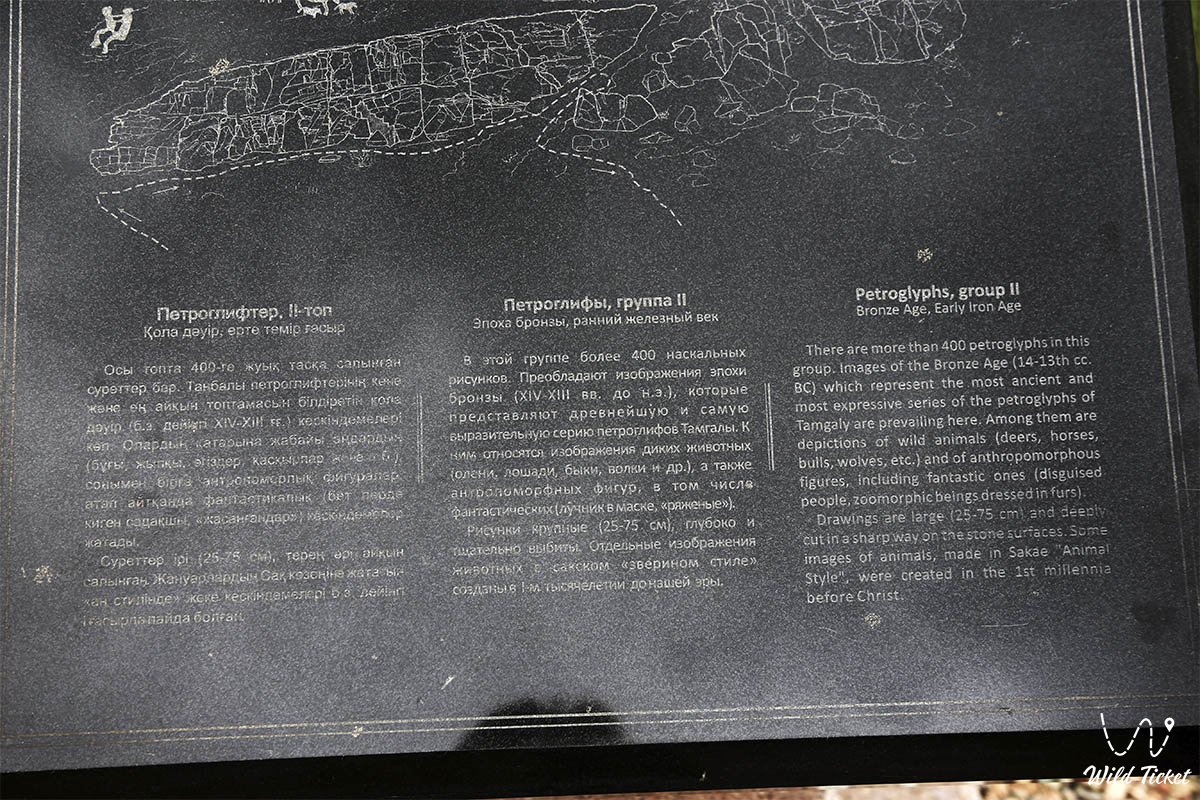
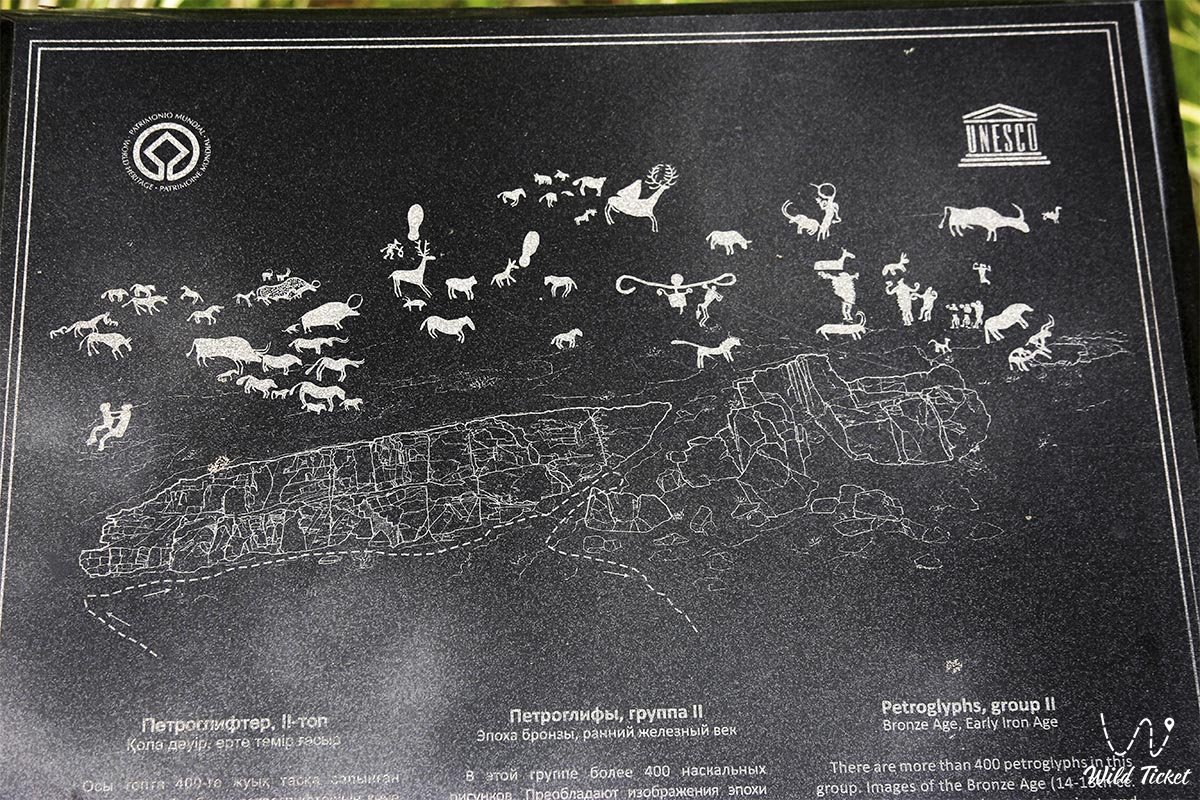
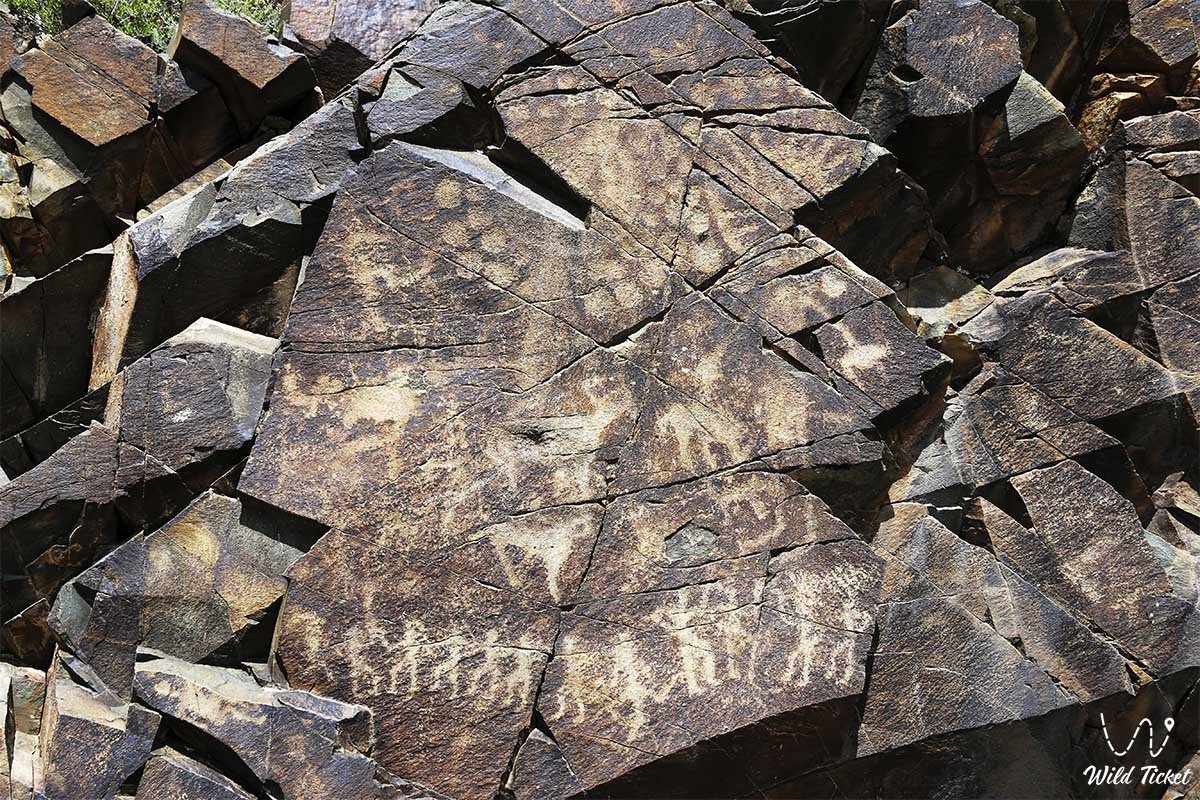
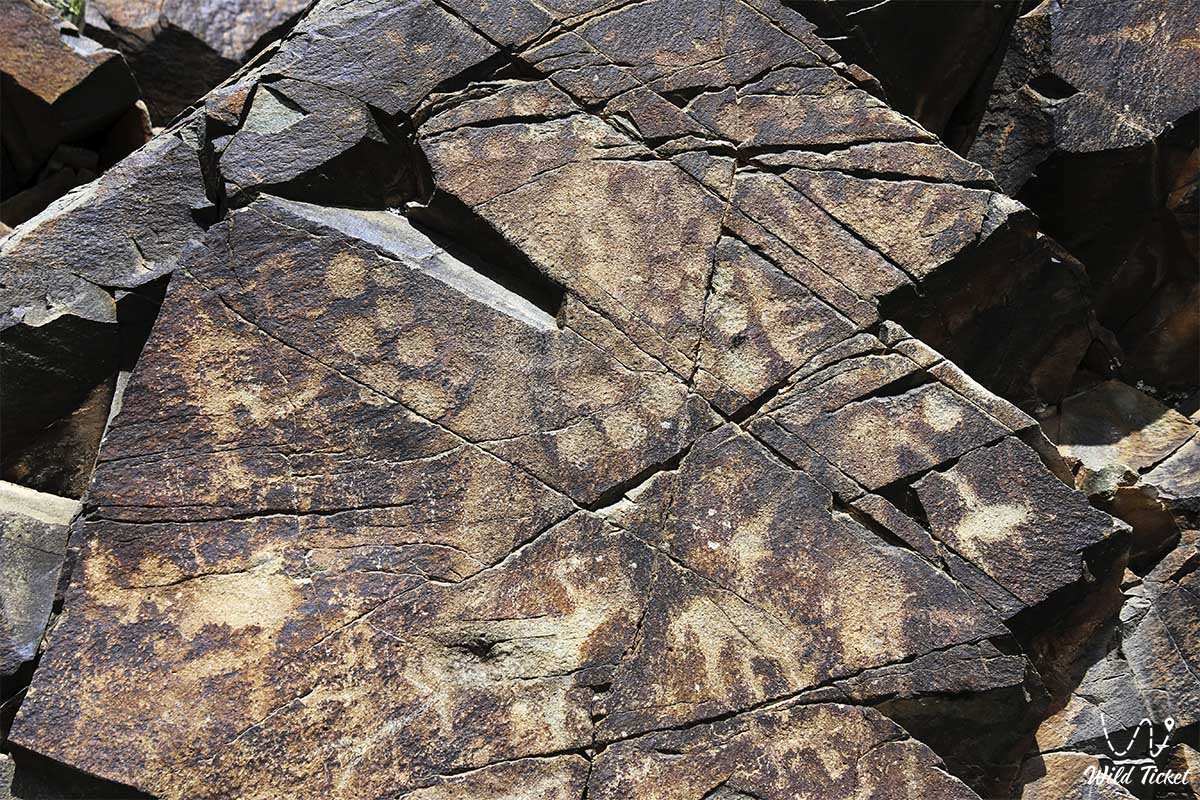
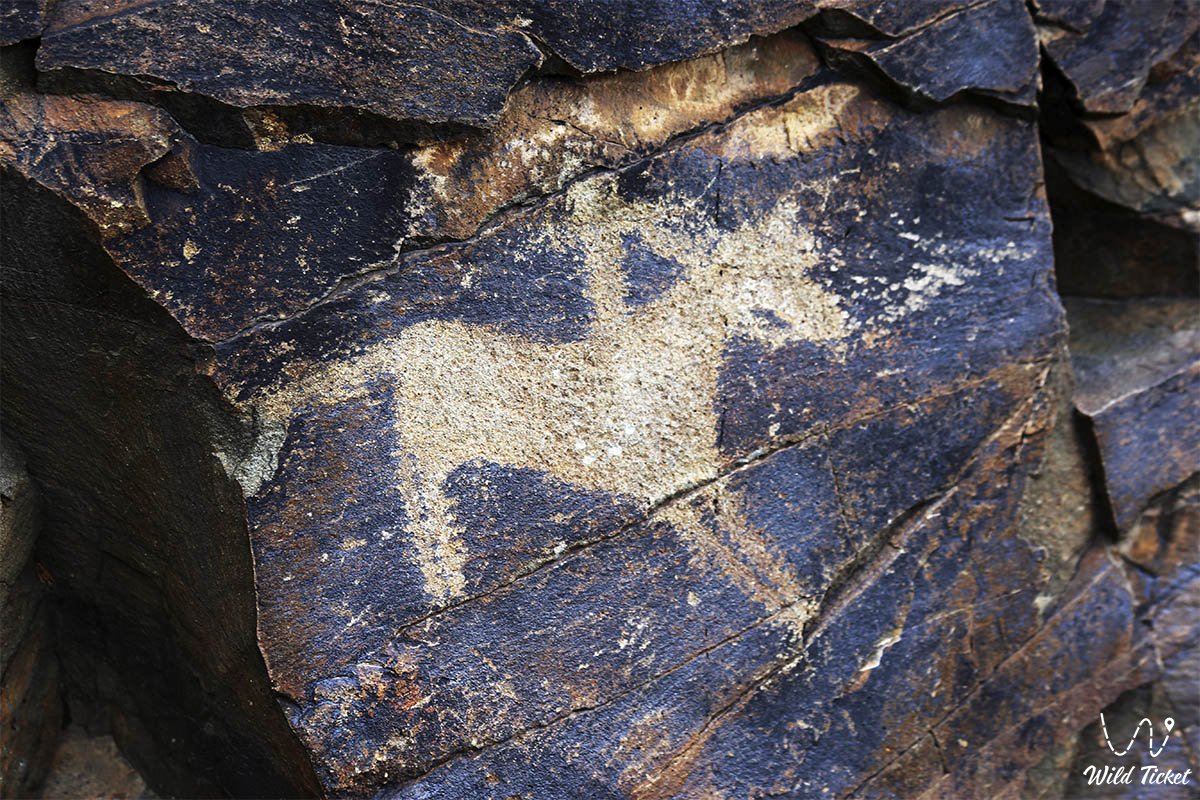
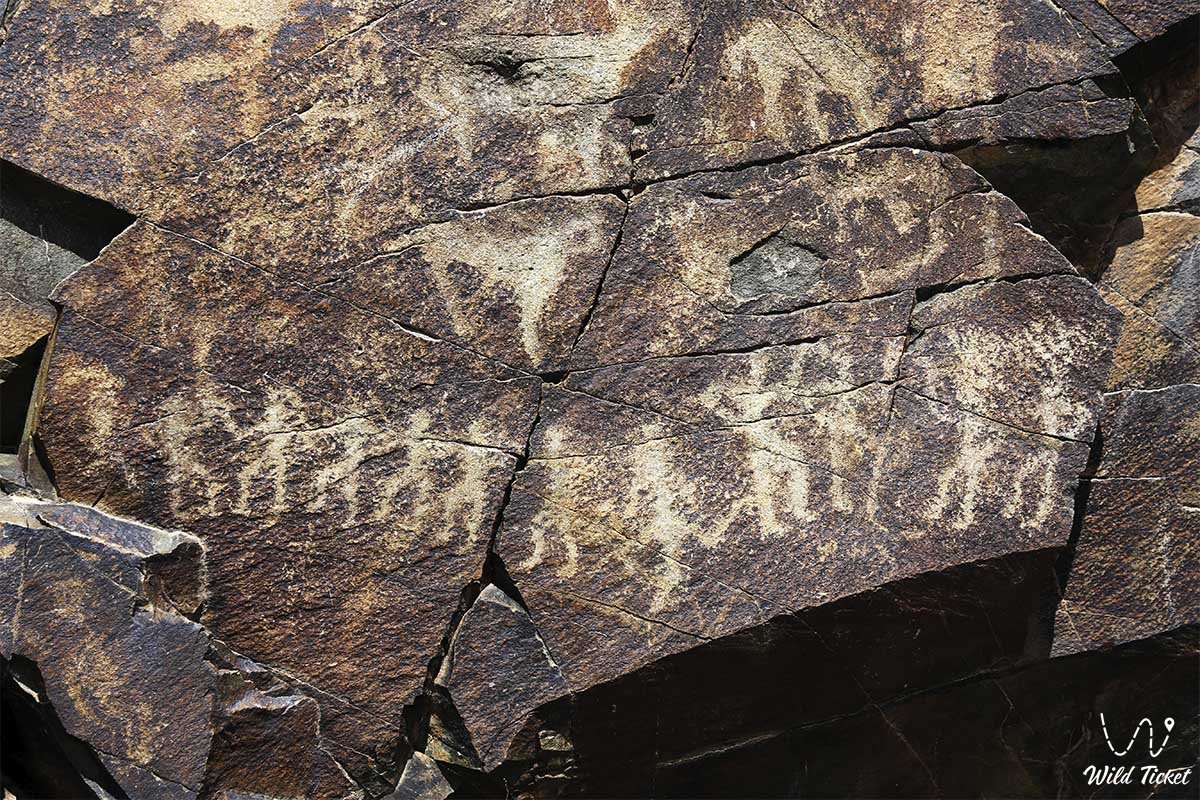
The total number of drawings in the main gorge is about 2000. All of them are conditionally divided into 7 groups. Among the petroglyphs there are figures of people, animals, tamga-shaped signs. There are no complex multi-figure compositions. There are scenes of archers hunting with dogs on animals: horses, goats, bulls, kulans, deer. The image of an anthropomorphic figure of a mummified man stands out.
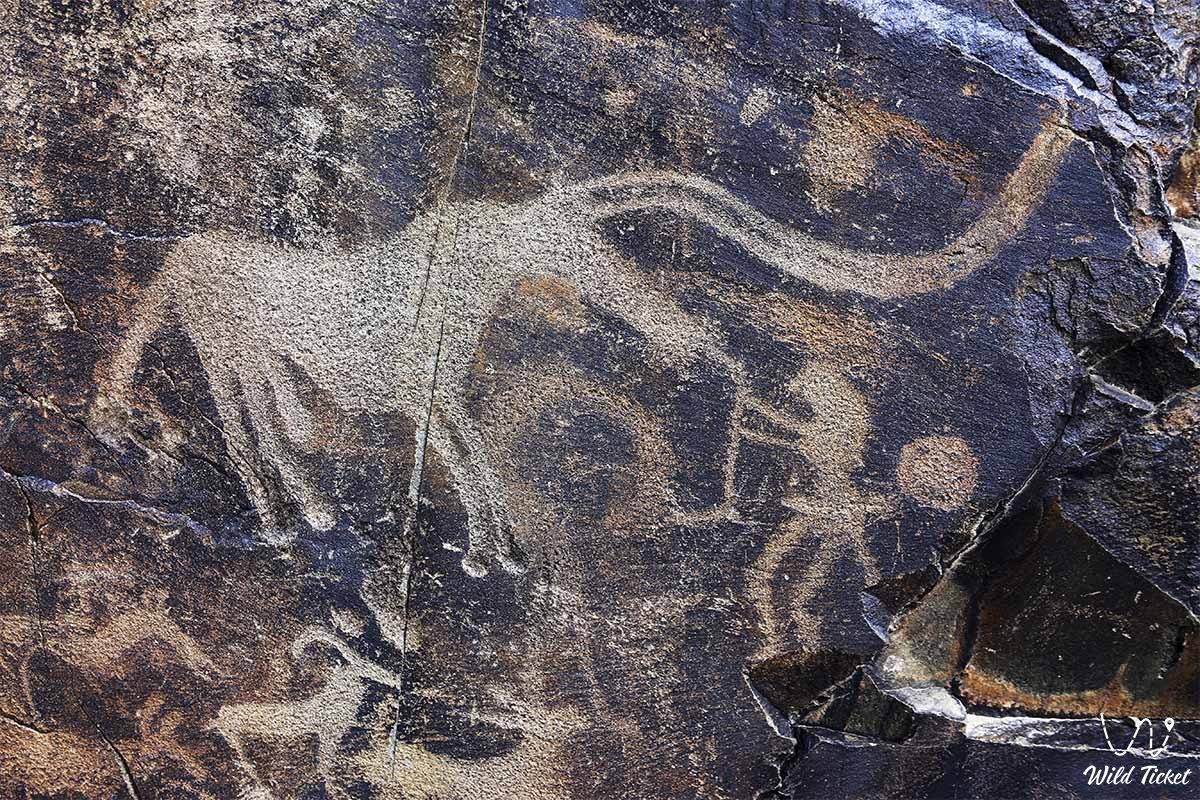
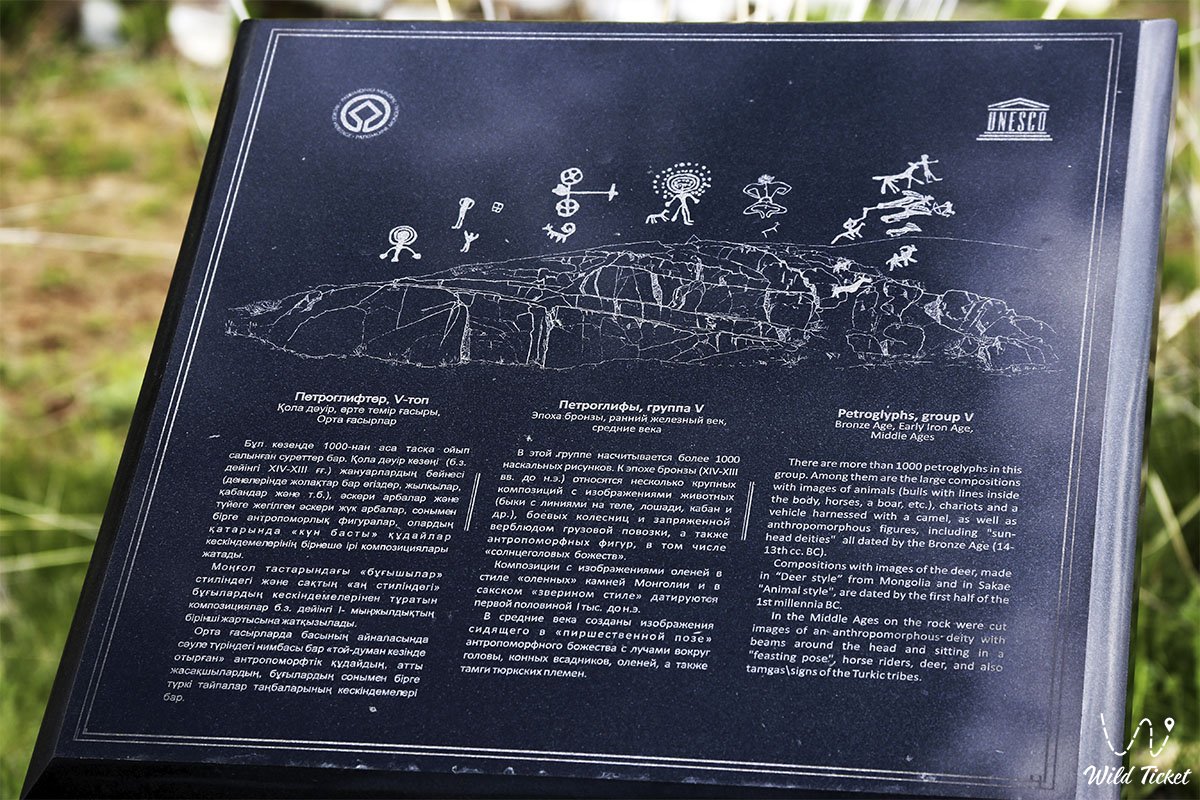
Other drawings feature a wide variety of subjects, from single images of animals: horses, bulls, deer, goats, wild boars, to complex multi–figure compositions with a sun–headed deity, mummers, a palisade-bearing warrior, hunting scenes, and foot signs. Several times there are compositions where the palisade warrior and mummers with hook-like hands are depicted together.
In the southeastern part of the rock block, married couples are depicted in erotic poses. The figures of a woman in labor and a man with a coin in his hand are slightly higher. The third upper tier of this rock was crowned with a large image of a sun-headed deity up to 80 cm high. Currently, this drawing has been destroyed and is being restored only based on a 1957 photograph. Some fragments of him and the figure were discovered by A.E. Rogozhinsky at the foot of the cliff.
Most of the drawings date back to the Bronze Age, although some animal figures are made in the "animal style". There have also been repeated updates at a later date to some of the plots. The World Heritage Committee at its 28th session, held in the Chinese city of Sudu from June 28 to July 7, 2004, decided to include, at the suggestion of Kazakhstan and taking into account the recommendation of the International Council for the Protection of Monuments and Historical Sites (ICOMOS), the "Petroglyphs of the Archaeological Landscape of Tamgaly" in the UNESCO World Heritage List.
Photogallery:











Comments 1