Tour to Tamgaly Tas petroglyphs, Magic Buddha Tamgaly Tas, Ili river
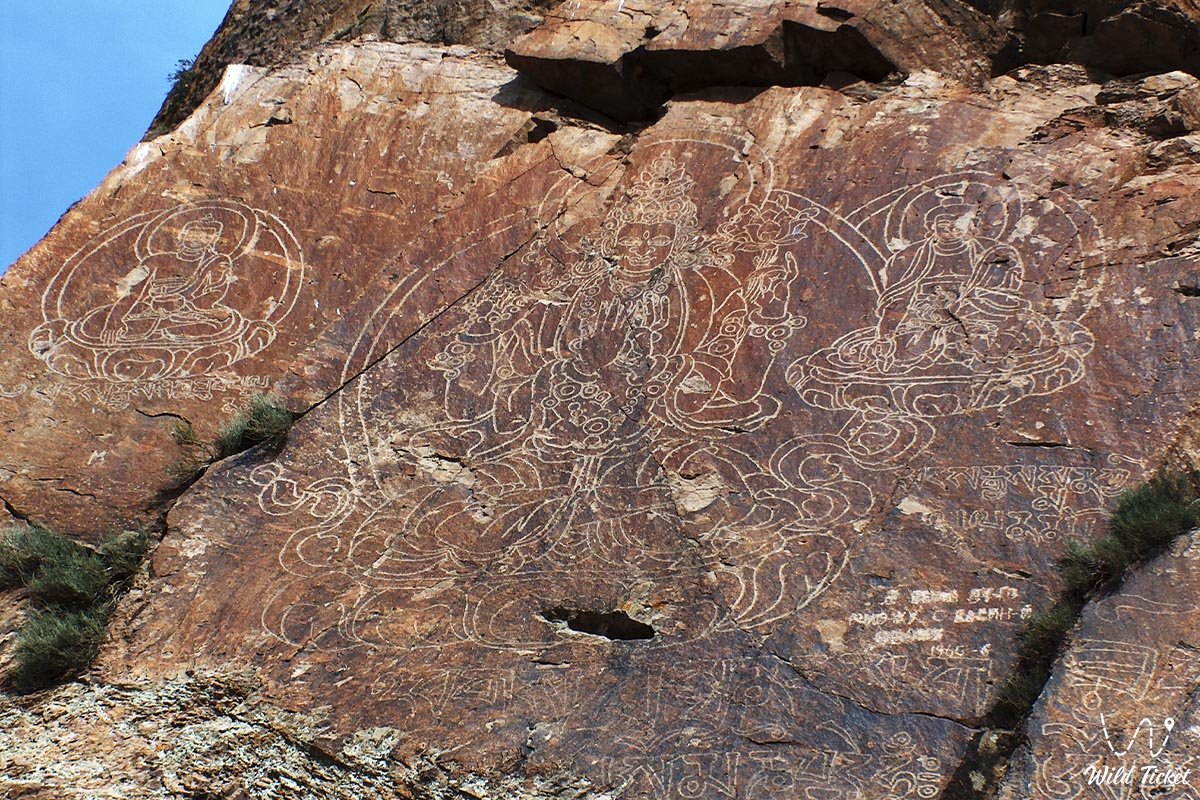
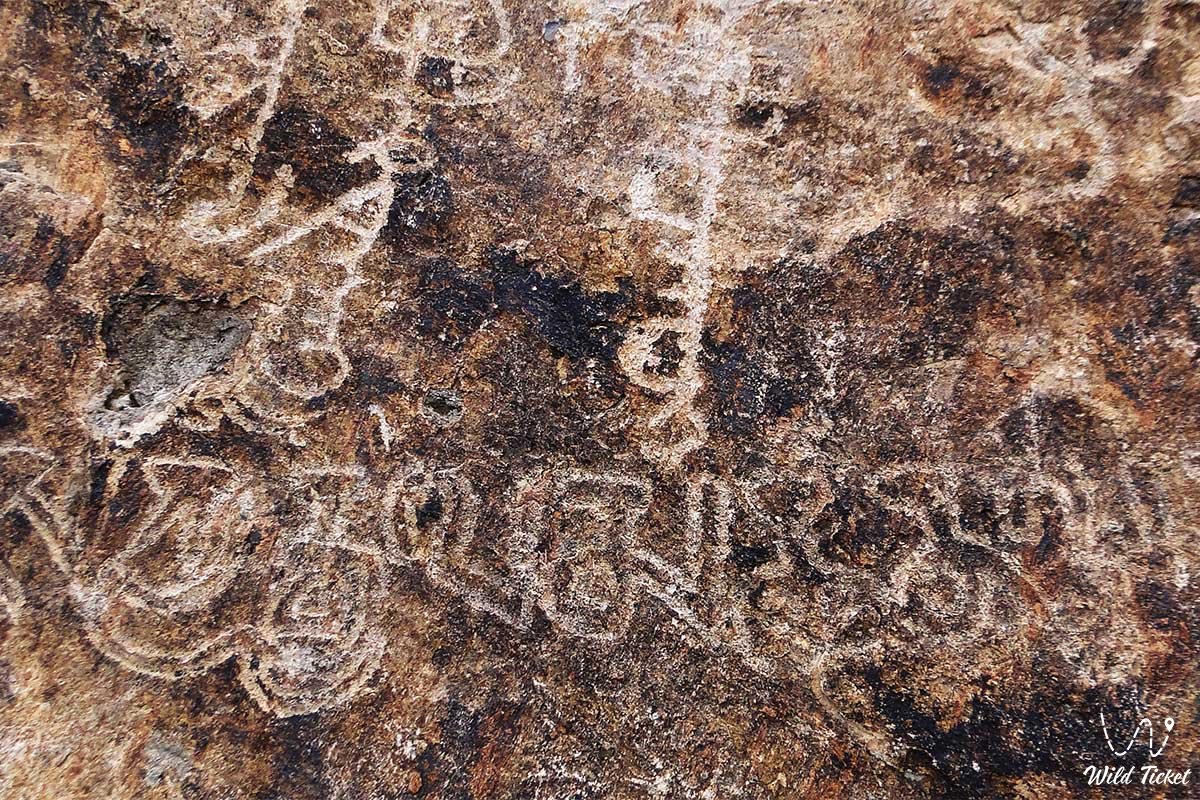
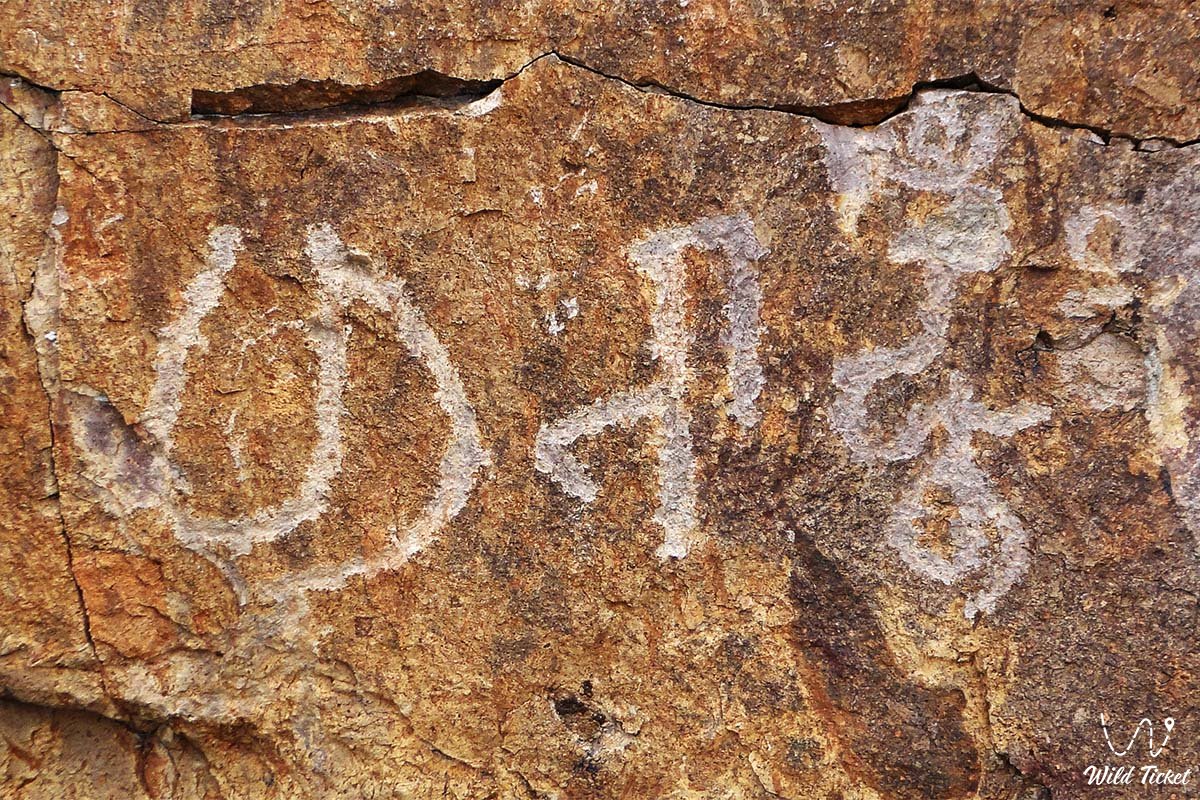
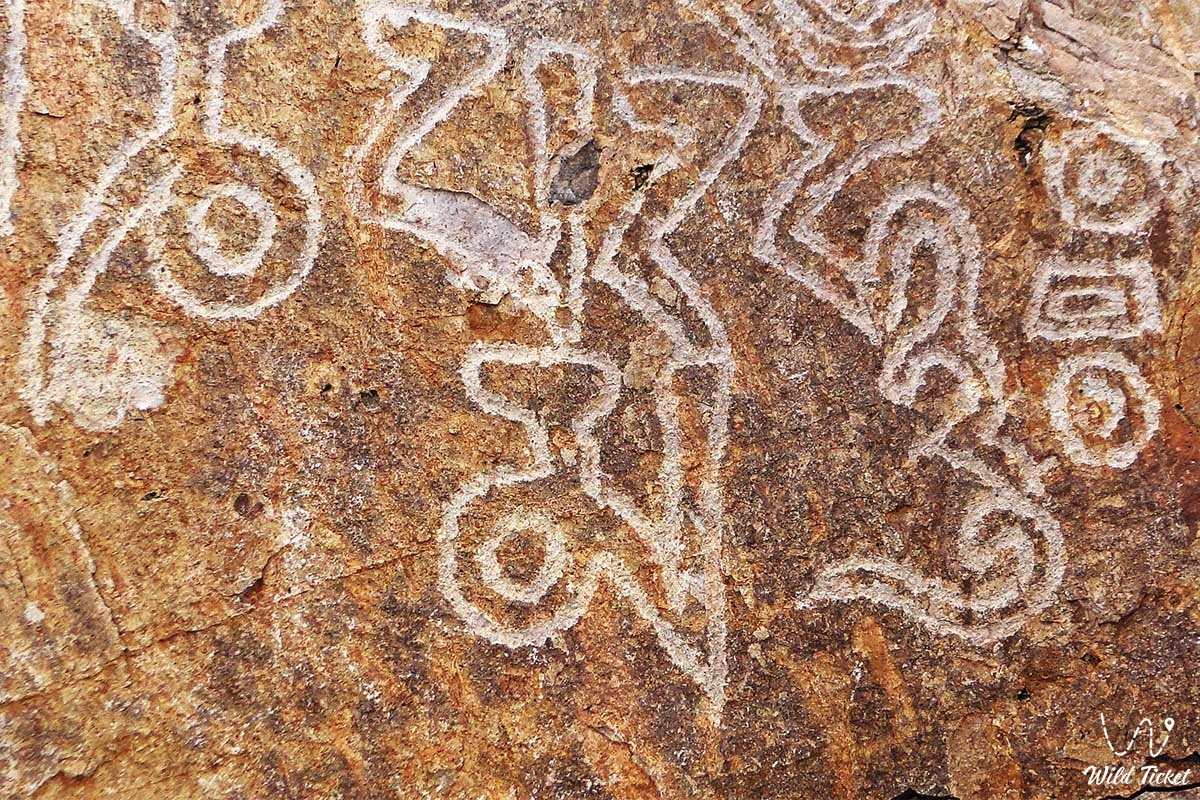
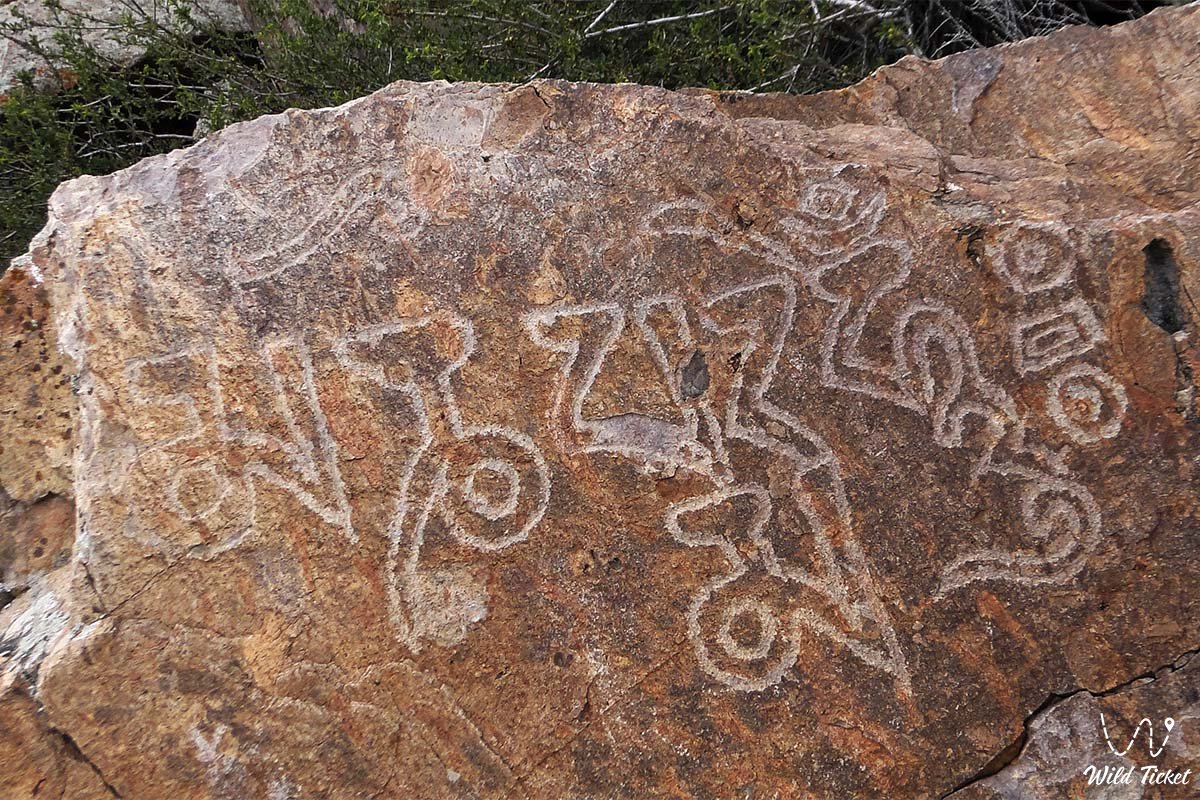
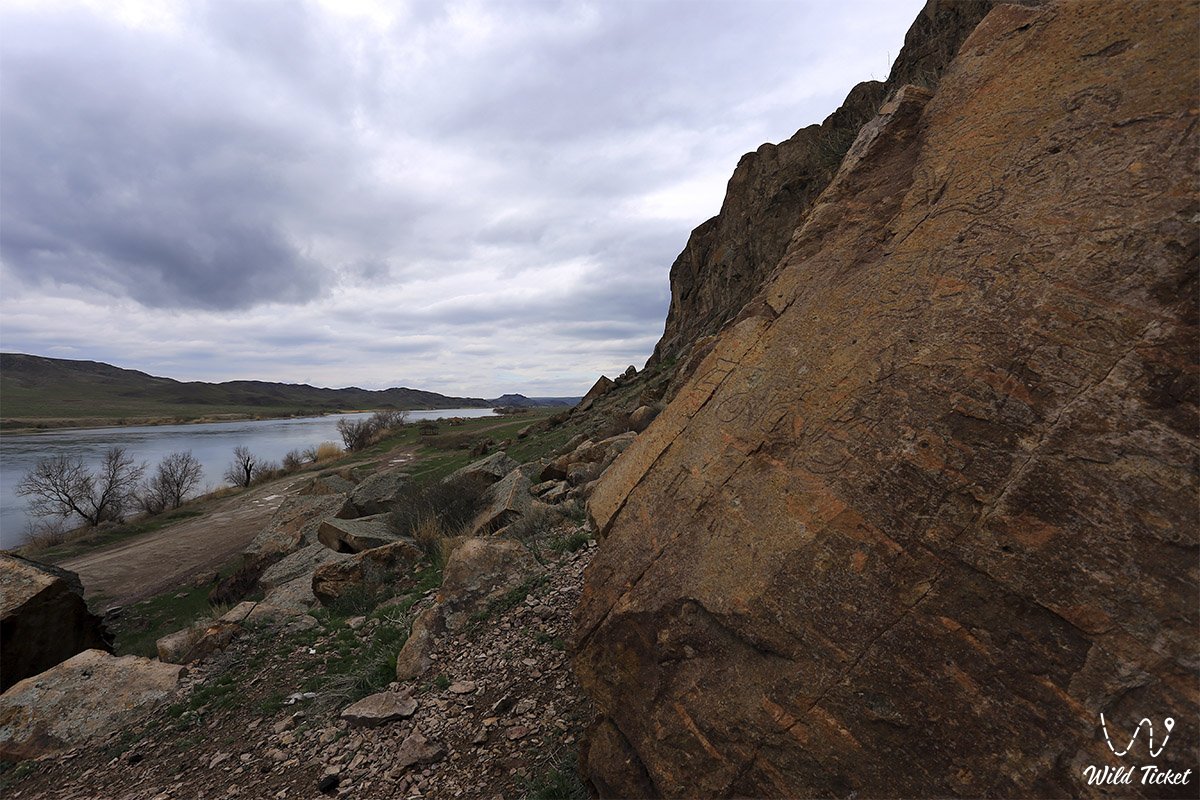
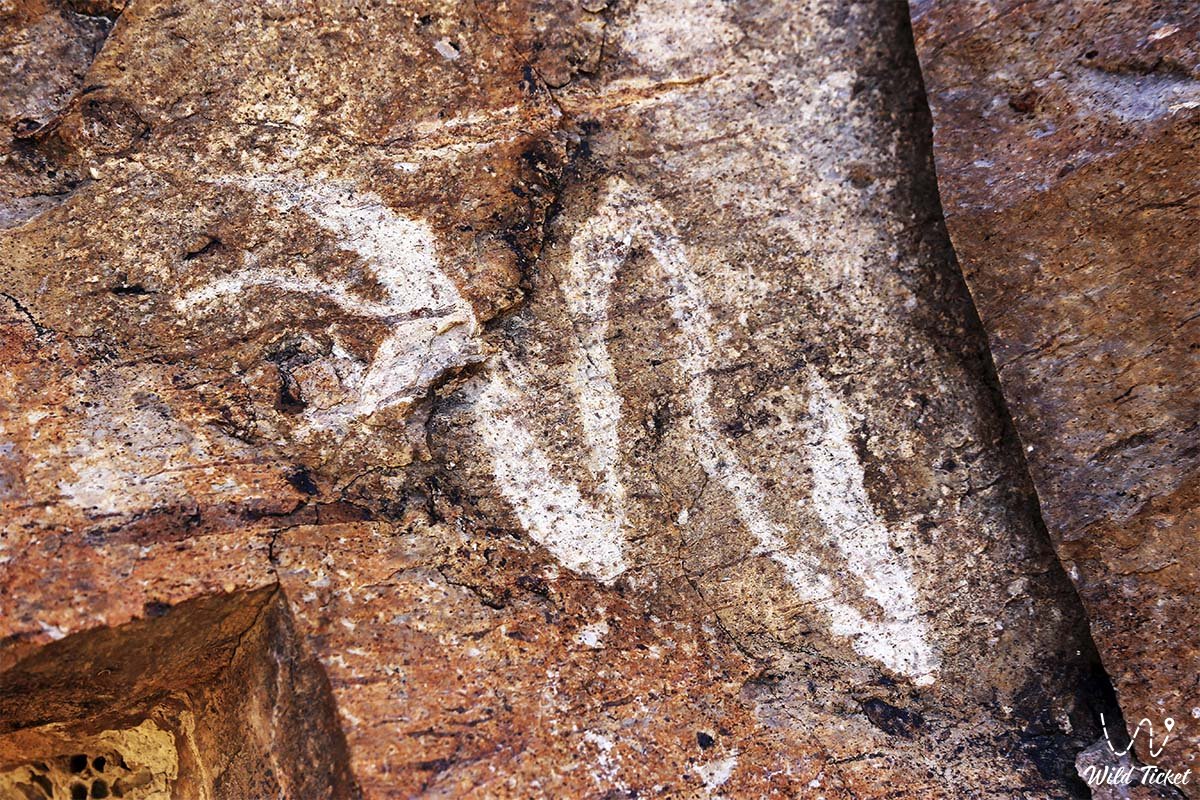
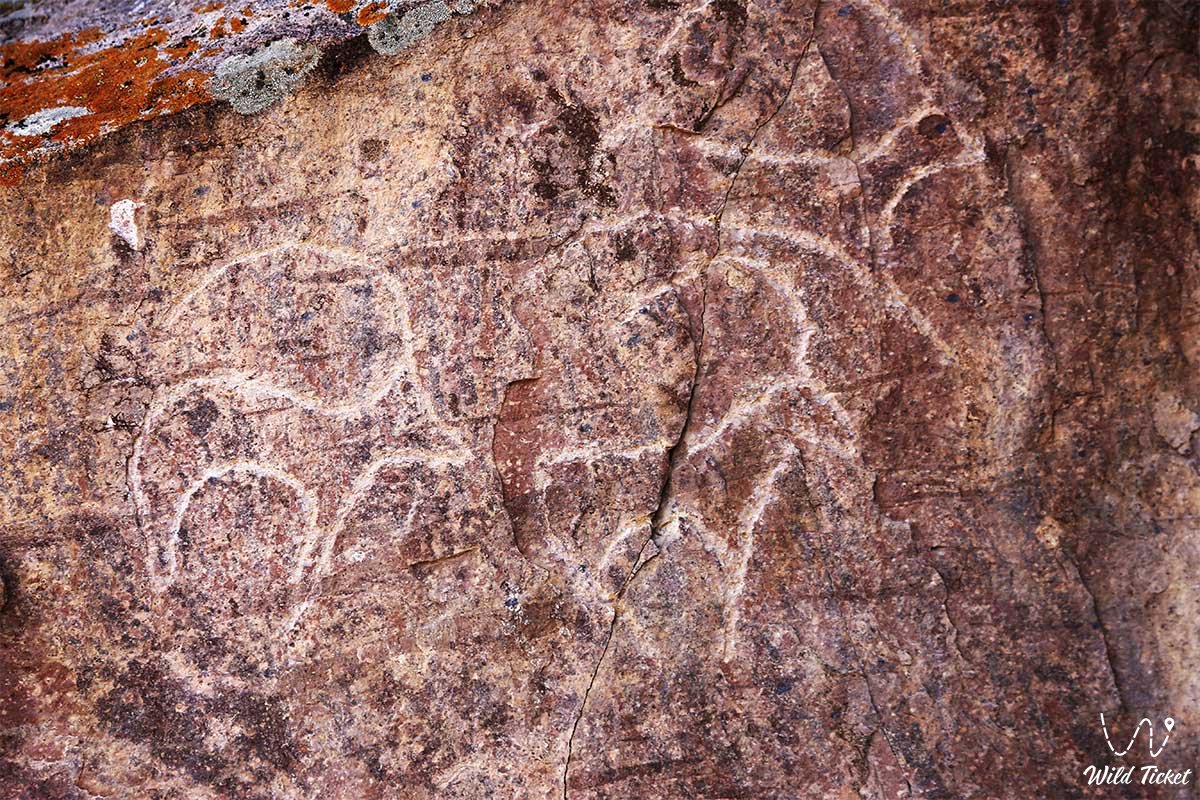
Tamgaly-Tas ("Stone with marks") is located 120 km north of Almaty near the Ili River, where many petroglyphs, images of mysterious gods, and later Buddhist inscriptions have been preserved on the rocks. Among the petroglyphs there are thousands of rock carvings, the most famous of which are Buddha Shakyamuni, Buddha Amitabha from the Infinite Light of the Buddha and Avalokiteshvara from the Bodhisattva of Infinite Mercy. In addition to Buddhist paintings and inscriptions, there are stones with ancient Türkic runic inscriptions of the 8th-9th centuries, which are believed to have been left by the Kipchaks. Tamgaly-Tas is a cultural monument under the auspices of the government of Kazakhstan and an open-air Buddhist temple.
Renato Sala, an Italian archaeologist, described this place as: Tambaly tas is a rare monument. It is a sacred Buddhist temple that was used for prayer and meditation. Images similar to these have been found in Kyrgyzstan, China, India, Pakistan and the homeland of Buddhism in Tibet. The birthplace of Buddhism is modern Nepal.
- Distance of the route:
183 km
- Season time:
all season
- Best time:
June - August
- Group size:
not more 12 persons
- Days & nights:
1 day
Tour itinerary:
Almaty city – Pervomaika settlement – Kapshagai city – Kapshagai reservoir – Ili River – Tamgaly-Tas tract – ancient Nomad city (125 km, 2 hours).
We are leaving Almaty in the north-east direction, towards the city of Kapchagai. After passing through the city, we pass the Kapchagai hydroelectric power station and dam. On the right, we can observe the Kapchagai reservoir, after which our road leaves the Ili River valley and turns into a village called Bakanas. After driving nineteen kilometers, we turn left, towards the river Or drive along the steppe road. After some time on the way, we descend into the Ili valley, from where we have a beautiful view of the river. After driving a total of 115 kilometers, we find ourselves in the Tamgaly-Tas tract. We walk through the territory of the tract and inspect the rock image of the Buddha, take pictures. We will also climb to the observation deck, which offers a picturesque view of the Ili River and the valley. Then we return to the cars and drive to the wooden prop town "Nomad", which was built for the filming of the film. After driving 58 kilometers, we arrive at the place. We walk around the territory of the "city" and take pictures. After finishing the walk, we return to the city of Almaty. The total length of the return trip will be 101 kilometers.
There are images on the riverbank, where high, vertical cliffs approach the water. They depict Buddhas depicted in poses for prayer and contemplation. The drawings date back to the 14th – 16th centuries. There are 18 rocks with signs in total, including three Buddhas on one rock and two on the others. The orientalist N.N. Pantusov was one of the first to visit Tamgaly-Tas for scientific purposes at the end of the 19th century.
Before him, in 1856, there was a researcher named Ch. Valikhanov, but he only made sketches of the Buddhas and left no notes. The inscriptions were deciphered by an official of the Governor-General of the city of Verniy (as Almaty was previously called), a great expert in oriental languages, N.N. Pantusov, back in 1989. According to the names of historical figures mentioned in the inscriptions, he determined the age of the image.
It was inflicted about 500 years ago, during, as he wrote, the "Tibetan invasion." There is a legend about the origin of the Buddha's drawings. There was a ford across the Ili River in the Tamgaly-Tas tract near Almaty. The ford was formed from a ridge of stones crossing the river. By which experienced people safely crossed to the other side of such a deep and wide river as Ili. What important event happened and what made the Buddhist pilgrims stay here for a long time? Could it be that an earthquake happened before their eyes and the rocks collapsed? There is a legend that tells about the origin of the Buddha's drawings. The earthquake occurred during the caravan's approach to the river. Large stones from vertical 50-meter cliffs fell into the water in front of the pilgrims and formed a passage. As in a fairy tale, a bridge appeared before the eyes of the heroes. The caravaneers took this as a divine sign. The traces of the devastating earthquake and the remains of the bridge can indeed be seen today.
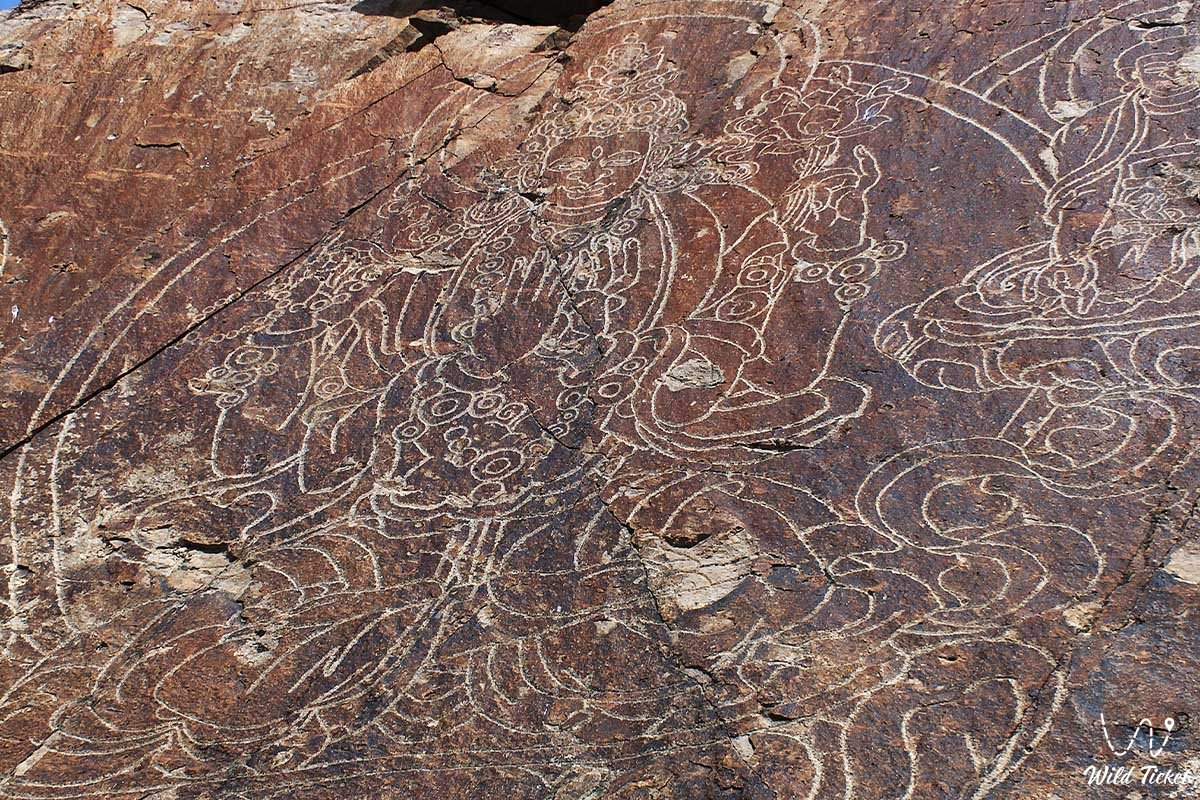
The central vertical rock measuring 6 by 8 meters in the middle depicts the Bodhisattva Arya Avalokiteshvara. The OM MANI PADME HUM mantra is dedicated to him. He is 2.5 meters tall, sitting in a diamond pose on a lotus flower with four arms. The front pair of hands is folded for prayer, in the back right he holds a crystal rosary, and in the left a lotus flower with a long stem. There is a crown on his head. The Bodhisattva is decorated with earrings, necklaces, and bracelets. All of them have three gems. Next to it is an inscription translatable: "I bow down to the holy Avalokiteshvara." To his right, at a height of four meters, is Shakyamuni Buddha, measuring 1 meter with the inscription: "I bow to Shakyamuni Buddha." He has a begging bowl in his left hand, and his right hand is turned down, palm facing him. This gesture calls the Earth to witness. On the left is Burkhan Mangla, the deity of healing. The size of the drawing is the same meter.
He is sitting on a lotus throne, holding a casket filled with medicinal nectar in his left hand, and his right hand, palm down, holds the fruit of a Golden Mirobalan in a gesture of surrender. This plant is an "Indian almond", a pagoda tree, the king of all medicinal preparations for mental and physical ailments. The caption below reads: "I worship Buddha Mangla." To the left of the central rock, Teacher Nagarjuna stands on a huge stone with seven snakes above his head.
Photogallery: