Cultural heritage of nomads in the open air of Kazakhstan -
Yurts, crafts and military tradition among the foothills of Ushkonyr -
The Nomad Ethnocenter in the Almaty region is not just a tourist destination, but a full–fledged journey into the world of ancient nomads. Here, the culture of the Great Steppe ceases to be a textbook page and becomes a living space in which you can walk, breathe, touch and participate. Among the wide plateaus of Ushkonyr, at the foot of the mountains of the same name, there is an open-air ethnoaul, where traditions, customs and philosophy of nomadic life reveal themselves in all their depth.
The project is conceived not just as a museum, but as an interactive space where every guest can not only see, but also experience the culture of steppe nomads. There are no glass display cases here – instead there is the smoke of the hearth, the ringing of bells, the rustle of felt and the aroma of freshly brewed koumiss.
Since its opening, Nomad has become an important part of cultural tourism in the region, offering immersion in eras ranging from the Bronze Age to the time of the Kazakh Khanate. This is a place where history becomes tangible, through hands, taste, hearing, and even the smell of the steppe.
History
The Nomad Ethnocenter was conceived as a new generation historical and ethnographic complex. His idea was born out of the desire not only to show the way of life of nomads, but to recreate a holistic model of their world, from the Saka period and the era of the Usuns to the time of the Turks and the Kazakh Khanate. It was these peoples who for centuries shaped the culture and character of the lands on which Kazakhstan stands today.
The place for the ethnocenter was not chosen by chance. Since ancient times, the Ushkonyr plateau and the adjacent foothills have been a space of nomads, migrations and paths of the Great Steppe. Ancient caravans passed through here, family camps were located here, traditions were formed here, which still live in the national culture today.
"Nomad" became an attempt to bring this world back to the present, not in the form of museum showcases, but as a living settlement where every guest can become a participant in nomadic life.
Architecture and everyday life: the yurt as a philosophy of life
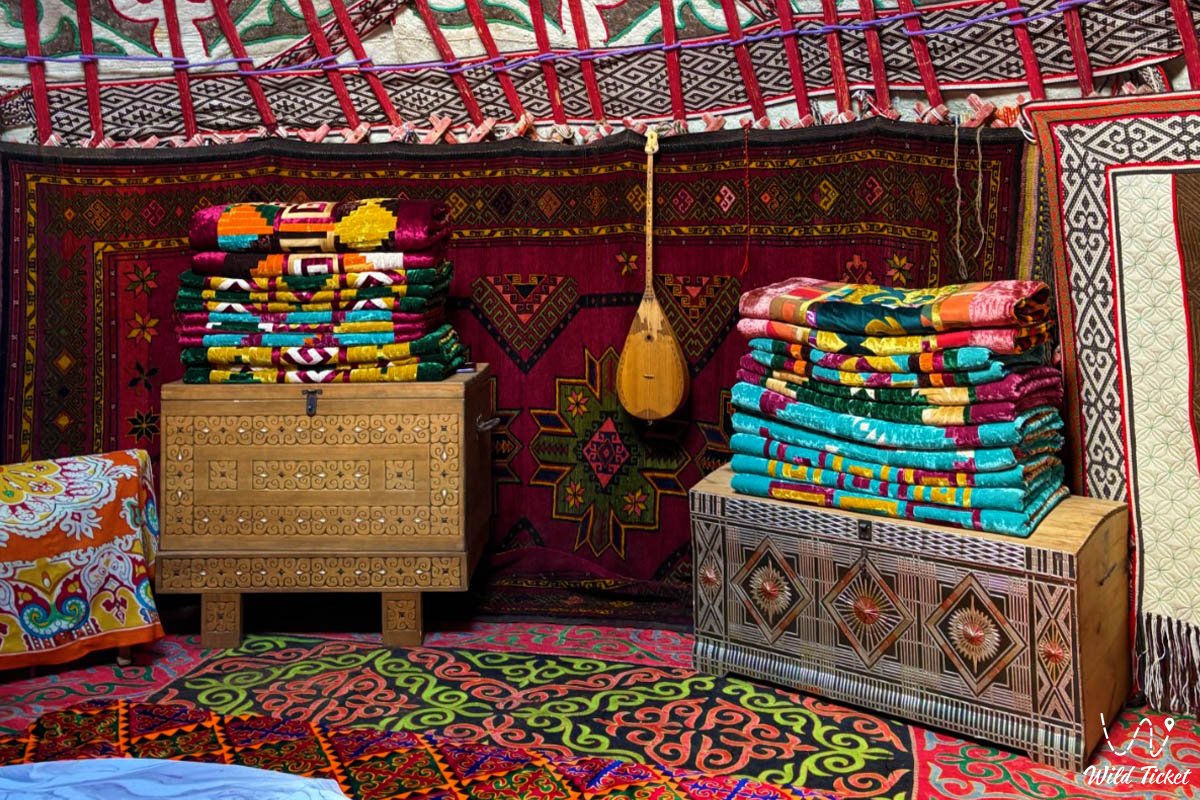
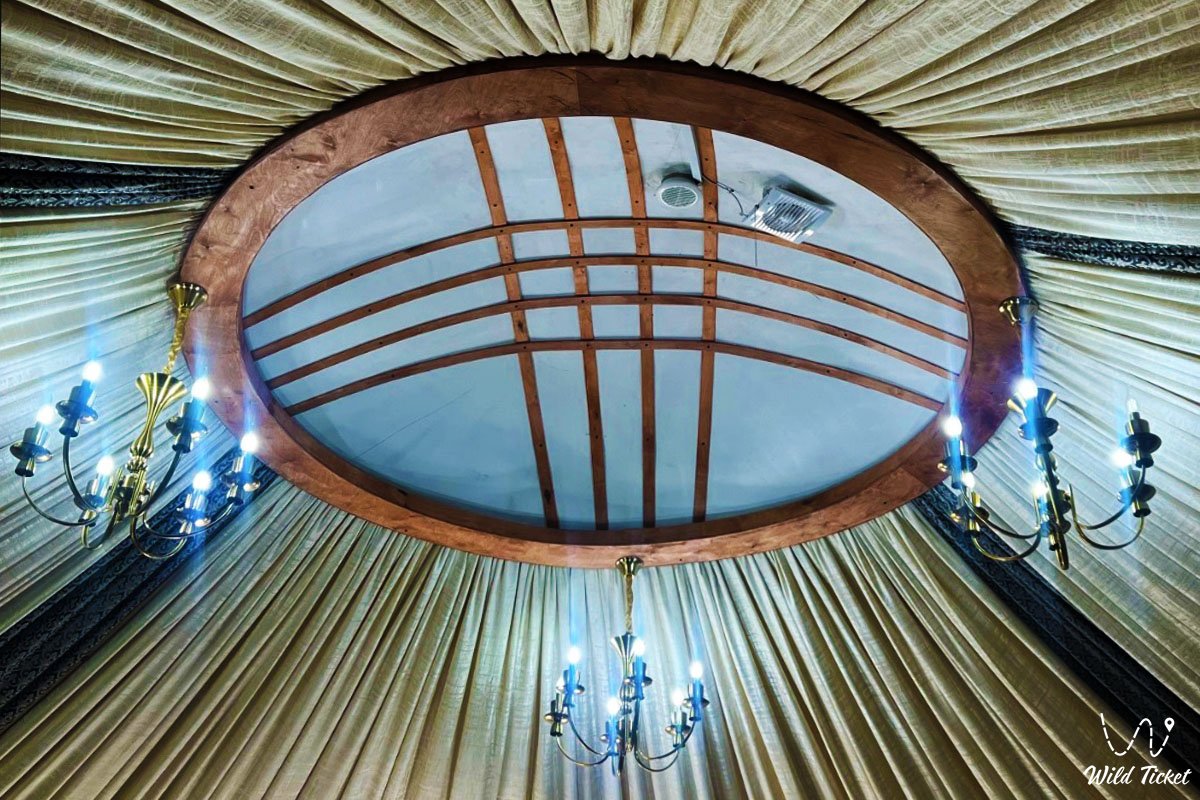
The space of the ethnocenter is built like a traditional nomadic village. Its heart is yurts, round mobile dwellings symbolizing the harmony of man and the universe. In the Turkic languages, the word "yurt" means not just a house, but a homeland, a people, a world that a person carries with him. That is why the yurt becomes the main architectural and philosophical element in Nomad.
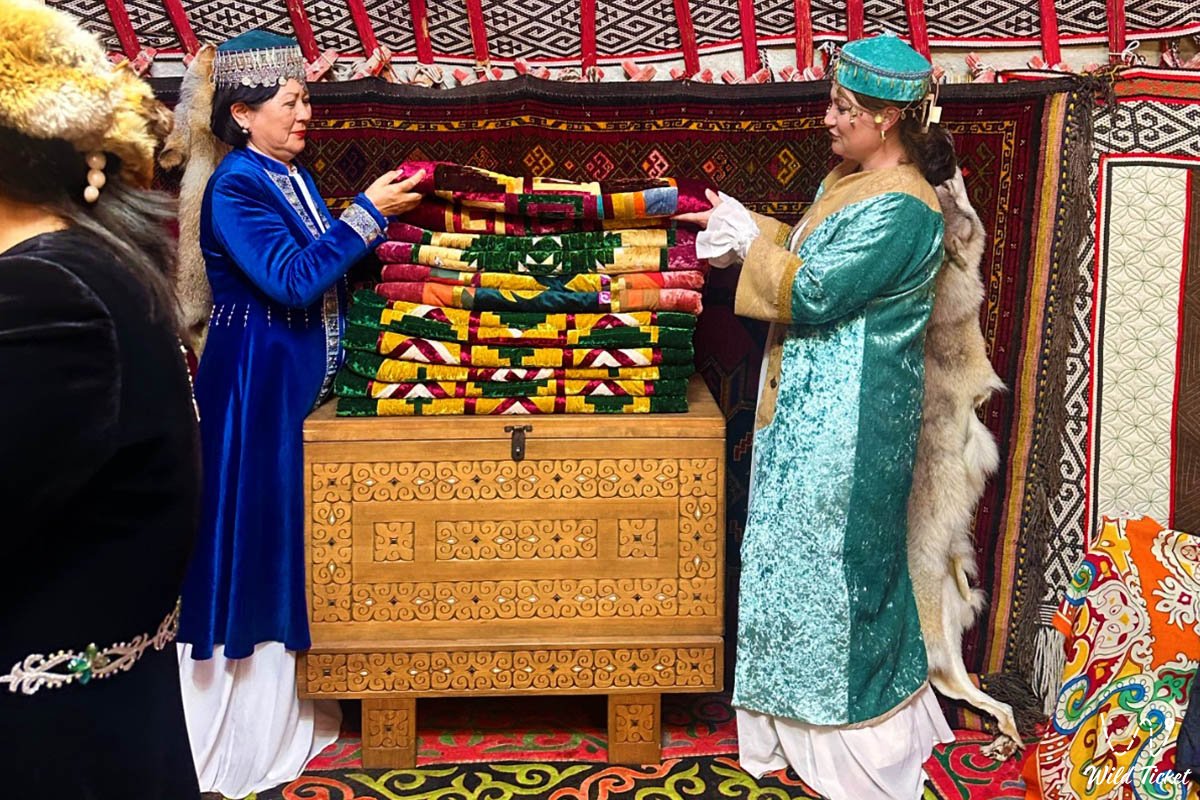
Yurts recreated according to ethnographic patterns are located on the territory of the complex. Their frames, felt coverings, wooden details and interior decoration were made by artisans and ethnographers in such a way as to accurately convey the atmosphere of nomadic life. Inside some yurts, dastarkhans are laid for guests, creating a sense of ancient hospitality when every traveler was considered a blessing.
The entire architectural ensemble harmoniously fits into the landscape of the Ushkonyr plateau: wooden bridges, stone alleys, craft zones and equestrian playgrounds create a complete picture of a nomadic campsite, as if transported from the distant past.
Crafts: when hands remember the ancestors
Handicraft has always been one of the main indicators of the development of nomadic peoples. In the Nomad ethnocenter, a special part of the space is dedicated to this. Here, guests get acquainted with how traditional crafts developed in different eras, from the Saka period to the Kazakh Khanate.
Visitors can see the processing of leather and wool, the weaving of pile and lint-free carpets, wood and bone carving, pottery and jewelry, as well as blacksmithing, without which it was impossible to imagine the military steppe. Many products are created right in front of the guests, and if desired, you can try to weave a carpet with national ornaments or touch ancient technologies.
Martial art: the spirit of a warrior batyr and the rhythm of a galloping horse's hooves
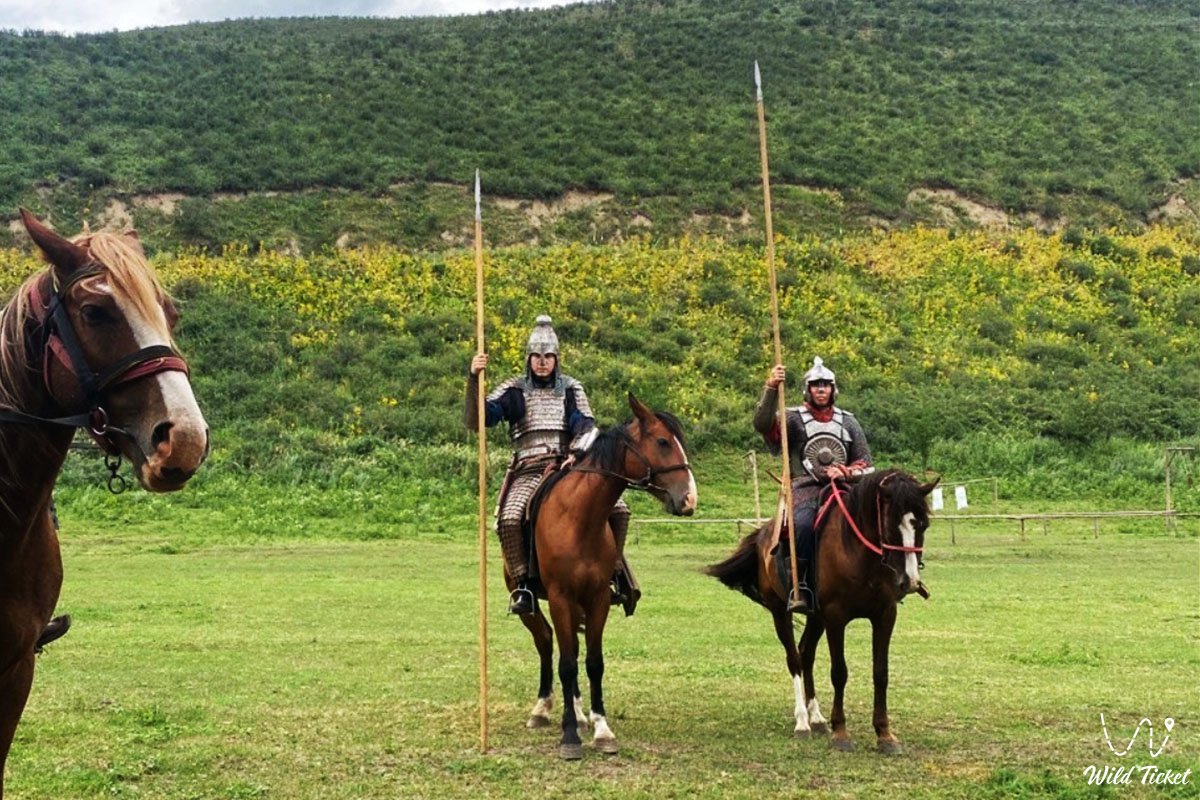
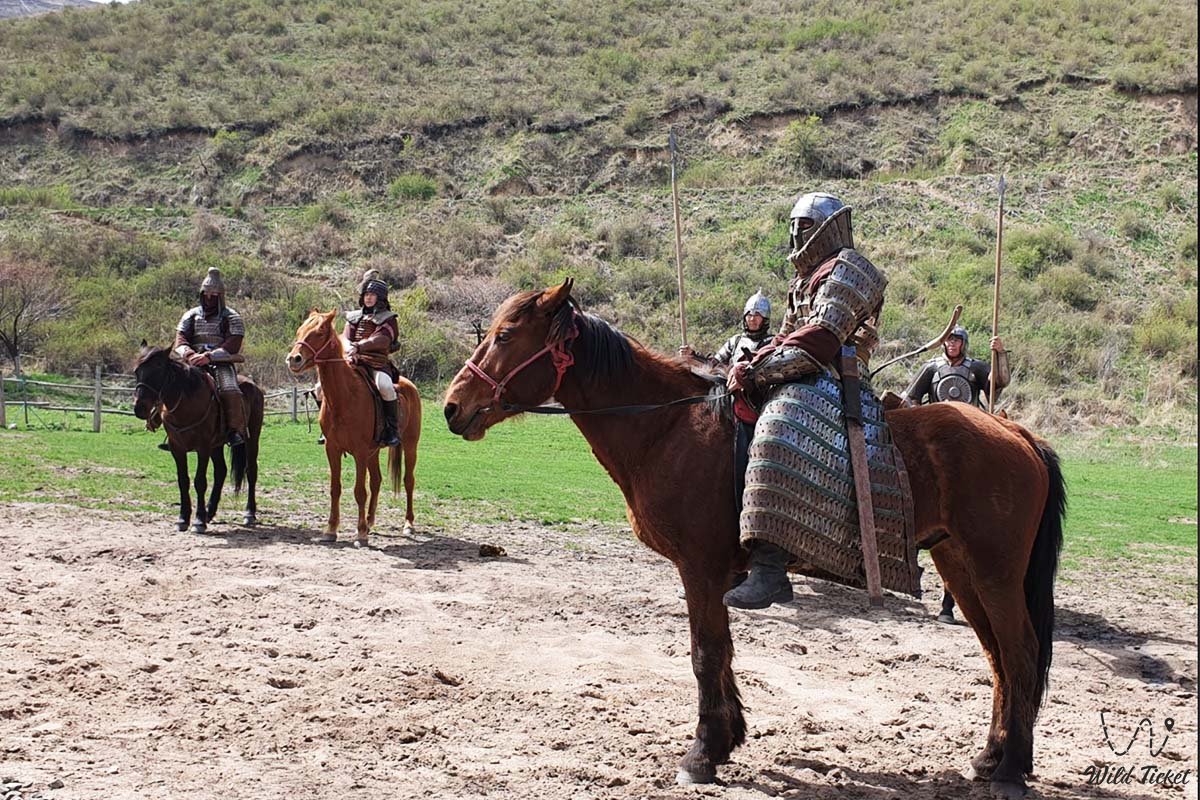
For the nomads, war and the defense of their lands were an integral part of life. At the Nomad ethno-center, this side of steppe civilization is presented through spectacular equestrian performances, battle reenactments, and demonstrations of weapons and armor.
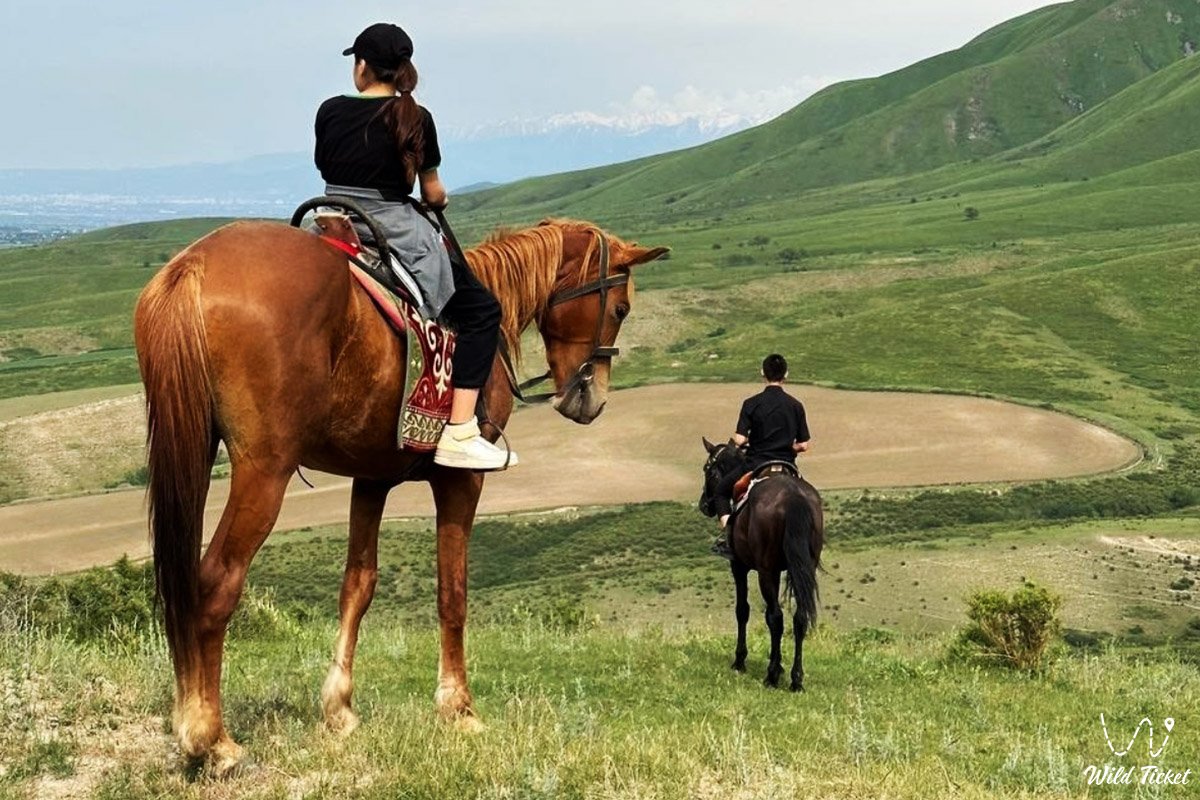
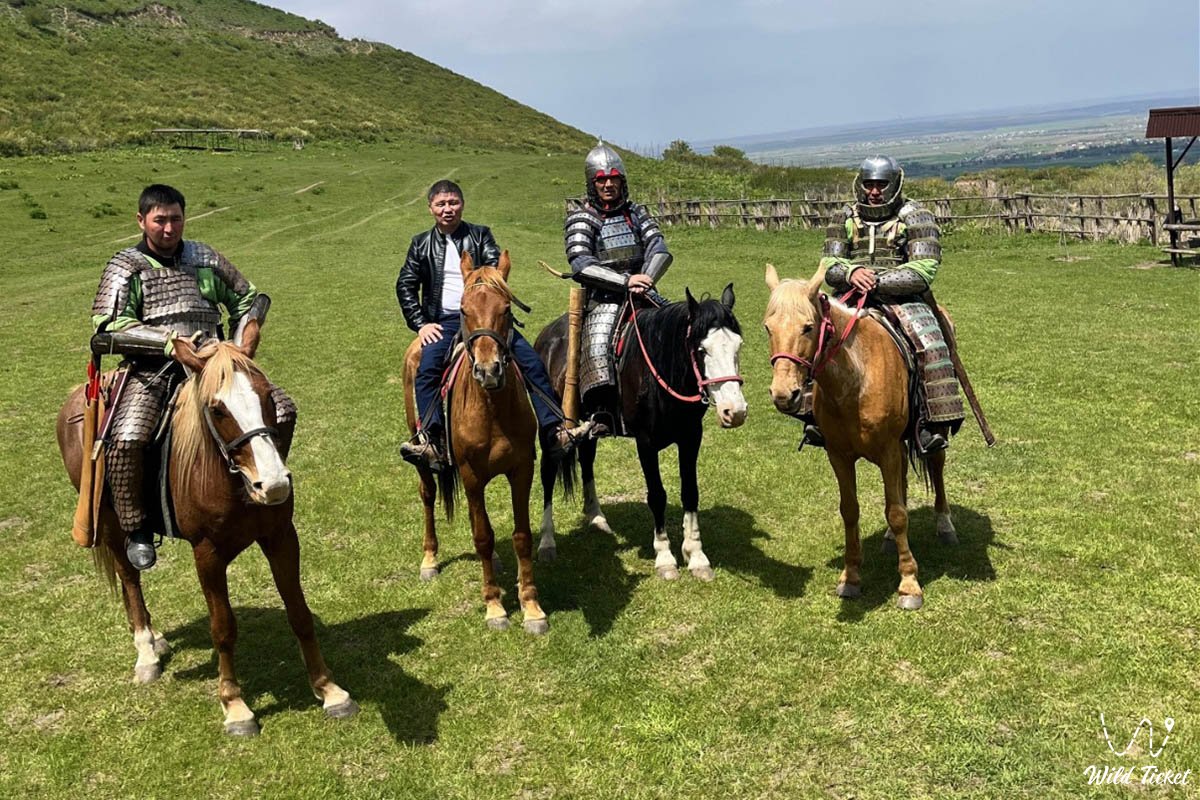
Here you can see what the warriors of the Saks, Turks and Kazakhs looked like, how the cavalry of the Great Steppe was formed and why the horse became its main symbol. Guests can not only watch horse parades and duels, but also try themselves as a rider or an archer, feeling how closely the life of a nomad was connected with a horse and a weapon.
Participation in military rituals, fitting of armor and horse-riding training – all this allows guests not only to observe the story, but to become a part of it, even for one day.
Cuisine: A gastronomic journey through the ages across the expanses of the steppe
A separate place in the Nomad is occupied by traditional cuisine. It reveals the philosophy of the nomadic world no worse than architecture or weapons. Kazakh dishes are prepared here using ancient technologies, conveying tastes that have been formed over the centuries in the steppe.
During the master classes, guests will learn how to cook beshbarmak, kuirdak, baursaki, kurt and traditional drinks, as well as learn about the proper processing and storage of meat, the way nomads did it. This cuisine is not only hearty and full-bodied, but also surprisingly balanced, subordinated to the rhythms of nature and movement.
---------------------------------------------
How to get to and visit the Heart of the Steppe -
The Nomad Ethnocenter is located in the Almaty region on the Ushkonyr plateau, near the village of Shamalgan, Karasai district, Republic of Kazakhstan. It is located near Almaty and is often included in tourist routes around Semirechye.
GPS coordinates: 43°08'49"N 76°30'39"E
To get to the Nomad Ethnocenter by car from Almaty, drive along Rayymbek Avenue to the Tashkent Highway (A-2). Turn left towards the village of Shamalgan (Ushkonyr). In the village, drive along the main street of Zhibek Zholy. Before reaching the sports school, turn left, then turn right on Aljan Street and go straight for about 3.3 km to your destination.
Working hours: Monday-Saturday from 09:00 to 22:00 (you can also arrange in advance for events at a time convenient for you, for example on Sunday)
Contacts: +7 775 727 25 89
---------------------------------------------
Atmosphere
The main feeling that remains after a visit to Nomad is a feeling of peace and strength. There is no rush here, everything is subordinated to the wind, the sun and the rhythm of the earth. The sounds of dombra, the neighing of horses, the smell of a campfire and the soft light inside the yurts create a sense of presence in another time.
The ethnocenter becomes especially magical at sunset, when the steppe turns into golden and copper shades, and the mountains of Ushkonyr seem to close the space into a single world of nomadic harmony.
Legend and legend
There is a belief among the staff of the ethnocenter that the Ushkonyr plateau has long been considered a place of power. It is said that it was here that nomadic tribes stopped before long marches to ask the steppe for protection and good luck.
It is believed that anyone who enters the Nomad yurt with respect for traditions and pure thoughts will take with them a piece of this ancient power and inner balance.
The Nomad Ethnocenter is a living doorway into Kazakhstan's past. Here you can see how the culture of the Great Steppe was formed, feel the philosophy of nomadic life and understand why this particular civilization created the special character of the people. For travelers, this is one of the most powerful and sincere places in the region, where history ceases to be a story and becomes an experience that remains in memory for a long time.
Tour itinerary:
Photogallery: