The High-Tech Core of Kazakhstan's Aerospace Industry -
The National Space Center (NSC) is the country's main research base, managed by the state-owned company Kazakhstan Gharysh Sapary. Located on the left bank of the Ishim River in the Astana capital, the complex is where space achievements are transformed into practical solutions for the economy.
Satellite Earth sensing technologies are developed and implemented here, enabling the monitoring of forest resources, agricultural land, and the state of the republic's subsoil from space.
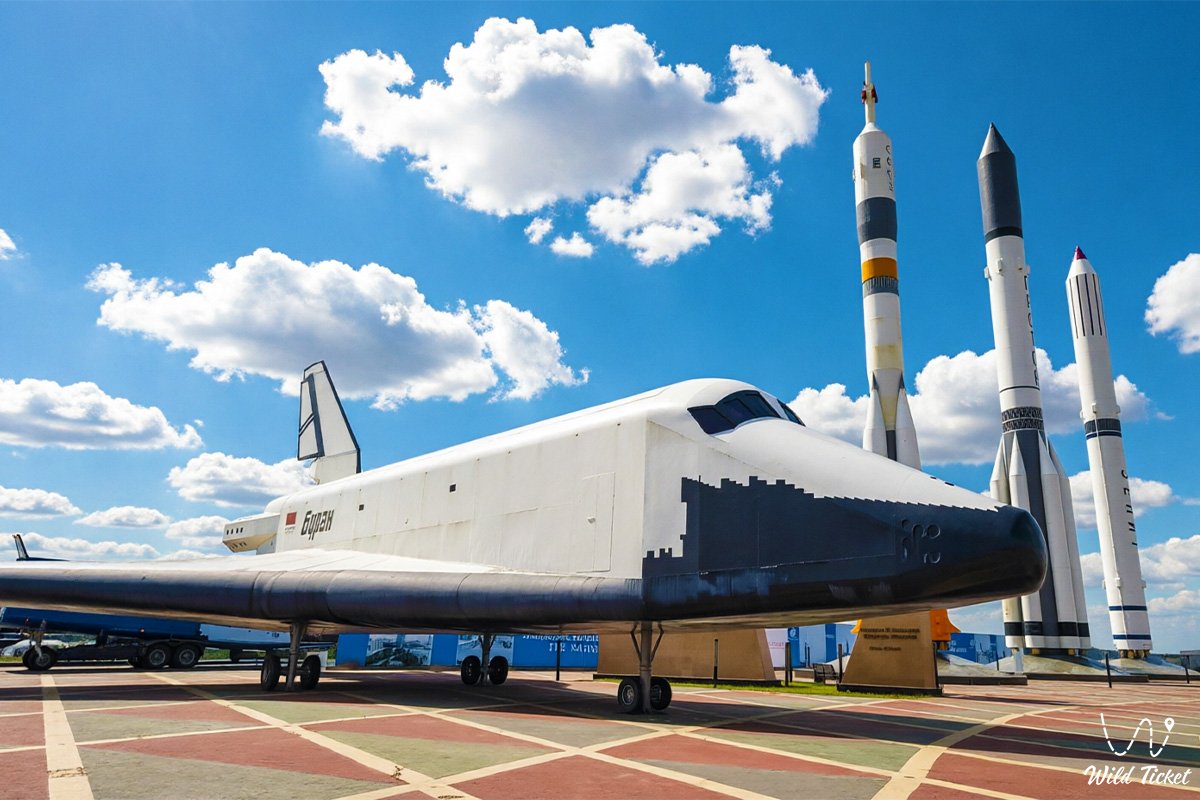
The center operates as a modern technocratic cluster, uniting design bureaus, data processing centers, and assembly and testing facilities. The center also houses a renowned open-air space museum.
One of the company's key objectives is the implementation of long-term programs to create its own space systems. Through partnerships with international industry leaders such as France (through its subsidiary Ghalam), the National Space Center has become a world-class platform for testing and operating spacecraft.
---------------------------------------------
How to get there and visit -
The National Space Center is located at: 89 Turan Avenue, left bank of the Ishim River, Nura District, Astana, Republic of Kazakhstan.
GPS coordinates: 51°04'36"N 71°22'58"E
Contacts: +7 7172 76 94 27; +7 7172 76 94 11
Hours: Monday-Friday, 9:00 AM to 6:00 PM, lunch from 1:00 PM to 2:00 PM
Official website of the organization
--------------------------------------------
Information
The center's activities cover a wide range of knowledge-intensive services. NCC specialists create precise digital elevation models using photogrammetry, monitor land grabbing, and digitize millions of hectares of arable land.
Using satellite imagery and specialized indices such as NDVI, the center assesses forest conditions, identifies burned areas, and conducts high-precision geoanalytics. The company's quality management system is certified according to ISO 9001, confirming the highest level of development and design work.
The center houses an accredited laboratory for testing navigation equipment and dispatching systems for mobile assets. An important part of the structure is the Baikonur branch and international cooperation under the Kosmotras program, which aims to use converted rockets to launch satellites into orbit. This transforms the center into a fully-fledged ecosystem where science meets production.
Detailed description of the facility
A unique open-air exhibition has been created on the grounds of the National Space Center, accessible to the public. Life-size models of famous launch vehicles, including the Proton, Soyuz, and Zenit, are on display.
Boards with technical specifications and launch histories are located near each exhibit. This location allows visitors to see in detail the technology that powers global navigation and communication systems, including GLONASS and satellite television.
The center plays a key role in ensuring the country's security, providing up-to-date data for monitoring floods, fires, and the condition of engineering structures.
The use of space-based geoportals allows government agencies and businesses to receive up-to-date information on crop conditions, deforestation, and landscape changes. This is not just an administrative facility, but a "brain center" where data from space helps address Kazakhstan's socio-economic challenges.
Architecture
The futuristic appearance of the center's glass and concrete buildings underscores its status as a leading scientific institution. The industrial minimalism and clean lines of the façades reflect the industrial character of the site, which houses administrative offices and high-tech workshops. At night, the complex is illuminated, creating a unified composition with the rocket monuments and standing out against the backdrop of Astana's modern district.
Conclusion
The National Space Center is a place where space becomes a tool for improving life on Earth. A visit to this facility allows you to understand the power of Kazakhstan's intellectual potential and see the horizons of the future. Whether it's career guidance for young people or a tourist viewing of rocket models, a visit to the NSC leaves a profound impression of the scale of modern technology and the endless possibilities of the human mind.
Interesting sights nearby:
• Republican Mosque (Central);
• Nazarbayev University;
• "Kazanat" Hippodrome;
• Astana Botanical Garden;
• Congress Center;
• Nazarbayev Intellectual School;
• "Nur Alem" Sphere;
• National Defense University.
Photogallery: