Urban childhood scene, where a fairy tale becomes the first serious art -
The house where generations of Almaty residents learned to dream, feel and understand the theater -
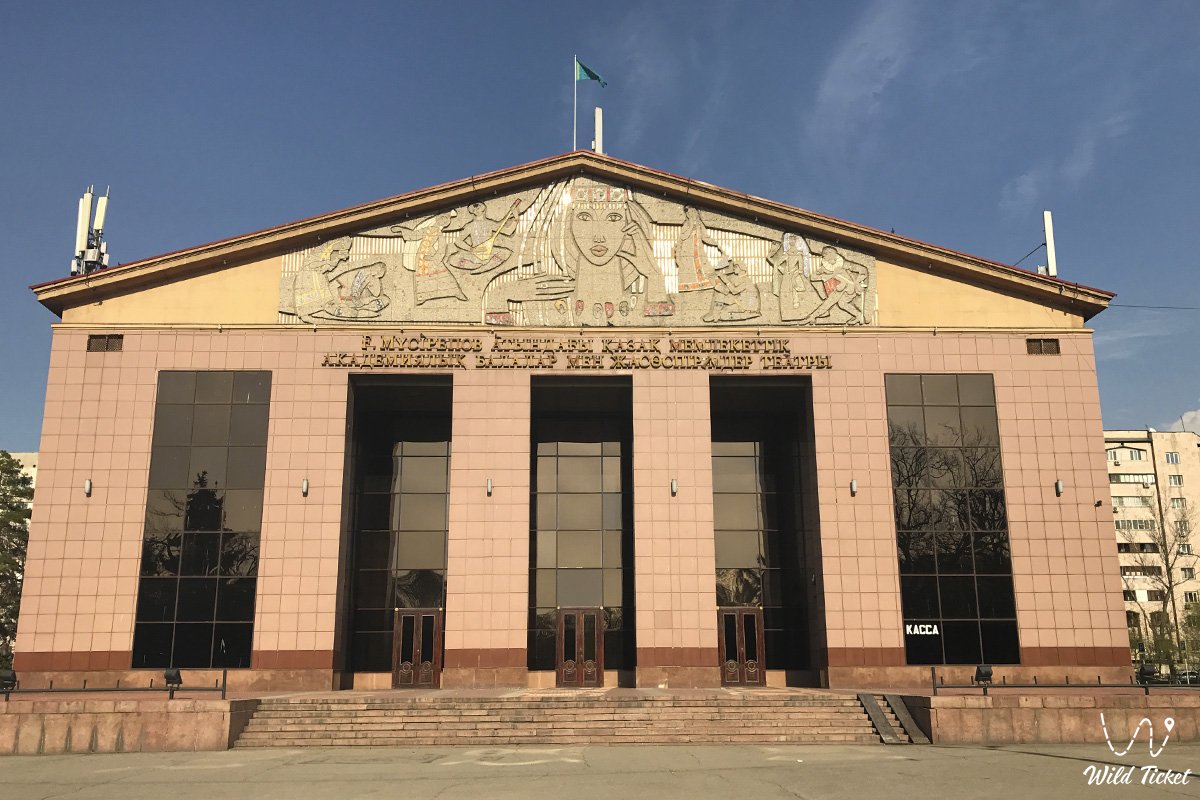
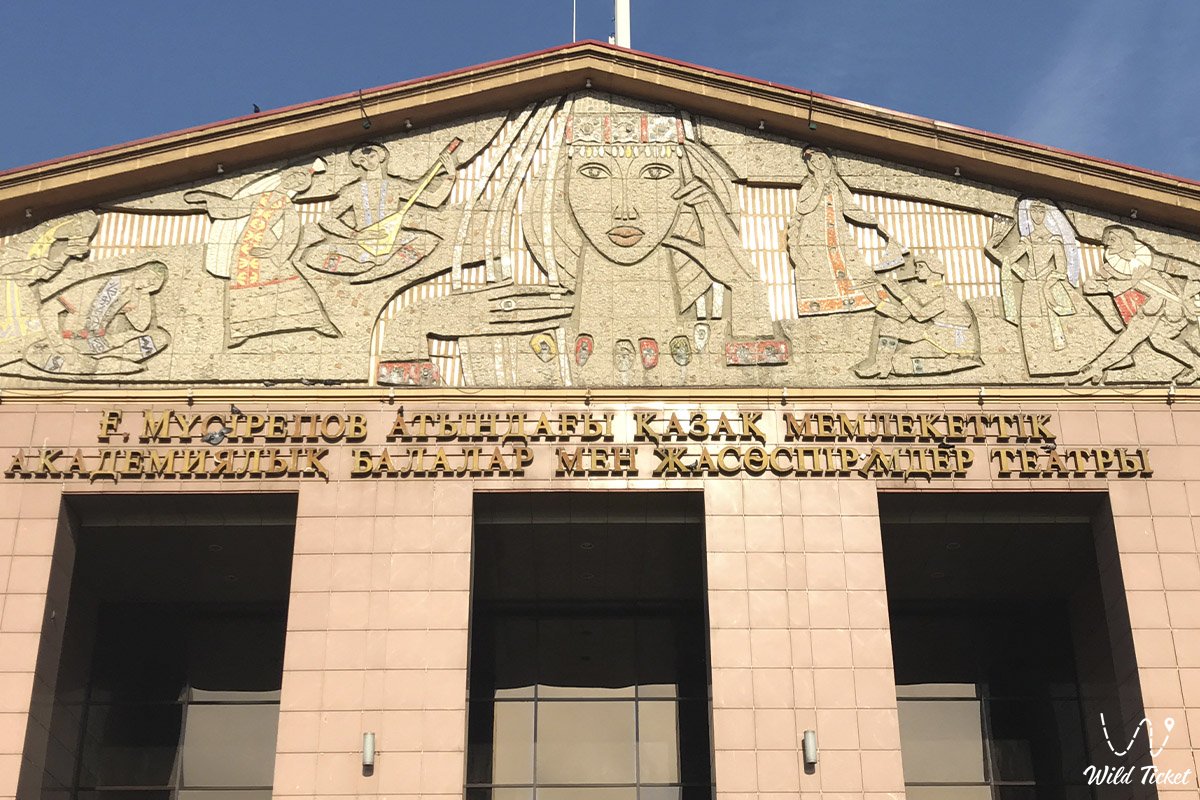
The Kazakh State Academic Theater for Children and Youth named after Gabit Musrepov is one of the main cultural symbols of Almaty. For many decades now, a young viewer has been taking his first step into the world of art, and adults have been returning to the very feelings of childhood, when the curtain rose seemed like a real miracle. Kazakh classics, world drama and modern plays adapted for children and teenagers meet on this stage, but always with respect for their age and inner world.
The theater is open all year round, and its repertoire includes fairy tales for the youngest, serious dramas for teenagers, and family plays that touch both children and their parents alike. This is not just a place for leisure: the Musrepov Theater has become an important part of the upbringing, cultural education and spiritual life of several generations of Kazakh residents.
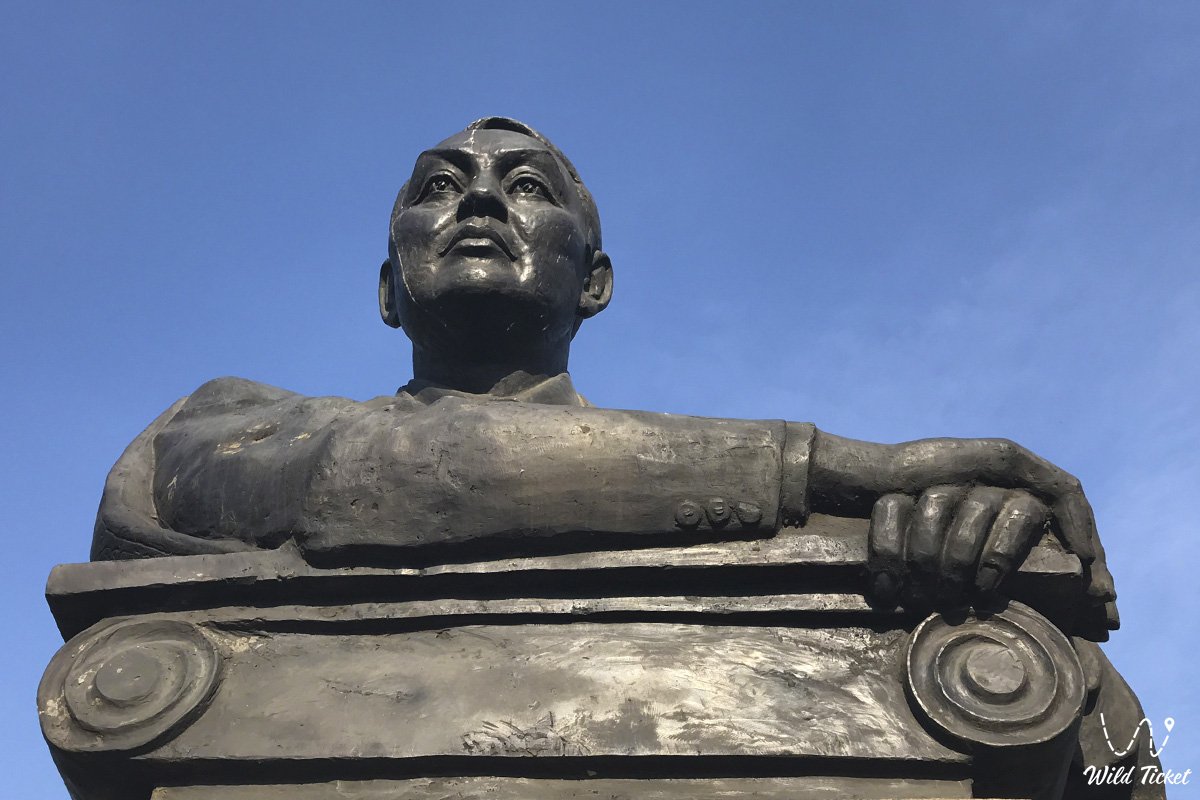
The theater is located in the center of Almaty on Abylaikhan Avenue opposite the cozy Amangeldy Imanov Square, which houses a monument to Amangeldy Imanov. Panfilov pedestrian street is also located next to the theater.
History
The history of the theater begins on November 7, 1945, when the curtain rose for the first time in Alma Ata and the young audience saw Little Red Riding Hood. It was the moment when the theater for the young audience ceased to be just a dream and became a reality. Already on July 4, 1946, the Kazakh language production of the play "The Golden Key" by Alexei Tolstoy officially opened the Kazakh Theater for Children and Youth. The legendary Natalia Ilyinichna Sats, the founder of the children's theater in the Soviet Union, stood at the origins. It was she who set the high bar that is still felt in the repertoire and in relation to the audience: a serious approach to the children's audience, a strong acting school, respect for literary material.
In the early years, actors and directors worked in the theater, whose names became classics of the Kazakh stage. One generation of masters was replaced by another, new artists came, plays were updated, but the main goal remained unchanged – to educate the younger generation, to form its moral guidelines, to develop taste and interest in national and world culture through live theatrical action. Performances based on the works of Kazakhstani and foreign authors were staged on the stage, fairy tales, heroic dramas, lyrical stories were staged, and a separate repertoire for kids appeared.
In 1985, the Kazakh troupe was separated into an independent group, and in 1992 the theater was named after the outstanding writer and playwright Gabit Musrepov, whose work is largely related to the theme of childhood and moral choice. In 1996, the theater received academic status, recognizing not only the artistic level of its productions, but also its special role in educating the younger generation.
Over time, the repertoire expanded: productions of "Zhelsiz tunde zharyk ai" by Mukhtar Auezov, "Isatai–Makhambet" by Ilyas Zhansugurov, dramatizations of the works of Chingiz Aitmatov, plays by V. Yezhov, M. Gorky and other authors. For children, they play "The Snow Queen", "Mowgli", national fairy tales and modern stories that help young viewers to get to know the world and themselves. The theater actively participates in national and international festivals, tours Kazakhstan, Central Asian countries, Russia, Turkey and other countries, regularly receiving awards for directing, acting and respect for national traditions.
Today, the G. Musrepov Theater is rightfully considered one of the leading theater groups in the country and an important school of the profession for several generations of actors.
Architecture and building
The building of the Kazakh State Academic Theater for Children and Youth named after G. Musrepov is located in the center of Almaty and fits seamlessly into the cultural landscape of the city. The architecture of the theater bears the features of late Soviet modernism: strict lines, clear shapes, functionality designed for a large flow of spectators, but at the same time the building does not seem cold or detached.
The facade is decorated with wide windows and expressive volumes, while the interiors retain a sense of spaciousness and light. The spacious foyer, wide staircases, and comfortable auditorium with good visibility and acoustics create a comfortable space in which it is easy to feel like part of a large theatrical event.
Inside there are rehearsal halls, workshops, costume and art workshops, where decorations, make-up, lighting and sound solutions are created daily. The building has been renovated and reconstructed more than once, but at the same time it has retained its character and recognizable appearance. This is not just a box with a stage, but a real house of art, which is home to the long history of the theater.
The atmosphere and traditions of the visit
The atmosphere of the Musrepov Theater is special: people come here not just "for a performance", but for a small celebration. Before the performance begins, the lobby is always crowded – school classes, families with children, young viewers who grew up watching the same productions and now bring their children. There is excitement in the air, expectation and the very premonition of a miracle that only happens in a children's theater.
From the first years of its existence, the theater treated going to a play as an event. It is customary to arrive a little in advance in order to have time to hand over your outerwear, take your seats and calmly wait for the first call. The audience is still asked to come in neat, elegant clothes - this is part of the respect for the theater and for themselves. There is only one basic rule during the performance: silence and attention to the stage. Mobile phones are turned off, conversations are postponed until the intermission, and it is customary to express one's attitude to the actors' performance with applause, not with remarks from the audience.
For children, going to the theater becomes a lesson in cultural behavior.: they learn to behave in a public space, to understand that it is also important for other viewers to see and hear what is happening on stage, to wait for the intermission, not to rustle food and not to run through the rows. Teachers and parents tell young viewers in advance that the theater is not just entertainment, but a place where the work of artists and the work of those who sit next to them is respected.
It is this combined atmosphere of celebration and inner discipline that makes the Musrepov Theater special – people come here not only for the performance, but also for the feeling of a real cultural environment.
---------------------------------------------
How to get there and visit -
The Academic Theater for Children and Youth named after Gabit Musrepov is located in Almaty at 38 Abylai Khan Avenue, between Aliya Modagulova Street and Manshuk Mametova Street, Almaly district, Republic of Kazakhstan.
GPS coordinates: 43°15'57"N 76°56'28"E
The G. Musrepov Theater is located in a well-accessible part of the city. The most convenient way to get to it is by taxi or private car. By public transport: buses No. 12 and 59 or trolleybuses No. 5 and 6 are suitable for you.
Working hours: daily from 09.00 to 18.00
Contacts: +7 727 271 38 10
The official website of the theater
---------------------------------------------
Legend and legend
There is a story among the theater staff that is passed down from generation to generation with a smile. It is said that in the early post–war years, when the theater was just getting back on its feet, Natalia Sats kept an old piece of paper with an unfinished text in a small room behind the stage - allegedly it was a sketch of a story attributed to Gabit Musrepov himself. On the day of the premiere, the actors gathered around, touched this sheet and asked for good luck.
Over time, the manuscript, according to the old-timers, was placed either in a safe or in an archive, but the habit of turning to invisible support remained. Today, young actors say that at the minute before the start of an important performance, they sometimes hear a slight rustle behind the scenes, as if someone is turning over paper. It is believed that this theater reminds its artists of the main thing: on this stage they are responsible not only for the role, but also for the memory of those who built this house of art from scratch and believed that children's theater is a serious matter.
The Kazakh State Academic Theater for Children and Youth named after Gabit Musrepov today is not just a poster and walls. It is a living organism in which childhood and professional art, national tradition and modernity, actors and viewers of different generations meet. To visit this theater means to touch the history of Kazakh culture and see how new dreams continue to be born on the stage.
Interesting sights nearby:
• Artishok Theater (small stage);
• Kazakh-British Technical University;
• Astana Square;
• Kazpotrebsoyuz Administrative Building;
• Monument to Alia Moldagulova and Manshuk Mametova;
• Zhibek Zholy Pedestrian Street;
• Almaty Railway Station-2.
Photogallery: