Unique hydrothermal object, holy place of pilgrimage -
Underground geothermal spring in the Akespe village (local name – "Istyk Su") is a unique natural monument and one of the most famous balneological sites on the territory of the Kyzylorda region.
The spring serves as living evidence of the colossal reserves of underground thermal waters hidden in the depths of the Aral region within the Eastern Aral and Kyzylkum thermal anomalies, and symbolizes the life-giving power of nature capable of granting health in the harshest climatic conditions. The monument is located in a picturesque but challenging terrain known for its sand dunes and chalk canyons.
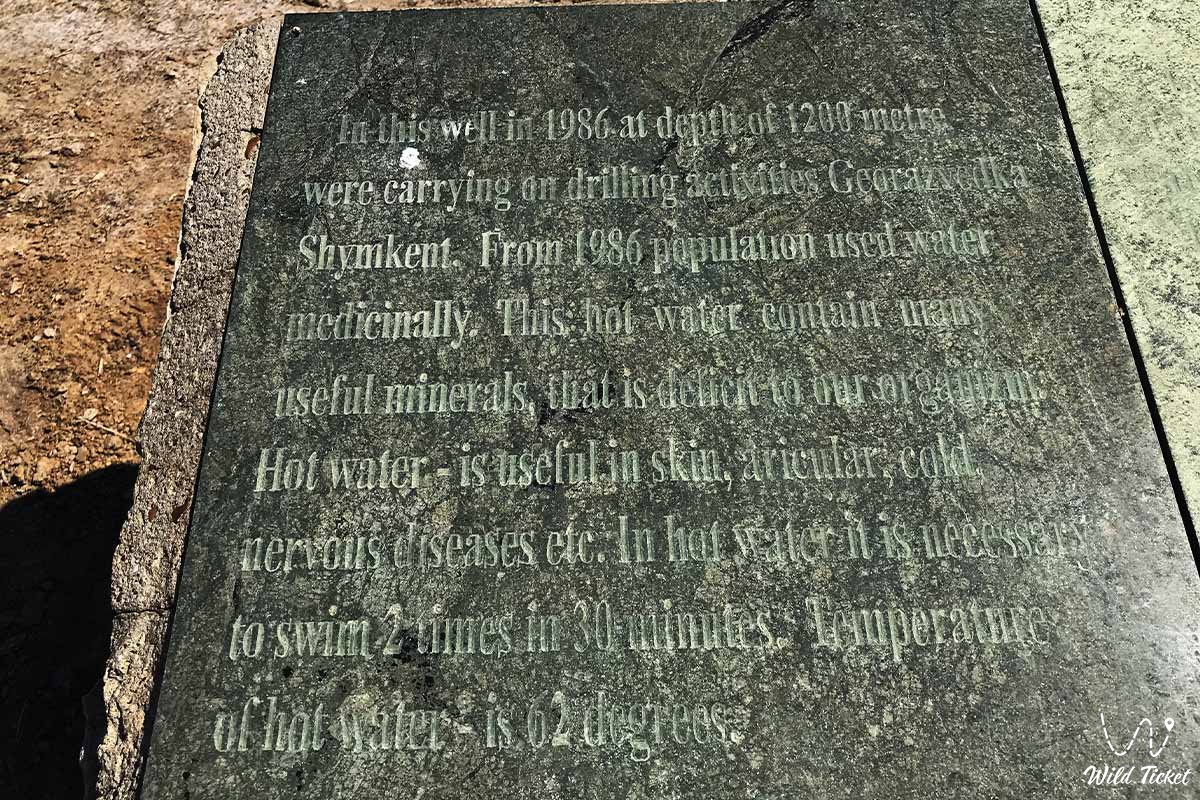
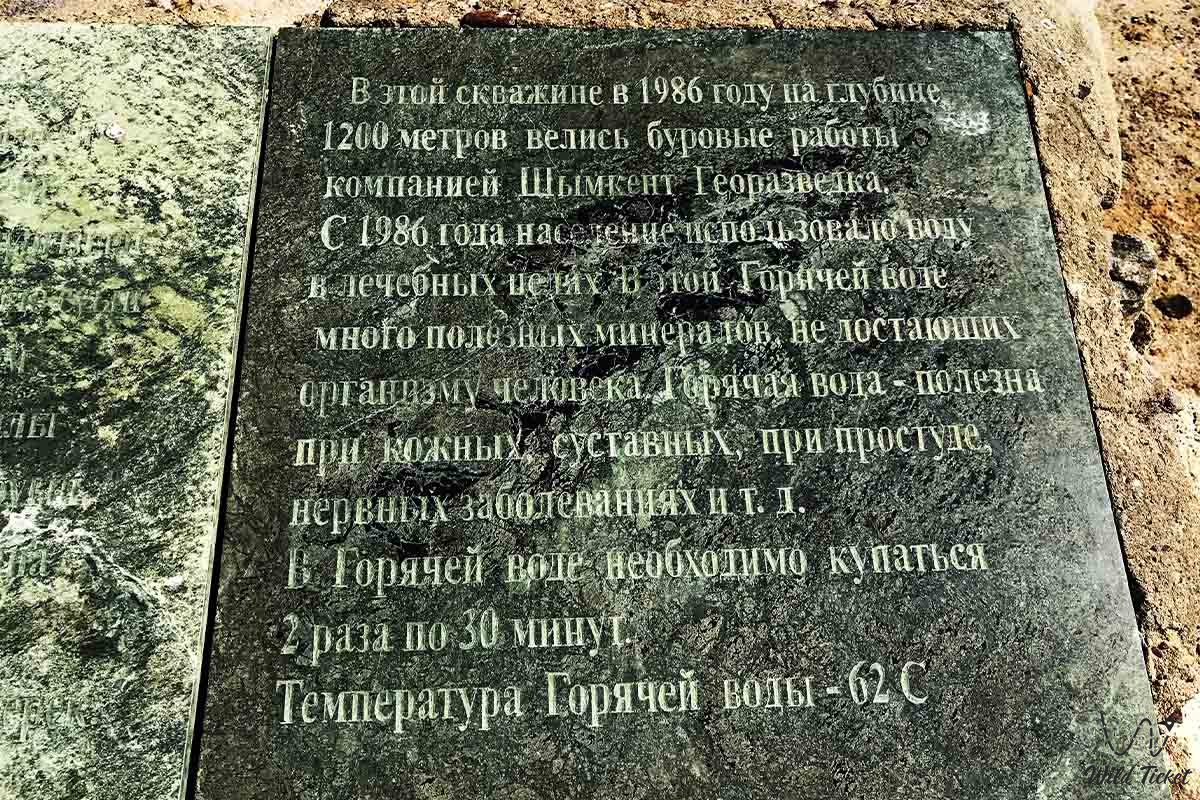
The temperature of the spring is +62°C all year round (according to some data reaching +60°C) and does not change either in winter or in summer. The water does not freeze even in severe frosts and blizzards, creating a constant effect of a steaming geyser, which looks especially fantastic against the background of a cold wind and a harsh winter landscape.
Today, the geothermal spring in Akespe is included in the official tourist route of the region, and the leadership of the region has plans to build a sanatorium next to it. Hot hydrogen sulfide water with minerals attracts many people wishing to cure chronic ailments, including skin, rashes, allergies, skin itching, as well as diseases of the nervous system and musculoskeletal system (joints).
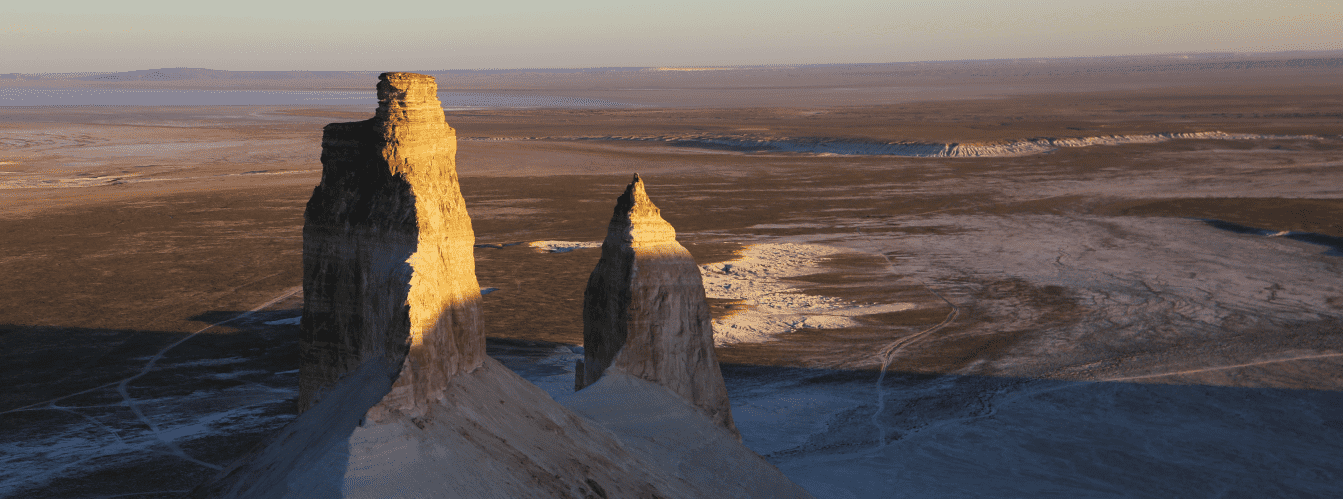
A visit to this gushing spring gives travelers unforgettable impressions, so its visit is often combined with excursions along the dried bottom of the Aral Sea, trips to the Karasandyk Canyon, the chalk cliffs of the Akespe tract, and the coast of the Small Aral.
---------------------------------------------
How to get there and visit -
The underground geothermal spring is located 1.5 kilometers from the Akespe village of the same name, near the northwestern coast of Butakov Bay, Aral district, Kyzylorda region, Republic of Kazakhstan.
The distance from the city of Aralsk to the spring is 120 kilometers. If you go from Kyzylorda to Aralsk, the distance will be more than 500 kilometers, but this section passes along the smooth international highway "Western Europe – Western China".
GPS coordinates: 46°47'26"N 60°31'19"E
You can reach the unique healing spring in two ways:
By train to the Saksaul railway station or to the city of Aralsk, where at the stations you can hire local taxi drivers who will take travelers to the spring and back for a fee.
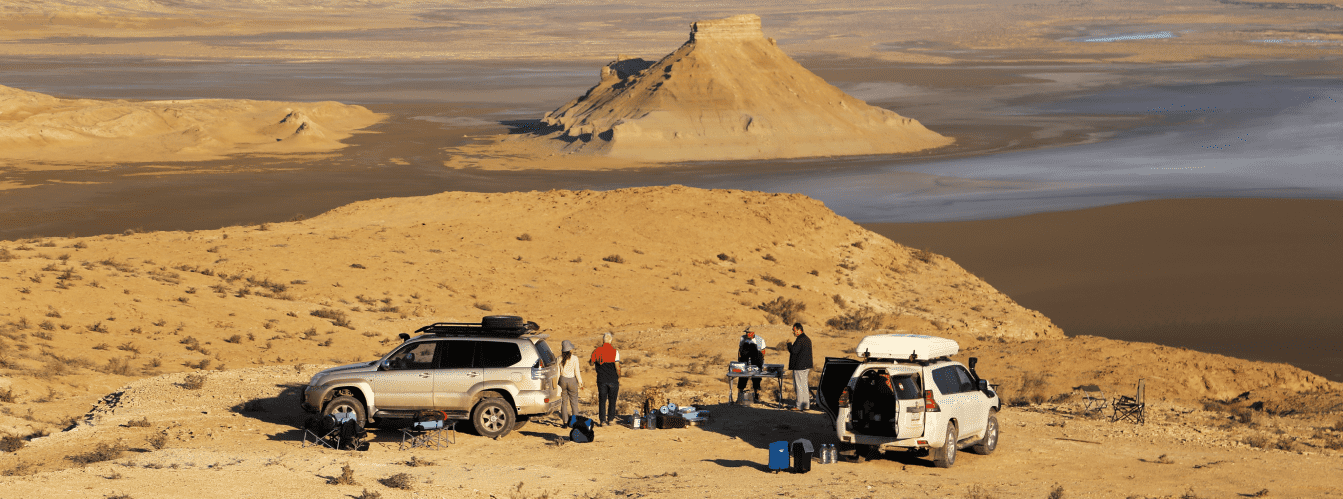
In your own car. Only a reliable four-wheel-drive SUV (4x4 jeep) is suitable for this trip, since the last 50 kilometers before Akespe are complete off-road, and the highway itself is absent.
Due to the fact that the old village was almost completely buried by moving sands in a matter of years, it is recommended to overcome deep dunes and salty desert sections in at least two cars for safety and mutual assistance. Drivers are required to carry satellite navigators, reliable shovels, tow ropes, additional fuel, and a large supply of fresh drinking water.
Opening hours: the natural spring and small pools adjacent to it are open for visits by travelers around the clock and all year round. Access to the health zone and entry to the adjacent territory are completely free; no tickets, ticket offices, or paid checkpoints are provided here.
It is better to plan a trip to the hot spring from spring until late autumn. October is especially popular with auto tourists, when during cold winds, swimming in hot water leaves incredible sensations.
In winter, the flow of people practically dries up due to severe frosts and blizzards. Arriving tourists can stay overnight or find lunch with local residents in the new village, which was built near the old buried settlement, asking for directions to guesthouses directly from the villagers, many of whom are engaged in camel breeding.
---------------------------------------------
History
The history of the discovery of the thermal spring "Istyk Su" began in 1986, when a geological expedition drilled an exploration well 1,200 meters deep in search of underground sources of fresh drinking water for local residents and livestock. As soon as hot mineralized hydrogen sulfide water came out of the steel pipe under pressure, local residents from all over the region, and later numerous tourists, immediately began to gather to it.
The Akespe village itself was historically located on the shore of Butakov Bay of the Aral Sea, where fishing flourished. However, with the drying up of the sea, the water receded for kilometers, exposing salty and desert soil. The village, left without the protection of the water surface, was buried by moving sand dunes in a matter of years, because of which residential houses began to collapse. To save the community, local authorities built a new modern village nearby, and the geothermal spring gushing nearby became the main natural treasure and an important factor in the development of ecotourism in the region.
Information
The temperature of the spring is +62°C all year round (according to some data reaching +60°C) and does not change either in winter or in summer. The water does not freeze even in severe frosts and blizzards, creating a constant effect of a steaming geyser, which looks especially fantastic against the background of a cold wind and a harsh winter landscape.
Hot hydrogen sulfide water with minerals attracts many people wishing to cure chronic ailments, including skin, rashes, allergies, skin itching, as well as diseases of the nervous system and musculoskeletal system (joints). A visit to this gushing spring gives travelers unforgettable impressions, so its visit is often combined with excursions along the dried bottom of the Aral Sea, trips to the Karasandyk Canyon, the chalk cliffs of the Akespe tract, and the coast of the Small Aral.
The underground thermal spring in Akespe is organized as an open medical and health space in the middle of a wild desert, where tourist groups are regularly led by environmental education engineers of the Barsakelmes State Nature Reserve. A visit to the spring is not connected with ancient magical cults or local legends; its popularity is based exclusively on the confirmed balneological properties of salty mineral water.
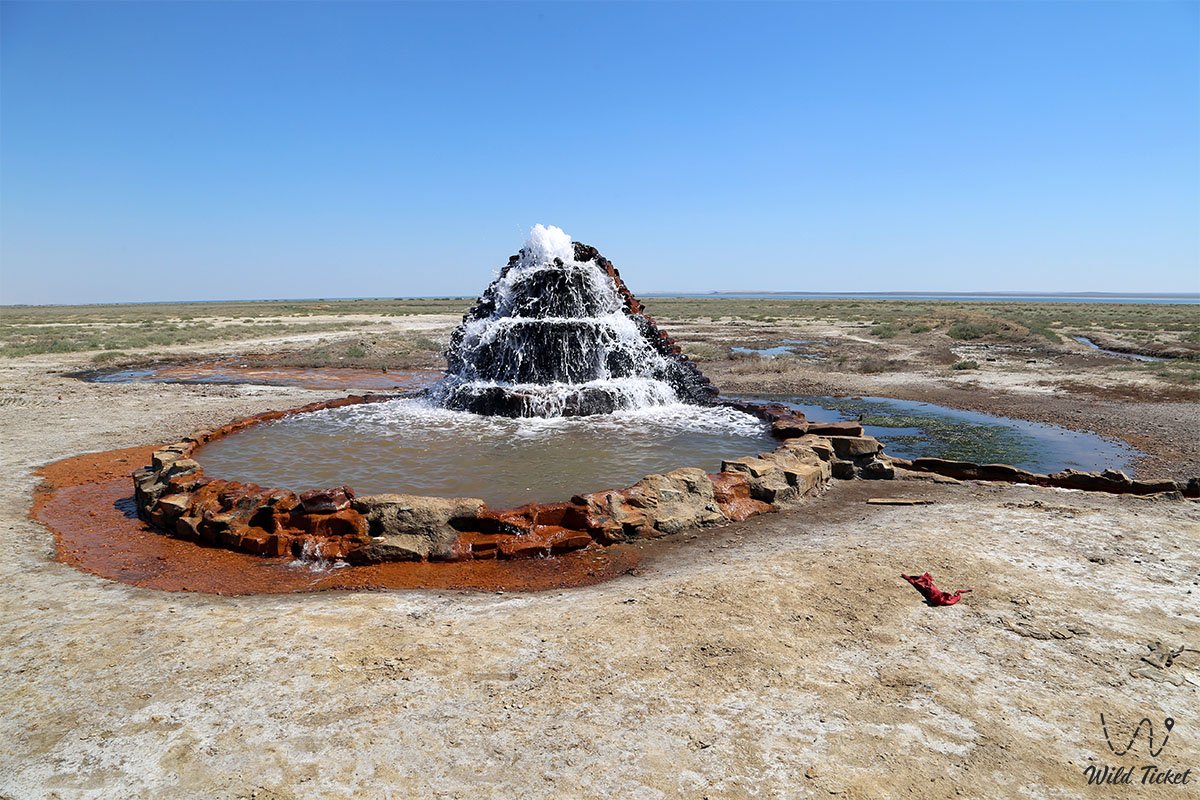
Water escapes from deep layers under natural underground pressure and disperses along a small pool dug nearby. At the very mouth of the well, the temperature is too high (+62°C), but as the moisture moves through the channels to the pools, the water cools down to temperatures comfortable for the human body.
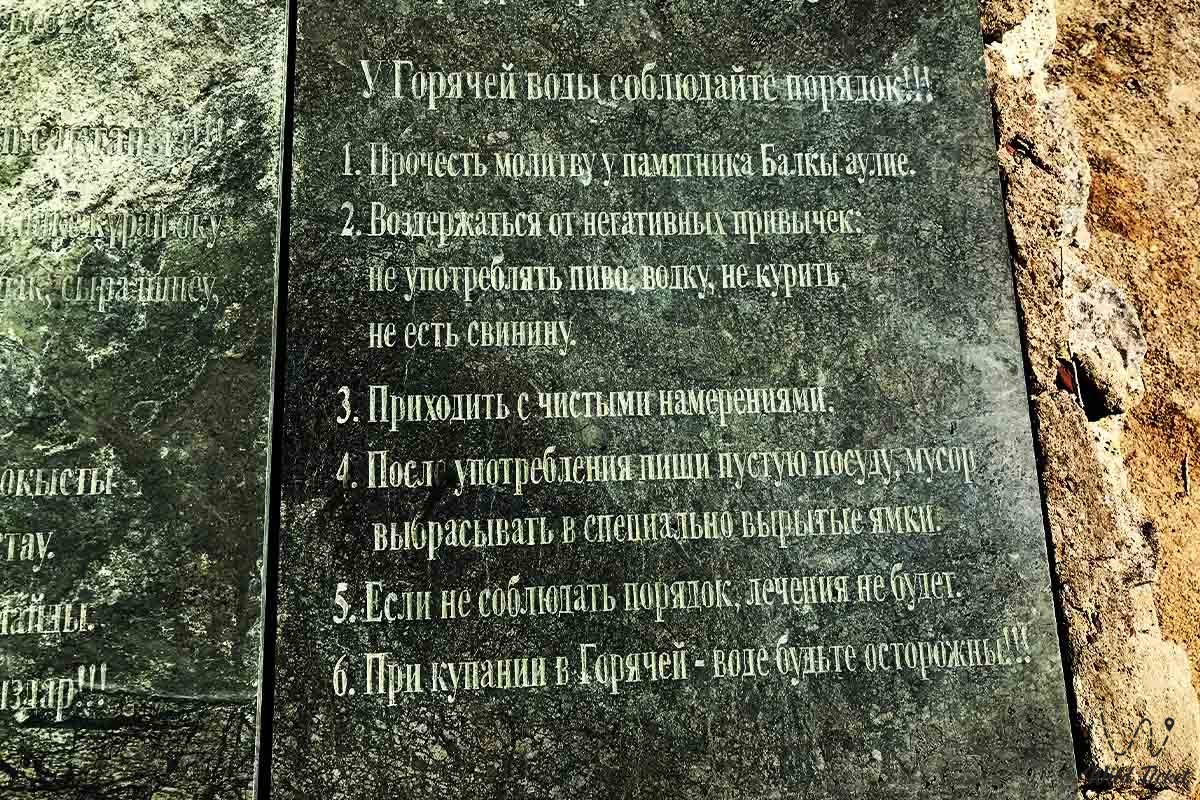
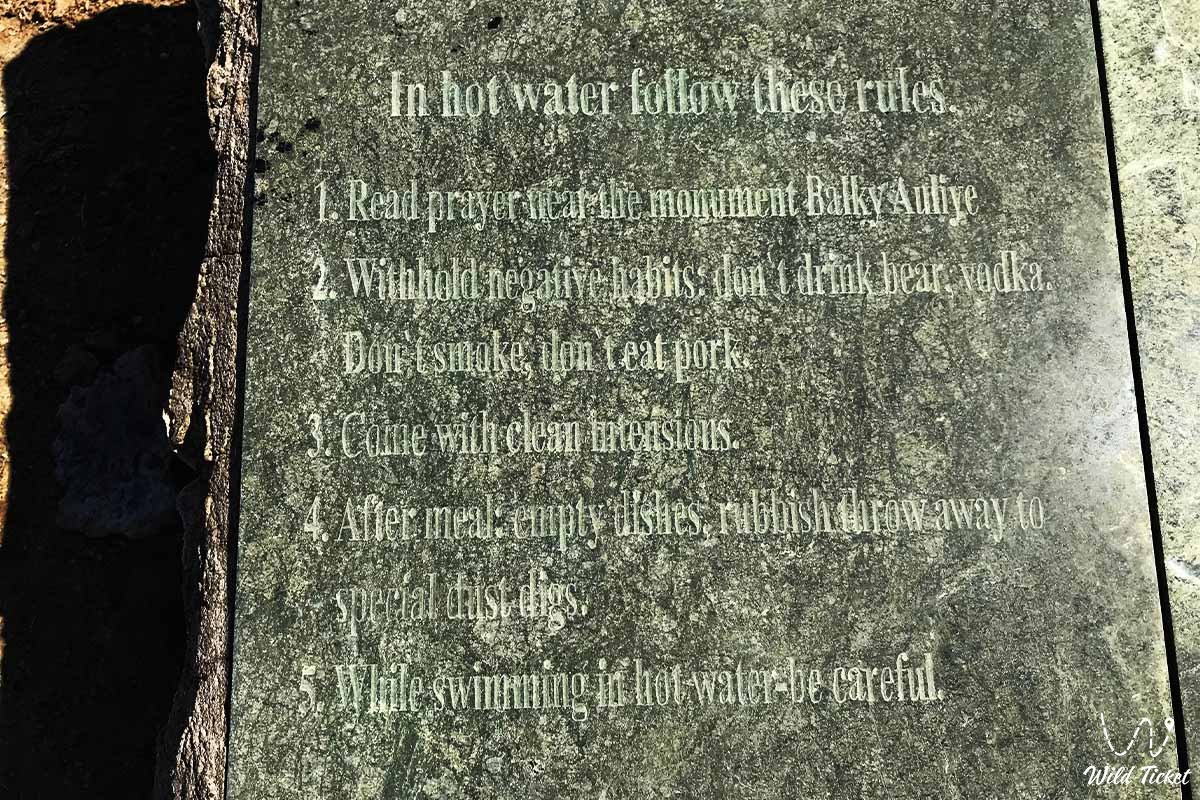
Ecologists and guides urge tourists to dose the time spent in hot hydrogen sulfide water, treat the fragile ecosystem of salt marshes with care, and maintain cleanliness on the territory of the monument.
Detailed description of the venue
The well-thought-out infrastructure of the natural healing complex includes the following original locations and geographical features:
[b]• Outlet wellhead – a durable steel pipe 1,200 meters deep installed by geologists, from which a powerful thermal stream continuously gushes.
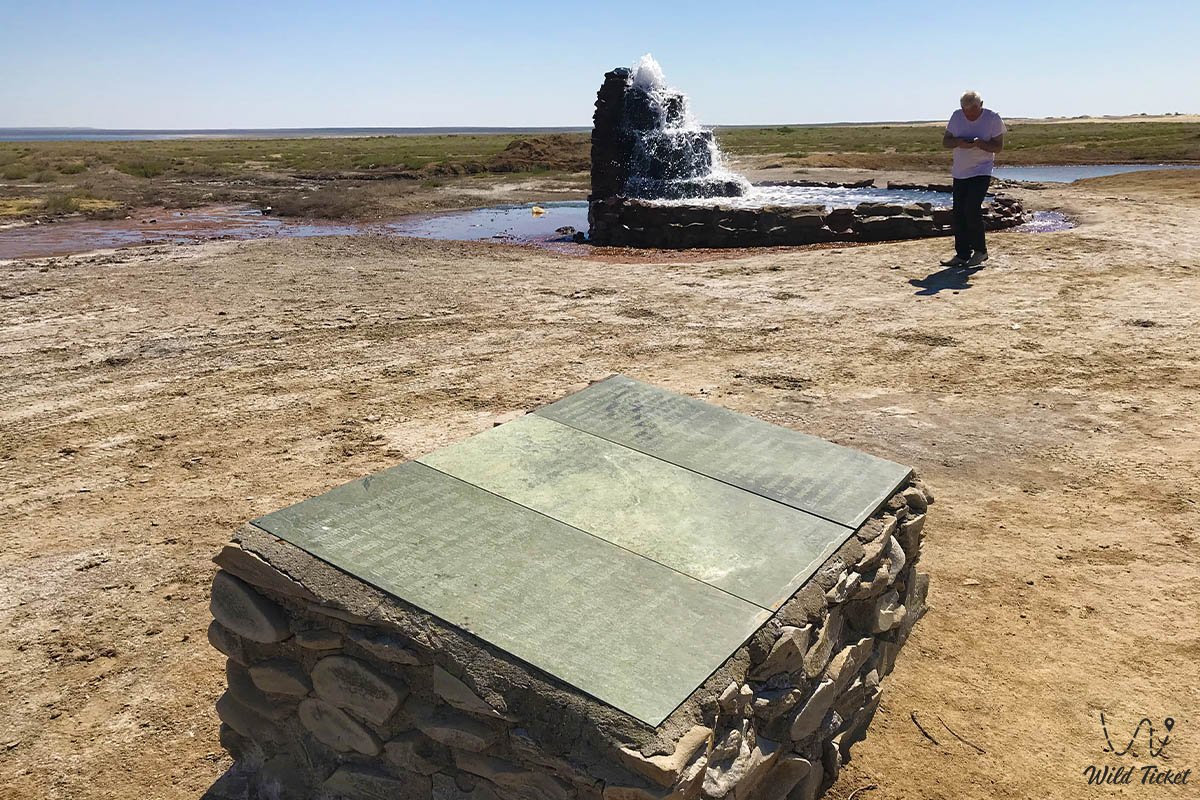
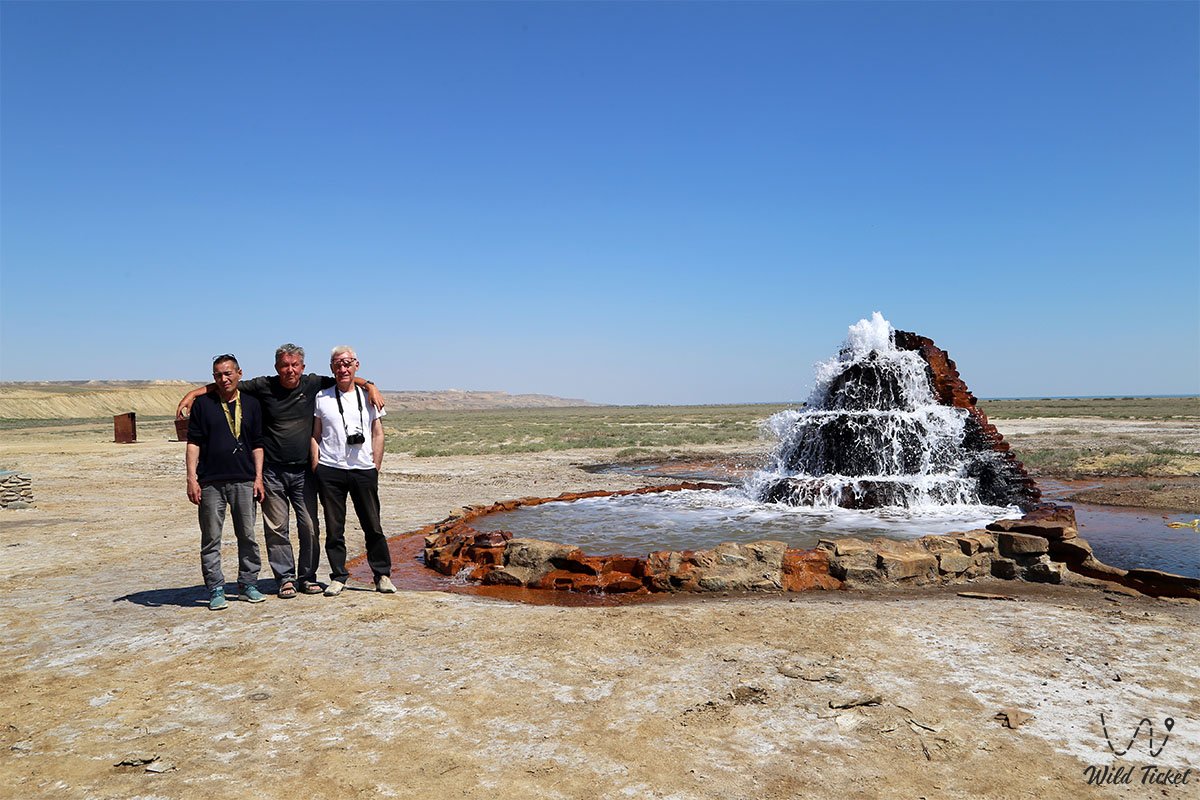
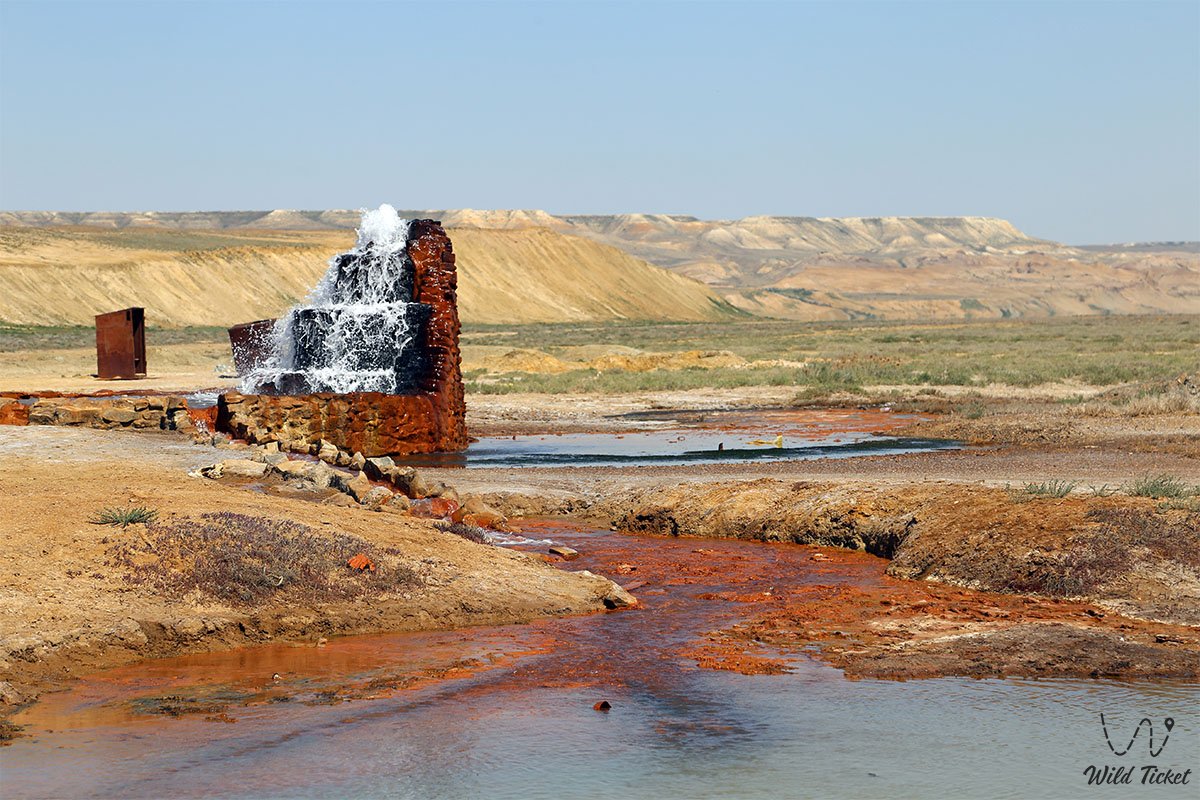
• Cascading stone geyser – a stepped pyramidal structure in the center of the complex formed from wild dark stone and mineral deposits, through the top of which bubbling white foam of the geothermal spring breaks under pressure.
• Stone bypass border – a low rounded enclosure made of massive flat boulders and pieces of rock framing the bathing bowl and retaining the healing water.
• Improvised healing pools – small dug open settling tanks coming from the spring, where the water temperature decreases, allowing tourists to swim comfortably.
• Mineral ochre leaks – bright red and terracotta salt deposits along the edges of the stone border, coloring the adjacent soil in a rich rusty color due to the high content of iron and minerals.
•] Branched drainage channels – a network of small steaming streams and beds leading away along the flat steppe plain and draining excess thermal water to avoid waterlogging of the adjacent zone.
•] Salt marsh semi-desert plain – an endless flat landscape of the Aral region with scarce steppe vegetation and whitish salt marsh patches on the ground, stretching to the very horizon under a clear blue sky.
Architecture
The engineering and architectural arrangement of the geothermal spring in Akespe village is based on the principles of maximum practicality and protection from severe climatic factors of the desert. The wellhead is designed in the form of a beautiful stepped stone hill, which breaks a powerful vertical pressure of water into cascading streams, effectively cooling it before entering the pool. The healing reservoir itself is made in the form of a round bowl lined with durable wild stone on clay mortar, which prevents erosion of the adjacent sandy-salt marsh soil. The design of the drainage channels is engineered taking into account the natural slope of the relief towards Butakov Bay, which protects the hydrothermal node from rapid siltation. All this laconic engineering ensemble harmonizes perfectly with the scarce landscape of the Aral steppe, creating the image of a natural oasis.
Legend
Although ecologists note the absence of ancient mystical legends connected directly with the construction of the well, many amazing stories about the healing power of the spring live among the local residents of Akespe.
Local old-timers tell their grandchildren that hot water has a special natural soul and helps restore strength to a tired body. A resident of the village, Anar Kozhaniyazova, recalls the stories of her grandfather and grandmother about how in former times camels returning from distant summer pastures-jailau independently and unmistakably found the way to this spring.
Animals tired after a long transition sank right onto the warm healing clay near the hot waters and rested for a long time.
The old people explained to the children that camels instinctively feel the benefit of the spring and treat their joints in such a natural way. Local residents believe that this underground thermal moisture was revealed to people as a compensation and a saving gift for harsh climatic trials and the loss of the Aral Sea.
Conclusion
The underground geothermal spring in Akespe village is a magnificent historical bridge connecting the memory of the rich natural storehouses of the Aral region with modern ecological, medical, and adventure tourism in the Kyzylorda region. A visit to this hot geyser allows travelers to personally appreciate the scale of the environmental transformation of the region, experience the healing power of the underground mineral pools of Kazakhstan, and feel the amazing perseverance of local residents.
The spring remains an essential reference point for balneological and scientific-local history tourism in the Aral district. Jeep tour routes invariably include this steaming sand oasis in their guidebooks, providing each guest with a unique chance to test their strength in a harsh desert and recharge with the primordial energy of the earth.
Interesting sights nearby:
• Shevchenko Bay;
• Butakov Bay;
• Old fishing village of Akespe buried in sand;
• Picturesque Karasandyk Canyon;
• Chalk cliffs and canyons of the Akespe tract;
• Coast of the Small Aral Sea (Small Aral);
• Barsakelmes State Nature Reserve.
Photogallery: