Main center of the Ukrainian Greek Catholic Church (UGCC) in the capital -
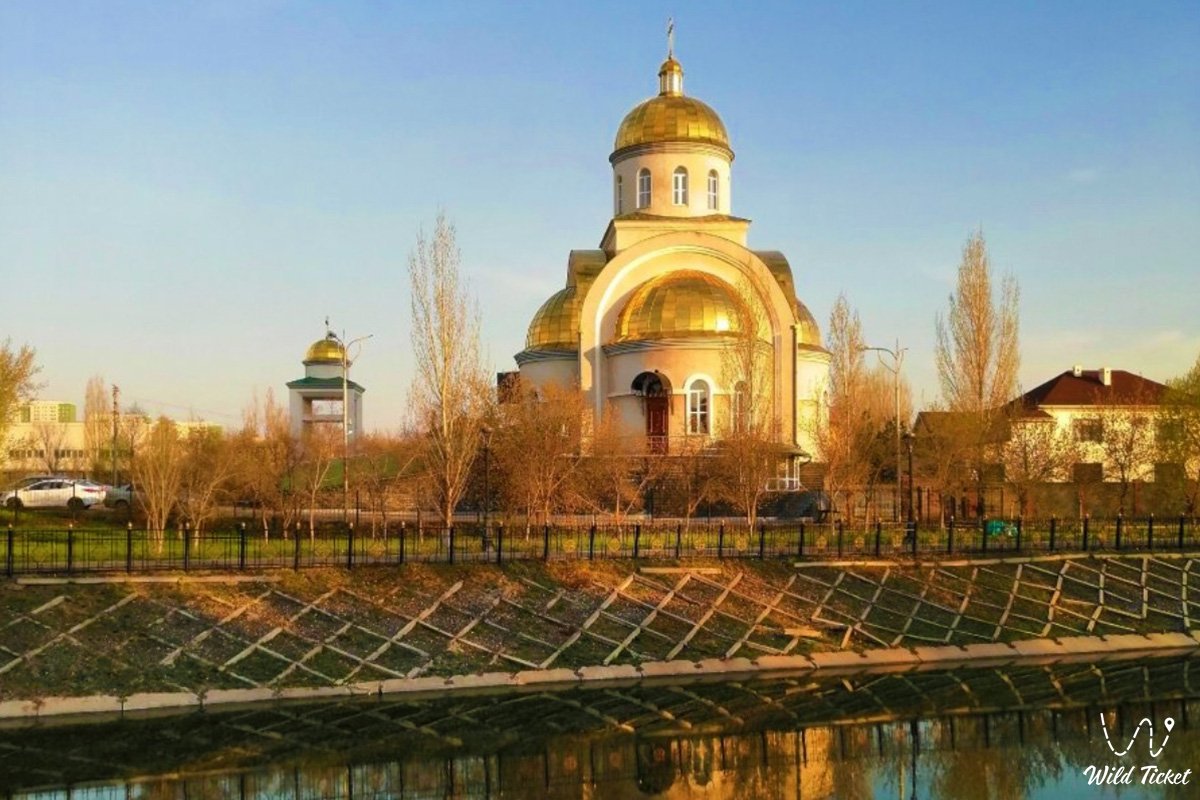
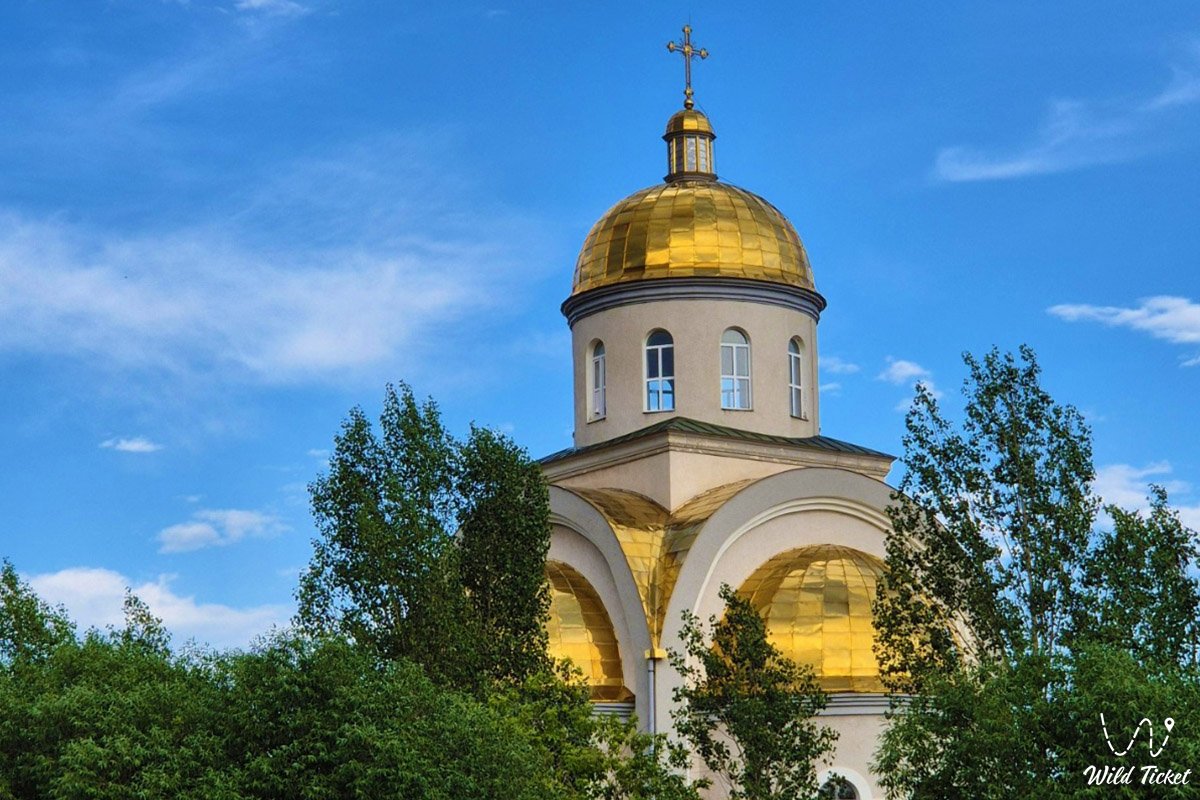
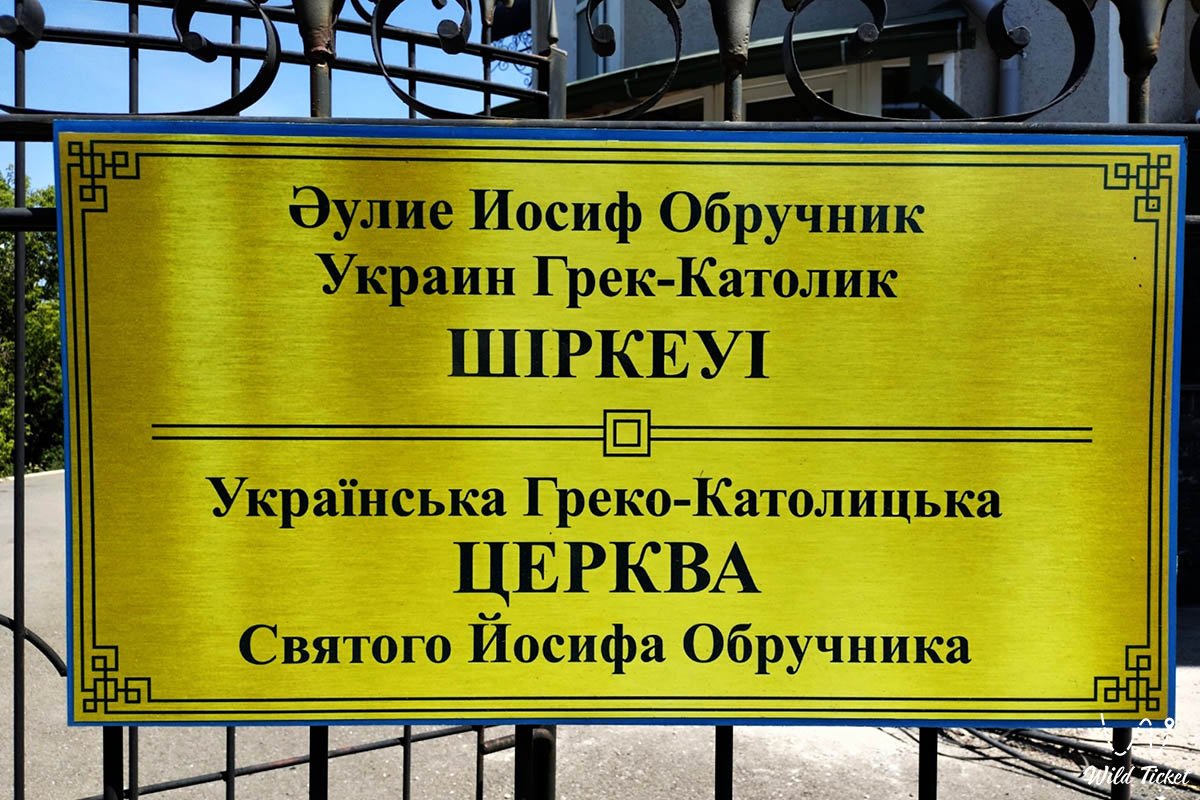
St. Joseph the Betrothed Church, located in the historical heart of the right bank, is one of the most significant cultural and religious sites of the city. This majestic complex in the city of Astana was officially consecrated in September 2013.
The church, built in the classical Byzantine style, serves as a spiritual home for the descendants of Ukrainians deported to Kazakhstan. Through this parish, the capital city of Astana demonstrates the continuity of generations and deep gratitude to the Kazakh people, who provided protection to thousands of families. In the immediate vicinity of the church is the Defenders of the Fatherland (Otan Korgaushylar) Monument.
The building occupies an important place in the cultural landscape near the old embankment. If you go downstream along the Esil River, you can reach the Astana Arbat, where the life of street artists is in full swing, and cross to the other bank via the Atyrau pedestrian bridge. Also, very close by is the embankment of the Ishim River and Central Park, making a visit to the church an ideal part of a stroll through the most soulful district for which the capital Astana is famous.
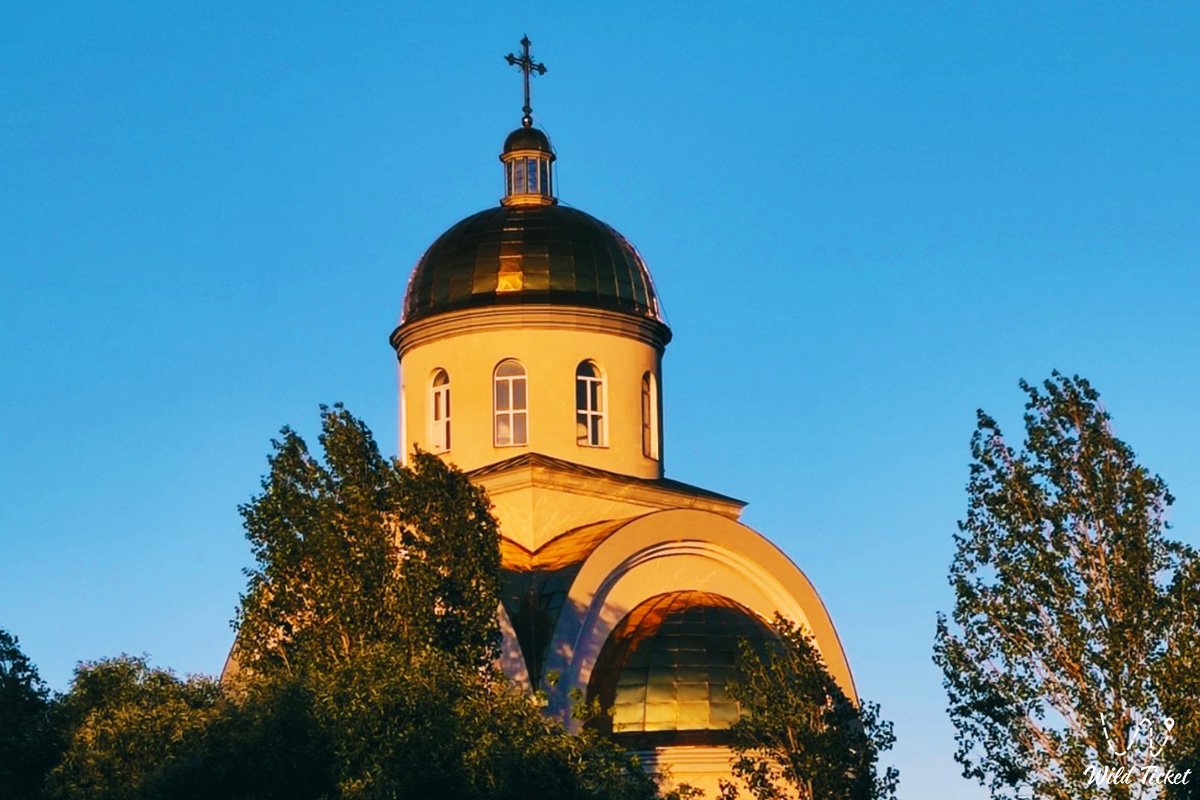
The architectural ensemble of the church is an example of sacred architecture that harmoniously blends into the panorama of the right bank. The capital Astana carefully preserves this site as a "treasure of faith," where services in the Ukrainian language help the community maintain its national identity and culture, uniting believers from all corners of Kazakhstan in a spirit of unity and harmony.
Not so far from the church are the Palace of Schoolchildren and Triathlon Park, which combines the spiritual route with active recreation zones.
---------------------------------------------
How to get there and visit -
St. Joseph the Betrothed Church is located at the address: 2/2 Arasan Street, corner of Alpamys Street, right bank of the Esil River, Almaty district, Astana city, Republic of Kazakhstan.
GPS coordinates: 51°09'05"N 71°26'51"E
Transport accessibility to the church is excellent. Buses arrive at the nearest stops in the following order: No. 60, 31, 10, and 2.
If you are on the left bank of the river, you can walk from Central Park via the Atyrau bridge.
For motorists, parking spaces are provided along the adjacent streets.
Also, to reach the church, you can use taxi services through a special mobile application.
Operating mode: daily, services are held according to the church calendar. The Liturgy usually takes place at 10:00. Visiting the territory is free.
The capital Astana is hospitable to tourists and pilgrims wishing to see the Byzantine architecture and listen to the famous choral singing.
---------------------------------------------
History
The history of the UGCC in Kazakhstan is deeply connected to the tragic events of the repressions of 1944–1952, when more than 200,000 residents of Western Ukraine were forcibly relocated to the Kazakh steppes. Those who survived the harsh conditions of Karlag and Steplag could not return home and stayed with relatives in special settlements. Among those released were clergymen who secretly conducted missionary activities in dugouts and private homes. Significant contributions were made by figures such as the Blessed Priest-Martyr Oleksiy Zarytsky and Bishop Oleksander Khira.
For many years, the community did not have its own building, and it was only from 2002 that the priests of the Greek Catholic parish began regular official work in the capital. City authorities allocated a site, after which construction began, lasting 10 years.
The solemn consecration took place on September 15, 2013, with the participation of the official representative of the Pope – Cardinal Leonardo Sandri, Prefect of the Congregation for the Oriental Churches, as well as the Apostolic Nuncio Miguel Buendía. The ceremony was accompanied by the "Soli Deo" choir, which arrived specially from Lviv. Today, the capital Astana sees this church as a symbol of the victory of faith over repression.
Information
St. Joseph the Betrothed Church is an active religious site and a major cultural center for the Ukrainian diaspora, preventing assimilation and preserving national self-identification. Unlike the Karaganda parish, where 90% of the parishioners are descendants of people from Galicia, the Astana church has many "Eastern" Ukrainians whose ancestors developed the Virgin Lands. Many of them identify with the UGCC to hear the Ukrainian language during services.
The technical condition of the building meets world standards. The church is one of the largest Christian structures in the city. After the Liturgy, concerts by Ukrainian folklore groups from all over Kazakhstan and communal meals in the churchyard are often held here. The consecration of this building became a grateful contribution to the spiritual heritage of the Kazakh people for the fact that during difficult times, this land became a place of protection and development for the settlers.
Detailed description of the object
The church complex includes several important zones:
• Byzantine dome – the main architectural accent; the five-domed finish symbolizes Christ and the Evangelists, serving as a landmark in the panorama of the right bank.
• Iconostasis – crafted in a classical style from carved wood, decorated with hand-painted icons brought from the western regions of Ukraine.
• Adjacent courtyard – a landscaped area with greenery where festive events and performances by folk groups take place.
• View of the Ishim – the unique location on the riverbank makes the church one of the most picturesque and photogenic points of the capital's old center.
• Arbat zone – the close proximity to the pedestrian zone allows tourists to easily combine viewing sacred architecture with a walk through the city's creative center.
Architecture
The architectural style of the church is Neo-Byzantine, representing a flawless example of classical church construction. The building is a cross-domed system with clear proportions and light facade finishes that contrast effectively with the brilliance of the golden domes. The interior space is designed taking into account the features of the Eastern Rite, where special attention is paid to acoustics for "a cappella" choral singing. The design of the portals and arched windows emphasizes the continuity of ancient traditions. The capital Astana received an architectural gem that fits softly into the historical development of the Saryarka district.
Legend
Among the parishioners lives a legend of the "First Sowers." They say that when the first deportees arrived in the steppe, they buried wheat grains in the ground and prayed for the day when the bells of their faith would ring.
Another legend of the city of Astana is connected with the consecration: it is said that when the choir began to sing in 2013, birds above the Ishim circled over the dome in time with the prayer, welcoming the return of faith from the underground to the light.
Parishioners also believe that prayer in this church helps to regain lost connections with family and roots.
Conclusion
St. Joseph the Betrothed Church is a bridge between the past and the future, built on faith and memory. A visit to this parish allows one to see Astana as a city of mercy and national harmony. Thanks to its location near the Arbat, the Ishim embankment, and Central Park, the church remains a mandatory point for tourists.
The capital Astana invites everyone to come here to feel the warmth of hospitality, hear the melodic liturgy, and admire the grandeur of Byzantine architecture.
Interesting sights nearby:
• Bauyrzhan Momyshuly Park;
• Monument to Bauyrzhan Momyshuly;
• Ataturk Park;
• Zher-Ana Monument;
• Ailand Family Recreation Center;
• Amphitheater on the Esil River.
Additional information:
• Useful information about Astana;
• Where to go and what to see in Astana;
• Akmola region - where to go for vacation.
Photogallery: