A snow-white symbol of Kazakhstan's national unity -
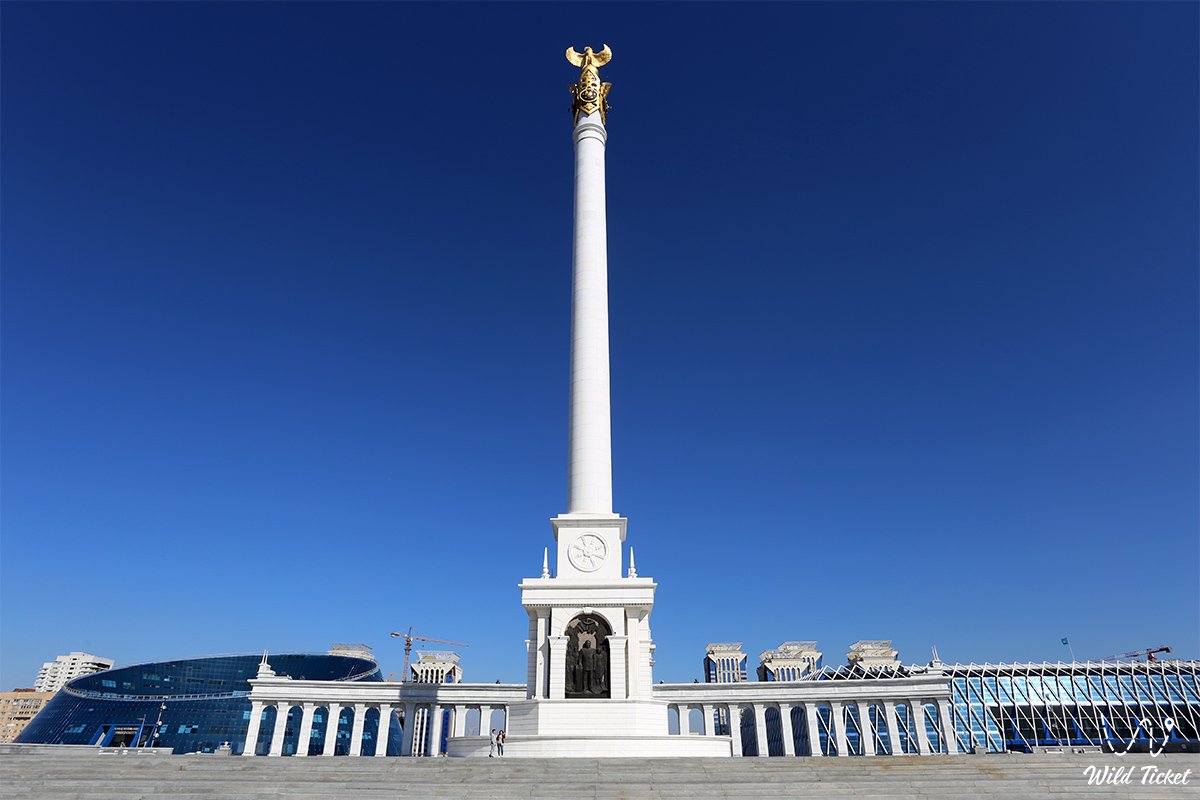
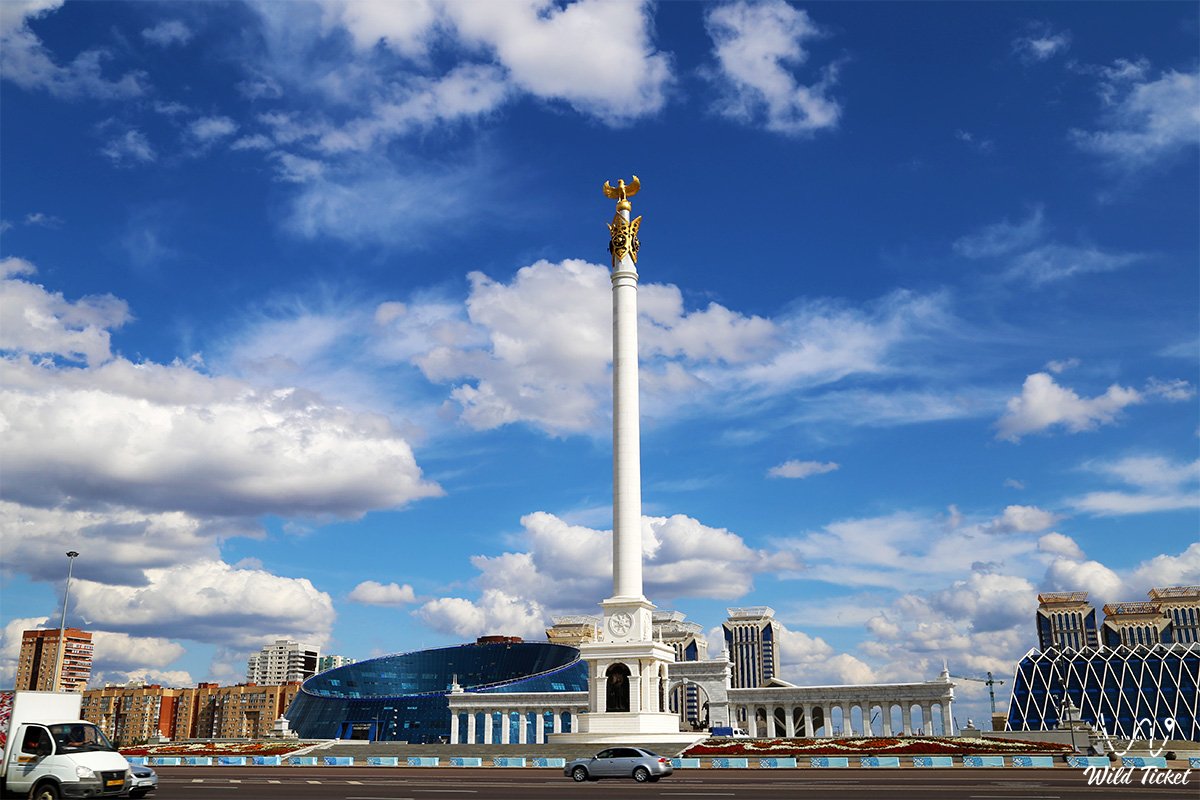
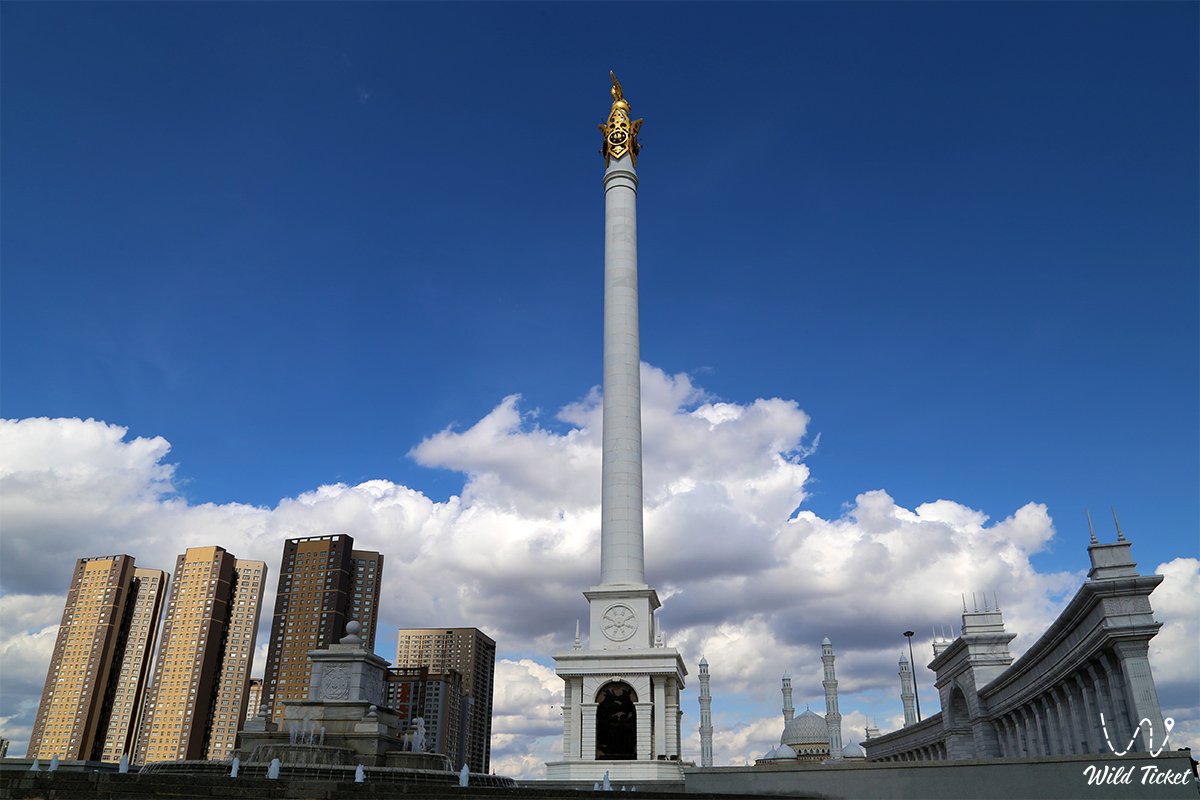
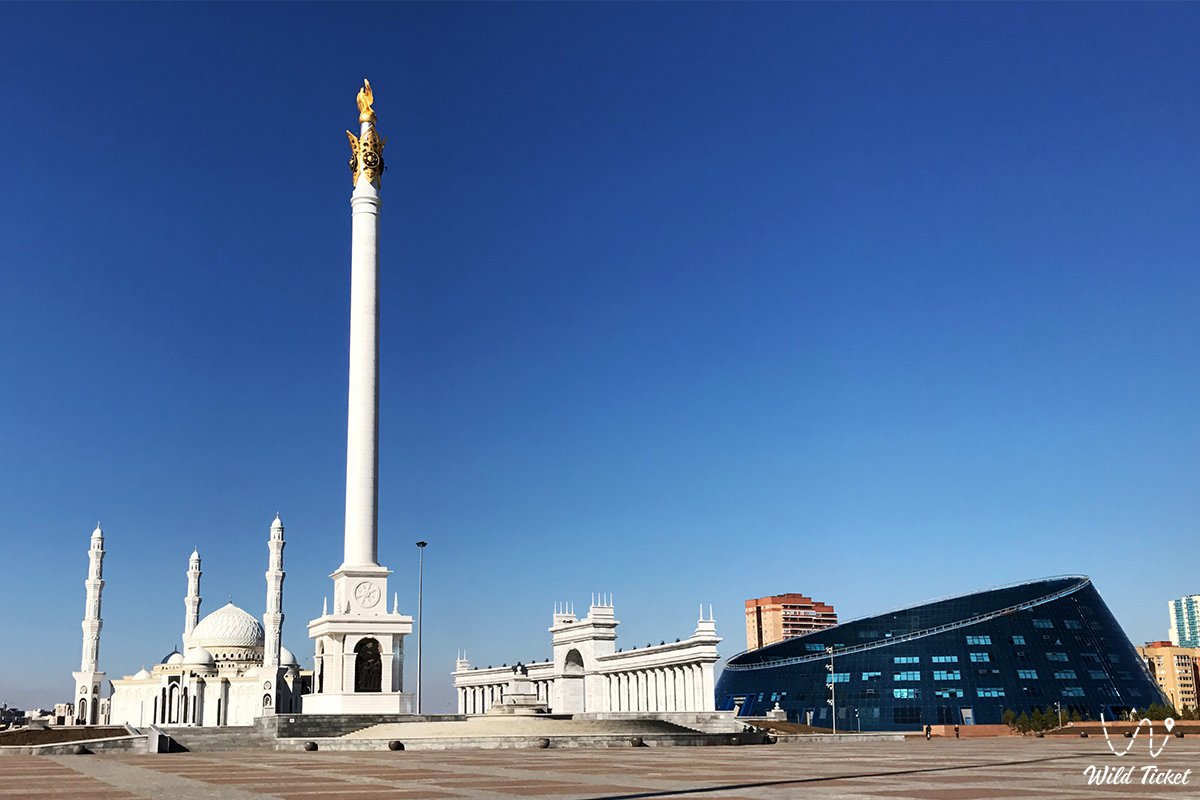
"Kazakh Eli" Monument (translated as "The Land of Kazakhs") is one of the most significant architectural structures of Kazakhstan, personifying the sovereignty and power of the state. Located in the very center of Astana, on the right bank of the Ishim River, on Independence Square, this site represents a 91-meter marble stele topped with a gilded figure of the mythical Samruk bird.
The monument serves as a visual embodiment of historical continuity and the people's aspiration towards prosperity, combining elements of classical monumentality and deep national symbolism. Around the stele, a large-scale space with an area of 5.2 hectares is organized, the central part of which is paved with light granite. The complex is complemented by an elegant colonnade of 28 columns with a total length of 120 meters, which emphasizes the solemnity and significance of the site. Opposite the monument is located the entrance to the Presidential Park, which makes this location popular. In this park is located the famous pyramid – the Palace of Peace and Reconciliation.
"Kazakh Eli" – is not just a monument, but a multi-faceted artistic work that tells the story of the courage of ancestors, the creative labor of contemporaries, and the ambitious plans of future generations of Kazakhstanis. Having visited the monument, pay attention to the landmarks located nearby, here you can visit the Independence Palace and look at the unusual architecture of the Shabyt Palace of Arts.
---------------------------------------------
How to get there and visit -
The Kazak Eli monument is located on Tauelsizdik Street, at Independence Square, opposite the Presidential Park, in the Saryarka district of Astana, Kazakhstan.
GPS coordinates: 51°07'19"N 71°28'11"E
The monument can be reached by public transportation. Buses No. 29A, 4A, 802, 14, 21, 806, 32, 3, 40, 19, 43, 50, 4, 29 are available. Get off at the stops "National Museum of the Republic of Kazakhstan," "Kazakh Eli Monument," or "Shabyt Creativity Palace."
It's best to use a private car or taxi through a special mobile app.
---------------------------------------------
History
The monument project was initiated as part of the creation of a new cultural and administrative center for the capital. The official opening took place in 2009. The idea was conceived by Sembigali Smagulov, and the architectural design was created by Samatbek Bokebay and Baktybay Taytaliev. The monument was created as a unique structure, unparalleled in the world in its compositional content and symbolic significance for the people.
The choice of a height of 91 meters is no coincidence: this figure directly references 1991, the year Kazakhstan gained independence. Over the years, the complex has witnessed key events in modern history: inaugurations, military parades, and world-class festivals are held here. Today, "Kazak Eli" is recognized as one of the country's main calling cards, symbolizing stability, peace, and the eternity of the national spirit in the heart of Saryarka.
Information
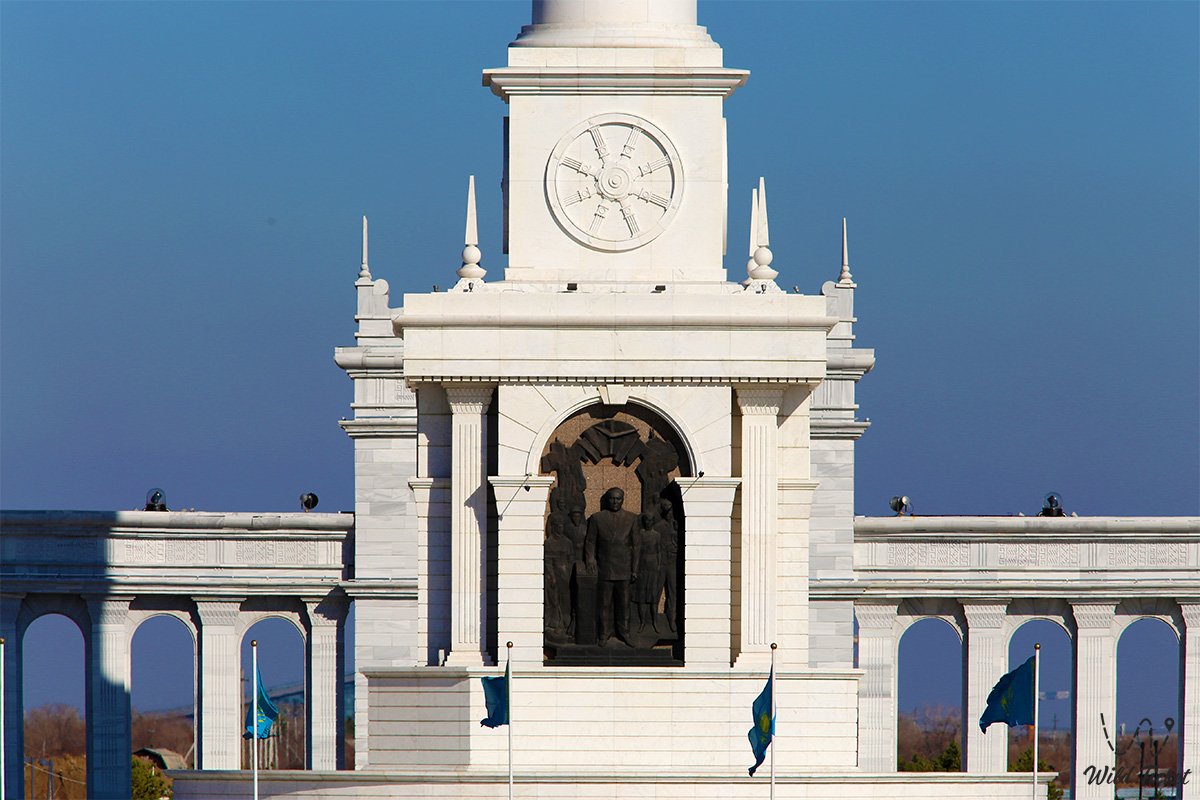
The monument's design is meticulously crafted: a tetrahedral stele stands on a massive granite pedestal. Bronze bas-reliefs are located on each side of the base. The first, "The People and the President," depicts the moment of swearing in the Constitution.
The second, "Courage," reflects the military valor of defenders of the Fatherland throughout history. The third, "Creation," tells the story of the country's development from nomadic life to space travel.
The fourth, "Future," is dedicated to youth and family values.
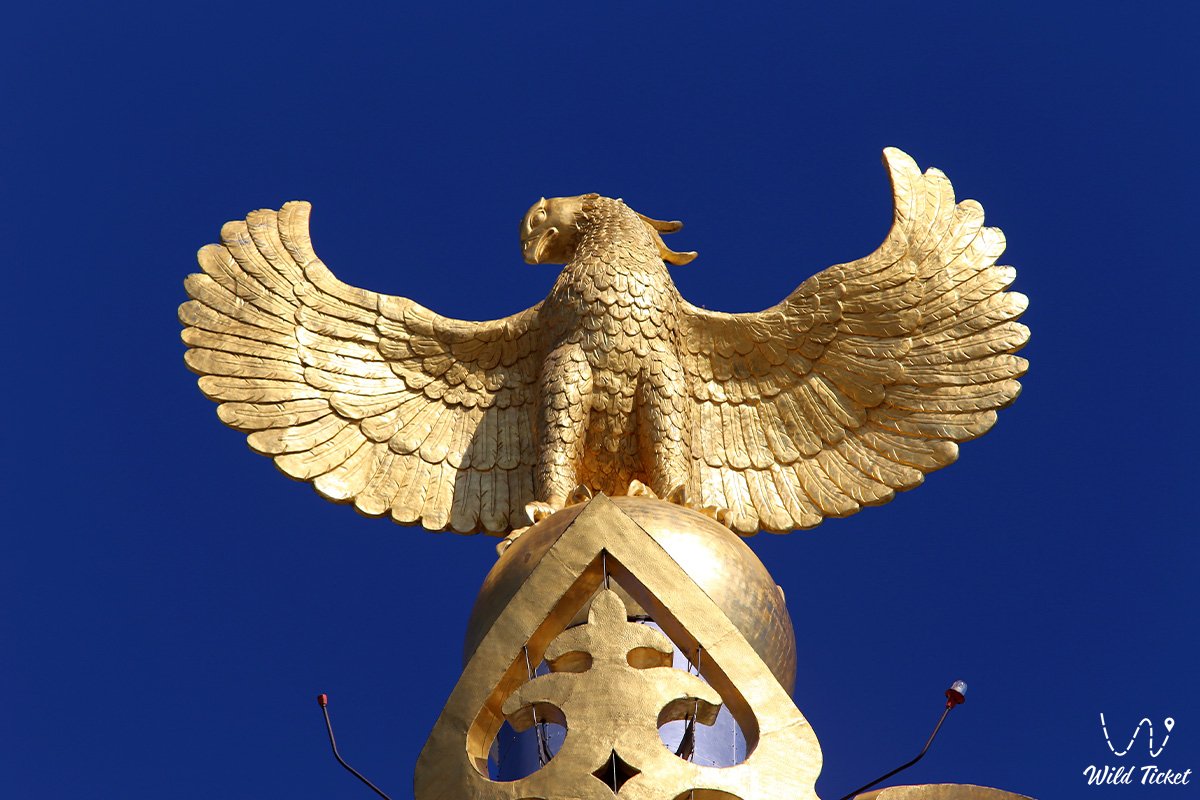
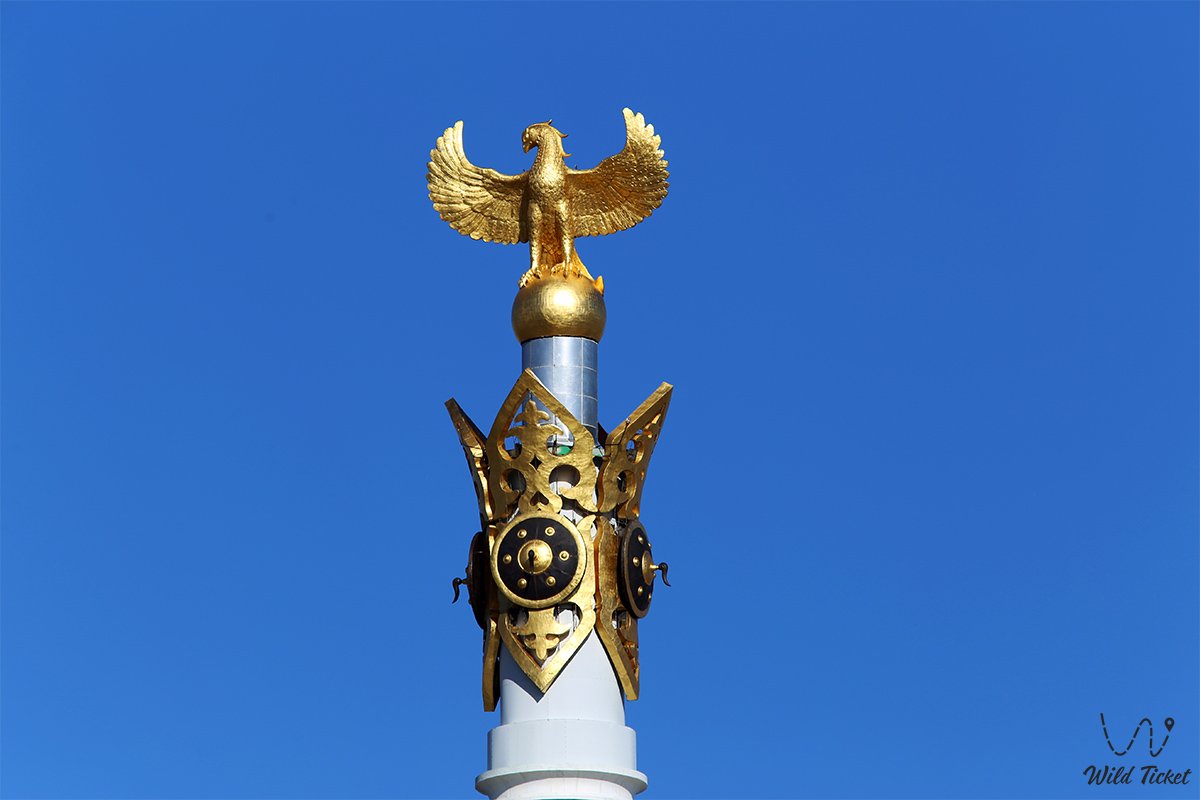
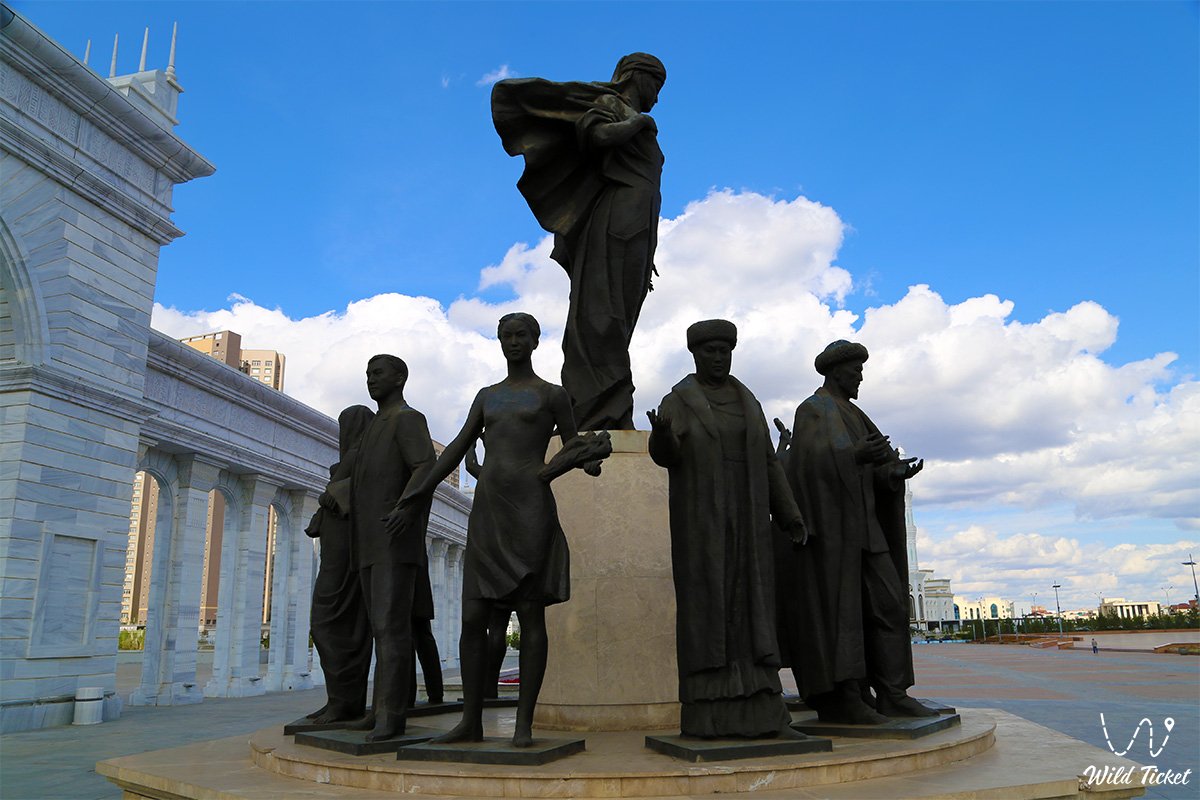
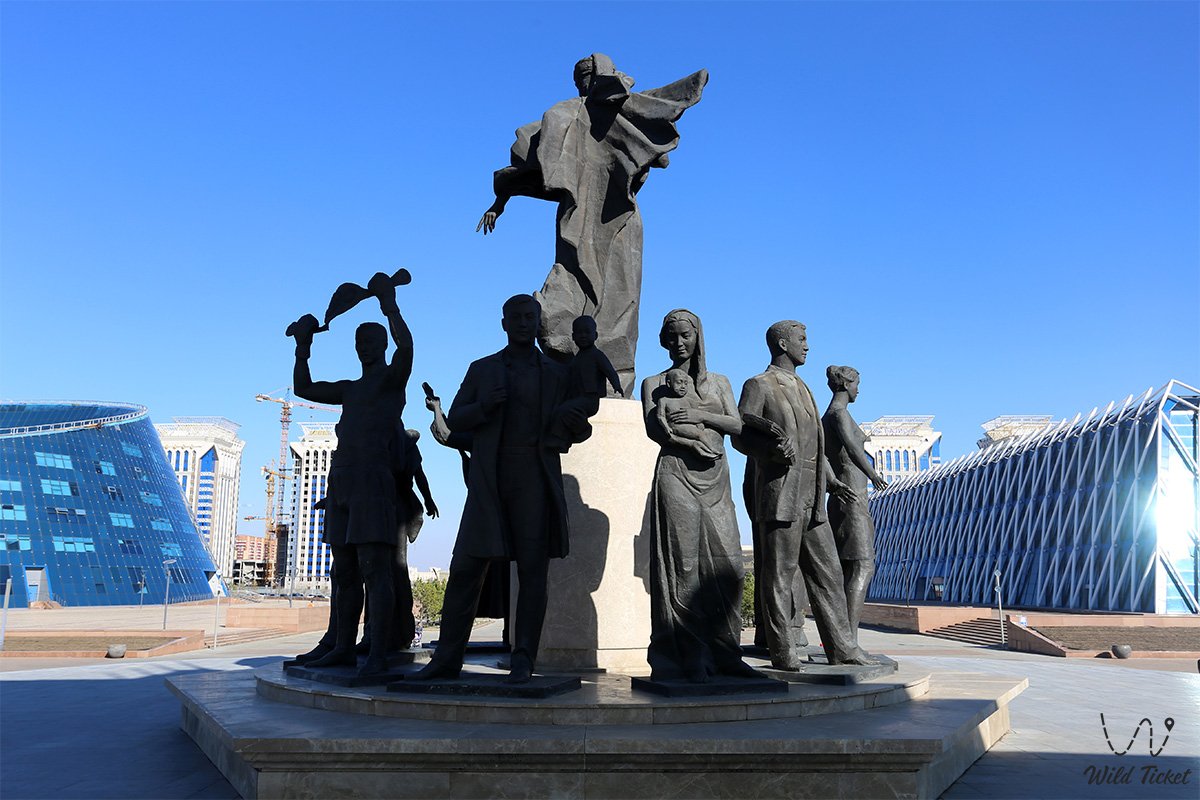
The ensemble is completed by the sculptural composition "Unity," conveying the cohesion of the people. At the top of the stele sits the Samruk bird, a mythical guardian symbolizing the desire for freedom and progress.
The white marble used in the cladding emphasizes the purity of intentions and the peaceful spirit of the state. The square's technical capabilities allow it to host events attended by tens of thousands of people simultaneously, ensuring the comfort and safety of guests.
Detailed description of the monument
The visual perception of the monument changes depending on the time of day. On sunny days, the white marble gleams in the open air, and the golden bird at the top sparkles, attracting attention from afar.
The internal logistics of the square around the stele are organized so that visitors can walk around it and explore each scene depicted in the bas-reliefs. Particularly noteworthy are the mighty snow leopards guarding the Constitution on the main façade, and the figures of scientists, metallurgists, and farmers on the western side.
In the immediate vicinity of the monument are such architectural masterpieces as the National Museum and the Shabyt Palace of Creativity, creating a unified, meaningful route for tourists. Spacious alleys with modern fountains and green spaces make the area ideal for family recreation.
The complex is not only a historical memorial but also a vibrant center of attraction, where the history of the great steppe meets the technologies of the future.
Architecture
The monument's architectural style combines neoclassicism with deep national traditions. The tetrahedral shape of the column symbolizes stability in all four directions. The decorative niches and ornamental trim are executed with exquisite precision, reflecting the richness of Kazakh applied art. The snow-white colonnade behind the main monument creates a striking backdrop and completes the square's composition, visually connecting the stele with the surrounding landscape and sky.
Legend
Astana residents have a legend that the Samruk bird atop the monument is the living embodiment of the spirit of freedom, which protects the country's peace. Old-timers say that if you stand in the center of the colonnade on a calm day and hear the subtle rustling of the wind, it is Samruk greeting the guest, promising them success in their good endeavors.
The square is also known as the "Point of Unity": it is believed to be the concentration of creative energy that unites representatives of all the peoples of Kazakhstan.
A visit to this place is often called a "journey to the roots," where each bas-relief is a sacred page in the book of life. The monument remains a symbol of hope, a reminder that the greatness of a country is built on a solid foundation of memory, courage, and family warmth.
Interesting sights nearby:
• Hazrat Sultan Mosque;
• National Museum of the Republic of Kazakhstan;
• Observation deck in the Presidential Park;
• Ak Orda Presidential Residence;
• Triathlon Park;
• Park named after Bauyrzhan Momyshuly;
• Kalibek Kuanyshbayev Kazakh Music and Drama Theater.
Additional information:
• Where to go and what to see in Astana;
• Useful information about Astana.
Photogallery: