Tours and excursions to the Baikonur Cosmodrome in Kazakhstan -
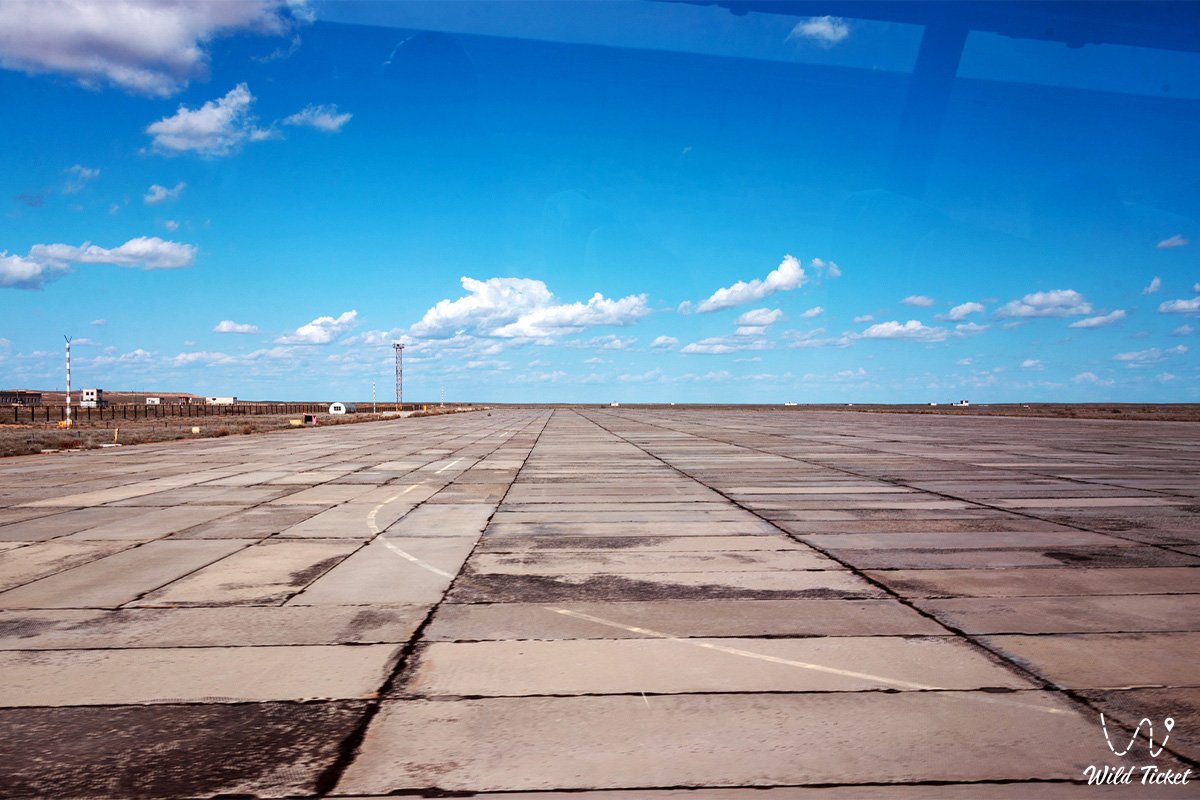
Yubileyniy Airfield (Pad No. 251) is an out-of-class experimental aviation airfield located in the Kyzylorda region, 40 kilometers north-northwest of Baikonur City. The site possesses outstanding technical characteristics and is capable of receiving practically all types of aircraft, including ultra-heavy transport planes.
This is one of the largest airfields in the world, initially designed as a unique landing complex for the Buran reusable spacecraft, and is part of the Baikonur Cosmodrome complex. The pavement classification number (PCN) of the runway is 72/R/B/X/T, which testifies to the highest strength and reliability of this engineering structure created to receive unique equipment.
The site is leased by Russia from Kazakhstan as part of the "Baikonur" complex for the period until 2050 and is entered in the State Register of Experimental Aviation Airfields of the Russian Federation. All journeys to the site usually begin from the city of Kyzylorda.
---------------------------------------------
How to get there and visit -
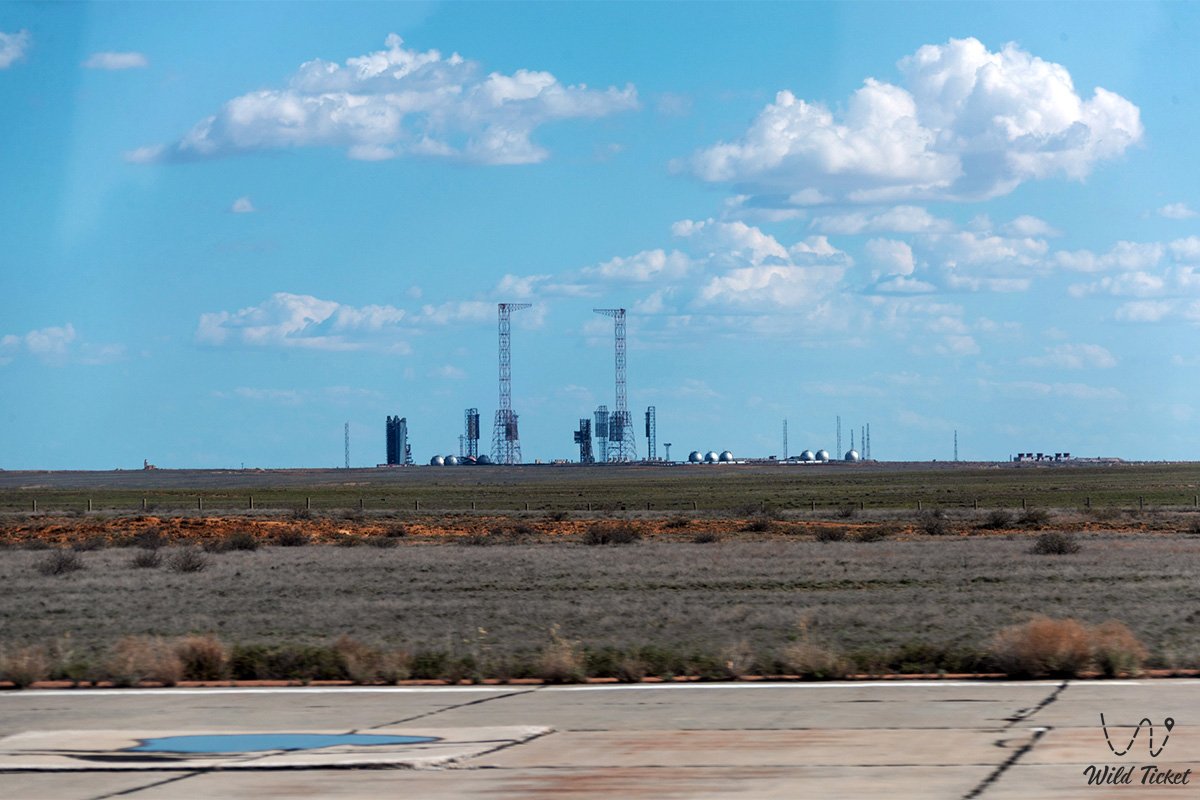
Yubileyniy Airfield is located in the desert Ushkyzyl tract, 20 kilometers from Gagarin's Start, in the northern part of the Baikonur Cosmodrome (Pad No. 251), Kyzylorda region, Republic of Kazakhstan.
GPS geographical coordinates: 46°03'14"N 63°14'47"E
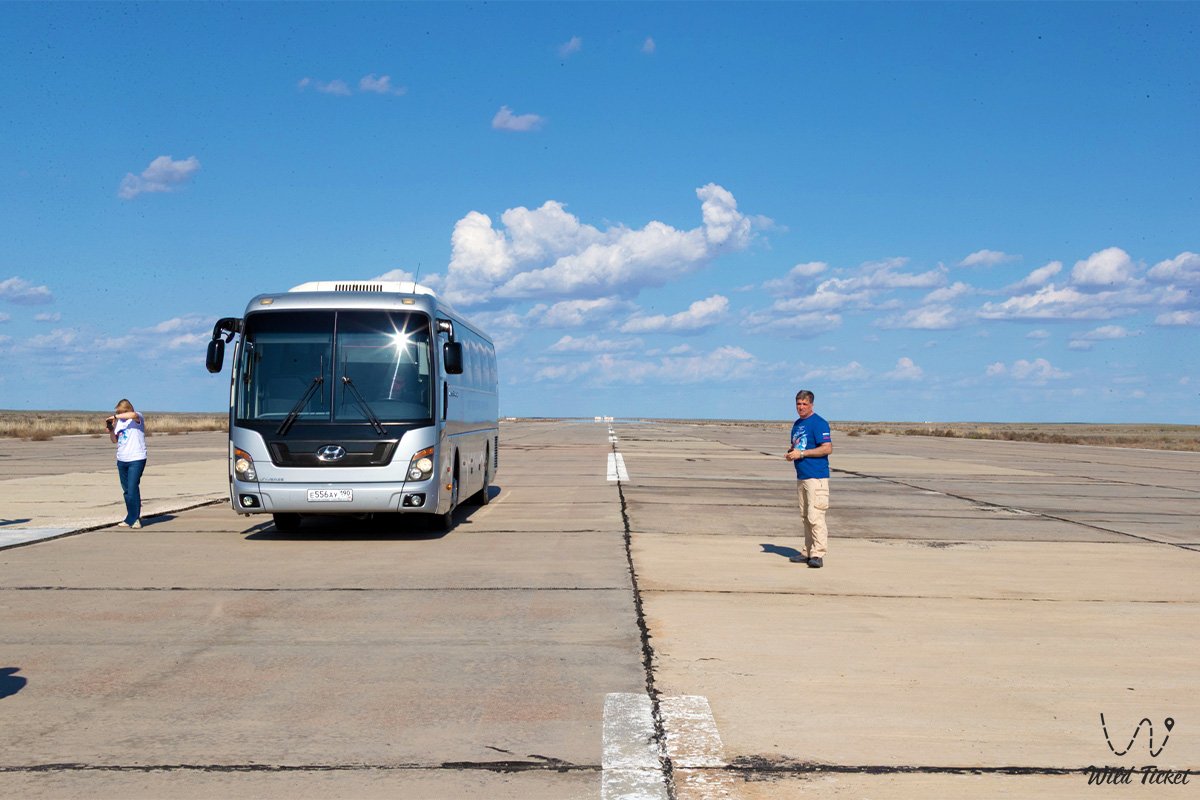
Transport communication is carried out exclusively along the internal roads of the cosmodrome using specialized transport. Visiting the airfield is strictly limited, as the site is part of the closed "Baikonur" complex.
For specialists and representatives of the aerospace industry, access is possible only with appropriate passes issued through the administration of the cosmodrome or the operating organizations (TsENKI). Tourist visits to the site are currently carried out through specially issued permits by tourist companies.
Opening hours: The airfield is currently not carrying out active operations to receive aircraft. The operation of the site was terminated after it was excluded from the register of experimental aviation airfields of the Russian Federation in 2020.
Repair work is planned to be conducted at the airfield for its further operation.
Contacts Daily: +7 33622 7 08 94; +7 33622 7 33 19
Postal address: Kazakhstan 468320, Kyzylorda region, Baikonur City, Oktyabrskaya Street, 22.
---------------------------------------------
History
The decree on the creation of a landing complex for the Buran was adopted in October 1977, and the name "Yubileyniy" itself was timed to coincide with the 60th anniversary of the October Revolution. The leading developer was NPO "Molniya," and the design was managed by the 20th TsPI of the USSR Ministry of Defense. Construction by military builders (130th UIR) began in 1979. The first stage was delivered in November 1981. The first landing of a Mi-8 helicopter took place in February 1980, and an An-26 aircraft on January 29, 1982.
From 1982 to 1990, the airfield provided 59 flights of the VM-T "Atlant" transport aircraft, which delivered components of the Energia rockets and Buran spacecraft. The historical moment arrived on November 15, 1988, when the Buran made its only automatic landing here after a spaceflight. After 1992, the site was abandoned and plundered. Revival began in 1995 to receive American apparatus under commercial programs; in 1997, the airfield was repaired and put back into operation.
The airfield became a place of important political events: M. S. Gorbachev (1987), V. V. Putin (2005), and N. A. Nazarbayev were received here, and on October 2, 1991, a historical meeting of the leaders of 12 republics of the USSR took place here. Since 2017, the object has been transferred to the management of FSUE "TsENKI". However, in 2020, it was excluded from the register of airfields of the Russian Federation, and the government of Kazakhstan officially recognized its restoration as inappropriate, arguing this by the wear and tear of the runway, the lack of equipment, and the economic inefficiency of the project.
Information
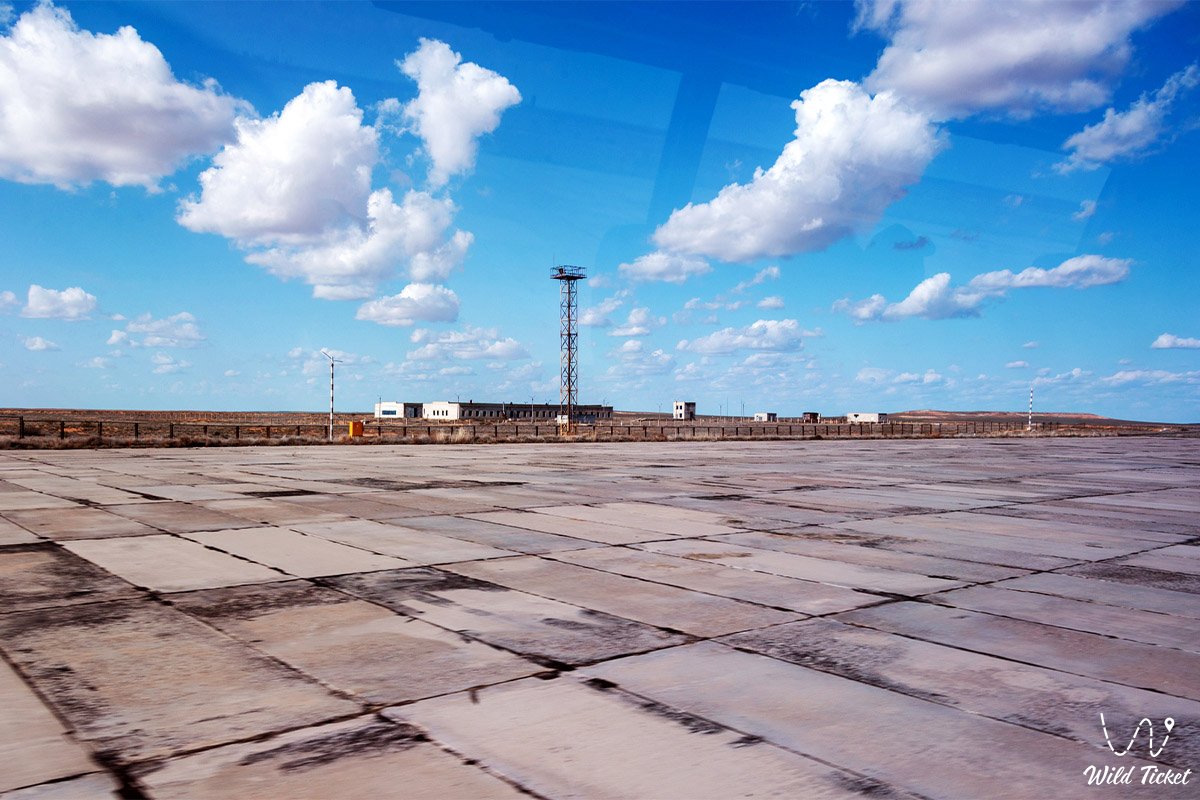
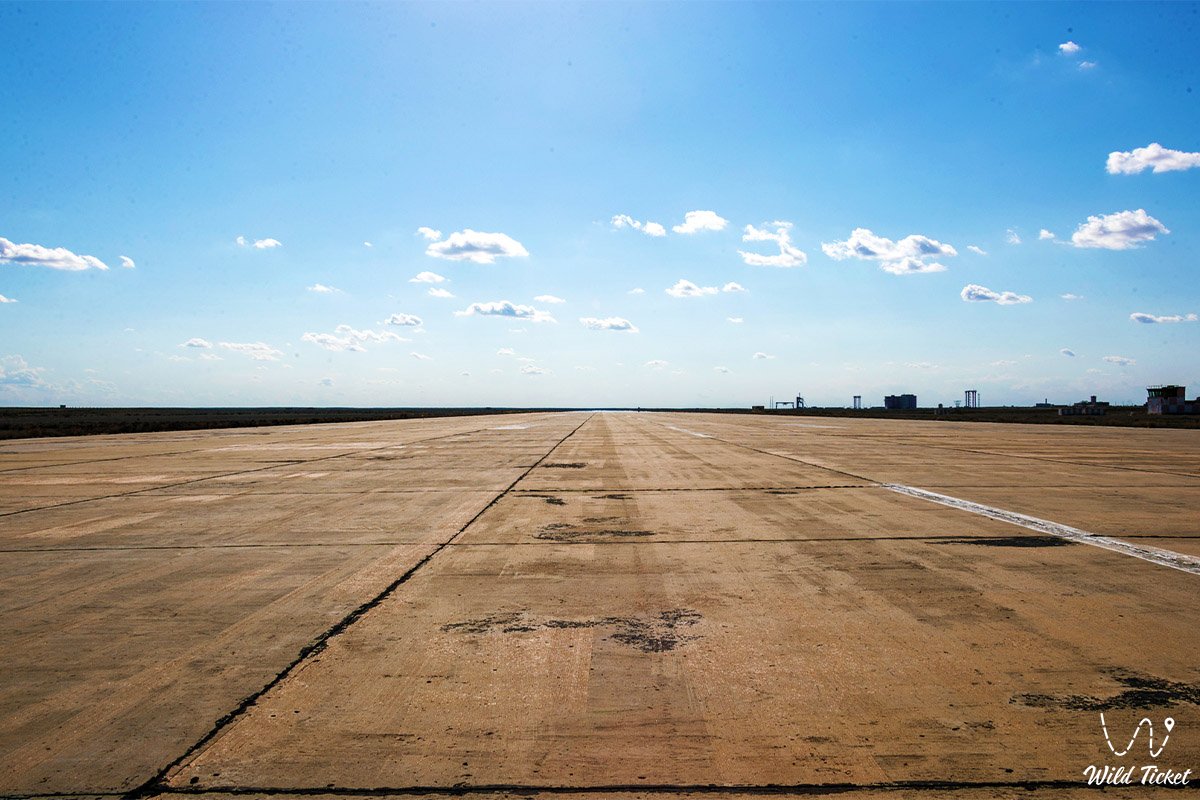
Yubileyniy Airfield belongs to the category of out-of-class airfields and is capable of receiving all types of aircraft, including the An-225 "Mriya." The maximum take-off weight of an aircraft is 392 tons, and the runway classification number (PCN) is 72/R/B/X/T. The infrastructure includes a runway (RWY) 4,500 meters long and 84 meters wide. The pavement is made of high-strength M-600 monolithic concrete with a thickness of 26 to 32 cm on a sand and cement foundation. The area of airfield pavements is 980,400 square meters, and the total volume of earthworks during construction reached 2 million cubic meters of soil.
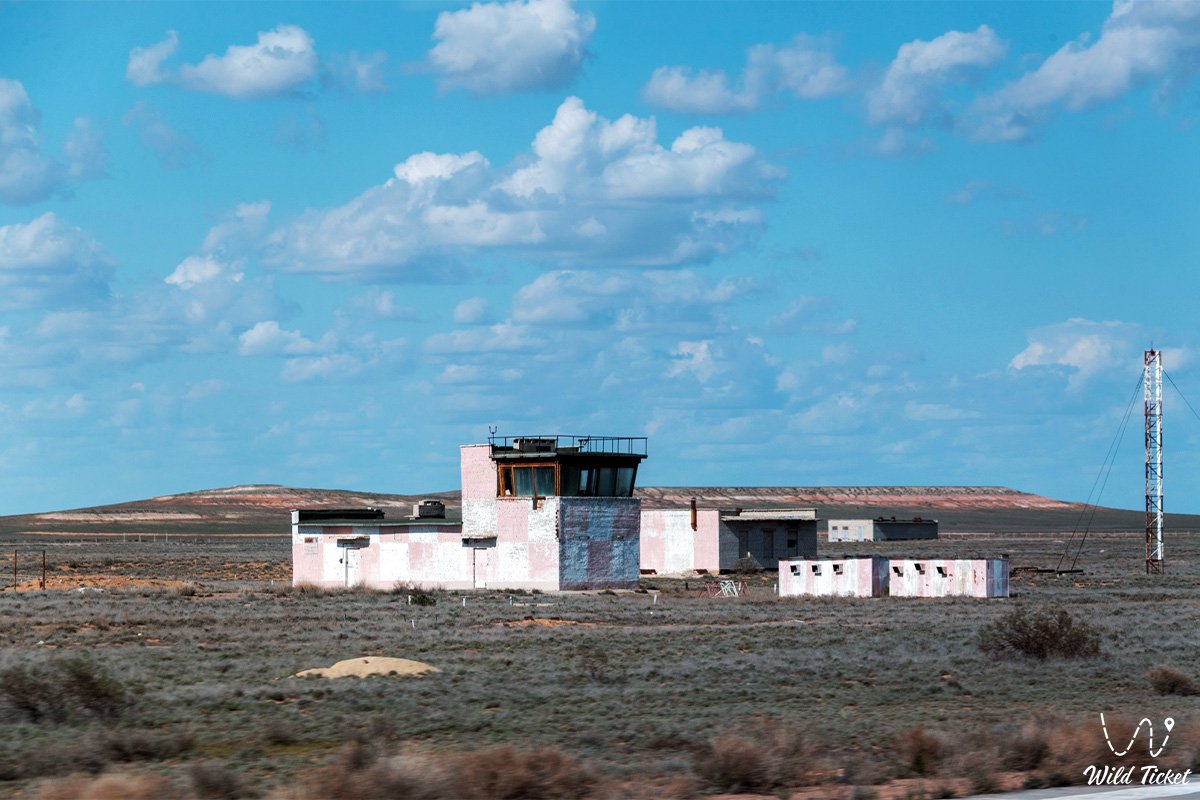
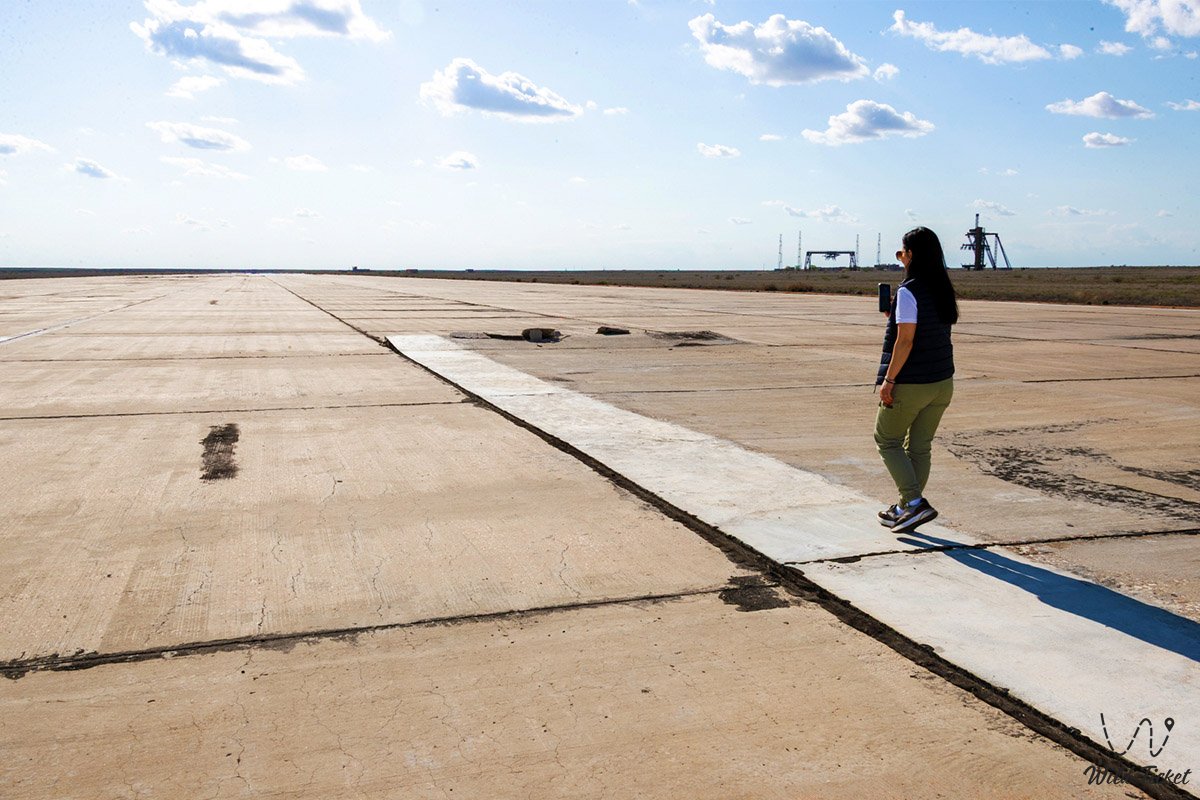
Throughout 1997–2011, "Yubileyniy" received special flights from Moscow, Krasnoyarsk, and abroad with spacecraft, as well as passenger flights for transporting aerospace industry personnel. Currently, the infrastructure is assessed as unsatisfactory: the concrete surface is covered with cracks, the buildings are worn out, and specialized equipment is missing. Restoring the site requires significant financial investments, which, combined with the lack of export production in Baikonur City and the low passenger traffic, makes its operation inappropriate.
Detailed description of the venue
• Runway (RWY) – a unique object 4,500 m long and 84 m wide. Built of M-600 monolithic concrete, it is designed to receive the heaviest transport aircraft (up to 392 tons) and orbital spacecraft of the Buran type.
• Pad No. 251 – the internal designation of the site located in the desert Ushkyzyl tract. 4 km from the airfield is Mount Ushkyzyl (135 m abs.), and 8 km north are the Darbas sands.
• Navigation equipment – historically, the complex was equipped with radionavigation, radio communication, light-signal, and meteorological equipment necessary for receiving vessels in automatic mode. After 2020, most of the equipment was disabled or dismantled.
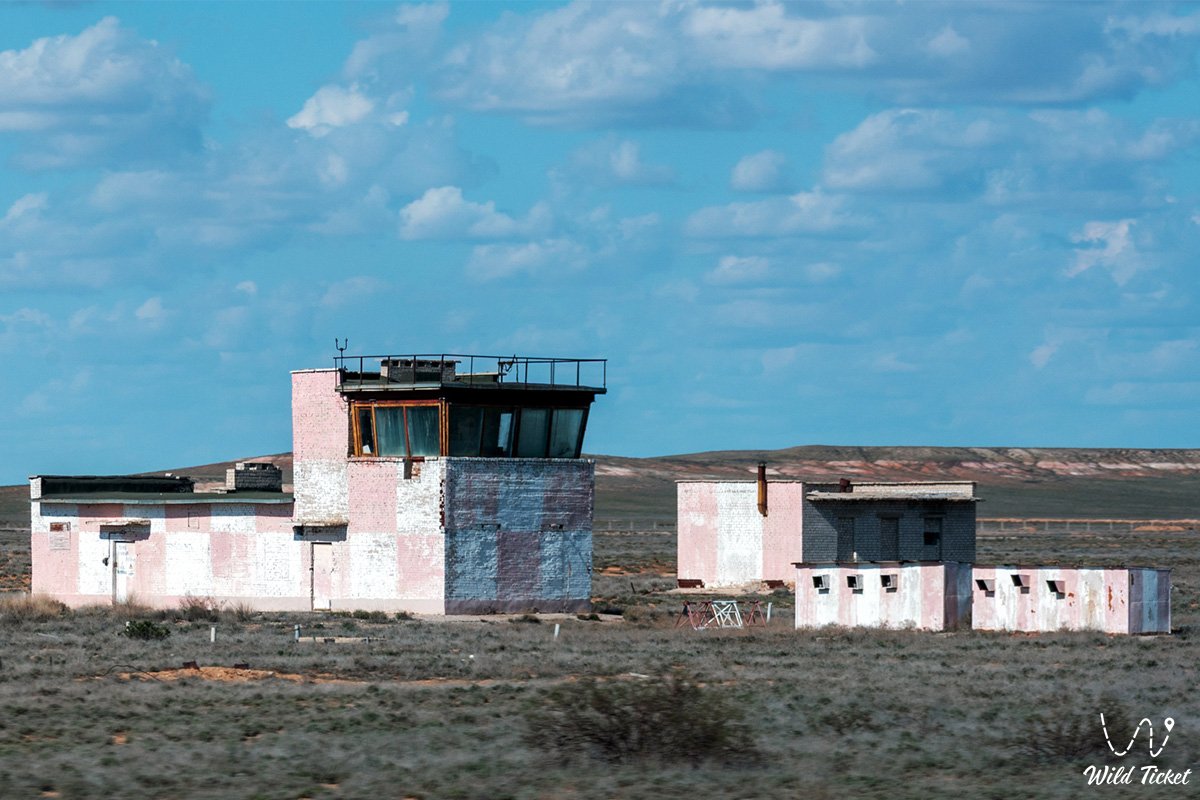
• Technological zone – includes the remains of a complex of parking areas for heavy aircraft and taxiways that were used for transporting components of the Energia rockets and Buran spacecraft.
• Relief and soils – the terrain represents a slightly undulating plain (elevations 95–120 m) with brown desert-steppe soils. During periods of rain, temporary lakes up to 0.5 m deep form on the takyrs in the vicinity of the airfield.
Architecture
The architectural appearance of the airfield is a monument to the Soviet engineering genius of the 1980s. The structures are executed in a strict industrial style characteristic of the objects of the USSR Ministry of Defense of that time. The main concept of the site is "nothing extra," where all elements, from the runway to the technical buildings, are subordinated to the main goal: ensuring the safety of the landing of the space shuttle. The scale of the concrete structures emphasizes the grandeur of engineering thought, and the harsh desert nature makes the airfield a visually impressive but technologically isolated complex.
Legend
"Yubileyniy" is shrouded in an atmosphere of great hopes and drama. The most popular legend states that the concrete of the runway still "stores the warmth" of the Buran landing in 1988. Veterans of the cosmodrome say that at the moment the orbital spacecraft touched the runway, the sky over Baikonur cleared despite forecasts, which many considered a "mystical sign" of space's approval. Today, many consider the site a "sleeping giant" waiting for its time, and its abandonment is only a temporary rest before future achievements that the first designers dreamed of.
Conclusion
Yubileyniy Airfield remains a iconic place for the history of cosmonautics, symbolizing both the grandiose achievements of the "Energia-Buran" program and modern challenges in managing complex infrastructure objects. Although its restoration is not planned in the foreseeable future, it will forever remain in the chronicle of Baikonur as the site that received the first and only space shuttle of the Soviet era.
Interesting sights nearby:
• Houses of Gagarin and Korolev;
• Energia Command Post;
• Pad No. 110;
• Baikonur Cosmodrome Museum;
• Saturn Radio Complex.
Photogallery: