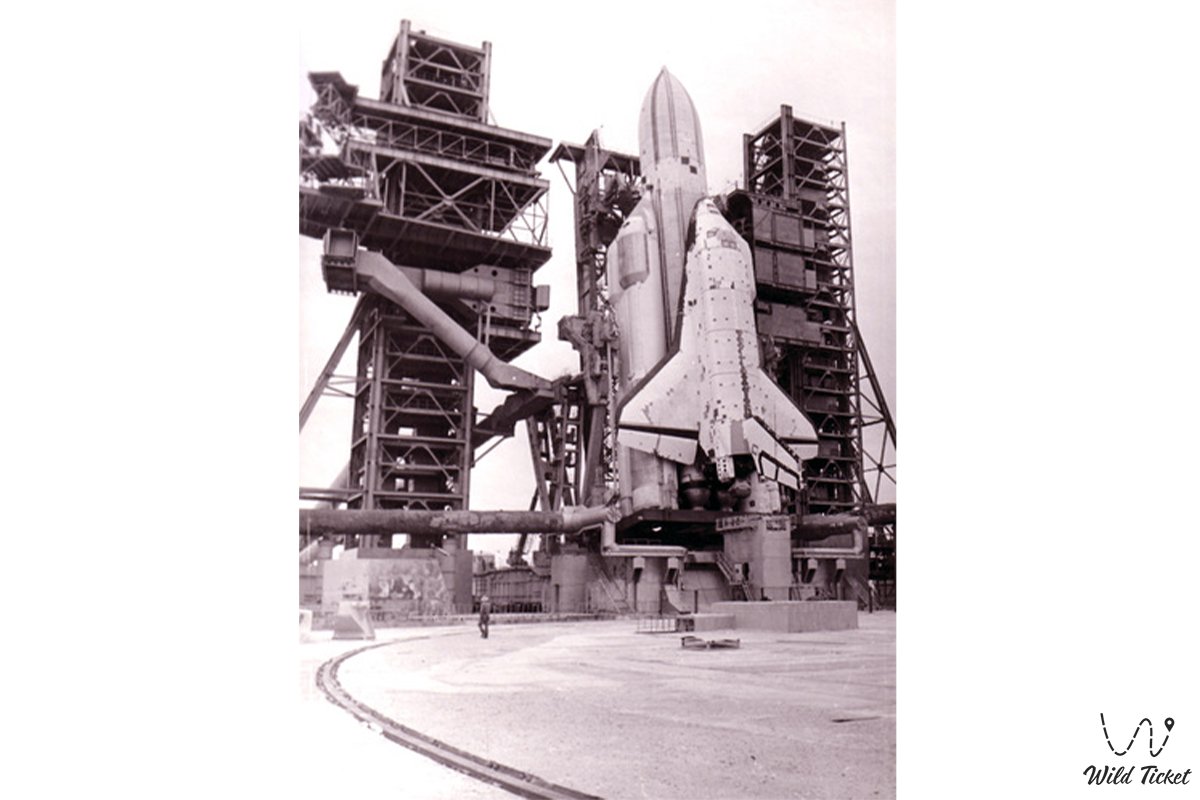
Monumental complex of the moon race -
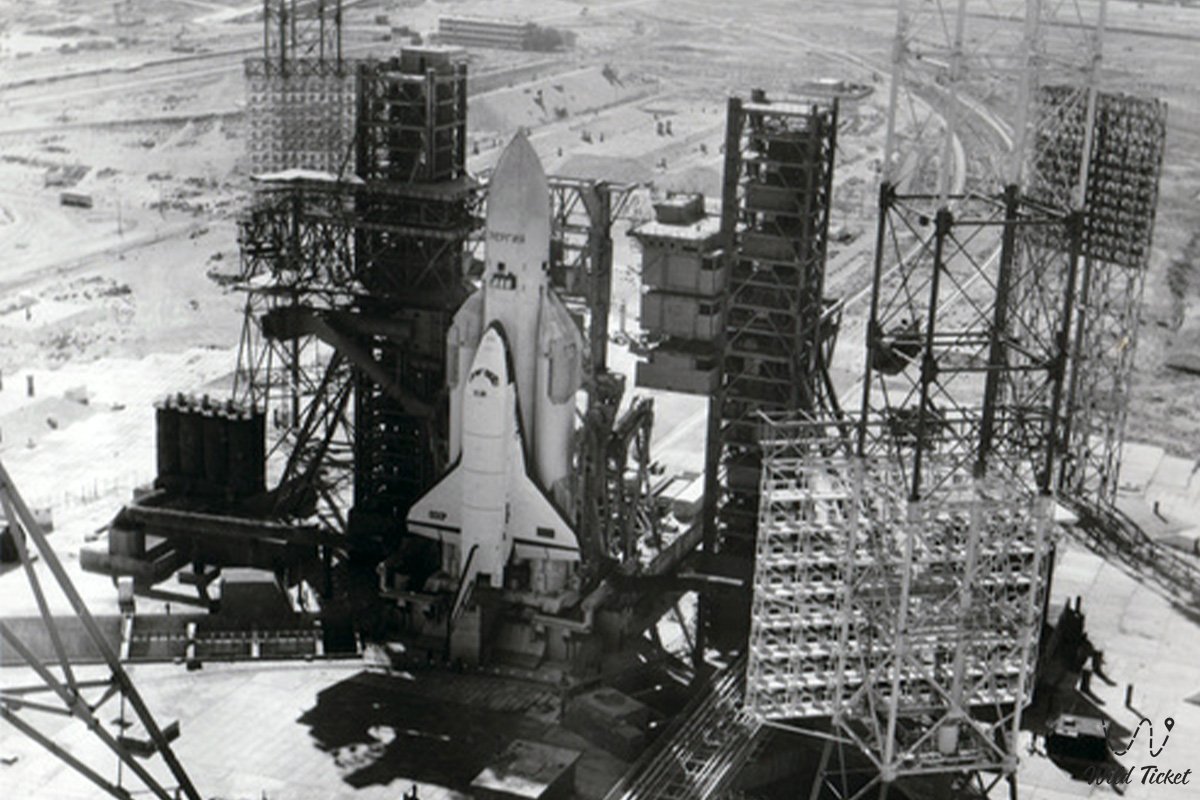
Pad No. 110 (Object 11P851) – is one of the most ambitious and impressive sites of the Baikonur Cosmodrome, representing a complex of two launch positions (110L and 110P). The facility was erected in the mid-1960s to ensure the launches of the N-1 super-heavy launch vehicle, which was supposed to implement the Soviet manned lunar program (N-1-L3).
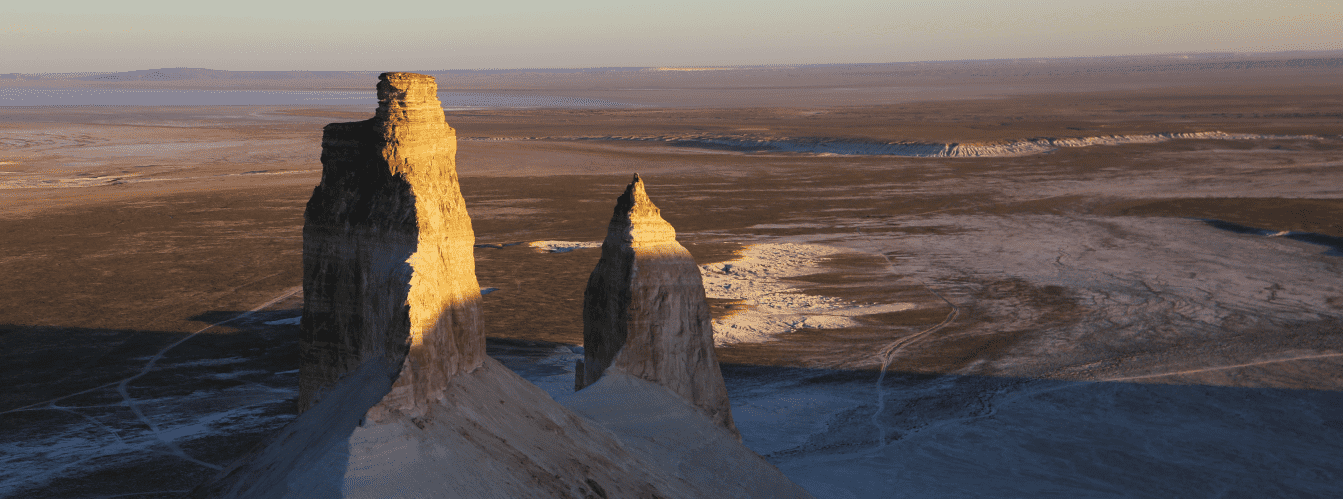
Today, this industrial giant towers over the steppe in the Kyzylorda region, reminding of the times of the grandiose technological confrontation between the superpowers. Next to the facility is located the Energia Command Post.
The complex remained a strategic facility for a long time, ensuring the implementation of projects of national scale. Its location near Baikonur City and its architecture were dictated by safety requirements when working with rockets over 100 meters high, making Pad No. 110 a unique monument to the engineering courage of the USSR.
---------------------------------------------
How to get there and visit -
Pad No. 110 is located in the northern part of the Baikonur Cosmodrome, Karmakshy district, Kyzylorda region, Republic of Kazakhstan.
GPS geographical coordinates: 45°57'44"N 63°18'37"E
Visiting the facility is carried out exclusively within organized excursion programs approved by the cosmodrome administration. Access to the complex is currently completely closed, but it can be viewed from the side. Independent visiting of the site is strictly prohibited due to its location in a protected secure zone. To organize a visit, it is necessary to arrange a pass through accredited tour operators in advance.
Opening hours: The facility is available for inspection as part of sightseeing excursions. The schedule of visits depends on the current space launch schedule, as conducting launches may limit access to a number of sites.
Contacts Daily: Applications are accepted by official travel operators accredited by Roscosmos.
---------------------------------------------
History
The construction of the launch complex began in 1964. Full-fledged operation of the facility started in 1969. Initially, the pad had the status of a closed zone for testing the N-1 launch vehicle. In the period from 1969 to 1972, four launch campaigns were conducted here, each of which became an important, though difficult, lesson for Soviet rocket science. In 1974, the N-1 program was officially closed.
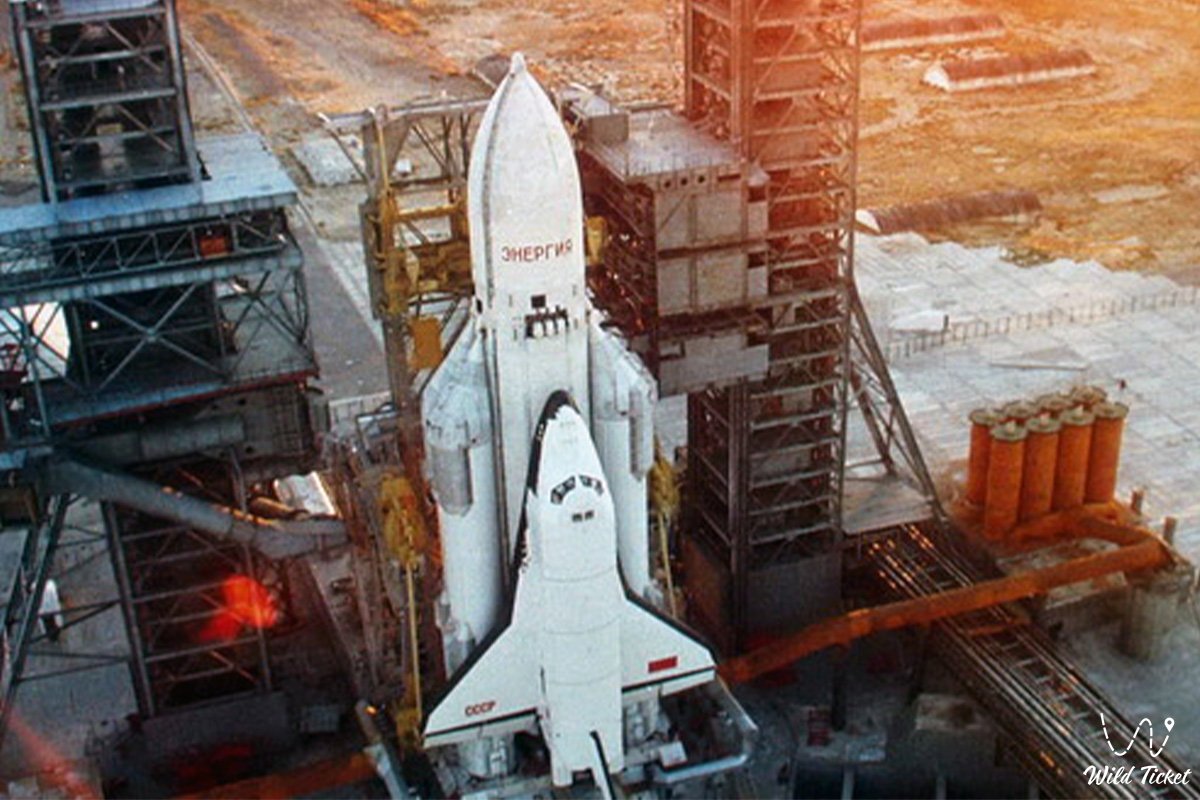
The second life of the pad began in the 1980s, when the complex was deeply modernized for the needs of the Energia-Buran system. On November 15, 1988, Pad No. 110 witnessed the historical, only successful flight of the Energia rocket with the Buran orbital spacecraft. Since the 1990s, the facility was decommissioned and mothballed, going through periods of oblivion and partial loss of valuable equipment.
Information
Pad No. 110 is designed for receiving, preparing, and launching super-heavy launch vehicles. The main systems of the complex provided pre-launch servicing, automated fueling, and compressed gas supply. The infrastructure includes powerful cooling systems for gas exhaust trenches, capable of withstanding the colossal load from the first-stage engines. The rocket was delivered to the launch positions from the assembly and testing building on specialized transport and erector units along a double-track railway.
Detailed description of the venue
• Launch pads: two massive concrete platforms designed to ensure stability and flame diversion during the launch of giant rockets.
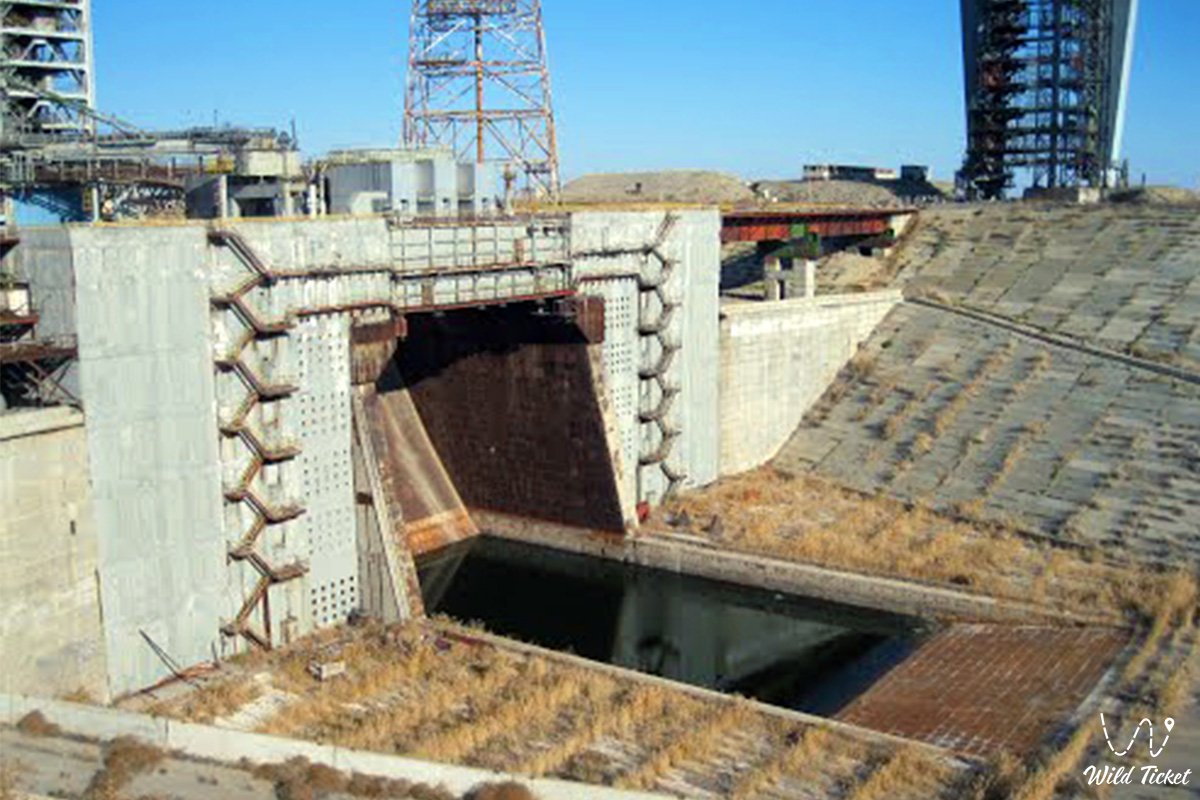
• Gas exhaust trenches: a complex system of engineering channels created to protect the infrastructure from the destructive impact of the jet stream.
• Transport infrastructure: a double-track railway line connecting the assembly and testing building with Pad No. 110 for delivering the rocket in a vertical position.
• Technological bunkers: fortified underground structures designed to house systems of management, control, and life support for the combat crew.
• Servicing overpasses: complex metal structures providing specialists with access to various tiers of the launch vehicle during the pre-launch preparation process.
Architecture
The architectural solution of Pad No. 110 represents a monumental combination of fortification reinforced concrete and industrial design. The huge distance between the two launch positions (about 500 meters) was laid down to ensure the survivability of the complex in the event of an emergency explosion of the vehicle at launch.
The deep underground burial of the main premises provides natural protection for equipment against shock waves and external climatic factors of the steppe zone. Massive concrete structures and steel overpasses became a reflection of the engineering style of the 1960s, where functionality and scale prevailed over aesthetic aspects.
Legend
Among the cosmodrome personnel, Pad No. 110 is known as the "sleeping giant." There is a legend that in the mothballed bunkers, a "ghost automation" – an autonomous electronics life support system that maintained the functionality of some instruments – continued to work for decades. Cosmodrome old-timers assure that at moments of launches of other rockets, a barely perceptible resonance was felt on the pad, as if the complex "responded" to each launch, reminding of its great past.
Conclusion
Pad No. 110 is not just the ruins of an industrial past, it is a true symbol of the titanic efforts of humanity in space exploration. Its scale and the history of failures, replaced by the triumph of the Buran, continue to attract the attention of researchers. Today, the facility is perceived as an important part of the technical heritage, demonstrating that the path to the stars requires not only breakthrough solutions but also the ability to learn lessons from mistakes.
Interesting sights nearby:
• Yubileyniy Airfield;
• Buran museum-spacecraft;
• Houses of Gagarin and Korolev;
• Baikonur Cosmodrome Museum;
• Gagarin's Start Pad No. 1 and Pad No. 31;
• Syr Darya River.
Photogallery: