The majestic image of Queen Tomyris on a giant bull as a symbol of nomadic freedom -
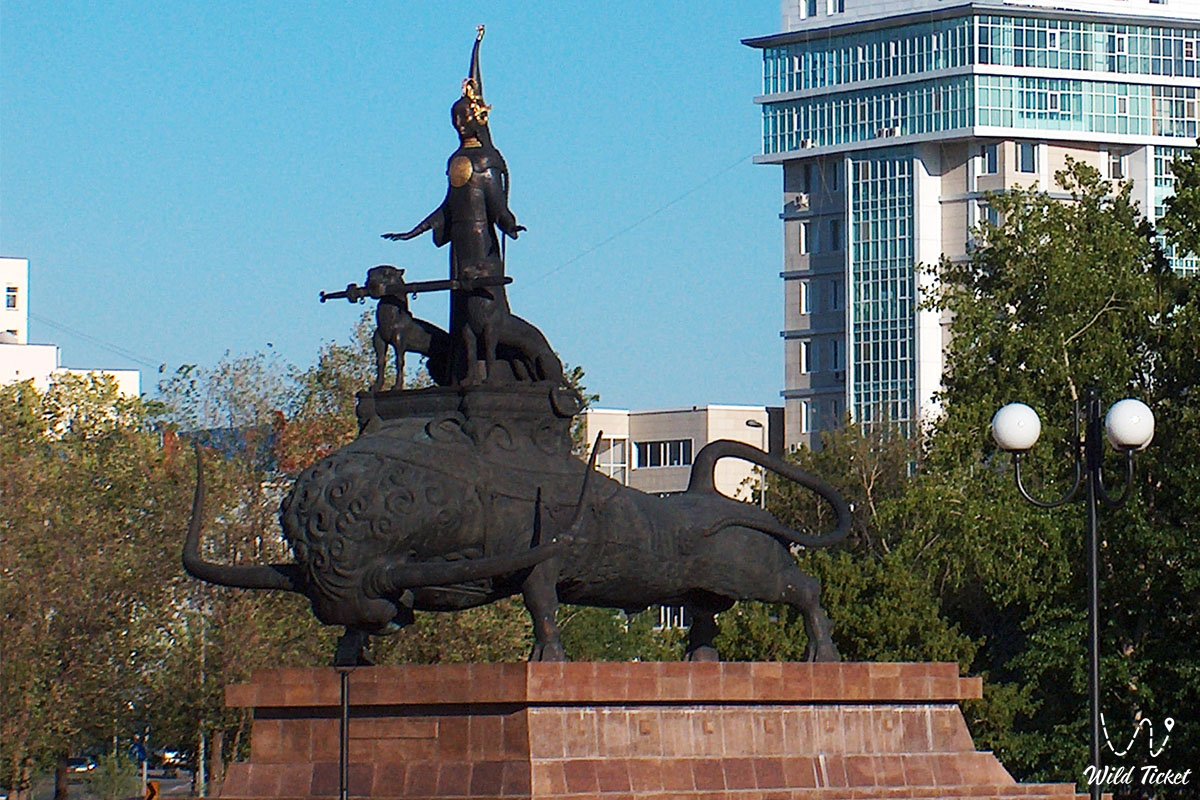
The sculptural group "Zher-Ana" (Mother Earth), opened on July 5, 2008, in Astana, is rightfully considered one of the deepest and artistically perfect monuments of the capital. Created by the world-famous sculptor Dashi Namdakov in collaboration with Sembigali Smagulov, the monument embodies the very matrix of nomadic civilization.
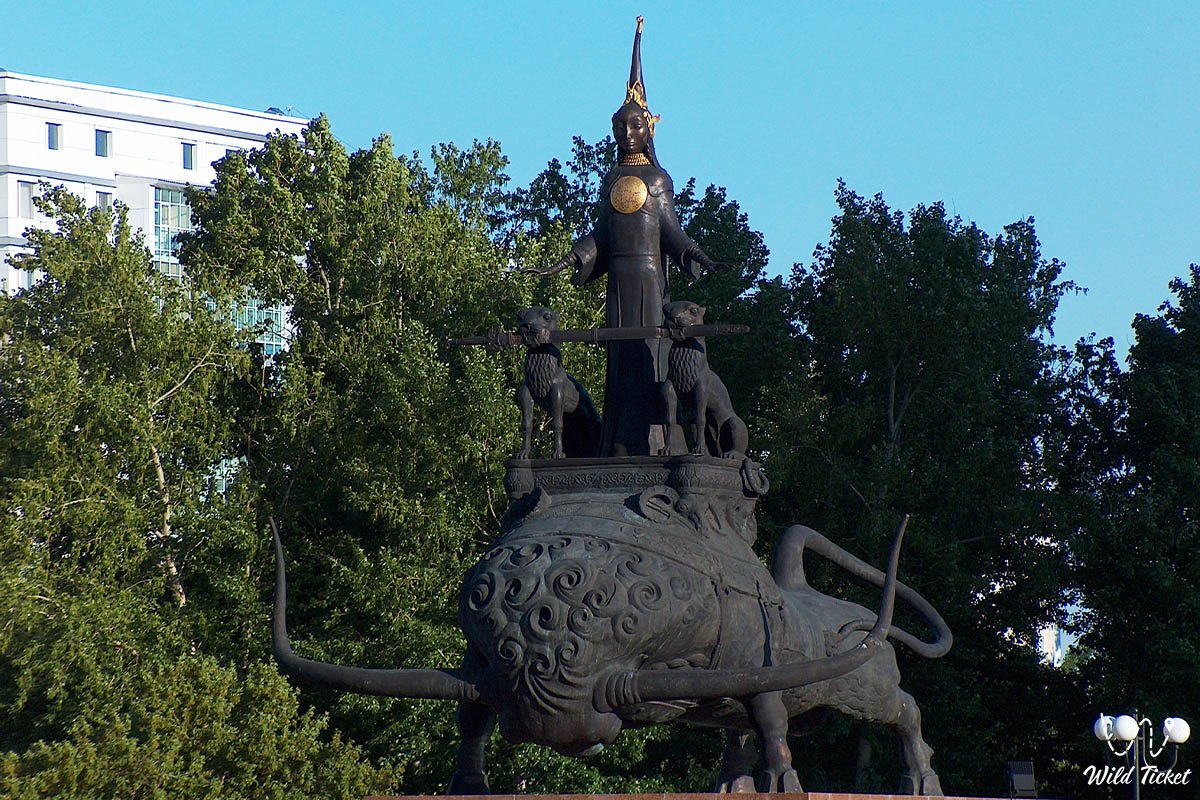
In the center of the composition is the legendary Saka Queen Tomyris, standing on the back of a colossal bull more than 10 meters long. This is not just frozen metal, but a living embodiment of liberty and vastness, where the massive figure of the animal is parallel to the endless steppe, and only the strong-willed face of the queen rises above the horizon. Near the composition is Ataturk Park, where you can relax and walk along the Ishim River embankment.
Despite its colossal size, the work strikes with almost jewelry-like detailing. Every fold of the cloth on the bull's back, the bundles, ropes, and ties are executed with such realism that the viewer is left with no doubt about the authenticity of the moment. Also near the monument is the Military-Historical Museum of the Armed Forces of the RK.
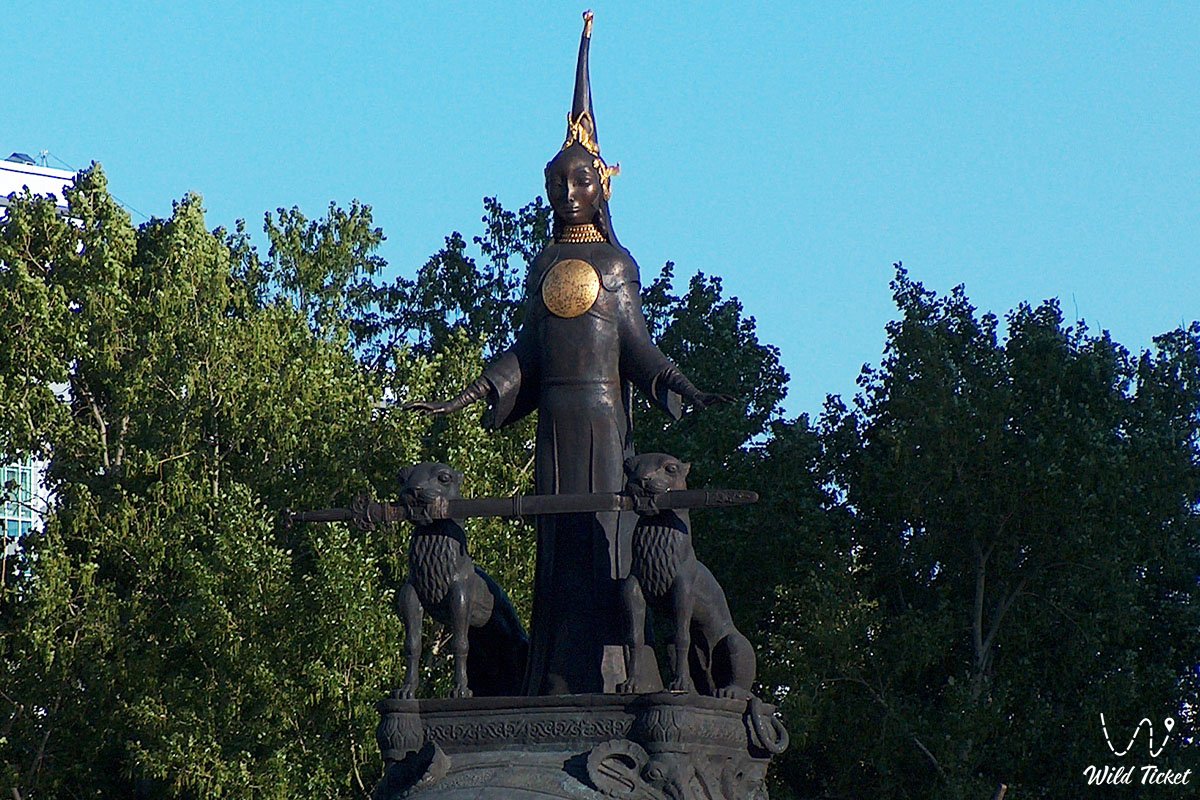
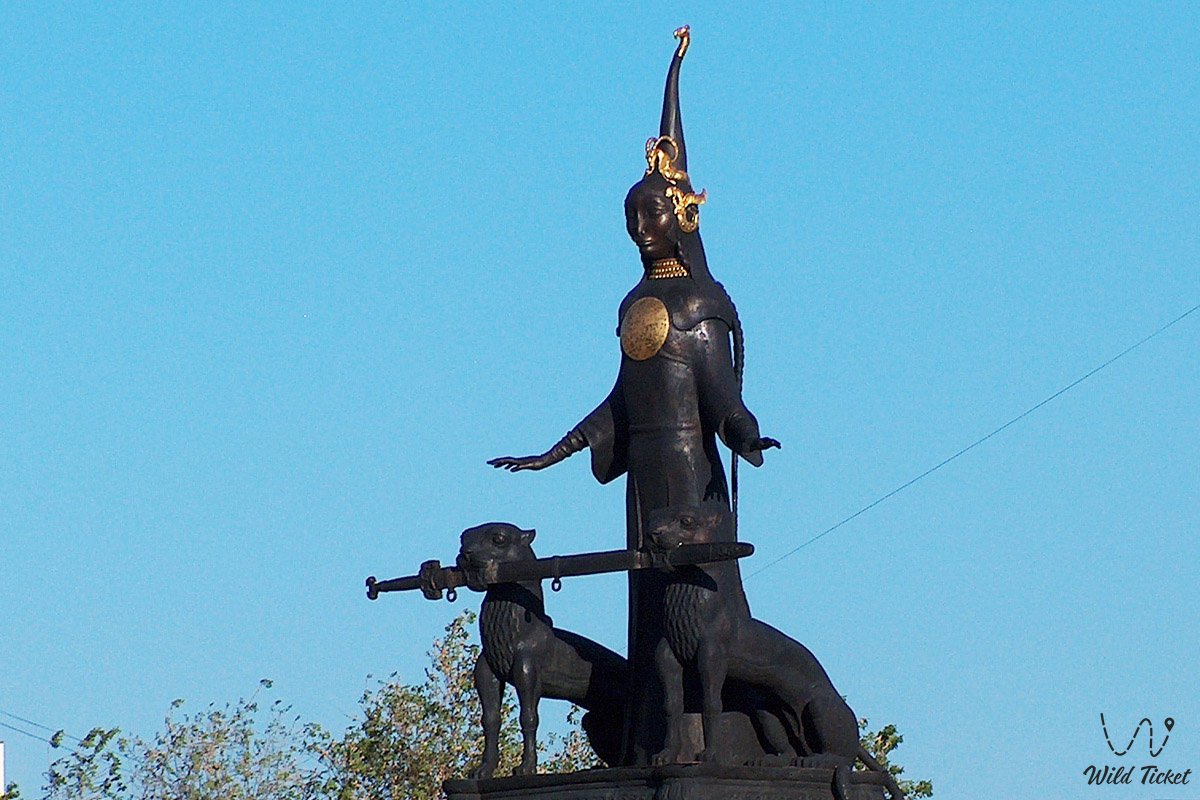
The sculpture is stylized after archaic monuments of the Near East, but at the same time carries Namdakov's unique authorial style – with elongated proportions and relief Mongoloid facial features, which gives it a mystical, sacred character.
---------------------------------------------
How to get there and visit -
The "Zher-Ana" Monument is located on the right bank of the Ishim River near Ataturk Park, Saryarka district, Astana city, Republic of Kazakhstan.
GPS coordinates: 51°09'12"N 71°25'54"E
You can reach the monument by buses: No. 807, 803, 70, 45, 44, 37, 31, 28, 25, 23, 20, 10, 3, 2, 1. The "Ataturk Park" or "Samal Microdistrict" stop will put you within a few minutes' walk of this grand composition.
---------------------------------------------
History
The appearance of "Zher-Ana" in 2008 was a world-class event in the field of monumental art. Sculptor Dashi Namdakov was able to move away from the canons of the old Soviet school and find a formula for the "nomadic mentality." The image of Tomyris was chosen as a symbol of the unification of the disparate Saka tribes into one of the first states on the territory of Kazakhstan.
The story of the queen is full of drama: she rejected the marriage proposal of the Persian King Cyrus for the sake of preserving her people's independence. In the decisive battle of 530 BC, where courageous Saka women fought side by side with men, the Persians were defeated. The legendary gesture of Tomyris, lowering Cyrus's head into a sack of blood with the words "You wanted blood, so drink it to the dregs!", forever inscribed her name in world history as a symbol of defiance and justice.
Information
The technical parameters of the monument impress even sophisticated architects. The span of the horns of the ten-meter bull is 7 meters — for comparison, an adult barely reaches the height of its limb. The entire sculptural group is cast from high-quality bronze and installed on a massive pedestal that emphasizes the stability and power of the Kazakh land.
Interestingly, "Zher-Ana" harmoniously complements the series of capital sculptures "Citizens" and other art objects, such as the "Artist" on the central square or the golden equilibrist at the circus. However, it is precisely Namdakov's work that carries a powerful sovereign projection, while remaining understandable and close to the people thanks to its sincerity and lack of "ceremonial" pathos.
Detailed description of the object
Upon detailed inspection, the incredible elaboration of textures catches the eye. The throne on which Tomyris stands and the two guardian leopards with swords create an atmosphere of reliable protection and divine patronage. The queen's face – sharp, with expressive cheekbones – personifies the spirit of freedom that does not leave anyone who finds themselves in Astana.
The massiveness of the bull, its calm and confident pose, symbolize Mother Earth herself, giving support to the nomadic state. This is a monument in which form is not shy of space, but literally merges with it, filling the steppe expanse.
Architecture
The architectural ensemble of "Zher-Ana" is a triumph of neo-shamanism and the Scythian "animal style." Stylization after ancient monuments of the Near East gives the monument a timeless status – it seems as if it has stood here for thousands of years.
Dashi Namdakov used deformation and elongation of lines to convey the dynamics and internal tension characteristic of his work. The harmony between the huge pedestal and the delicate details of the harness creates a sense of integrity that is rarely found in objects of such scale.
Legend
Among the townspeople, there is a belief that Tomyris and her leopards are the invisible guardians of the city. They say that if a person with pure thoughts fixes their gaze on the queen's face in the rays of the rising sun, they will gain wisdom for making a fateful decision.
Another legend says that the horns of the giant bull are antennas connecting heaven and earth, and that is why a surge of strength and energy is always felt in the area of the monument.
Lovers come here to ask Zher-Ana for a blessing to create a strong family, believing that the power of the ancient bull will protect their union from any of life's storms.
Interesting sights nearby:
• Amphitheater on the Esil River;
• Central Park;
• Capital Circus;
• Monument to Khan Kenesary;
• Atyrau pedestrian bridge;
• City beach on the Esil River;
• Monument to the Defenders of the Fatherland.
Additional information:
• Useful information about Astana;
• Where to go and what to see in Astana;
• Akmola region - information and photos.
Photogallery: