Unique sacred architectural complex in Kazakhstan -
Beketay Mausoleum is an original memorial and natural ensemble located on the right bank of the Syr Darya River in the Aral district of the Kyzylorda region. This grandiose sacred site dates back to the 19th century and catches the attention of pilgrims with its profound spiritual content, being located in the center of a gentle hill in the northern part of an ancient necropolis. The Small Aral Sea is located 20 kilometers away from the mausoleum.
The construction of this sacred space, included in the state list of historical and cultural monuments of national significance, took place as part of the preservation of the historical heritage of the Aral region. The structure is located in the middle of harsh steppe expanses, 384 meters northeast of the Beketay winter settlement, 4-5 kilometers southwest of Akkulak village, and 5-5.1 kilometers northwest of Zhanakurylys village. Not so far from the mausoleum is Lake Kamystybas (Kambash).
Today, this mausoleum is considered one of the most revered places for pilgrimage tourism, spiritual solitude, and photo tours to the Aral Sea. The surrounding territory, consisting of raw brick burial fences, attracts researchers from all over the world, creating a single landscape axis with historical routes and sharply contrasting with the steppe horizons of the right bank of the Syr Darya. It is best to travel here from the city of Aralsk, where you can rent a jeep for a trip to the mausoleum.
---------------------------------------------
How to get there and visit -
Beketay Mausoleum is located on the right bank of the Syr Darya River, 4 km southwest of Akkulak village (5 km northwest of Zhanakurylys village), Aral district, Kyzylorda region, Republic of Kazakhstan.
GPS coordinates: 46°03'06"N 61°16'57"E
The transport logistics of this wild region completely exclude urban public transport. No regular buses or city taxi services operate here. You can reach the mazar exclusively as part of organized expeditions or on your own from the city of Aralsk.
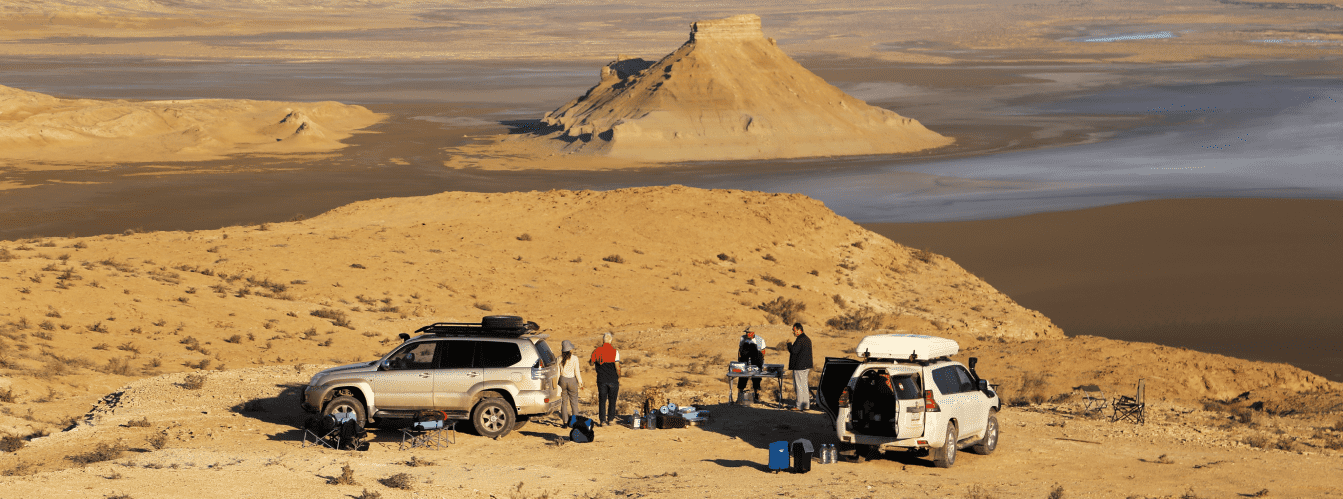
Only a prepared four-wheel-drive SUV is suitable for the trip, as difficult steppe, dirt, and sand roads lead to the monument, requiring off-road driving experience. Drivers must carry an additional supply of fuel, drinking water, navigators, and satellite communication devices.
Opening hours: The territory of the monument is open for visits around the clock and all year round. Access to the adjacent territory is completely free; there are no ticket offices, admission fees, or paid checkpoints here.
It is recommended to plan a trip to this region for the spring or early autumn period to avoid the extreme summer heat and sandstorms. All tent camps and parking sites are organized by tourists independently under expedition conditions, adhering to the respectful rules of conduct on the territory of cult sites.
---------------------------------------------
History
The history of this sacred place goes deep into the 19th century and is inextricably linked with the ancient Alim clan. As evidenced by the records of researchers from the words of local old-timer Kulseit Orazaliyev (born in 1913), the unique Beketay Mausoleum was custom-built by the order of the deceased's eldest daughter – Akzharkyn, who was widely known in this rural area. She personally organized the delivery of construction materials for the mazar from Kazaly, entrusting the responsible work to a famous local master named Nurymbet-usta. The mausoleum became a place of mass worship immediately after its construction, symbolizing the deep respect of nomads for their spiritual ancestors.
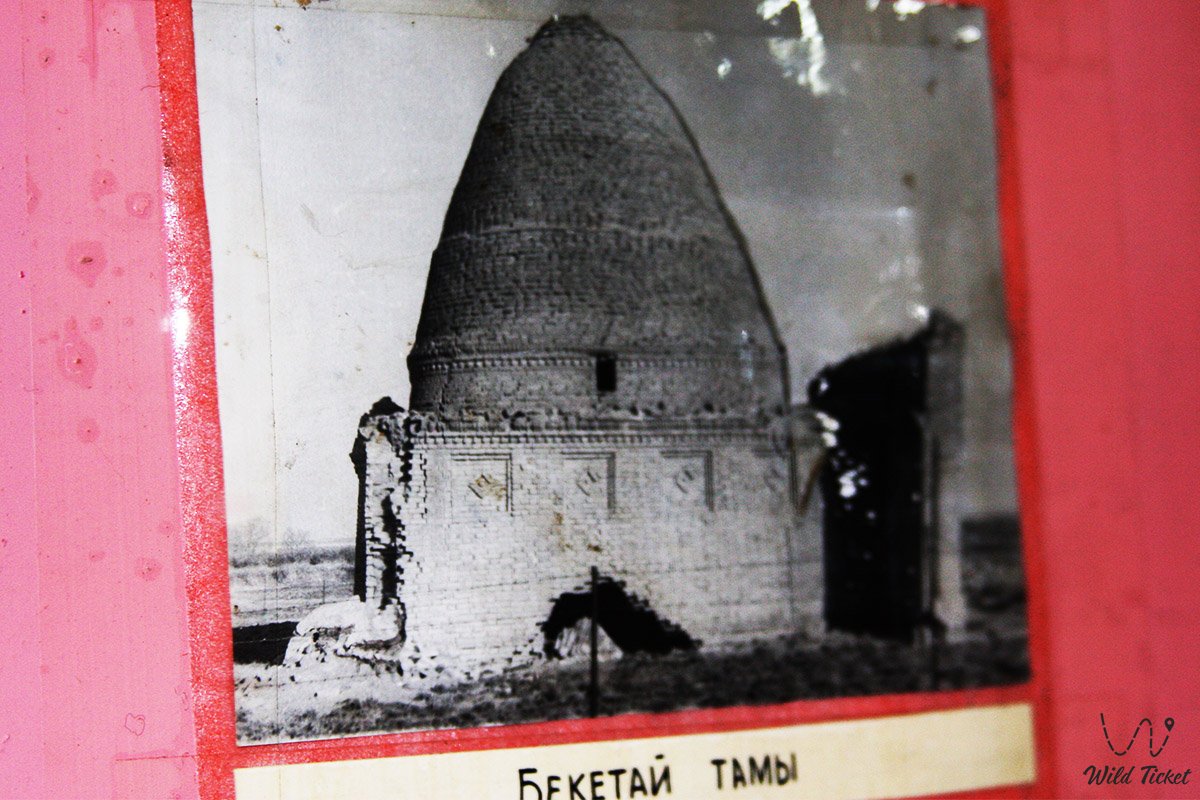
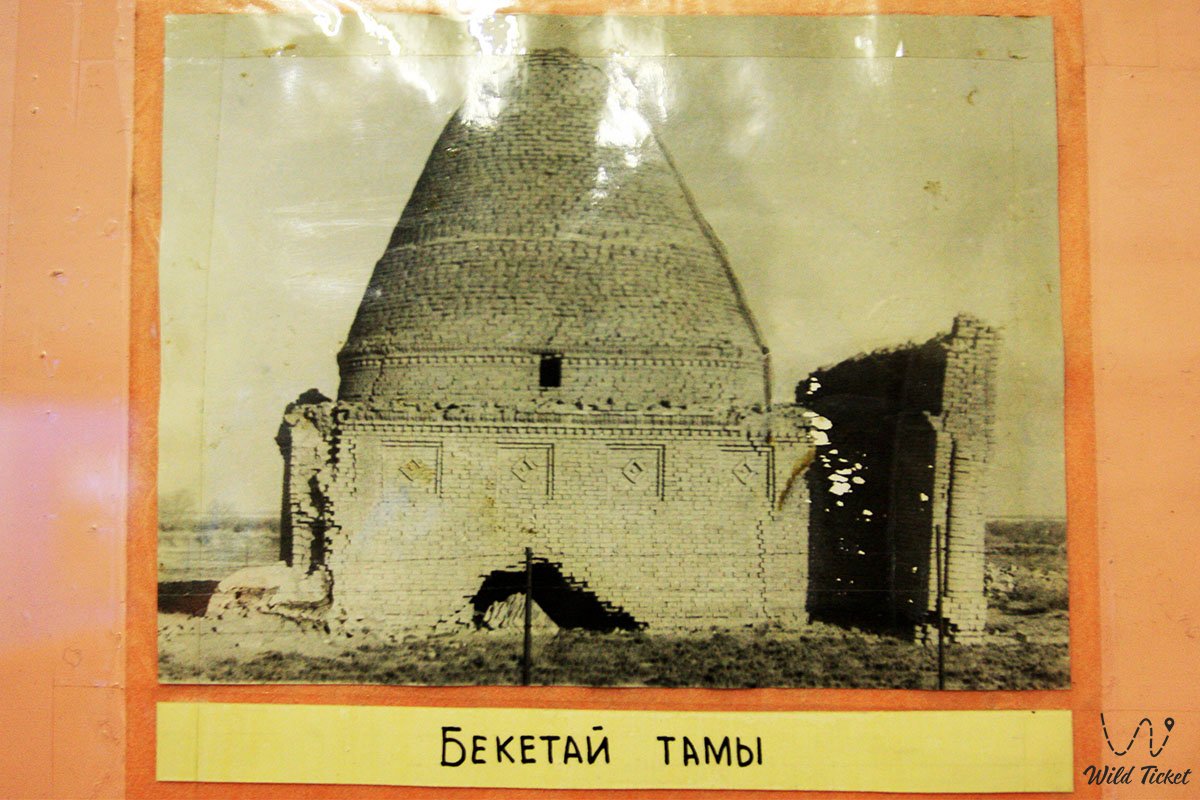
Time and the harsh climate have not spared this magnificent monument of architecture: despite the state reconstruction carried out earlier, today the site is rapidly deteriorating.
Due to the colossal weight of the fired bricks, large deep cracks have appeared in the load-bearing walls, the brickwork is gradually sagging, and most of the decorative elements have crumbled. Of the four corner domed towers that decorated the facade, three were completely destroyed by storms and time, and only the eastern part of the structure has survived to this day in relative order. Nevertheless, the folk path here does not overgrow, and the mazar remains an essential element of the cultural identity and sacred geography of the Kyzylorda region.
Information
Beketay Mausoleum is organized as a complex T-shaped domed space with a base size of about 8 by 8 meters, divided into two functional chambers – an entrance corridor and a burial vault. Excellent conditions are created here for performing traditional Muslim rituals, reading commemorative prayers, and solitary contemplation. Inside the burial chamber, according to the memories of narrators, a massive tombstone made of a rare blue stone stood 30–40 years ago, but over time it was irretrievably lost. The corridor is illuminated through a small narrow window cut into the northwestern side wall.
Historians pay special attention to preserving the unique decorative elements of the interior: the bases of the internal arches are decorated with elegant arched grooves in the form of rhythmic rows of protruding bricks and a special rod. Above the level of the niches, these rows twist into sharp geometric figures, precisely repeating the archivolts of the arches and creating the main distinguishing feature of the monument.
Guides strongly recommend that visitors maintain strict silence, respect the peace of the sacred necropolis, do not leave garbage, and move along the hill with caution so as not to damage the crumbling historical masonry.
Detailed description of the venue
The well-thought-out infrastructure of the memorial complex includes the following original locations and geographical features:
• Four-sided orientation of the necropolis – the external corners of the mazar are strictly oriented to the four cardinal points, linking the burial architecture with the ancient cosmogonic ideas of the nomads.
• Elongated main portal – the southwestern wall of the entrance room, made in the form of a monumental wall, which is significantly wider and higher than the main room and projects far beyond its limits.
• Entrance corridor-lobby – a narrow T-shaped room with a side entrance oriented to the southeast, serving to prepare pilgrims for the ritual of worship.
• Central burial chamber – an internal crypt, the entrance to which is located exactly in the middle of the northeastern wall of the corridor, where the blue stone tombstone previously rested.
• Preserved eastern tower – the only surviving decorative pilaster of the four facade towers, allowing one to appreciate the original design of master Nurymbet.
Architecture
The architectural solution of the mausoleum is based on the principles of medieval steppe architecture with the delicate integration of unique ornamental belts. The massive quadrangular volume of the building is crowned by a large domed roof, reaching a height of 7 meters together with the base. The highlight of this landscape architecture is the precise elegance with which the base of the dome is separated from the walls of the chamber by rows of decorative protrusions, complicated by special "dried" bricks of a contrasting yellow color. At the very top of the dome, an exquisite decorative belt of fired brick is installed. The architectural ensemble blends harmoniously into the harsh landscape of the Aral region, being an exact copy of the nearby Basibek Mausoleum, which was built slightly later but does not have a domed roof.
Legend
Among local residents, pilgrims, and expedition guides, an ancient saying lives on, which is often associated with spiritual quests on the way to the Beketay mazar: “No one will ever achieve a high position without the help of three things: either through personal labor, or by spending property, or through damage in faith.”
Old-timers say that the harsh steppe roads to the mausoleum test every traveler for the sincerity of their intentions, requiring both hard labor and material costs for preparing an SUV.
Another legend is connected with the lost blue stone tombstone: it is believed that this stone possessed an amazing healing power, and if a person with pure thoughts touched it, all diseases retreated, and the family clan received a powerful blessing and protection from steppe dzhuts.
Conclusion
Beketay Mausoleum is a magnificent spiritual bridge connecting the deep folk memory of past centuries with the modern quests of pilgrims in the Aral region. A visit to this landscape and cultural monument allows guests of the Kyzylorda region to touch the origins of national history and feel the grandeur of steppe traditions.
The mausoleum remains the main reference point for sacred and pilgrimage tourism in the Aral region. Expedition routes definitely include this point in their programs, allowing everyone to fill their day with deep meaning and serenity.
Interesting sights nearby:
• Barsakelmes Nature Reserve;
• Barsakelmes Island;
• Karateren village;
• Bogen village;
• Kokaral Dam;
• Zhankent ancient settlement;
• Kazalinsk village (Ayteke Bi);
• Amanotkel village.
Photogallery: