Unique walking route with copies of ancient monuments -
Ulytau Alley is assigned the role of an ethnocultural center connecting the modern capital Astana with the historical heart of the country. This space of 1.2 hectares located in the Yesil district was opened on July 2 2018 as a gift from the Karaganda region for the 20th anniversary of Astana.
Located in close proximity to the Astana Botanical Garden and the Astana Arena Stadium the alley is an open-air museum where every element is dedicated to the sacred Ulytau region – the cradle of the Kazakh people and the first headquarters of the Golden Horde.
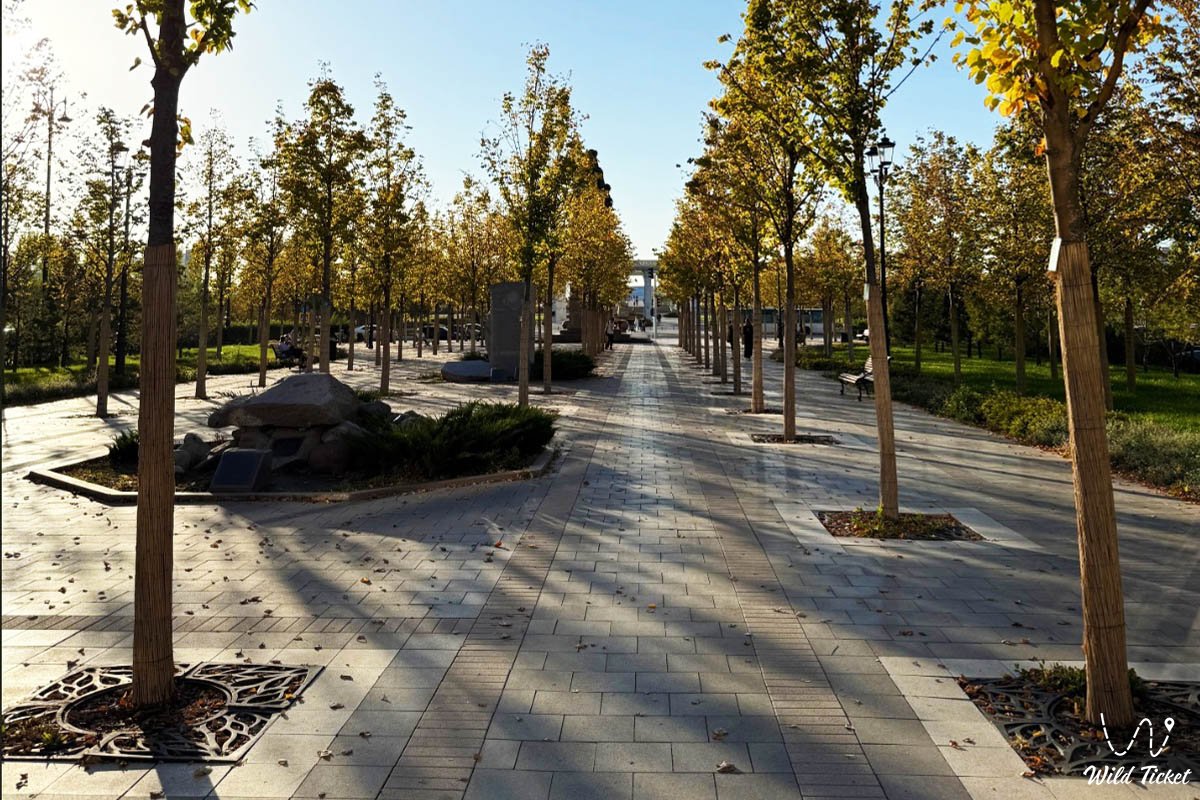
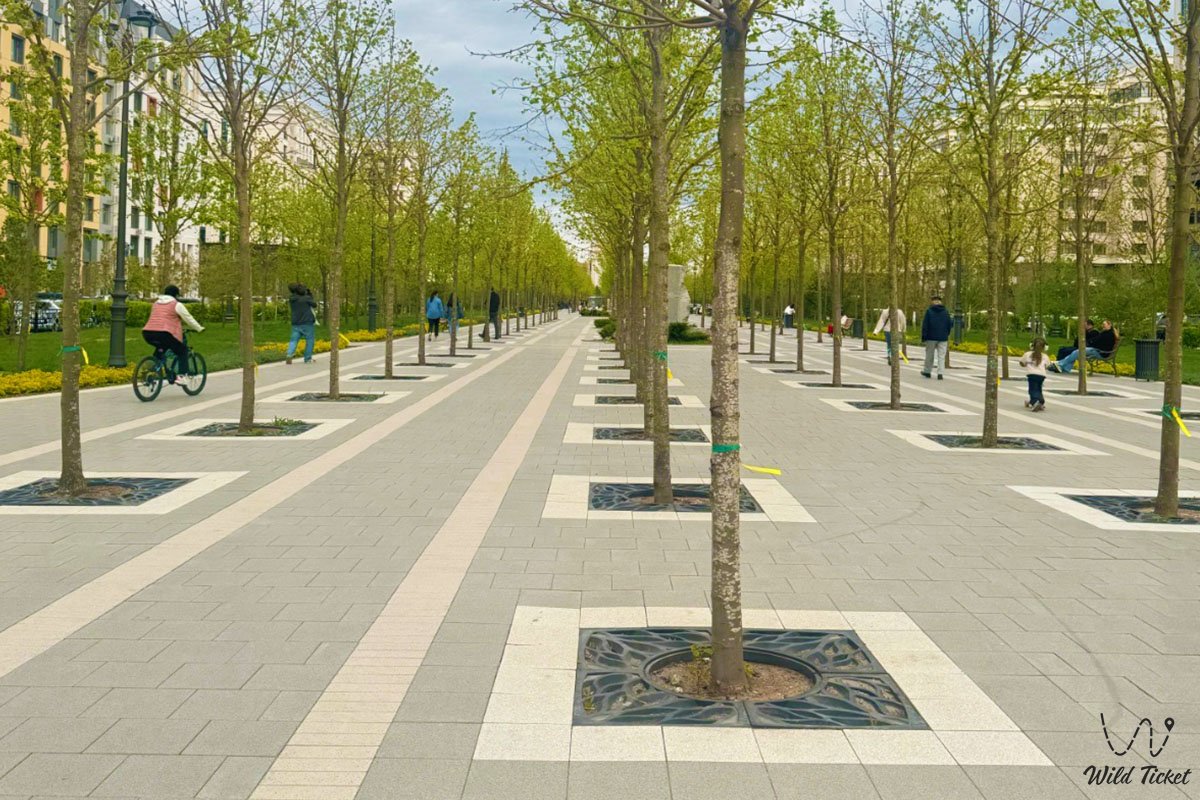
The place impresses with its semantic richness and detail. The 55-meter wide alley runs between Mangilik El Avenue and Turkestan Street linking Linear Park and the square near the Alau Ice Palace. According to the idea of architect Serik Rustambekov sacred objects have been recreated here: from the Terekty-Aulie petroglyphs to the Milykuduk copper smelting furnaces.
This space was created so that residents and guests of the left-bank metropolis could touch the history of Khan Ordasy and the great victories of the steppe within walking distance of Abu Dhabi Plaza Mall.
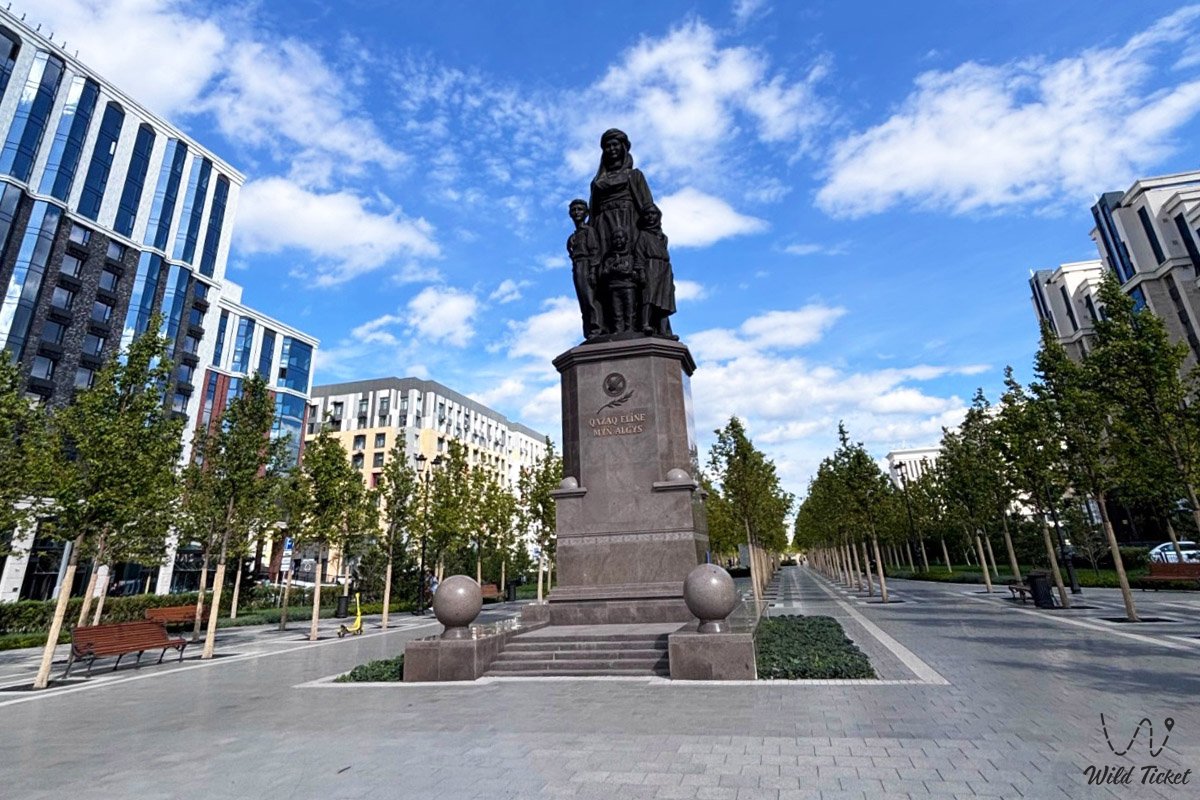
The alley is an important link in the capital's tourist route where modern urbanism meets ancient traditions. The central object of the complex is the Gratitude to the Kazakh People monument located on the Turkestan Street side.
A walk along the alley allows you to see sculptures of saigas and a copy of Tamerlane's stone from Altynshoky peak which emphasizes Astana's status as a city that deeply respects the cultural heritage and historical memory of ancestors.
---------------------------------------------
How to get there and visit -
The alley is located in the square of new administrative quarters being a pedestrian continuation of the zones leading to the Triumphal Arch and the Botanical Garden left bank of the Esil River Yesil district Astana city Republic of Kazakhstan.
GPS coordinates: 51°06'17"N 71°25'35"E
You can reach the alley by buses following to the stops Triumphal Arch Arman Kala Residential Complex or Botanical Garden. Routes numbered 15, 15A, 18, 35, 43, 46, 47, 54, 70, 802, 806 lead here.
Entrance to the territory is free the alley is open for visiting at any time of the day.
---------------------------------------------
History
The history of Ulytau Alley began in 2018 with the initiative of residents of the Karaganda region to give the capital an object symbolizing the spiritual origins of the nation. The place was not chosen by chance: Ulytau translates as the Great Mountain and is the region where the Kazakh Khanate was formed in 1465 and where the residences of Jochi Khan and Batu were located. The alley became an attempt to transfer the energy of this sacred land where the founders of the Golden Horde rest to modern Astana.
The project was developed by honored architect Serik Rustambekov. The main idea was to create an educational space where modern citizens could get acquainted in miniature with the greatest monuments of Central Kazakhstan. Since its opening the alley has become a popular place for recreation and events dedicated to the Day of Gratitude (March 1) reminding of the mercy and hospitality of the Kazakh land.
Information
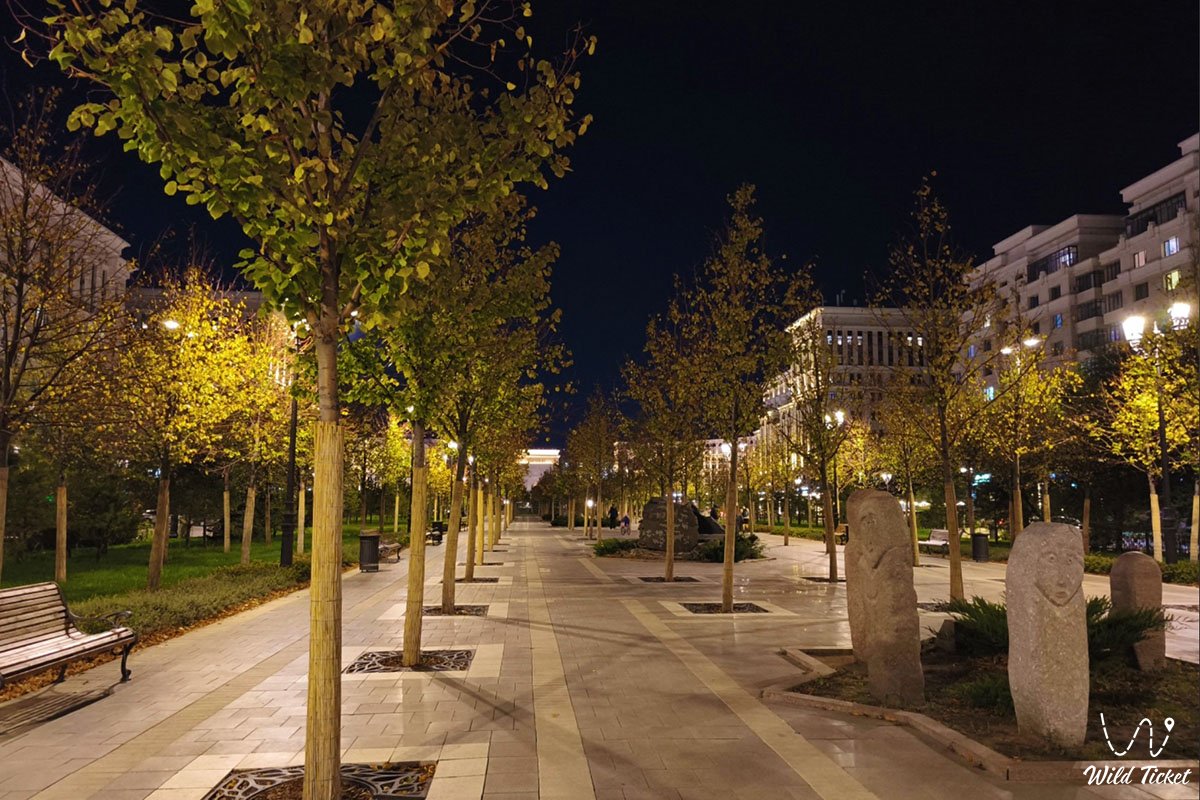
Ulytau Alley has a length of 250 meters and a width of 55 meters. Archaeological mini-copies of monuments are installed on its islands: petroglyphs of Terekty-Aulie and Baikonur stone statues – balbals as well as reproductions of ancient copper smelting furnaces. One of the key points is the Khan Ordasy point – a place symbolizing the inauguration of khans through lifting on a white felt mat. The name of the alley and quotes about Ulytau are carved on a monument made of a rare sacred stone – jadeite.
A special place in the exhibition is occupied by sculptures of saigas – the oldest inhabitants of the steppe. Also presented here is a copy of a stone with an inscription by Amir Timur the original of which was found on Altynshoky peak.
The alley's infrastructure includes high-quality paving benches for rest and well-thought-out lighting. The complex is crowned by a 13-meter bronze monument Gratitude to the Kazakh People by sculptor Renat Abenov and architect Samat Rustambekov.
Detailed description of the object
A walk along the alley begins from Mangilik El Avenue and leads to the Botanical Garden. Along the route visitors see engravings on stones reflecting the life and hunting scenes of primitive people. The sculptural composition Gratitude to the Kazakh People depicts a Kazakh woman embracing children of different nationalities (Caucasian European and Korean) symbolizing the salvation of deported peoples during the years of repression.
In the evening the alley is illuminated emphasizing the texture of the stone and bronze figures. The presence of children's and sports grounds in Linear Park which actually continues with this alley makes the zone comfortable for family leisure. The proximity to the Triumphal Arch allows tourists to combine a historical excursion with a tour of the main architectural landmarks of the left bank.
Architecture
The architecture of Ulytau Alley is made in the ethno-modern style. The combination of natural granite bronze and rare jadeite emphasizes the solemnity and sacredness of the place. The layout of the territory is axial which creates a clear pedestrian corridor. The bronze group of the Gratitude to the Kazakh People monument was cast by specialists of the Karaganda Art Plant which guarantees the high quality of execution of every detail.
Legend and conclusion
It is believed that the jadeite stone on the alley has a special power as in ancient times this mineral was valued higher than jade and was considered sacred.
Ulytau Alley in Astana is a living book of Kazakhstan's history under the open sky. It teaches to remember one's roots and honor the hospitality of ancestors.
This place is a must-visit for everyone who wants to feel the spirit of the Great Steppe and understand why Ulytau is called the cradle of the nation.
Interesting sights nearby:
• Nazarbayev Center;
• “Alau” Ice Palace;
• “Qazaqstan” Track and Field Complex.
• Grand Republican Mosque;
• National Space Center;
• Open-Air Space Museum;
• MEGA Silk Way Shopping and Entertainment Center;
• Nazarbayev University.
Additional information:
• Useful information about Astana;
• Where to go and what to see in Astana;
• Akmola region - tourism and travel.
Photogallery: