Largest synagogue in the region, a symbol of interethnic harmony -
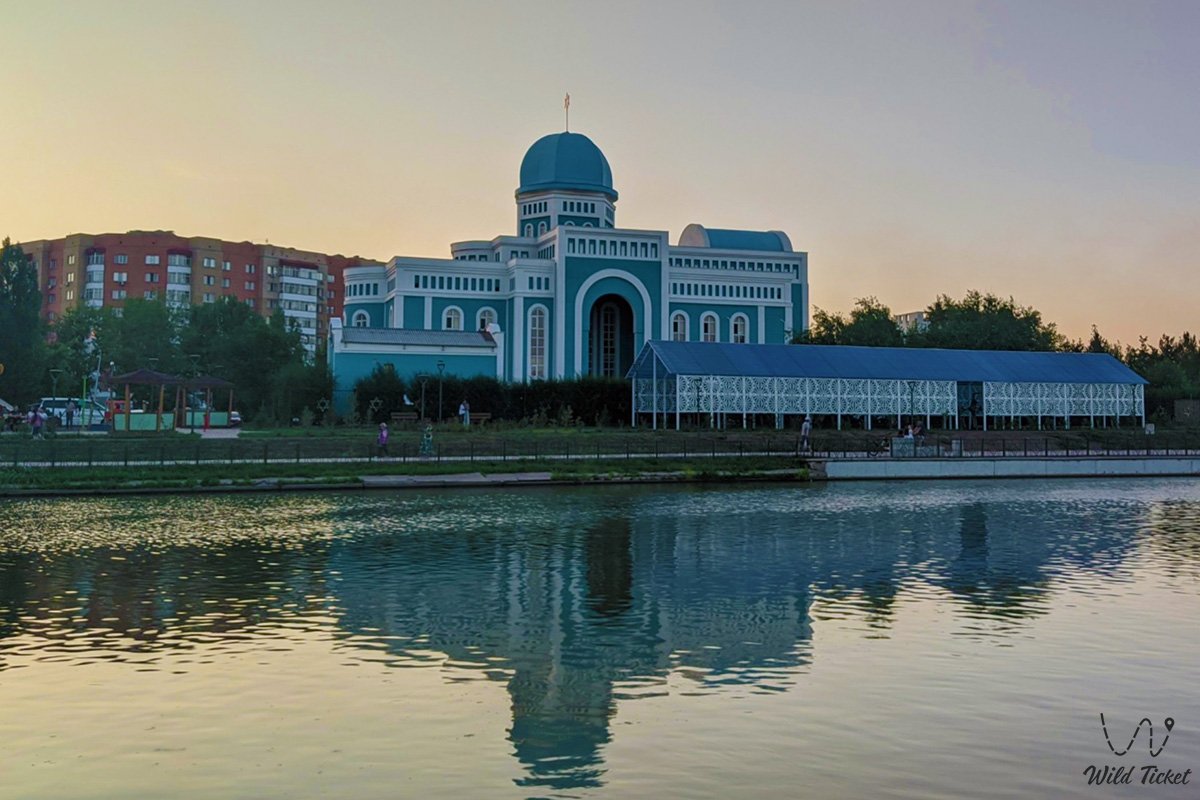
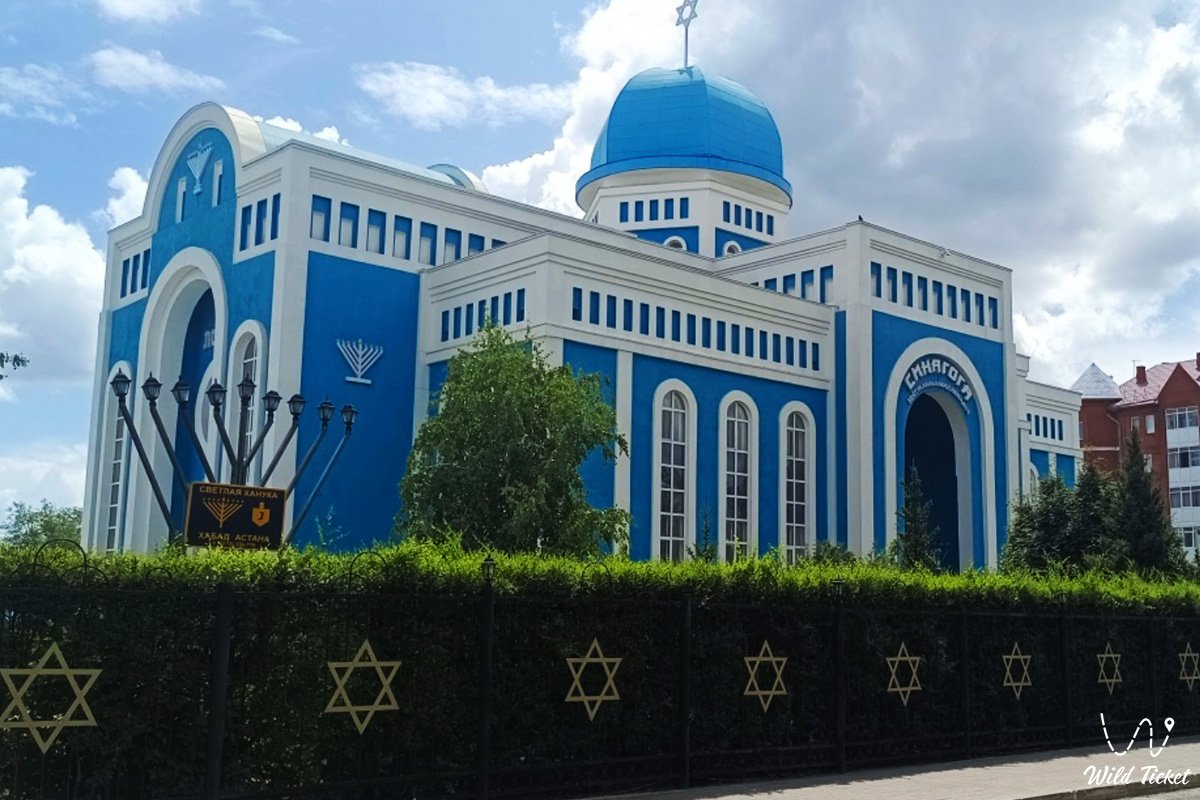
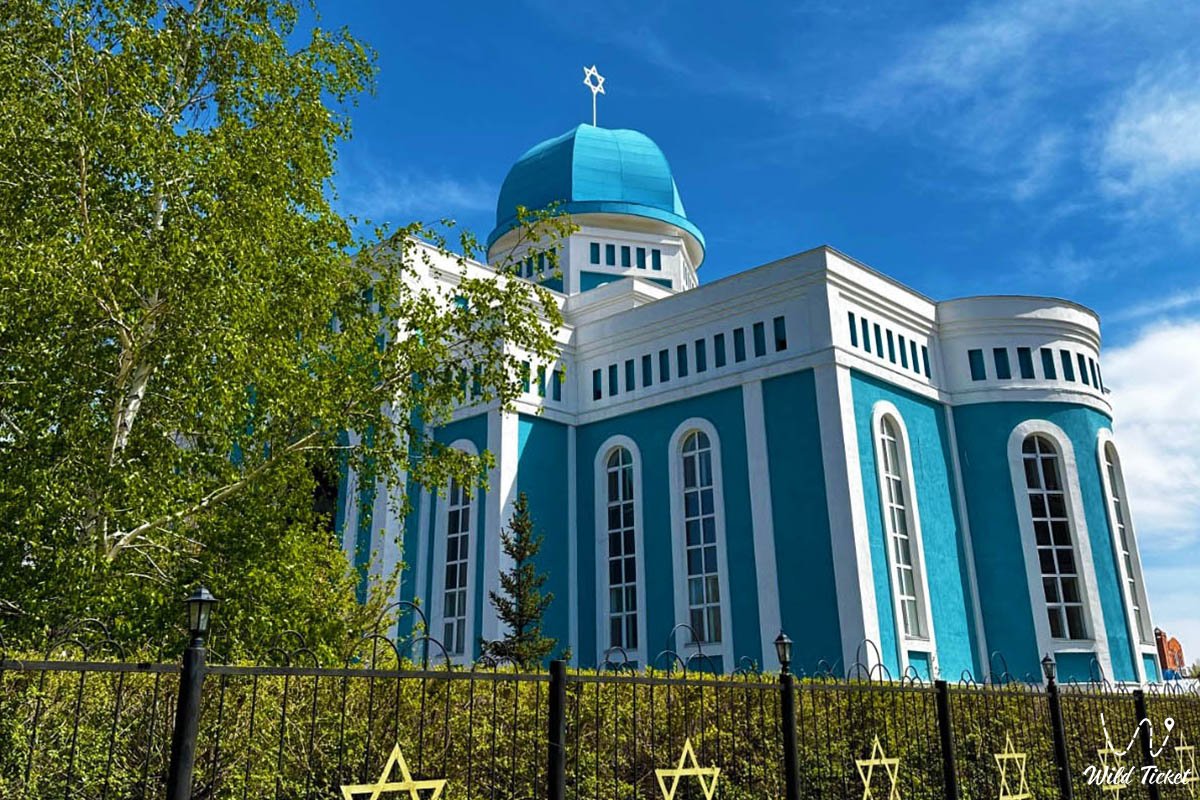
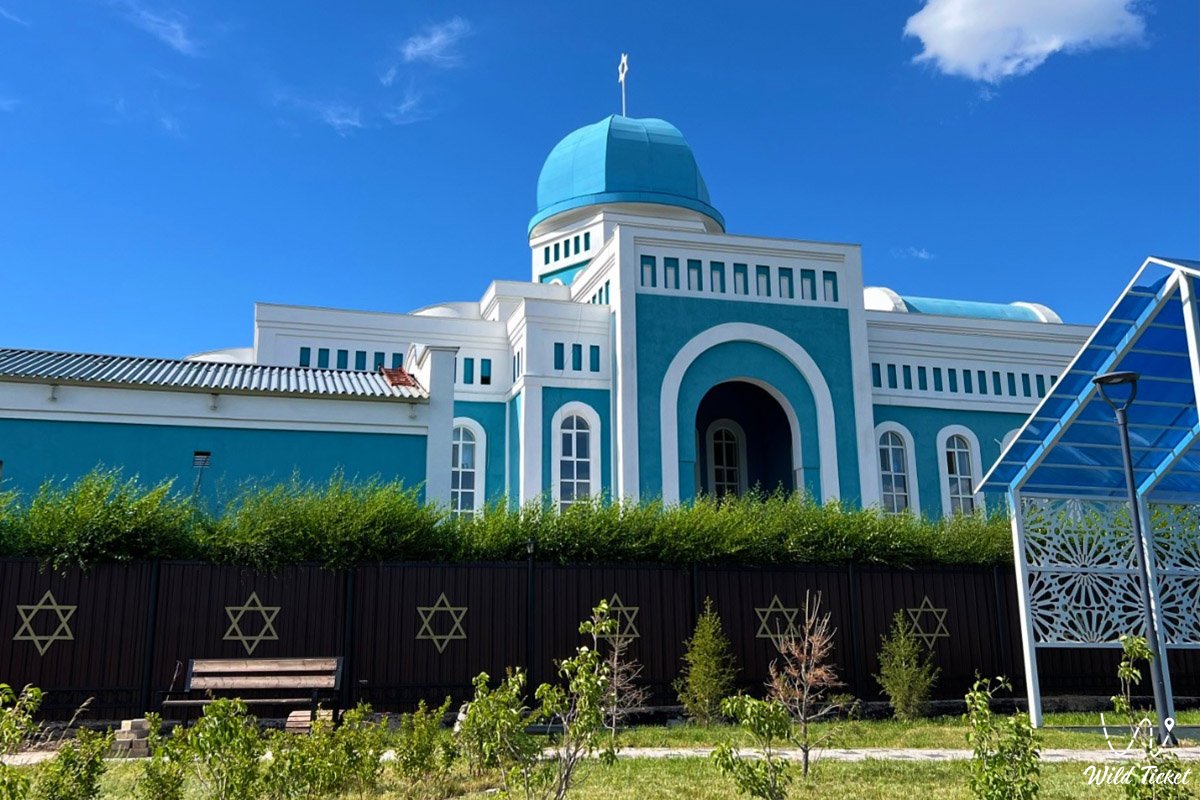
Beit Rachel Chabad Lubavitch Synagogue is a unique architectural and spiritual site in the city of Astana. The building, opened in 2004, stands out with its majestic light blue appearance and the golden Star of David on the roof. It was named after Rachel Joffe, mother of Alexander Mashkevich.
This center serves as a place of prayer and cultural unification for the capital's Jewish community. The capital Astana, through this parish, demonstrates an example of tolerance and freedom of religion, where the traditions of an ancient people are harmoniously integrated into the cityscape.
The building occupies an important place in the cultural landscape of the right bank. In the immediate vicinity of the synagogue flows the Akbulak River, and the Church of St. Joseph the Betrothed is located nearby. Very close is the Monument to the Defenders of the Fatherland and the picturesque Ataturk Park, making a visit to the synagogue part of an important historical and patriotic route for which the capital Astana is famous.
The architectural ensemble of the synagogue with its well-kept territory has become an iconic part of this district. The capital Astana carefully preserves this site as a place where everyone can touch centuries-old wisdom and traditions in a city that in 1999 received the UNESCO "City of Peace" title for religious tolerance. A 15-minute walk from the synagogue is the philosophical Zher-Ana monument, the embankment of the Esil River, and the futuristic Atyrau pedestrian bridge.
---------------------------------------------
How to get there and visit -
Beit Rachel Chabad Lubavitch Synagogue is located at the address: 8 Alexander Pushkin Street, Almaty district, right bank of the Esil River, near the Akbulak canal, Astana city, Republic of Kazakhstan.
GPS coordinates: 51°09'26"N 71°27'42"E
Transport accessibility of the site is very convenient. Buses arrive at the nearest stop "Grebnoi Kanal" in the following order: No. 30, 60, 73.
For motorists, free parking zones are provided near the building and along Pushkin Street. Also, to reach the synagogue, you can use taxi services through a special mobile application.
Operating mode: Monday – Friday, Sunday from 09:00 to 18:00. Saturday – closed (Shabbat).
Entrance for visitors may be restricted for security purposes; it is recommended to check visiting rules in advance.
Contacts: +7 7172 37 67 72; +7 7172 37 67 70
www.chabadkz.org
---------------------------------------------
History
The history of the Jewish people in Kazakhstan began with the recruit soldiers of Nicholas I, who were sent to the furthest corners of the empire. Initially, they settled in Verny (Almaty), but by 1910 in Akmolinsk (Astana), there were already 154 Jews — doctors, pharmacists, and business owners. In the 20s and 30s, the population grew due to participants of the five-year plans and exiles.
During World War II, Kazakhstan became a place of evacuation for thousands of Jews, many of whom remained here forever. The tragic stage of 1948–1953 brought a new wave of exile for the intelligentsia due to the struggle against "cosmopolitans." By the early 90s, about 20,000 Jews lived in the country, starting the revival of communal life.
The construction of the "Beit Rachel Chabad Lubavitch" synagogue took two and a half years and was completed in September 2004. The project was fully funded by the Euro-Asian Jewish Congress. The opening was marked by a unique event: for the first time in Astana's history, a Torah scroll written in Israel and donated by Mikhail Zaidman was brought into the temple. Since then, the synagogue has served a community of about 150 families, becoming a living monument to history and resilience.
Information
The area of the synagogue and the adjacent territory is 5,600 square meters. This is not just a house of prayer, but a multi-functional center. It includes separate prayer halls for men (on the first floor) and women (on the second floor), rooms for families to stay overnight during Shabbat, a library, and a dining hall where staff and parishioners eat. A special timer is even installed in the synagogue to automatically turn off the lights during Shabbat so that Jews do not violate the prohibition on work.
The sacred Torah scrolls kept here are taken out only three days a week and on holidays. Schools for studying the Torah (beit sepher and beit talmud) often operate at the synagogue, making it the educational core of the community. Five people work on staff, and not all of them are required to be Jewish. The life of the community is closely intertwined with the daily life of the rabbi's family, who live directly in the synagogue building. Visiting this place provides a complete picture of the Jewish lifestyle in the heart of Kazakhstan.
Detailed description of the object
The territory and interior of the synagogue include key locations:
• Men's prayer hall – a spacious room on the first floor, furnished with unusual tables and standard chairs for the convenience of reading sacred texts.
• Women's hall – located on the second floor, has a smaller area and overlooks the general domed space of the temple.
• Aron ha-Kodesh – a special cabinet for storing the Torah, containing scrolls whose parchment must be written with absolute clarity.
• Star of David – installed on the roof of the building; the height of the synagogue from the base to the top of the star is exactly 25 meters.
• Interior attributes – bookshelves with the Talmud, menorahs (seven-branched candelabras), wax candles, and a supply of kippahs for male visitors.
• Dining hall and recreation – a place for communal meals, where one can even find a foosball table belonging to the rabbi's children.
Architecture
The architectural appearance of the synagogue is a combination of modern monumentalism and religious symbolism. The pyramidal building, striving upward, is clad in light blue and white tones symbolizing the sky. The walls are decorated with ancient religious images and ritual signs.
The furniture inside is minimalist, devoid of ostentatious luxury, so that nothing distracts a person from talking with the Creator. The capital Astana received a building that harmoniously neighbors the Akbulak River, Ataturk Park, and the mosque, confirming the city's status as a center for interreligious dialogue.
Legend
A legend exists among parishioners that the Beit Rachel Synagogue possesses the ability to heal the soul of everyone who enters it with pure thoughts.
Another legend of the city of Astana is associated with the introduction of the first Torah scroll in 2004: it is said that at that moment, an extraordinary silence fell over the Rowing Canal, and sunlight flooded the building so that its blue walls seemed transparent.
They also believe that the light of the menorah in the synagogue windows on dark nights points the way to those seeking truth and peace in a turbulent world.
Conclusion
Beit Rachel Chabad Lubavitch Synagogue is a place where the history of generations and the modern rhythm of life connect. Visiting this complex allows for a deeper understanding of the cultural diversity of Kazakhstan.
Thanks to its proximity to Ataturk Park, the Esil embankment, and the Monument to the Defenders of the Fatherland, the synagogue is a mandatory point in a tourist route along the right bank. The capital Astana invites everyone to come to the banks of the Akbulak to feel the spirit of peace and unity that reigns within the walls of this largest synagogue.
Interesting sights nearby:
• Central Park;
• Triathlon Park;
• Monument to Khan Kenesary;
• Astana Arbat.
• Bauyrzhan Momyshuly Park;
• Monument to Bauyrzhan Momyshuly;
• Amphitheater on the Esil River.
Additional information:
• Useful information about Astana;
• Where to go and what to see in Astana;
• Akmola region - where to go for vacation.
Photogallery: