Spiritual shrine of the Turkic world and architectural symbol of immortality -
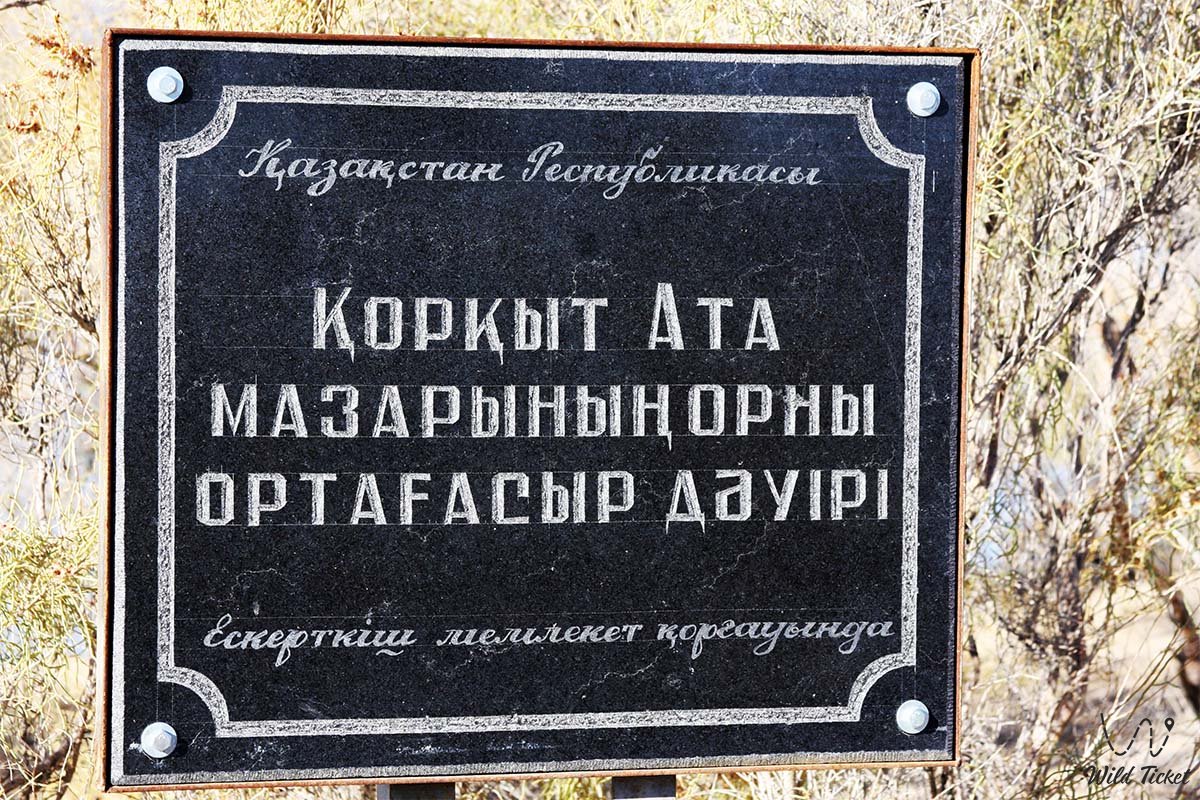
The Korkyt Ata Mausoleum (burial site) represents an outstanding historical, cultural, architectural, and sacred ensemble dedicated to the legendary thinker, poet, composer-kuyshi, and spiritual mentor of the Turkic peoples, Korkyt, who lived in the 8th–9th centuries AD. The monument is located in the Karmakshy district of the Kyzylorda region of Kazakhstan, in direct proximity to the channel of the Syr Darya River and the Josaly railway station.
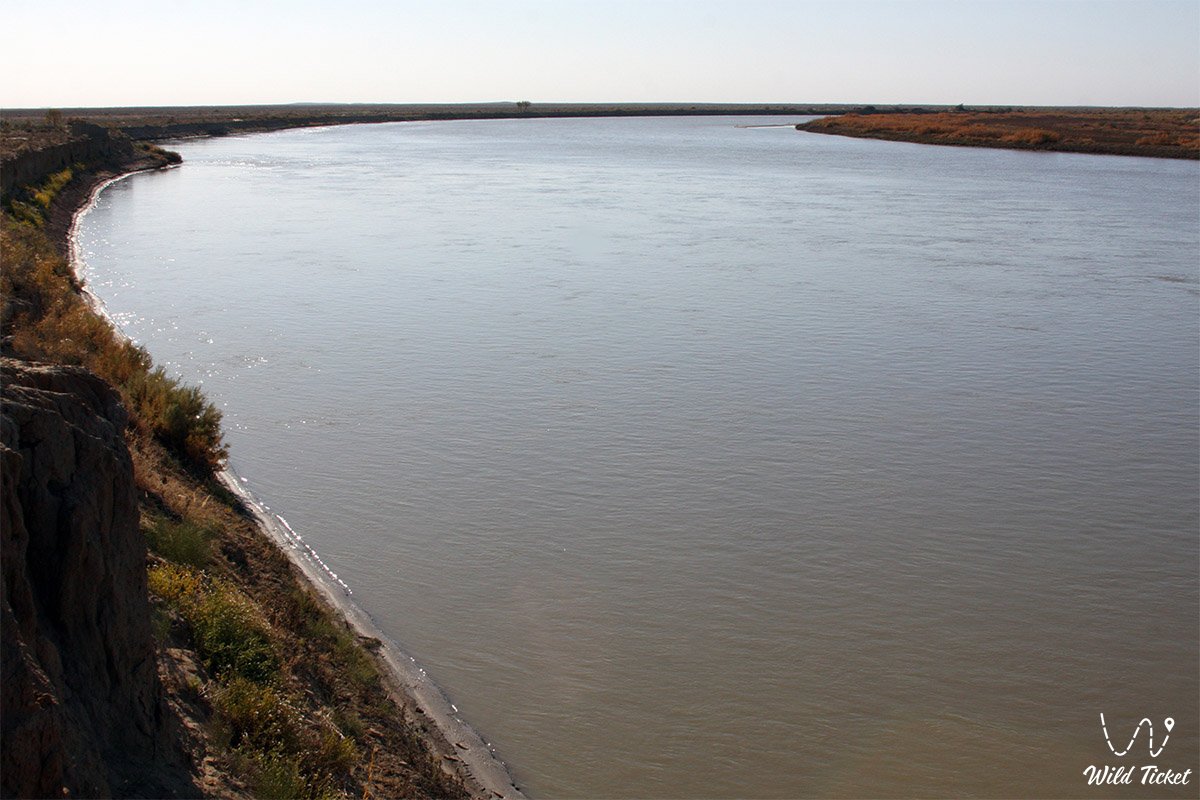
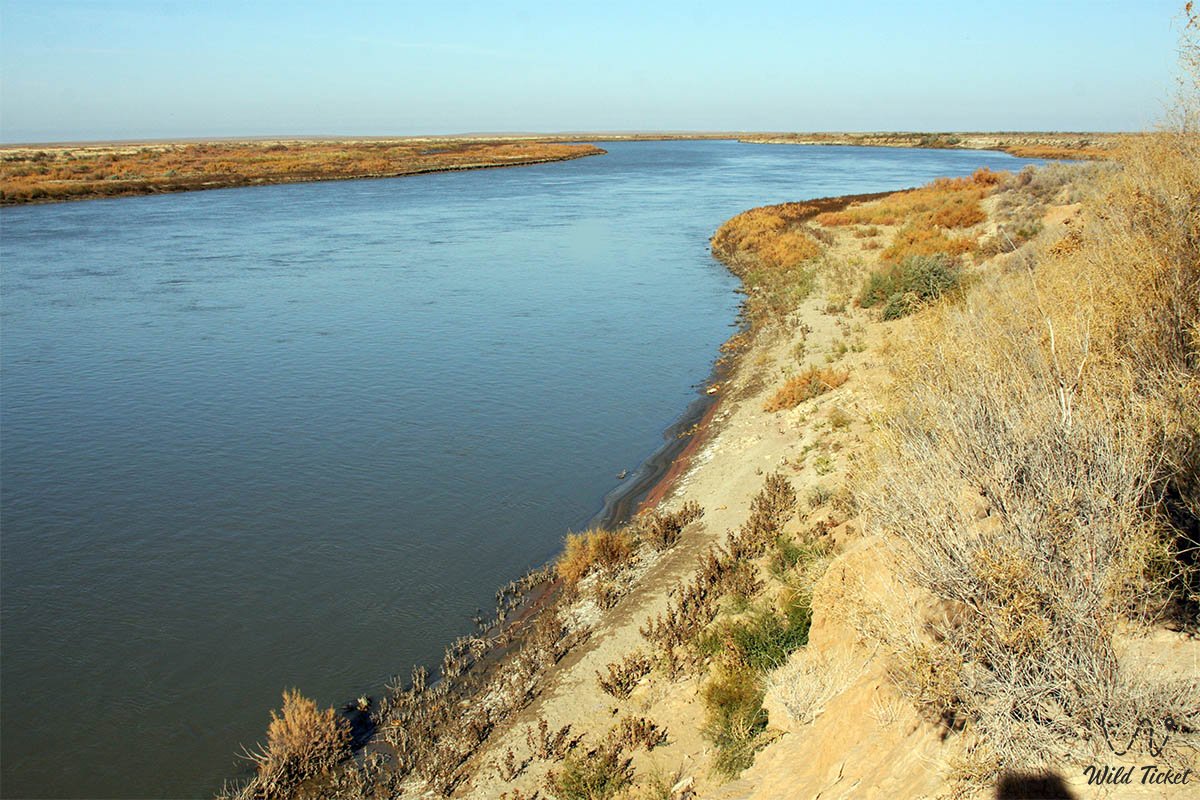
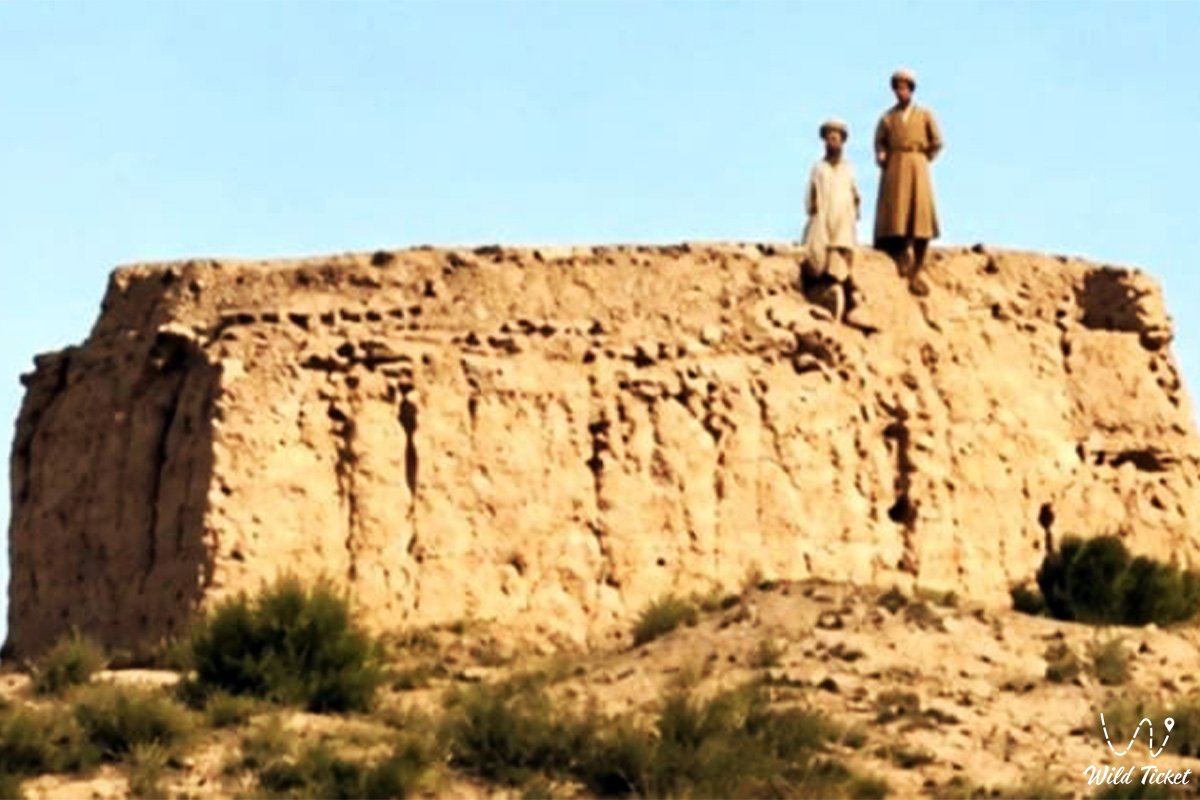
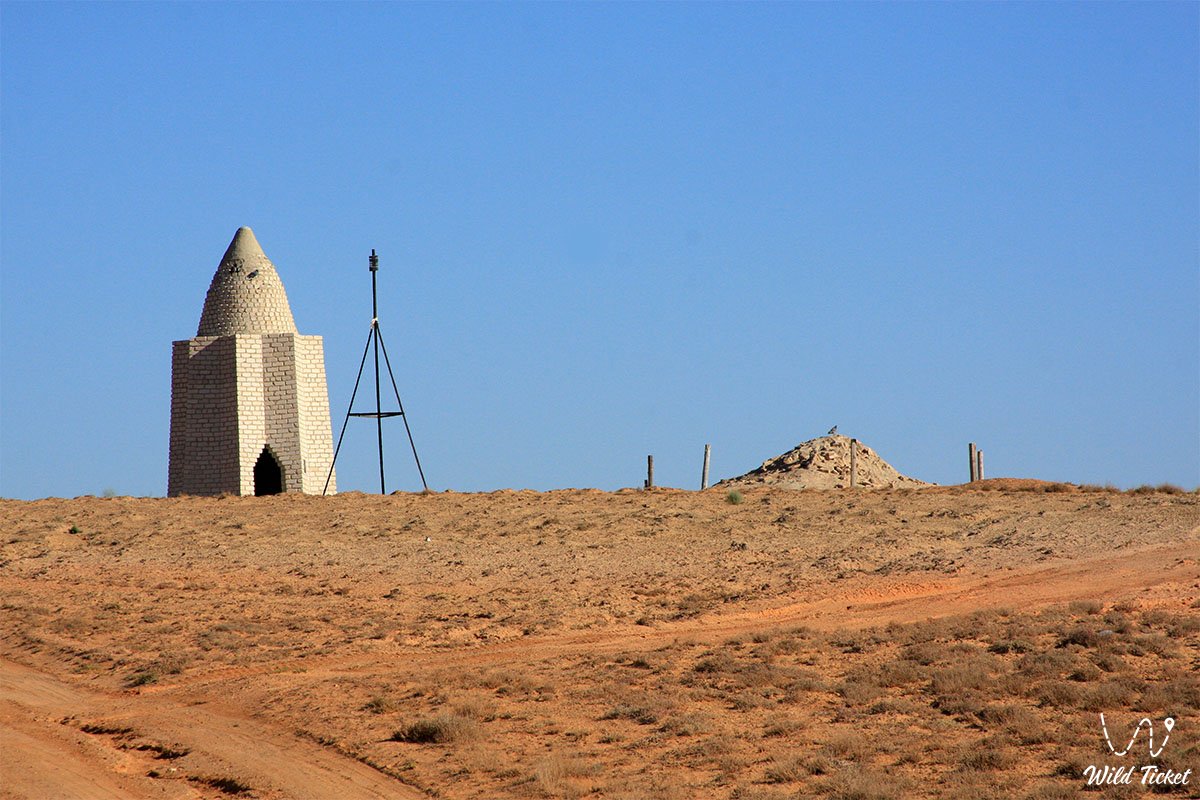
Geographically, the memorial rises on a gentle terrace of the Syr Darya floodplain amid endless clayey-sandy plains, acting as a powerful spatial and spiritual dominant of Kazakhstan Priaralye. Historically, an ancient adobe mausoleum of Korkyt stood on this site for centuries, repeatedly described by travelers and orientalists of the 19th century.
After the waters of the Syr Darya destroyed the original tomb as a result of gradual bank erosion, a new monumental Korkyt Ata Memorial Complex was erected here in 1980, reinterpreting the heritage of the great philosopher through modern architectural forms.
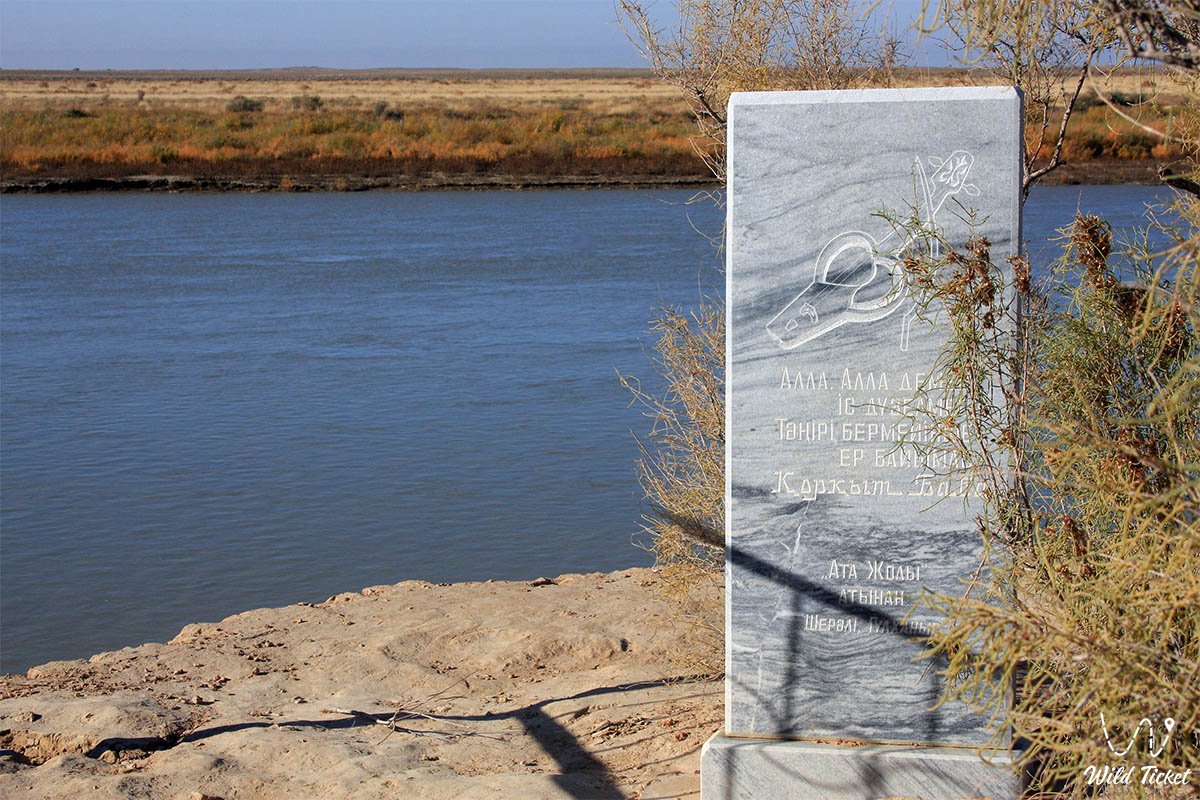
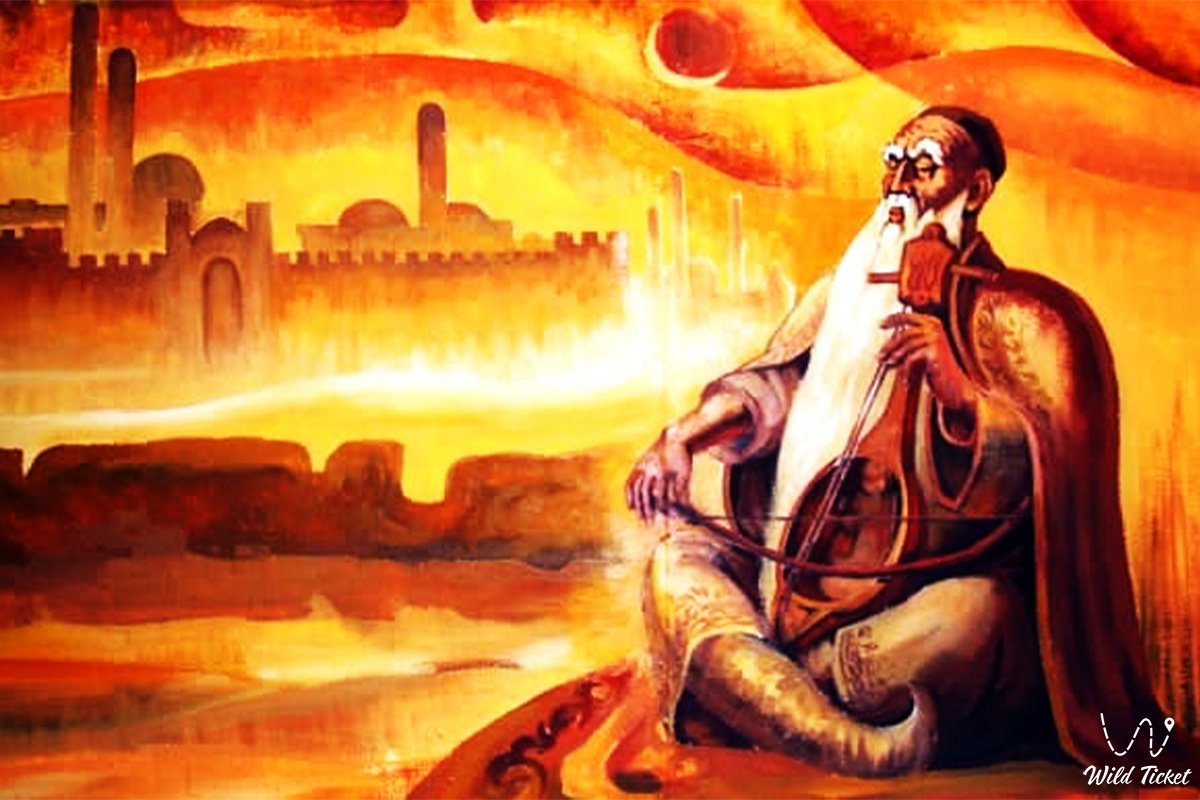
Korkyt Ata is revered as the creator of the bowed musical instrument – the kobyz, the founder of the art of playing kuys, and the protector of the human soul in the face of the inevitability of death. According to the philosophical views of the steppe, Korkyt personifies the quest for harmony, justice, and eternal life through the power of art and purity of intent.
Today, the complex is included in the list of nationwide sacred sites of Kazakhstan and attracts thousands of pilgrims, musicians, Turkologists, and tourists. Located along an international transit corridor, the memorial serves as a vital cultural and tourist hub of the region, connecting ancient steppe knowledge with modern cultural routes of Priaralye.
--------------------------------------------
How to get there and visit -
The Korkyt Ata Mausoleum (burial site) is located in the Karmakshy district of the Kyzylorda region, approximately 18 kilometers northwest of the district center – Josaly village, and 165–170 kilometers northwest of the regional center – the city of Kyzylorda. The complex is located right by the M-32 international highway ("Western Europe – Western China"). The "Altyn-Aidar" necropolis is located next to the mausoleum.
GPS geographical coordinates: 45°35'26"N 63°55'34"E
Thanks to its location by the country's main expressway, logistics to the site are exceptionally accessible. The memorial can be reached by any passenger car, regular intercity bus running along the Kyzylorda – Aralsk / Aktobe route, or by taxi from Josaly village or Baikonur (the distance to Baikonur is about 70 km). Along the highway near the complex, a paved access road, a spacious parking lot, and roadside amenities are provided.
To visit the memorial itself, a 4WD vehicle is not required: the territory is fully developed with pedestrian walkways and granite flagstones. However, if travelers plan to combine the trip with excursions into the floodplain tugai of the Syr Darya, to the ancient channels of the Zhanadarya, or to the shores of the North Aral, a high-clearance vehicle is recommended.
Visiting the memorial complex and the mausoleum itself is comfortable throughout the year, but the most favorable times are spring (April – May) and autumn (September – October), when the steppe is free from exhausting heat. In summer, the air on the open plateau heats up above +40 °C, while in winter piercing winds blow.
On the grounds of the memorial complex next to the mausoleum, a museum of the memorial's history, an amphitheater for traditional music festivals, an observation deck, a souvenir kiosk, and a prayer area are open. For overnight stays, travelers can stay in hotels in the city of Baikonur, Josaly village, or in hotels in Kyzylorda.
--------------------------------------------
History
The historical roots of venerating Korkyt date back to the early Middle Ages (10th–11th centuries), when a powerful Oguz state was forming in the lower reaches of the Syr Darya. Korkyt Ata acted as a patriarch, a wise advisor to rulers, a supreme judge, a singer-aqyn, and a keeper of popular wisdom.
On the right elevated bank of the river above his grave, at an elevation of 95 meters above sea level, a monumental mazar was erected. The saint's immense renown during his lifetime and posthumously transformed the Korkut-Tube hill into a place of sacred pilgrimage. A grandiose necropolis grew around the burial vault: military topographer and researcher A. I. Maksheev wrote back in the 19th century that up to 50 ancient burials and solidly built brick structures were counted near the saint's tomb. Later, the extensive "Altyn Aidar" cemetery formed nearby.
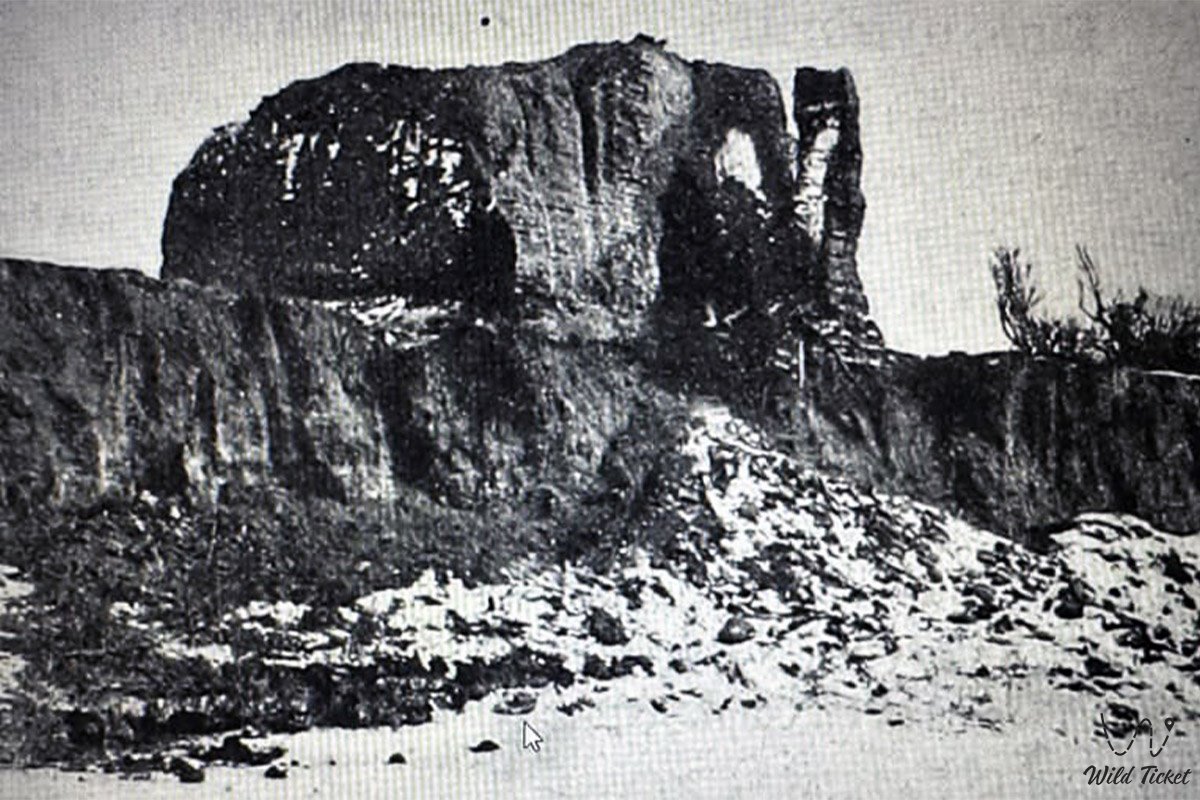
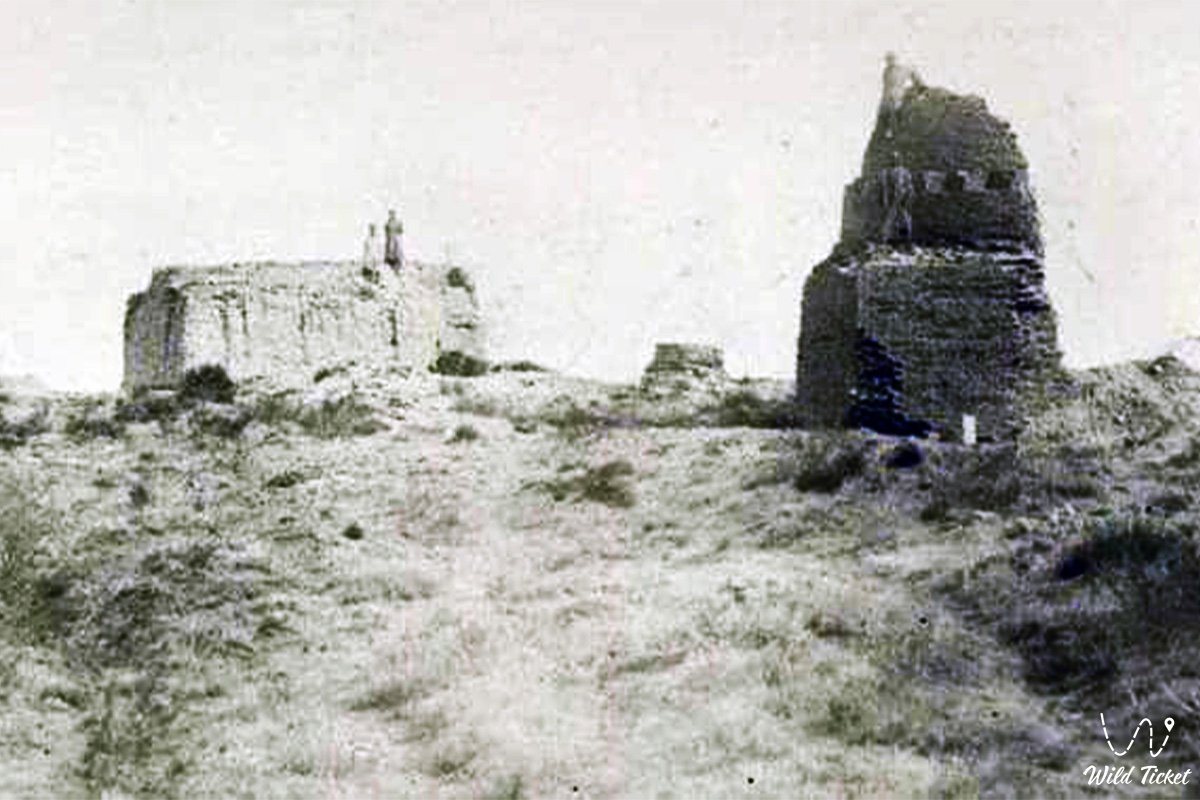
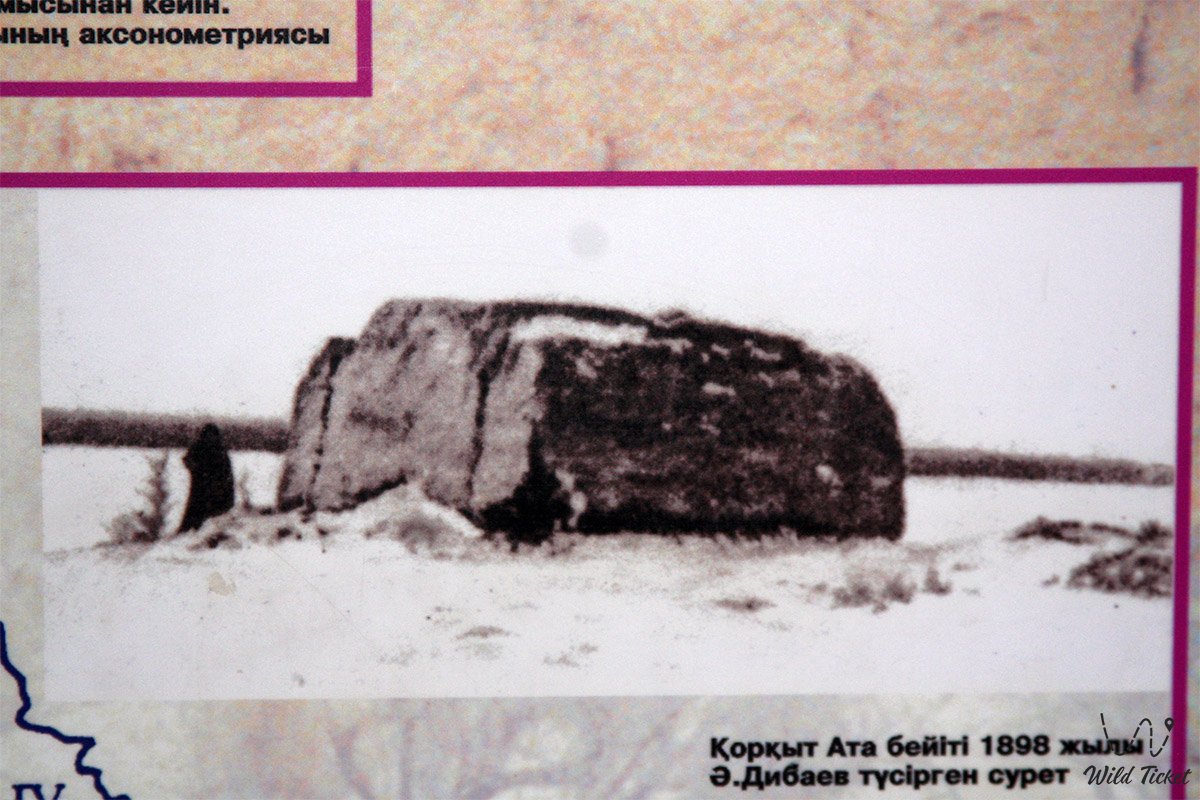
The monument was repeatedly studied by prominent orientalists and scholars of the 19th–20th centuries – P. I. Lerch, A. A. Divaev, I. A. Castagné, and A. I. Maksheev. According to their archival descriptions, drawings, and rare vintage photographs, the medieval mausoleum of Korkyt Ata was built of fired mud brick of flat shape. It was a single-chamber centric structure with a square base, covered by a massive dome (though individual accounts mentioned hexagonal or octagonal elements of construction). A notable detail was the saint's clay gravestone: it possessed such colossal length that part of it literally extended beyond the outer walls of the burial vault.
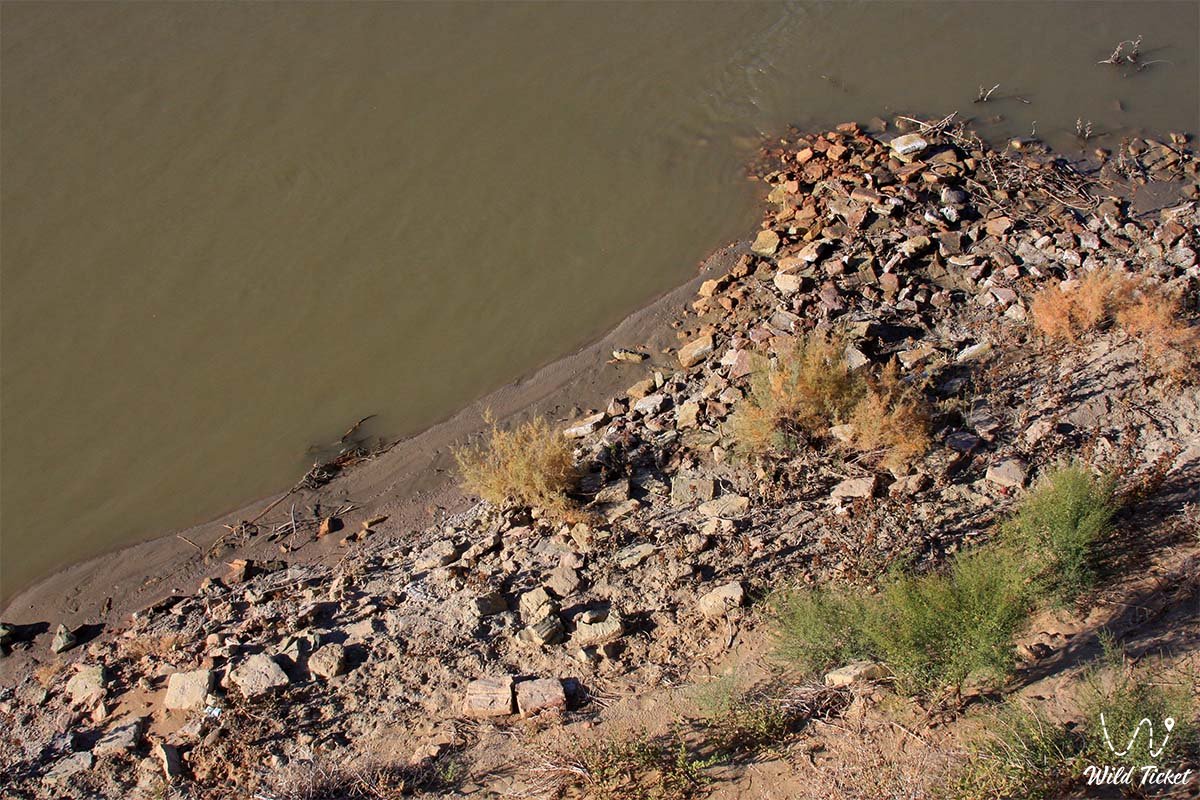
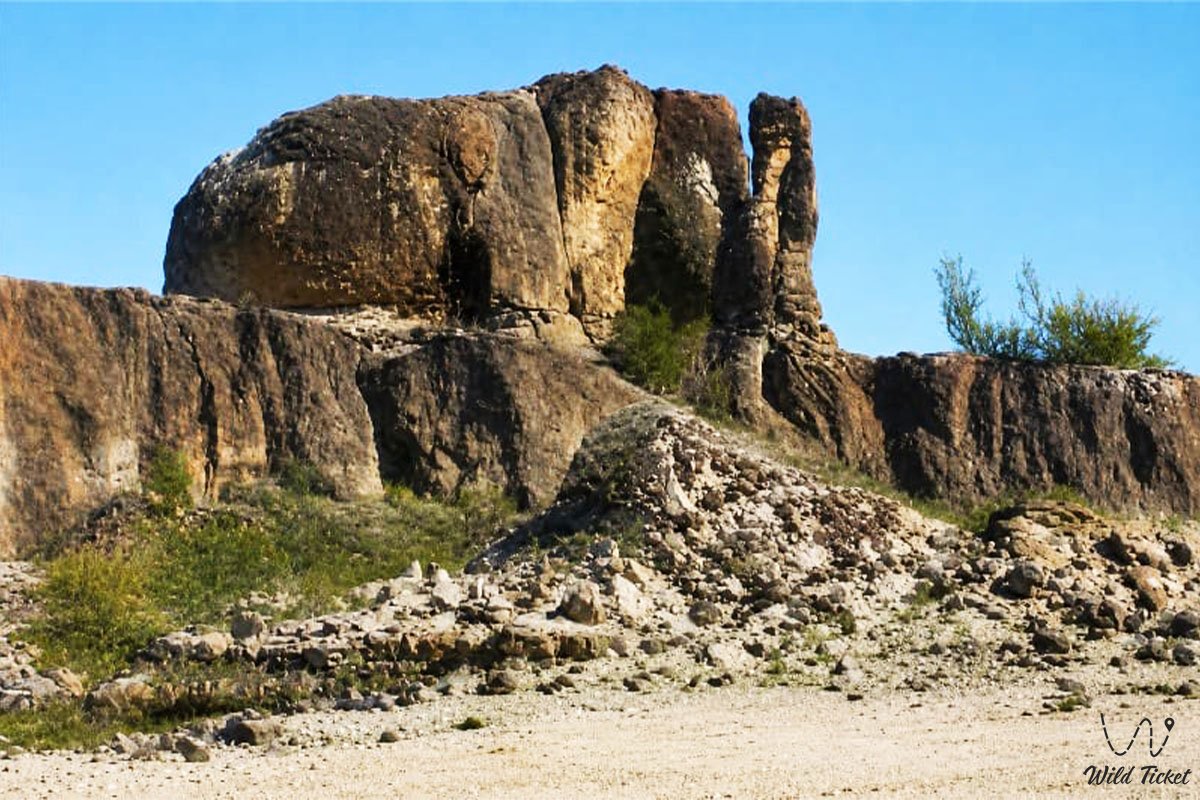
Over centuries, the capricious Syr Darya gradually changed its fairway, eroding the high right-bank bluff. Even in the 1950s, the semi-ruined mazar stood on the edge of the precipice, but by the end of the 20th century the bank finally collapsed. The historical monument of the 10th–11th centuries was washed away by floodwaters: today the medieval burial vault is completely lost, and heaps of ancient flat fired bricks rest at the foot of the hill, washed by the Syr Darya waves.
In 1980, 1.6 km northeast of the collapsed shrine, the construction of a large-scale modern memorial complex began. The authors of the project were architect Bek Ibrayev and acoustic scientist S. Isatayev. In 1997–2000, a museum block and an amphitheater were opened here, and in 2014 the memorial underwent fundamental restoration, becoming a national treasure of Kazakhstan.
Information
The philosophical and architectural concept of the memorial is closely intertwined with music and the element of wind. The dominant feature is the "Singing Kobyz" monument, 12 meters high, erected on a 9-meter pedestal. The monument consists of four upward-striving steles imitating the contours of a kobyz and facing the four cardinal directions. At the junction of the steles, engineers installed a system of metal organ pipes: whenever a steppe wind rushes through the structure, it induces acoustic resonance, and the monument begins emitting a continuous melodic sound reminiscent of the modulations of a shamanic kobyz.
The museum complex unveils the life story of the thinker and the culture of Priaralye nomads. The halls display unique exhibits: scientific reconstructions of Korkyt's destroyed medieval mazar, archival sketches by Castagné and Lerch, antique kobyzes crafted from wood and horsehair, everyday household items of the Oguz found during excavations of the Zhankent settlement, and materials of the epic "Kitabi Dede Korkut".
In 2018, the heritage of Korkyt Ata, epic storytelling traditions, and the mastery of kobyz playing were officially inscribed on the UNESCO Intangible Cultural Heritage List. Annually, the complex's amphitheater gathers zhyrau musicians, storytellers, and folklore ensembles from all Turkic countries for international festivals of traditional art.
Detailed description of the venue
The sacred and historical zone of Korkyt Ata covers key memorial and archaeological sites:
• Historical Korkut-Tube Hill – an elevation of 95 m above sea level on the right bank of the Syr Darya, where the original mazar of the 10th–11th centuries stood and where remains of ancient plinthite bricks lie in the water.
• "Altyn Aidar" Necropolis – an ancient burial complex 160 meters northeast of the hill, including dozens of adobe and brick mazars of steppe nobility from various eras.
• "Singing Kobyz" Monument – a 12-meter architectural symbol with an organ pipe system that sounds across the space powered by the steppe wind.
• Underground Museum of Korkyt – an exhibition space featuring dioramas, historical documents, a model of the lost mausoleum, and a collection of ancient instruments.
• Amphitheater – an open-air arena with tiered seating for competitions of storytellers, kuyshis, and performers of traditional epics.
• Commemorative stele with bas-reliefs – a monumental frieze capturing scenes from Oguz dastans and Korkyt's wanderings on the female camel Zhelmaya.
• Ritual pyramid and sacred spring – a sacred pilgrimage site for offering prayers and making wishes.
• Observation deck on the Syr Darya bluff – a panoramic viewpoint overlooking the river waters, riparian tugai, and the mainline railway.
Legend
A philosophical parable about the inevitability of an earthly end and the eternal life of art is inextricably linked with the figure of Saint Korkyt. In his youth, a prophetic dream appeared to Korkyt in which white elders foresaw his death upon reaching the age of forty. Gripped by fear, the batyr mounted the swift sacred female camel Zhelmaya and raced to the four corners of the earth, hoping to find a realm beyond the power of death.
Wherever the sage directed his path – east, west, into northern forests, or southern mountains – he encountered gravediggers digging a pit everywhere. To Korkyt's question, "For whom is this grave?", they invariably replied, "This is a grave for Korkyt." Realizing that destiny cannot be escaped at any corner of the earth, the elder returned to the banks of his native Syr Darya, to the Korkut-Tube hill.
Here he cut down a karagach tree, strung horsehair strings, covered the soundboard with the hide of a female camel, and created the world's first kobyz. Korkyt spread a prayer rug right upon the river rapids, sat upon it, and began playing divine kuys.
A great miracle occurred: as long as the strings sounded, death lost its power over the living world. The Syr Darya froze in its course, birds hovered motionless in the air, wild beasts lay down humbly by the water, and people were healed of ailments. For years, magical music poured over the steppe. Yet as soon as the exhausted elder closed his eyes for a moment, death turned into a tiny venomous snake, the kayrak-zhylan, glided across the waves, and fatally bit the musician. Korkyt departed the mortal world, but remained immortal in the sounds of the kobyz, which to this day are carried by the wind over the Syr Darya bluff.
Conclusion
The Korkyt Ata Mausoleum and Memorial Complex on the Korkut-Tube hill is not simply an architectural monument, but a sacred spiritual sanctuary personifying the profound wisdom, musical genius, and philosophical worldview of Turkic civilization. Even after losing its historical mazar to the river's waters, this site preserved its colossal sacred energy, enhanced by the melodies of the "singing pipes."
Visiting the hill of Korkyt and the memorial ensemble grants travelers a rare opportunity to touch the roots of nomadic culture, hear the song of the steppe wind, and reflect upon the eternal questions of human existence.
Interesting sights nearby:
• Baikonur Cosmodrome;
• Baikonur City;
• North Small Aral Sea;
• Ayteke Bi Village;
• Begim-Ana Tower;
• Saraman-Kosa Tower;
• Zhankent Ancient Settlement (Yangikent);
• Aral Geopark;
• Lake Kambash (Kamystybas).
Photogallery: