Authentic aul and key outpost of expedition tourism in the Aral Sea region -
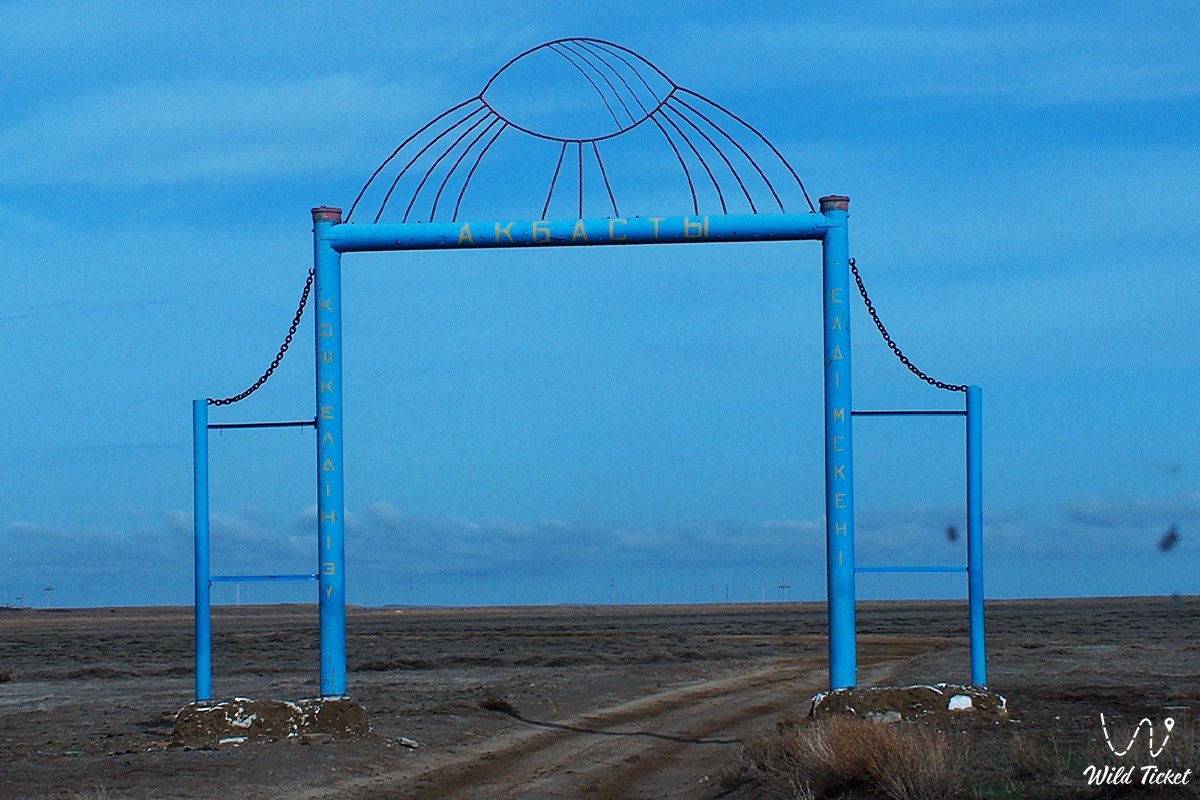
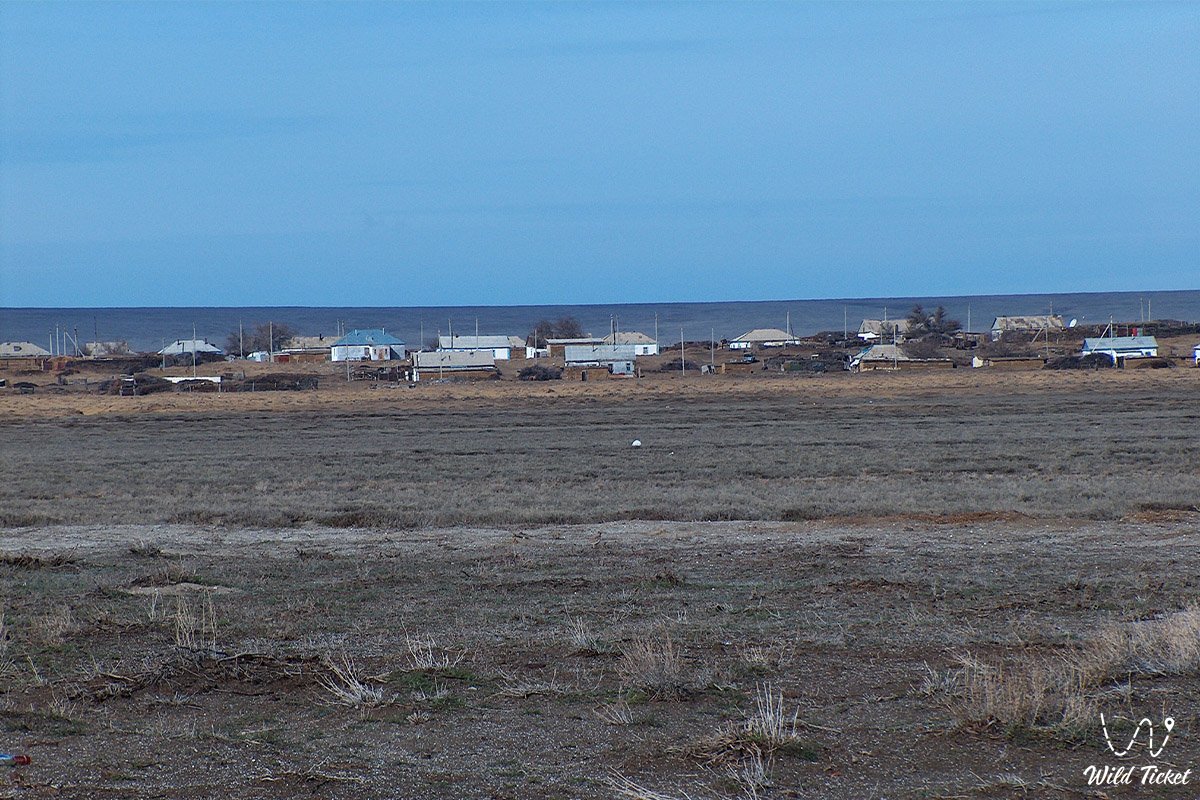
Akbasty Village is one of the most remote, authentic, and resilient settlements in the Aral Sea region. It is located in the Aral district of the Kyzylorda region of Kazakhstan, serving as the administrative center and the only populated locality of the Kulandy rural district. The aul is lost among the sands of the Kulandy steppe on the southwestern edge of the district, situated in close proximity to the water area of the North Small Aral Sea, Butakov Bay, and the isthmus of the Kokaral Peninsula.
Despite the colossal distance from civilization, modern Akbasty lives, develops, and preserves the traditions of a genuine Kazakh aul. Today, the village serves as a key base point for limnologists, inspectors of the Barsakelmes Nature Reserve, and participants of challenging 4x4 off-road expeditions heading to the Kokaral Dam, chinks, and relict bays of the North Aral.
--------------------------------------------
How to get there and visit -
Akbasty village is located in the hard-to-reach southwestern part of the Aral district of Kyzylorda region. Expeditions start from the city of Aralsk, from where a route extending over 250 kilometers runs through sands, tracts, Karateren village, Raim Fort, as well as the dried-up sections of the Berg Strait, Republic of Kazakhstan. Another route to the village leads along the northern coast of the Small Aral to Tastubek village and Akespe village, where the Istyk-Su radon spring is located. From the city of Kyzylorda to the turnoff to Aralkum, the route takes around 750 kilometers.
GPS geographical coordinates: 46°15'55"N 60°05'53"E
Regular bus service and scheduled public transport to Akbasty village are completely absent. Reaching the aul is possible exclusively as part of autonomous expeditions in private prepared vehicles or by using the services of local drivers from Aralsk delivering mail and cargo to the steppe.
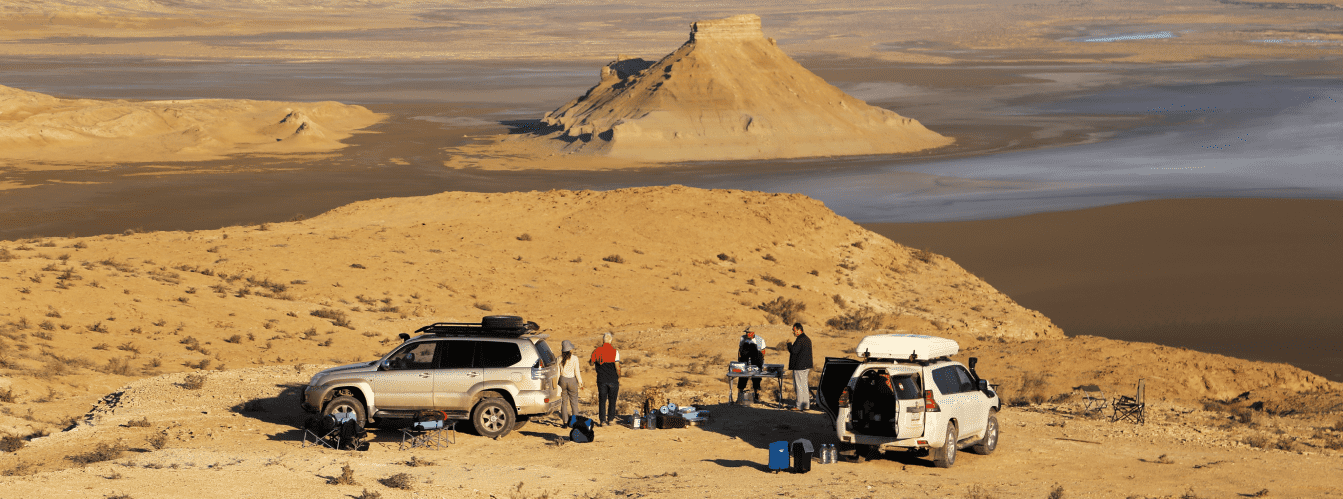
Exclusively a reliable frame-based off-road vehicle (4x4) with high ground clearance, reinforced suspension, and specialized off-road tires is suitable for the journey. The main hazard to movement is posed by deep sand ruts of the Kulandy steppe, loose dune drifts, and in the spring period or after rains – viscous clayey salt marshes in depressions.
Setting out towards Akbasty, Kokaral, or Barsakelmes in a single vehicle is strictly not recommended – there must be at least two crews in the expedition. Vehicles must be equipped with an automotive compressor for reducing tire pressure on sand, dynamic tow straps, sand tracks, entrenching tools, a fuel reserve for 600 kilometers of travel, and a supply of clean drinking water calculated at no less than 5 liters per person per day.
The most favorable time to visit the aul is spring (April – May) and early autumn (September – October), when the exhausting heat subsides and the steppe is not bound by winter blizzards. Specialized hotels are absent in the aul, but local residents welcome travelers into their homes with exceptional hospitality, where one can taste natural shubat, koumiss, freshly baked bread, and homemade meat dishes, or tourists pitch tent camps behind the sand rampart of the settlement.
--------------------------------------------
History
The history of Akbasty village is inextricably intertwined with the fate of the Aral Sea and the labor chronicle of the Aral fishing communities. At the beginning of the last century, the foundation of the local lifestyle was rich commercial fishing in the bays and straits of the Aral Sea. In 1935, the first school opened in the aul, giving impetus to literacy among the local population. During the collectivization era, consolidation of fishing enterprises began: in 1958, the collective farms "Stalin", "Lenin", "Kazakhstan", and "Zhanazhol" were merged into a single large Lenin collective farm, with Akbasty village designated as its administrative center. During the same period, families from the coastal settlement of Avan and other surrounding fishing auls moved here en masse.
Until the middle of the twentieth century, the aul stood directly on the western shore of the Auzy-Kokaral strait, which connected the bays with the open sea. A fish reception point operated non-stop here, and fishing seiners and boats set out to catch sturgeon, barbel, bream, and carp.
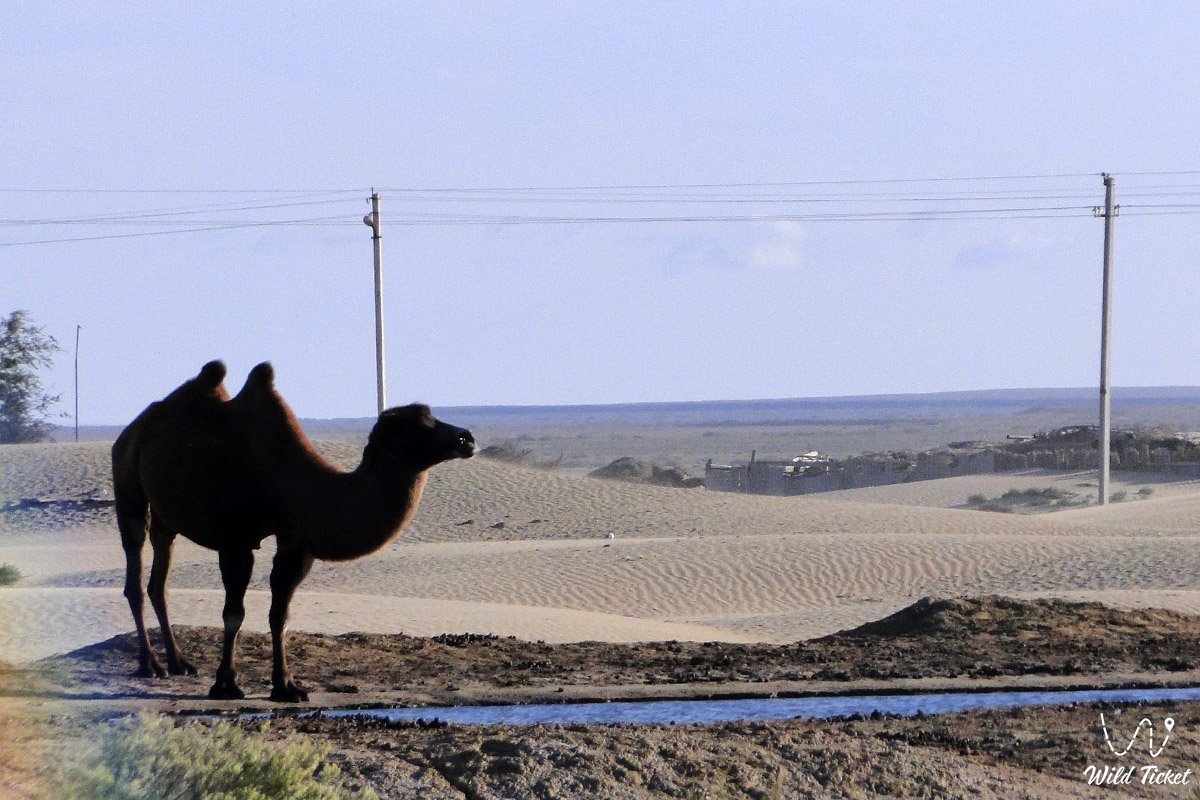
When the Aral Sea began retreating rapidly in the second half of the 20th century, the lives of the villagers changed radically. The water retreated for many kilometers, the Auzy-Kokaral strait dried up, and sand dunes began advancing from the north. The former fishermen displayed remarkable resilience: instead of abandoning their ancestral hearths, they retrained as livestock breeders, learned to raise Aday horses and Bactrian camels in the conditions of the arid Kulandy steppe, and preserved the settlement from desolation.
The aul is rightfully proud of its outstanding natives who made a colossal contribution to its survival and development:
• Public figure Aidos Kulmanov in Soviet years persistently defended the interests of his native aul, achieving solutions to acute social needs in high state authorities.
• Fellow countryman Araphan Sultanov in the early 1990s managed to organize and establish continuous centralized power supply for the settlement.
• Renowned scholar and celebrated zhyrau Berik Zhusupov actively represents the interests of fellow countrymen to this day, raising the problems of the Aral Sea region at the national level.
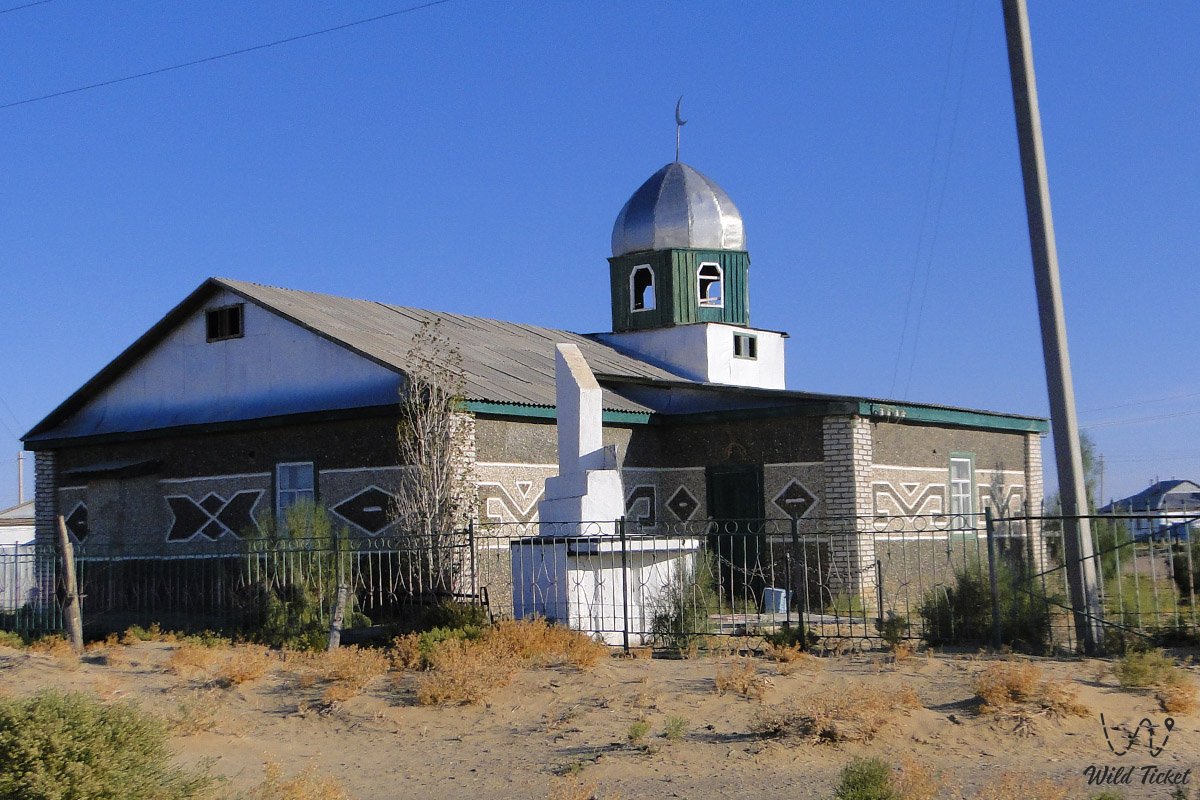
• Labor veteran Kaldan Kulzhanov, who went from a fisherman and tractor driver to a minister of the local mosque, personifies the continuity of generations and loyalty to his native land.
Information
Today, the aul numbers more than 70 households with a population of about 400–500 people (according to the 1999 census, the population was 511 people; according to 2009 data – 491 people: 258 men and 233 women). The unique moral lifestyle of a traditional Kazakh aul is preserved here: house doors are rarely locked, every misfortune and joy is met together, and by a long-standing decision of the council of elders, the sale of alcohol is completely prohibited in local shops, ensuring an almost total absence of offenses in the village. There is virtually no unemployment in the aul – each family is engaged in agricultural enterprises, developing horse breeding, camel breeding, and seasonal fishing on the Small Aral.
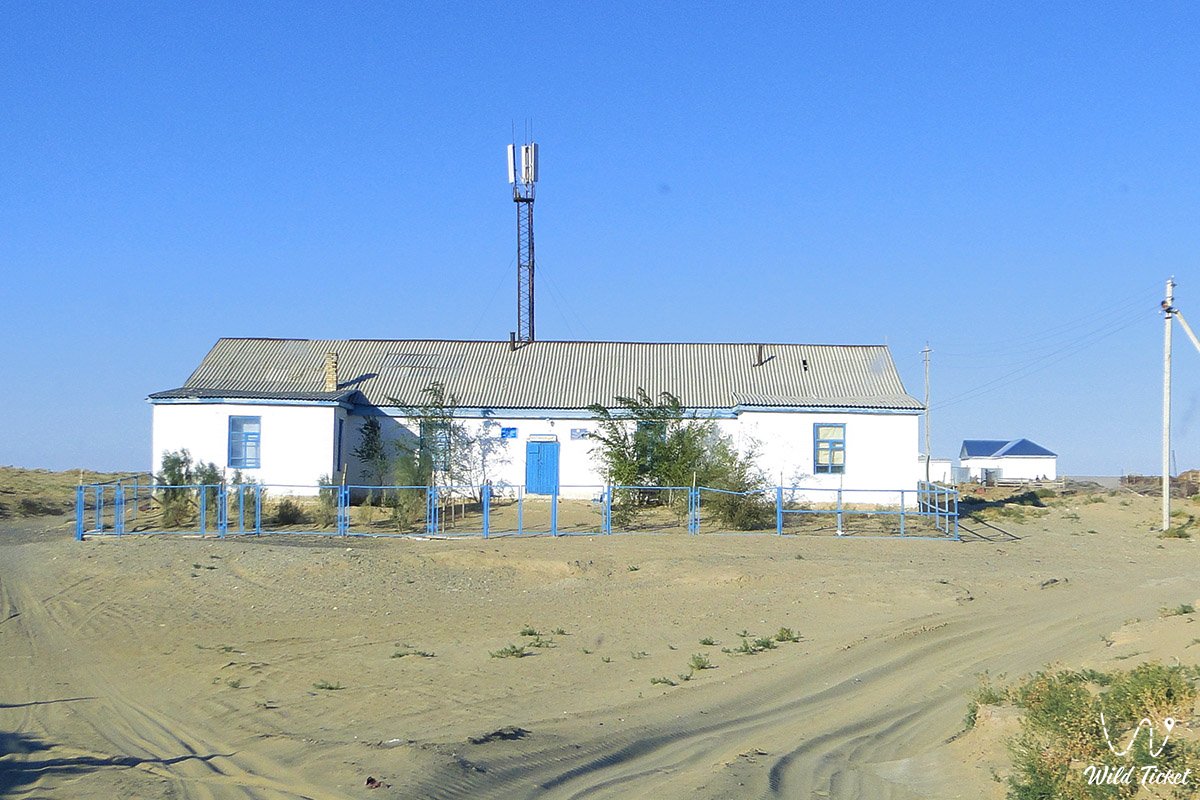
The social infrastructure of Akbasty is actively being updated: a rural club, library, medical station, and three grocery stores operate, and villagers built a community banquet hall with their own hands for weddings and celebrations. In 2012, replacing a dilapidated building by order of the regional leadership, a modern school was erected, where more than eighty pupils study and a preschool mini-center operates. In 2024, the medical station received a new emergency ambulance vehicle, and the arrival of stable mobile connectivity enabled residents of this remote aul to stay in touch with the country around the clock.
The year 2025 marked a historic breakthrough for the village when clean drinking water arrived in Akbasty. Prior to that, for more than sixty years, villagers were forced to bring water in tank trucks and settle it in special cisterns and wells. As part of a large-scale state project valued at 3.2 billion tenge, a water pipeline was laid from the "Aral – Sarybulaq" group system, bringing pure artesian water from a depth of 270 meters directly into every home. As the next stage of development, residents await the gasification of the aul.
Detailed description of the venue
The Kulandy rural district and the surroundings of Akbasty represent an expressive complex of historical, cultural, and natural sites:
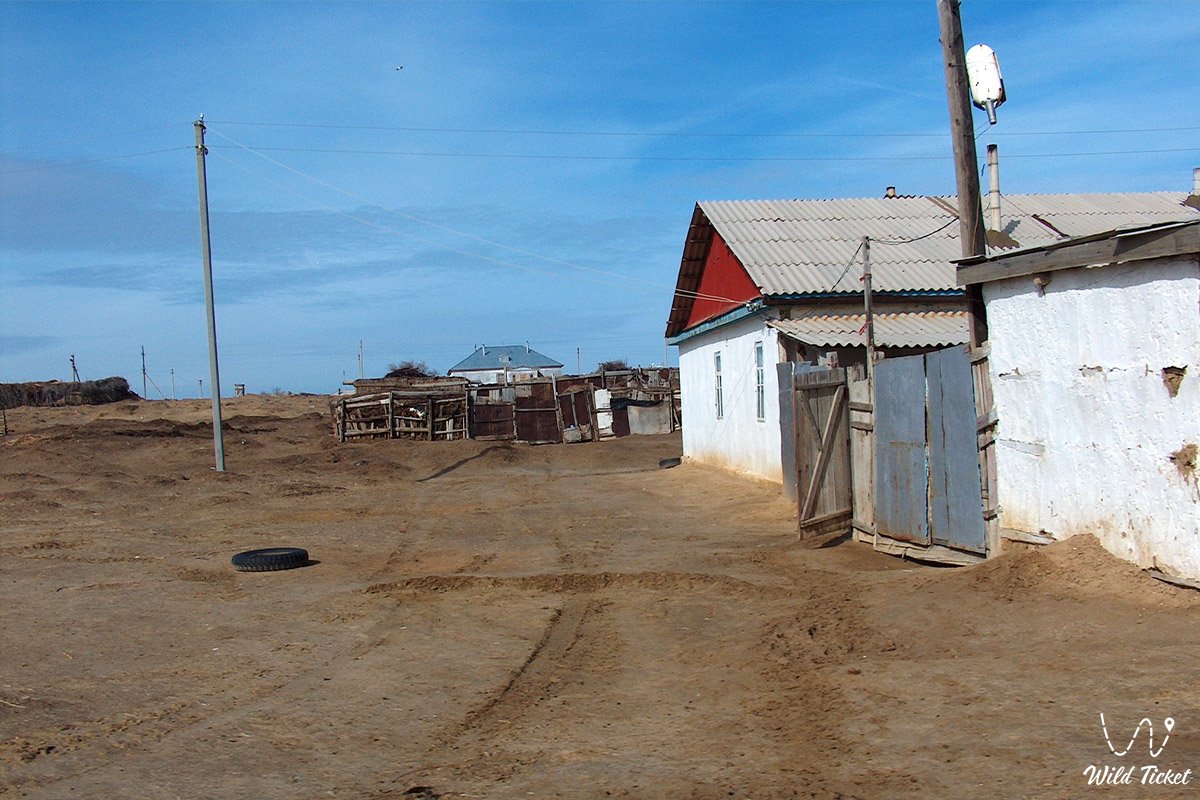
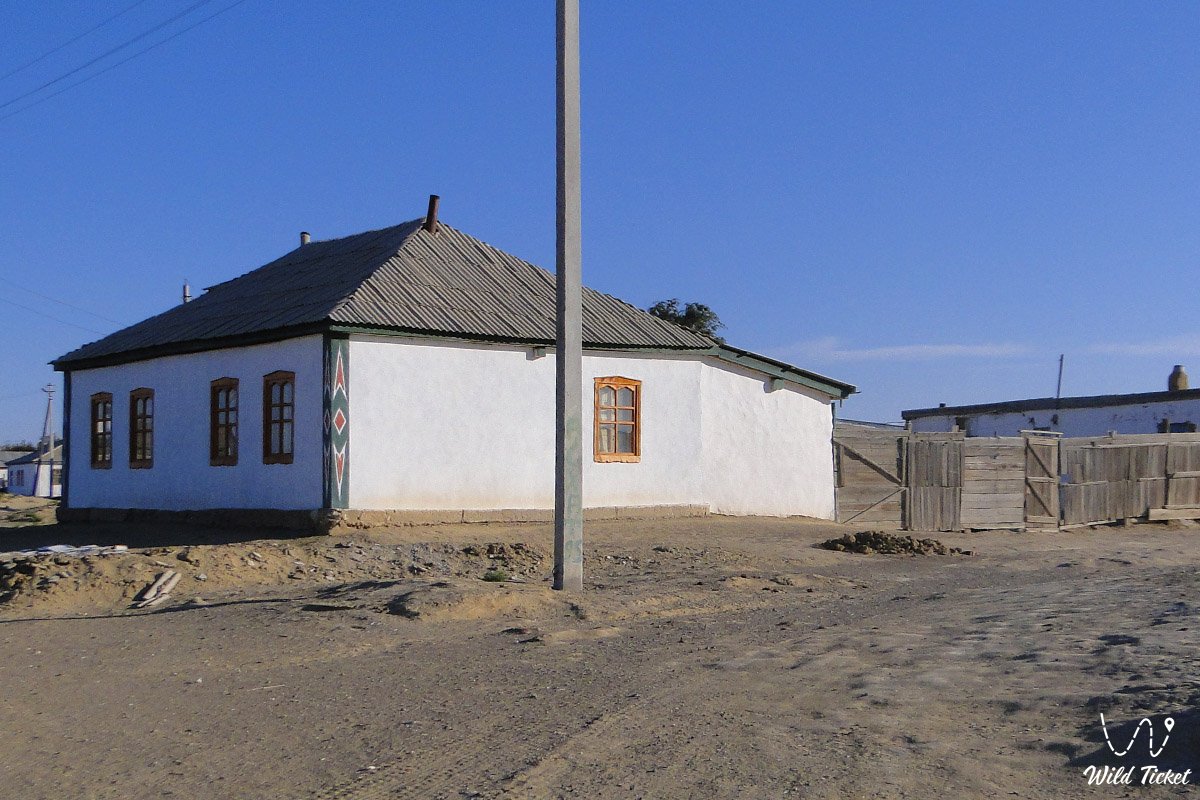
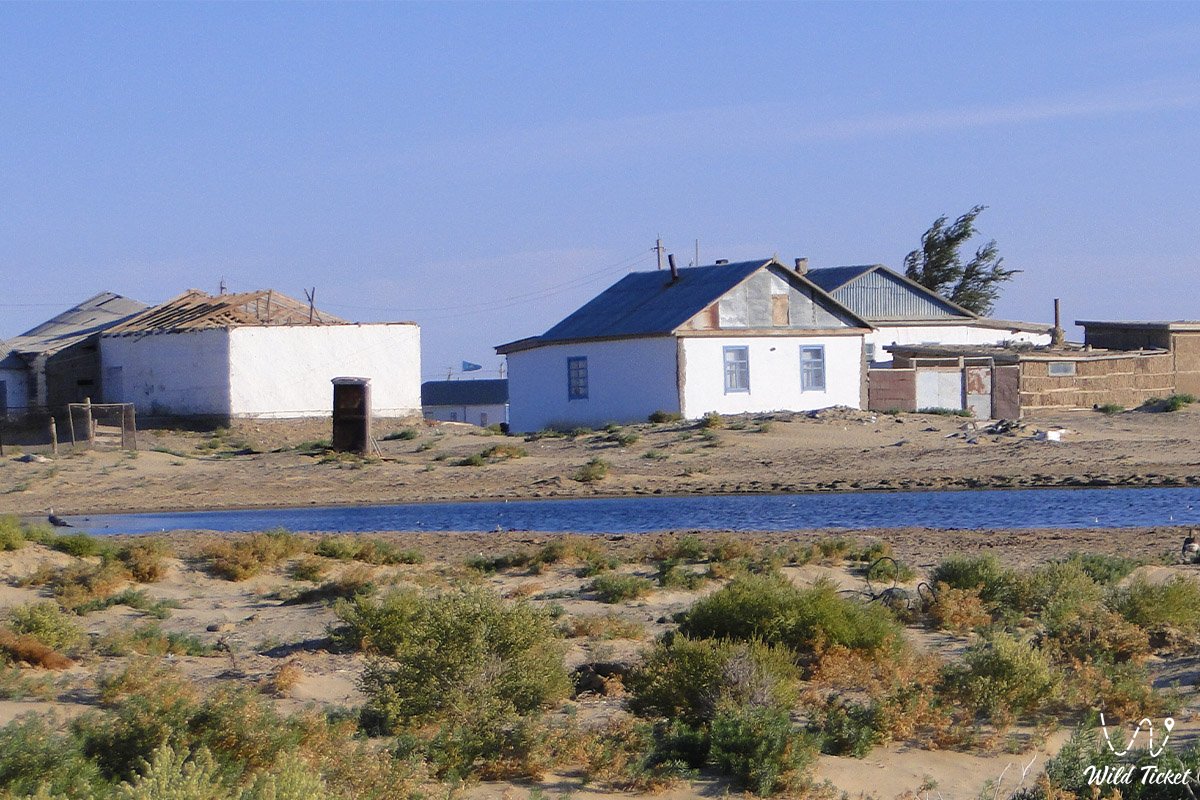
• Authentic residential buildings – neat adobe and whitewashed brick homesteads with spacious corrals for camels and horses, adapted to the wind loads of the steppe.
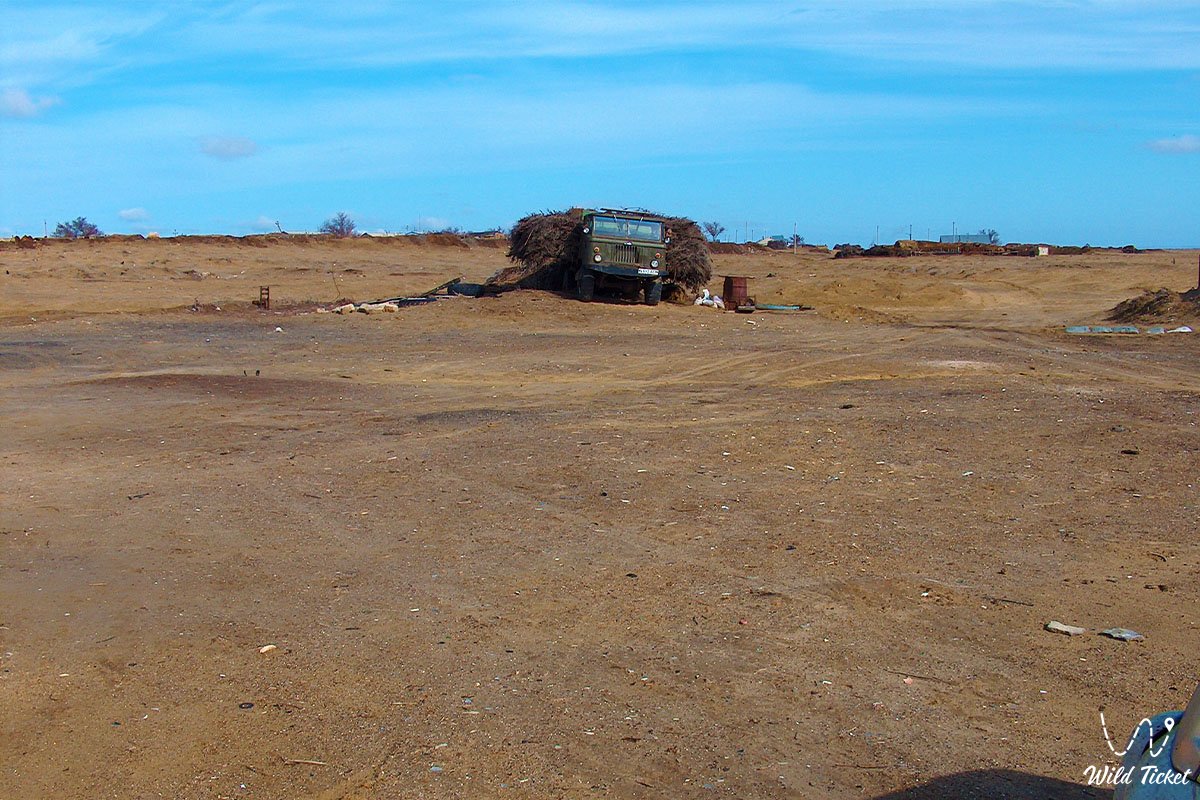
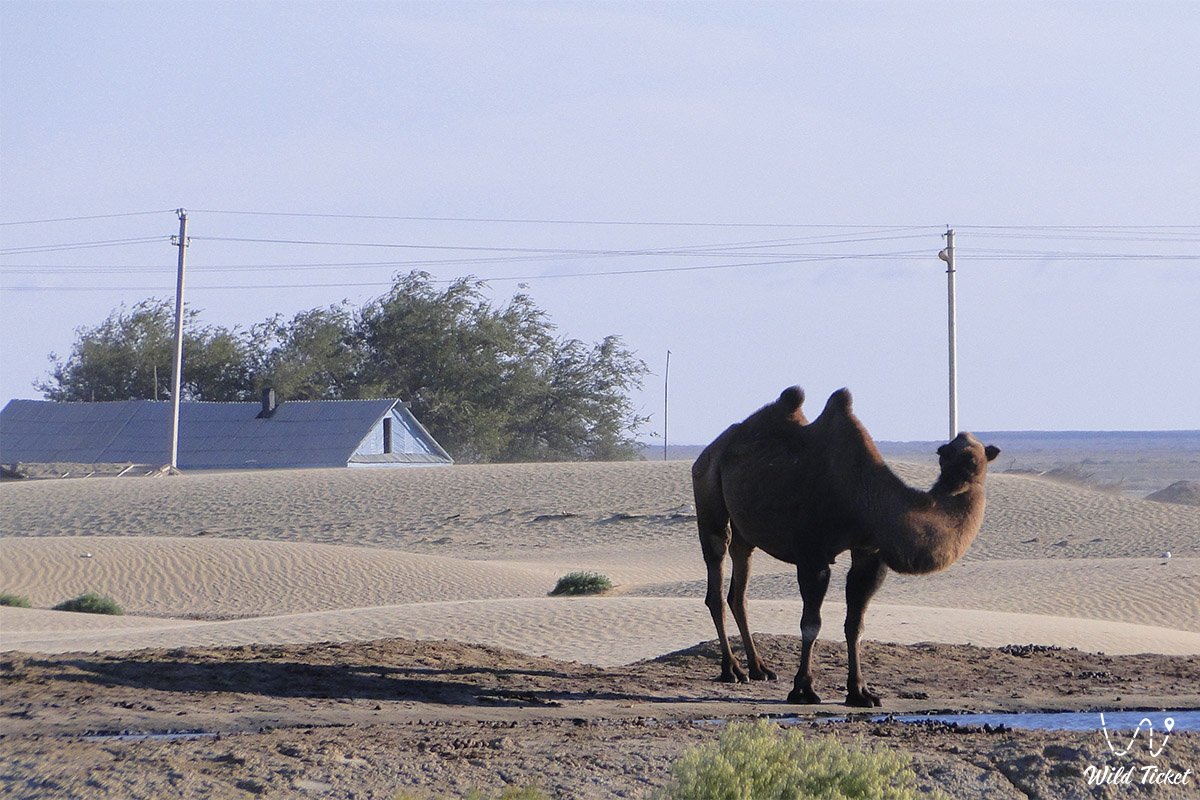
• Sand rampart of the Kulandy steppe – a massive ridge of encroaching golden dunes encircling the village in a semi-ring and creating a contrast with clayey takyrs.
• Artificial saxaul belts – a protective shelterbelt of green plantations of black saxaul and kandym planted to curb sand drifts.
• Dried-up bed of the Auzy-Kokaral strait – a historical depression between the mainland and the former Kokaral Island with ancient marine deposits and coquina.
• Butakov Bay – the northeastern basin of the Small Aral, reaching the district pastures and serving as a habitat for waterfowl.
• Ancient ancestral mazars – adobe and stone necropolises of Kazakh clans of the Junior Zhuz rising on the sand hills around the settlement.
Flora and fauna
The vegetation cover of the Kulandy steppe is composed of typical psammophytes, xerophytes, and salt-tolerant halophytes. Black and white saxaul, dzhuzgun (kandym), sand acacia, camelthorn (dzhantak), wormwood, and selin dominate around the village. In depressions with saline soils, glasswort, sarsazan, limonium, and tamarisk grow. In spring, the steppe transforms thanks to the blooming of Borshchov's tulips, desert irises, and poppies.
The animal kingdom is rich and diverse due to the proximity to the grounds of the Barsakelmes State Nature Reserve. Numerous domestic herds of two-humped Bactrian camels and droves of horses graze in the vicinity of the settlement. Wild ungulates inhabit the protected plains of the Kulandy Peninsula: Turkmenian kulans, saigas, and graceful goitered gazelles.
The predatory world is represented by steppe wolves, corsac foxes, jackals, and sand cats. Tolai hares, gerbils, and jerboas take shelter in saxaul thickets. Birds of prey reign on the cliffs and in the air – golden eagles, long-legged buzzards, steppe eagles, and kestrels, while pelicans, cormorants, grey herons, and gulls concentrate along the marine reaches of Butakov and Shevchenko bays.
Geography
Geographically, Akbasty lies in a transitional zone between clayey plains, ancient marine terraces, and shifting sand masses, vividly demonstrating human resilience in the face of large-scale natural and climatic changes. In the middle of the 20th century, the settlement stood directly on the western shore of the Auzy-Kokaral strait, where fishing thrived and seawater lapped next to residential houses. As a result of the drying of the Aral Sea, the local landscape was fundamentally transformed, turning a coastal port into a deep steppe settlement.
Climate
The climate here is sharply continental with severe temperature drops: frosty winters with an average January temperature down to -13 °C and dry, hot summers with an average July temperature up to +24 °C (with peak daytime heatwaves exceeding +40 °C). The distance to the regional center – the city of Kyzylorda – is about 750 kilometers, and to the district center – the city of Aralsk – more than 250 kilometers over challenging sandy roads.
Legend
An ancient tale about the origin of the settlement's name – the "Legend of the White Peak" – circulates among the elders of Akbasty aul. The legend states that in times when the Aral Sea was full and mighty, storm waves washed ashore on the western bank of the Auzy-Kokaral strait a huge limestone boulder of blinding white color, resembling the head of a wise elder-batyr. Nomads perceived this stone as a sacred sign from their ancestors pointing to a safe place for wintering and wells. The stone was named "Aq basty" (White Head/Peak), and a permanent nomadic encampment arose around it.
Conclusion
Akbasty village is a striking example of the resilience of the human spirit, cohesion, and boundless love for native land in the midst of the harsh landscapes of the shrunken Aral basin. Having overcome the severe environmental consequences of the sea's retreat, the aul not only survived, but also preserved the purity of folk traditions, sincere hospitality, and confidence in the future thanks to the arrival of clean artesian water and infrastructure development.
For travelers, researchers, and expeditionary auto-tourism enthusiasts, the aul remains an indispensable outpost and a connecting bridge between civilization, the enchanting nature of the Kulandy steppe, and the reviving expanses of the North Aral.
Interesting sights nearby:
• Large Aral Sea;
• Aral Geopark;
• Shevchenko Bay;
• Kerderi Mausoleum;
• Aral-Asar Settlement;
• Barsakelmes Island;
• Ayteke Bi Village;
• Basibek Mausoleum;
• Tolybay Batyr Mausoleum;
• Saraman-Kosa Tower;
• Begim-Ana Tower;
• Lake Kambash (Kamystybas).
Photogallery: