Karazhanbas Oil Field
High-viscosity oil reserves and unique thermal recovery methods –
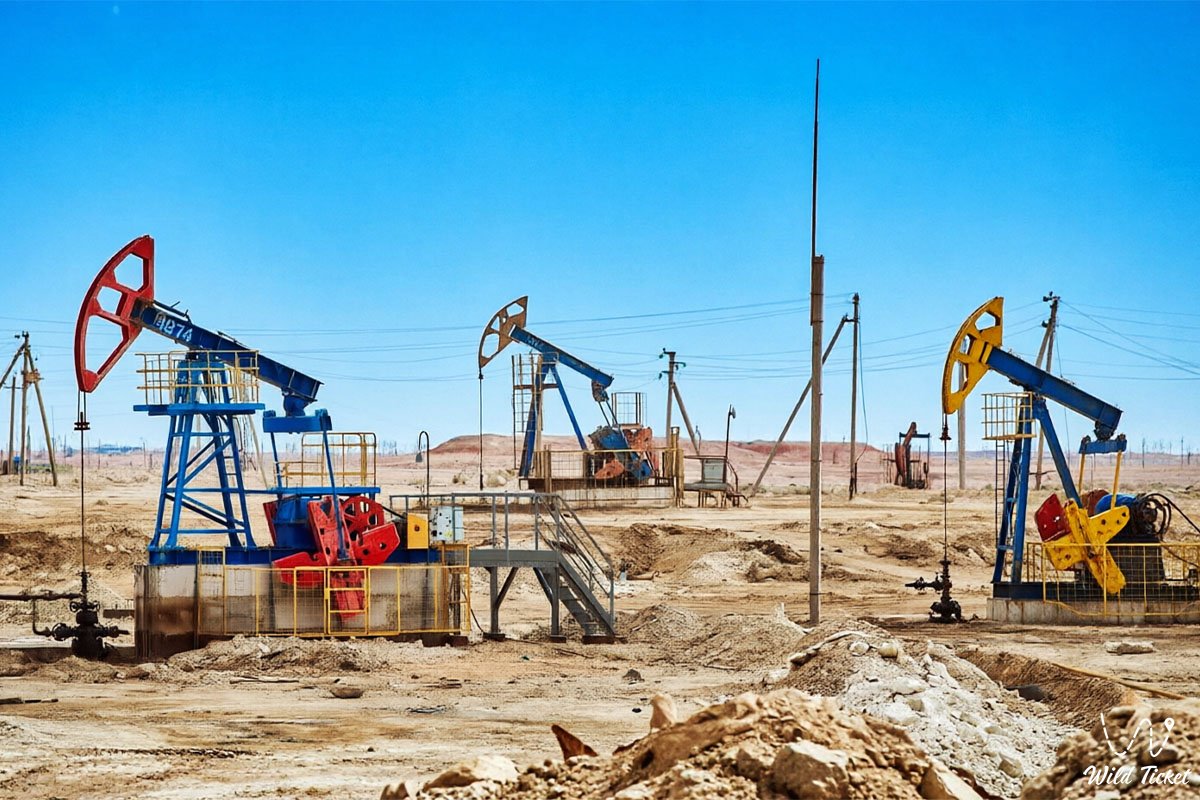
The Karazhanbas Oil Field (Kaz. Qarazhanbas munai ken orny) represents a major and technologically unique production complex in western Kazakhstan. This large-scale hydrocarbon field is located within the boundaries of the Mangystau district, in the central and southern reaches of the flat Buzachi Peninsula, bordered by the waters of the Caspian Sea and separated from the mainland by vast salt flat depressions.
This entire semi-desert expanse serves as a strategic industrial center of the region, where the extraction of heavy, high-viscosity crude requires advanced thermal reservoir enhancement techniques. For hundreds of kilometers around stretch open horizons where the harsh climate of Northern Mangystau defines the working pace of thousands of oil industry professionals.
In the transport and logistical infrastructure of the Mangystau region, the development of the Karazhanbas field established a dependable network of roadways and operational arteries, linking the field with the regional center and vital maritime hubs. The main overland route from Karazhanbas leads south through the city of Aktau, from where hydrocarbon flows and heavy industrial machinery move toward international shipping terminals. From the production site, transport lines extend toward the coast of the Caspian Sea, to the ancient shrines and natural landmarks of the Tupkaragan Peninsula, the historic port town of Fort-Shevchenko, and the bay and settlement of Bautino.
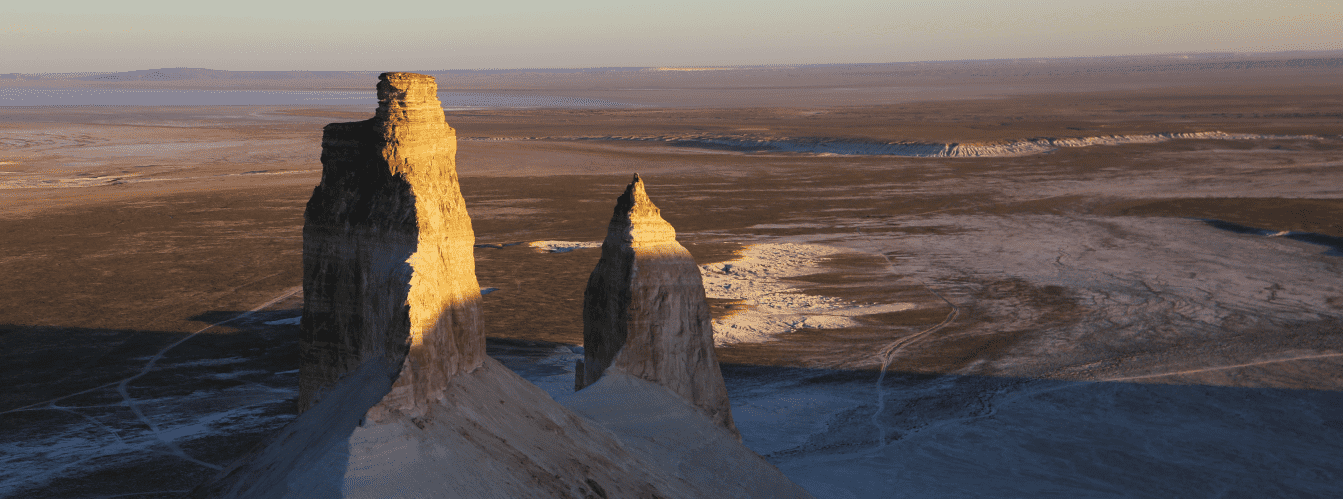
The geological basement of the field lies at relatively shallow depths (from 200 to 1,200 meters) within thick terrigenous strata of the Jurassic and Cretaceous periods, formed hundreds of millions of years ago on the bed of the vanished prehistoric Tethys Ocean. From the facilities of Karazhanbas, steppe and salt-marsh tracks lead researchers and overland travelers toward the distinct natural sights of the region: to the chalk cliffs of the Bozzhira tract, the Tuzbair salt flat, Mount Bokty, the Karynzharyk depression, and the boundless lands of the Ustyurt Reserve.
The primary technological hallmark of the project is the extensive deployment of thermodynamic recovery methods, including steam injection into reservoirs to decrease the viscosity of dense crude, as well as the utilization of associated highly mineralized thermal waters. After concluding their shifts at the high-tech installations of Karazhanbas, specialists often embark on journeys to the historical and sacred destinations of Mangystau – to the Shakpak-Ata underground mosque (UNESCO site), the rocky defile of Tamshaly, the Zhygylgan sinkhole with its fossilized animal tracks, and the shores of Sarytas Bay.
Today, the Karazhanbas field is recognized as one of the key proving grounds for efficient heavy oil extraction in the Republic of Kazakhstan. Alongside the offshore giant Kashagan on the Northern Caspian shelf and the onshore supergiant Tengiz in the Atyrau region, Karazhanbas forms the industrial backbone of western Kazakhstan. The complex draws the attention of international energy specialists, ecologists, and engineers through its unique thermal recovery practices, high industrial safety standards, and significant contributions to the regional economy.
--------------------------------------------
Geography, logistics, and transit corridors –
The Karazhanbas field is situated in the central and southern sectors of the Buzachi Peninsula, within the Mangystau district of the Mangystau region, roughly 200–230 kilometers north of the city of Aktau. The territory is a flat semi-desert lowland characterized by salt pans (sors), takyrs, and sandy plains, sitting at elevations slightly above or below Caspian sea level.
GPS geographical coordinates of the Karazhanbas field:
44°36'24"N 54°02'27"E
Controlled access zone and security regulations: the Karazhanbas field is an active strategic facility with strict industrial safety and security protocols. Entry into the oilfield, residential rotation camps, and processing complexes is strictly regulated and restricted to accredited personnel, authorized contractors, and official delegations with valid permits. Public tourist access and unauthorized vehicles are barred from entry.
Logistical links with Mangystau and the Caspian: Karazhanbas is integrated into the transport grid of the region:
– Highway Aktau – Kalamkas – Karazhanbas – the primary paved and graded highway connecting the northern oilfields of the Buzachi Peninsula with the regional capital and port facilities.
– Maritime and coastal logistics – proximity to the Caspian Sea facilitates coordinated equipment deliveries via the Port of Aktau and support facilities on Tupkaragan.
Shift camp infrastructure: Karazhanbas functions as a self-contained industrial complex equipped with comprehensive residential and municipal systems. Amenities include modern rotation dormitories, canteens, medical clinics, power plants, heating stations, water treatment systems, and a certified helipad for emergency medical response and priority cargo transport.
Climatic conditions: the Buzachi Peninsula experiences a sharply continental, arid, and severe climate. Summers are hot, with temperatures regularly surpassing +40 °C alongside intense evaporation and dry winds. Winters are cold and windy, averaging -10...-15 °C in January, accompanied by blizzards, gale-force coastal winds from the Caspian, and icy ground conditions.
--------------------------------------------
History
The history of discovery and development at the Karazhanbas field reflects the advancement of domestic exploration across the challenging northern desert tracts of Mangystau.
The structure was initially identified through seismic surveys in the early 1970s during an exploration campaign across the Buzachi Peninsula. In 1974, an exploration well yielded the first commercial oil flow from Cretaceous horizons, confirming a substantial accumulation of hydrocarbons.
Developing Karazhanbas required overcoming technical hurdles: the reservoir crude proved heavy, resinous, and highly viscous under in-situ conditions, rendering conventional natural flow production ineffective. In the 1980s, full-scale development began with the deployment of thermal recovery methods, predominantly the injection of high-temperature steam.
Following Kazakhstan's independence, the field received fresh momentum through modernized investment and engineering practices. The project is operated by JSC "Karazhanbasmunai", which focuses on upgrading processing units, elevating environmental safeguards, and integrating digital oilfield automation.
Geological phenomenon and heavy oil recovery characteristics
Karazhanbas differs markedly from conventional light-oil reservoirs across Kazakhstan due to its physical and chemical properties.
Karazhanbas crude: the hydrocarbons belong to the class of heavy, high-viscosity crudes characterized by elevated density and significant proportions of asphaltenes, resins, and paraffins. Under natural reservoir conditions, the crude exhibits negligible mobility and does not flow freely through piping.
Thermal production methods (cyclic steam stimulation and steamflooding): to extract the resource efficiently, operators inject high-temperature steam directly into the pay zones. The heat warms the oil in place, reducing viscosity by orders of magnitude and allowing it to be lifted with downhole pumps. Dedicated high-capacity steam generation units supply the steam networks.
Utilization of associated waters: a notable element of operations at Karazhanbas is the treatment and cycling of highly mineralized thermal formation waters produced alongside the crude. After specialized surface purification, these waters are returned to reservoir pressure-maintenance systems.
Detailed description of the venue
The industrial and infrastructure complex of the Karazhanbas field comprises the following technological installations:
• Steam generation plant park (SGP) – heavy thermal generation facilities producing pressurized steam for downhole injection to heat heavy oil formations.
• Oil treatment and pumping workshops – specialized processing trains designed for separation, dehydration, desalting, and initial stabilization of heavy crude.
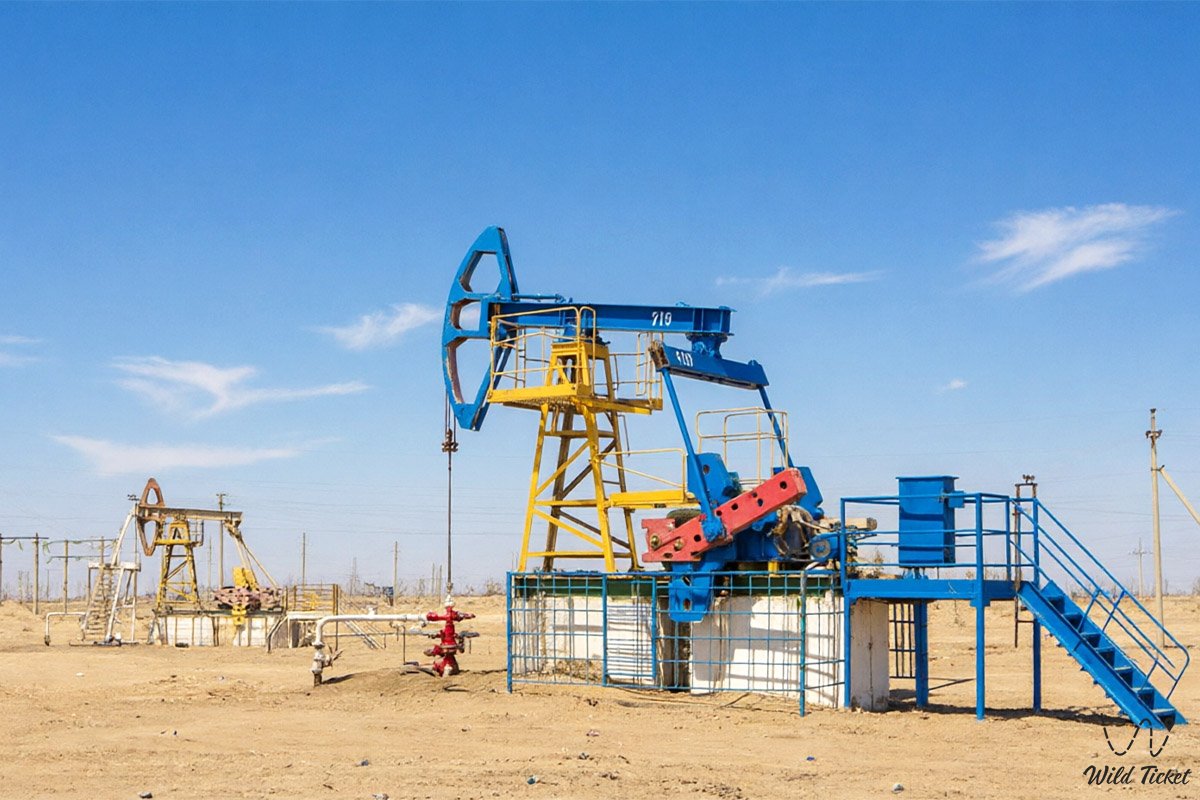
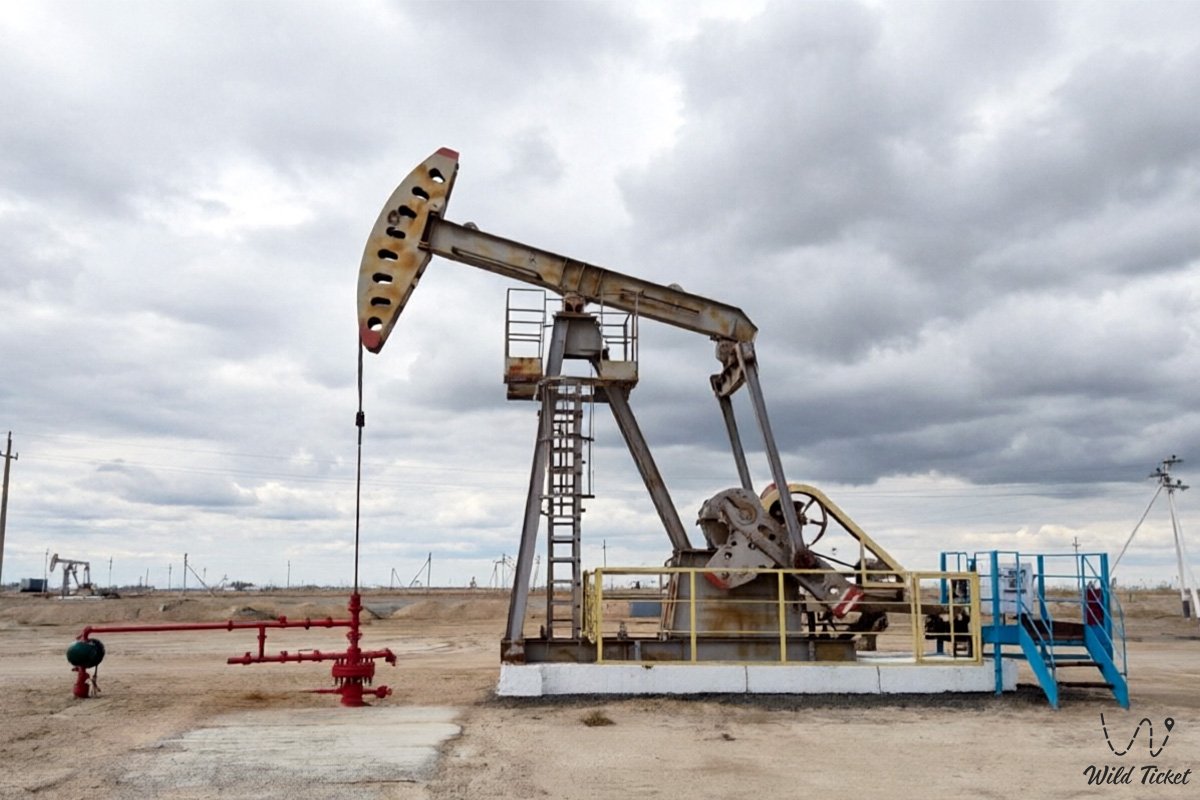
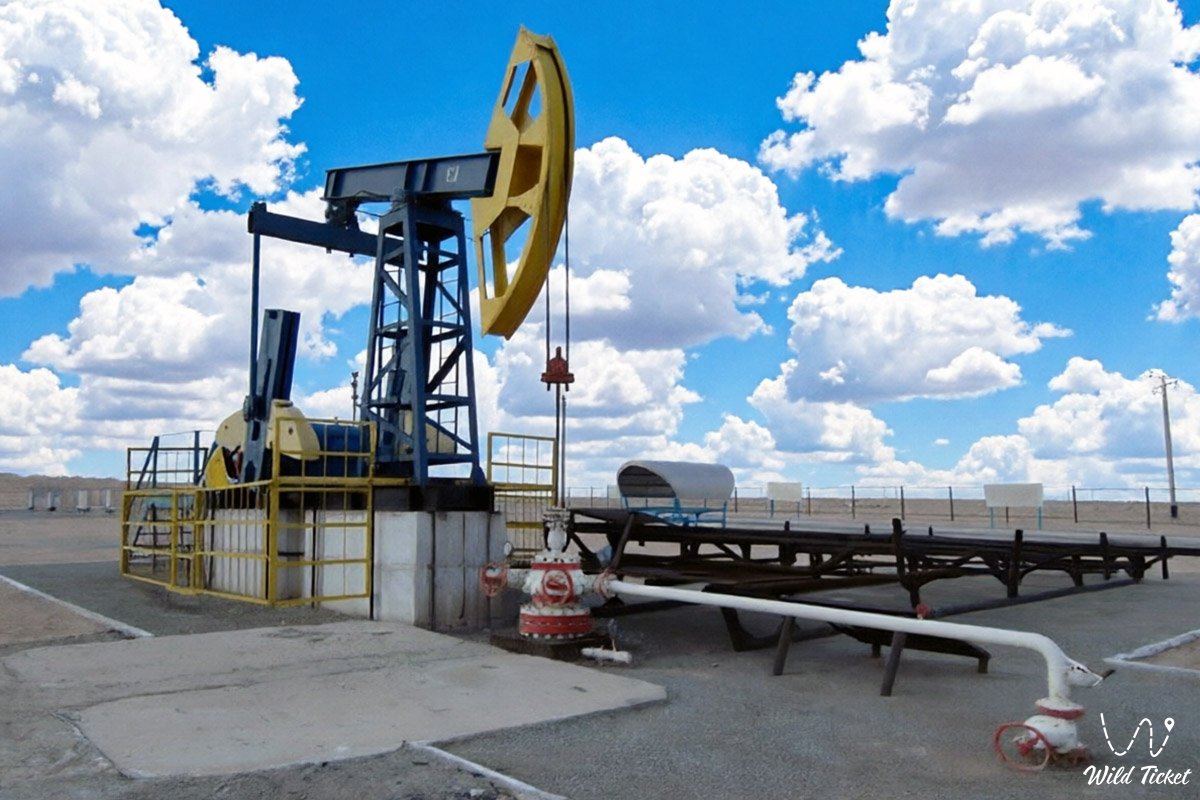
• Production and injection well inventory – a dense network of wells outfitted with heat-resistant pumping equipment and downhole monitoring instrumentation.
• Karazhanbas rotation village – an autonomous residential complex providing dining, medical care, and living quarters for operating teams.
• Transport and power infrastructure – high-voltage transmission lines, gas turbine generators, boiler stations, and graded service roadways.
• Associated petroleum gas utilization network – environmental recovery units routing associated gas to generate on-site electricity and heat.
Flora, fauna, and environmental balance
Vegetation across the plains of the Buzachi Peninsula consists of halophytic and arid plant communities adapted to saline clay flats, coastal takyrs, and strong winds. The dominant flora includes gray-soil wormwood, Anabasis salsa (biyurgun), Halocnemum strobilaceum (sarsazan), boyalych, and camelthorn (dzhantak). In coastal depressions and near shallow inlets, dense stands of tamarisk (saltcedar) and dwarf saltwort help bind the sandy soils against wind erosion.
Wildlife of the peninsula is resilient to temperature swings and arid conditions. The open plains host corsac foxes, wolves, tolai hares, badgers, and long-eared hedgehogs. Steppe saiga antelopes occasionally traverse these rangelands during seasonal roaming. Reptiles are well represented by the steppe agama, toad-headed agama, rapid fringe-toed lizard, and sand boa.
Avifauna and coastal flyways: the coastal marshes and shallow waters of the Caspian bordering Buzachi form an intercontinental migratory corridor. Flocks of greater flamingos, mute swans, Dalmatian pelicans, shelducks, and various sandpipers stop in the coastal shallows during spring and autumn passages. Steppe eagles, long-legged buzzards, and common kestrels hunt over the semi-desert plains.
Environmental protection and industrial safeguards: environmental policy at Karazhanbas complies with national ecological legislation and industrial safety standards. The operation prioritizes associated gas capture to prevent regular flaring, reducing air emissions across the peninsula. Land remediation programs, continuous soil monitoring, and multi-stage treatment of produced water protect groundwater and fragile ecosystems. Automated sensors monitor pipeline integrity and operational parameters around the clock, safeguarding both workers and the surrounding landscape.
Legend
A regional steppe legend concerning the Warm Spring and the Subterranean Fire is told across the Buzachi Peninsula in connection with the discovery of Karazhanbas.
Lore recounts that in ancient epochs, nomadic pastoralists trailing herds through the salt flats of Buzachi encountered steaming mineral springs bubbling up from the barren clay. These thermal waters provided relief to both travelers and livestock during bitter winter winds. Clan elders spoke of a hidden fiery spirit slumbering deep beneath the earth, keeping the waters of the vanished Tethys Ocean warm.
Centuries later, when 20th-century exploration geologists arrived with drilling rigs and discovered hot formation waters alongside thick, resin-like crude, they recalled the old tales. Bringing that underground heat to the surface required modern engineering, transforming deep thermal energy into a tool to release the heavy oil.
Across Mangystau, lore continues to hold that the heat and steam of Karazhanbas represent the productive power of the subterranean earth, harnessed through human ingenuity to turn a severe desert into an active energy center.
Conclusion
The Karazhanbas field is a clear example of technical engineering and field management, proving that complex high-viscosity oil reserves can be produced in the demanding environment of the Buzachi Peninsula. Learning about its operations and history highlights the industrial depth of the Mangystau region, where deep-earth geology pairs with modern industrial stewardship on the Caspian.
Interesting sights nearby:
• Buzachi Peninsula;
• Kalamkas Oil Field;
• City of Aktau;
• Caspian Sea;
• Fort-Shevchenko and Bautino;
• Cape Tyub-Karagan;
• Zhygylgan Sinkhole;
• Tamshaly Canyon;
• Shakpaktysay Canyon;
• Shakpak-Ata Underground Mosque;
• Kapamsay Canyon;
• Tauchik Village;
• Otpan-Tau Memorial Complex.
Sacred sights and pilgrimage destinations:
• Beket-Ata Underground Mosque;
• Sisem-Ata Necropolis;
• Karaman-Ata Mosque;
• Sultan-Epe Mosque;
• Yerzhan Khazret Mausoleum.
Photogallery: